GUIDED BY-
Dr. ASHISH KUMAR BHUI
PRESENTED BY-
SUBHI PATEL
•Introduction
•Definition
•Causes
•Thermodynamics
•Formation
•Strength
•References
 Hydrophobic interaction describes the relation between
water and hydrophobes.
 Hydrophobes are non polar molecule and usually have a
long chain of carbons that do not interact with water
molecule.
 The mixing of fat and water is a good example of this
interaction.
 The hydrophobic effect is the observed tendency of
non polar substances to aggregate in an aqueous
solution and exclude water molecules.
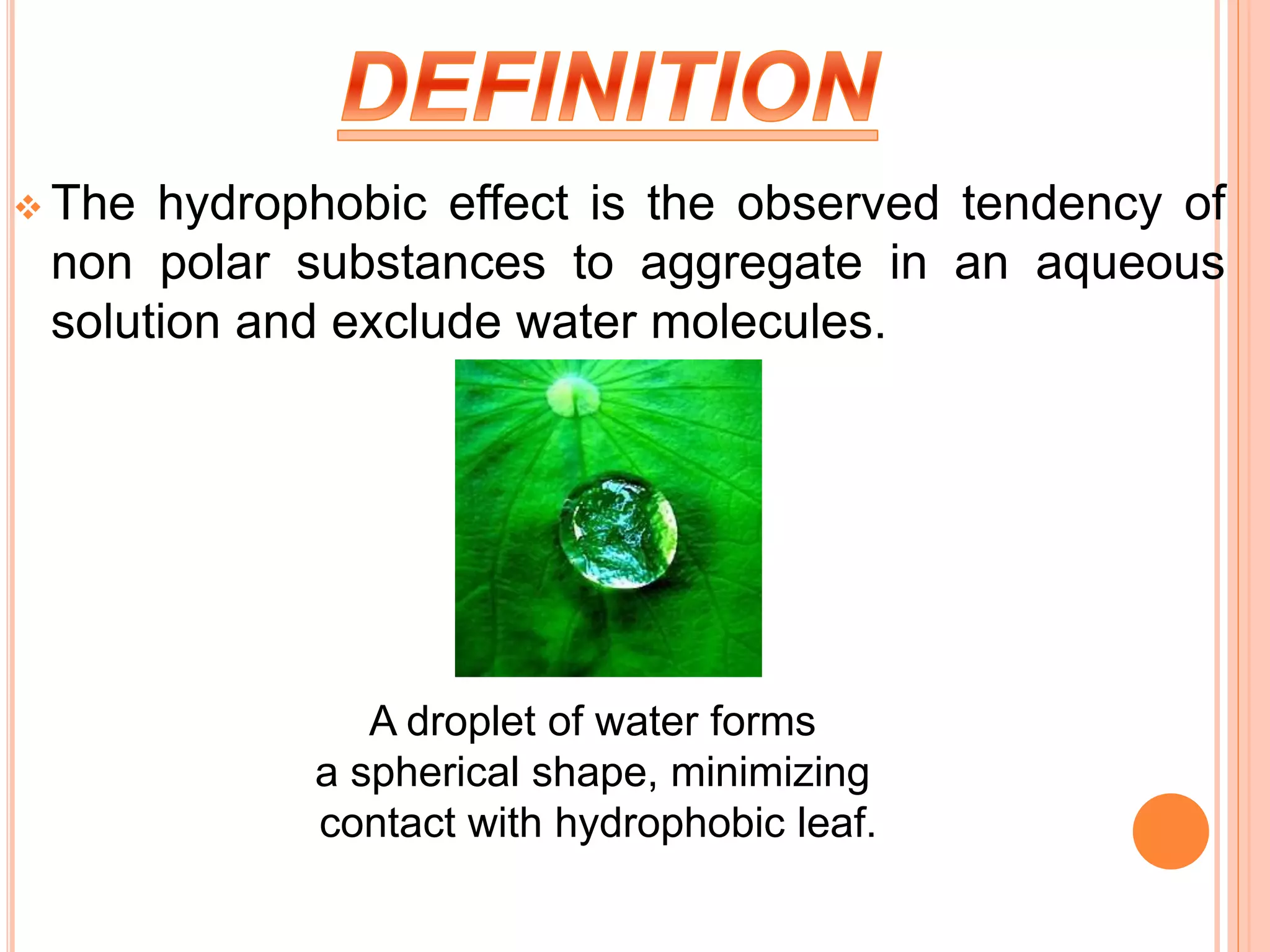
A droplet of water forms
a spherical shape, minimizing
contact with hydrophobic leaf.
The tendency of non-polar molecule in
a polar solvent (usually water) to
interact with one another is called
hydrophobic effect.
 The interaction between the non-
polar molecule are called hydrophobic
interaction.
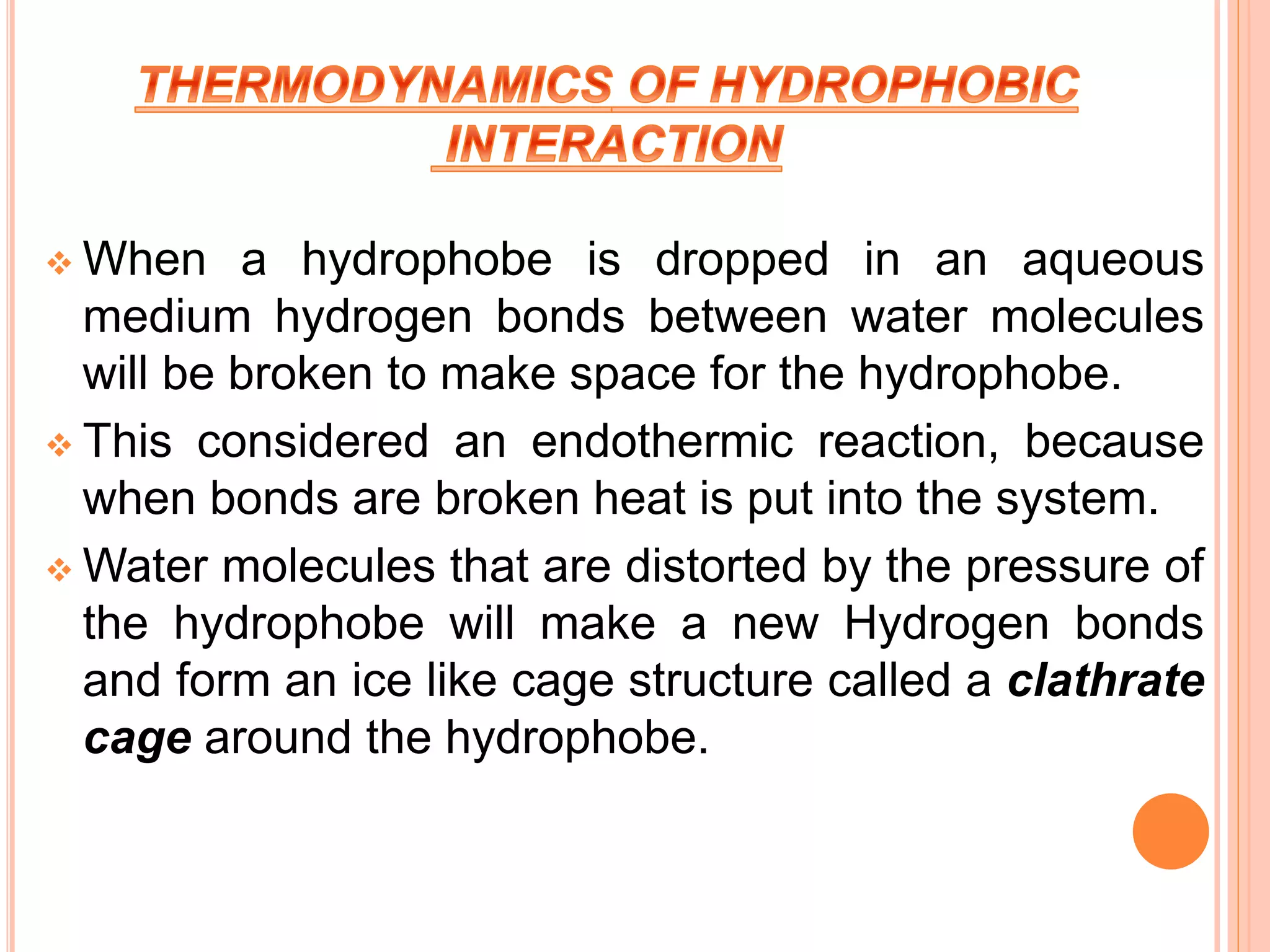
 The non-polar substance like fat molecules tend
to clump up together rather than distributing itself
in a water medium, because this allow the fat
molecules to have minimal contact with water.
 When a hydrophobe is dropped in an aqueous
medium hydrogen bonds between water molecules
will be broken to make space for the hydrophobe.
 This considered an endothermic reaction, because
when bonds are broken heat is put into the system.
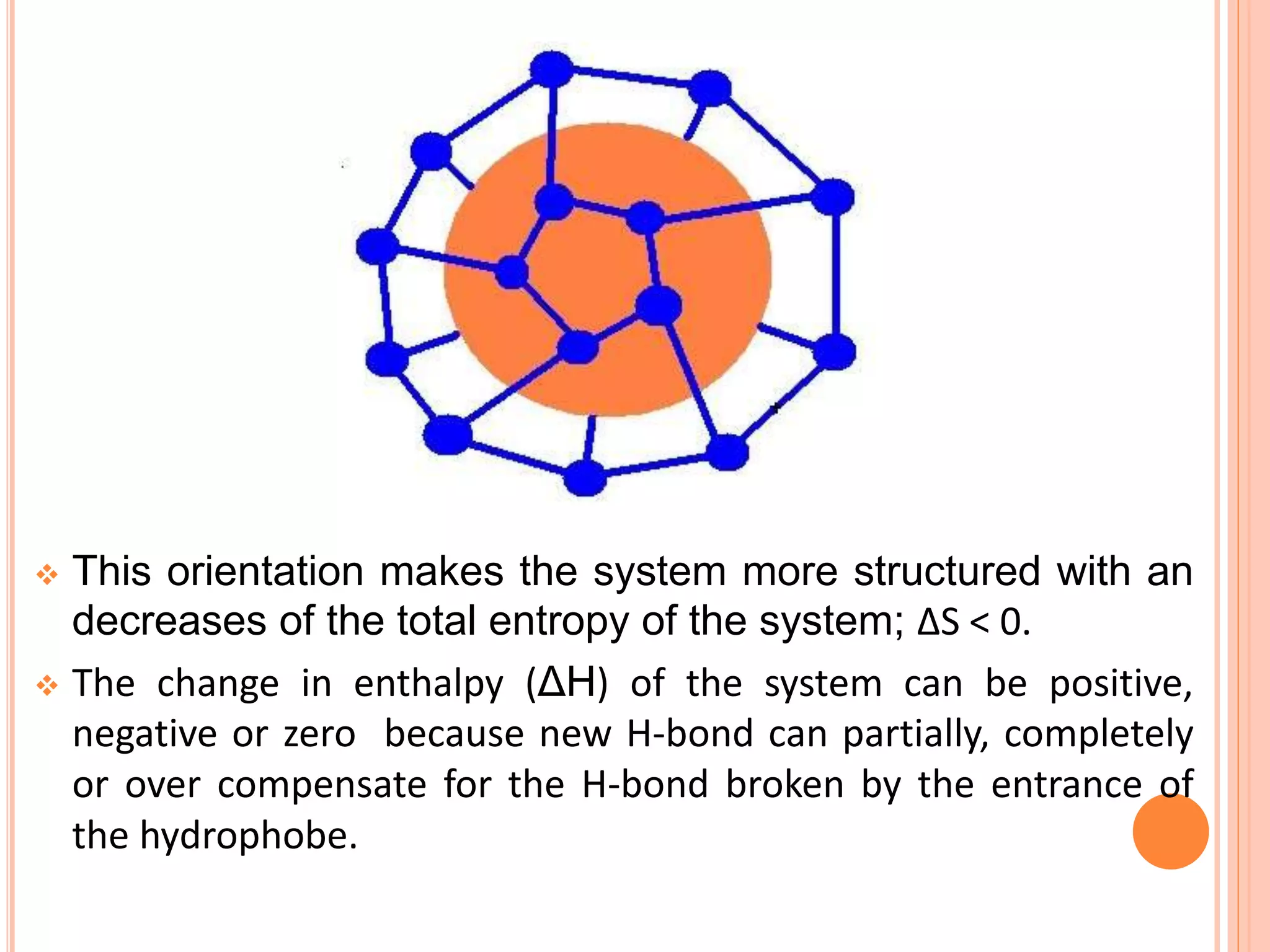
 Water molecules that are distorted by the pressure of
the hydrophobe will make a new Hydrogen bonds
and form an ice like cage structure called a clathrate
cage around the hydrophobe.
 This orientation makes the system more structured with an
decreases of the total entropy of the system; ΔS < 0.
 The change in enthalpy (ΔH) of the system can be positive,
negative or zero because new H-bond can partially, completely
or over compensate for the H-bond broken by the entrance of
the hydrophobe.
 The change in enthalpy, however is insignificant in
determining the spontaneity of reaction (mixing of
hydrophobic molecule and water) because the
change in entropy is large ΔS.
 According to Gibb’s formula,
ΔG = ΔH – TΔS ---------- ( I )
In case if ΔH is small and ΔS is more negative
then ΔG will be positive , hence hydrophobic
interaction is not spontaneous.
 The mixing hydrophobes and water is not
spontaneous, however, hydrophobic interaction
between hydrophobes are spontaneous.
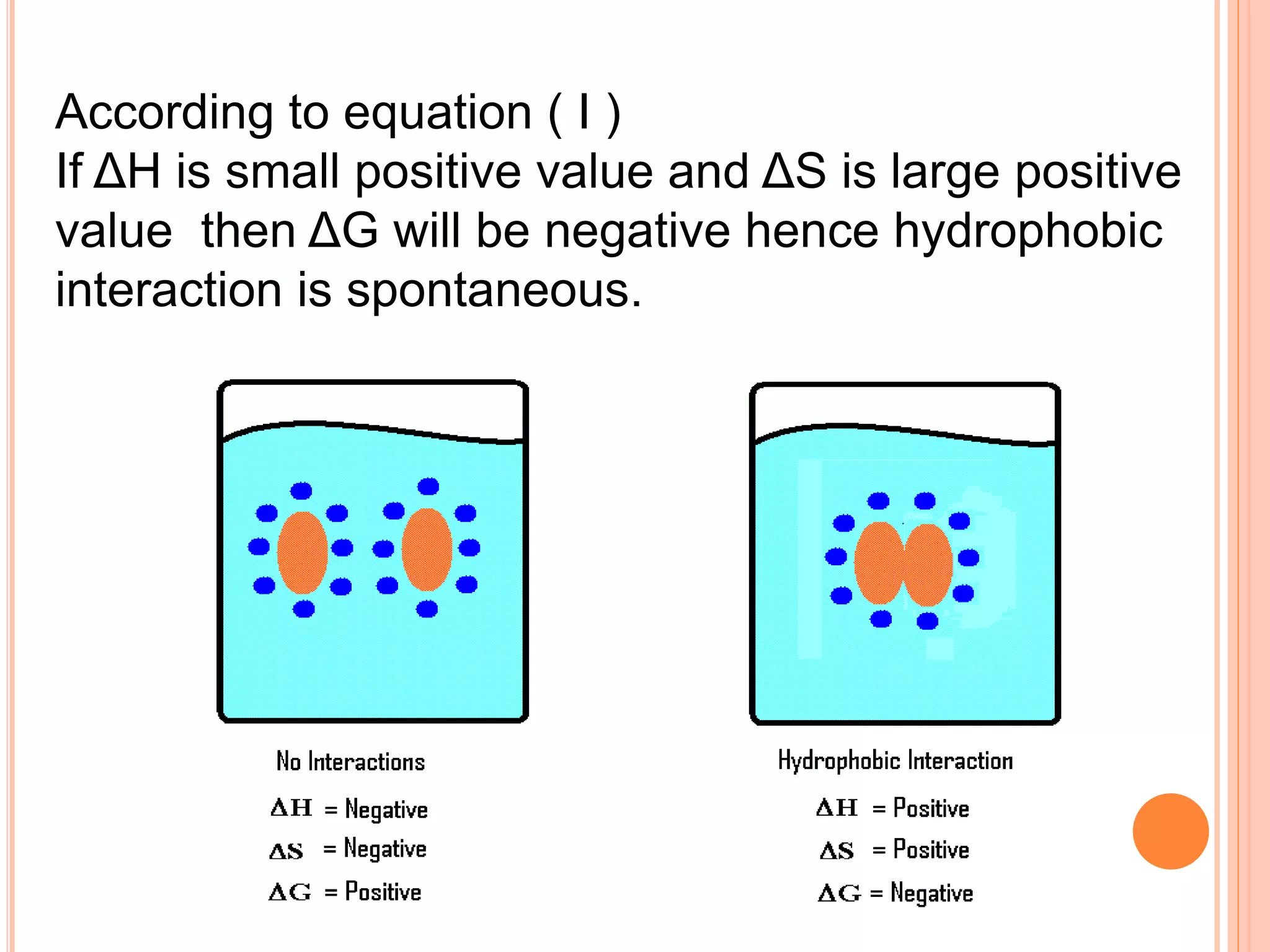
 When hydrophobes come together and interact with
each other, enthalpy increase (ΔH is positive)
because some of hydrogen bonds that form the
clathrate cage will be broken.
 Tearing down a portion of clathrate cage will cause
the entropy to increase (ΔS is positive) since
forming it decreases the entropy.
According to equation ( I )
If ΔH is small positive value and ΔS is large positive
value then ΔG will be negative hence hydrophobic
interaction is spontaneous.
1. TEMPRATURE- Strength of hydrophobic
interaction increases with in temperature.
2. NO. OF CARBONS IN HYDROPHOBES-
Molecules with greater number of carbon will have
the strongest hydrophobic interaction.
3. SHAPE- aliphatic organic molecules have
stronger interaction than aromatic compound.
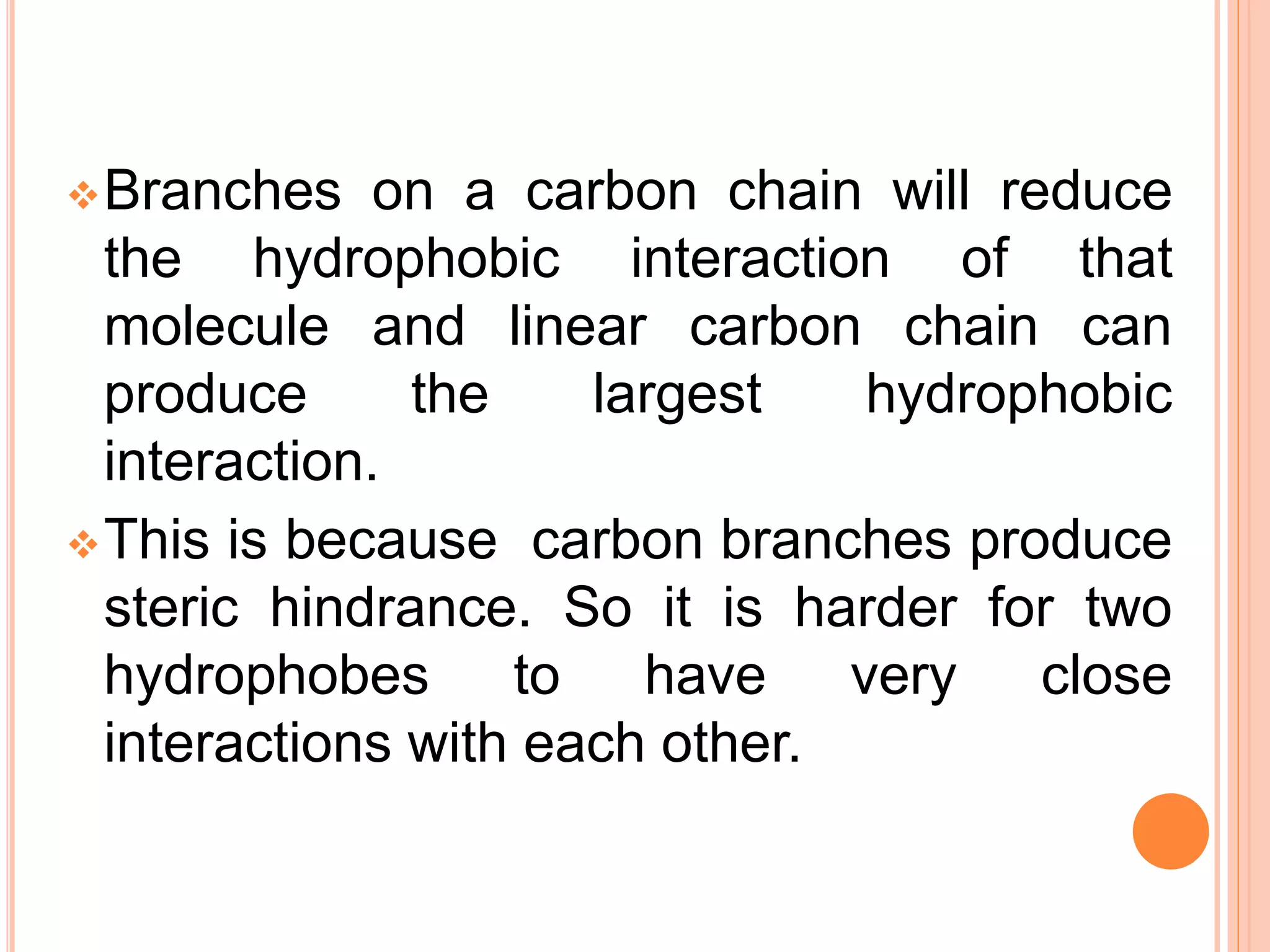
Branches on a carbon chain will reduce
the hydrophobic interaction of that
molecule and linear carbon chain can
produce the largest hydrophobic
interaction.
This is because carbon branches produce
steric hindrance. So it is harder for two
hydrophobes to have very close
interactions with each other.
Hydrophobic interaction

Hydrophobic interaction

  • 1.
    GUIDED BY- Dr. ASHISHKUMAR BHUI PRESENTED BY- SUBHI PATEL
  • 2.
  • 3.
     Hydrophobic interactiondescribes the relation between water and hydrophobes.  Hydrophobes are non polar molecule and usually have a long chain of carbons that do not interact with water molecule.  The mixing of fat and water is a good example of this interaction.
  • 4.
     The hydrophobiceffect is the observed tendency of non polar substances to aggregate in an aqueous solution and exclude water molecules. A droplet of water forms a spherical shape, minimizing contact with hydrophobic leaf.
  • 5.
    The tendency ofnon-polar molecule in a polar solvent (usually water) to interact with one another is called hydrophobic effect.  The interaction between the non- polar molecule are called hydrophobic interaction.
  • 6.
     The non-polarsubstance like fat molecules tend to clump up together rather than distributing itself in a water medium, because this allow the fat molecules to have minimal contact with water.
  • 7.
     When ahydrophobe is dropped in an aqueous medium hydrogen bonds between water molecules will be broken to make space for the hydrophobe.  This considered an endothermic reaction, because when bonds are broken heat is put into the system.  Water molecules that are distorted by the pressure of the hydrophobe will make a new Hydrogen bonds and form an ice like cage structure called a clathrate cage around the hydrophobe.
  • 8.
     This orientationmakes the system more structured with an decreases of the total entropy of the system; ΔS < 0.  The change in enthalpy (ΔH) of the system can be positive, negative or zero because new H-bond can partially, completely or over compensate for the H-bond broken by the entrance of the hydrophobe.
  • 9.
     The changein enthalpy, however is insignificant in determining the spontaneity of reaction (mixing of hydrophobic molecule and water) because the change in entropy is large ΔS.  According to Gibb’s formula, ΔG = ΔH – TΔS ---------- ( I ) In case if ΔH is small and ΔS is more negative then ΔG will be positive , hence hydrophobic interaction is not spontaneous.
  • 10.
     The mixinghydrophobes and water is not spontaneous, however, hydrophobic interaction between hydrophobes are spontaneous.  When hydrophobes come together and interact with each other, enthalpy increase (ΔH is positive) because some of hydrogen bonds that form the clathrate cage will be broken.  Tearing down a portion of clathrate cage will cause the entropy to increase (ΔS is positive) since forming it decreases the entropy.
  • 11.
    According to equation( I ) If ΔH is small positive value and ΔS is large positive value then ΔG will be negative hence hydrophobic interaction is spontaneous.
  • 12.
    1. TEMPRATURE- Strengthof hydrophobic interaction increases with in temperature. 2. NO. OF CARBONS IN HYDROPHOBES- Molecules with greater number of carbon will have the strongest hydrophobic interaction. 3. SHAPE- aliphatic organic molecules have stronger interaction than aromatic compound.
  • 13.
    Branches on acarbon chain will reduce the hydrophobic interaction of that molecule and linear carbon chain can produce the largest hydrophobic interaction. This is because carbon branches produce steric hindrance. So it is harder for two hydrophobes to have very close interactions with each other.