This document provides an overview of solar energy, including:
- Solar energy comes from thermonuclear fusion reactions in the sun and includes visible light, infrared, ultraviolet, x-rays, and radio waves.
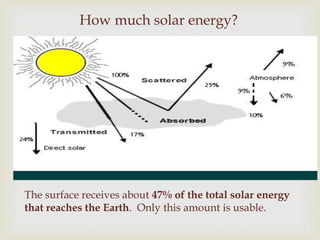
- Only a small fraction of the sun's energy is absorbed by Earth, but this is enough to meet all our power needs.
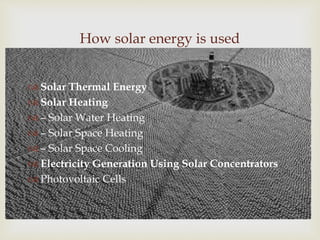
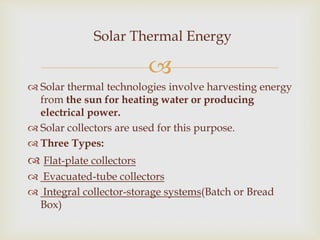
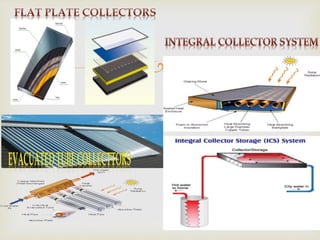
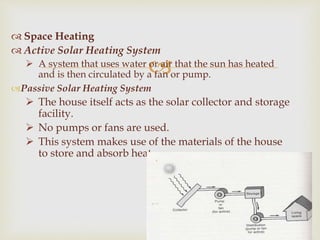
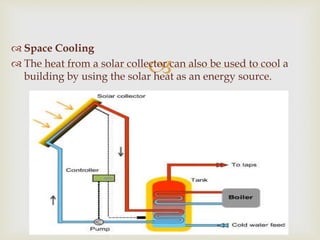
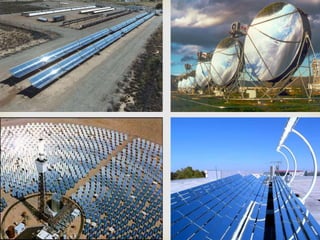
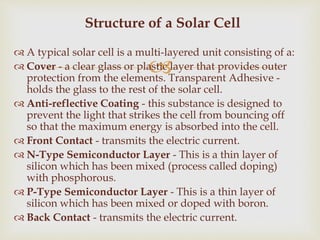
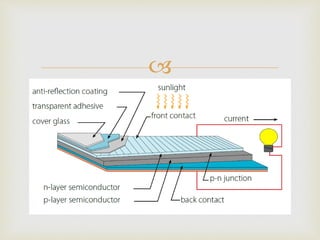
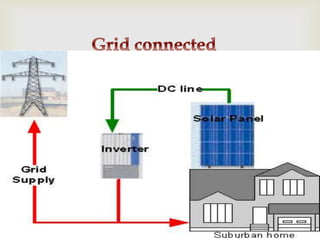
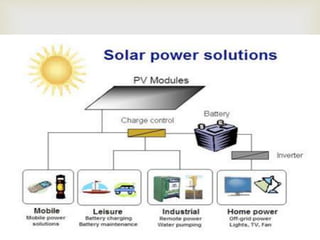
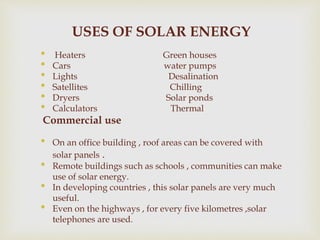
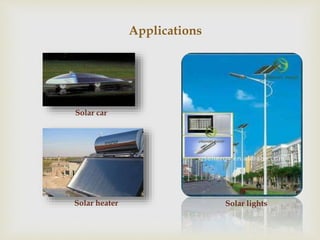
- Solar energy can be used for solar thermal energy, solar heating, electricity generation, and photovoltaics. Common applications include water and space heating, electricity generation, transportation, calculators, and more.
- While solar energy has advantages like being renewable, pollution-free and having low maintenance, disadvantages include high initial costs, reliance on sunlight