Operating System
Basics
This lesson includes the following sections:
• The User Interface
• Running Programs
• Managing Files
• Managing Hardware
• Utility Software
• Graphical User Interfaces (GUIs)
• GUI Tools
• Applications and the Interface
• Menus
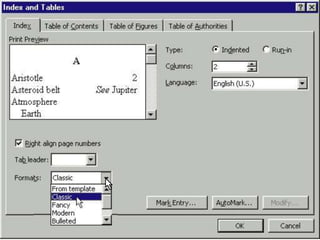
• Dialog Boxes
• Command-Line Interfaces
The User Interface
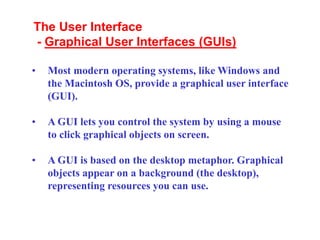
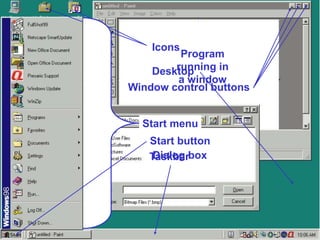
• Most modern operating systems, like Windows and
the Macintosh OS, provide a graphical user interface
(GUI).
• A GUI lets you control the system by using a mouse
to click graphical objects on screen.
• A GUI is based on the desktop metaphor. Graphical
objects appear on a background (the desktop),
representing resources you can use.
The User Interface
- Graphical User Interfaces (GUIs)
Icons
Start menu
Start button
Taskbar
Desktop
Dialog box
Program
running in
a window
Window control buttons
• Icons are pictures that represent computer
resources, such as printers, documents, and
programs.
• You double-click an icon to choose (activate) it, for
instance, to launch a program.
• The Windows operating system offers two unique
tools, called the taskbar and Start button. These
help you run and manage programs.
The User Interface - GUI Tools
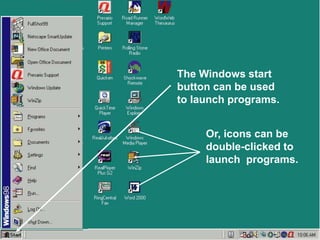
Or, icons can be
double-clicked to
launch programs.
The Windows start
button can be used
to launch programs.
• Applications designed to run under one operating
system use similar interface elements.
• Under an OS such as Windows, you see a familiar
interface no matter what programs you use.
• In a GUI, each program opens and runs in a separate
window—a frame that presents the program and its
documents.
• In a GUI, you can run multiple programs at once,
each in a separate window. The application in use is
said to be the active window.
The User Interface –
Applications and the Interface
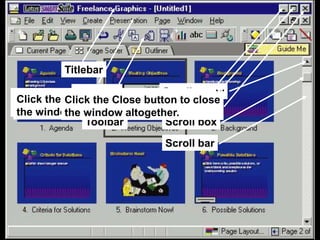
Titlebar
Menubar
Toolbar
Scroll arrow
Scroll box
Scroll bar
Click the Minimize button to reduce
the program to a button on the taskbar.
Click the Maximize button to restore
the window to its previous size.
Click the Close button to close
the window altogether.
• GUI-based programs let you issue commands by
choosing them from menus.
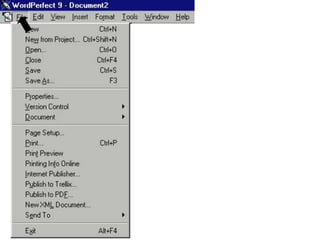
• A menu groups related commands. For example, the
File menu's commands let you open, save, and print
document files.
• Menus let you avoid memorizing and typing
command names.
• In programs designed for the same GUI, menus and
commands are similar from one program to another.
The User Interface - Menus
• A dialog box is a special window that appears when
a program or the OS needs more information
before completing a task.
• Dialog boxes are so named because they conduct a
"dialog" with the user, asking the user to provide
more information or make choices.
The User Interface - Dialog Boxes
• Some older operating systems, such as DOS and
UNIX, use command-line interfaces.
• In a command-line interface, you type commands at a
prompt.
• Under command-line interfaces, individual
applications do not need to look or function the same
way, so different programs can look very different
.
The User Interface - Command-Line Interfaces
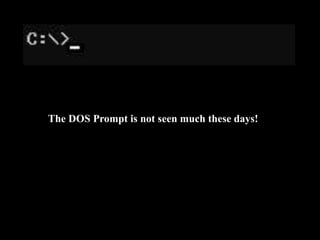
The DOS Prompt is not seen much these days!
• Basic Services
• Sharing Information
• Multitasking
Running Programs
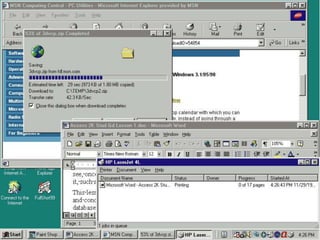
• The operating system manages all the other programs
that run on the PC.
• The operating system provides services to programs
and the user, including file management, memory
management, and printing
• To provide services to programs, the OS makes
system calls—requesting other hardware and
software resources to perform tasks.
Running Programs - Basic Services
• Some operating systems, such as Windows, enable
programs to share information.
• You can create data in one program and use it again
in other programs without re-creating it.
• Windows provides the Clipboard, a special area that
stores data cut or copied from one document, so you
can re-use it elsewhere.
Running Programs - Sharing Information
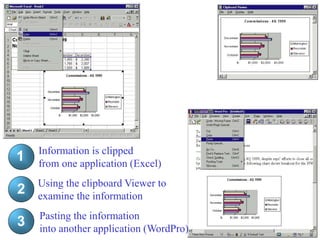
1
2
3
Information is clipped
from one application (Excel)
Using the clipboard Viewer to
examine the information
Pasting the information
into another application (WordPro)
• Multitasking is the capability of running multiple
processes simultaneously.
• A multitasking OS lets you run multiple programs at
the same time.
• Through multitasking, you can do several chores at
one time, such as printing a document while
downloading a file from the Internet.
• There are two types of multitasking: cooperative and
preemptive.
Running Programs - Multitasking
• The operating system keeps track of all the files on
each disk.
• Users can make file management easier by creating
a hierarchical file system that includes folders and
subfolders arranged in a logical order.
Managing Files
• The OS uses interrupt requests (IRQs) to maintain
organized communication with the CPU and other
pieces of hardware.
• Each hardware device is controlled by a piece of
software, called a driver, which allows the OS to
activate and use the device.
• The operating system provides the software necessary
to link computers and form a network.
Managing Hardware
A utility is a program that performs a task that is not
typically handled by the operating system.
Some utilities enhance the operating system's
functionality.
Some of the major categories of utilities include:
• File defragmentation
• Data compression
• Backup
• Antivirus
• Screen savers
Utility Software
lesson review
• Name four components found in most graphical user
interfaces.
• Describe the operating system’s role in running
software programs.
• Explain how the OS enables users to manage files.
• List three hardware management tasks performed by
an OS.
• Name five types of utility software.

Operating systems basics (Graphical User Interfaces (GUIs) GUI Tools Applications and the Interface Menus Dialog Boxes Command-Line Interfaces)

  • 1.
  • 2.
    This lesson includesthe following sections: • The User Interface • Running Programs • Managing Files • Managing Hardware • Utility Software
  • 3.
    • Graphical UserInterfaces (GUIs) • GUI Tools • Applications and the Interface • Menus • Dialog Boxes • Command-Line Interfaces The User Interface
  • 4.
    • Most modernoperating systems, like Windows and the Macintosh OS, provide a graphical user interface (GUI). • A GUI lets you control the system by using a mouse to click graphical objects on screen. • A GUI is based on the desktop metaphor. Graphical objects appear on a background (the desktop), representing resources you can use. The User Interface - Graphical User Interfaces (GUIs)
  • 5.
    Icons Start menu Start button Taskbar Desktop Dialogbox Program running in a window Window control buttons
  • 6.
    • Icons arepictures that represent computer resources, such as printers, documents, and programs. • You double-click an icon to choose (activate) it, for instance, to launch a program. • The Windows operating system offers two unique tools, called the taskbar and Start button. These help you run and manage programs. The User Interface - GUI Tools
  • 7.
    Or, icons canbe double-clicked to launch programs. The Windows start button can be used to launch programs.
  • 8.
    • Applications designedto run under one operating system use similar interface elements. • Under an OS such as Windows, you see a familiar interface no matter what programs you use. • In a GUI, each program opens and runs in a separate window—a frame that presents the program and its documents. • In a GUI, you can run multiple programs at once, each in a separate window. The application in use is said to be the active window. The User Interface – Applications and the Interface
  • 9.
    Titlebar Menubar Toolbar Scroll arrow Scroll box Scrollbar Click the Minimize button to reduce the program to a button on the taskbar. Click the Maximize button to restore the window to its previous size. Click the Close button to close the window altogether.
  • 10.
    • GUI-based programslet you issue commands by choosing them from menus. • A menu groups related commands. For example, the File menu's commands let you open, save, and print document files. • Menus let you avoid memorizing and typing command names. • In programs designed for the same GUI, menus and commands are similar from one program to another. The User Interface - Menus
  • 12.
    • A dialogbox is a special window that appears when a program or the OS needs more information before completing a task. • Dialog boxes are so named because they conduct a "dialog" with the user, asking the user to provide more information or make choices. The User Interface - Dialog Boxes
  • 14.
    • Some olderoperating systems, such as DOS and UNIX, use command-line interfaces. • In a command-line interface, you type commands at a prompt. • Under command-line interfaces, individual applications do not need to look or function the same way, so different programs can look very different . The User Interface - Command-Line Interfaces
  • 15.
    The DOS Promptis not seen much these days!
  • 16.
    • Basic Services •Sharing Information • Multitasking Running Programs
  • 17.
    • The operatingsystem manages all the other programs that run on the PC. • The operating system provides services to programs and the user, including file management, memory management, and printing • To provide services to programs, the OS makes system calls—requesting other hardware and software resources to perform tasks. Running Programs - Basic Services
  • 18.
    • Some operatingsystems, such as Windows, enable programs to share information. • You can create data in one program and use it again in other programs without re-creating it. • Windows provides the Clipboard, a special area that stores data cut or copied from one document, so you can re-use it elsewhere. Running Programs - Sharing Information
  • 19.
    1 2 3 Information is clipped fromone application (Excel) Using the clipboard Viewer to examine the information Pasting the information into another application (WordPro)
  • 20.
    • Multitasking isthe capability of running multiple processes simultaneously. • A multitasking OS lets you run multiple programs at the same time. • Through multitasking, you can do several chores at one time, such as printing a document while downloading a file from the Internet. • There are two types of multitasking: cooperative and preemptive. Running Programs - Multitasking
  • 22.
    • The operatingsystem keeps track of all the files on each disk. • Users can make file management easier by creating a hierarchical file system that includes folders and subfolders arranged in a logical order. Managing Files
  • 24.
    • The OSuses interrupt requests (IRQs) to maintain organized communication with the CPU and other pieces of hardware. • Each hardware device is controlled by a piece of software, called a driver, which allows the OS to activate and use the device. • The operating system provides the software necessary to link computers and form a network. Managing Hardware
  • 26.
    A utility isa program that performs a task that is not typically handled by the operating system. Some utilities enhance the operating system's functionality. Some of the major categories of utilities include: • File defragmentation • Data compression • Backup • Antivirus • Screen savers Utility Software
  • 27.
    lesson review • Namefour components found in most graphical user interfaces. • Describe the operating system’s role in running software programs. • Explain how the OS enables users to manage files. • List three hardware management tasks performed by an OS. • Name five types of utility software.