Generation of Computer
Presented by : Sweta Kumari
Submitted to : Kirti Srivastava
Roll no. : BCAH1CA15038
Course code : BCAH106
Title and Content Layout with List
• Add your first bullet point here
• Add your second bullet point here
• Add your third bullet point here
Content
• Introduction
• First generation of computer
• Second generation of computer
• Third generation of computer
• Fourth generation of computer
• Five generation of computer
• Conclusion
Introduction
Generation in computer terminology is a change in technology a computer is
being used. Initially, the generation term was used to distinguish between
varying hardware technologies. But nowadays, generation includes both
hardware and software, which together make up an entire computer system.
There are totally five computer generations known
till date. Each generation has been discussed in detail along with their time
period and characteristics. Here approximate dates against each generations
have been mentioned which are normally accepted.
First generation of computer
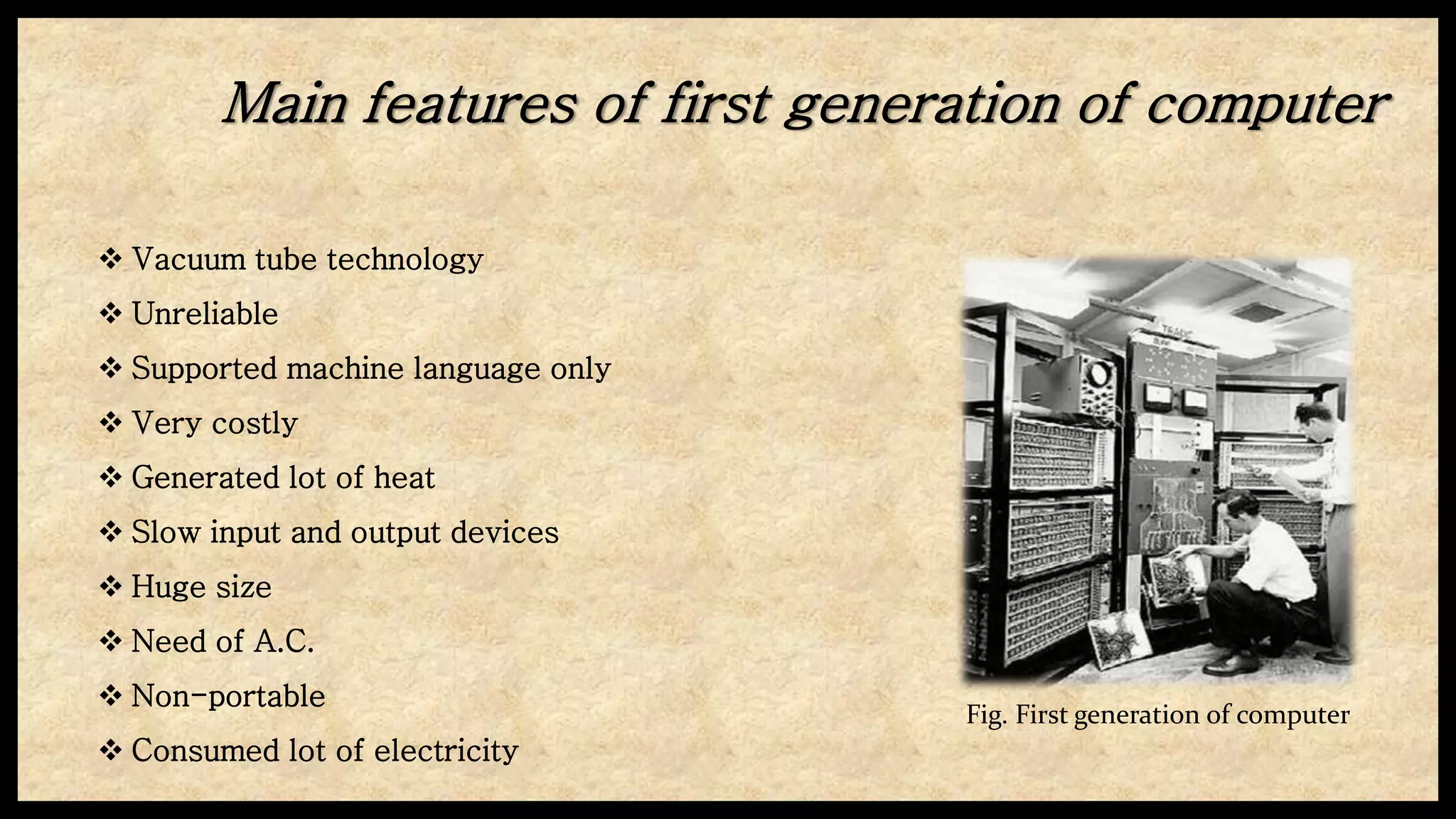
The period of first generation was 1946-1959. The computers of first generation used vacuum
tubes as the basic components for memory and circuitry for CPU (central processing unit).
These tubes, like electric bulbs, produced a lot of heat and were prone to frequent fusing of
the installations, therefore, were very expensive and could be afforded only by very large
organizations. In this generation mainly batch processing operating system were used.
Punched cards, paper tape, and magnetic tape were used as input and output devices. The
computers in this generation used machine code as programming language.
Main features of first generation of computer
 Vacuum tube technology
 Unreliable
 Supported machine language only
 Very costly
 Generated lot of heat
 Slow input and output devices
 Huge size
 Need of A.C.
 Non-portable
 Consumed lot of electricity
Fig. First generation of computer
Second generation of computer
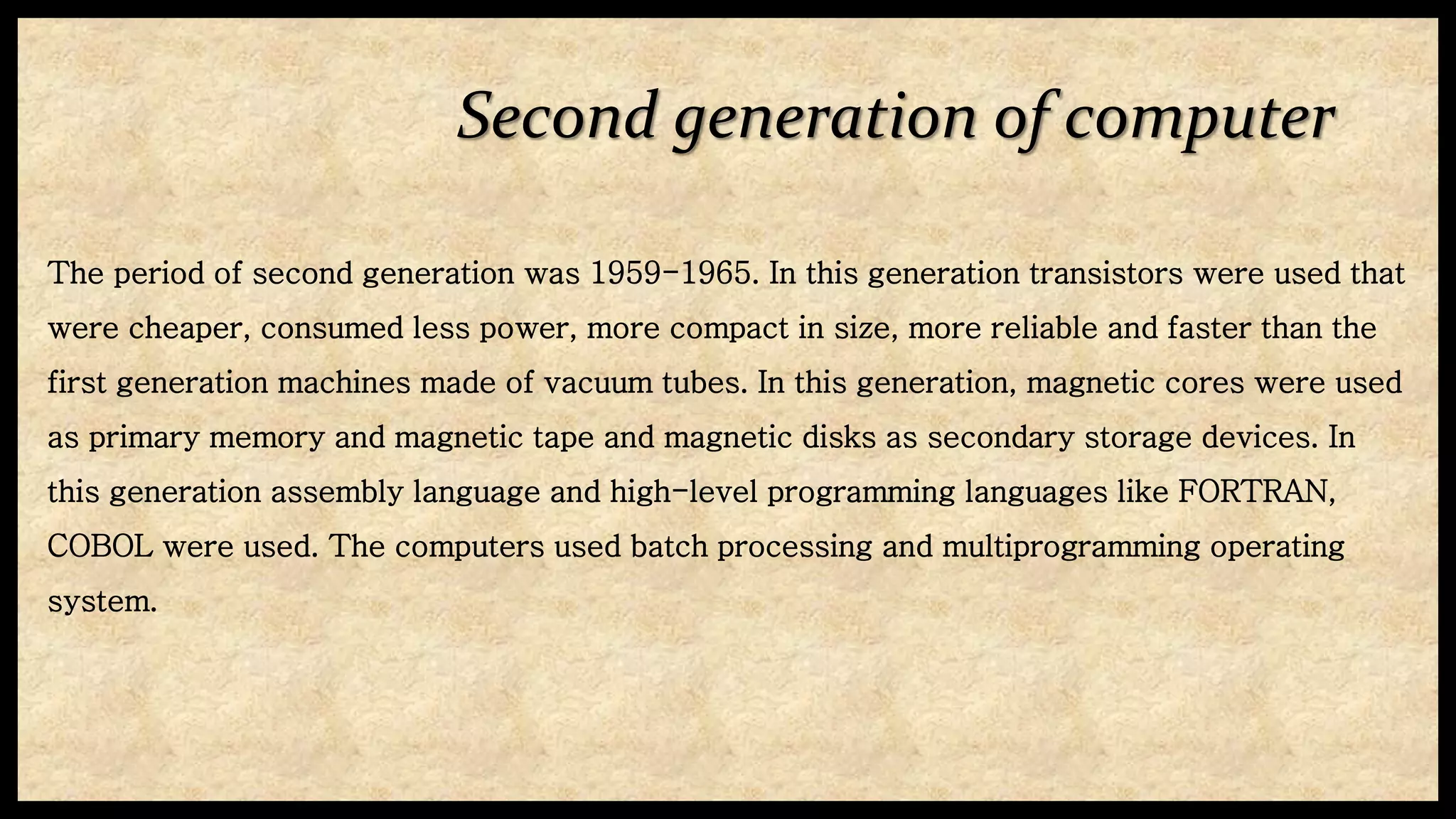
The period of second generation was 1959-1965. In this generation transistors were used that
were cheaper, consumed less power, more compact in size, more reliable and faster than the
first generation machines made of vacuum tubes. In this generation, magnetic cores were used
as primary memory and magnetic tape and magnetic disks as secondary storage devices. In
this generation assembly language and high-level programming languages like FORTRAN,
COBOL were used. The computers used batch processing and multiprogramming operating
system.
Main features of first generation of computer
 Use of transistors
 Reliable in comparison to first generation computers
 Smaller size as compared to first generation computers
 Generated less heat as compared to first generation computers
 Consumed less electricity as compared to first generation
computers
 Faster than first generation computers
 Still very costly
 A.C. Needed
 Supported machine and assembly languages
Fig. Second generation of
computer
Third generation of computer
The period of third generation was 1965-1971. The computers of third generation used
integrated circuits (IC's) in place of transistors. A single IC has many transistors, resistors
and capacitors along with the associated circuitry. The IC was invented by jack kilby. This
development made computers smaller in size, reliable and efficient. In this generation remote
processing, time-sharing, multi-programming operating system were used. High-level
languages (FORTRAN-II TO IV, COBOL, PASCAL PL/1, BASIC, ALGOL-68 etc.) Were used
during this generation.
Main features of third generation of computer
 IC used
 More reliable in comparison to previous two generations
 Smaller size
 Generated less heat
 Faster
 Lesser maintenance
 Still costly
 A.C needed
 Consumed lesser electricity
 Supported high-level language
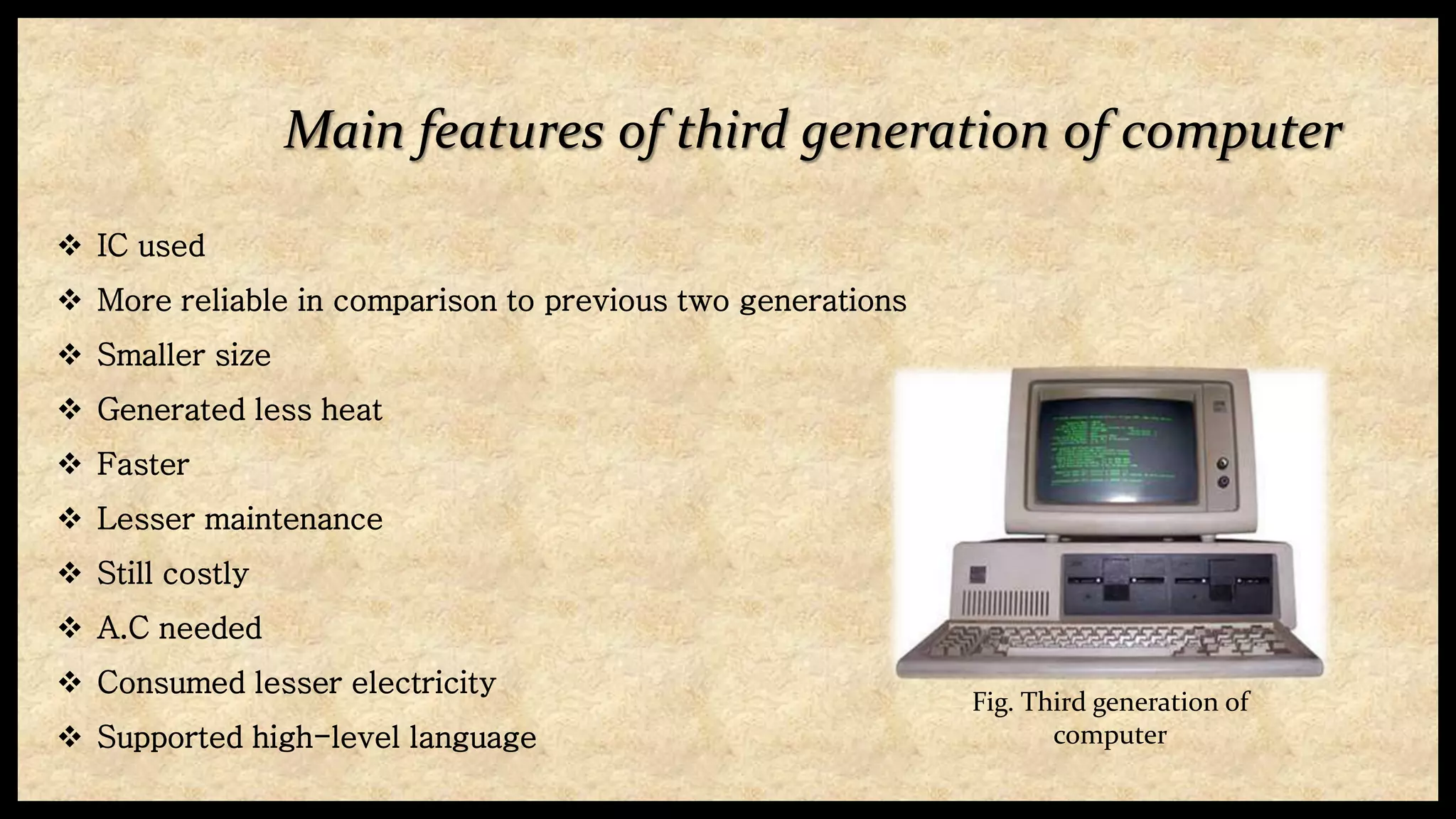
Fig. Third generation of
computer
Fourth generation of computer
The period of fourth generation was 1971-1980. The computers of fourth generation used
very large scale integrated (VLSI) circuits. VLSI circuits having about 5000 transistors and
other circuit elements and their associated circuits on a single chip made it possible to have
microcomputers of fourth generation. Fourth generation computers became more powerful,
compact, reliable, and affordable. As a result, it gave rise to personal computer (PC)
revolution. In this generation time sharing, real time, networks, distributed operating system
were used. All the high-level languages like C, C++, DBASE etc. Were used in this
generation.
Main feature of fourth generation of computer
 VLSI technology used
 Very cheap
 Portable and reliable
 Use of pc's
 Very small size
 Pipeline processing
 No A.C. Needed
 Concept of internet was introduced
 Great developments in the fields of networks
 Computers became easily available
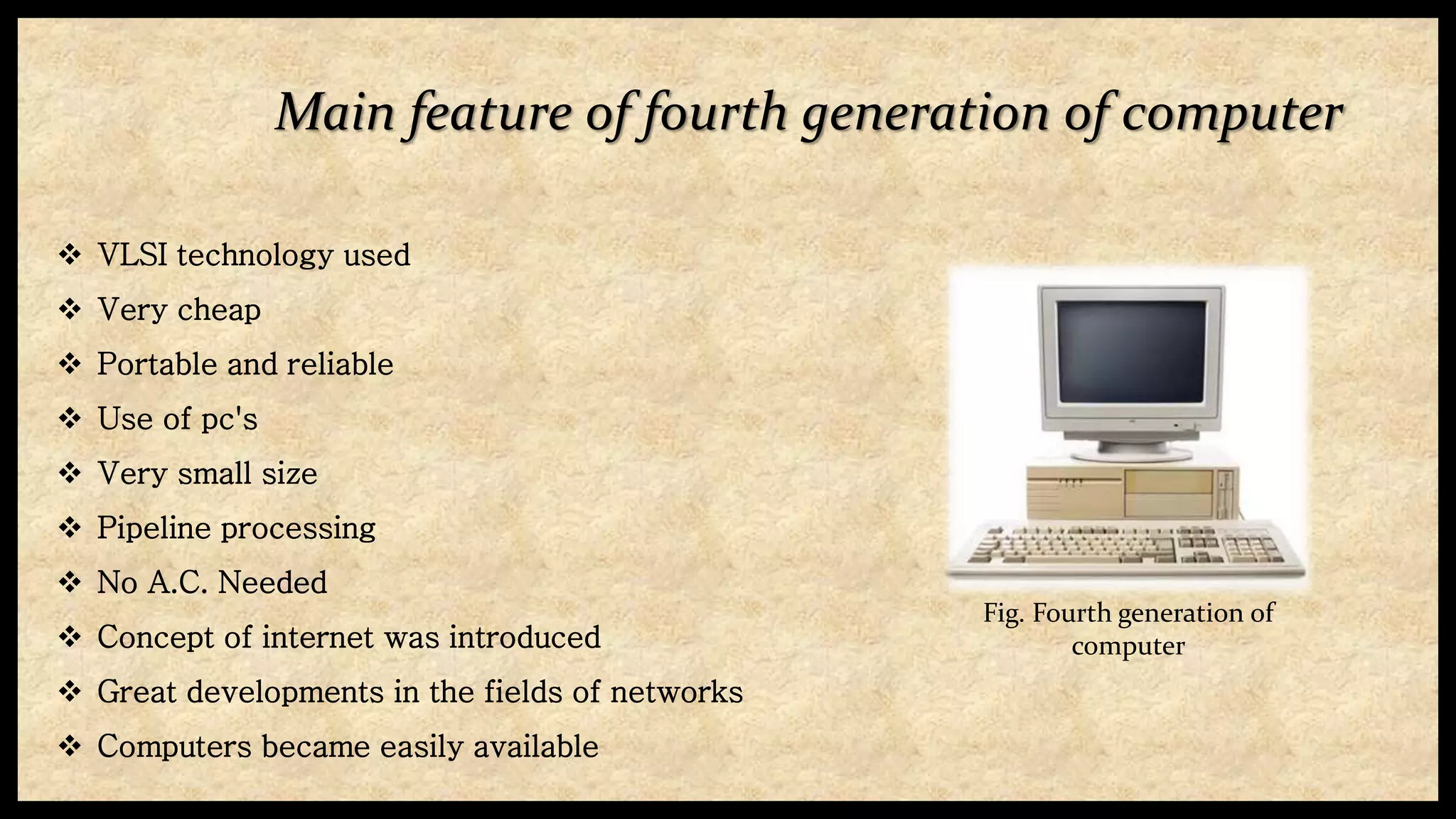
Fig. Fourth generation of
computer
Fifth generation of computer
The period of fifth generation is 1980-till date. In the fifth generation, the VLSI technology
became ULSI (ultra large scale integration) technology, resulting in the production of
microprocessor chips having ten million electronic components. This generation is based on
parallel processing hardware and AI (artificial intelligence) software. AI is an emerging
branch in computer science, which interprets means and method of making computers think
like human beings. All the high-level languages like C and C++, java, .Net etc. Are used in
this generation.
Main feature of fifth generation of computer
 ULSI technology
 Development of true artificial intelligence
 Development of natural language processing
 Advancement in parallel processing
 Advancement in superconductor technology
 More user friendly interfaces with multimedia
features
 Availability of very powerful and compact computers
at cheaper rates
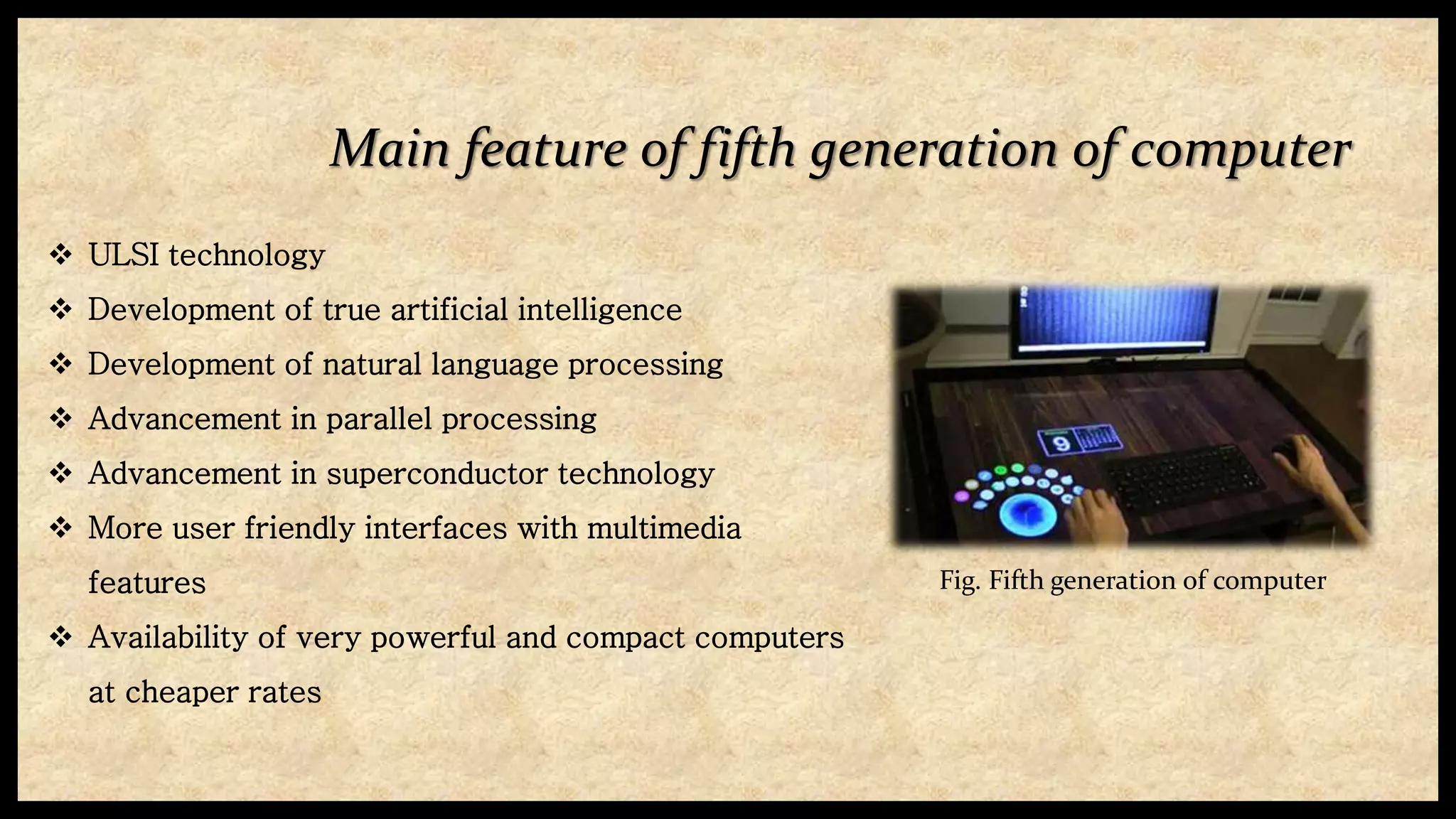
Fig. Fifth generation of computer
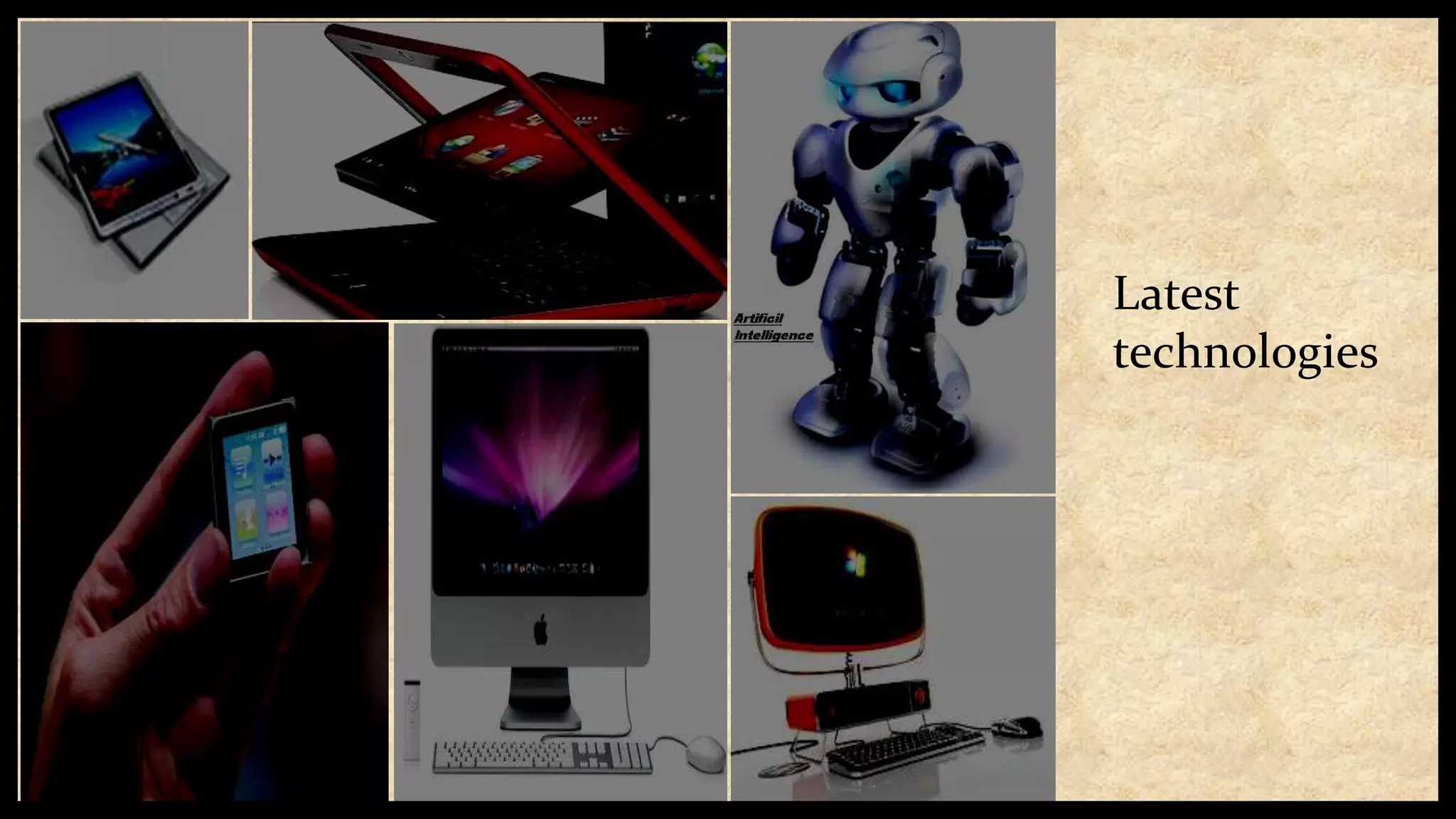
Latest
technologies
Generation of computer

Generation of computer

  • 1.
    Generation of Computer Presentedby : Sweta Kumari Submitted to : Kirti Srivastava Roll no. : BCAH1CA15038 Course code : BCAH106
  • 2.
    Title and ContentLayout with List • Add your first bullet point here • Add your second bullet point here • Add your third bullet point here Content • Introduction • First generation of computer • Second generation of computer • Third generation of computer • Fourth generation of computer • Five generation of computer • Conclusion
  • 3.
    Introduction Generation in computerterminology is a change in technology a computer is being used. Initially, the generation term was used to distinguish between varying hardware technologies. But nowadays, generation includes both hardware and software, which together make up an entire computer system. There are totally five computer generations known till date. Each generation has been discussed in detail along with their time period and characteristics. Here approximate dates against each generations have been mentioned which are normally accepted.
  • 4.
    First generation ofcomputer The period of first generation was 1946-1959. The computers of first generation used vacuum tubes as the basic components for memory and circuitry for CPU (central processing unit). These tubes, like electric bulbs, produced a lot of heat and were prone to frequent fusing of the installations, therefore, were very expensive and could be afforded only by very large organizations. In this generation mainly batch processing operating system were used. Punched cards, paper tape, and magnetic tape were used as input and output devices. The computers in this generation used machine code as programming language.
  • 5.
    Main features offirst generation of computer  Vacuum tube technology  Unreliable  Supported machine language only  Very costly  Generated lot of heat  Slow input and output devices  Huge size  Need of A.C.  Non-portable  Consumed lot of electricity Fig. First generation of computer
  • 6.
    Second generation ofcomputer The period of second generation was 1959-1965. In this generation transistors were used that were cheaper, consumed less power, more compact in size, more reliable and faster than the first generation machines made of vacuum tubes. In this generation, magnetic cores were used as primary memory and magnetic tape and magnetic disks as secondary storage devices. In this generation assembly language and high-level programming languages like FORTRAN, COBOL were used. The computers used batch processing and multiprogramming operating system.
  • 7.
    Main features offirst generation of computer  Use of transistors  Reliable in comparison to first generation computers  Smaller size as compared to first generation computers  Generated less heat as compared to first generation computers  Consumed less electricity as compared to first generation computers  Faster than first generation computers  Still very costly  A.C. Needed  Supported machine and assembly languages Fig. Second generation of computer
  • 8.
    Third generation ofcomputer The period of third generation was 1965-1971. The computers of third generation used integrated circuits (IC's) in place of transistors. A single IC has many transistors, resistors and capacitors along with the associated circuitry. The IC was invented by jack kilby. This development made computers smaller in size, reliable and efficient. In this generation remote processing, time-sharing, multi-programming operating system were used. High-level languages (FORTRAN-II TO IV, COBOL, PASCAL PL/1, BASIC, ALGOL-68 etc.) Were used during this generation.
  • 9.
    Main features ofthird generation of computer  IC used  More reliable in comparison to previous two generations  Smaller size  Generated less heat  Faster  Lesser maintenance  Still costly  A.C needed  Consumed lesser electricity  Supported high-level language Fig. Third generation of computer
  • 10.
    Fourth generation ofcomputer The period of fourth generation was 1971-1980. The computers of fourth generation used very large scale integrated (VLSI) circuits. VLSI circuits having about 5000 transistors and other circuit elements and their associated circuits on a single chip made it possible to have microcomputers of fourth generation. Fourth generation computers became more powerful, compact, reliable, and affordable. As a result, it gave rise to personal computer (PC) revolution. In this generation time sharing, real time, networks, distributed operating system were used. All the high-level languages like C, C++, DBASE etc. Were used in this generation.
  • 11.
    Main feature offourth generation of computer  VLSI technology used  Very cheap  Portable and reliable  Use of pc's  Very small size  Pipeline processing  No A.C. Needed  Concept of internet was introduced  Great developments in the fields of networks  Computers became easily available Fig. Fourth generation of computer
  • 12.
    Fifth generation ofcomputer The period of fifth generation is 1980-till date. In the fifth generation, the VLSI technology became ULSI (ultra large scale integration) technology, resulting in the production of microprocessor chips having ten million electronic components. This generation is based on parallel processing hardware and AI (artificial intelligence) software. AI is an emerging branch in computer science, which interprets means and method of making computers think like human beings. All the high-level languages like C and C++, java, .Net etc. Are used in this generation.
  • 13.
    Main feature offifth generation of computer  ULSI technology  Development of true artificial intelligence  Development of natural language processing  Advancement in parallel processing  Advancement in superconductor technology  More user friendly interfaces with multimedia features  Availability of very powerful and compact computers at cheaper rates Fig. Fifth generation of computer
  • 14.