INTRODUCTION
Trauma life support from Egypt to Ghana
INTRODUCTION
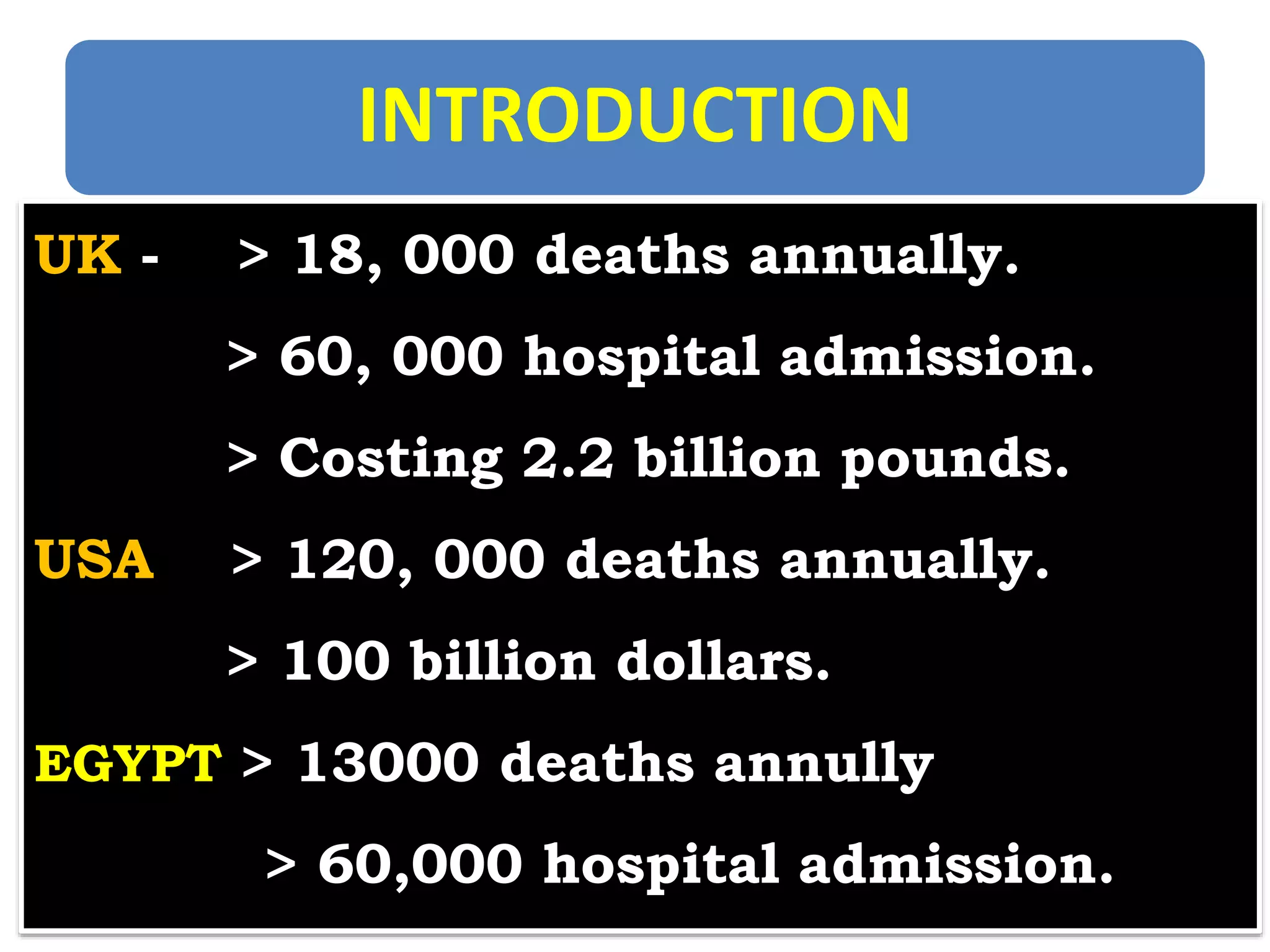
UK - > 18, 000 deaths annually.
> 60, 000 hospital admission.
> Costing 2.2 billion pounds.
USA > 120, 000 deaths annually.
> 100 billion dollars.
EGYPT > 13000 deaths annully
> 60,000 hospital admission.
MECHANISMS OF INJURY
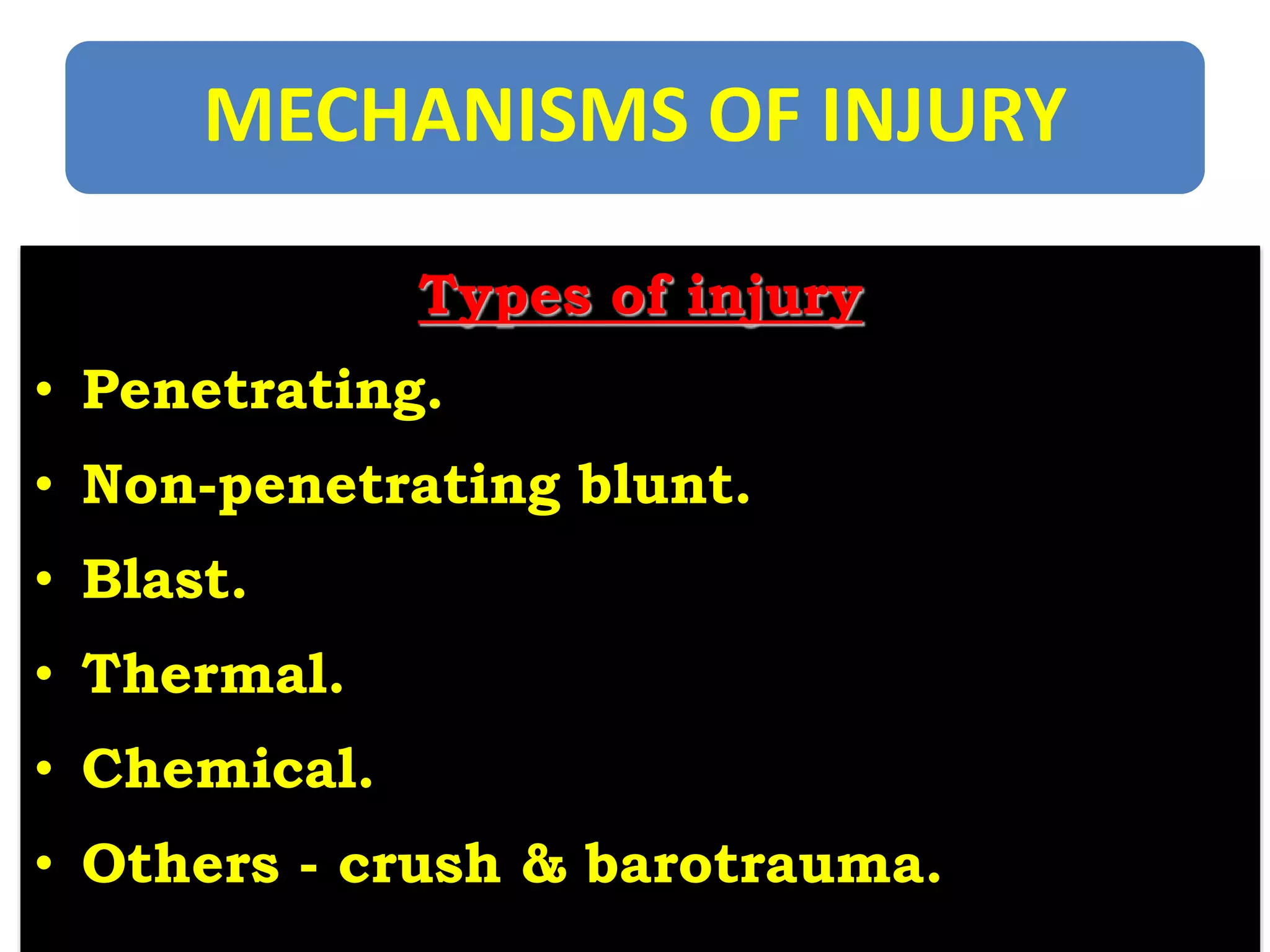
Types of injury
• Penetrating.
• Non-penetrating blunt.
• Blast.
• Thermal.
• Chemical.
• Others - crush & barotrauma.
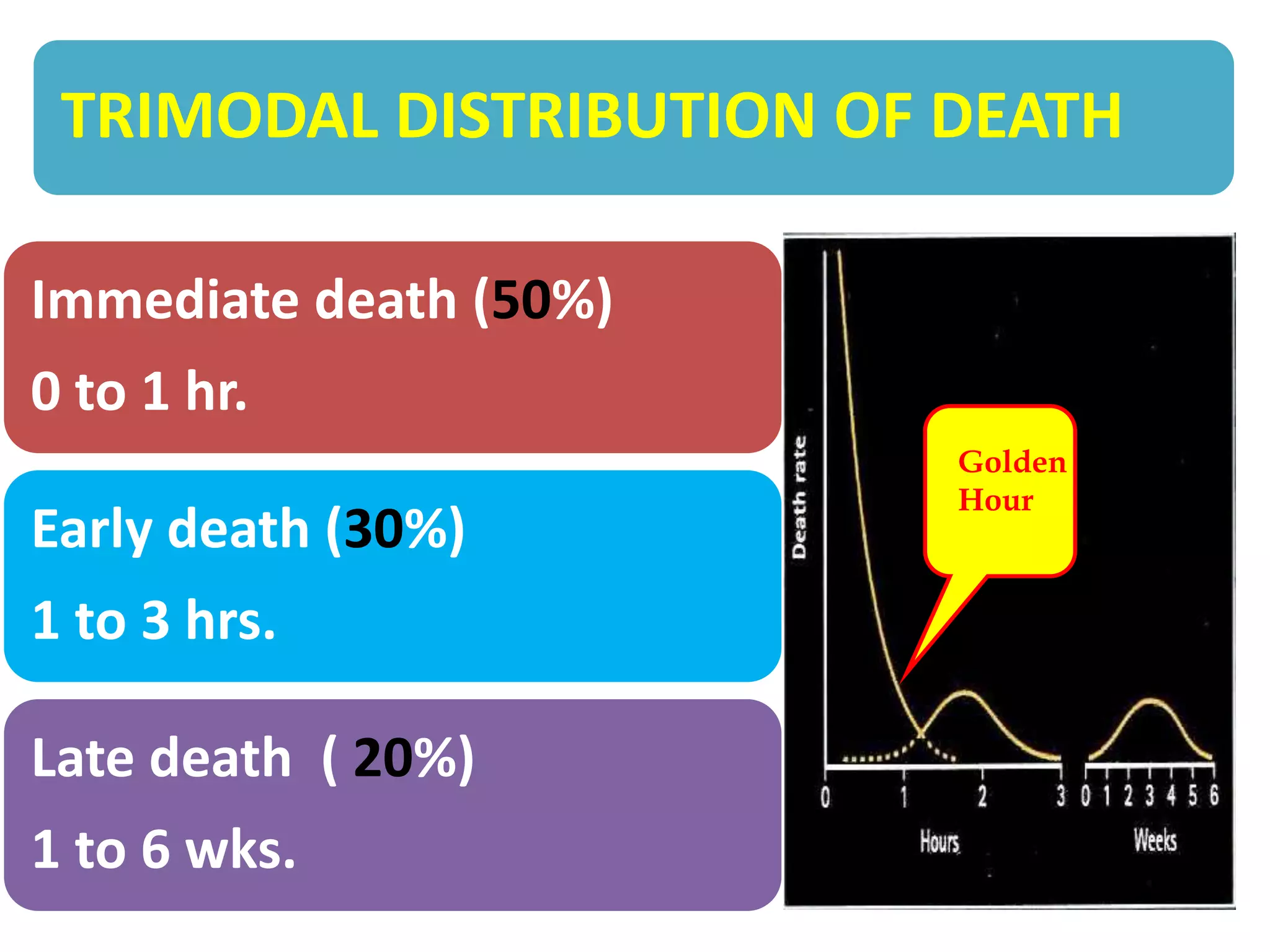
TRIMODAL DISTRIBUTION OF DEATH
Immediate death (50%)
0 to 1 hr.
Early death (30%)
1 to 3 hrs.
Late death ( 20%)
1 to 6 wks.
Golden
Hour
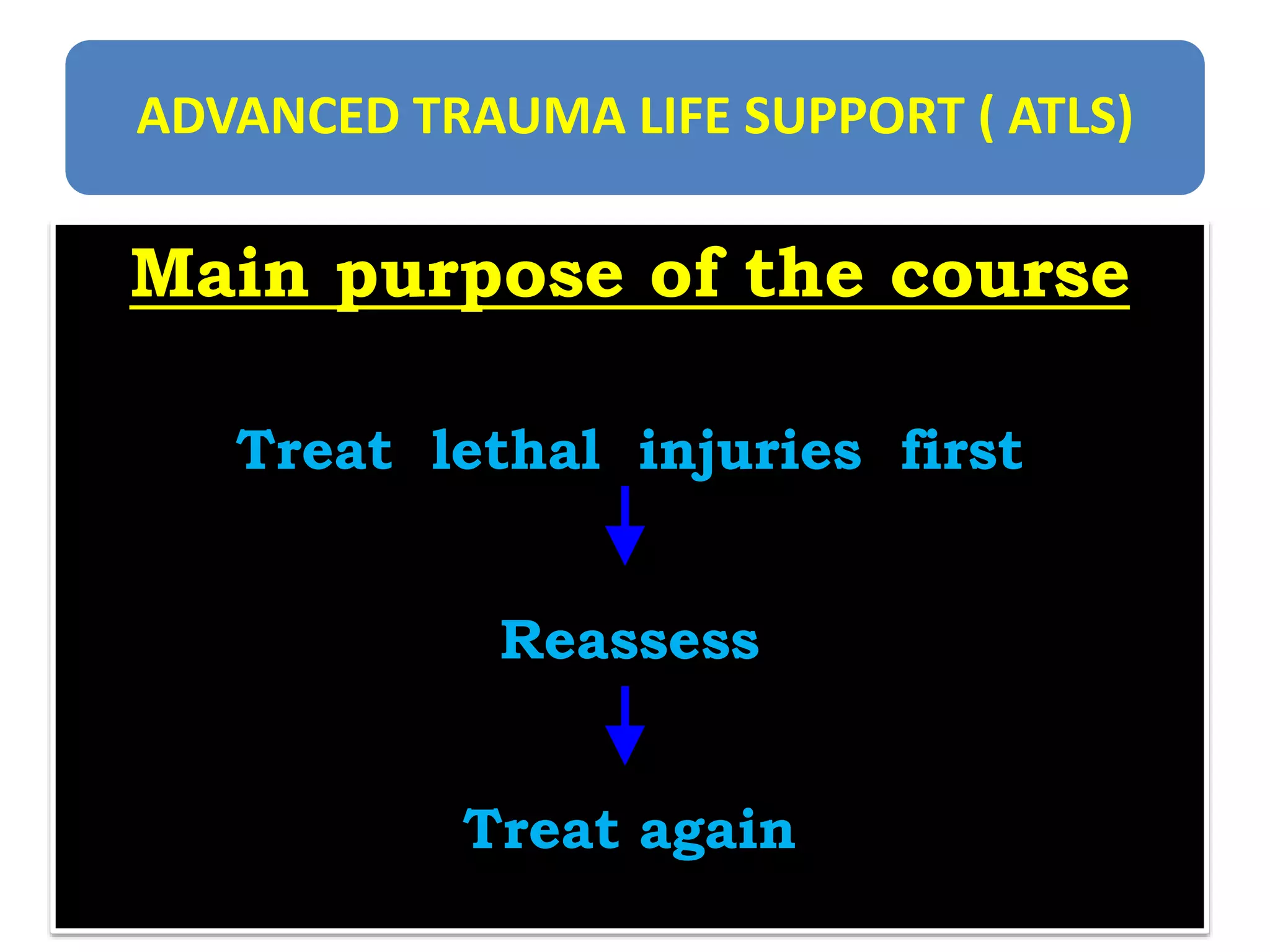
ADVANCED TRAUMA LIFE SUPPORT ( ATLS)
Main purpose of the course
Treat lethal injuries first
Reassess
Treat again
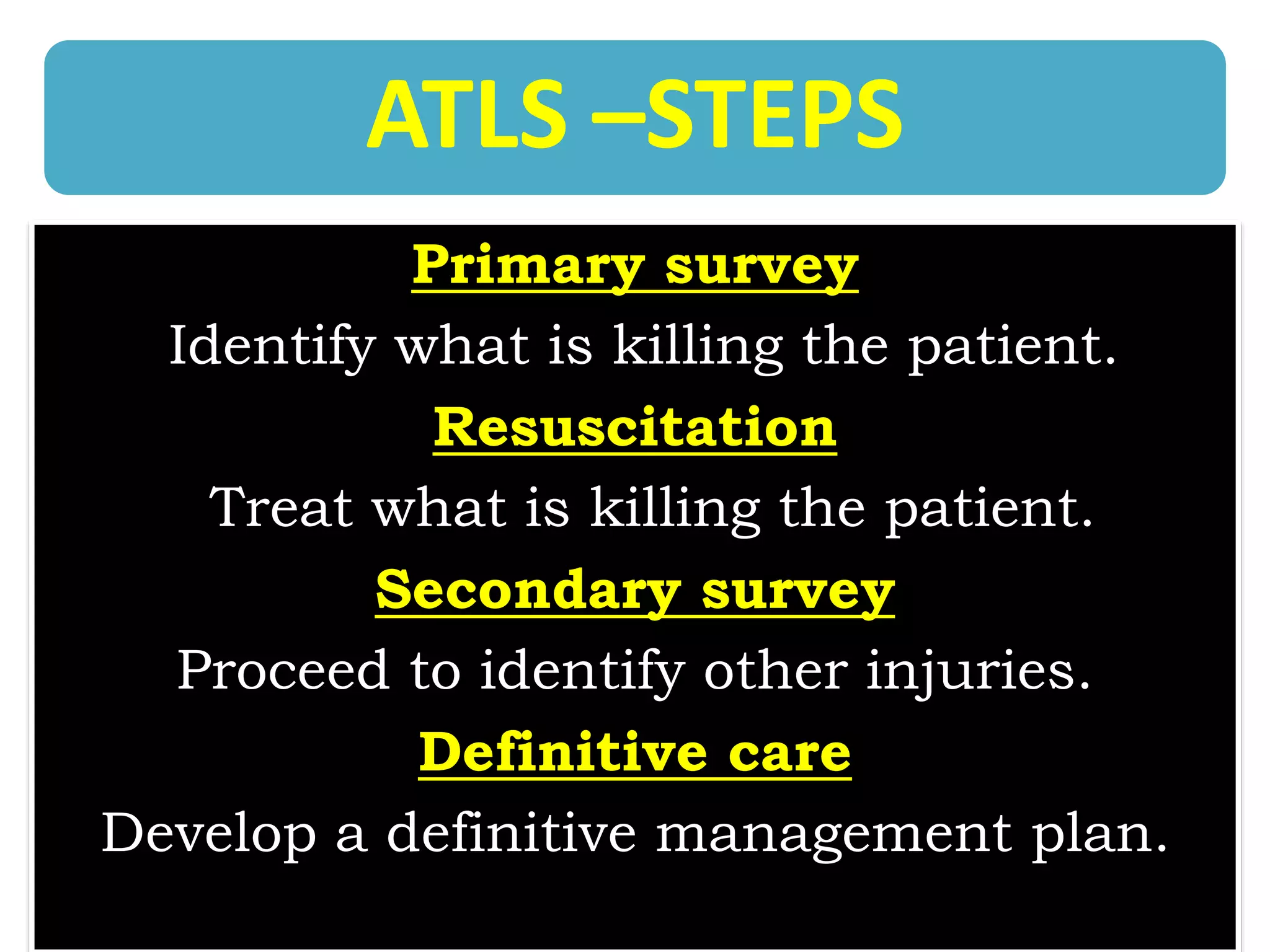
ATLS –STEPS
Primary survey
Identify what is killing the patient.
Resuscitation
Treat what is killing the patient.
Secondary survey
Proceed to identify other injuries.
Definitive care
Develop a definitive management plan.
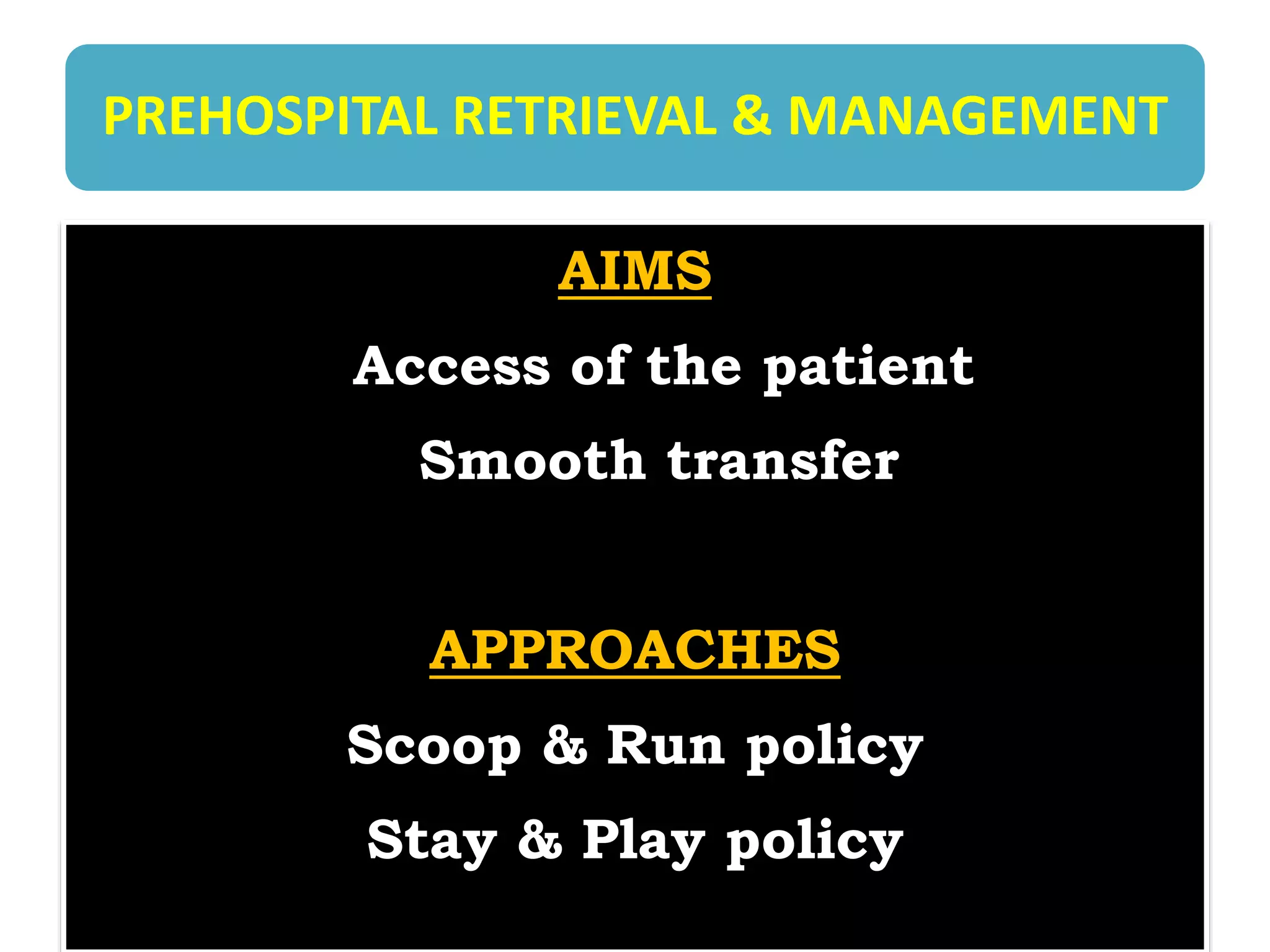
PREHOSPITAL RETRIEVAL & MANAGEMENT
AIMS
Access of the patient
Smooth transfer
APPROACHES
Scoop & Run policy
Stay & Play policy
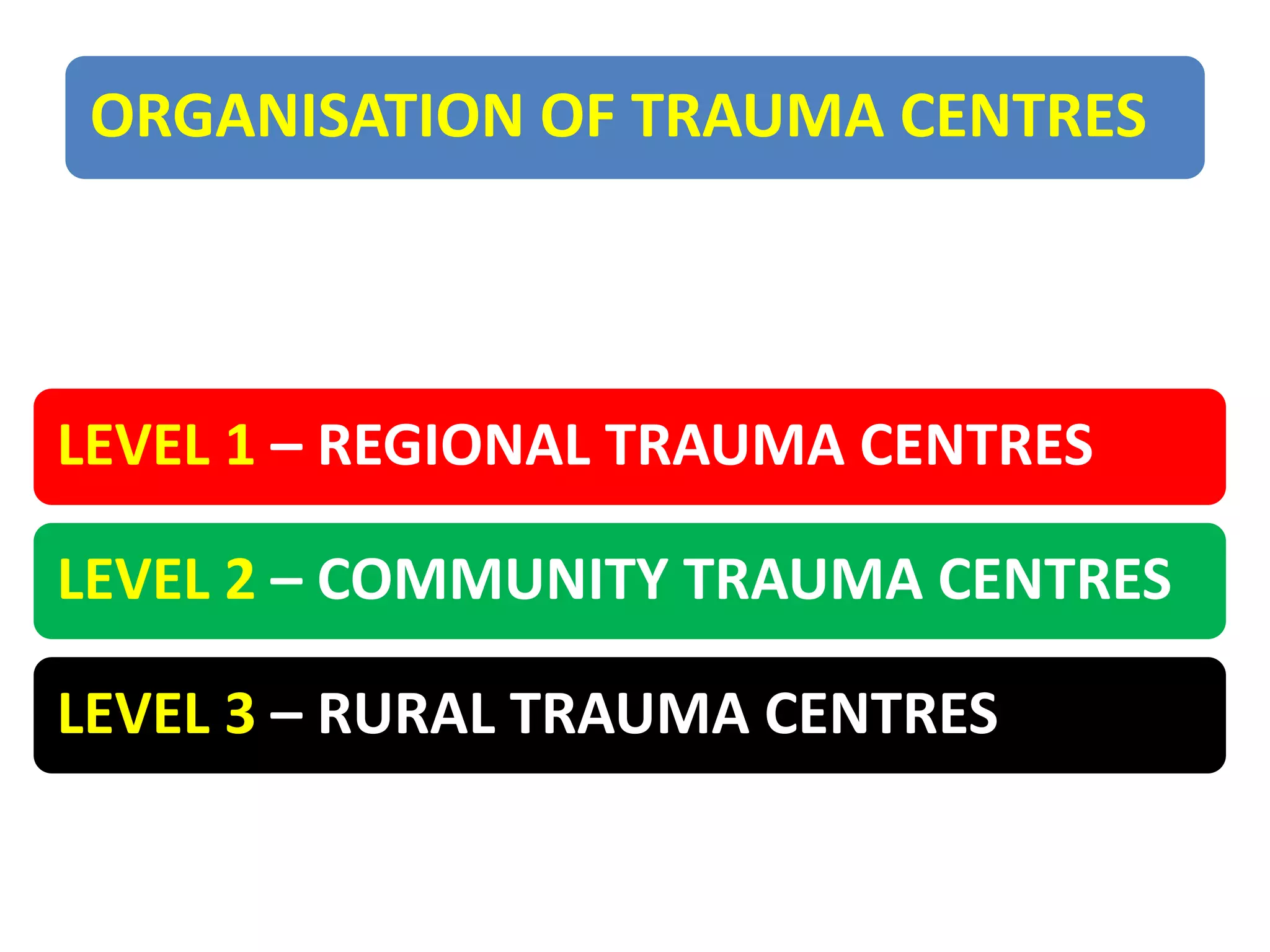
ORGANISATION OF TRAUMA CENTRES
LEVEL 1 – REGIONAL TRAUMA CENTRES
LEVEL 2 – COMMUNITY TRAUMA CENTRES
LEVEL 3 – RURAL TRAUMA CENTRES
MANAGEMENT IN HOSPITAL
TRAUMA CENTRE
should be adequately equipped
with
ATLS Trained Personnel
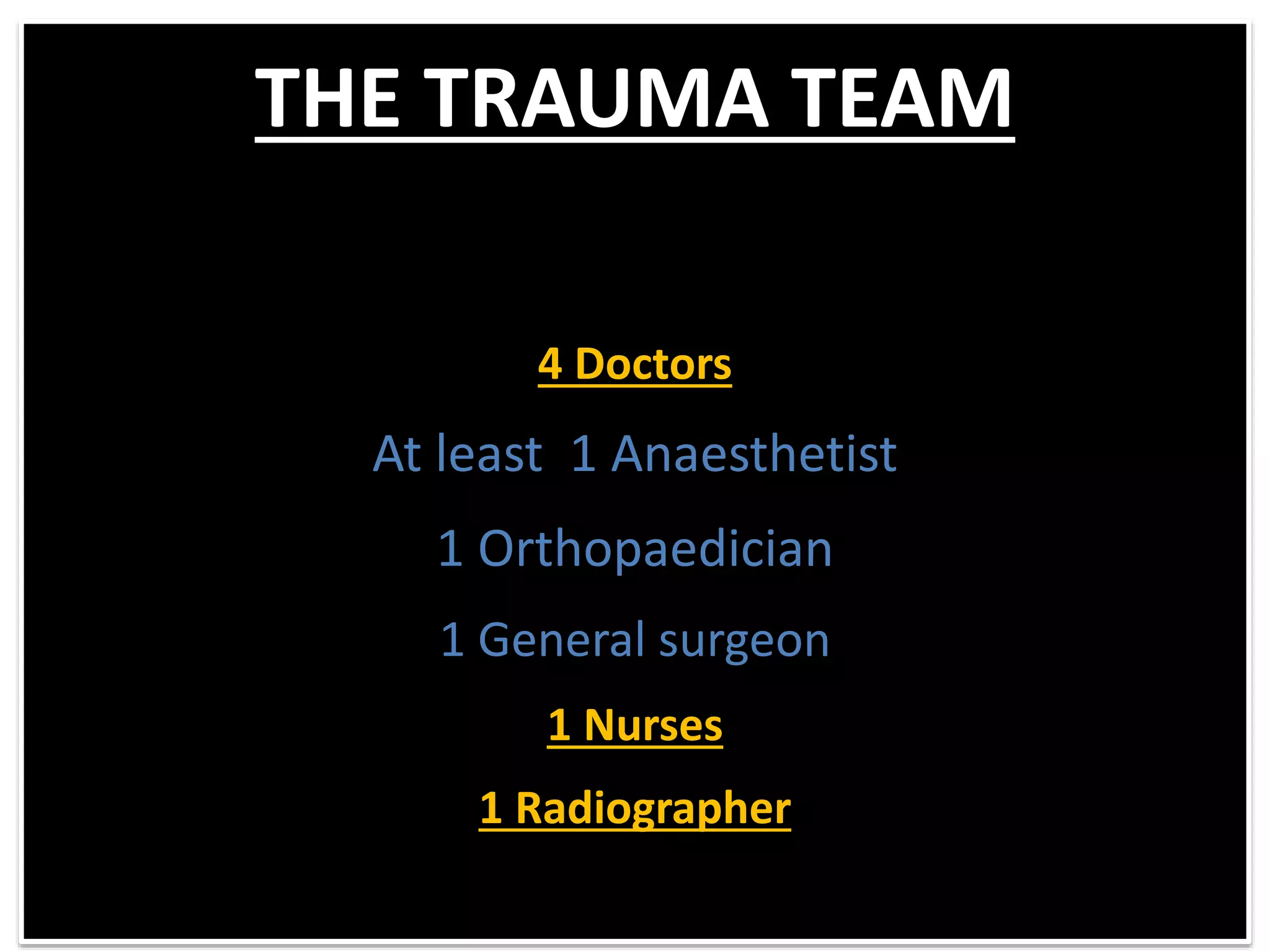
THE TRAUMA TEAM
4 Doctors
At least 1 Anaesthetist
1 Orthopaedician
1 General surgeon
1 Nurses
1 Radiographer
But no more than
6 people should
touch the patient at
one time
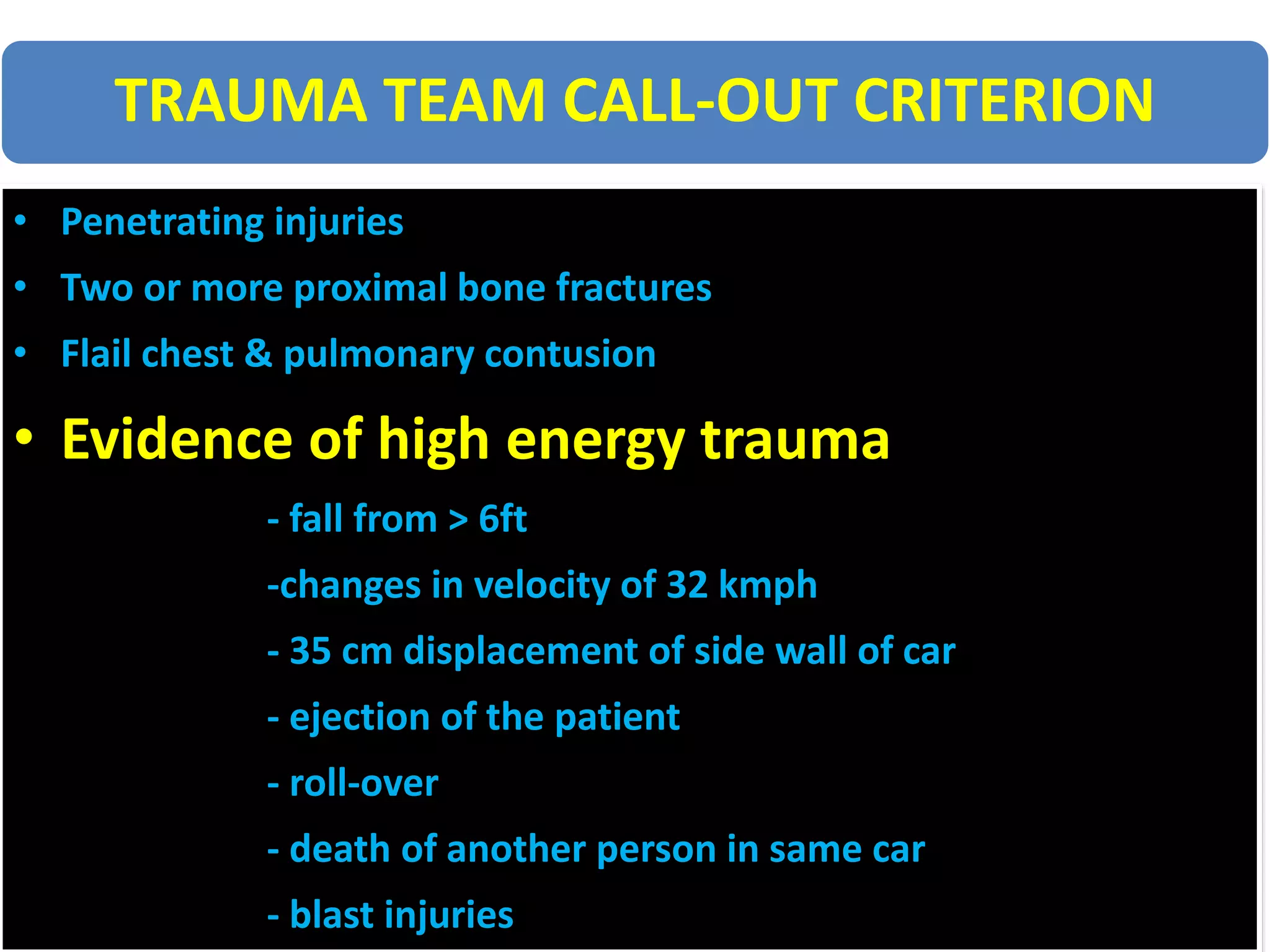
TRAUMA TEAM CALL-OUT CRITERION
• Penetrating injuries
• Two or more proximal bone fractures
• Flail chest & pulmonary contusion
• Evidence of high energy trauma
- fall from > 6ft
-changes in velocity of 32 kmph
- 35 cm displacement of side wall of car
- ejection of the patient
- roll-over
- death of another person in same car
- blast injuries
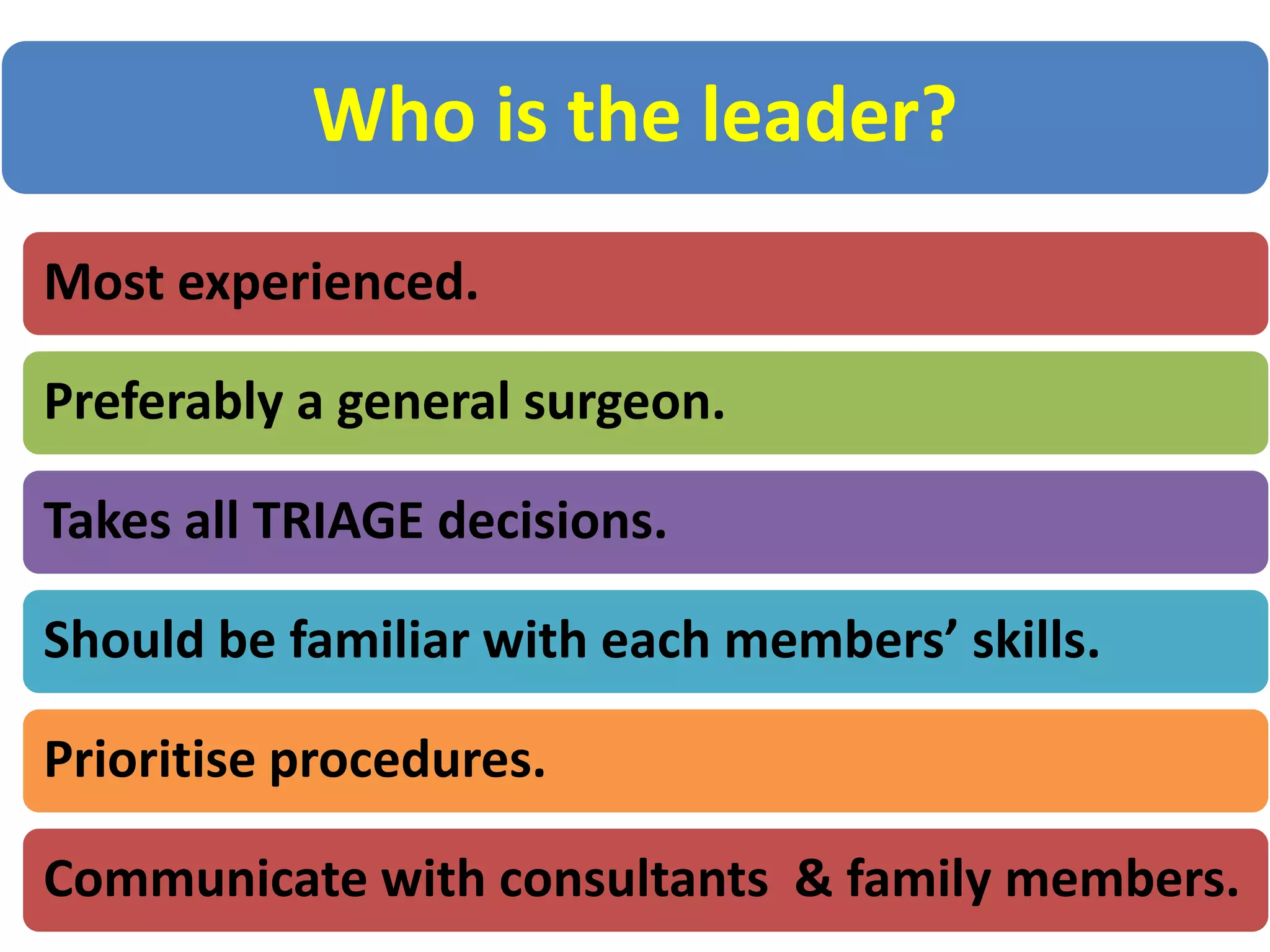
Who is the leader?
Most experienced.
Preferably a general surgeon.
Takes all TRIAGE decisions.
Should be familiar with each members’ skills.
Prioritise procedures.
Communicate with consultants & family members.
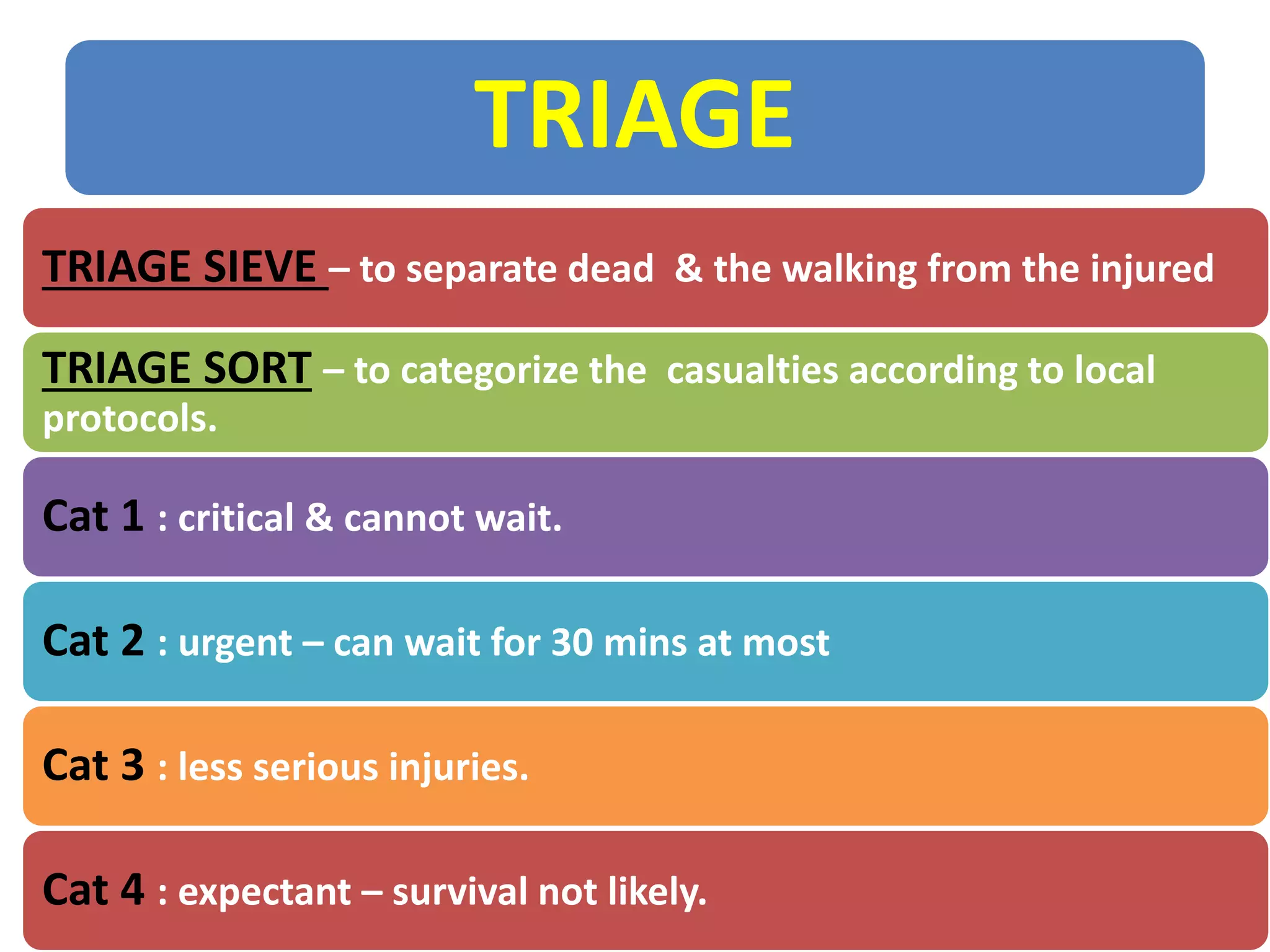
TRIAGE
TRIAGE SIEVE – to separate dead & the walking from the injured
TRIAGE SORT – to categorize the casualties according to local
protocols.
Cat 1 : critical & cannot wait.
Cat 2 : urgent – can wait for 30 mins at most
Cat 3 : less serious injuries.
Cat 4 : expectant – survival not likely.
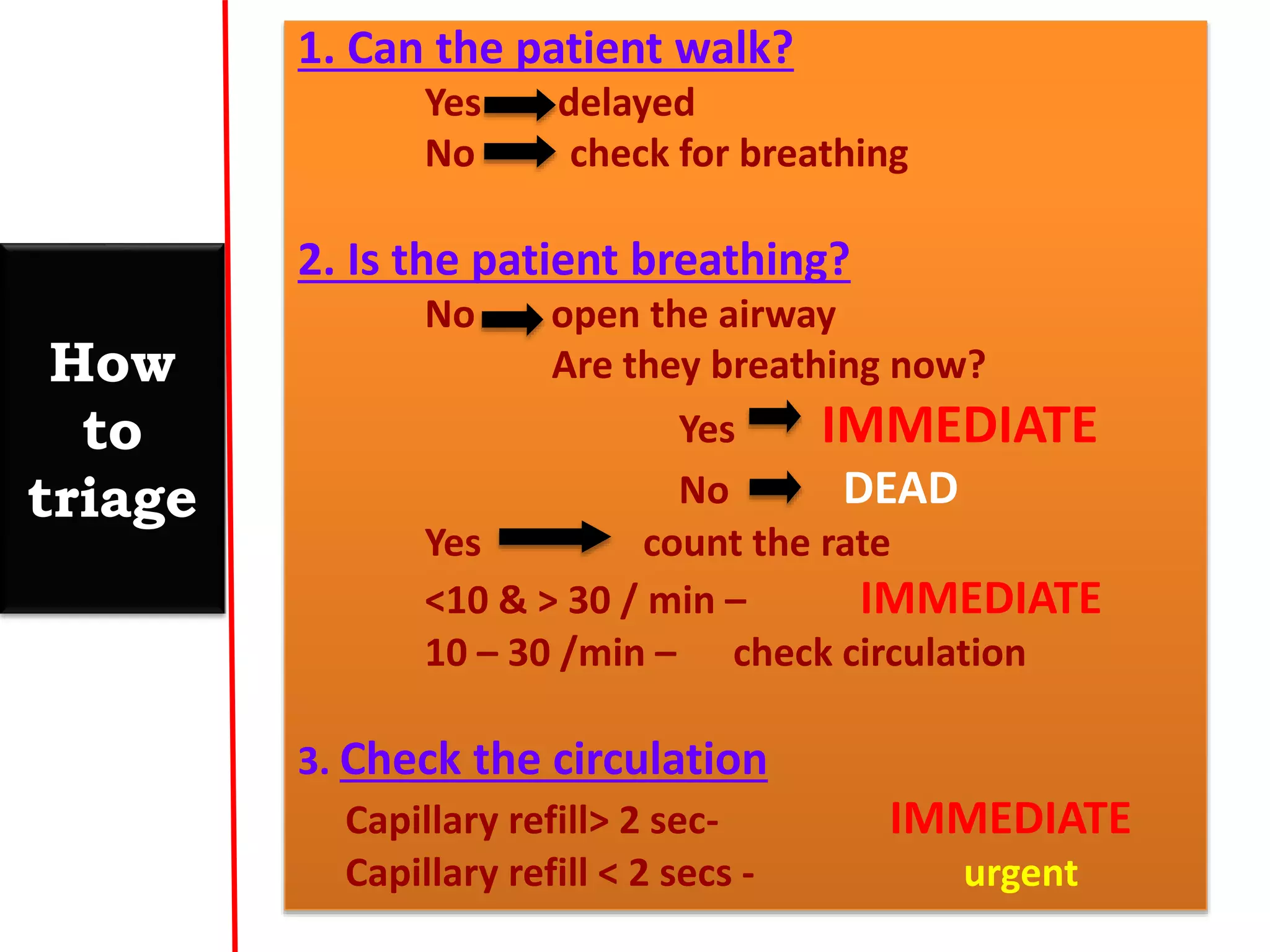
How
to
triage
1. Can the patient walk?
Yes delayed
No check for breathing
2. Is the patient breathing?
No open the airway
Are they breathing now?
Yes IMMEDIATE
No DEAD
Yes count the rate
<10 & > 30 / min – IMMEDIATE
10 – 30 /min – check circulation
3. Check the circulation
Capillary refill> 2 sec- IMMEDIATE
Capillary refill < 2 secs - urgent
Face book
Face book group:
Egyptian Ghanian healthcare alliance
For:
friendships
Photos
Videos
Sharing knowledge
THANK YOU

Introduction ATLS

  • 1.
  • 3.
    INTRODUCTION UK - >18, 000 deaths annually. > 60, 000 hospital admission. > Costing 2.2 billion pounds. USA > 120, 000 deaths annually. > 100 billion dollars. EGYPT > 13000 deaths annully > 60,000 hospital admission.
  • 4.
    MECHANISMS OF INJURY Typesof injury • Penetrating. • Non-penetrating blunt. • Blast. • Thermal. • Chemical. • Others - crush & barotrauma.
  • 5.
    TRIMODAL DISTRIBUTION OFDEATH Immediate death (50%) 0 to 1 hr. Early death (30%) 1 to 3 hrs. Late death ( 20%) 1 to 6 wks. Golden Hour
  • 6.
    ADVANCED TRAUMA LIFESUPPORT ( ATLS) Main purpose of the course Treat lethal injuries first Reassess Treat again
  • 7.
    ATLS –STEPS Primary survey Identifywhat is killing the patient. Resuscitation Treat what is killing the patient. Secondary survey Proceed to identify other injuries. Definitive care Develop a definitive management plan.
  • 8.
    PREHOSPITAL RETRIEVAL &MANAGEMENT AIMS Access of the patient Smooth transfer APPROACHES Scoop & Run policy Stay & Play policy
  • 9.
    ORGANISATION OF TRAUMACENTRES LEVEL 1 – REGIONAL TRAUMA CENTRES LEVEL 2 – COMMUNITY TRAUMA CENTRES LEVEL 3 – RURAL TRAUMA CENTRES
  • 10.
    MANAGEMENT IN HOSPITAL TRAUMACENTRE should be adequately equipped with ATLS Trained Personnel
  • 11.
    THE TRAUMA TEAM 4Doctors At least 1 Anaesthetist 1 Orthopaedician 1 General surgeon 1 Nurses 1 Radiographer
  • 12.
    But no morethan 6 people should touch the patient at one time
  • 13.
    TRAUMA TEAM CALL-OUTCRITERION • Penetrating injuries • Two or more proximal bone fractures • Flail chest & pulmonary contusion • Evidence of high energy trauma - fall from > 6ft -changes in velocity of 32 kmph - 35 cm displacement of side wall of car - ejection of the patient - roll-over - death of another person in same car - blast injuries
  • 14.
    Who is theleader? Most experienced. Preferably a general surgeon. Takes all TRIAGE decisions. Should be familiar with each members’ skills. Prioritise procedures. Communicate with consultants & family members.
  • 15.
    TRIAGE TRIAGE SIEVE –to separate dead & the walking from the injured TRIAGE SORT – to categorize the casualties according to local protocols. Cat 1 : critical & cannot wait. Cat 2 : urgent – can wait for 30 mins at most Cat 3 : less serious injuries. Cat 4 : expectant – survival not likely.
  • 16.
    How to triage 1. Can thepatient walk? Yes delayed No check for breathing 2. Is the patient breathing? No open the airway Are they breathing now? Yes IMMEDIATE No DEAD Yes count the rate <10 & > 30 / min – IMMEDIATE 10 – 30 /min – check circulation 3. Check the circulation Capillary refill> 2 sec- IMMEDIATE Capillary refill < 2 secs - urgent
  • 17.
    Face book Face bookgroup: Egyptian Ghanian healthcare alliance For: friendships Photos Videos Sharing knowledge
  • 18.