PEDIATRIC LIFE SUPPORT UPDATES 2020
EDITED &COLLECTED BY
Abd Elaal Mohamed Elbahnasy
Emergency Medicine Registrar
Egypt, Middle East
DR ABD ELAAL ELBAHNASY
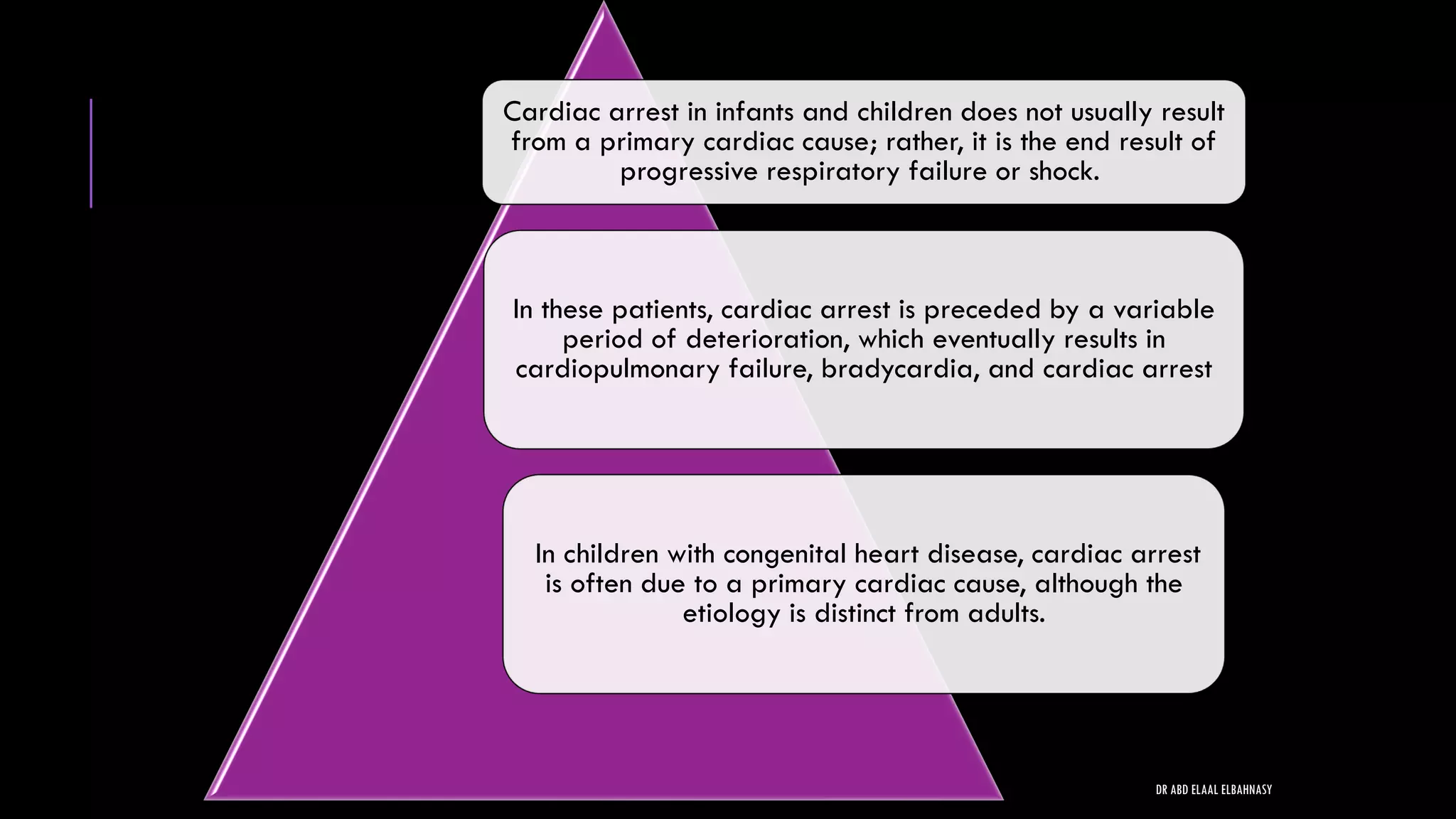
Cardiac arrest in infants and children does not usually result
from a primary cardiac cause; rather, it is the end result of
progressive respiratory failure or shock.
In these patients, cardiac arrest is preceded by a variable
period of deterioration, which eventually results in
cardiopulmonary failure, bradycardia, and cardiac arrest
In children with congenital heart disease, cardiac arrest
is often due to a primary cardiac cause, although the
etiology is distinct from adults.
DR ABD ELAAL ELBAHNASY
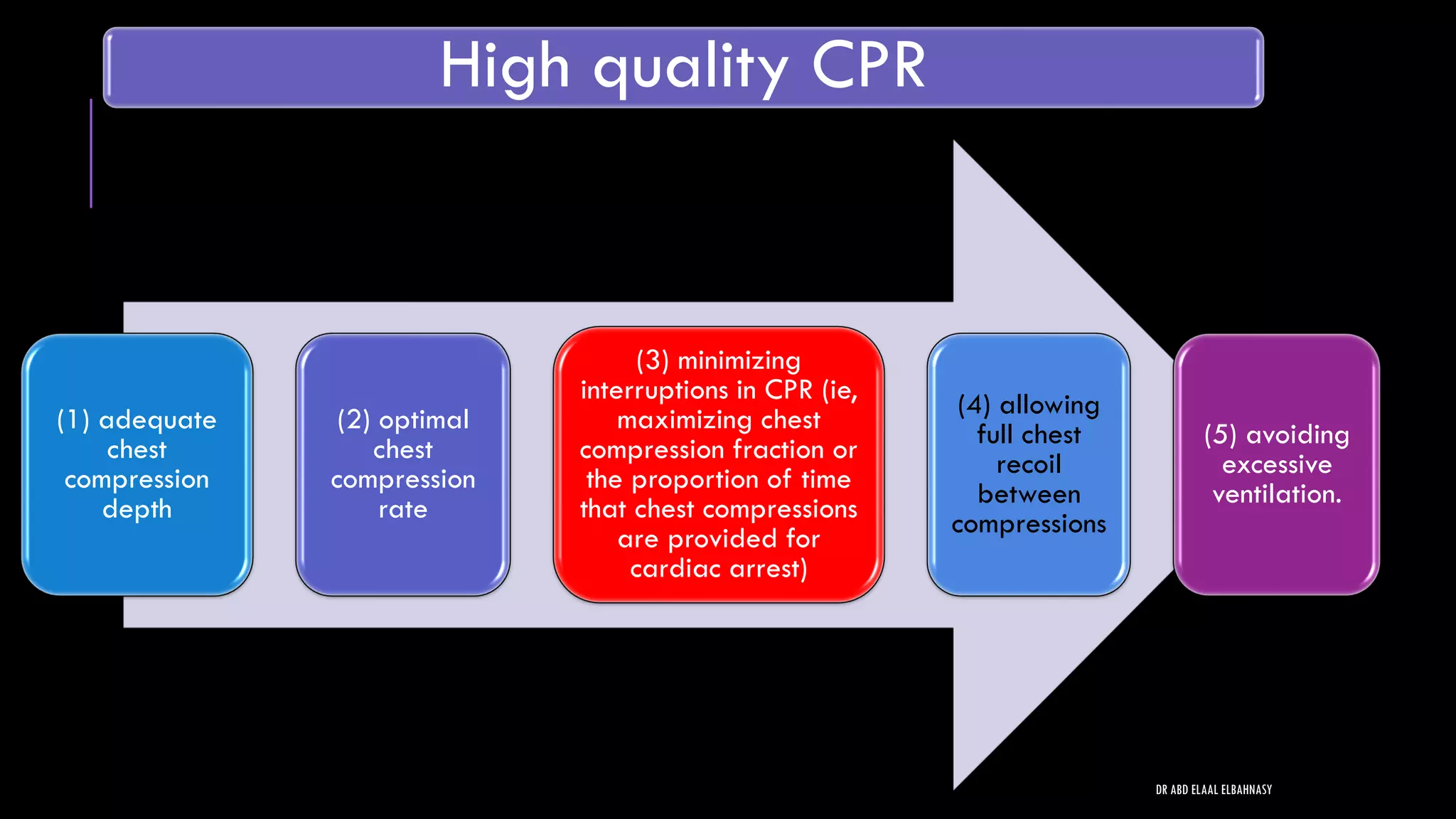
High quality CPR
(1) adequate
chest
compression
depth
(2) optimal
chest
compression
rate
(3) minimizing
interruptions in CPR (ie,
maximizing chest
compression fraction or
the proportion of time
that chest compressions
are provided for
cardiac arrest)
(4) allowing
full chest
recoil
between
compressions
(5) avoiding
excessive
ventilation.
DR ABD ELAAL ELBAHNASY
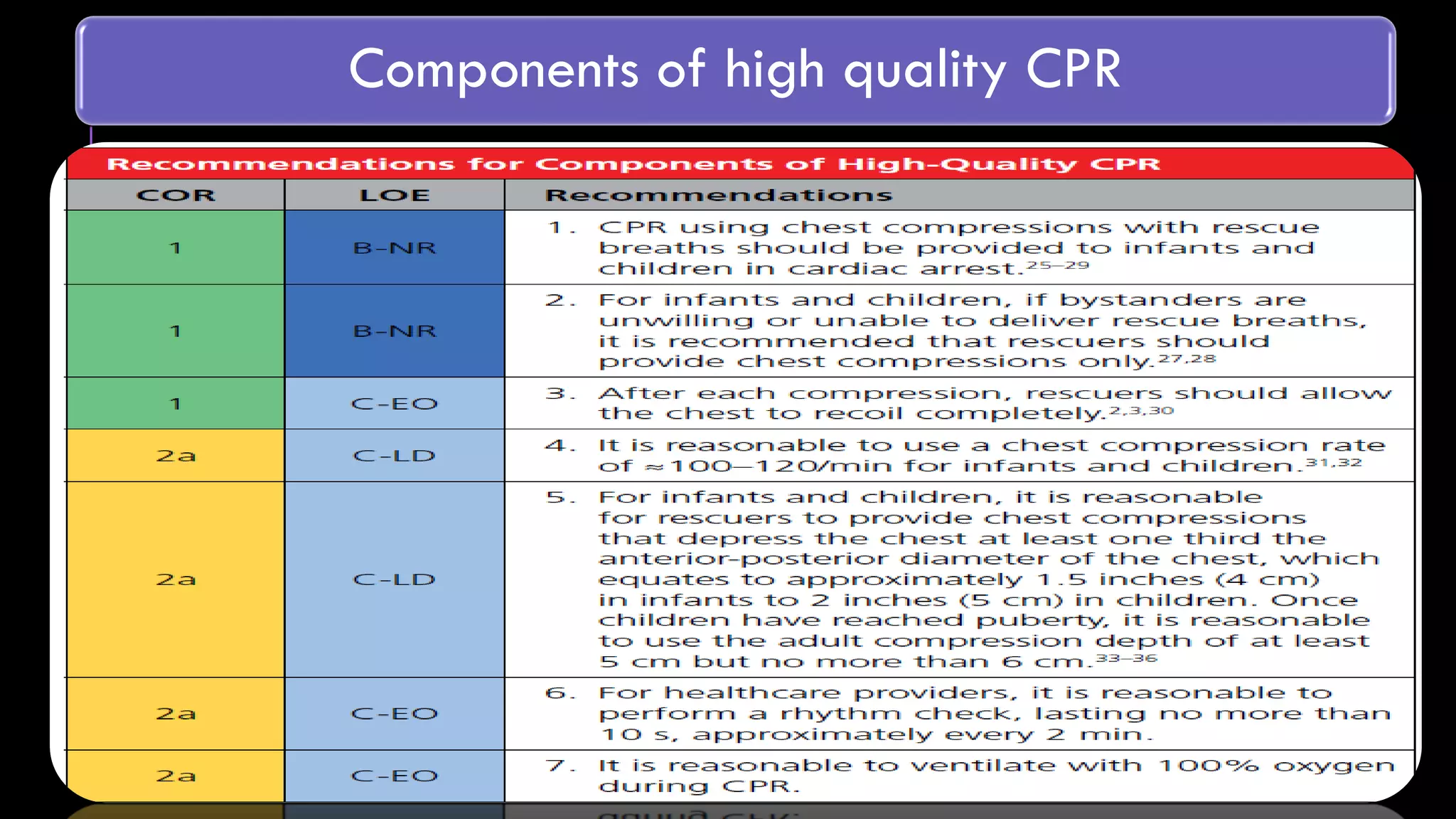
Components of high quality CPR
DR ABD ELAAL ELBAHNASY
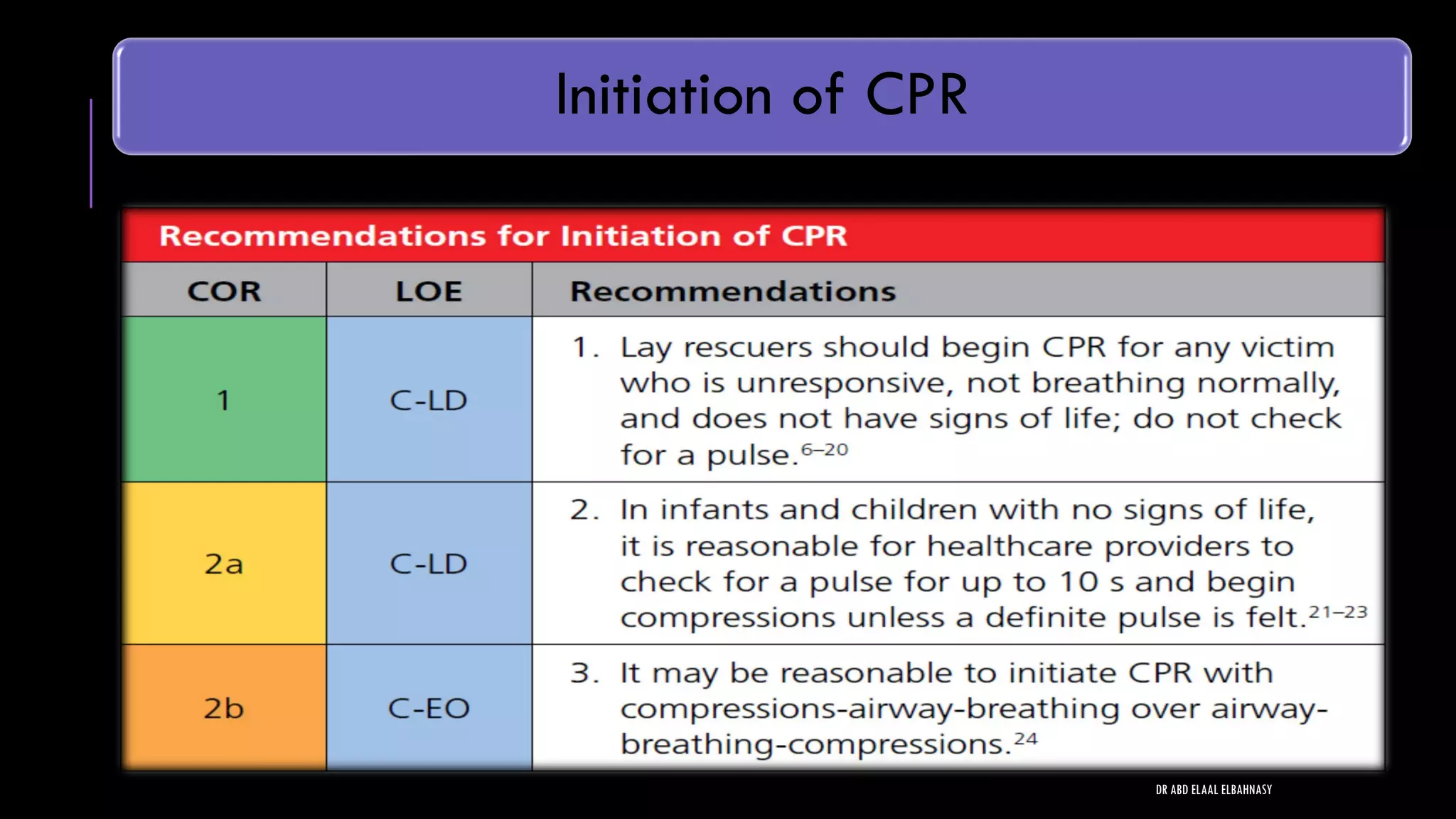
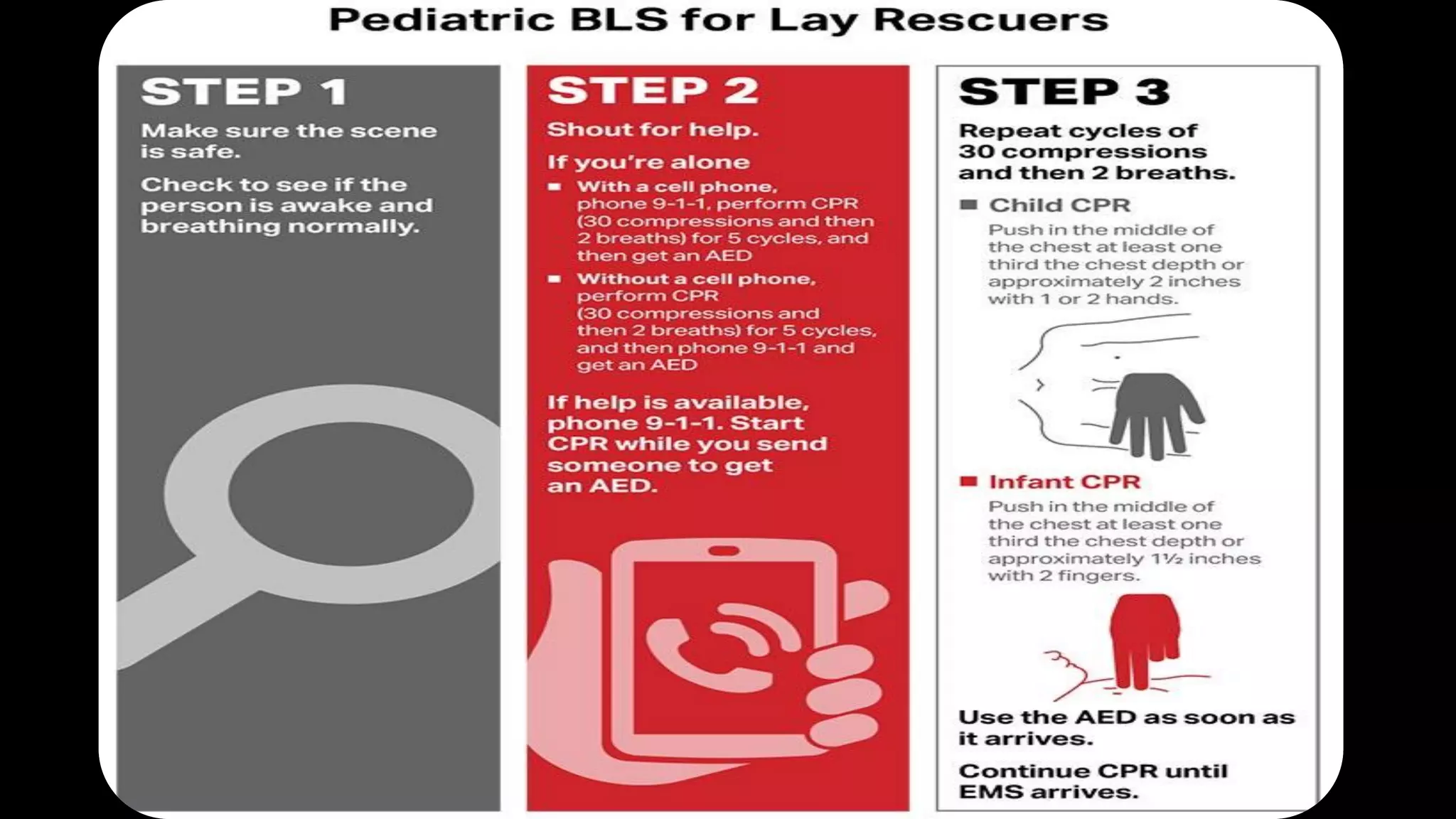
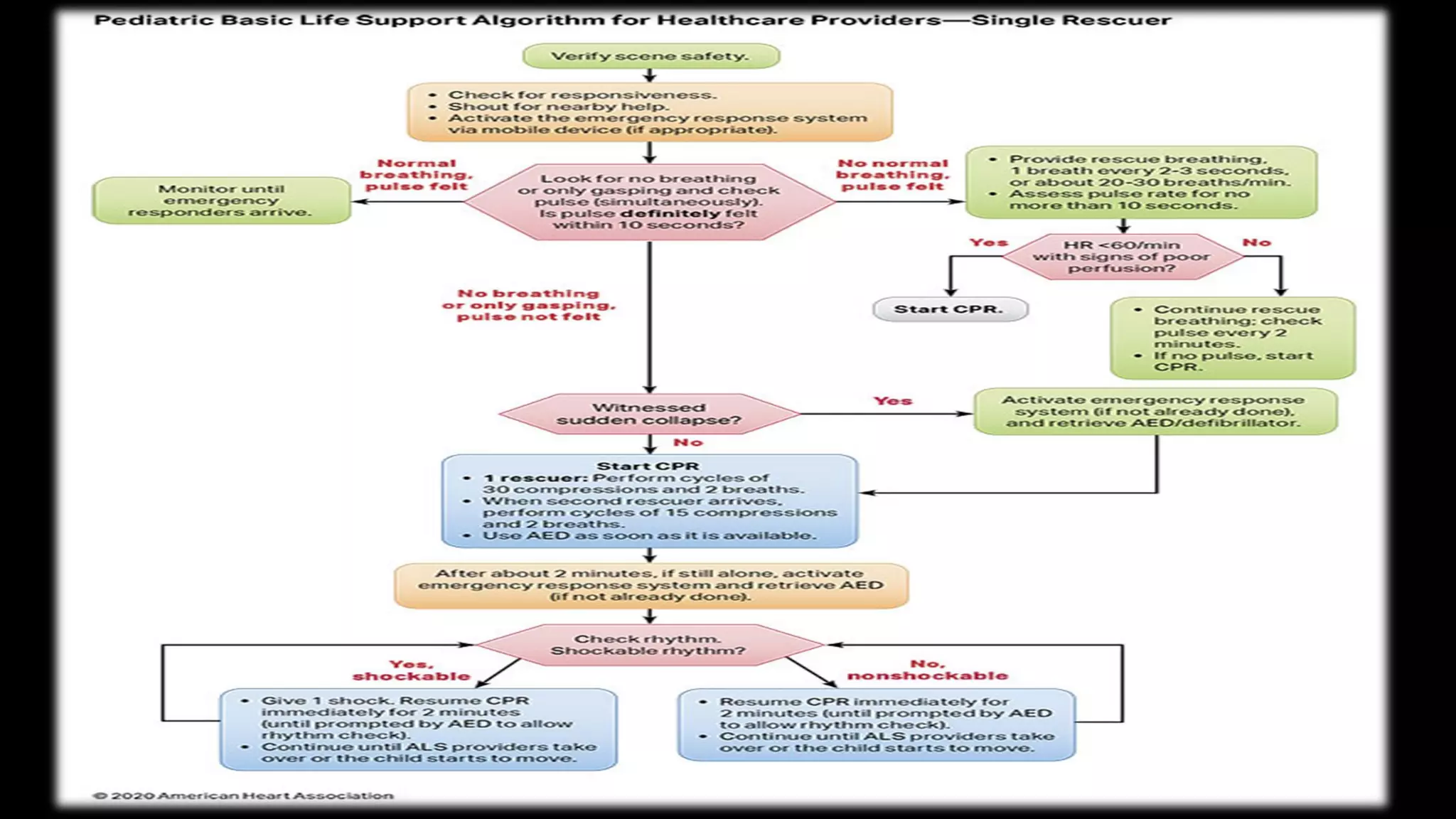
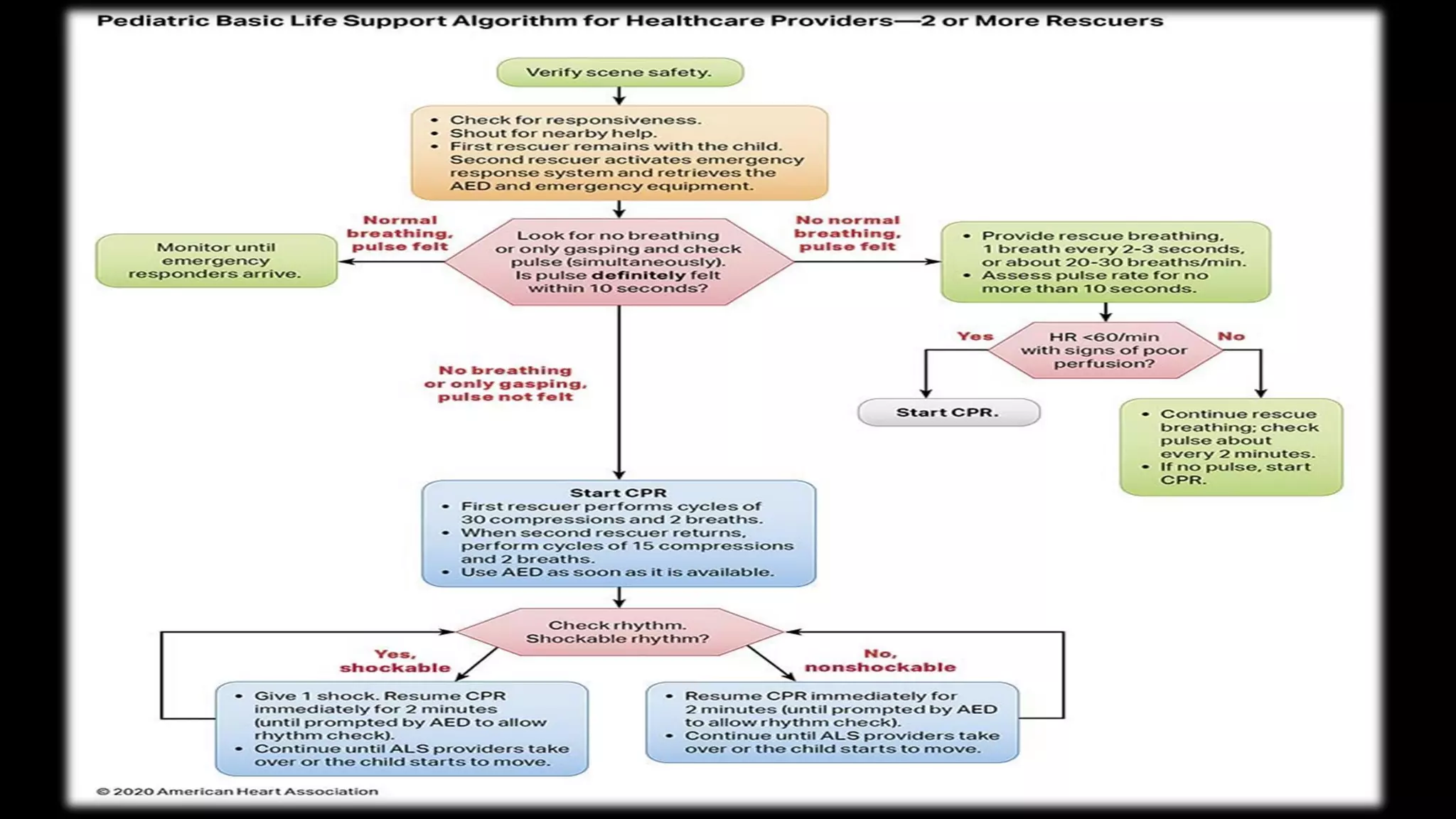
Initiation of CPR
DR ABD ELAAL ELBAHNASY
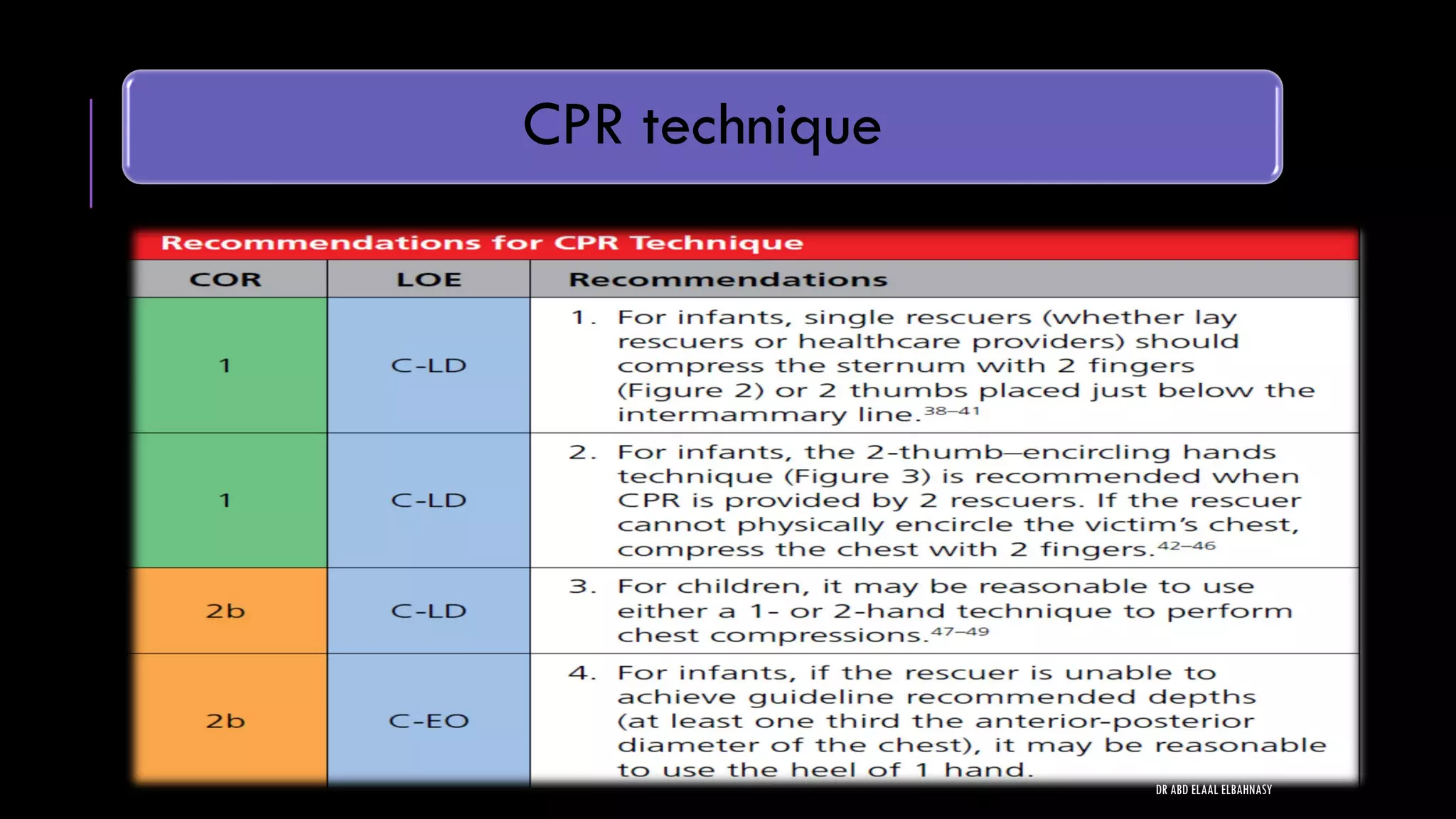
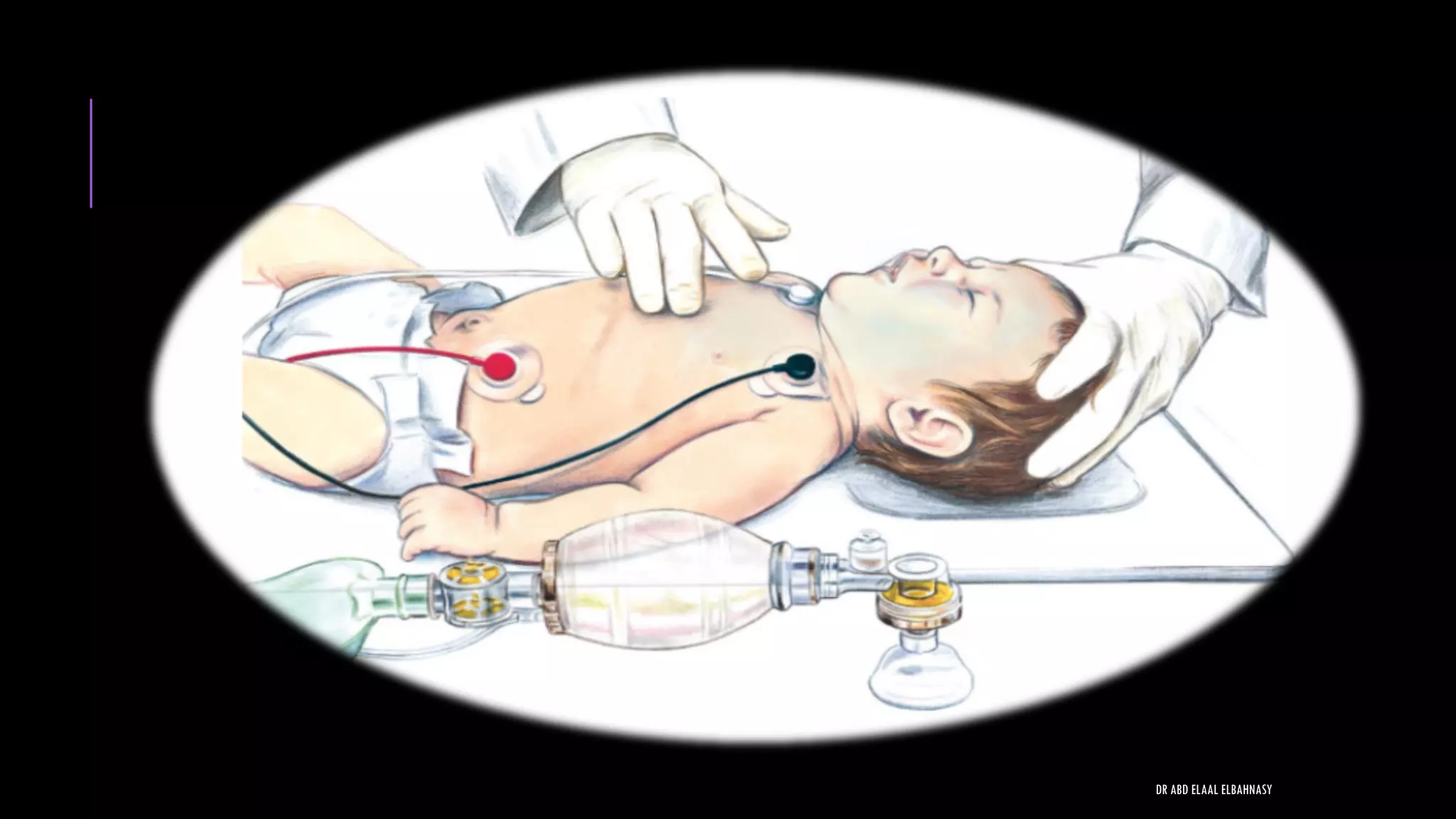
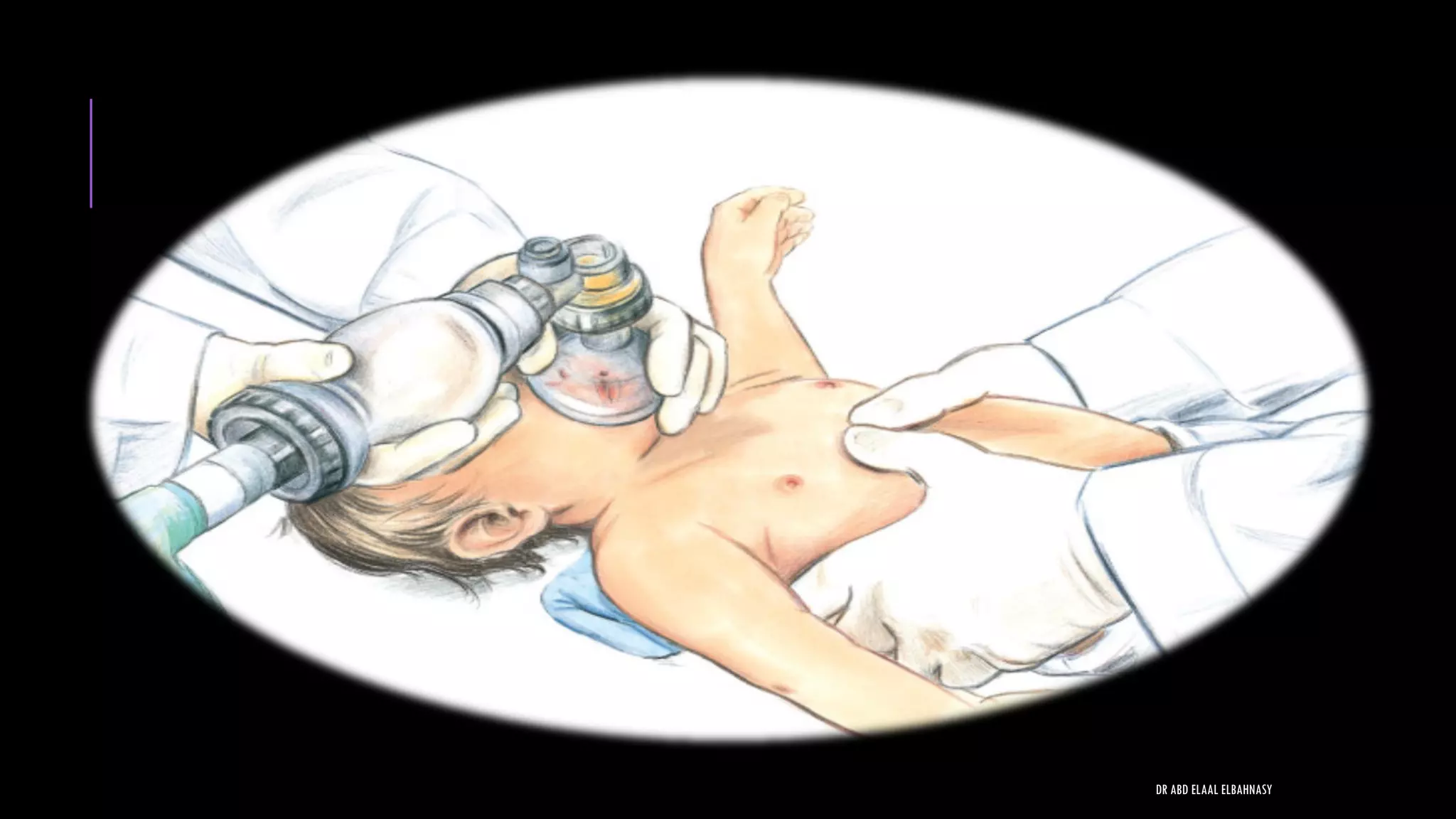
CPR technique
DR ABD ELAAL ELBAHNASY
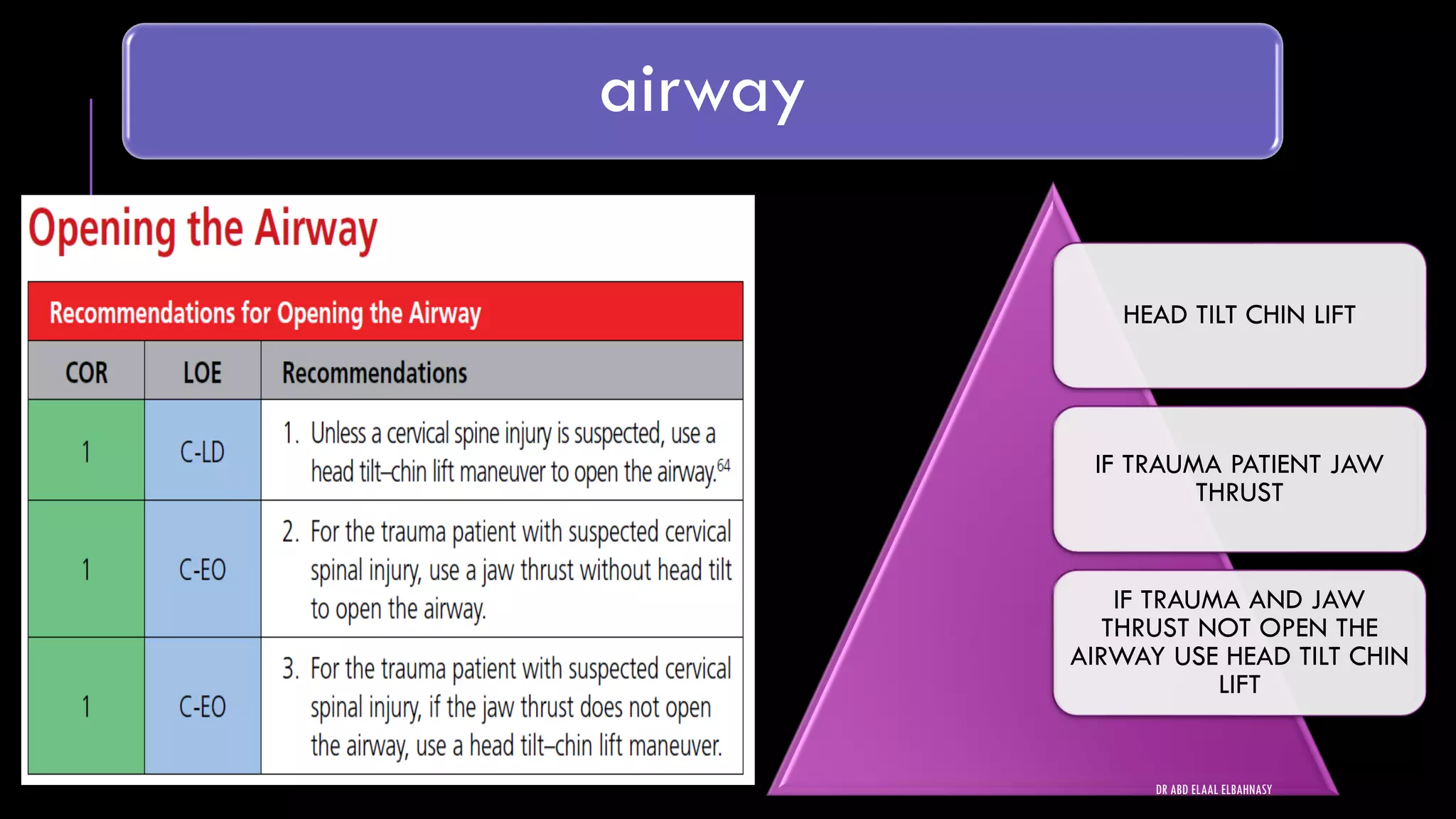
airway
HEAD TILT CHIN LIFT
IF TRAUMA PATIENT JAW
THRUST
IF TRAUMA AND JAW
THRUST NOT OPEN THE
AIRWAY USE HEAD TILT CHIN
LIFT
DR ABD ELAAL ELBAHNASY
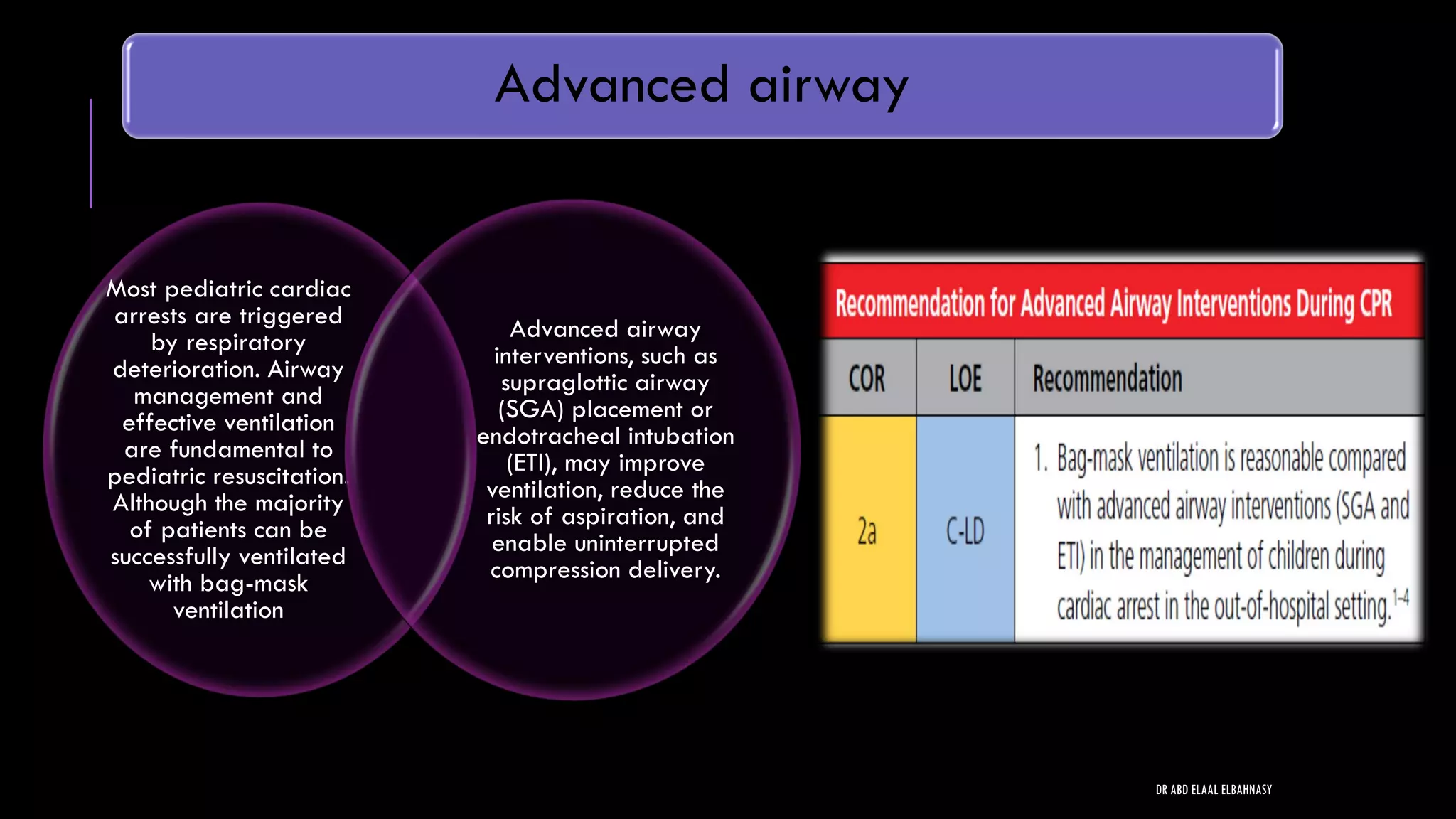
Advanced airway
Most pediatric cardiac
arrests are triggered
by respiratory
deterioration. Airway
management and
effective ventilation
are fundamental to
pediatric resuscitation.
Although the majority
of patients can be
successfully ventilated
with bag-mask
ventilation
Advanced airway
interventions, such as
supraglottic airway
(SGA) placement or
endotracheal intubation
(ETI), may improve
ventilation, reduce the
risk of aspiration, and
enable uninterrupted
compression delivery.
DR ABD ELAAL ELBAHNASY
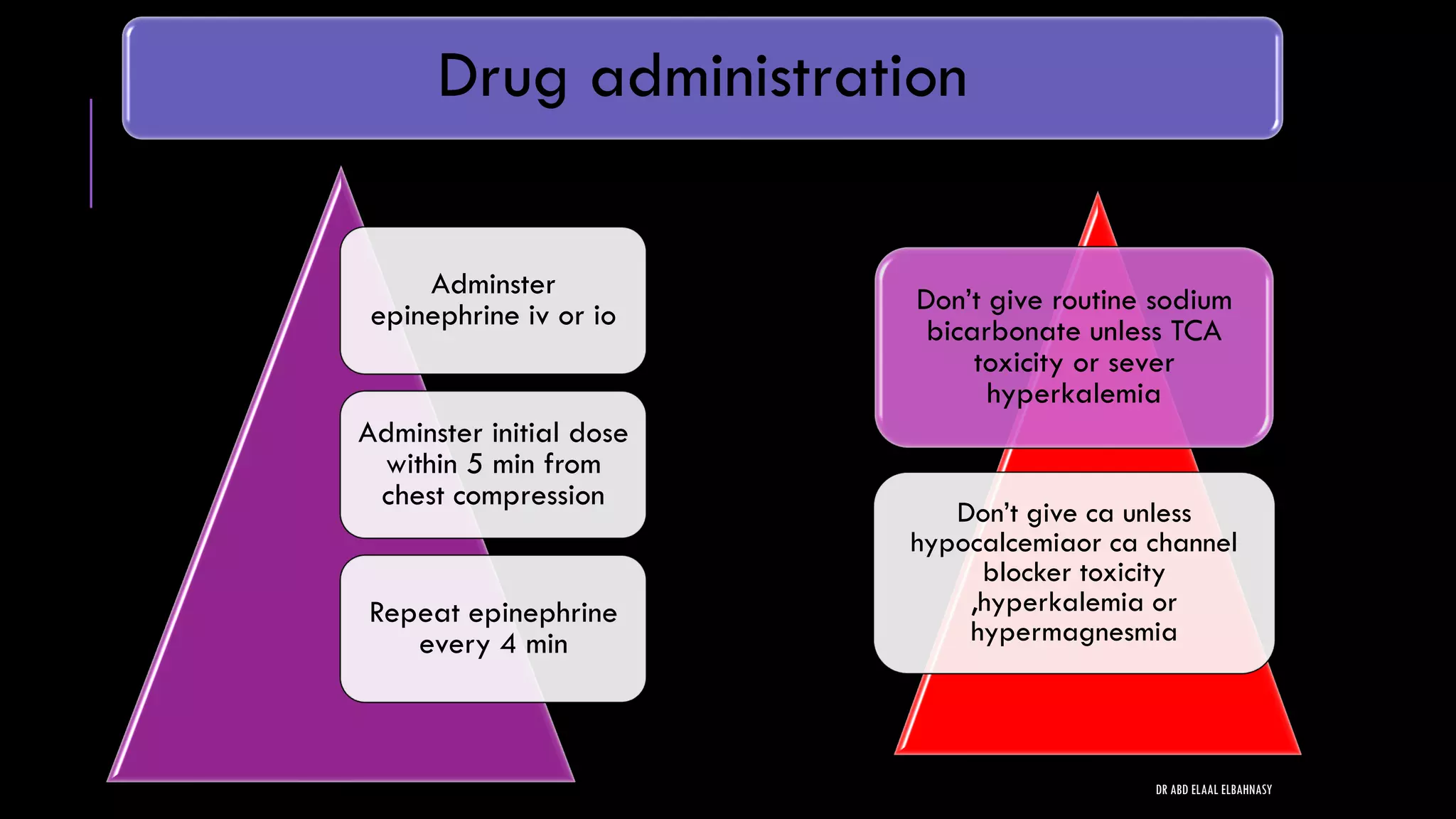
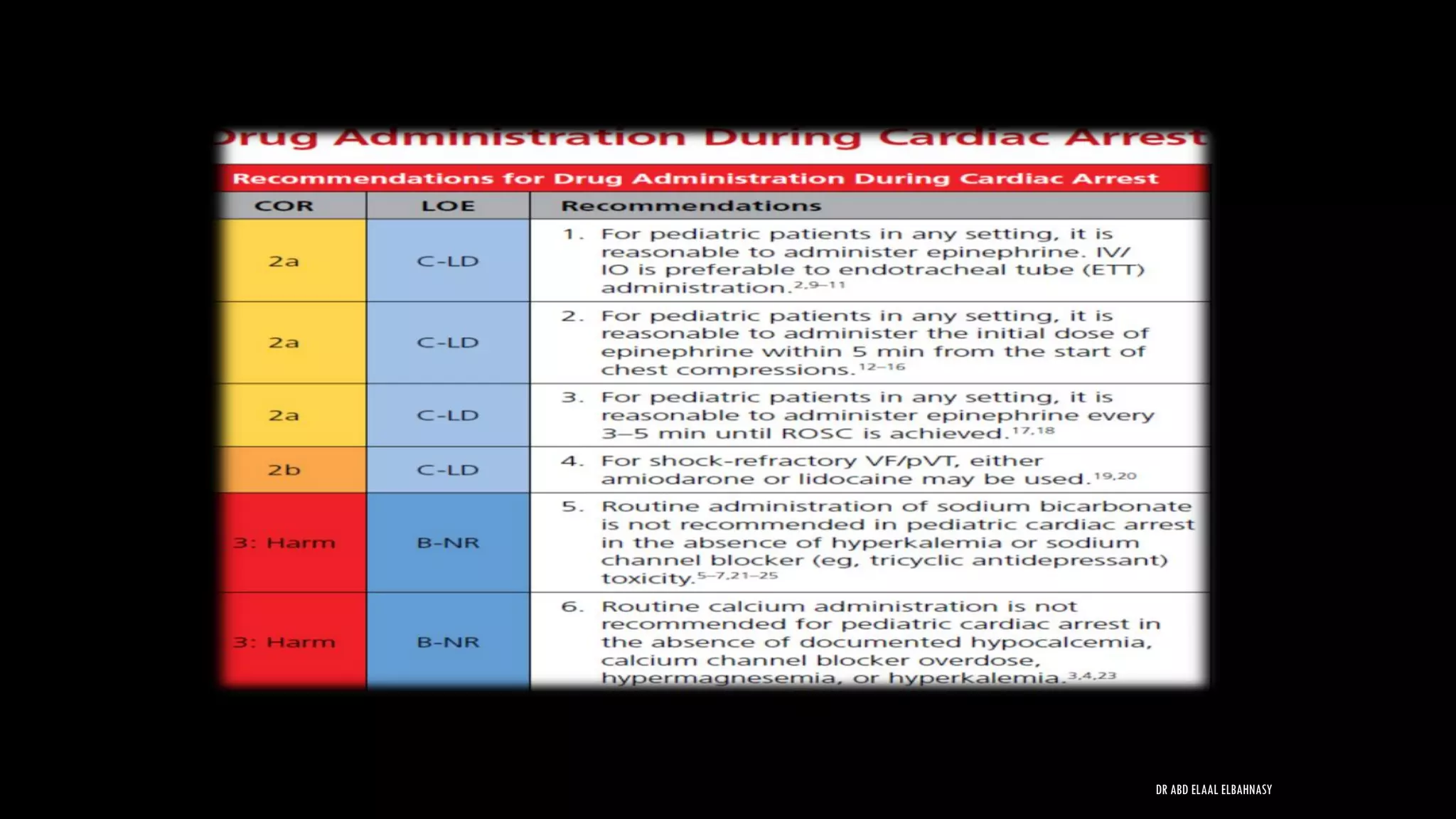
Drug administration
Don’t give routine sodium
bicarbonate unless TCA
toxicity or sever
hyperkalemia
Don’t give ca unless
hypocalcemiaor ca channel
blocker toxicity
,hyperkalemia or
hypermagnesmia
Adminster
epinephrine iv or io
Adminster initial dose
within 5 min from
chest compression
Repeat epinephrine
every 4 min
DR ABD ELAAL ELBAHNASY
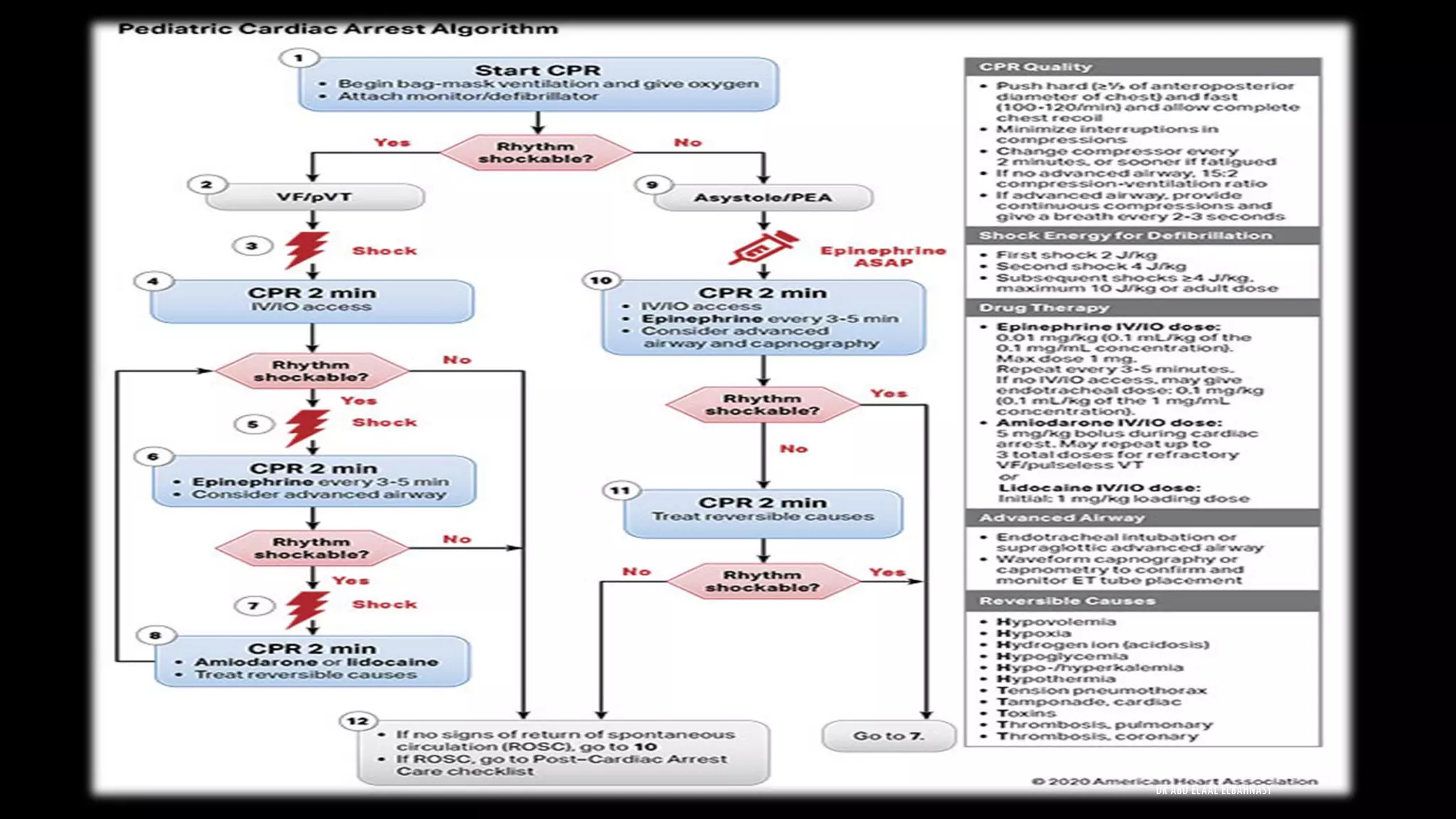
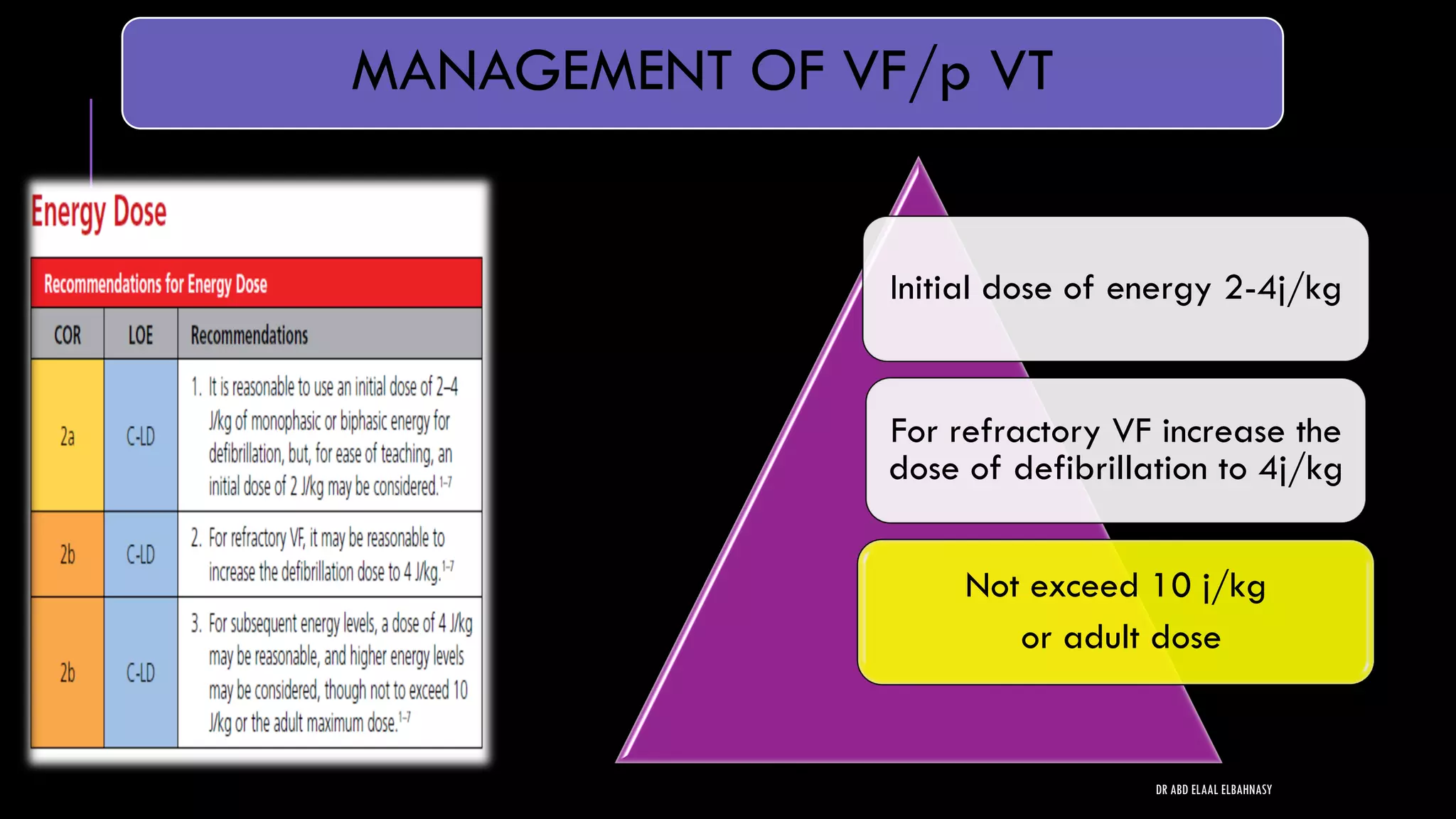
MANAGEMENT OF VF/p VT
Initial dose of energy 2-4j/kg
For refractory VF increase the
dose of defibrillation to 4j/kg
Not exceed 10 j/kg
or adult dose
DR ABD ELAAL ELBAHNASY
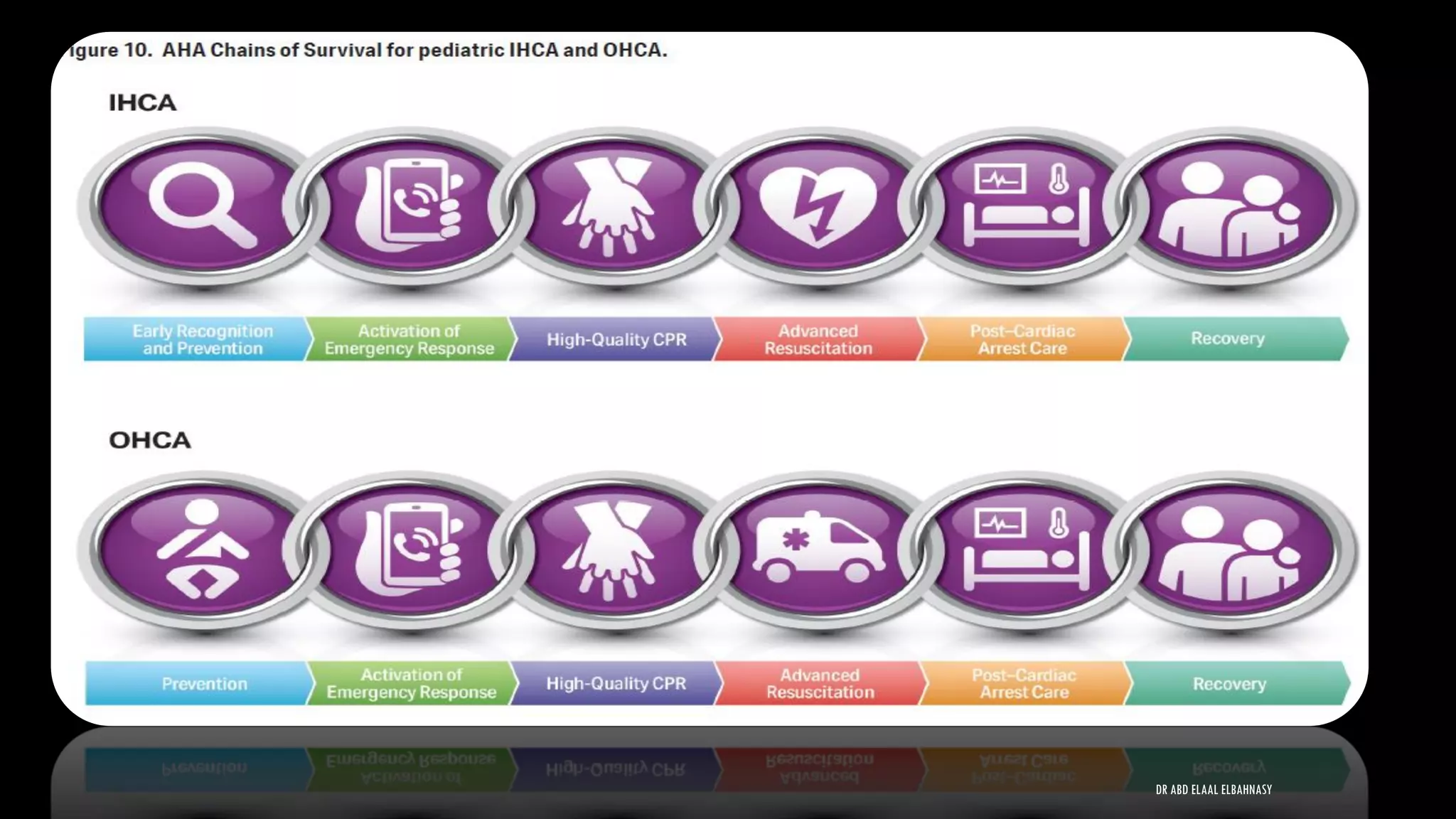
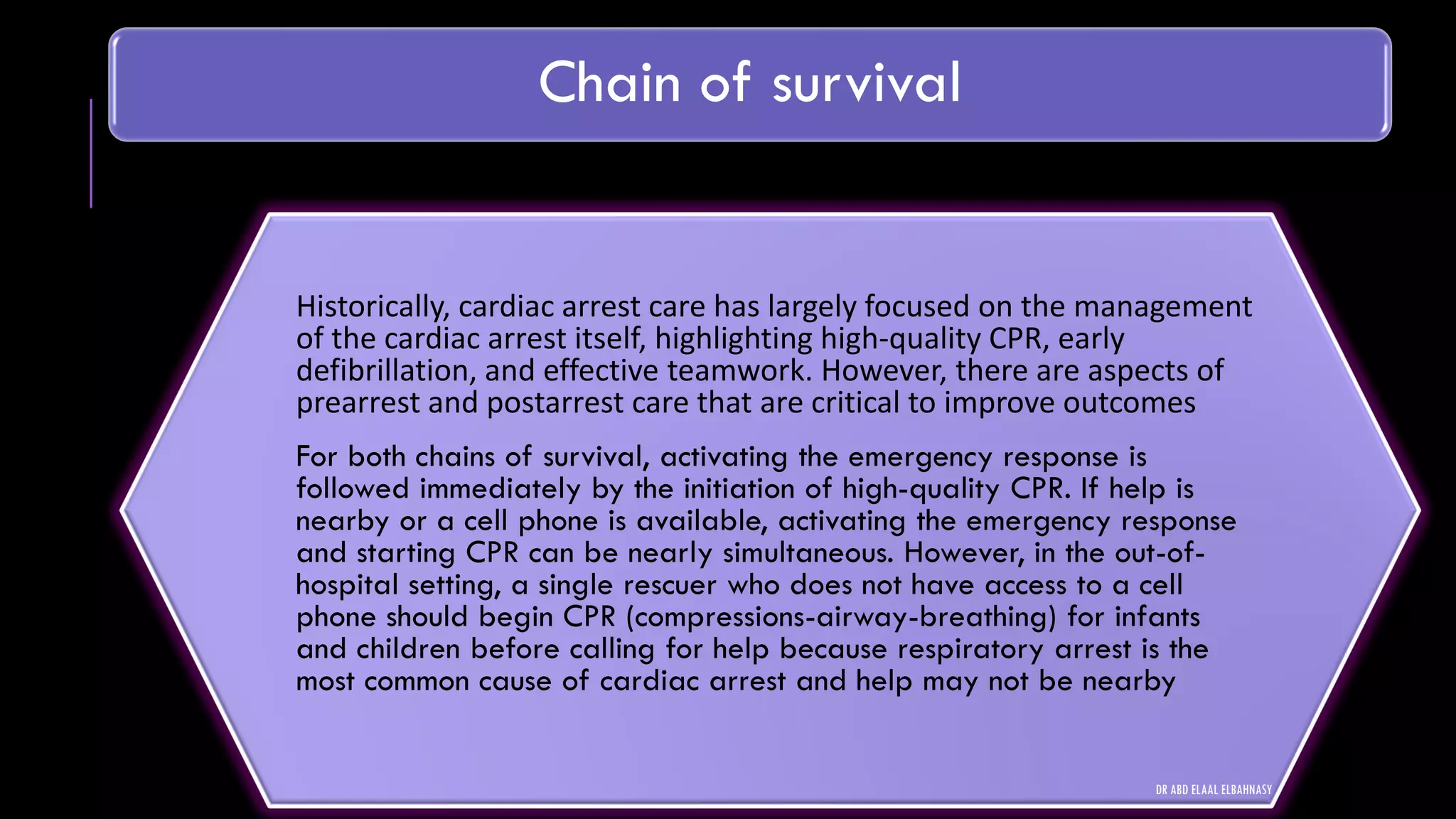
Chain of survival
Historically, cardiac arrest care has largely focused on the management
of the cardiac arrest itself, highlighting high-quality CPR, early
defibrillation, and effective teamwork. However, there are aspects of
prearrest and postarrest care that are critical to improve outcomes
For both chains of survival, activating the emergency response is
followed immediately by the initiation of high-quality CPR. If help is
nearby or a cell phone is available, activating the emergency response
and starting CPR can be nearly simultaneous. However, in the out-of-
hospital setting, a single rescuer who does not have access to a cell
phone should begin CPR (compressions-airway-breathing) for infants
and children before calling for help because respiratory arrest is the
most common cause of cardiac arrest and help may not be nearby
DR ABD ELAAL ELBAHNASY
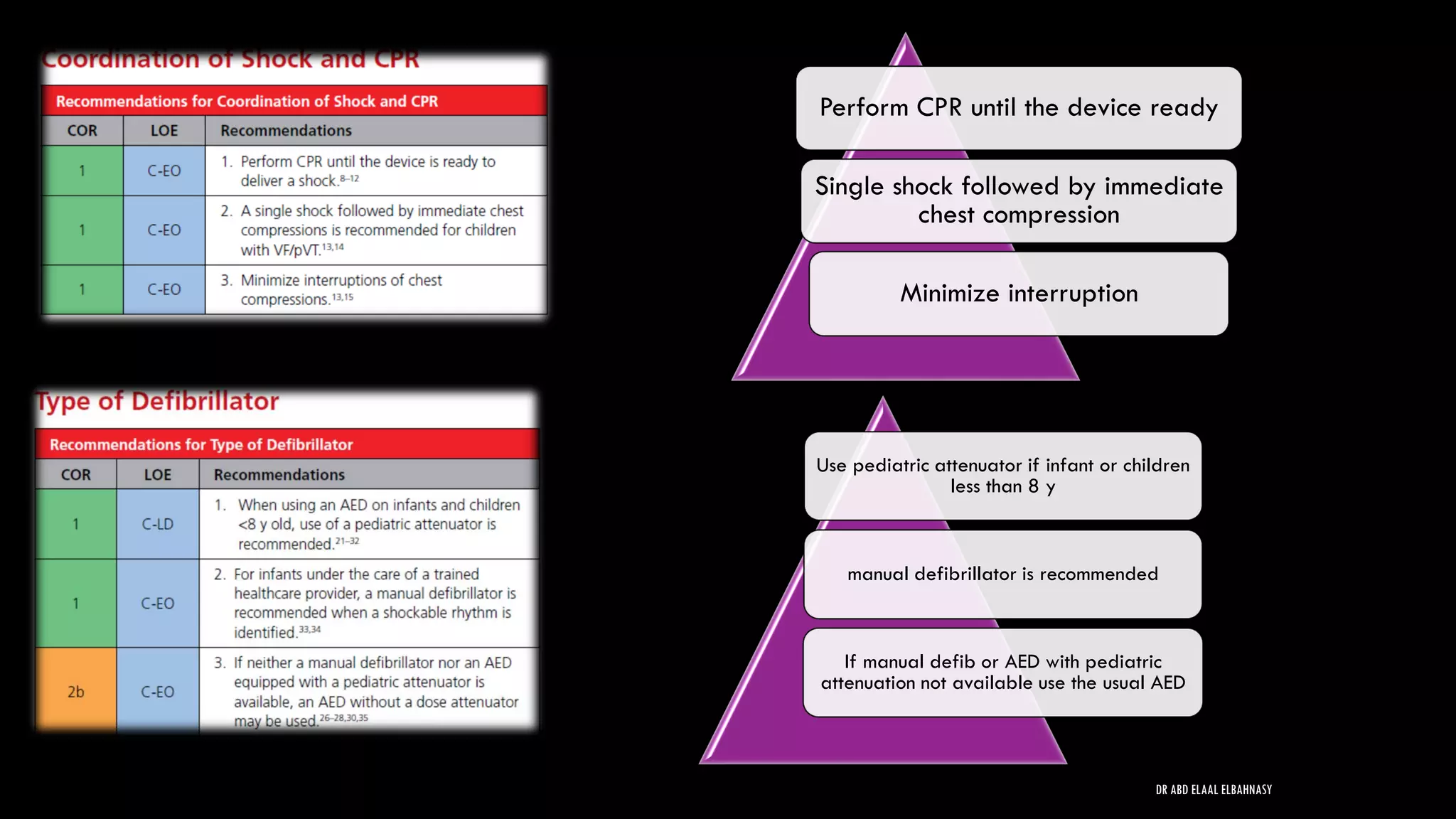
Perform CPR until the device ready
Single shock followed by immediate
chest compression
Minimize interruption
Use pediatric attenuator if infant or children
less than 8 y
manual defibrillator is recommended
If manual defib or AED with pediatric
attenuation not available use the usual AED
DR ABD ELAAL ELBAHNASY
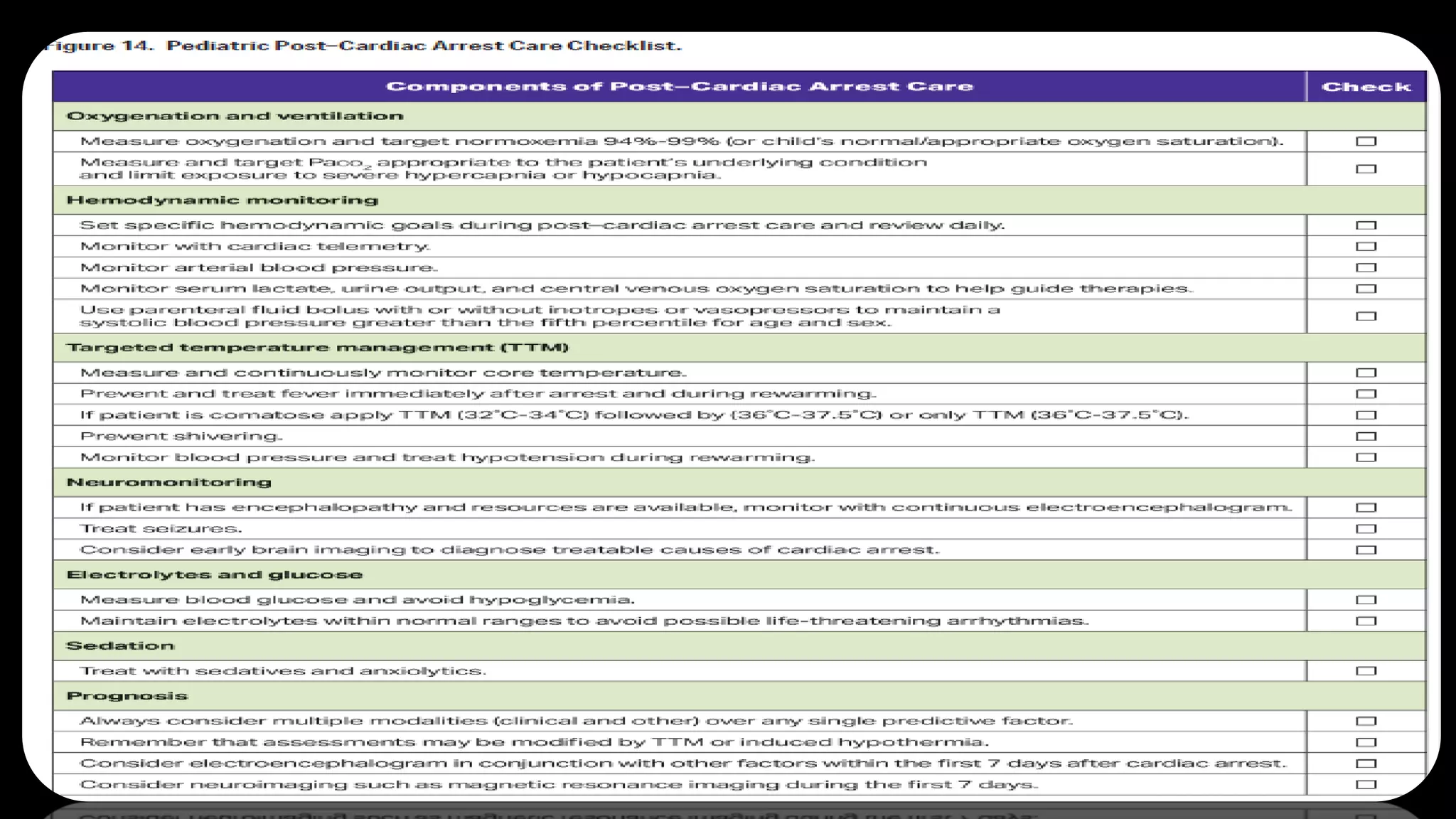
POST–CARDIAC
ARREST CARE
TREATMENT
AND
MONITORING
DR ABD ELAAL ELBAHNASY
Maintain normoxemia
Wean oxygen at target of
oxyhemoglobin
94-99%
Limit exposure to sever
hypercapnia or hypocapnia
DR ABD ELAAL ELBAHNASY
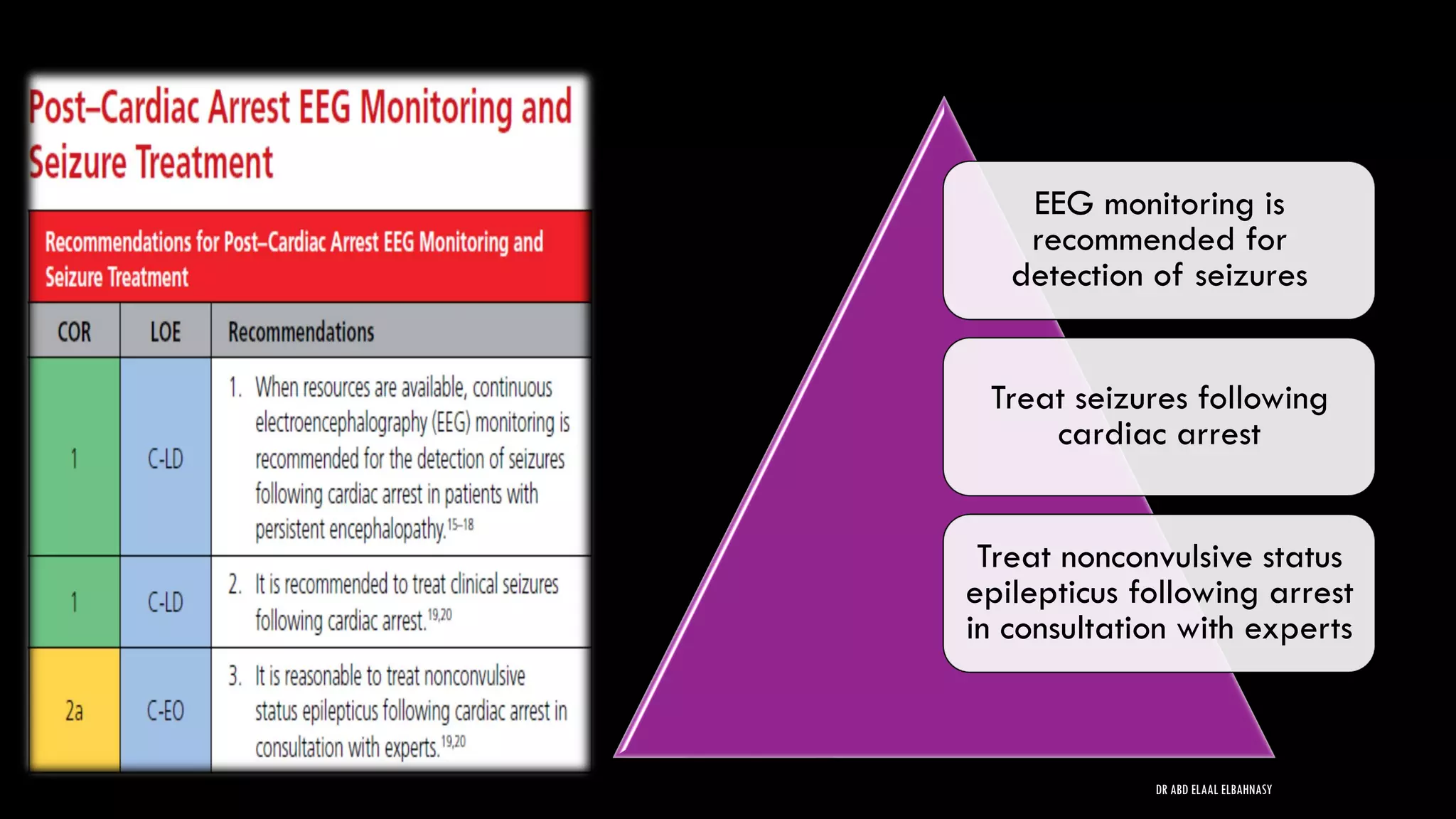
EEG monitoring is
recommended for
detection of seizures
Treat seizures following
cardiac arrest
Treat nonconvulsive status
epilepticus following arrest
in consultation with experts
DR ABD ELAAL ELBAHNASY
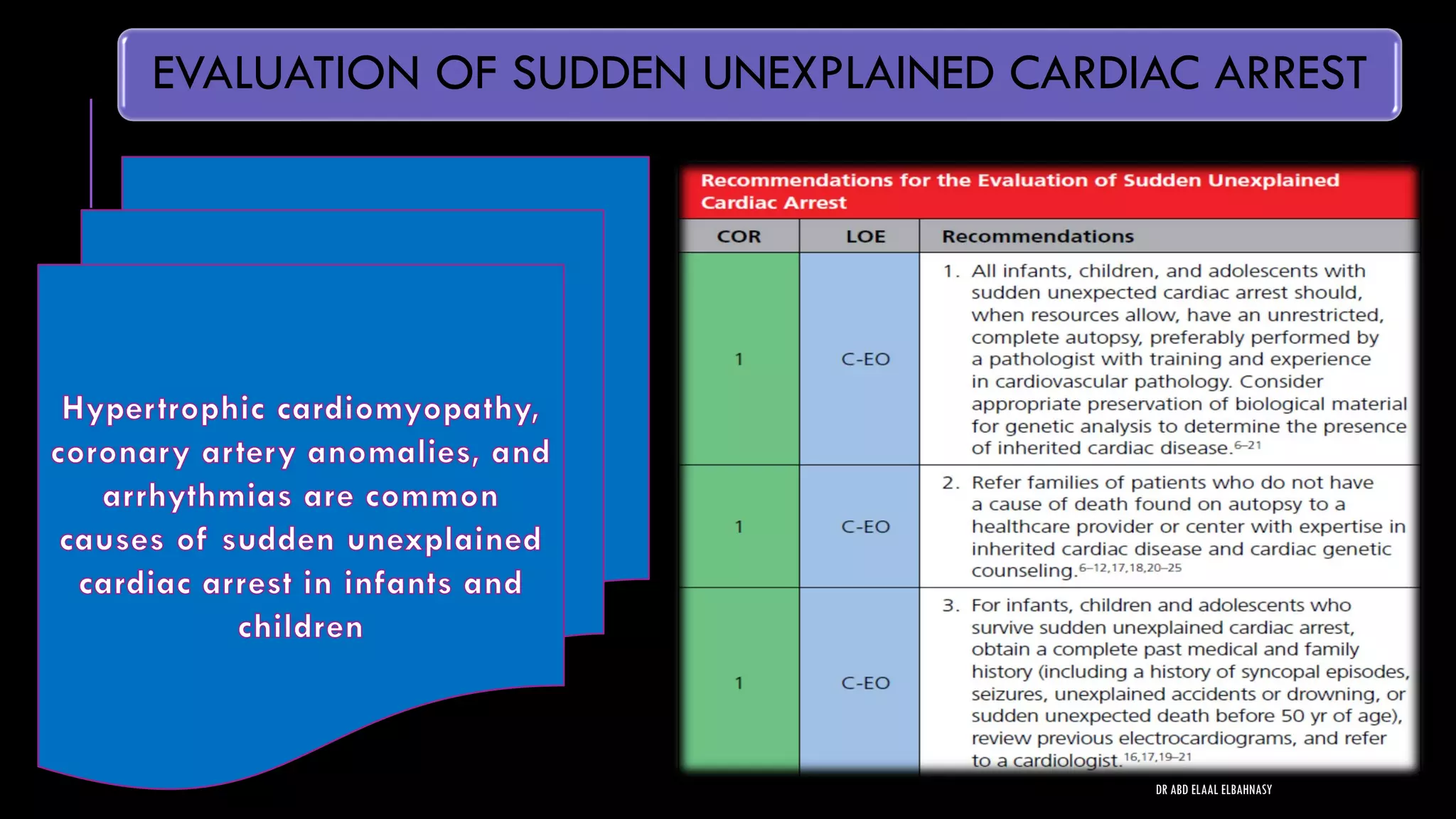
EVALUATION OF SUDDEN UNEXPLAINED CARDIAC ARREST
DR ABD ELAAL ELBAHNASY
RESUSCITATING THE
PATIENT IN
SHOCK
DR ABD ELAAL ELBAHNASY
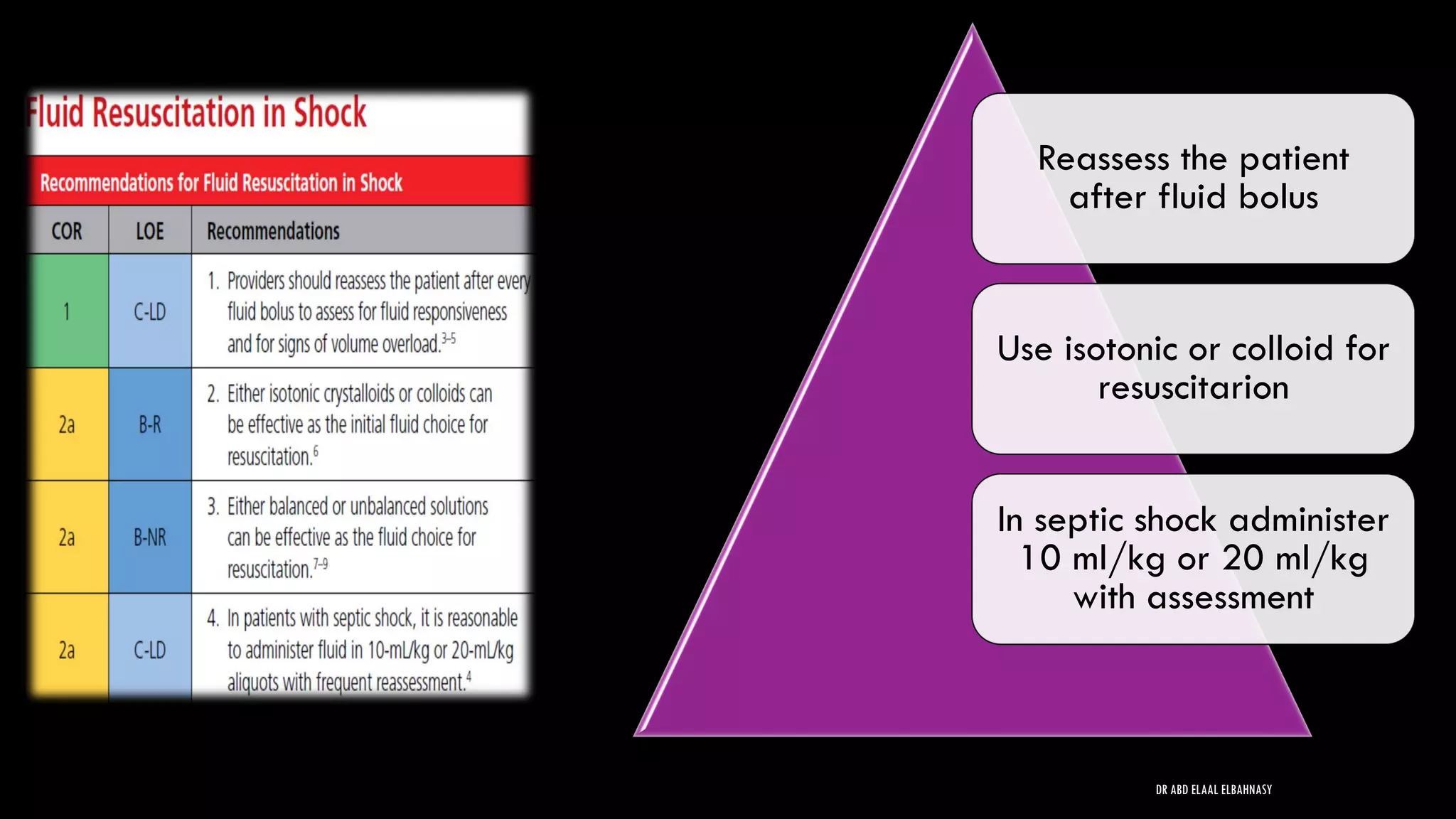
Reassess the patient
after fluid bolus
Use isotonic or colloid for
resuscitarion
In septic shock administer
10 ml/kg or 20 ml/kg
with assessment
DR ABD ELAAL ELBAHNASY
Use epinephrine and
norepinephrine in fluid refractory
septic shock
Give stress dose of corticosteroid
for infant and children
unresponsive to fluid and
requiring vasoactive support
If epinephrine and
norepinephrine not available use
dopamine
DR ABD ELAAL ELBAHNASY
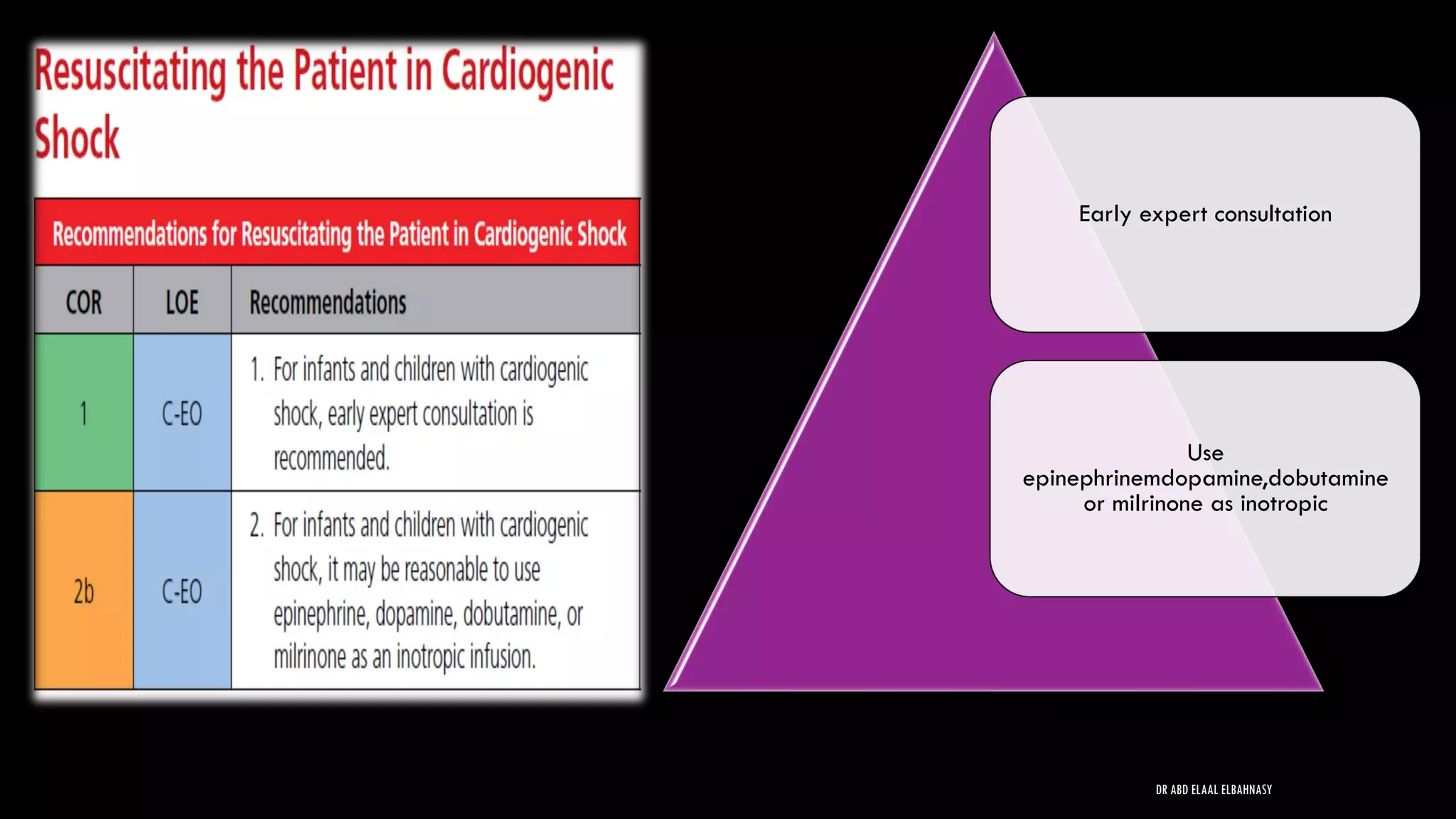
Early expert consultation
Use
epinephrinemdopamine,dobutamine
or milrinone as inotropic
DR ABD ELAAL ELBAHNASY
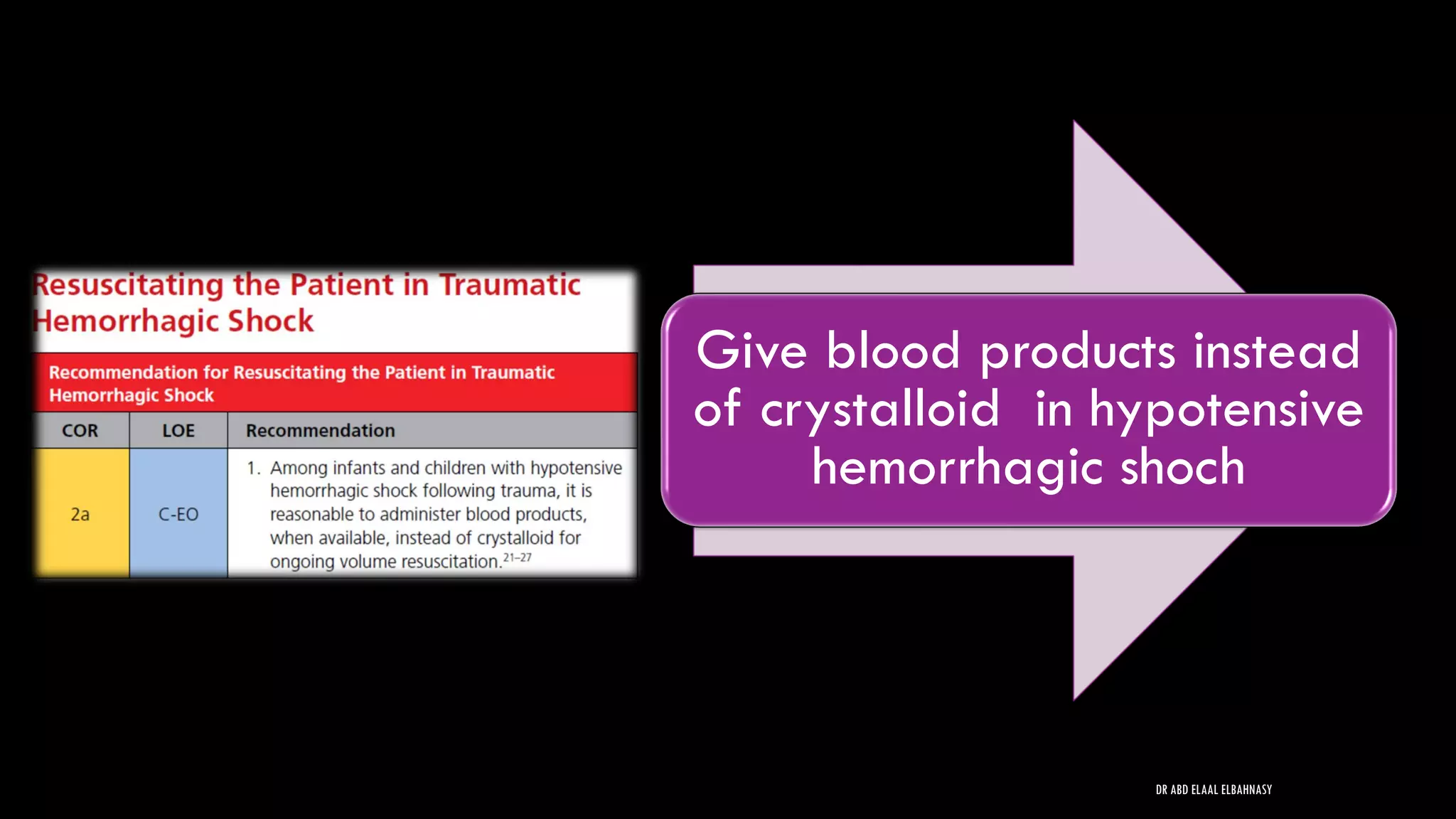
Give blood products instead
of crystalloid in hypotensive
hemorrhagic shoch
DR ABD ELAAL ELBAHNASY
TREATMENT OF
RESPIRATORY
FAILURE
DR ABD ELAAL ELBAHNASY
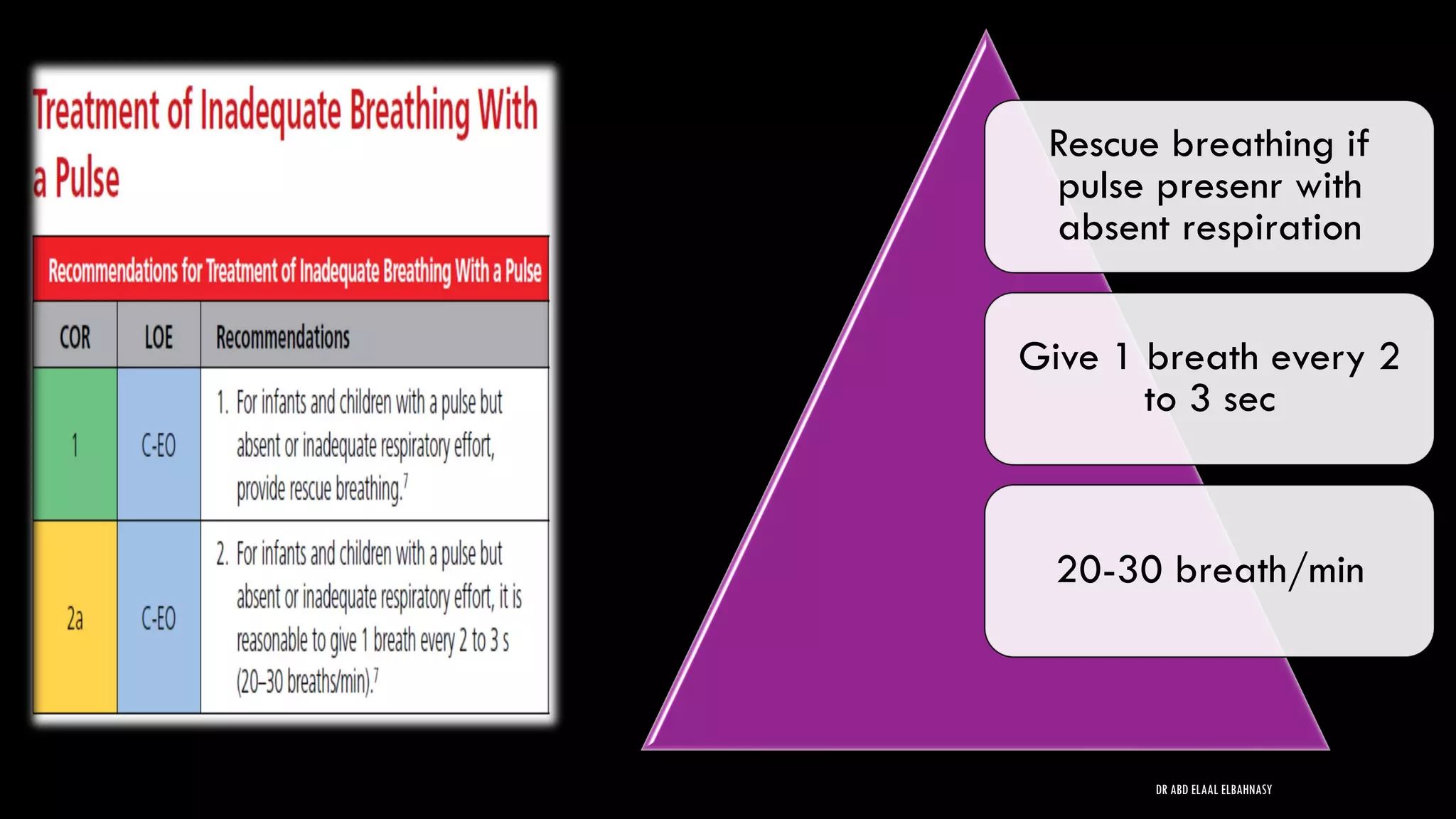
Rescue breathing if
pulse presenr with
absent respiration
Give 1 breath every 2
to 3 sec
20-30 breath/min
DR ABD ELAAL ELBAHNASY
Mild FABO
Sever FABO
IN CHILD
SEVER FABO
unresponsive
ENCOURAGE
COUGH
ABDOMINAL
THRUST
5 BACK SLAPS
+5 CHEST
COMPRSSION
Sever FABO
IN INFANT
CPR with out pulse check
After 2 min CPR activate
emergency response system
Try remove F B
DR ABD ELAAL ELBAHNASY
INTUBATION
DR ABD ELAAL ELBAHNASY
Use cuffed ETTs for
intubating infant and
children
Cricoid pressure during bag
mask ventilation is
considered to reduce gastric
insufflation
Routine use of cricoid
pressure not
recommended during
intubation
DR ABD ELAAL ELBAHNASY
MANAGEMENT OF
BRADYCARDIA
DR ABD ELAAL ELBAHNASY
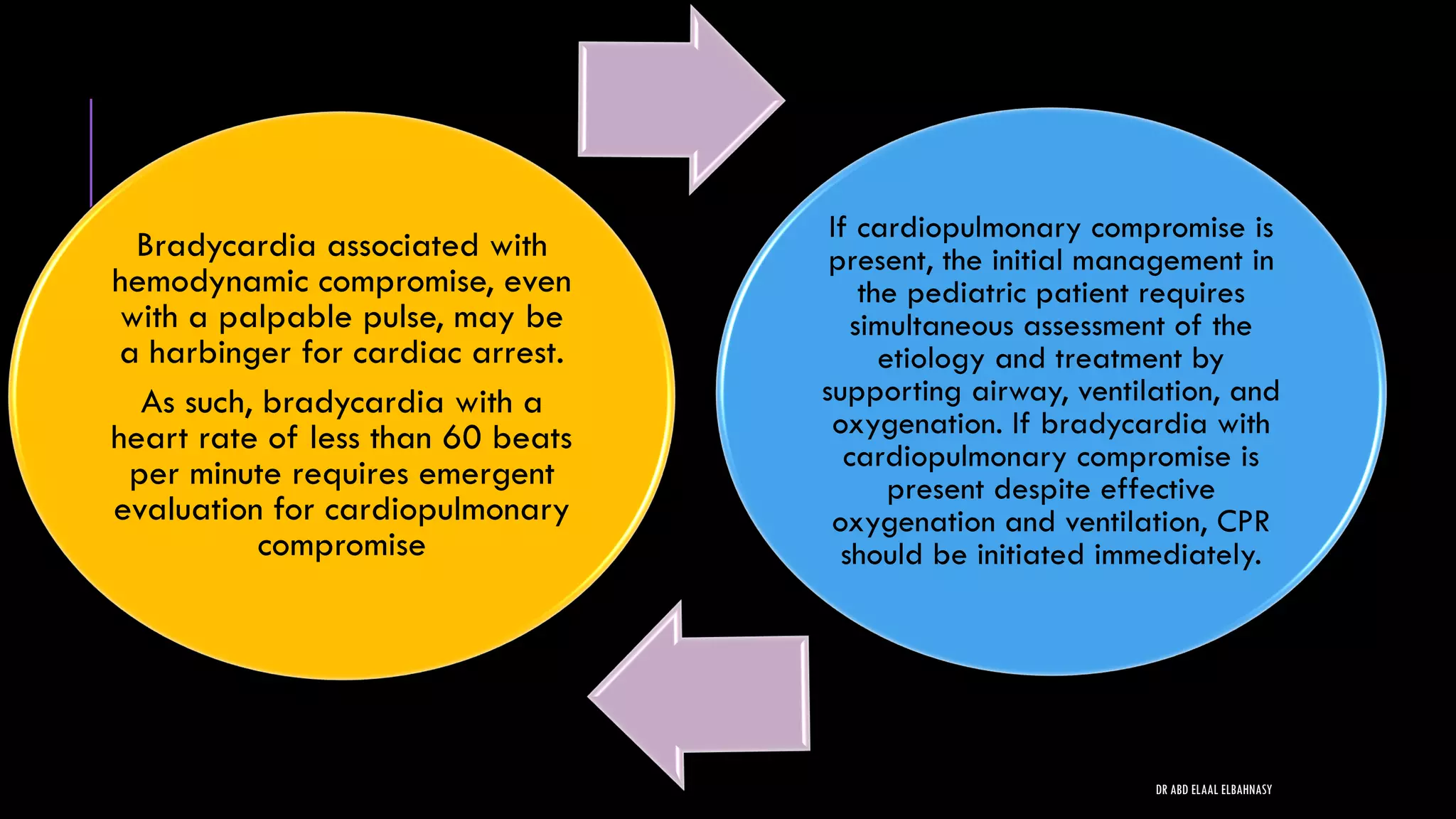
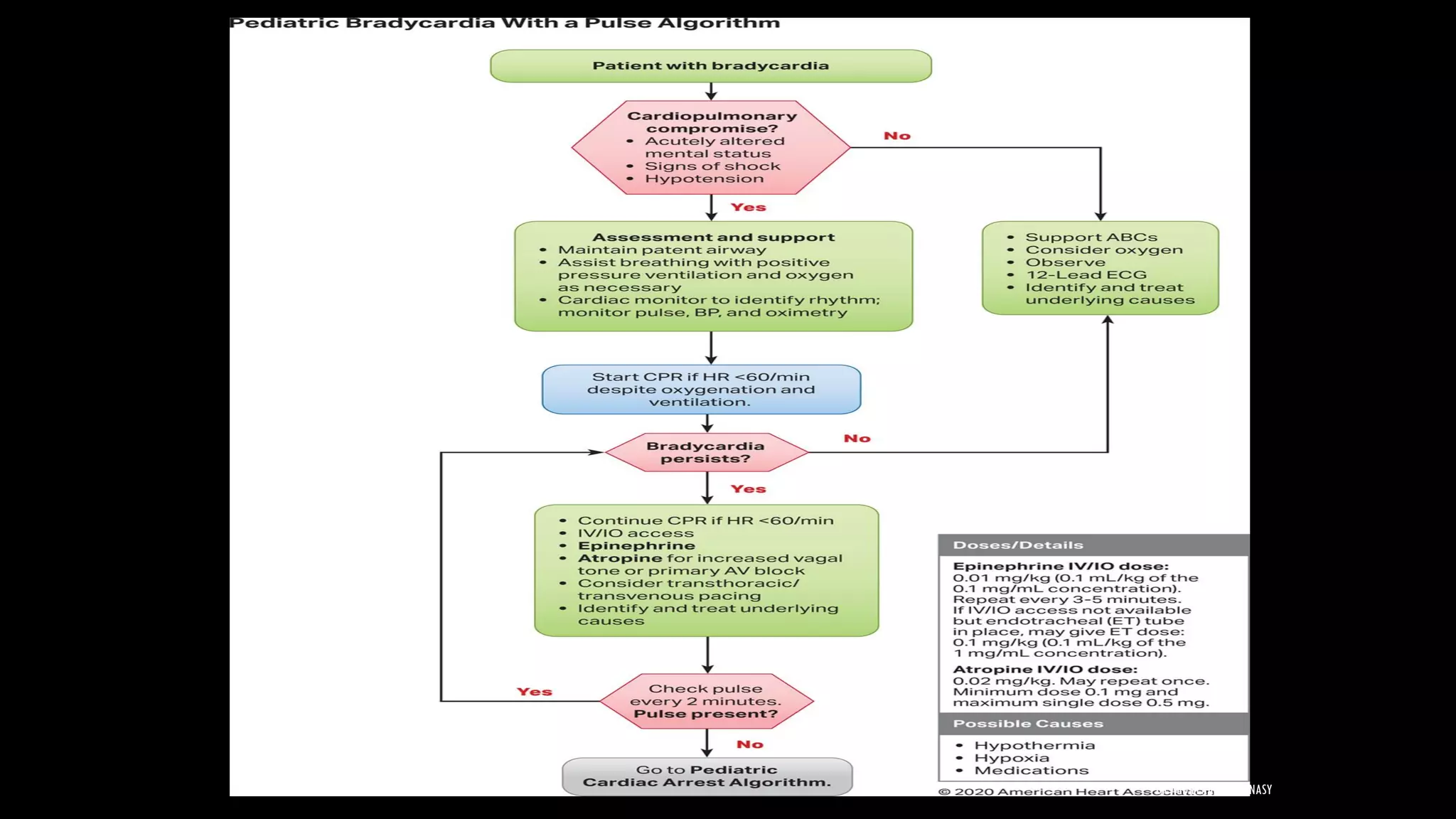
Bradycardia associated with
hemodynamic compromise, even
with a palpable pulse, may be
a harbinger for cardiac arrest.
As such, bradycardia with a
heart rate of less than 60 beats
per minute requires emergent
evaluation for cardiopulmonary
compromise
If cardiopulmonary compromise is
present, the initial management in
the pediatric patient requires
simultaneous assessment of the
etiology and treatment by
supporting airway, ventilation, and
oxygenation. If bradycardia with
cardiopulmonary compromise is
present despite effective
oxygenation and ventilation, CPR
should be initiated immediately.
DR ABD ELAAL ELBAHNASY
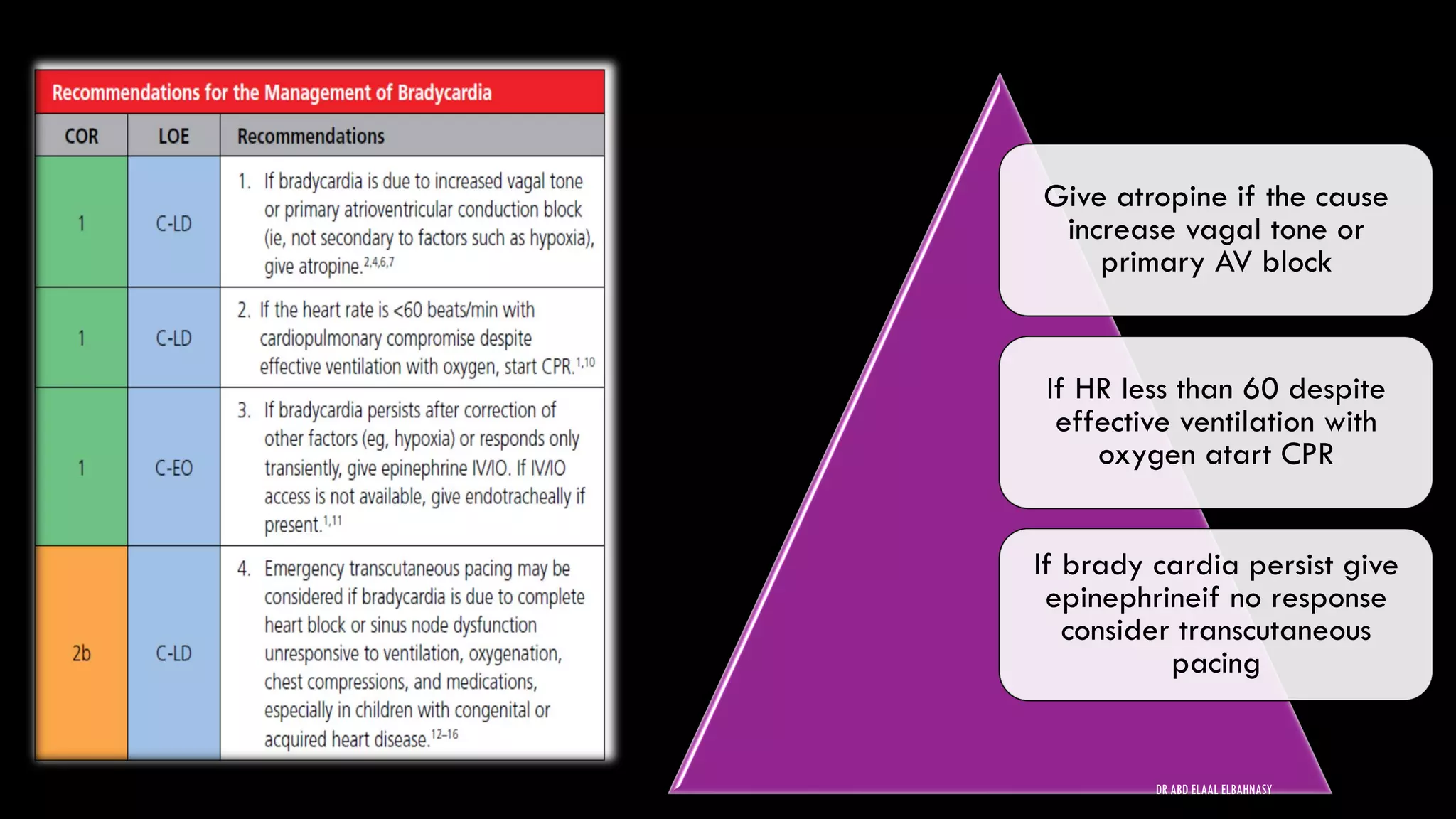
Give atropine if the cause
increase vagal tone or
primary AV block
If HR less than 60 despite
effective ventilation with
oxygen atart CPR
If brady cardia persist give
epinephrineif no response
consider transcutaneous
pacing
DR ABD ELAAL ELBAHNASY
TACHYARRHYTHMIAS
DR ABD ELAAL ELBAHNASY
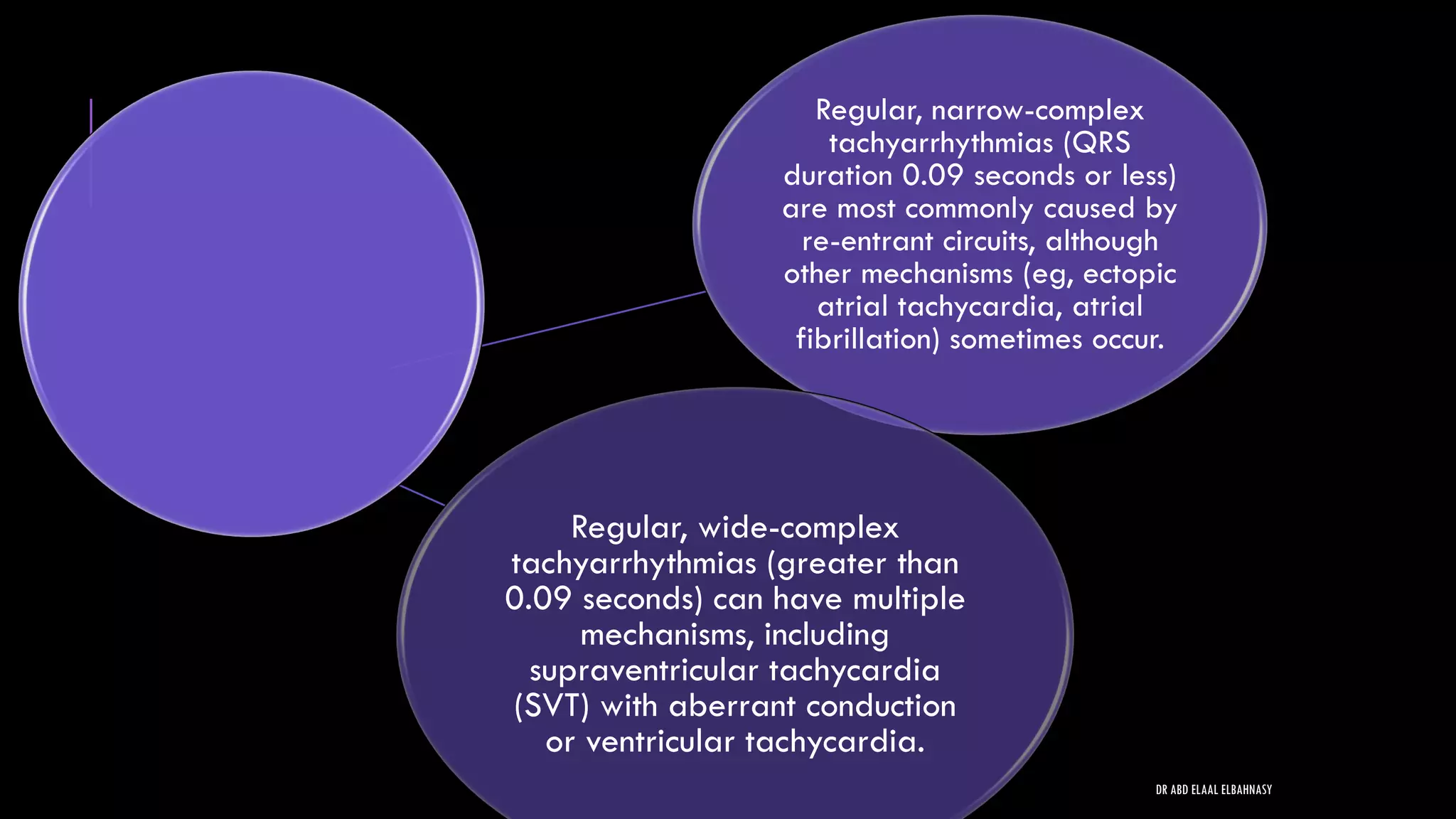
Regular, narrow-complex
tachyarrhythmias (QRS
duration 0.09 seconds or less)
are most commonly caused by
re-entrant circuits, although
other mechanisms (eg, ectopic
atrial tachycardia, atrial
fibrillation) sometimes occur.
Regular, wide-complex
tachyarrhythmias (greater than
0.09 seconds) can have multiple
mechanisms, including
supraventricular tachycardia
(SVT) with aberrant conduction
or ventricular tachycardia.
DR ABD ELAAL ELBAHNASY
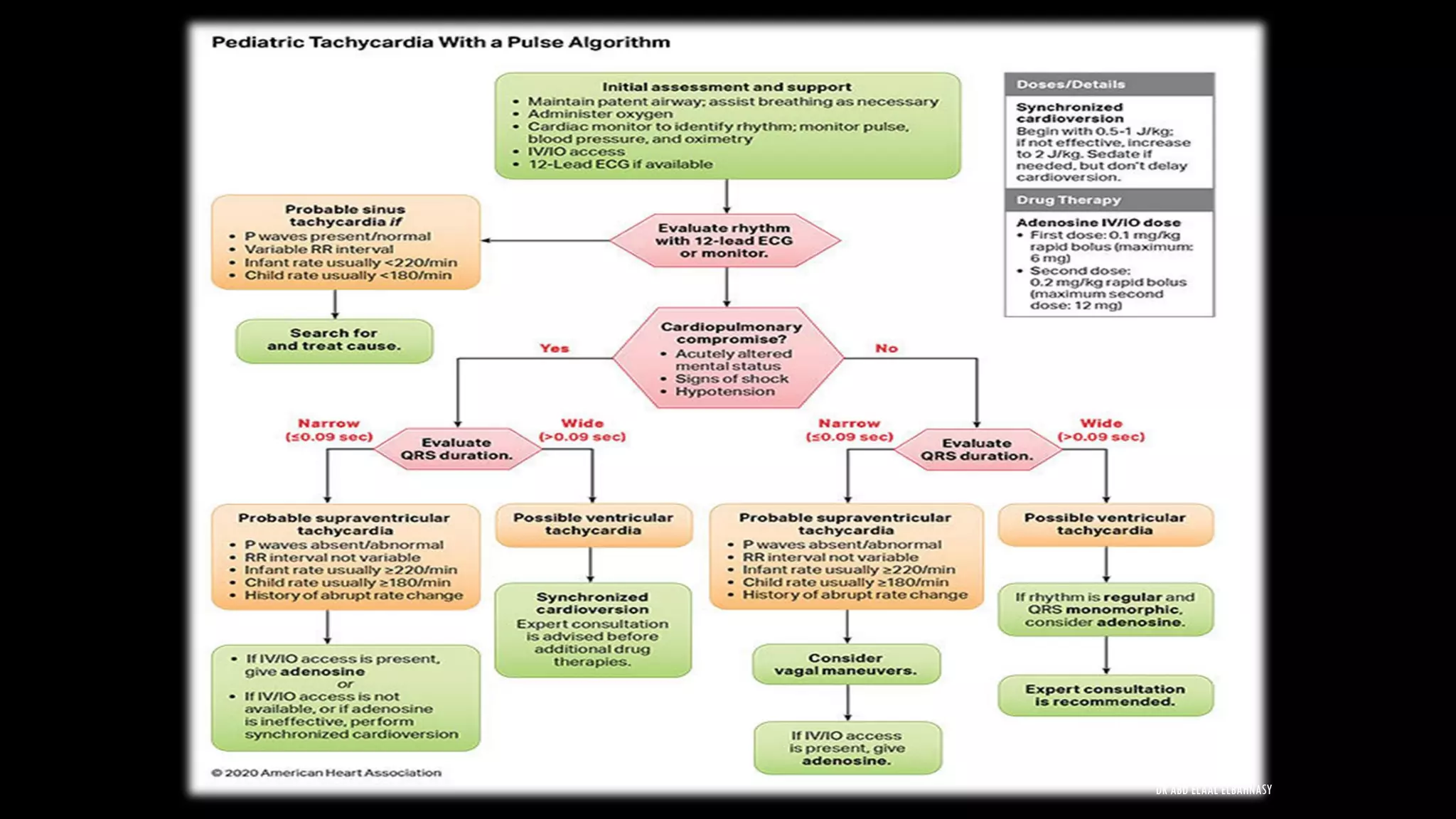
If iv/io available give adenosine
Hemodynamic stable svt not responding to vagal
maneuver or adenosine ,expert consultation
recommended
If hemodynamic unstable SVT perform cardioversion
0.5/1j/kg if unsuccessful increase the dose to 2 j/kg
If no response and no expert consultation available try
procainamide or amiodarone
DR ABD ELAAL ELBAHNASY
Hemodynamic
stable
Hemodynamic
unstable
expert
DC
DR ABD ELAAL ELBAHNASY
MYOCARDITIS
DR ABD ELAAL ELBAHNASY
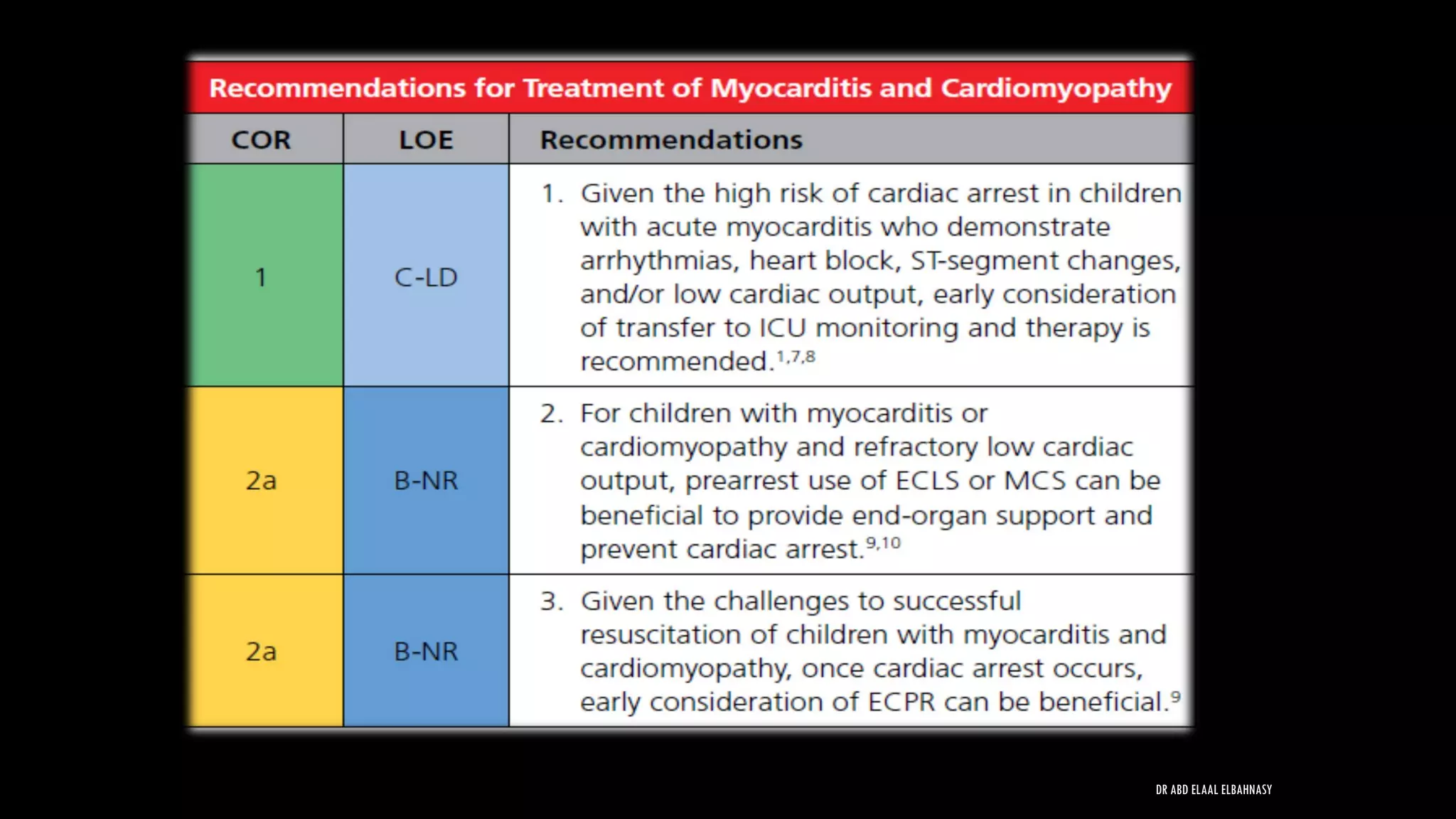
Fulminant myocarditis can result in
decreased cardiac output with end-
organ compromise; conduction system
disease, including complete heart
block; and persistent supraventricular
or ventricular arrhythmias, which can
ultimately result in cardiac arrest.1
Sudden onset of heart block
and multifocal ventricular
ectopy in the patient with
fulminant myocarditis should be
considered a prearrest state
DR ABD ELAAL ELBAHNASY
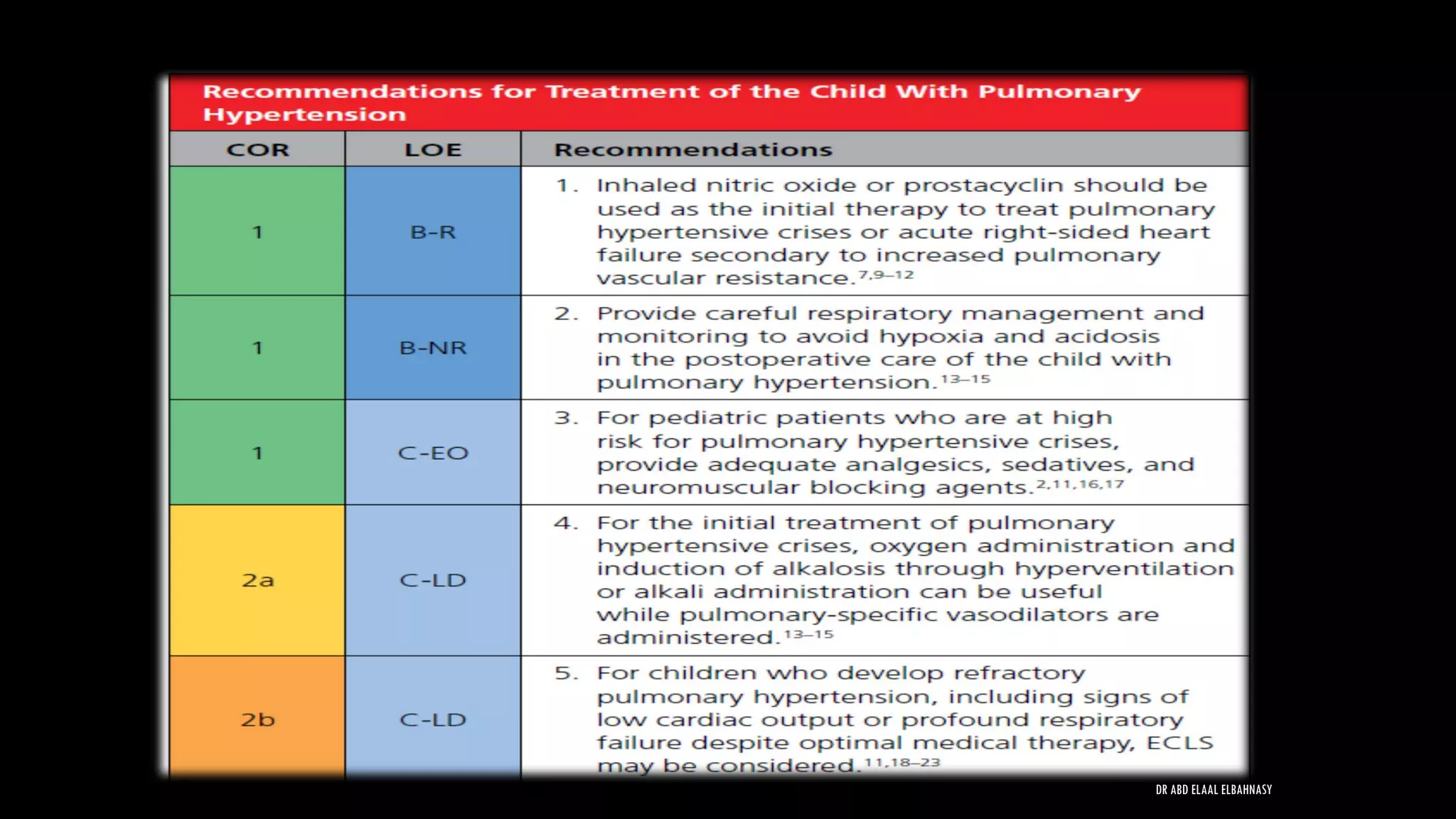
Pulmonary hypertension
Rare disease
pulmonary hypertension
is idiopathic or
associated with chronic
lung disease; congenital
heart disease; and,
rarely, other conditions,
such as connective tissue
or thromboembolic
disease.
DR ABD ELAAL ELBAHNASY
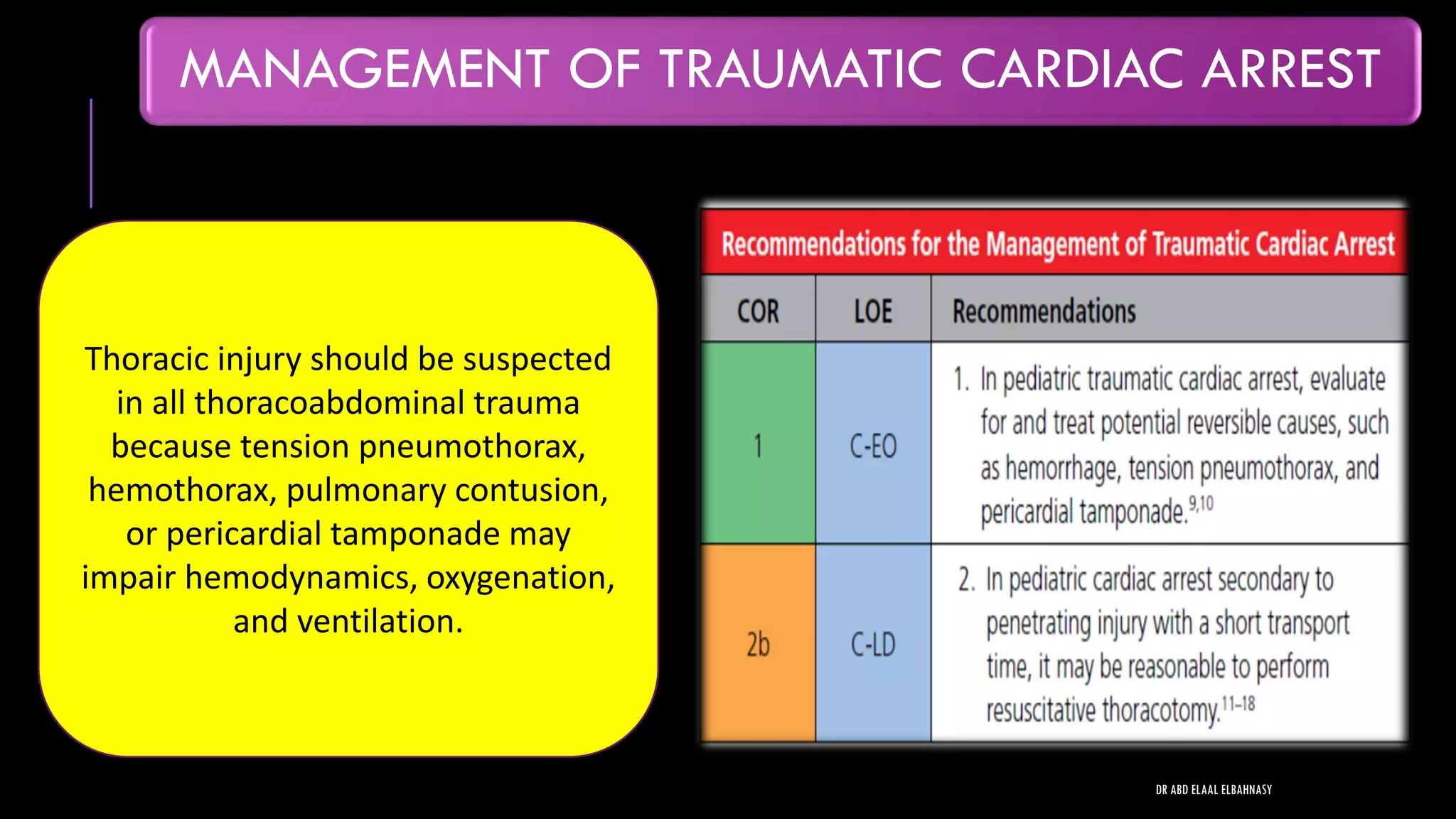
MANAGEMENT OF TRAUMATIC CARDIAC ARREST
Thoracic injury should be suspected
in all thoracoabdominal trauma
because tension pneumothorax,
hemothorax, pulmonary contusion,
or pericardial tamponade may
impair hemodynamics, oxygenation,
and ventilation.
DR ABD ELAAL ELBAHNASY
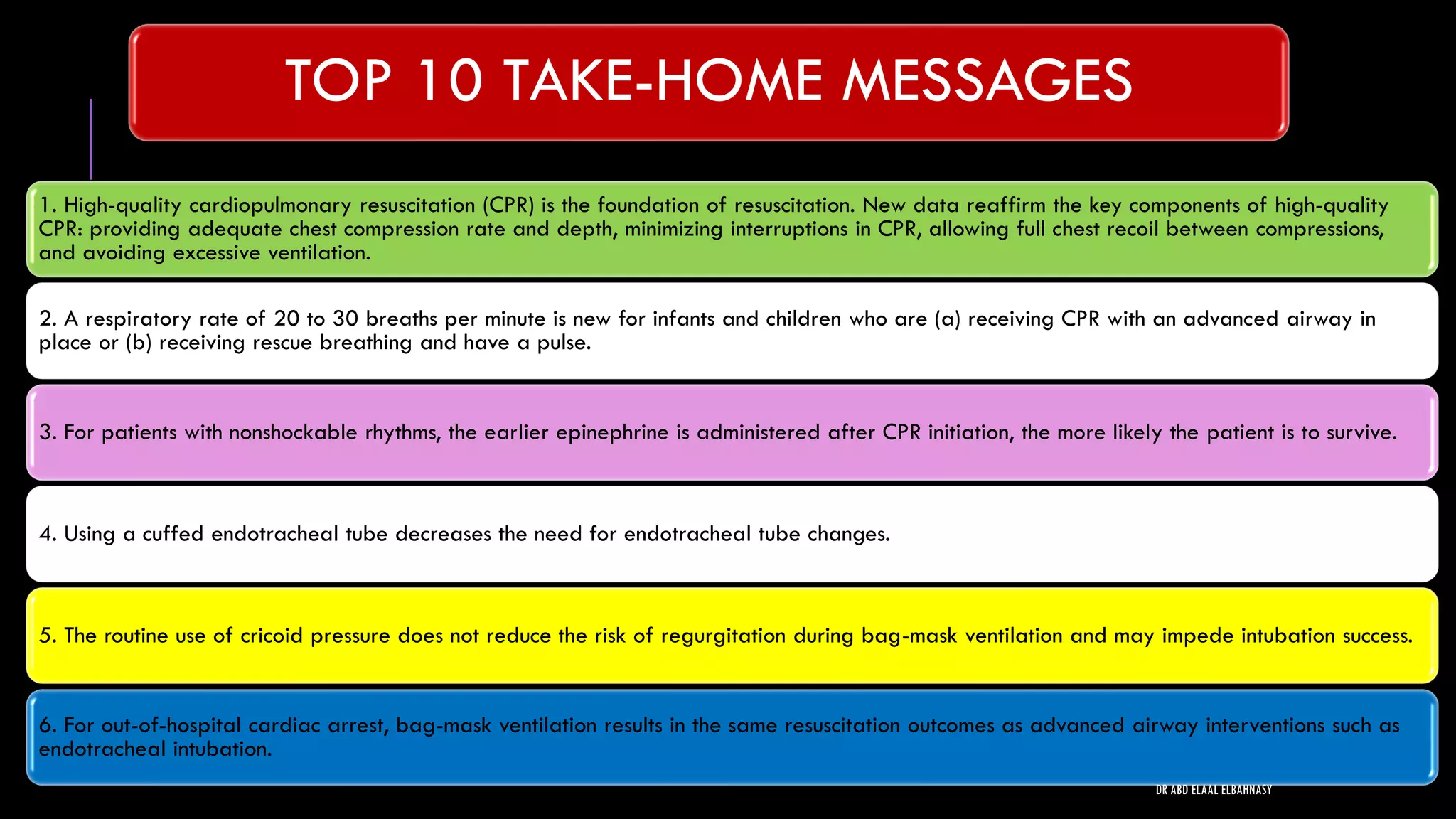
TOP 10 TAKE-HOME MESSAGES
1. High-quality cardiopulmonary resuscitation (CPR) is the foundation of resuscitation. New data reaffirm the key components of high-quality
CPR: providing adequate chest compression rate and depth, minimizing interruptions in CPR, allowing full chest recoil between compressions,
and avoiding excessive ventilation.
2. A respiratory rate of 20 to 30 breaths per minute is new for infants and children who are (a) receiving CPR with an advanced airway in
place or (b) receiving rescue breathing and have a pulse.
3. For patients with nonshockable rhythms, the earlier epinephrine is administered after CPR initiation, the more likely the patient is to survive.
4. Using a cuffed endotracheal tube decreases the need for endotracheal tube changes.
5. The routine use of cricoid pressure does not reduce the risk of regurgitation during bag-mask ventilation and may impede intubation success.
6. For out-of-hospital cardiac arrest, bag-mask ventilation results in the same resuscitation outcomes as advanced airway interventions such as
endotracheal intubation.
DR ABD ELAAL ELBAHNASY
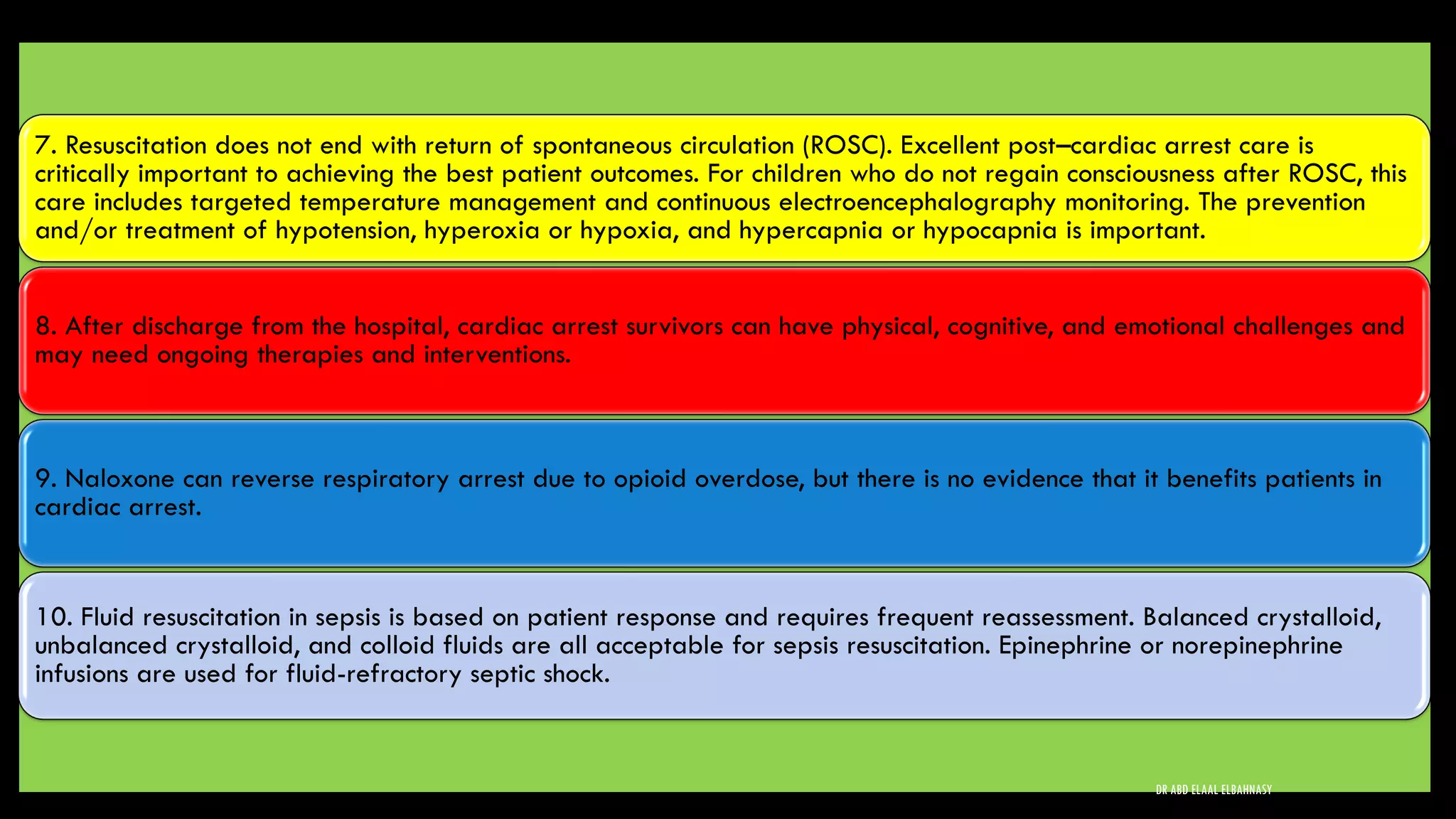
7. Resuscitation does not end with return of spontaneous circulation (ROSC). Excellent post–cardiac arrest care is
critically important to achieving the best patient outcomes. For children who do not regain consciousness after ROSC, this
care includes targeted temperature management and continuous electroencephalography monitoring. The prevention
and/or treatment of hypotension, hyperoxia or hypoxia, and hypercapnia or hypocapnia is important.
8. After discharge from the hospital, cardiac arrest survivors can have physical, cognitive, and emotional challenges and
may need ongoing therapies and interventions.
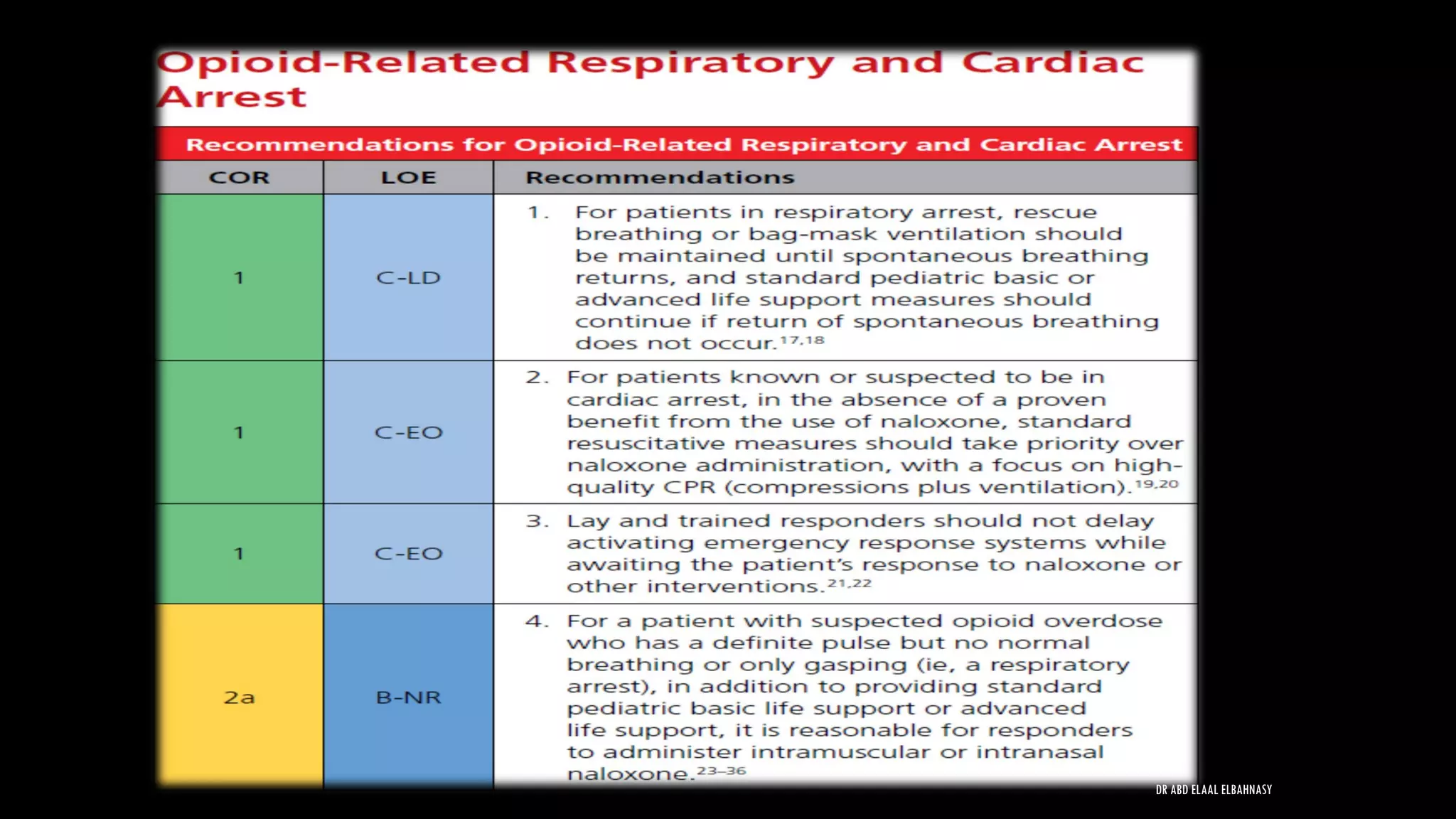
9. Naloxone can reverse respiratory arrest due to opioid overdose, but there is no evidence that it benefits patients in
cardiac arrest.
10. Fluid resuscitation in sepsis is based on patient response and requires frequent reassessment. Balanced crystalloid,
unbalanced crystalloid, and colloid fluids are all acceptable for sepsis resuscitation. Epinephrine or norepinephrine
infusions are used for fluid-refractory septic shock.
DR ABD ELAAL ELBAHNASY

Pediatric advanced life support updates 2020

  • 1.
    PEDIATRIC LIFE SUPPORTUPDATES 2020 EDITED &COLLECTED BY Abd Elaal Mohamed Elbahnasy Emergency Medicine Registrar Egypt, Middle East DR ABD ELAAL ELBAHNASY
  • 2.
    DR ABD ELAALELBAHNASY
  • 3.
    DR ABD ELAALELBAHNASY
  • 4.
    DR ABD ELAALELBAHNASY
  • 5.
    Cardiac arrest ininfants and children does not usually result from a primary cardiac cause; rather, it is the end result of progressive respiratory failure or shock. In these patients, cardiac arrest is preceded by a variable period of deterioration, which eventually results in cardiopulmonary failure, bradycardia, and cardiac arrest In children with congenital heart disease, cardiac arrest is often due to a primary cardiac cause, although the etiology is distinct from adults. DR ABD ELAAL ELBAHNASY
  • 6.
    High quality CPR (1)adequate chest compression depth (2) optimal chest compression rate (3) minimizing interruptions in CPR (ie, maximizing chest compression fraction or the proportion of time that chest compressions are provided for cardiac arrest) (4) allowing full chest recoil between compressions (5) avoiding excessive ventilation. DR ABD ELAAL ELBAHNASY
  • 7.
    Components of highquality CPR DR ABD ELAAL ELBAHNASY
  • 8.
    DR ABD ELAALELBAHNASY
  • 9.
    Initiation of CPR DRABD ELAAL ELBAHNASY
  • 10.
    CPR technique DR ABDELAAL ELBAHNASY
  • 11.
    DR ABD ELAALELBAHNASY
  • 12.
    DR ABD ELAALELBAHNASY
  • 13.
    DR ABD ELAALELBAHNASY
  • 14.
    DR ABD ELAALELBAHNASY
  • 15.
    DR ABD ELAALELBAHNASY
  • 16.
    DR ABD ELAALELBAHNASY
  • 17.
    DR ABD ELAALELBAHNASY
  • 18.
    airway HEAD TILT CHINLIFT IF TRAUMA PATIENT JAW THRUST IF TRAUMA AND JAW THRUST NOT OPEN THE AIRWAY USE HEAD TILT CHIN LIFT DR ABD ELAAL ELBAHNASY
  • 19.
    Advanced airway Most pediatriccardiac arrests are triggered by respiratory deterioration. Airway management and effective ventilation are fundamental to pediatric resuscitation. Although the majority of patients can be successfully ventilated with bag-mask ventilation Advanced airway interventions, such as supraglottic airway (SGA) placement or endotracheal intubation (ETI), may improve ventilation, reduce the risk of aspiration, and enable uninterrupted compression delivery. DR ABD ELAAL ELBAHNASY
  • 20.
    Drug administration Don’t giveroutine sodium bicarbonate unless TCA toxicity or sever hyperkalemia Don’t give ca unless hypocalcemiaor ca channel blocker toxicity ,hyperkalemia or hypermagnesmia Adminster epinephrine iv or io Adminster initial dose within 5 min from chest compression Repeat epinephrine every 4 min DR ABD ELAAL ELBAHNASY
  • 21.
    DR ABD ELAALELBAHNASY
  • 22.
    MANAGEMENT OF VF/pVT Initial dose of energy 2-4j/kg For refractory VF increase the dose of defibrillation to 4j/kg Not exceed 10 j/kg or adult dose DR ABD ELAAL ELBAHNASY
  • 23.
    Chain of survival Historically,cardiac arrest care has largely focused on the management of the cardiac arrest itself, highlighting high-quality CPR, early defibrillation, and effective teamwork. However, there are aspects of prearrest and postarrest care that are critical to improve outcomes For both chains of survival, activating the emergency response is followed immediately by the initiation of high-quality CPR. If help is nearby or a cell phone is available, activating the emergency response and starting CPR can be nearly simultaneous. However, in the out-of- hospital setting, a single rescuer who does not have access to a cell phone should begin CPR (compressions-airway-breathing) for infants and children before calling for help because respiratory arrest is the most common cause of cardiac arrest and help may not be nearby DR ABD ELAAL ELBAHNASY
  • 24.
    Perform CPR untilthe device ready Single shock followed by immediate chest compression Minimize interruption Use pediatric attenuator if infant or children less than 8 y manual defibrillator is recommended If manual defib or AED with pediatric attenuation not available use the usual AED DR ABD ELAAL ELBAHNASY
  • 25.
    DR ABD ELAALELBAHNASY
  • 26.
    DR ABD ELAALELBAHNASY
  • 27.
  • 28.
    DR ABD ELAALELBAHNASY
  • 29.
    Maintain normoxemia Wean oxygenat target of oxyhemoglobin 94-99% Limit exposure to sever hypercapnia or hypocapnia DR ABD ELAAL ELBAHNASY
  • 30.
    EEG monitoring is recommendedfor detection of seizures Treat seizures following cardiac arrest Treat nonconvulsive status epilepticus following arrest in consultation with experts DR ABD ELAAL ELBAHNASY
  • 31.
    DR ABD ELAALELBAHNASY
  • 32.
    EVALUATION OF SUDDENUNEXPLAINED CARDIAC ARREST DR ABD ELAAL ELBAHNASY
  • 33.
    DR ABD ELAALELBAHNASY
  • 34.
  • 35.
    DR ABD ELAALELBAHNASY
  • 36.
    Reassess the patient afterfluid bolus Use isotonic or colloid for resuscitarion In septic shock administer 10 ml/kg or 20 ml/kg with assessment DR ABD ELAAL ELBAHNASY
  • 37.
    Use epinephrine and norepinephrinein fluid refractory septic shock Give stress dose of corticosteroid for infant and children unresponsive to fluid and requiring vasoactive support If epinephrine and norepinephrine not available use dopamine DR ABD ELAAL ELBAHNASY
  • 38.
    Early expert consultation Use epinephrinemdopamine,dobutamine ormilrinone as inotropic DR ABD ELAAL ELBAHNASY
  • 39.
    Give blood productsinstead of crystalloid in hypotensive hemorrhagic shoch DR ABD ELAAL ELBAHNASY
  • 40.
    DR ABD ELAALELBAHNASY
  • 41.
  • 42.
    DR ABD ELAALELBAHNASY
  • 43.
    Rescue breathing if pulsepresenr with absent respiration Give 1 breath every 2 to 3 sec 20-30 breath/min DR ABD ELAAL ELBAHNASY
  • 44.
    Mild FABO Sever FABO INCHILD SEVER FABO unresponsive ENCOURAGE COUGH ABDOMINAL THRUST 5 BACK SLAPS +5 CHEST COMPRSSION Sever FABO IN INFANT CPR with out pulse check After 2 min CPR activate emergency response system Try remove F B DR ABD ELAAL ELBAHNASY
  • 45.
    DR ABD ELAALELBAHNASY
  • 46.
    DR ABD ELAALELBAHNASY
  • 47.
    DR ABD ELAALELBAHNASY
  • 48.
  • 49.
    Use cuffed ETTsfor intubating infant and children Cricoid pressure during bag mask ventilation is considered to reduce gastric insufflation Routine use of cricoid pressure not recommended during intubation DR ABD ELAAL ELBAHNASY
  • 50.
    DR ABD ELAALELBAHNASY
  • 51.
    DR ABD ELAALELBAHNASY
  • 52.
  • 53.
    Bradycardia associated with hemodynamiccompromise, even with a palpable pulse, may be a harbinger for cardiac arrest. As such, bradycardia with a heart rate of less than 60 beats per minute requires emergent evaluation for cardiopulmonary compromise If cardiopulmonary compromise is present, the initial management in the pediatric patient requires simultaneous assessment of the etiology and treatment by supporting airway, ventilation, and oxygenation. If bradycardia with cardiopulmonary compromise is present despite effective oxygenation and ventilation, CPR should be initiated immediately. DR ABD ELAAL ELBAHNASY
  • 54.
    Give atropine ifthe cause increase vagal tone or primary AV block If HR less than 60 despite effective ventilation with oxygen atart CPR If brady cardia persist give epinephrineif no response consider transcutaneous pacing DR ABD ELAAL ELBAHNASY
  • 55.
    DR ABD ELAALELBAHNASY
  • 56.
  • 57.
    Regular, narrow-complex tachyarrhythmias (QRS duration0.09 seconds or less) are most commonly caused by re-entrant circuits, although other mechanisms (eg, ectopic atrial tachycardia, atrial fibrillation) sometimes occur. Regular, wide-complex tachyarrhythmias (greater than 0.09 seconds) can have multiple mechanisms, including supraventricular tachycardia (SVT) with aberrant conduction or ventricular tachycardia. DR ABD ELAAL ELBAHNASY
  • 58.
    If iv/io availablegive adenosine Hemodynamic stable svt not responding to vagal maneuver or adenosine ,expert consultation recommended If hemodynamic unstable SVT perform cardioversion 0.5/1j/kg if unsuccessful increase the dose to 2 j/kg If no response and no expert consultation available try procainamide or amiodarone DR ABD ELAAL ELBAHNASY
  • 59.
  • 60.
    DR ABD ELAALELBAHNASY
  • 61.
    DR ABD ELAALELBAHNASY
  • 62.
  • 63.
    Fulminant myocarditis canresult in decreased cardiac output with end- organ compromise; conduction system disease, including complete heart block; and persistent supraventricular or ventricular arrhythmias, which can ultimately result in cardiac arrest.1 Sudden onset of heart block and multifocal ventricular ectopy in the patient with fulminant myocarditis should be considered a prearrest state DR ABD ELAAL ELBAHNASY
  • 64.
    DR ABD ELAALELBAHNASY
  • 65.
    Pulmonary hypertension Rare disease pulmonaryhypertension is idiopathic or associated with chronic lung disease; congenital heart disease; and, rarely, other conditions, such as connective tissue or thromboembolic disease. DR ABD ELAAL ELBAHNASY
  • 66.
    DR ABD ELAALELBAHNASY
  • 67.
    MANAGEMENT OF TRAUMATICCARDIAC ARREST Thoracic injury should be suspected in all thoracoabdominal trauma because tension pneumothorax, hemothorax, pulmonary contusion, or pericardial tamponade may impair hemodynamics, oxygenation, and ventilation. DR ABD ELAAL ELBAHNASY
  • 68.
    DR ABD ELAALELBAHNASY
  • 69.
    DR ABD ELAALELBAHNASY
  • 70.
    TOP 10 TAKE-HOMEMESSAGES 1. High-quality cardiopulmonary resuscitation (CPR) is the foundation of resuscitation. New data reaffirm the key components of high-quality CPR: providing adequate chest compression rate and depth, minimizing interruptions in CPR, allowing full chest recoil between compressions, and avoiding excessive ventilation. 2. A respiratory rate of 20 to 30 breaths per minute is new for infants and children who are (a) receiving CPR with an advanced airway in place or (b) receiving rescue breathing and have a pulse. 3. For patients with nonshockable rhythms, the earlier epinephrine is administered after CPR initiation, the more likely the patient is to survive. 4. Using a cuffed endotracheal tube decreases the need for endotracheal tube changes. 5. The routine use of cricoid pressure does not reduce the risk of regurgitation during bag-mask ventilation and may impede intubation success. 6. For out-of-hospital cardiac arrest, bag-mask ventilation results in the same resuscitation outcomes as advanced airway interventions such as endotracheal intubation. DR ABD ELAAL ELBAHNASY
  • 71.
    7. Resuscitation doesnot end with return of spontaneous circulation (ROSC). Excellent post–cardiac arrest care is critically important to achieving the best patient outcomes. For children who do not regain consciousness after ROSC, this care includes targeted temperature management and continuous electroencephalography monitoring. The prevention and/or treatment of hypotension, hyperoxia or hypoxia, and hypercapnia or hypocapnia is important. 8. After discharge from the hospital, cardiac arrest survivors can have physical, cognitive, and emotional challenges and may need ongoing therapies and interventions. 9. Naloxone can reverse respiratory arrest due to opioid overdose, but there is no evidence that it benefits patients in cardiac arrest. 10. Fluid resuscitation in sepsis is based on patient response and requires frequent reassessment. Balanced crystalloid, unbalanced crystalloid, and colloid fluids are all acceptable for sepsis resuscitation. Epinephrine or norepinephrine infusions are used for fluid-refractory septic shock. DR ABD ELAAL ELBAHNASY
  • 72.
    DR ABD ELAALELBAHNASY