Current Trauma Management
Where Are We?
Trauma System
By
Mr. Mahmoud Abdulkareem
M.S {Cairo} , FRCS {Glasgow}
Consultant Surgeon,
King Fahad Specialist Hospital
Sunday, October 16, 2016 3
Damage Control Resuscitation
By
DR. Mahmoud Abdulkareem
M.S {Cairo} , FRCS {Glasgow}
Consultant Surgeon,
King Fahad Specialist Hospital
Trauma is the most common cause of death in patients aged less than 40 years
Injuries
Injuries result from acute exposure to
physical agents such as mechanical energy,
heat, electricity, chemicals, and ionizing
radiation in amounts or at rates above or
below the threshold of human tolerance.
R T As account for most injuries Followed by
assaults, drownings, falls, burns.
Trauma
Trauma is the study of
medical problems associated
with physical injury.
The trauma patient
The trauma patient has been defined as “an
injured person who requires timely diagnosis
and treatment of actual or potential injuries
by a multidisciplinary team of health care
professionals, supported by the appropriate
resources, to diminish or eliminate the risk of
death or permanent disability.”
Mortality is not the only side of this
issue; for every trauma victim who
dies, at least six are seriously injured
The scope of trauma as a problem
Editors: Feliciano, David V.; Mattox, Kenneth L.; Moore, Ernest E.
Title: Trauma, 6th Edition
Copyright ©2008 McGraw-Hill
THE NEED FOR TRAUMA SYSTEMS—
HISTORY…. cont.
However, trauma is not yet recognized as a
disease process. Many people still think of
trauma as an accident.
“the neglected disease of
modern society.”
THE NEED FOR TRAUMA
SYSTEMS—HISTORY…. cont.
National Research Council: Accidental Death and Disability: The Neglected Disease of Modern
Society. Washington, DC: U.S. Government Printing Office, 1966.
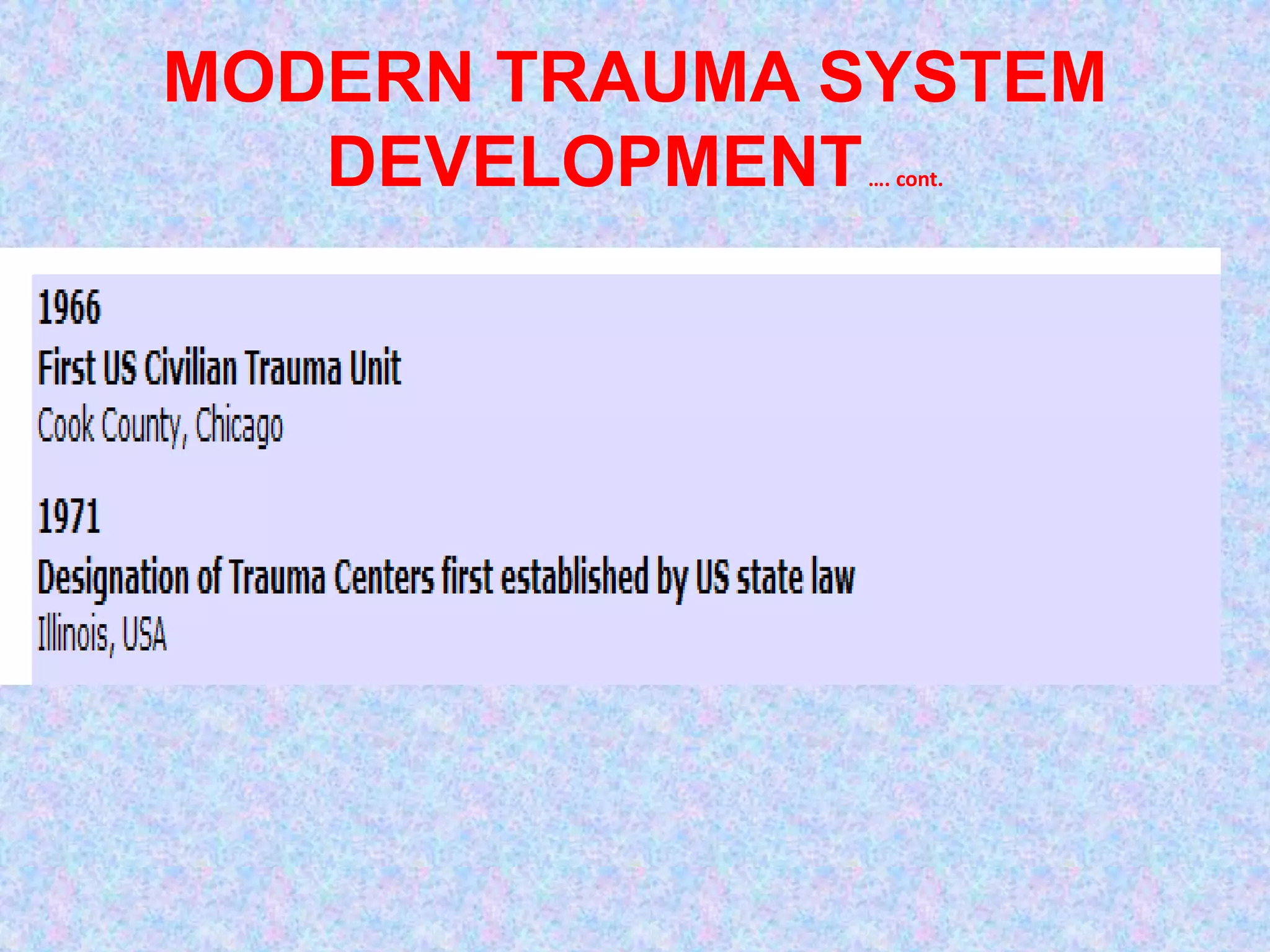
MODERN TRAUMA SYSTEM
DEVELOPMENT…. cont.
MODERN TRAUMA SYSTEM
DEVELOPMENT…. cont.
By 1975, Germany had established a
nationwide trauma system, so that no
patient was more than 15–20 minutes
from one of these regional canters.
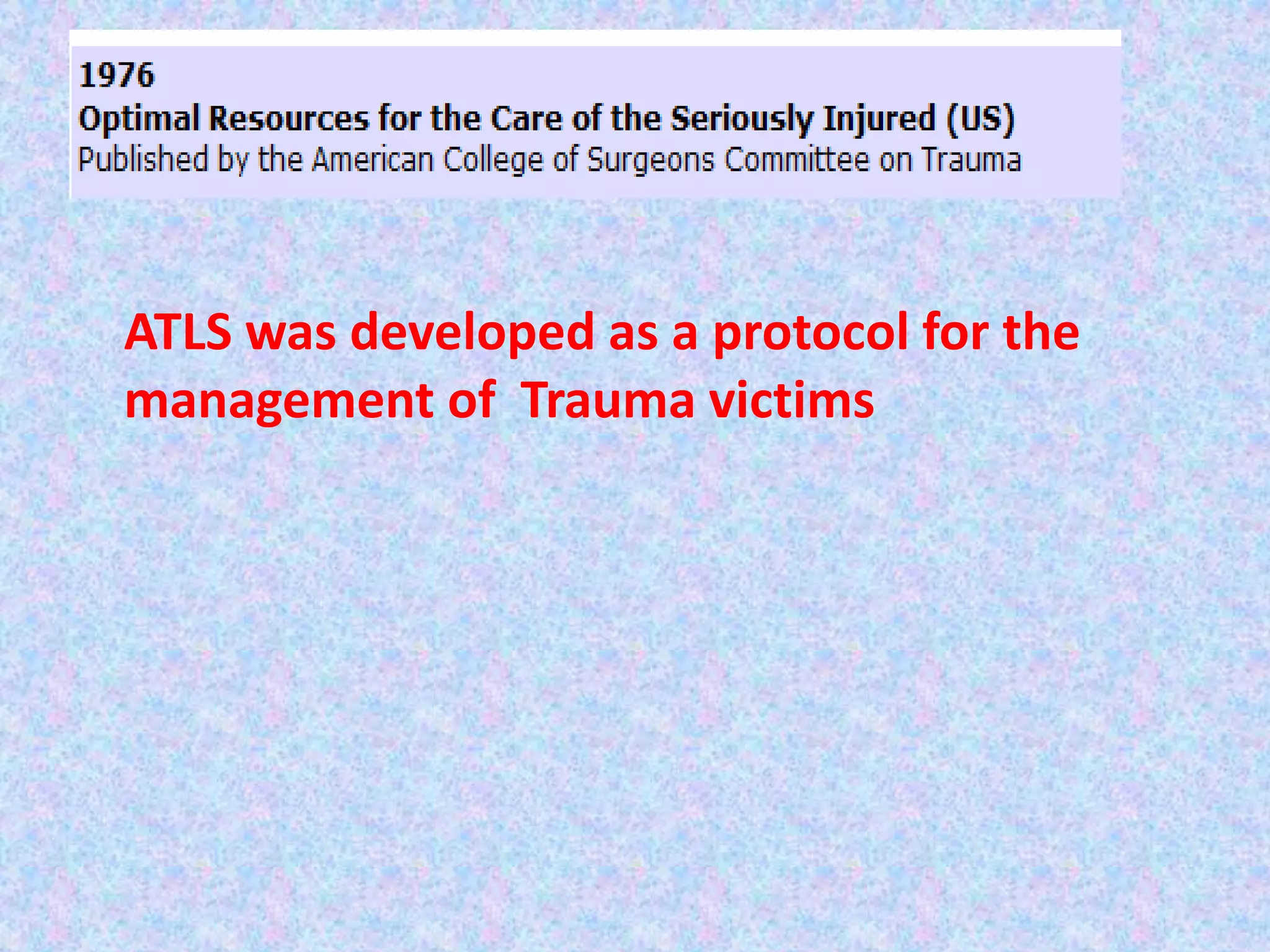
ATLS was developed as a protocol for the
management of Trauma victims
MODERN TRAUMA SYSTEM
DEVELOPMENT…. cont.
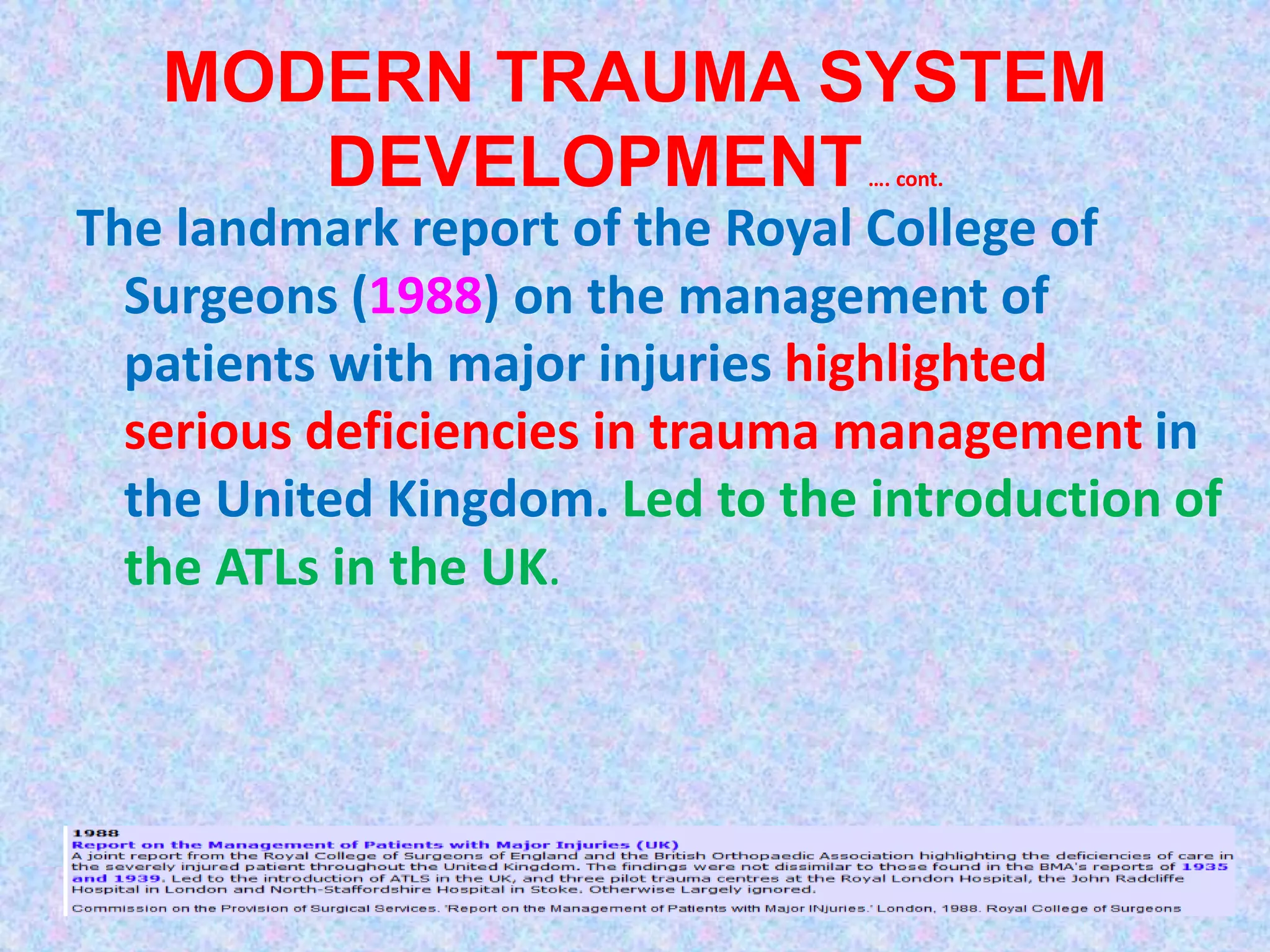
The landmark report of the Royal College of
Surgeons (1988) on the management of
patients with major injuries highlighted
serious deficiencies in trauma management in
the United Kingdom. Led to the introduction of
the ATLs in the UK.
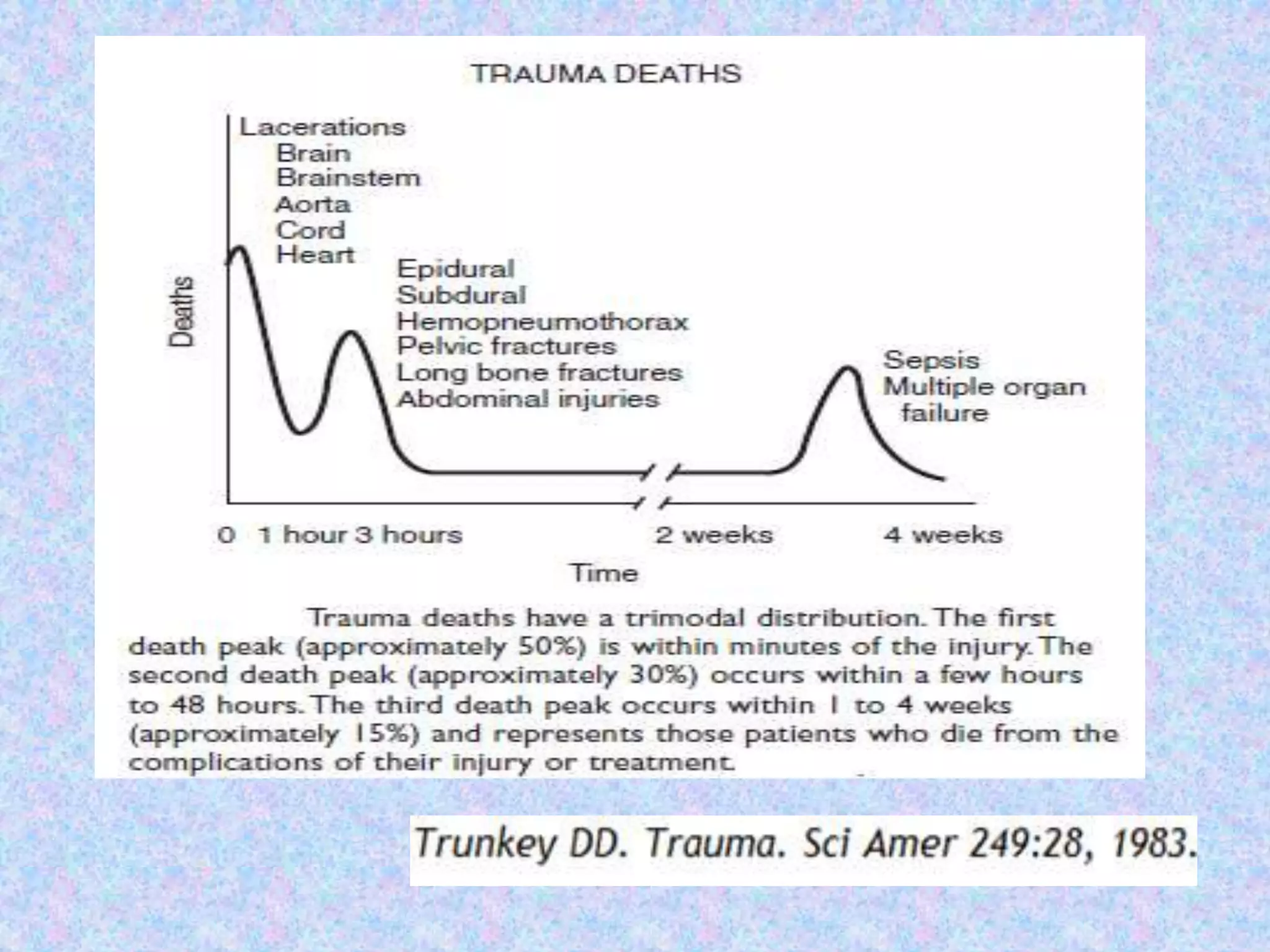
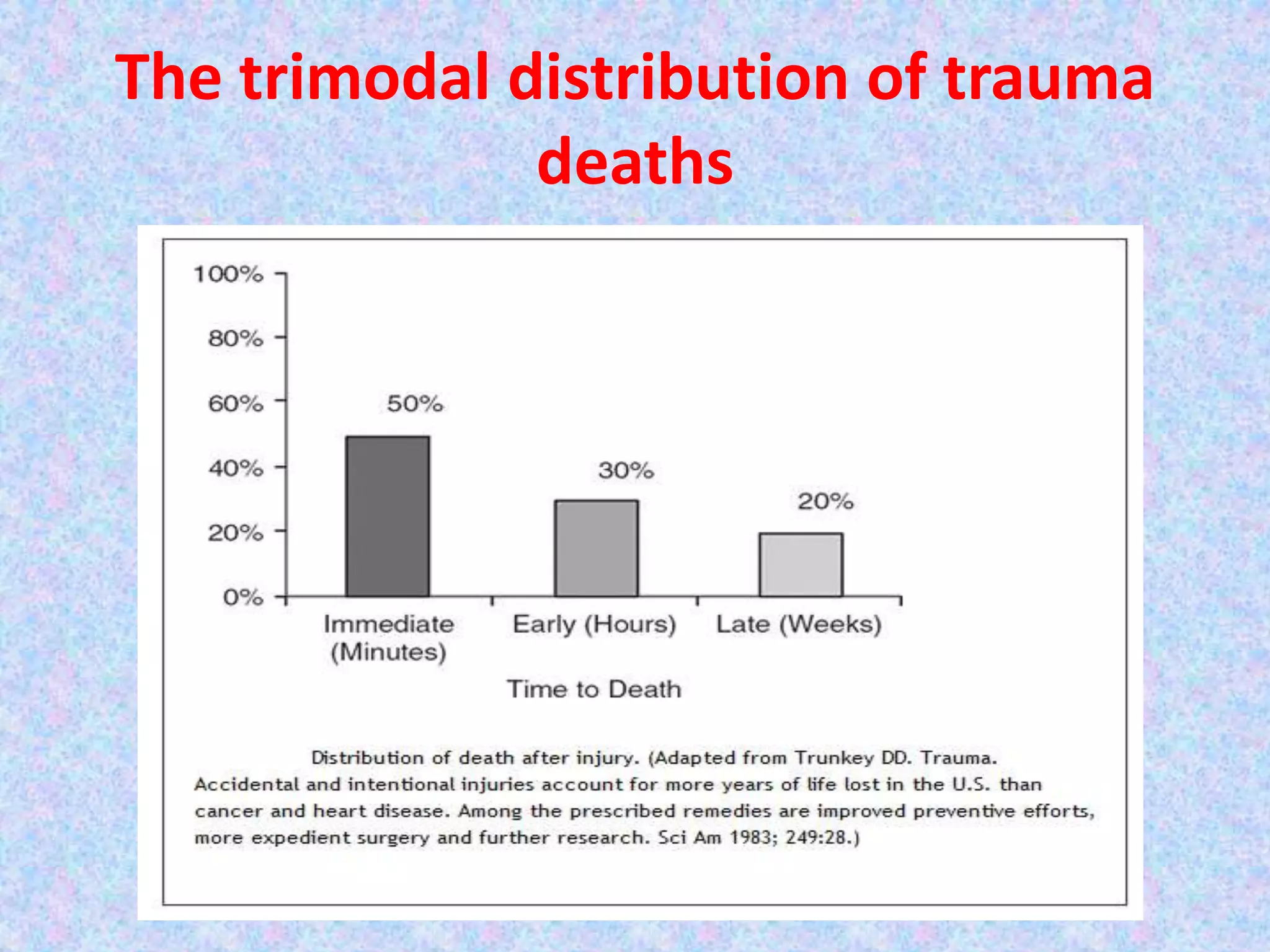
The trimodal distribution of trauma
deaths
The second peak of approximately 30% of
all deaths occurs during the initial hours
post injury and preventing these deaths
were initially the goal of modern trauma
care, such as is taught through the
Advanced Trauma Life Support (ATLS)
course.
The Goal
MODERN TRAUMA SYSTEM
DEVELOPMENT…. cont.
Studies of trauma systems have shown that:
Salvage of the critically injured patient is optimized by a
coordinated team effort in an organized trauma
system.
And that:
when severely injured patients are treated in specialized
trauma centers, patients have greater chances of
survival.
(Cales 1984; Cales and Trunkey 1985; Guss, Meyer, Neuman, et al. 1989; Shackford et al. 1986;
Smith et al. 1990; West, Cales, and Gazzaniga 1983).
MODERN TRAUMA SYSTEM DEVELOPMENT
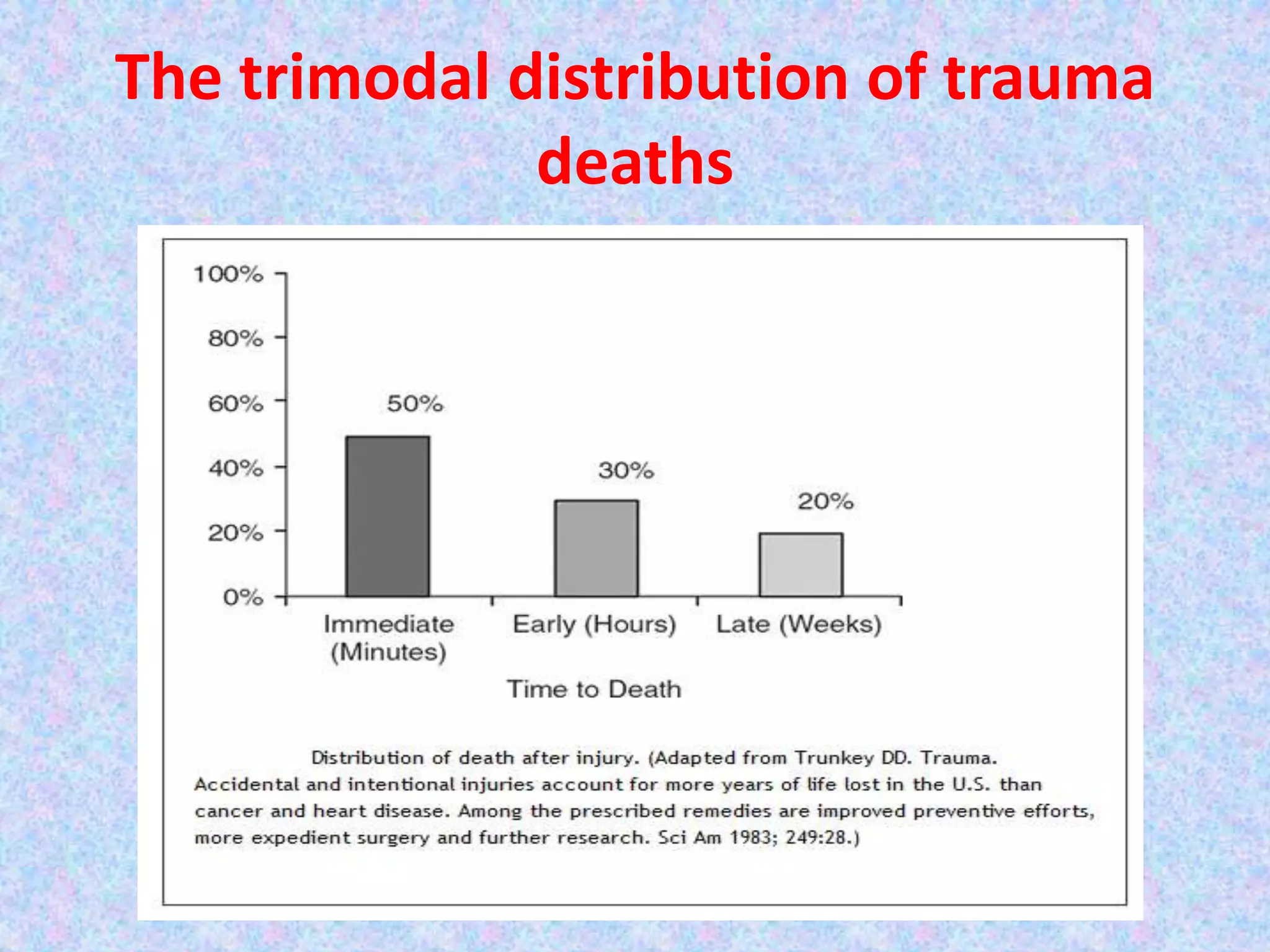
The trimodal distribution of trauma
deaths
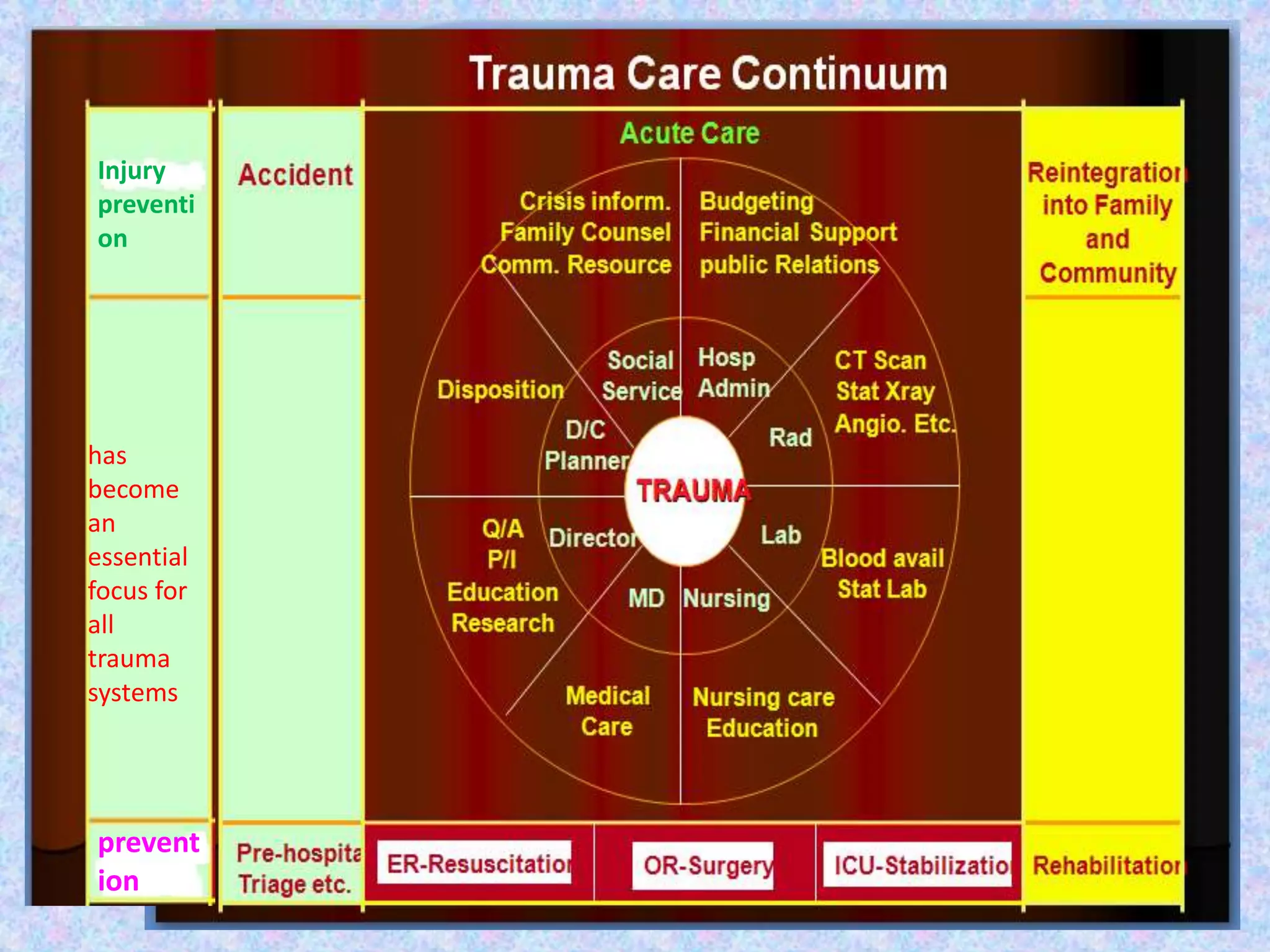
Injury
preventi
on
has
become
an
essential
focus for
all
trauma
systems
prevent
ion
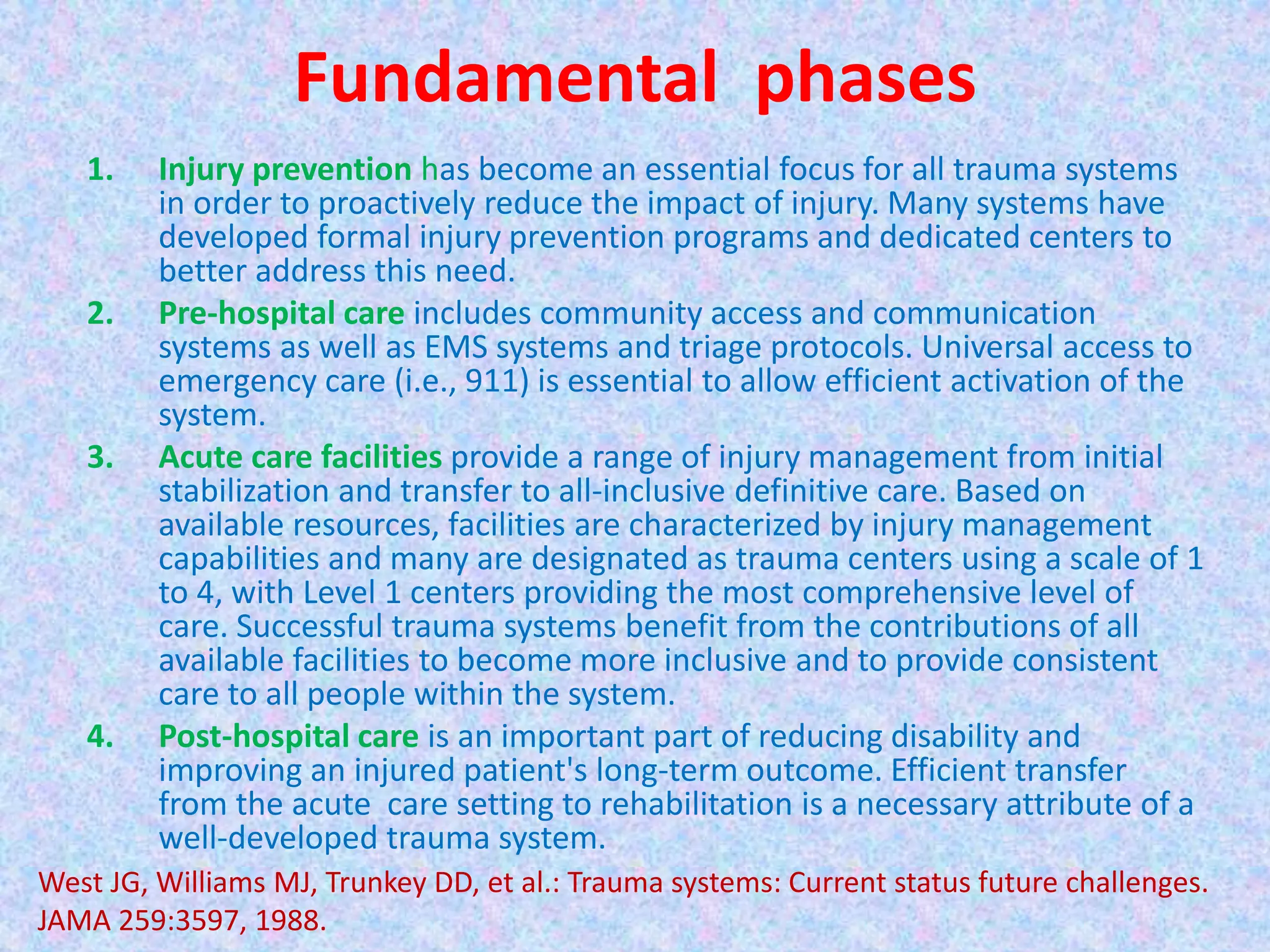
Fundamental phases
1. Injury prevention has become an essential focus for all trauma systems
in order to proactively reduce the impact of injury. Many systems have
developed formal injury prevention programs and dedicated centers to
better address this need.
2. Pre-hospital care includes community access and communication
systems as well as EMS systems and triage protocols. Universal access to
emergency care (i.e., 911) is essential to allow efficient activation of the
system.
3. Acute care facilities provide a range of injury management from initial
stabilization and transfer to all-inclusive definitive care. Based on
available resources, facilities are characterized by injury management
capabilities and many are designated as trauma centers using a scale of 1
to 4, with Level 1 centers providing the most comprehensive level of
care. Successful trauma systems benefit from the contributions of all
available facilities to become more inclusive and to provide consistent
care to all people within the system.
4. Post-hospital care is an important part of reducing disability and
improving an injured patient's long-term outcome. Efficient transfer
from the acute care setting to rehabilitation is a necessary attribute of a
well-developed trauma system.
West JG, Williams MJ, Trunkey DD, et al.: Trauma systems: Current status future challenges.
JAMA 259:3597, 1988.
conditioning
Prehospital Carecont.
Critically injured patients must receive
high-quality care from the earliest
postinjury moment to have the best
chance of survival.
Triage: the aim is to provide optimum care to maximum
No of pt. by ensuring that they are treated in order of
need so that pt. with severe injury that is potentially
survivable are given priority of care. The most
experienced person present should carry out triage.
Prehospital Care ….cont.
Advanced life support is provided
[by an organized trauma team]
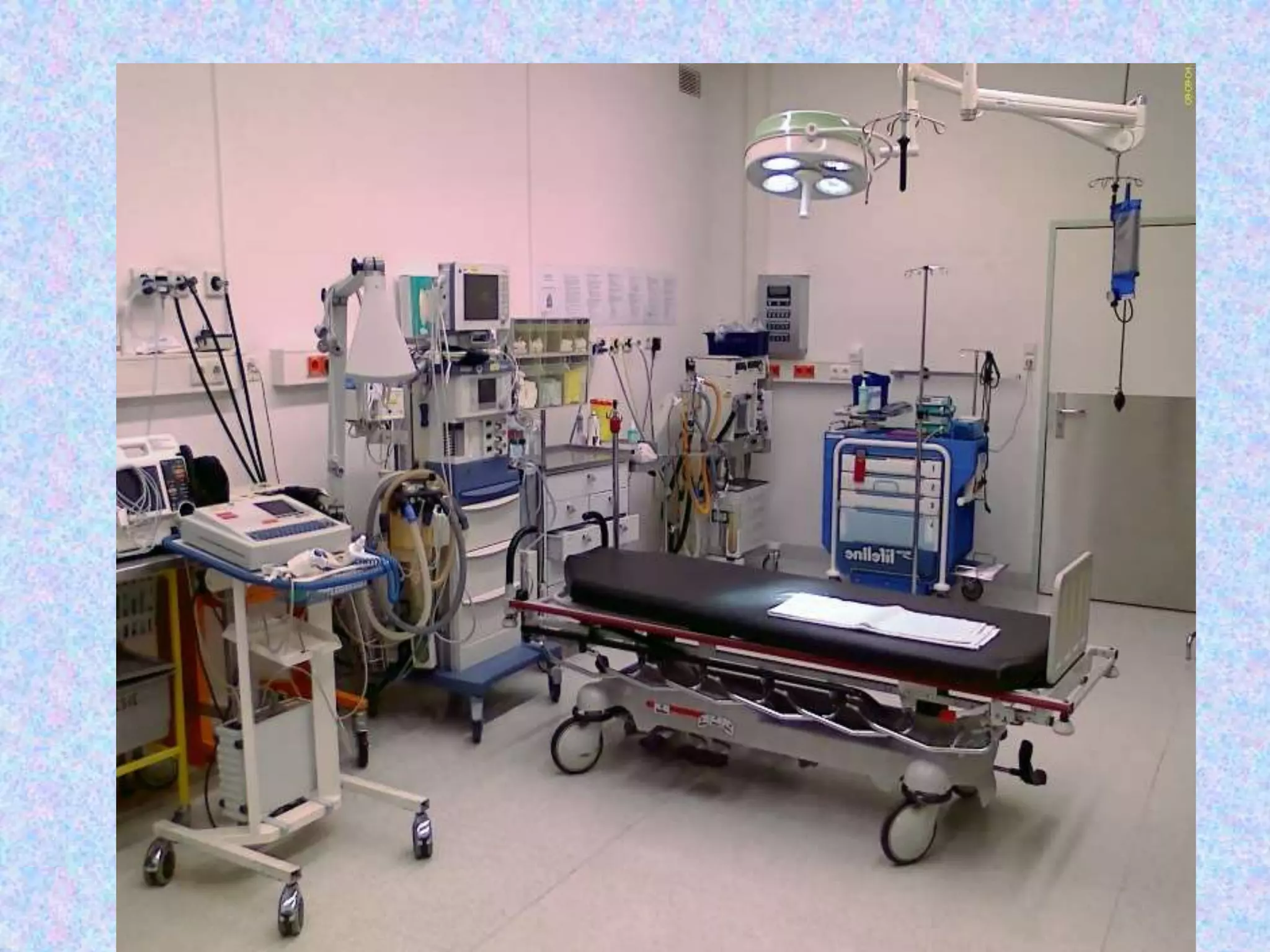
Early hospital phase:
Phases of management of the injured patient
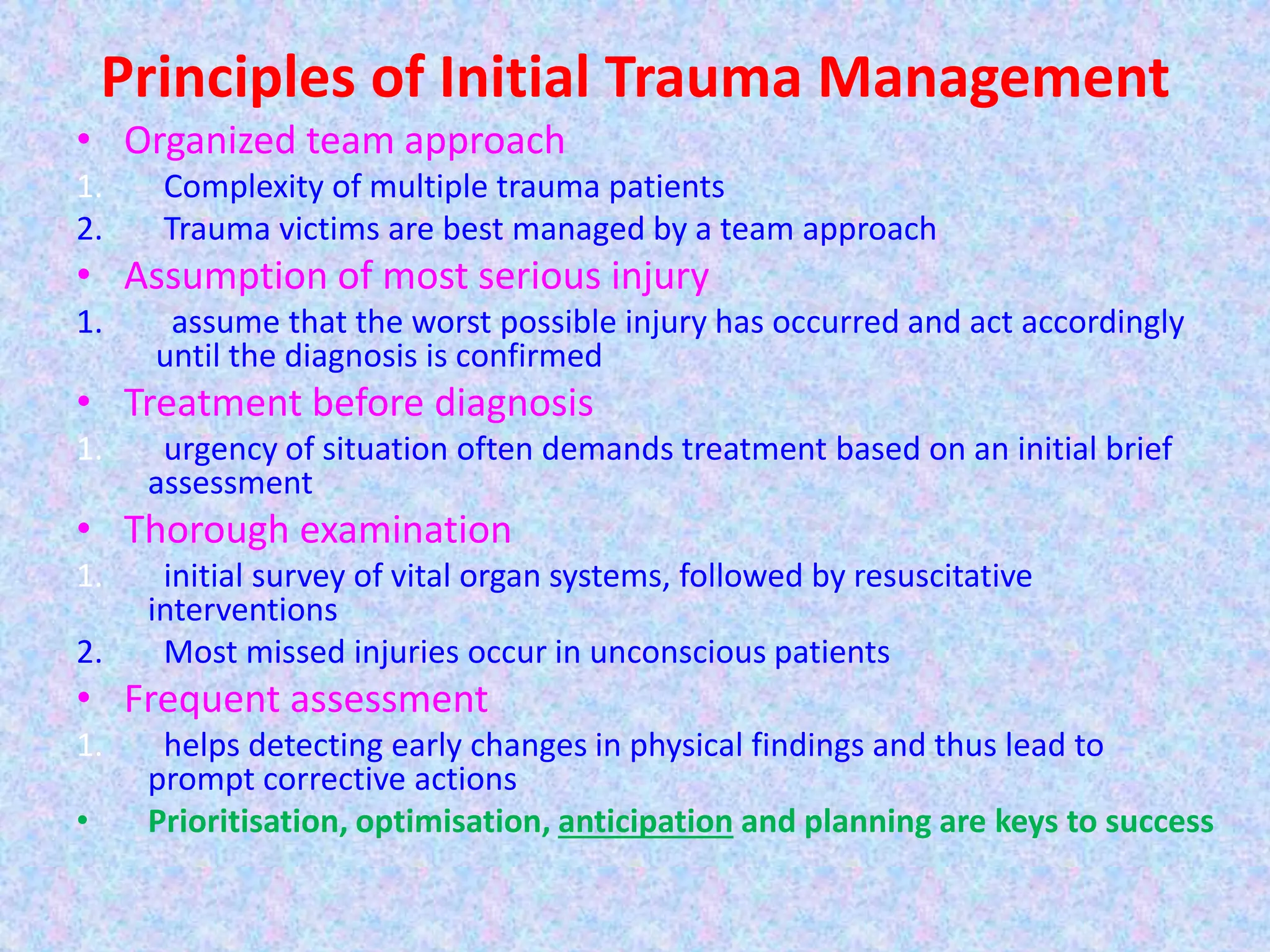
Principles of Initial Trauma Management
• Organized team approach
1. Complexity of multiple trauma patients
2. Trauma victims are best managed by a team approach
• Assumption of most serious injury
1. assume that the worst possible injury has occurred and act accordingly
until the diagnosis is confirmed
• Treatment before diagnosis
1. urgency of situation often demands treatment based on an initial brief
assessment
• Thorough examination
1. initial survey of vital organ systems, followed by resuscitative
interventions
2. Most missed injuries occur in unconscious patients
• Frequent assessment
1. helps detecting early changes in physical findings and thus lead to
prompt corrective actions
• Prioritisation, optimisation, anticipation and planning are keys to success
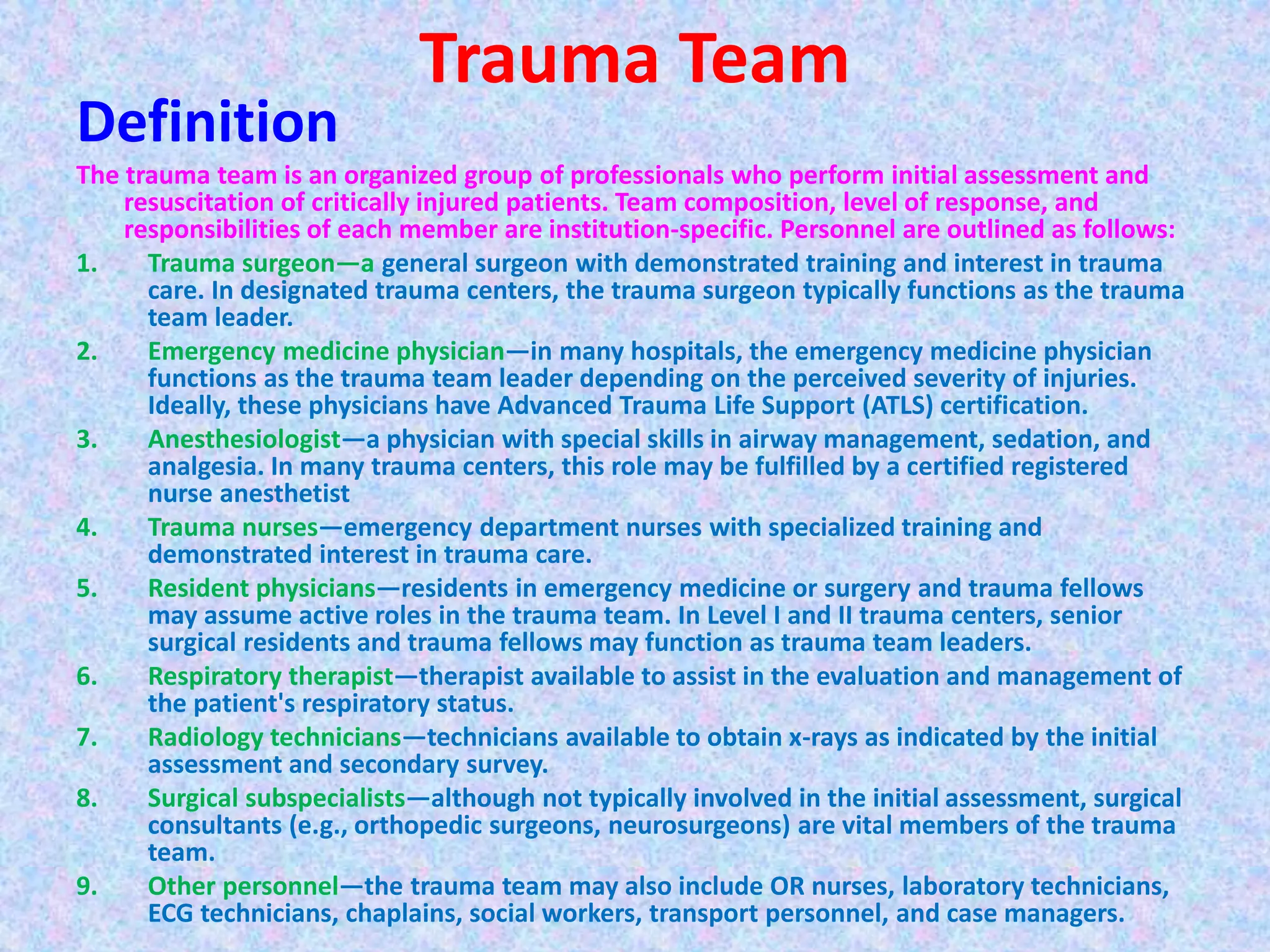
Trauma Team
Definition
The trauma team is an organized group of professionals who perform initial assessment and
resuscitation of critically injured patients. Team composition, level of response, and
responsibilities of each member are institution-specific. Personnel are outlined as follows:
1. Trauma surgeon—a general surgeon with demonstrated training and interest in trauma
care. In designated trauma centers, the trauma surgeon typically functions as the trauma
team leader.
2. Emergency medicine physician—in many hospitals, the emergency medicine physician
functions as the trauma team leader depending on the perceived severity of injuries.
Ideally, these physicians have Advanced Trauma Life Support (ATLS) certification.
3. Anesthesiologist—a physician with special skills in airway management, sedation, and
analgesia. In many trauma centers, this role may be fulfilled by a certified registered
nurse anesthetist
4. Trauma nurses—emergency department nurses with specialized training and
demonstrated interest in trauma care.
5. Resident physicians—residents in emergency medicine or surgery and trauma fellows
may assume active roles in the trauma team. In Level I and II trauma centers, senior
surgical residents and trauma fellows may function as trauma team leaders.
6. Respiratory therapist—therapist available to assist in the evaluation and management of
the patient's respiratory status.
7. Radiology technicians—technicians available to obtain x-rays as indicated by the initial
assessment and secondary survey.
8. Surgical subspecialists—although not typically involved in the initial assessment, surgical
consultants (e.g., orthopedic surgeons, neurosurgeons) are vital members of the trauma
team.
9. Other personnel—the trauma team may also include OR nurses, laboratory technicians,
ECG technicians, chaplains, social workers, transport personnel, and case managers.
Hospital trauma team
transferring a new patient.
The rapid sequence intubation team
Original article
Impact of a multifunctional image-guided therapy suite
on emergency multiple trauma care
T. Gross1, P. Messmer1,7, F. Amsler5, I. Fu¨ glistaler-Montali1, M. Zu¨ rcher2, R. W. Hu¨ gli1,6,
P. Regazzoni1,3 and A. L. Jacob1,4
British Journal of Surgery 2010; 97: 118–127
Conclusion: Implementation of a MIGTS in the emergency treatment of multiple trauma significantly
accelerated the procedure and reduced the number of in-hospital transports.
ATLS overview
• Preparation
• Triage
• Primary Survey (ABCDE’s)
• Resuscitation
• Adjuncts to primary
survey and Resus.
• Secondary Survey
• Adjuncts to Secondary
survey
• Continued post-resus
monitoring
• Definitive Care
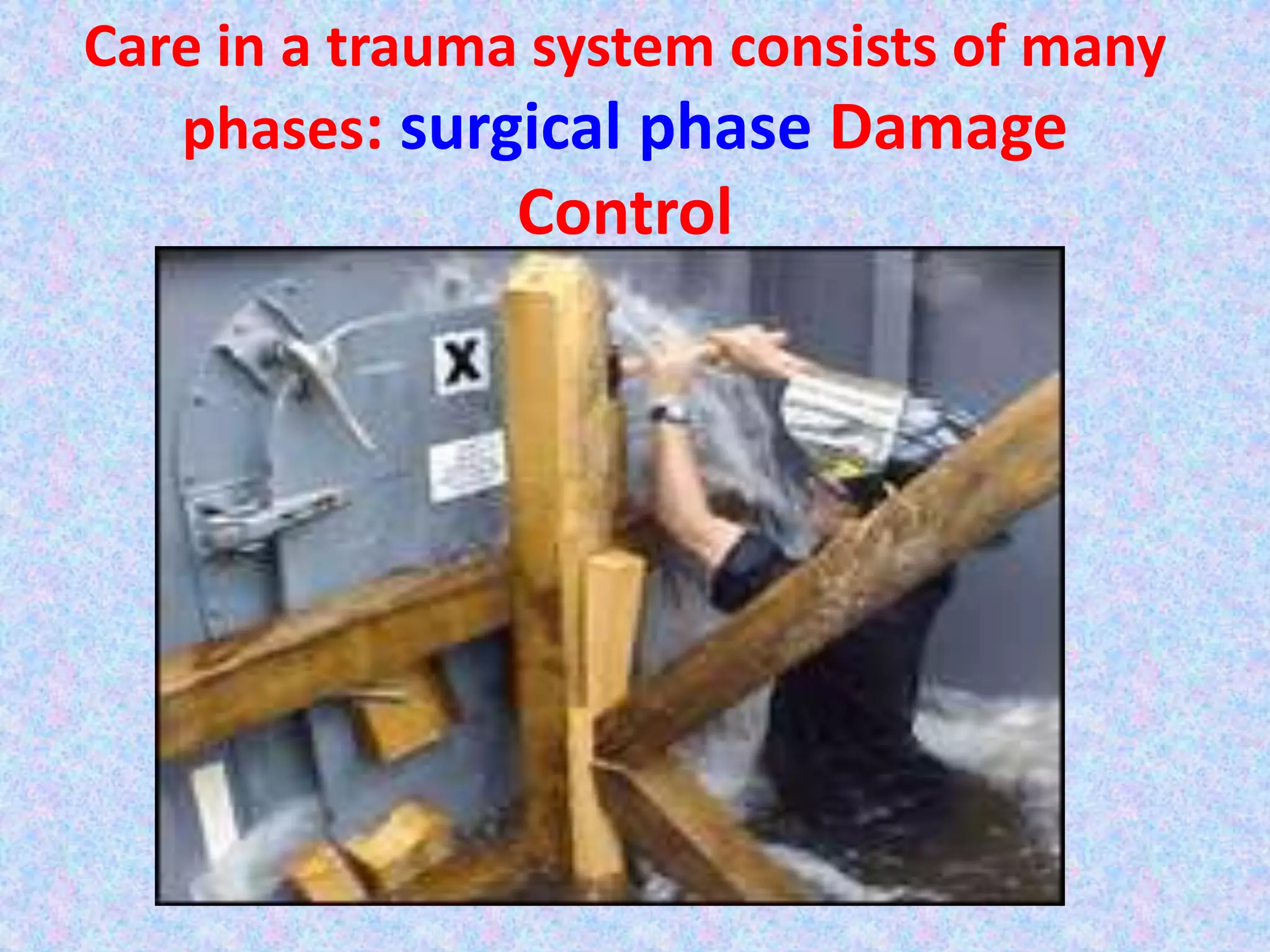
Care in a trauma system consists of many
phases: surgical phase Damage
Control
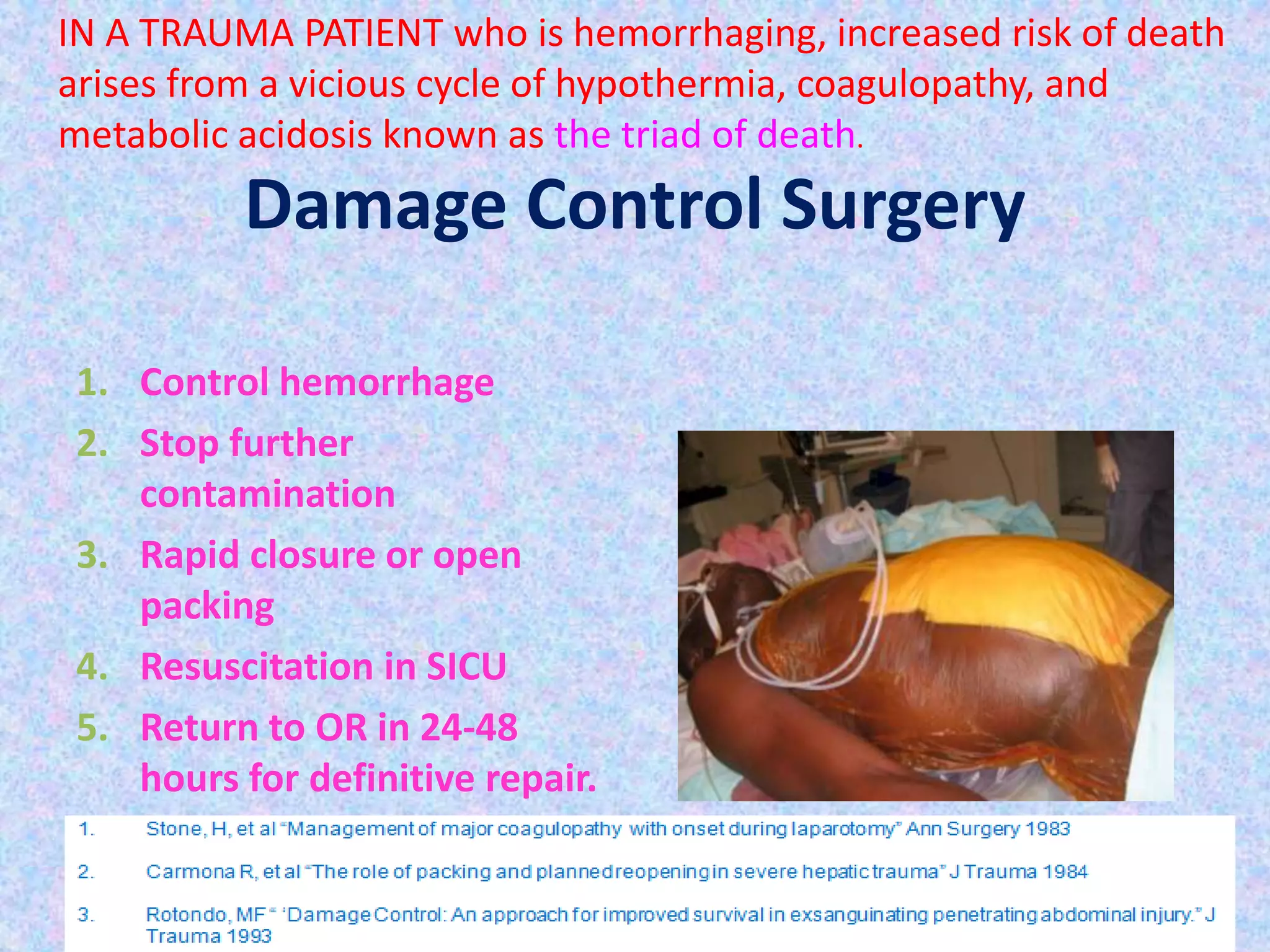
Damage Control Surgery
1. Control hemorrhage
2. Stop further
contamination
3. Rapid closure or open
packing
4. Resuscitation in SICU
5. Return to OR in 24-48
hours for definitive repair.
IN A TRAUMA PATIENT who is hemorrhaging, increased risk of death
arises from a vicious cycle of hypothermia, coagulopathy, and
metabolic acidosis known as the triad of death.
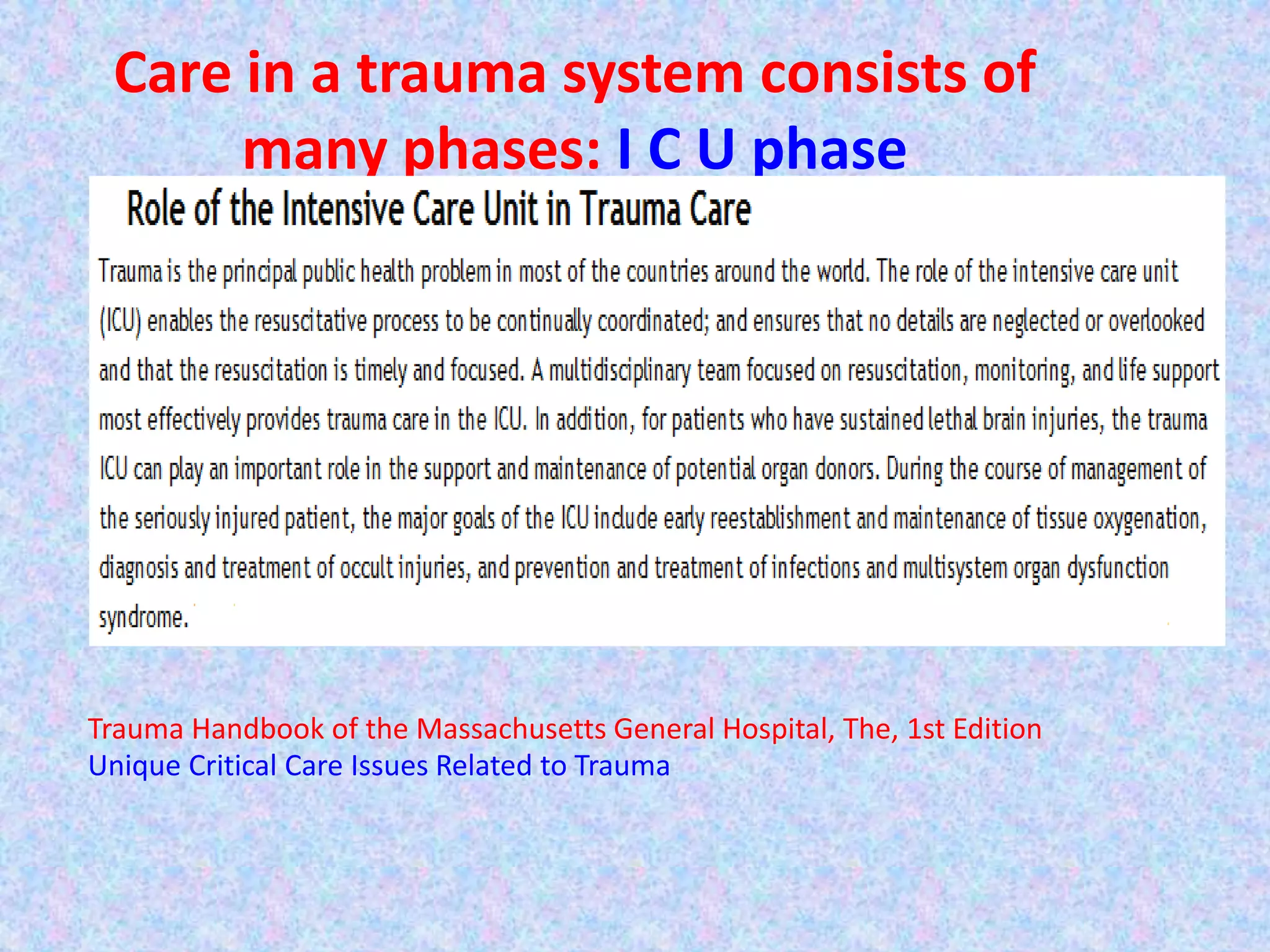
Trauma Handbook of the Massachusetts General Hospital, The, 1st Edition
Care in a trauma system consists of
many phases: I C U phase
Unique Critical Care Issues Related to Trauma

Current trauma manag, trauma system

  • 2.
    Current Trauma Management WhereAre We? Trauma System By Mr. Mahmoud Abdulkareem M.S {Cairo} , FRCS {Glasgow} Consultant Surgeon, King Fahad Specialist Hospital
  • 3.
    Sunday, October 16,2016 3 Damage Control Resuscitation By DR. Mahmoud Abdulkareem M.S {Cairo} , FRCS {Glasgow} Consultant Surgeon, King Fahad Specialist Hospital
  • 4.
    Trauma is themost common cause of death in patients aged less than 40 years
  • 6.
    Injuries Injuries result fromacute exposure to physical agents such as mechanical energy, heat, electricity, chemicals, and ionizing radiation in amounts or at rates above or below the threshold of human tolerance. R T As account for most injuries Followed by assaults, drownings, falls, burns.
  • 7.
    Trauma Trauma is thestudy of medical problems associated with physical injury.
  • 8.
    The trauma patient Thetrauma patient has been defined as “an injured person who requires timely diagnosis and treatment of actual or potential injuries by a multidisciplinary team of health care professionals, supported by the appropriate resources, to diminish or eliminate the risk of death or permanent disability.”
  • 9.
    Mortality is notthe only side of this issue; for every trauma victim who dies, at least six are seriously injured The scope of trauma as a problem
  • 10.
    Editors: Feliciano, DavidV.; Mattox, Kenneth L.; Moore, Ernest E. Title: Trauma, 6th Edition Copyright ©2008 McGraw-Hill
  • 11.
    THE NEED FORTRAUMA SYSTEMS— HISTORY…. cont. However, trauma is not yet recognized as a disease process. Many people still think of trauma as an accident.
  • 12.
    “the neglected diseaseof modern society.” THE NEED FOR TRAUMA SYSTEMS—HISTORY…. cont. National Research Council: Accidental Death and Disability: The Neglected Disease of Modern Society. Washington, DC: U.S. Government Printing Office, 1966.
  • 13.
  • 14.
    MODERN TRAUMA SYSTEM DEVELOPMENT….cont. By 1975, Germany had established a nationwide trauma system, so that no patient was more than 15–20 minutes from one of these regional canters.
  • 15.
    ATLS was developedas a protocol for the management of Trauma victims
  • 16.
    MODERN TRAUMA SYSTEM DEVELOPMENT….cont. The landmark report of the Royal College of Surgeons (1988) on the management of patients with major injuries highlighted serious deficiencies in trauma management in the United Kingdom. Led to the introduction of the ATLs in the UK.
  • 18.
    The trimodal distributionof trauma deaths
  • 19.
    The second peakof approximately 30% of all deaths occurs during the initial hours post injury and preventing these deaths were initially the goal of modern trauma care, such as is taught through the Advanced Trauma Life Support (ATLS) course. The Goal
  • 20.
    MODERN TRAUMA SYSTEM DEVELOPMENT….cont. Studies of trauma systems have shown that: Salvage of the critically injured patient is optimized by a coordinated team effort in an organized trauma system. And that: when severely injured patients are treated in specialized trauma centers, patients have greater chances of survival. (Cales 1984; Cales and Trunkey 1985; Guss, Meyer, Neuman, et al. 1989; Shackford et al. 1986; Smith et al. 1990; West, Cales, and Gazzaniga 1983).
  • 21.
  • 22.
  • 25.
    The trimodal distributionof trauma deaths
  • 26.
  • 27.
    Fundamental phases 1. Injuryprevention has become an essential focus for all trauma systems in order to proactively reduce the impact of injury. Many systems have developed formal injury prevention programs and dedicated centers to better address this need. 2. Pre-hospital care includes community access and communication systems as well as EMS systems and triage protocols. Universal access to emergency care (i.e., 911) is essential to allow efficient activation of the system. 3. Acute care facilities provide a range of injury management from initial stabilization and transfer to all-inclusive definitive care. Based on available resources, facilities are characterized by injury management capabilities and many are designated as trauma centers using a scale of 1 to 4, with Level 1 centers providing the most comprehensive level of care. Successful trauma systems benefit from the contributions of all available facilities to become more inclusive and to provide consistent care to all people within the system. 4. Post-hospital care is an important part of reducing disability and improving an injured patient's long-term outcome. Efficient transfer from the acute care setting to rehabilitation is a necessary attribute of a well-developed trauma system. West JG, Williams MJ, Trunkey DD, et al.: Trauma systems: Current status future challenges. JAMA 259:3597, 1988.
  • 28.
  • 29.
    Prehospital Carecont. Critically injuredpatients must receive high-quality care from the earliest postinjury moment to have the best chance of survival.
  • 30.
    Triage: the aimis to provide optimum care to maximum No of pt. by ensuring that they are treated in order of need so that pt. with severe injury that is potentially survivable are given priority of care. The most experienced person present should carry out triage. Prehospital Care ….cont.
  • 33.
    Advanced life supportis provided [by an organized trauma team] Early hospital phase:
  • 34.
    Phases of managementof the injured patient
  • 35.
    Principles of InitialTrauma Management • Organized team approach 1. Complexity of multiple trauma patients 2. Trauma victims are best managed by a team approach • Assumption of most serious injury 1. assume that the worst possible injury has occurred and act accordingly until the diagnosis is confirmed • Treatment before diagnosis 1. urgency of situation often demands treatment based on an initial brief assessment • Thorough examination 1. initial survey of vital organ systems, followed by resuscitative interventions 2. Most missed injuries occur in unconscious patients • Frequent assessment 1. helps detecting early changes in physical findings and thus lead to prompt corrective actions • Prioritisation, optimisation, anticipation and planning are keys to success
  • 36.
    Trauma Team Definition The traumateam is an organized group of professionals who perform initial assessment and resuscitation of critically injured patients. Team composition, level of response, and responsibilities of each member are institution-specific. Personnel are outlined as follows: 1. Trauma surgeon—a general surgeon with demonstrated training and interest in trauma care. In designated trauma centers, the trauma surgeon typically functions as the trauma team leader. 2. Emergency medicine physician—in many hospitals, the emergency medicine physician functions as the trauma team leader depending on the perceived severity of injuries. Ideally, these physicians have Advanced Trauma Life Support (ATLS) certification. 3. Anesthesiologist—a physician with special skills in airway management, sedation, and analgesia. In many trauma centers, this role may be fulfilled by a certified registered nurse anesthetist 4. Trauma nurses—emergency department nurses with specialized training and demonstrated interest in trauma care. 5. Resident physicians—residents in emergency medicine or surgery and trauma fellows may assume active roles in the trauma team. In Level I and II trauma centers, senior surgical residents and trauma fellows may function as trauma team leaders. 6. Respiratory therapist—therapist available to assist in the evaluation and management of the patient's respiratory status. 7. Radiology technicians—technicians available to obtain x-rays as indicated by the initial assessment and secondary survey. 8. Surgical subspecialists—although not typically involved in the initial assessment, surgical consultants (e.g., orthopedic surgeons, neurosurgeons) are vital members of the trauma team. 9. Other personnel—the trauma team may also include OR nurses, laboratory technicians, ECG technicians, chaplains, social workers, transport personnel, and case managers.
  • 37.
  • 39.
    The rapid sequenceintubation team
  • 42.
    Original article Impact ofa multifunctional image-guided therapy suite on emergency multiple trauma care T. Gross1, P. Messmer1,7, F. Amsler5, I. Fu¨ glistaler-Montali1, M. Zu¨ rcher2, R. W. Hu¨ gli1,6, P. Regazzoni1,3 and A. L. Jacob1,4 British Journal of Surgery 2010; 97: 118–127 Conclusion: Implementation of a MIGTS in the emergency treatment of multiple trauma significantly accelerated the procedure and reduced the number of in-hospital transports.
  • 43.
    ATLS overview • Preparation •Triage • Primary Survey (ABCDE’s) • Resuscitation • Adjuncts to primary survey and Resus. • Secondary Survey • Adjuncts to Secondary survey • Continued post-resus monitoring • Definitive Care
  • 44.
    Care in atrauma system consists of many phases: surgical phase Damage Control
  • 45.
    Damage Control Surgery 1.Control hemorrhage 2. Stop further contamination 3. Rapid closure or open packing 4. Resuscitation in SICU 5. Return to OR in 24-48 hours for definitive repair. IN A TRAUMA PATIENT who is hemorrhaging, increased risk of death arises from a vicious cycle of hypothermia, coagulopathy, and metabolic acidosis known as the triad of death.
  • 46.
    Trauma Handbook ofthe Massachusetts General Hospital, The, 1st Edition Care in a trauma system consists of many phases: I C U phase Unique Critical Care Issues Related to Trauma