Microbial Physiology
and Metabolism
Chemolithotrophy
Presentation by:
DEEPALI
SEEMA YADAV
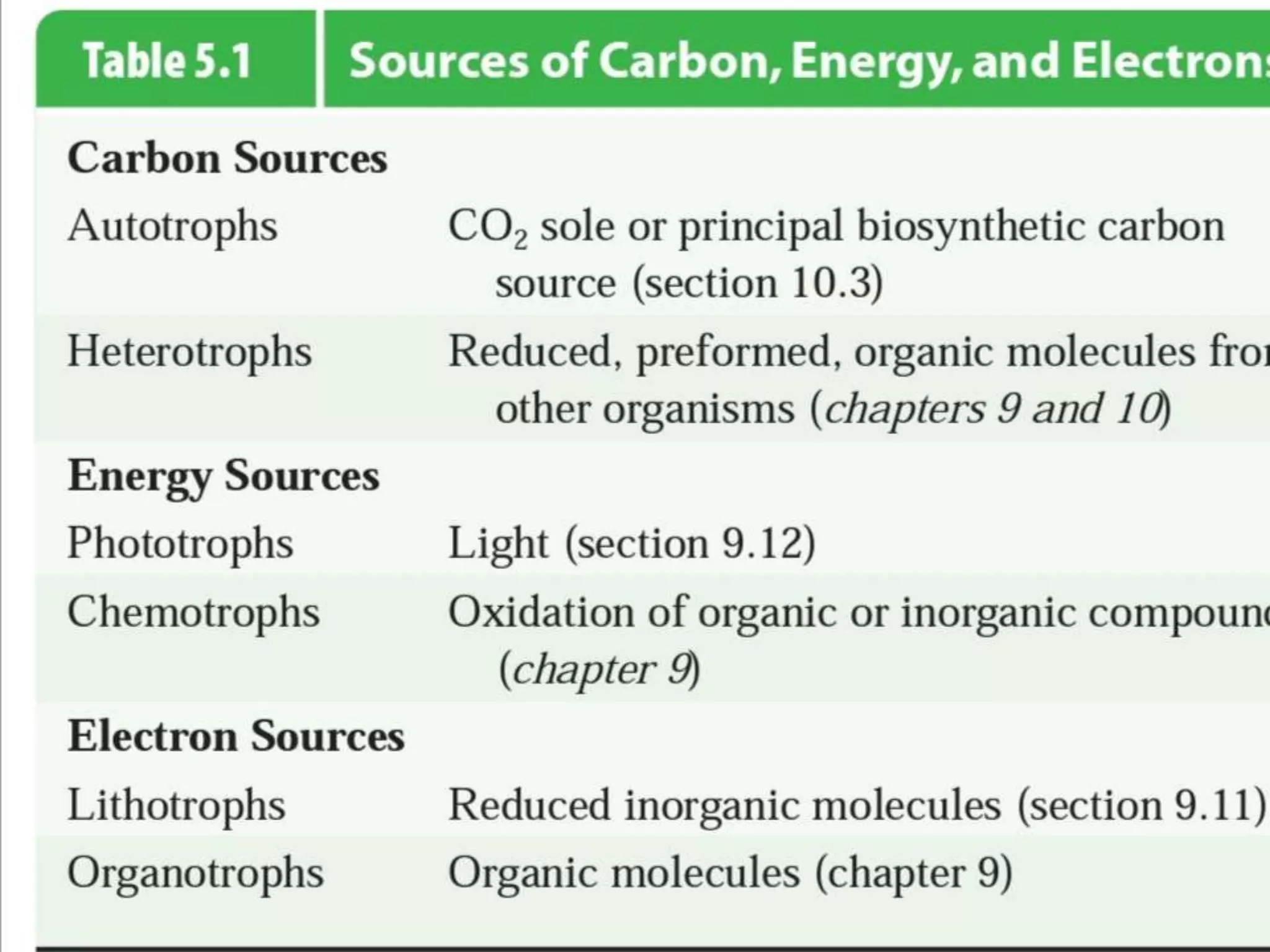
Basic needs of a cell :
• Carbon source
• Source of energy
• Source of electrons
Introduction to
Chemolithotrophs
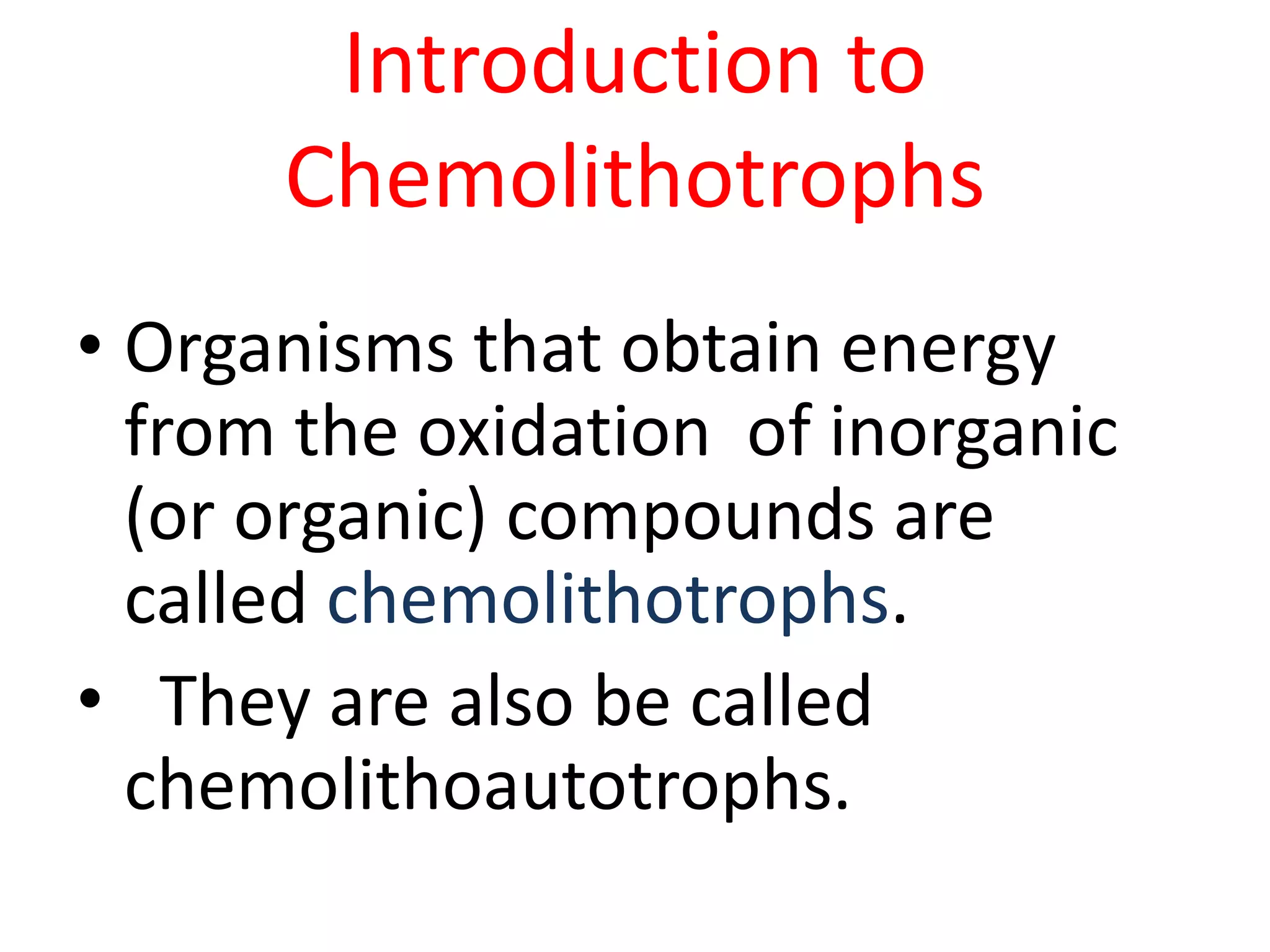
• Organisms that obtain energy
from the oxidation of inorganic
(or organic) compounds are
called chemolithotrophs.
• They are also be called
chemolithoautotrophs.
Discovery of Chemolithotrophy
• First elaborated by Sergei Winogradsky.
• Studied sulphur bacteria (Beggiatoa, Thiothrix).
• Observations
1. sulphur bacteria were only present in water
containing H2S.
2. when water flowed away, sulphur bacteria
disappeared.
3. sulphur granules were present in their filaments.
4. granules lost when bacteria starved for H2S and
sulphate appeared in medium.
• Conclusion :
H2S S (SO4)2-
Sources of Inorganic Electron Donor
Inorganic Electron Donor
Geological Anthropogenic Biological
Volcanic
activity (H2S)
Mining , burning
fossil fuels
(CO,H2)
Agriculture
(H2S, H2,
NH3)
CO2 fixation
• By Calvin cycle
• Requirements:
1. Energy (ATP) -3
2. Reducing power (NADH or
reduced ferredoxin)-2
Energetics in
Chemolithotrophy
• ATP (energy)
• NADH (reducing power)
Problems faced:-
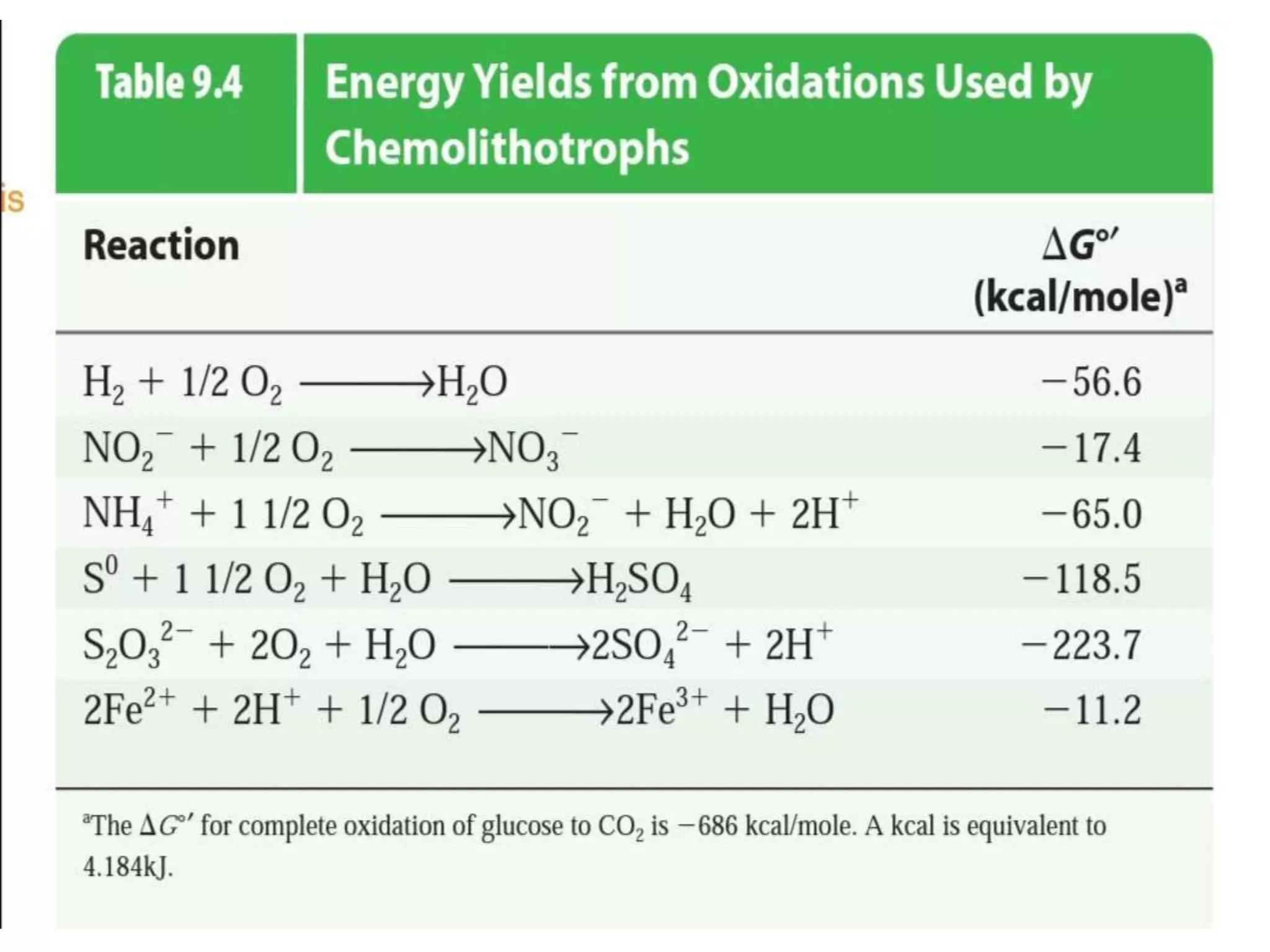
• Less energy availability from
oxidation of inorganic compounds
than that of organics.
• Electron flow from more negative to
positive reduction potential.
• More negative reduction potential
of NADH (than NH3 and NO2-).
Solutions:
• Oxidation of more substrate.
• Reverse electron flow.
Types of Chemolithotrophs
Aerobic
• Terminal electron
acceptor is oxygen in
ETC.
• Example: hydrogen-
oxidising bacteria, iron
bacteria.
Anaerobic
• Terminal electron
acceptor in ETC is not
O2 but any other
compound.
• Example: Methanogenic
bacteria, Sulfidogenic
bacteria.

Chemolithotrophy

  • 1.
  • 2.
    Basic needs ofa cell : • Carbon source • Source of energy • Source of electrons
  • 5.
    Introduction to Chemolithotrophs • Organismsthat obtain energy from the oxidation of inorganic (or organic) compounds are called chemolithotrophs. • They are also be called chemolithoautotrophs.
  • 6.
    Discovery of Chemolithotrophy •First elaborated by Sergei Winogradsky. • Studied sulphur bacteria (Beggiatoa, Thiothrix). • Observations 1. sulphur bacteria were only present in water containing H2S. 2. when water flowed away, sulphur bacteria disappeared. 3. sulphur granules were present in their filaments. 4. granules lost when bacteria starved for H2S and sulphate appeared in medium. • Conclusion : H2S S (SO4)2-
  • 9.
    Sources of InorganicElectron Donor Inorganic Electron Donor Geological Anthropogenic Biological Volcanic activity (H2S) Mining , burning fossil fuels (CO,H2) Agriculture (H2S, H2, NH3)
  • 10.
    CO2 fixation • ByCalvin cycle • Requirements: 1. Energy (ATP) -3 2. Reducing power (NADH or reduced ferredoxin)-2
  • 12.
    Energetics in Chemolithotrophy • ATP(energy) • NADH (reducing power)
  • 14.
    Problems faced:- • Lessenergy availability from oxidation of inorganic compounds than that of organics. • Electron flow from more negative to positive reduction potential. • More negative reduction potential of NADH (than NH3 and NO2-).
  • 17.
    Solutions: • Oxidation ofmore substrate. • Reverse electron flow.
  • 19.
    Types of Chemolithotrophs Aerobic •Terminal electron acceptor is oxygen in ETC. • Example: hydrogen- oxidising bacteria, iron bacteria. Anaerobic • Terminal electron acceptor in ETC is not O2 but any other compound. • Example: Methanogenic bacteria, Sulfidogenic bacteria.