Unit 5b: History (Part 2) .
Index.
1-Spain in the ancient world
A) Iberians and celts
B) Traders of the Mediterraneans.
C) The Romans.
2-The Middle Ages.
3-Life in the Middle Ages.
A) Visigoths
B) Muslims
C) Expansion of Christian people.
Unit 5b: History (Part 2) .
 a) IBERIANS AND CELTS.
 The Ancient World began in Spain about 3000
years ago when the Iberians who inhabited
the Peninsula invented their own way of
writing.
1-SPAIN IN THE ANCIENT WORLD.
Inhabited the East and
South of the Peninsula.
They were farmers and
practised commerce.
Sculpture was very
important for them.
They came from the
central and North Europe
at 9th century BC, and
settled in the North and
centre of the Peninsula.
They were farmers and
worked with iron.
IBERIANS CELTS
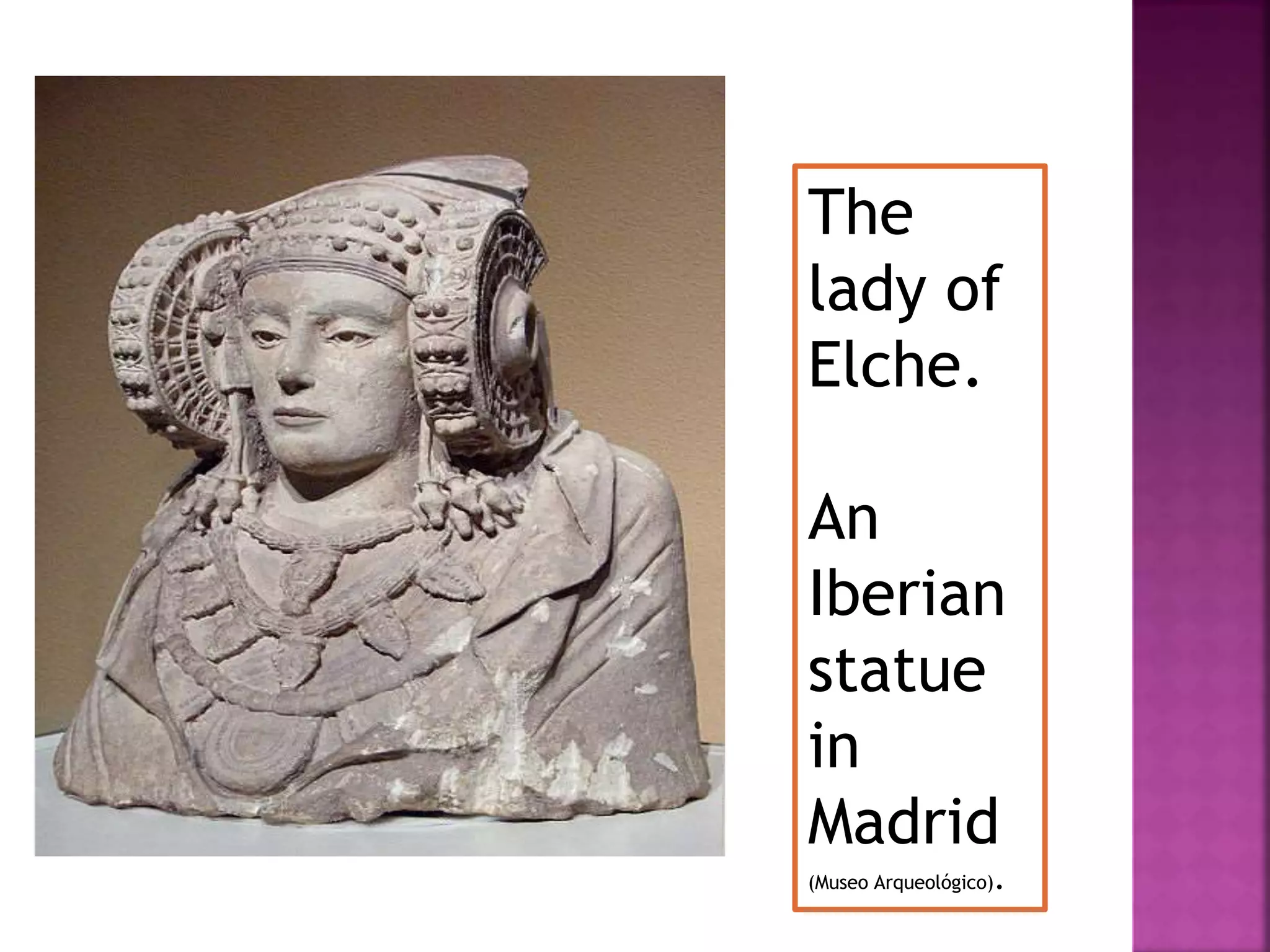
The
lady of
Elche.
An
Iberian
statue
in
Madrid
(Museo Arqueológico).
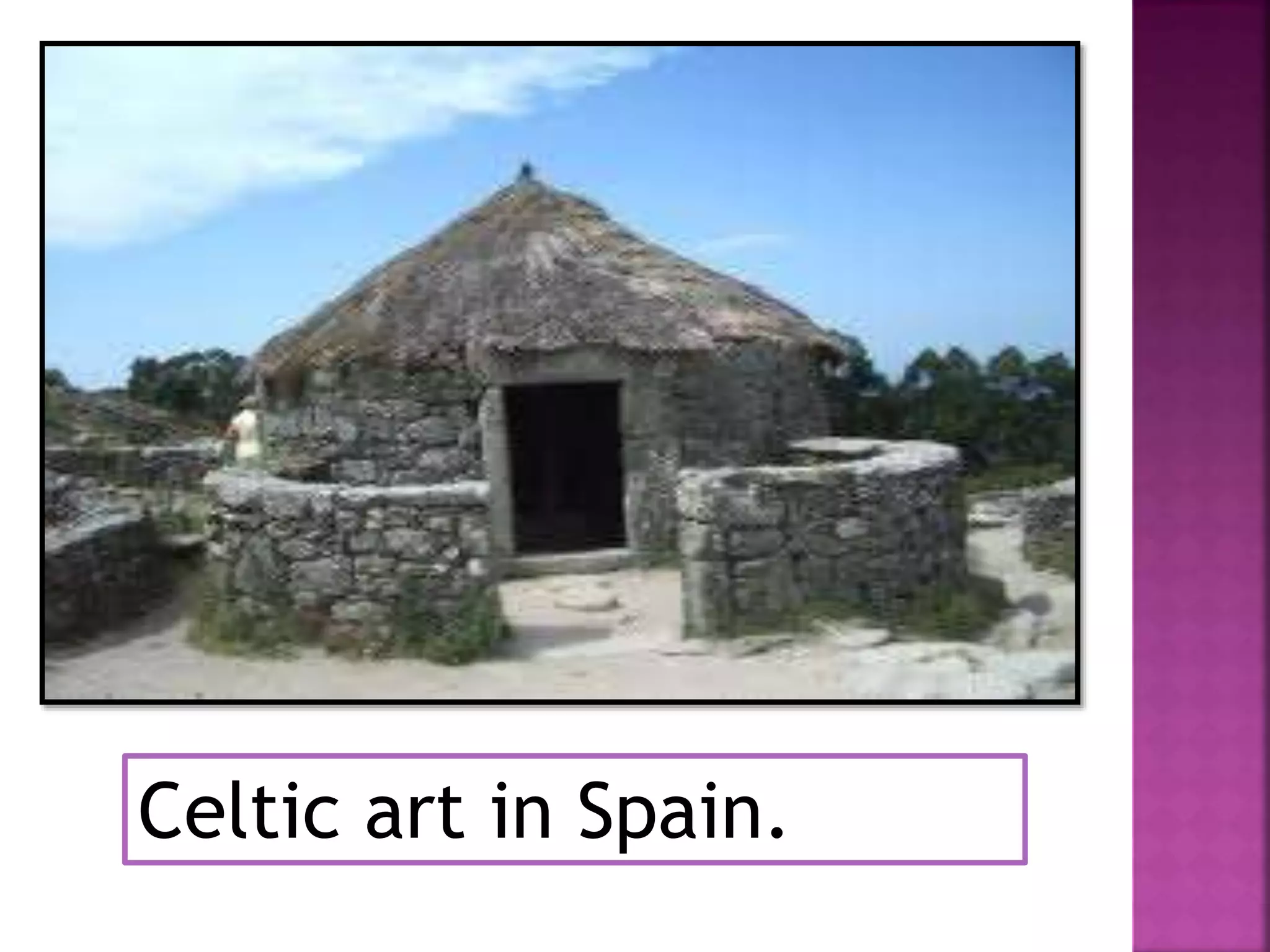
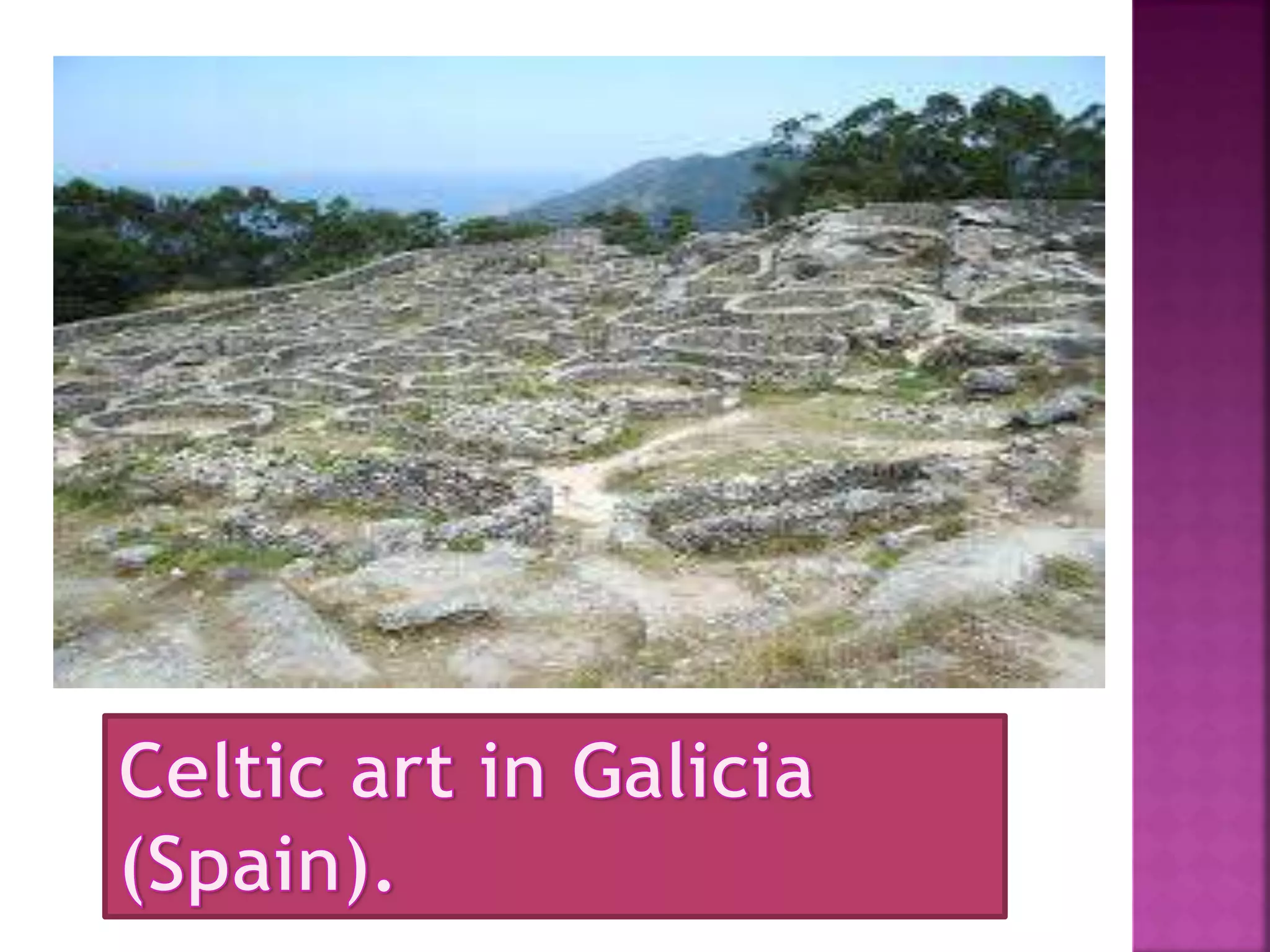
Celtic art in Spain.
Unit 5b: History (Part 2) .
B) Traders of the Mediterranean.
 At the end of the 8th century BC other
people arrived from the East of the
Mediterranean. They traded in metals,
fabric, iron objects and perfumes .
1-SPAIN IN THE ANCIENT WORLD.
From Phoenicia,
arrived first and
settled on the
southern costs.
The Greeks arrived
in the 6th century
BC and formed
colonies on the
eastern coast.
PHOENICIANS GREEKS
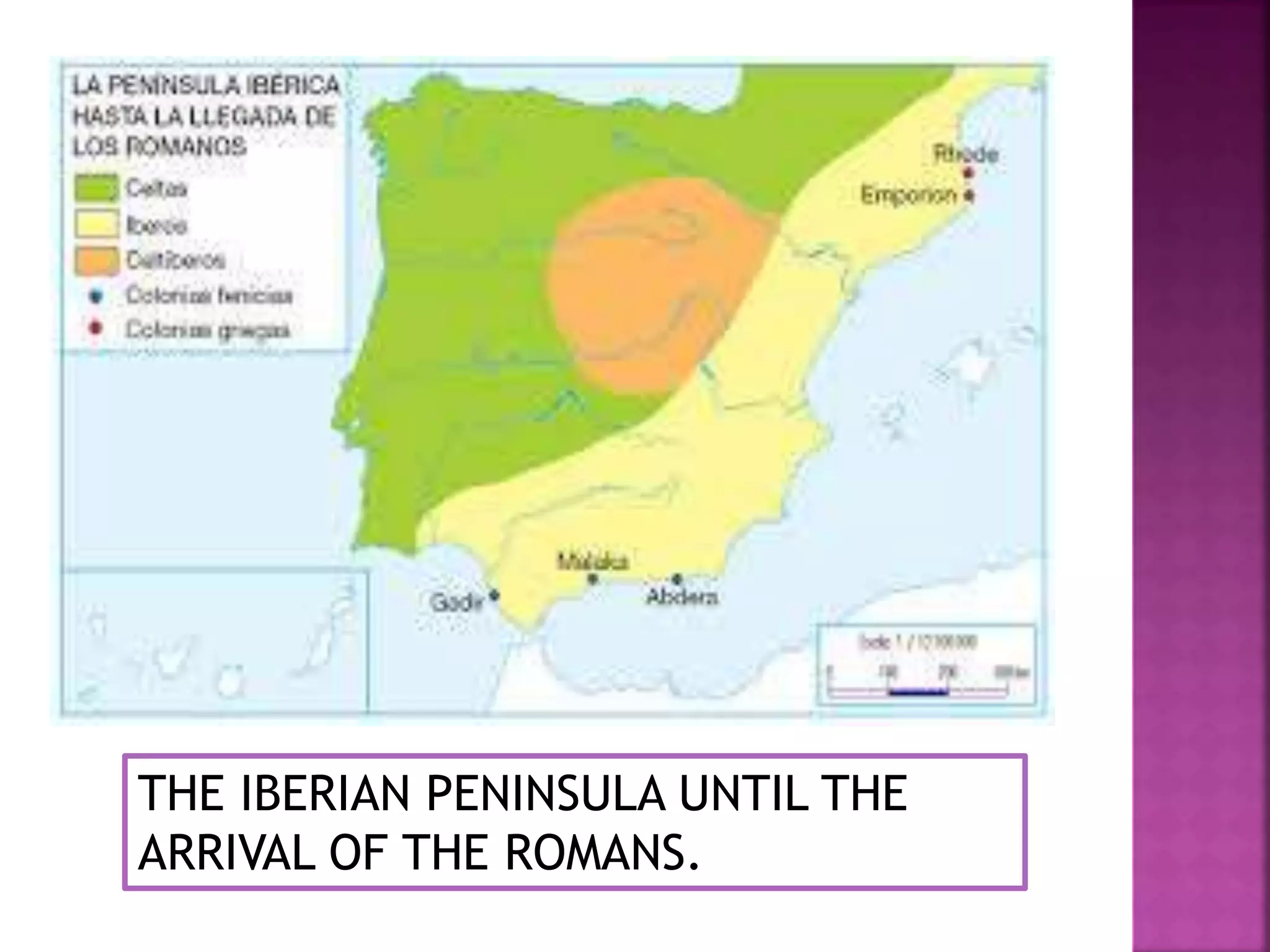
THE IBERIAN PENINSULA UNTIL THE
ARRIVAL OF THE ROMANS.
Unit 5b: History (Part 2) .
C) The Romans.
1-SPAIN IN THE ANCIENT WORLD.
The Romans began their
conquest of the Península in
the year 219BC.
It ended in the year 19BC.
Unit 5b: History (Part 2) .
C) The Romans.
1-SPAIN IN THE ANCIENT WORLD.
They called the territory Hispania and introduced:
•Roman culture, language and a way of life (romanization).
•New agricultural techniques, like irrigation.
•New commercial techniques, like money.
•New architectural techniques , like arches.
•A new calendar, which is the basis of the calendar we have
today.
Unit 5b: History (Part 2) .
C) The Romans.
1-SPAIN IN THE ANCIENT WORLD.
The Romans introduced
their culture ,language,
and way of life to
Hispania and founded
cities.
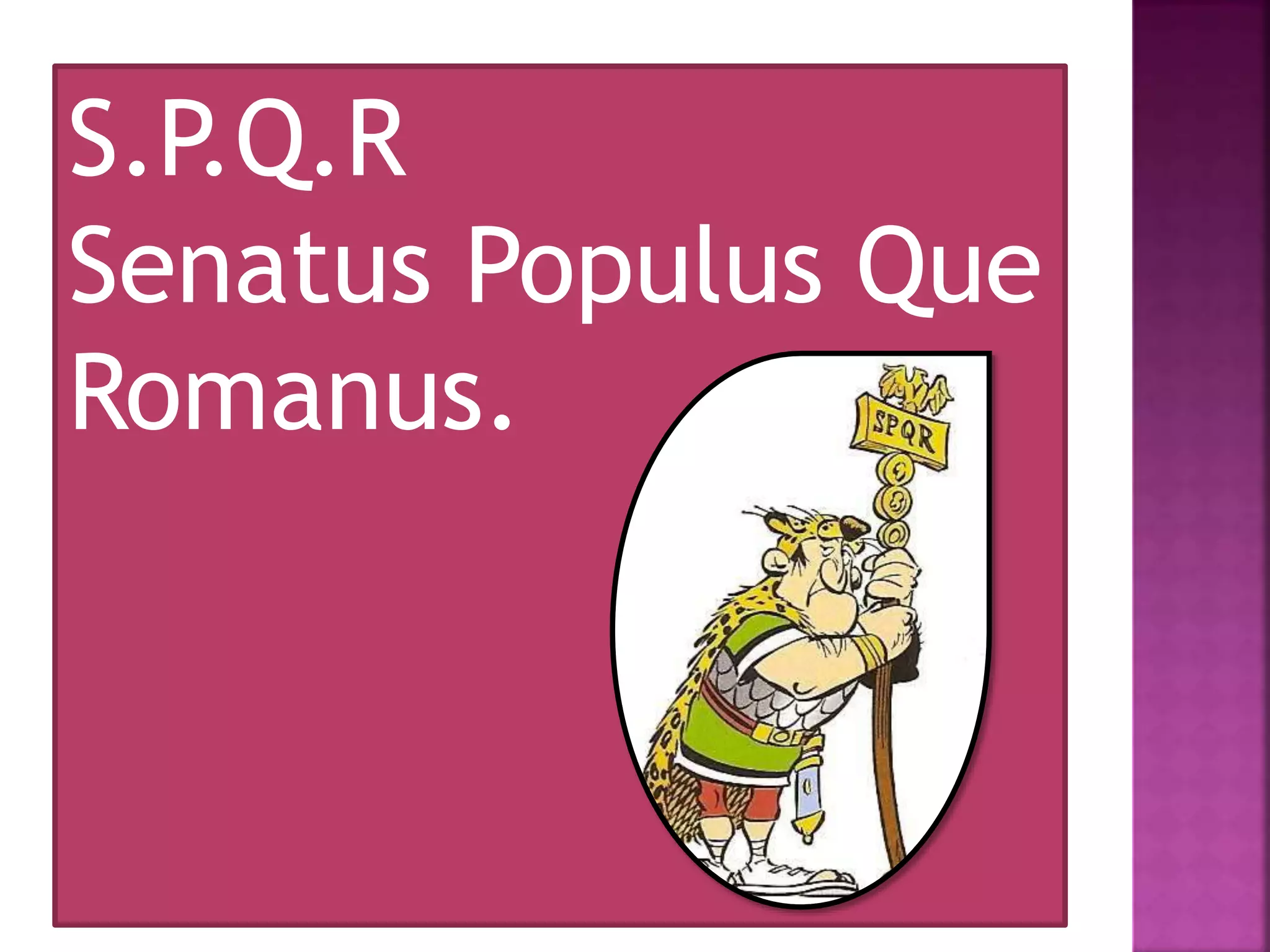
S.P.Q.R
Senatus Populus Que
Romanus.
Germanic
invasions.
476-
Visigoths
and Franks
invaded the
Roman
Empire.
Unit 5b: History (Part 2) .
2-THE MIDDLE AGES.
Important events in the Middle Ages.
Carolingian
Empire.
800-
Charlemagne
conquered
large
territories
throughout
Europe.
Unit 5b: History (Part 2) .
2-THE MIDDLE AGES.
Important events in the Middle Ages.
Feudalism
Nobles
becames
lords.Feudal
lords were
nobles who
lived in
castles,
owned lands
and have
serfs
Discovery of
América.
1492-
Christopher
Columbus
discovered
America.
Here the
Middle Ages
ended
Unit 5b: History (Part 2) .
3-Life in the Middle Ages in Spain
A ) The Visigoths.
The Visigoths were
Germanic people that
settled in Hispania in the
5th century. In the 6th
century they founded a
kingdom with capital in
Toledo.
Unit 5b: History (Part 2) .
3-Life in the Middle Ages in Spain
A ) The Visigoths.
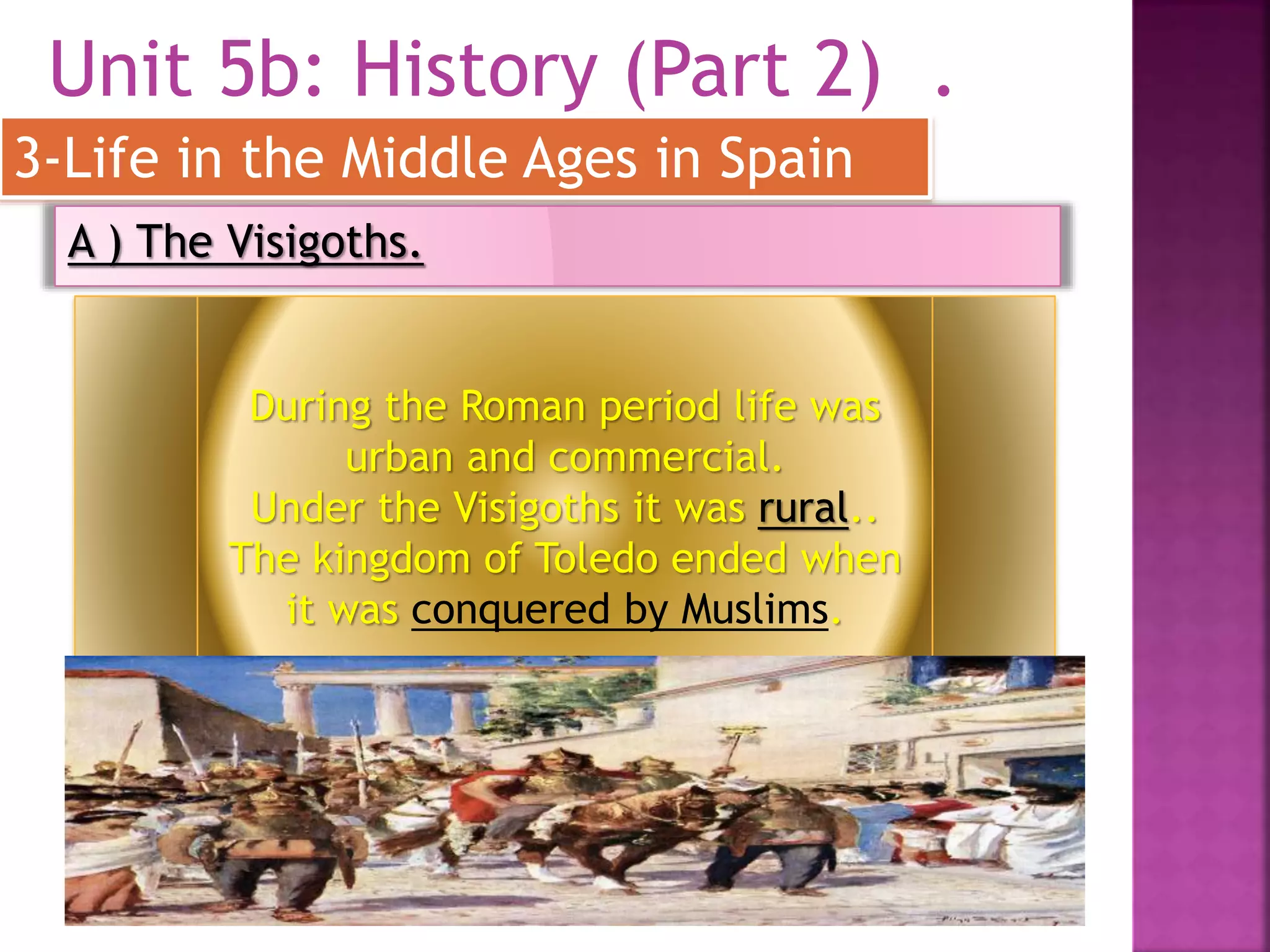
During the Roman period life was
urban and commercial.
Under the Visigoths it was rural..
The kingdom of Toledo ended when
it was conquered by Muslims.
3-Life in the Middle Ages in Spain
B)The Muslims.
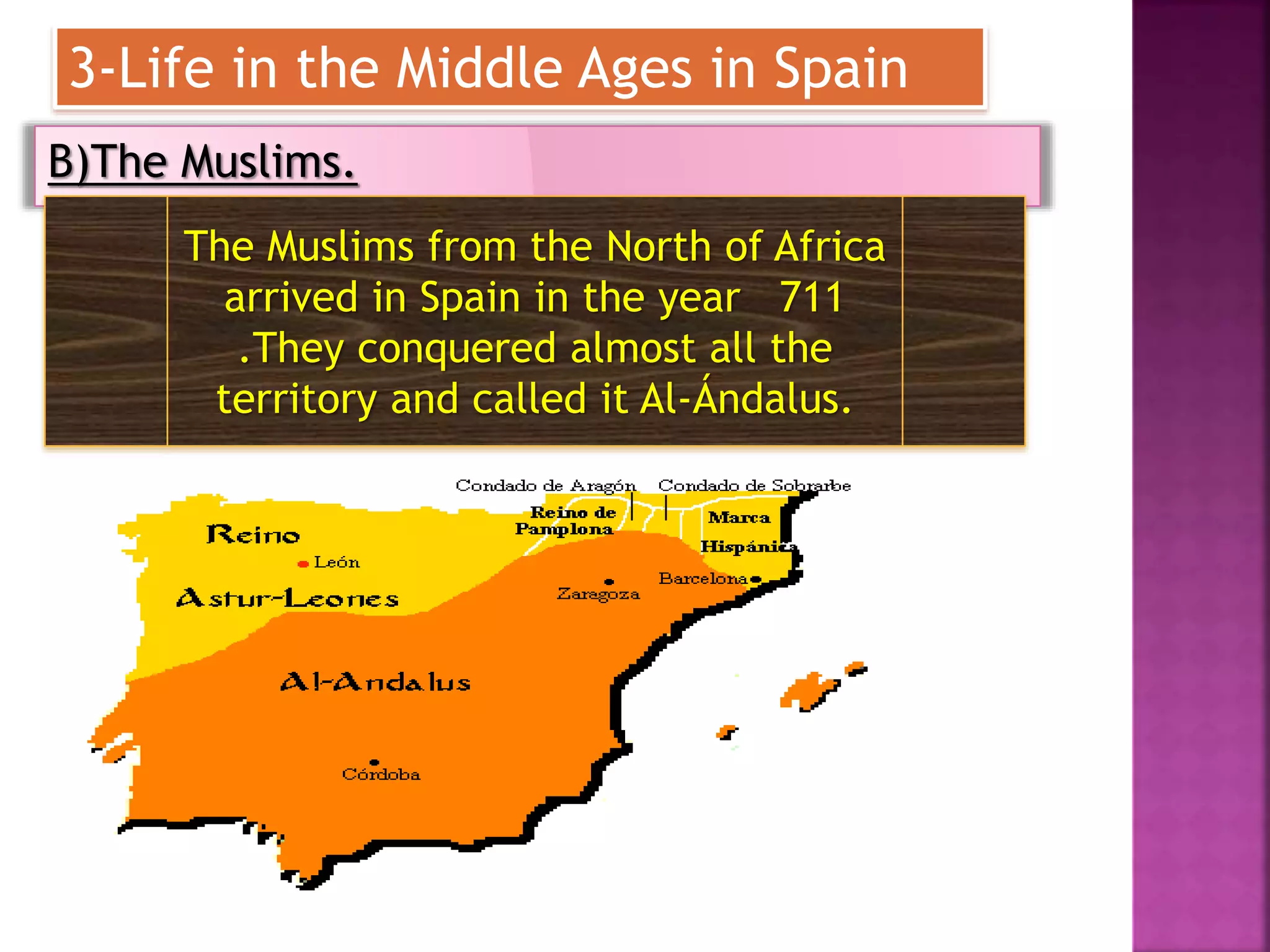
The Muslims from the North of Africa
arrived in Spain in the year 711
.They conquered almost all the
territory and called it Al-Ándalus.
Unit 5b: History (Part 2) .
3-Life in the Middle Ages in Spain
B)The Muslims.
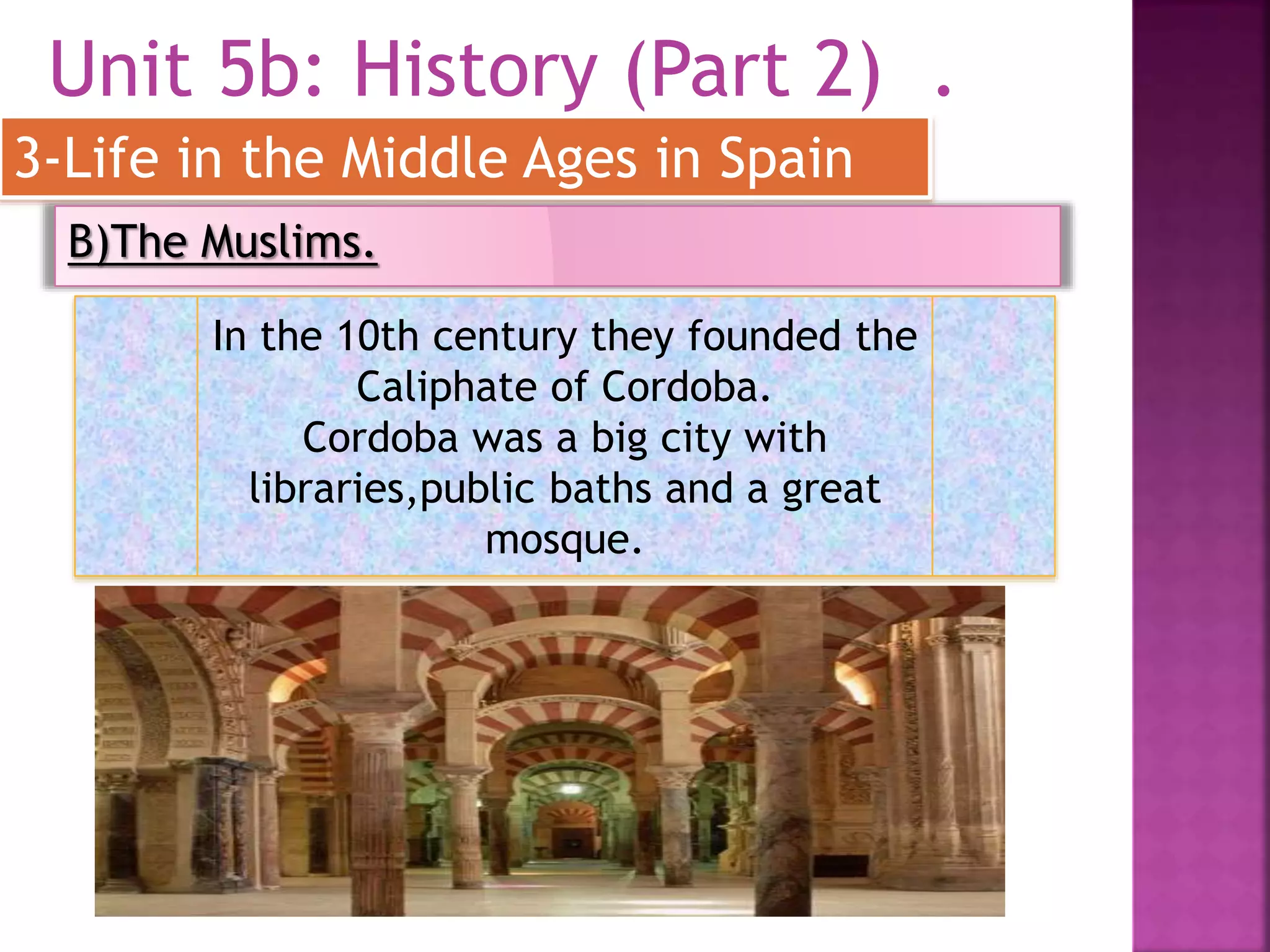
In the 10th century they founded the
Caliphate of Cordoba.
Cordoba was a big city with
libraries,public baths and a great
mosque.
Unit 5b: History (Part 2) .
3-Life in the Middle Ages in Spain
B)The Muslims.
Many Christians took refuge in
the North and founded small
kingdoms
that conquered gradually,and
expanded the territories of Al-
Ándalus. The Caliphate of
Córdoba ended in the year
1031.
Unit 5b: History (Part 2) .
3-Life in the Middle Ages in Spain
B)The Muslims.
The Catholic Kings conquered the
last kingdom dominated by the
Muslims, the kingdom of Granada in
1492.
Also, the same year Columbus
discovered America and the Middle
Ages ended.
Unit 5b: History (Part 2) .
3-Life in the Middle Ages in Spain
B)The Muslims.
Unit 5b: History (Part 2) .
3-Life in the Middle Ages in Spain
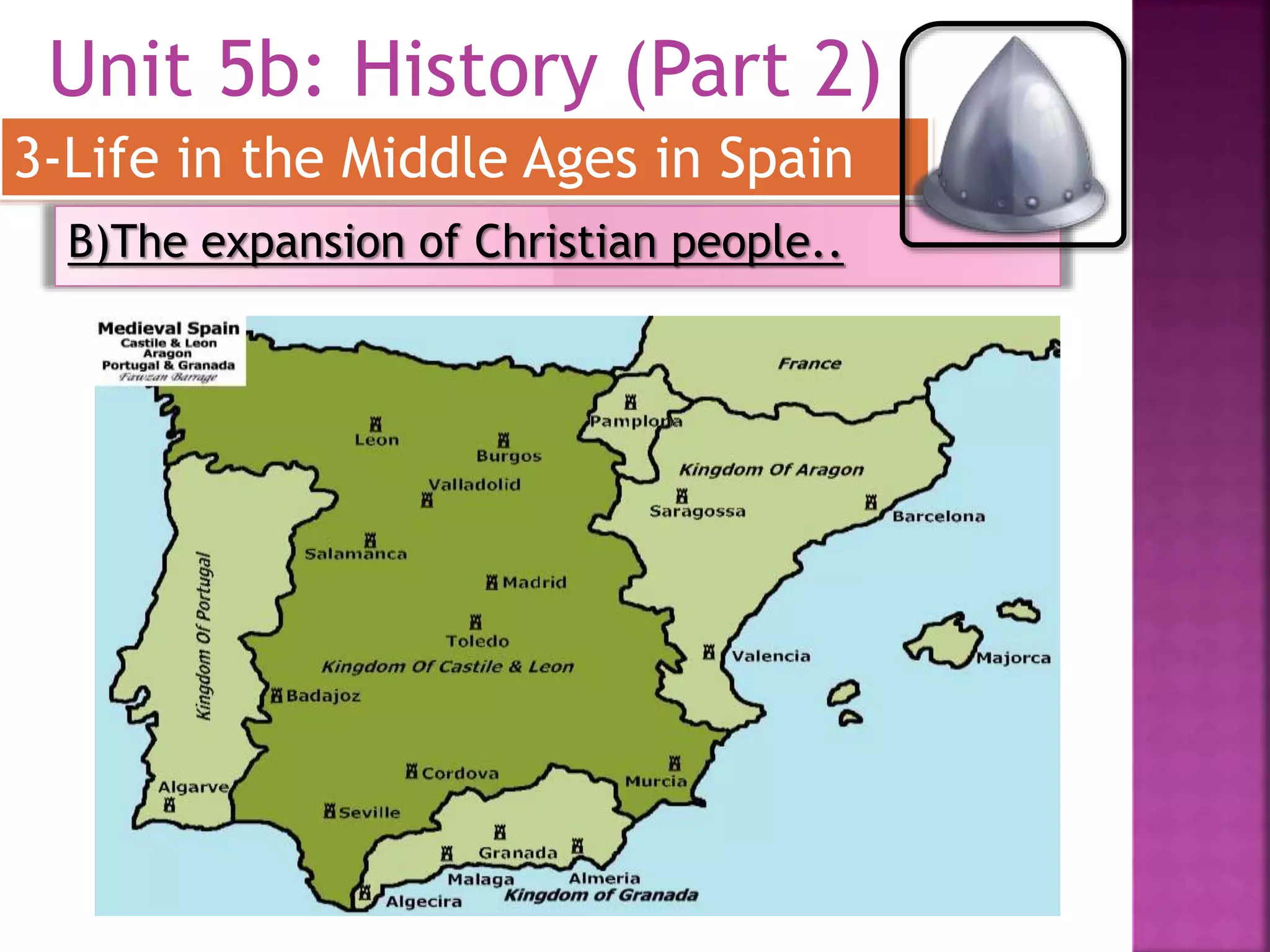
B)The expansion of Christian people..
With the arrival of the Muslims,
many Christians took refuge in the
North of the Península, where they
founded small kingdoms.
Little by little these kingdoms
started the conquest of Al-Ándalus
Unit 5b: History (Part 2) .
3-Life in the Middle Ages in Spain
B)The expansion of Christian people..
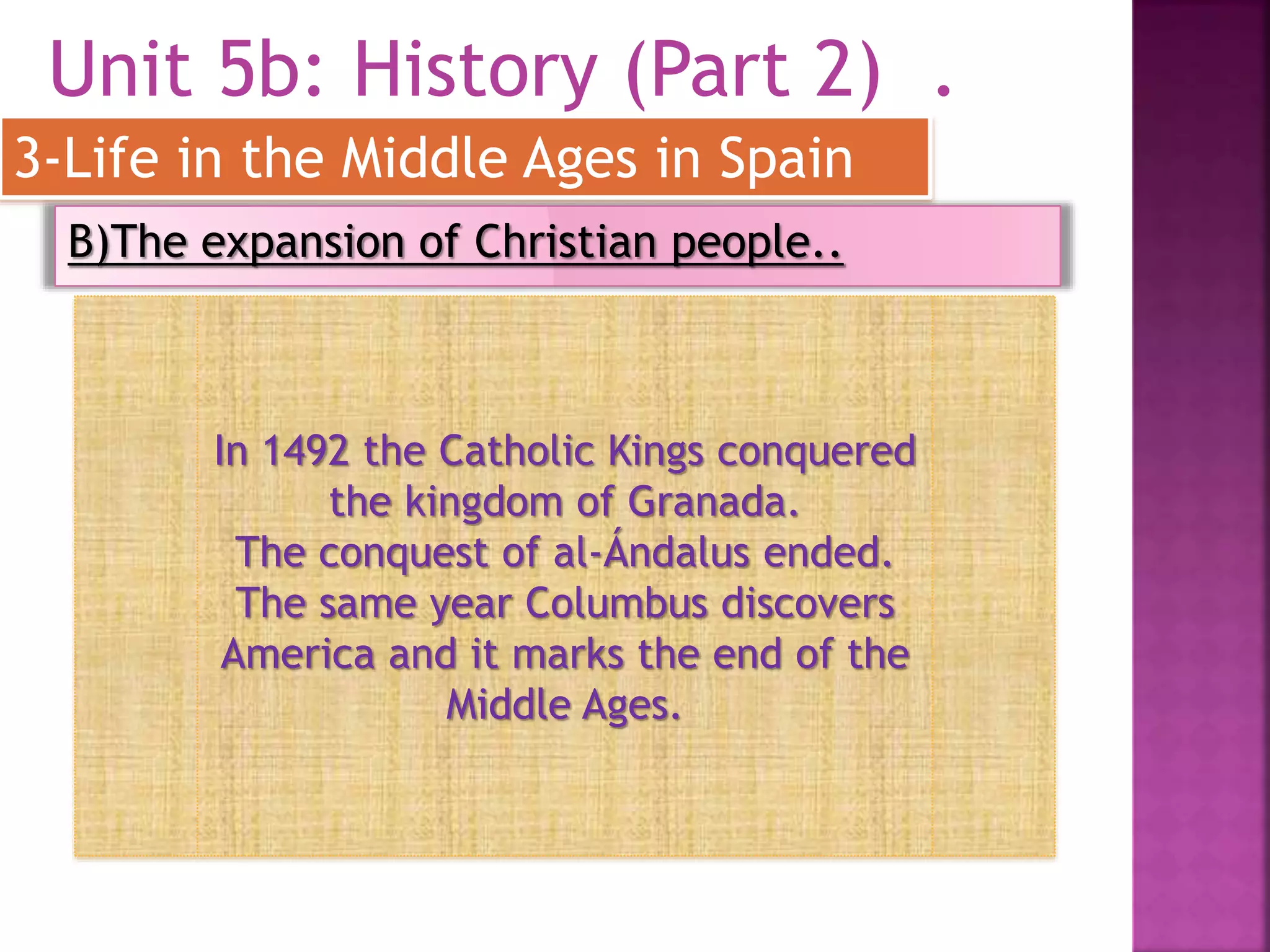
In 1492 the Catholic Kings conquered
the kingdom of Granada.
The conquest of al-Ándalus ended.
The same year Columbus discovers
America and it marks the end of the
Middle Ages.
Unit 5b: History (Part 2) .
3-Life in the Middle Ages in Spain
B)The expansion of Christian people..
Unit 5b: History (Part 2)
3-Life in the Middle Ages in Spain
B)The expansion of Christian people..

Unit 5 b History part two

  • 1.
    Unit 5b: History(Part 2) .
  • 2.
    Index. 1-Spain in theancient world A) Iberians and celts B) Traders of the Mediterraneans. C) The Romans. 2-The Middle Ages. 3-Life in the Middle Ages. A) Visigoths B) Muslims C) Expansion of Christian people. Unit 5b: History (Part 2) .
  • 3.
    Unit 5b: History(Part 2) .  a) IBERIANS AND CELTS.  The Ancient World began in Spain about 3000 years ago when the Iberians who inhabited the Peninsula invented their own way of writing. 1-SPAIN IN THE ANCIENT WORLD. Inhabited the East and South of the Peninsula. They were farmers and practised commerce. Sculpture was very important for them. They came from the central and North Europe at 9th century BC, and settled in the North and centre of the Peninsula. They were farmers and worked with iron. IBERIANS CELTS
  • 4.
  • 5.
  • 7.
    Unit 5b: History(Part 2) . B) Traders of the Mediterranean.  At the end of the 8th century BC other people arrived from the East of the Mediterranean. They traded in metals, fabric, iron objects and perfumes . 1-SPAIN IN THE ANCIENT WORLD. From Phoenicia, arrived first and settled on the southern costs. The Greeks arrived in the 6th century BC and formed colonies on the eastern coast. PHOENICIANS GREEKS
  • 8.
    THE IBERIAN PENINSULAUNTIL THE ARRIVAL OF THE ROMANS.
  • 9.
    Unit 5b: History(Part 2) . C) The Romans. 1-SPAIN IN THE ANCIENT WORLD. The Romans began their conquest of the Península in the year 219BC. It ended in the year 19BC.
  • 10.
    Unit 5b: History(Part 2) . C) The Romans. 1-SPAIN IN THE ANCIENT WORLD. They called the territory Hispania and introduced: •Roman culture, language and a way of life (romanization). •New agricultural techniques, like irrigation. •New commercial techniques, like money. •New architectural techniques , like arches. •A new calendar, which is the basis of the calendar we have today.
  • 11.
    Unit 5b: History(Part 2) . C) The Romans. 1-SPAIN IN THE ANCIENT WORLD. The Romans introduced their culture ,language, and way of life to Hispania and founded cities.
  • 12.
  • 13.
    Germanic invasions. 476- Visigoths and Franks invaded the Roman Empire. Unit5b: History (Part 2) . 2-THE MIDDLE AGES. Important events in the Middle Ages. Carolingian Empire. 800- Charlemagne conquered large territories throughout Europe.
  • 14.
    Unit 5b: History(Part 2) . 2-THE MIDDLE AGES. Important events in the Middle Ages. Feudalism Nobles becames lords.Feudal lords were nobles who lived in castles, owned lands and have serfs Discovery of América. 1492- Christopher Columbus discovered America. Here the Middle Ages ended
  • 15.
    Unit 5b: History(Part 2) . 3-Life in the Middle Ages in Spain A ) The Visigoths. The Visigoths were Germanic people that settled in Hispania in the 5th century. In the 6th century they founded a kingdom with capital in Toledo.
  • 16.
    Unit 5b: History(Part 2) . 3-Life in the Middle Ages in Spain A ) The Visigoths. During the Roman period life was urban and commercial. Under the Visigoths it was rural.. The kingdom of Toledo ended when it was conquered by Muslims.
  • 17.
    3-Life in theMiddle Ages in Spain B)The Muslims. The Muslims from the North of Africa arrived in Spain in the year 711 .They conquered almost all the territory and called it Al-Ándalus.
  • 18.
    Unit 5b: History(Part 2) . 3-Life in the Middle Ages in Spain B)The Muslims. In the 10th century they founded the Caliphate of Cordoba. Cordoba was a big city with libraries,public baths and a great mosque.
  • 19.
    Unit 5b: History(Part 2) . 3-Life in the Middle Ages in Spain B)The Muslims. Many Christians took refuge in the North and founded small kingdoms that conquered gradually,and expanded the territories of Al- Ándalus. The Caliphate of Córdoba ended in the year 1031.
  • 20.
    Unit 5b: History(Part 2) . 3-Life in the Middle Ages in Spain B)The Muslims. The Catholic Kings conquered the last kingdom dominated by the Muslims, the kingdom of Granada in 1492. Also, the same year Columbus discovered America and the Middle Ages ended.
  • 21.
    Unit 5b: History(Part 2) . 3-Life in the Middle Ages in Spain B)The Muslims.
  • 22.
    Unit 5b: History(Part 2) . 3-Life in the Middle Ages in Spain B)The expansion of Christian people.. With the arrival of the Muslims, many Christians took refuge in the North of the Península, where they founded small kingdoms. Little by little these kingdoms started the conquest of Al-Ándalus
  • 23.
    Unit 5b: History(Part 2) . 3-Life in the Middle Ages in Spain B)The expansion of Christian people.. In 1492 the Catholic Kings conquered the kingdom of Granada. The conquest of al-Ándalus ended. The same year Columbus discovers America and it marks the end of the Middle Ages.
  • 24.
    Unit 5b: History(Part 2) . 3-Life in the Middle Ages in Spain B)The expansion of Christian people..
  • 25.
    Unit 5b: History(Part 2) 3-Life in the Middle Ages in Spain B)The expansion of Christian people..