WHAT´S UP HISTORY
What is history?
When did human history begin?
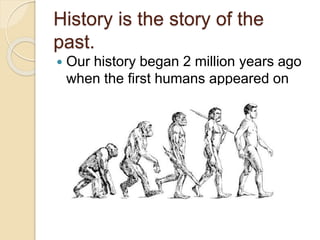
History is the story of the
past.
 Our history began 2 million years ago
when the first humans appeared on
Earth.
How do we measure history?
 We use YEARS and DECADES (10
years)
 For longer periods we use
CENTURIES (100 years)
 MILLENIUMS (1000 years)
“We live in the year 2015= 2 milleiums,
21 centuries and 15 years”.
But if human beings
appeared 2 million years
ago…
why is just the year 2015?
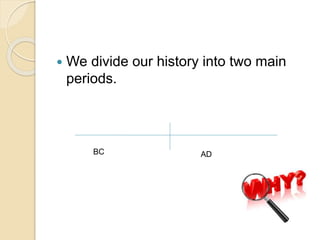
 We divide our history into two main
periods.
BC AD
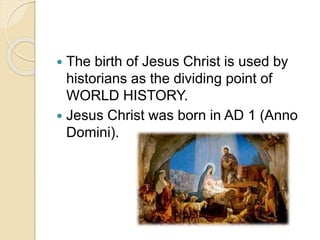
 The birth of Jesus Christ is used by
historians as the dividing point of
WORLD HISTORY.
 Jesus Christ was born in AD 1 (Anno
Domini).
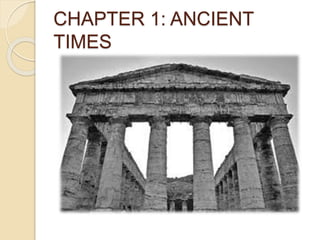
CHAPTER 1: ANCIENT
TIMES
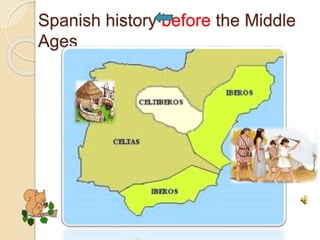
Spanish history before the Middle
Ages
And suddendly…
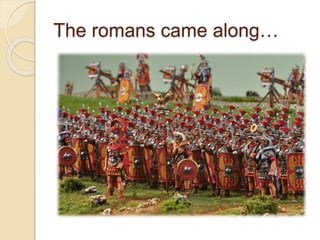
The romans came along…
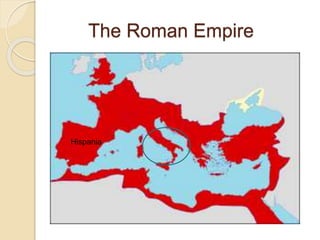
The Roman Empire
Hispania
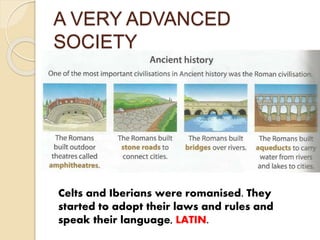
A VERY ADVANCED
SOCIETY
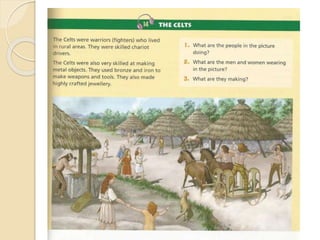
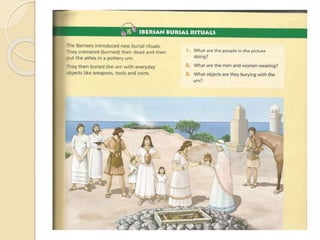
Celts and Iberians were romanised. They
started to adopt their laws and rules and
speak their language, LATIN.
CHAPTER 2: The Middle
Ages
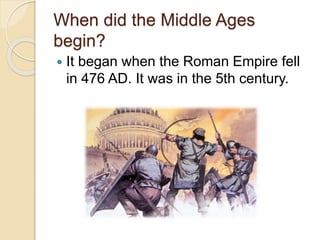
When did the Middle Ages
begin?
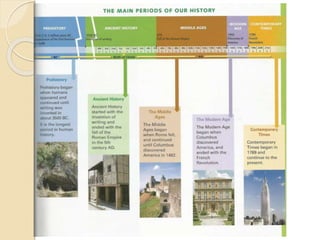
 It began when the Roman Empire fell
in 476 AD. It was in the 5th century.
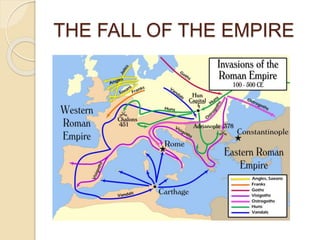
THE FALL OF THE EMPIRE
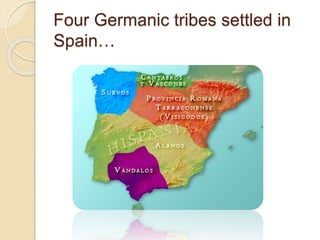
Four Germanic tribes settled in
Spain…
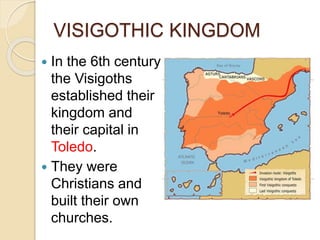
VISIGOTHIC KINGDOM
 In the 6th century
the Visigoths
established their
kingdom and
their capital in
Toledo.
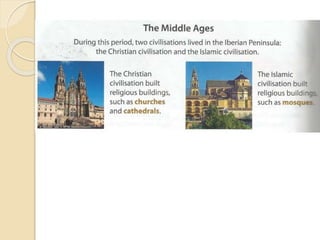
 They were
Christians and
built their own
churches.
And suddendly…
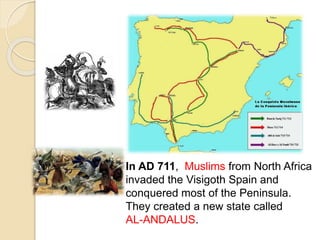
In AD 711, Muslims from North Africa
invaded the Visigoth Spain and
conquered most of the Peninsula.
They created a new state called
AL-ANDALUS.
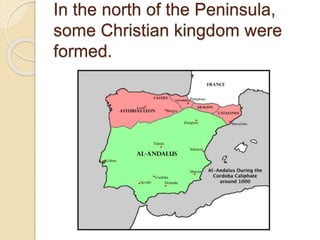
In the north of the Peninsula,
some Christian kingdom were
formed.
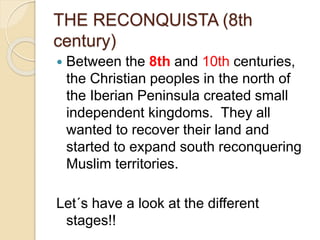
THE RECONQUISTA (8th
century)
 Between the 8th and 10th centuries,
the Christian peoples in the north of
the Iberian Peninsula created small
independent kingdoms. They all
wanted to recover their land and
started to expand south reconquering
Muslim territories.
Let´s have a look at the different
stages!!
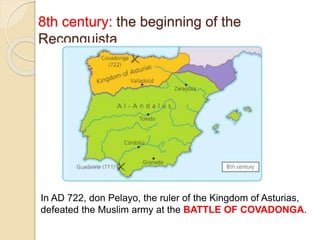
8th century: the beginning of the
Reconquista
In AD 722, don Pelayo, the ruler of the Kingdom of Asturias,
defeated the Muslim army at the BATTLE OF COVADONGA.
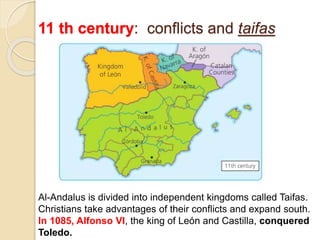
11 th century: conflicts and taifas
Al-Andalus is divided into independent kingdoms called Taifas.
Christians take advantages of their conflicts and expand south.
In 1085, Alfonso VI, the king of León and Castilla, conquered
Toledo.
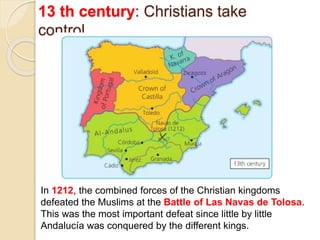
13 th century: Christians take
control
In 1212, the combined forces of the Christian kingdoms
defeated the Muslims at the Battle of Las Navas de Tolosa.
This was the most important defeat since little by little
Andalucía was conquered by the different kings.
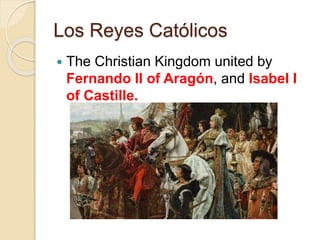
Los Reyes Católicos
 The Christian Kingdom united by
Fernando II of Aragón, and Isabel I
of Castille.
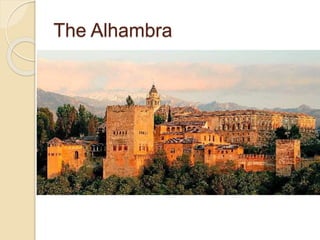
The Alhambra
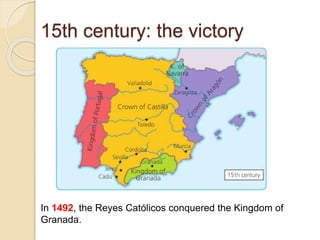
15th century: the victory
In 1492, the Reyes Católicos conquered the Kingdom of
Granada.
To be continued…

The middle ages

  • 1.
    WHAT´S UP HISTORY Whatis history? When did human history begin?
  • 2.
    History is thestory of the past.  Our history began 2 million years ago when the first humans appeared on Earth.
  • 4.
    How do wemeasure history?  We use YEARS and DECADES (10 years)  For longer periods we use CENTURIES (100 years)  MILLENIUMS (1000 years) “We live in the year 2015= 2 milleiums, 21 centuries and 15 years”.
  • 5.
    But if humanbeings appeared 2 million years ago… why is just the year 2015?
  • 6.
     We divideour history into two main periods. BC AD
  • 7.
     The birthof Jesus Christ is used by historians as the dividing point of WORLD HISTORY.  Jesus Christ was born in AD 1 (Anno Domini).
  • 9.
  • 10.
    Spanish history beforethe Middle Ages
  • 13.
  • 14.
  • 15.
  • 16.
    A VERY ADVANCED SOCIETY Celtsand Iberians were romanised. They started to adopt their laws and rules and speak their language, LATIN.
  • 17.
    CHAPTER 2: TheMiddle Ages
  • 18.
    When did theMiddle Ages begin?  It began when the Roman Empire fell in 476 AD. It was in the 5th century.
  • 19.
    THE FALL OFTHE EMPIRE
  • 20.
    Four Germanic tribessettled in Spain…
  • 21.
    VISIGOTHIC KINGDOM  Inthe 6th century the Visigoths established their kingdom and their capital in Toledo.  They were Christians and built their own churches.
  • 22.
  • 23.
    In AD 711,Muslims from North Africa invaded the Visigoth Spain and conquered most of the Peninsula. They created a new state called AL-ANDALUS.
  • 24.
    In the northof the Peninsula, some Christian kingdom were formed.
  • 26.
    THE RECONQUISTA (8th century) Between the 8th and 10th centuries, the Christian peoples in the north of the Iberian Peninsula created small independent kingdoms. They all wanted to recover their land and started to expand south reconquering Muslim territories. Let´s have a look at the different stages!!
  • 27.
    8th century: thebeginning of the Reconquista In AD 722, don Pelayo, the ruler of the Kingdom of Asturias, defeated the Muslim army at the BATTLE OF COVADONGA.
  • 28.
    11 th century:conflicts and taifas Al-Andalus is divided into independent kingdoms called Taifas. Christians take advantages of their conflicts and expand south. In 1085, Alfonso VI, the king of León and Castilla, conquered Toledo.
  • 29.
    13 th century:Christians take control In 1212, the combined forces of the Christian kingdoms defeated the Muslims at the Battle of Las Navas de Tolosa. This was the most important defeat since little by little Andalucía was conquered by the different kings.
  • 30.
    Los Reyes Católicos The Christian Kingdom united by Fernando II of Aragón, and Isabel I of Castille.
  • 31.
  • 32.
    15th century: thevictory In 1492, the Reyes Católicos conquered the Kingdom of Granada.
  • 33.