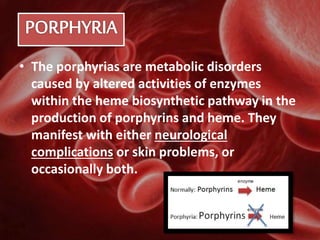
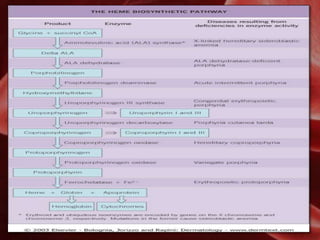
• The porphyrias are metabolic disorders
caused by altered activities of enzymes
within the heme biosynthetic pathway in the
production of porphyrins and heme. They
manifest with either neurological
complications or skin problems, or
occasionally both.
• The term "porphyria" is derived from
the Greek , porphyra, meaning
"purple pigment".
• The name is likely to have been a reference
to the purple discolouration of feces and
urine when exposed to light in patients
during an attack
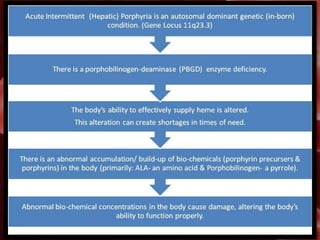
• AIP is an autosomal dominant disease
that results from defects in the enzyme
porphobilinogen-deaminase.
• This enzyme speeds the conversion of
porphobilinogen to
hydroxymethylbilane.
• In AIP, the porphyrin precursors,
porphobilinogen and amino-levulinic
acid (ALA), accumulate.
• alcohol
• drugs, especially barbiturates, and
sulphonamides;
• fluctuations in female sex hormones
may also precipitate acute porphyrias
• infections
• starvation
The predominant problem appears :
• to be neurologic damage that leads to
peripheral and autonomic neuropathies
• and psychiatric manifestations.
Appart from this there are complaints of:
• Severe abdominal pain
• Nausea
• Vomiting
• Constipation
• Autonomic neuropathy is damage to the nerves
that manage every day body functions such as
blood pressure, heart rate, bowel and bladder
emptying, and digestion.
• involves damage to the nerves that run through a
part of the peripheral nervous system. The
peripheral nervous system includes the nerves used
for communication to and from the brain and spinal
cord and all other parts of the body, including the
internal organs, muscles, skin, and blood vessels.
• Damage to the autonomic nerves affects the
function of areas connected to the problem nerve.
For example, damage to the nerves of the
gastrointestinal tract makes it harder to move food
during digestion (decreased gastric motility).
• Peripheral neuropathy,
• weakness and aching in muscles and
joints,
• unsteady gait,
• poor co-ordination,
• numbness/ tingiling of arms and legs
• United States
Estimates vary from 1-5 cases per 100,000 population.
• International
Prevalence can be as high as 60-100 cases per 100,000
population in northern Sweden.
• Sex
In most series, AIP affects women more than men, with a
ratio of 1.5-2:1.
• Age
Most patients become symptomatic at age 18-40 years.
Attacks occurring before puberty or after age 40 years are
unusual unless a major provocation, such as new use of
phenobarbital or estrogens, had occurred.
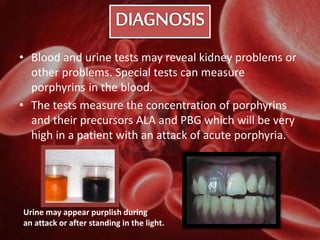
• Blood and urine tests may reveal kidney problems or
other problems. Special tests can measure
porphyrins in the blood.
• The tests measure the concentration of porphyrins
and their precursors ALA and PBG which will be very
high in a patient with an attack of acute porphyria.
Urine may appear purplish during
an attack or after standing in the light.
• Some of the medicines used to treat a
sudden (acute) attack of porphyria may
include:
• Hematin given through a vein (intravenously)
• Pain medication
• Propranolol to control the heartbeat
• Sedatives to help you feel sleepy and less
anxious
Porphyria

Porphyria

  • 2.
    • The porphyriasare metabolic disorders caused by altered activities of enzymes within the heme biosynthetic pathway in the production of porphyrins and heme. They manifest with either neurological complications or skin problems, or occasionally both.
  • 3.
    • The term"porphyria" is derived from the Greek , porphyra, meaning "purple pigment". • The name is likely to have been a reference to the purple discolouration of feces and urine when exposed to light in patients during an attack
  • 5.
    • AIP isan autosomal dominant disease that results from defects in the enzyme porphobilinogen-deaminase. • This enzyme speeds the conversion of porphobilinogen to hydroxymethylbilane. • In AIP, the porphyrin precursors, porphobilinogen and amino-levulinic acid (ALA), accumulate.
  • 7.
    • alcohol • drugs,especially barbiturates, and sulphonamides; • fluctuations in female sex hormones may also precipitate acute porphyrias • infections • starvation
  • 8.
    The predominant problemappears : • to be neurologic damage that leads to peripheral and autonomic neuropathies • and psychiatric manifestations. Appart from this there are complaints of: • Severe abdominal pain • Nausea • Vomiting • Constipation
  • 9.
    • Autonomic neuropathyis damage to the nerves that manage every day body functions such as blood pressure, heart rate, bowel and bladder emptying, and digestion. • involves damage to the nerves that run through a part of the peripheral nervous system. The peripheral nervous system includes the nerves used for communication to and from the brain and spinal cord and all other parts of the body, including the internal organs, muscles, skin, and blood vessels. • Damage to the autonomic nerves affects the function of areas connected to the problem nerve. For example, damage to the nerves of the gastrointestinal tract makes it harder to move food during digestion (decreased gastric motility).
  • 10.
    • Peripheral neuropathy, •weakness and aching in muscles and joints, • unsteady gait, • poor co-ordination, • numbness/ tingiling of arms and legs
  • 12.
    • United States Estimatesvary from 1-5 cases per 100,000 population. • International Prevalence can be as high as 60-100 cases per 100,000 population in northern Sweden. • Sex In most series, AIP affects women more than men, with a ratio of 1.5-2:1. • Age Most patients become symptomatic at age 18-40 years. Attacks occurring before puberty or after age 40 years are unusual unless a major provocation, such as new use of phenobarbital or estrogens, had occurred.
  • 13.
    • Blood andurine tests may reveal kidney problems or other problems. Special tests can measure porphyrins in the blood. • The tests measure the concentration of porphyrins and their precursors ALA and PBG which will be very high in a patient with an attack of acute porphyria. Urine may appear purplish during an attack or after standing in the light.
  • 14.
    • Some ofthe medicines used to treat a sudden (acute) attack of porphyria may include: • Hematin given through a vein (intravenously) • Pain medication • Propranolol to control the heartbeat • Sedatives to help you feel sleepy and less anxious