INTRODUCTION
WHAT..? / WHY…?? / How ….???
Clutch & its Necessity
Is an intermediate mechanism
which is placed in b/w the flywheel and the gearbox. It
enables the rotary motion of the shafts by friction
mechanism to solve the following purposes
– Clutch remains in the engaged position and Allows flow of power from
engine to the gearbox.
– Make possible to change the gears in the gearbox by engaging and
disengaging the gearbox from the flywheel (Crank shaft).
– Disengagement of the clutch is required when the gear position is to be
changed or when the vehicle needs to be kept in neutral position.
Requirements of efficient/good clutch
− Gradual engagement.
− Effortless operation.
− Better heat dissipation.
− Better vibration damping.
− Free from slipping.
− Should be capable of transmitted full or maximum
torque/power.
− Should be in exact dynamic balancing at high speed.
− Should be smallest possible in size.
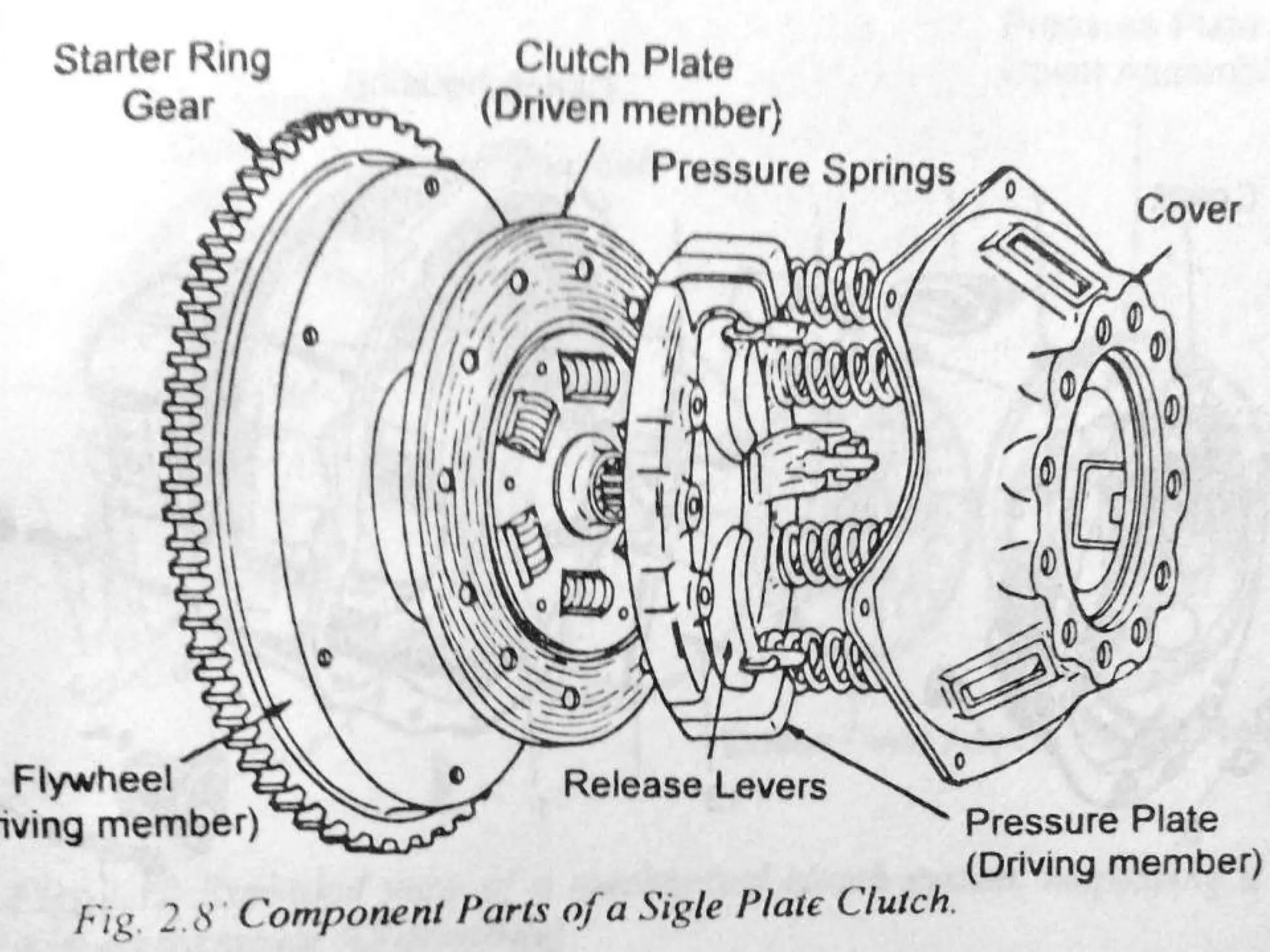
Clutch Parts and Operation
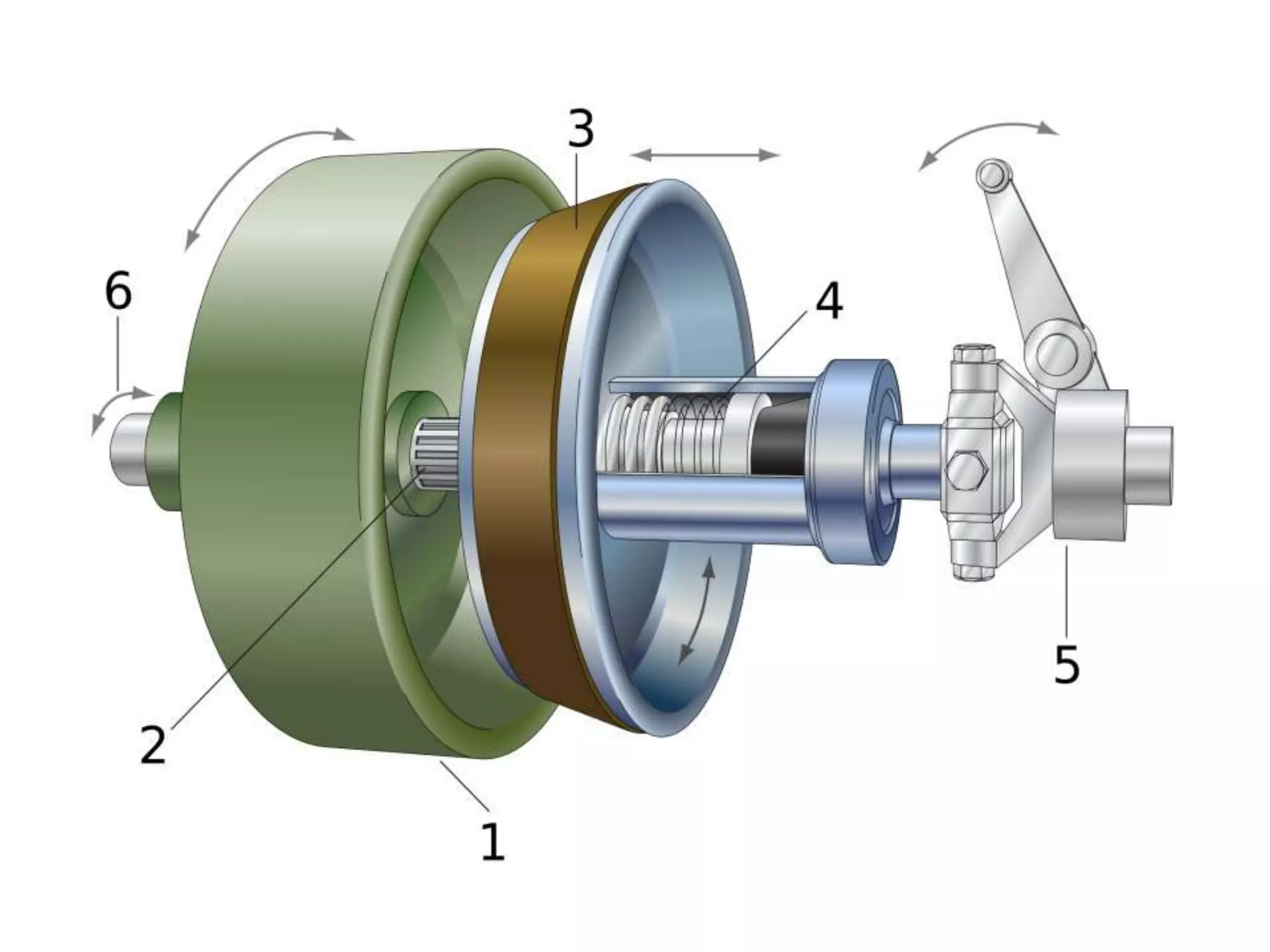
• Clutch parts
– Flywheel
– Friction disc / Clutch disc
– Pressure plate
– Pressure Springs
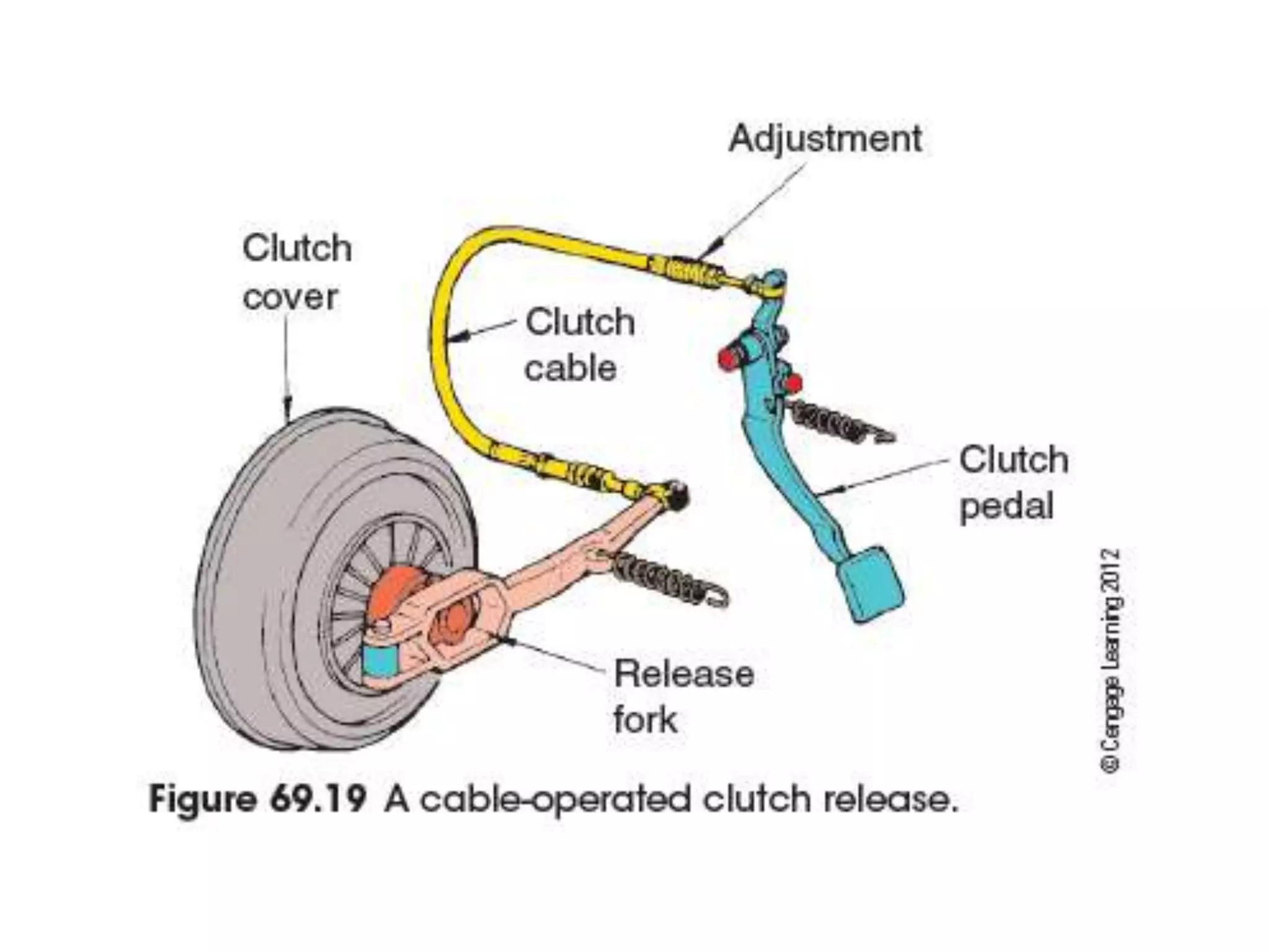
– Release mechanism
• Clutch disc pushed against flywheel with enough
force
– Due to Friction, Disc will rotate with flywheel.
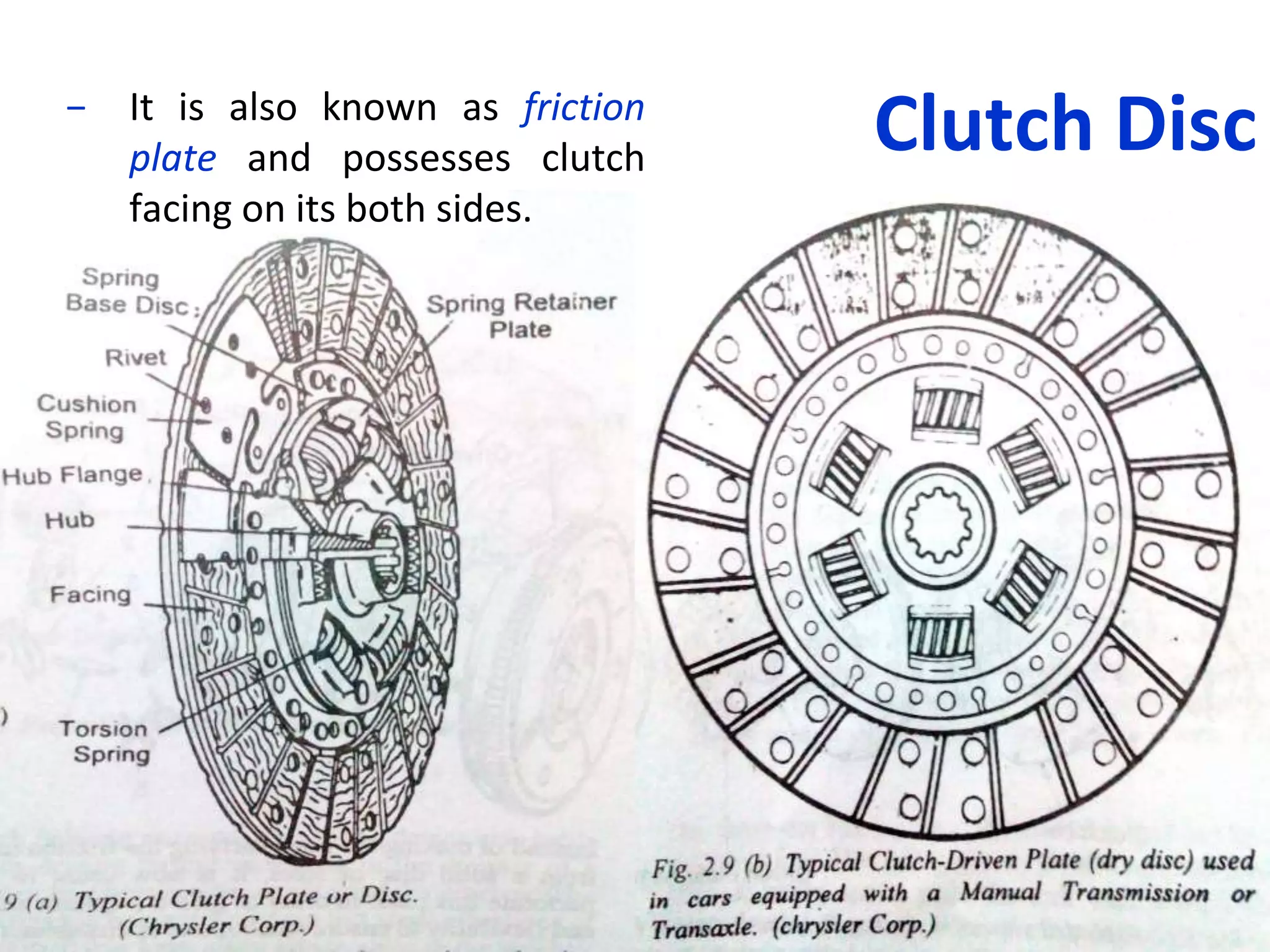
Clutch Disc− It is also known as friction
plate and possesses clutch
facing on its both sides.
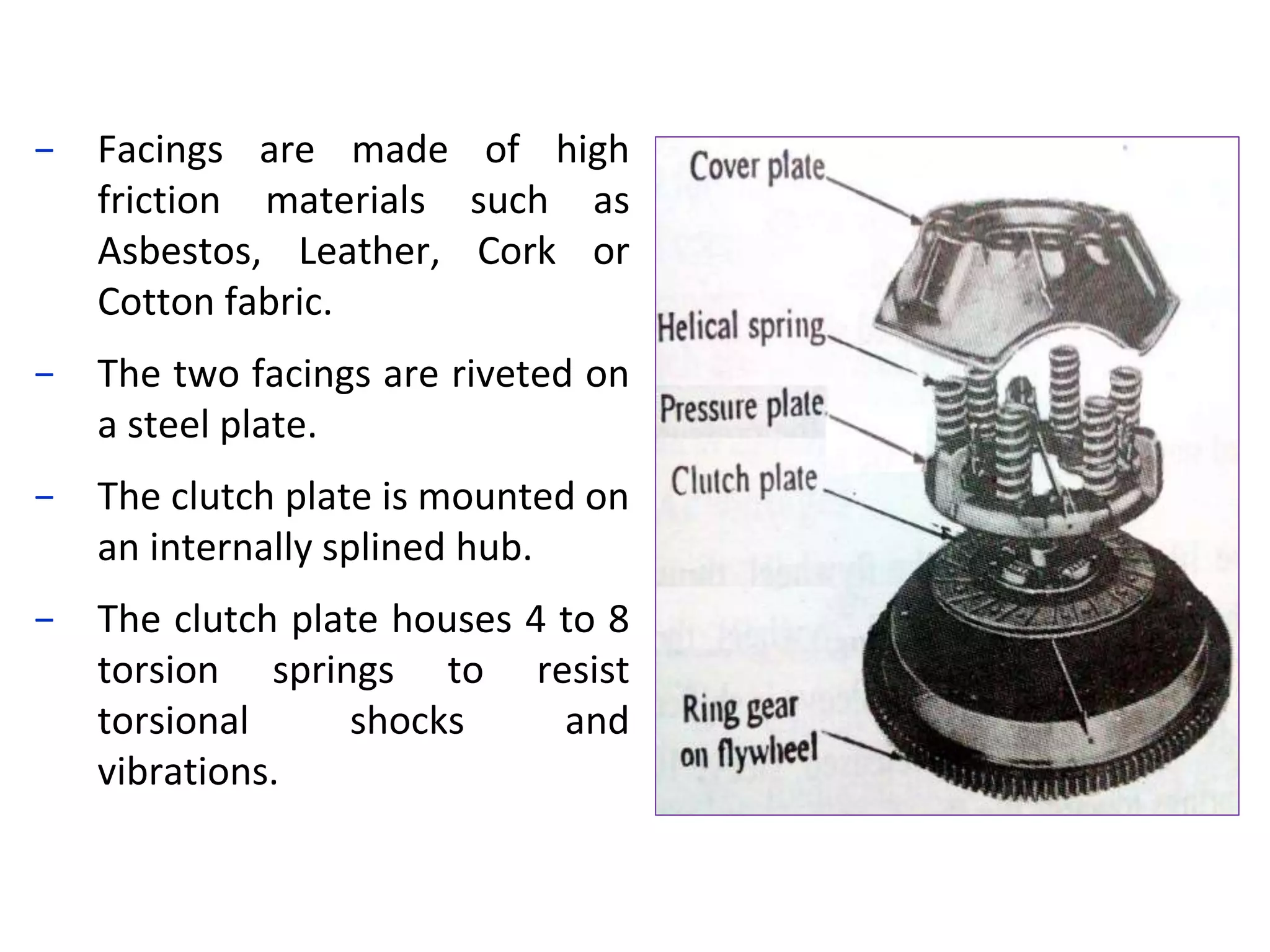
− Facings are made of high
friction materials such as
Asbestos, Leather, Cork or
Cotton fabric.
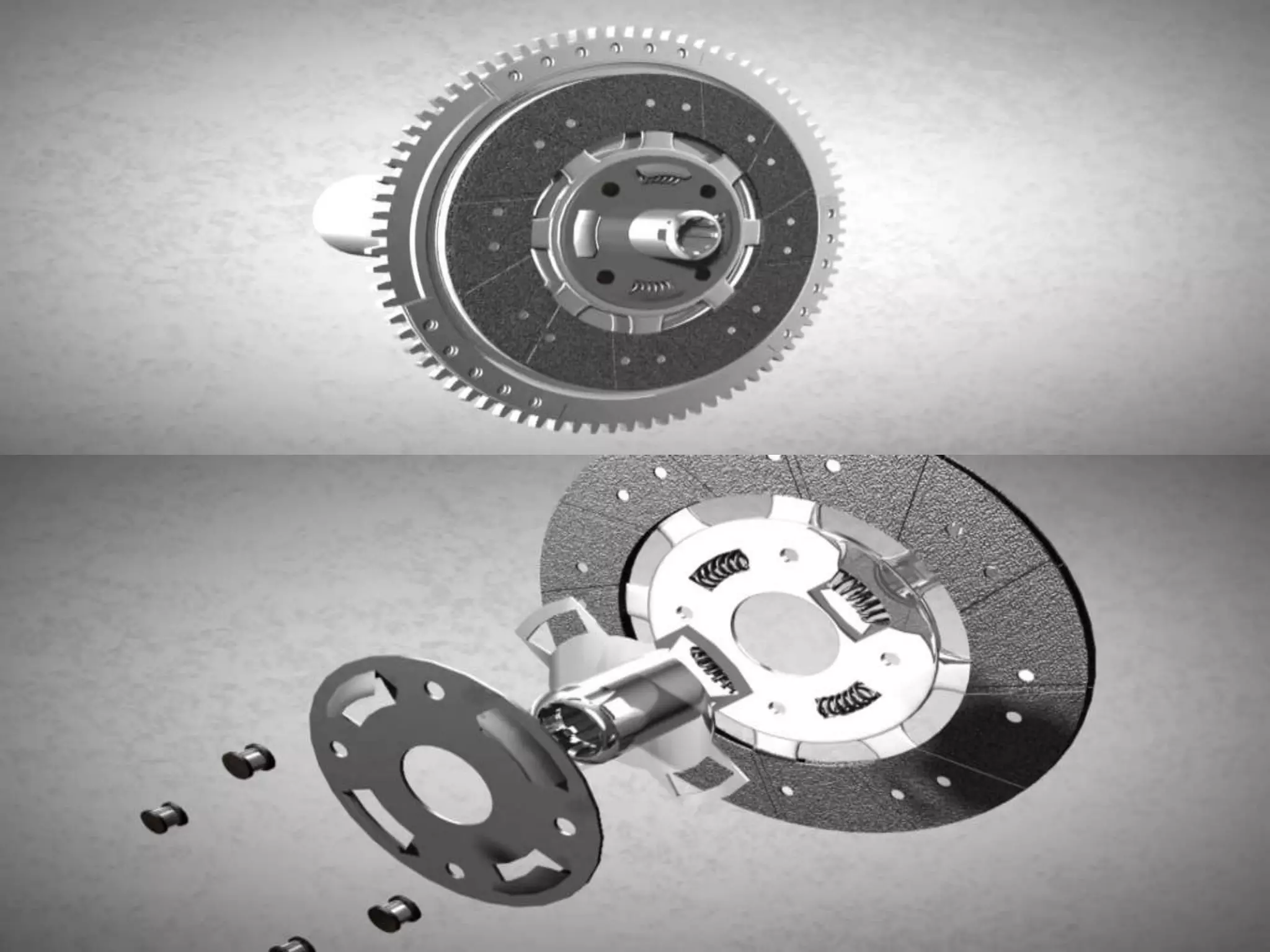
− The two facings are riveted on
a steel plate.
− The clutch plate is mounted on
an internally splined hub.
− The clutch plate houses 4 to 8
torsion springs to resist
torsional shocks and
vibrations.
Pressure Plate
− Pressure plate is round, cast iron plate with same
diameter as the clutch disc.
− Its one side is machined smooth.
− This side presses the clutch disc facing area against the
flywheel.
− Its another side is shaped to facilitate attachment of
pressure springs and clutch release mechanisms.
Types of Clutches
1. Positive clutches.
2. Gradual engagement clutches.
a. Frictional clutches
b. Fluid flywheel / Fluid Coupling
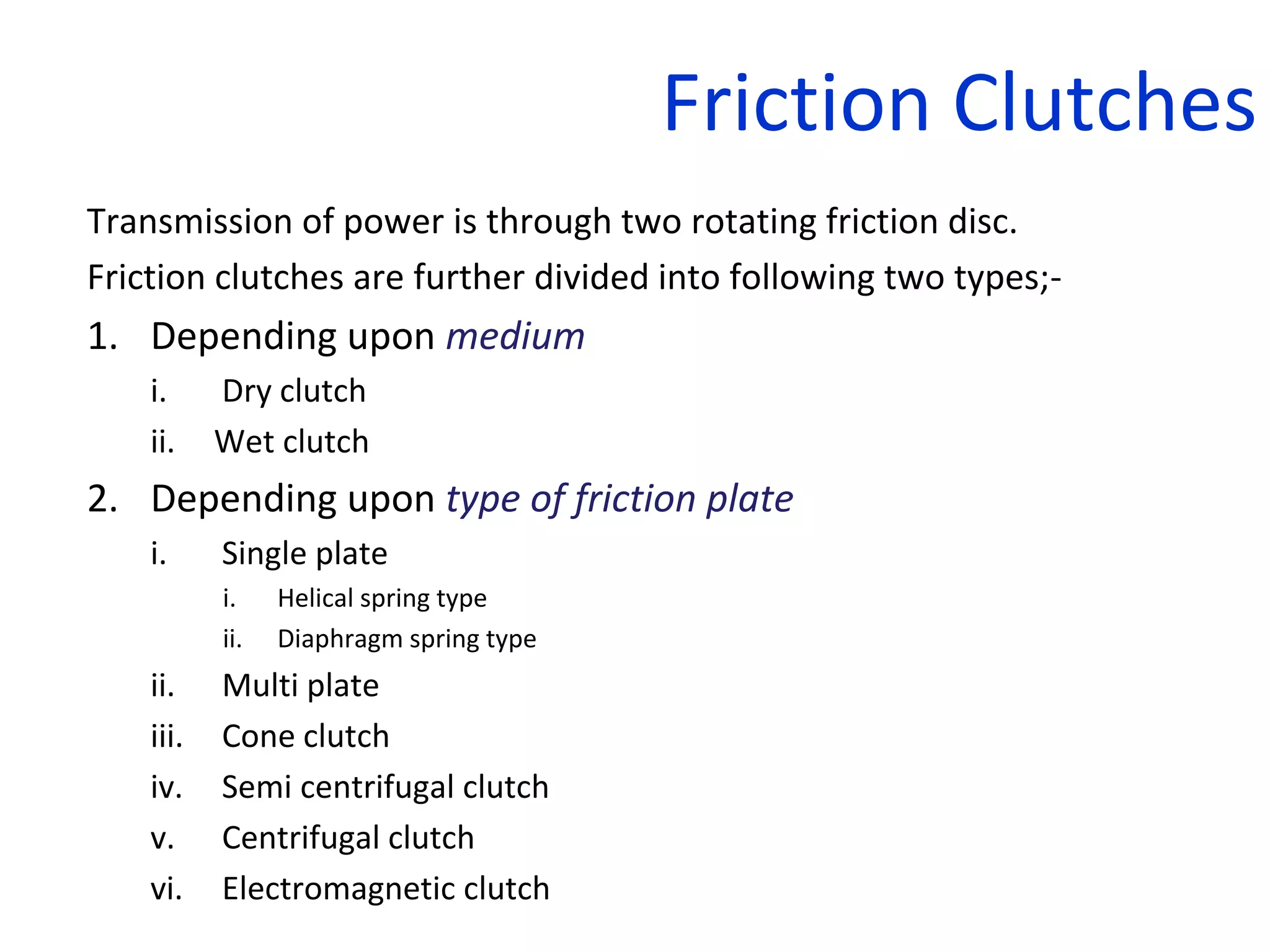
Friction Clutches
Transmission of power is through two rotating friction disc.
Friction clutches are further divided into following two types;-
1. Depending upon medium
i. Dry clutch
ii. Wet clutch
2. Depending upon type of friction plate
i. Single plate
i. Helical spring type
ii. Diaphragm spring type
ii. Multi plate
iii. Cone clutch
iv. Semi centrifugal clutch
v. Centrifugal clutch
vi. Electromagnetic clutch
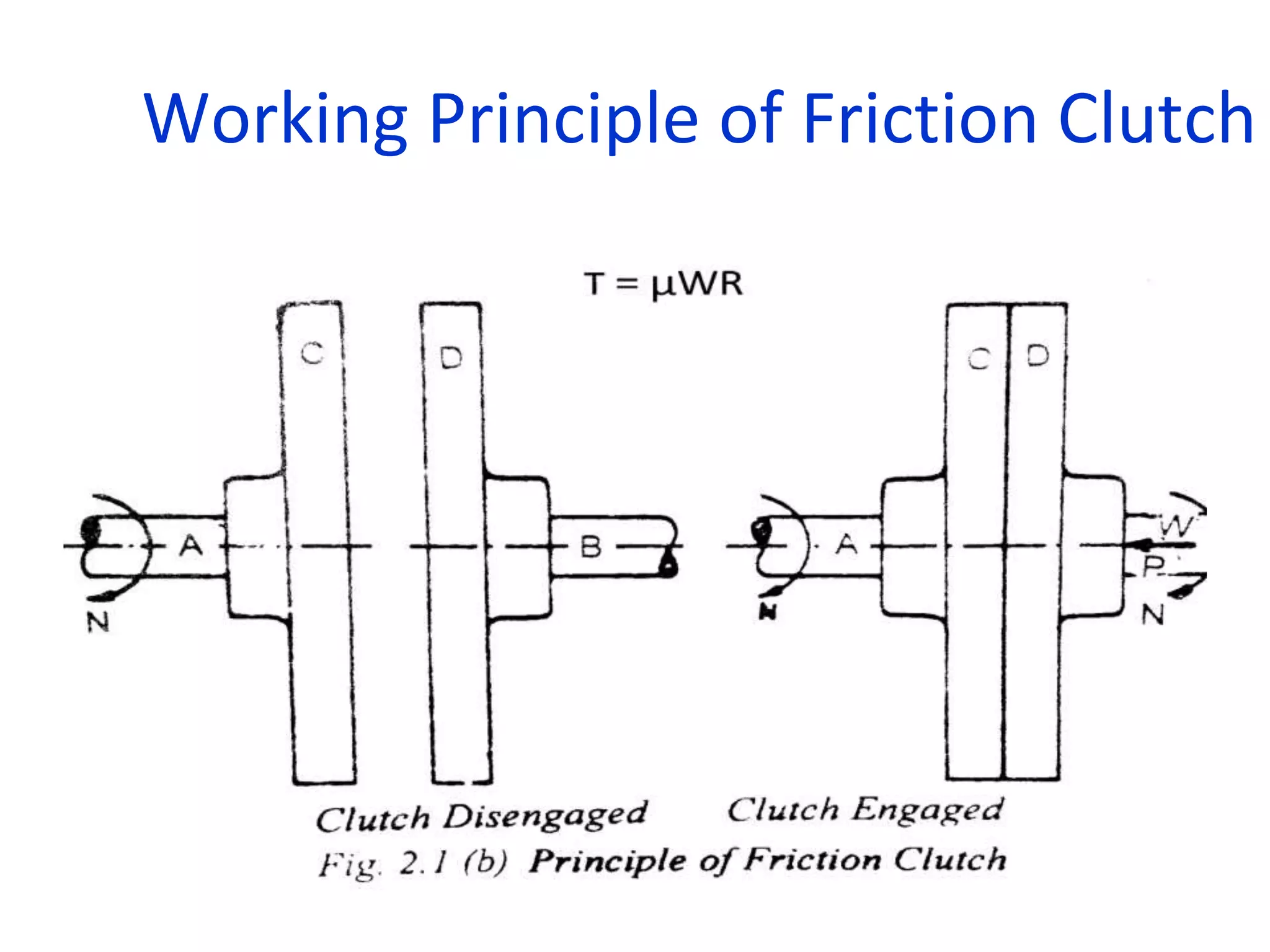
Working Principle of Friction Clutch
factors affect its torque transmitting ability
− Coefficient of Friction (µ)
− Axial Pressure, W
The maximum value of W is limited about 100-120 N n
allowable pressure is 130- 200kPa.
− Effective Mean Radius of contact surfaces, R
The value of R can’t be increased beyond a certain max.
value, which depends upon the space available.
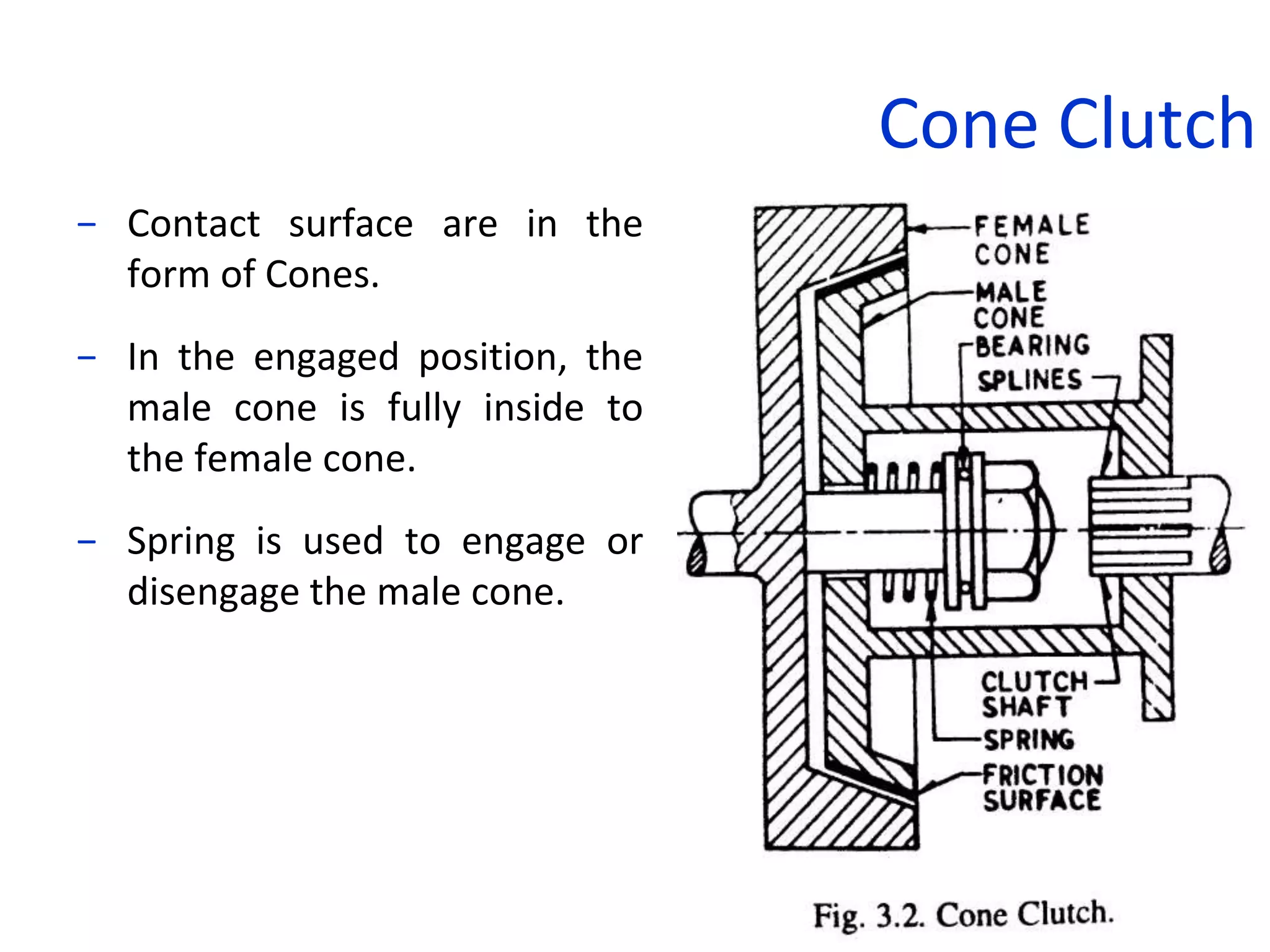
Cone Clutch
− Contact surface are in the
form of Cones.
− In the engaged position, the
male cone is fully inside to
the female cone.
− Spring is used to engage or
disengage the male cone.
Cone Clutch
Advantages
− The only advantage is that the normal force acting on the
contact surface is large than the axial force as compare to
plate clutch.
Disadvantages
− If the angle of cone is smaller than about 20o , the male cone
tend to bind or join the female cone and it becomes difficult
to disengage the clutch
− Slipping of male cone.
Single Plate Clutch - Helical Spring Type
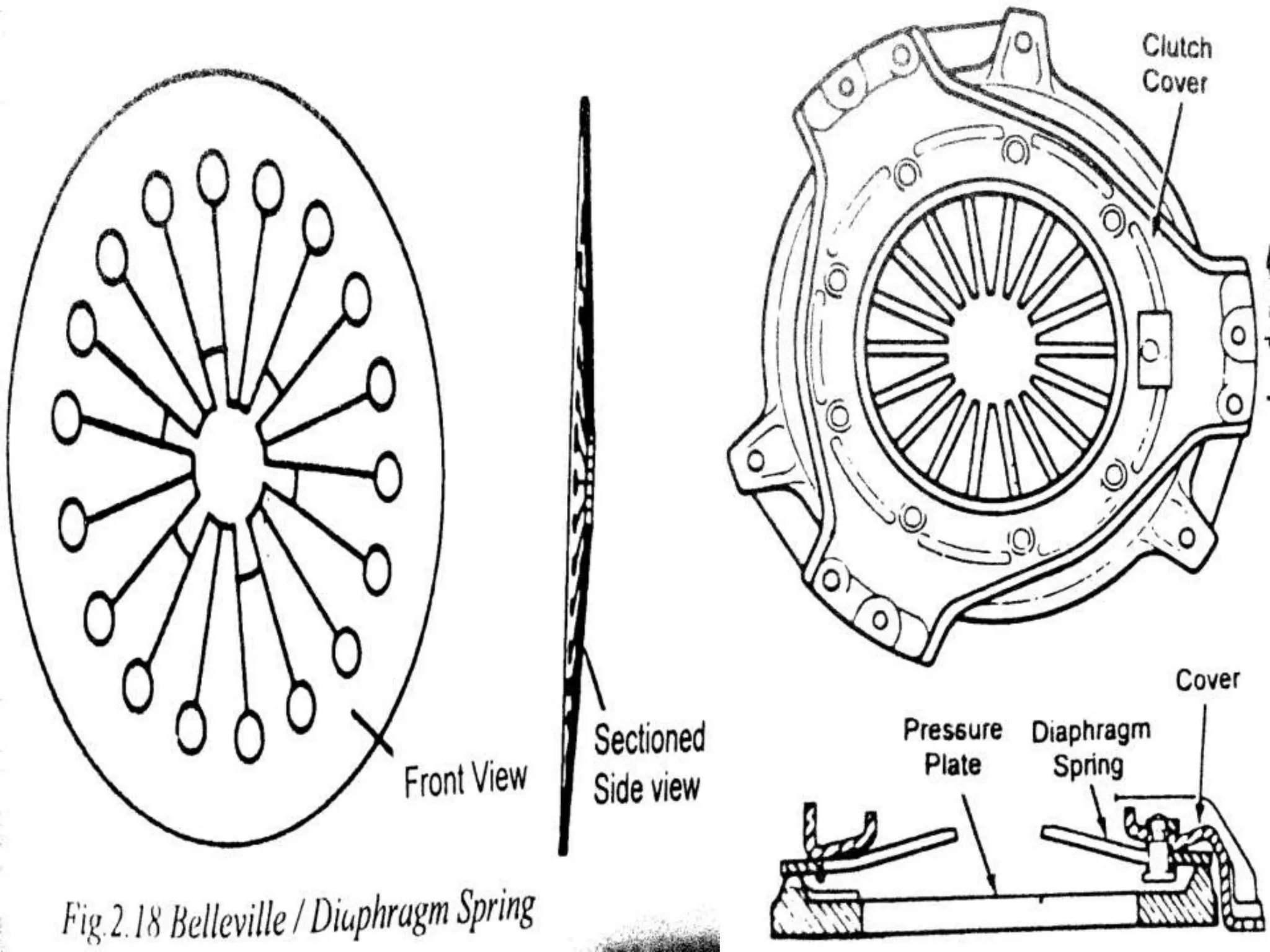
Diaphragm Clutch
• Diaphragm spring replaces
release levers and coil springs
– Diaphragm pivots off pivot rings
when clutch pedal is depressed
• Advantages
– Requires less effort and takes
up less space
– Spring pressure becomes
greater as disc wears
– Well balanced
IMPORTANT QUESTIONS..??
1. Describe the function/purpose of following components (a).
Clutch Disc (b). Pressure plate (c). Torsional Springs (d). Pressure
Springs.
2. Why is a clutch installed b/w the engine flywheel and
transmission? List the various functions of the clutch.
3. Discuss the design principles of a friction plate clutch. Which
factors affect its torque transmitting ability?
4. What type of clutch is used in case of motorcycles? Explain its
construction and working in details.
5. With a suitable sketch describe the working of a multiplate
clutch.
6. Differentiate b/w a dry clutch and a wet clutch.
Thank
You

Clutch mechanism unit 2

  • 2.
  • 3.
    Clutch & itsNecessity Is an intermediate mechanism which is placed in b/w the flywheel and the gearbox. It enables the rotary motion of the shafts by friction mechanism to solve the following purposes – Clutch remains in the engaged position and Allows flow of power from engine to the gearbox. – Make possible to change the gears in the gearbox by engaging and disengaging the gearbox from the flywheel (Crank shaft). – Disengagement of the clutch is required when the gear position is to be changed or when the vehicle needs to be kept in neutral position.
  • 4.
    Requirements of efficient/goodclutch − Gradual engagement. − Effortless operation. − Better heat dissipation. − Better vibration damping. − Free from slipping. − Should be capable of transmitted full or maximum torque/power. − Should be in exact dynamic balancing at high speed. − Should be smallest possible in size.
  • 5.
    Clutch Parts andOperation • Clutch parts – Flywheel – Friction disc / Clutch disc – Pressure plate – Pressure Springs – Release mechanism • Clutch disc pushed against flywheel with enough force – Due to Friction, Disc will rotate with flywheel.
  • 7.
    Clutch Disc− Itis also known as friction plate and possesses clutch facing on its both sides.
  • 8.
    − Facings aremade of high friction materials such as Asbestos, Leather, Cork or Cotton fabric. − The two facings are riveted on a steel plate. − The clutch plate is mounted on an internally splined hub. − The clutch plate houses 4 to 8 torsion springs to resist torsional shocks and vibrations.
  • 10.
    Pressure Plate − Pressureplate is round, cast iron plate with same diameter as the clutch disc. − Its one side is machined smooth. − This side presses the clutch disc facing area against the flywheel. − Its another side is shaped to facilitate attachment of pressure springs and clutch release mechanisms.
  • 12.
    Types of Clutches 1.Positive clutches. 2. Gradual engagement clutches. a. Frictional clutches b. Fluid flywheel / Fluid Coupling
  • 13.
    Friction Clutches Transmission ofpower is through two rotating friction disc. Friction clutches are further divided into following two types;- 1. Depending upon medium i. Dry clutch ii. Wet clutch 2. Depending upon type of friction plate i. Single plate i. Helical spring type ii. Diaphragm spring type ii. Multi plate iii. Cone clutch iv. Semi centrifugal clutch v. Centrifugal clutch vi. Electromagnetic clutch
  • 14.
    Working Principle ofFriction Clutch
  • 15.
    factors affect itstorque transmitting ability − Coefficient of Friction (µ) − Axial Pressure, W The maximum value of W is limited about 100-120 N n allowable pressure is 130- 200kPa. − Effective Mean Radius of contact surfaces, R The value of R can’t be increased beyond a certain max. value, which depends upon the space available.
  • 16.
    Cone Clutch − Contactsurface are in the form of Cones. − In the engaged position, the male cone is fully inside to the female cone. − Spring is used to engage or disengage the male cone.
  • 18.
    Cone Clutch Advantages − Theonly advantage is that the normal force acting on the contact surface is large than the axial force as compare to plate clutch. Disadvantages − If the angle of cone is smaller than about 20o , the male cone tend to bind or join the female cone and it becomes difficult to disengage the clutch − Slipping of male cone.
  • 19.
    Single Plate Clutch- Helical Spring Type
  • 20.
    Diaphragm Clutch • Diaphragmspring replaces release levers and coil springs – Diaphragm pivots off pivot rings when clutch pedal is depressed • Advantages – Requires less effort and takes up less space – Spring pressure becomes greater as disc wears – Well balanced
  • 23.
    IMPORTANT QUESTIONS..?? 1. Describethe function/purpose of following components (a). Clutch Disc (b). Pressure plate (c). Torsional Springs (d). Pressure Springs. 2. Why is a clutch installed b/w the engine flywheel and transmission? List the various functions of the clutch. 3. Discuss the design principles of a friction plate clutch. Which factors affect its torque transmitting ability? 4. What type of clutch is used in case of motorcycles? Explain its construction and working in details. 5. With a suitable sketch describe the working of a multiplate clutch. 6. Differentiate b/w a dry clutch and a wet clutch.
  • 24.