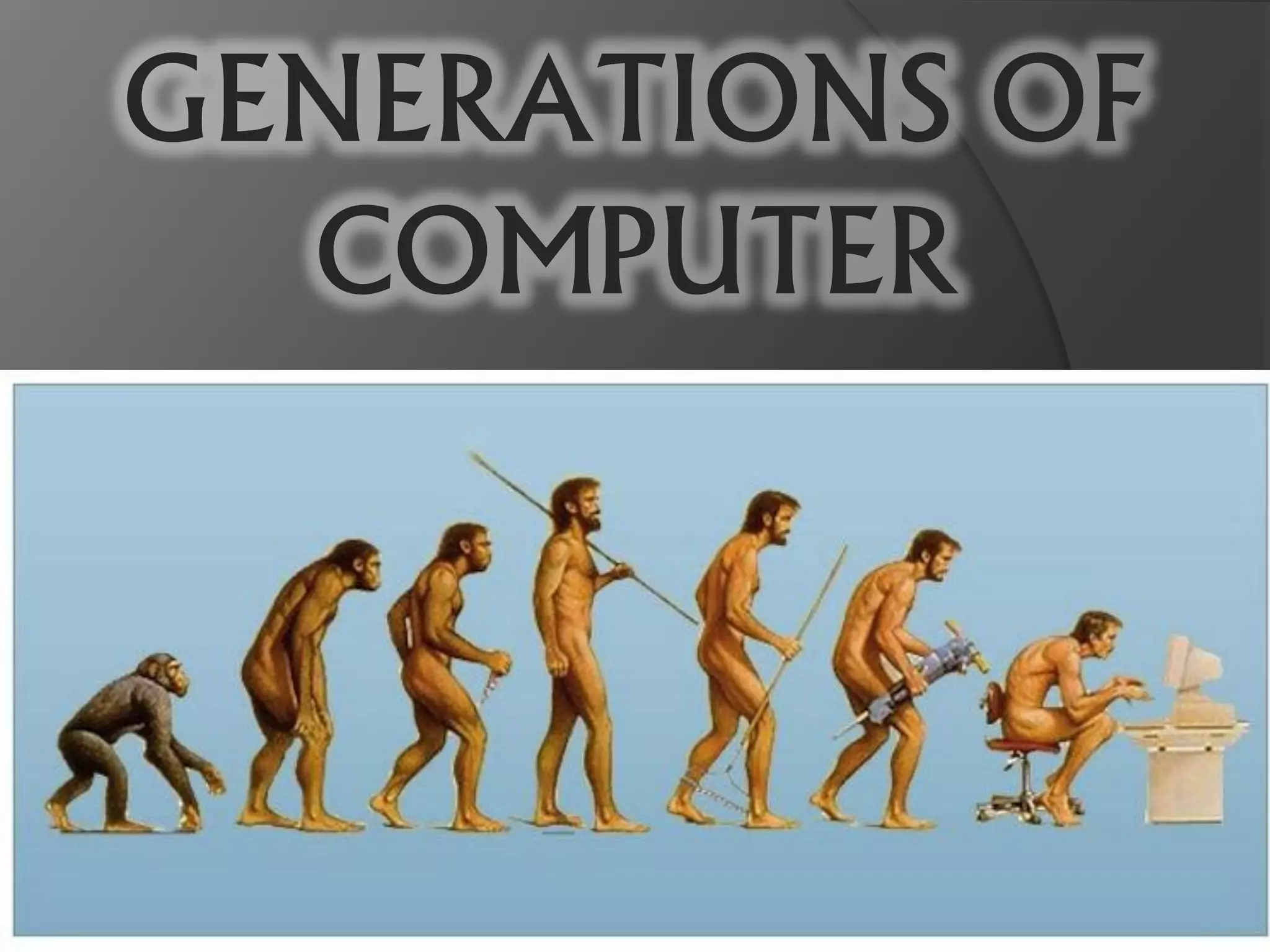
GENERATIONS OF COMPUTER
What is Computer 
The word computer comes from the word “compute” which means to calculate. 
People usually consider computer as calculating device that can perform calculation accurately at a very high speed. 
But this trend is on more been today's modern era computer as it provide multiple function other then calculation. 
 Computer are used for data processing & problem solving related to scientific as well as research activities. 
yogistan
A computer can store, process & rectify data when even desire. 
Computer performs functions as said by the user and in a proper sequence. 
Data processing consist of 3 sub-activities: 
i.Capturing input data 
ii.Manipulating the data 
iii.Desired output 
Hence data is raw material that can be in any stable form & is converted in to information through processing 
yogistan
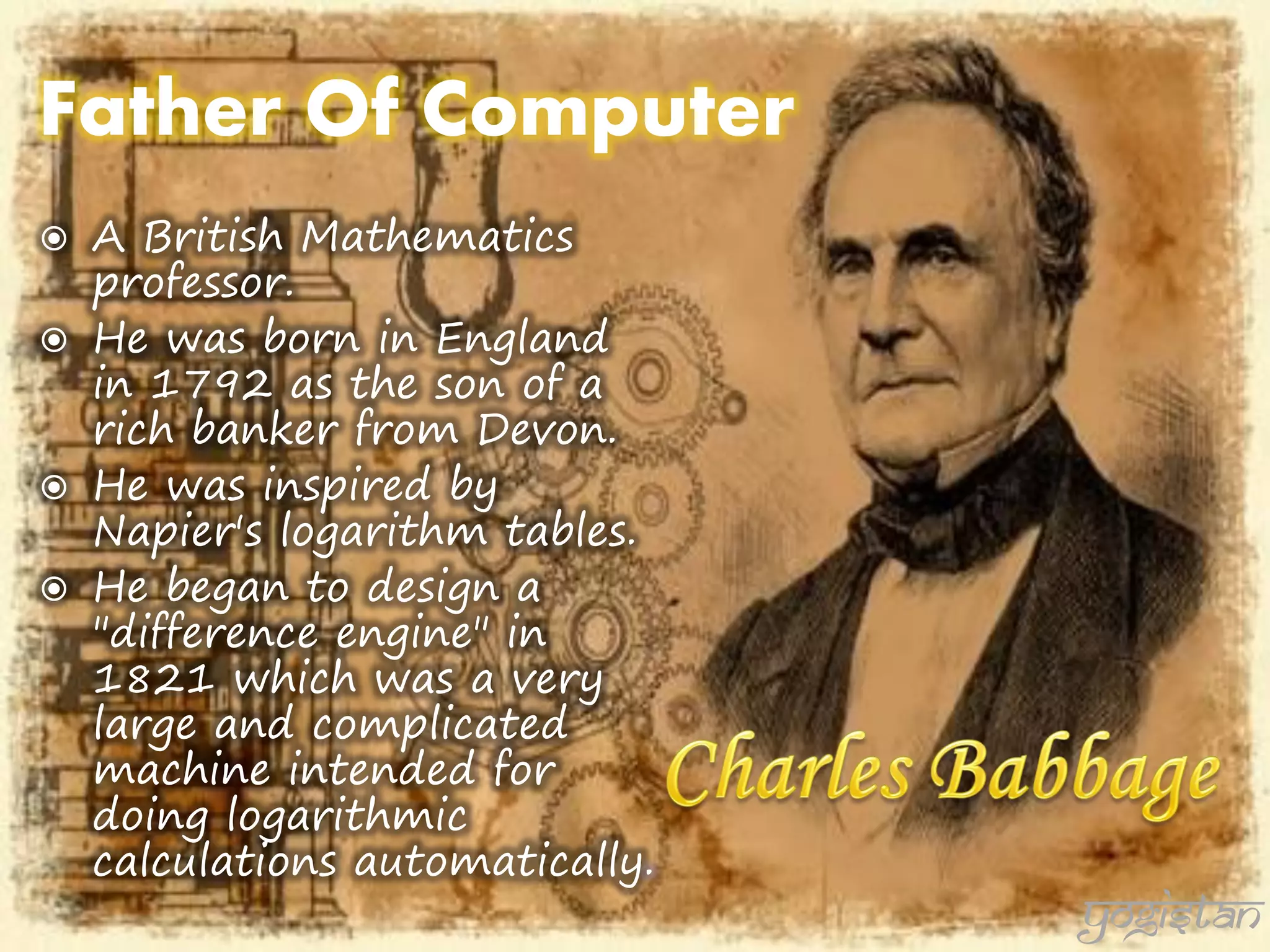
Father Of Computer 
A British Mathematics professor. 
He was born in England in 1792 as the son of a rich banker from Devon. 
He was inspired by Napier's logarithm tables. 
He began to design a "difference engine" in 1821 which was a very large and complicated machine intended for doing logarithmic calculations automatically. 
yogistan
Generations of Computer 
There are 5 Generations of computers:- 
1.First Generation(1946-1955) 
2.Second Generation(1956-1965) 
3.Third Generation(1966-1975) 
4.Fourth Generation(1976-1985) 
5.Fifth Generation(1986-onward) 
yogistan
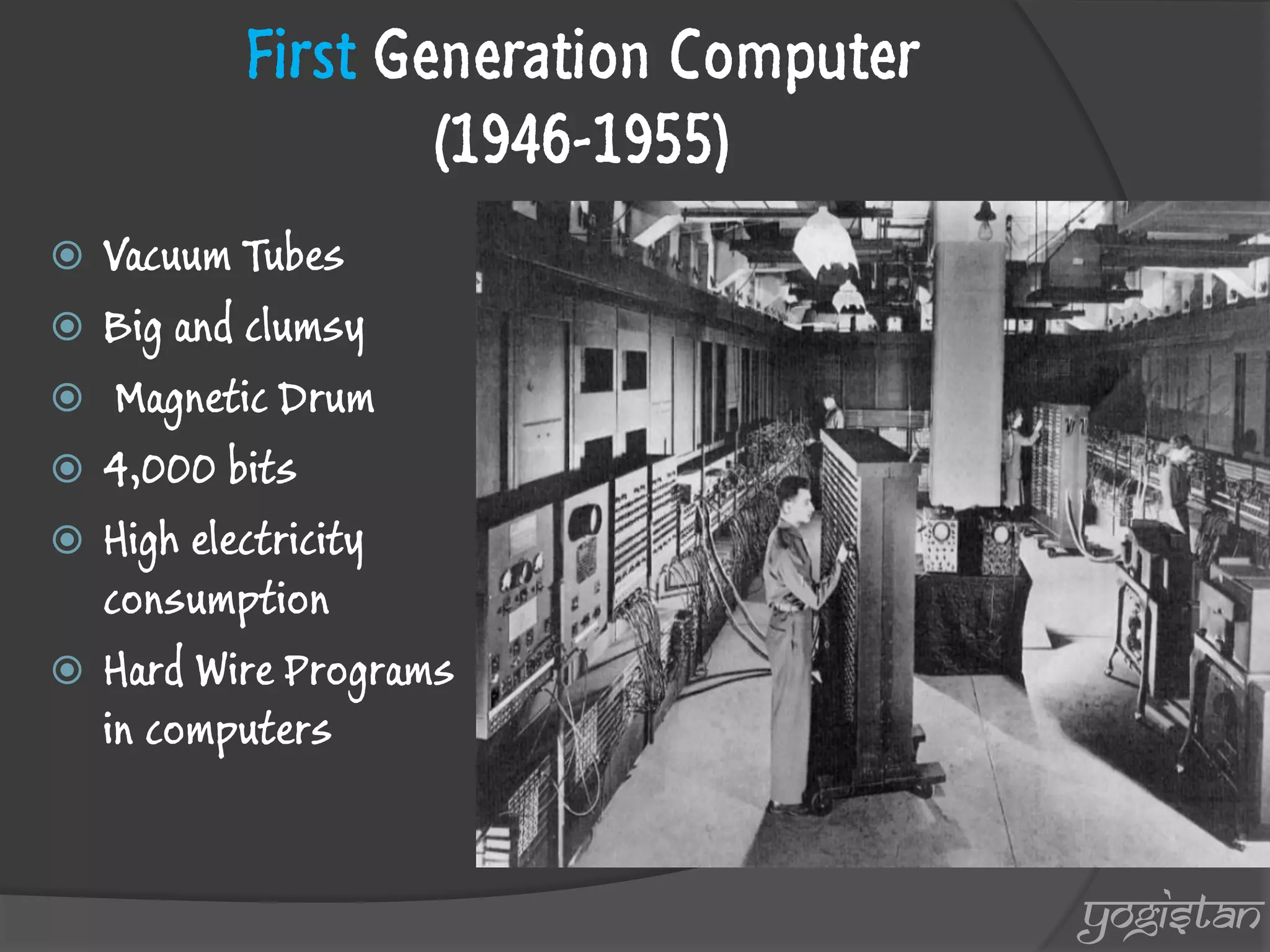
Vacuum Tubes 
Big and clumsy 
 Magnetic Drum 
4,000 bits 
High electricity consumption 
Hard Wire Programs in computers 
First Generation Computer (1946-1955) 
yogistan
First generation languages (abbreviated as 1GL) 
Represent the very early, primitive computer languages that consisted entirely of 1's and 0's - the actual language that the computer understands (machine language). This Language is also known as Binary language. 
yogistan
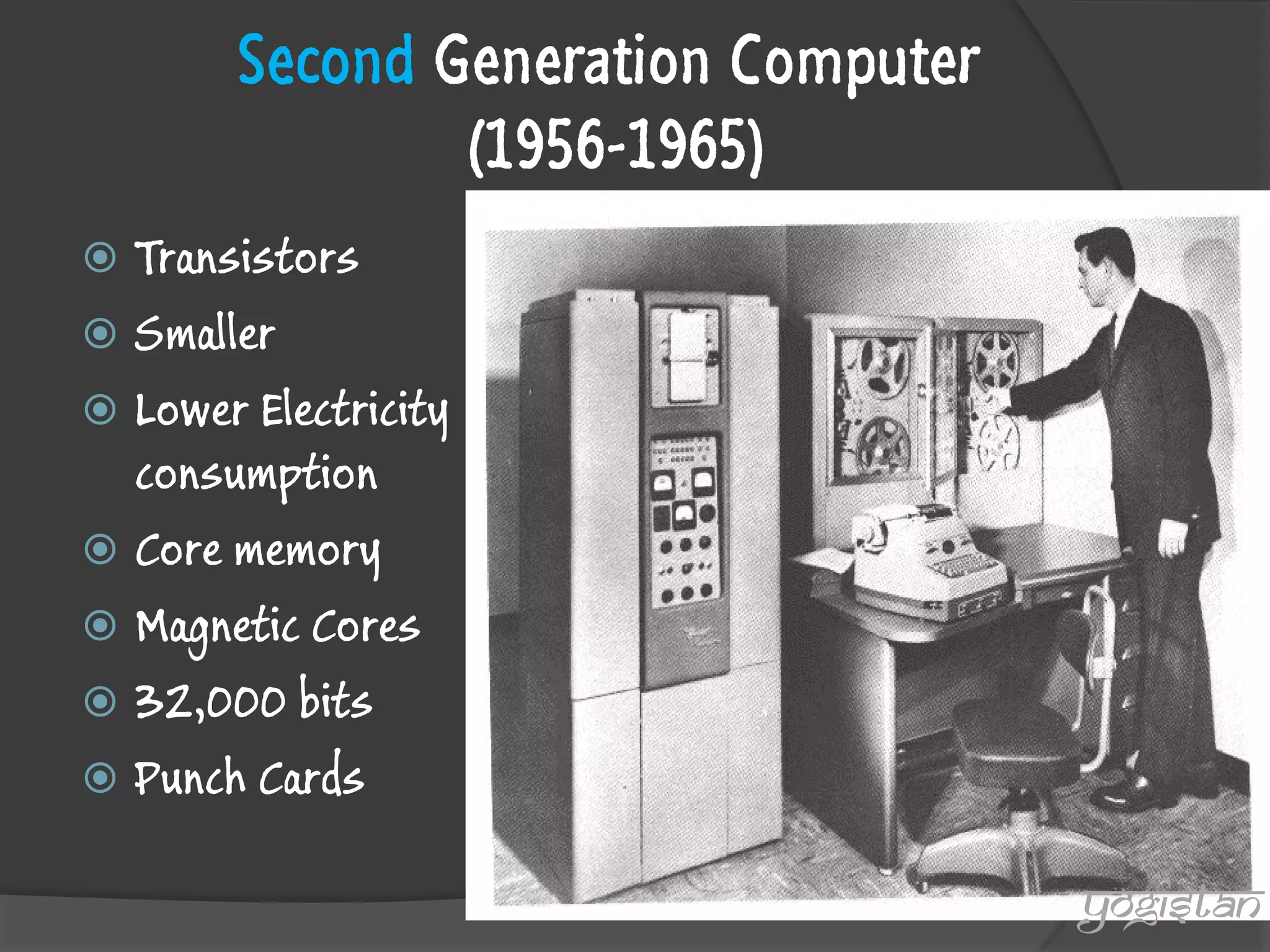
Second Generation Computer (1956-1965) 
Transistors 
Smaller 
Lower Electricity consumption 
Core memory 
Magnetic Cores 
32,000 bits 
Punch Cards 
yogistan
Represent a step up from the first generation languages. Allow for the use of symbolic names instead of just numbers. Second generation languages are known as assembly languages. Code written in an assembly language is converted into machine language (1GL). 
yogistan
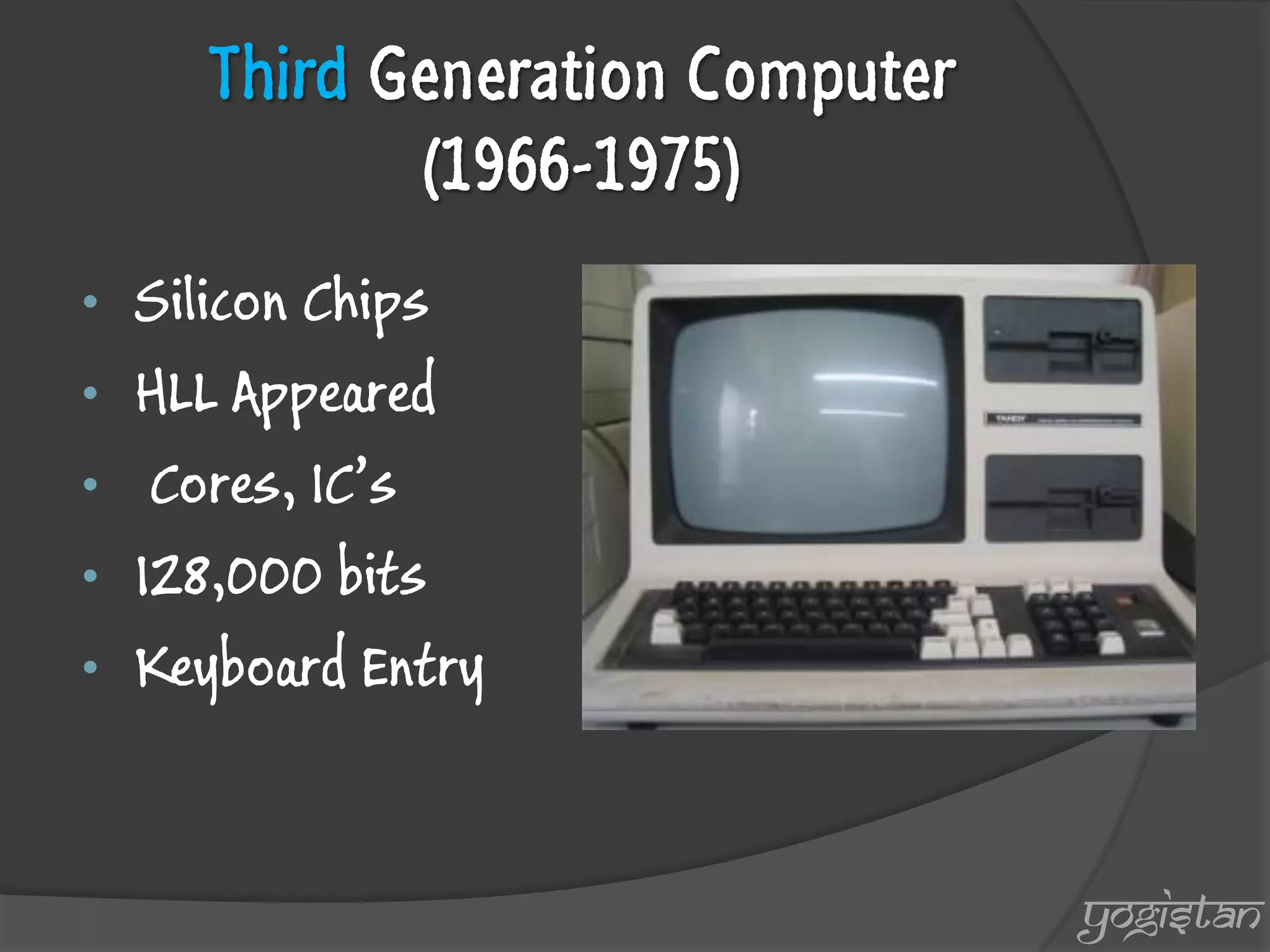
Third Generation Computer (1966-1975) 
•Silicon Chips 
•HLL Appeared 
• Cores, IC’s 
•128,000 bits 
•Keyboard Entry 
yogistan
With the languages introduced by the third generation of computer programming, words and commands (instead of just symbols and numbers) were being used. These languages therefore, had syntax that was much easier to understand. Third generation languages are known as "high level languages" and include C, C++, Java, and Java script, among others 
C++ & JAVA 
yogistan
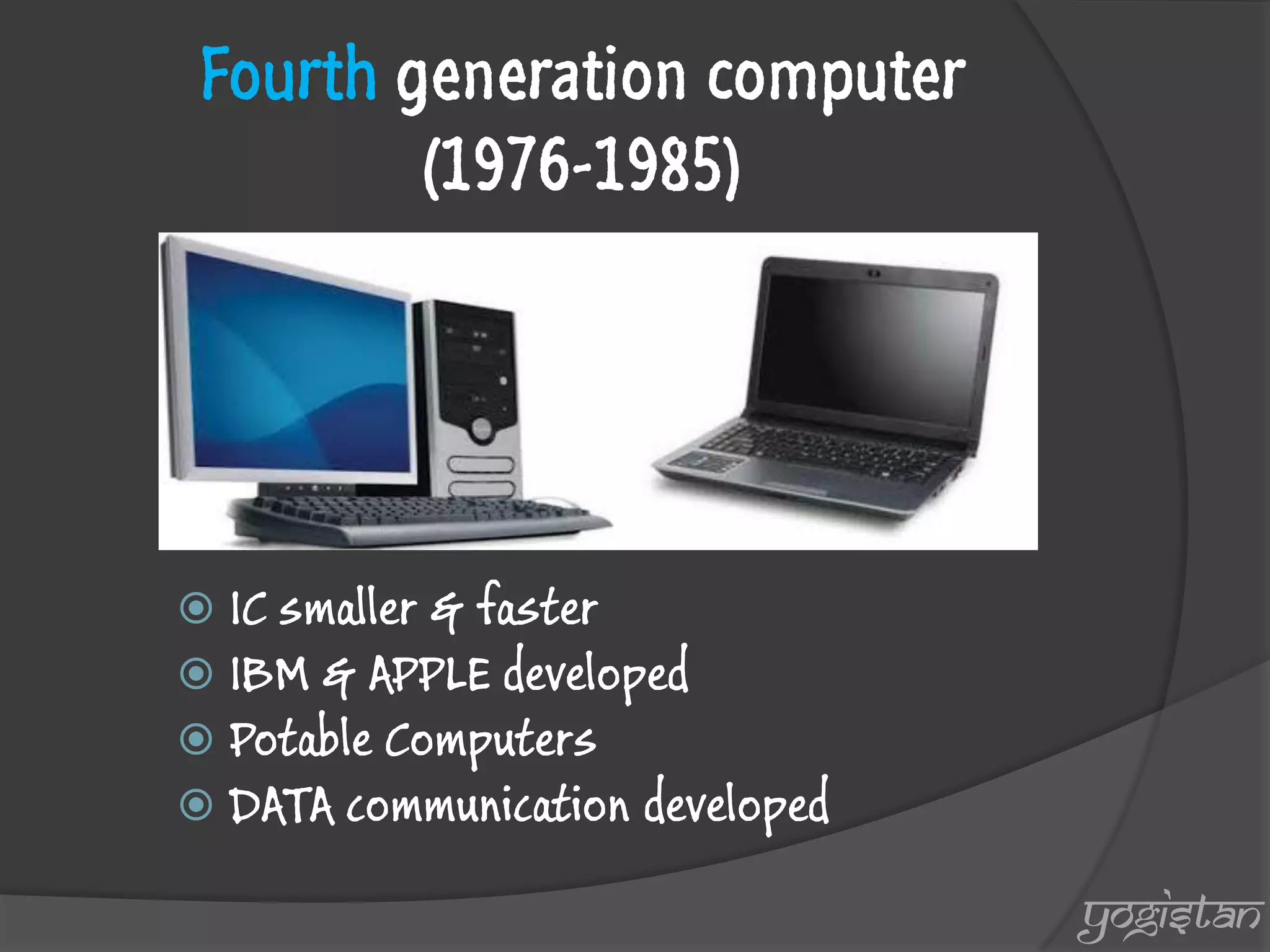
Fourth generation computer (1976-1985) 
IC smaller & faster 
IBM & APPLE developed 
Potable Computers 
DATA communication developed 
yogistan
Fourth generation languages (4GL) 
The syntax used in 4GL is very close to human language, an improvement from the pervious generation of languages. 4GL languages are typically used to access databases and include SQL and ColdFusion, among others 
yogistan
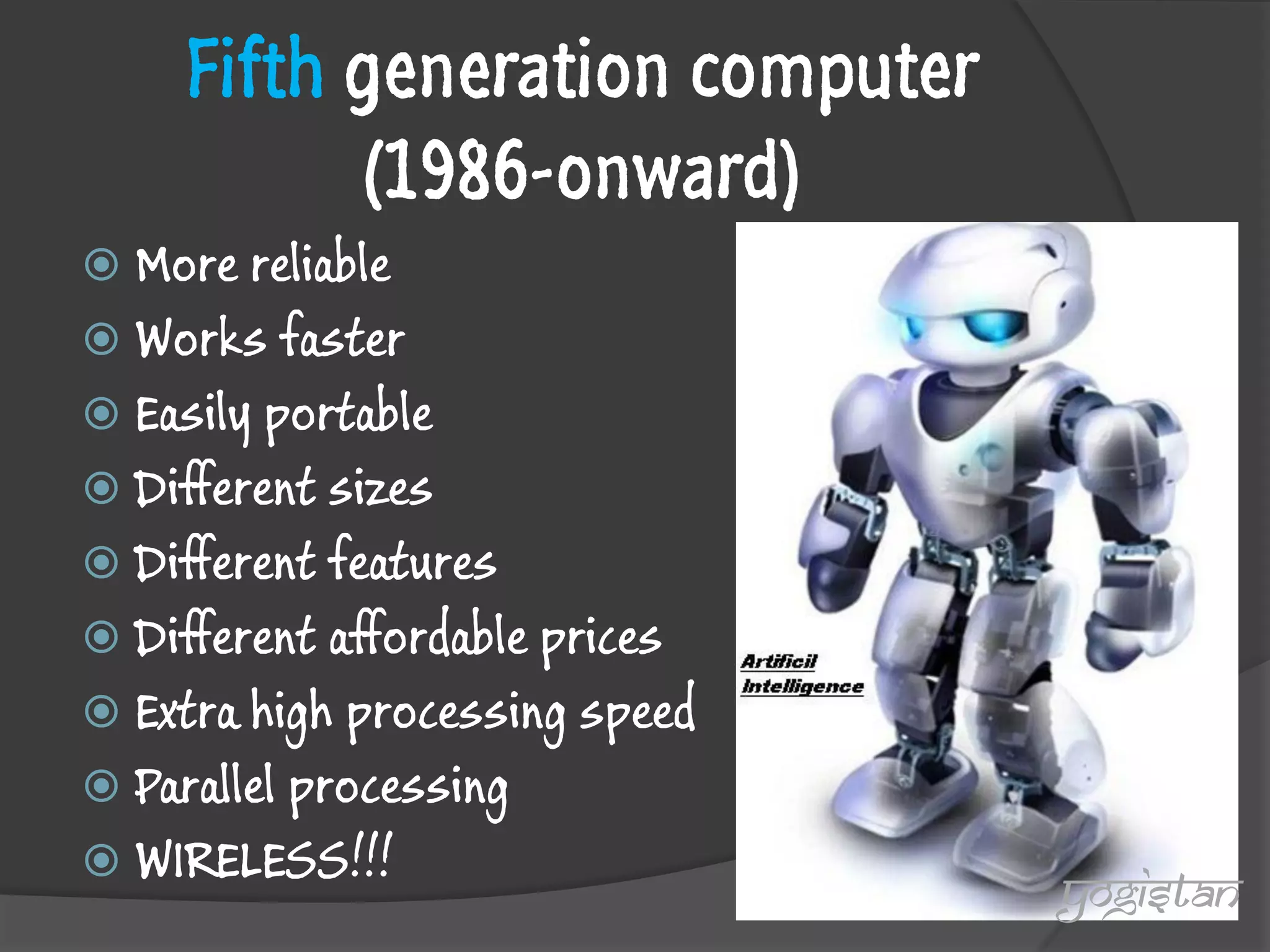
Fifth generation computer (1986-onward) 
More reliable 
Works faster 
Easily portable 
Different sizes 
Different features 
Different affordable prices 
Extra high processing speed 
Parallel processing 
WIRELESS!!! 
yogistan
Fifth generation languages (5GL) 
Fifth generation languages are currently being used for neural networks. A neural network is a form of artificial intelligence that attempts to imitate how the human mind works. 
yogistan
#Ask@Yogi

Generations of Computer

  • 1.
  • 2.
    What is Computer The word computer comes from the word “compute” which means to calculate. People usually consider computer as calculating device that can perform calculation accurately at a very high speed. But this trend is on more been today's modern era computer as it provide multiple function other then calculation.  Computer are used for data processing & problem solving related to scientific as well as research activities. yogistan
  • 3.
    A computer canstore, process & rectify data when even desire. Computer performs functions as said by the user and in a proper sequence. Data processing consist of 3 sub-activities: i.Capturing input data ii.Manipulating the data iii.Desired output Hence data is raw material that can be in any stable form & is converted in to information through processing yogistan
  • 4.
    Father Of Computer A British Mathematics professor. He was born in England in 1792 as the son of a rich banker from Devon. He was inspired by Napier's logarithm tables. He began to design a "difference engine" in 1821 which was a very large and complicated machine intended for doing logarithmic calculations automatically. yogistan
  • 5.
    Generations of Computer There are 5 Generations of computers:- 1.First Generation(1946-1955) 2.Second Generation(1956-1965) 3.Third Generation(1966-1975) 4.Fourth Generation(1976-1985) 5.Fifth Generation(1986-onward) yogistan
  • 6.
    Vacuum Tubes Bigand clumsy  Magnetic Drum 4,000 bits High electricity consumption Hard Wire Programs in computers First Generation Computer (1946-1955) yogistan
  • 7.
    First generation languages(abbreviated as 1GL) Represent the very early, primitive computer languages that consisted entirely of 1's and 0's - the actual language that the computer understands (machine language). This Language is also known as Binary language. yogistan
  • 8.
    Second Generation Computer(1956-1965) Transistors Smaller Lower Electricity consumption Core memory Magnetic Cores 32,000 bits Punch Cards yogistan
  • 9.
    Represent a stepup from the first generation languages. Allow for the use of symbolic names instead of just numbers. Second generation languages are known as assembly languages. Code written in an assembly language is converted into machine language (1GL). yogistan
  • 10.
    Third Generation Computer(1966-1975) •Silicon Chips •HLL Appeared • Cores, IC’s •128,000 bits •Keyboard Entry yogistan
  • 11.
    With the languagesintroduced by the third generation of computer programming, words and commands (instead of just symbols and numbers) were being used. These languages therefore, had syntax that was much easier to understand. Third generation languages are known as "high level languages" and include C, C++, Java, and Java script, among others C++ & JAVA yogistan
  • 12.
    Fourth generation computer(1976-1985) IC smaller & faster IBM & APPLE developed Potable Computers DATA communication developed yogistan
  • 13.
    Fourth generation languages(4GL) The syntax used in 4GL is very close to human language, an improvement from the pervious generation of languages. 4GL languages are typically used to access databases and include SQL and ColdFusion, among others yogistan
  • 14.
    Fifth generation computer(1986-onward) More reliable Works faster Easily portable Different sizes Different features Different affordable prices Extra high processing speed Parallel processing WIRELESS!!! yogistan
  • 15.
    Fifth generation languages(5GL) Fifth generation languages are currently being used for neural networks. A neural network is a form of artificial intelligence that attempts to imitate how the human mind works. yogistan
  • 16.