Motion

By Nico Vaunois 2011
Distance and
Displacement
 Distance is the measure of the total length of the path
taken during the change of position of an object
 Distance is a scalar quantity

 Displacement is the measure of the change of position
of an object
 Displacement is a vector quantity
Speed and Velocity
 Speed is the measure of rate of the distance covered
 Speed is a scalar quantity
Distance covered
Speed (m/s) =
(m)
Time taken (s)

 Velocity is the measure of rate of displacement of an
object
 Velocity is a vector quantity
Displacement
Velocity
Time taken
=
Scalars and Vectors
 Scalars are quantities that have a size (or magnitude)
only

 Vectors are quantities that have a size and a direction
d

Speed Distance Time

s

t

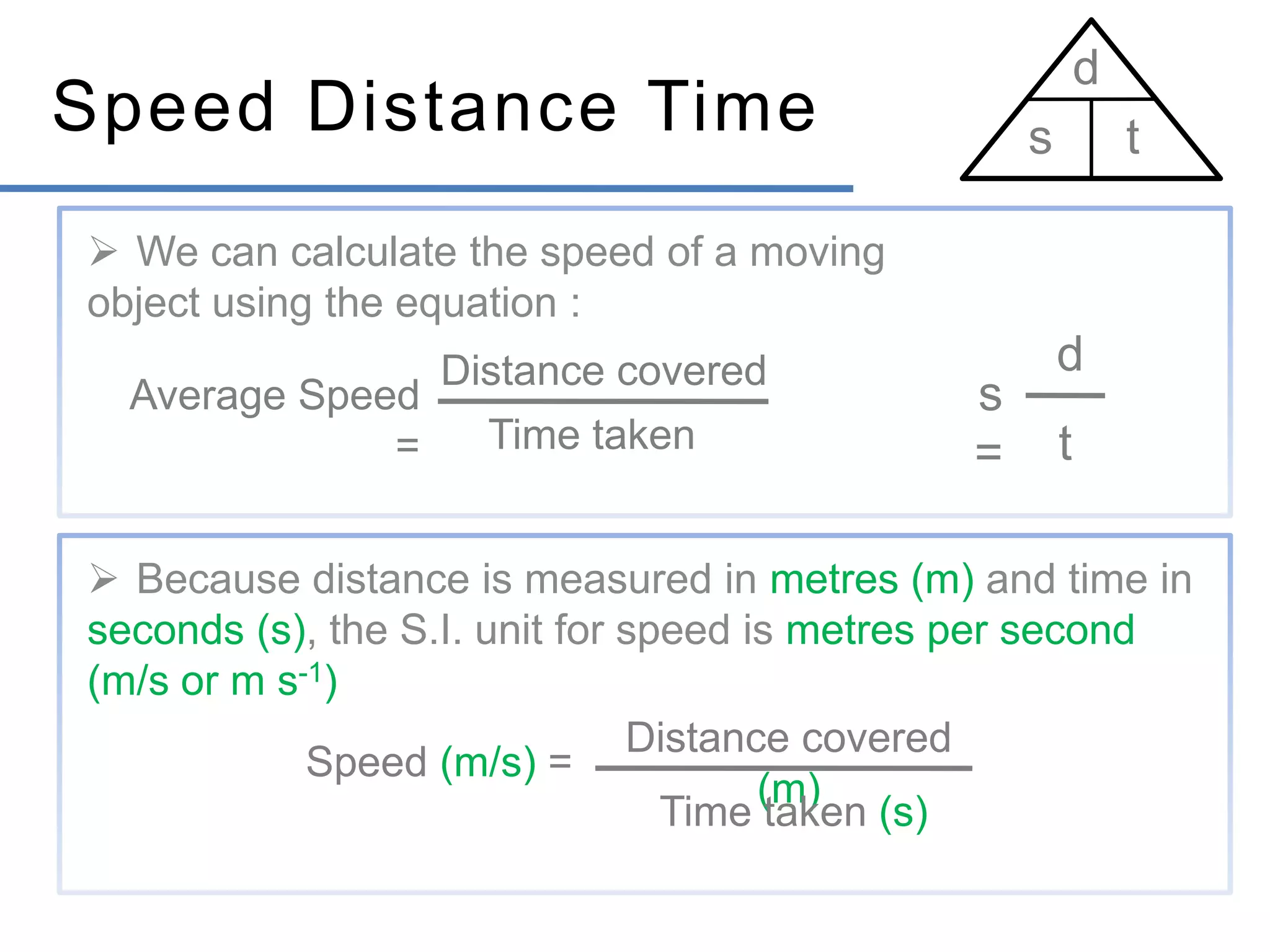
 We can calculate the speed of a moving
object using the equation :
Average Speed
=

Distance covered
Time taken

s
=

d

t

 Because distance is measured in metres (m) and time in
seconds (s), the S.I. unit for speed is metres per second
(m/s or m s-1)
Distance covered
Speed (m/s) =
(m)
Time taken (s)
Acceleration

Δv
a

Δt

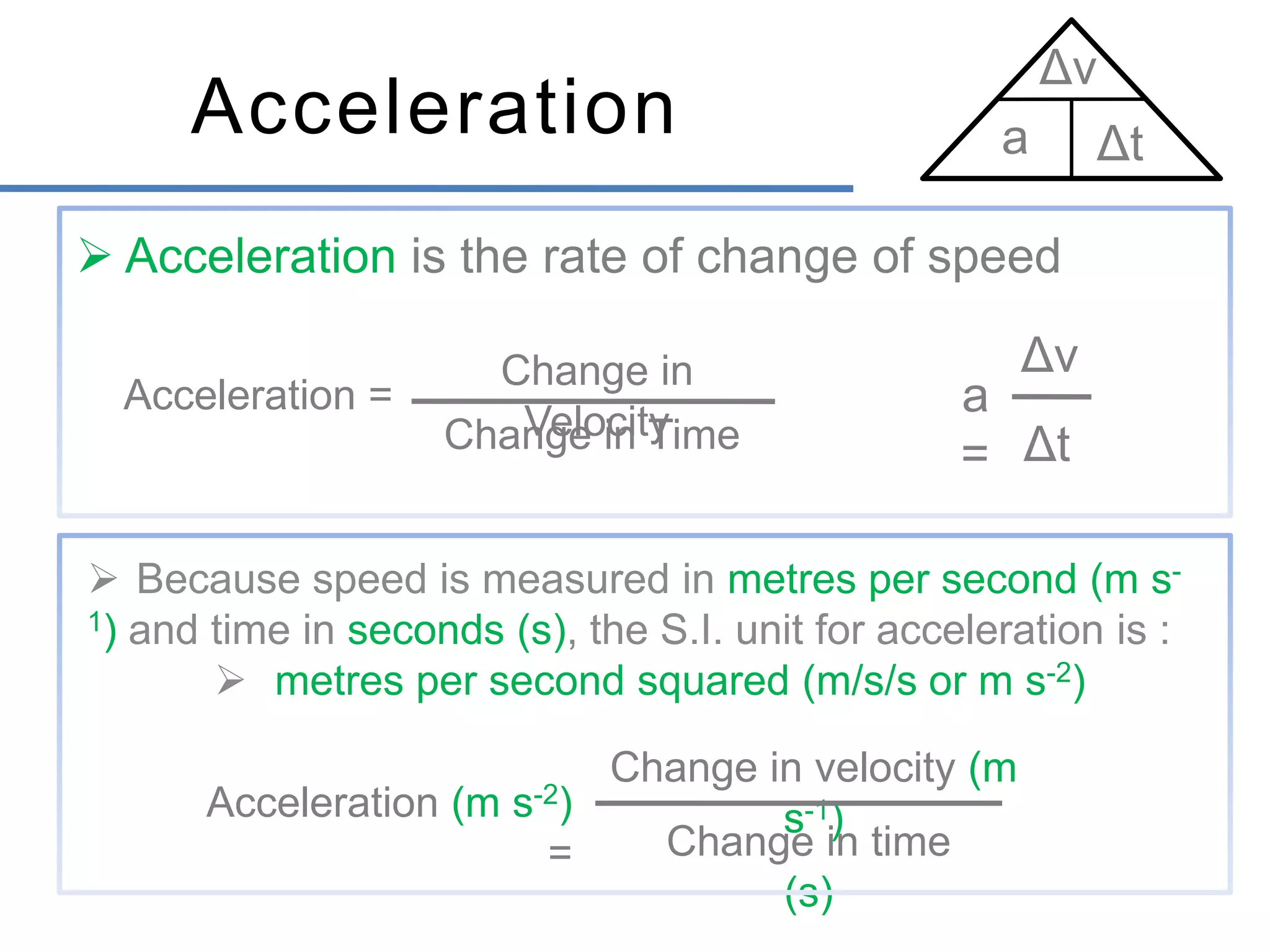
 Acceleration is the rate of change of speed
Acceleration =

Change in
Velocity
Change in Time

Δv

a
= Δt

 Because speed is measured in metres per second (m s1) and time in seconds (s), the S.I. unit for acceleration is :
 metres per second squared (m/s/s or m s-2)
Change in velocity (m
Acceleration (m s-2)
s-1)
Change in time
=
(s)
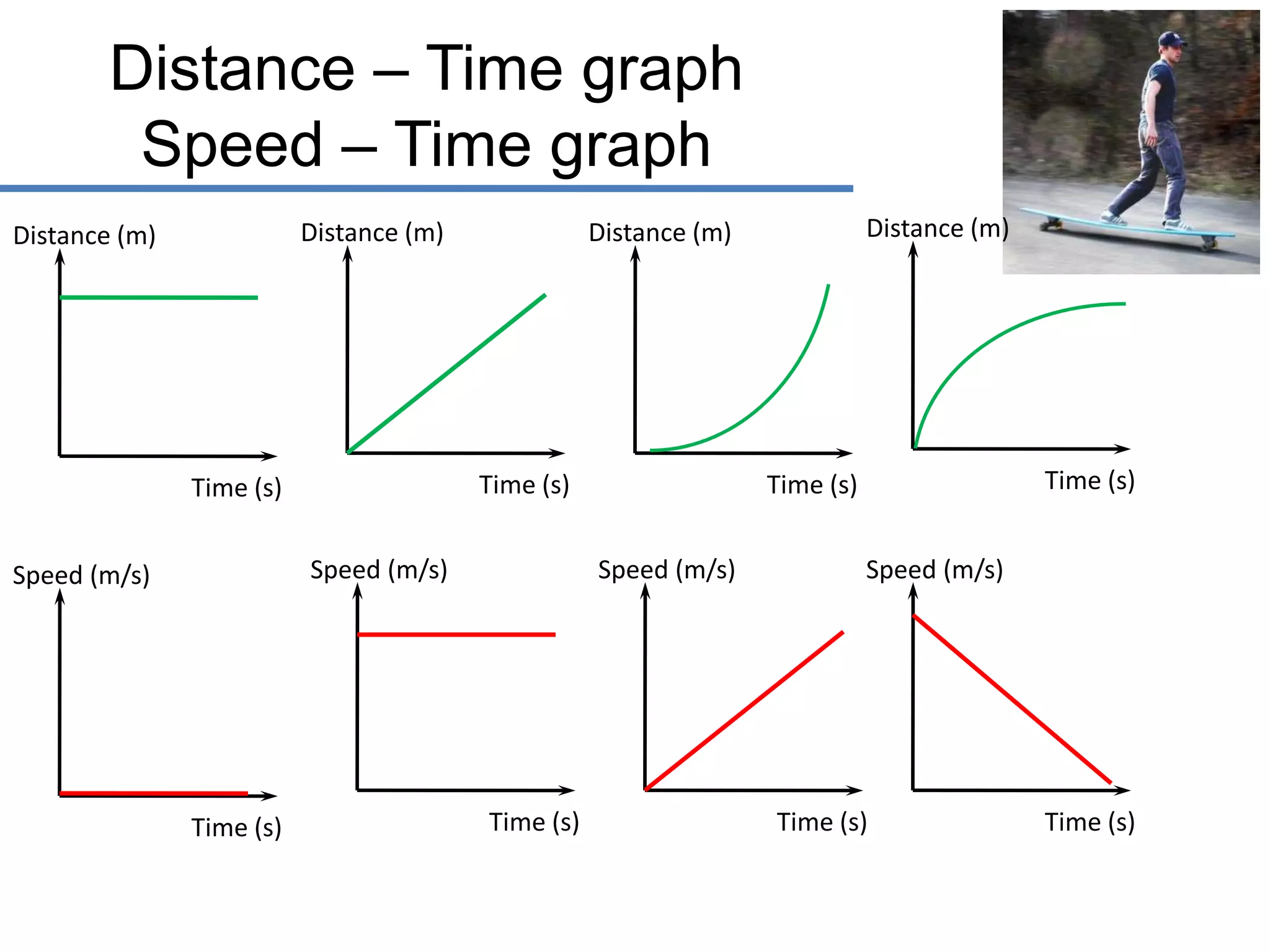
Distance – Time graph
Speed – Time graph
Distance (m)

Distance (m)

Time (s)

Time (s)
Speed (m/s)

Speed (m/s)

Time (s)

Distance (m)

Distance (m)

Speed (m/s)

Time (s)

Time (s)

Time (s)
Speed (m/s)

Time (s)

Time (s)
Distance – Time graph
Distance (m)

Time (s)

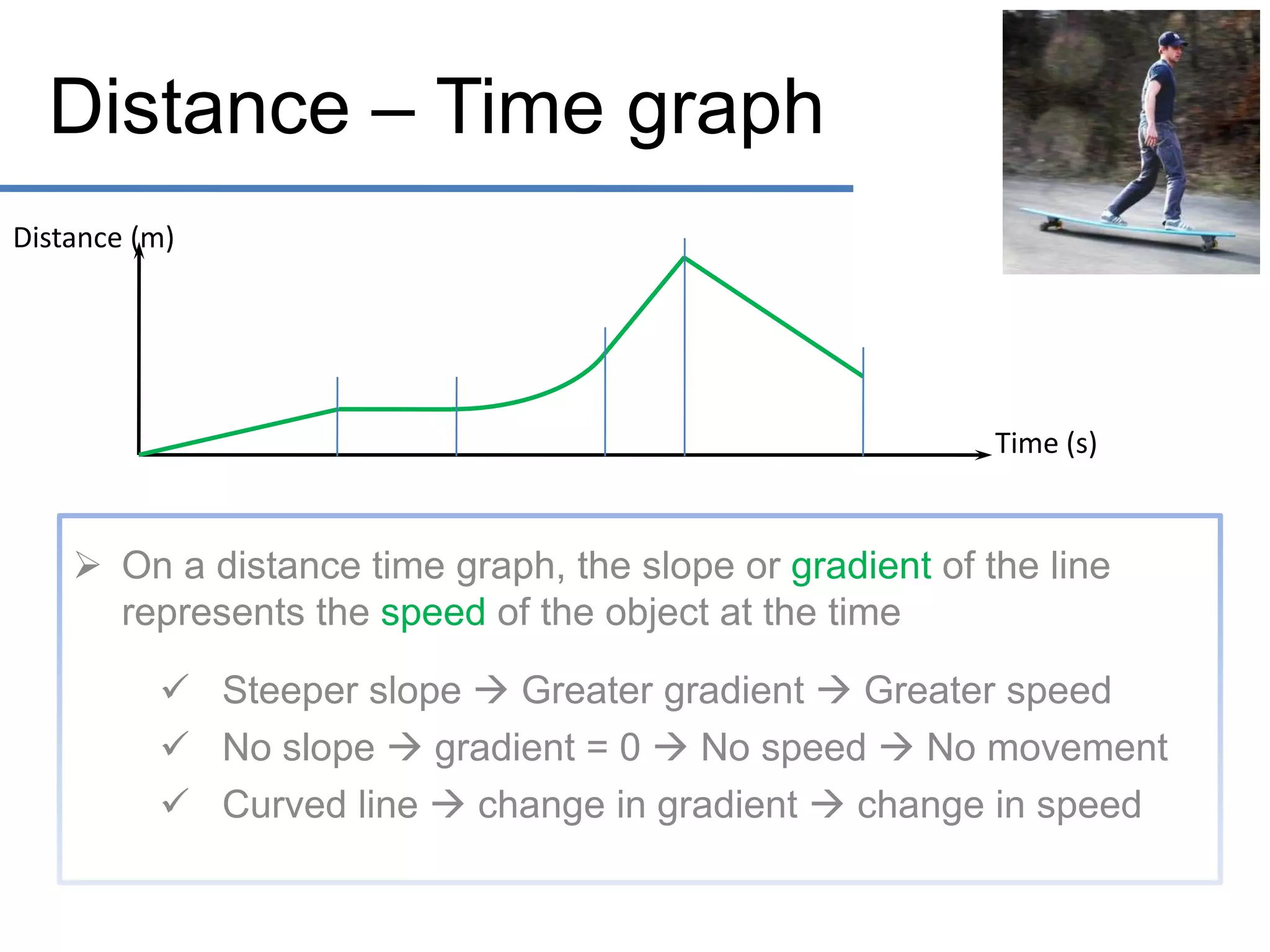
 On a distance time graph, the slope or gradient of the line
represents the speed of the object at the time
 Steeper slope  Greater gradient  Greater speed
 No slope  gradient = 0  No speed  No movement
 Curved line  change in gradient  change in speed
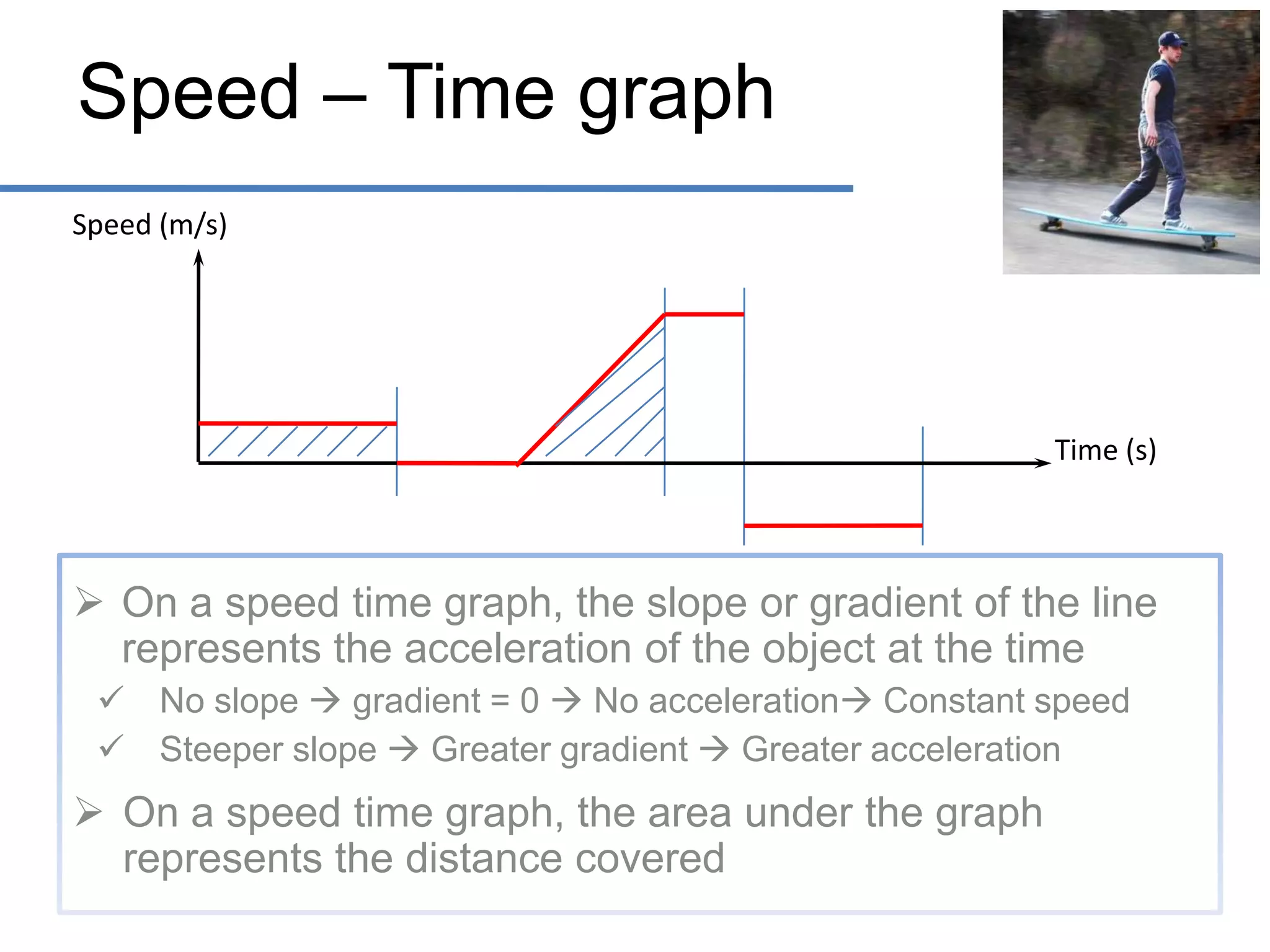
Speed – Time graph
Speed (m/s)

Time (s)

 On a speed time graph, the slope or gradient of the line
represents the acceleration of the object at the time
 No slope  gradient = 0  No acceleration Constant speed
 Steeper slope  Greater gradient  Greater acceleration

 On a speed time graph, the area under the graph
represents the distance covered
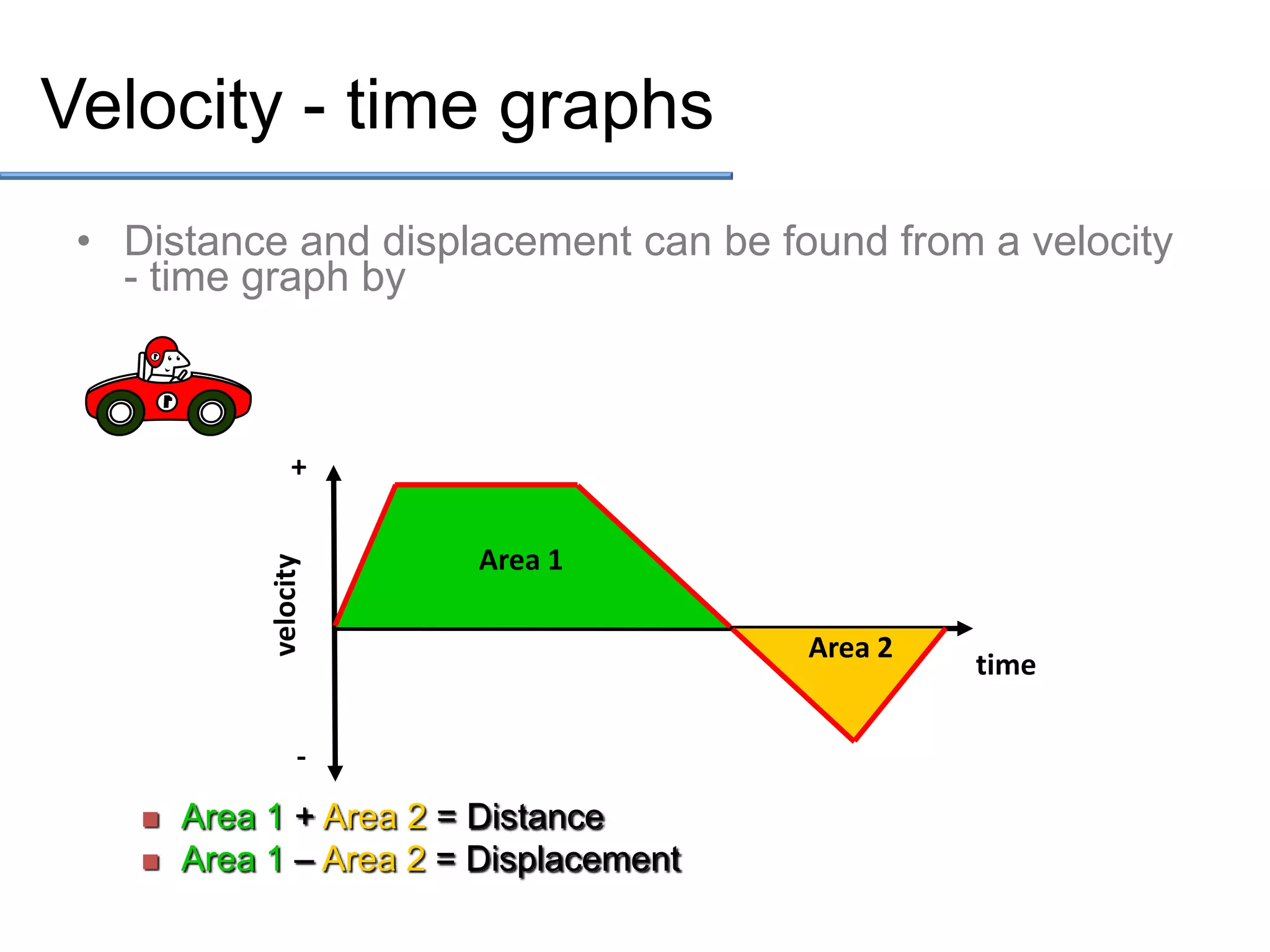
Velocity - time graphs
• Distance and displacement can be found from a velocity
- time graph by

velocity

+
Area 1




Area 1 + Area 2 = Distance
Area 1 – Area 2 = Displacement

Area 2

time
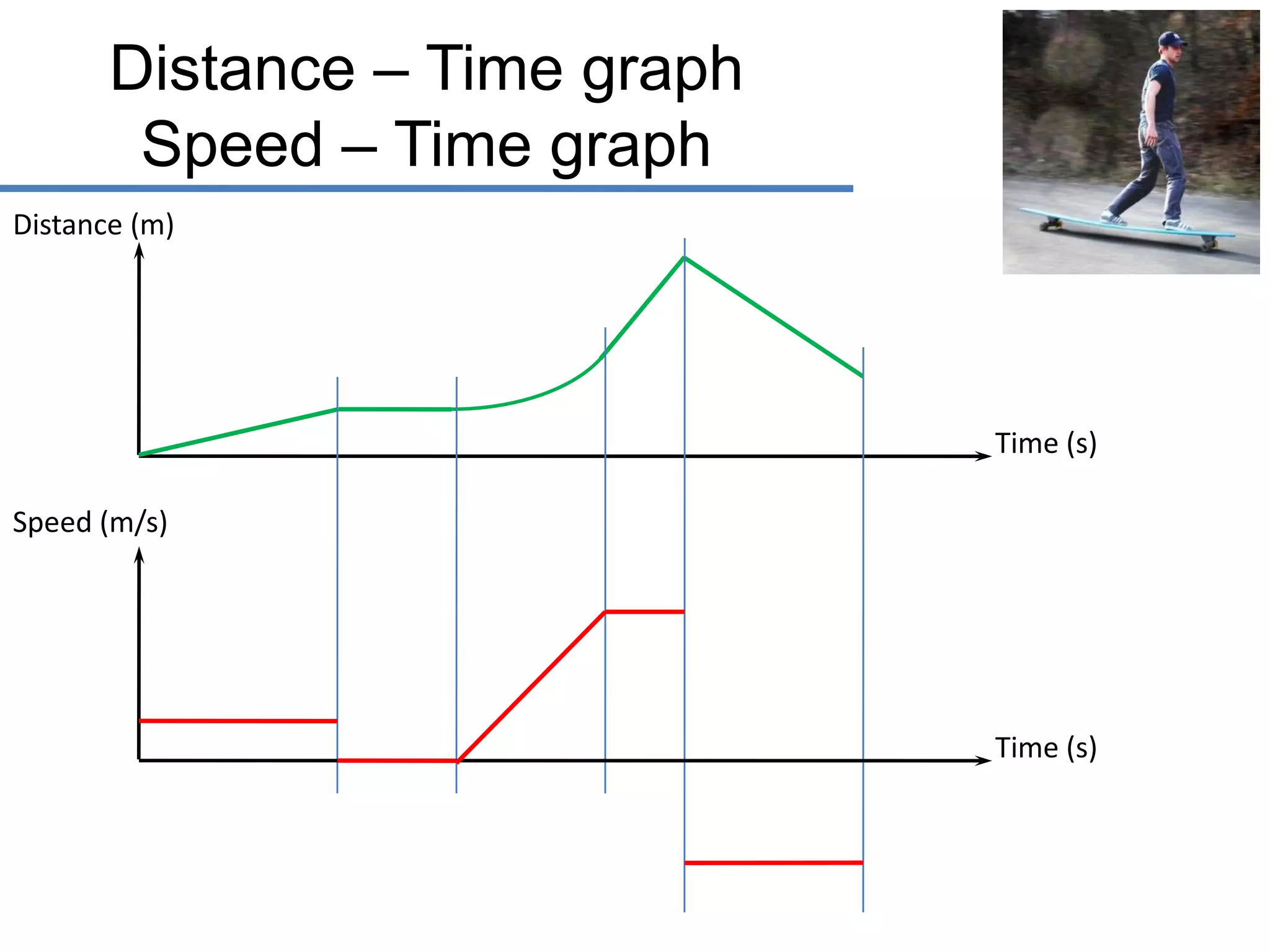
Distance – Time graph
Speed – Time graph
Distance (m)

Time (s)
Speed (m/s)

Time (s)
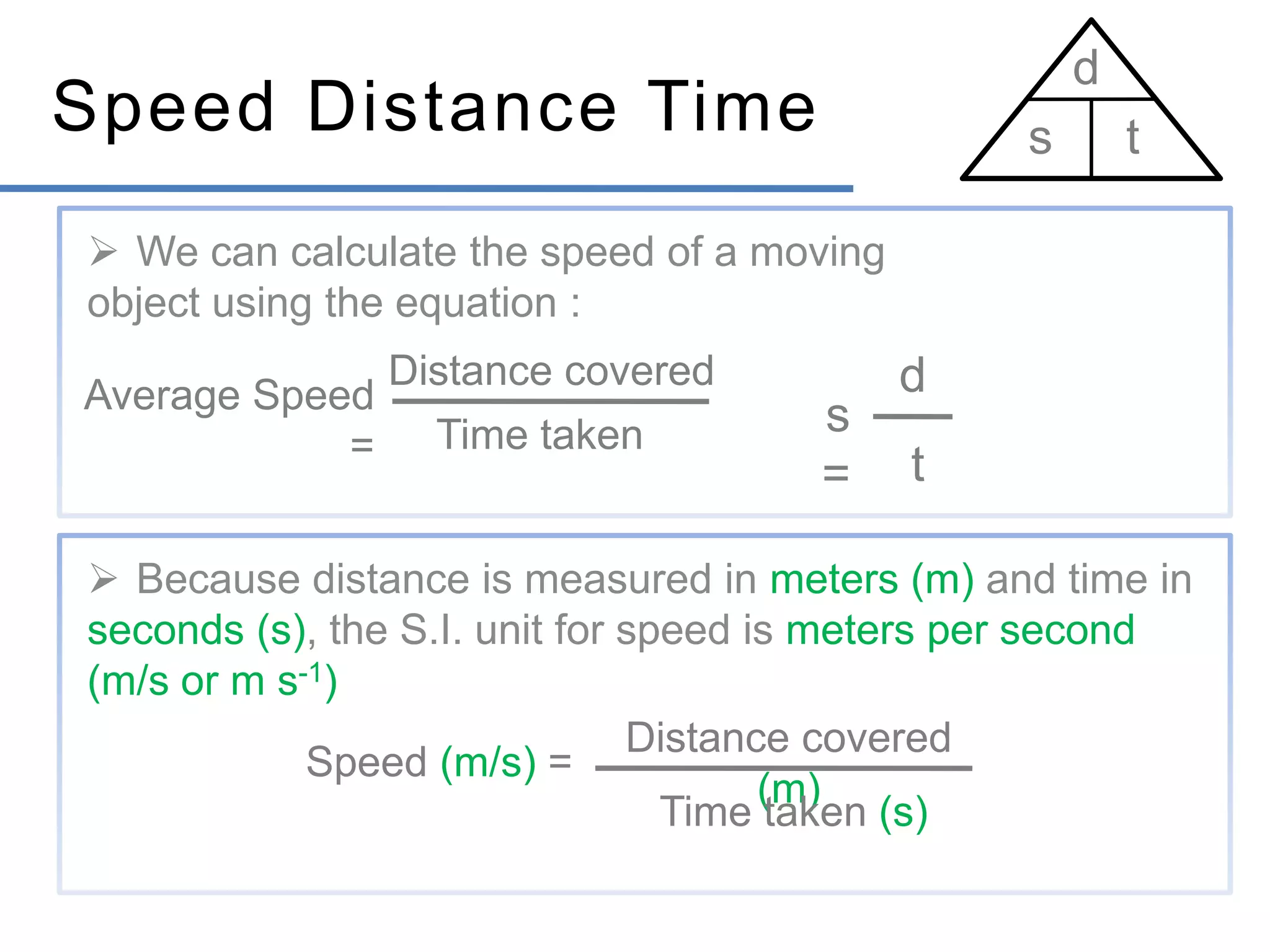
d

Speed Distance Time

s

t

 We can calculate the speed of a moving
object using the equation :
Average Speed
=

Distance covered
Time taken

s
=

d
t

 Because distance is measured in meters (m) and time in
seconds (s), the S.I. unit for speed is meters per second
(m/s or m s-1)
Distance covered
Speed (m/s) =
(m)
Time taken (s)
Δv

Acceleration

a

Δt

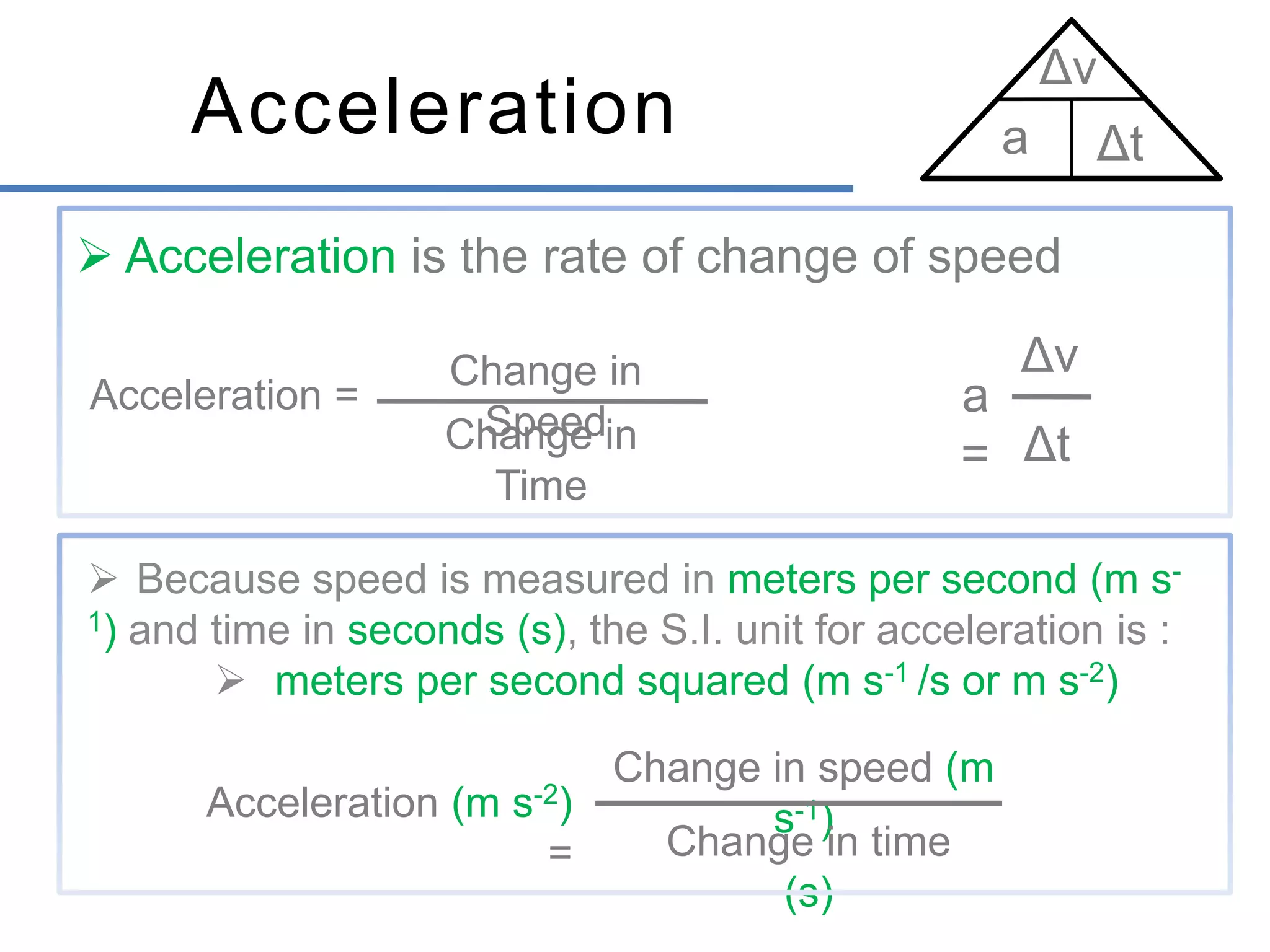
 Acceleration is the rate of change of speed
Acceleration =

Change in
Speed
Change in
Time

Δv

a
= Δt

 Because speed is measured in meters per second (m s1) and time in seconds (s), the S.I. unit for acceleration is :
 meters per second squared (m s-1 /s or m s-2)
Change in speed (m
Acceleration (m s-2)
s-1)
Change in time
=
(s)

Motion L1

  • 1.
  • 2.
    Distance and Displacement  Distanceis the measure of the total length of the path taken during the change of position of an object  Distance is a scalar quantity  Displacement is the measure of the change of position of an object  Displacement is a vector quantity
  • 3.
    Speed and Velocity Speed is the measure of rate of the distance covered  Speed is a scalar quantity Distance covered Speed (m/s) = (m) Time taken (s)  Velocity is the measure of rate of displacement of an object  Velocity is a vector quantity Displacement Velocity Time taken =
  • 4.
    Scalars and Vectors Scalars are quantities that have a size (or magnitude) only  Vectors are quantities that have a size and a direction
  • 5.
    d Speed Distance Time s t We can calculate the speed of a moving object using the equation : Average Speed = Distance covered Time taken s = d t  Because distance is measured in metres (m) and time in seconds (s), the S.I. unit for speed is metres per second (m/s or m s-1) Distance covered Speed (m/s) = (m) Time taken (s)
  • 6.
    Acceleration Δv a Δt  Acceleration isthe rate of change of speed Acceleration = Change in Velocity Change in Time Δv a = Δt  Because speed is measured in metres per second (m s1) and time in seconds (s), the S.I. unit for acceleration is :  metres per second squared (m/s/s or m s-2) Change in velocity (m Acceleration (m s-2) s-1) Change in time = (s)
  • 7.
    Distance – Timegraph Speed – Time graph Distance (m) Distance (m) Time (s) Time (s) Speed (m/s) Speed (m/s) Time (s) Distance (m) Distance (m) Speed (m/s) Time (s) Time (s) Time (s) Speed (m/s) Time (s) Time (s)
  • 8.
    Distance – Timegraph Distance (m) Time (s)  On a distance time graph, the slope or gradient of the line represents the speed of the object at the time  Steeper slope  Greater gradient  Greater speed  No slope  gradient = 0  No speed  No movement  Curved line  change in gradient  change in speed
  • 9.
    Speed – Timegraph Speed (m/s) Time (s)  On a speed time graph, the slope or gradient of the line represents the acceleration of the object at the time  No slope  gradient = 0  No acceleration Constant speed  Steeper slope  Greater gradient  Greater acceleration  On a speed time graph, the area under the graph represents the distance covered
  • 10.
    Velocity - timegraphs • Distance and displacement can be found from a velocity - time graph by velocity + Area 1   Area 1 + Area 2 = Distance Area 1 – Area 2 = Displacement Area 2 time
  • 11.
    Distance – Timegraph Speed – Time graph Distance (m) Time (s) Speed (m/s) Time (s)
  • 12.
    d Speed Distance Time s t We can calculate the speed of a moving object using the equation : Average Speed = Distance covered Time taken s = d t  Because distance is measured in meters (m) and time in seconds (s), the S.I. unit for speed is meters per second (m/s or m s-1) Distance covered Speed (m/s) = (m) Time taken (s)
  • 13.
    Δv Acceleration a Δt  Acceleration isthe rate of change of speed Acceleration = Change in Speed Change in Time Δv a = Δt  Because speed is measured in meters per second (m s1) and time in seconds (s), the S.I. unit for acceleration is :  meters per second squared (m s-1 /s or m s-2) Change in speed (m Acceleration (m s-2) s-1) Change in time = (s)