This document discusses Jarvis's learning process theory and related models of experiential learning. It summarizes that Jarvis's model builds on Kolb's learning theory and incorporates how a person's biography and psychological history affect their experiences and learning. The model also includes experimenting with the environment, reflecting on practice as it occurs, and how familiar experiences may limit new learning over time. Finally, the document notes the role of educators is to facilitate critical reflection, challenge learners, and act as coaches, mentors, and evaluators in the learning process.
Jarvis Learning ProcessTheoryRamon GarciaWalden UniversityRichard W. Riley School of Education and LeadershipEdD StudentEDUC 8101
2.
Questions and Modelsto be addressedWhat came before Jarvis’ sTheory?Models of Experiential LearningJarvis’ ModelRole of Educators?
3.
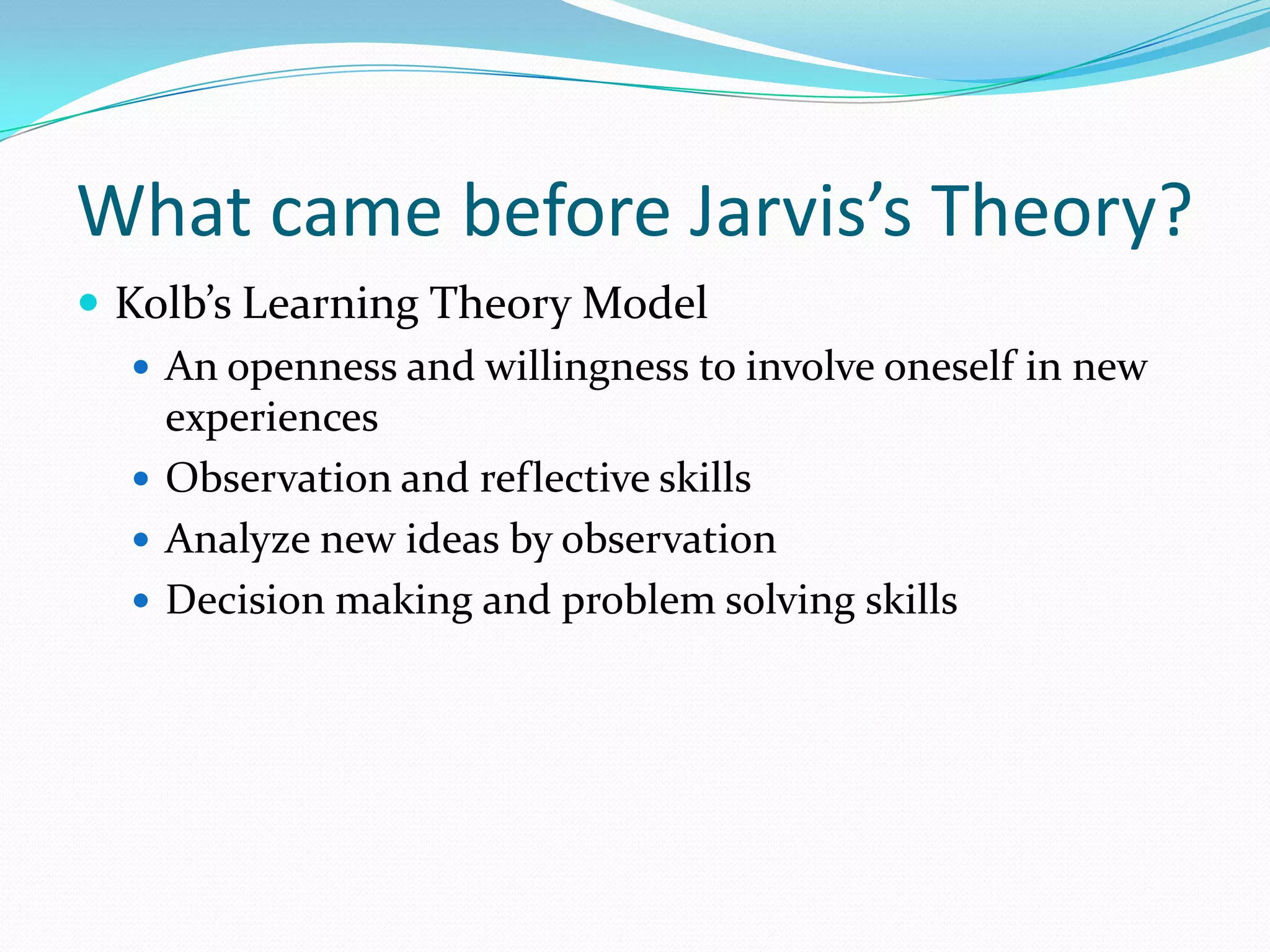
What came beforeJarvis’s Theory?Kolb’s Learning Theory ModelAn openness and willingness to involve oneself in new experiencesObservation and reflective skillsAnalyze new ideas by observationDecision making and problem solving skills
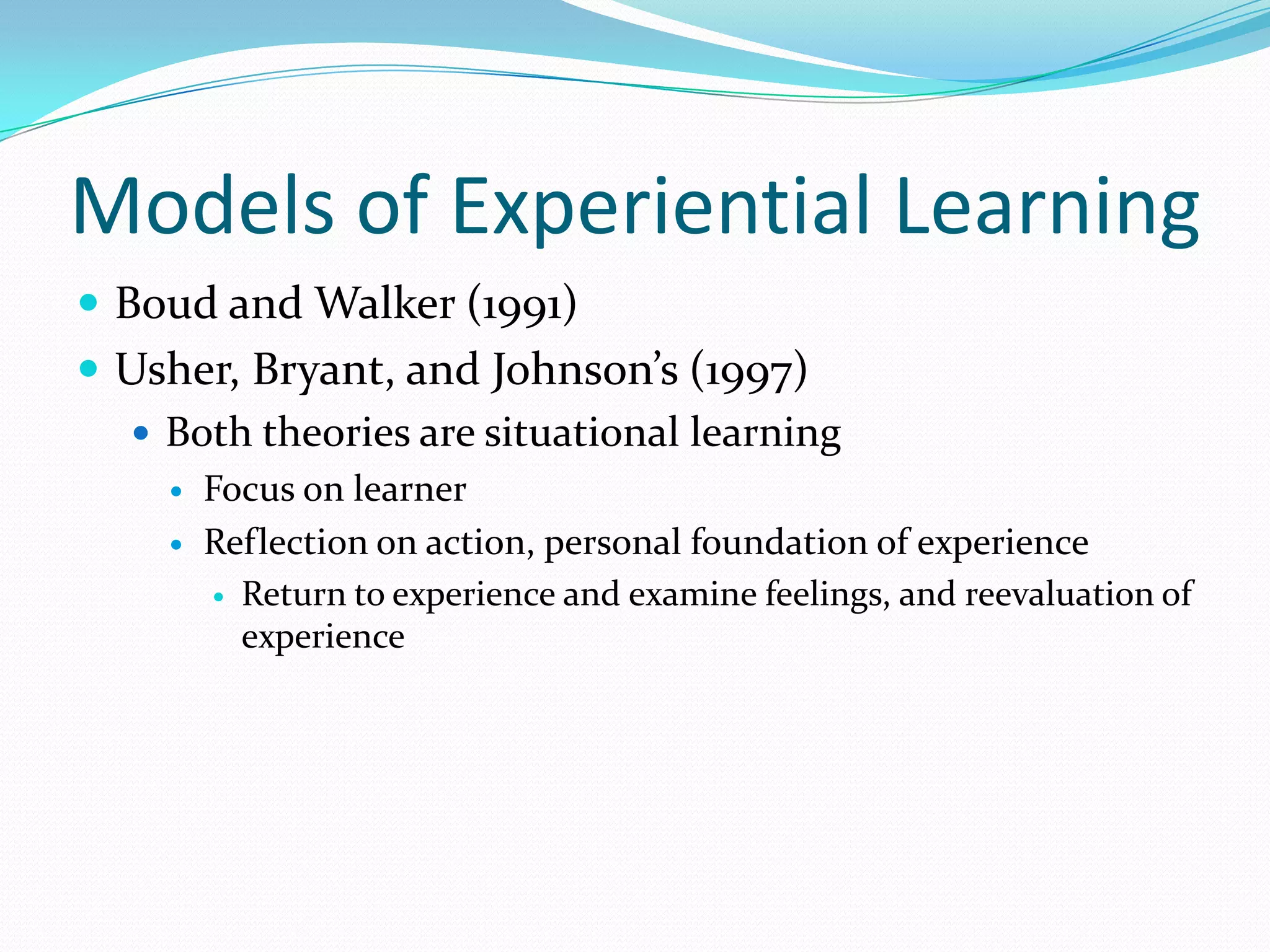
Models of ExperientialLearningBoud and Walker (1991)Usher, Bryant, and Johnson’s (1997)Both theories are situational learningFocus on learnerReflection on action, personal foundation of experienceReturn to experience and examine feelings, and reevaluation of experience
6.
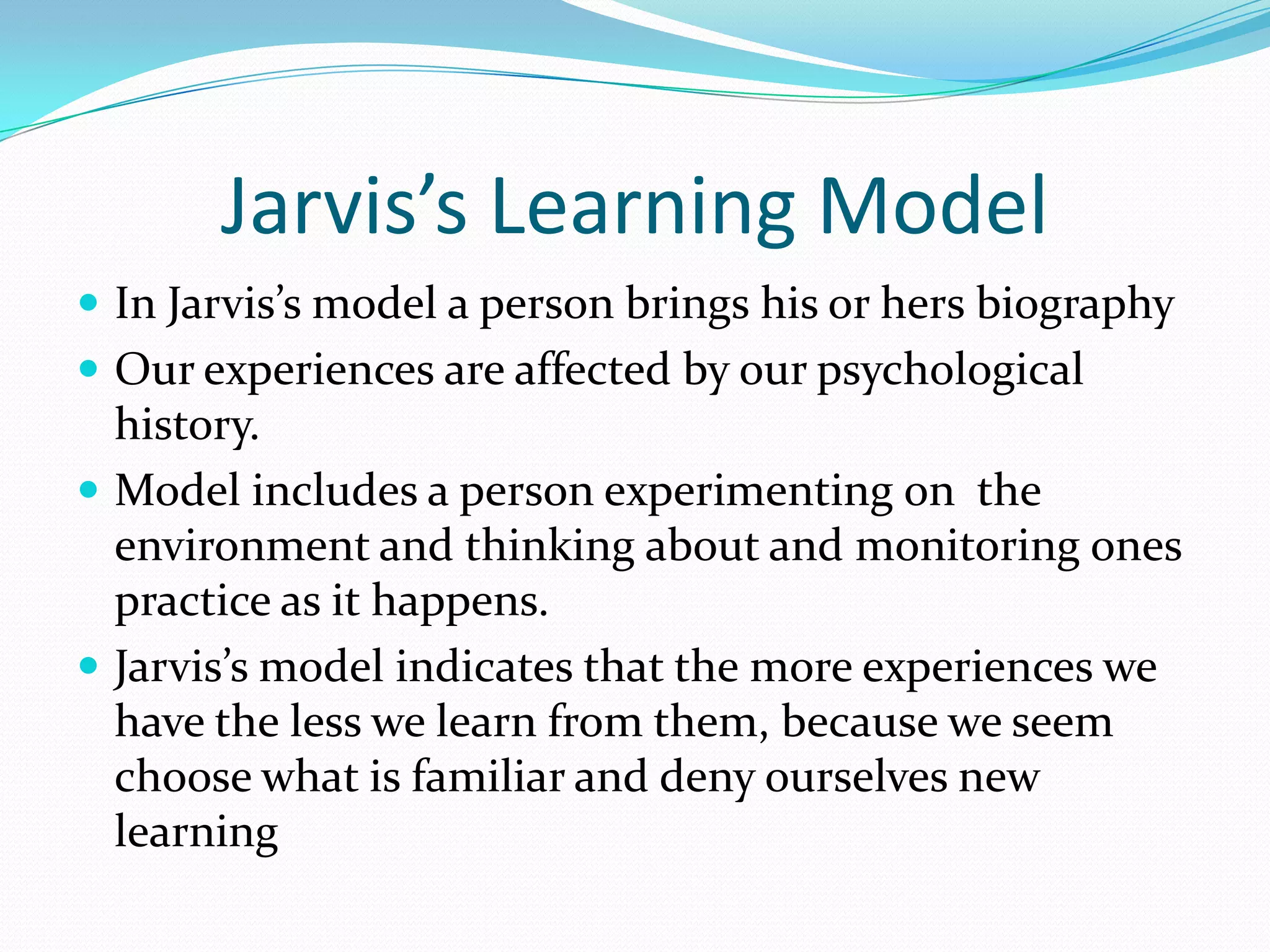
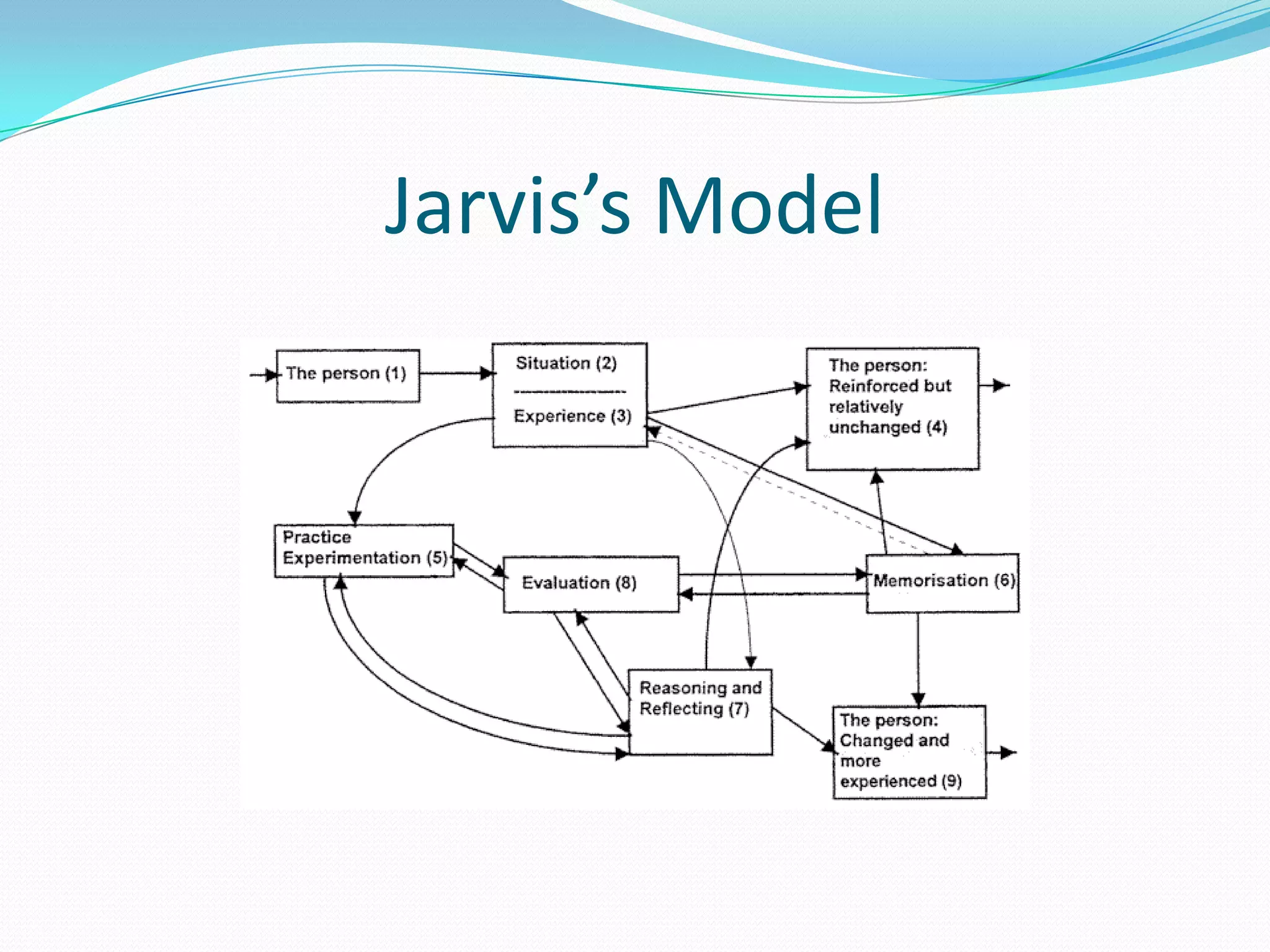
Jarvis’s Learning ModelInJarvis’s model a person brings his or hers biography Our experiences are affected by our psychological history.Model includes a person experimenting on the environment and thinking about and monitoring ones practice as it happens.Jarvis’s model indicates that the more experiences we have the less we learn from them, because we seem choose what is familiar and deny ourselves new learning
The Color PurpleNellieis SeparatedOnes Biography comes with experiential learning.Double Click on Icon.
Editor's Notes
#2 Good day. I am Ramon Garcia and today we will be looking at one of the Experience and Learning Theories developed by Peter Jarvis. While attending a workshop a few years ago I noticed that as example problems were solved by participants they gained more knowledge on how to solve the problems by working more and more of the same type of practice problems. Experience enabled each participant to explain and use several different strategies to solve the problems.
#3 In this presentation we will address the following questions and models. (Read slide outloud)
#4 Jarvis’s theory is built upon the original theory developed by David Kolb in 1984. Kolb and Jarvis theories are both developed from the constructivist point of view. (Read Slide)
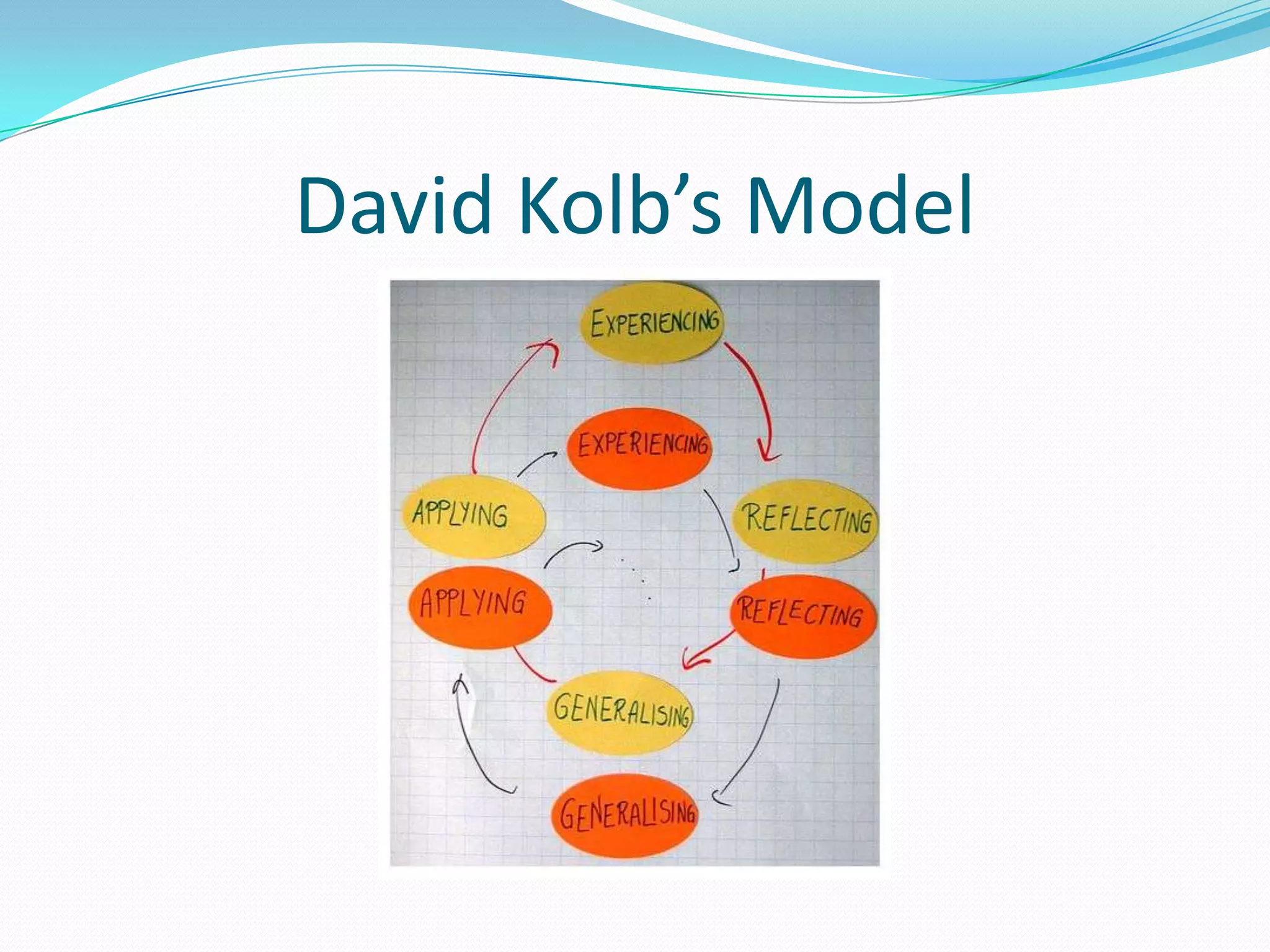
#5 As you can see Kolb’s model is direct learning from experience, to reflecting, generalizing and applying. The cycle continues till the task becomes concrete. This model ultimately became Jarvis’s basic model for his learning theory. The learners context is not taken into consideration in this model. Experience and reflection are not related.
#6 These two models of experiential learning are situational in nature. A situation is presented to the learner, and is observed. The facilitator may intervene, and eventually have the learner reflect and form a personal foundation of the experience. Usher, Bryant and Johnson argue that emotion plays a vital part in the learning process.
#7 Jarvis learning model builds from David Kolb’s model and includes the following: (Read the slide).
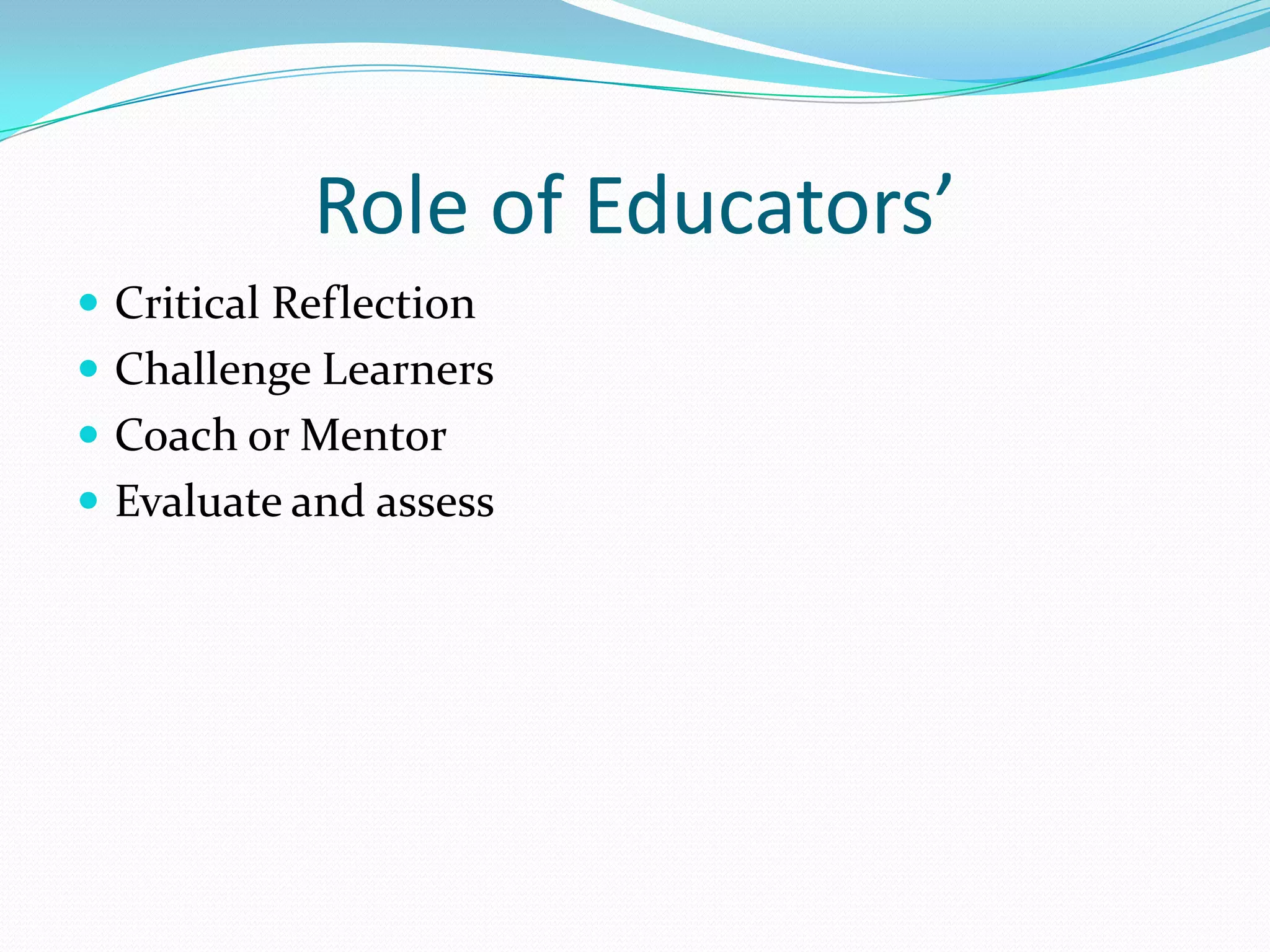
#9 Be a facilitator of reflection of the experience and encourage discussion and reflect on the new experience. Challenge students assumptions. Involve students in role-plays or problem-based learning exercises. Become the students coach or mentor. Coaching is skill learning. The mentor is the life guide. Assess the learning and provide feedback to the student. I need to mention that in the situational learning experience it is the community of practice.
#10 Jarvis mentions that ones biography comes with ones experience. The sisters have clearly learned from each other through experience and will never be separated.