

FRAMECHANGES


                     Indiana Library Fe
                                        deration
                    Annual Conference
                    November 14, 2012
                    Indianapolis, IN
                    Peter Bromberg
                    peterbromberg@gm
                                        ail.com


Full Text of Talk is available at: http://peterbromberg.com/indiana/FRAMECHANGE.pdf
Being an attempt to
   answer the question:


   How to be
   effective?
           Or …

“Some things I’ve noticed or
  learned along the way”
“Between stimulus and response
       there is a space.
  In that space is our power to
      choose our response.
In our response lies our growth
       and our freedom.”

       - Viktor E. Frankl
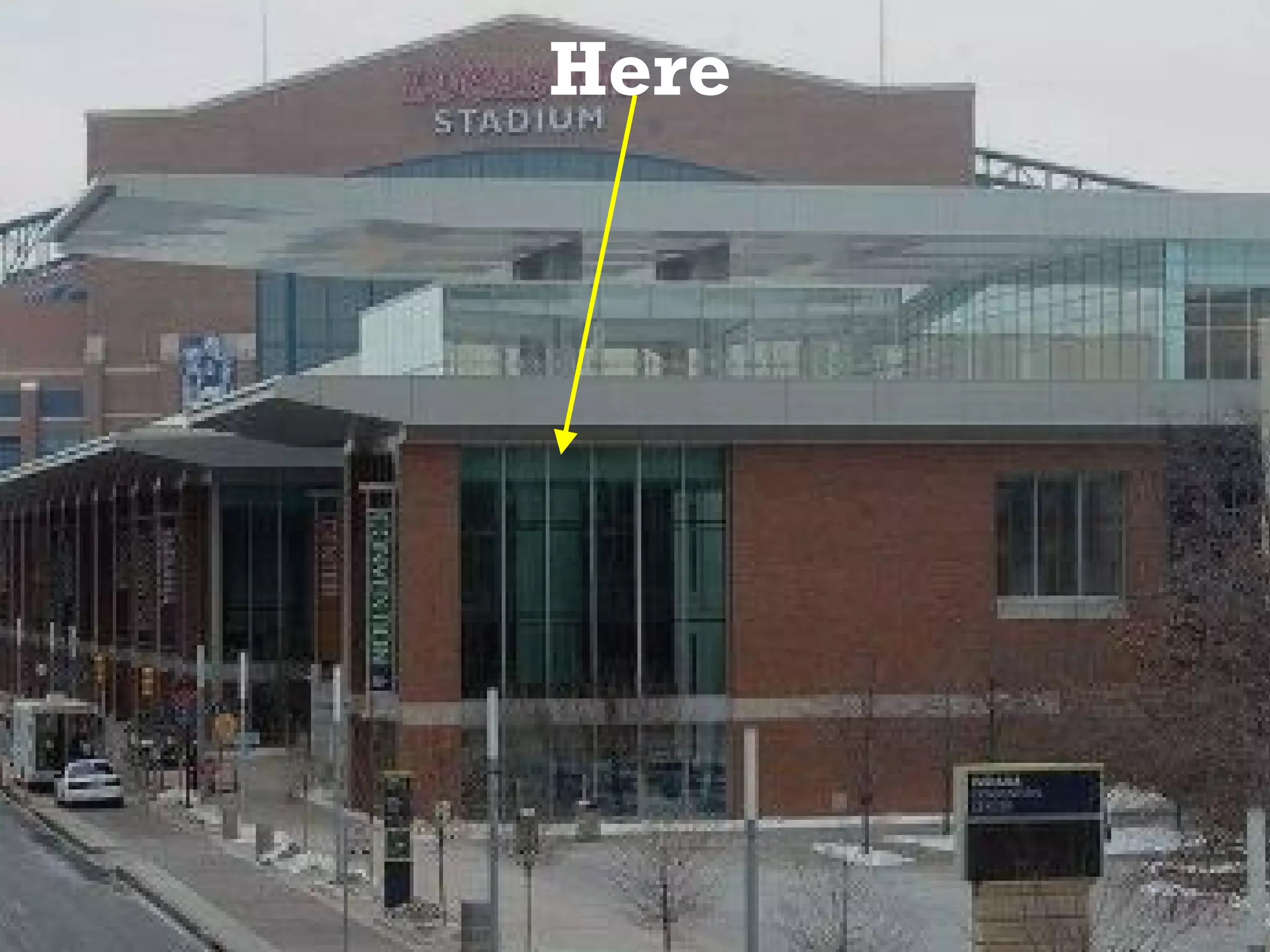
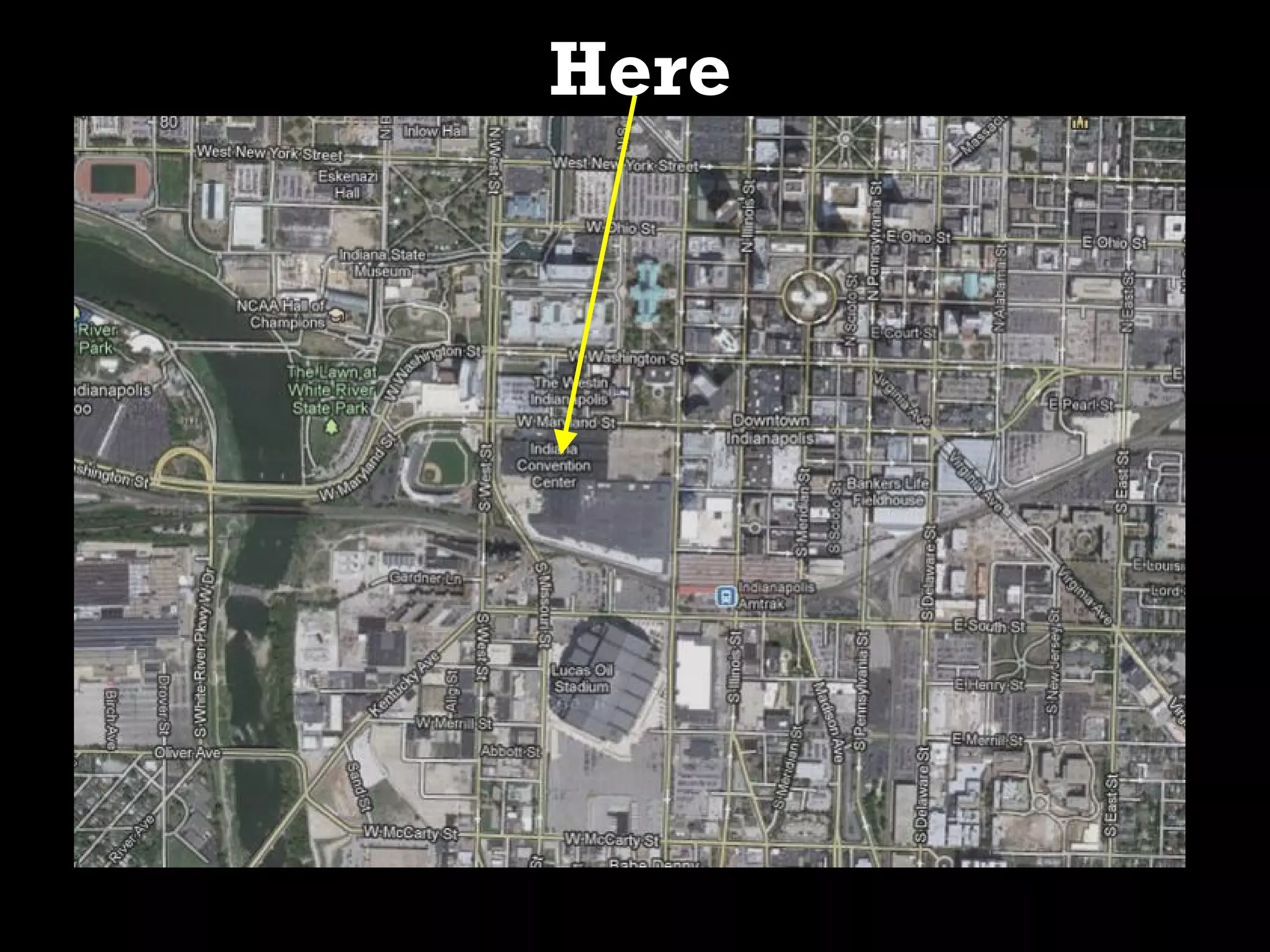
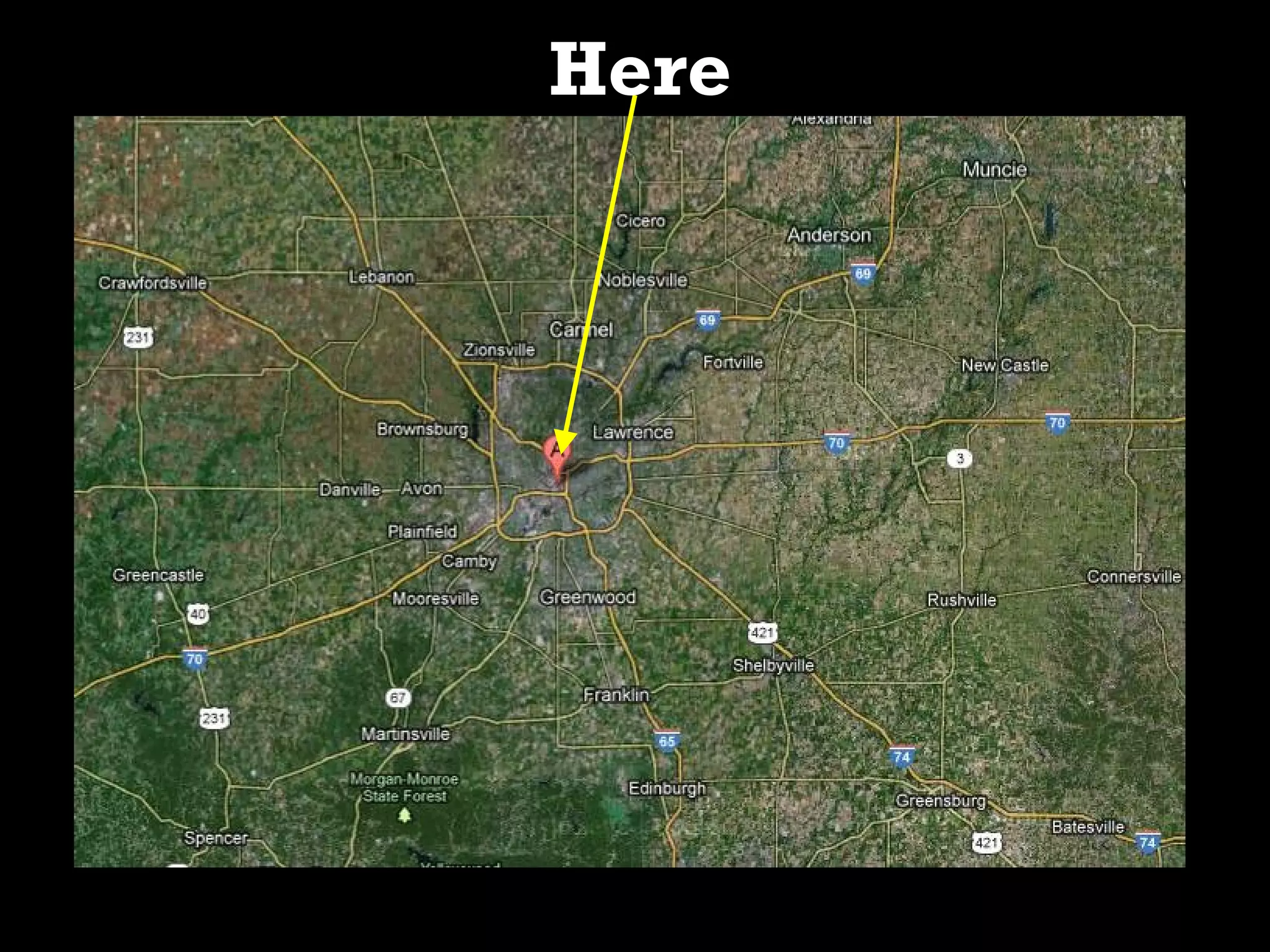
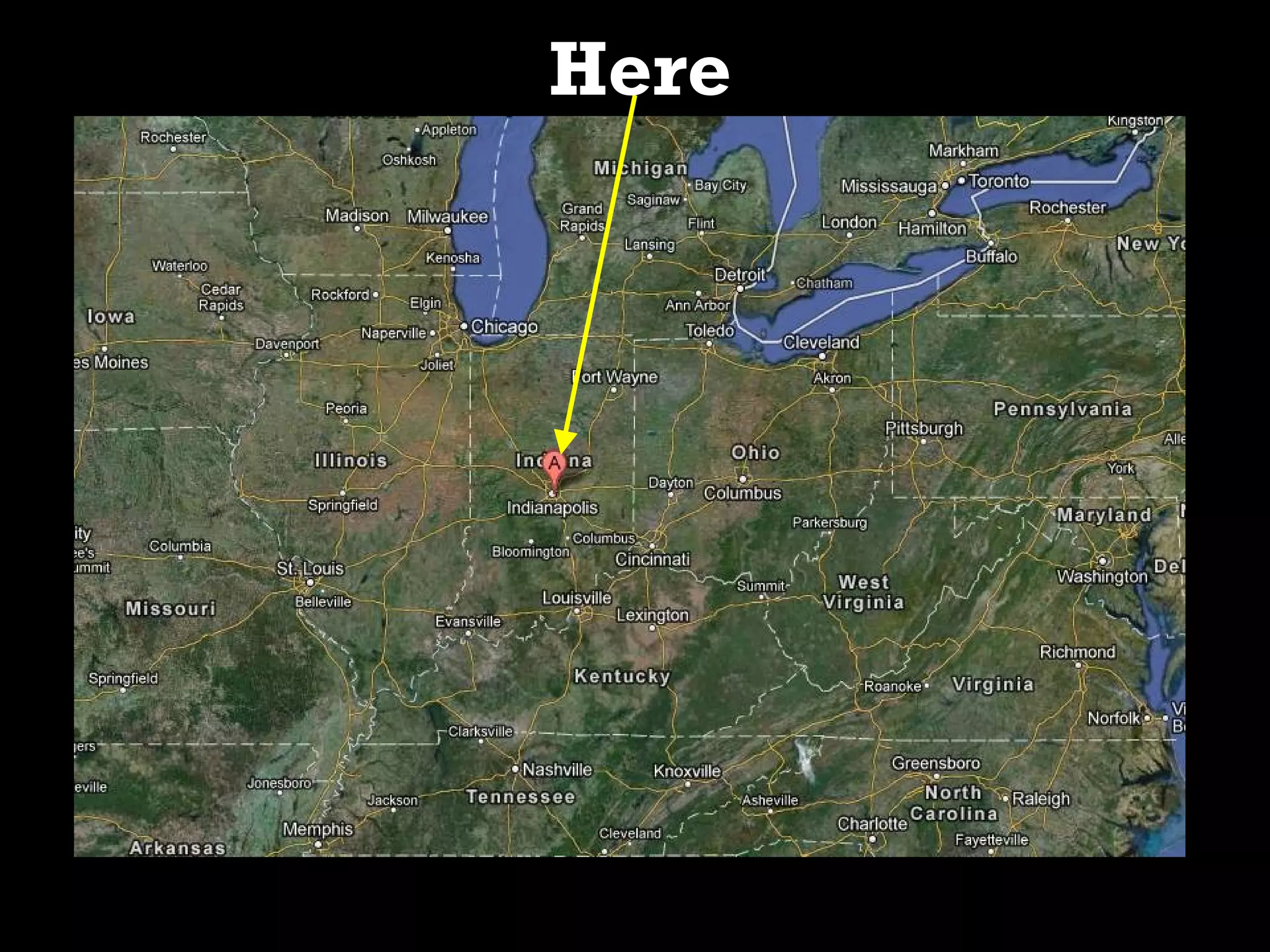
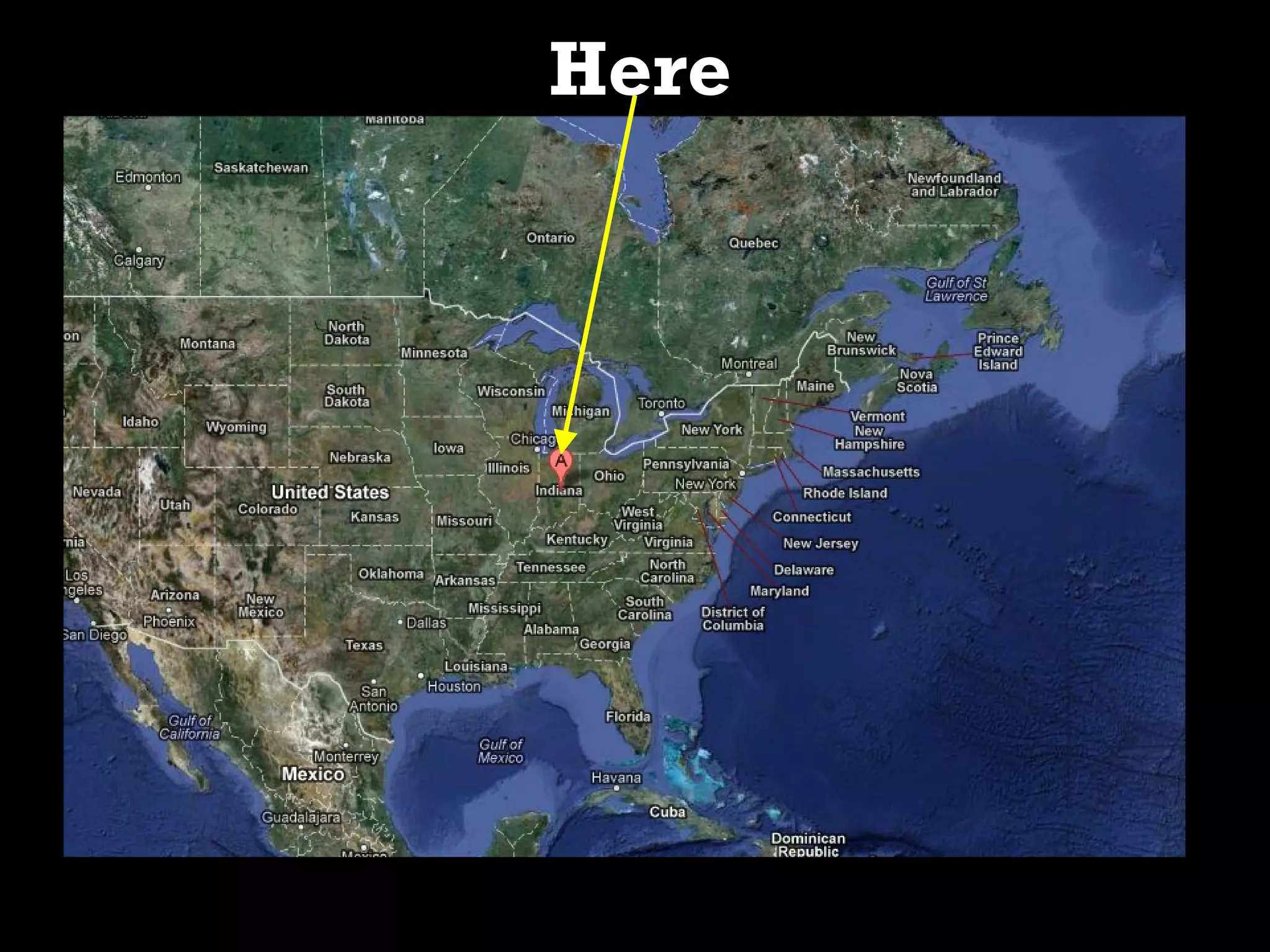
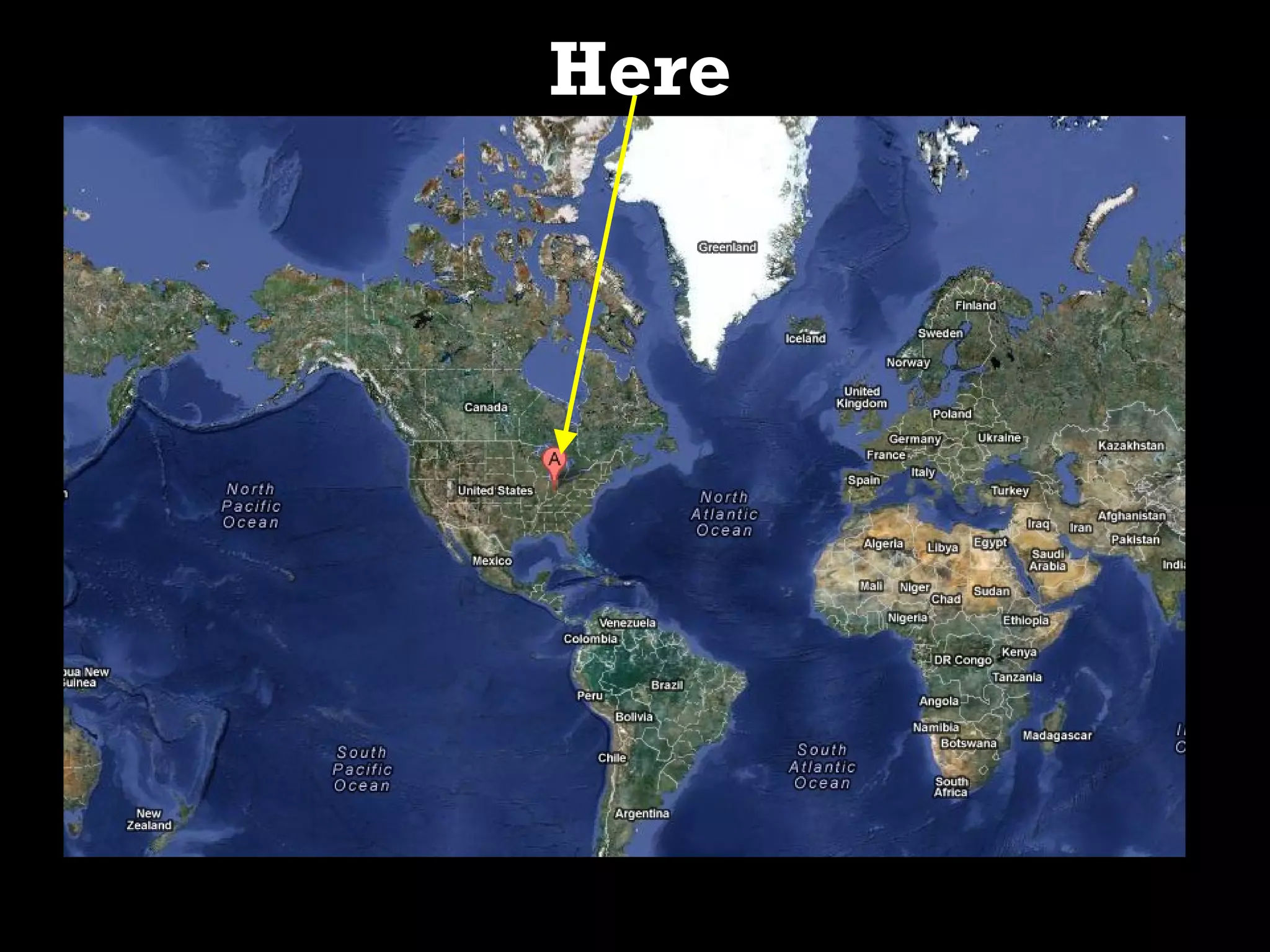
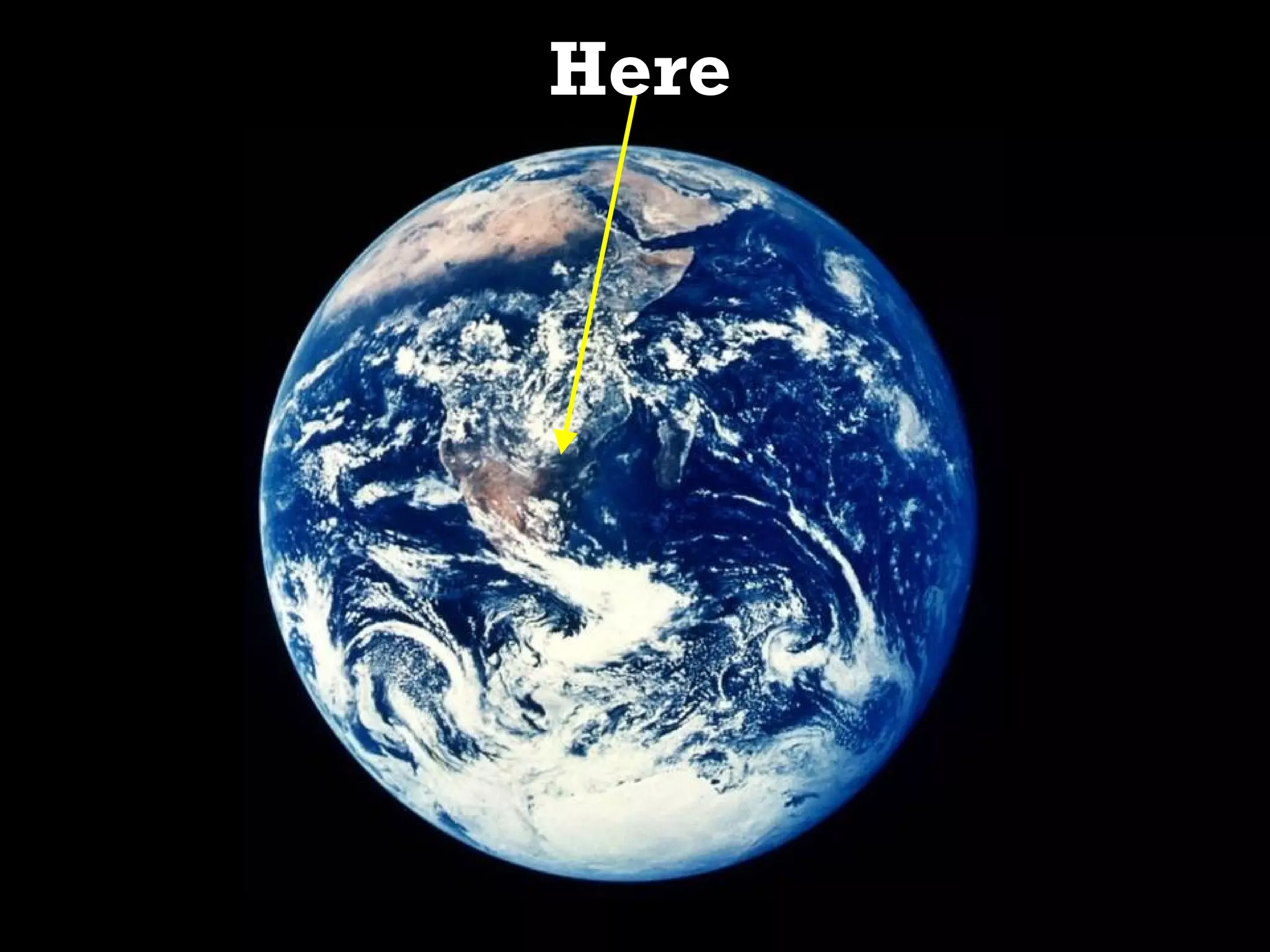
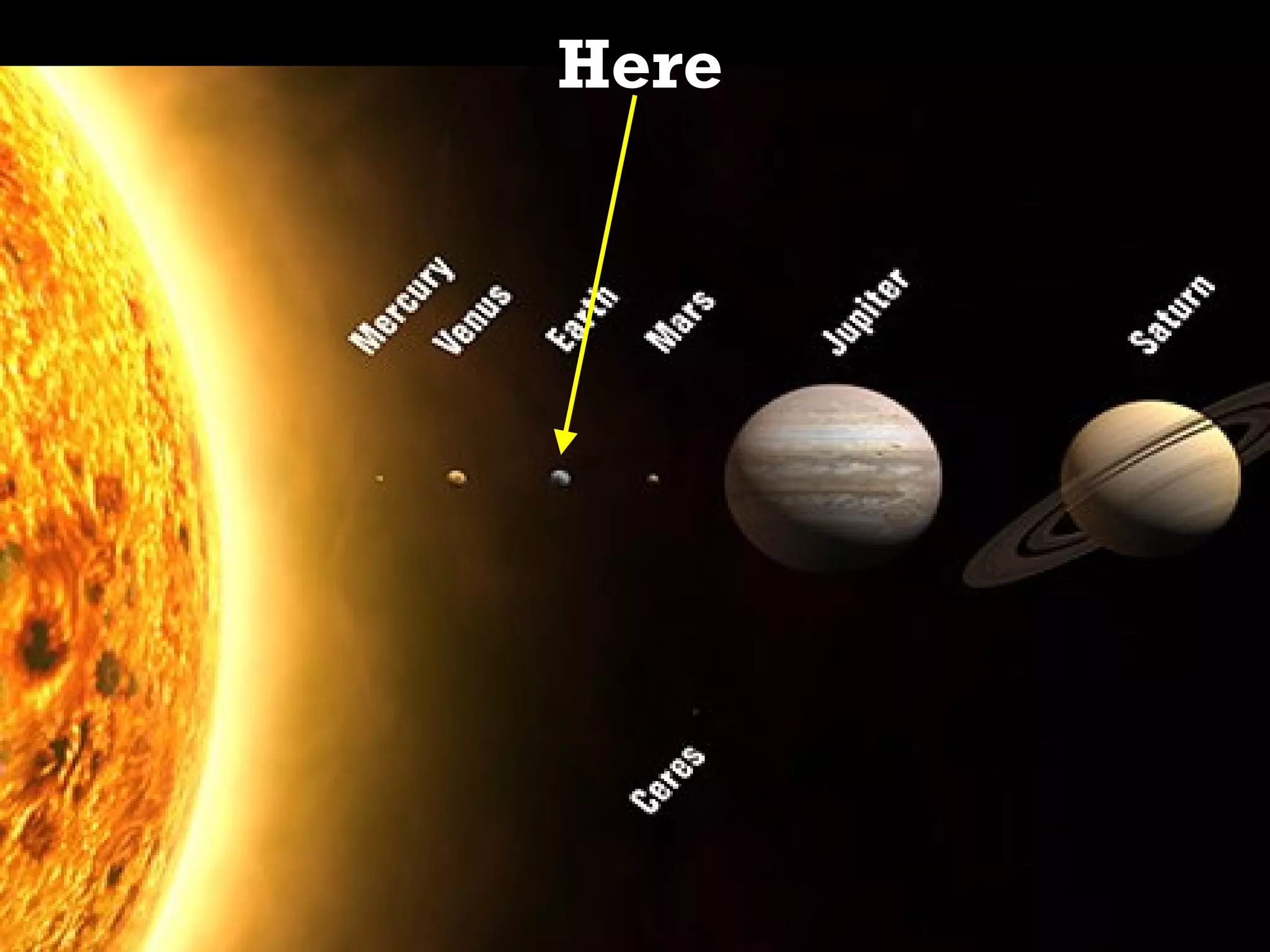
Why Are We
Here Today?
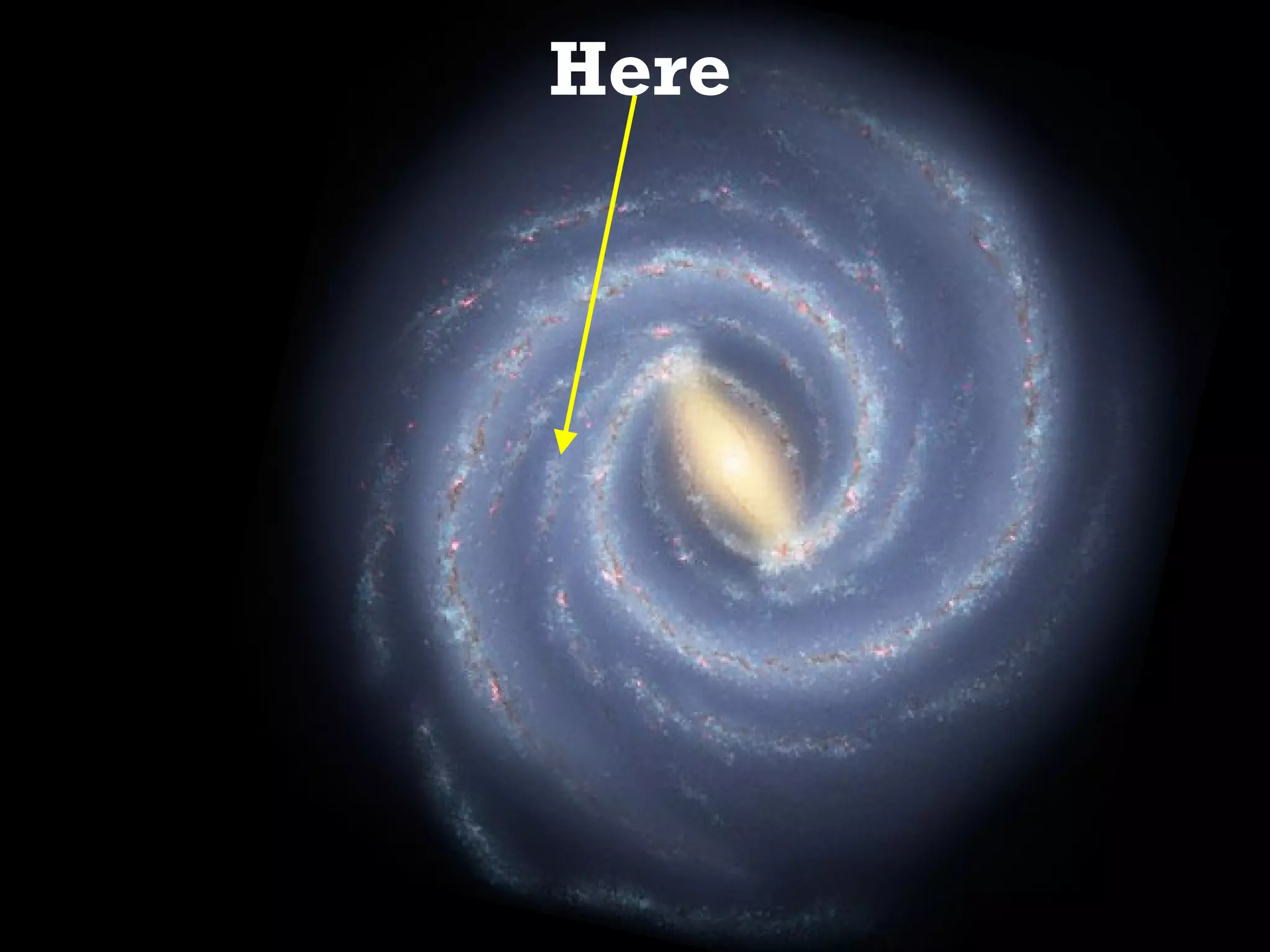
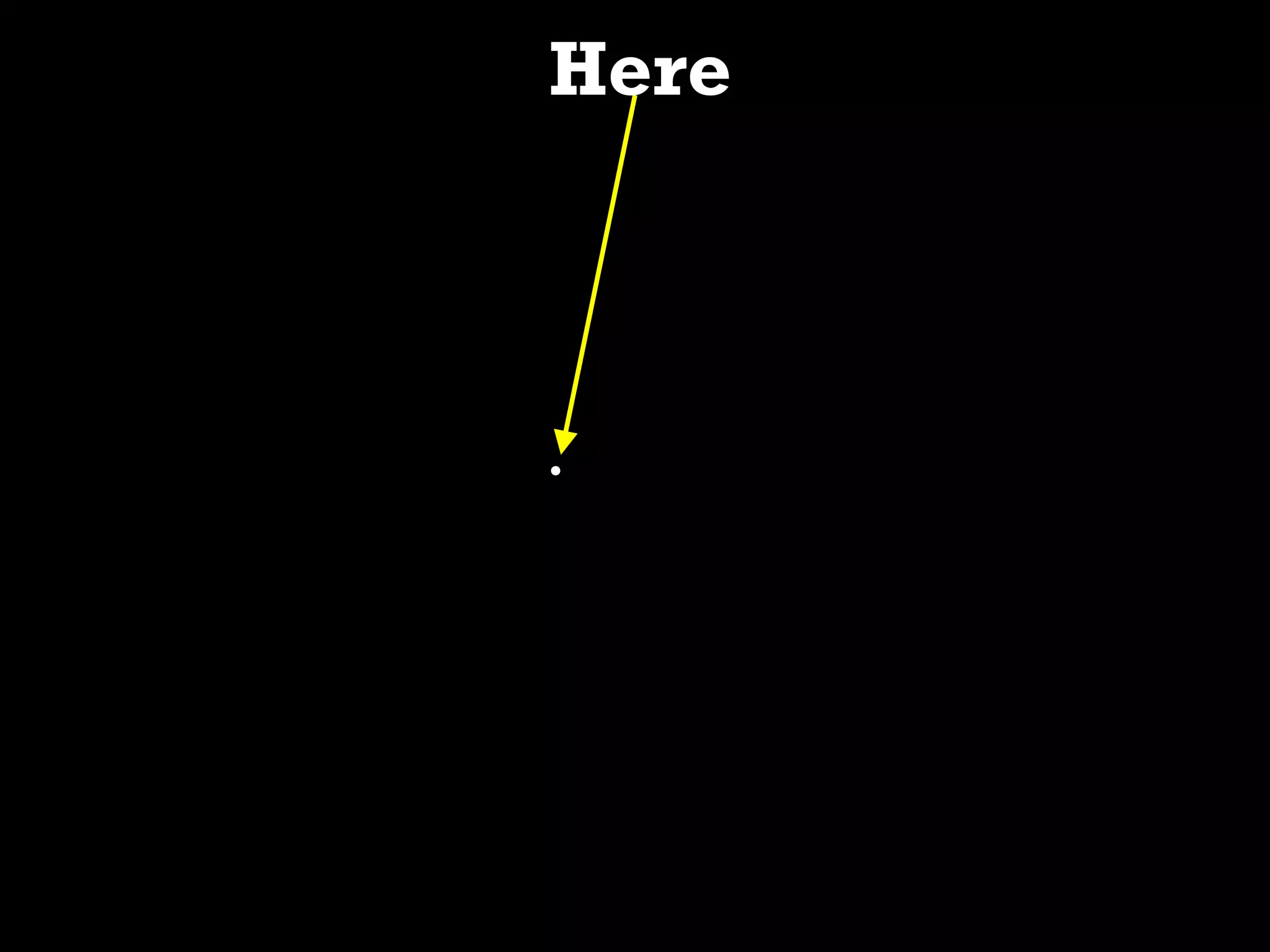
Here
Here
Here
Here
Here
Here
Here
Here
Here
Here
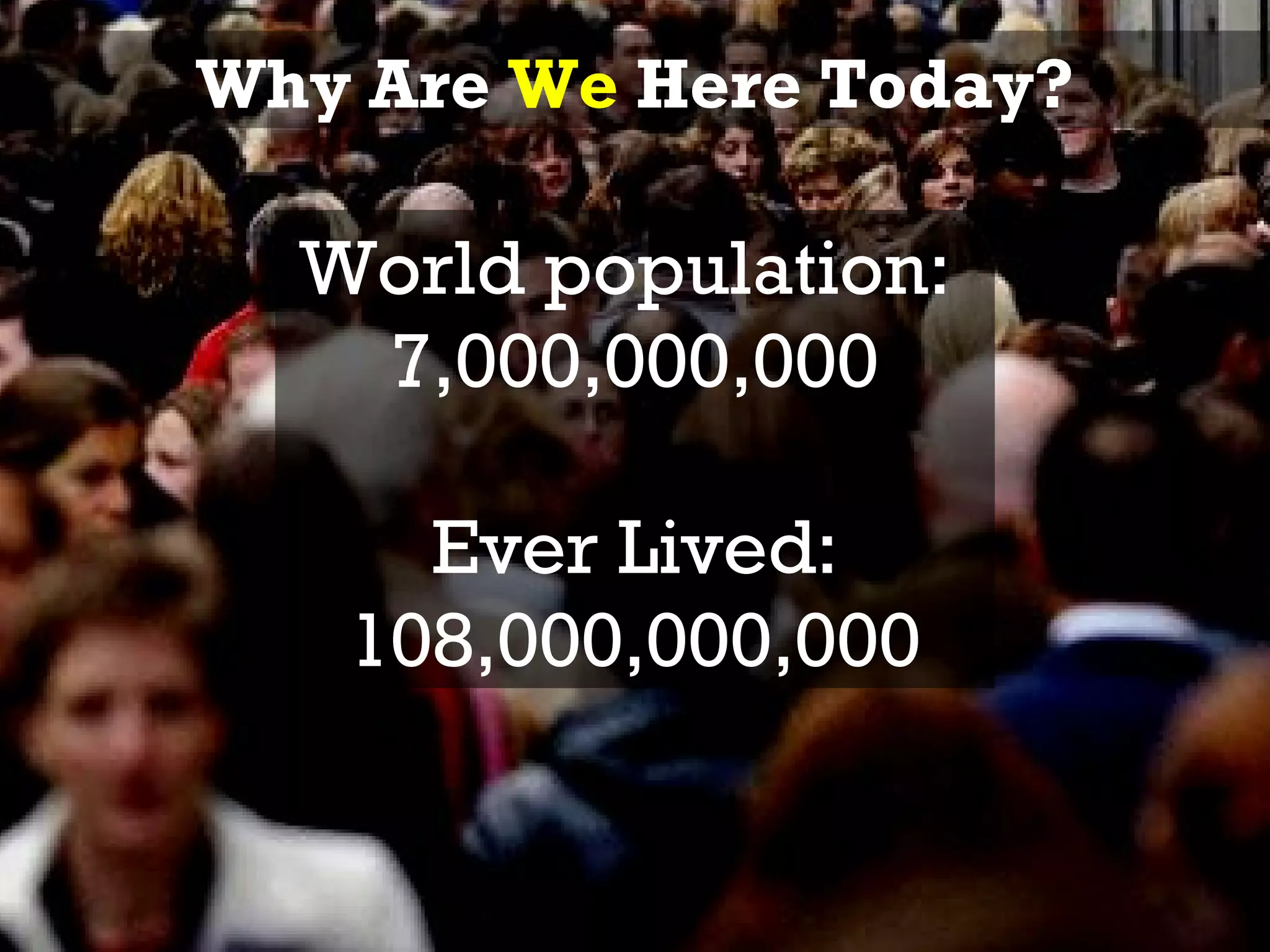
Why Are We Here Today?

  World population:
   7,000,000,000

     Ever Lived:
   108,000,000,000
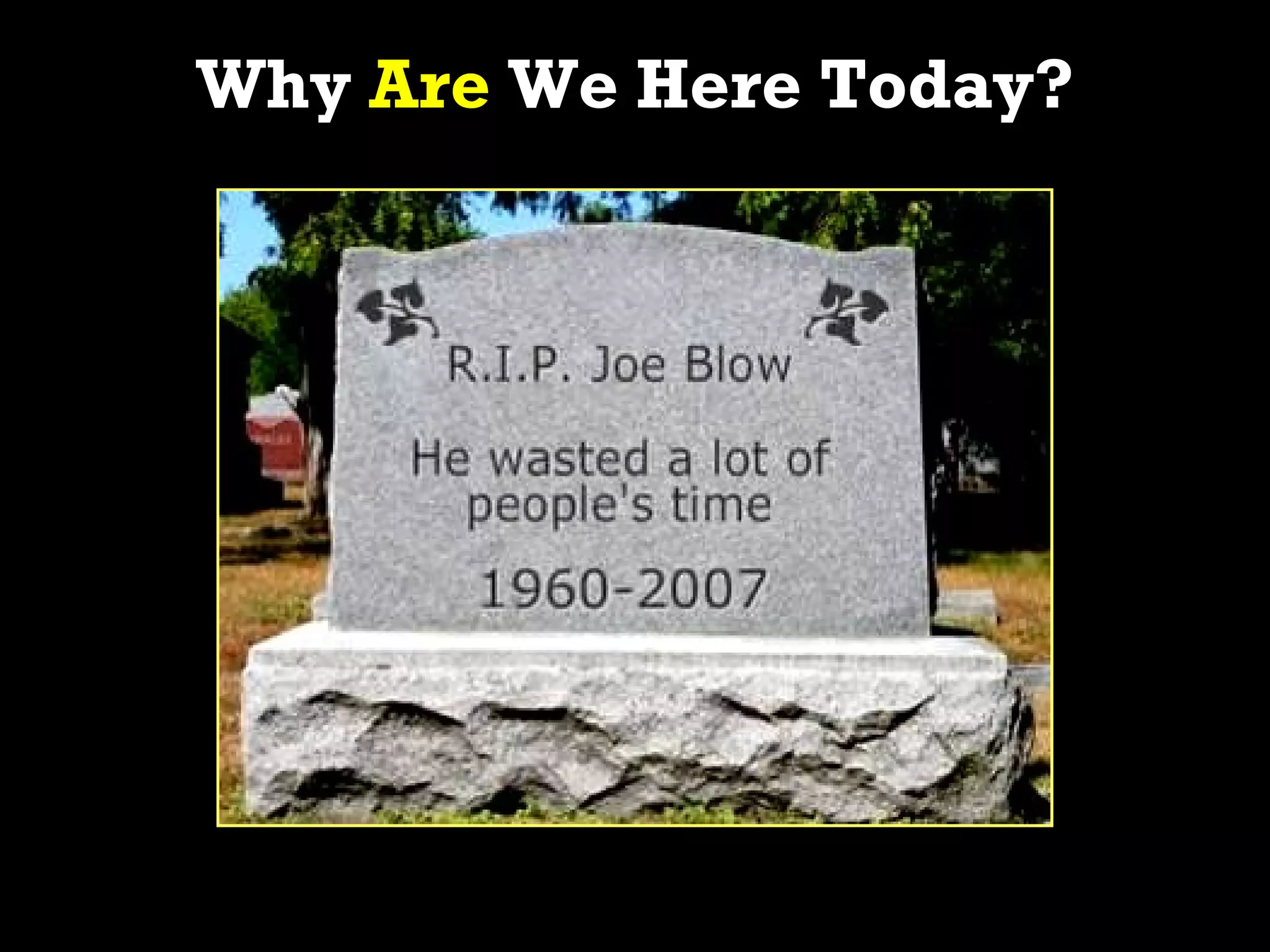
Why Are We Here Today?
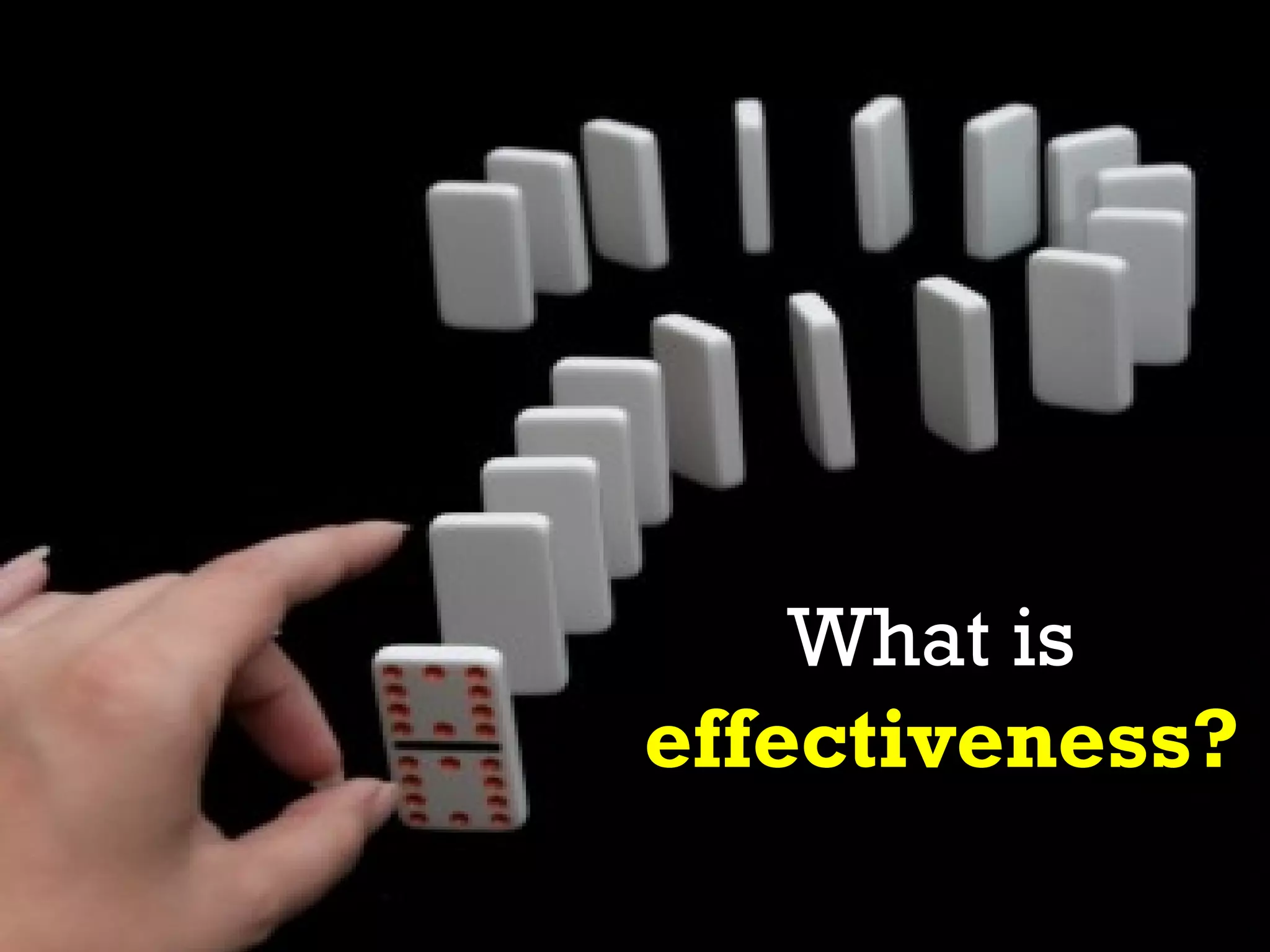
What is
effectiveness?
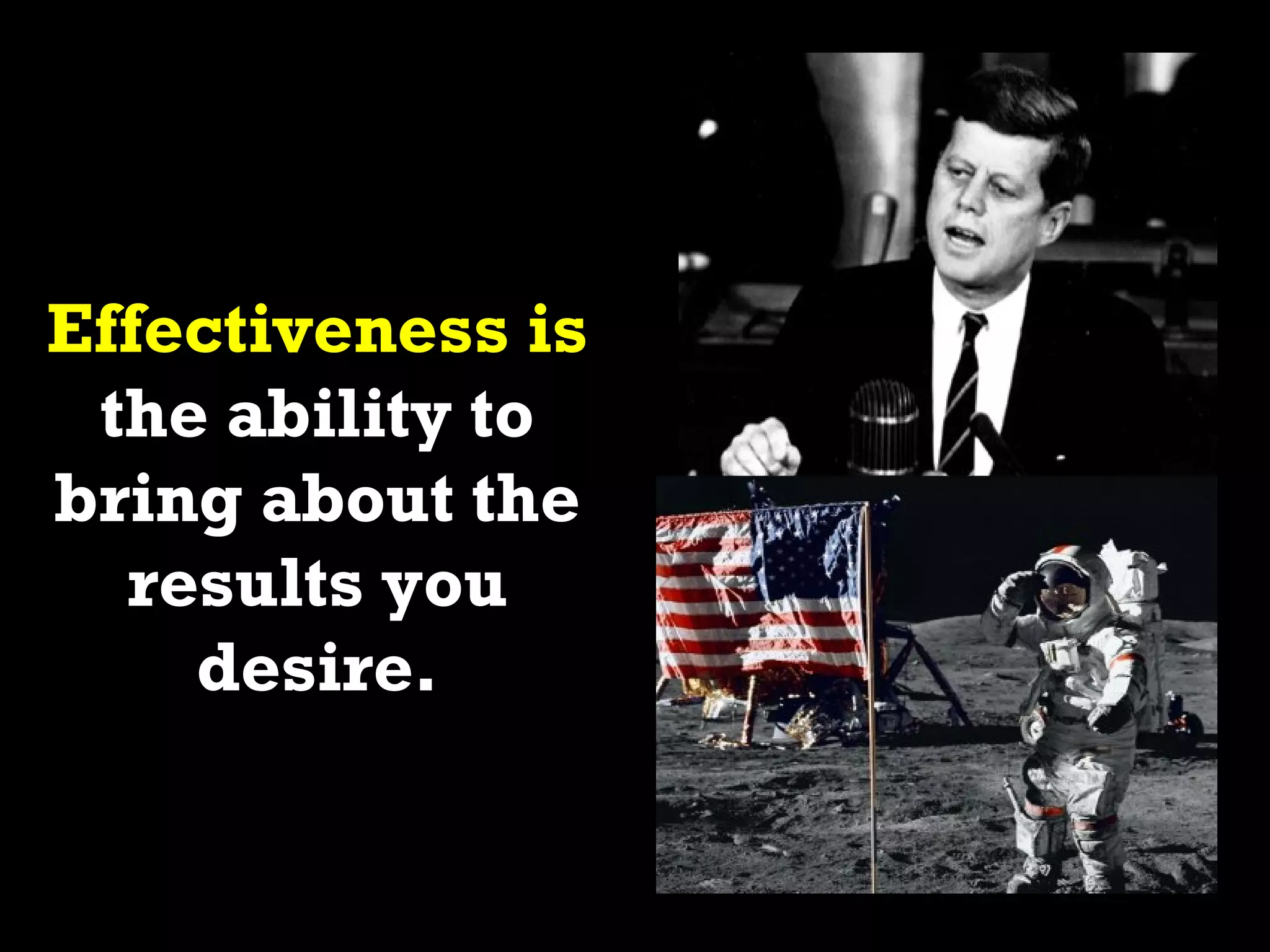
Effectiveness is
 the ability to
bring about the
  results you
    desire.
the absolutely crazy and historically
      unprecedented pace of

        Change
               or…
        What got us here
        won’t get us there
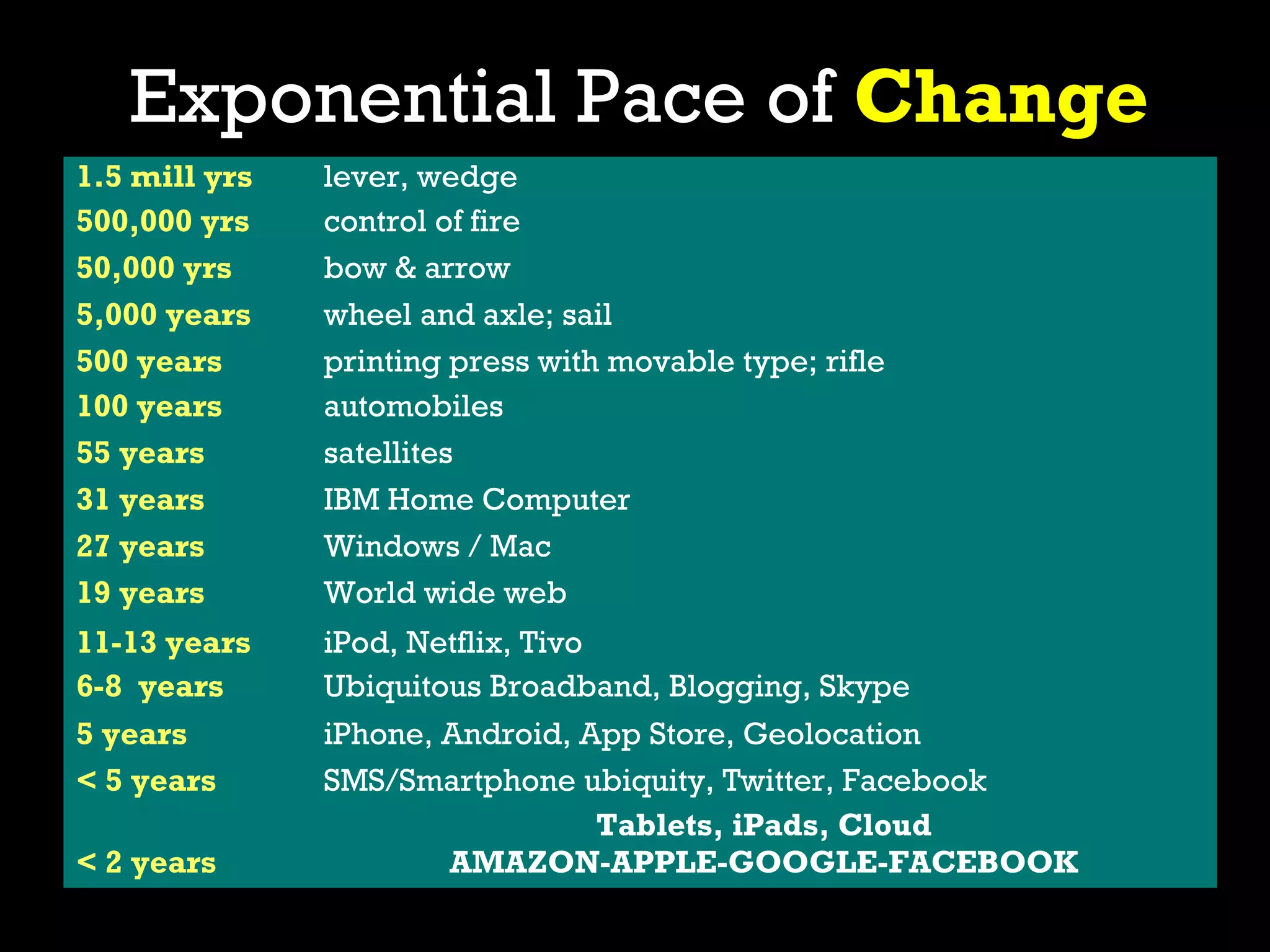
Exponential Pace of Change
1.5 mill yrs   lever, wedge
500,000 yrs    control of fire
50,000 yrs     bow & arrow
5,000 years    wheel and axle; sail
500 years      printing press with movable type; rifle
100 years      automobiles
55 years       satellites
31 years       IBM Home Computer
27 years       Windows / Mac
19 years       World wide web
11-13 years    iPod, Netflix, Tivo
6-8 years      Ubiquitous Broadband, Blogging, Skype
5 years        iPhone, Android, App Store, Geolocation
< 5 years      SMS/Smartphone ubiquity, Twitter, Facebook
                                 Tablets, iPads, Cloud
< 2 years              AMAZON-APPLE-GOOGLE-FACEBOOK
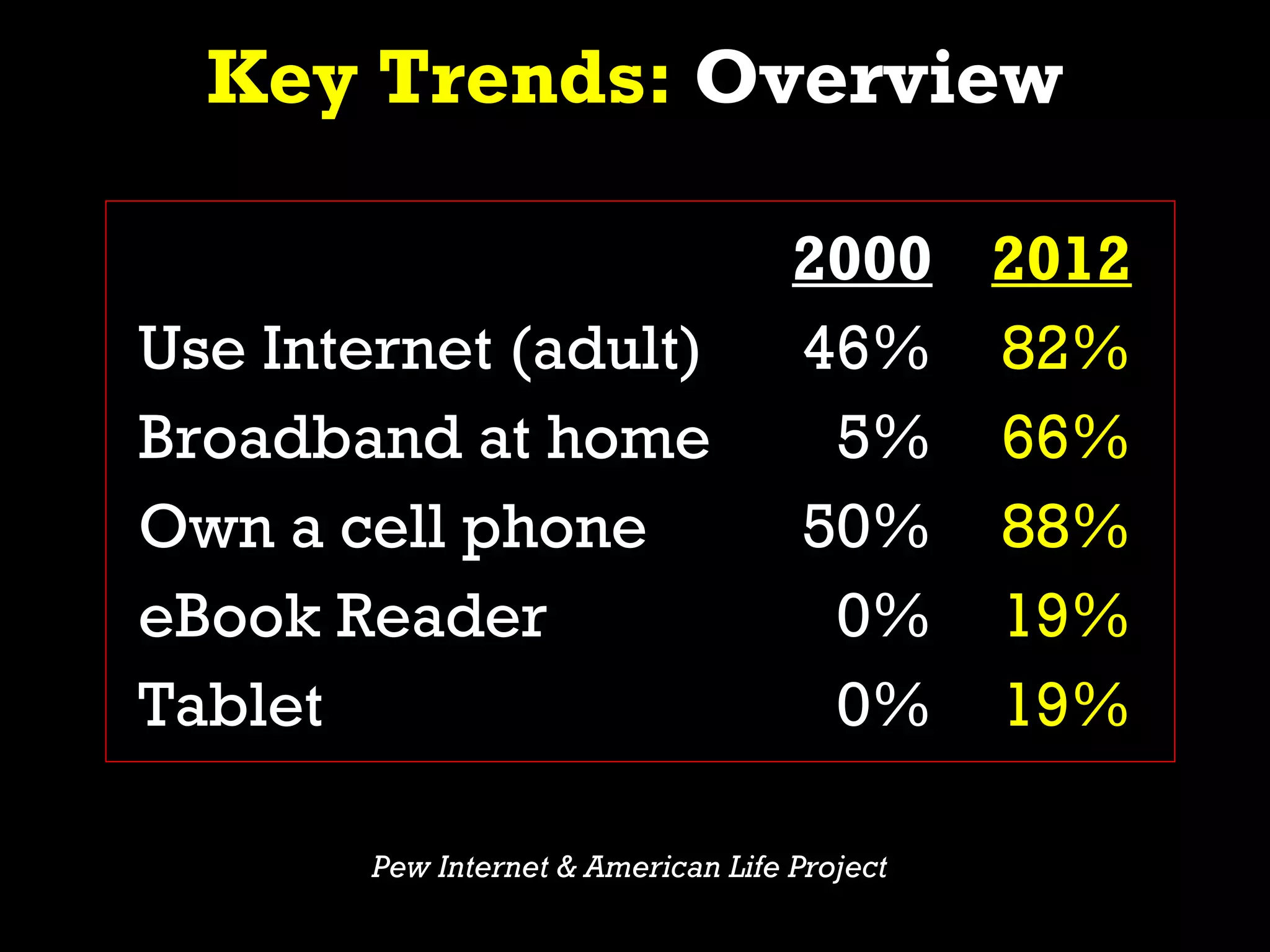
Key Trends: Overview

                                     2000 2012
Use Internet (adult)                 46% 82%
Broadband at home                     5% 66%
Own a cell phone                     50% 88%
eBook Reader                          0% 19%
Tablet                                0% 19%

        Pew Internet & American Life Project
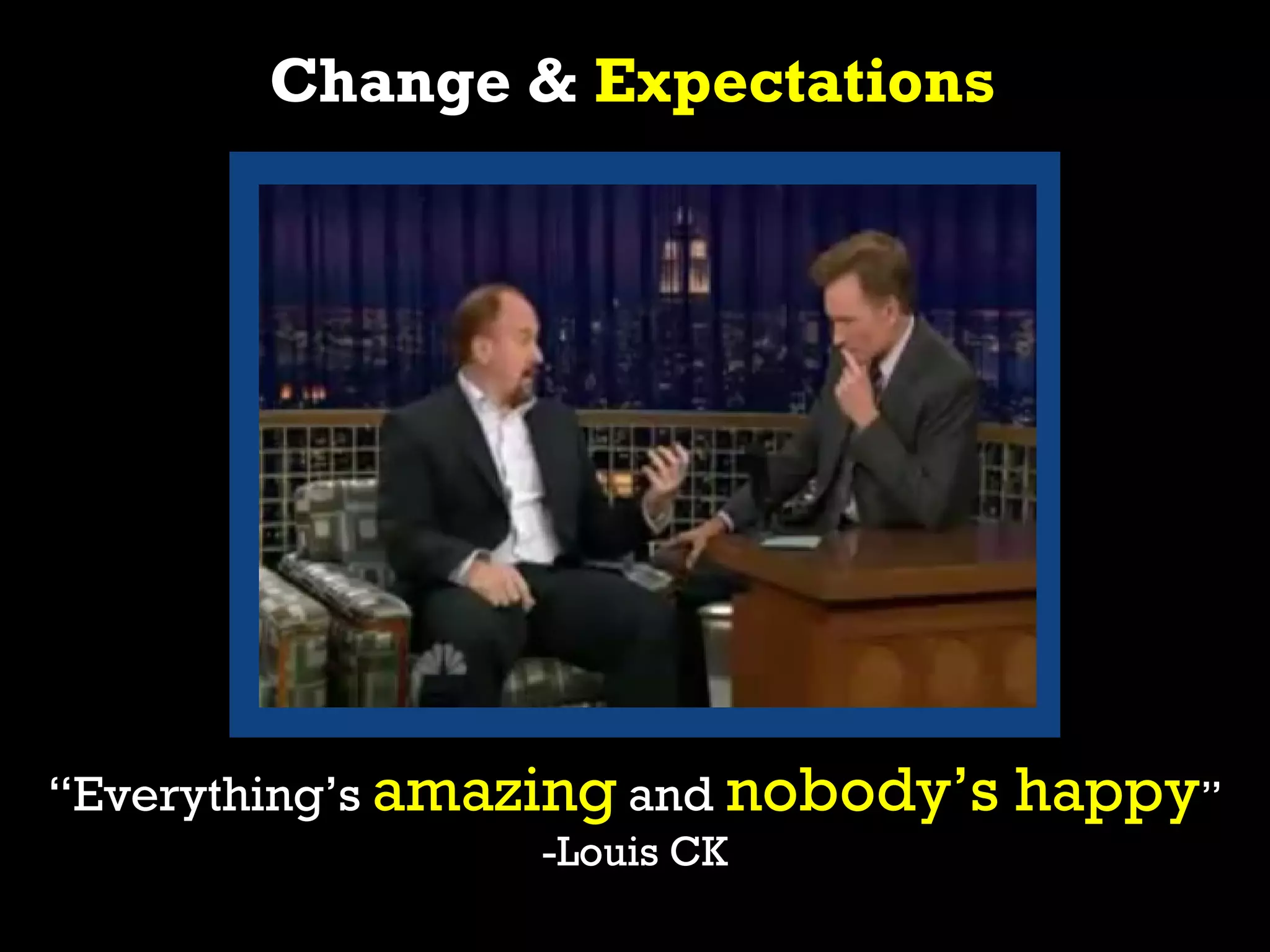
Change & Expectations


“Everything’s amazing and nobody’s   happy”
                 -Louis CK
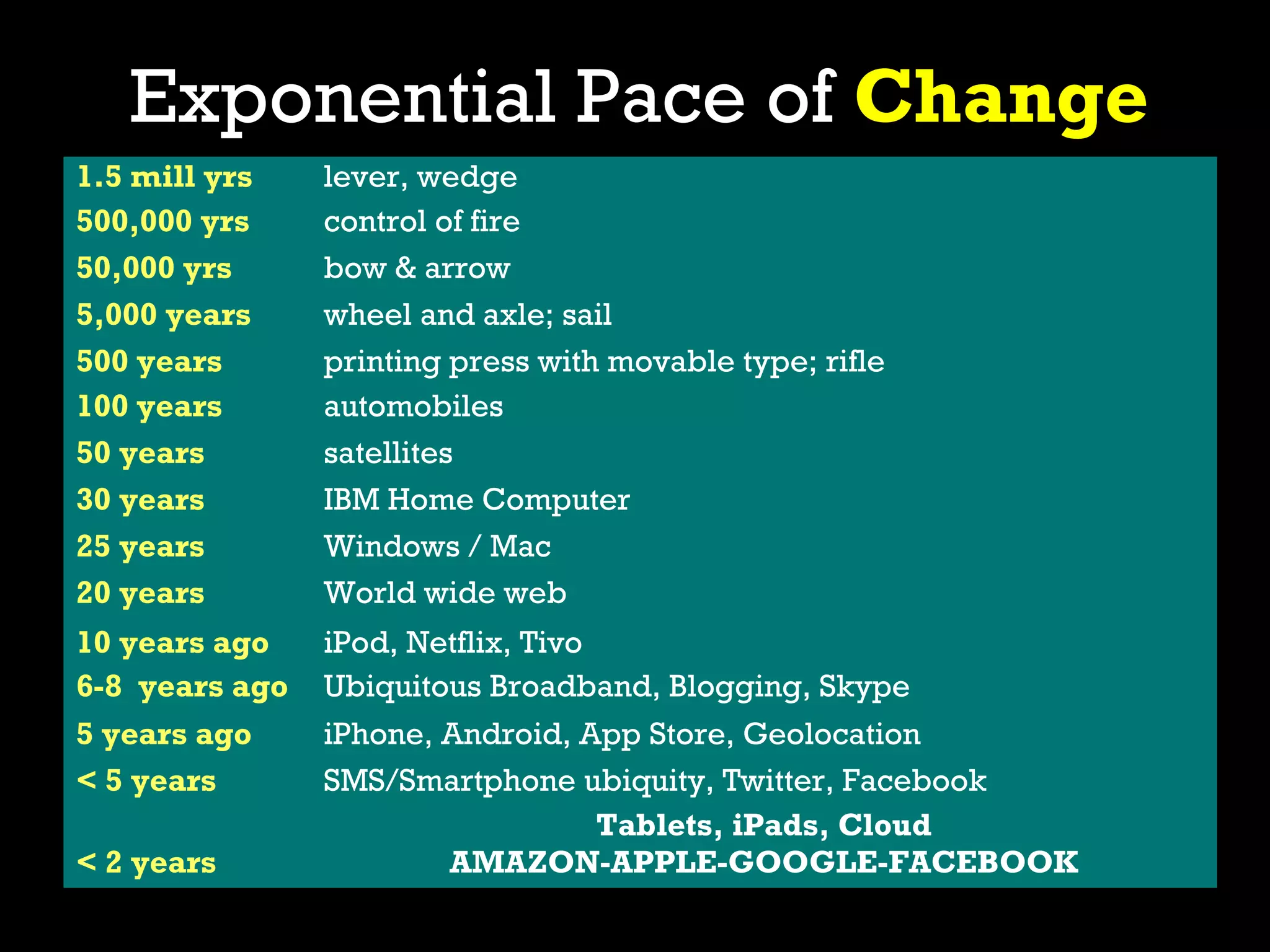
Exponential Pace of Change
1.5 mill yrs    lever, wedge
500,000 yrs     control of fire
50,000 yrs      bow & arrow
5,000 years     wheel and axle; sail
500 years       printing press with movable type; rifle
100 years       automobiles
50 years        satellites
30 years        IBM Home Computer
25 years        Windows / Mac
20 years        World wide web
10 years ago    iPod, Netflix, Tivo
6-8 years ago   Ubiquitous Broadband, Blogging, Skype
5 years ago     iPhone, Android, App Store, Geolocation
< 5 years       SMS/Smartphone ubiquity, Twitter, Facebook
                                  Tablets, iPads, Cloud
< 2 years               AMAZON-APPLE-GOOGLE-FACEBOOK
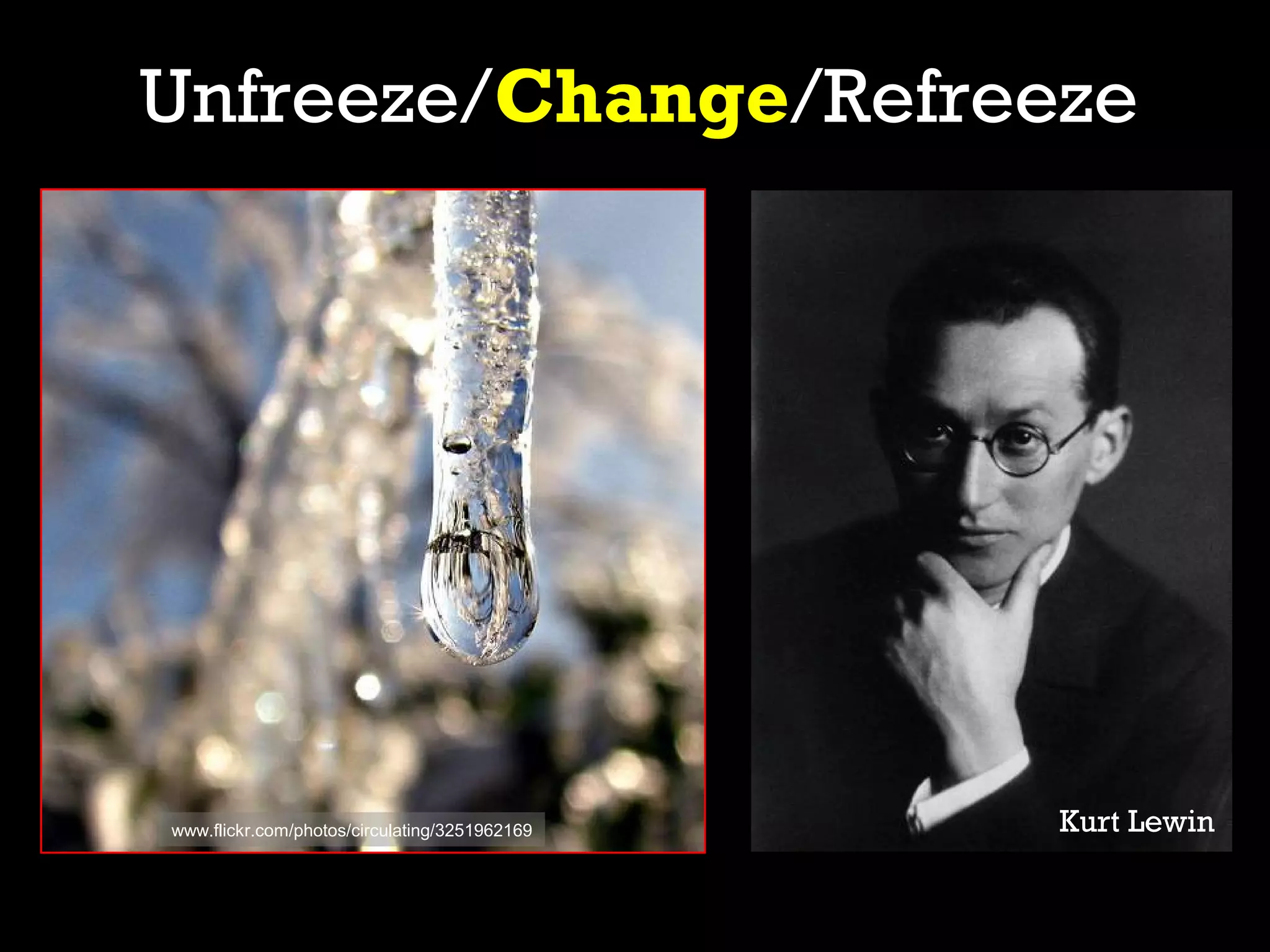
Unfreeze/Change/Refreeze


www.flickr.com/photos/circulating/3251962169   Kurt Lewin
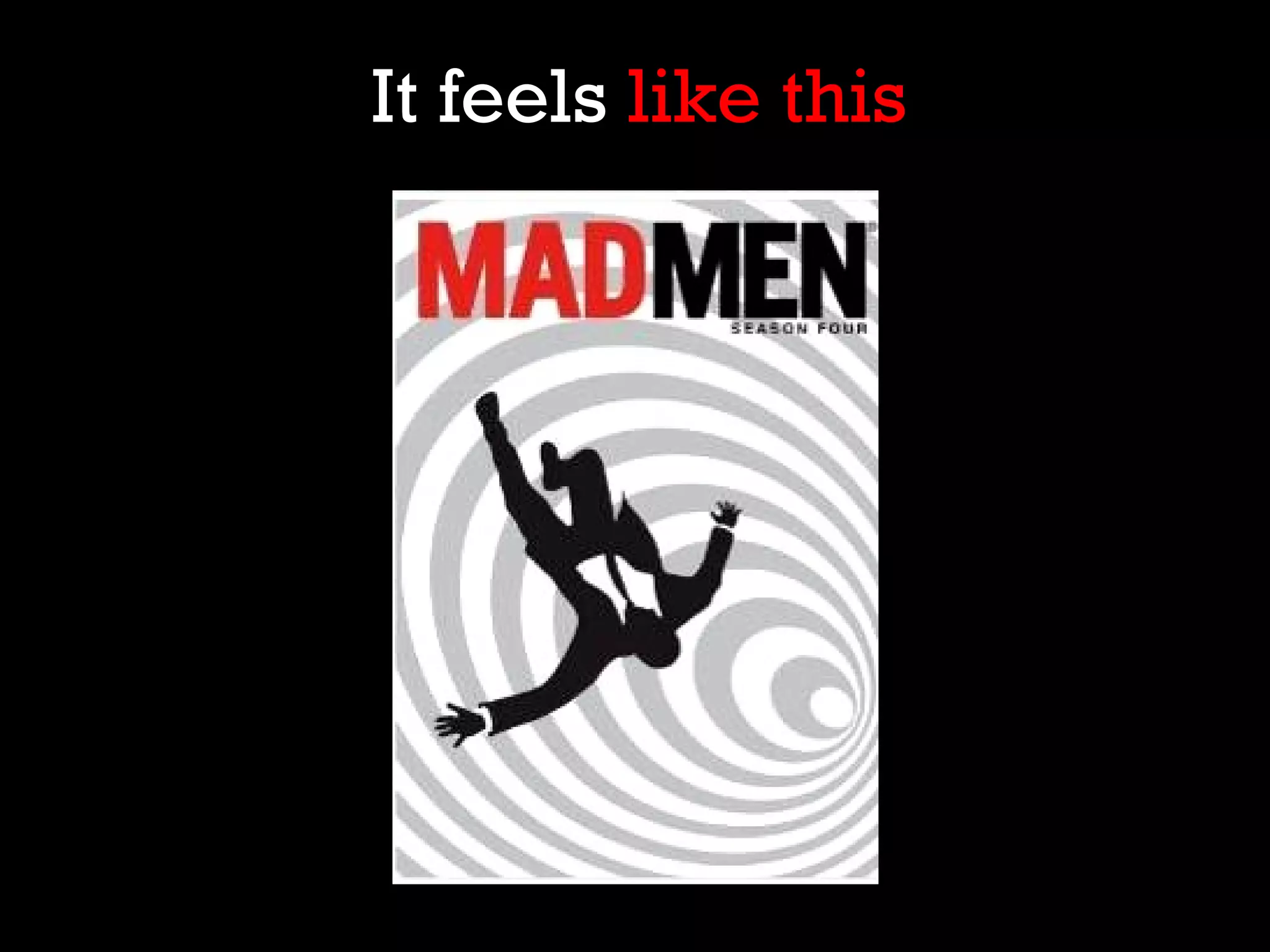
It feels like this
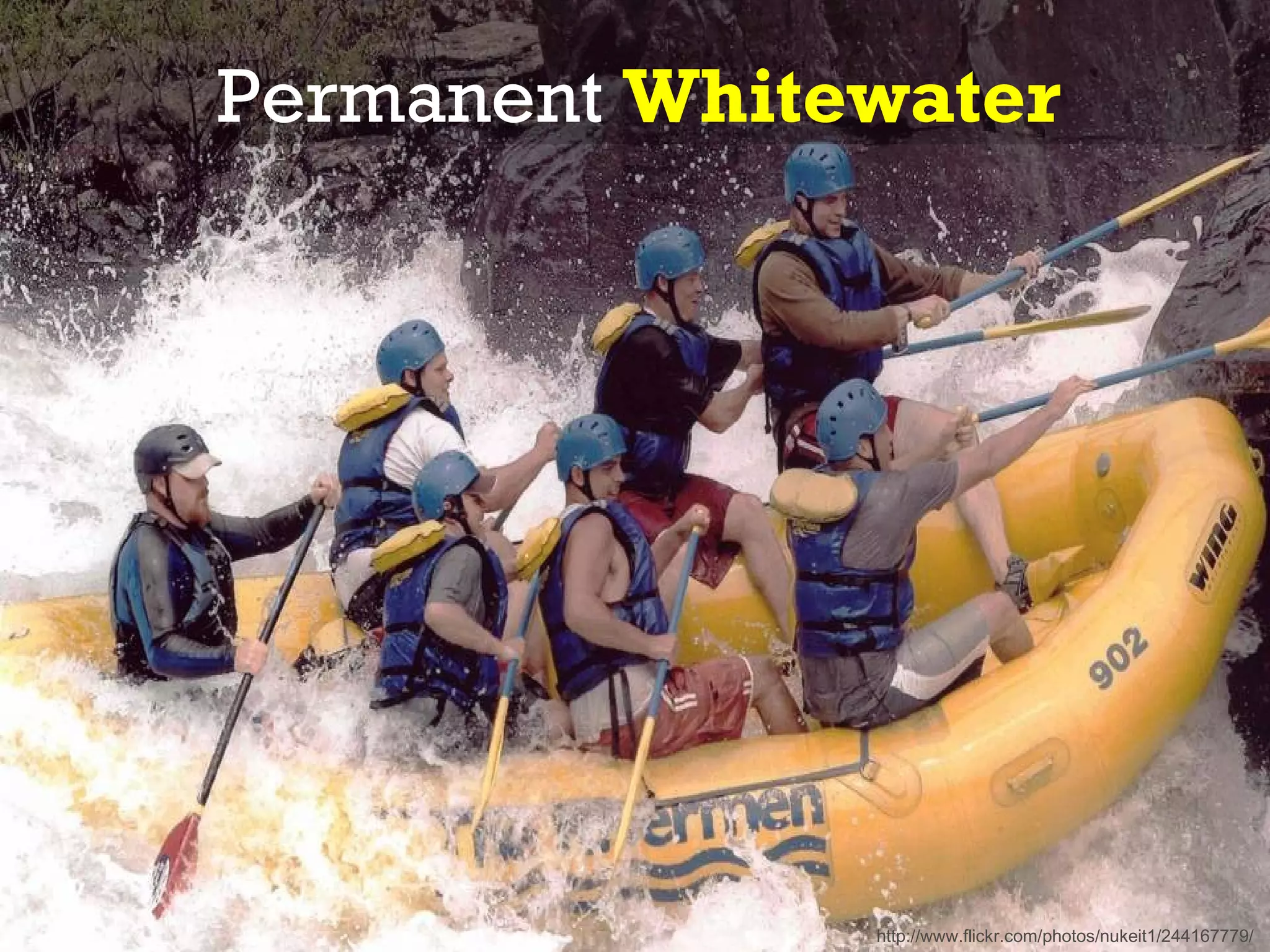
Permanent Whitewater


               http://www.flickr.com/photos/nukeit1/244167779/
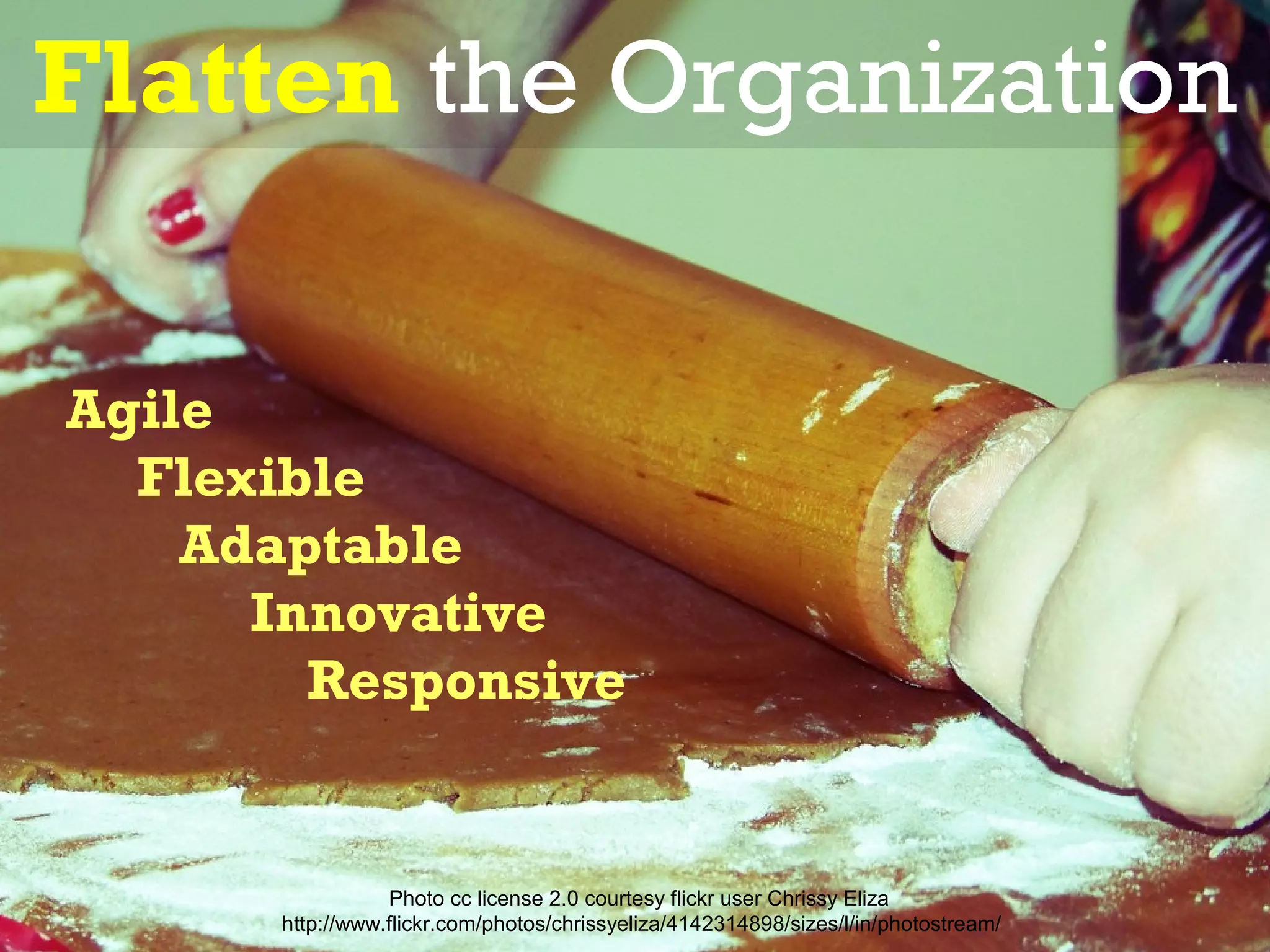
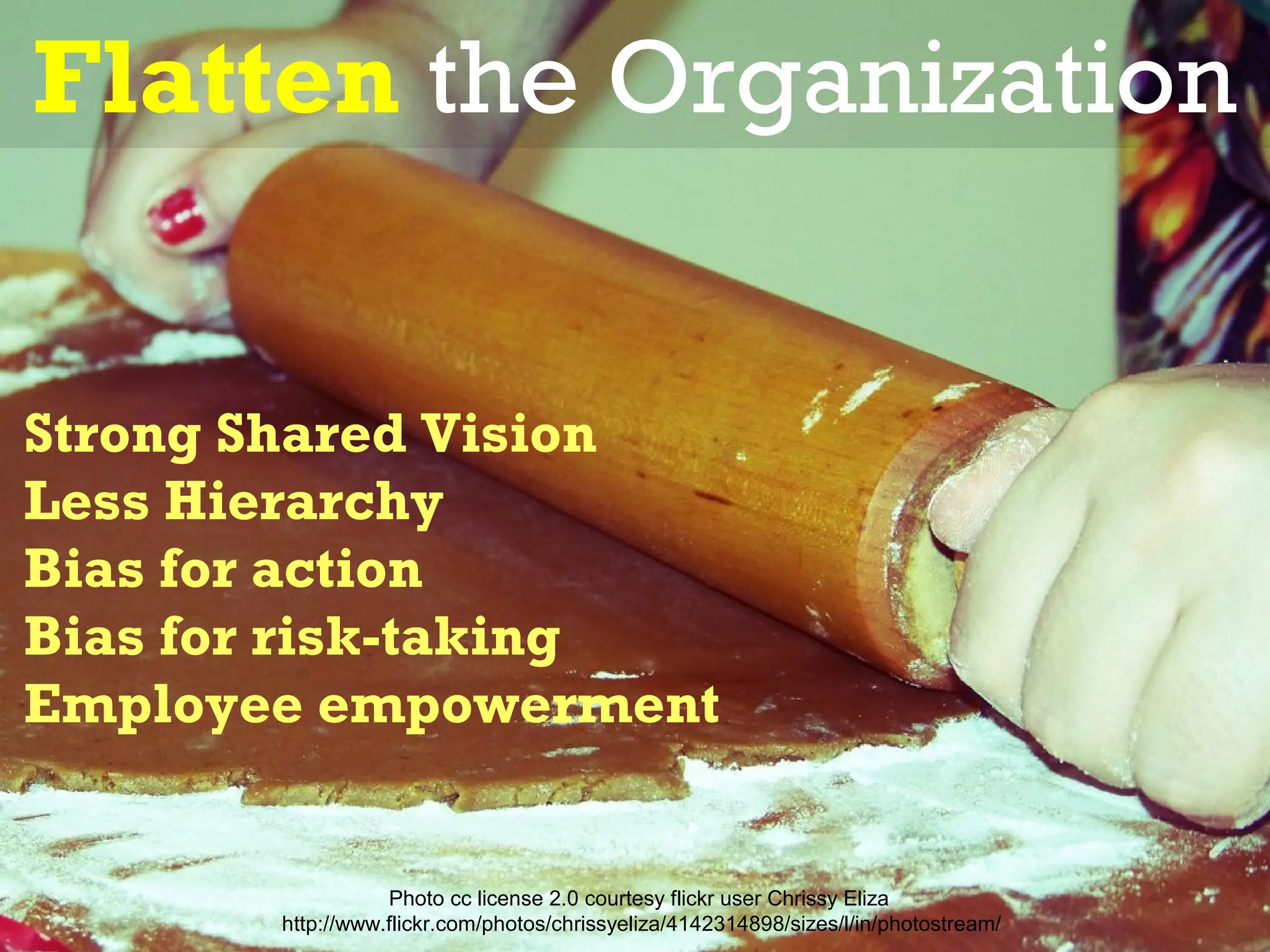
Flatten the Organization

Agile
  Flexible
    Adaptable
      Innovative
        Responsive


                 Photo cc license 2.0 courtesy flickr user Chrissy Eliza
      http://www.flickr.com/photos/chrissyeliza/4142314898/sizes/l/in/photostream/
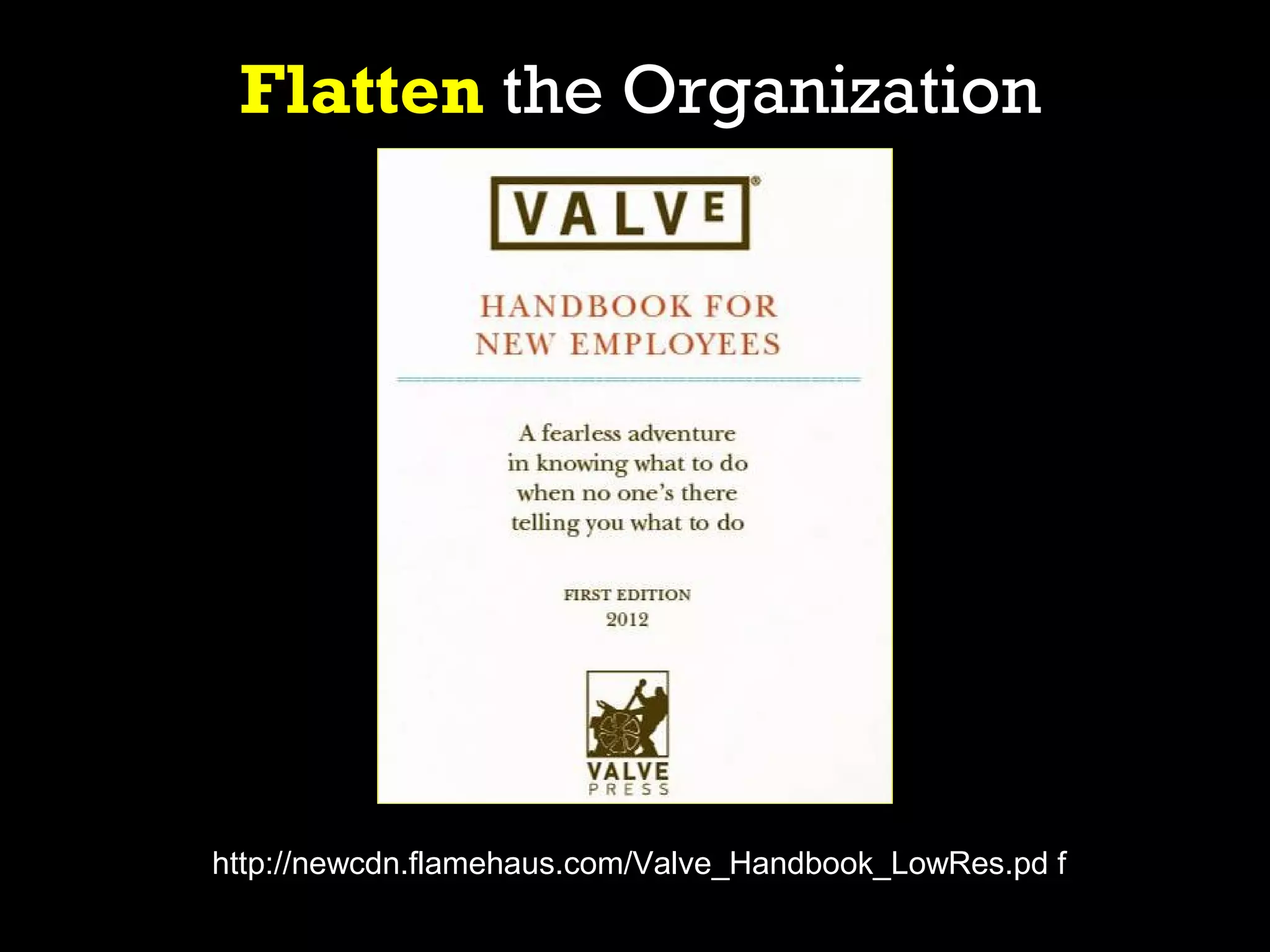
Flatten the Organization


http://newcdn.flamehaus.com/Valve_Handbook_LowRes.pd f
Flatten the Organization


Strong Shared Vision
Less Hierarchy
Bias for action
Bias for risk-taking
Employee empowerment


                  Photo cc license 2.0 courtesy flickr user Chrissy Eliza
       http://www.flickr.com/photos/chrissyeliza/4142314898/sizes/l/in/photostream/
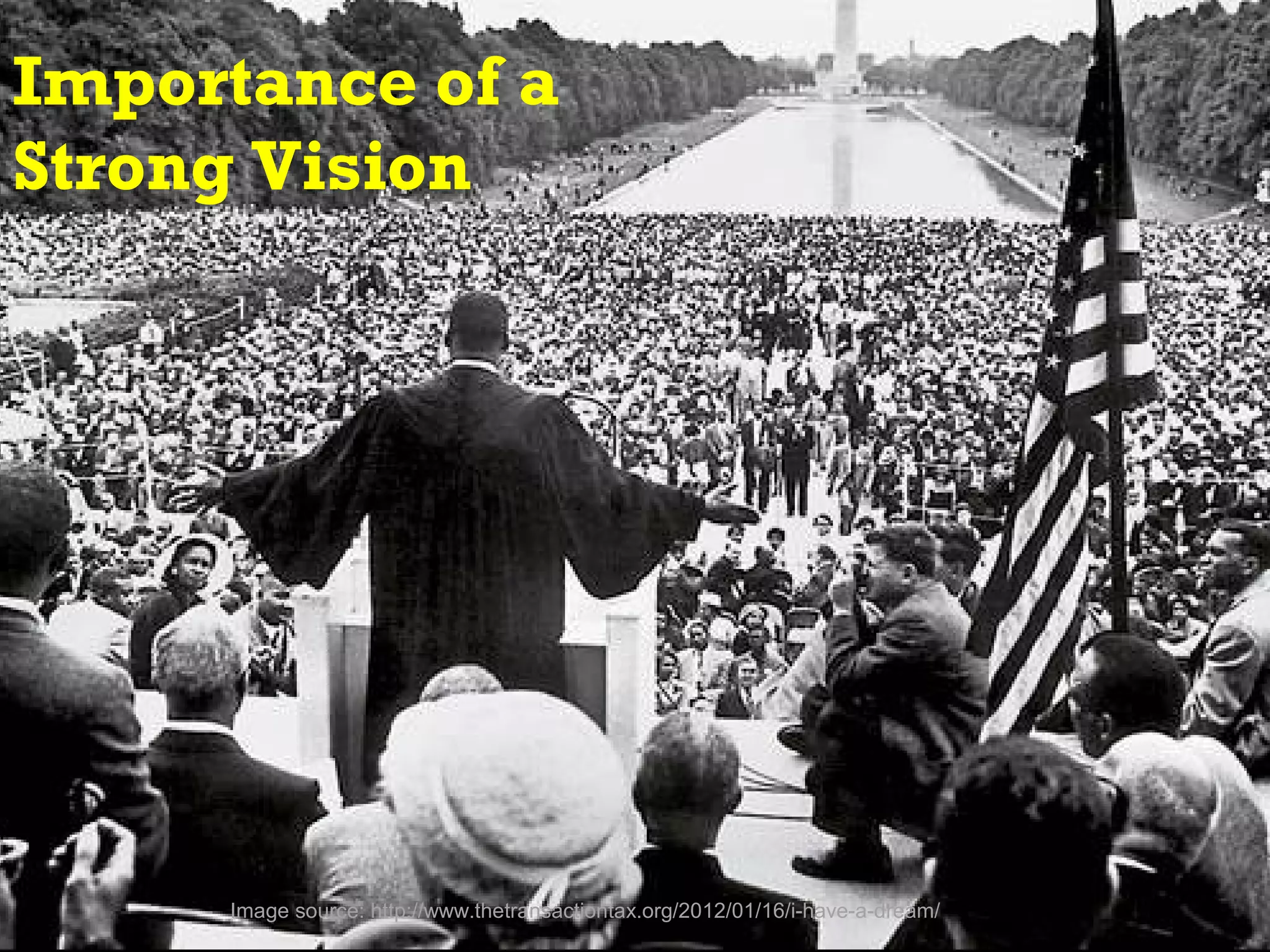
Importance of a
Strong Vision


     Image source: http://www.thetransactiontax.org/2012/01/16/i-have-a-dream/
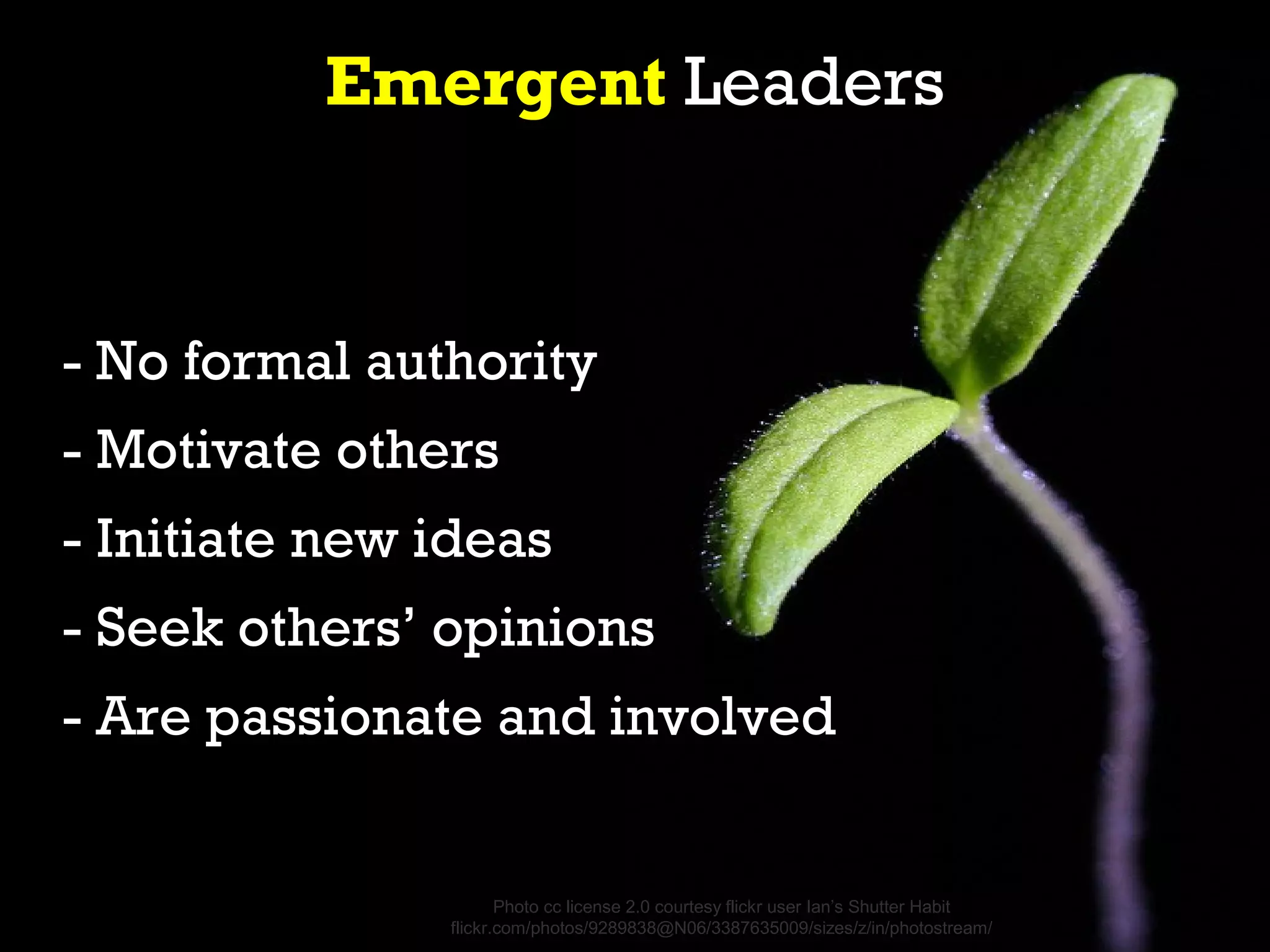
Emergent Leaders


- No formal authority
- Motivate others
- Initiate new ideas
- Seek others’ opinions
- Are passionate and involved


                      Photo cc license 2.0 courtesy flickr user Ian’s Shutter Habit
               flickr.com/photos/9289838@N06/3387635009/sizes/z/in/photostream/
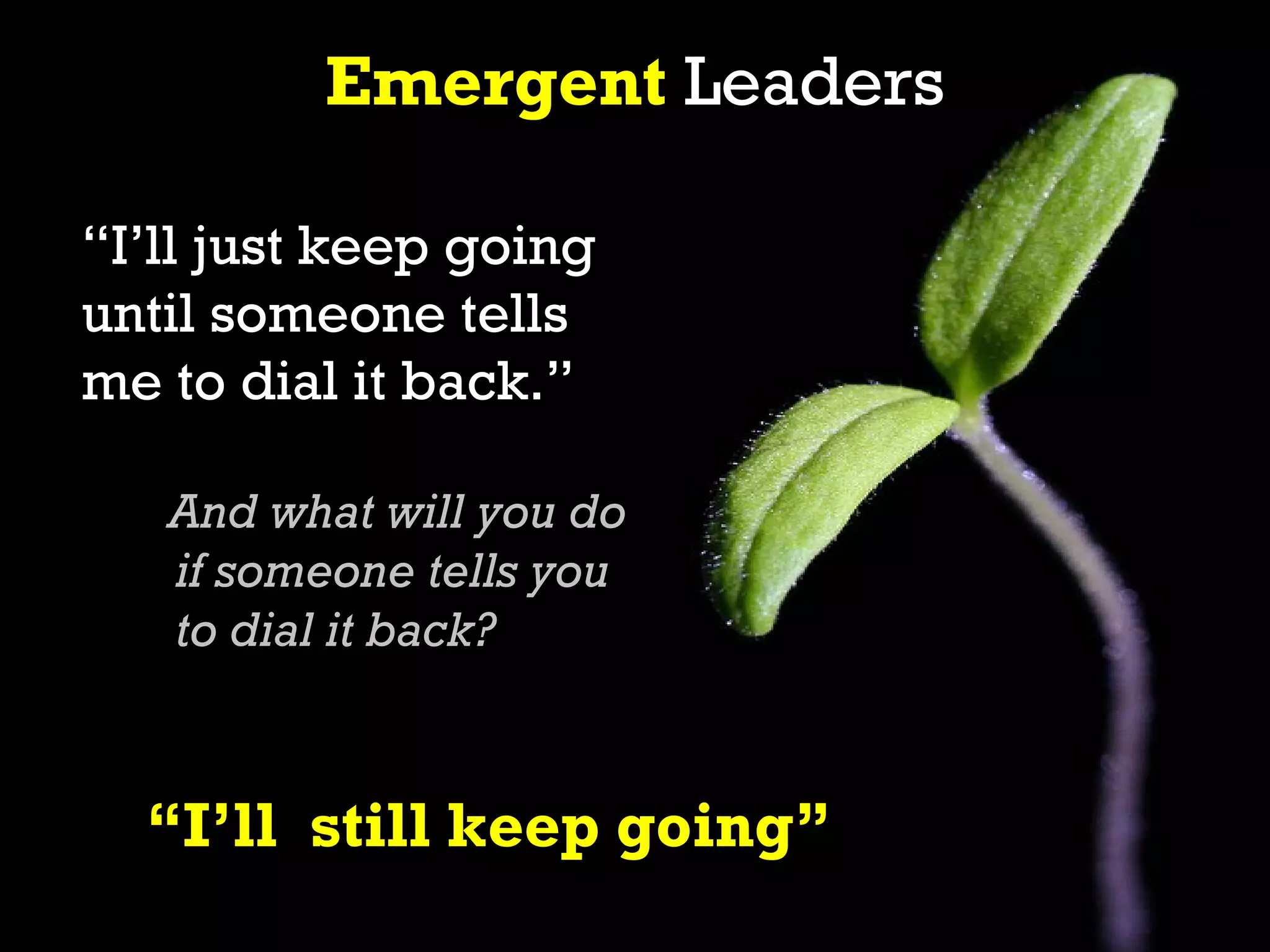
Emergent Leaders

“I’ll just keep going
until someone tells
me to dial it back.”

   And what will you do
   if someone tells you
   to dial it back?


  “I’ll still keep going”
You are
  Creative
Resourceful
 and Whole
Increasing
  your state of
resourcefulness
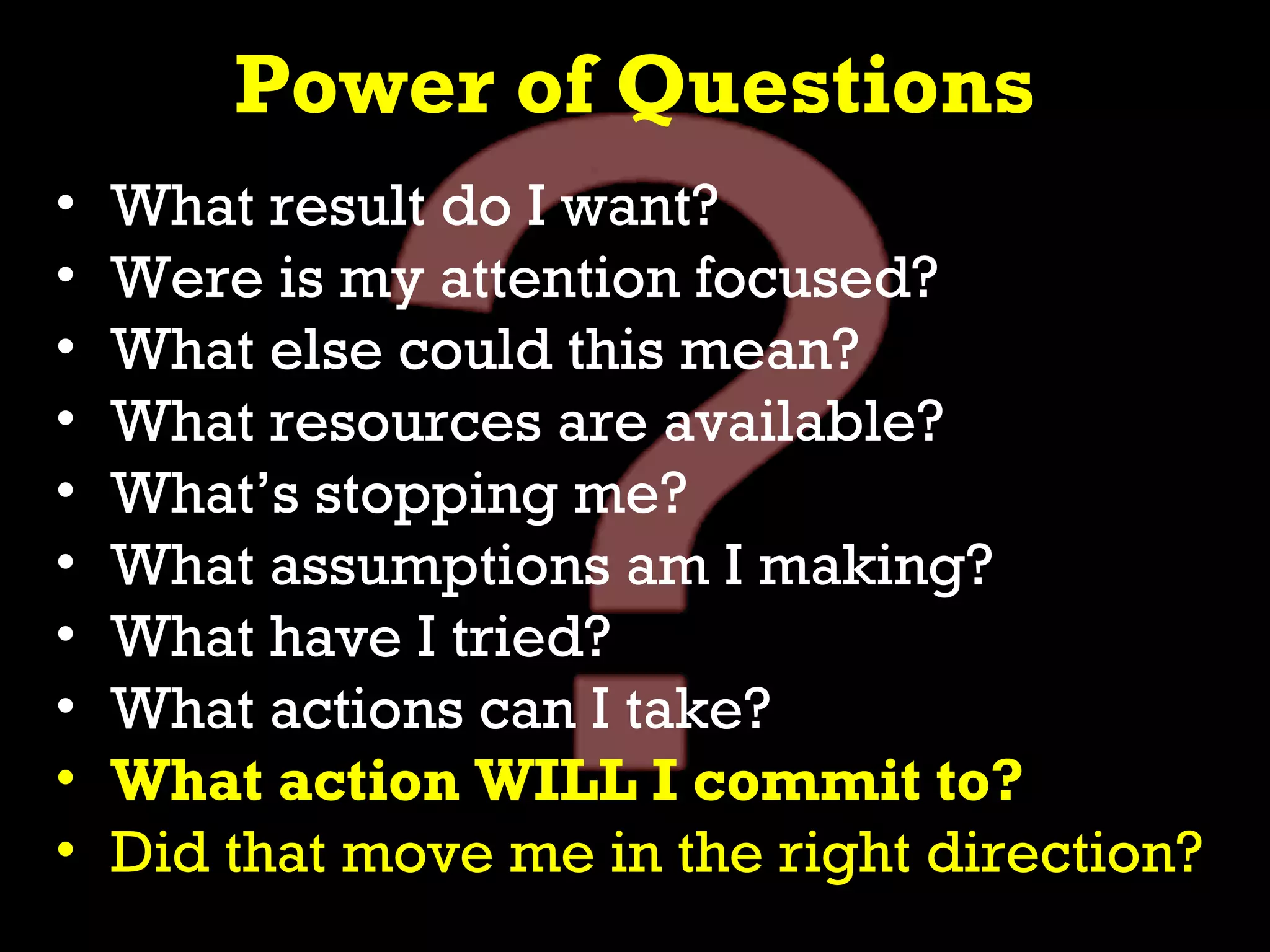
Power of Questions
•   What result do I want?
•   Were is my attention focused?
•   What else could this mean?
•   What resources are available?
•   What’s stopping me?
•   What assumptions am I making?
•   What have I tried?
•   What actions can I take?
•   What action WILL I commit to?
•   Did that move me in the right direction?
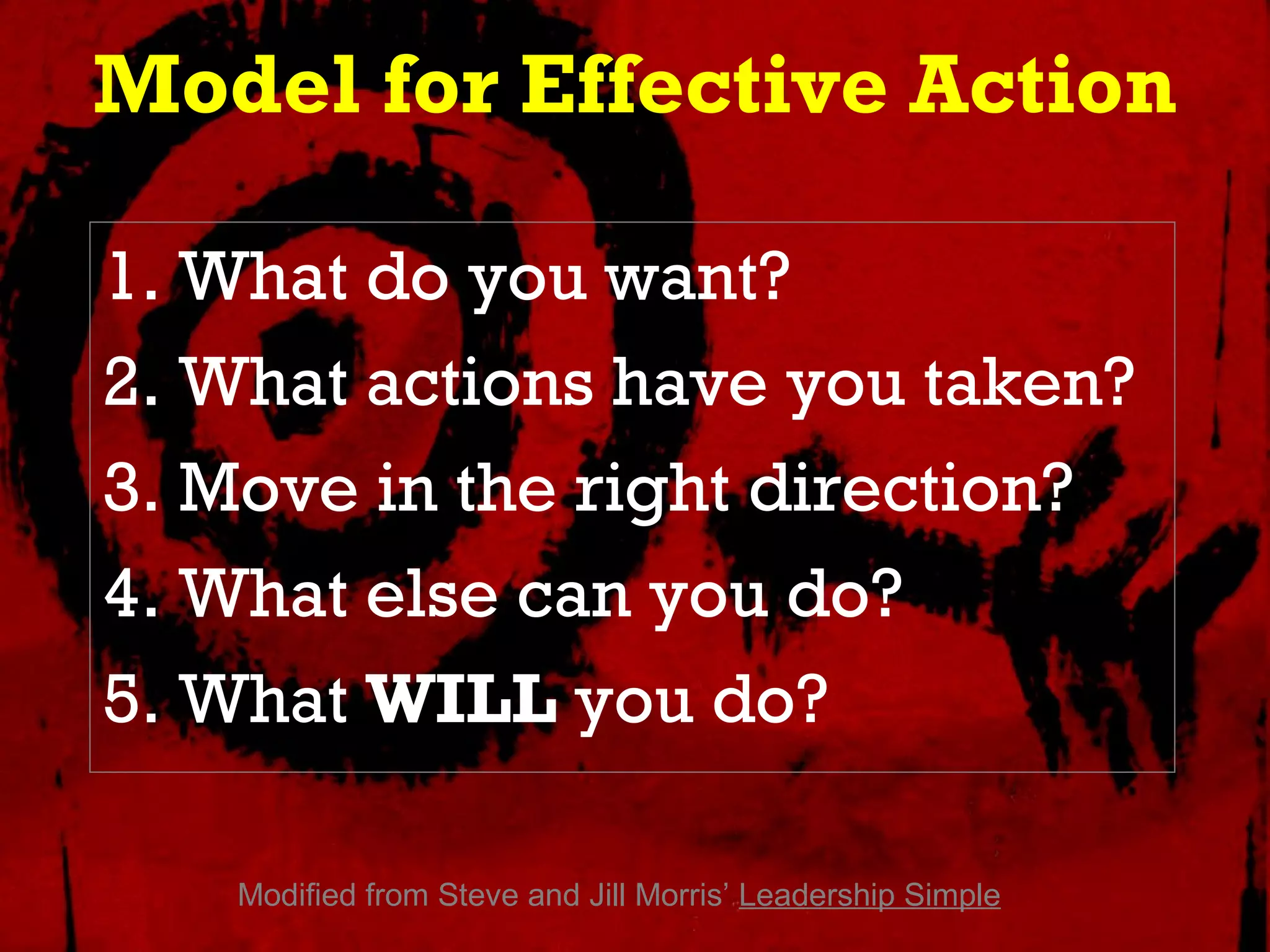
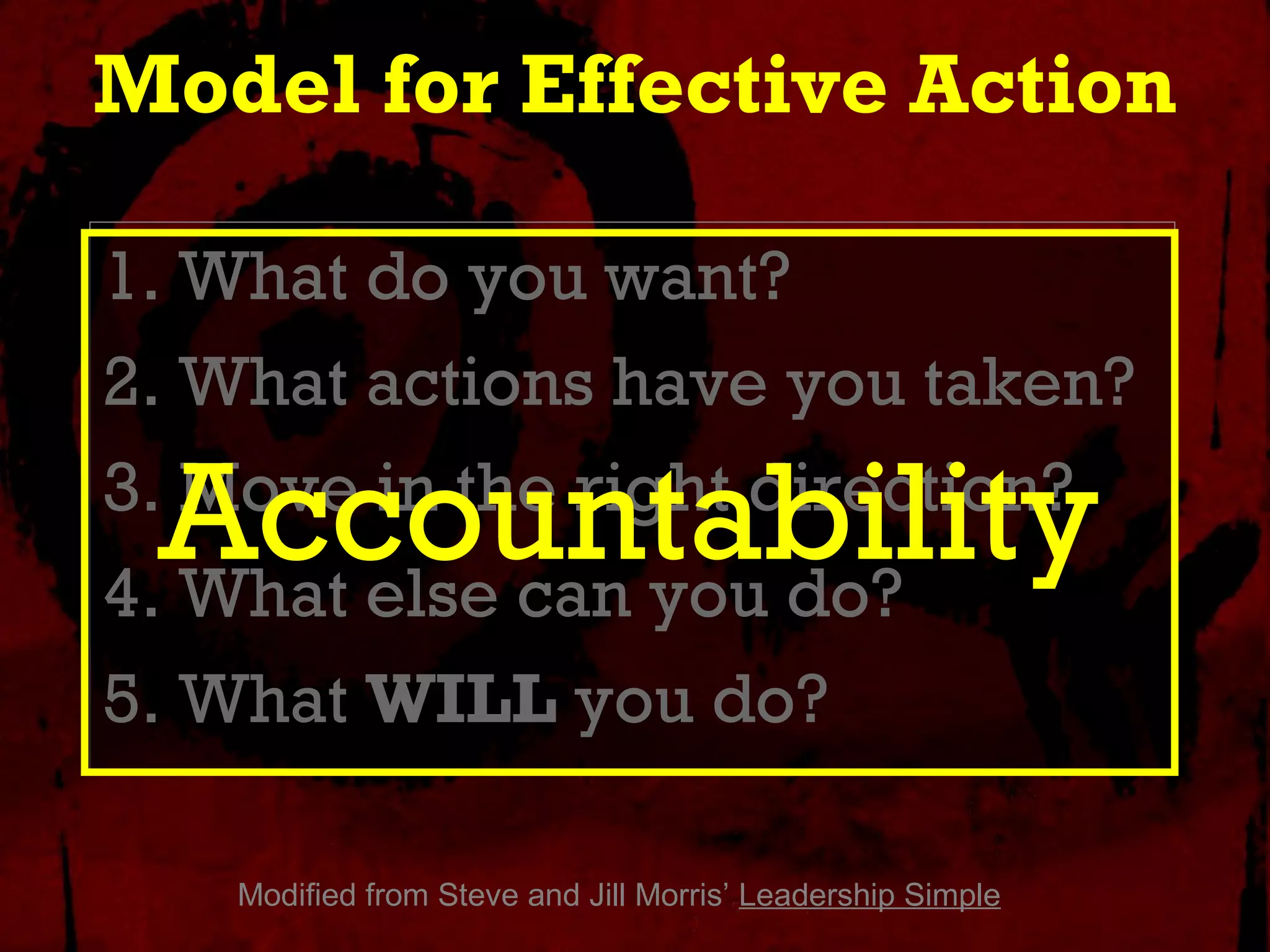
Model for Effective Action

1. What do you want?
2. What actions have you taken?
3. Move in the right direction?
4. What else can you do?
5. What WILL you do?

    Modified from Steve and Jill Morris’ Leadership Simple
Model for Effective Action

1. What do you want?
2. What actions have you taken?

 Accountability
3. Move in the right direction?
4. What else can you do?
5. What WILL you do?

    Modified from Steve and Jill Morris’ Leadership Simple
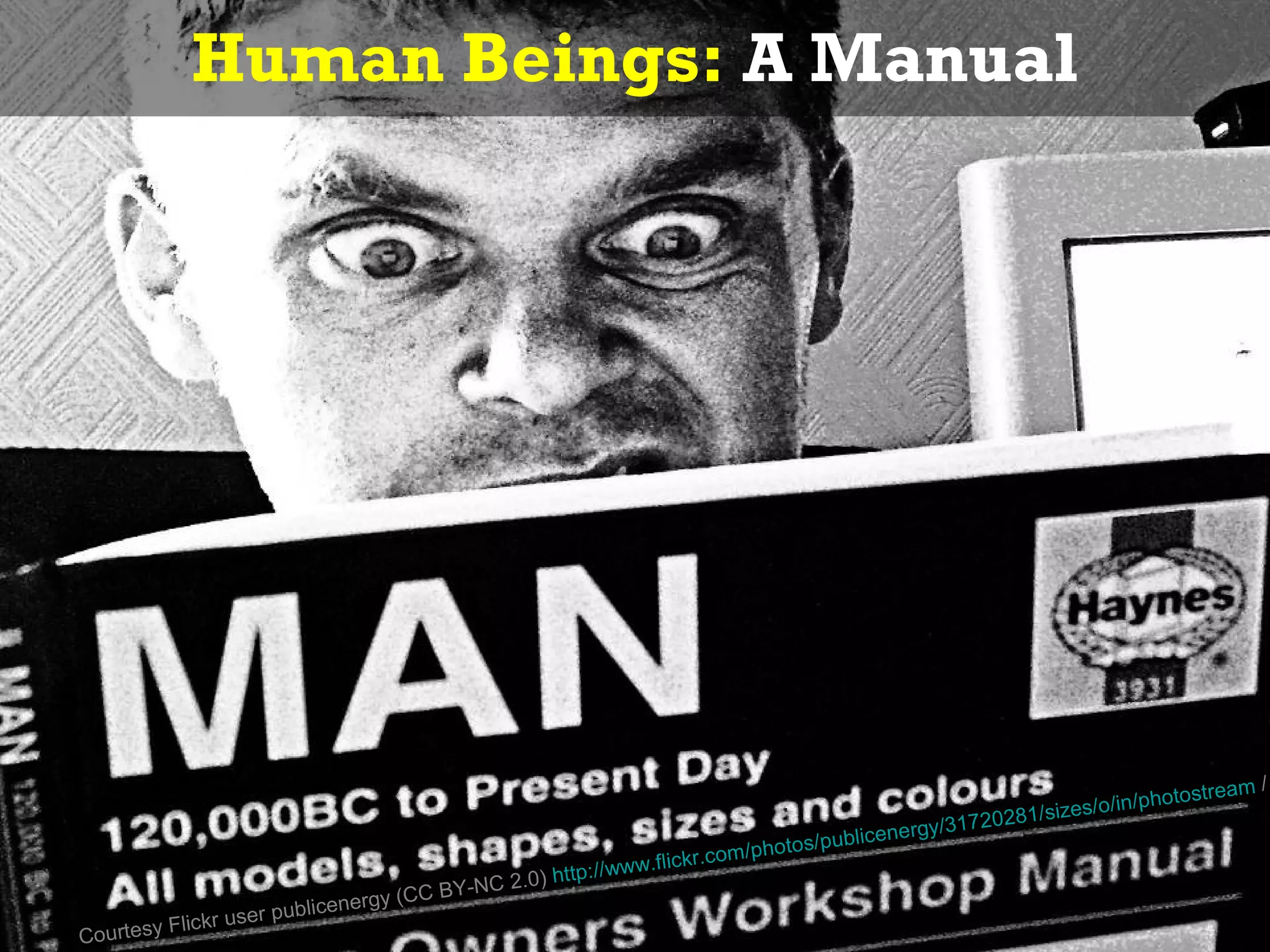
Human Beings: A Manual


                                                                                                                            tr   eam /
                                                                                                                  /in/photos
                                                                                                   720281/sizes/o
                                                                                          energy/31
                                                                          /pho tos/public
                                                              .flickr.com
                                                .0) http://www
                                         BY-NC 2
                             nergy (CC
         Flickr us er publice
Courtesy
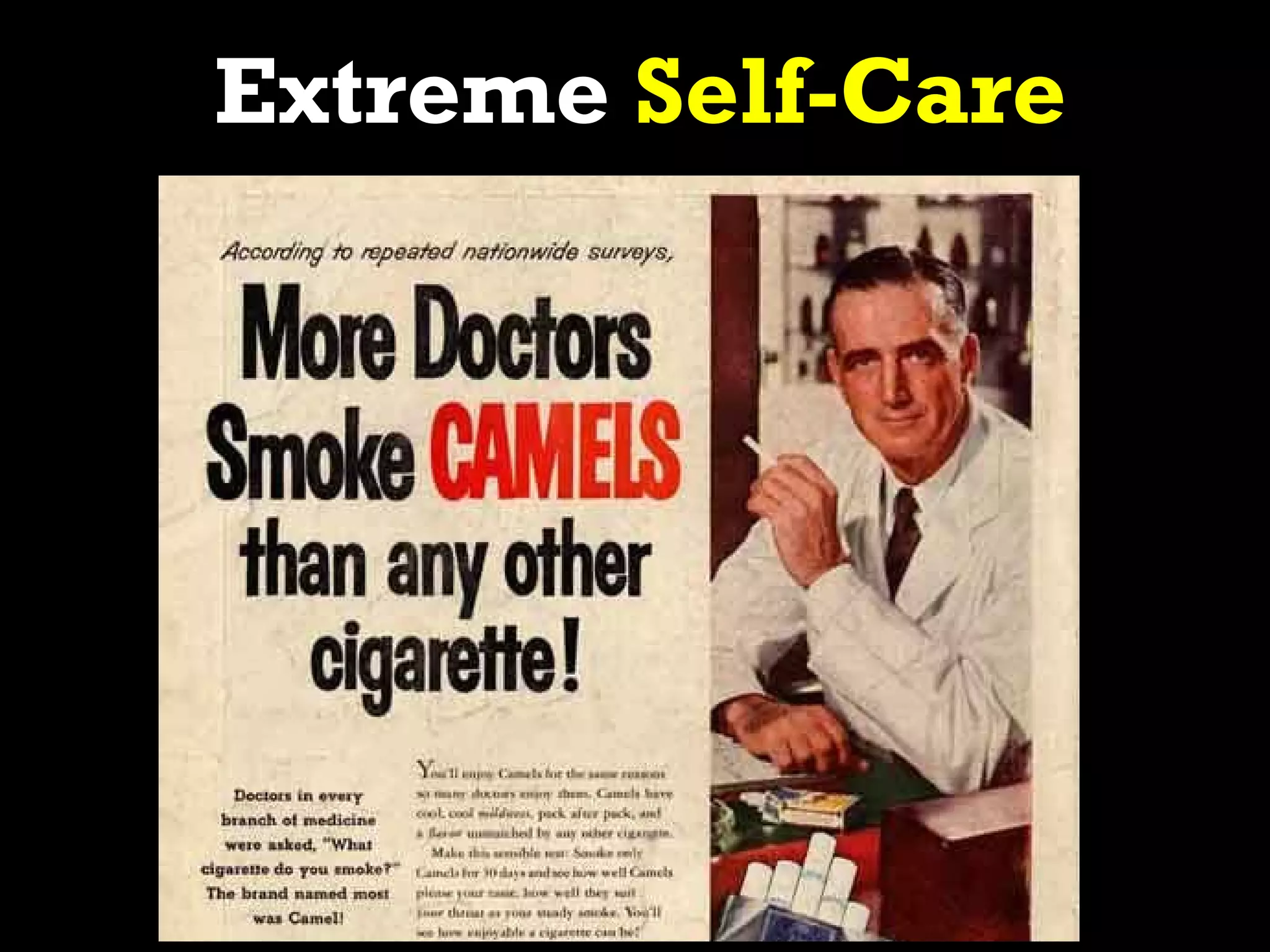
Extreme Self-Care
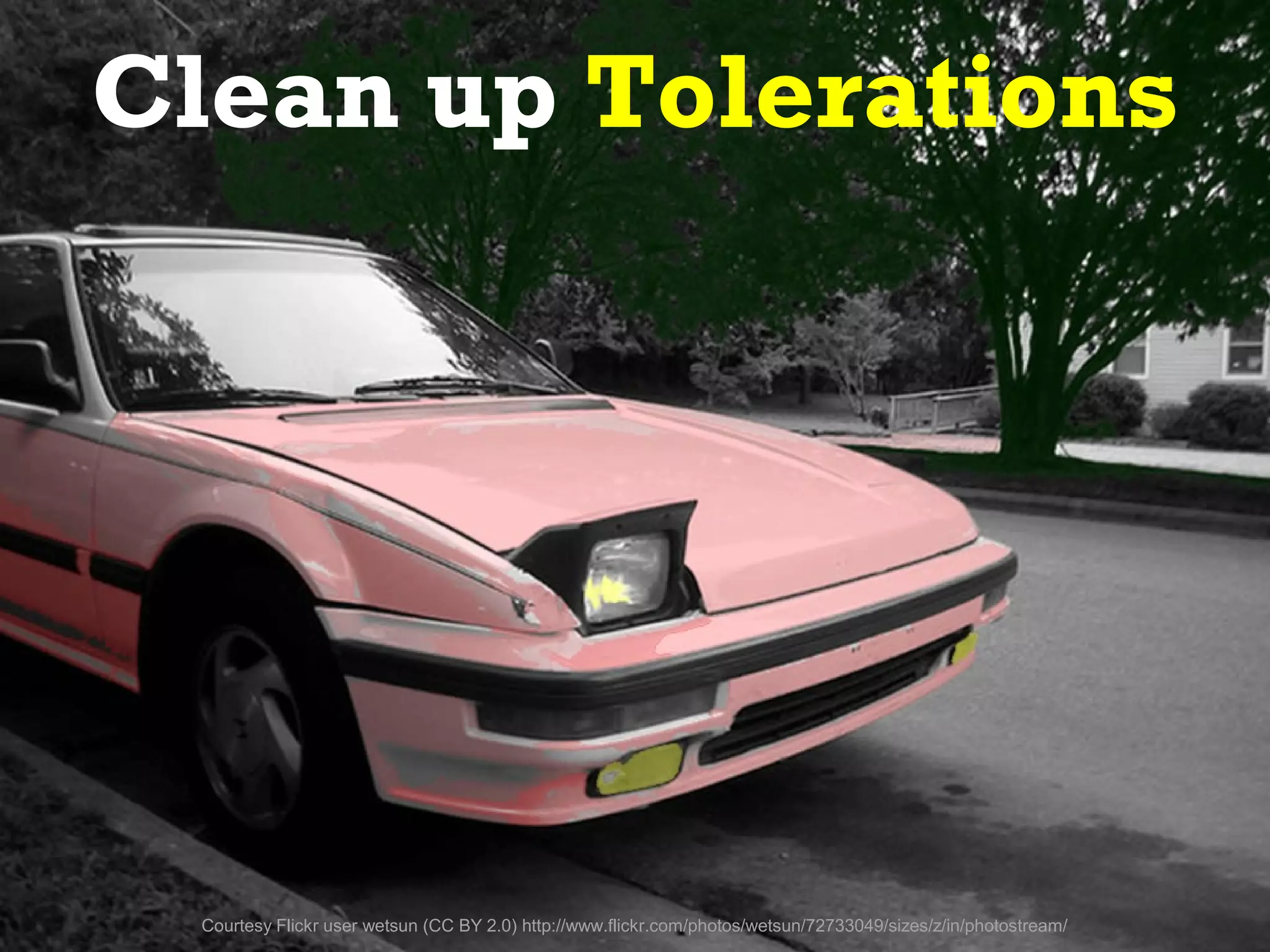
Clean up Tolerations


  Courtesy Flickr user wetsun (CC BY 2.0) http://www.flickr.com/photos/wetsun/72733049/sizes/z/in/photostream/
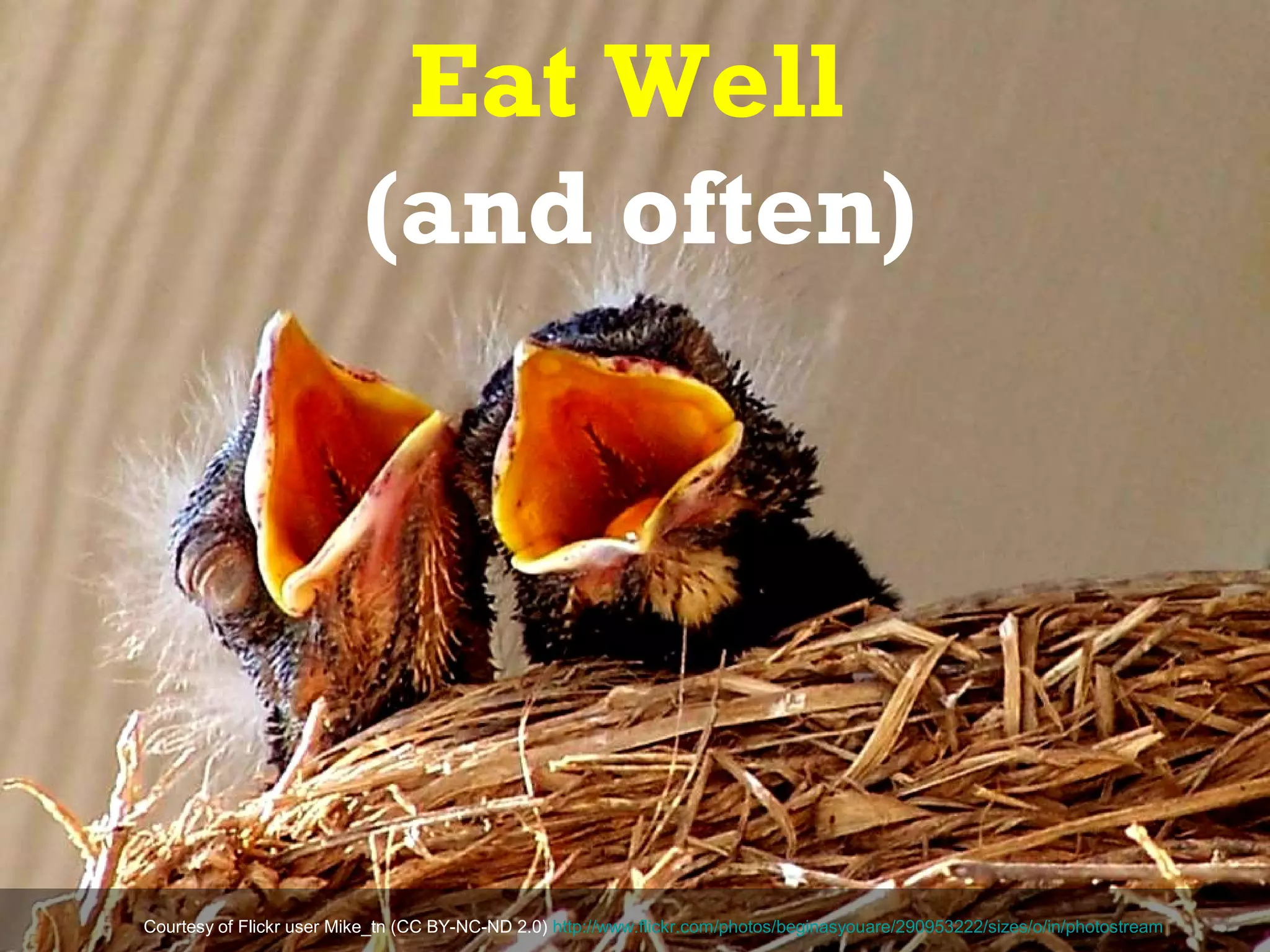
Eat Well
                          (and often)


Courtesy of Flickr user Mike_tn (CC BY-NC-ND 2.0) http://www.flickr.com/photos/beginasyouare/290953222/sizes/o/in/photostream
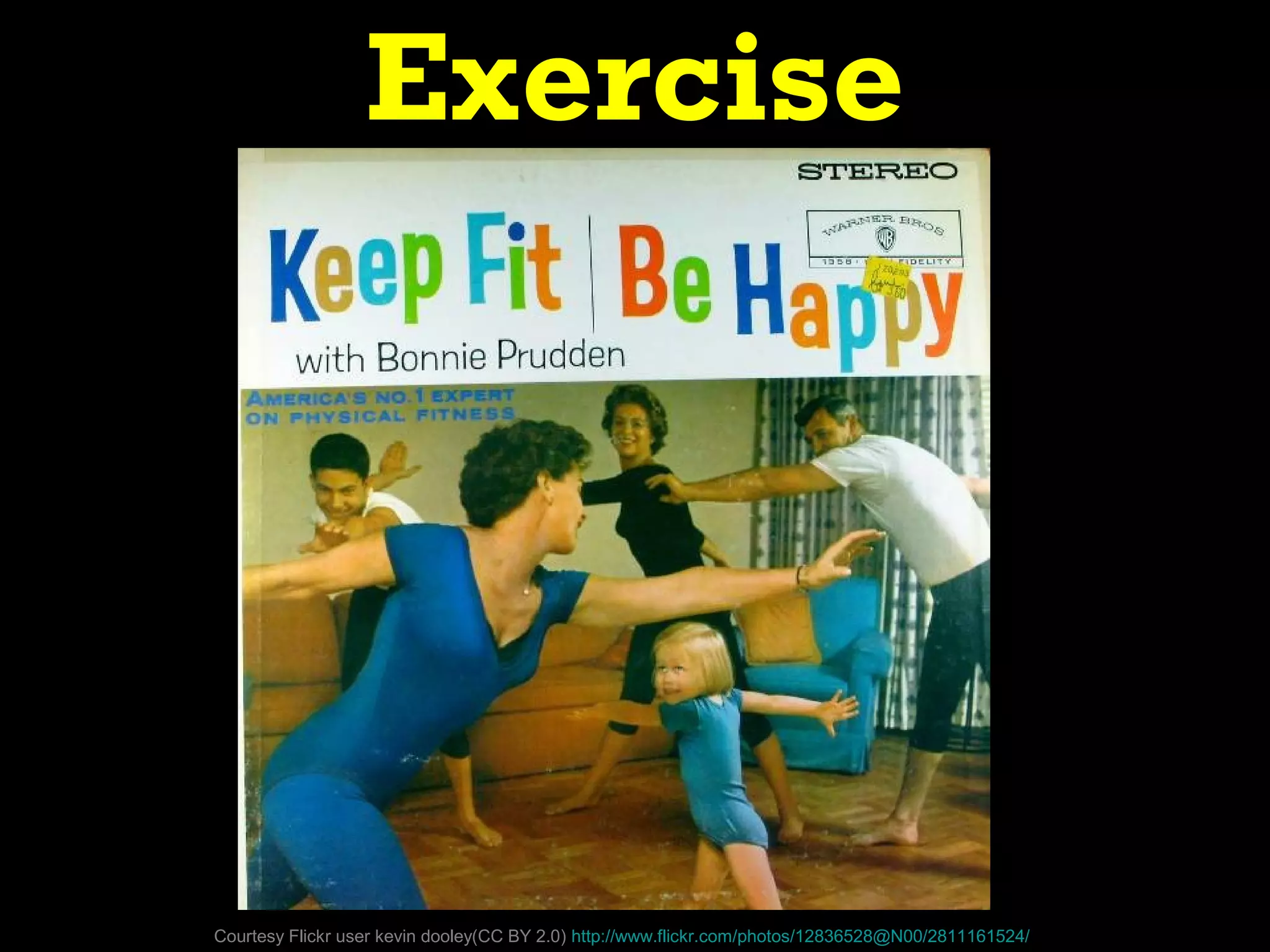
Exercise


Courtesy Flickr user kevin dooley(CC BY 2.0) http://www.flickr.com/photos/12836528@N00/2811161524/
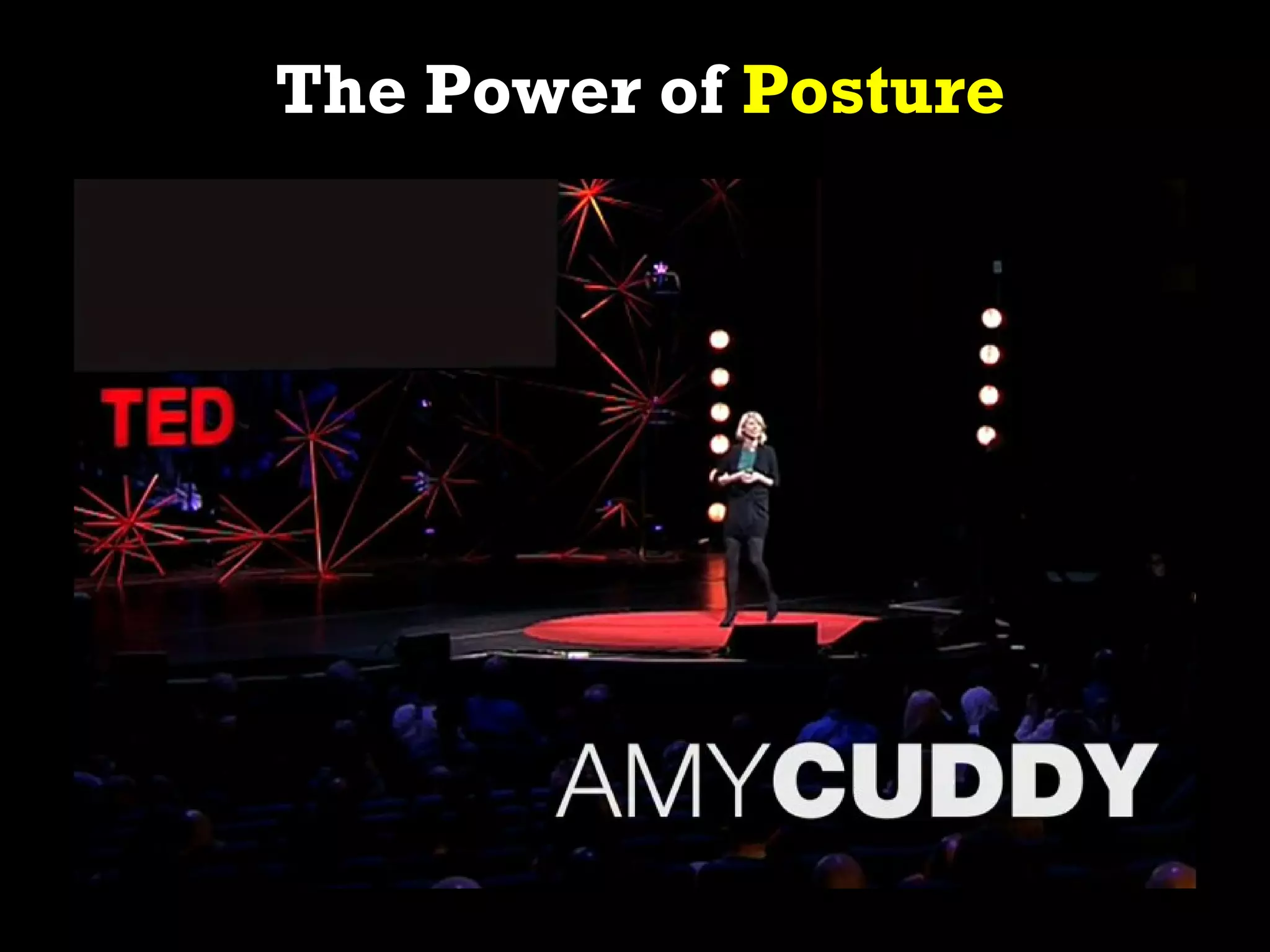
The Power of Posture
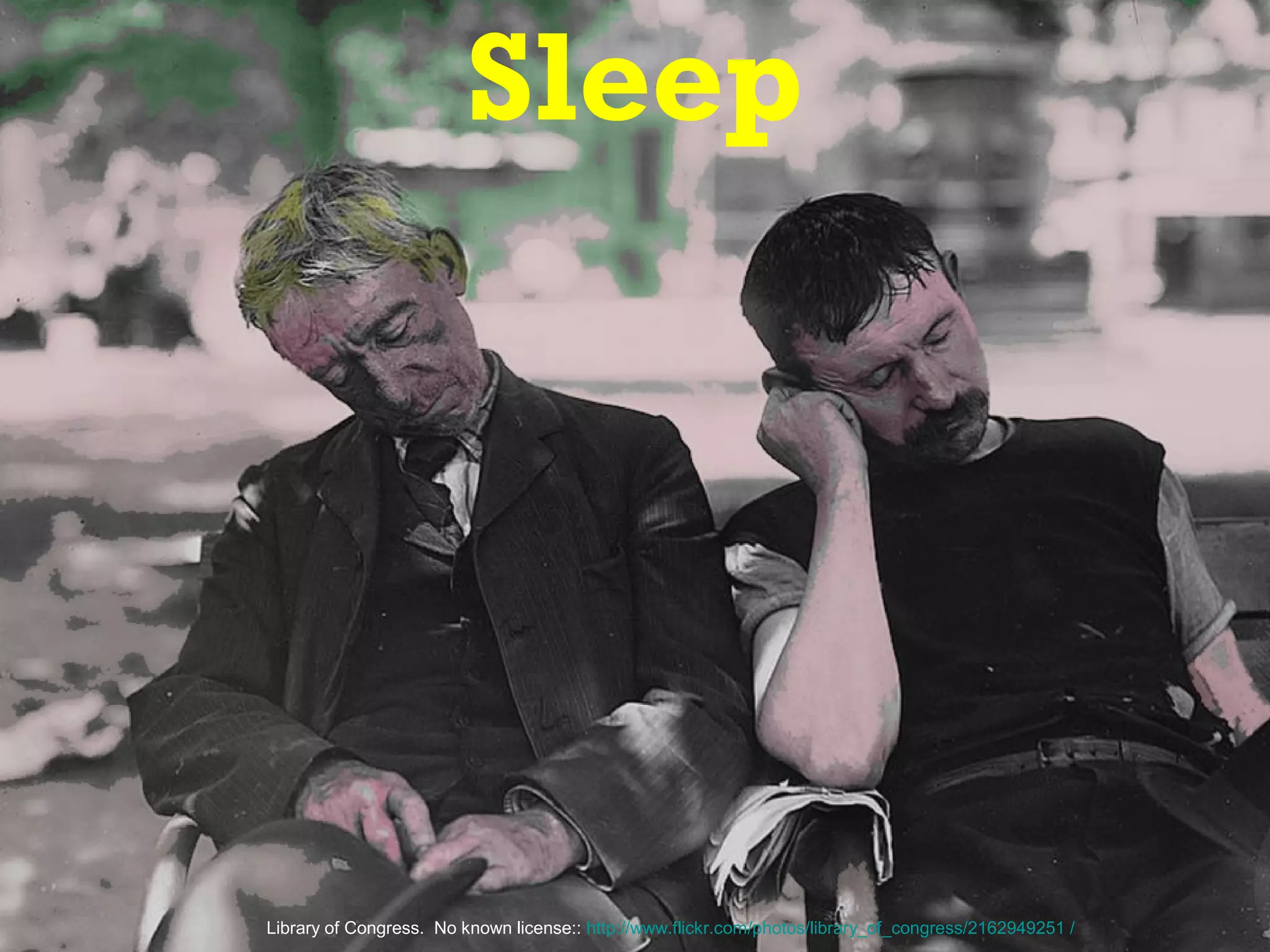
Sleep


Library of Congress. No known license:: http://www.flickr.com/photos/library_of_congress/2162949251 /
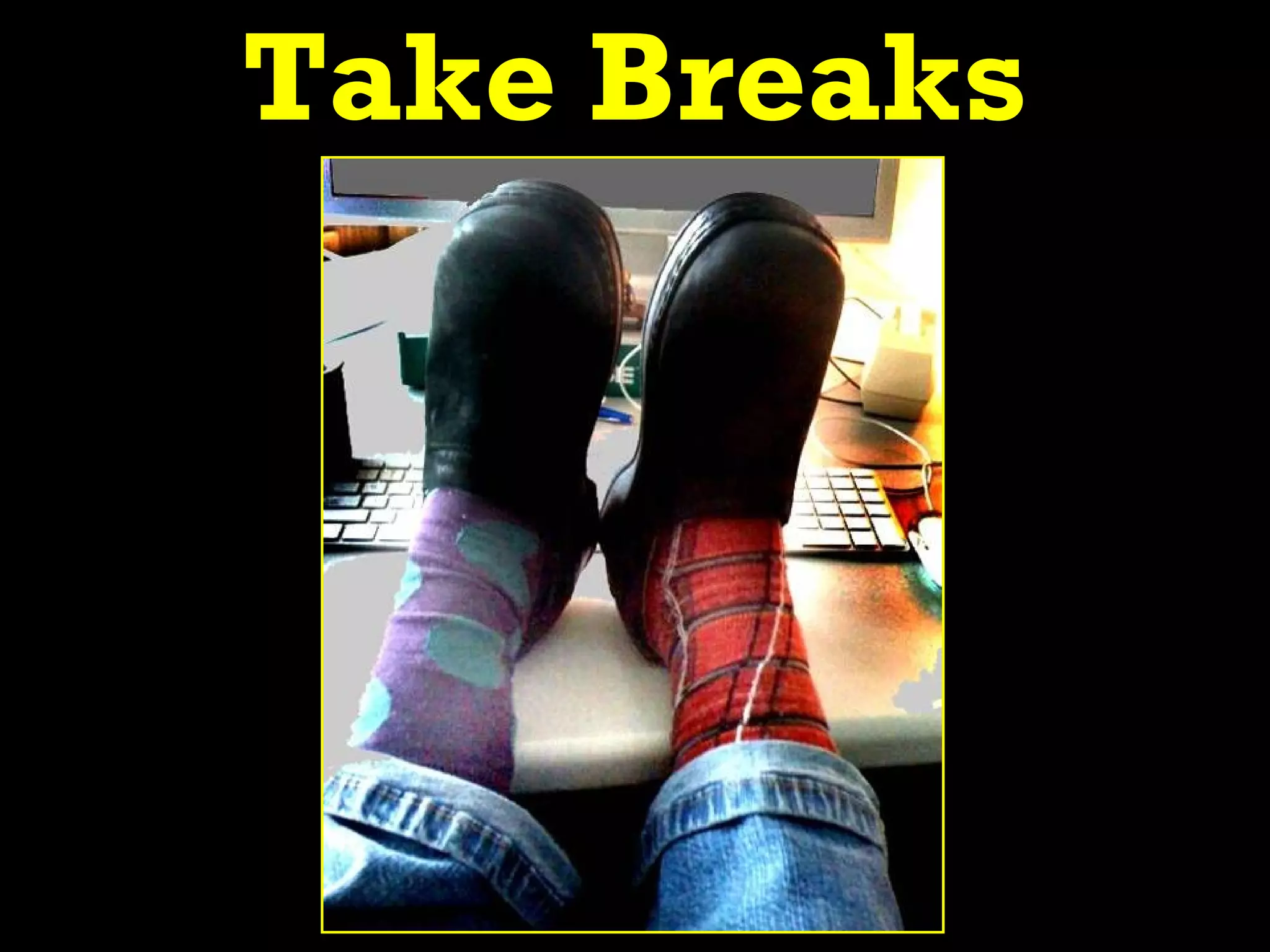
Take Breaks
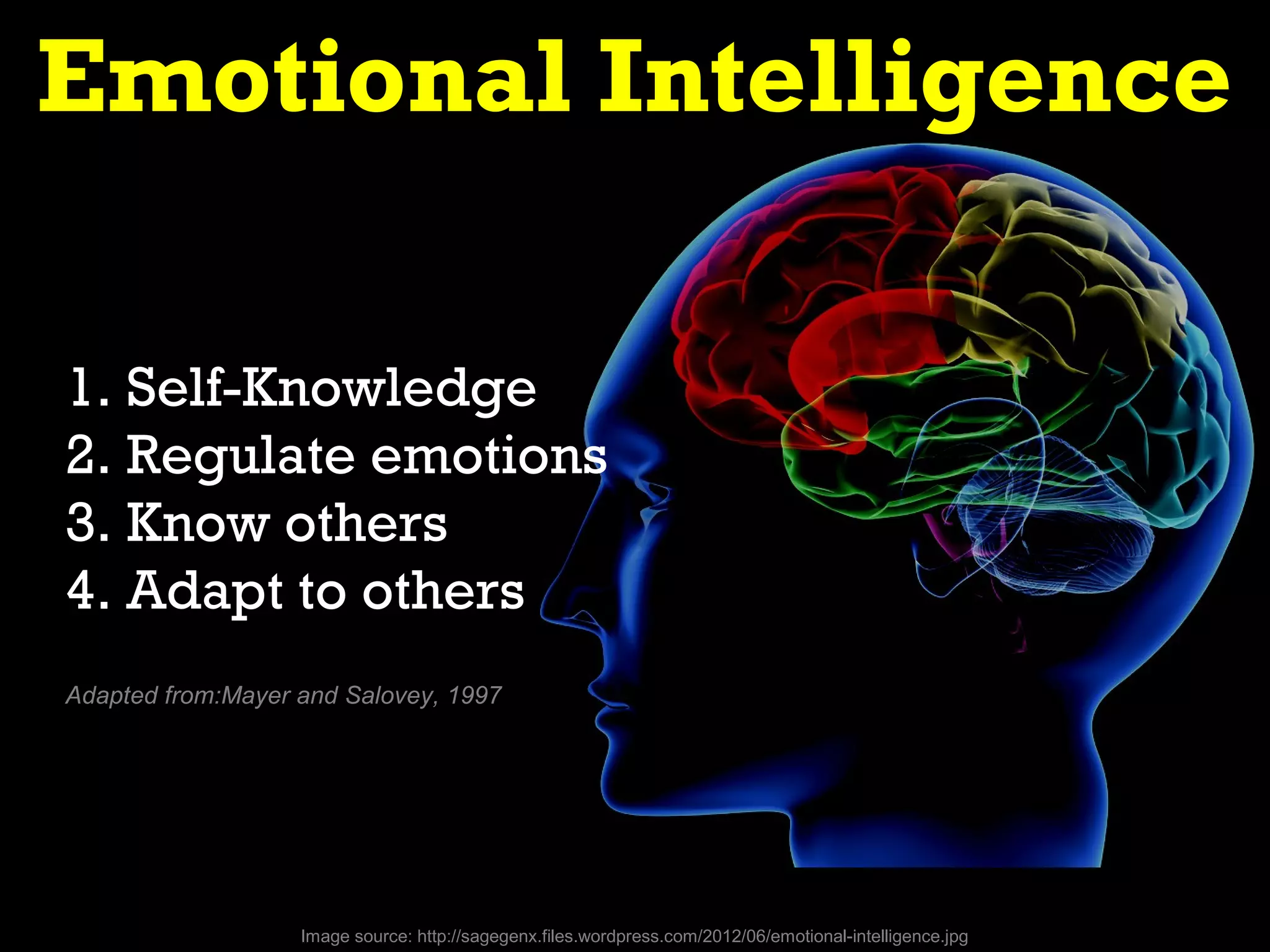
Emotional Intelligence

1. Self-Knowledge
2. Regulate emotions
3. Know others
4. Adapt to others
Adapted from:Mayer and Salovey, 1997


                   Image source: http://sagegenx.files.wordpress.com/2012/06/emotional-intelligence.jpg
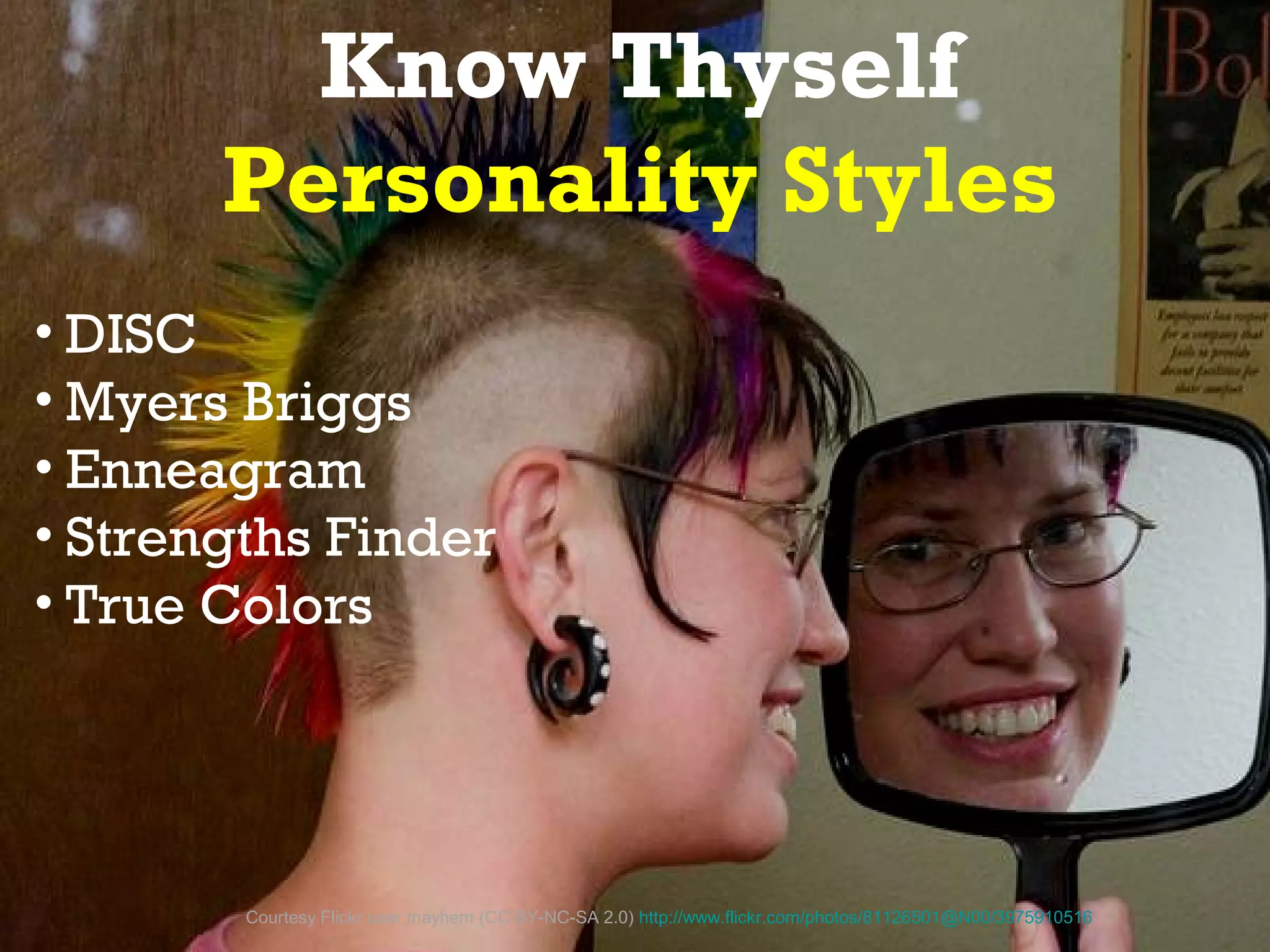
Know Thyself
       Personality Styles
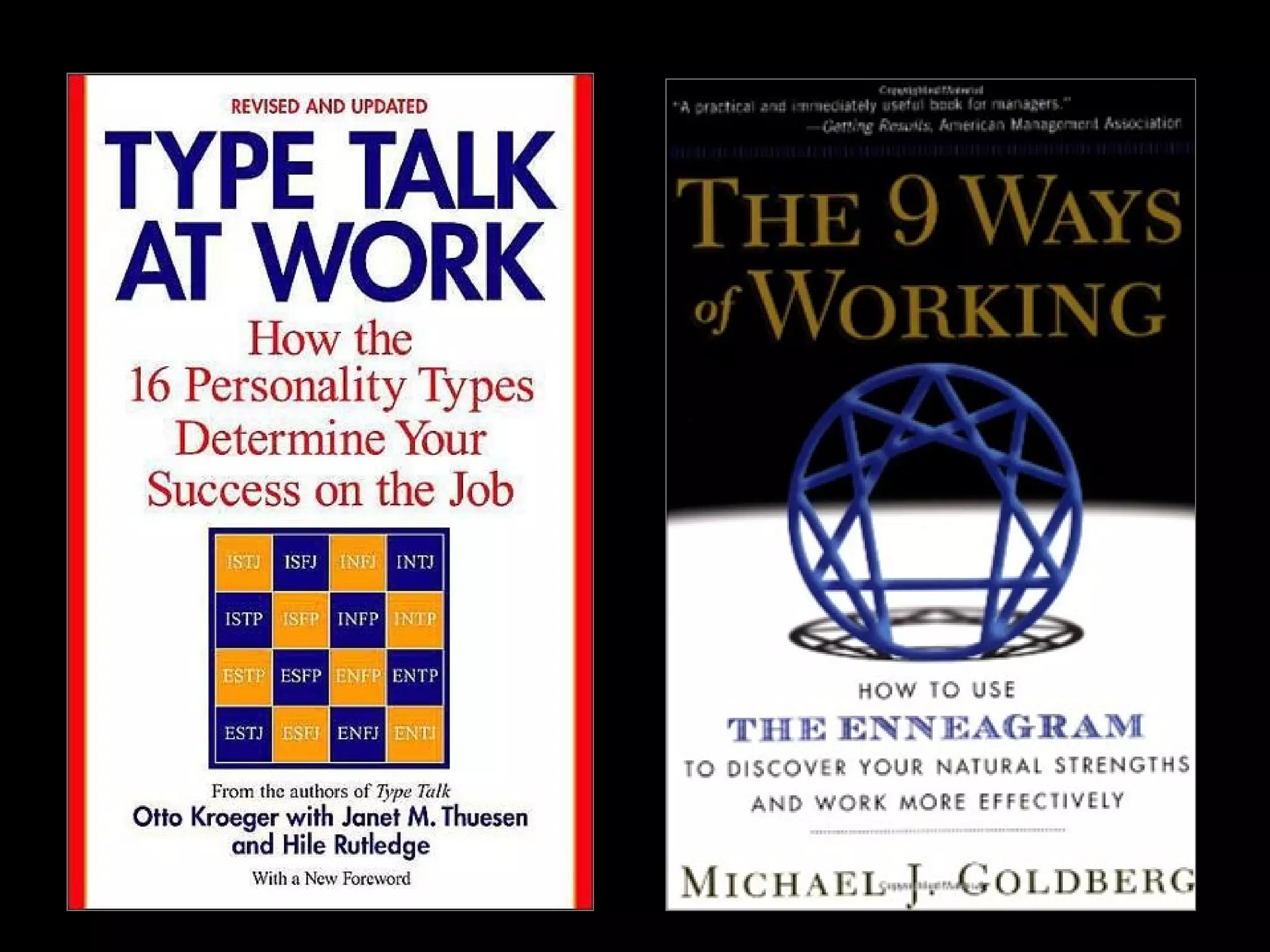
• DISC
• Myers Briggs
• Enneagram
• Strengths Finder
• True Colors


        Courtesy Flickr user mayhem (CC BY-NC-SA 2.0) http://www.flickr.com/photos/81126501@N00/3975910516
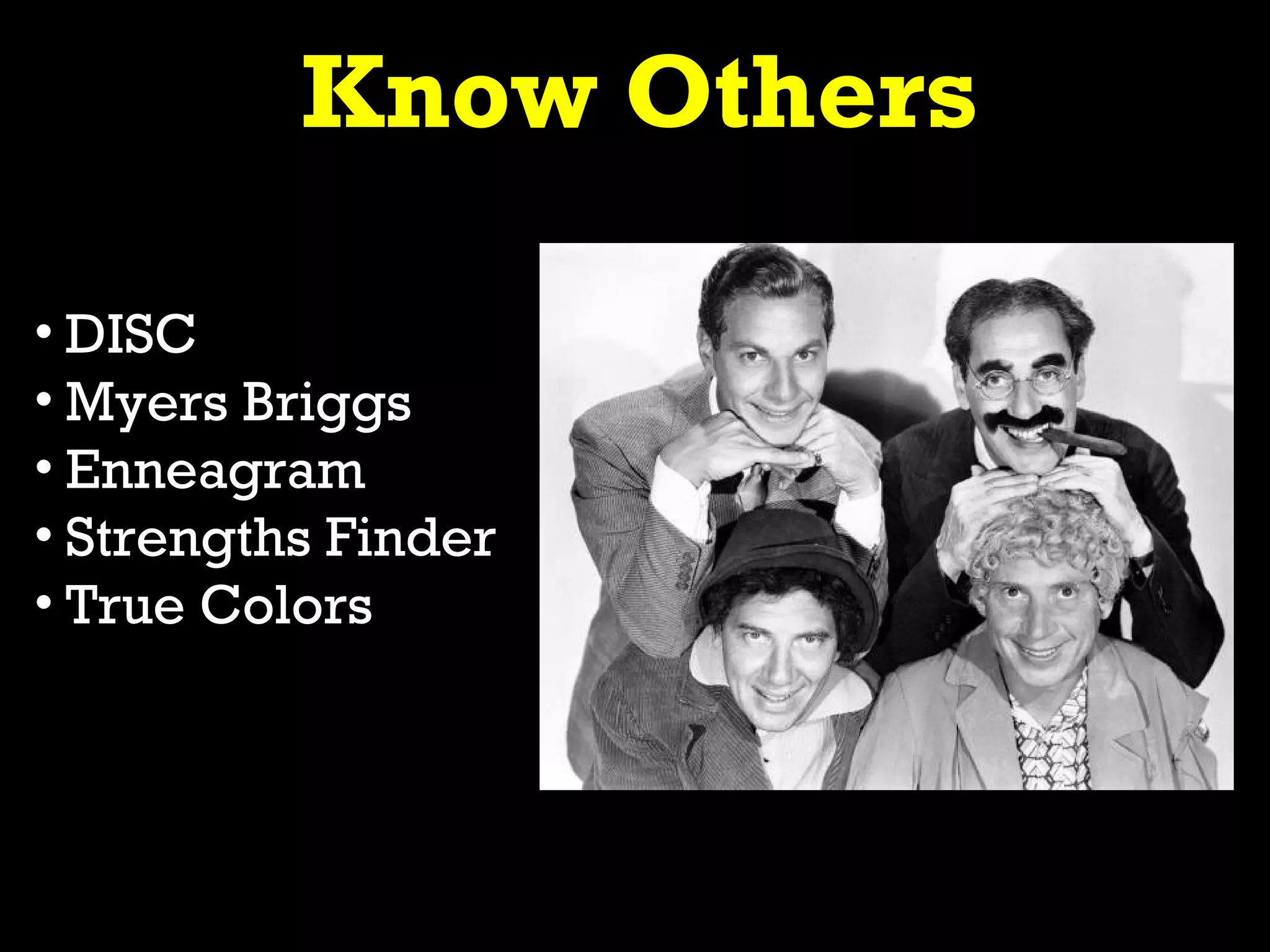
Know Others

• DISC
• Myers Briggs
• Enneagram
• Strengths Finder
• True Colors
Platinum Rule

Treat others the way
   they want to be
       treated
Understanding
 Motivation
The principles of

Engagement
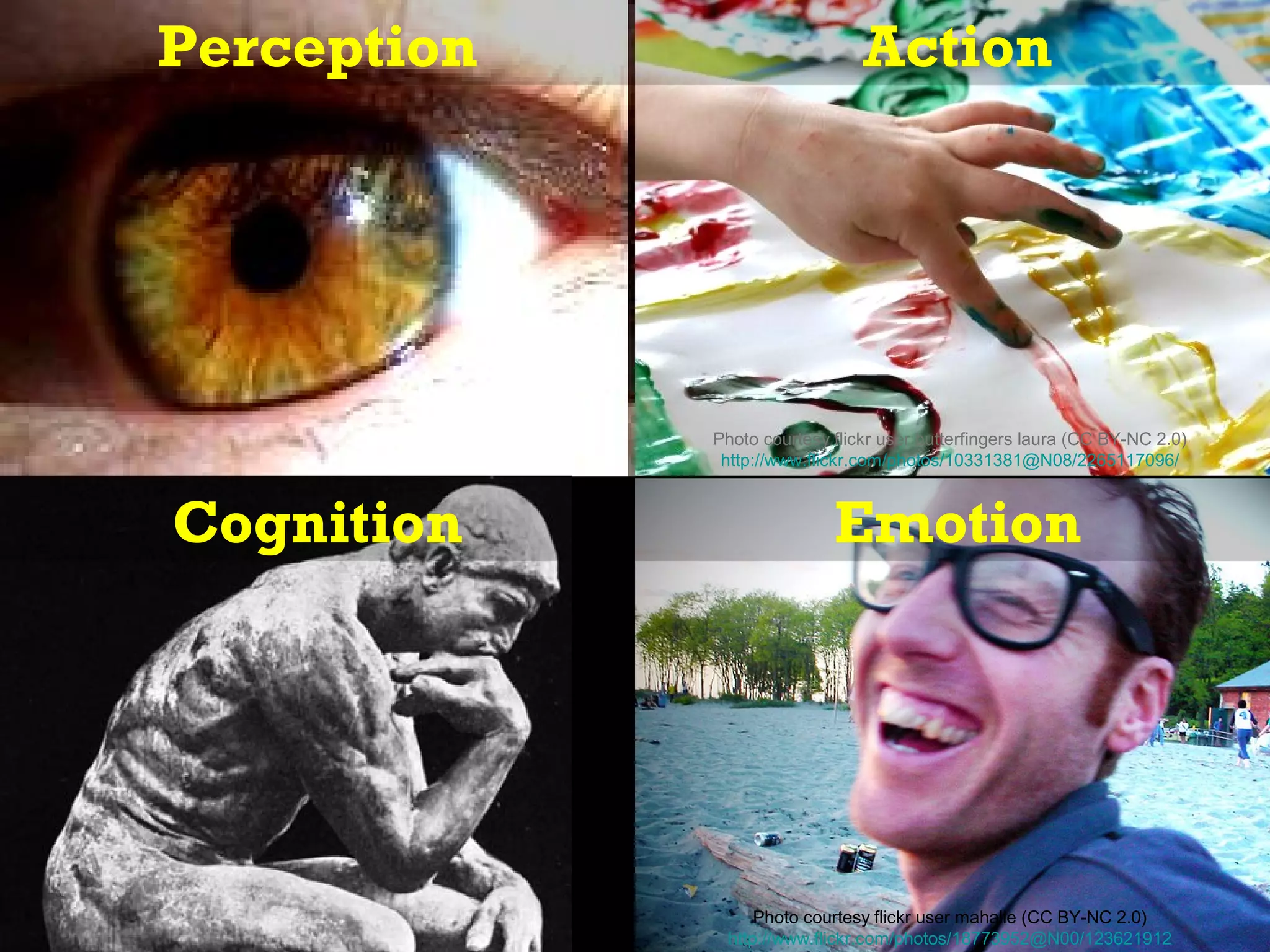
Perception                      Action


             Photo courtesy flickr user butterfingers laura (CC BY-NC 2.0)
              http://www.flickr.com/photos/10331381@N08/2265117096/


Cognition                   Emotion


                  Photo courtesy flickr user mahalie (CC BY-NC 2.0)
              http://www.flickr.com/photos/18773952@N00/123621912
Principles of Engagement
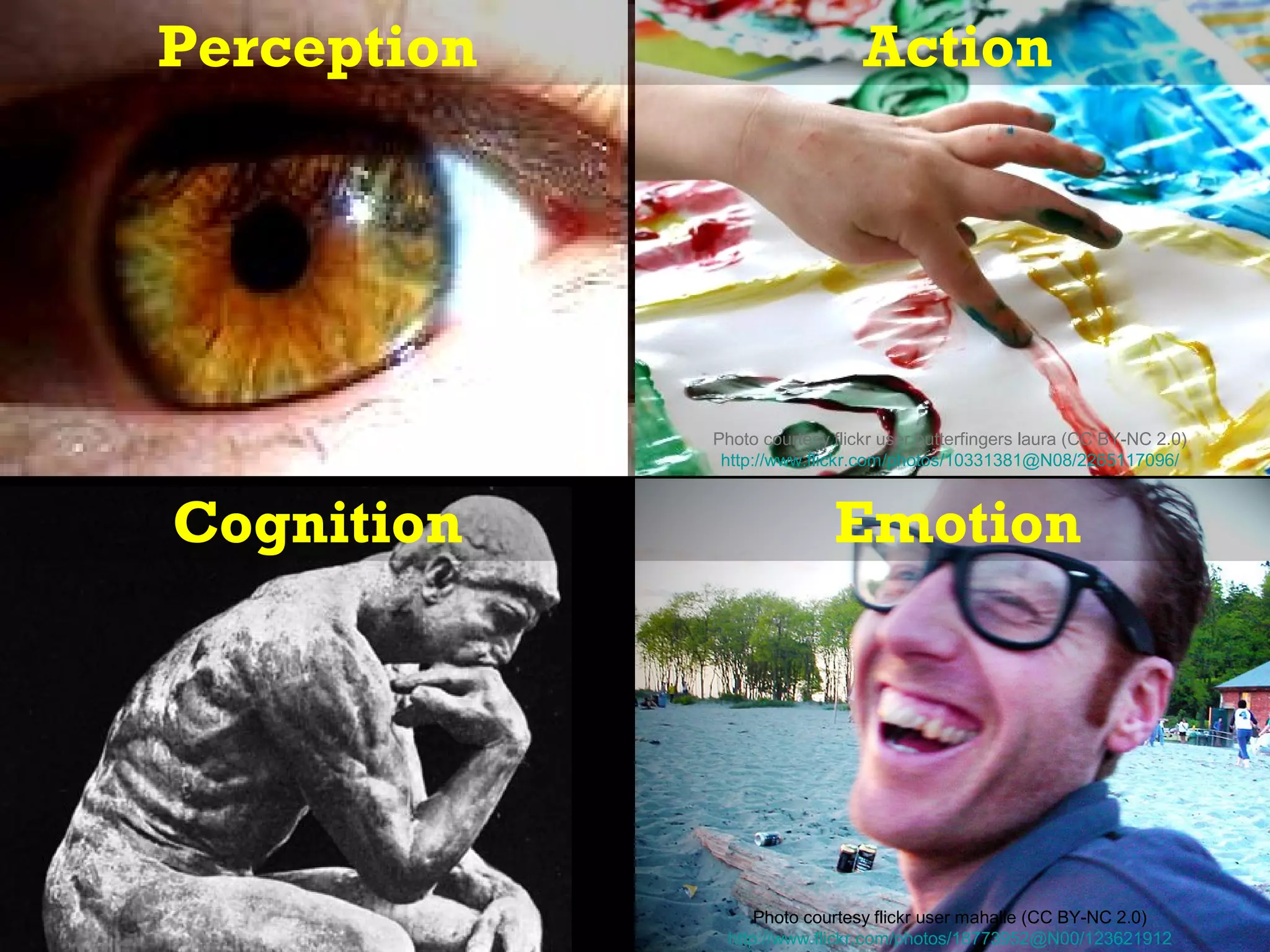
Perception                      Action


             Photo courtesy flickr user butterfingers laura (CC BY-NC 2.0)
              http://www.flickr.com/photos/10331381@N08/2265117096/


Cognition                   Emotion


                  Photo courtesy flickr user mahalie (CC BY-NC 2.0)
              http://www.flickr.com/photos/18773952@N00/123621912
Remember
                 We are not alone…
      ILF| ALA | ACRL                                                     Andromeda Yelton
      PLA |AASL | SLA                                                     Jamie LaRue
      Michael Stephens                                                    Jenica Rogers
      Buffy Hamilton                                                      Steven Bell
      David Lee King                                                      Lauren Pressley
      Jenica Rogers                                                       Andy Woodworth
      Stephen Abram                                                       Meredith Farkas
      Karen Schneider                                                     ALA Think Tank
Photo courtesy: Flickr user Cristian Bernal | Town hero CC BY-NC-ND 2.0 http://www.flickr.com/photos/townhero/5557220801/sizes/z/in/photostream/
http://www.flickr.com/photos/darwinbell/2602728681/


                    Contact Info and slides:
http://peterbromberg.com | http://www.slideshare.net/pbromberg
Deleted Scenes
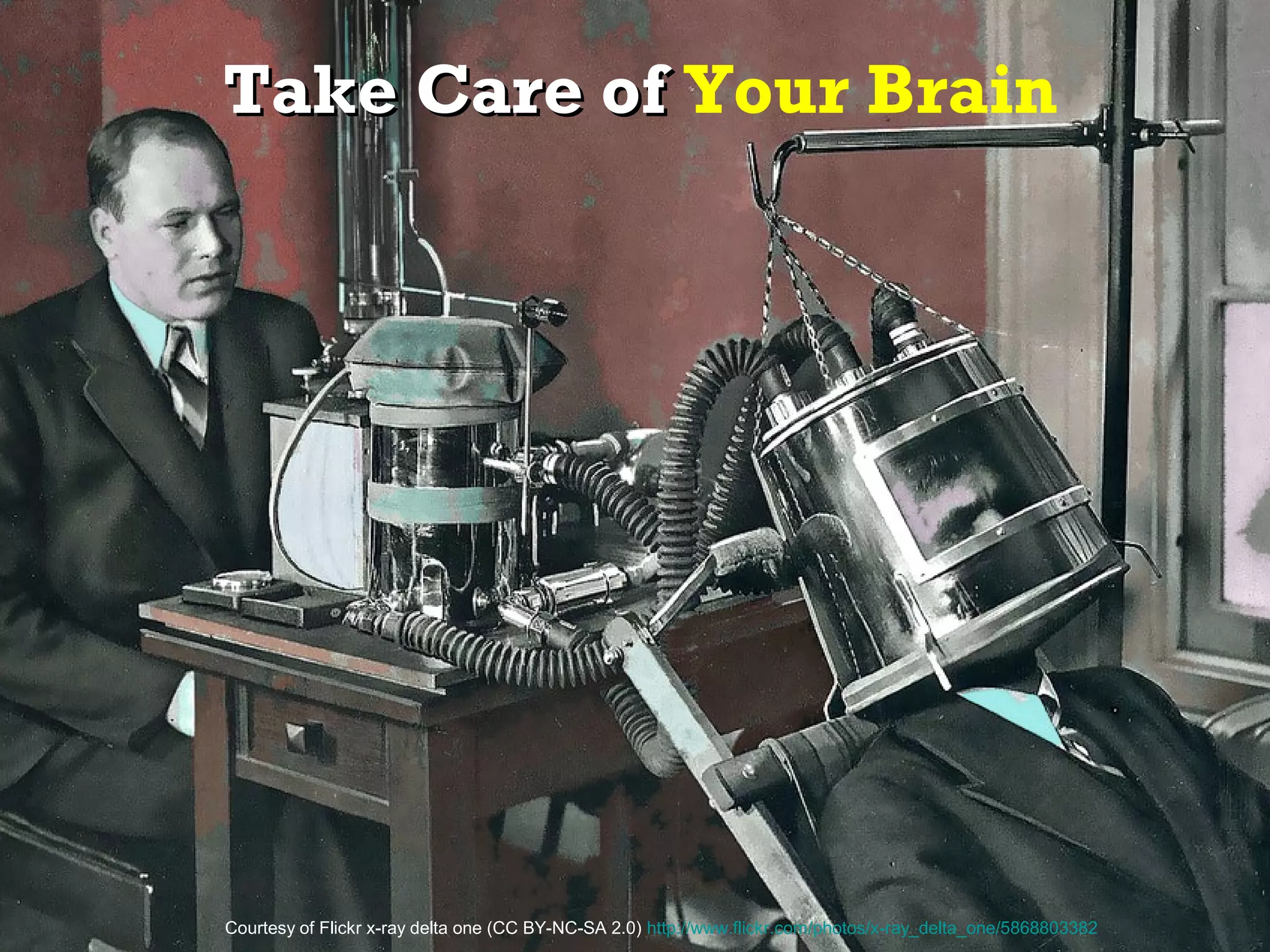
Take Care of Your Brain


Courtesy of Flickr x-ray delta one (CC BY-NC-SA 2.0) http://www.flickr.com/photos/x-ray_delta_one/5868803382
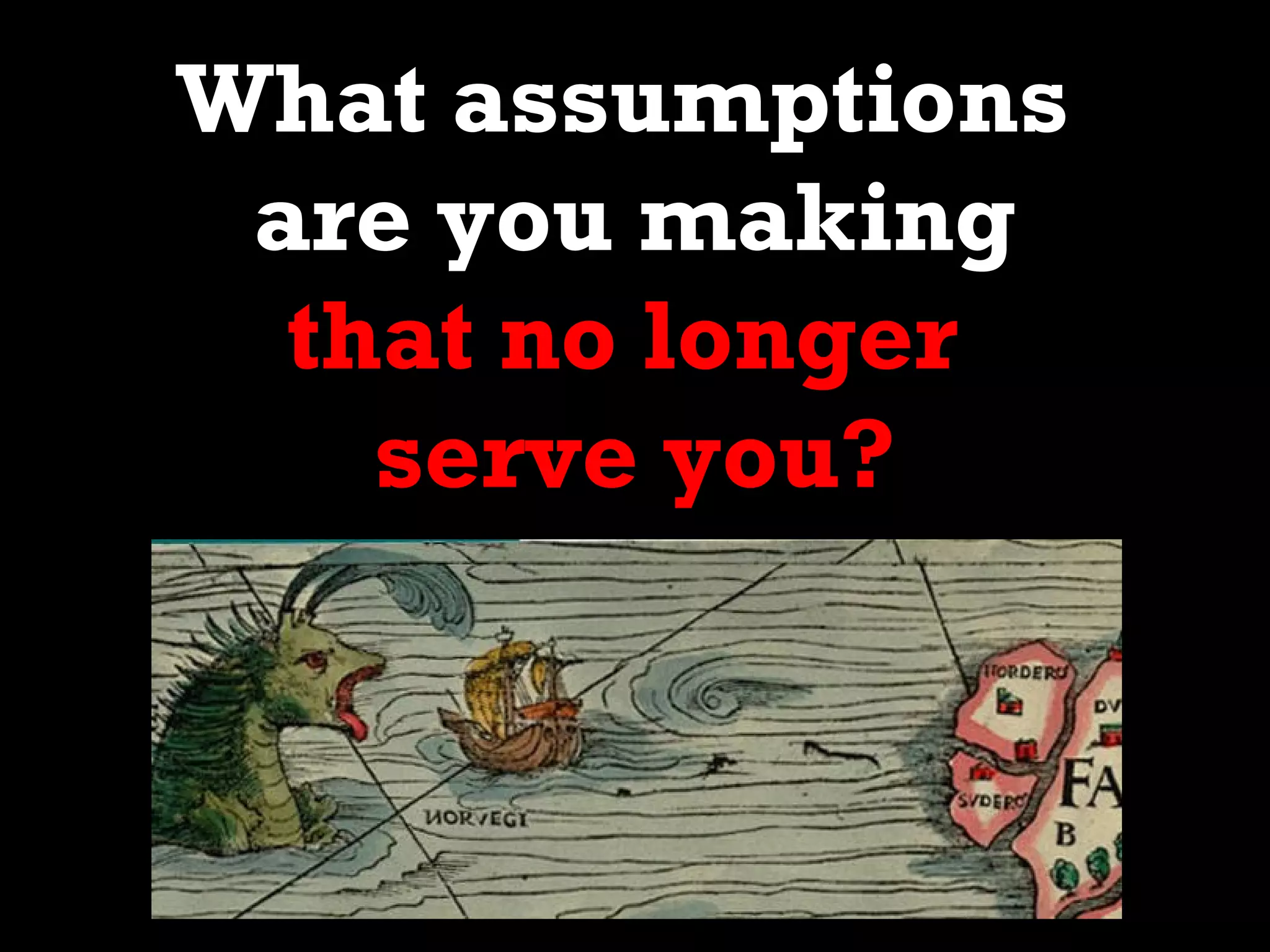
What assumptions
 are you making
  that no longer
    serve you?
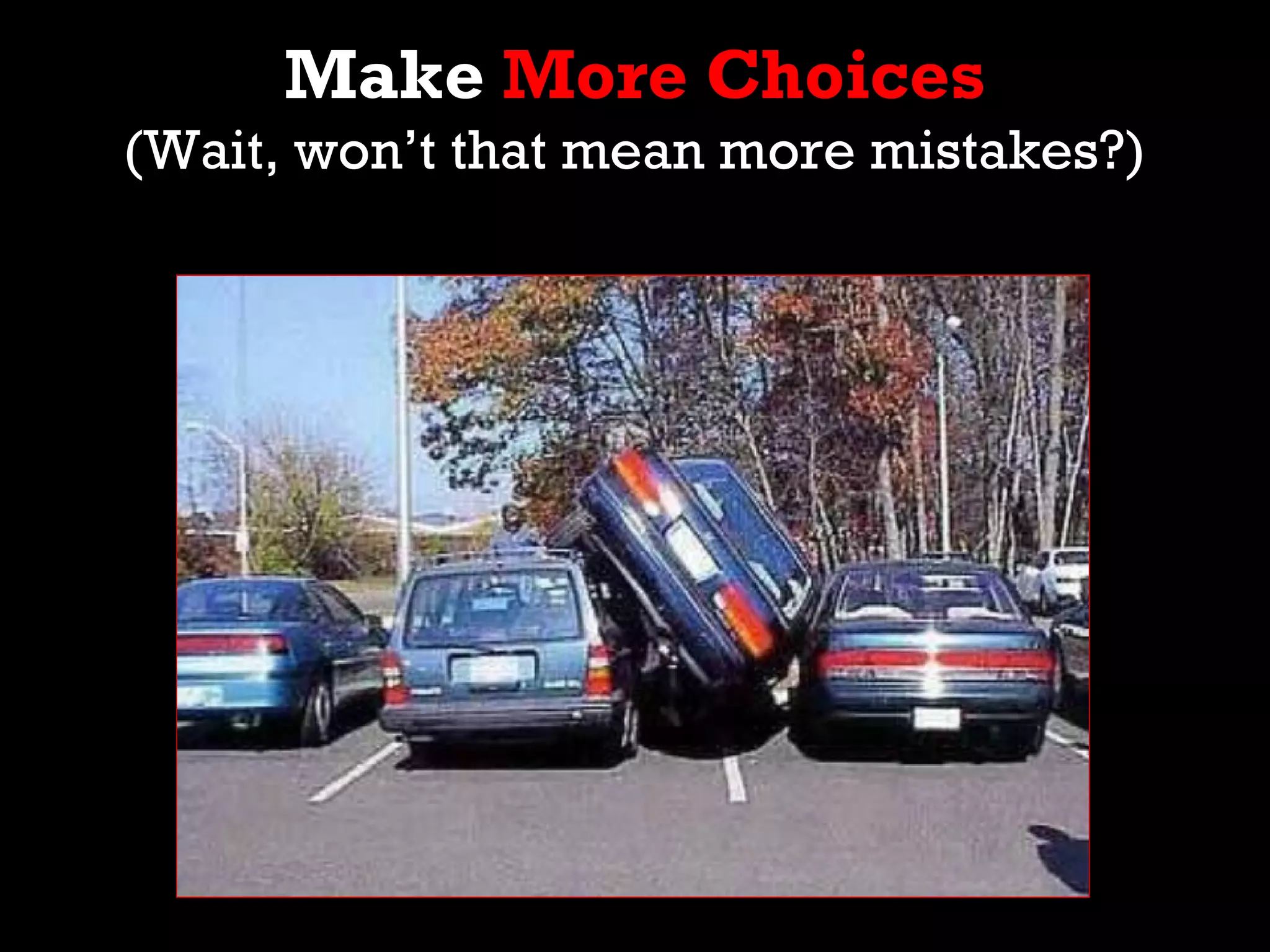
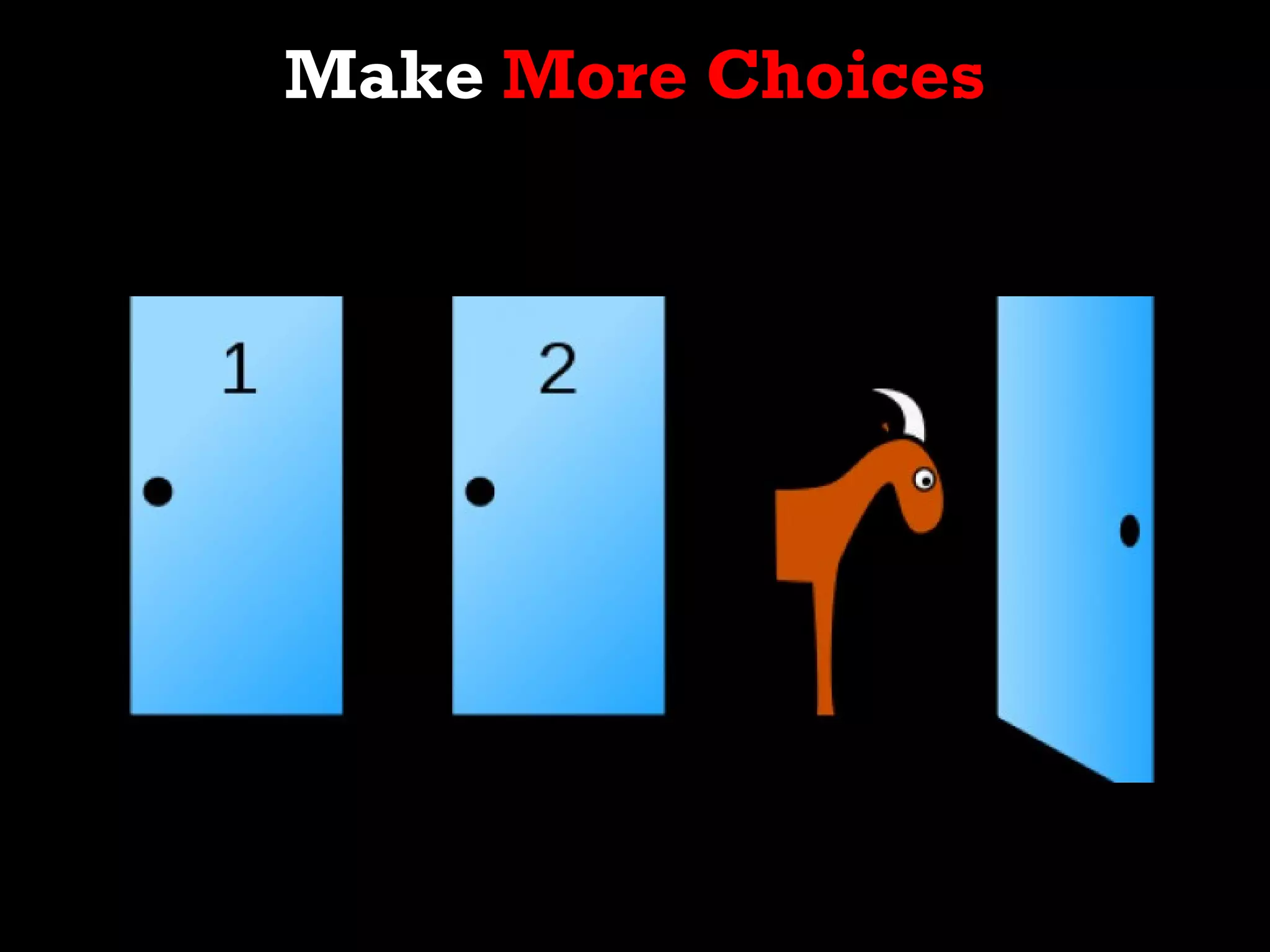
Make More Choices
(Wait, won’t that mean more mistakes?)
Make More Choices
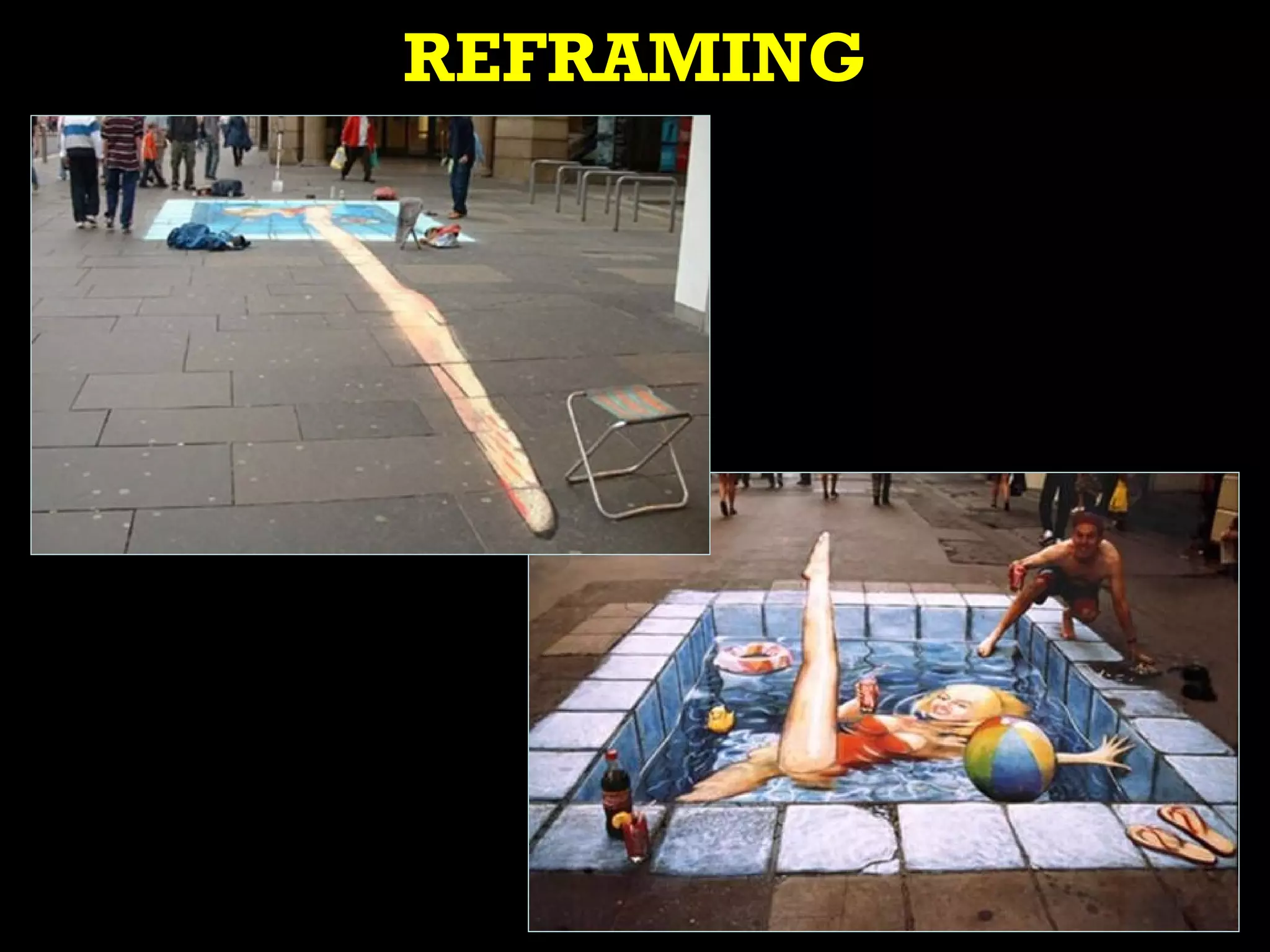
REFRAMING


Courtesy Flickr User Ben K. Adams (CC BY-NC-ND 2.) http://www.flickr.com/photos/schtumple/5187446637/sizes/l/in/photostream/
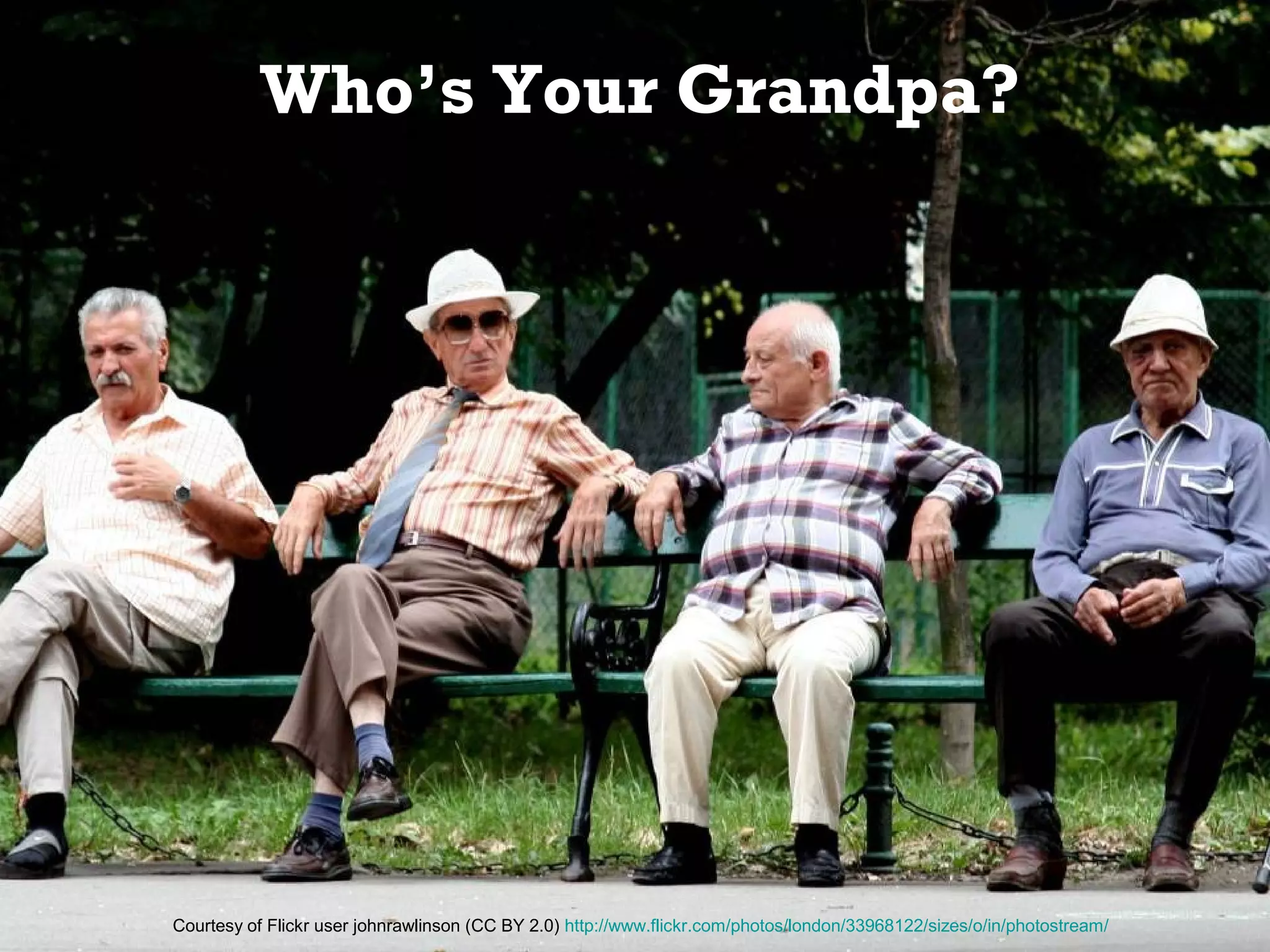
Who’s Your Grandpa?


Courtesy of Flickr user johnrawlinson (CC BY 2.0) http://www.flickr.com/photos/london/33968122/sizes/o/in/photostream/
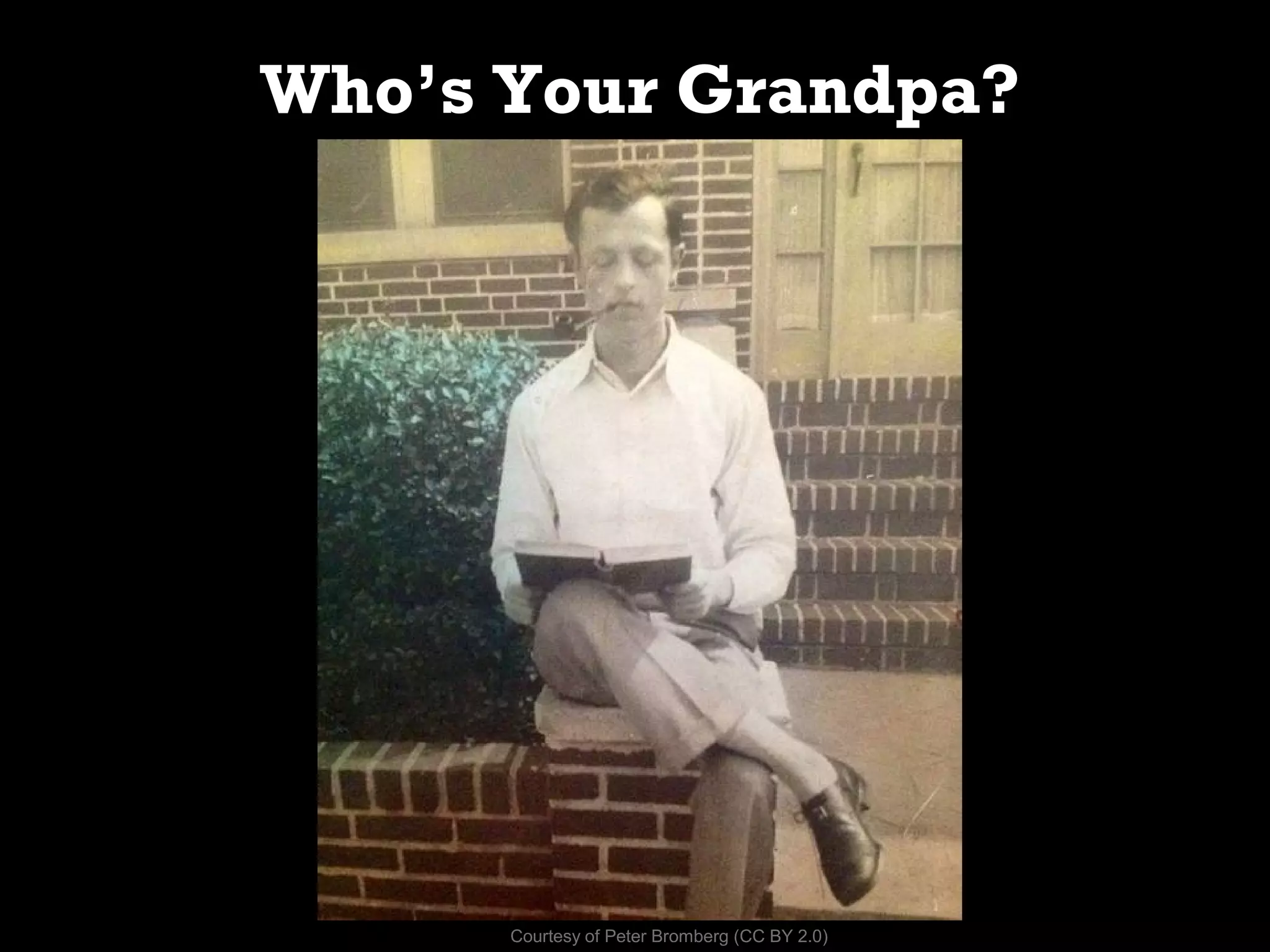
Who’s Your Grandpa?


      Courtesy of Peter Bromberg (CC BY 2.0)
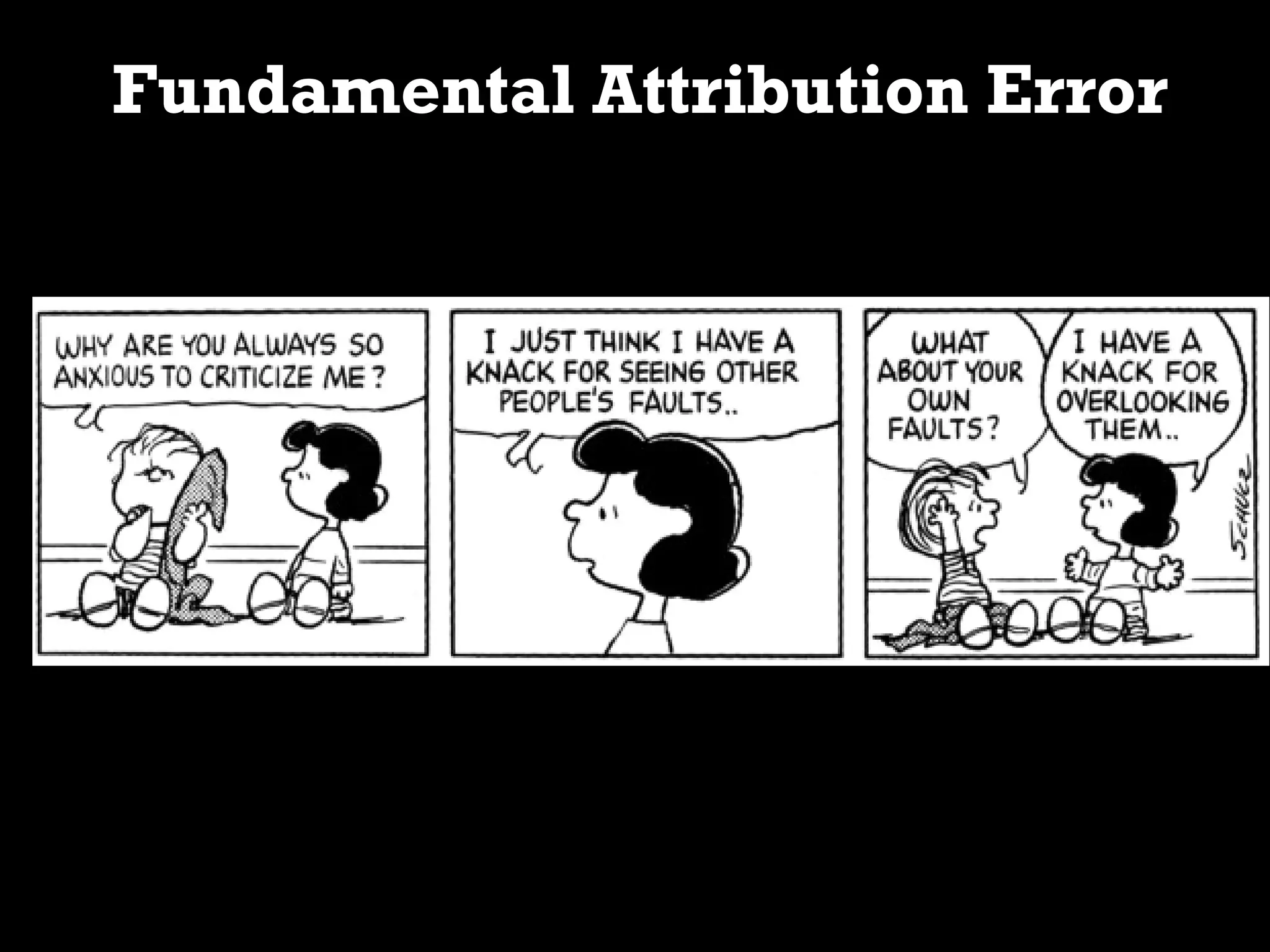
Fundamental Attribution Error
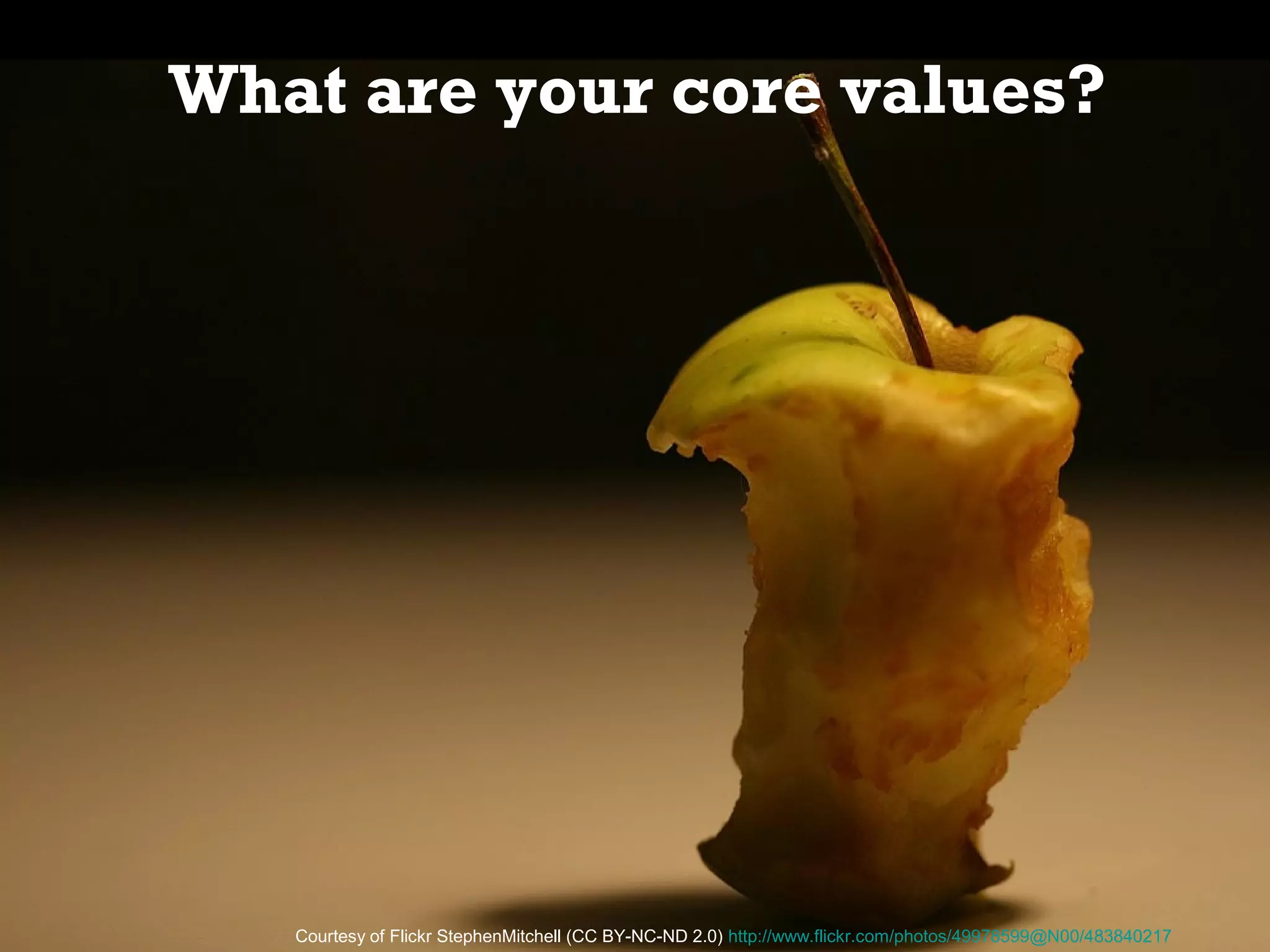
What are your core values?


   Courtesy of Flickr StephenMitchell (CC BY-NC-ND 2.0) http://www.flickr.com/photos/49978599@N00/483840217
True Facts From Dr. Science
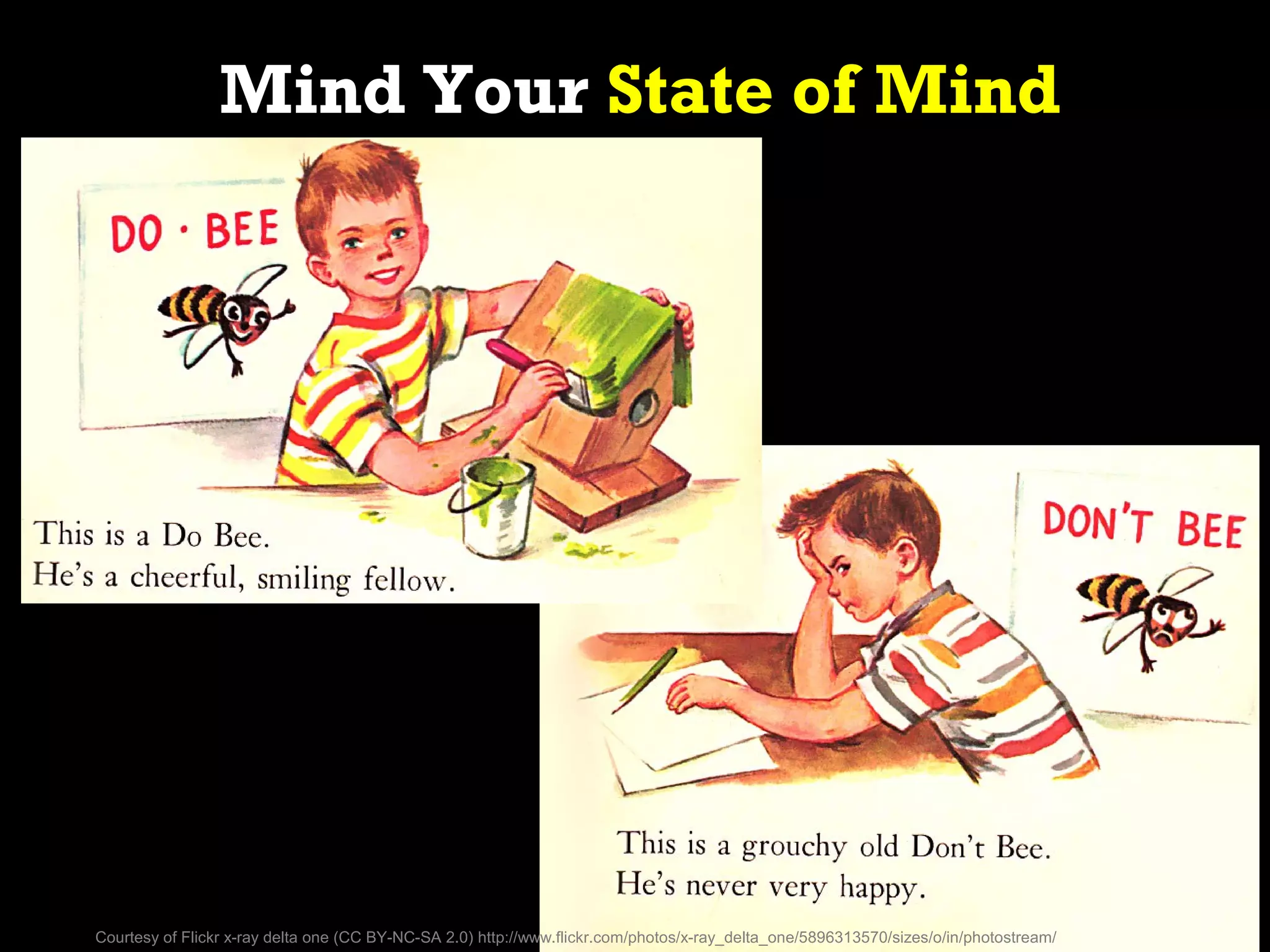
Mind Your State of Mind


Courtesy of Flickr x-ray delta one (CC BY-NC-SA 2.0) http://www.flickr.com/photos/x-ray_delta_one/5896313570/sizes/o/in/photostream/
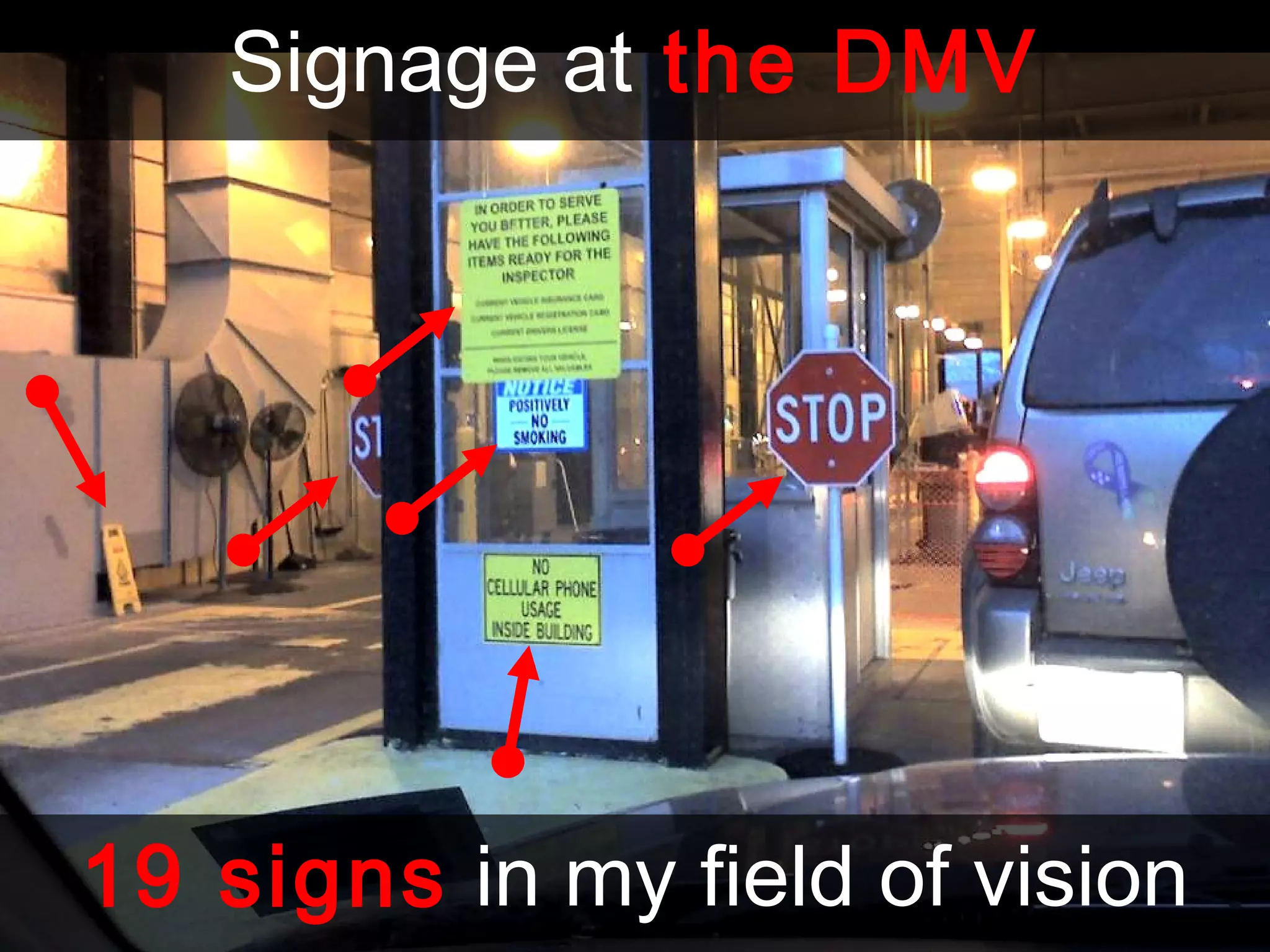
Signage at the DMV
How to be Effective


19 signs in my field of vision
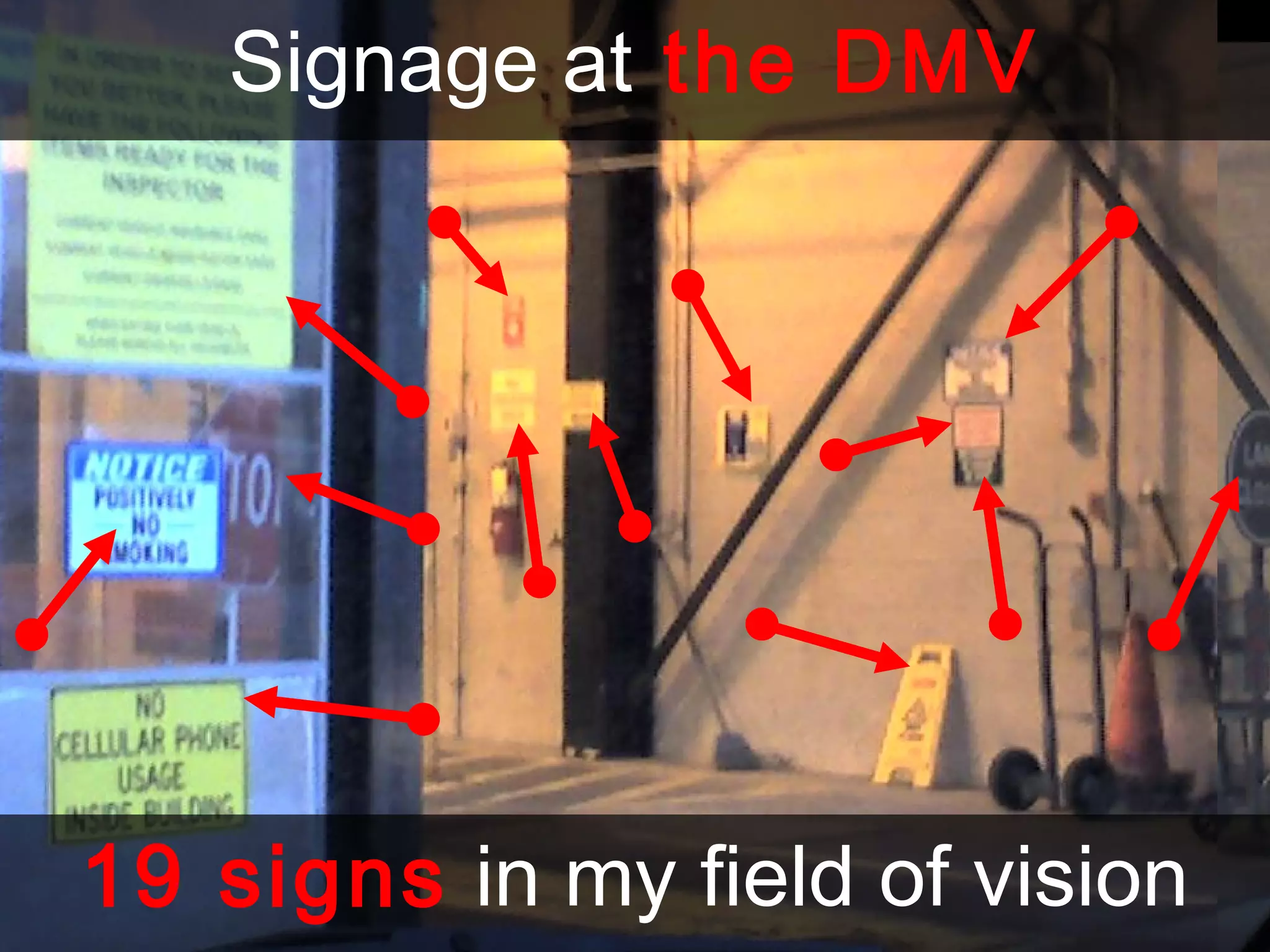
Signage at the DMV


19 signs in my field of vision
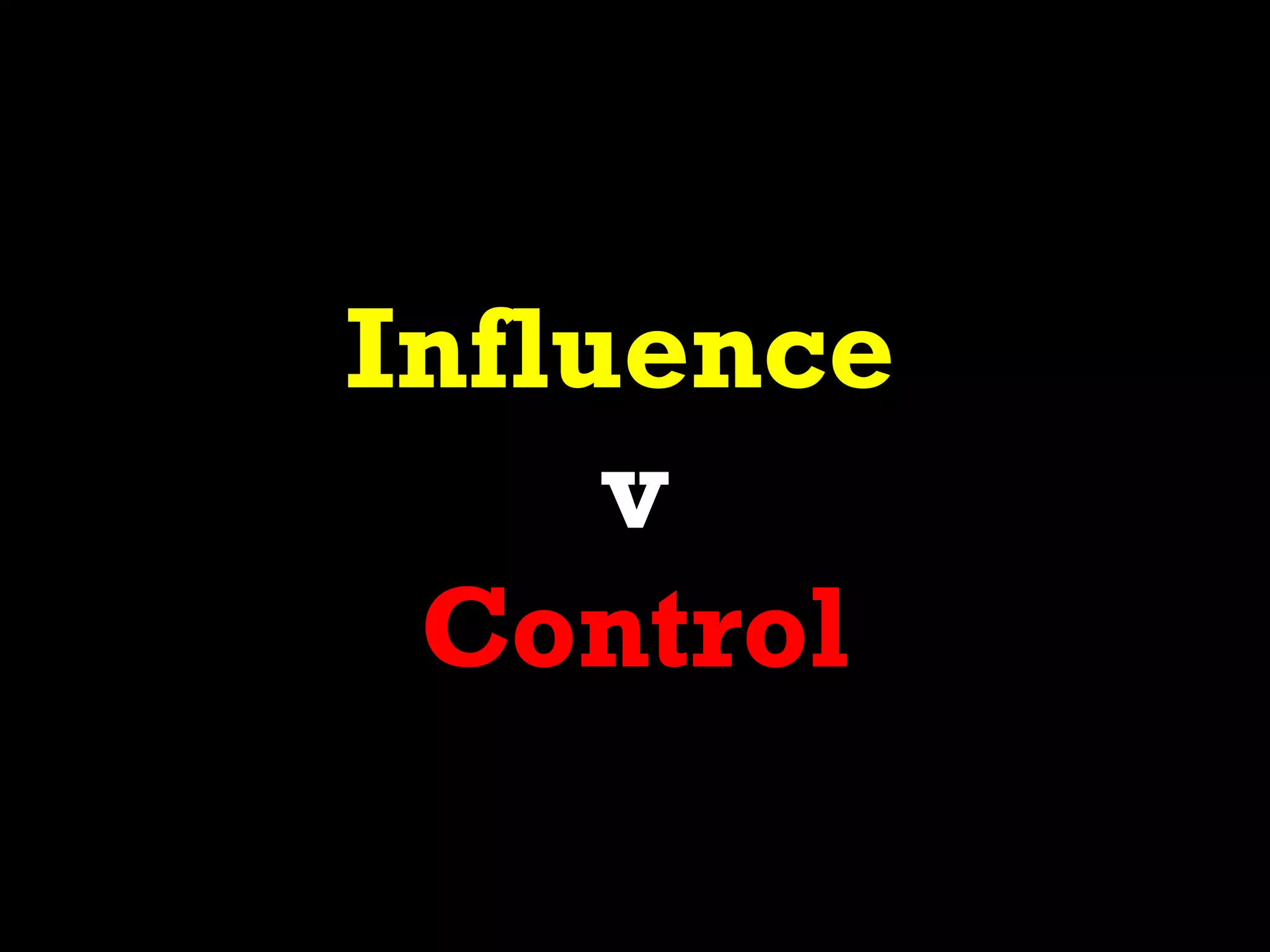
Influence
     v
 Control
Know Thyself


Courtesy of Flickr user demandaj (CC BY-NC-SA 2.0) http://www.flickr.com/photos/demandaj/5643777933/sizes/o/in/photostream/
The Rule of 2012
What got us here won’t get us there


   Courtesy Flickr user NDSU Ag Comm (CC BY-NC-SA 2.0) http://www.flickr.com/photos/49873984@N03/5622896396/
Are You Making a
    Dent in the Universe?


Courtesy of Flickr JD Hancock (CC BY 2.0) http://www.flickr.com/photos/83346641@N00/3653177703
610

FrameChanges (How to be Effective)

  • 1.
    FRAMECHANGES Indiana Library Fe deration Annual Conference November 14, 2012 Indianapolis, IN Peter Bromberg peterbromberg@gm ail.com Full Text of Talk is available at: http://peterbromberg.com/indiana/FRAMECHANGE.pdf
  • 2.
    Being an attemptto answer the question: How to be effective? Or … “Some things I’ve noticed or learned along the way”
  • 3.
    “Between stimulus andresponse there is a space. In that space is our power to choose our response. In our response lies our growth and our freedom.” - Viktor E. Frankl
  • 4.
  • 5.
  • 6.
  • 7.
  • 8.
  • 9.
  • 10.
  • 11.
  • 12.
  • 13.
  • 14.
  • 15.
    Why Are WeHere Today? World population: 7,000,000,000 Ever Lived: 108,000,000,000
  • 16.
    Why Are WeHere Today?
  • 17.
  • 18.
    Effectiveness is theability to bring about the results you desire.
  • 19.
    the absolutely crazyand historically unprecedented pace of Change or… What got us here won’t get us there
  • 20.
    Exponential Pace ofChange 1.5 mill yrs lever, wedge 500,000 yrs control of fire 50,000 yrs bow & arrow 5,000 years wheel and axle; sail 500 years printing press with movable type; rifle 100 years automobiles 55 years satellites 31 years IBM Home Computer 27 years Windows / Mac 19 years World wide web 11-13 years iPod, Netflix, Tivo 6-8 years Ubiquitous Broadband, Blogging, Skype 5 years iPhone, Android, App Store, Geolocation < 5 years SMS/Smartphone ubiquity, Twitter, Facebook Tablets, iPads, Cloud < 2 years AMAZON-APPLE-GOOGLE-FACEBOOK
  • 21.
    Key Trends: Overview   2000 2012 Use Internet (adult) 46% 82% Broadband at home 5% 66% Own a cell phone 50% 88% eBook Reader 0% 19% Tablet 0% 19% Pew Internet & American Life Project
  • 22.
    Change & Expectations “Everything’samazing and nobody’s happy” -Louis CK
  • 23.
    Exponential Pace ofChange 1.5 mill yrs lever, wedge 500,000 yrs control of fire 50,000 yrs bow & arrow 5,000 years wheel and axle; sail 500 years printing press with movable type; rifle 100 years automobiles 50 years satellites 30 years IBM Home Computer 25 years Windows / Mac 20 years World wide web 10 years ago iPod, Netflix, Tivo 6-8 years ago Ubiquitous Broadband, Blogging, Skype 5 years ago iPhone, Android, App Store, Geolocation < 5 years SMS/Smartphone ubiquity, Twitter, Facebook Tablets, iPads, Cloud < 2 years AMAZON-APPLE-GOOGLE-FACEBOOK
  • 24.
  • 25.
  • 26.
    Permanent Whitewater http://www.flickr.com/photos/nukeit1/244167779/
  • 27.
    Flatten the Organization Agile Flexible Adaptable Innovative Responsive Photo cc license 2.0 courtesy flickr user Chrissy Eliza http://www.flickr.com/photos/chrissyeliza/4142314898/sizes/l/in/photostream/
  • 28.
  • 29.
    Flatten the Organization StrongShared Vision Less Hierarchy Bias for action Bias for risk-taking Employee empowerment Photo cc license 2.0 courtesy flickr user Chrissy Eliza http://www.flickr.com/photos/chrissyeliza/4142314898/sizes/l/in/photostream/
  • 30.
    Importance of a StrongVision Image source: http://www.thetransactiontax.org/2012/01/16/i-have-a-dream/
  • 31.
    Emergent Leaders - Noformal authority - Motivate others - Initiate new ideas - Seek others’ opinions - Are passionate and involved Photo cc license 2.0 courtesy flickr user Ian’s Shutter Habit flickr.com/photos/9289838@N06/3387635009/sizes/z/in/photostream/
  • 32.
    Emergent Leaders “I’ll justkeep going until someone tells me to dial it back.” And what will you do if someone tells you to dial it back? “I’ll still keep going”
  • 33.
    You are Creative Resourceful and Whole
  • 35.
    Increasing yourstate of resourcefulness
  • 36.
    Power of Questions • What result do I want? • Were is my attention focused? • What else could this mean? • What resources are available? • What’s stopping me? • What assumptions am I making? • What have I tried? • What actions can I take? • What action WILL I commit to? • Did that move me in the right direction?
  • 37.
    Model for EffectiveAction 1. What do you want? 2. What actions have you taken? 3. Move in the right direction? 4. What else can you do? 5. What WILL you do? Modified from Steve and Jill Morris’ Leadership Simple
  • 38.
    Model for EffectiveAction 1. What do you want? 2. What actions have you taken? Accountability 3. Move in the right direction? 4. What else can you do? 5. What WILL you do? Modified from Steve and Jill Morris’ Leadership Simple
  • 39.
    Human Beings: AManual tr eam / /in/photos 720281/sizes/o energy/31 /pho tos/public .flickr.com .0) http://www BY-NC 2 nergy (CC Flickr us er publice Courtesy
  • 40.
  • 41.
    Clean up Tolerations Courtesy Flickr user wetsun (CC BY 2.0) http://www.flickr.com/photos/wetsun/72733049/sizes/z/in/photostream/
  • 42.
    Eat Well (and often) Courtesy of Flickr user Mike_tn (CC BY-NC-ND 2.0) http://www.flickr.com/photos/beginasyouare/290953222/sizes/o/in/photostream
  • 43.
    Exercise Courtesy Flickr userkevin dooley(CC BY 2.0) http://www.flickr.com/photos/12836528@N00/2811161524/
  • 44.
    The Power ofPosture
  • 45.
    Sleep Library of Congress.No known license:: http://www.flickr.com/photos/library_of_congress/2162949251 /
  • 46.
  • 47.
    Emotional Intelligence 1. Self-Knowledge 2.Regulate emotions 3. Know others 4. Adapt to others Adapted from:Mayer and Salovey, 1997 Image source: http://sagegenx.files.wordpress.com/2012/06/emotional-intelligence.jpg
  • 48.
    Know Thyself Personality Styles • DISC • Myers Briggs • Enneagram • Strengths Finder • True Colors Courtesy Flickr user mayhem (CC BY-NC-SA 2.0) http://www.flickr.com/photos/81126501@N00/3975910516
  • 50.
    Know Others • DISC •Myers Briggs • Enneagram • Strengths Finder • True Colors
  • 51.
    Platinum Rule Treat othersthe way they want to be treated
  • 52.
  • 53.
  • 54.
    Perception Action Photo courtesy flickr user butterfingers laura (CC BY-NC 2.0) http://www.flickr.com/photos/10331381@N08/2265117096/ Cognition Emotion Photo courtesy flickr user mahalie (CC BY-NC 2.0) http://www.flickr.com/photos/18773952@N00/123621912
  • 55.
  • 56.
    Perception Action Photo courtesy flickr user butterfingers laura (CC BY-NC 2.0) http://www.flickr.com/photos/10331381@N08/2265117096/ Cognition Emotion Photo courtesy flickr user mahalie (CC BY-NC 2.0) http://www.flickr.com/photos/18773952@N00/123621912
  • 57.
    Remember We are not alone… ILF| ALA | ACRL Andromeda Yelton PLA |AASL | SLA Jamie LaRue Michael Stephens Jenica Rogers Buffy Hamilton Steven Bell David Lee King Lauren Pressley Jenica Rogers Andy Woodworth Stephen Abram Meredith Farkas Karen Schneider ALA Think Tank Photo courtesy: Flickr user Cristian Bernal | Town hero CC BY-NC-ND 2.0 http://www.flickr.com/photos/townhero/5557220801/sizes/z/in/photostream/
  • 58.
    http://www.flickr.com/photos/darwinbell/2602728681/ Contact Info and slides: http://peterbromberg.com | http://www.slideshare.net/pbromberg
  • 59.
  • 60.
    Take Care ofYour Brain Courtesy of Flickr x-ray delta one (CC BY-NC-SA 2.0) http://www.flickr.com/photos/x-ray_delta_one/5868803382
  • 61.
    What assumptions areyou making that no longer serve you?
  • 62.
    Make More Choices (Wait,won’t that mean more mistakes?)
  • 63.
  • 64.
    REFRAMING Courtesy Flickr UserBen K. Adams (CC BY-NC-ND 2.) http://www.flickr.com/photos/schtumple/5187446637/sizes/l/in/photostream/
  • 65.
    Who’s Your Grandpa? Courtesyof Flickr user johnrawlinson (CC BY 2.0) http://www.flickr.com/photos/london/33968122/sizes/o/in/photostream/
  • 66.
    Who’s Your Grandpa? Courtesy of Peter Bromberg (CC BY 2.0)
  • 67.
  • 68.
    What are yourcore values? Courtesy of Flickr StephenMitchell (CC BY-NC-ND 2.0) http://www.flickr.com/photos/49978599@N00/483840217
  • 69.
    True Facts FromDr. Science
  • 70.
    True Facts FromDr. Science
  • 71.
    Mind Your Stateof Mind Courtesy of Flickr x-ray delta one (CC BY-NC-SA 2.0) http://www.flickr.com/photos/x-ray_delta_one/5896313570/sizes/o/in/photostream/
  • 72.
    Signage at theDMV How to be Effective 19 signs in my field of vision
  • 73.
    Signage at theDMV 19 signs in my field of vision
  • 74.
    Influence v Control
  • 75.
    Know Thyself Courtesy ofFlickr user demandaj (CC BY-NC-SA 2.0) http://www.flickr.com/photos/demandaj/5643777933/sizes/o/in/photostream/
  • 76.
    The Rule of2012 What got us here won’t get us there Courtesy Flickr user NDSU Ag Comm (CC BY-NC-SA 2.0) http://www.flickr.com/photos/49873984@N03/5622896396/
  • 77.
    Are You Makinga Dent in the Universe? Courtesy of Flickr JD Hancock (CC BY 2.0) http://www.flickr.com/photos/83346641@N00/3653177703
  • 78.

Editor's Notes

  • #2 http://peterbromberg.com/indiana/FRAMECHANGE.pdf
  • #4 ““ Between stimulus and response there is a space. In that space is our power to choose our response. In our response lies our growth and our freedom.” Viktor E. Frankl The world is changing Some would suggest that it’s changing at a faster pace than ever There are challenges, to be sure But there are also always choices Conference is a time to come together, and make a little space to reflect, to open ourselves up to new ideas and new ways of seeing. It’s a time to My job today is to help you hang out in that space. A little space for perspective. A little space for a shift in perspective. An opening to think creatively about the choices you have individually and collectively to focus your attention and your energy. Photo credit: Peter Bromberg [CLICK]
  • #5 I’d like to start by asking a question to create a little perspective; A little context WHY ARE WE HERE TODAY? A seemingly simple question, and one I try to continually ask and answer. Every day Take a moment, and think about the question. Why are we here today at the Maplewood Library? Why are YOU here? (RUN THROUGH ALL OF THE MAP SLIDES) [click]
  • #6 Earth
  • #7 Earth
  • #8 Earth
  • #9 Earth
  • #10 Earth
  • #11 Earth
  • #12 Earth
  • #13 3 rd planet from the sun
  • #14 Milky Way
  • #15 Universe
  • #16 Of the 107 billion people who have ever lived, we get to interact with a few hundred , maybe a few thousand. Look around you, these are the people you get to spend time with Our time here is precious
  • #17 So I will ask again: Why are we here today? Because Life is short Our time together is precious I want to use my time here to make a difference I want to be awake and fully present Enrich my life and the lives of those around me. I choose to do that through library service.
  • #18 What is effectiveness
  • #19 Working definition of effectiveness Effectiveness is the ability to bring about the results you desire.
  • #20 Let’s start by talking about change.
  • #21 Here is a chart that illustrates the pace of change– specifically change brought about by disruptive technologies You can see that the amount of time between disruptive technologies and major shifts that they bring about has continually compacted. (quickly review) This means that great grandfather’s life was virtually indistinguishable from his father’s life. They both lived in a make shift house , with a dirt floor, a wood burning oven, and no plumbing. The first 13 years of my grandfather’s life were the same as his fathers In 1921 he left Russia for America and the next 80 years of his life saw: Automobiles, Indoor plumbing, Telephones, Heart surgery, Air travel, Satellites in orbit Space travel a moon landing, Television, Microwaves, Portable radios and tape players In other words, my grandfather saw more significant change in his life than his ancestors saw in the 500 years previous. To contrast, my 15 year old nephew has never known a world without: Internet, 156 HD channels, Invisible braces, DVDs, Cell phones, Text Messaging The pace of change– the introduction of “disruptive technologies” continue to happen at an exponential pace… Here are just a few key indicators: [click]
  • #22   2000 2012 Use Internet (adult) 46% 82% Broadband at home 5% 66% Own a cell phone 50% 88% Wireless Internet 0% 66% eBook Reader 0% 19% Tablet 0% 19%
  • #23 SHOW VIDEO ----------------------------------------------------------------------------------------- Funny right, but he captures something there, about how customers expectations shift very quickly when they are exposed to new technologies that make their life easier—or at least technologies that they value. Back when we started QandANJ.org in late 2001 and I started going around doing presentations, I would ask, “how many of you have been on the internet in the last 24 hours.” In the beginning I’d see 10-25% of hands go up. Each year, I’d see more and more hands go up. And now when I ask that question (ask it) . I inevitably see 100% How many of you have texted w/I the last 24 hours? Been on a social network? In a few years, how many hands will we see? The fact is, that technology doesn’t just expand what’s possible, it shifts our expectations and the expectations of our customers. Which means we have to be continually evaluating and shifting our role as librarians to respond to the shifting needs and expectation of those that we serve . But we’re getting a little bit ahead of ourselves… Let’s finish this discussion on the pace of change [click]
  • #24 Looking back at the chart: What we see is that for long periods of time, nothing happened. Then something happened, that had a major ramifications. That led to major changes. And then for another long period of time nothing happened. In Change Management, this was referred to as [CLICK] (Unfreeze Change,Re-freeze model)
  • #25 Up until recently, there was an accepted model of how change happens in society and organizations: The Unfreeze, Change, Refreeze model , This model suggests that: Our structures, our organizations , and therefore our experiences remain fairly stable (or frozen) for long periods of time Some fundamental change occurs, and for a period of time, things unfreeze. We all get used to the change, it’s ramifications play out, and we settle into the new normal. We refreeze. This model makes sense when we apply it historically, but over the last 100 years, the periods between each change have gotten smaller and smaller, to the point where it seems we don’t even get to the refreeze point. With regard to change we are now more in a state of continual fluidity . What does it feel like when we are in “unfreeze” mode? [click]
  • #26 Like this… Mad Men is all about that unfreezing Again, we have increasingly found ourselves in type of permanent unfreeze model Peter Vaill, a Professor of Mgmt at Antioch Univ . observed this phenomena and suggested a new model to help us understand change . [click]
  • #27 We are now in what Peter Vaill and other change mgmt experts call: Permanent whitewater. Whitewater suggests a number of things: It suggests a fast-pace ; It suggests that the situation changes by the second It suggests that we need to vigilant, aware and responsive moment by moment It also suggests that we can have a general sense of shape of the river—the direction of current — Maybe know where the really big rocks are . We can’t control the ride, but we can influence it . So, what can we do to be successful in this new reality? [CLICK]
  • #28 We can flatten our organizations. Why? Simple: Because flatter organizations – organizations with less hierarchy and bureaucracy– are better positioned to succeed in a climate of rapid change? What are the characteristics of a flattened org? Agile Flexible Adaptable Innovative Responsive [click]
  • #29 Valve is an extreme example of an organization with NO hierarchy No management No structure Anyone can Think of it as runway fashion. It’s far out there, but some of those far out ideas can be scaled back and used. [click]
  • #30 How does that look? Flatten the organization Strong shared Vision Less Hierarchy Bias for action Bias for risk-taking Employee empowerment to act Encourage Emergent Leadership [click] Photo cc license 2.0 courtesy flickr user Chrissy Eliza http://www.flickr.com/photos/chrissyeliza/4142314898/sizes/l/in/photostream/
  • #32 Emergent Leaders: (Peter Northouse) No formal authority Motivate others Initiate new ideas Seek others’ opinions Are passionate and involved Photo cc license 2.0 courtesy flickr user aussiegal http://www.flickr.com/photos/aussiegall/7196082472/sizes/l/in/photostream/
  • #33 Lindsey is a great example of Emergent Leadership [click]
  • #37 POWER OF QUESTIONS What result do I want? Were is my attention focused? What else could this mean? What resources are available? What’s stopping me? What assumptions am I making? What have I tried? What actions can I take? What action WILL I commit to? Did that move me in the right direction?
  • #38 When we aren&apos;t getting what we want, we basically have three options available to us. We can change what we want, we can change our behavior, or we can change our perception (Jill and Steve Morris, Leadership Simple)
  • #40 The Body/mind is a system. Take care of both. They are intertwined When you are healthy, well-rested, and properly vitaminized, you will be more effective because you will be in a greater state of resourcefulness
  • #41 When we are healthy in body and mind, we are inevitably, happier, more creative, more energized, and hence more effective.
  • #43 Eat Well and often . I’m not going to preach, but if you’re not eating a healthy balance diet it’s like you’re coming up to bat with 1 strike on you. Research shows that breakfast is super important, and it is better to nibble on small snacks between meals (especially protein like nuts, cheese), then to go long periods without food.
  • #44 Exercise: Again, no preaching. There are reams of data that extol the benefits of exercise. The good news is you don’t need to be a gym rat to reap the benefits. Gretchen Reynolds, who has written on science, health and fitness for 20 years says, “The first 20 minutes of moving around provide most of the health benefits. Take the stairs a little more often, park far away from the entrance, take a walk. You will find yourself with more mental, as well as physical energy
  • #45 From: http://www.ted.com/talks/amy_cuddy_your_body_language_shapes_who_you_are.html Body language affects how others see us, but it may also change how we see ourselves. Social psychologist Amy Cuddy shows how “power posing” -- standing in a posture of confidence, even when we don’t feel confident -- can affect testosterone and cortisol levels in the brain, and might even have an impact on our chances for success. “ Amy Cuddy’s research on body language reveals that we can change other people’s perceptions — and even our own body chemistry — simply by changing body positions.”
  • #46 Sleep : There is so much data on the value of sleep the benefits of napping. For instance, a 2007 study led by researchers at Beth Israel Deaconess Medical Center and Brigham and Women&apos;s Hospital found that “relational memory -- the ability to make logical &quot;big picture&quot; inferences from disparate pieces of information -- is dependent on taking a break from studies and learning, and even more important, getting a good night&apos;s sleep.”
  • #47 Take Breaks: Again, research shows that even a short 10 minute break away from our desks can rejuvenate us and lead to better engagement and creative problem-solving. A 2010 study at the University of California “found that when rats have a new experience, like exploring an unfamiliar area, their brains show new patterns of activity. But only when the rats take a break from their exploration do they process those patterns in a way that seems to create a persistent memory of the experience. The researchers suspect that the findings also apply to how humans learn.” Article: http://www.nytimes.com/2010/08/25/technology/25brain.html
  • #49 Importance of self-knowledge Biases Personality styles Communication Style Decision Making Style How we deal with conflict
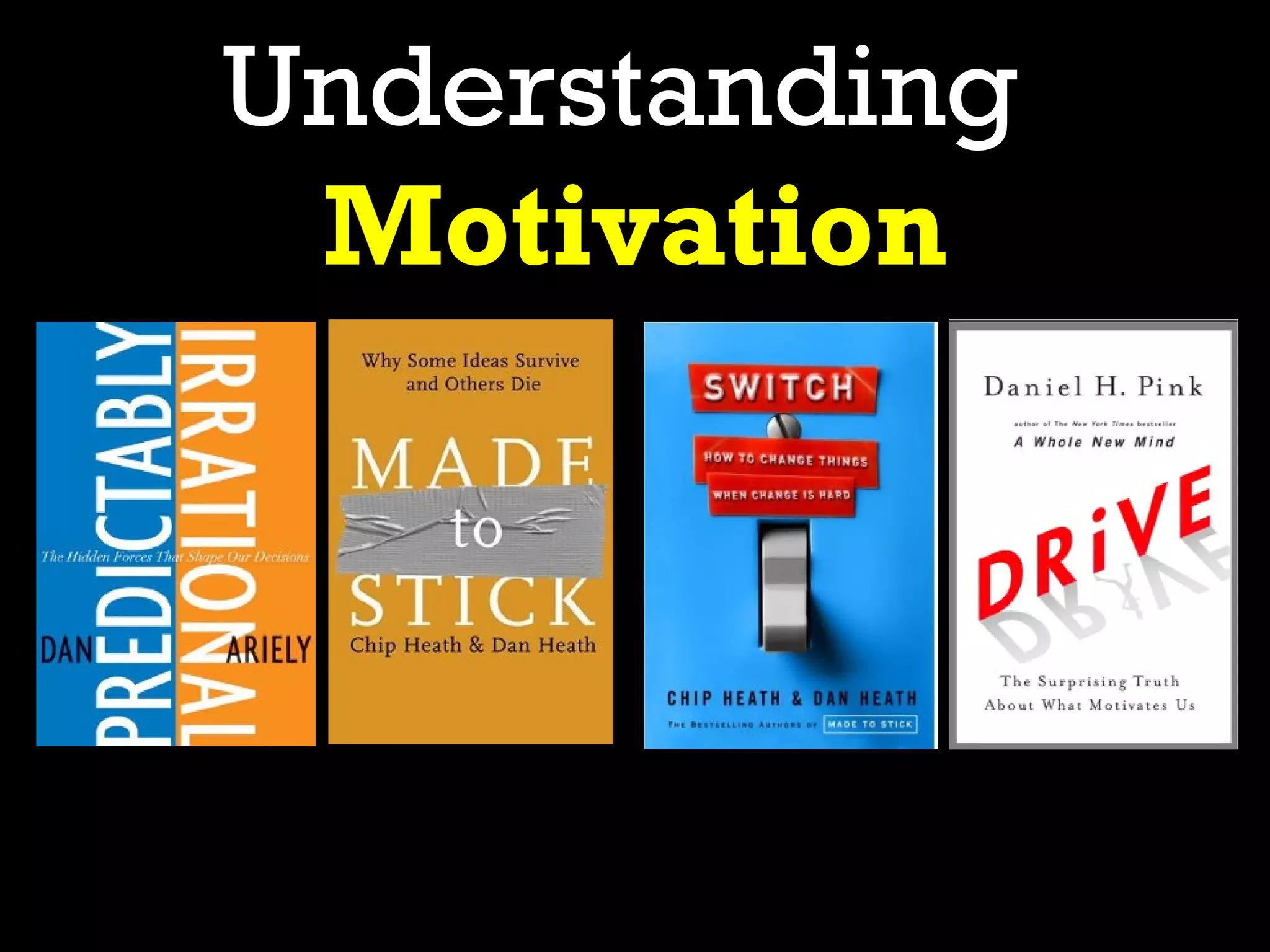
  • #53 Four other books I highly recommend Predictably Irrational (how we make choices) Made to Stick (how we remember) Switch (change management) Drive (motivation)
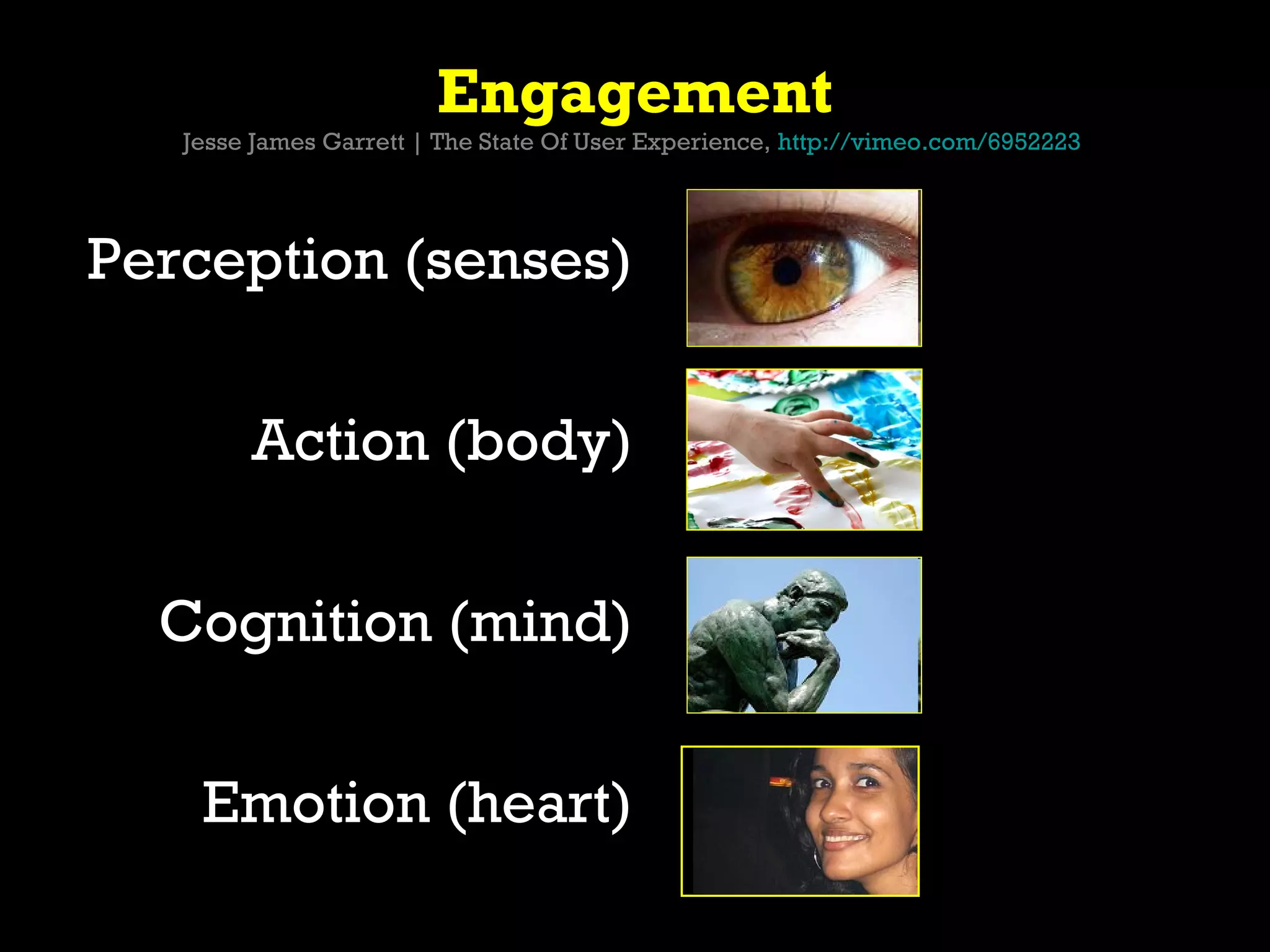
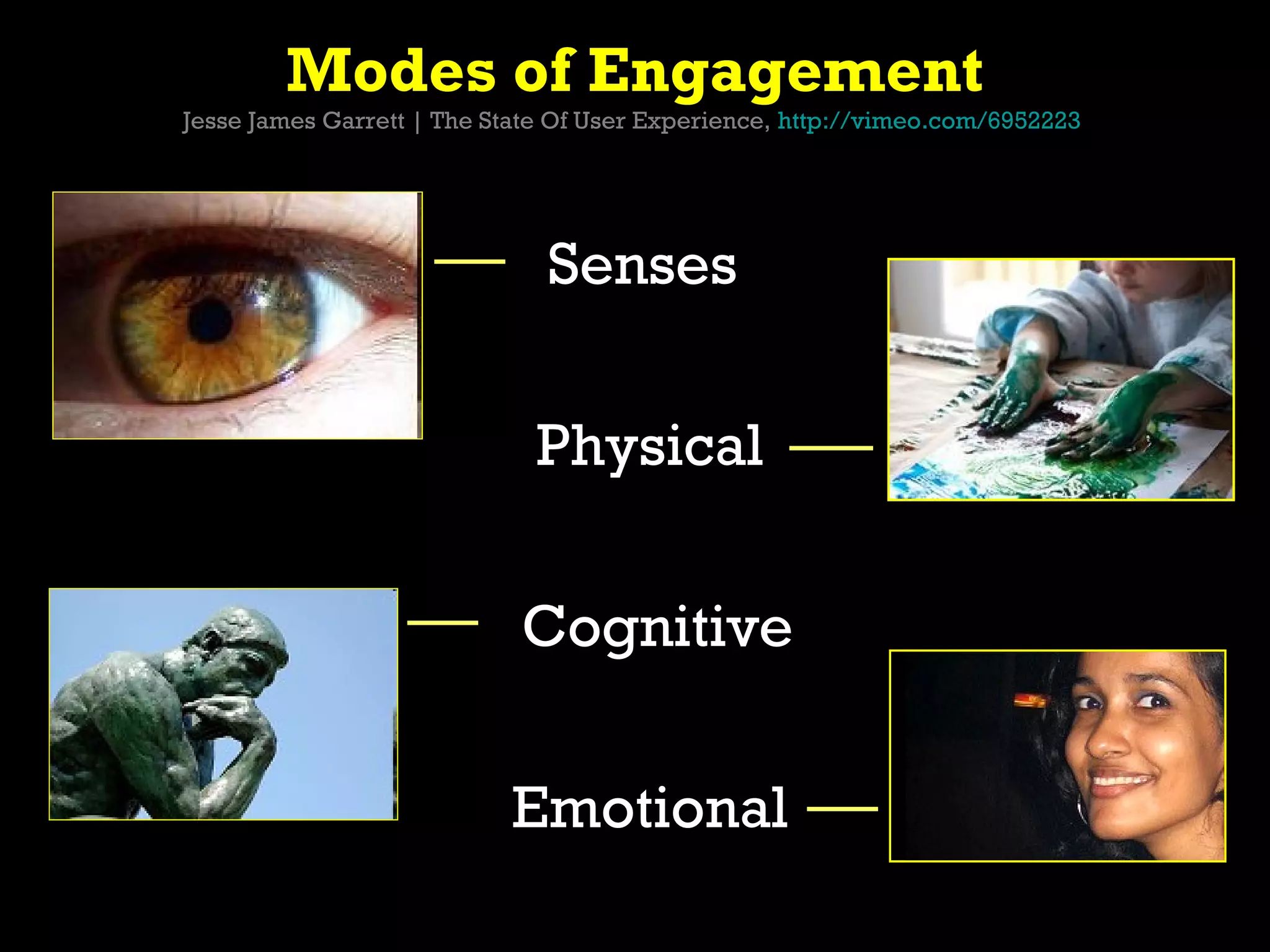
  • #55 In a talk that Jesse James Garrett did at UX Week 2009 (a user experience conference), he suggests that our goal should be engagement and that customers can be engaged in four primary ways. Through: Perception (senses) Action (body) Cognition (mind) Emotion (heart) [click] From. Jesse James Garrett | The State Of User Experience, http://vimeo.com/6952223 Picture of fingerpainting girl: http://www.flickr.com/photos/pollock/4172866434/sizes/n/in/photostream/ Picture of smiling woman: http://www.flickr.com/photos/phantom_menace/177058530/sizes/m/in/photostream/
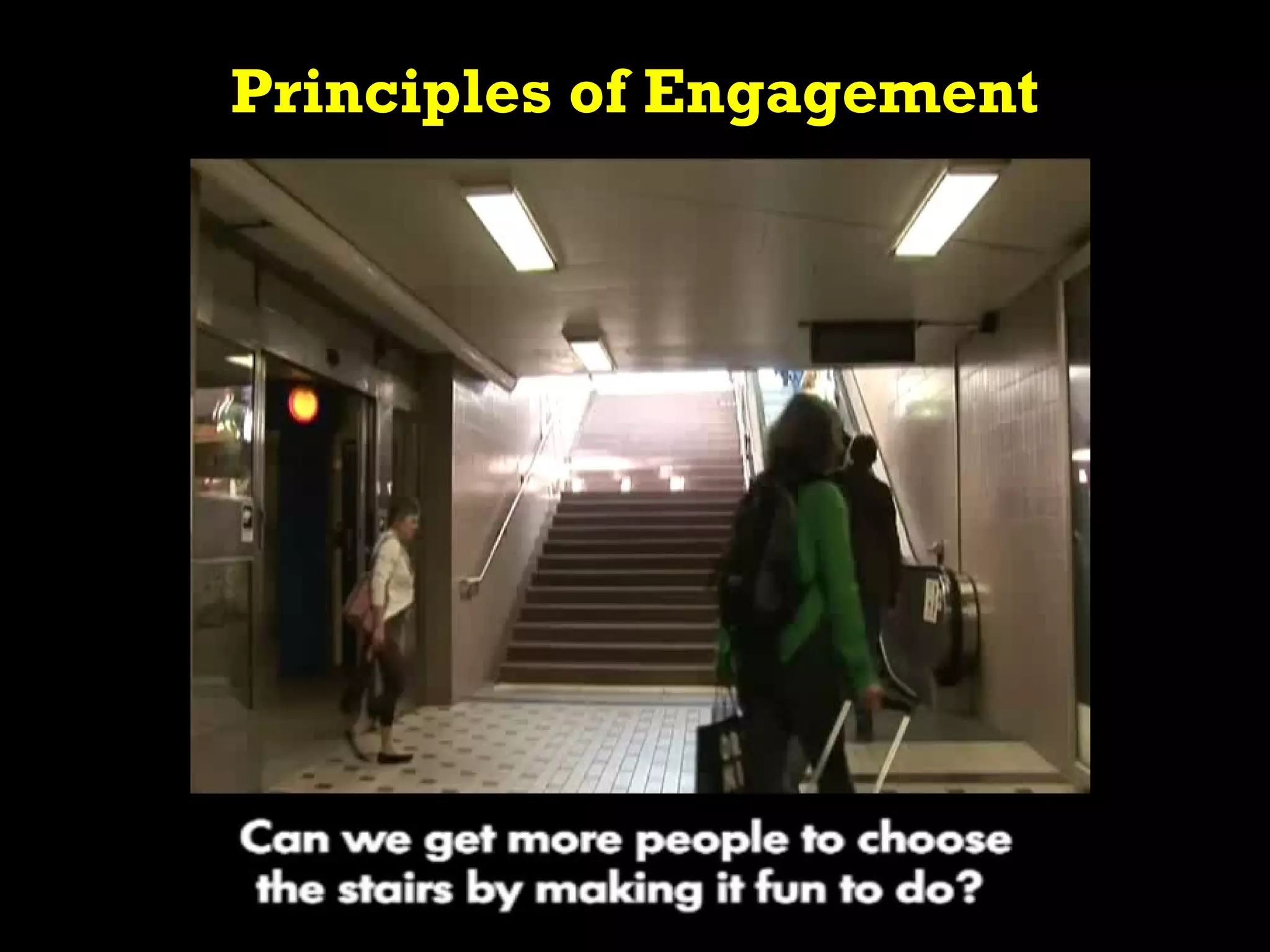
  • #56 What does that kind of engagement look like? Let’s See: http://www.youtube.com/watch?v=2lXh2n0aPyw So how were the people in this video being engaged? Perception (sound, visual) Action (jumping, walking) Cognition (choices, cause/effect) Emotion (fun!) Garrett suggests that once you start thinking in terms of user experience, you start to see user experience problems everywhere; you can’t NOT see these problems. [click]
  • #57 In a talk that Jesse James Garrett did at UX Week 2009 (a user experience conference), he suggests that our goal should be engagement and that customers can be engaged in four primary ways. Through: Perception (senses) Action (body) Cognition (mind) Emotion (heart) [click] From. Jesse James Garrett | The State Of User Experience, http://vimeo.com/6952223 Picture of fingerpainting girl: http://www.flickr.com/photos/pollock/4172866434/sizes/n/in/photostream/ Picture of smiling woman: http://www.flickr.com/photos/phantom_menace/177058530/sizes/m/in/photostream/
  • #58 There is an amazing network of people and organizations out there to support us and network with Indiana Library Federation | ALA | ACRL |PLA | AASL| SLA Michael Stephens Buffy Hamilton David Lee King Jenica Rogers Steven Bell Lauren Pressley Andy Woodworth Meredith Farkas ALA Think Tank Webjunction
  • #61 Sleep Nap Take Breaks Do Nothing
  • #65 The frame provides context Context shapes meaning Discuss “Asset based thinking” ?
  • #66 How to get over the fundamental attribution error? Realize you’re telling yourself a story which may or may not be true Recognize that there are significant downsides to the story (puts you in a less resourceful place) Tell a different story; A charitable story. Put things in a different frame Note how much better you feel (fewer conflicts, improved relationships, better resolution of problems, fewer escalations)
  • #67 How to get over the fundamental attribution error? Realize you’re telling yourself a story which may or may not be true Recognize that there are significant downsides to the story (puts you in a less resourceful place) Tell a different story; A charitable story. Put things in a different frame Note how much better you feel (fewer conflicts, improved relationships, better resolution of problems, fewer escalations)
  • #69 Core Values are important because they help make quick decisions, aligned with your purpose and goal Core value = What do you believe in??? What are you willing to fight for? Where do you draw your line in the sand? What won’t you do? Inspire others.
  • #72 Sleep Nap Take Breaks Do Nothing
  • #73 OK, before we dive in, let’s set the stage a bit. I was at the DMV inspection station with my wife’s car got up early, crack of dawn Waiting in line, and as I pull up, this is what I see: [NEXT SLIDE]
  • #74 Granted it was early I hadn’t had coffee yet But my brain was seriously fritzing out trying to figure out what I was supposed to be doing. Justice Potter stewart famously remarked on porography , “hard to define but I know it when I see it.” Kind of like ineffectiveness. Ineffectiveness: You know it when you see it… So that’s ineffectiveness. What does it mean to be effective?
  • #76 Importance of self-knowledge Biases Personality styles Communication Style Decision Making Style How we deal with conflict
  • #78 Jason Fried and David Heinemeier Hansson (ReWork) talk about making a dent in the universe