Maximizing
Knowledge-Sharing
in Your Business

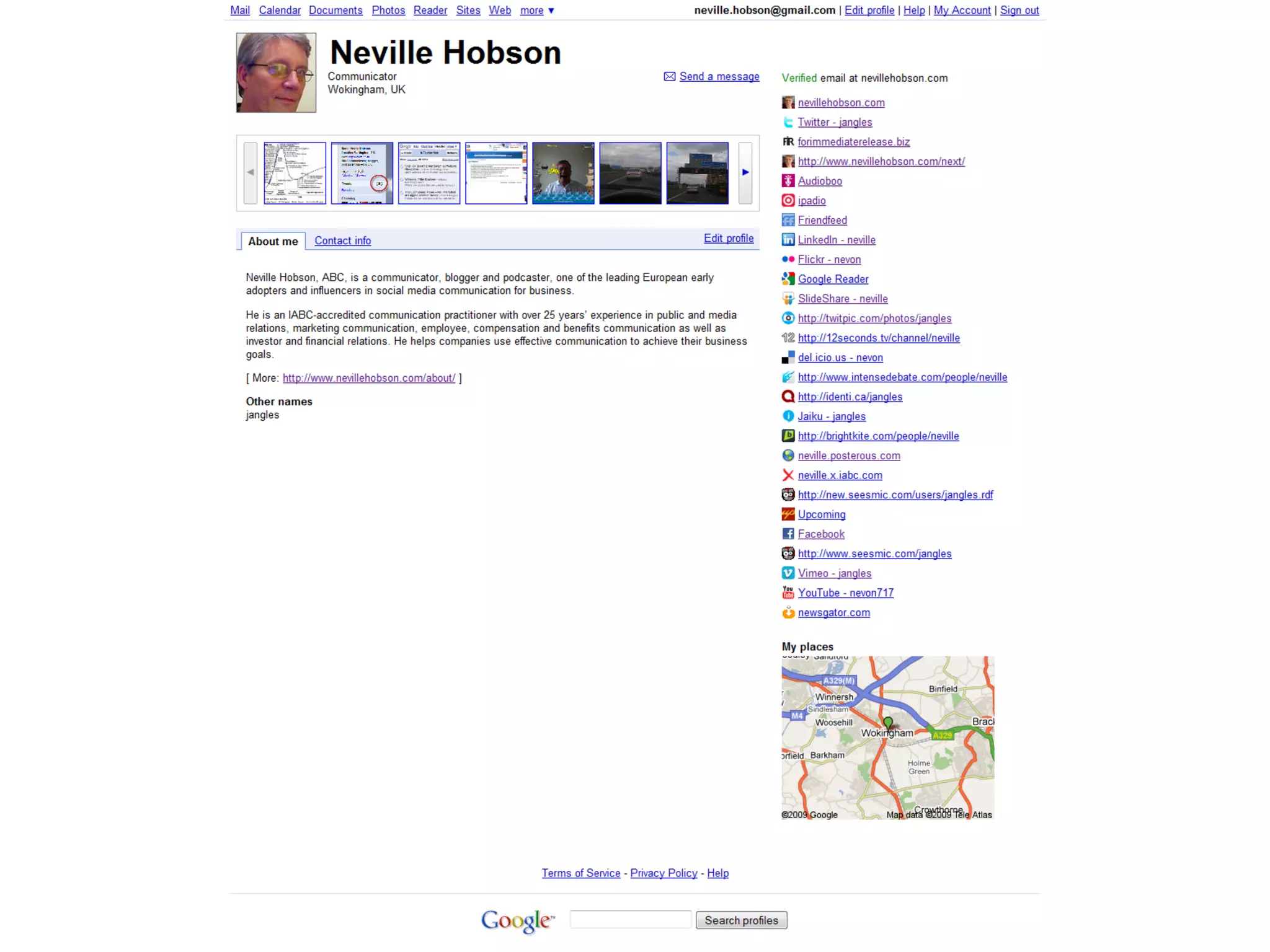
Neville Hobson, ABC
www.nevillehobson.com


London
August 19, 2009
Now – 10:45
1. The Big Picture
2. How can social software advance your
   current knowledge strategy?
3. Gaining an understanding of the
   business potential of social media

10:45 – 11:00
 Coffee
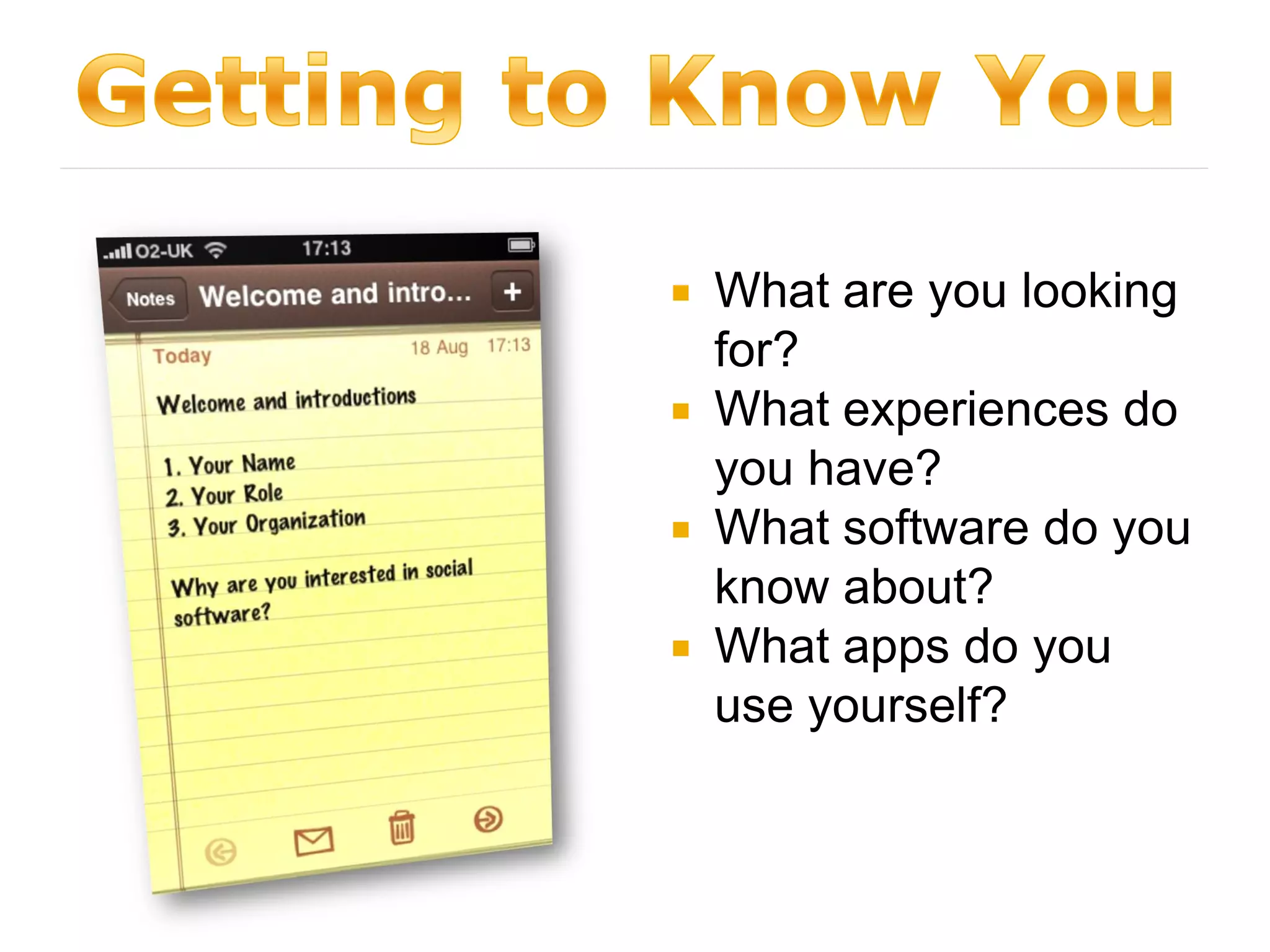
 What are you looking
  for?
 What experiences do
  you have?
 What software do you
  know about?
 What apps do you
  use yourself?
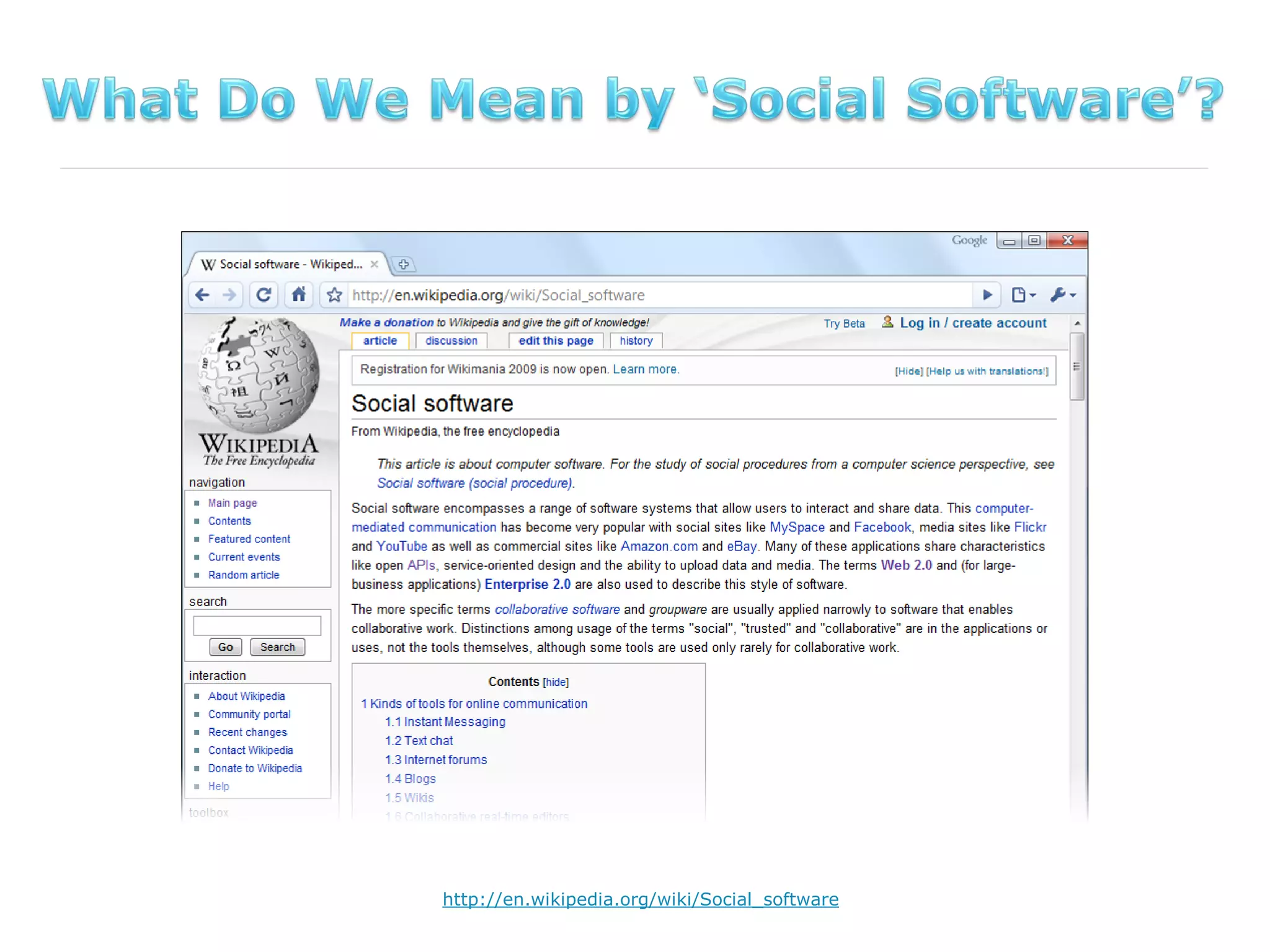
http://en.wikipedia.org/wiki/Social_software
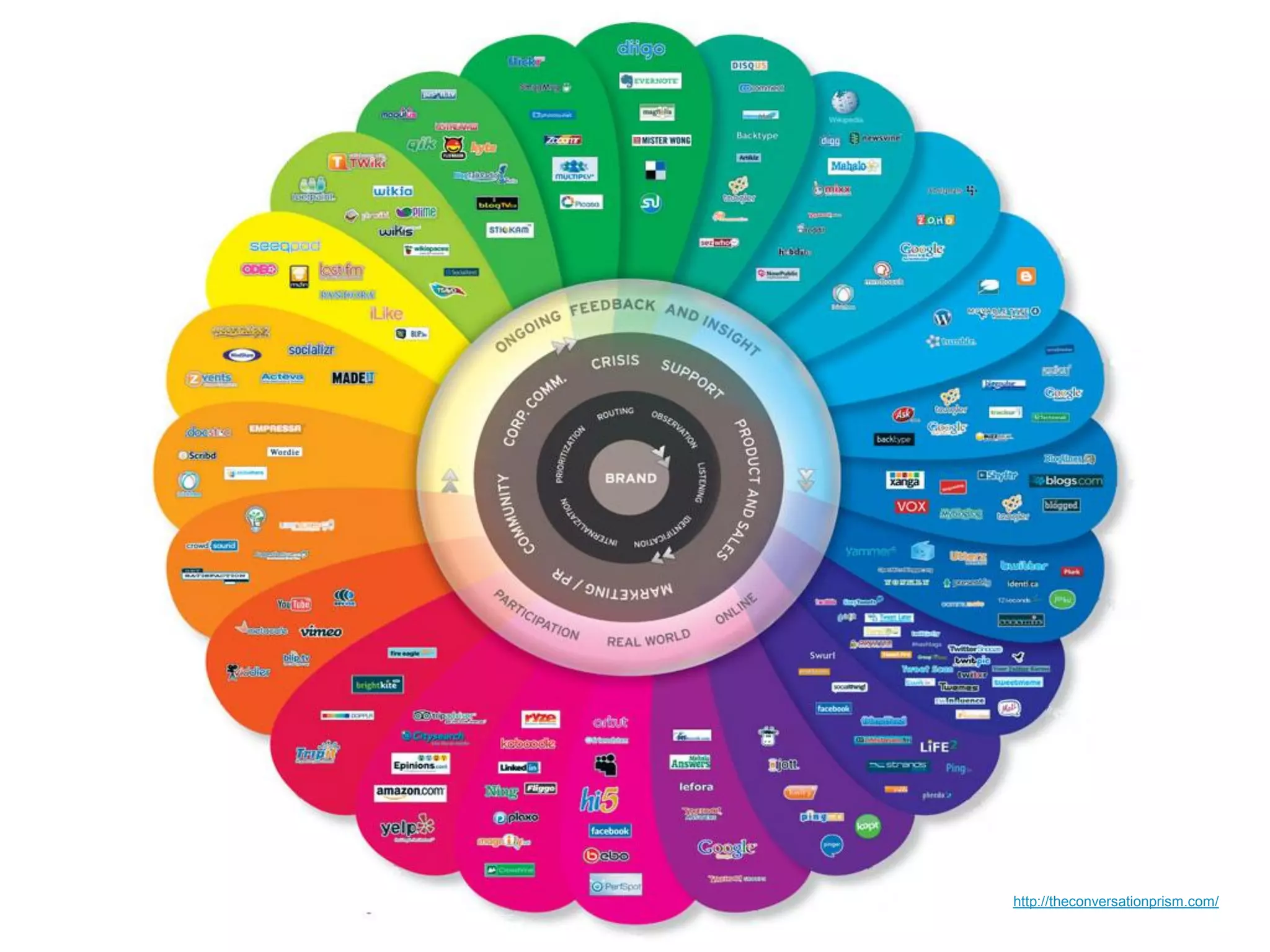
http://theconversationprism.com/
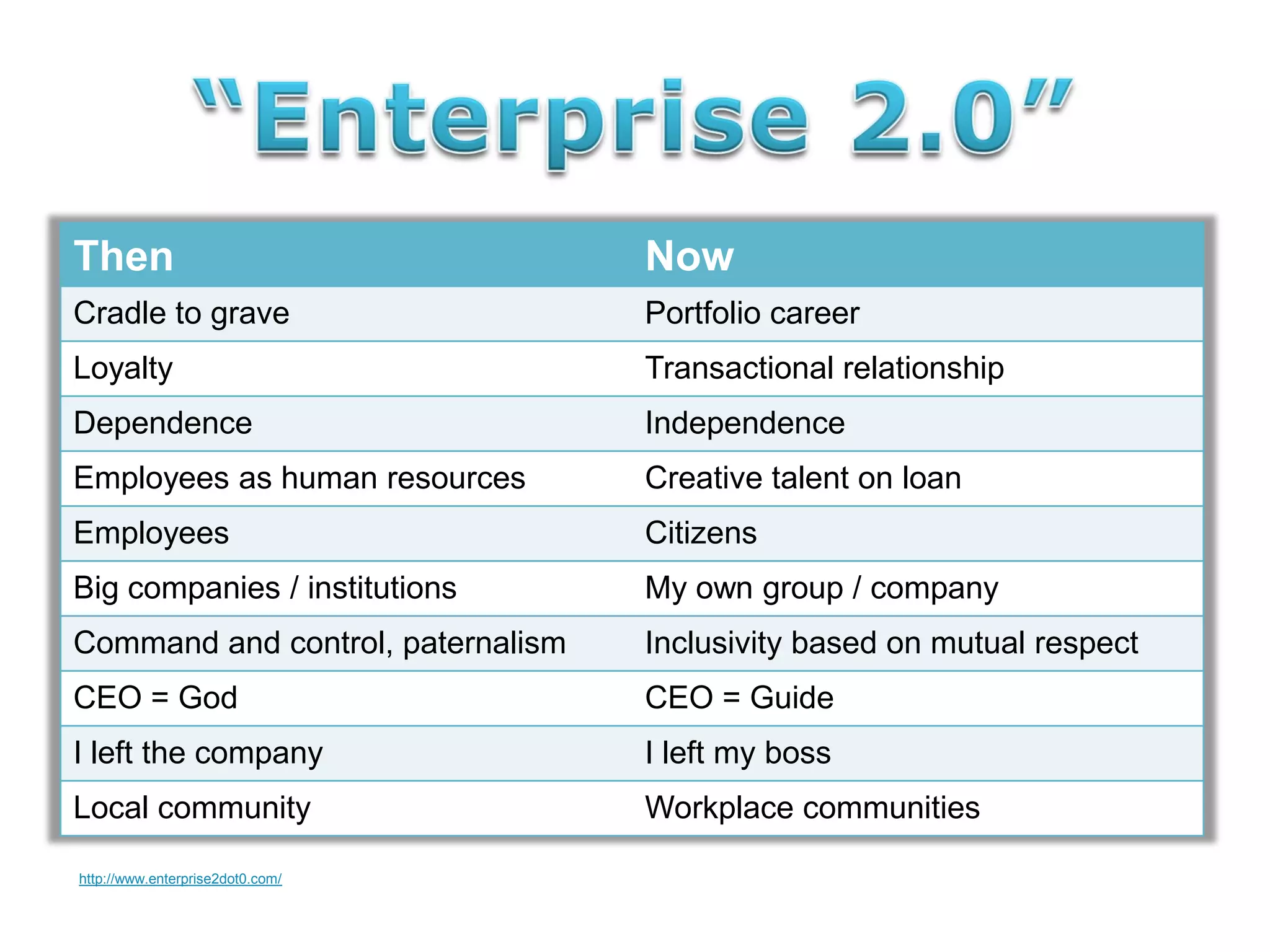
Then                               Now
Cradle to grave                    Portfolio career
Loyalty                            Transactional relationship
Dependence                         Independence
Employees as human resources       Creative talent on loan
Employees                          Citizens
Big companies / institutions       My own group / company
Command and control, paternalism   Inclusivity based on mutual respect
CEO = God                          CEO = Guide
I left the company                 I left my boss
Local community                    Workplace communities

http://www.enterprise2dot0.com/
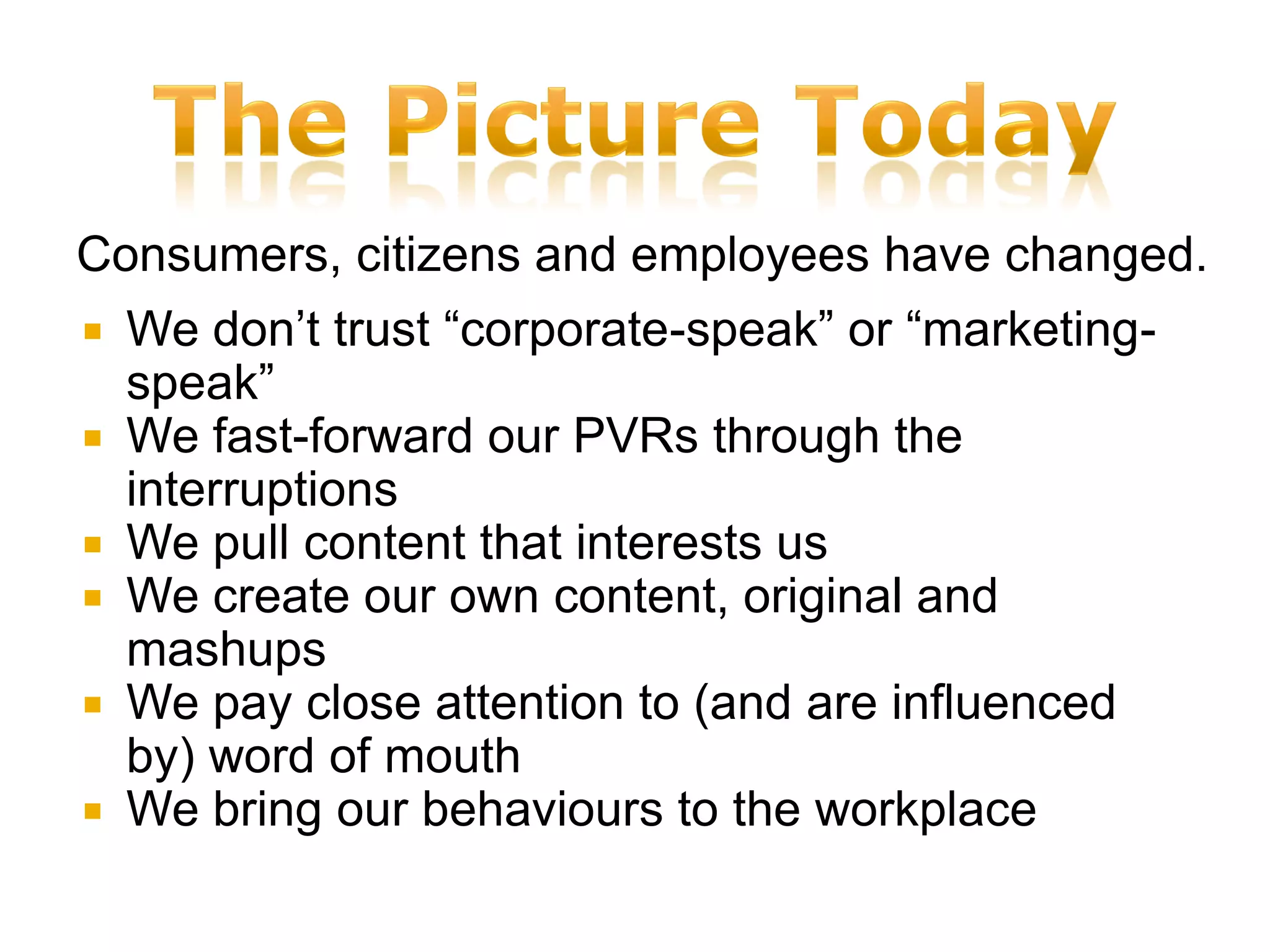
Consumers, citizens and employees have changed.
   We don’t trust “corporate-speak” or “marketing-
    speak”
   We fast-forward our PVRs through the
    interruptions
   We pull content that interests us
   We create our own content, original and
    mashups
   We pay close attention to (and are influenced
    by) word of mouth
   We bring our behaviours to the workplace
   The social structure in which
    technology puts power in the hands
    of individuals and communities
    instead of institutions
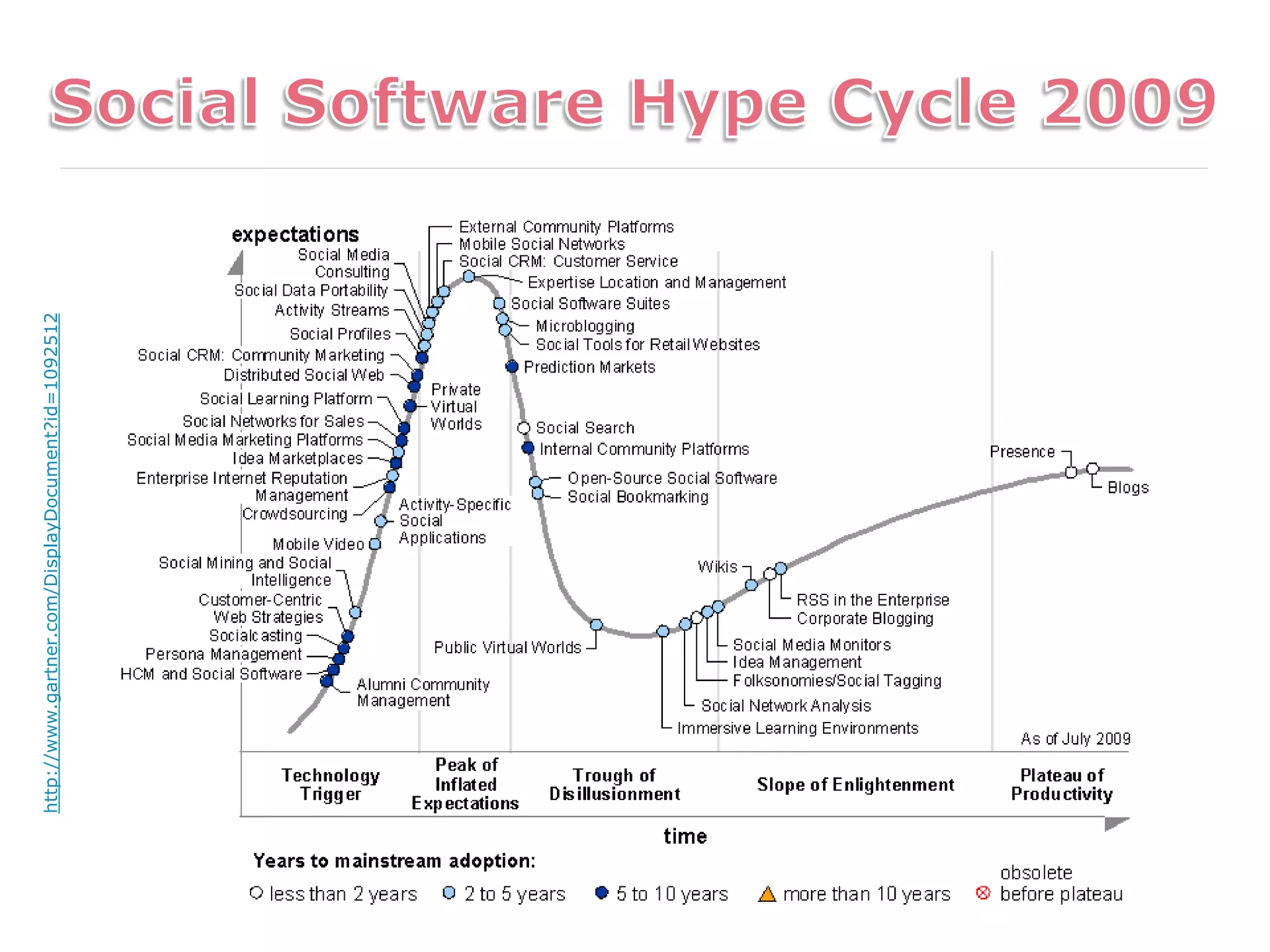
http://www.gartner.com/DisplayDocument?id=1092512
1.   No one really knows everything about
     social media
2.   You only learn by trying


                             David Ferrabee
                                       2009
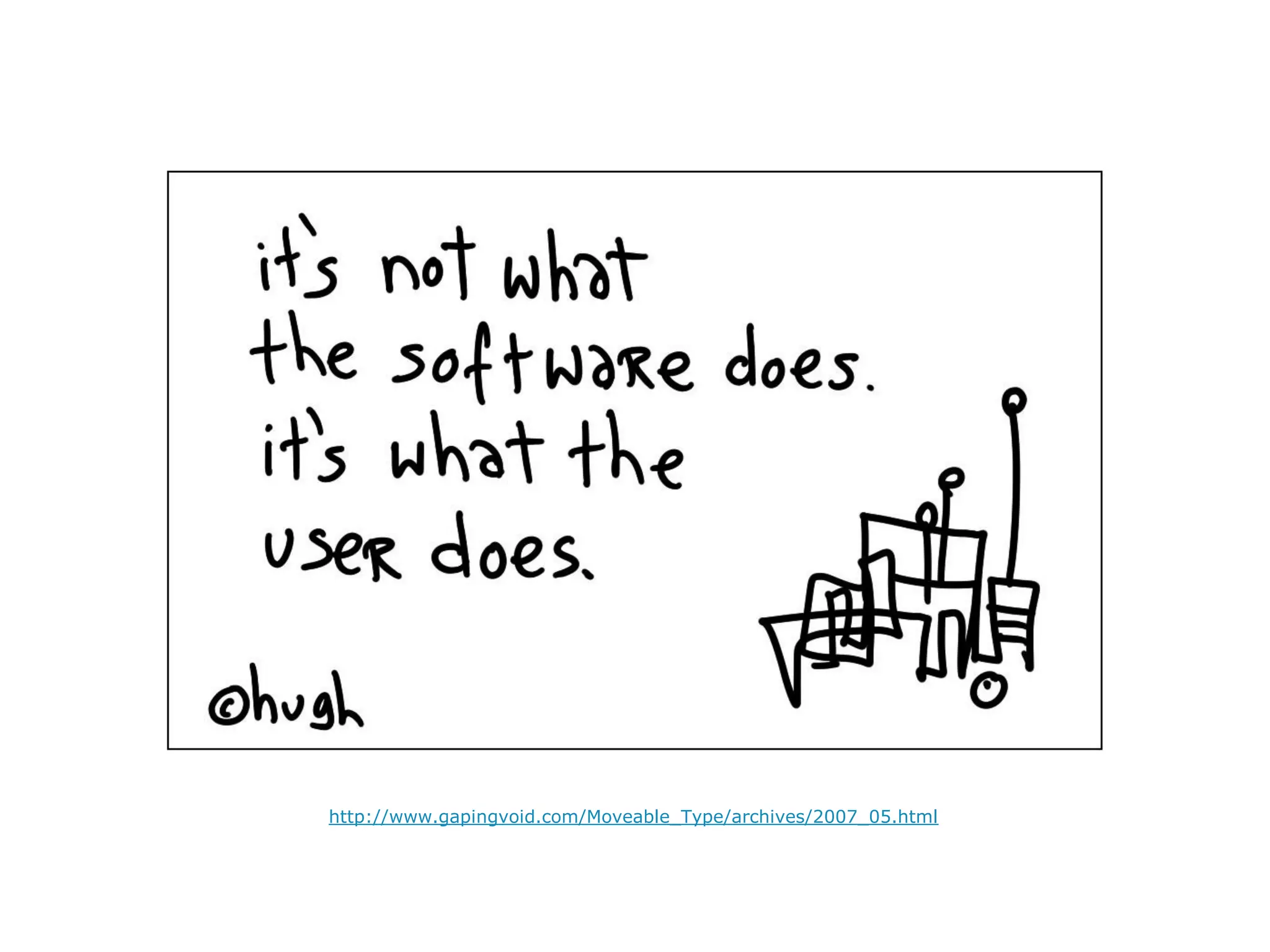
http://www.gapingvoid.com/Moveable_Type/archives/2007_05.html
   The benefits and
    pitfalls of social
    media in the
    workplace
   The benefits and
    pitfalls of social
    media in the
    workplace
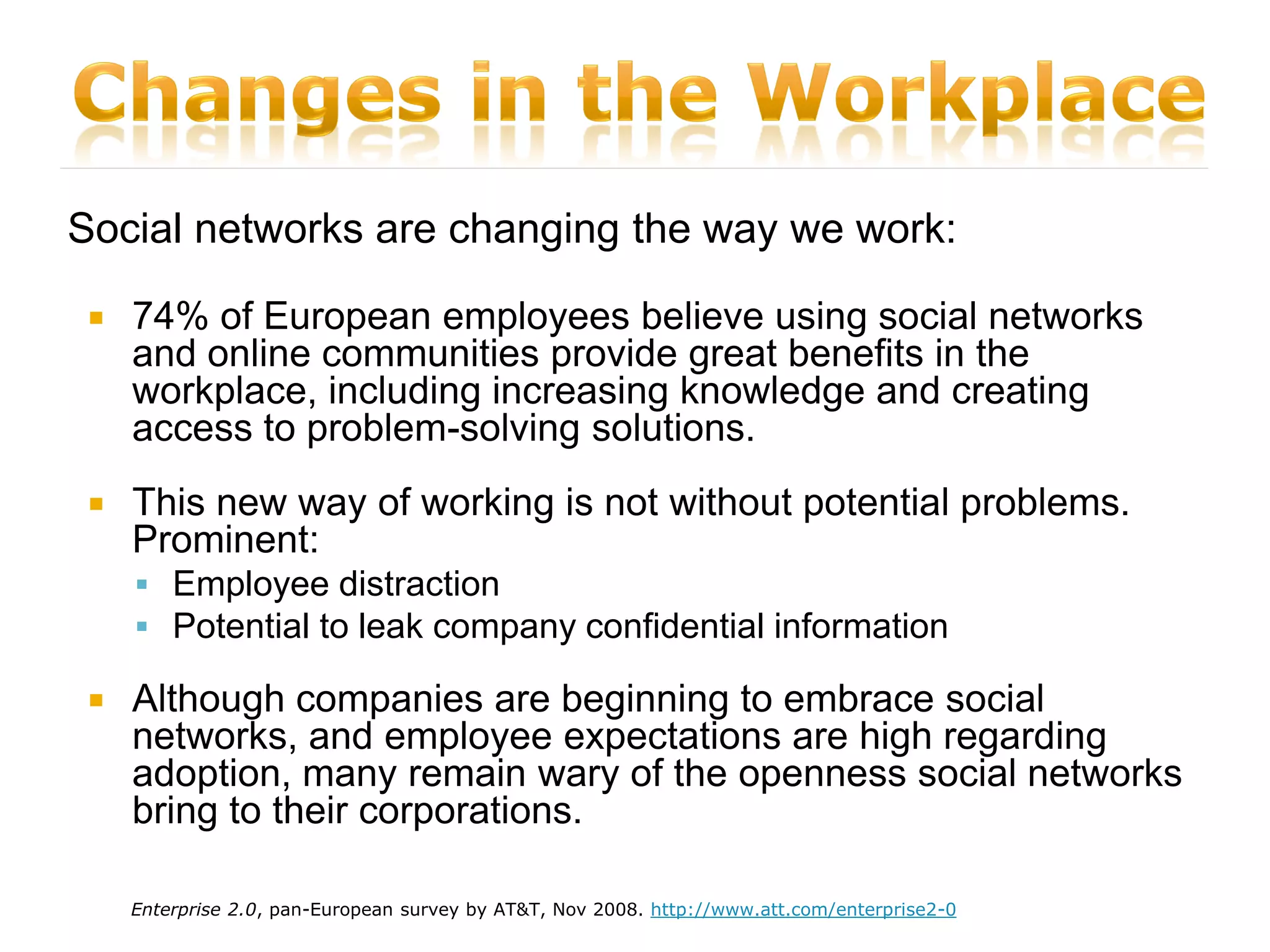
Social networks are changing the way we work:

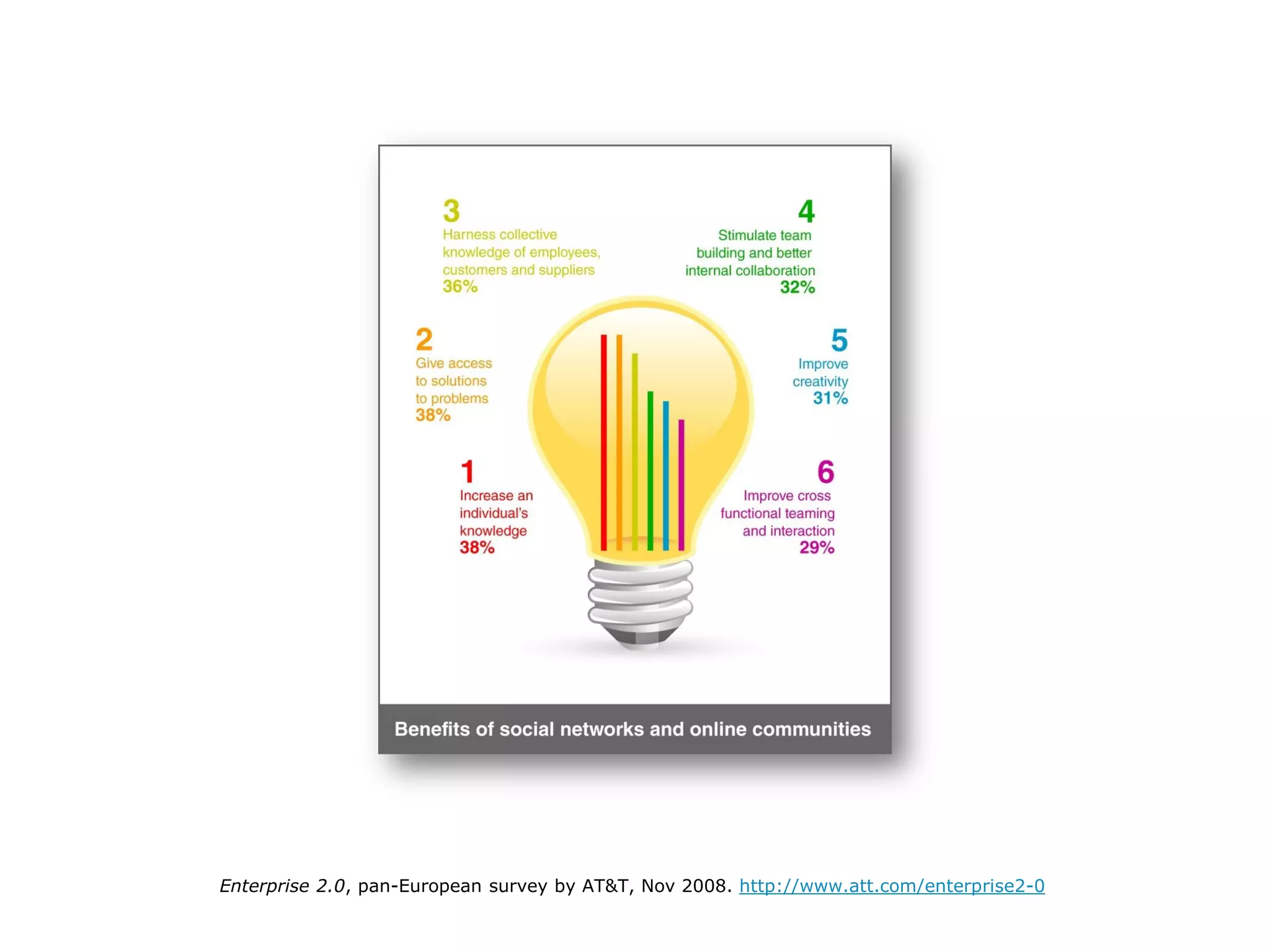
    74% of European employees believe using social networks
     and online communities provide great benefits in the
     workplace, including increasing knowledge and creating
     access to problem-solving solutions.
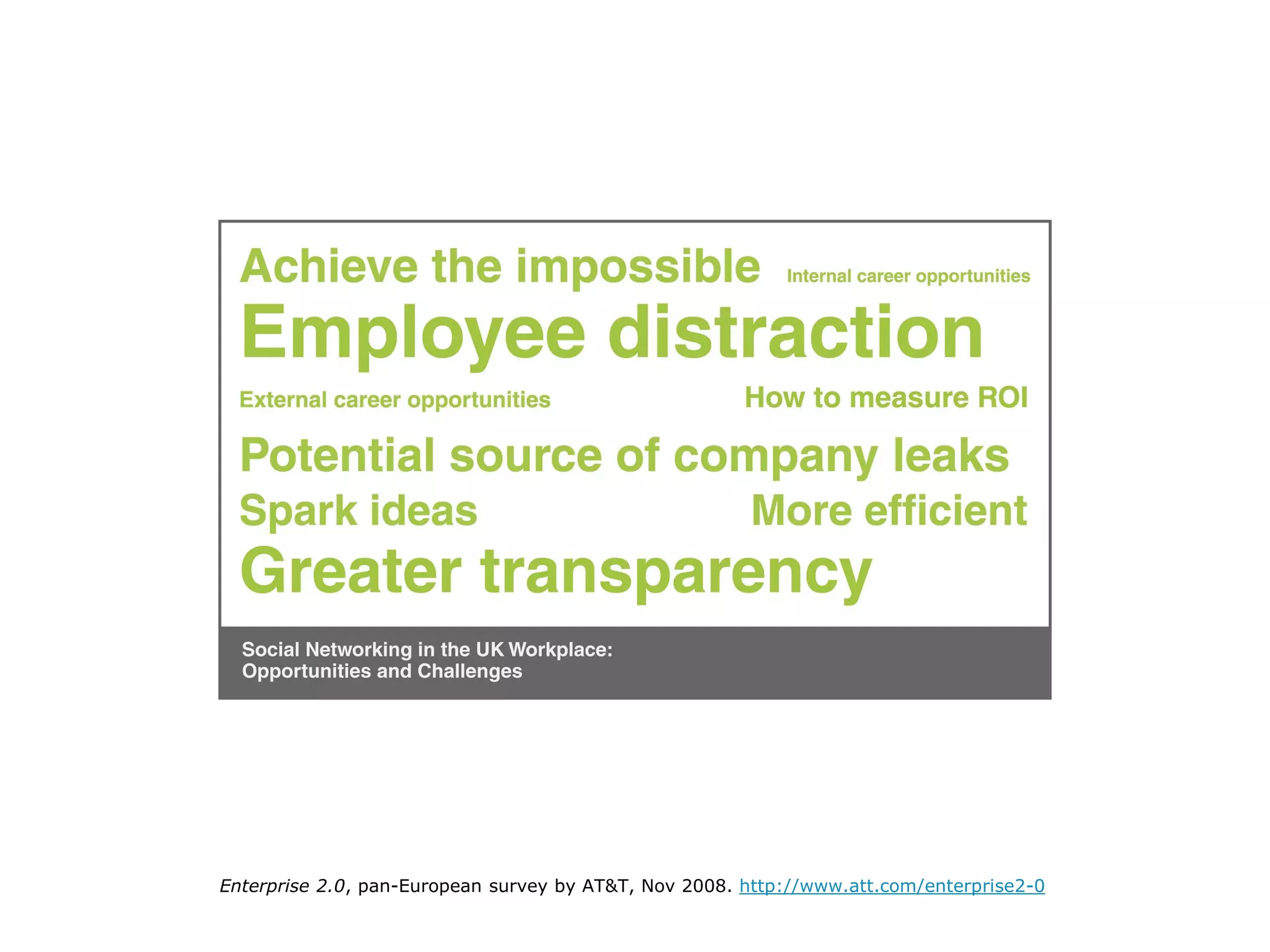
    This new way of working is not without potential problems.
     Prominent:
      Employee distraction
      Potential to leak company confidential information

    Although companies are beginning to embrace social
     networks, and employee expectations are high regarding
     adoption, many remain wary of the openness social networks
     bring to their corporations.

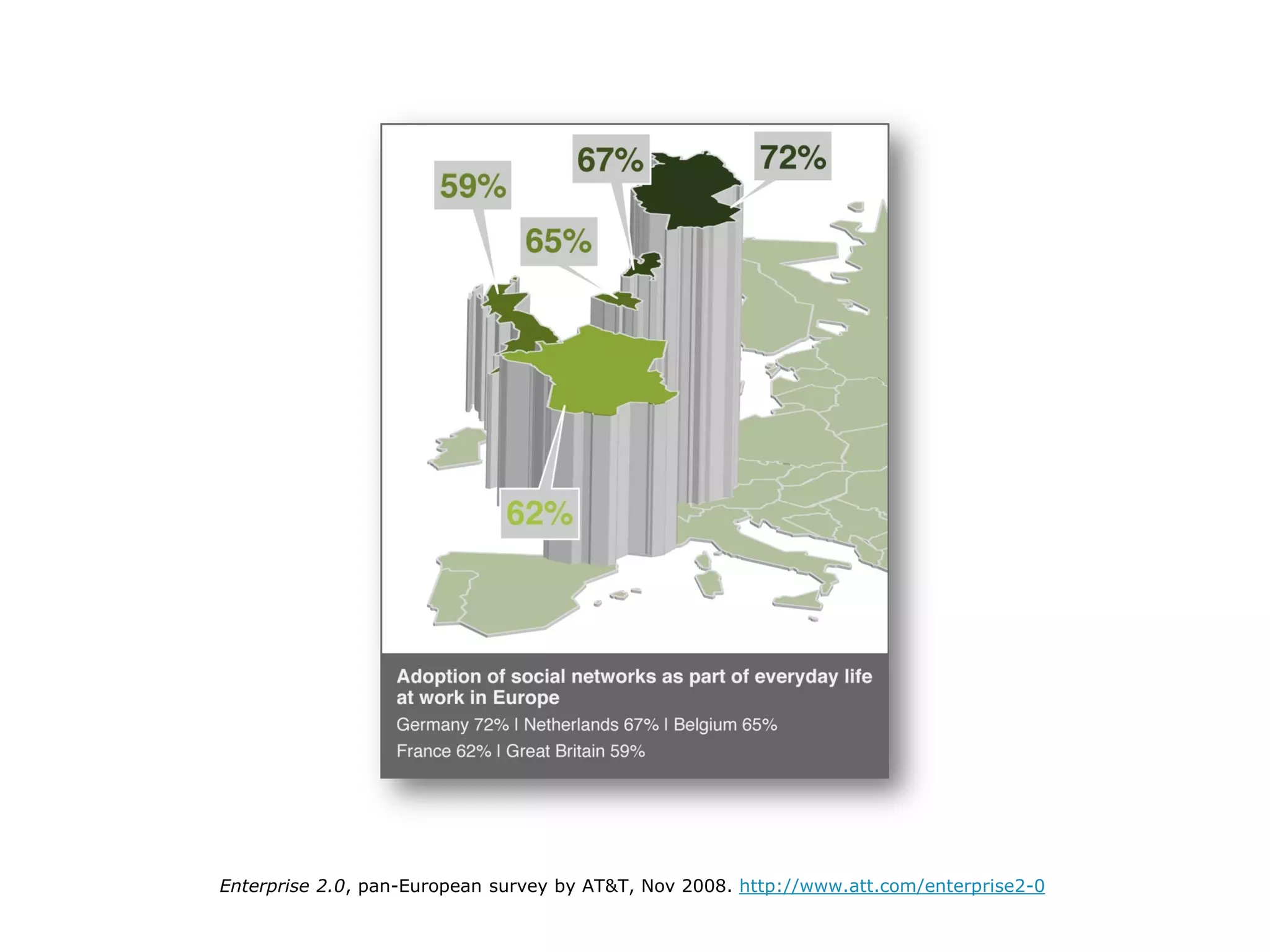
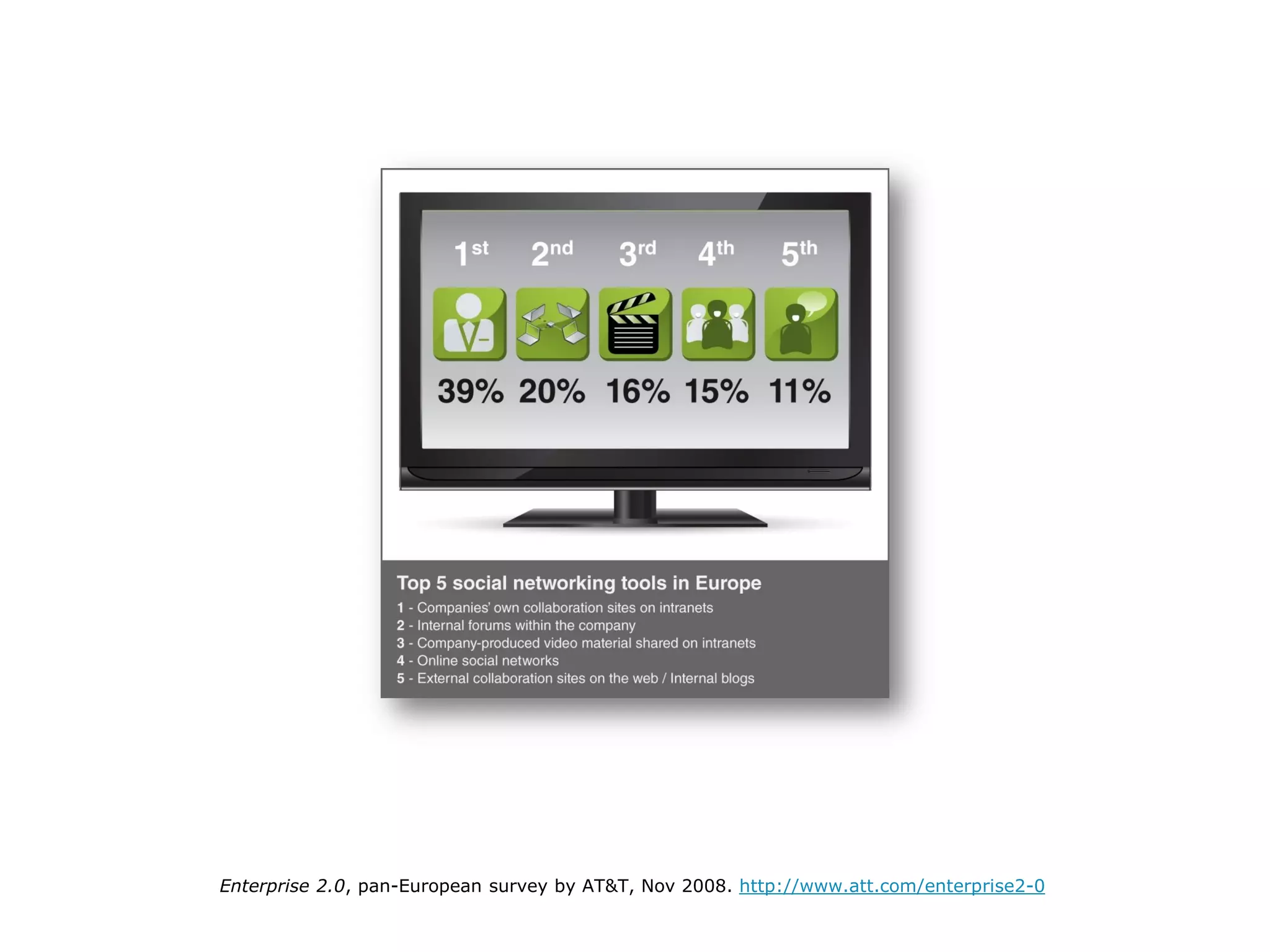
     Enterprise 2.0, pan-European survey by AT&T, Nov 2008. http://www.att.com/enterprise2-0
Enterprise 2.0, pan-European survey by AT&T, Nov 2008. http://www.att.com/enterprise2-0
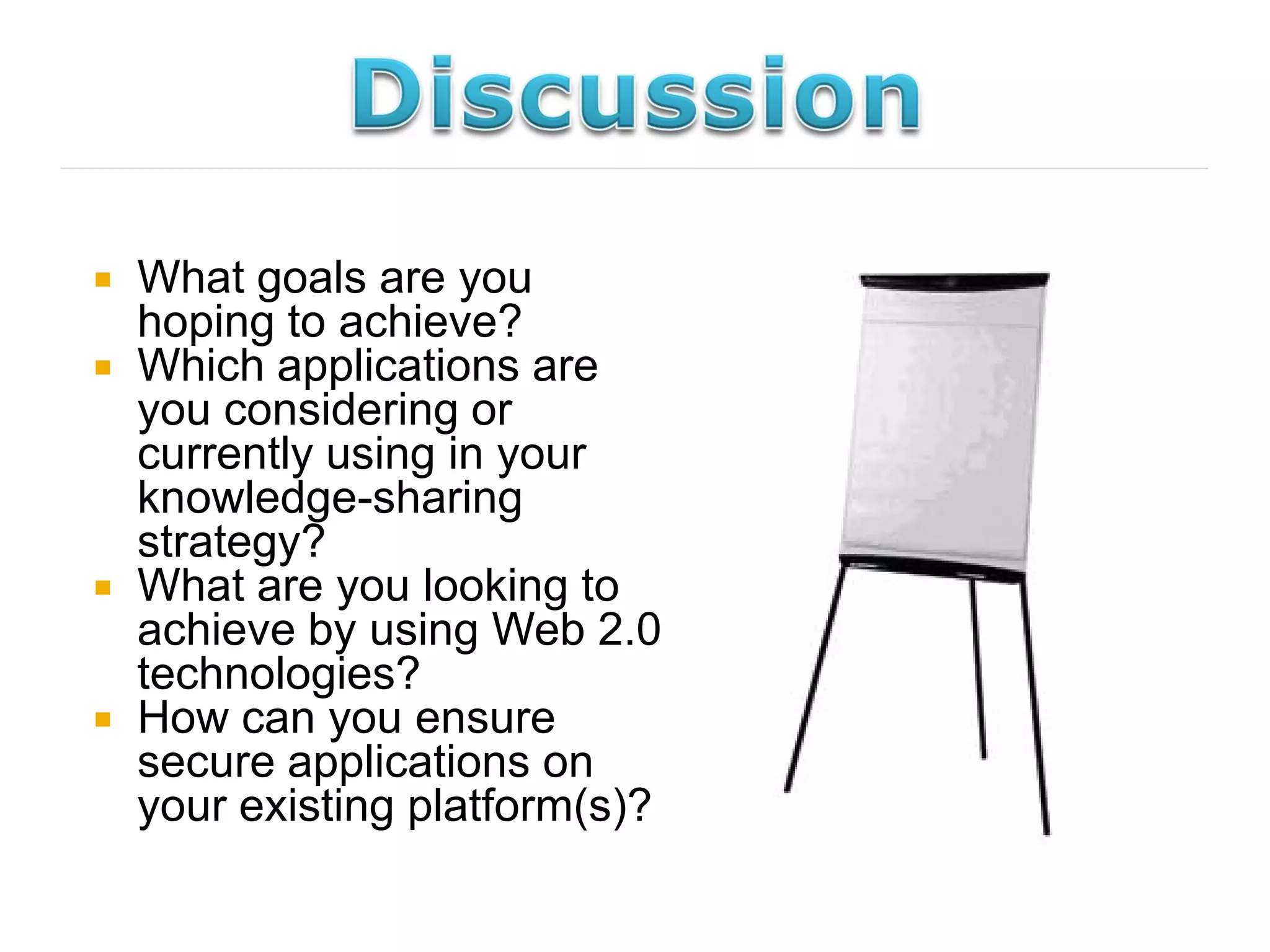
   What goals are you
    hoping to achieve?
   Which applications are
    you considering or
    currently using in your
    knowledge-sharing
    strategy?
   What are you looking to
    achieve by using Web 2.0
    technologies?
   How can you ensure
    secure applications on
    your existing platform(s)?
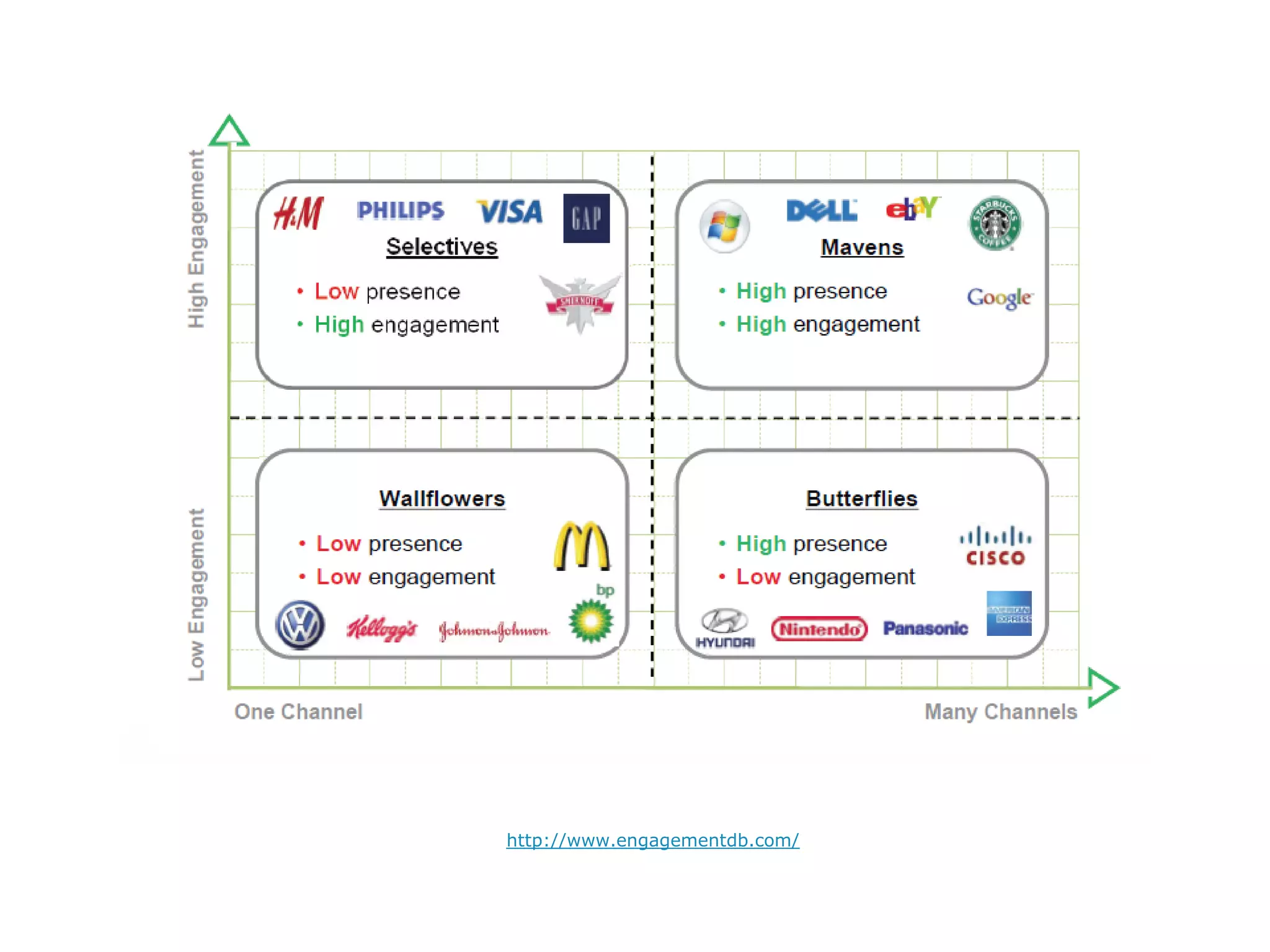
http://www.engagementdb.com/
   What goals are you
    hoping to achieve?
   Which applications are
    you considering or
    currently using in your
    knowledge-sharing
    strategy?
   What are you looking to
    achieve by using Web 2.0
    technologies?
   How can you ensure
    secure applications on
    your existing platform(s)?
1.   Channels have           Imperatives:
     fragmented              You must reach the
2.   Trust is critical         new influencers
3.   Social media have       Transparency is
     arrived                   required
4.   The “customer” is in    Engage in the
     control (kind of)         conversation or fail
5.   Content creation and      to connect
     distribution have
     been democratized
Copyright applies to this document - some rights reserved.
This work is licensed under a Creative Commons Attribution-Noncommercial-
                            Share Alike 3.0 License.
         Details: http://creativecommons.org/licenses/by-nc-sa/3.0/


                        www.nevillehobson.com

Maximizing Knowledge-Sharing

  • 1.
    Maximizing Knowledge-Sharing in Your Business NevilleHobson, ABC www.nevillehobson.com London August 19, 2009
  • 3.
    Now – 10:45 1.The Big Picture 2. How can social software advance your current knowledge strategy? 3. Gaining an understanding of the business potential of social media 10:45 – 11:00  Coffee
  • 5.
     What areyou looking for?  What experiences do you have?  What software do you know about?  What apps do you use yourself?
  • 6.
  • 8.
  • 11.
    Then Now Cradle to grave Portfolio career Loyalty Transactional relationship Dependence Independence Employees as human resources Creative talent on loan Employees Citizens Big companies / institutions My own group / company Command and control, paternalism Inclusivity based on mutual respect CEO = God CEO = Guide I left the company I left my boss Local community Workplace communities http://www.enterprise2dot0.com/
  • 12.
    Consumers, citizens andemployees have changed.  We don’t trust “corporate-speak” or “marketing- speak”  We fast-forward our PVRs through the interruptions  We pull content that interests us  We create our own content, original and mashups  We pay close attention to (and are influenced by) word of mouth  We bring our behaviours to the workplace
  • 13.
    The social structure in which technology puts power in the hands of individuals and communities instead of institutions
  • 14.
  • 15.
    1. No one really knows everything about social media 2. You only learn by trying David Ferrabee 2009
  • 16.
  • 18.
    The benefits and pitfalls of social media in the workplace
  • 22.
    The benefits and pitfalls of social media in the workplace
  • 23.
    Social networks arechanging the way we work:  74% of European employees believe using social networks and online communities provide great benefits in the workplace, including increasing knowledge and creating access to problem-solving solutions.  This new way of working is not without potential problems. Prominent:  Employee distraction  Potential to leak company confidential information  Although companies are beginning to embrace social networks, and employee expectations are high regarding adoption, many remain wary of the openness social networks bring to their corporations. Enterprise 2.0, pan-European survey by AT&T, Nov 2008. http://www.att.com/enterprise2-0
  • 24.
    Enterprise 2.0, pan-Europeansurvey by AT&T, Nov 2008. http://www.att.com/enterprise2-0
  • 25.
    Enterprise 2.0, pan-Europeansurvey by AT&T, Nov 2008. http://www.att.com/enterprise2-0
  • 26.
    Enterprise 2.0, pan-Europeansurvey by AT&T, Nov 2008. http://www.att.com/enterprise2-0
  • 27.
    Enterprise 2.0, pan-Europeansurvey by AT&T, Nov 2008. http://www.att.com/enterprise2-0
  • 29.
    What goals are you hoping to achieve?  Which applications are you considering or currently using in your knowledge-sharing strategy?  What are you looking to achieve by using Web 2.0 technologies?  How can you ensure secure applications on your existing platform(s)?
  • 30.
  • 31.
    What goals are you hoping to achieve?  Which applications are you considering or currently using in your knowledge-sharing strategy?  What are you looking to achieve by using Web 2.0 technologies?  How can you ensure secure applications on your existing platform(s)?
  • 32.
    1. Channels have Imperatives: fragmented  You must reach the 2. Trust is critical new influencers 3. Social media have  Transparency is arrived required 4. The “customer” is in  Engage in the control (kind of) conversation or fail 5. Content creation and to connect distribution have been democratized
  • 36.
    Copyright applies tothis document - some rights reserved. This work is licensed under a Creative Commons Attribution-Noncommercial- Share Alike 3.0 License. Details: http://creativecommons.org/licenses/by-nc-sa/3.0/ www.nevillehobson.com