Courtney Mlinar
April 2013
 Reference everywhere
 Merging service points
 Reference everywhere
 Merging service points
 Tiered or stratified staffing
 Reference everywhere
 Merging service points
 Tiered or stratified staffing
 Embedded liaison librarians
 Reference everywhere
 Merging service points
 Tiered or stratified staffing
 Embedded liaison librarians
 Change agents
 Reference everywhere
 Merging service points
 Tiered or stratified staffing
 Embedded liaison librarians
 Change agents
 Virtual services and resources
 Reference everywhere
 Merging service points
 Tiered or stratified staffing
 Embedded liaison librarians
 Change agents
 Virtual services and resources
 Makerspaces
 Reference everywhere
 Merging service points
 Tiered or stratified staffing
 Embedded liaison librarians
 Change agents
 Virtual services and resources
 Makerspaces
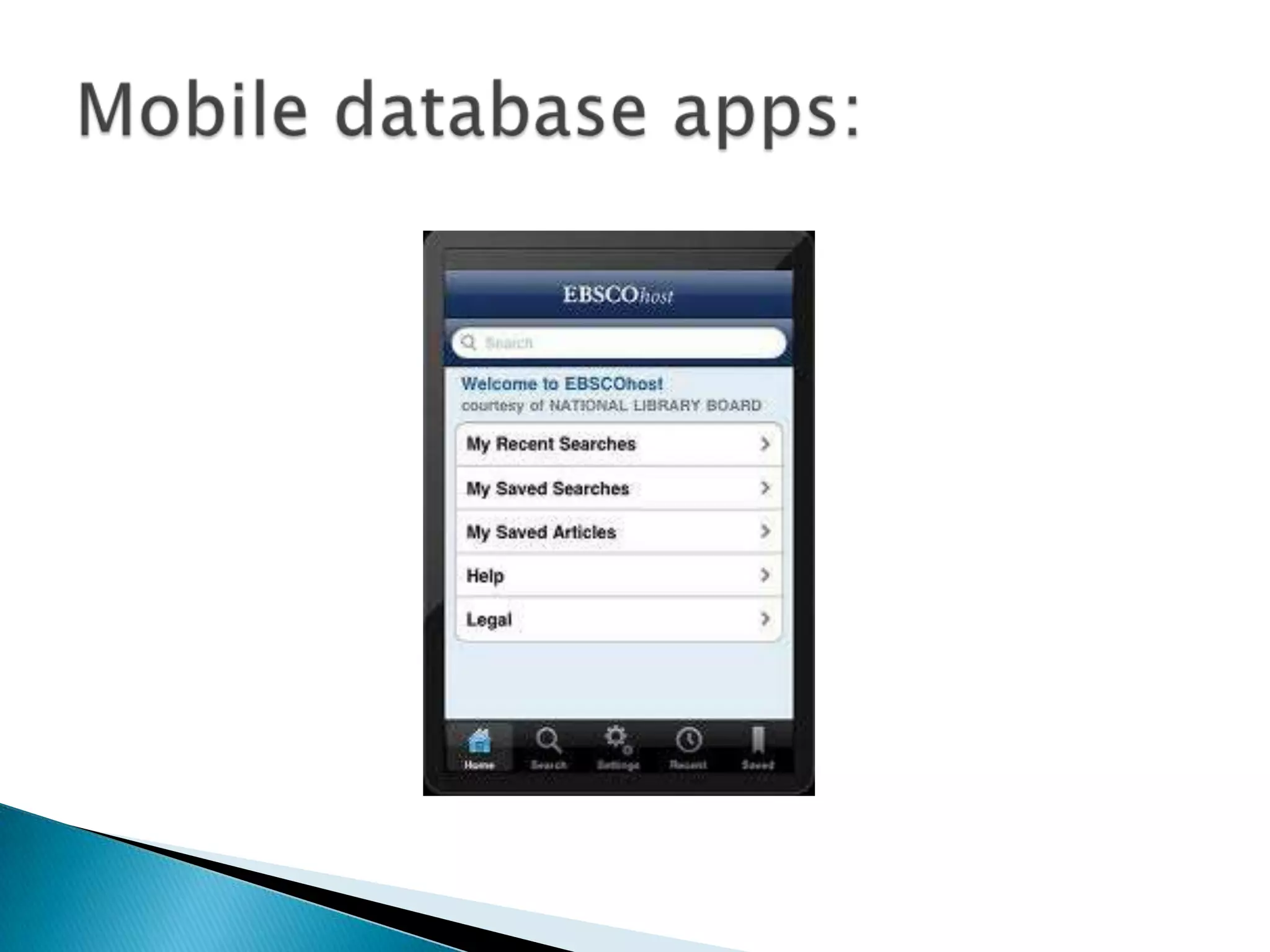
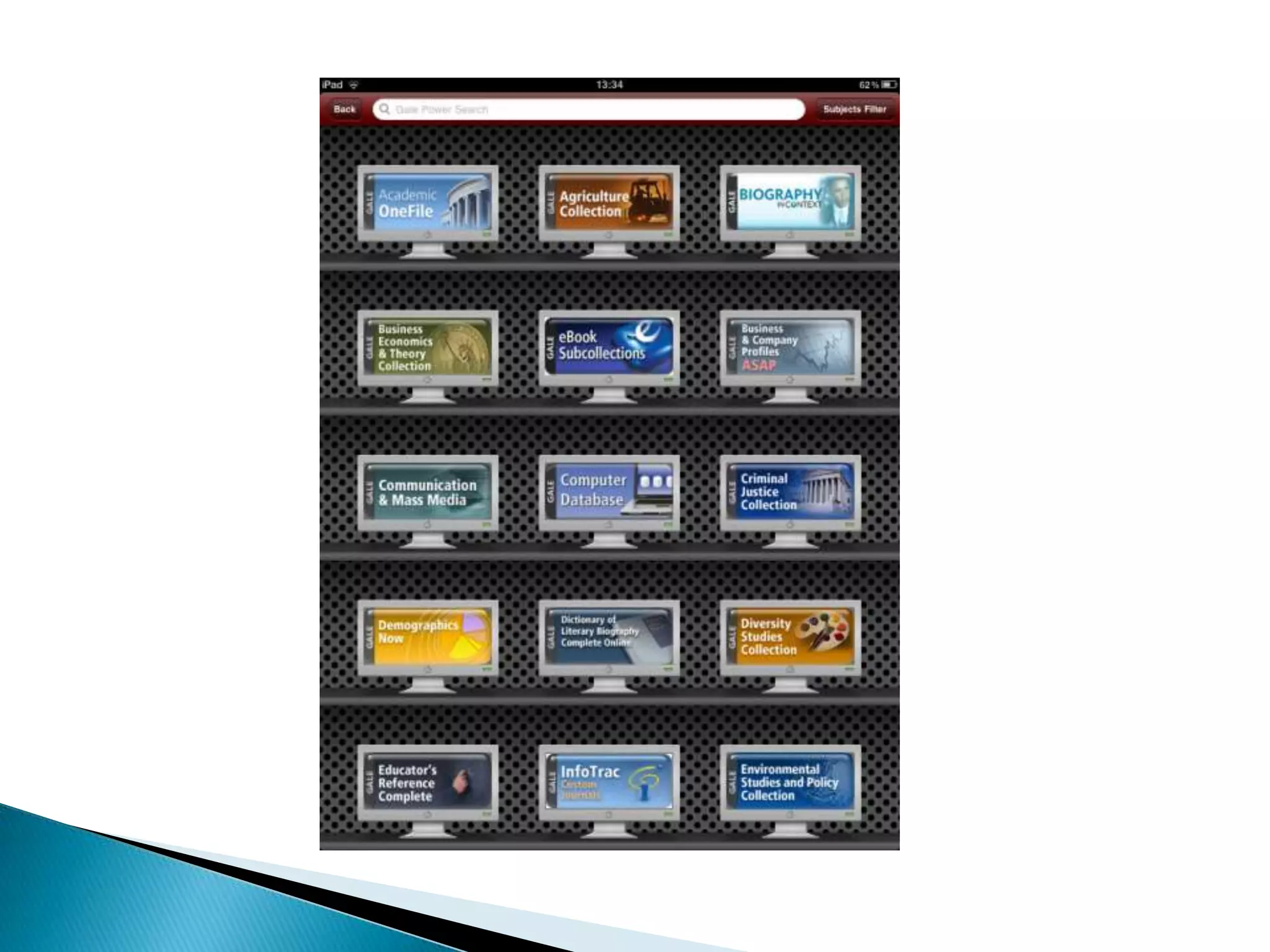
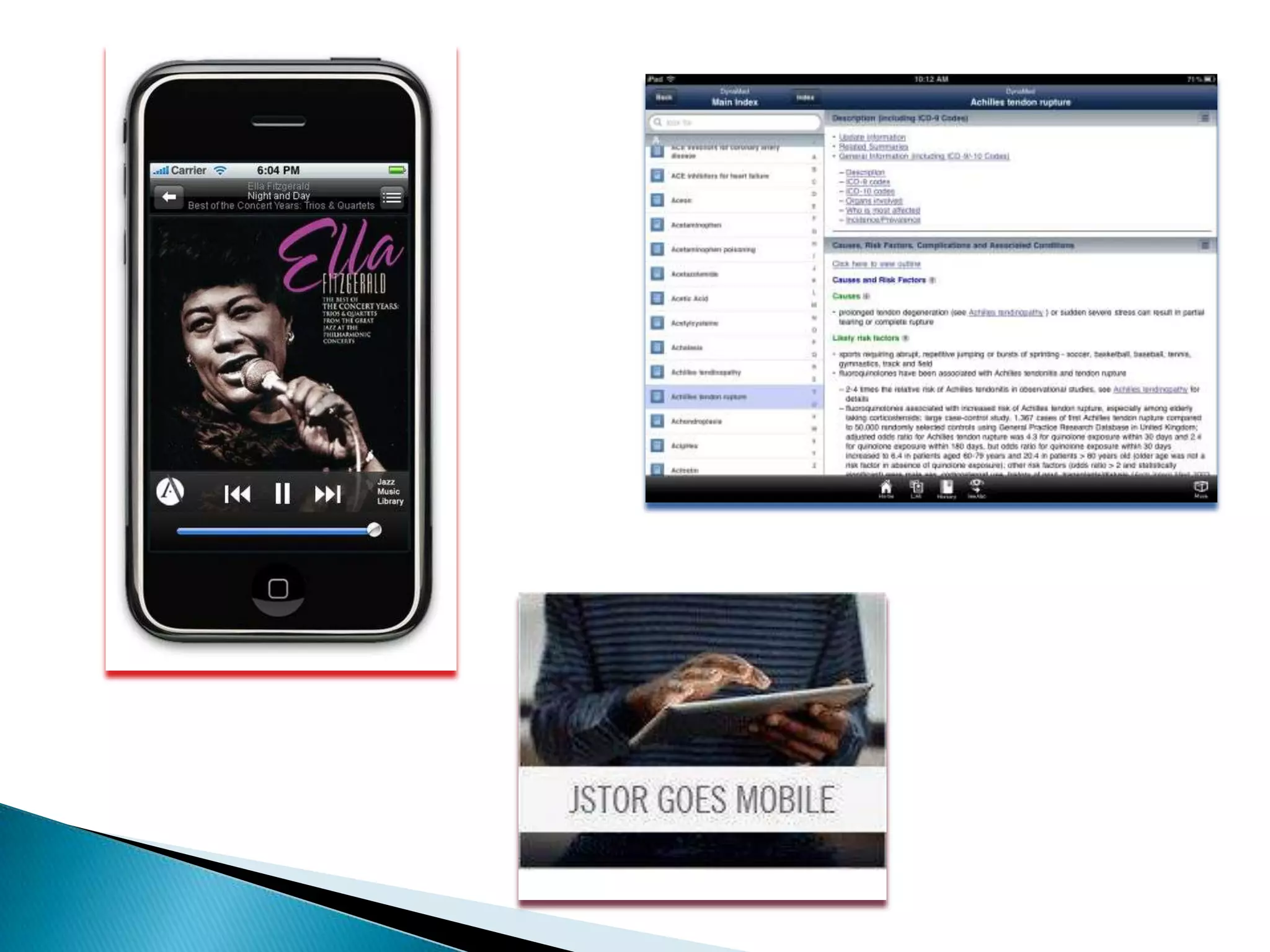
 Mobile apps to extend library branding
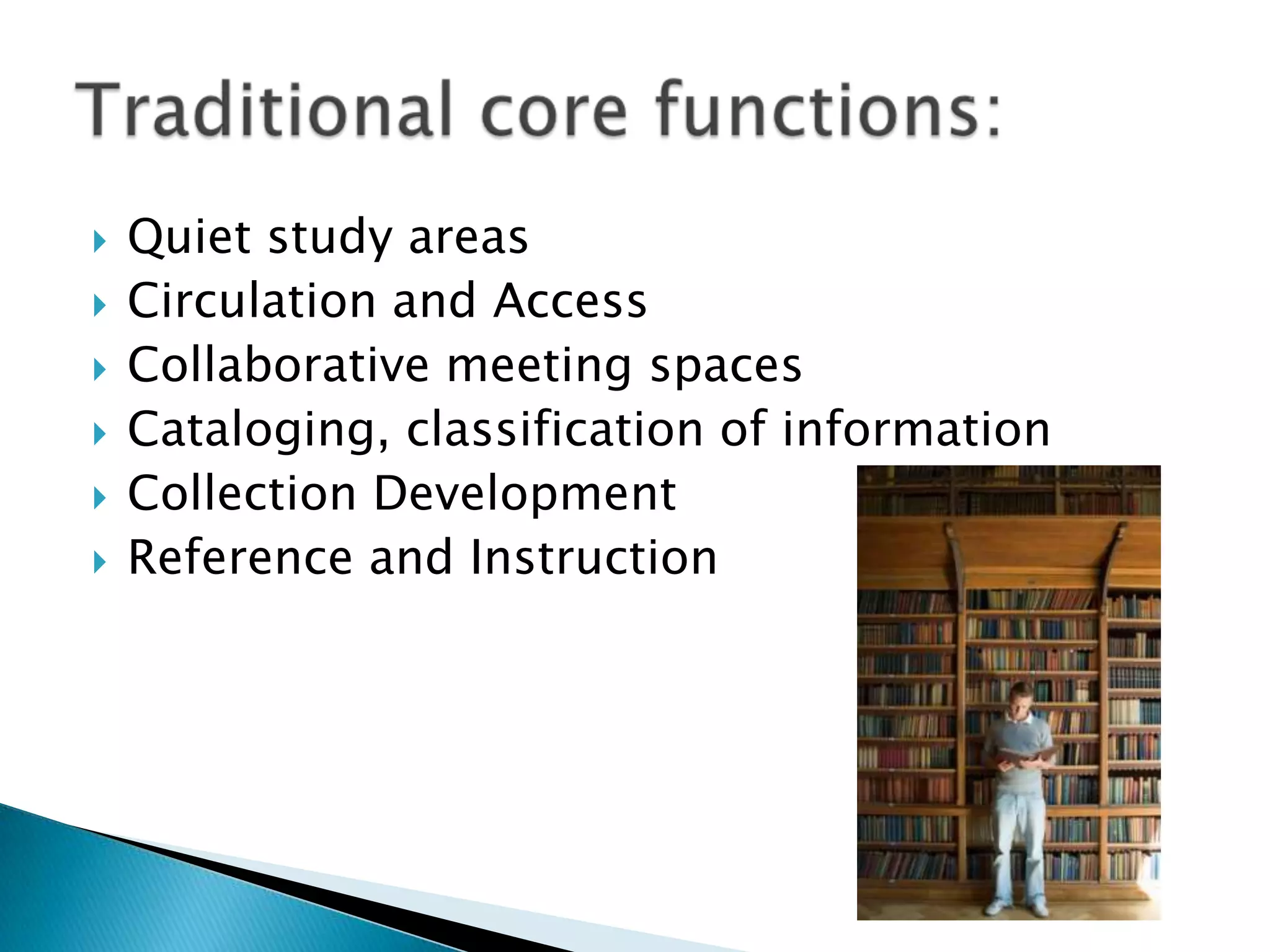
 Quiet study areas
 Circulation and Access
 Collaborative meeting spaces
 Cataloging, classification of information
 Collection Development
 Reference and Instruction
Symbiotic relationship with community of users
(Tyckoson 2001)
 Bricks and clicks
 Meet unique info needs of community
 Organize info within collections and beyond
 Streamline access to key info
 Reach out to address key issues of
community
 Books are for use
 Every reader his book
 Every book its reader
 Save the time of the reader
 The library is a growing organism
 Flipped classroom
 Scholarly communication
 Open access
 Big data
 Globalization
 Mobile learning
 MOOCs
 Social learning
 Participatory content
 Group reports in video formats
 Peer-grading
 Hybrid flipped classroom

Model chosen reflects values of institution:
 Process over information (centered on
bibliographic instruction)
 Information over process (centered on
answering specific question)
Most institutions use combo
of two models
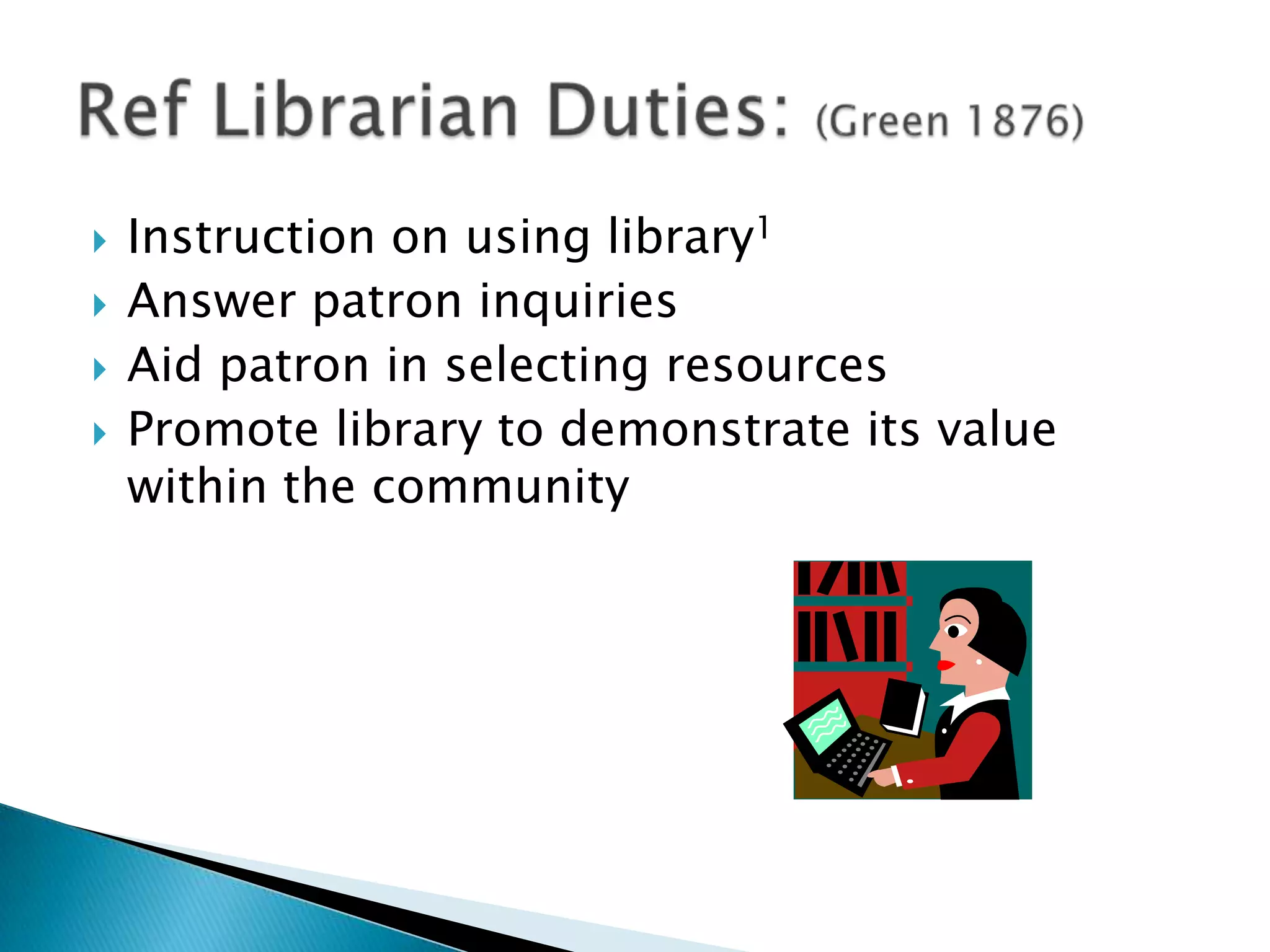
 Instruction on using library1
 Answer patron inquiries
 Aid patron in selecting resources
 Promote library to demonstrate its value
within the community
 Traditional reference desk model (emphasis
on library as place- come to us for help)
 Teaching library model – no desk,
instructional librarian duties
 Tiered model – (Brandeis) grad students /
paraprofessionals staff one desk with circ, in-
depth questions referred to another desk or
office2
 Virtual model – chat, call center, text help
users locate resources or answer questions,
not in-depth
 The students already know how to use
technology…
 Students don’t need help with online
resources…
 Everything on the internet is true…
 We don’t need a library- we have Google…
 The book is dead…
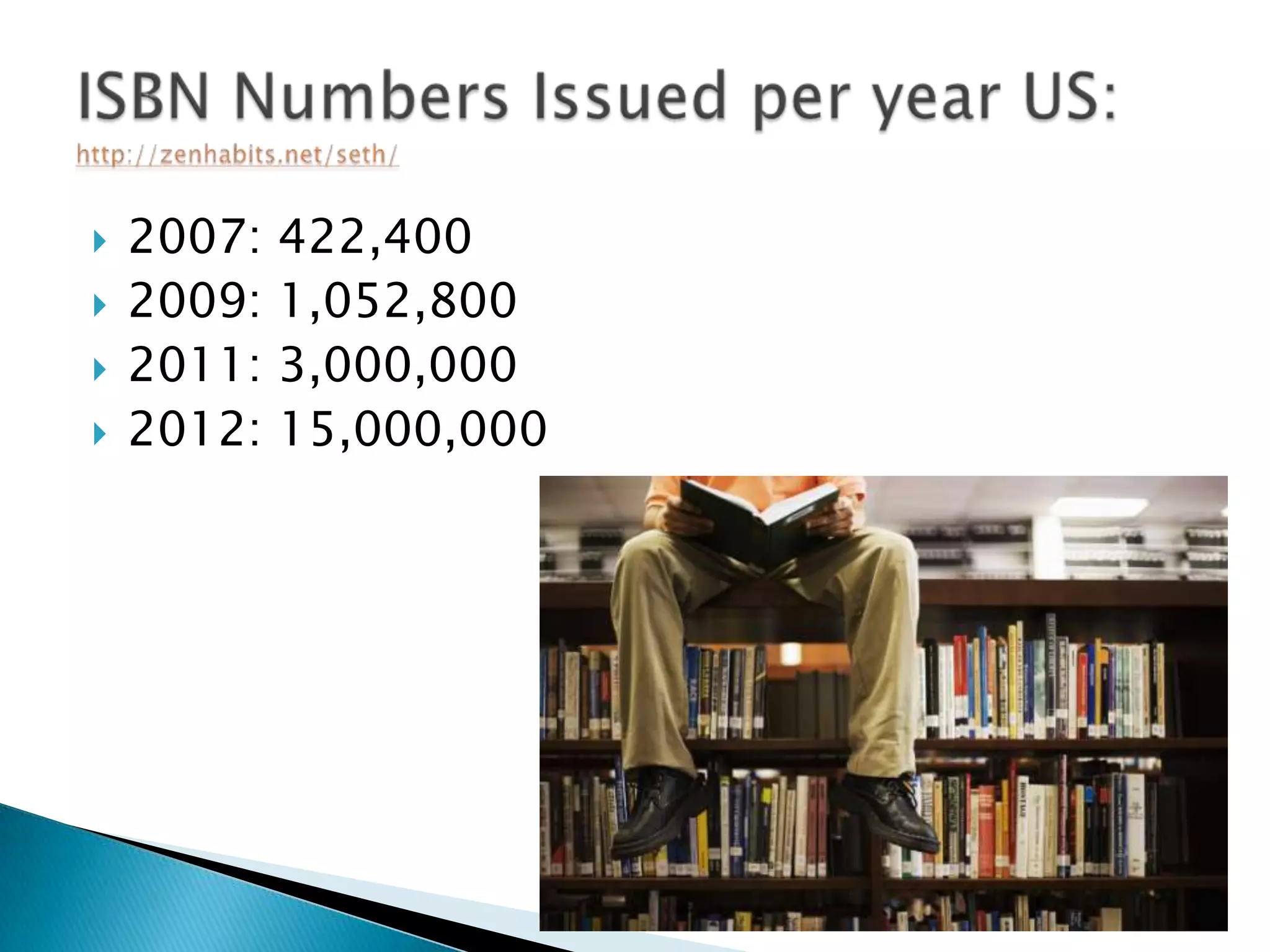
 2007: 422,400
 2009: 1,052,800
 2011: 3,000,000
 2012: 15,000,000
 Faculty struggling with rapidly changing
environment of scholarly communication
 Millennial students who can’t tell difference
between web site and online scholarly journal
 Everyone struggling with technology and
ethical use of information
2 tiered Service Cluster:
On call -Consultation Model
offering
Outreach and
Instruction Services
provided by a
Personal or Liaison
Librarian or Informationist
Service clusters with Main Hub
 Main hub for directional, circulation,
technology, ready reference questions (Start
here if you don’t know where to go)
Service clusters include:
Visible, easily accessible Ask a Librarian Area
 Located adjacent to non-quiet areas
(Information Commons)
 Clustered by subject assignment
 Excellent customer service
 Professional development3
 Team environment as partner with reference
 Staffed with reference at beginning of term
 Administrative support
 Collaboration across all library departments
 On call- available when not in meetings,
teaching, consultations
 Welcome wagon
 Linger and learn setup
 Work on same side of desk, side by side (let
them drive while you coach)
 Additional area adjacent to office for group
consultations (breakfast bar setup)
 Consultations in offices, roving, in faculty
departments, administrator’s offices
 Shared calendar to communicate schedules
“Moving librarians from reference desks
into…discovery spaces does not kill
them off! It changes their roles on
campus and makes them more
…responsive to the multiplicity and
complexity reflected in research on
most academic campuses.”4
Discovery spaces nearby Ask a Librarian area:
 Makerspaces
 Writing Center
 Media Studio
 Technology Services
 Faculty Commons
 New faculty orientations
 Partnerships with campus organizations and
initiatives, academic affairs
 Faculty development presentations
 FYE, grad school activities
 Instruction at point of need
 Members of key faculty committees such as
Curriculum, Professional Development,
Technology
Faculty and student buy-in:
 User success-centered
 Referrals from users
 Network
 Connect researchers with similar topics
 Grassroots pervasive transliteracy
 Teaching and learning partnerships
 Guest lecturers included in syllabi
 Online videos and tutorials included in course
content
 Help at point of need within the course
 Links to LibGuides, tutorials
 Assistance with instructional design
 Active member of curriculum committee
 Frequent presenter for faculty development
 Build trust (go to person)
 Create working relationship
 Librarians, not libraries – value (human factor)
 Team of informationists
 Curriculum consultant for faculty
 Dedicated to faculty and student success
 Share the process
 Think aloud
 Let them drive
 Praise their progress
Amaze and delight:
“I spent 4 hours last night looking for articles
and you helped me find 45 in 20 minutes!”
“I have worked at 5 major research universities
and never had a librarian help me with my
research before!”
“I thought I had to give up a class lecture to fit
library instruction into my course calendar!”
“A university is just a group of buildings
gathered around a library.”
― Shelby Foote
http://www.goodreads.com/author/show/24846.Shelby_Foote
“The only thing that you absolutely have to
know, is the location of the library.”
― Albert Einstein
http://www.goodreads.com/author/show/9810.Albert_Einstein
“Librarians, not libraries!”
-Janet Schneider, FHSLA 2013
1. Rieh SY. Changing reference service environment: a review of perspectives from
managers, librarians, and users. J Acad Lib 1999;25:178-86.
2. Tumbleson BE, Burke JJ. Embedded librarianship is job one: building on instructional
synergies. Pub Serv Quart 2010;6:225-36.
3. RUSA Task Force on Professional Competencies. Professional competencies for
reference and user services librarians. RUSA Guidelines 2003.
www.ala.org/rusa/resources/guidelines/professional. Accessed April 22, 2013.
4. Aguilar P, Keating K, Schadl S, Van Reenen J. Reference as outreach: meeting users
where they are. J Lib Admin 2011;51:343-58.
5. Nunn B, Ruane E. Marketing gets personal: promoting reference staff to reach users. J
Libr Admin 2011;51:291-300.
6. Oakleaf M, VanScoy A. Instructional strategies for digital reference: methods to
facilitate student learning. Ref & User Serv Quart 2010;49:380-90.
Courtney Mlinar
http://www.slideshare.net/mlinarklar
Contact me:
mlinarklar@yahoo.com

Reference Service Models Vision 2013

  • 1.
  • 2.
  • 3.
     Reference everywhere Merging service points
  • 4.
     Reference everywhere Merging service points  Tiered or stratified staffing
  • 5.
     Reference everywhere Merging service points  Tiered or stratified staffing  Embedded liaison librarians
  • 6.
     Reference everywhere Merging service points  Tiered or stratified staffing  Embedded liaison librarians  Change agents
  • 7.
     Reference everywhere Merging service points  Tiered or stratified staffing  Embedded liaison librarians  Change agents  Virtual services and resources
  • 8.
     Reference everywhere Merging service points  Tiered or stratified staffing  Embedded liaison librarians  Change agents  Virtual services and resources  Makerspaces
  • 9.
     Reference everywhere Merging service points  Tiered or stratified staffing  Embedded liaison librarians  Change agents  Virtual services and resources  Makerspaces  Mobile apps to extend library branding
  • 13.
     Quiet studyareas  Circulation and Access  Collaborative meeting spaces  Cataloging, classification of information  Collection Development  Reference and Instruction
  • 14.
    Symbiotic relationship withcommunity of users (Tyckoson 2001)  Bricks and clicks  Meet unique info needs of community  Organize info within collections and beyond  Streamline access to key info  Reach out to address key issues of community
  • 15.
     Books arefor use  Every reader his book  Every book its reader  Save the time of the reader  The library is a growing organism
  • 16.
     Flipped classroom Scholarly communication  Open access  Big data  Globalization  Mobile learning  MOOCs
  • 17.
     Social learning Participatory content  Group reports in video formats  Peer-grading  Hybrid flipped classroom
  • 18.
  • 20.
    Model chosen reflectsvalues of institution:  Process over information (centered on bibliographic instruction)  Information over process (centered on answering specific question) Most institutions use combo of two models
  • 21.
     Instruction onusing library1  Answer patron inquiries  Aid patron in selecting resources  Promote library to demonstrate its value within the community
  • 22.
     Traditional referencedesk model (emphasis on library as place- come to us for help)  Teaching library model – no desk, instructional librarian duties  Tiered model – (Brandeis) grad students / paraprofessionals staff one desk with circ, in- depth questions referred to another desk or office2  Virtual model – chat, call center, text help users locate resources or answer questions, not in-depth
  • 23.
     The studentsalready know how to use technology…  Students don’t need help with online resources…  Everything on the internet is true…  We don’t need a library- we have Google…  The book is dead…
  • 24.
     2007: 422,400 2009: 1,052,800  2011: 3,000,000  2012: 15,000,000
  • 25.
     Faculty strugglingwith rapidly changing environment of scholarly communication  Millennial students who can’t tell difference between web site and online scholarly journal  Everyone struggling with technology and ethical use of information
  • 27.
    2 tiered ServiceCluster: On call -Consultation Model offering Outreach and Instruction Services provided by a Personal or Liaison Librarian or Informationist
  • 28.
    Service clusters withMain Hub  Main hub for directional, circulation, technology, ready reference questions (Start here if you don’t know where to go) Service clusters include: Visible, easily accessible Ask a Librarian Area  Located adjacent to non-quiet areas (Information Commons)  Clustered by subject assignment
  • 29.
     Excellent customerservice  Professional development3  Team environment as partner with reference  Staffed with reference at beginning of term  Administrative support  Collaboration across all library departments
  • 30.
     On call-available when not in meetings, teaching, consultations  Welcome wagon  Linger and learn setup  Work on same side of desk, side by side (let them drive while you coach)  Additional area adjacent to office for group consultations (breakfast bar setup)  Consultations in offices, roving, in faculty departments, administrator’s offices  Shared calendar to communicate schedules
  • 31.
    “Moving librarians fromreference desks into…discovery spaces does not kill them off! It changes their roles on campus and makes them more …responsive to the multiplicity and complexity reflected in research on most academic campuses.”4
  • 32.
    Discovery spaces nearbyAsk a Librarian area:  Makerspaces  Writing Center  Media Studio  Technology Services  Faculty Commons
  • 33.
     New facultyorientations  Partnerships with campus organizations and initiatives, academic affairs  Faculty development presentations  FYE, grad school activities  Instruction at point of need  Members of key faculty committees such as Curriculum, Professional Development, Technology
  • 34.
    Faculty and studentbuy-in:  User success-centered  Referrals from users  Network  Connect researchers with similar topics  Grassroots pervasive transliteracy
  • 35.
     Teaching andlearning partnerships  Guest lecturers included in syllabi  Online videos and tutorials included in course content  Help at point of need within the course  Links to LibGuides, tutorials  Assistance with instructional design  Active member of curriculum committee  Frequent presenter for faculty development
  • 36.
     Build trust(go to person)  Create working relationship  Librarians, not libraries – value (human factor)  Team of informationists  Curriculum consultant for faculty  Dedicated to faculty and student success
  • 37.
     Share theprocess  Think aloud  Let them drive  Praise their progress
  • 38.
    Amaze and delight: “Ispent 4 hours last night looking for articles and you helped me find 45 in 20 minutes!” “I have worked at 5 major research universities and never had a librarian help me with my research before!” “I thought I had to give up a class lecture to fit library instruction into my course calendar!”
  • 39.
    “A university isjust a group of buildings gathered around a library.” ― Shelby Foote http://www.goodreads.com/author/show/24846.Shelby_Foote
  • 40.
    “The only thingthat you absolutely have to know, is the location of the library.” ― Albert Einstein http://www.goodreads.com/author/show/9810.Albert_Einstein
  • 41.
  • 42.
    1. Rieh SY.Changing reference service environment: a review of perspectives from managers, librarians, and users. J Acad Lib 1999;25:178-86. 2. Tumbleson BE, Burke JJ. Embedded librarianship is job one: building on instructional synergies. Pub Serv Quart 2010;6:225-36. 3. RUSA Task Force on Professional Competencies. Professional competencies for reference and user services librarians. RUSA Guidelines 2003. www.ala.org/rusa/resources/guidelines/professional. Accessed April 22, 2013. 4. Aguilar P, Keating K, Schadl S, Van Reenen J. Reference as outreach: meeting users where they are. J Lib Admin 2011;51:343-58. 5. Nunn B, Ruane E. Marketing gets personal: promoting reference staff to reach users. J Libr Admin 2011;51:291-300. 6. Oakleaf M, VanScoy A. Instructional strategies for digital reference: methods to facilitate student learning. Ref & User Serv Quart 2010;49:380-90.
  • 43.