E-Resources and
Information Literacy: A
Working Session

        St. Joseph’s College of Maine
                     August 15, 2012
Agenda
9:00–12:00 PM:      E-Resources and Information
                    Literacy
                        i. Introducing: Credo Reference and
                        Libraries Thriving
                        ii. Icebreaker
                        iii. Group Discussion
                        iv. Working Session

  12:00 –1:00 PM:       Lunch
  1:00–2:00 PM:         Getting the Most Out of
  Your                       Credo Reference
  Service
  2:00–2:30 PM:         What’s New from Credo
                        Reference?
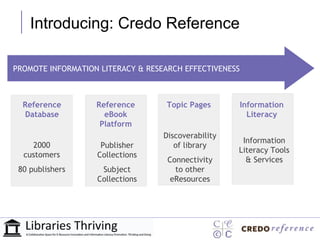
Introducing: Credo Reference

PROMOTE INFORMATION LITERACY & RESEARCH EFFECTIVENESS


  Reference        Reference       Topic Pages          Information
  Database           eBook                                Literacy
                    Platform
                                   Discoverability
                                                      Information
    2000            Publisher         of library
                                                     Literacy Tools
  customers        Collections
                                    Connectivity       & Services
 80 publishers      Subject           to other
                   Collections       eResources
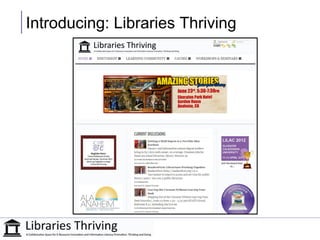
Introducing: Libraries Thriving
Collaborating to Share Resources


“…multiple organizations sometimes work separately to
accomplish the same purposes of preserving, archiving, and
disseminating print and born digital materials, raising
problems with duplication, overlap, and unnecessary
expenses” (Cadmus, 2011)
Collaborating to Share Ideas


  “None of us can know everything; each of us knows
something; and we can put the pieces together if we pool
        our resources and combine our skills.”
                -Henry Jenkins, Principal Investigator, New Media Literacies Project
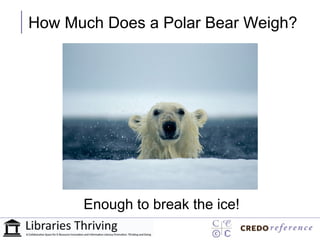
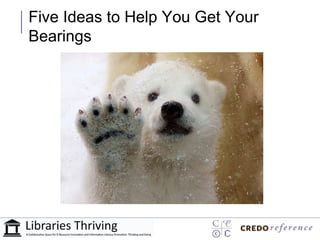
How Much Does a Polar Bear Weigh?


      Enough to break the ice!
E-Resources and Information Literacy:

Three Studies that Have Gone Viral
1. Project Information Literacy
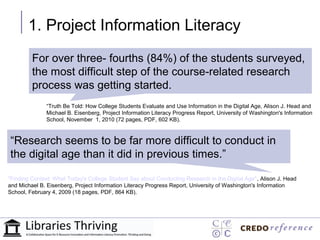
         For over three- fourths (84%) of the students surveyed,
          “Research seems to be far more
         the most difficult step of the course-related research
          difficult to conduct in the digital
         process was getting started.
     age than it did in previous times.”
              “Truth Be Told: How College Students Evaluate and Use Information in the Digital Age, Alison J. Head and

   “Research seems to be far more
              Michael B. Eisenberg, Project Information Literacy Progress Report, University of Washington's Information
              School, November 1, 2010 (72 pages, PDF, 602 KB).


“Research seems toconduct difficult to conduct in
   difficult to be far more in the digital
theage than it did in previous times.” times.”
    digital age than it did in previous

"Finding Context: What Today's College Student Say about Conducting Research in the Digital Age", Alison J. Head
and Michael B. Eisenberg, Project Information Literacy Progress Report, University of Washington's Information
School, February 4, 2009 (18 pages, PDF, 864 KB).
What are common frustrations your
     students experience while doing
     research?
          – Overwhelming information
          – Lack of context
          – Unfiltered search results
          – Absence of citable, trustworthy information


"Finding Context: What Today's College Student Say about Conducting Research in the Digital Age", Alison J. Head and
Michael B. Eisenberg, Project Information Literacy Progress Report, University of Washington's Information School, February
4, 2009 (18 pages, PDF, 864 KB).
OurERIAL Project
        2. Agenda
 Overall consensus between faculty and librarians is that students
 need assistance with the following information literacy skills:

        Finding research tools beyond Google and Wikipedia
        Understanding the purpose of the library
        Navigating the library
        Assessing quality and reliability of information
        Discerning between different types of materials
        Conducting effective searches
        Narrowing topics
        Citing sources & avoiding plagiarism


Library/faculty information literacy checklist: “ ALA 2011 publication on national study: College Libraries and Student
Culture: What we Now Know by Lynda Duke and Andrew Asher
Our Agenda
What are librarians doing to help?

 Improving discovery
 Developing and teaching IL courses
 Student observation and involvement in the learning
  progress
 Deepening faculty collaboration

                                            QuickTime™ and a
                                              decompressor
                                    are needed to see this picture.
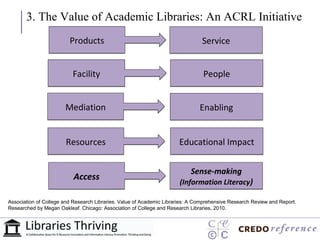
3. The Value of Academic Libraries: An ACRL Initiative
                         Products                                               Service


                          Facility                                              People


                       Mediation                                               Enabling


                       Resources                                      Educational Impact

                                                                           Sense-making
                           Access
                                                                      (Information Literacy)

Association of College and Research Libraries. Value of Academic Libraries: A Comprehensive Research Review and Report.
Researched by Megan Oakleaf. Chicago: Association of College and Research Libraries, 2010.
Five Ideas to Help You Get Your
Bearings
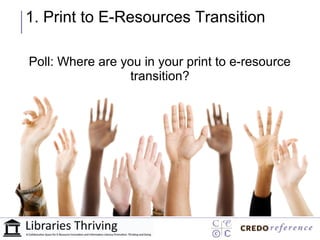
1. Print to E-Resources Transition

Poll: Where are you in your print to e-resource
                 transition?
Why Don’t You Try?

• Reaching out to teachers and faculty groups
• Launching a campaign promoting e-resources on your website
and through e-mails
• Creating an exciting buzz about the new resources through
Facebook and Twitter
• Learning which resources will be available on smart phones and
tablets
• Emphasizing your resources by discipline and community
2. Aligning E-Resources and
Information Literacy to the Curriculum

• What is working well?

• What is not working as well as it could?

• What barriers to increased usage are you
  facing?
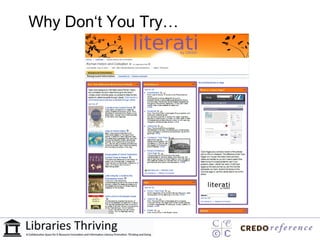
Why Don‘t You Try…
Why Don‘t You Try…
The Information Literate Student…
   • Determines the nature and extent of the information needed.
   • Accesses needed information effectively and efficiently.
   • Evaluates information and its sources critically and incorporates selected
       information into his or her knowledge base and value system.
   • Uses information effectively to accomplish a specific purpose.
   • Understands many of the economic, legal, and social issues surrounding
       the use of information and accesses and uses information ethically and
       legally.
Why Don‘t You Try…
The Information Literate Student…
   • Determines the nature and extent of the information needed.
   • Accesses needed information effectively and efficiently.
   • Evaluates information and its sources critically and incorporates selected
       information into his or her knowledge base and value system.
   • Uses information effectively to accomplish a specific purpose.
   • Understands many of the economic, legal, and social issues surrounding
       the use of information and accesses and uses information ethically and
       legally.


 Effective Researchers…
     • Select Information
     • Search for Information
     • Evaluate Information
     • Use Information Responsibly
Why Don‘t You Try…
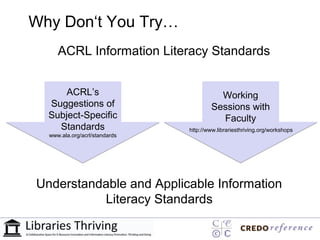
     ACRL Information Literacy Standards


      ACRL’s                             Working
  Suggestions of                       Sessions with
  Subject-Specific                       Faculty
    Standards                  http://www.librariesthriving.org/workshops
  www.ala.org/acrl/standards


Understandable and Applicable Information
          Literacy Standards
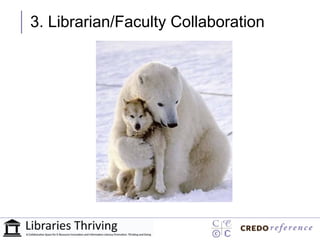
3. Librarian/Faculty Collaboration
A Few Tips from Libraries Thriving
Members
   • Ask more or better questions about assignments. Don't
     make assumptions based on the past.

   • Partner with instructors of First Year Seminar courses.

   • Collaborate with student success centers and university
     colleges.

   • Make improvements based on past sessions. Don't wait
     for feedback.

   • Utilize LibGuides. Consider co-creating LibGuides with
     faculty if there is interest!
What About You?

• How is it at your institution?

• What has worked for you in the past?

• What obstacles do you face?
4. Technology Trends: What
Librarians Are Saying
•   Vendors working together
•   Integrated, intelligent, Google-like search
•   Scaffolding of resources through modules
•   Gamification
•   More and more emphasis away from
    traditional computers, towards mobile
    devices
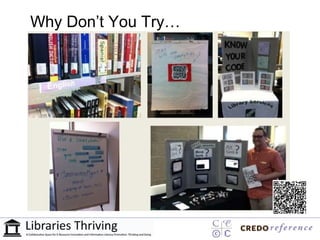
Why Don’t You Try…


                     QR Code in stacks
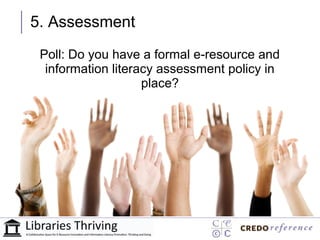
5. Assessment
 Poll: Do you have a formal e-resource and
  information literacy assessment policy in
                    place?
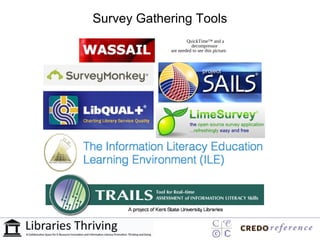
Survey Gathering Tools
                    QuickTime™ and a
                      decompressor
            are needed to see this picture.
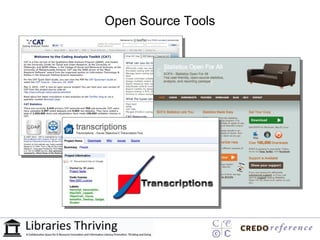
Open Source Tools
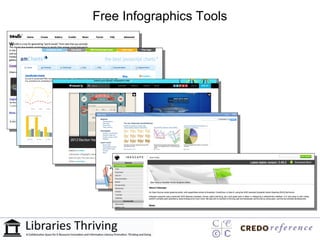
Free Infographics Tools
Tying It All Together: A Case Study
Multiple Touchpoints
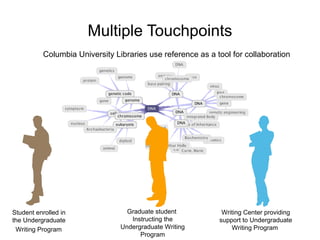
          Columbia University Libraries use reference as a tool for collaboration


Student enrolled in               Graduate student           Writing Center providing
the Undergraduate                  Instructing the          support to Undergraduate
 Writing Program                Undergraduate Writing           Writing Program
                                      Program
South University sees library instruction as
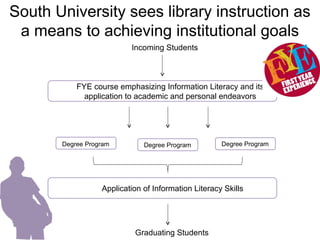
 a means to achieving institutional goals
                          Incoming Students


           FYE course emphasizing Information Literacy and its
             application to academic and personal endeavors


       Degree Program         Degree Program         Degree Program


                  Application of Information Literacy Skills


                           Graduating Students
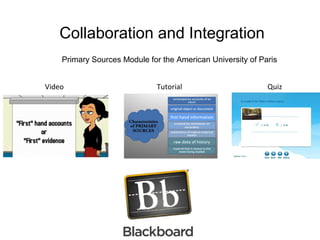
Collaboration and Integration
    Primary Sources Module for the American University of Paris


Video                         Tutorial                      Quiz
Let’s Get to Work


  What e-resource issues are you
  experiencing at your institution?
The Conversation Doesn’t End Here

                Let’s keep the conversation
                           going!
               www.librariesthriving.org
So Much Information, So Little Time
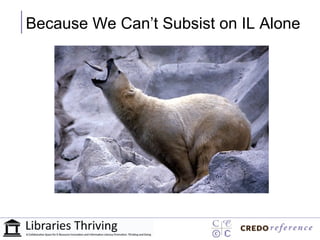
Because We Can’t Subsist on IL Alone

E-Resources and Information Literacy: A Working Session

  • 1.
    E-Resources and Information Literacy:A Working Session St. Joseph’s College of Maine August 15, 2012
  • 2.
    Agenda 9:00–12:00 PM: E-Resources and Information Literacy i. Introducing: Credo Reference and Libraries Thriving ii. Icebreaker iii. Group Discussion iv. Working Session 12:00 –1:00 PM: Lunch 1:00–2:00 PM: Getting the Most Out of Your Credo Reference Service 2:00–2:30 PM: What’s New from Credo Reference?
  • 3.
    Introducing: Credo Reference PROMOTEINFORMATION LITERACY & RESEARCH EFFECTIVENESS Reference Reference Topic Pages Information Database eBook Literacy Platform Discoverability Information 2000 Publisher of library Literacy Tools customers Collections Connectivity & Services 80 publishers Subject to other Collections eResources
  • 4.
  • 5.
    Collaborating to ShareResources “…multiple organizations sometimes work separately to accomplish the same purposes of preserving, archiving, and disseminating print and born digital materials, raising problems with duplication, overlap, and unnecessary expenses” (Cadmus, 2011)
  • 6.
    Collaborating to ShareIdeas “None of us can know everything; each of us knows something; and we can put the pieces together if we pool our resources and combine our skills.” -Henry Jenkins, Principal Investigator, New Media Literacies Project
  • 7.
    How Much Doesa Polar Bear Weigh? Enough to break the ice!
  • 8.
    E-Resources and InformationLiteracy: Three Studies that Have Gone Viral
  • 9.
    1. Project InformationLiteracy For over three- fourths (84%) of the students surveyed, “Research seems to be far more the most difficult step of the course-related research difficult to conduct in the digital process was getting started. age than it did in previous times.” “Truth Be Told: How College Students Evaluate and Use Information in the Digital Age, Alison J. Head and “Research seems to be far more Michael B. Eisenberg, Project Information Literacy Progress Report, University of Washington's Information School, November 1, 2010 (72 pages, PDF, 602 KB). “Research seems toconduct difficult to conduct in difficult to be far more in the digital theage than it did in previous times.” times.” digital age than it did in previous "Finding Context: What Today's College Student Say about Conducting Research in the Digital Age", Alison J. Head and Michael B. Eisenberg, Project Information Literacy Progress Report, University of Washington's Information School, February 4, 2009 (18 pages, PDF, 864 KB).
  • 10.
    What are commonfrustrations your students experience while doing research? – Overwhelming information – Lack of context – Unfiltered search results – Absence of citable, trustworthy information "Finding Context: What Today's College Student Say about Conducting Research in the Digital Age", Alison J. Head and Michael B. Eisenberg, Project Information Literacy Progress Report, University of Washington's Information School, February 4, 2009 (18 pages, PDF, 864 KB).
  • 11.
    OurERIAL Project 2. Agenda Overall consensus between faculty and librarians is that students need assistance with the following information literacy skills:  Finding research tools beyond Google and Wikipedia  Understanding the purpose of the library  Navigating the library  Assessing quality and reliability of information  Discerning between different types of materials  Conducting effective searches  Narrowing topics  Citing sources & avoiding plagiarism Library/faculty information literacy checklist: “ ALA 2011 publication on national study: College Libraries and Student Culture: What we Now Know by Lynda Duke and Andrew Asher
  • 12.
    Our Agenda What arelibrarians doing to help? Improving discovery Developing and teaching IL courses Student observation and involvement in the learning progress Deepening faculty collaboration QuickTime™ and a decompressor are needed to see this picture.
  • 13.
    3. The Valueof Academic Libraries: An ACRL Initiative Products Service Facility People Mediation Enabling Resources Educational Impact Sense-making Access (Information Literacy) Association of College and Research Libraries. Value of Academic Libraries: A Comprehensive Research Review and Report. Researched by Megan Oakleaf. Chicago: Association of College and Research Libraries, 2010.
  • 14.
    Five Ideas toHelp You Get Your Bearings
  • 15.
    1. Print toE-Resources Transition Poll: Where are you in your print to e-resource transition?
  • 16.
    Why Don’t YouTry? • Reaching out to teachers and faculty groups • Launching a campaign promoting e-resources on your website and through e-mails • Creating an exciting buzz about the new resources through Facebook and Twitter • Learning which resources will be available on smart phones and tablets • Emphasizing your resources by discipline and community
  • 17.
    2. Aligning E-Resourcesand Information Literacy to the Curriculum • What is working well? • What is not working as well as it could? • What barriers to increased usage are you facing?
  • 18.
  • 19.
    Why Don‘t YouTry… The Information Literate Student… • Determines the nature and extent of the information needed. • Accesses needed information effectively and efficiently. • Evaluates information and its sources critically and incorporates selected information into his or her knowledge base and value system. • Uses information effectively to accomplish a specific purpose. • Understands many of the economic, legal, and social issues surrounding the use of information and accesses and uses information ethically and legally.
  • 20.
    Why Don‘t YouTry… The Information Literate Student… • Determines the nature and extent of the information needed. • Accesses needed information effectively and efficiently. • Evaluates information and its sources critically and incorporates selected information into his or her knowledge base and value system. • Uses information effectively to accomplish a specific purpose. • Understands many of the economic, legal, and social issues surrounding the use of information and accesses and uses information ethically and legally. Effective Researchers… • Select Information • Search for Information • Evaluate Information • Use Information Responsibly
  • 21.
    Why Don‘t YouTry… ACRL Information Literacy Standards ACRL’s Working Suggestions of Sessions with Subject-Specific Faculty Standards http://www.librariesthriving.org/workshops www.ala.org/acrl/standards Understandable and Applicable Information Literacy Standards
  • 22.
  • 23.
    A Few Tipsfrom Libraries Thriving Members • Ask more or better questions about assignments. Don't make assumptions based on the past. • Partner with instructors of First Year Seminar courses. • Collaborate with student success centers and university colleges. • Make improvements based on past sessions. Don't wait for feedback. • Utilize LibGuides. Consider co-creating LibGuides with faculty if there is interest!
  • 24.
    What About You? •How is it at your institution? • What has worked for you in the past? • What obstacles do you face?
  • 25.
    4. Technology Trends:What Librarians Are Saying • Vendors working together • Integrated, intelligent, Google-like search • Scaffolding of resources through modules • Gamification • More and more emphasis away from traditional computers, towards mobile devices
  • 26.
    Why Don’t YouTry… QR Code in stacks
  • 27.
    5. Assessment Poll:Do you have a formal e-resource and information literacy assessment policy in place?
  • 28.
    Survey Gathering Tools QuickTime™ and a decompressor are needed to see this picture.
  • 29.
  • 30.
  • 31.
    Tying It AllTogether: A Case Study
  • 32.
    Multiple Touchpoints Columbia University Libraries use reference as a tool for collaboration Student enrolled in Graduate student Writing Center providing the Undergraduate Instructing the support to Undergraduate Writing Program Undergraduate Writing Writing Program Program
  • 33.
    South University seeslibrary instruction as a means to achieving institutional goals Incoming Students FYE course emphasizing Information Literacy and its application to academic and personal endeavors Degree Program Degree Program Degree Program Application of Information Literacy Skills Graduating Students
  • 34.
    Collaboration and Integration Primary Sources Module for the American University of Paris Video Tutorial Quiz
  • 35.
    Let’s Get toWork What e-resource issues are you experiencing at your institution?
  • 36.
    The Conversation Doesn’tEnd Here Let’s keep the conversation going! www.librariesthriving.org
  • 37.
    So Much Information,So Little Time
  • 38.
    Because We Can’tSubsist on IL Alone

Editor's Notes

  • #10 Credo Reference The recent University of Washington study (Project Information Literacy, 2009), found that many users are having difficulty with the following research obstacles: Frustration and procrastination - Information overload - Need context - Filtered results - Citable, trustworthy information Do your students face similar challenges?
  • #16 Credo Reference DRM and licensing Use of LibGuides and Alerts Communications and cooperation
  • #17 Credo Reference DRM and licensing Use of LibGuides and Alerts Communications and cooperation
  • #18 Credo Reference
  • #19 Don’t subscribe to LibGuides? Consider using an Open Source tool like SubjectsPlus or not technically inclined Moodle.
  • #21 Workshop example on Libraries Thriving; ACRL standards for
  • #22 MIT, Skills@Library
  • #23 Credo Reference
  • #24 Credo Reference
  • #25 Credo Reference
  • #33 Not sure if touchpoints is the correct word, or if I should use scaffolding instead? Librarians are using reference materials in the classroom with students in the Undergraduate Writing Program. They base an entire session on brainstorming and concept mapping, and they use Literati’s Mind Map feature as part of this instruction. From there they build on this instruction and help students use reference materials to gain a better understanding of paper topics before connecting to the institution's scholarly resources. The librarians involved in the Undergraduate Writing Program state that many of the graduate student instructors, lack the ability to locate and utilize reference materials. In many ways the instructors then also benefit from this introduction to reference materials. Having the reference materials as a point of discover allows librarians to create scaffolding lessons centered around information literacy. These lessons help the librarians collaborate with the Writing Center staff and other faculty who might otherwise lack the time and/or resources to put together instruction on reference materials. This then adds value to the libraries and makes them integral to the Undergraduate Writing Program.
  • #34 “ To this end, librarians can integrate library services and resources into high-impact educational practices (Kuh, High-Impact Educational Practices 2008) and embrace “proactive early warning and intervention strategies for students with academic deficiencies. There is a substantial difference between providing academic support as a service for students to elect to participate in voluntarily and [an] approach in which student progress is monitored actively in detail, with mandatory intervention if difficulties are encountered” Ewell and Wellman as quoted in The Value of Academic Libraries: A Comprehensive Research Review and Report , p. 106) Transferability of Information Literacy skills emphasized throughout FYE course materials; Emphasis on successful approaches to college-level coursework rather than individual course assignments; Rather than relying on one-shot instruction sessions when convenient for instructor’s curriculum, FYE course situates reference/discovery of library resources across a student’s college career. Foundation prepares students for entry into degree programs and therefore leads to higher student retention rates because students have a tried and true approach to succeeding at this academic level. Institutional goal is student retention > student retention requires students are prepared for success in academic endeavors and know where to find support > FYE course involves librarians and faculty and teaches students skills necessary for success; Students know to go to the library for more assistance > students venture into degree programs and use library skills throughout courses, are prepared to overcome any obstacles, make it to graduation > library use leads to higher student retention rates
  • #35 Developed by the Literati Customer Solutions team in conjunction with AUP librarians. Implemented as part of FirstBridge, an AUP FYE course designed for giving incoming freshmen an interdisciplinary perspective on a variety of issues Can be embedded into Learning Management Systems to reach students at the point of need. Several tools are available to embed reference content directly into where students spend the most time—Learning and Course Management Systems such as Blackboard. Embedding research tools rather than linking to external sites allows students the freedom to explore content without leaving a known, comfortable space Reporting tools allow faculty to monitor how and with what frequency students are using the embedded research materials.