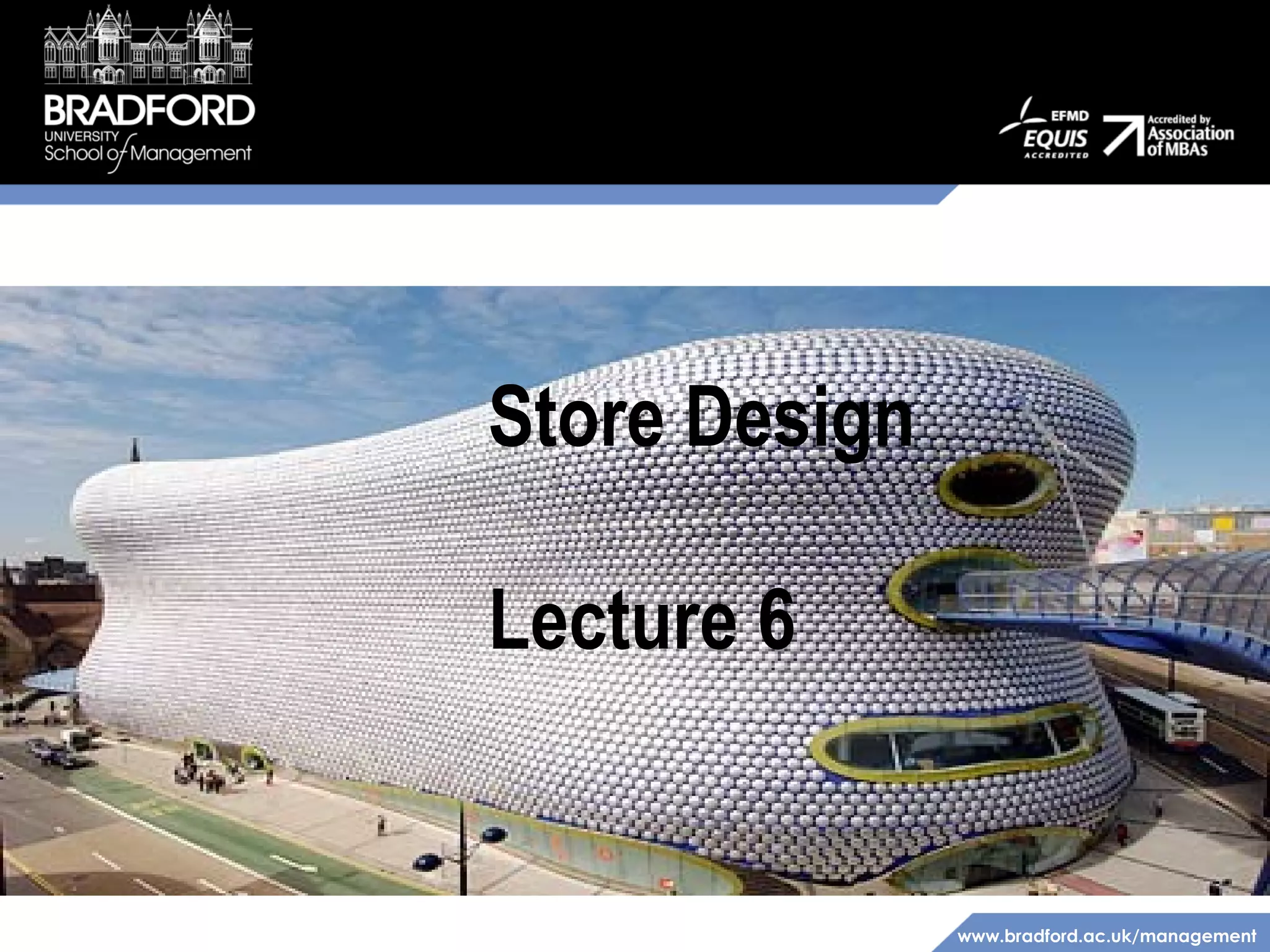
Store Design
Lecture 6

www.bradford.ac.uk/management
Lecture Objectives
• To explore how store design can influence
the shopper’s patronage decisions
• To define how store design creates a
controlled environment for the shopper
• To define the ambient, social and design
dimensions of the store environment
Baker’s framework (1986)
• Three critical dimensions
– Design
• Architecture
• Layout
• Display

– Social
• Low, moderate, high contact

– Ambient
• Atmospheric dimensions
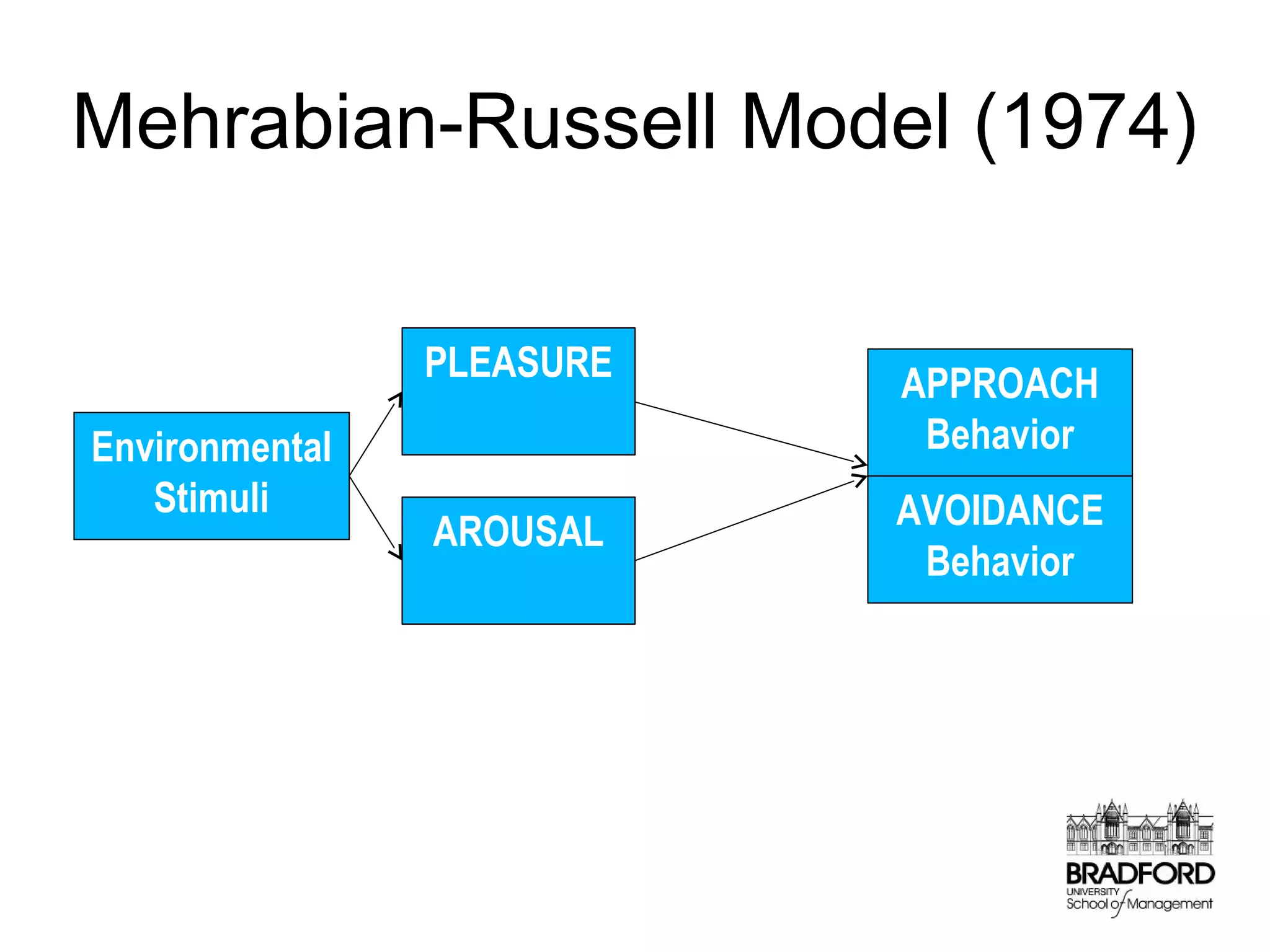
Mehrabian-Russell Model (1974)
PLEASURE
Environmental
Stimuli

APPROACH
Behavior

AROUSAL

AVOIDANCE
Behavior
Elaboration Likelihood Model
Developed by Petty and Cacioppo (1986)

• Cognitive Responses to promotional stimuli
• ELM adds an extra level of detail to MR
Model
The store environment
• Convenience
• Attractiveness
• Design as a means of achieving image
differentiation
• Now a key element in the competition
between physical and electronic shopping
alternatives
• Focus on the experience
The Design Element
Concerns the control of more tangible
(foreground) elements of a store’s interior
to create appropriate shopping
environment for target shoppers.
Design Fit ?
Prototype Method
Simulation-CAD
Laboratory Testing
Store design and atmosphere
• Extension of advertising and promotion
• Why is design important:
– Pleasant shopping experience
– Convey messages about price, quality, service, values etc
– Reinforce brand name(s)

• New ideas:
– Retail theatre
– Feng Sui

• Design should take account of :
–
–
–
–

branding and positioning,
customer flow, space utilisation, access, IT infrastructure
flexibility, safety and security
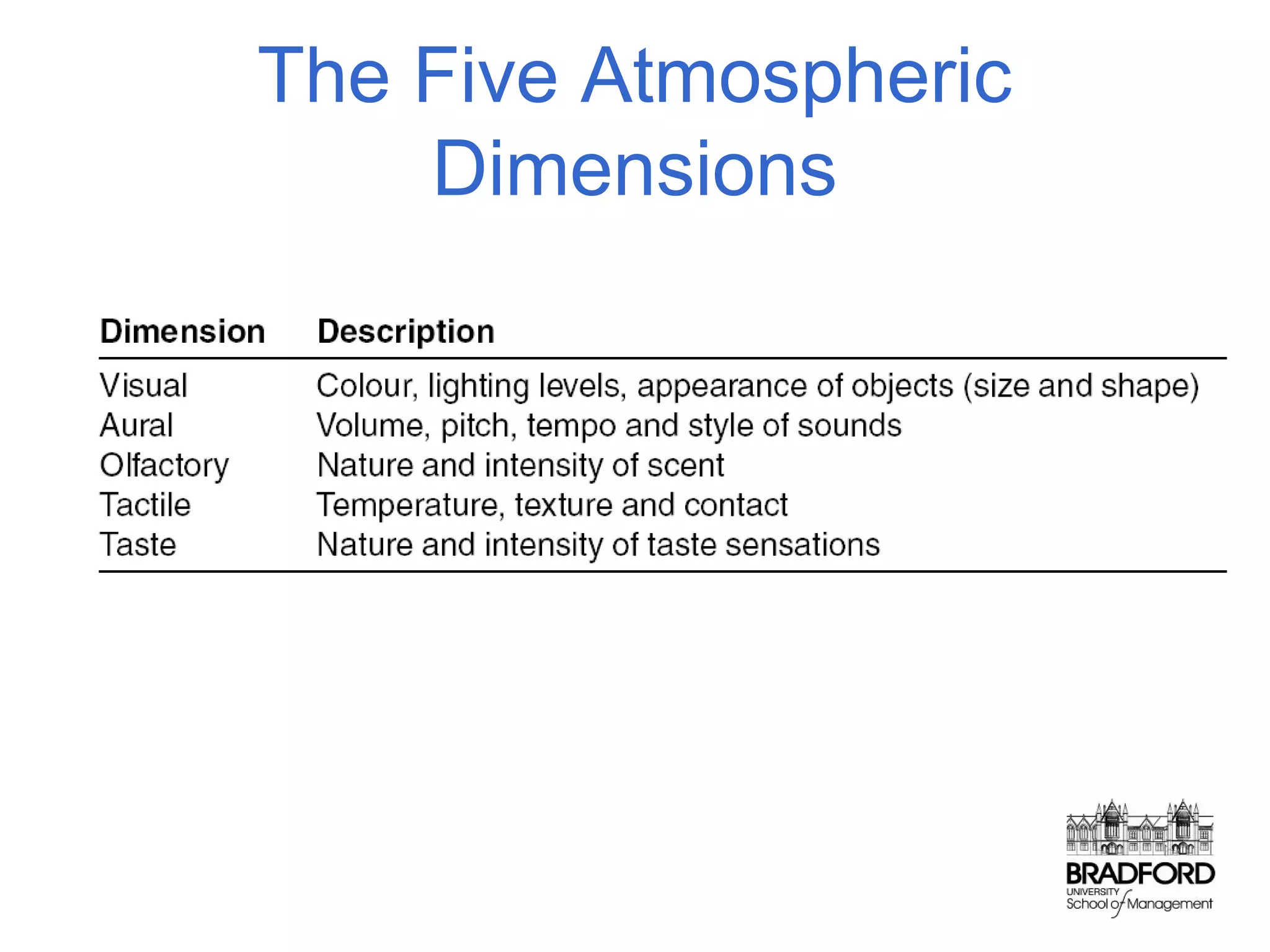
Store atmosphere: sight, sound, smell and touch
Store Design
•
•
•
•

Style (Image)
Architecture
Layout
Display
Architecture
Store exterior
Size ( parameters of operation)
Outward appearance
Packaging
Layout
• Total Selling Space segregation
• Master plan upon which other elements of
store’s design are based.
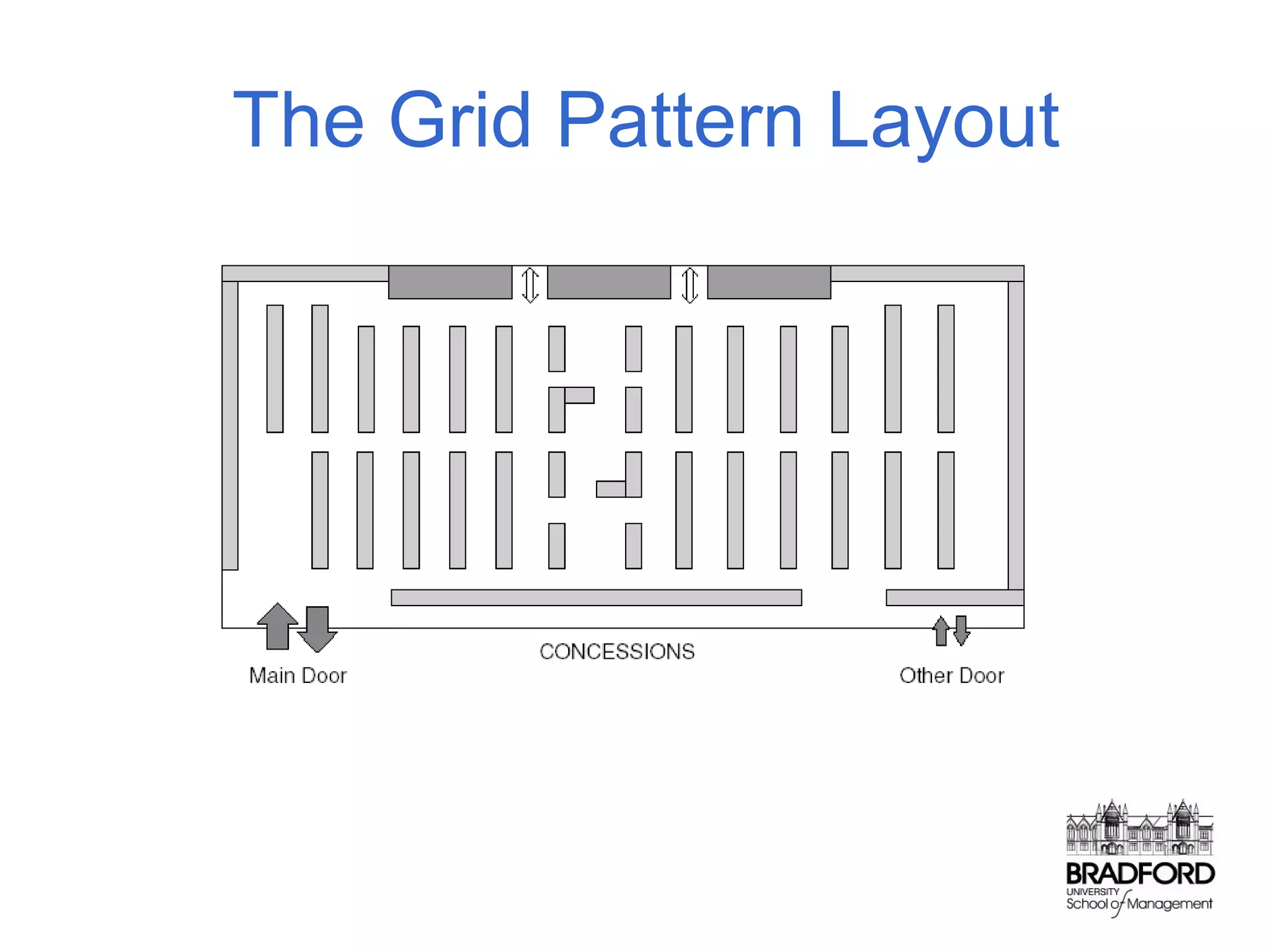
The Grid Pattern Layout
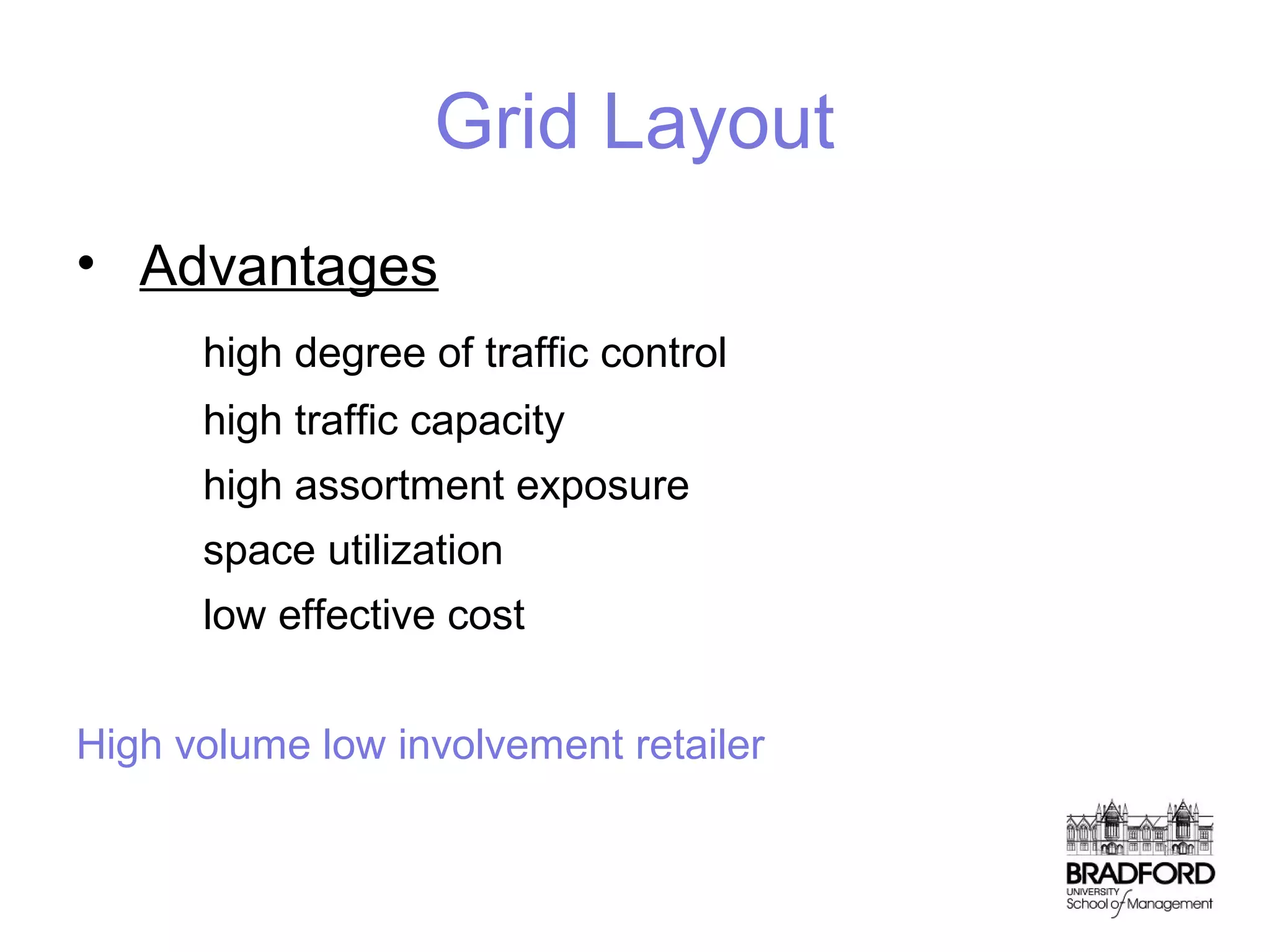
Grid Layout
• Advantages
high degree of traffic control
high traffic capacity
high assortment exposure
space utilization
low effective cost
High volume low involvement retailer
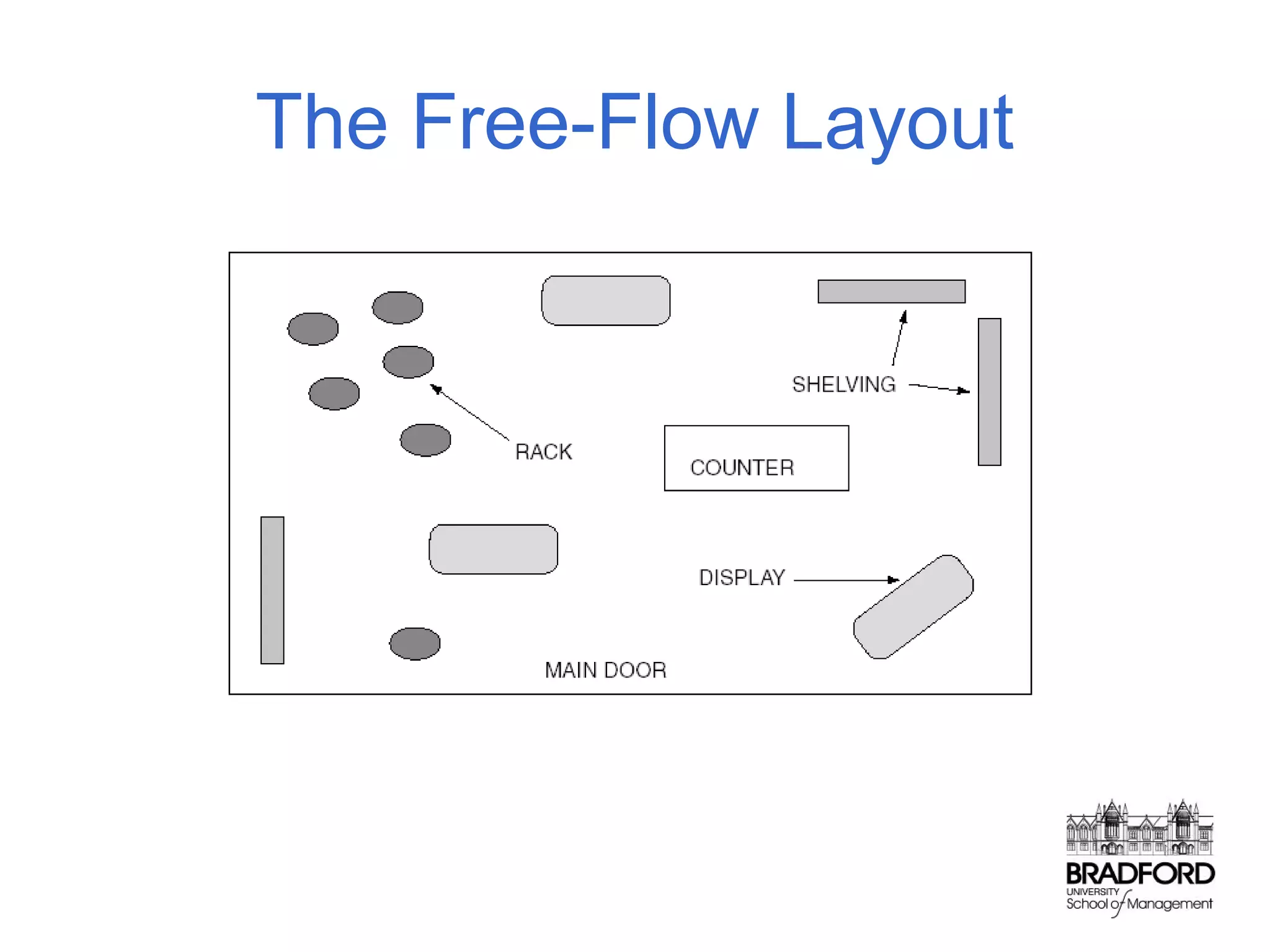
The Free-Flow Layout
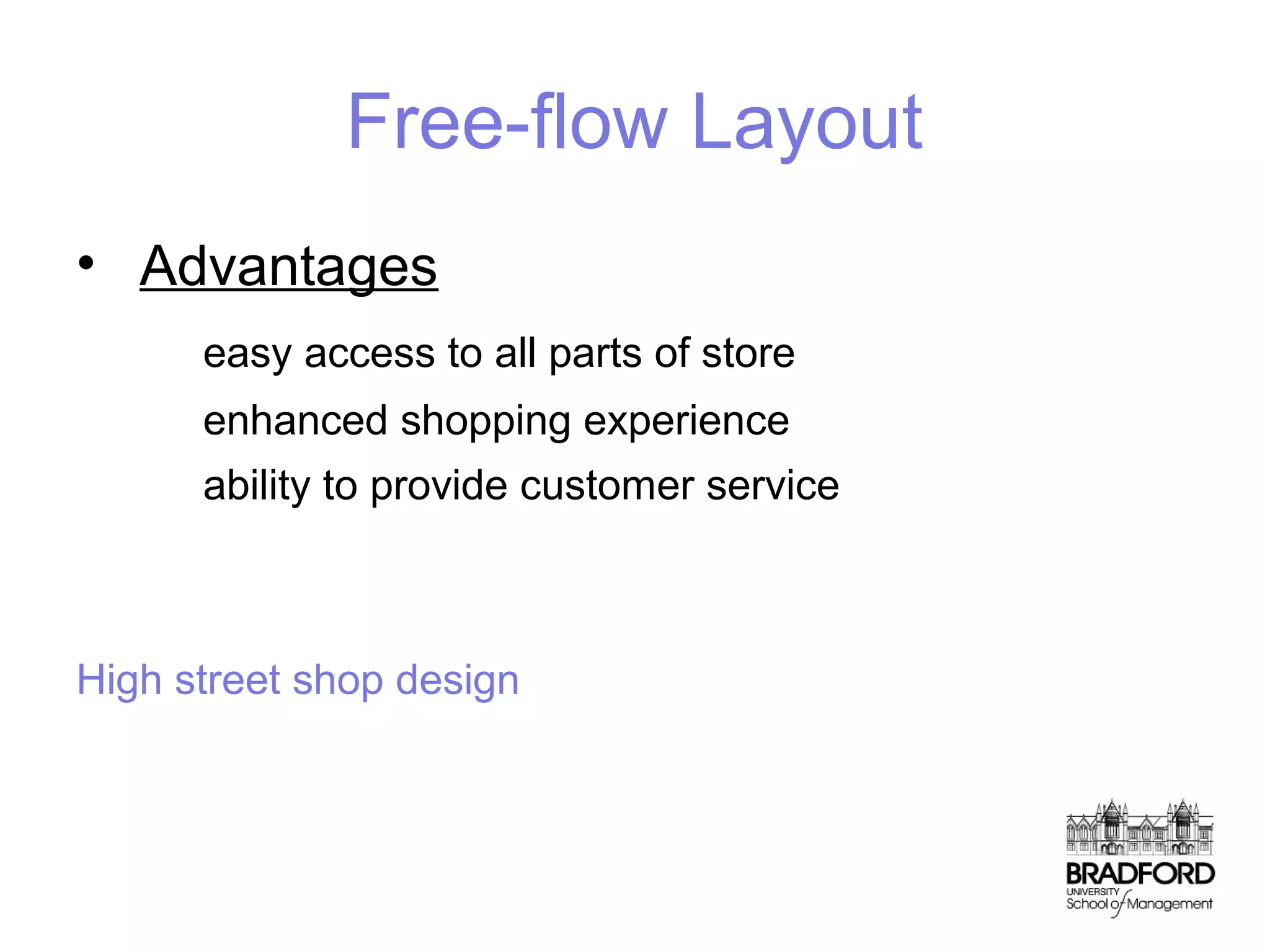
Free-flow Layout
• Advantages
easy access to all parts of store
enhanced shopping experience
ability to provide customer service

High street shop design
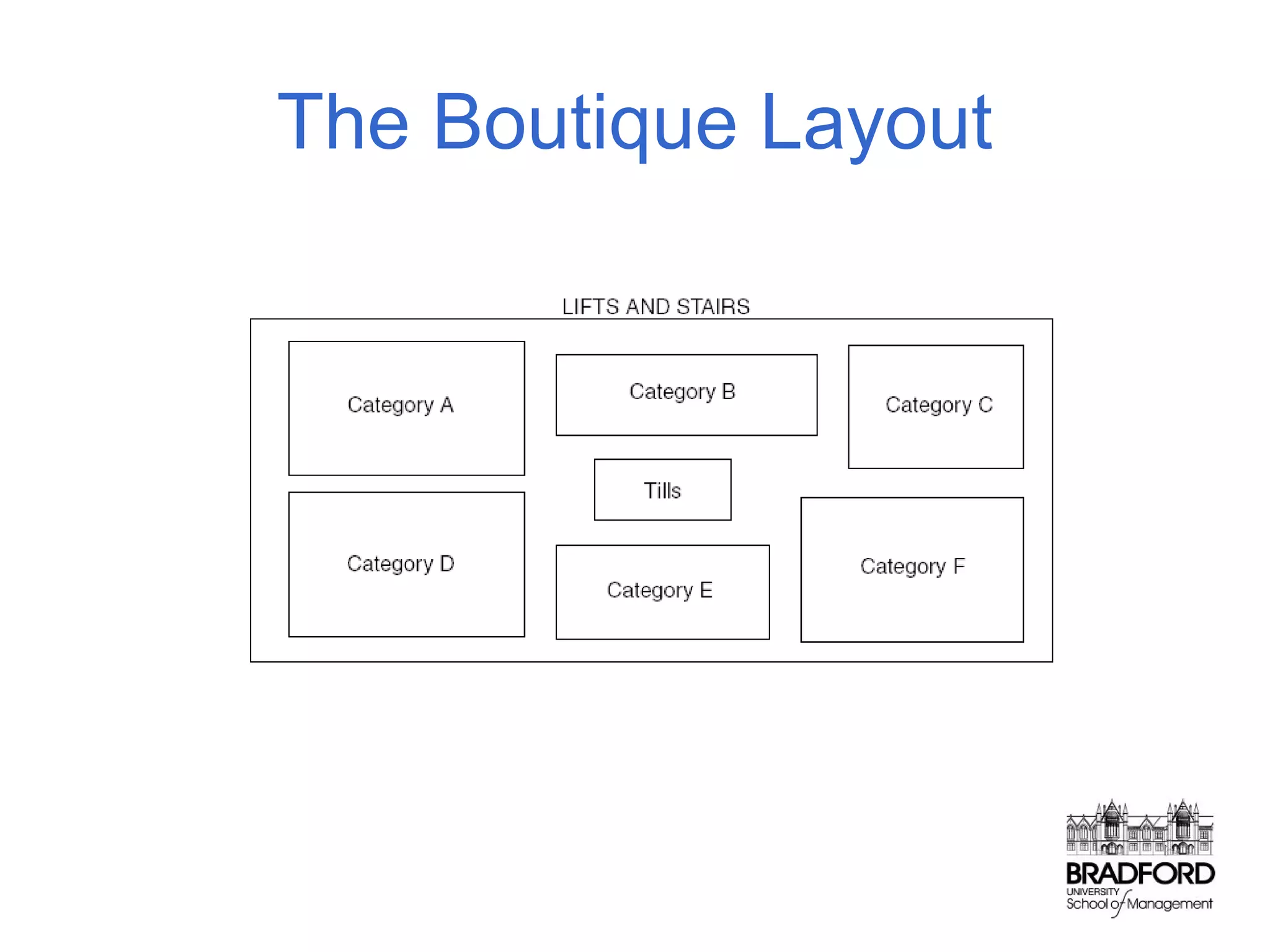
The Boutique Layout
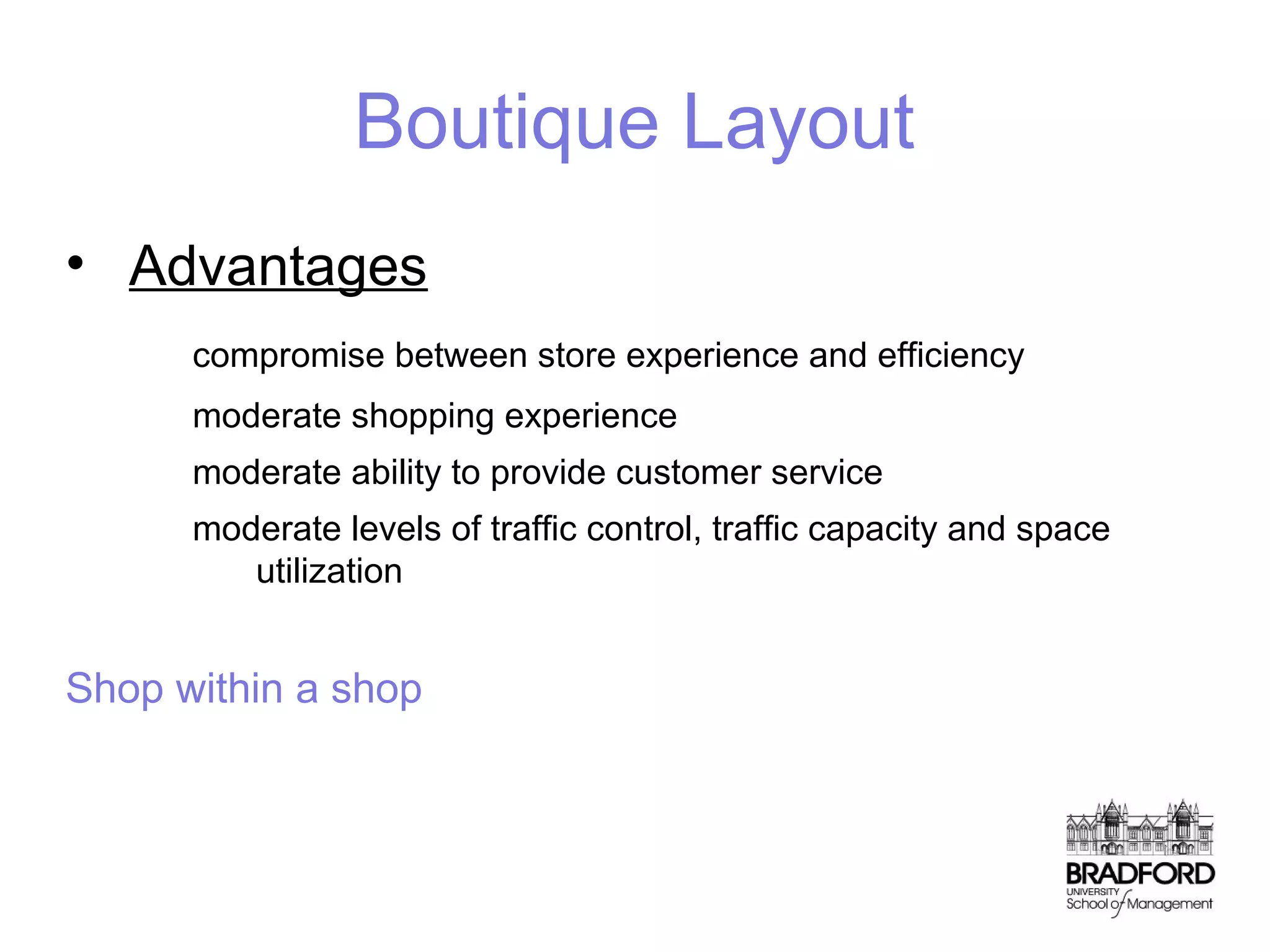
Boutique Layout
• Advantages
compromise between store experience and efficiency
moderate shopping experience
moderate ability to provide customer service
moderate levels of traffic control, traffic capacity and space
utilization

Shop within a shop
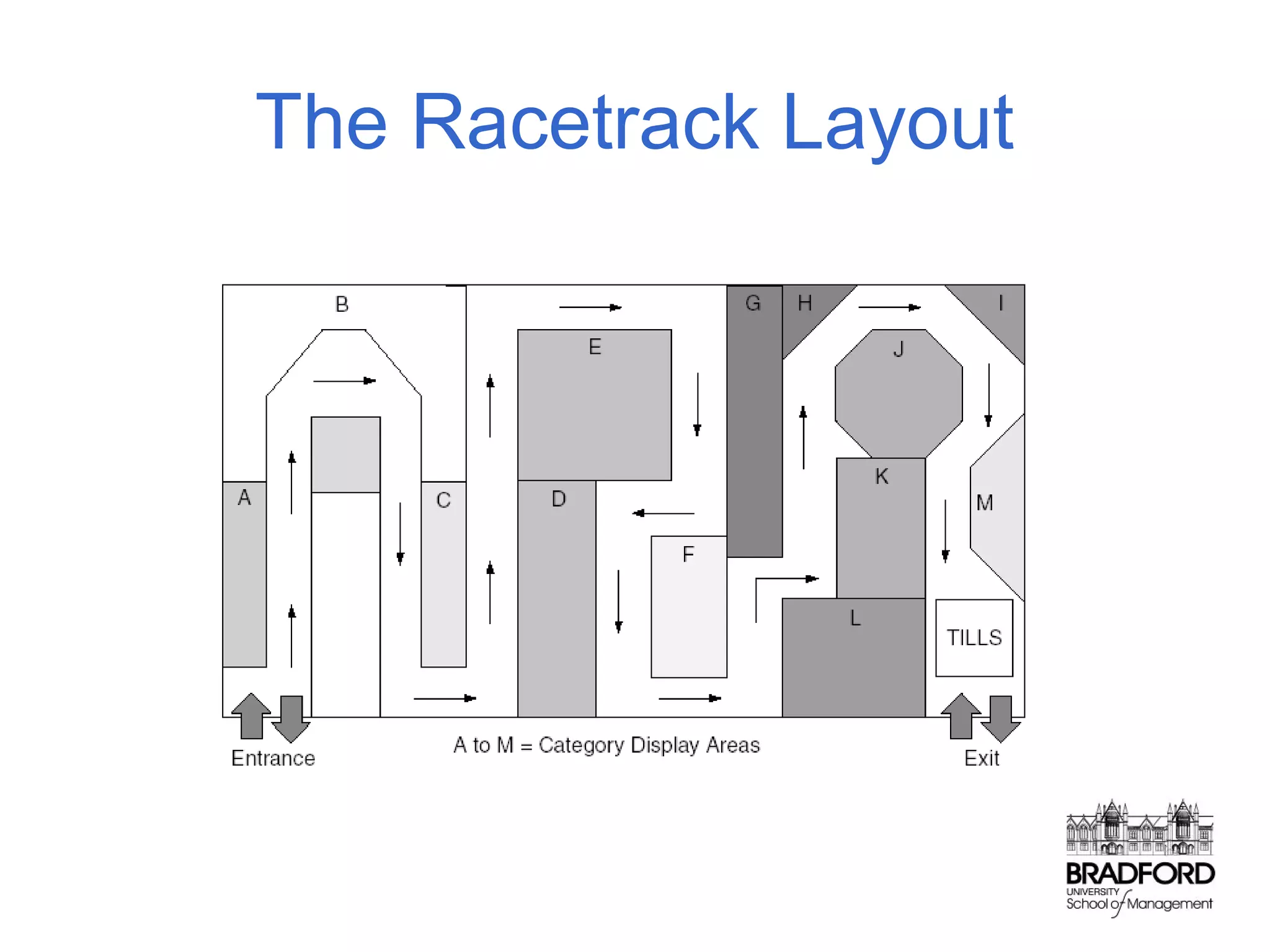
The Racetrack Layout
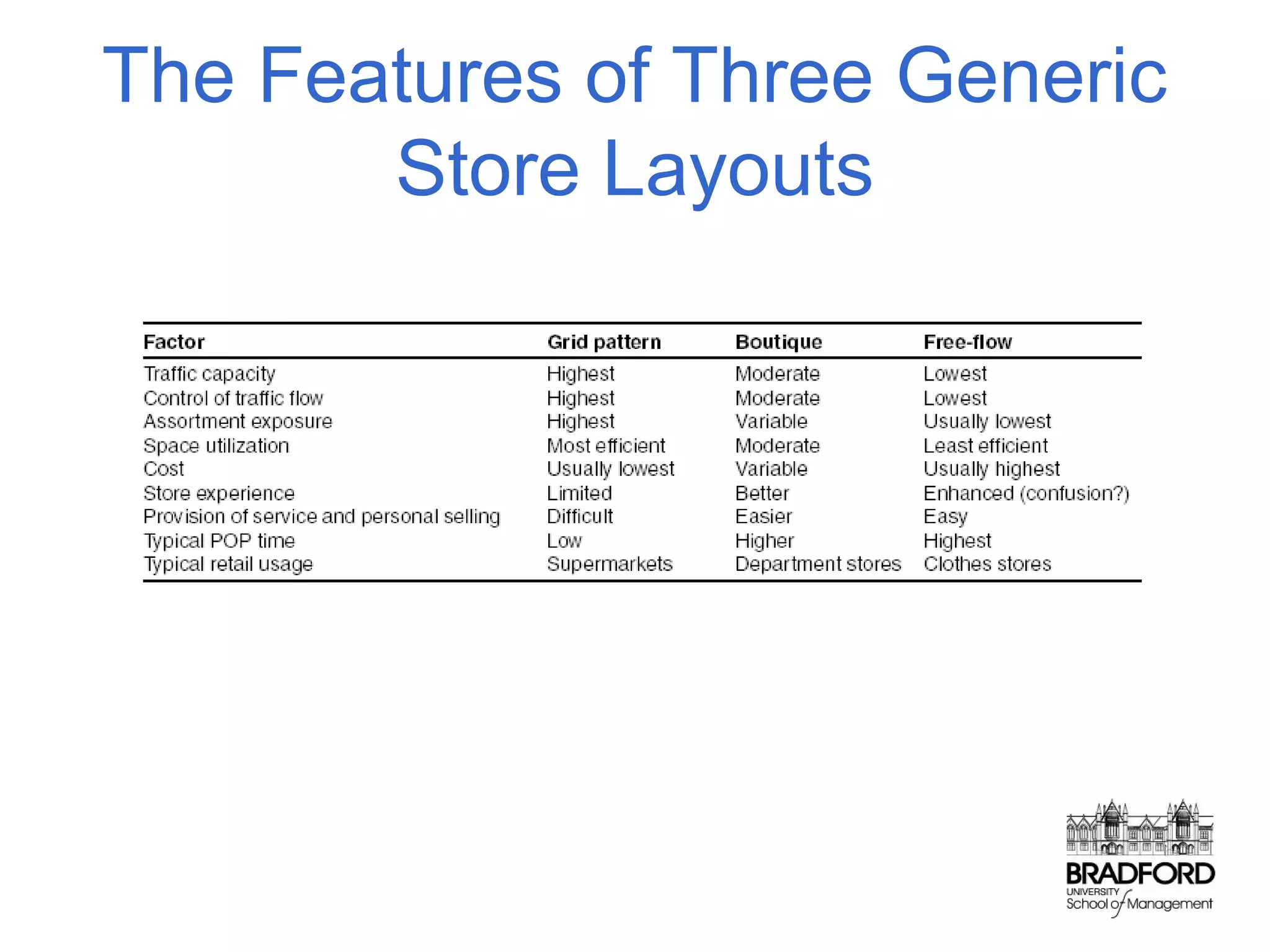
The Features of Three Generic
Store Layouts
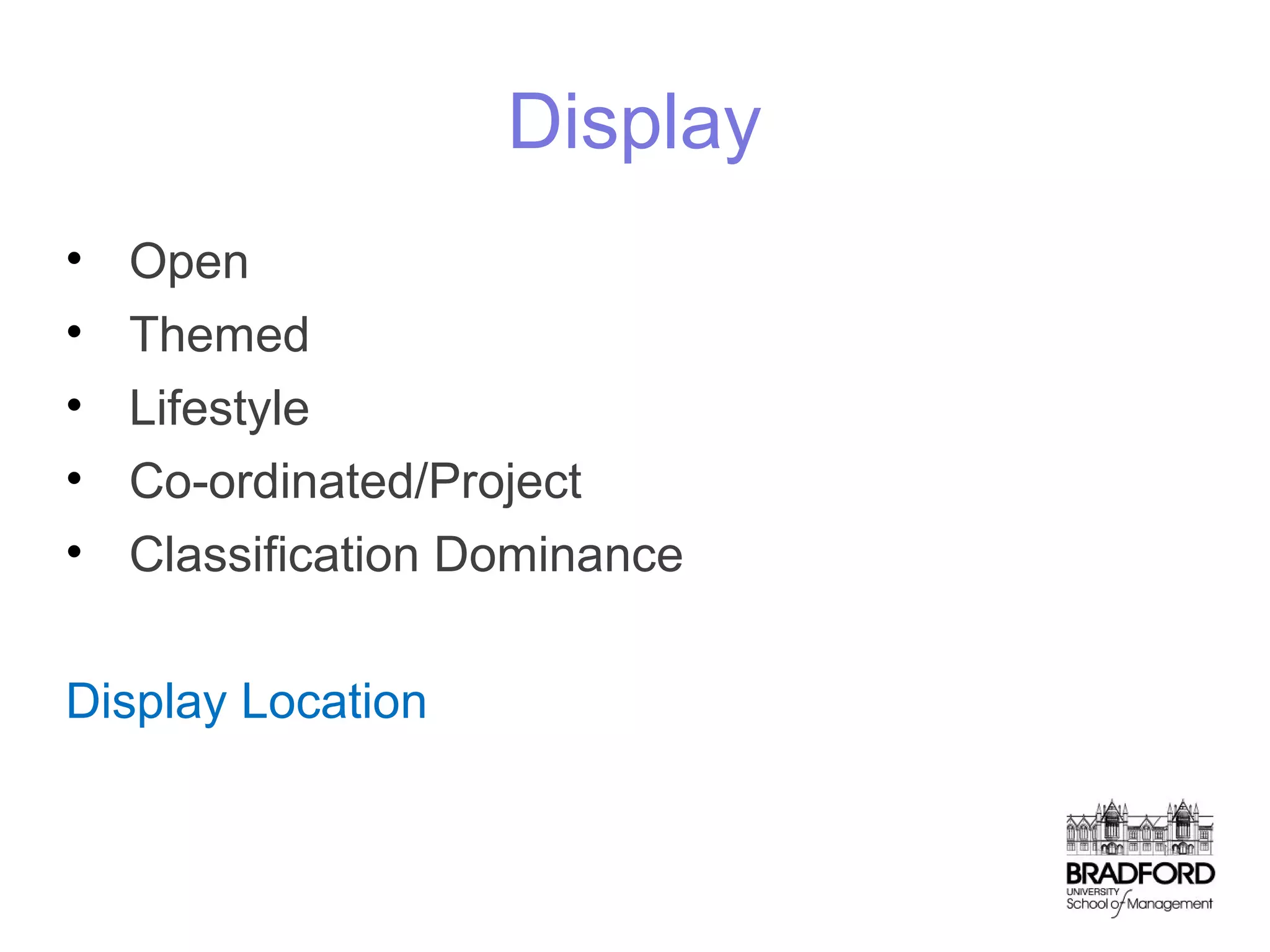
Display
•
•
•
•
•

Open
Themed
Lifestyle
Co-ordinated/Project
Classification Dominance

Display Location
The Social Element
The Ambient Element
The Five Atmospheric
Dimensions
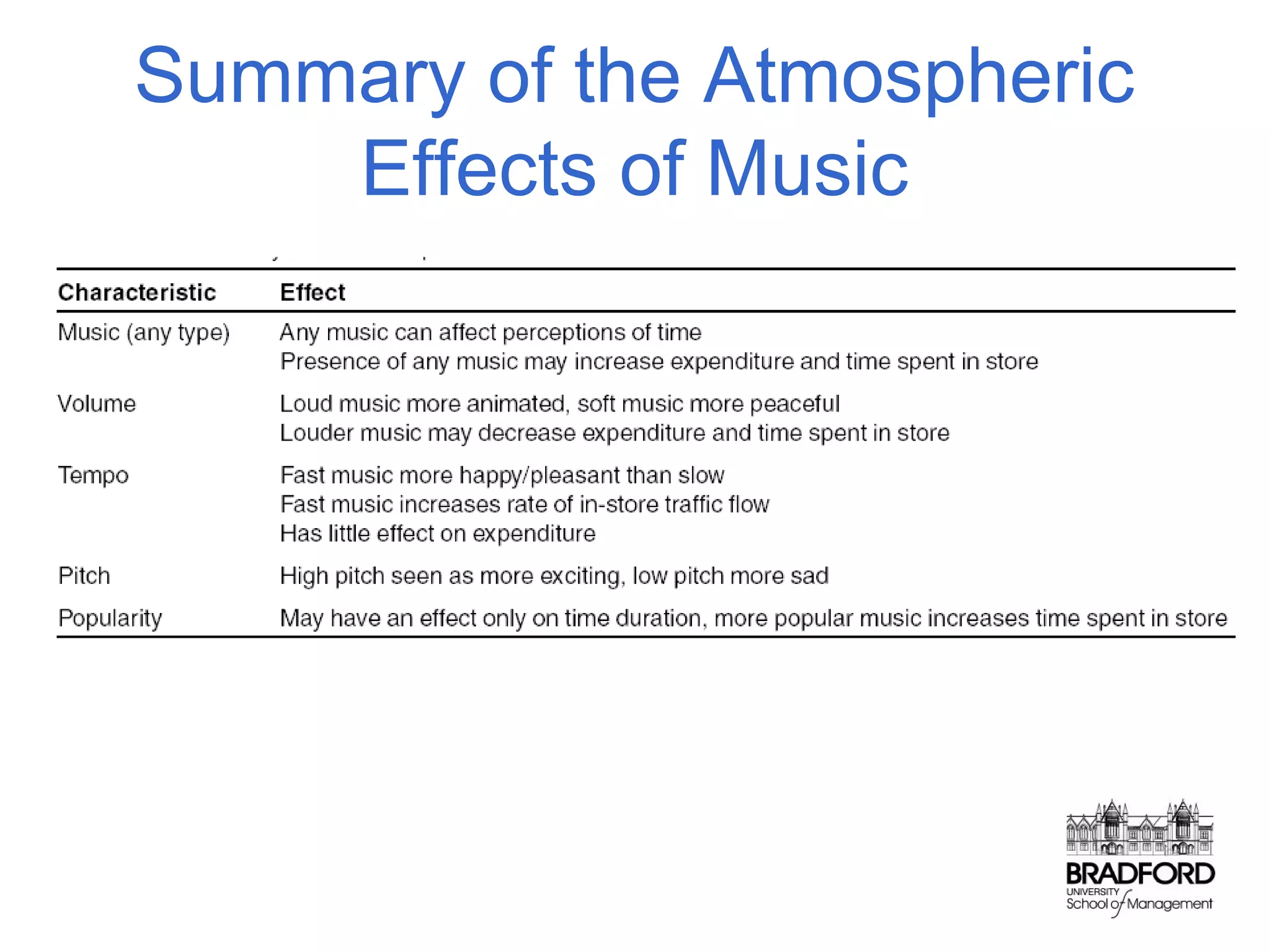
Summary of the Atmospheric
Effects of Music
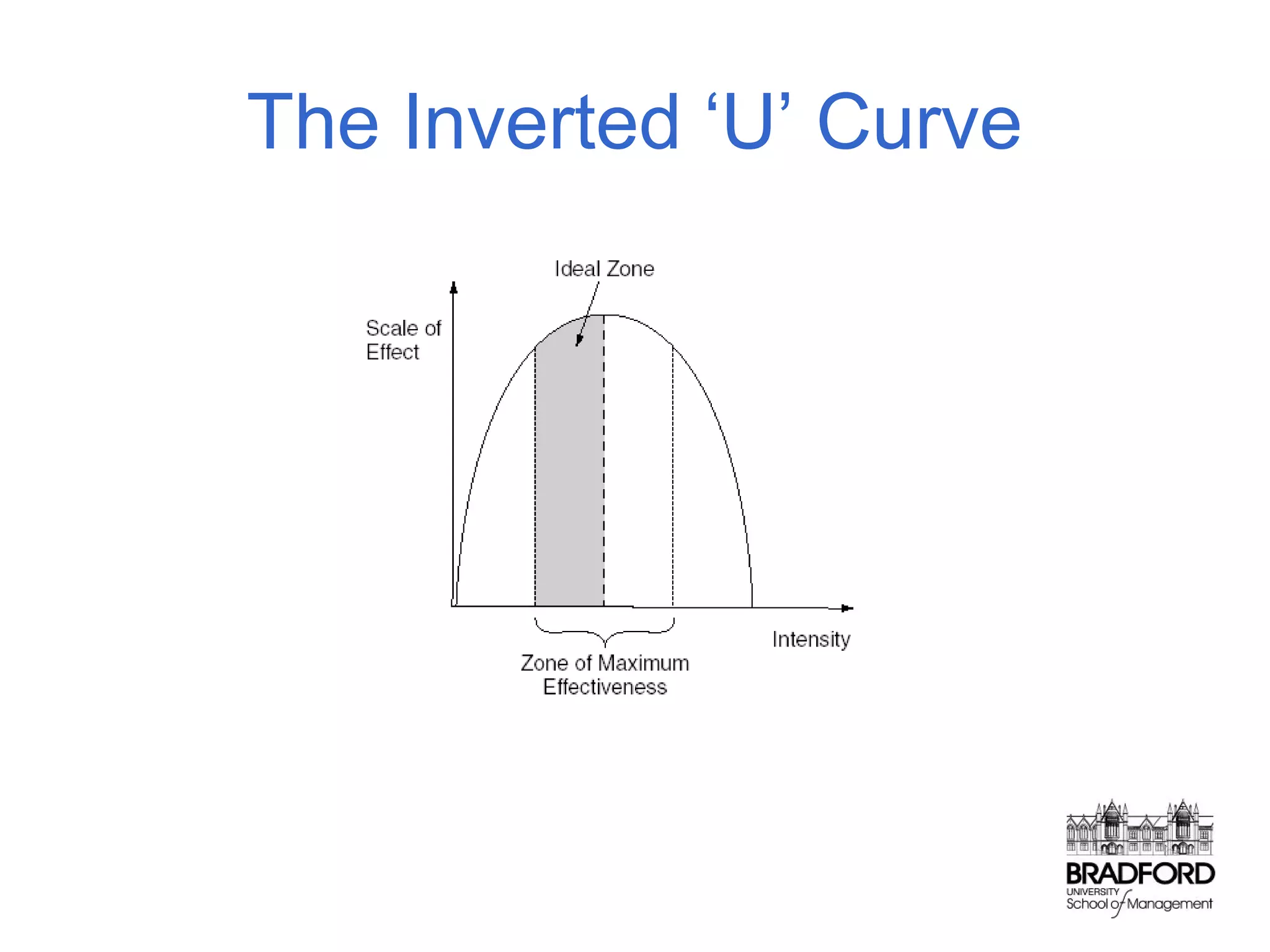
The Inverted ‘U’ Curve
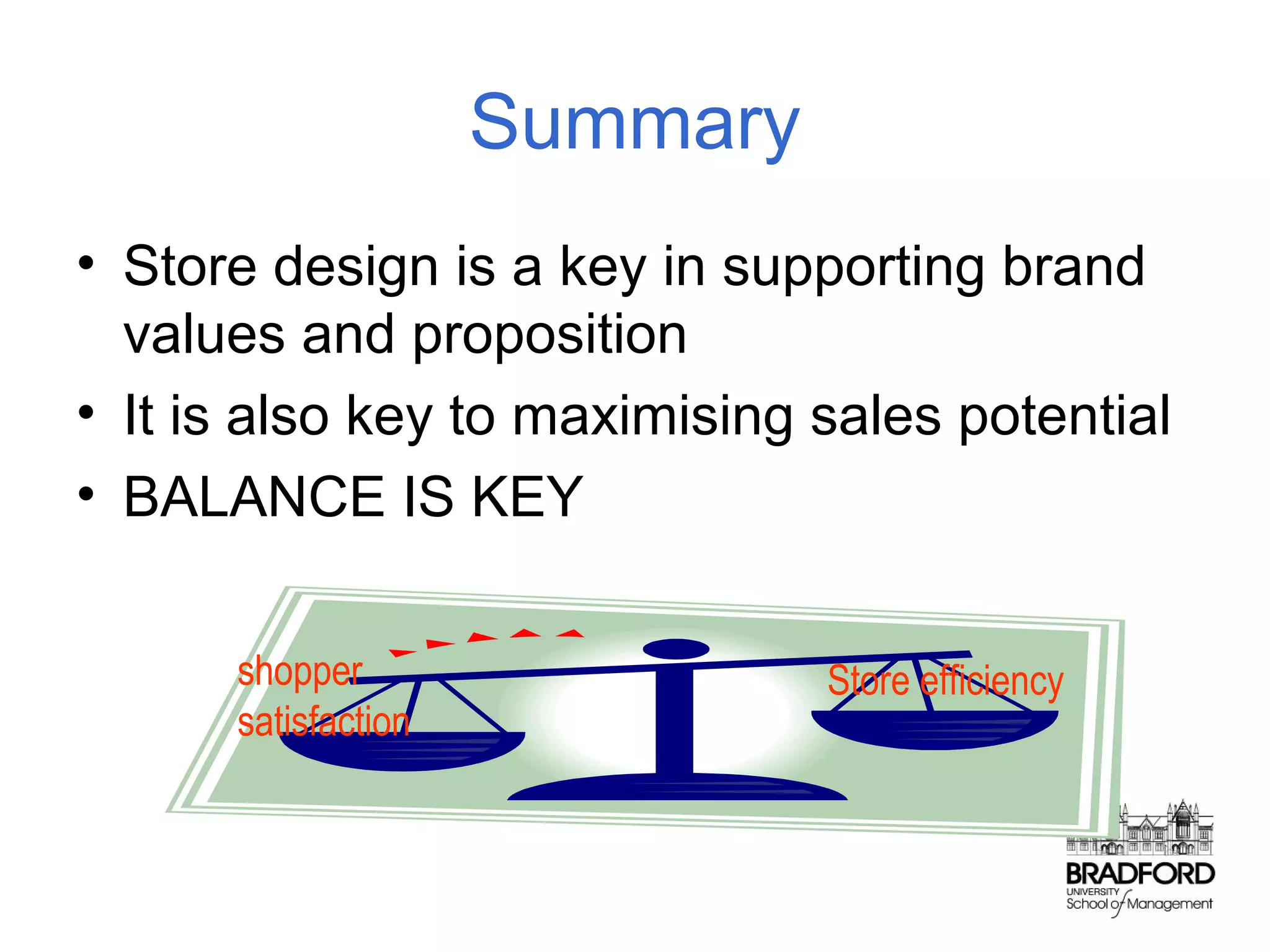
Summary
• Store design is a key in supporting brand
values and proposition
• It is also key to maximising sales potential
• BALANCE IS KEY
shopper
satisfaction

Store efficiency

Rm lecture 6

Editor's Notes

  • #3 This lecture kicks off the next subject area – retailing. In this first lecture there are a number of objectives: