






Diving Deeper: 
Integrating Epigeum Modules into Stream+ 
Professor Mark Brown 
Presentation at University & College Teaching Conference 
Birmingham, 19th September 2014
Pop quiz… 
If this is the question, then what is the answer?
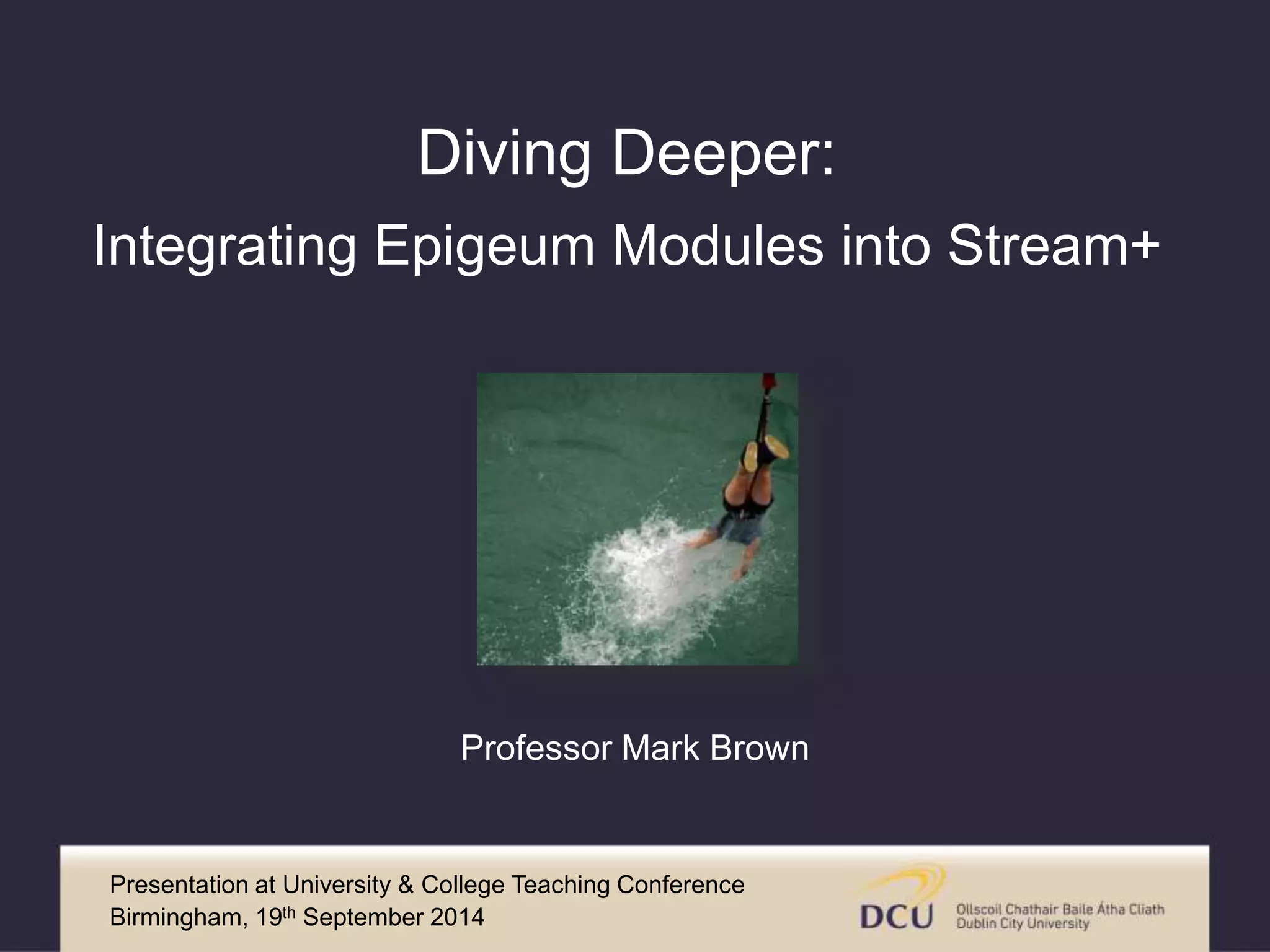
Avoiding the technology bungy…
Great leaps of faith…
1. Background 
2. Development Framework 
3. Implementation Experiences 
Outline…
Key point… 
Even if you have all the latest equipment 
you still need to be taught how to dive
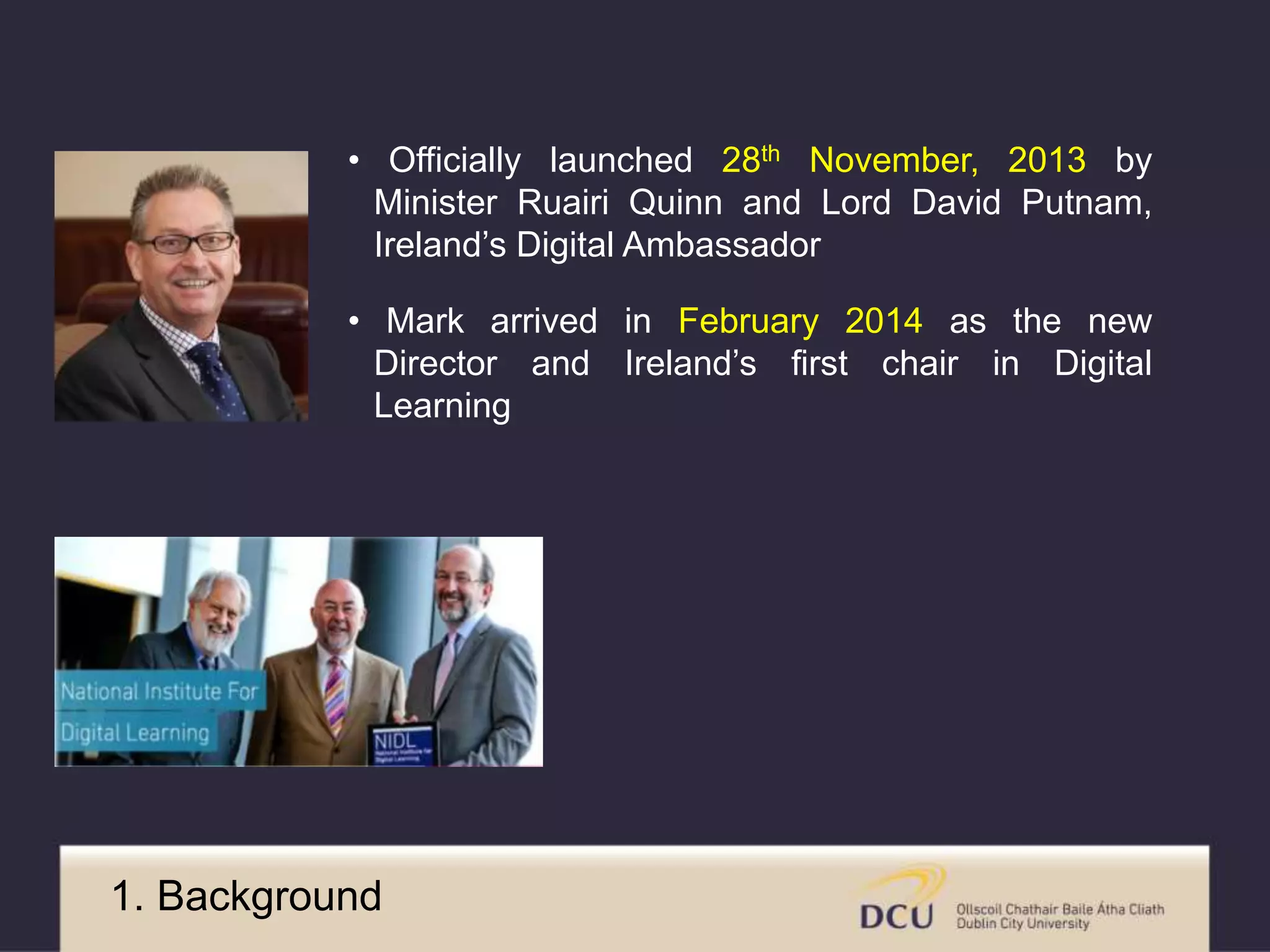
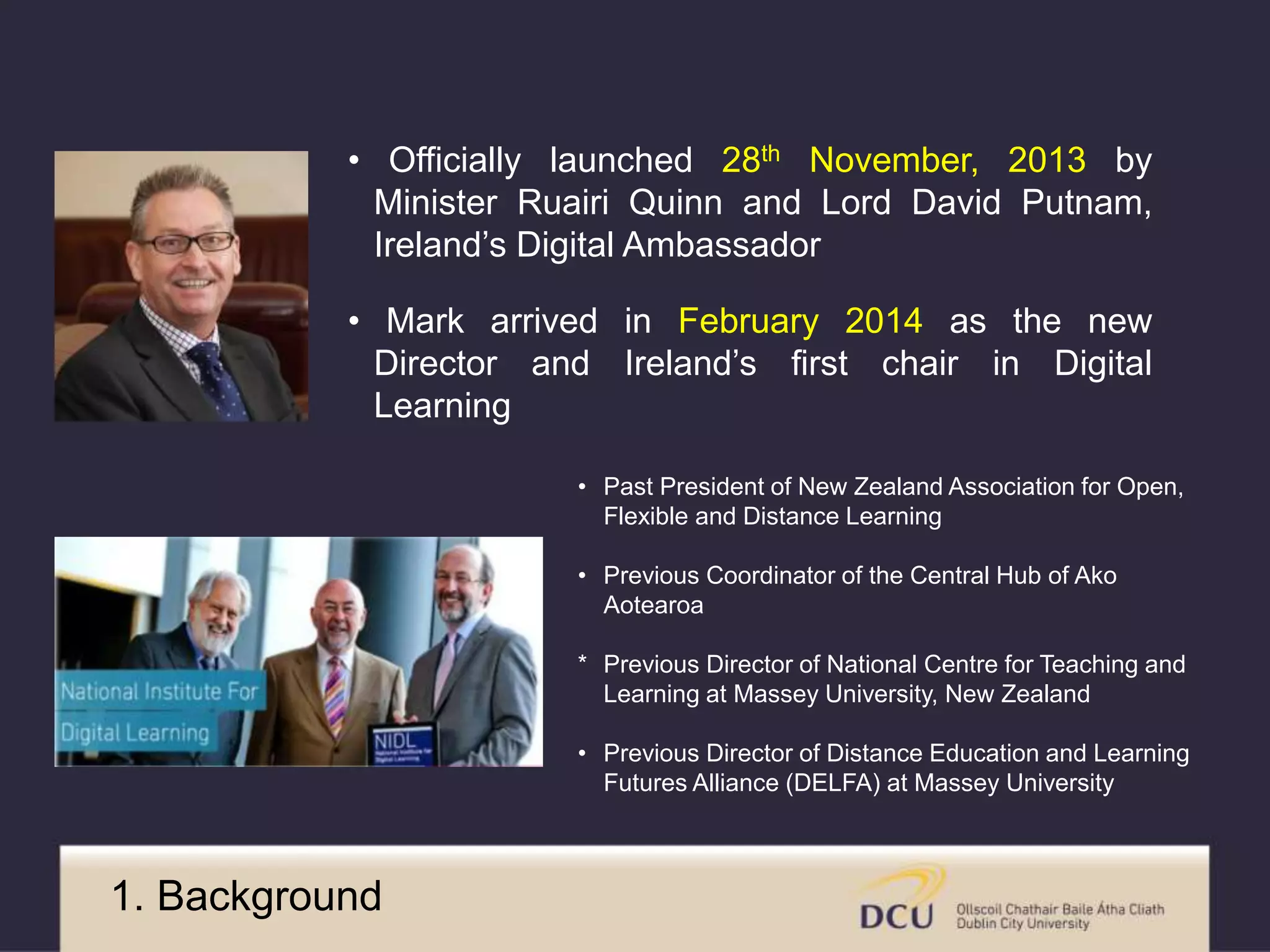
• Officially launched 28th November, 2013 by 
Minister Ruairi Quinn and Lord David Putnam, 
Ireland’s Digital Ambassador 
• Mark arrived in February 2014 as the new 
Director and Ireland’s first chair in Digital 
Learning 
1. Background
• Officially launched 28th November, 2013 by 
Minister Ruairi Quinn and Lord David Putnam, 
Ireland’s Digital Ambassador 
• Mark arrived in February 2014 as the new 
Director and Ireland’s first chair in Digital 
Learning 
• Past President of New Zealand Association for Open, 
Flexible and Distance Learning 
• Previous Coordinator of the Central Hub of Ako 
Aotearoa 
* Previous Director of National Centre for Teaching and 
Learning at Massey University, New Zealand 
• Previous Director of Distance Education and Learning 
Futures Alliance (DELFA) at Massey University 
1. Background
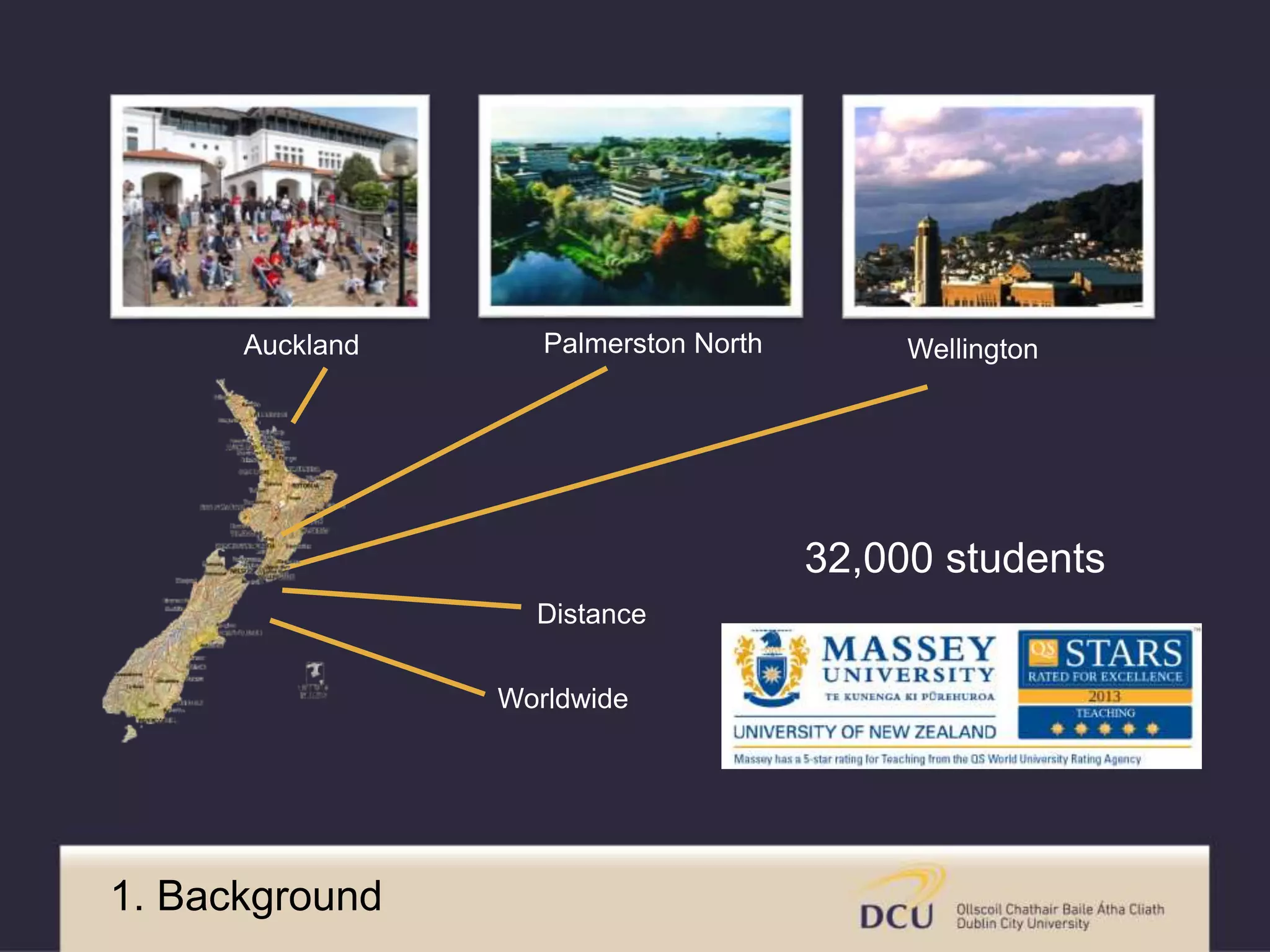
Auckland Palmerston North Wellington 
Distance 
Worldwide 
32,000 students 
1. Background
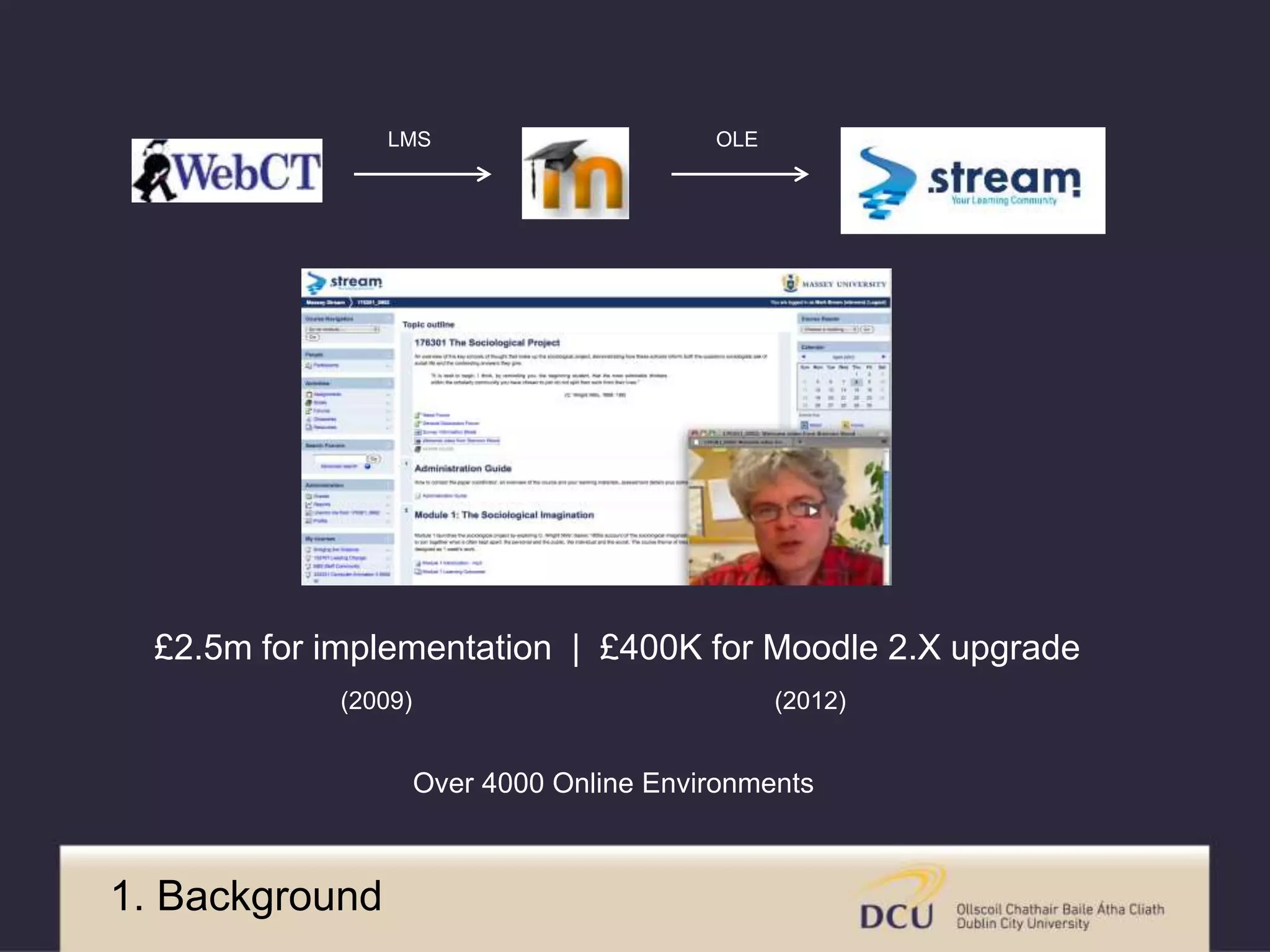
LMS OLE 
£2.5m for implementation | £400K for Moodle 2.X upgrade 
(2009) (2012) 
Over 4000 Online Environments 
1. Background
1. Background
1. Background
1. Background
1. Background
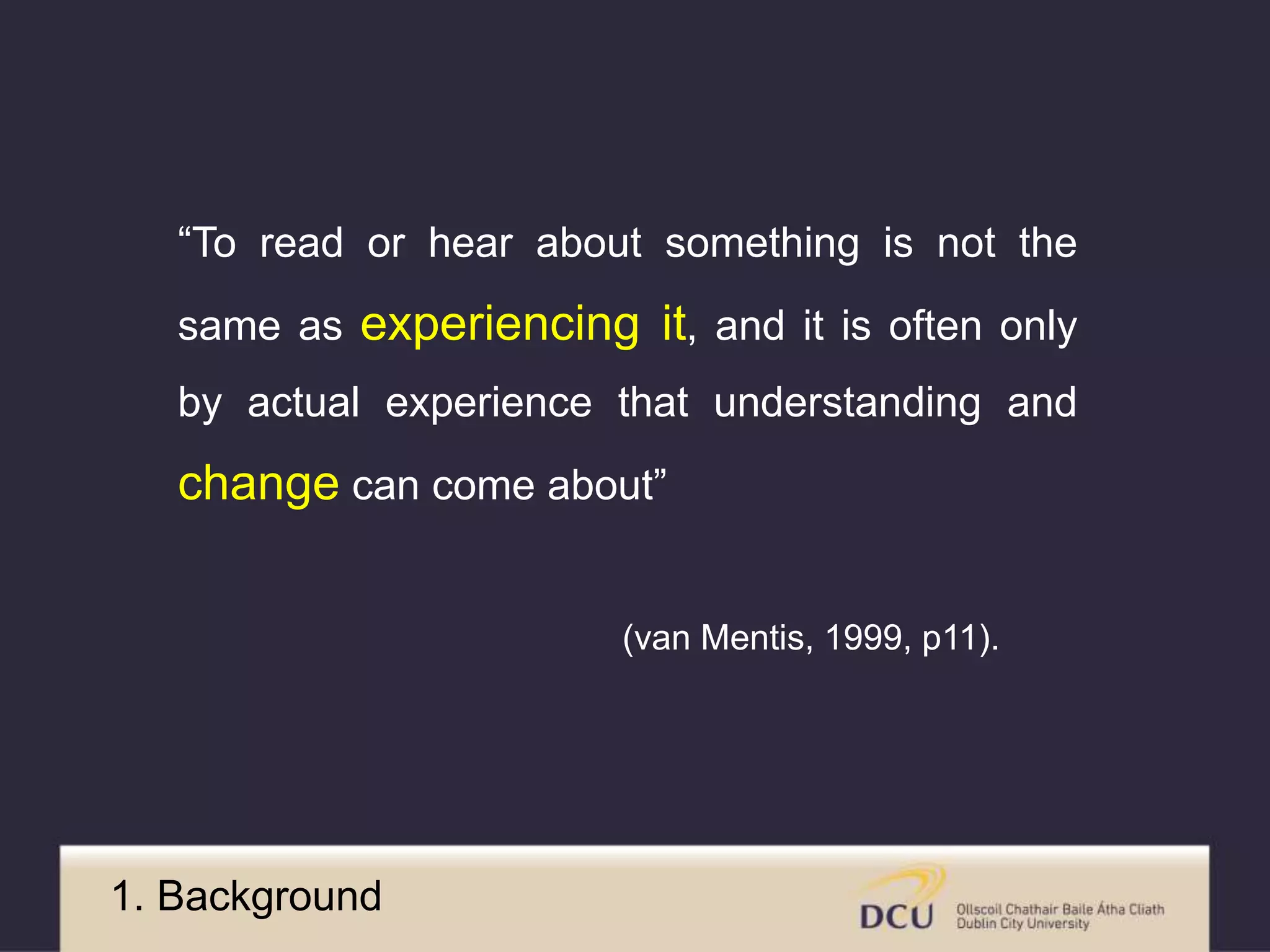
“To read or hear about something is not the 
same as experiencing it, and it is often only 
by actual experience that understanding and 
change can come about” 
(van Mentis, 1999, p11). 
1. Background
1. Background
1. Background
1. Background
1. Background
1. Background
1. Background 
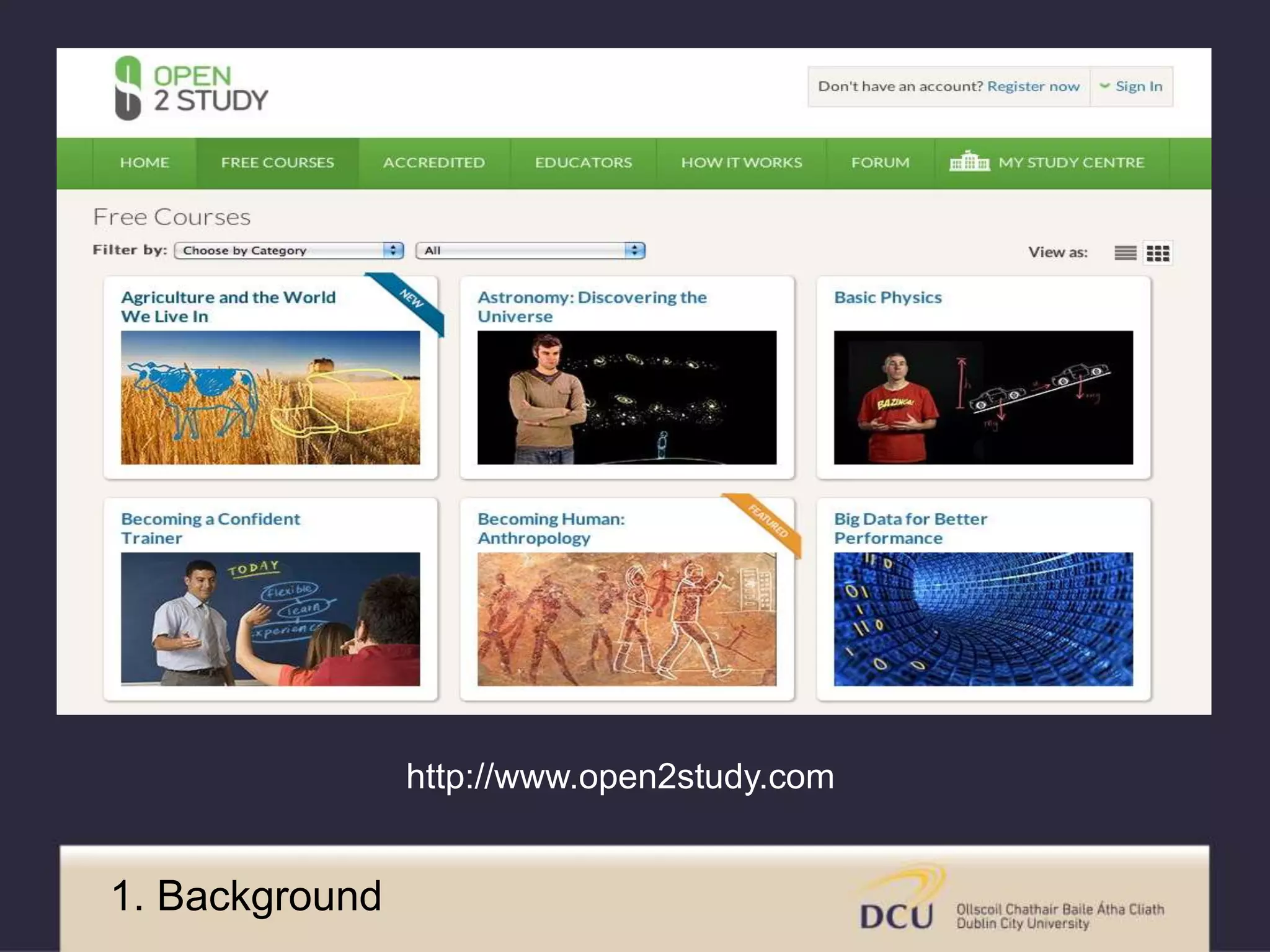
http://www.open2study.com
Teaching Excellence… 
• Planning and Design for Learning 
• Facilitating Learning 
• Assessing Student Learning 
• Evaluating Teaching and Learning 
• Professional Development and Teaching Leadership 
2. Development Framework
Core Principles… 
1. Treats teachers as learners 
2. Helps teachers to design environments for 
learning 
3. Recognises that teachers’ learning best occurs in 
a meaningful and socially interactive environment 
4. Is underpinned by a strong foundation in the 
pedagogy of digital learning – new normal 
5. Is learner and learning driven rather than 
technology-led 
2. Development Framework
6. Involves a variety of professional learning 
opportunities 
7. Inclusive of all staff including casual teachers and 
those who support teaching 
8. Reflects the complexity of teaching and subject 
differences 
9. Builds communities of interest and a culture of 
continuous enhancement 
10. Provides opportunities to identify, acknowledge and 
celebrate success 
2. Development Framework
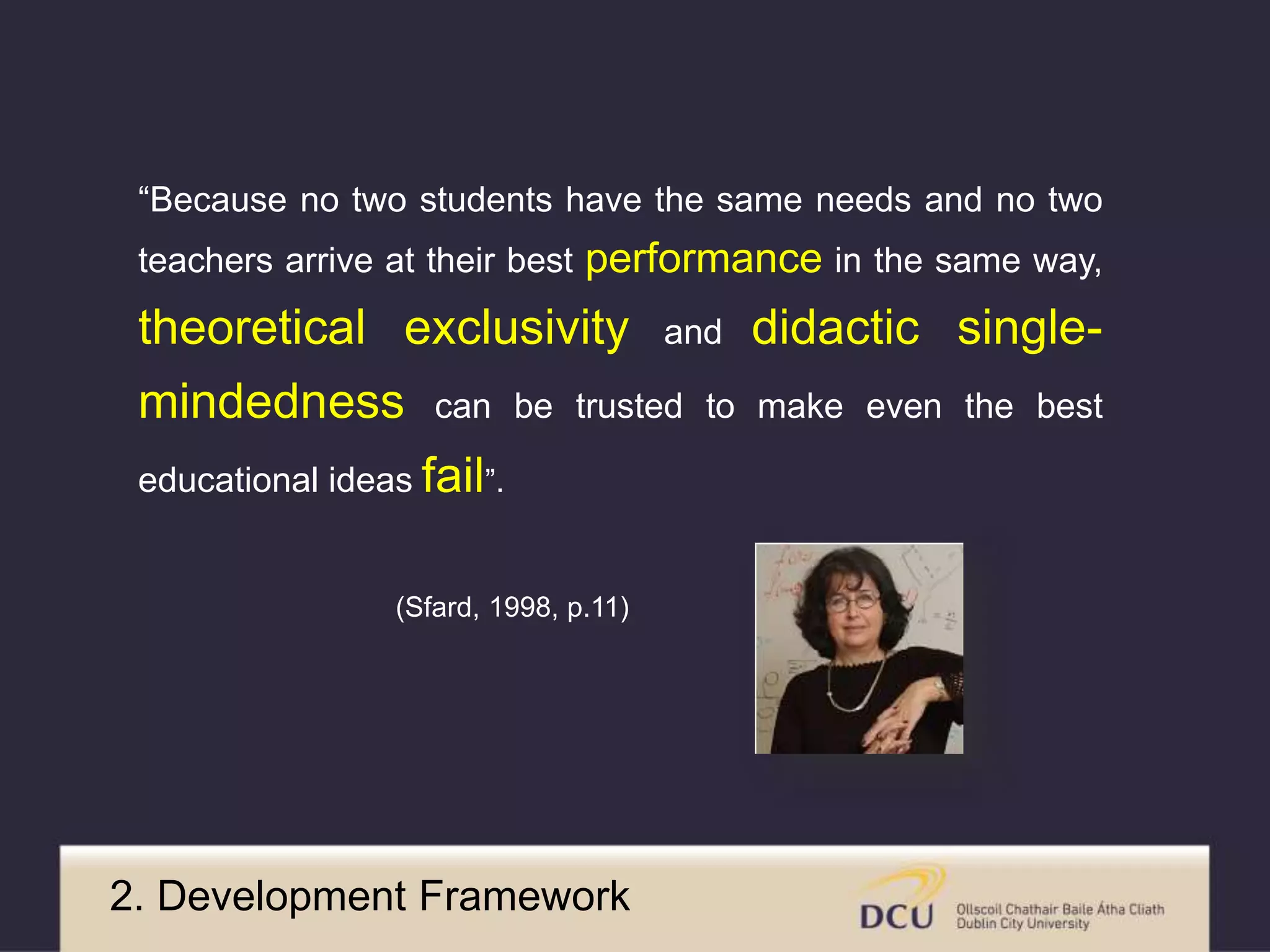
“Because no two students have the same needs and no two 
teachers arrive at their best performance in the same way, 
theoretical exclusivity and didactic single-mindedness 
can be trusted to make even the best 
educational ideas fail”. 
(Sfard, 1998, p.11) 
2. Development Framework
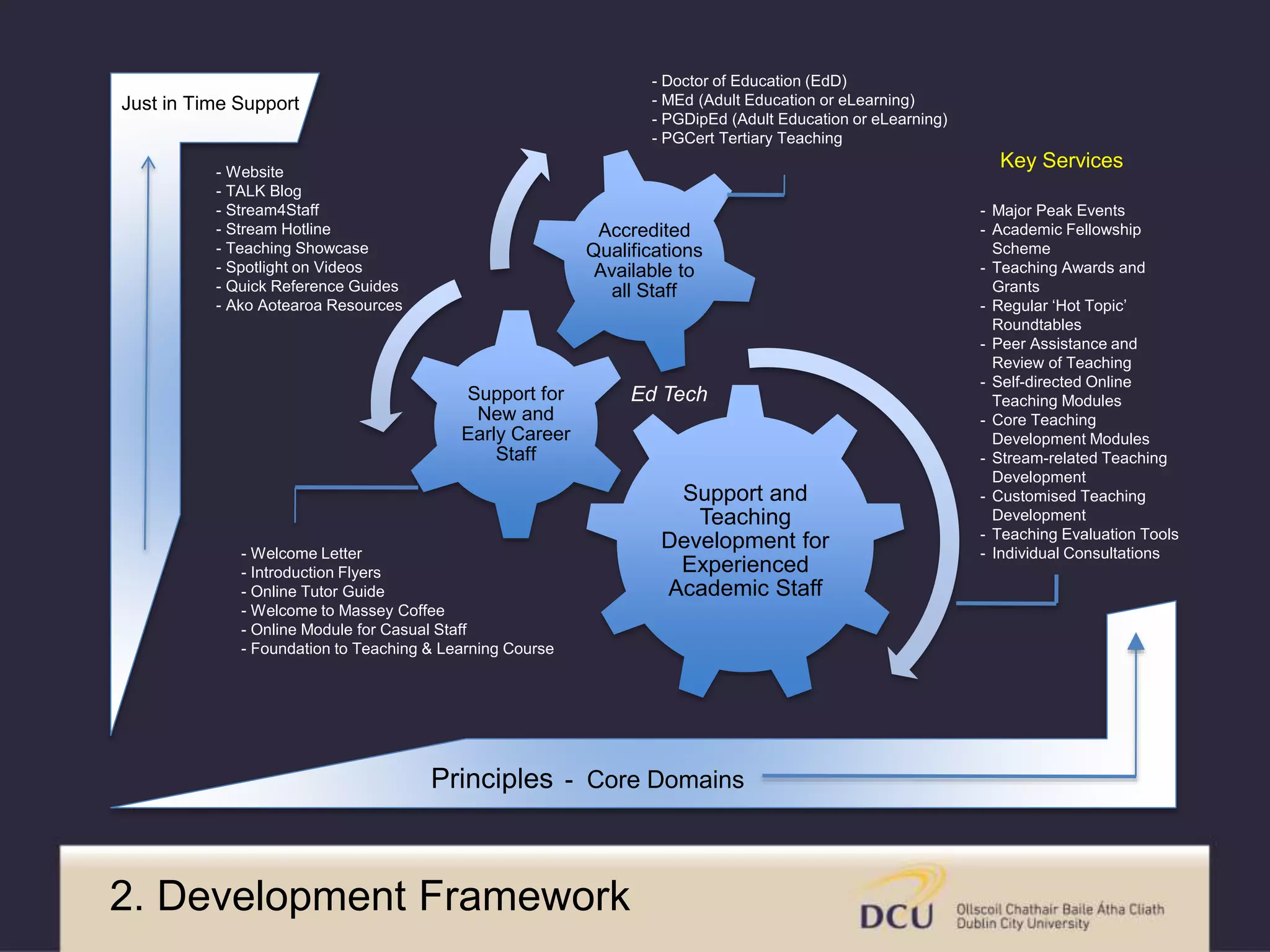
- Doctor of Education (EdD) 
- MEd (Adult Education or eLearning) 
- PGDipEd (Adult Education or eLearning) 
- PGCert Tertiary Teaching 
Ed Tech 
Support and 
Teaching 
Development for 
Experienced 
Academic Staff 
Support for 
New and 
Early Career 
Staff 
Accredited 
Qualifications 
Available to 
all Staff 
Just in Time Support 
- Website 
- TALK Blog 
- Stream4Staff 
- Stream Hotline 
- Teaching Showcase 
- Spotlight on Videos 
- Quick Reference Guides 
- Ako Aotearoa Resources 
Principles - Core Domains 
Key Services 
- Major Peak Events 
- Academic Fellowship 
Scheme 
- Teaching Awards and 
Grants 
- Regular ‘Hot Topic’ 
Roundtables 
- Peer Assistance and 
Review of Teaching 
- Self-directed Online 
Teaching Modules 
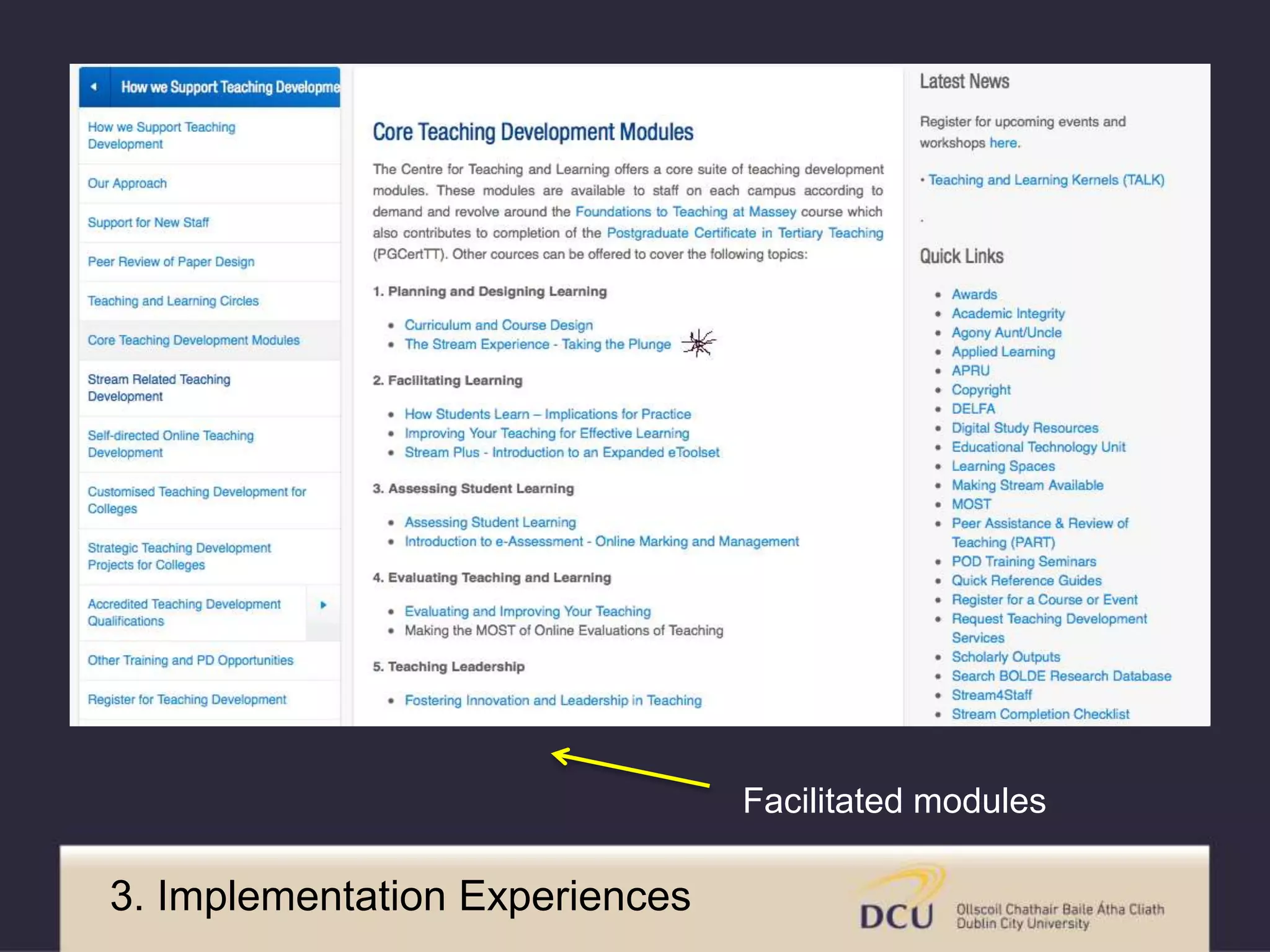
- Core Teaching 
Development Modules 
- Stream-related Teaching 
Development 
- Customised Teaching 
Development 
- Teaching Evaluation Tools 
- Welcome Letter - Individual Consultations 
- Introduction Flyers 
- Online Tutor Guide 
- Welcome to Massey Coffee 
- Online Module for Casual Staff 
- Foundation to Teaching & Learning Course 
2. Development Framework
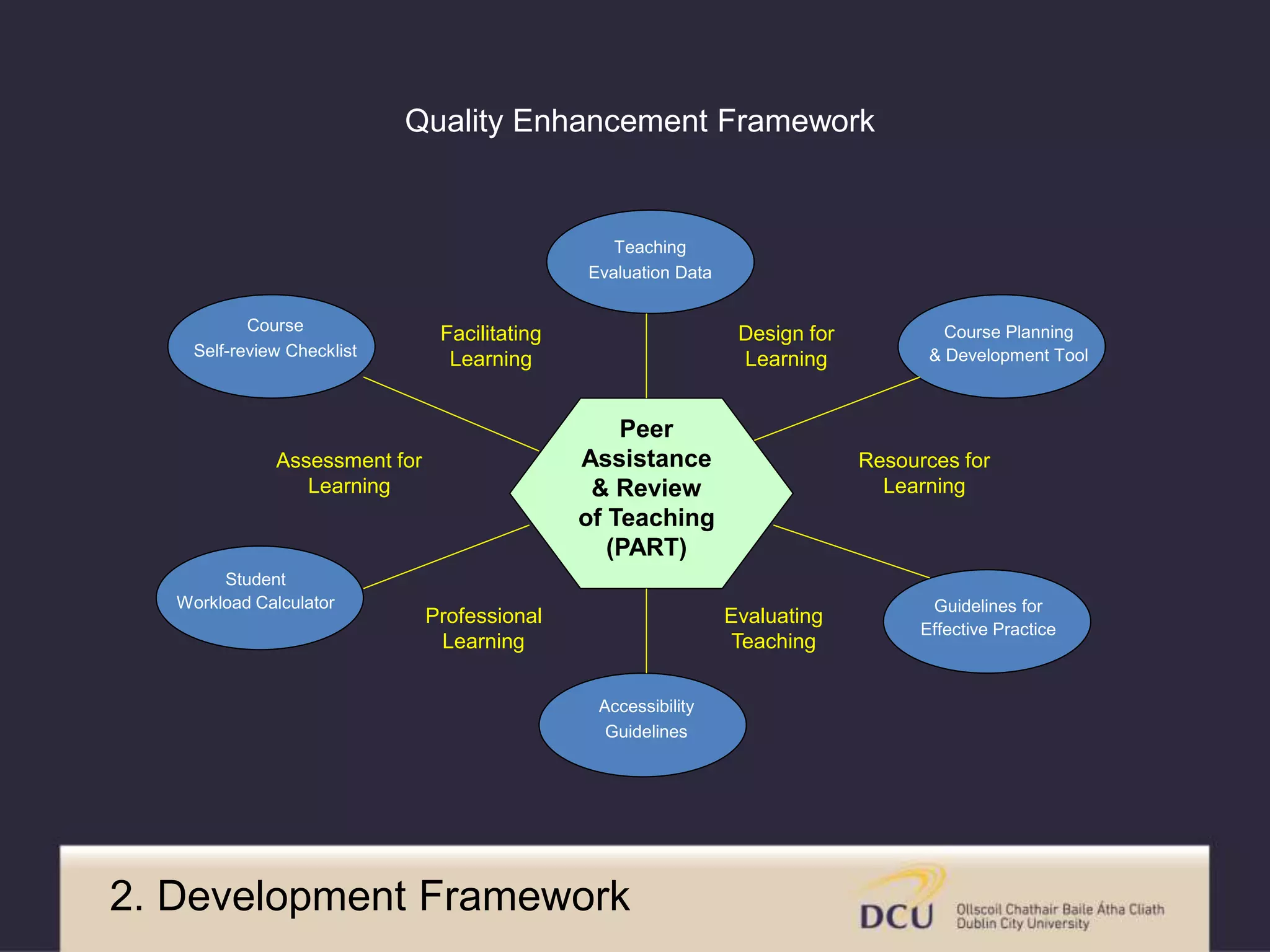
Quality Enhancement Framework 
Teaching 
Evaluation Data 
Peer 
Assistance 
& Review 
of Teaching 
(PART) 
Course Planning 
& Development Tool 
Guidelines for 
Effective Practice 
Accessibility 
Guidelines 
Course 
Self-review Checklist 
Student 
Workload Calculator 
Design for 
Learning 
Resources for 
Learning 
Facilitating 
Learning 
Assessment for 
Learning 
Evaluating 
Teaching 
Professional 
Learning 
2. Development Framework
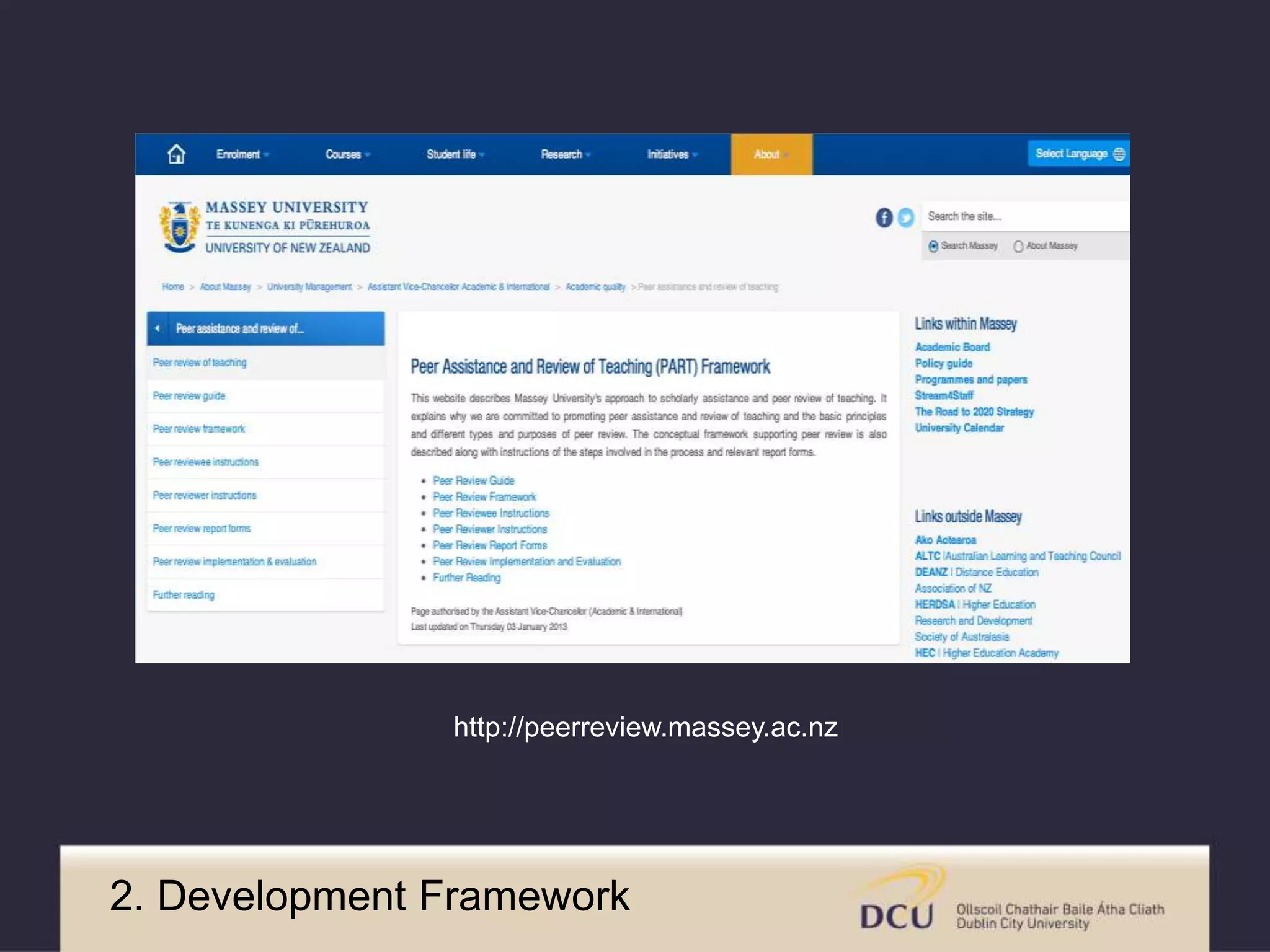
http://peerreview.massey.ac.nz 
2. Development Framework
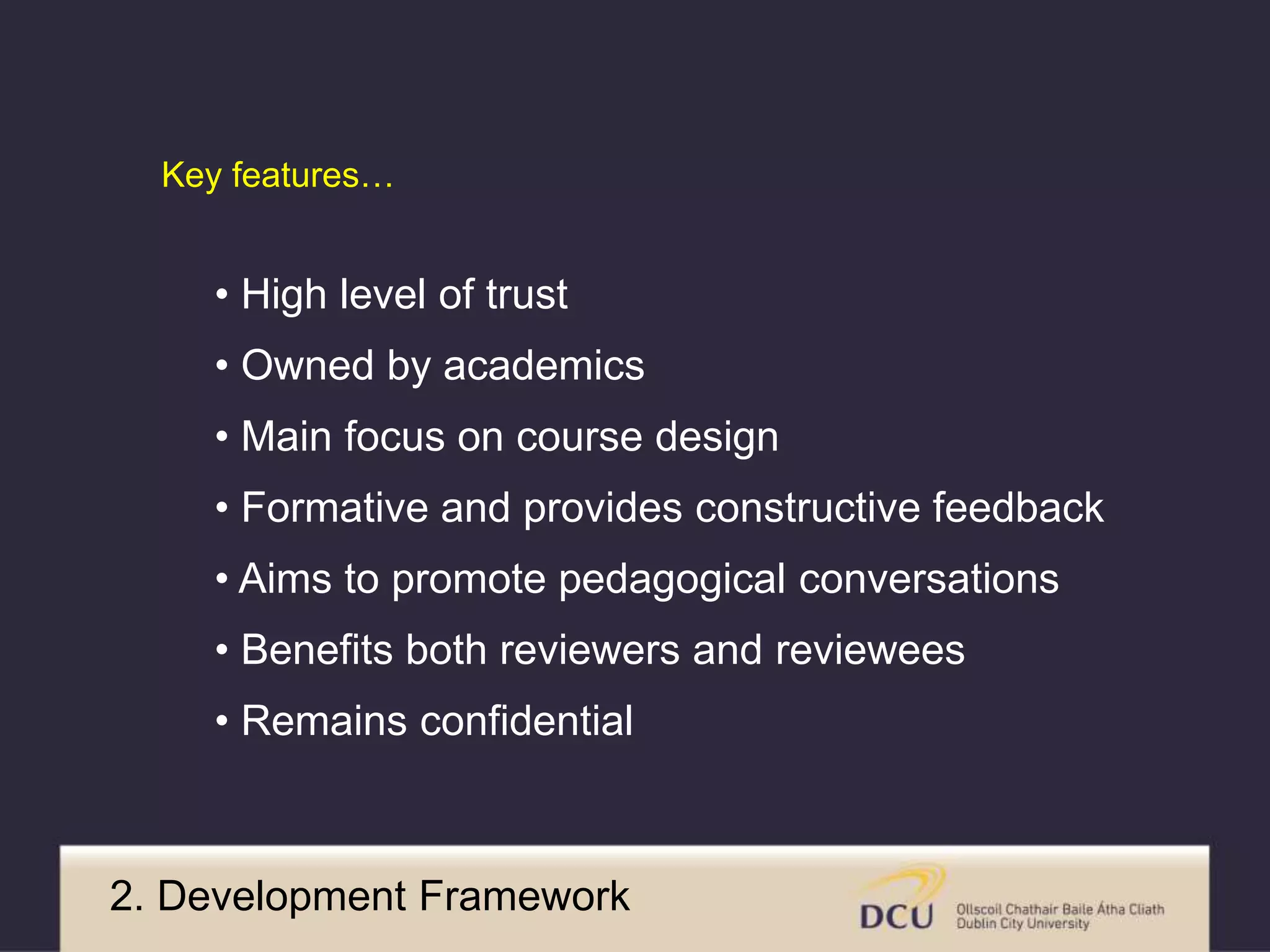
Key features… 
• High level of trust 
• Owned by academics 
• Main focus on course design 
• Formative and provides constructive feedback 
• Aims to promote pedagogical conversations 
• Benefits both reviewers and reviewees 
• Remains confidential 
2. Development Framework
Three examples… 
• Self-directed 
• Facilitated modules 
• Customised packages 
3. Implementation Experiences
3. Implementation Experiences 
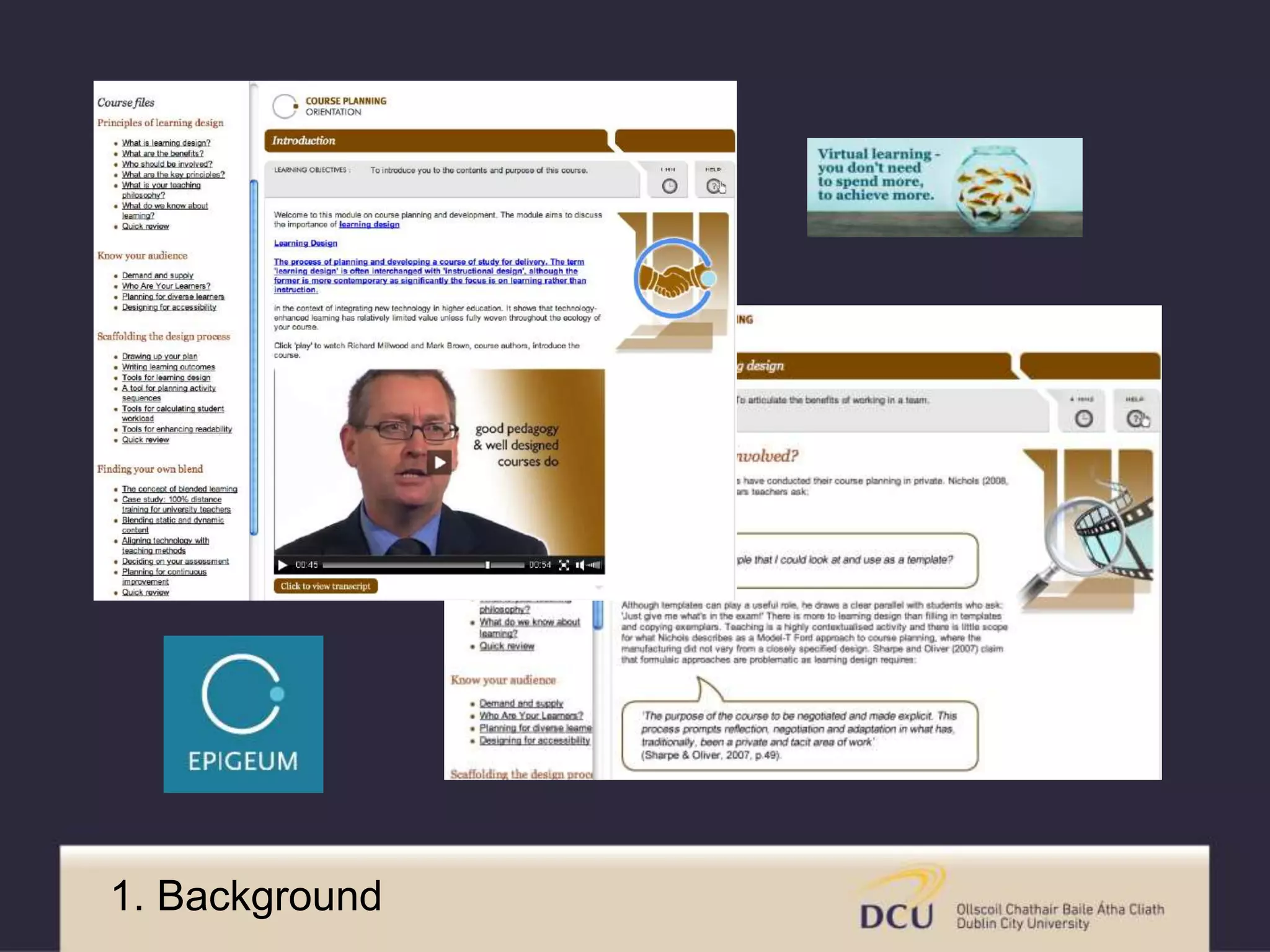
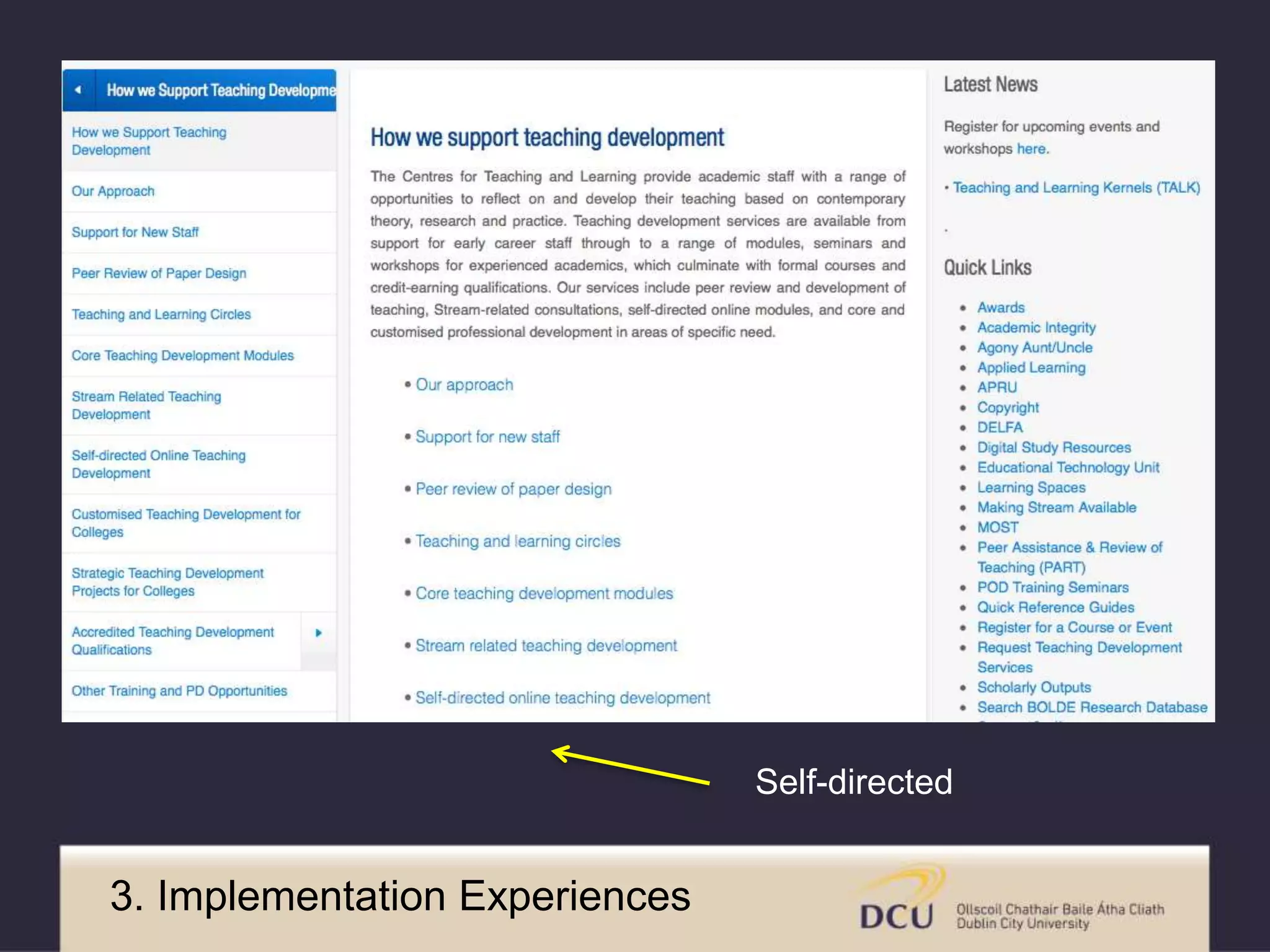
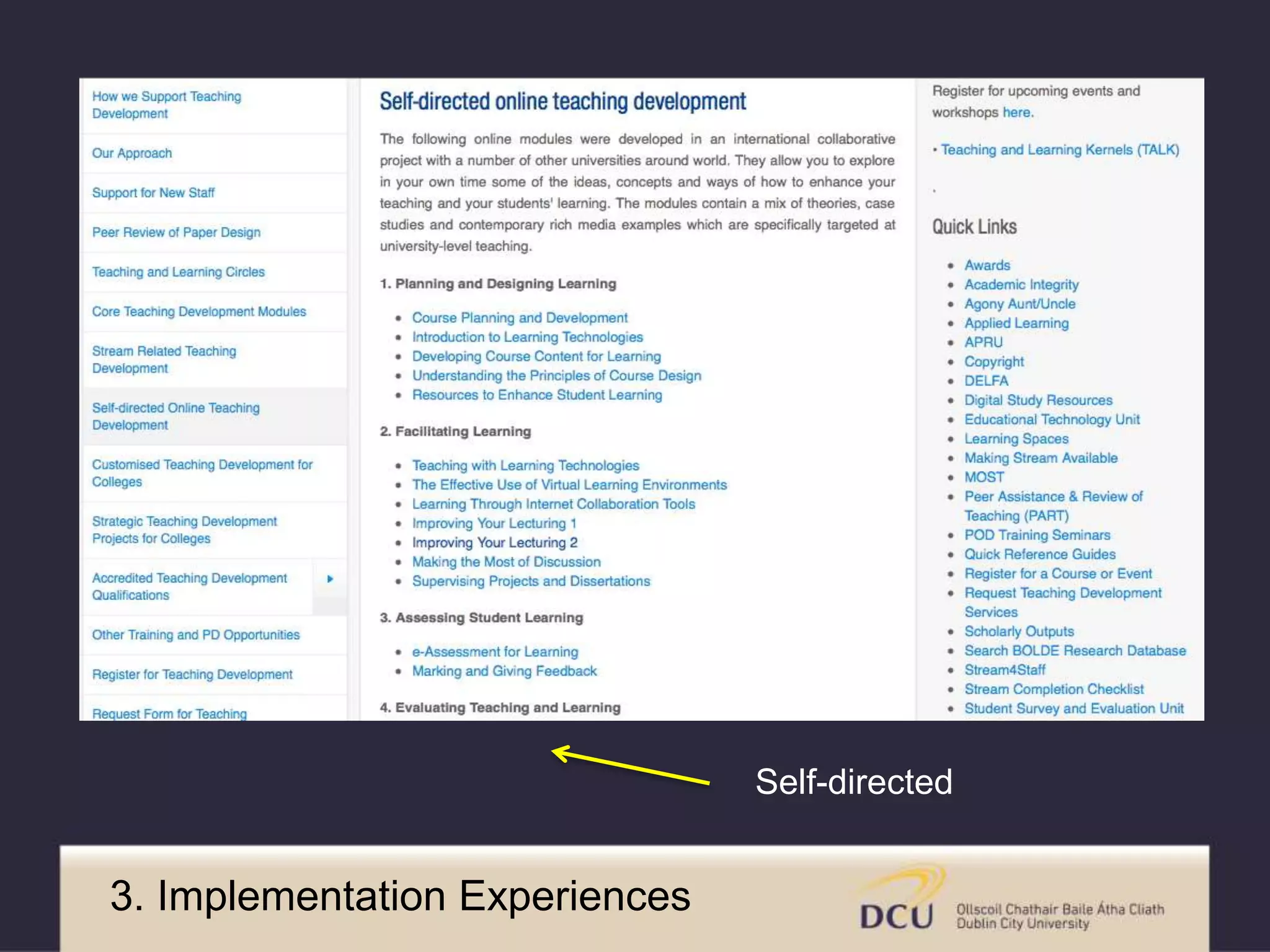
Self-directed
3. Implementation Experiences 
Self-directed
Lessons…. 
• Lacks local contextualisation 
• Acquisition metaphor of learning 
• Content does not change pedagogy 
• Limited opportunities for personalisation 
• Promotes only one type of learning interactivity 
3. Implementation Experiences
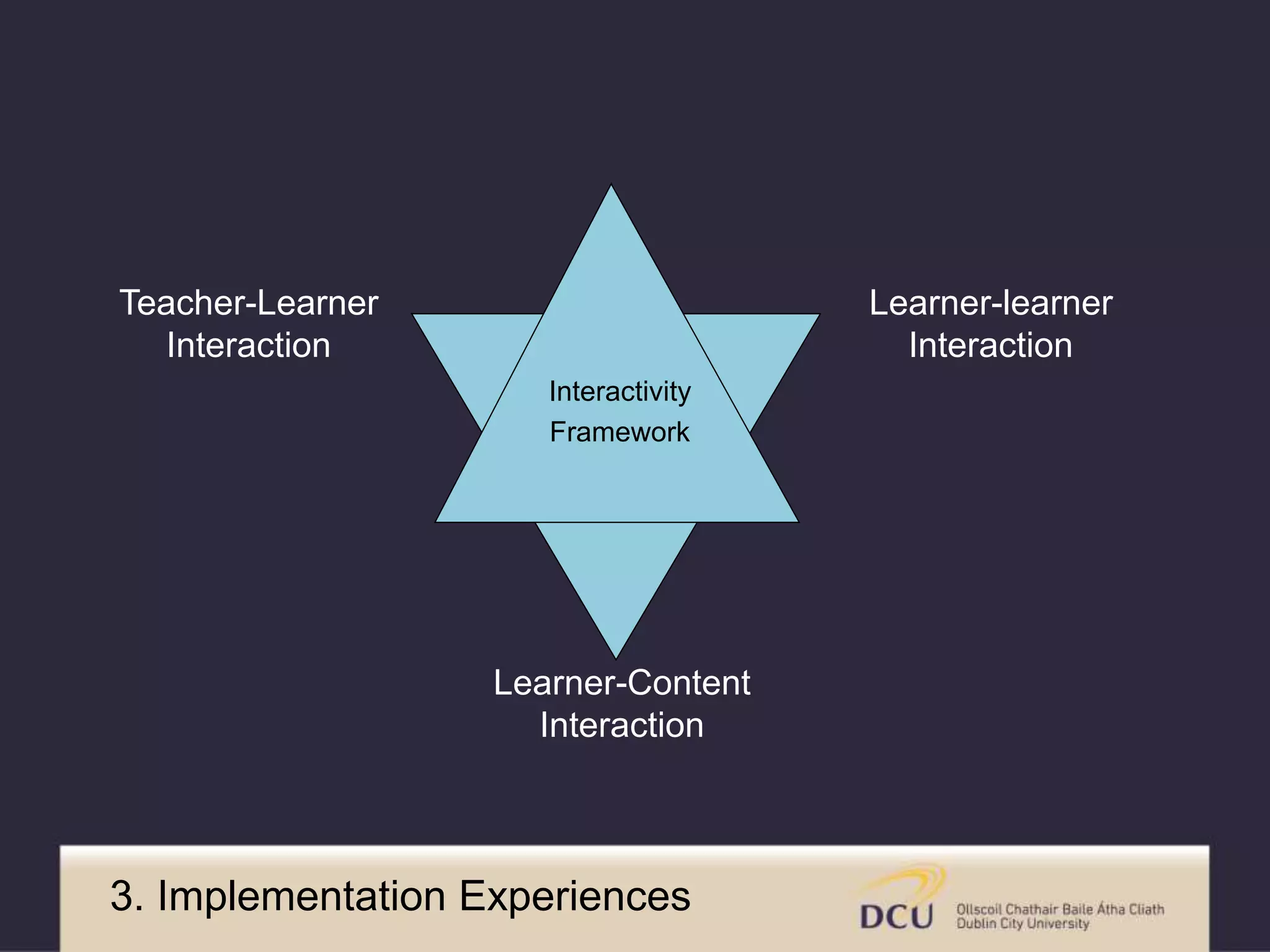
Learner-Content 
Interaction 
Learner-learner 
Interaction 
Teacher-Learner 
Interaction 
Interactivity 
Framework 
3. Implementation Experiences
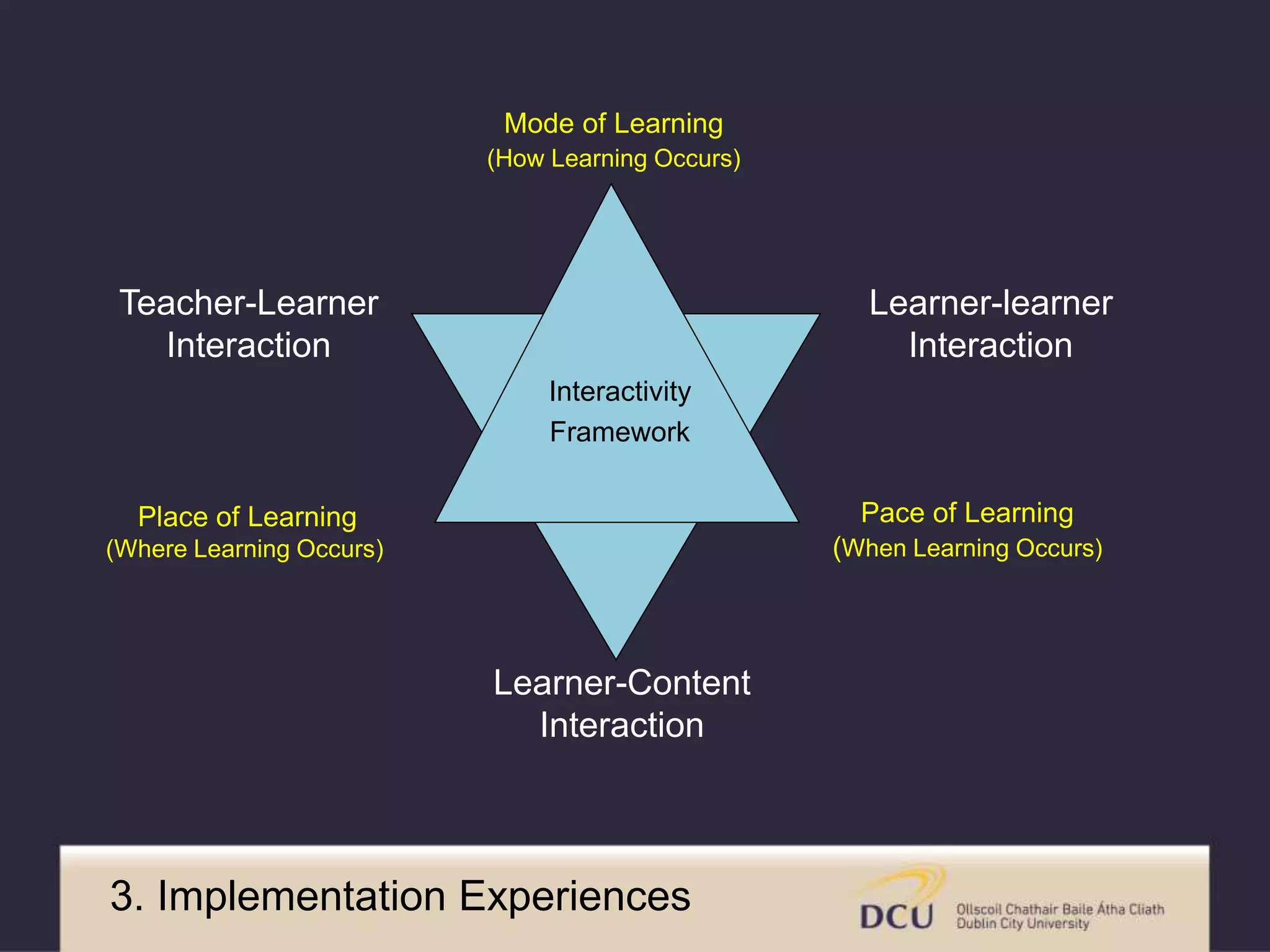
Learner-Content 
Interaction 
Learner-learner 
Interaction 
Teacher-Learner 
Interaction 
Interactivity 
Framework 
Place of Learning 
(Where Learning Occurs) 
Mode of Learning 
(How Learning Occurs) 
Pace of Learning 
(When Learning Occurs) 
3. Implementation Experiences
3. Implementation Experiences 
Facilitated modules
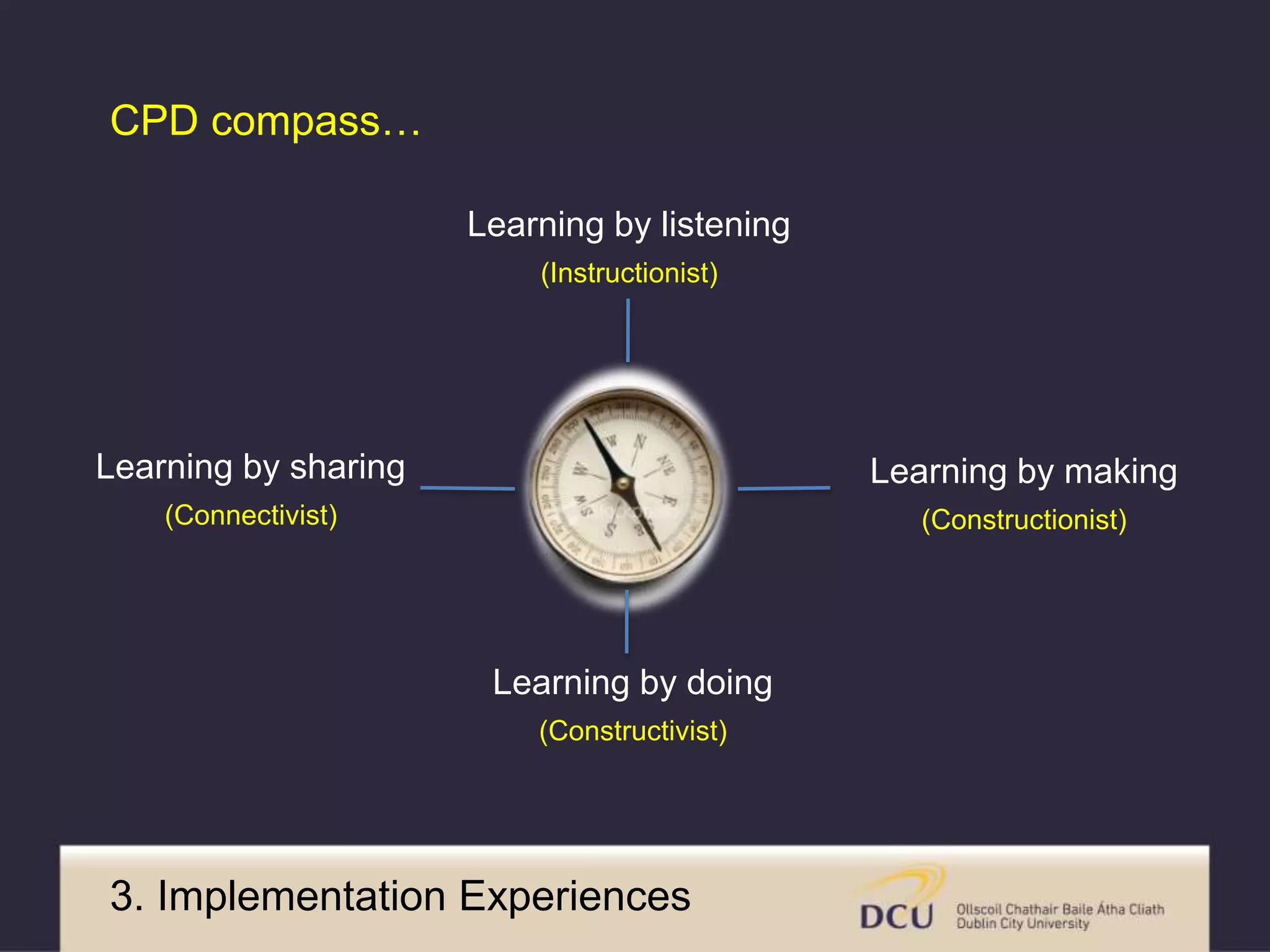
CPD compass… 
Learning by sharing 
(Connectivist) 
Learning by listening 
(Instructionist) 
Learning by doing 
(Constructivist) 
Learning by making 
(Constructionist) 
3. Implementation Experiences
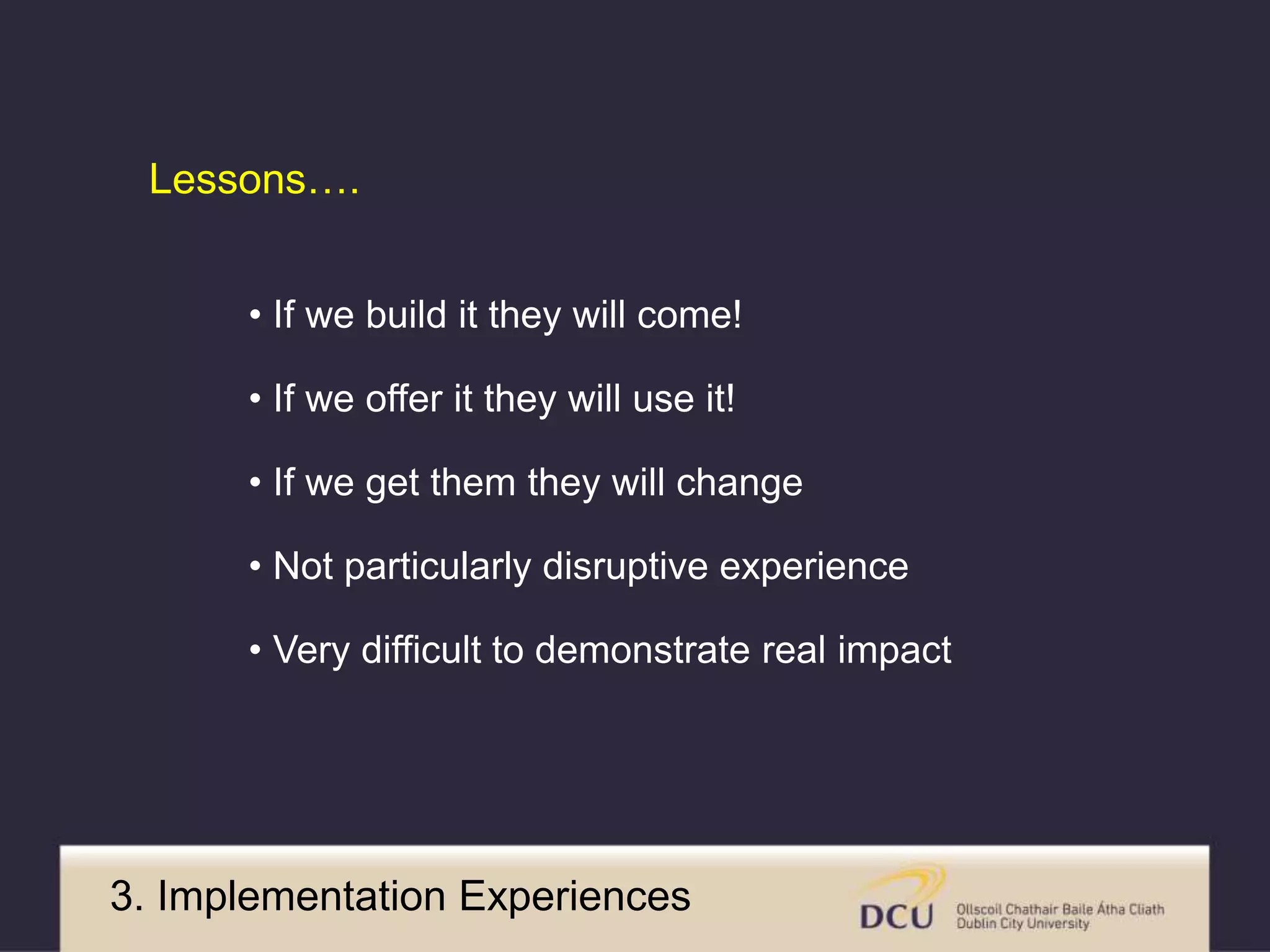
Lessons…. 
• If we build it they will come! 
• If we offer it they will use it! 
• If we get them they will change 
• Not particularly disruptive experience 
• Very difficult to demonstrate real impact 
3. Implementation Experiences
3. Implementation Experiences 
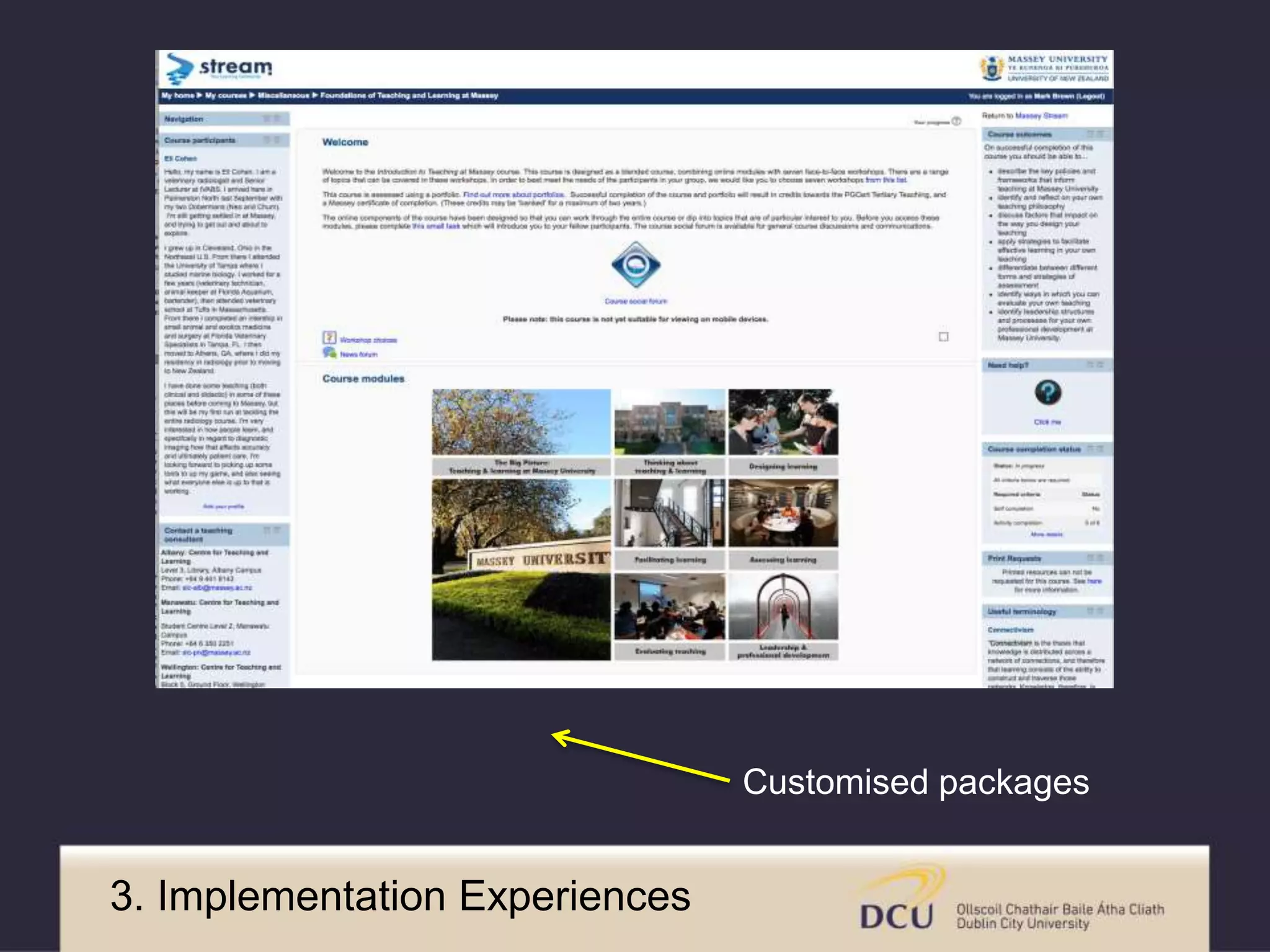
Customised packages
3. Implementation Experiences 
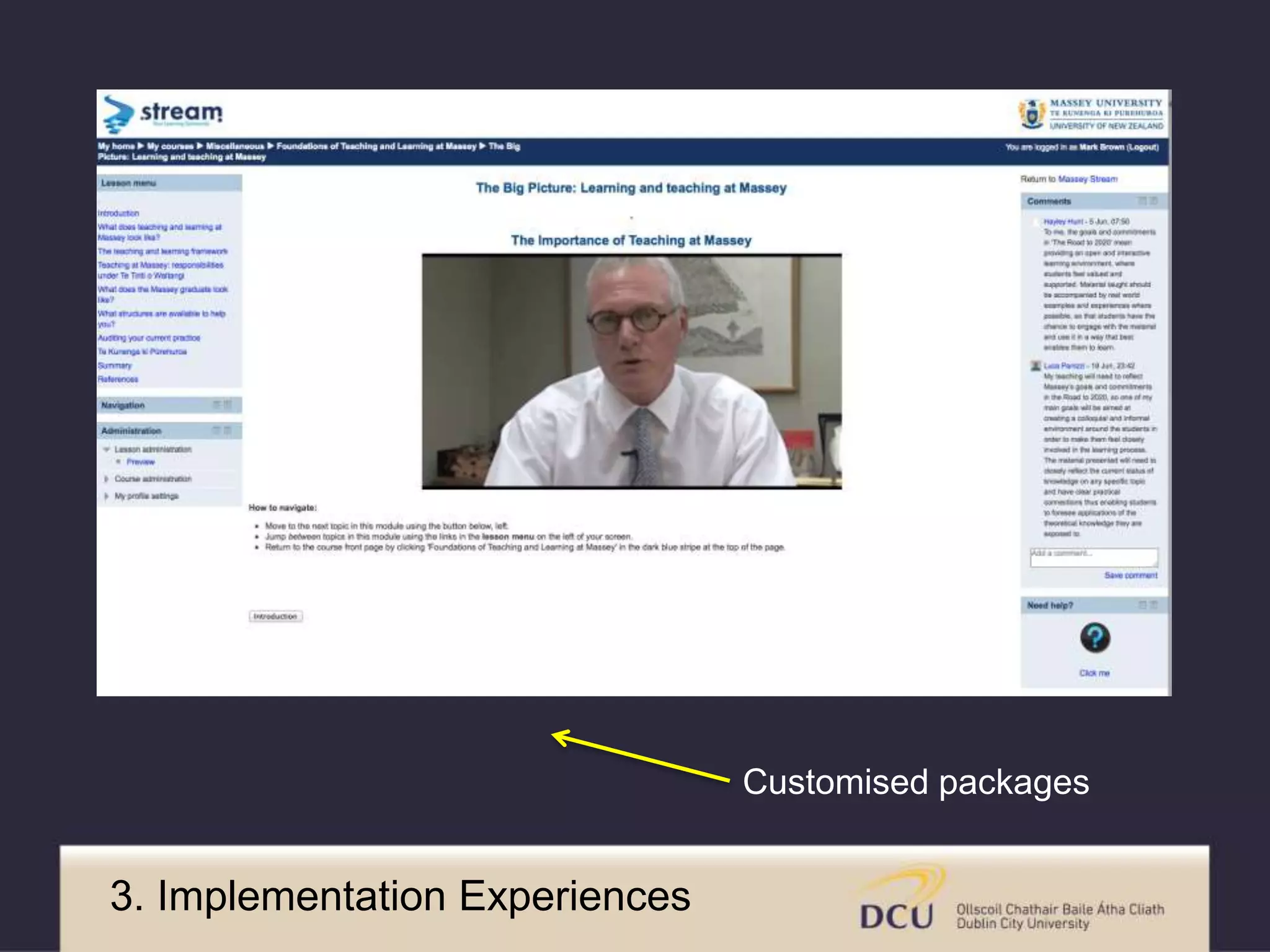
Customised packages
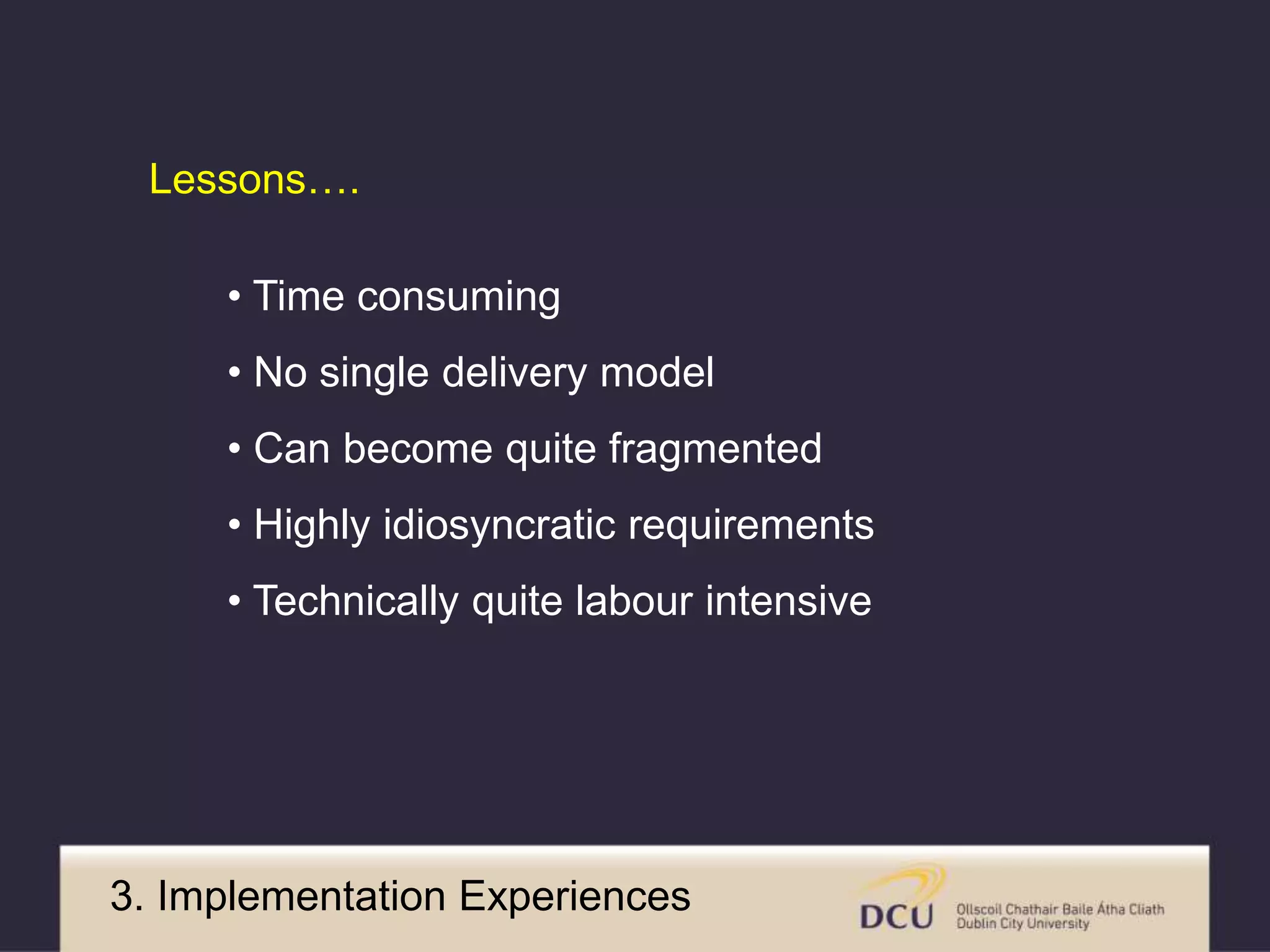
Lessons…. 
• Time consuming 
• No single delivery model 
• Can become quite fragmented 
• Highly idiosyncratic requirements 
• Technically quite labour intensive 
3. Implementation Experiences
In sum…. 
• Importance of Institutional culture 
• Alignment with overarching philosophy 
• Needs coordination and professional leadership 
3. Implementation Experiences
Final comments
Discussion…
Professor Mark Brown 
Director, National Institute for Digital Learning 
mark.brown@dcu.ie 
@mbrownz 
http://www.slideshare.net/mbrownz

Diving Deeper: Integrating Epigeum Modules into Stream+

  • 1.
    Diving Deeper: IntegratingEpigeum Modules into Stream+ Professor Mark Brown Presentation at University & College Teaching Conference Birmingham, 19th September 2014
  • 2.
    Pop quiz… Ifthis is the question, then what is the answer?
  • 3.
  • 4.
  • 5.
    1. Background 2.Development Framework 3. Implementation Experiences Outline…
  • 6.
    Key point… Evenif you have all the latest equipment you still need to be taught how to dive
  • 7.
    • Officially launched28th November, 2013 by Minister Ruairi Quinn and Lord David Putnam, Ireland’s Digital Ambassador • Mark arrived in February 2014 as the new Director and Ireland’s first chair in Digital Learning 1. Background
  • 8.
    • Officially launched28th November, 2013 by Minister Ruairi Quinn and Lord David Putnam, Ireland’s Digital Ambassador • Mark arrived in February 2014 as the new Director and Ireland’s first chair in Digital Learning • Past President of New Zealand Association for Open, Flexible and Distance Learning • Previous Coordinator of the Central Hub of Ako Aotearoa * Previous Director of National Centre for Teaching and Learning at Massey University, New Zealand • Previous Director of Distance Education and Learning Futures Alliance (DELFA) at Massey University 1. Background
  • 9.
    Auckland Palmerston NorthWellington Distance Worldwide 32,000 students 1. Background
  • 10.
    LMS OLE £2.5mfor implementation | £400K for Moodle 2.X upgrade (2009) (2012) Over 4000 Online Environments 1. Background
  • 11.
  • 12.
  • 13.
  • 14.
  • 15.
    “To read orhear about something is not the same as experiencing it, and it is often only by actual experience that understanding and change can come about” (van Mentis, 1999, p11). 1. Background
  • 16.
  • 17.
  • 18.
  • 19.
  • 20.
  • 21.
  • 22.
    Teaching Excellence… •Planning and Design for Learning • Facilitating Learning • Assessing Student Learning • Evaluating Teaching and Learning • Professional Development and Teaching Leadership 2. Development Framework
  • 23.
    Core Principles… 1.Treats teachers as learners 2. Helps teachers to design environments for learning 3. Recognises that teachers’ learning best occurs in a meaningful and socially interactive environment 4. Is underpinned by a strong foundation in the pedagogy of digital learning – new normal 5. Is learner and learning driven rather than technology-led 2. Development Framework
  • 24.
    6. Involves avariety of professional learning opportunities 7. Inclusive of all staff including casual teachers and those who support teaching 8. Reflects the complexity of teaching and subject differences 9. Builds communities of interest and a culture of continuous enhancement 10. Provides opportunities to identify, acknowledge and celebrate success 2. Development Framework
  • 25.
    “Because no twostudents have the same needs and no two teachers arrive at their best performance in the same way, theoretical exclusivity and didactic single-mindedness can be trusted to make even the best educational ideas fail”. (Sfard, 1998, p.11) 2. Development Framework
  • 26.
    - Doctor ofEducation (EdD) - MEd (Adult Education or eLearning) - PGDipEd (Adult Education or eLearning) - PGCert Tertiary Teaching Ed Tech Support and Teaching Development for Experienced Academic Staff Support for New and Early Career Staff Accredited Qualifications Available to all Staff Just in Time Support - Website - TALK Blog - Stream4Staff - Stream Hotline - Teaching Showcase - Spotlight on Videos - Quick Reference Guides - Ako Aotearoa Resources Principles - Core Domains Key Services - Major Peak Events - Academic Fellowship Scheme - Teaching Awards and Grants - Regular ‘Hot Topic’ Roundtables - Peer Assistance and Review of Teaching - Self-directed Online Teaching Modules - Core Teaching Development Modules - Stream-related Teaching Development - Customised Teaching Development - Teaching Evaluation Tools - Welcome Letter - Individual Consultations - Introduction Flyers - Online Tutor Guide - Welcome to Massey Coffee - Online Module for Casual Staff - Foundation to Teaching & Learning Course 2. Development Framework
  • 27.
    Quality Enhancement Framework Teaching Evaluation Data Peer Assistance & Review of Teaching (PART) Course Planning & Development Tool Guidelines for Effective Practice Accessibility Guidelines Course Self-review Checklist Student Workload Calculator Design for Learning Resources for Learning Facilitating Learning Assessment for Learning Evaluating Teaching Professional Learning 2. Development Framework
  • 28.
  • 29.
    Key features… •High level of trust • Owned by academics • Main focus on course design • Formative and provides constructive feedback • Aims to promote pedagogical conversations • Benefits both reviewers and reviewees • Remains confidential 2. Development Framework
  • 30.
    Three examples… •Self-directed • Facilitated modules • Customised packages 3. Implementation Experiences
  • 31.
  • 32.
  • 33.
    Lessons…. • Lackslocal contextualisation • Acquisition metaphor of learning • Content does not change pedagogy • Limited opportunities for personalisation • Promotes only one type of learning interactivity 3. Implementation Experiences
  • 34.
    Learner-Content Interaction Learner-learner Interaction Teacher-Learner Interaction Interactivity Framework 3. Implementation Experiences
  • 35.
    Learner-Content Interaction Learner-learner Interaction Teacher-Learner Interaction Interactivity Framework Place of Learning (Where Learning Occurs) Mode of Learning (How Learning Occurs) Pace of Learning (When Learning Occurs) 3. Implementation Experiences
  • 36.
    3. Implementation Experiences Facilitated modules
  • 37.
    CPD compass… Learningby sharing (Connectivist) Learning by listening (Instructionist) Learning by doing (Constructivist) Learning by making (Constructionist) 3. Implementation Experiences
  • 38.
    Lessons…. • Ifwe build it they will come! • If we offer it they will use it! • If we get them they will change • Not particularly disruptive experience • Very difficult to demonstrate real impact 3. Implementation Experiences
  • 39.
    3. Implementation Experiences Customised packages
  • 40.
    3. Implementation Experiences Customised packages
  • 41.
    Lessons…. • Timeconsuming • No single delivery model • Can become quite fragmented • Highly idiosyncratic requirements • Technically quite labour intensive 3. Implementation Experiences
  • 42.
    In sum…. •Importance of Institutional culture • Alignment with overarching philosophy • Needs coordination and professional leadership 3. Implementation Experiences
  • 43.
  • 44.
  • 45.
    Professor Mark Brown Director, National Institute for Digital Learning mark.brown@dcu.ie @mbrownz http://www.slideshare.net/mbrownz