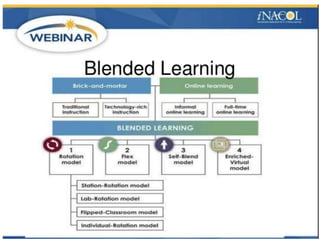
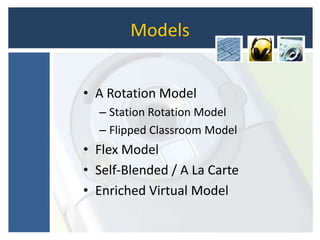
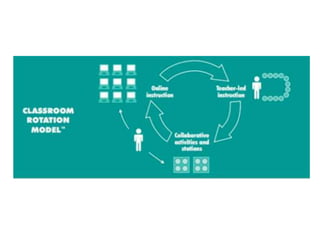
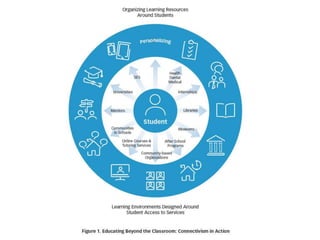
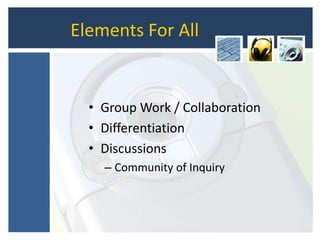
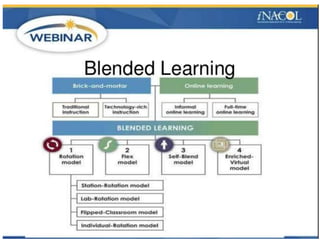
Blended learning combines online digital media and tools with traditional in-person classes to allow students more control over their learning and provide a customized experience. It provides flexibility in scheduling, additional course options, and opportunities for personalized and differentiated instruction. Common blended learning models include station rotation, flipped classroom, and flexible models. Elements like group work, discussions, and differentiation are important. The key is using blended learning to enable personalized learning focused on each student's needs. Best practices include building relationships, communication, collaboration, consistency, and celebrating successes. Teachers must be confident, reflective, willing to collaborate and take risks to coach students and become learners themselves.