Managerial Accounting 101 Return on Investment (ROI)
When a company is decentralized, segment or department managers are given a great deal of autonomy.  Often, fierce competition develops among managers…each striving to have the best segment or department in the company.
How do managers in the corporate headquarters decide who gets new investment funds? How do these managers decide which investment centers are the most profitable using the funds entrusted to their care?
One way to make these decisions is to measure the rate of return that investment center managers are able to generate on their assets. This rate of return is called Return on Investment (ROI) and is a profitability ratio analysis.
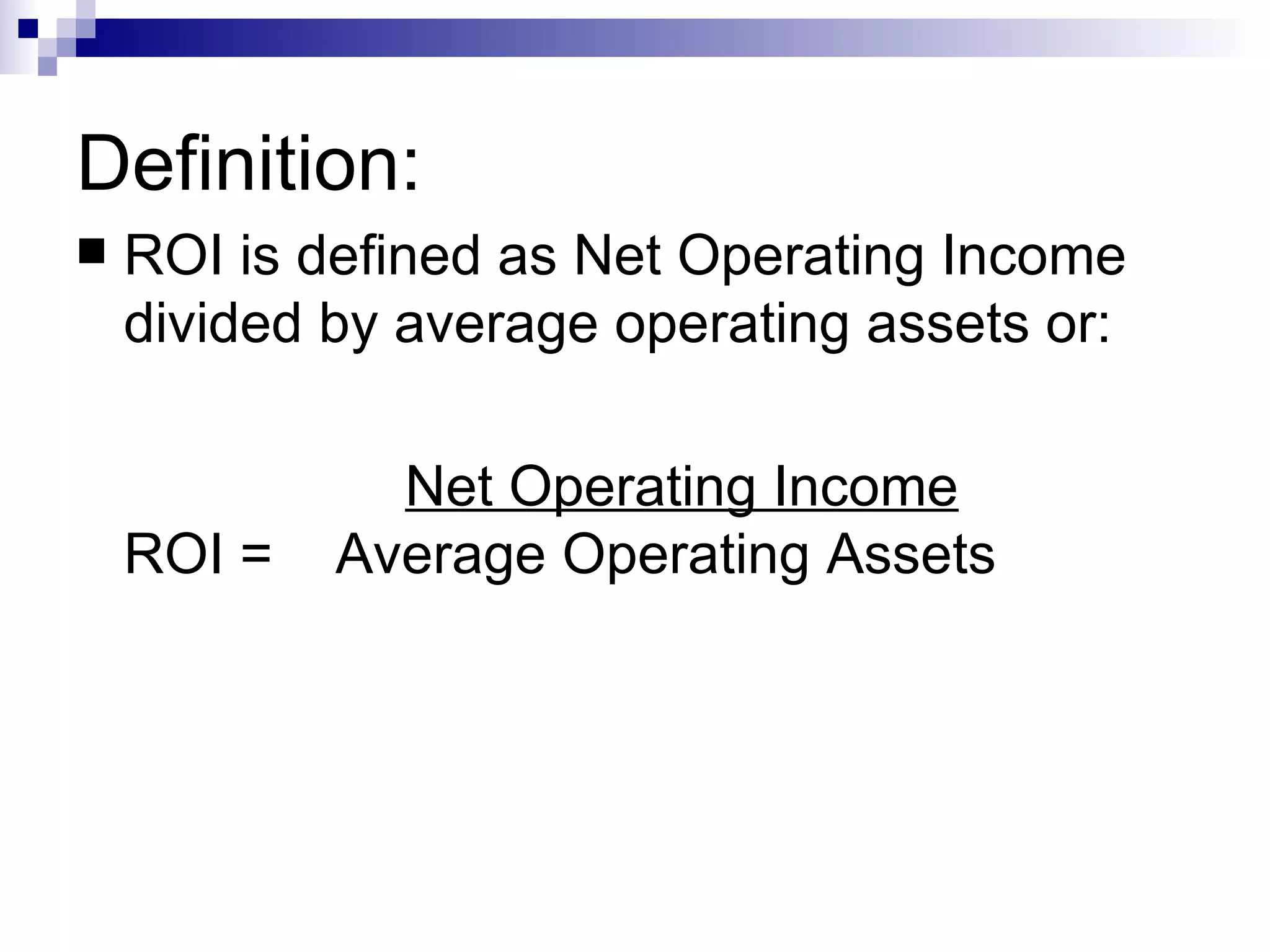
Definition: ROI is defined as Net Operating Income divided by average operating assets or: Net Operating Income   ROI  =  Average Operating Assets
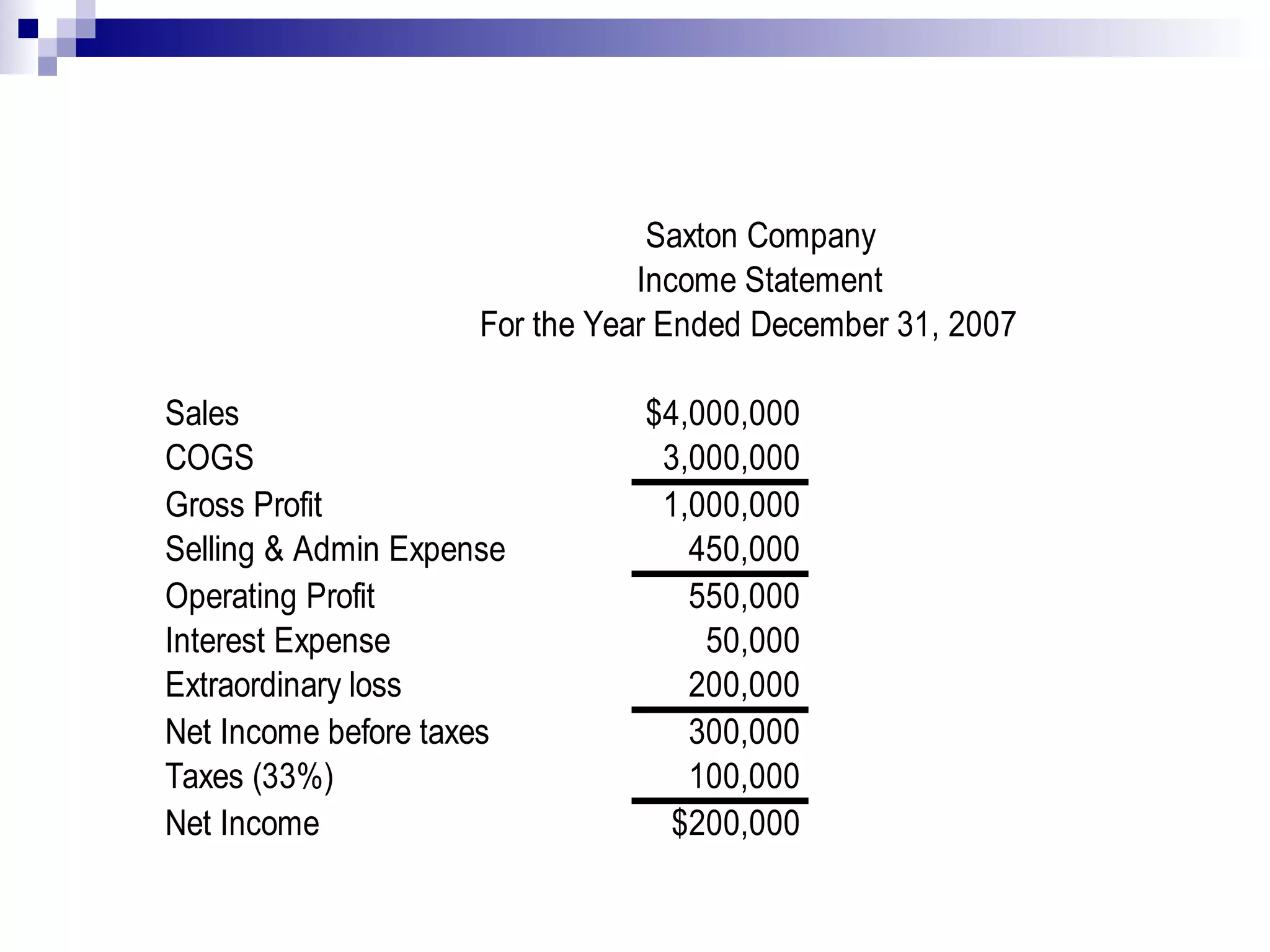
Net operating income is income before interest and taxes (refered to as EBIT [earnings before interest and taxes]).  Net income is the bottom line number in the Income Statement and is the total of Sales minus cost of goods sold and the addition of selling and administrative expenses, interest expense minus taxes.
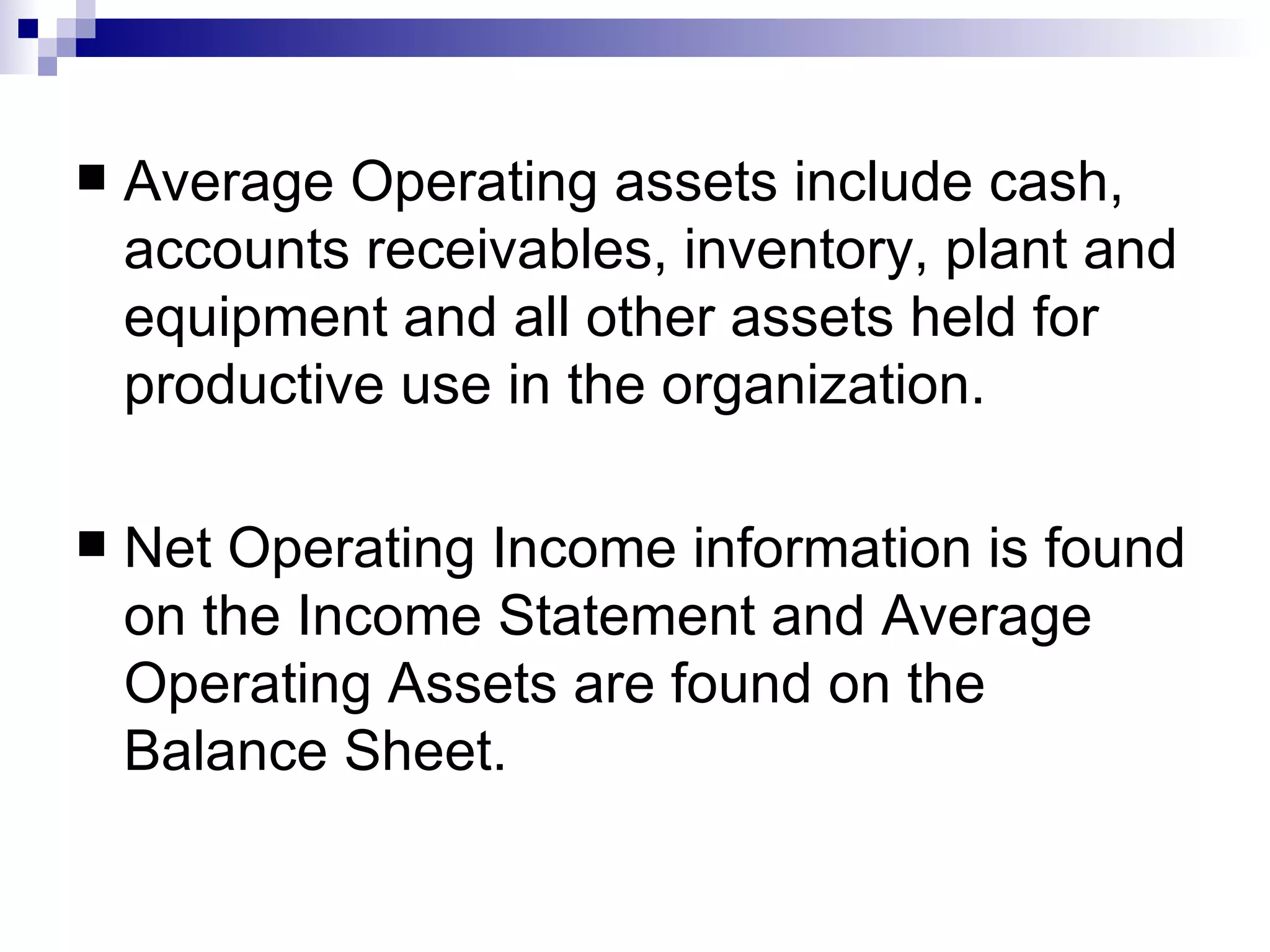
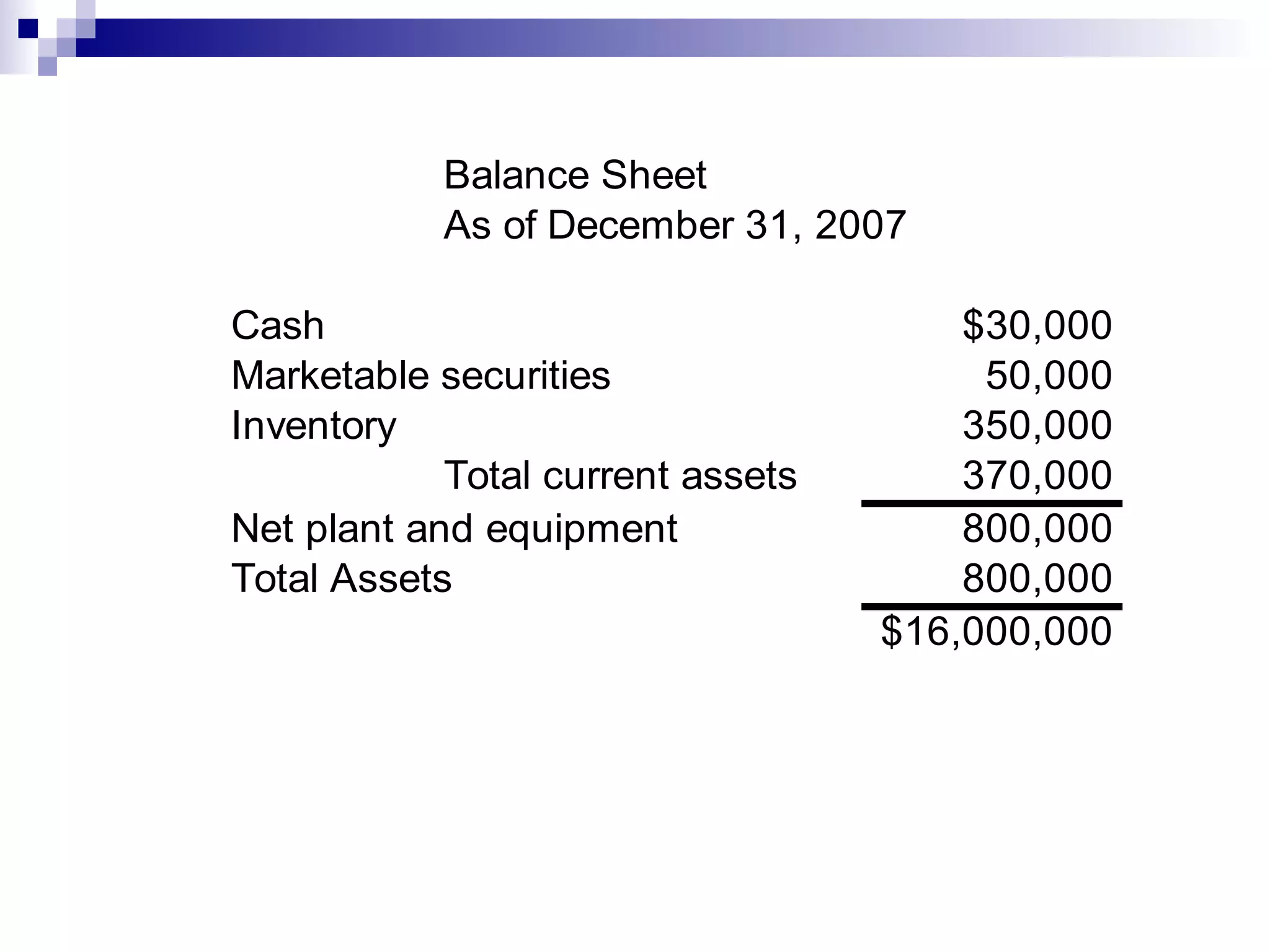
Average Operating assets include cash, accounts receivables, inventory, plant and equipment and all other assets held for productive use in the organization. Net Operating Income information is found on the Income Statement and Average Operating Assets are found on the Balance Sheet.
 
 
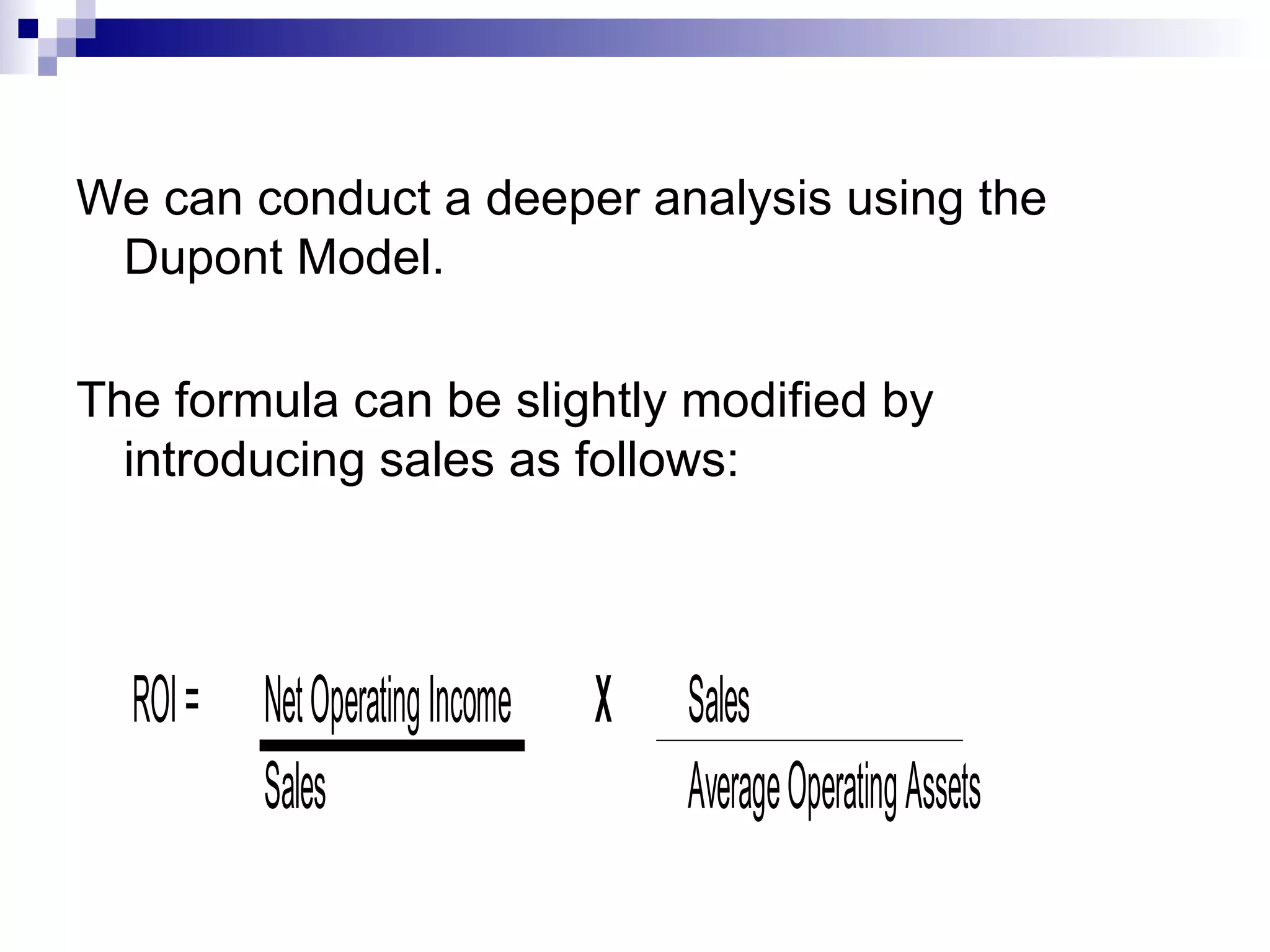
We can conduct a deeper analysis using the Dupont Model. The formula can be slightly modified by introducing sales as follows:
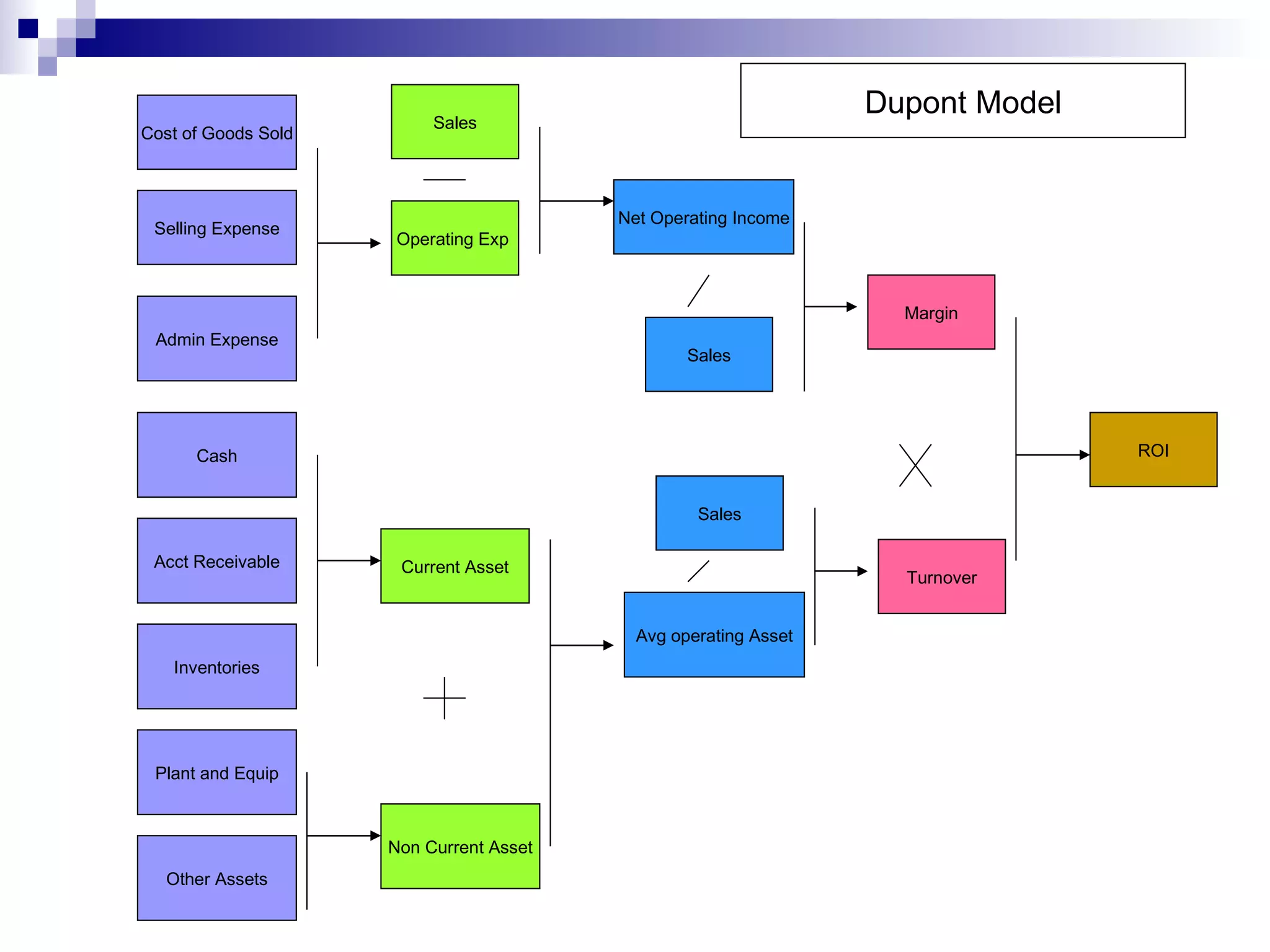
The left side of the equation is the Margin. Margin is the measure of management’s ability to control operating expenses in relation to sales. The lower the operating expenses per dollar of sales, the higher the margin earned. The right side of the equation is Turnover. Turnover is a measure of sales that are generated for each dollar invested in operating assets. Margin can be a valuable indicator of a manager’s performance. The next slide displays the Dupont model.
Cost of Goods Sold Acct Receivable Selling Expense Admin Expense Cash Inventories Plant and Equip Other Assets Non Current Asset Current Asset Operating Exp  Sales Avg operating Asset Sales Sales Net Operating Income Turnover Margin ROI Dupont Model
ROI formula blends together many aspects of the manager’s responsibilities into a single figure that can be compared to: - the returns of competing investment centers. - the returns of other firms in the industry. - past returns of the investment center itself.
A manager can increase ROI in basically 3 ways: Increase Sales Reduce expenses Reduce Assets Sales may be increased by offering a product that appeals to the consumer or development of a new product. Reduction of expenses is the easiest to do and when margins are squeezed, this is the 1 st  line of attack by managers. Reduction of assets may include reduction in inventory (JIT purchasing or manufacturing) or speeding up the collection of receivables.
Balanced Scorecard Managers may not know how to increase ROI or may cut back on some expenses or assets that are not consistent with the company’s strategy. The balanced scorecard approach provides a way to communicate a company’s strategy to managers throughout the organization. A well-constructed balanced scorecard can provide managers with a road map that indicates how the company intends to increase its ROI.

Managerial Accounting 101

  • 1.
    Managerial Accounting 101Return on Investment (ROI)
  • 2.
    When a companyis decentralized, segment or department managers are given a great deal of autonomy. Often, fierce competition develops among managers…each striving to have the best segment or department in the company.
  • 3.
    How do managersin the corporate headquarters decide who gets new investment funds? How do these managers decide which investment centers are the most profitable using the funds entrusted to their care?
  • 4.
    One way tomake these decisions is to measure the rate of return that investment center managers are able to generate on their assets. This rate of return is called Return on Investment (ROI) and is a profitability ratio analysis.
  • 5.
    Definition: ROI isdefined as Net Operating Income divided by average operating assets or: Net Operating Income ROI = Average Operating Assets
  • 6.
    Net operating incomeis income before interest and taxes (refered to as EBIT [earnings before interest and taxes]). Net income is the bottom line number in the Income Statement and is the total of Sales minus cost of goods sold and the addition of selling and administrative expenses, interest expense minus taxes.
  • 7.
    Average Operating assetsinclude cash, accounts receivables, inventory, plant and equipment and all other assets held for productive use in the organization. Net Operating Income information is found on the Income Statement and Average Operating Assets are found on the Balance Sheet.
  • 8.
  • 9.
  • 10.
    We can conducta deeper analysis using the Dupont Model. The formula can be slightly modified by introducing sales as follows:
  • 11.
    The left sideof the equation is the Margin. Margin is the measure of management’s ability to control operating expenses in relation to sales. The lower the operating expenses per dollar of sales, the higher the margin earned. The right side of the equation is Turnover. Turnover is a measure of sales that are generated for each dollar invested in operating assets. Margin can be a valuable indicator of a manager’s performance. The next slide displays the Dupont model.
  • 12.
    Cost of GoodsSold Acct Receivable Selling Expense Admin Expense Cash Inventories Plant and Equip Other Assets Non Current Asset Current Asset Operating Exp Sales Avg operating Asset Sales Sales Net Operating Income Turnover Margin ROI Dupont Model
  • 13.
    ROI formula blendstogether many aspects of the manager’s responsibilities into a single figure that can be compared to: - the returns of competing investment centers. - the returns of other firms in the industry. - past returns of the investment center itself.
  • 14.
    A manager canincrease ROI in basically 3 ways: Increase Sales Reduce expenses Reduce Assets Sales may be increased by offering a product that appeals to the consumer or development of a new product. Reduction of expenses is the easiest to do and when margins are squeezed, this is the 1 st line of attack by managers. Reduction of assets may include reduction in inventory (JIT purchasing or manufacturing) or speeding up the collection of receivables.
  • 15.
    Balanced Scorecard Managersmay not know how to increase ROI or may cut back on some expenses or assets that are not consistent with the company’s strategy. The balanced scorecard approach provides a way to communicate a company’s strategy to managers throughout the organization. A well-constructed balanced scorecard can provide managers with a road map that indicates how the company intends to increase its ROI.