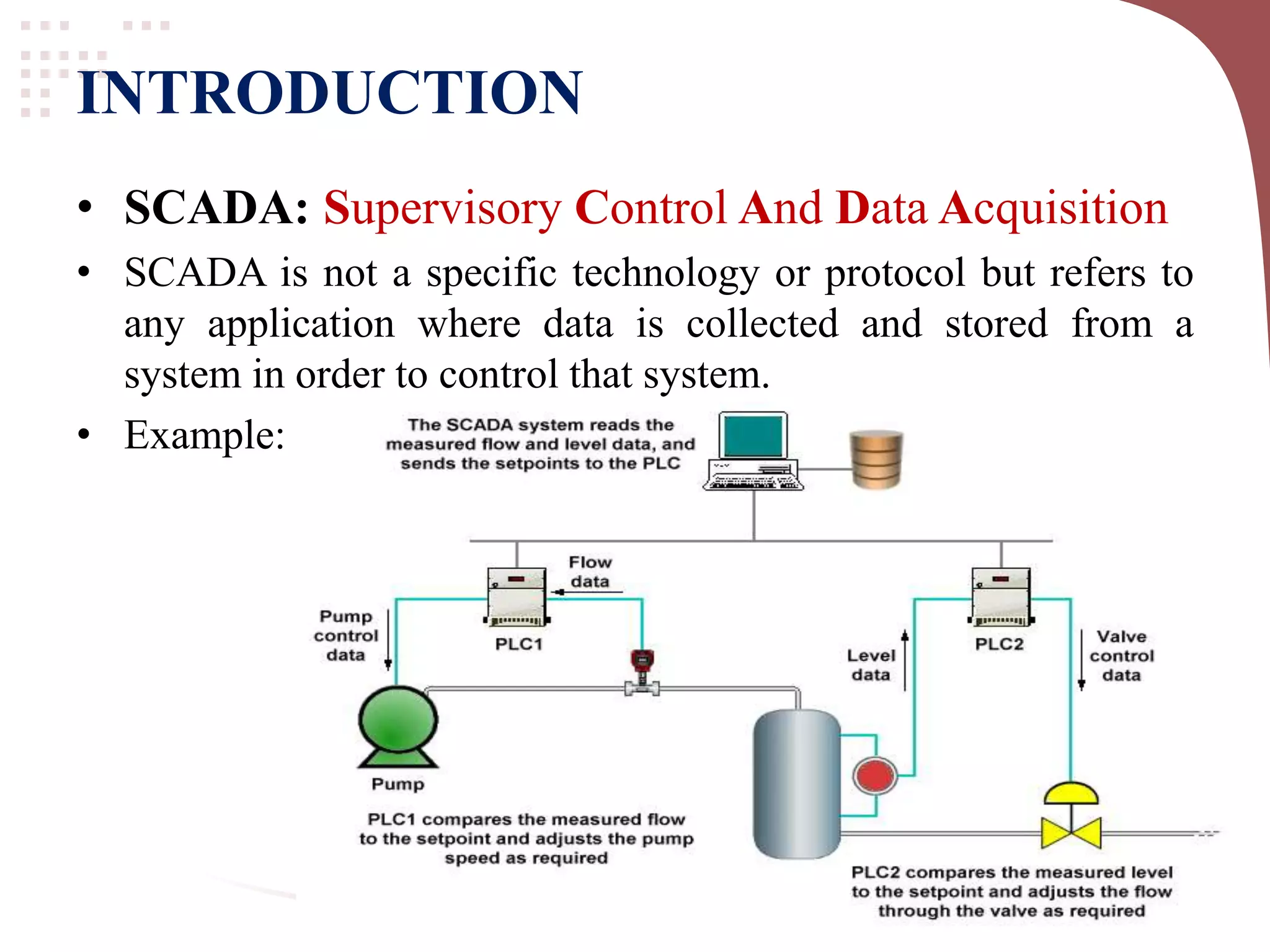
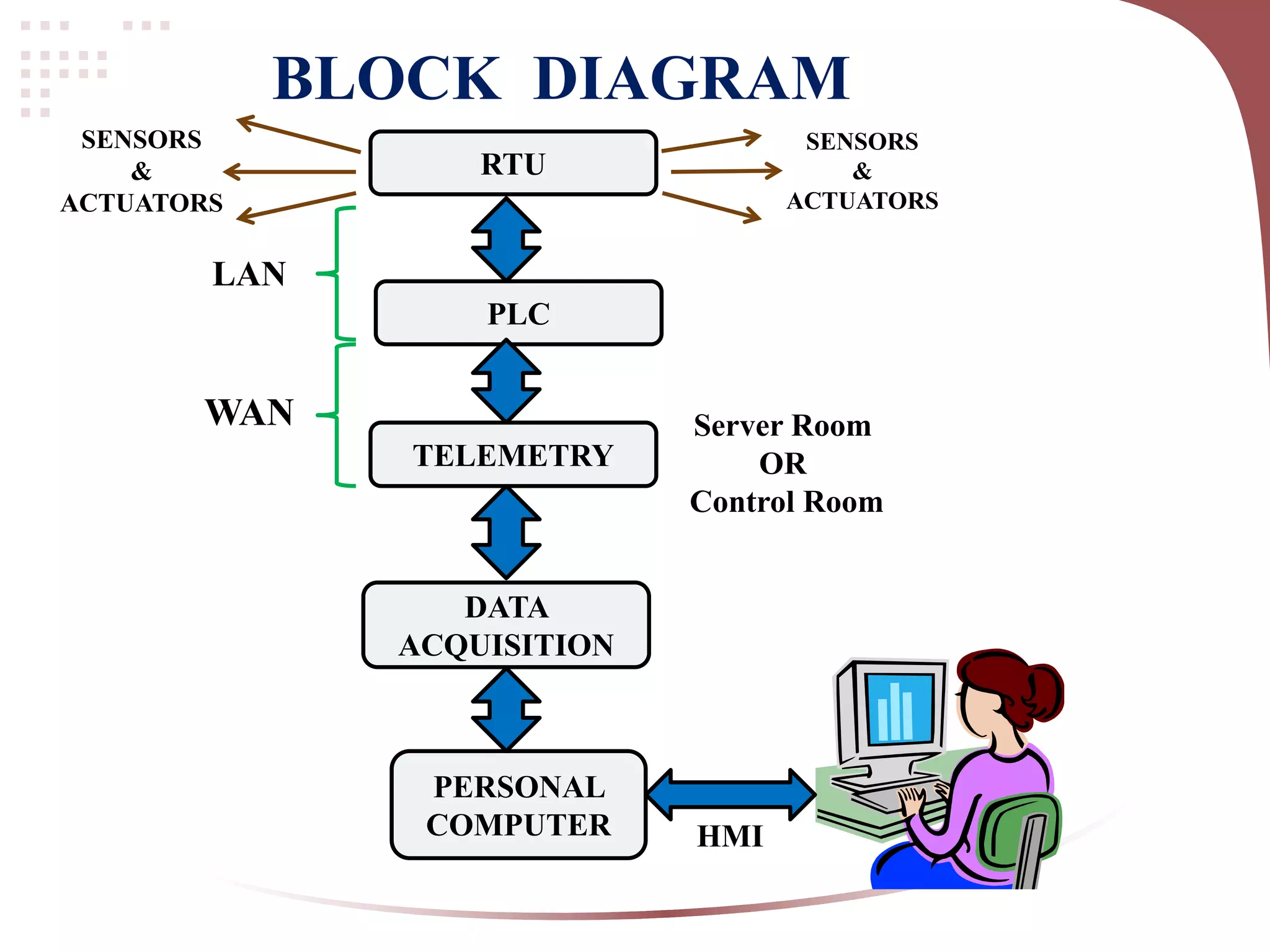
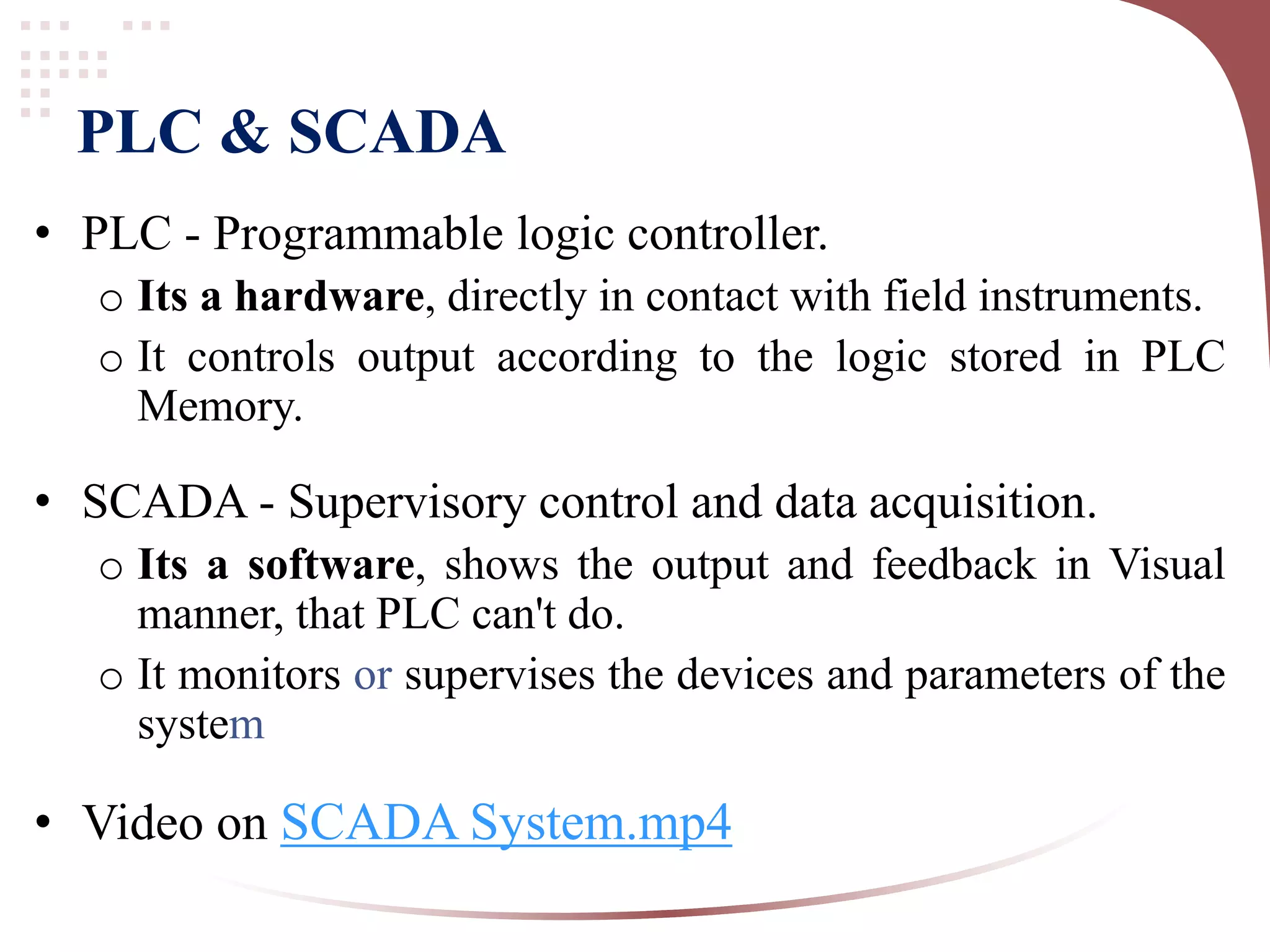
This document provides an introduction to fundamentals of SCADA (Supervisory Control And Data Acquisition). It describes SCADA as software that collects and stores data from a system to control that system. The block diagram shows how sensors and actuators connect to RTUs, PLCs, and a server room/control room with HMIs over LAN/WAN. Key differences between PLC and SCADA are outlined, with PLC being hardware directly connected to field instruments to control outputs, while SCADA is software for monitoring and supervising over a visual interface. Main advantages of SCADA include data acquisition, remote access, efficiency gains, and reduced staffing needs. SCADA has applications in





![Vibe Coding vs. Spec-Driven Development [Free Meetup]](https://cdn.slidesharecdn.com/ss_thumbnails/vibecodingvsspecdrivendevelopment-251209105622-43f455e7-thumbnail.jpg?width=640&height=640&fit=bounds)


