Gastroespohageal Reflux Disease
(GERD) & Laryngopharyngeal Reflux
         Disease (LPRD)


                Jerry Gathercole
What are they?
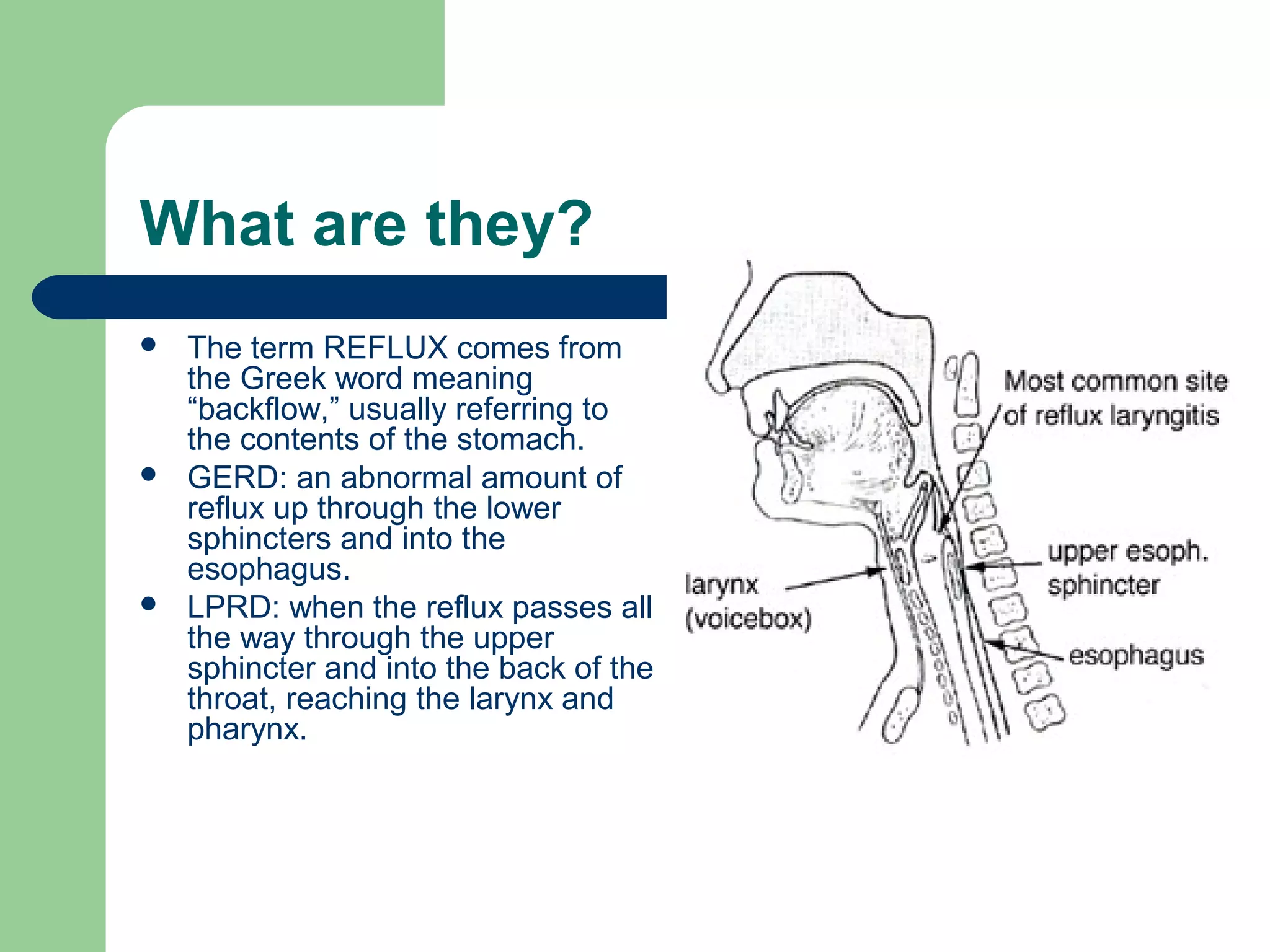
   The term REFLUX comes from
    the Greek word meaning
    “backflow,” usually referring to
    the contents of the stomach.
   GERD: an abnormal amount of
    reflux up through the lower
    sphincters and into the
    esophagus.
   LPRD: when the reflux passes all
    the way through the upper
    sphincter and into the back of the
    throat, reaching the larynx and
    pharynx.
Symptoms for GERD
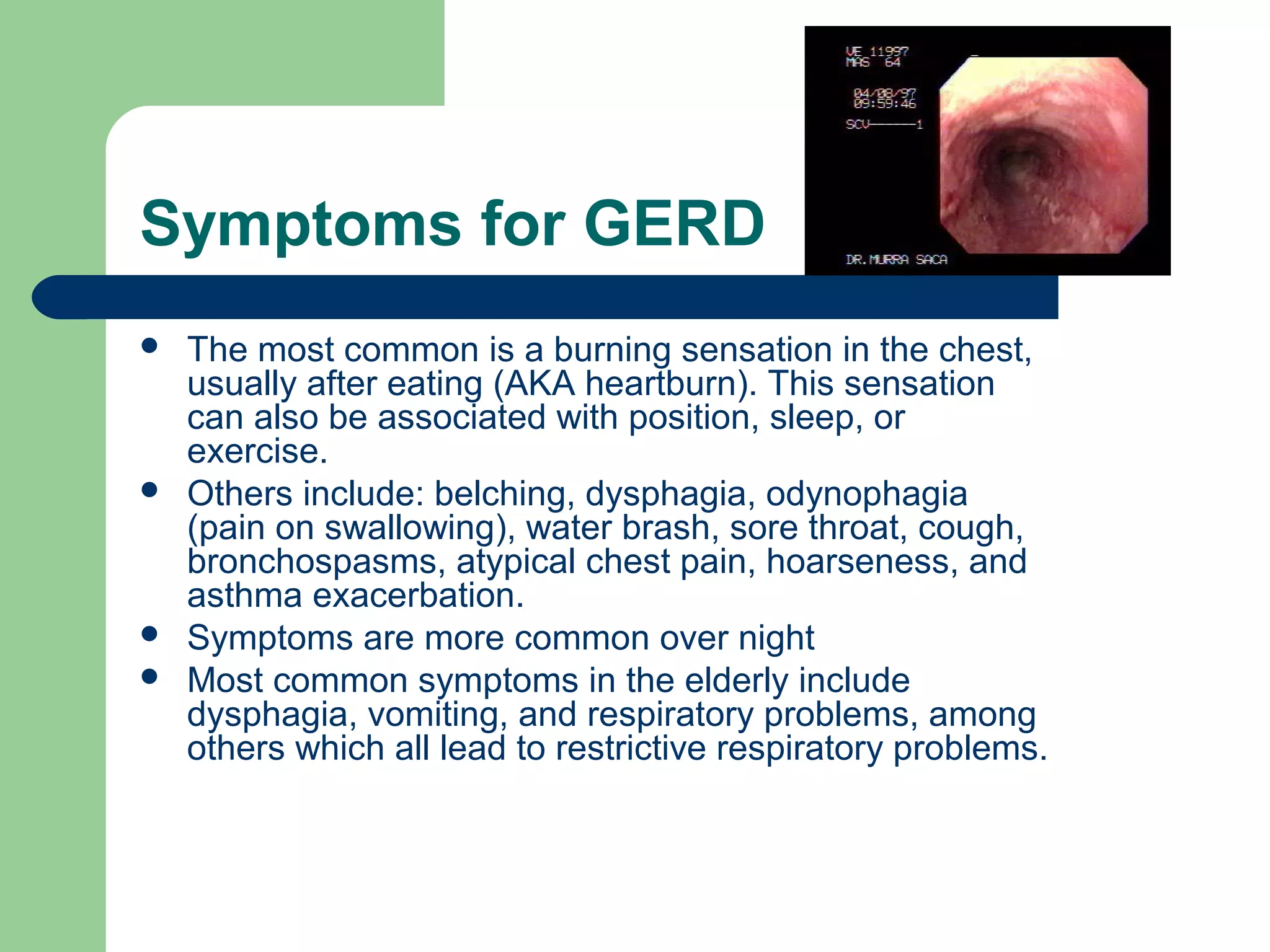
   The most common is a burning sensation in the chest,
    usually after eating (AKA heartburn). This sensation
    can also be associated with position, sleep, or
    exercise.
   Others include: belching, dysphagia, odynophagia
    (pain on swallowing), water brash, sore throat, cough,
    bronchospasms, atypical chest pain, hoarseness, and
    asthma exacerbation.
   Symptoms are more common over night
   Most common symptoms in the elderly include
    dysphagia, vomiting, and respiratory problems, among
    others which all lead to restrictive respiratory problems.
Symptoms of LPRD
   Symptoms of the two may overlap, however, the
    pharynx, larynx, and lungs are more sensitive to
    stomach acid and digestive enzymes allowing less
    reflux to do more damage.
   Symptoms include: hoarseness, frequent throat
    clearing, sensation in the throat, bad/bitter taste in the
    mouth, referred ear pain, and post-nasal drip to name
    a few.
   Symptoms are commonly experienced during the day.
   Very few experience heartburn.
Common ENT Symptoms of
             LPRD:

Hoarseness
Chronic (ongoing) cough
Frequent throat clearing
Pain or sensation in throat
Feeling of lump in throat
Problems while swallowing
Bad/bitter taste in mouth (Especially in morning)
Asthma-like symptoms
Referred ear pain
Post-nasal drip
Singing: Difficulty with high notes
Nighttime choking attacks
How is the voice affected?
   Hoarseness
   Vocal fatigue
   Oedema
   Ulceration
   Granulation
   Polypoid degeneration
   Vocal nodules
   Laryngospasm
   Arytenoid fixation
   Laryngeal stenosis
   Carcinoma of the larynx
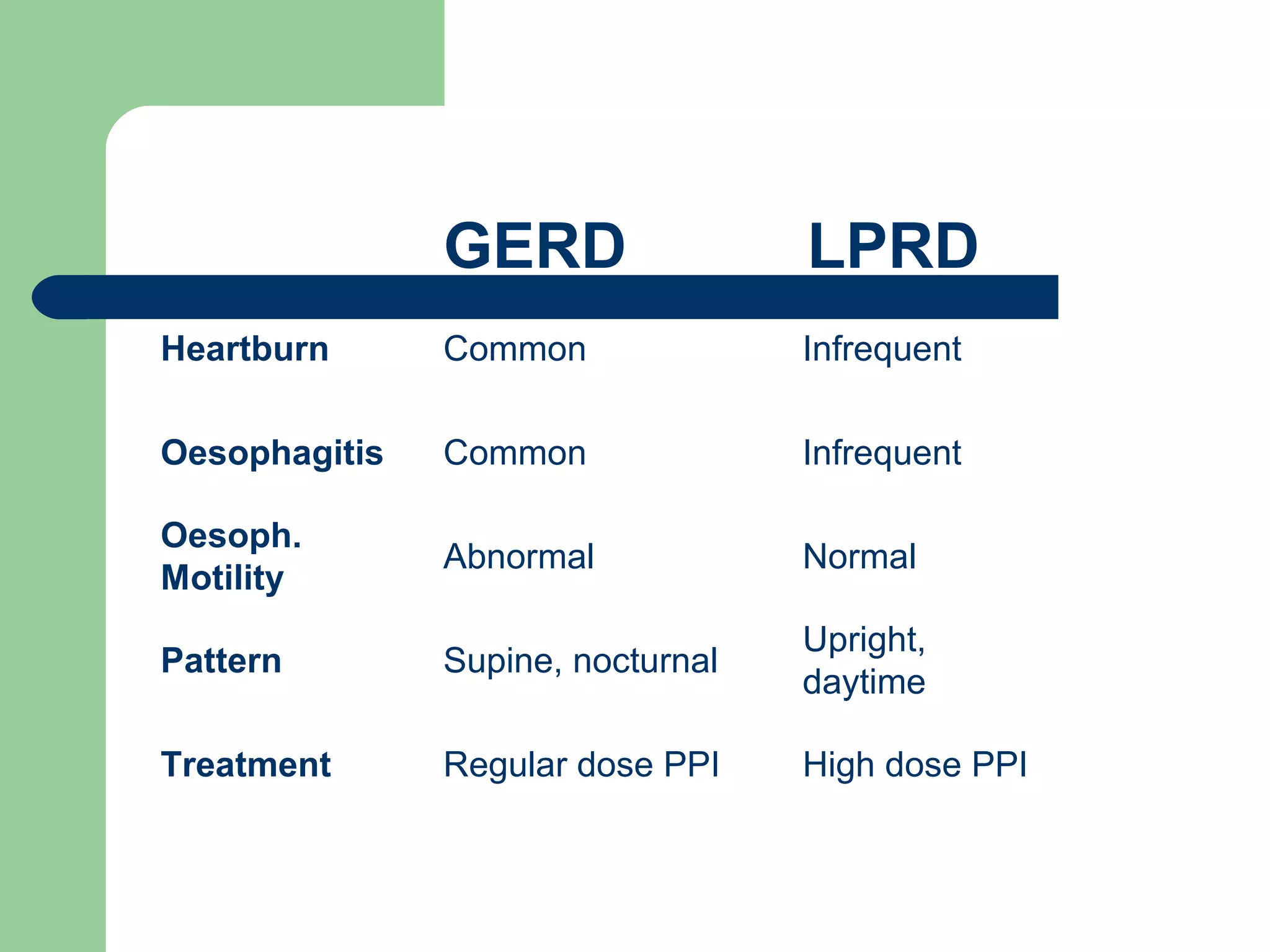
GERD                LPRD
Heartburn      Common              Infrequent

Oesophagitis   Common              Infrequent

Oesoph.
               Abnormal            Normal
Motility
                                   Upright,
Pattern        Supine, nocturnal
                                   daytime

Treatment      Regular dose PPI    High dose PPI
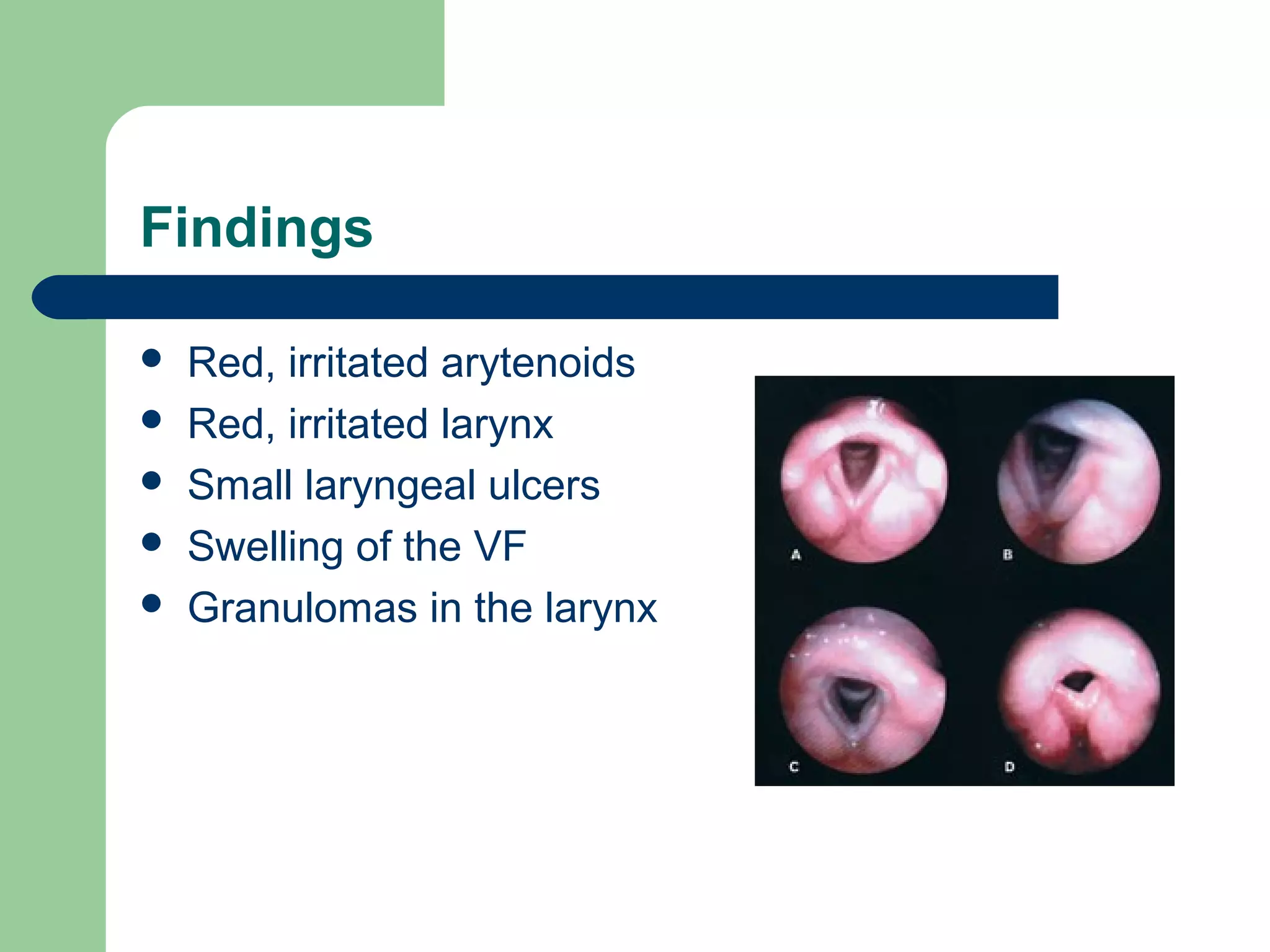
Findings

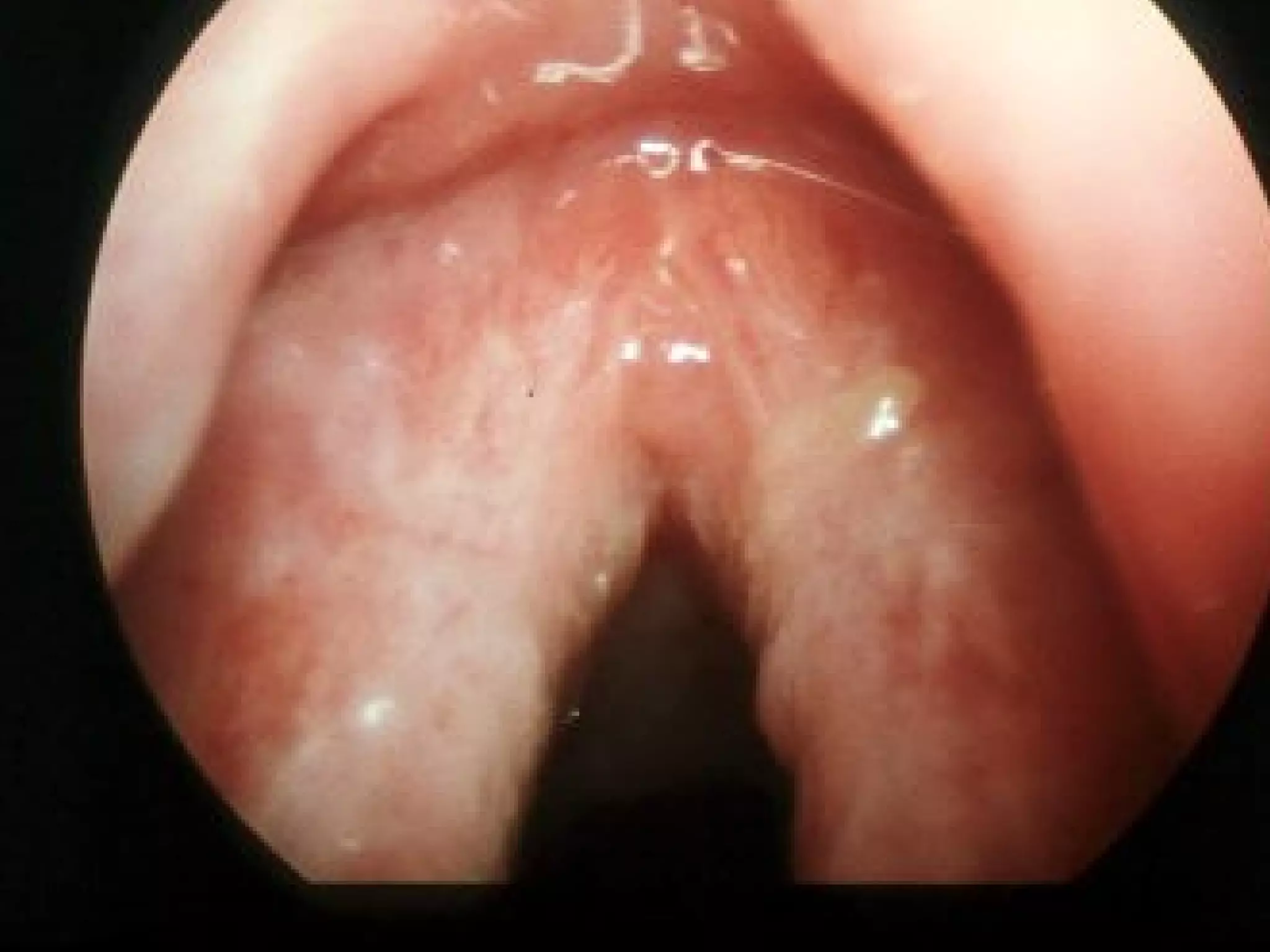
   Red, irritated arytenoids
   Red, irritated larynx
   Small laryngeal ulcers
   Swelling of the VF
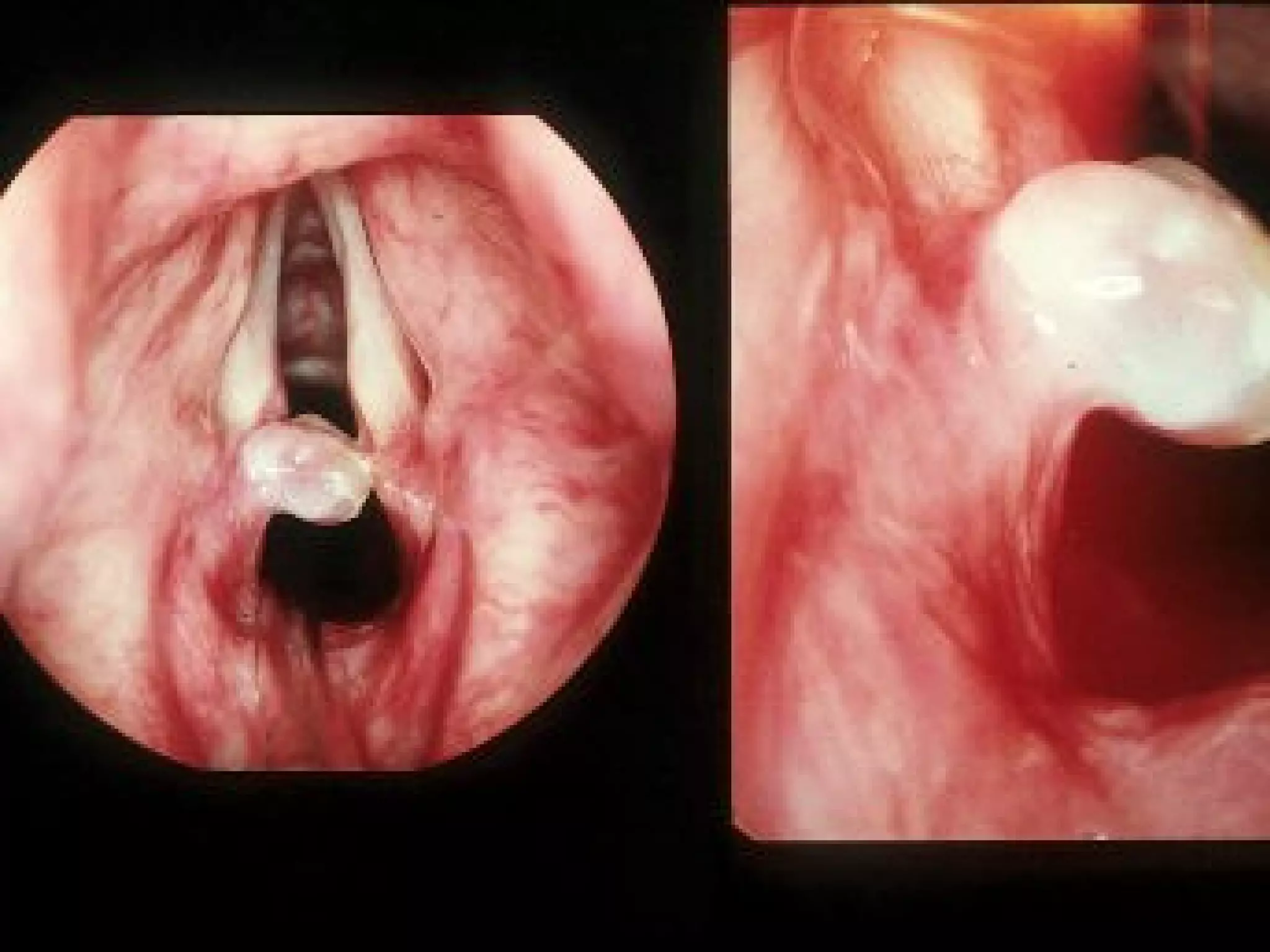
   Granulomas in the larynx
Definitive diagnostic for LPRD:

The 24-hour Pharyngo-Oesophageal pH monitoring is the gold
standard for monitoring reflux events associated with LPRD.

In LPRD patients, it is important that the upper channel is placed
at the level of the laryngeal inlet.
Diagnosis
 Tests   completed:
  –   pH monitoring (AKA pH-metry)
        Takes   24 hours (over night)
        Measure acid in esophagus and throat
        Small, soft, fexible tube (pH probe) through the nose and
         into the throat which is connected to a small computer
         worn around the waist
  –   Barium swallow
        Easiest,
                most cost effective
        However, may be misleading
Treatment

 Prevention/Lifestyle   changes
 Medications
 Surgery
Treatment for LPRD:
1. Stress:


Take significant steps to reduce stress. Even
moderate stress can dramatically increase
the amount of reflux.
2. Foods:


 It may be necessary to avoid or minimize some of
the following foods:
- Spicy, acidic and tomato-based foods like Mexican
or Italian food.
- Acidic fruit juices such as orange juice, grapefruit
juice, cranberry juice, etc..
- Fast foods and other fatty foods.
- Caffeinated beverages (coffee, tea, soft drinks) and
chocolate.
3. Mealtime:

- Do not gorge at mealtime
- Eat sensibly (moderate amount of food)
- Eat meals several hours before bedtime
- Avoid bedtime snacks
- Do not exercise immediately after eating
4. Body Weight:


     Try to maintain a healthy body
    weight. Being overweight
    can dramatically increase reflux.
5. Night time Reflux:

 If the 24-hour pH monitoring demonstrates nocturnal reflux,
elevate the head of your bed 4-6 inches with books, bricks
or a block of wood to achieve a 10 degree slant.


Do not prop the body up with extra pillows. This may
increase reflux by kinking the stomach. Recent studies have
shown that reflux occurs much more often during the day
when upright. Therefore, this suggestion may be much less
important than once believes.
6. Smoking:

IF YOU SMOKE, STOP!!
This dramatically increases reflux.
Medications
   reduce the acidity of the
    stomach contents
    increase the activity of
    the esophageal
    sphincters
   they will increase the
    motility of the stomach
Medications for LPRD:

Over the counter antacid such as Quickeze ®, Gaviscon®
or Mylanta®. Tums has the added benefit of containing
calcium.

Medications such as H2Blockers (Axid®, Pepcid®,
Tagament®, Zantac®), Proton pump inhibitors (Losec®,
Somac®), or motility agents (Propulsid) .
Surgery

 Withsevere cases when meds and other tx are
 not successful.
  –   Most common procedure: fundoplication, sewing a
      portion of the stomach around the esophagus to
      tighten its lower end. This operation can be done
      endoscopically.
Severe, long term affects
   Gastrointestinal bleeding
   Barrett’s esophagus
    –   There is columnar
        epithelium in the
        esophagus where
        stratified squamous
        epithelium should be
   Laryngeal damage
   Cancer ??
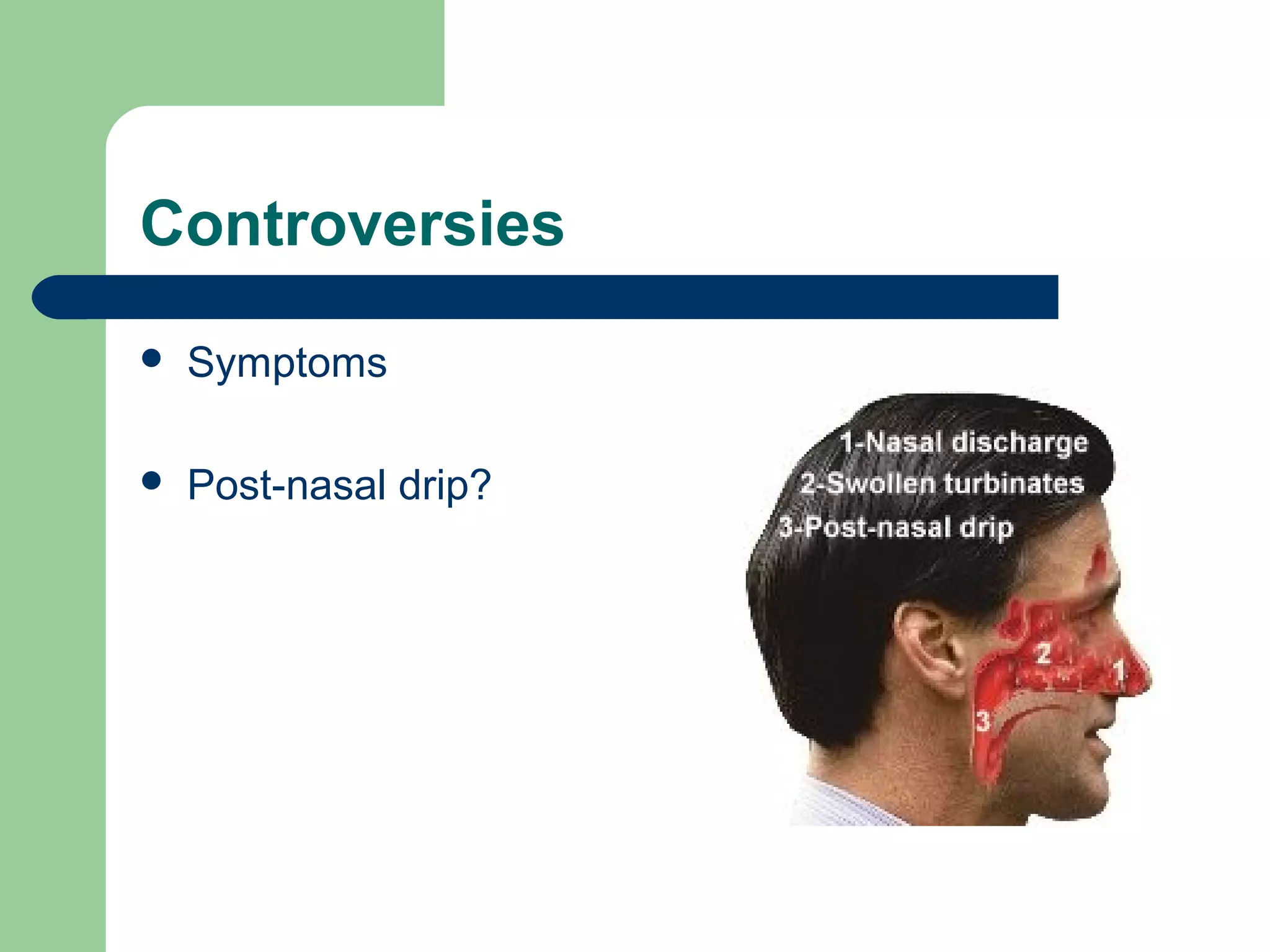
Controversies
   Symptoms

   Post-nasal drip?
Controversies- Clinical Findings
   Is subglottic stenosis
    caused by LPR and
    intubation??
   Is reflux an inflammatory
    catalyst for many airway
    diseases?
Controversies- Diagnostic testing
   Does ph monitoring help
    with diagnosis.
   Use proton pump
    inhibitor as diagnostic
    tool.
Controversies- Treatment
   Twice day proton pump
    inhibitors
Controversies- Paediatric LPR
   Failure to thrive,
    oesophagitis and airway
    disturbance.
   Chronic cough
   Dysphonia
   Laryngomalacia
   Subglottic stenosis
   Apparent life-threatening
    events
Controversies- Paediatric LPR
   Tasker et al recently
    used pepsin assay to
    demonstrate high levels
    of pepsin in middle ears
    of 45 of 54 children
    requiring ventilation
    tubes.
References
   Center for Voice Disorders of Wake Forest University. (2003). Patient
    information    sheet on reflux. http://www.bgsm.edu/voice/pt_info.html
   Columbia Presbyterian Medical Center. (2002). Laryngopharyngeal reflux
    disease and recommendations to prevent acid reflux.
    http://www.entcolumbia.org/lprd.htm
   Laryngopharyngeal reflux 2002: A new paradigm of airway disease..
    James A Kaufman,MD. ENT Supplement.
   Levy, R.A., Meiner, S.E., & Stamm, L. (2002). Conservative management
    of GERD: a case study. Medsurg Nursing, 11, No. 4.
   Stemple, J., Gerdeman, B.K., & Glaze, L. (2002). Clinical Voice
    Pathology: Theory and Management. 3rd ed. Singular Publishing
   Voice Center. (2003). Reflux disease and its effects on the larynx.
    http://www.voice-center.com/reflux.html

Laryngopharyngeal Reflux

  • 1.
    Gastroespohageal Reflux Disease (GERD)& Laryngopharyngeal Reflux Disease (LPRD) Jerry Gathercole
  • 2.
    What are they?  The term REFLUX comes from the Greek word meaning “backflow,” usually referring to the contents of the stomach.  GERD: an abnormal amount of reflux up through the lower sphincters and into the esophagus.  LPRD: when the reflux passes all the way through the upper sphincter and into the back of the throat, reaching the larynx and pharynx.
  • 3.
    Symptoms for GERD  The most common is a burning sensation in the chest, usually after eating (AKA heartburn). This sensation can also be associated with position, sleep, or exercise.  Others include: belching, dysphagia, odynophagia (pain on swallowing), water brash, sore throat, cough, bronchospasms, atypical chest pain, hoarseness, and asthma exacerbation.  Symptoms are more common over night  Most common symptoms in the elderly include dysphagia, vomiting, and respiratory problems, among others which all lead to restrictive respiratory problems.
  • 4.
    Symptoms of LPRD  Symptoms of the two may overlap, however, the pharynx, larynx, and lungs are more sensitive to stomach acid and digestive enzymes allowing less reflux to do more damage.  Symptoms include: hoarseness, frequent throat clearing, sensation in the throat, bad/bitter taste in the mouth, referred ear pain, and post-nasal drip to name a few.  Symptoms are commonly experienced during the day.  Very few experience heartburn.
  • 5.
    Common ENT Symptomsof LPRD: Hoarseness Chronic (ongoing) cough Frequent throat clearing Pain or sensation in throat Feeling of lump in throat Problems while swallowing Bad/bitter taste in mouth (Especially in morning) Asthma-like symptoms Referred ear pain Post-nasal drip Singing: Difficulty with high notes Nighttime choking attacks
  • 6.
    How is thevoice affected?  Hoarseness  Vocal fatigue  Oedema  Ulceration  Granulation  Polypoid degeneration  Vocal nodules  Laryngospasm  Arytenoid fixation  Laryngeal stenosis  Carcinoma of the larynx
  • 7.
    GERD LPRD Heartburn Common Infrequent Oesophagitis Common Infrequent Oesoph. Abnormal Normal Motility Upright, Pattern Supine, nocturnal daytime Treatment Regular dose PPI High dose PPI
  • 8.
    Findings  Red, irritated arytenoids  Red, irritated larynx  Small laryngeal ulcers  Swelling of the VF  Granulomas in the larynx
  • 13.
    Definitive diagnostic forLPRD: The 24-hour Pharyngo-Oesophageal pH monitoring is the gold standard for monitoring reflux events associated with LPRD. In LPRD patients, it is important that the upper channel is placed at the level of the laryngeal inlet.
  • 14.
    Diagnosis  Tests completed: – pH monitoring (AKA pH-metry)  Takes 24 hours (over night)  Measure acid in esophagus and throat  Small, soft, fexible tube (pH probe) through the nose and into the throat which is connected to a small computer worn around the waist – Barium swallow  Easiest, most cost effective  However, may be misleading
  • 15.
    Treatment  Prevention/Lifestyle changes  Medications  Surgery
  • 16.
    Treatment for LPRD: 1.Stress: Take significant steps to reduce stress. Even moderate stress can dramatically increase the amount of reflux.
  • 17.
    2. Foods: Itmay be necessary to avoid or minimize some of the following foods: - Spicy, acidic and tomato-based foods like Mexican or Italian food. - Acidic fruit juices such as orange juice, grapefruit juice, cranberry juice, etc.. - Fast foods and other fatty foods. - Caffeinated beverages (coffee, tea, soft drinks) and chocolate.
  • 18.
    3. Mealtime: - Donot gorge at mealtime - Eat sensibly (moderate amount of food) - Eat meals several hours before bedtime - Avoid bedtime snacks - Do not exercise immediately after eating
  • 19.
    4. Body Weight: Try to maintain a healthy body weight. Being overweight can dramatically increase reflux.
  • 20.
    5. Night timeReflux: If the 24-hour pH monitoring demonstrates nocturnal reflux, elevate the head of your bed 4-6 inches with books, bricks or a block of wood to achieve a 10 degree slant. Do not prop the body up with extra pillows. This may increase reflux by kinking the stomach. Recent studies have shown that reflux occurs much more often during the day when upright. Therefore, this suggestion may be much less important than once believes.
  • 21.
    6. Smoking: IF YOUSMOKE, STOP!! This dramatically increases reflux.
  • 22.
    Medications  reduce the acidity of the stomach contents  increase the activity of the esophageal sphincters  they will increase the motility of the stomach
  • 23.
    Medications for LPRD: Overthe counter antacid such as Quickeze ®, Gaviscon® or Mylanta®. Tums has the added benefit of containing calcium. Medications such as H2Blockers (Axid®, Pepcid®, Tagament®, Zantac®), Proton pump inhibitors (Losec®, Somac®), or motility agents (Propulsid) .
  • 24.
    Surgery  Withsevere caseswhen meds and other tx are not successful. – Most common procedure: fundoplication, sewing a portion of the stomach around the esophagus to tighten its lower end. This operation can be done endoscopically.
  • 25.
    Severe, long termaffects  Gastrointestinal bleeding  Barrett’s esophagus – There is columnar epithelium in the esophagus where stratified squamous epithelium should be  Laryngeal damage  Cancer ??
  • 26.
    Controversies  Symptoms  Post-nasal drip?
  • 27.
    Controversies- Clinical Findings  Is subglottic stenosis caused by LPR and intubation??  Is reflux an inflammatory catalyst for many airway diseases?
  • 28.
    Controversies- Diagnostic testing  Does ph monitoring help with diagnosis.  Use proton pump inhibitor as diagnostic tool.
  • 29.
    Controversies- Treatment  Twice day proton pump inhibitors
  • 30.
    Controversies- Paediatric LPR  Failure to thrive, oesophagitis and airway disturbance.  Chronic cough  Dysphonia  Laryngomalacia  Subglottic stenosis  Apparent life-threatening events
  • 31.
    Controversies- Paediatric LPR  Tasker et al recently used pepsin assay to demonstrate high levels of pepsin in middle ears of 45 of 54 children requiring ventilation tubes.
  • 32.
    References  Center for Voice Disorders of Wake Forest University. (2003). Patient information sheet on reflux. http://www.bgsm.edu/voice/pt_info.html  Columbia Presbyterian Medical Center. (2002). Laryngopharyngeal reflux disease and recommendations to prevent acid reflux. http://www.entcolumbia.org/lprd.htm  Laryngopharyngeal reflux 2002: A new paradigm of airway disease.. James A Kaufman,MD. ENT Supplement.  Levy, R.A., Meiner, S.E., & Stamm, L. (2002). Conservative management of GERD: a case study. Medsurg Nursing, 11, No. 4.  Stemple, J., Gerdeman, B.K., & Glaze, L. (2002). Clinical Voice Pathology: Theory and Management. 3rd ed. Singular Publishing  Voice Center. (2003). Reflux disease and its effects on the larynx. http://www.voice-center.com/reflux.html

Editor's Notes

  • #4 AKA Heartburn Odynophagia = pain on swallowing Water Brash = sudden occurrence of fluid into mouth caused by increased saliva prod’n
  • #5 Bitter taste = esp. in morning Little heartburn b/c caused from esophagus being irritated
  • #15 Tube called a “pH probe” Misleading = show normal swallow yet have symptomatic GERD
  • #16 Usually in this order
  • #25 Last resort