S
EFAST
A Charlies how to guide.
Dr Kyle Kophamel
CME Talk
19th February 2015
Objectives
S Overview of the the EFAST Scan
S Use in Trauma
S Advantages and limitations
S Demonstrate Technique
S Normal and abnormal scans
S Training and Accreditation
EFAST
Definition
S Extended
S Focused
S Assessment with
S Sonography in
S Trauma
EFAST
How can we use it?
S Clinical Examination
S Answers specific Questions
S Is there free fluid in the abdomen?
S Is there free fluid in the pericardium?
S Is there evidence of a pneumothorax/haemothorax?
S Guides management
EFAST
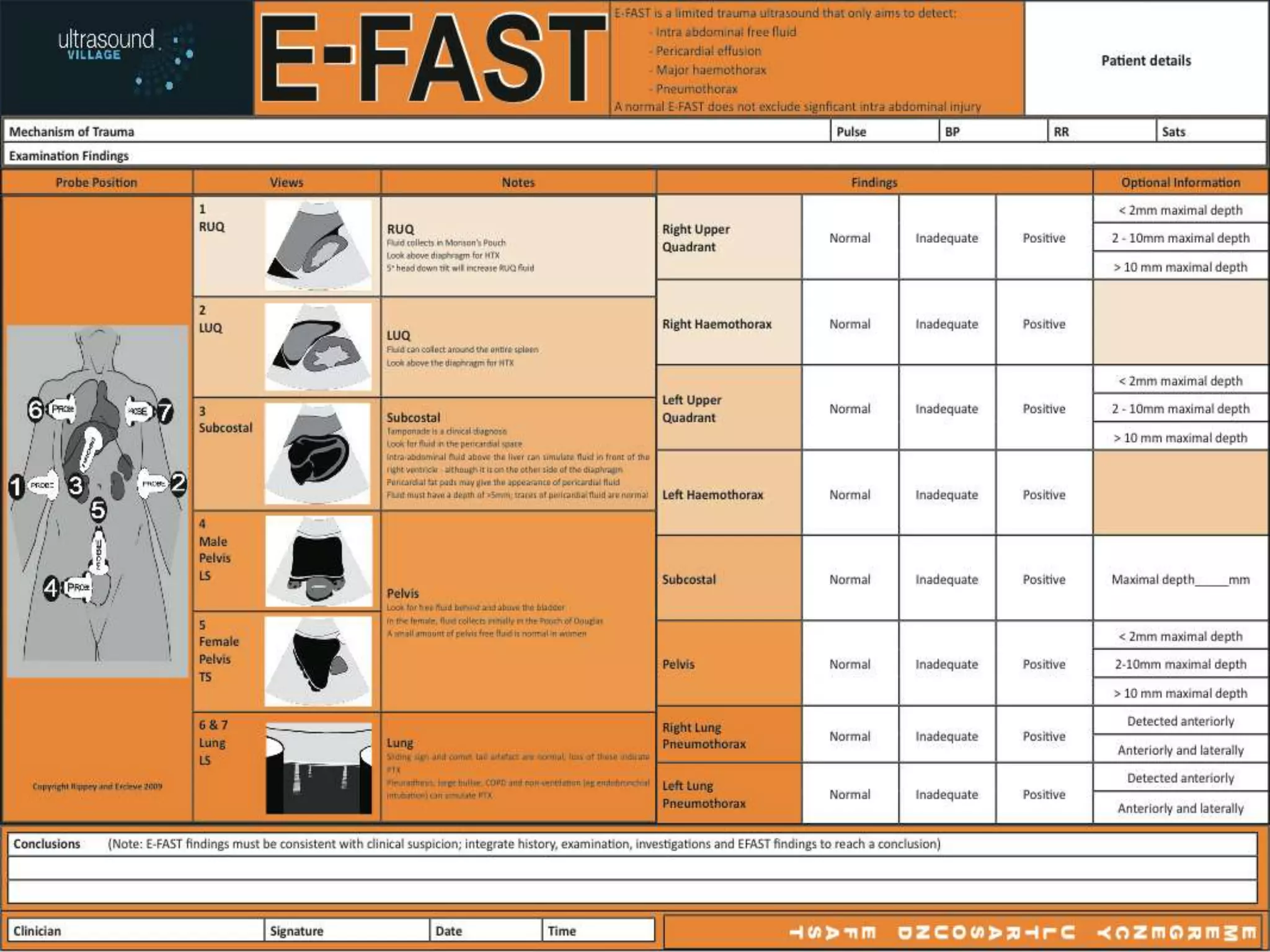
How’s it performed?
S Real time Views
S Abdominal
S Perihepatic/RUQ
S Perisplenic/LUQ
S Pelvic (Long and Trans)
S Cardiac
S Pericardial (usually subcostal)
S Thorax
S RUQ
S LUQ
S Parasternal
EFAST
Views
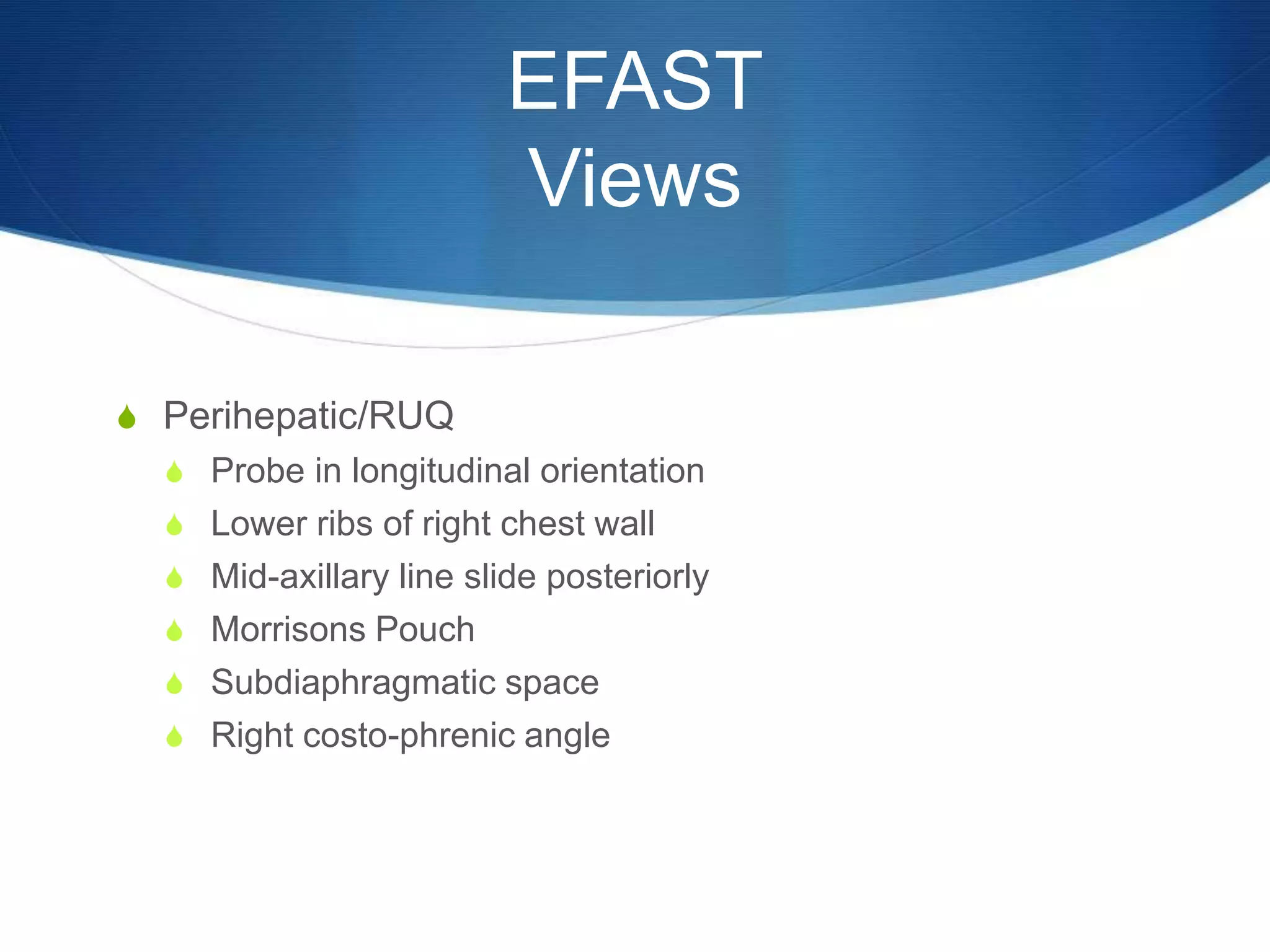
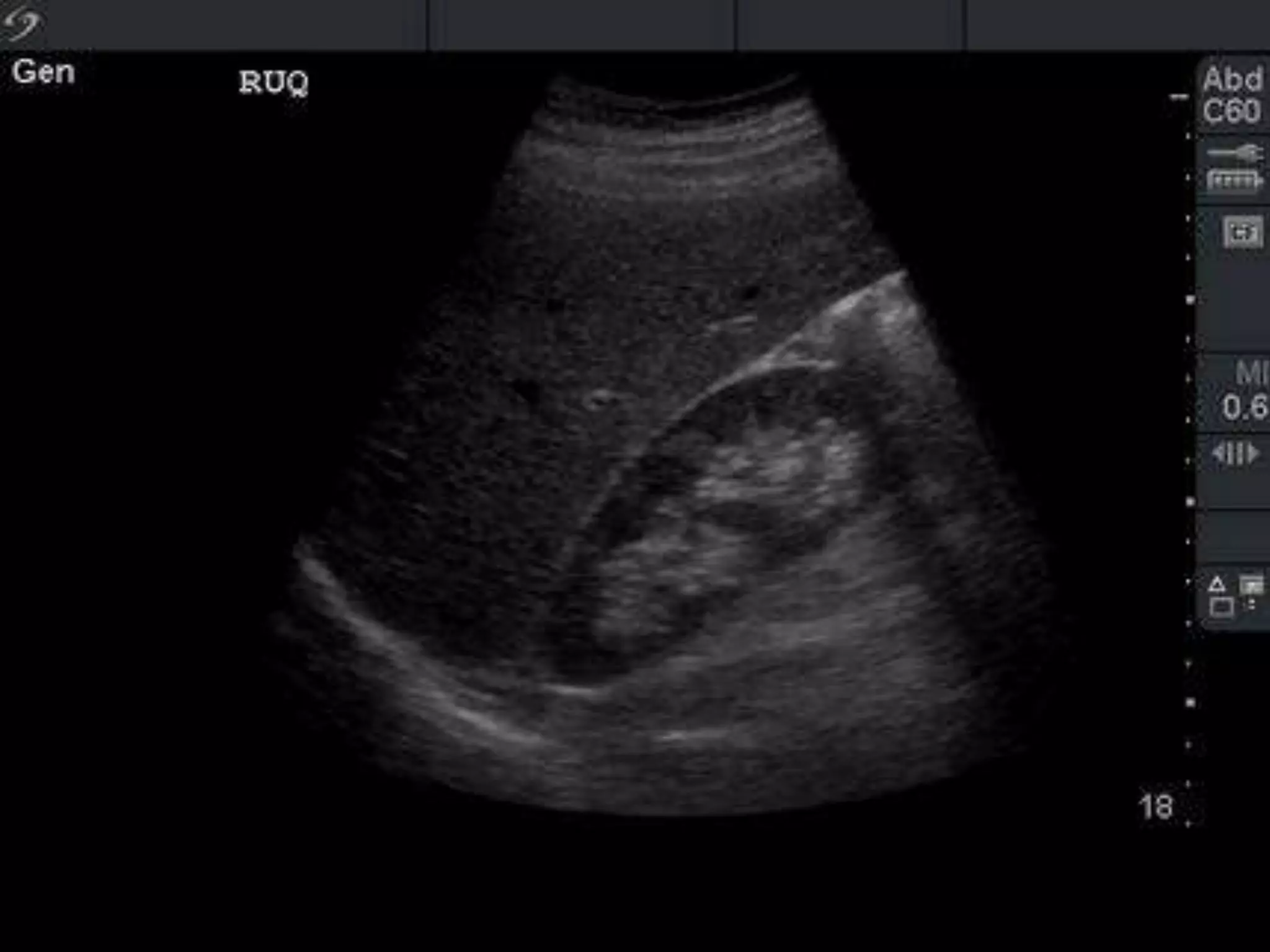
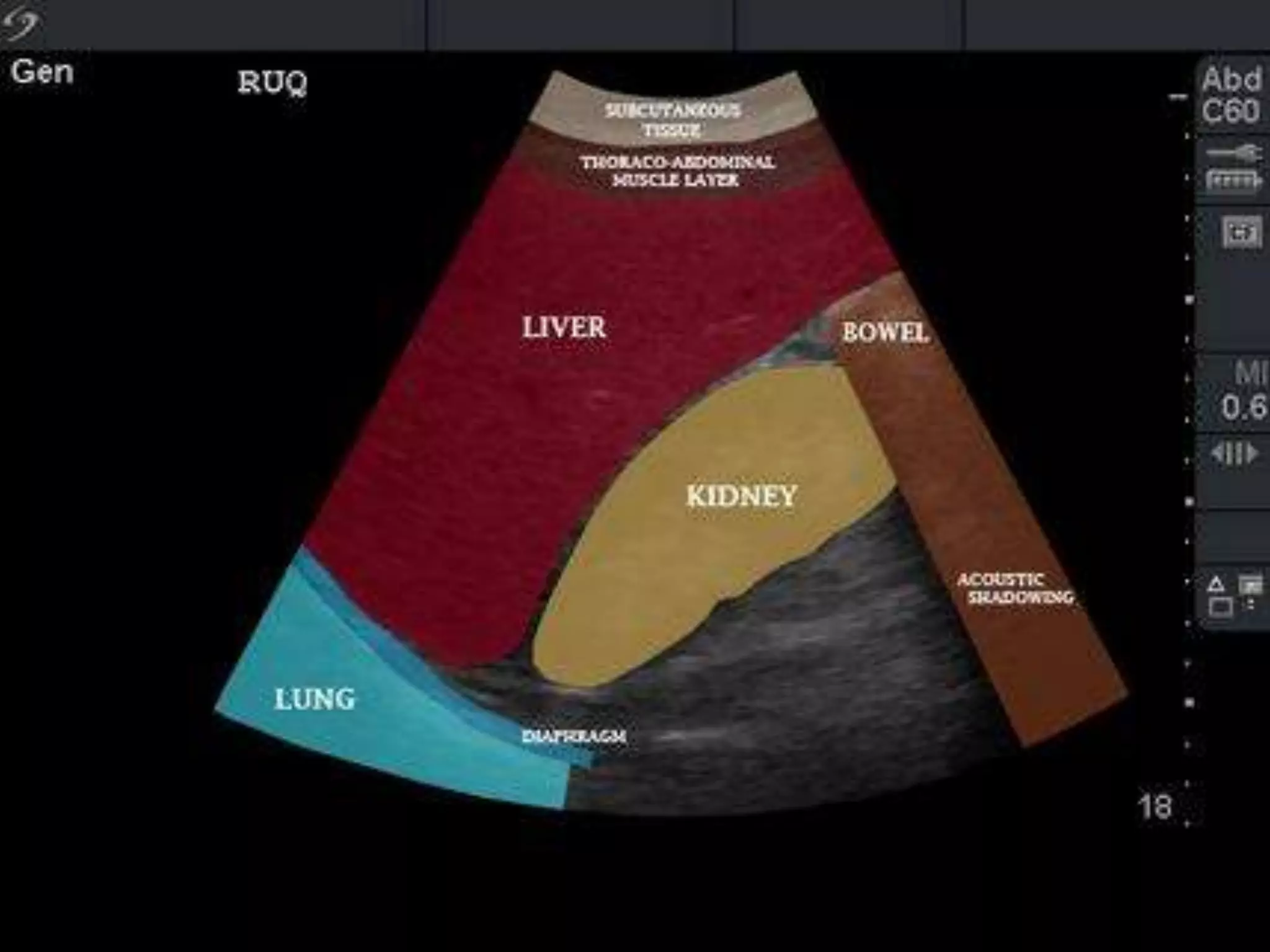
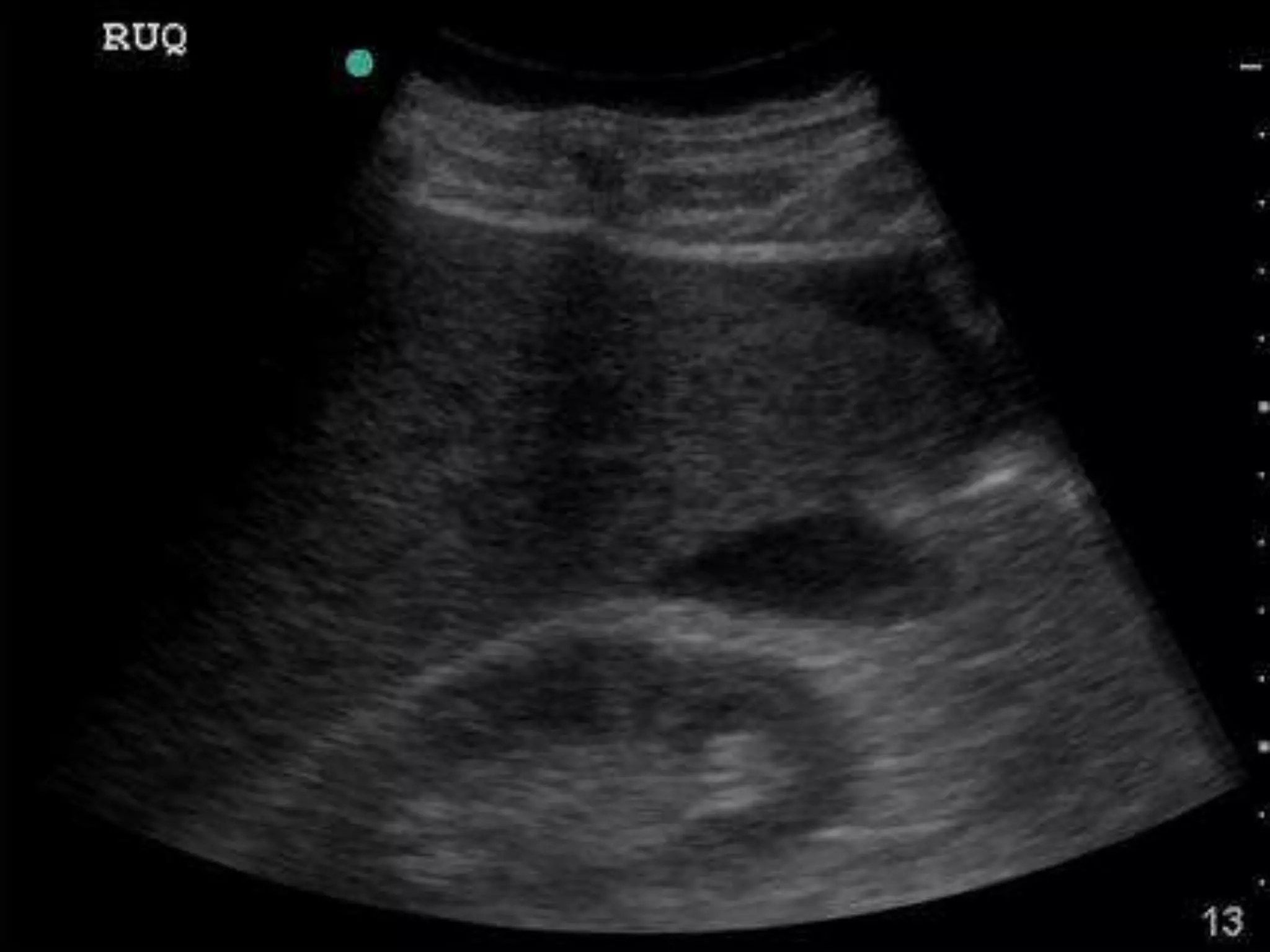
S Perihepatic/RUQ
S Probe in longitudinal orientation
S Lower ribs of right chest wall
S Mid-axillary line slide posteriorly
S Morrisons Pouch
S Subdiaphragmatic space
S Right costo-phrenic angle
EFAST
Views
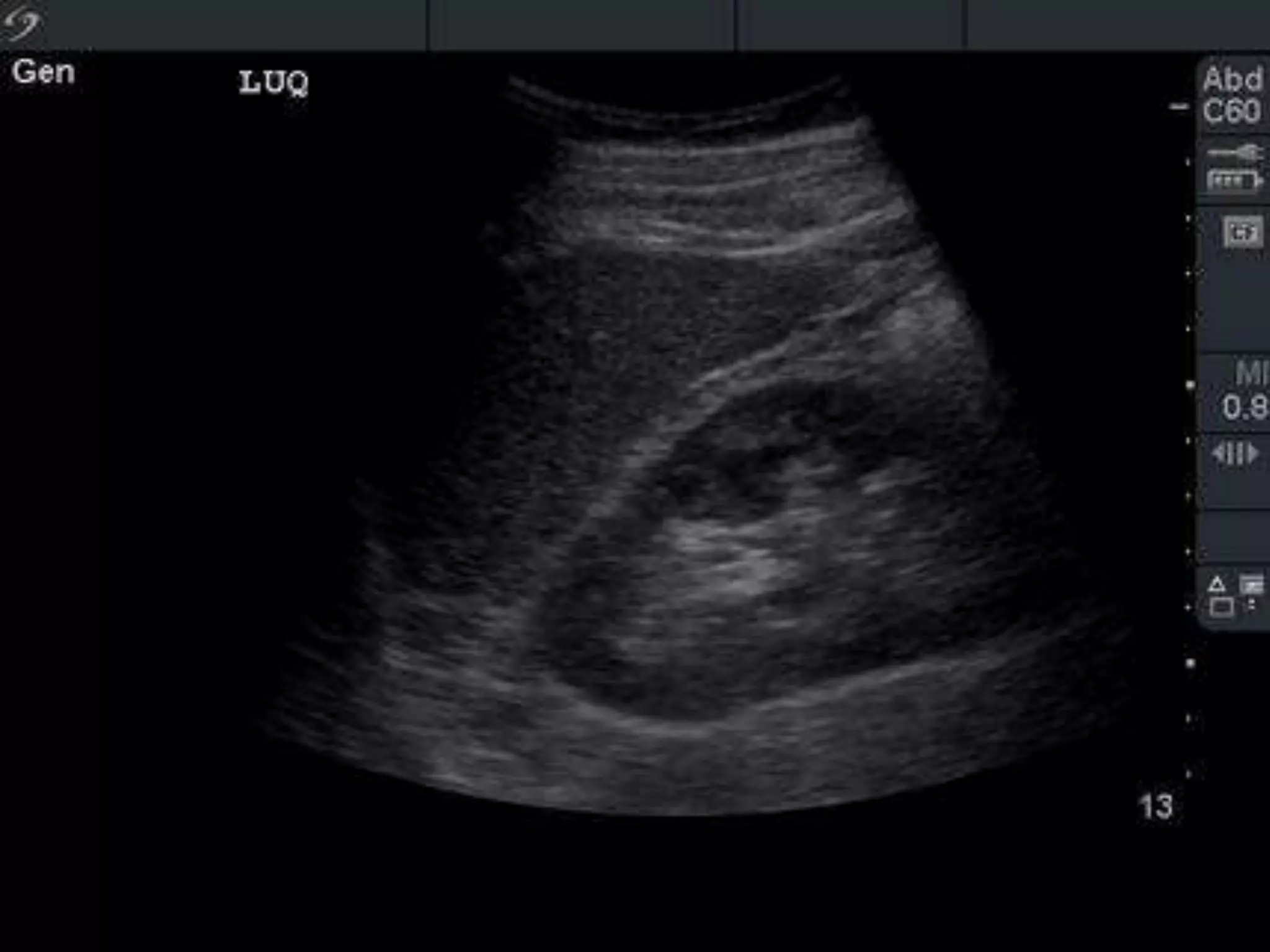
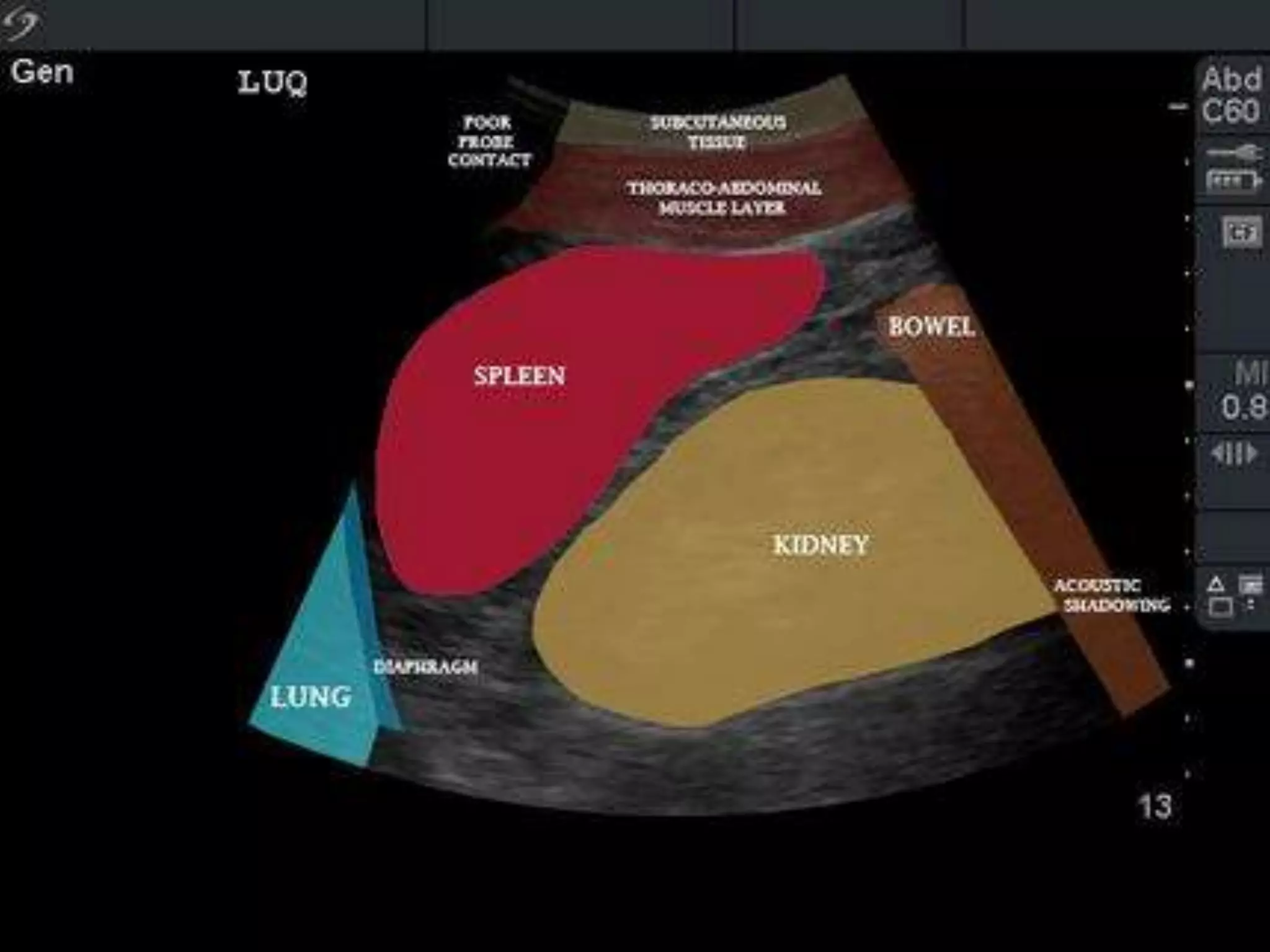
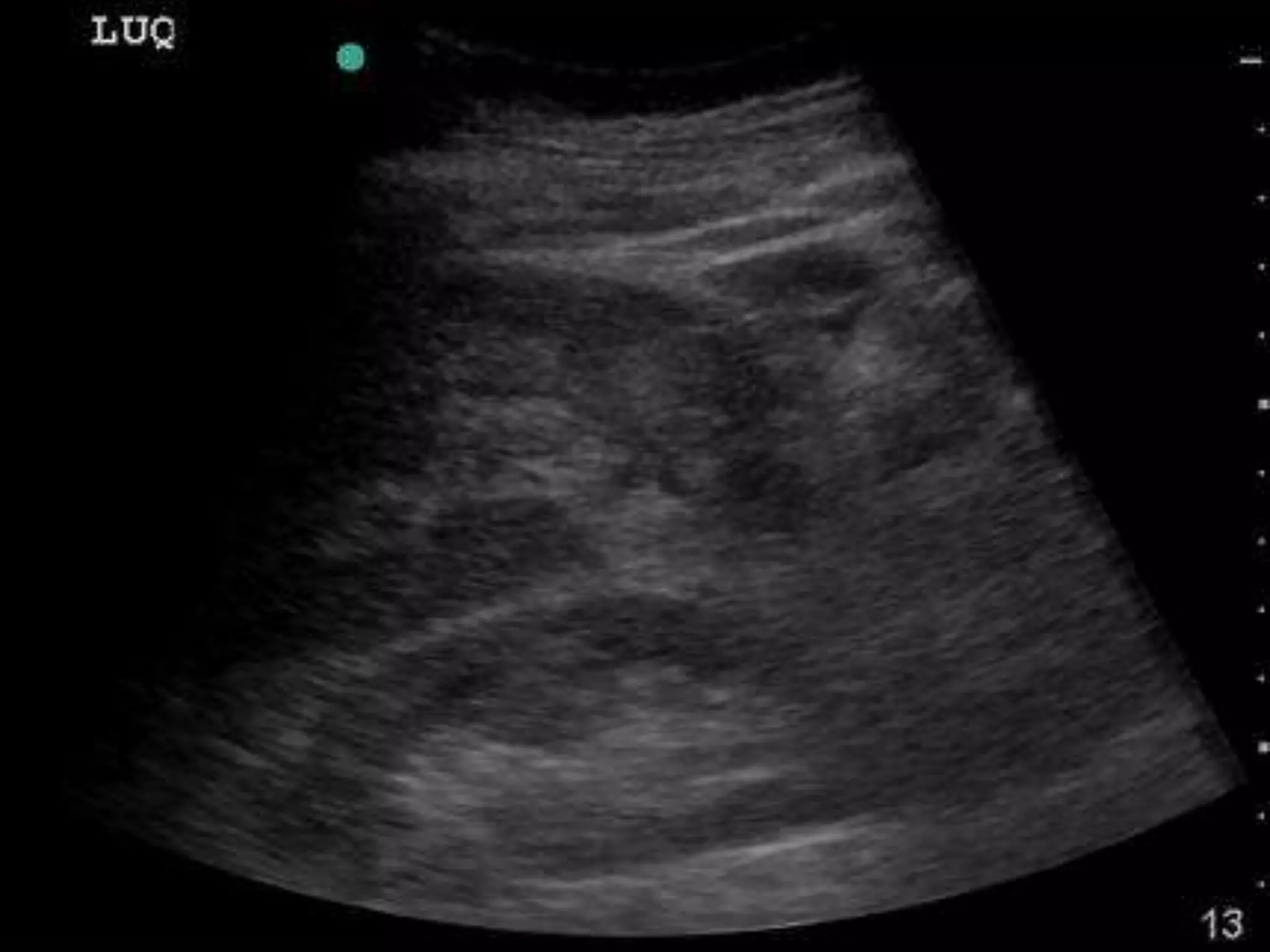
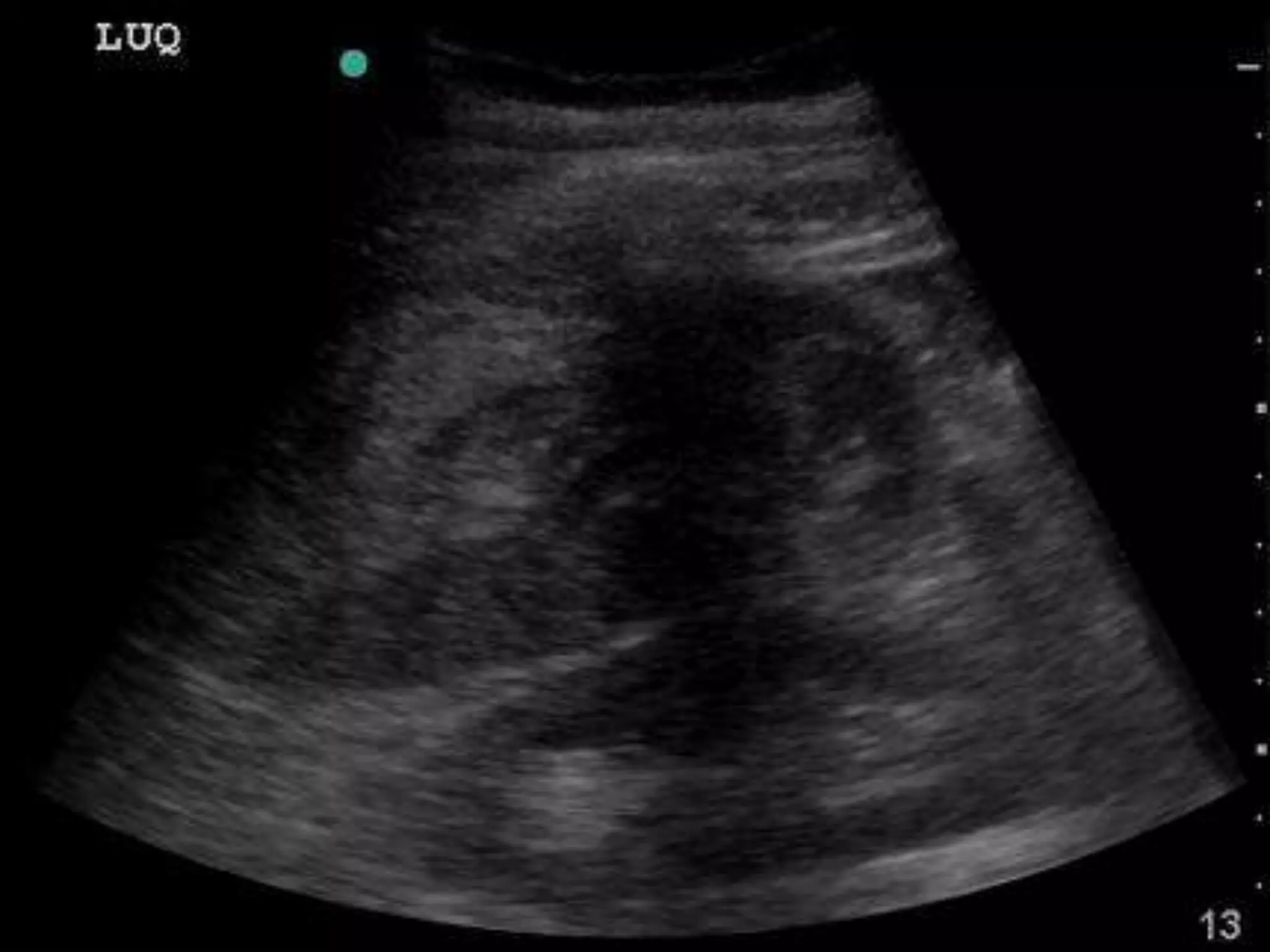
S Perisplenic/LUQ
S Longitudinal Probe orientation
S Mid to post axillary line
S Often more posterior view with deep inspiration
S Leino-renal space
S Perisplenic
S Left costo-phrenic angle
EFAST
Views
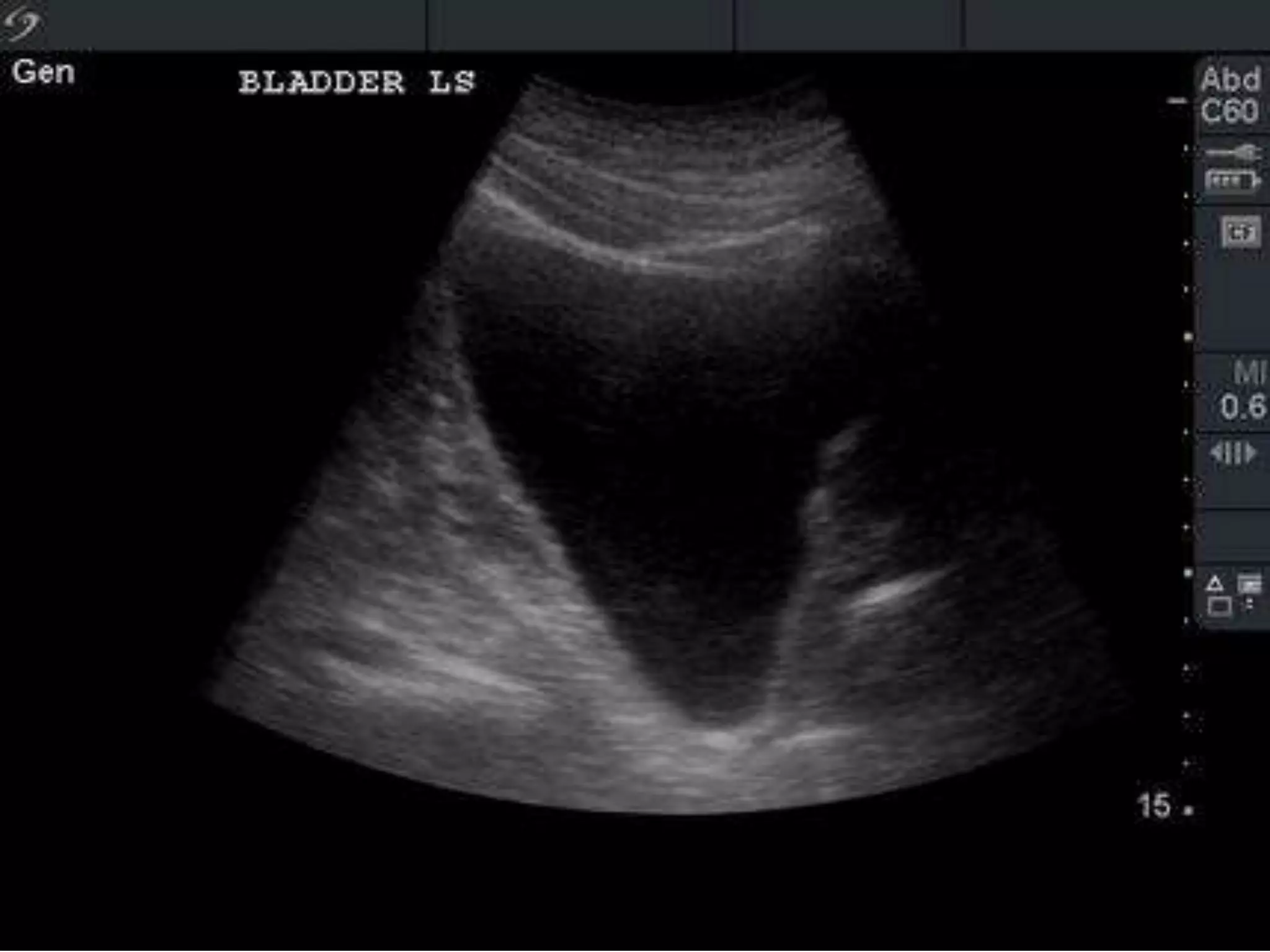
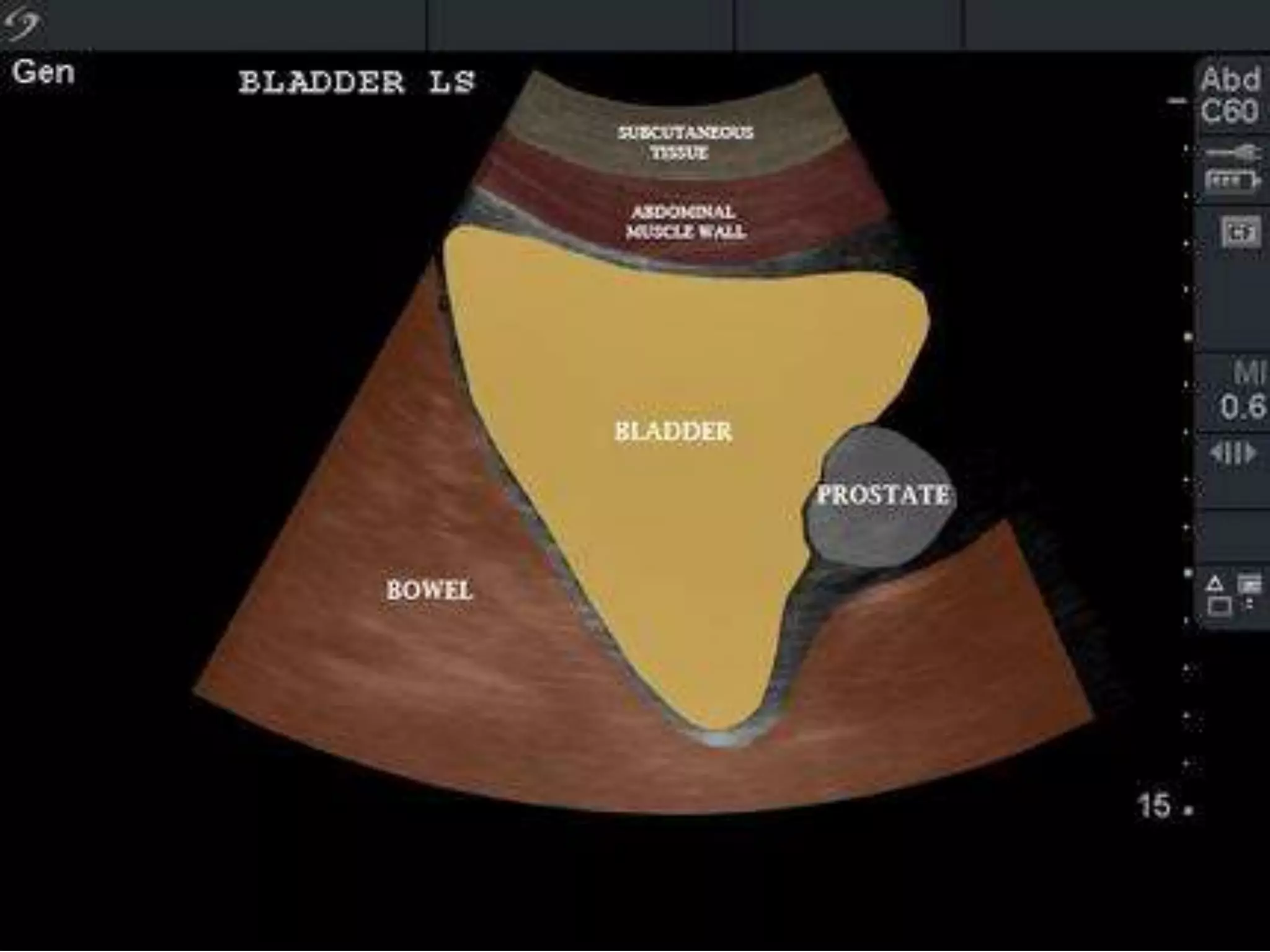
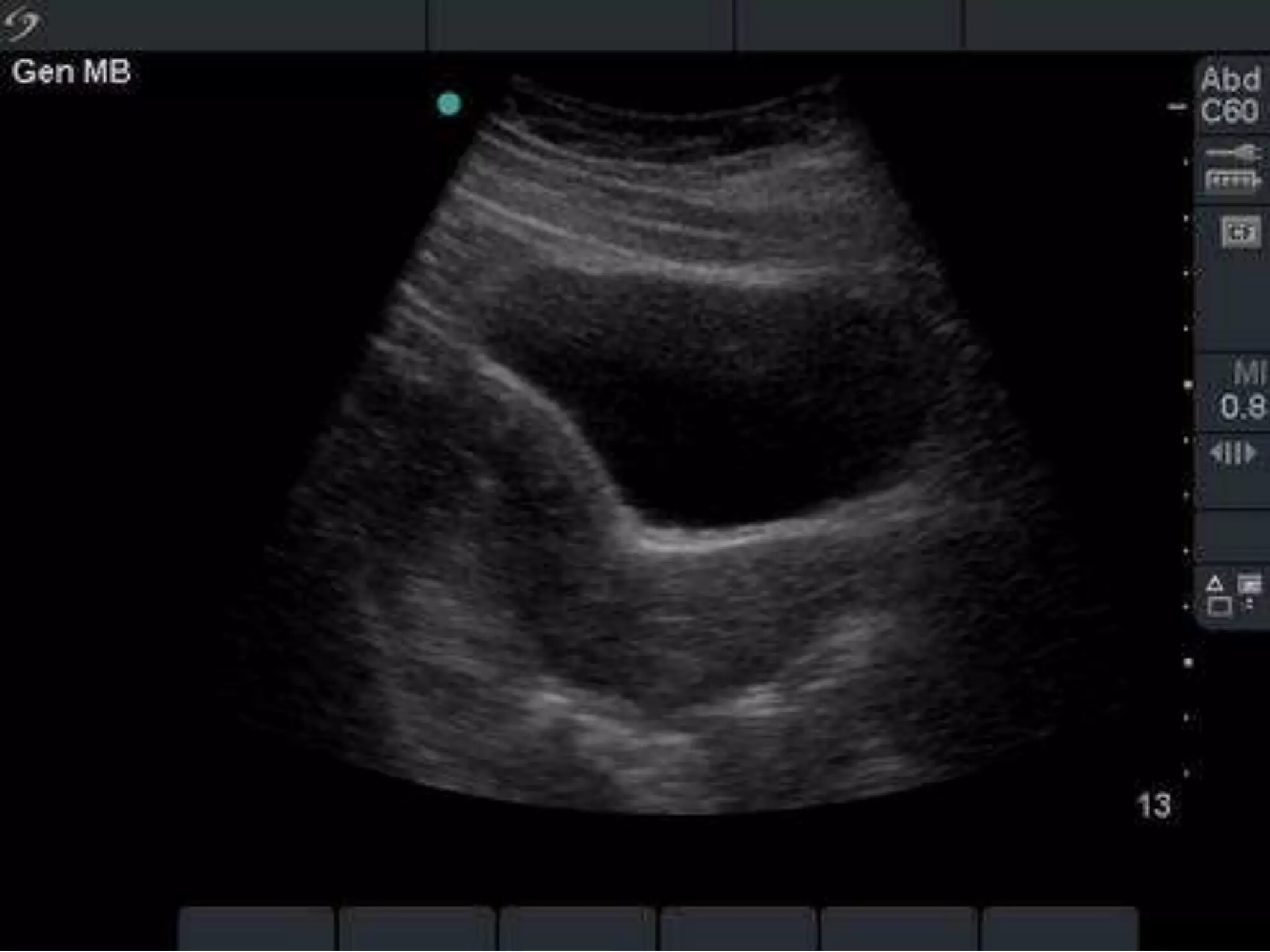
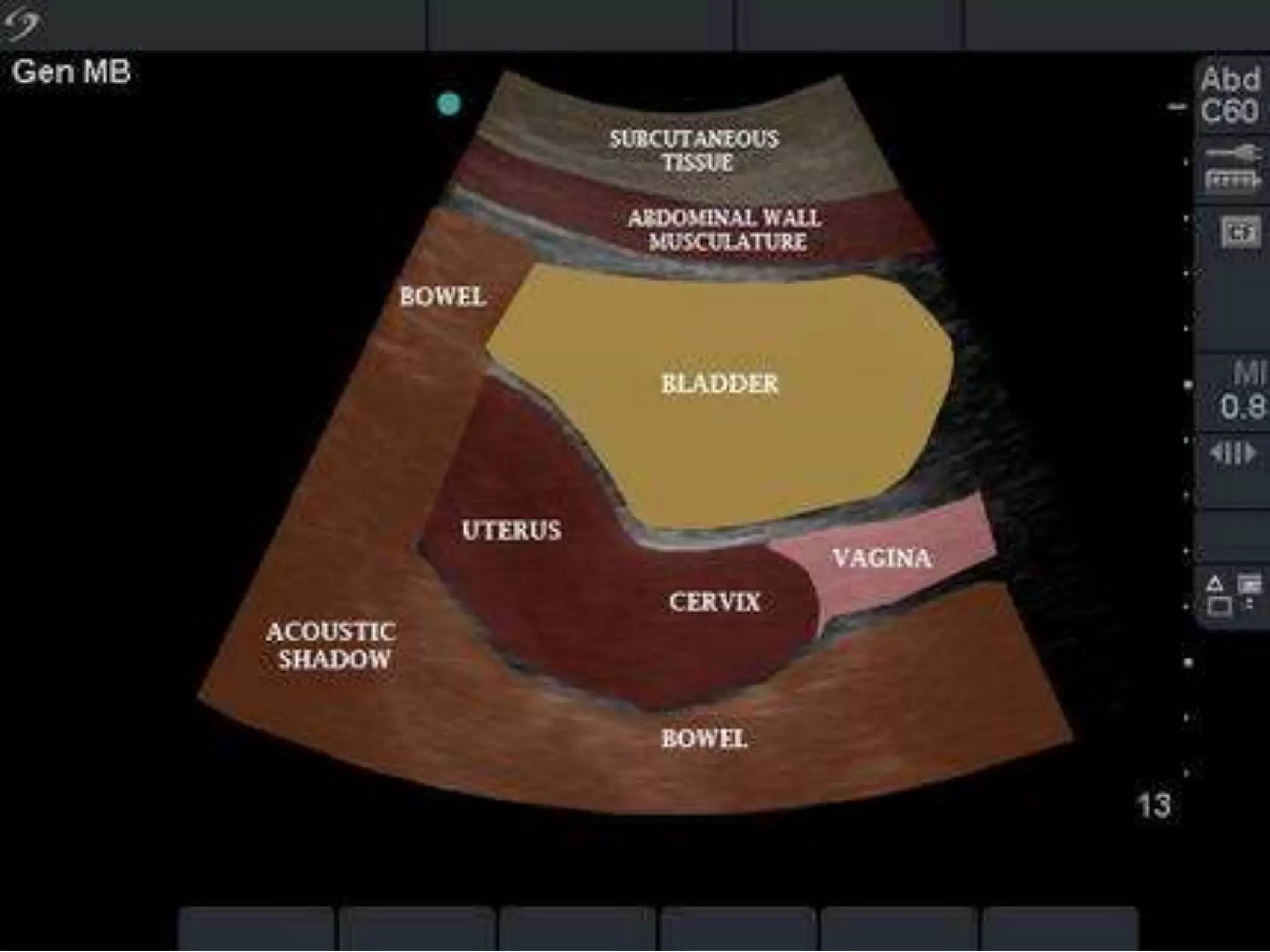
S Pelvic
S Just above symphysis pubis
S Transverse and Longitudinal probe orientation
S Female vs Male
S Pitfalls
S Bowel fluid
S Empty Bladder
EFAST
Views
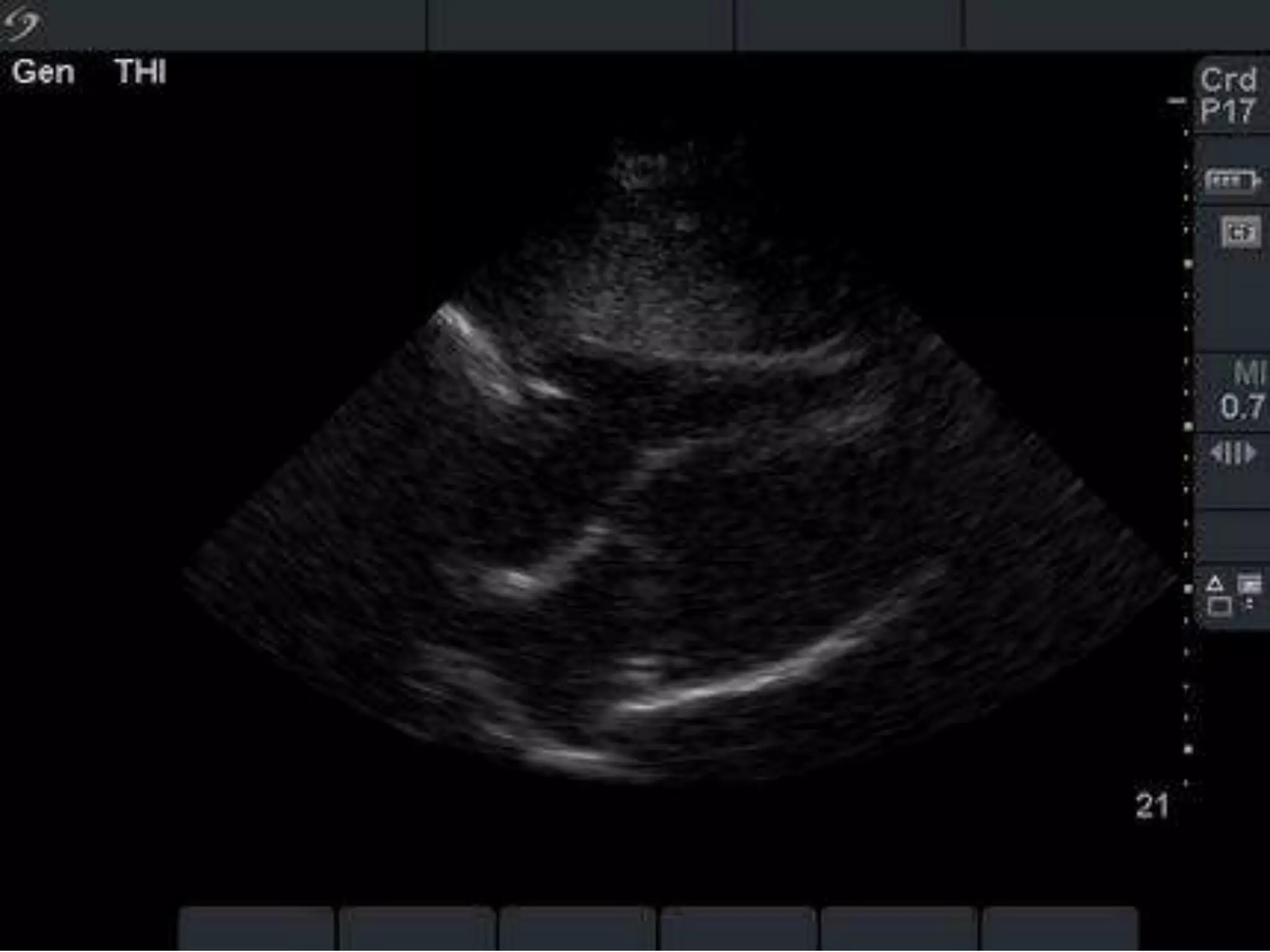
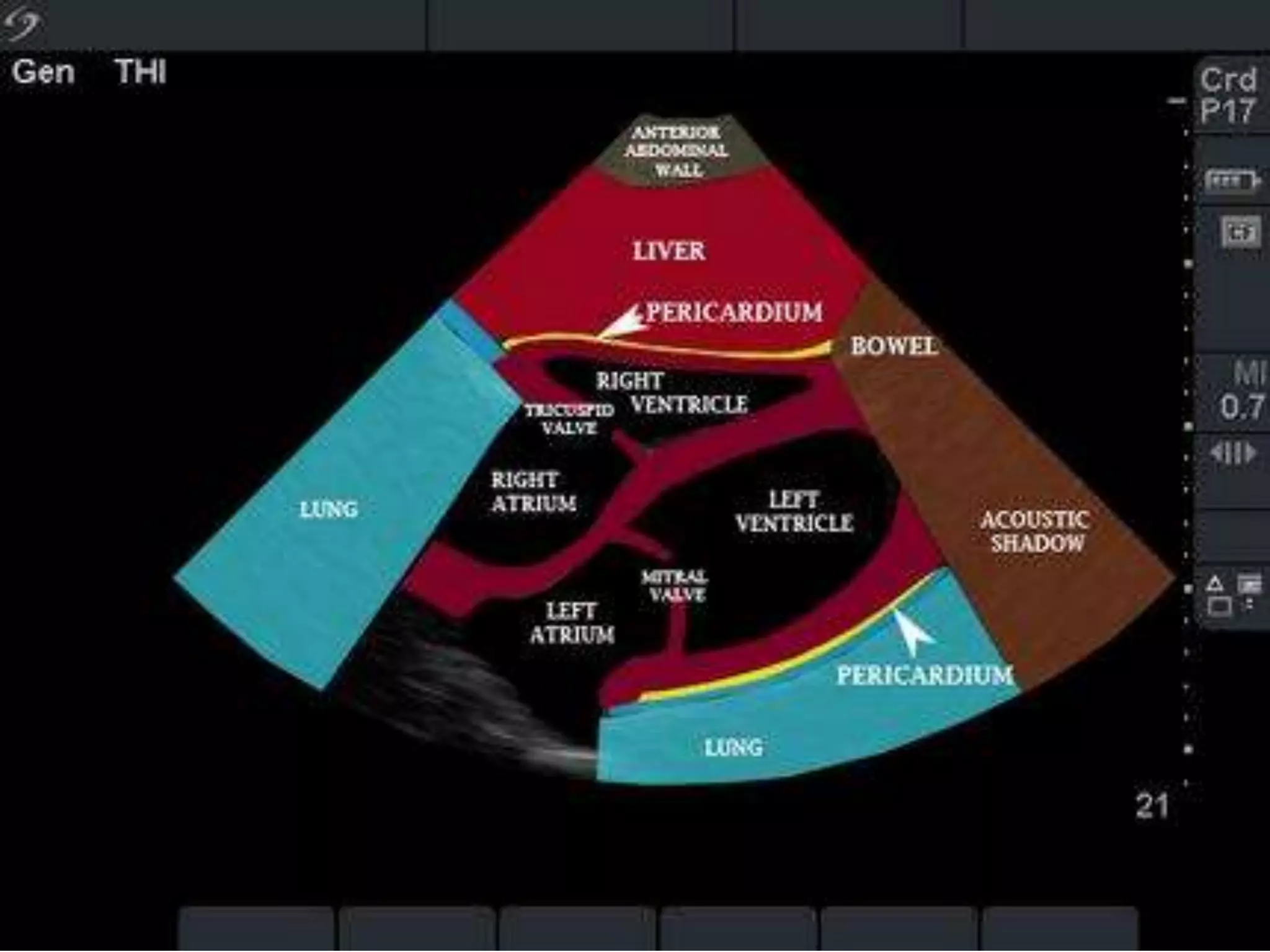
S Pericardial View
S Left Subcostal probe position
S Angled under ribcage, towards left shoulder
S Pitfalls
S Pleural effusions
S Pericardial fat pad
EFAST
Views
S Lung
S Most anterior chest spaces in supine patient
S Parasternal, longitudinal
S Bat shape
S Lung sliding (“trail of ants”)
S Lung comets (Presence excludes PTx)
S PTx
S Loss of lung sliding
S Lung point sign
EFAST
What does is mean?
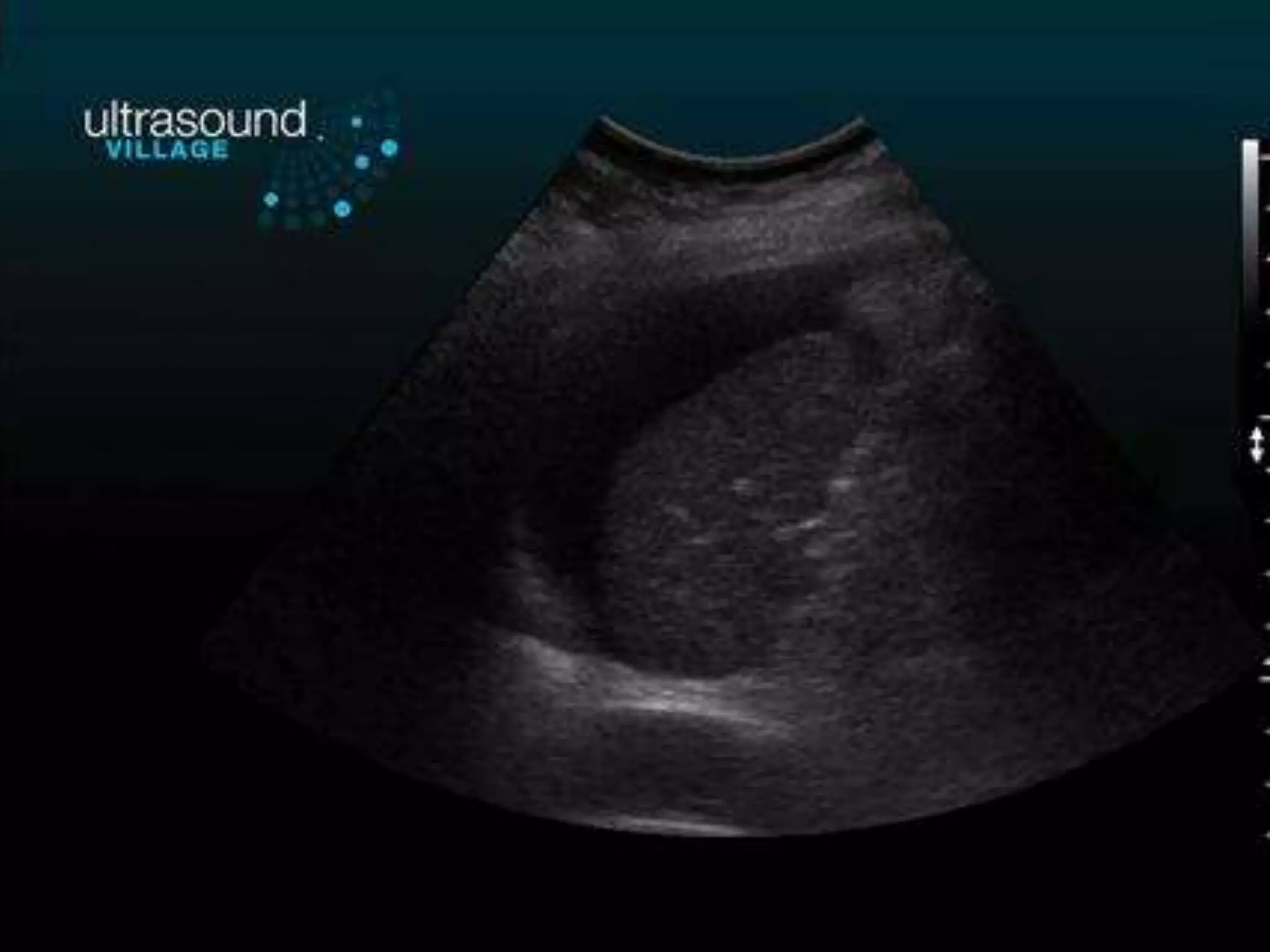
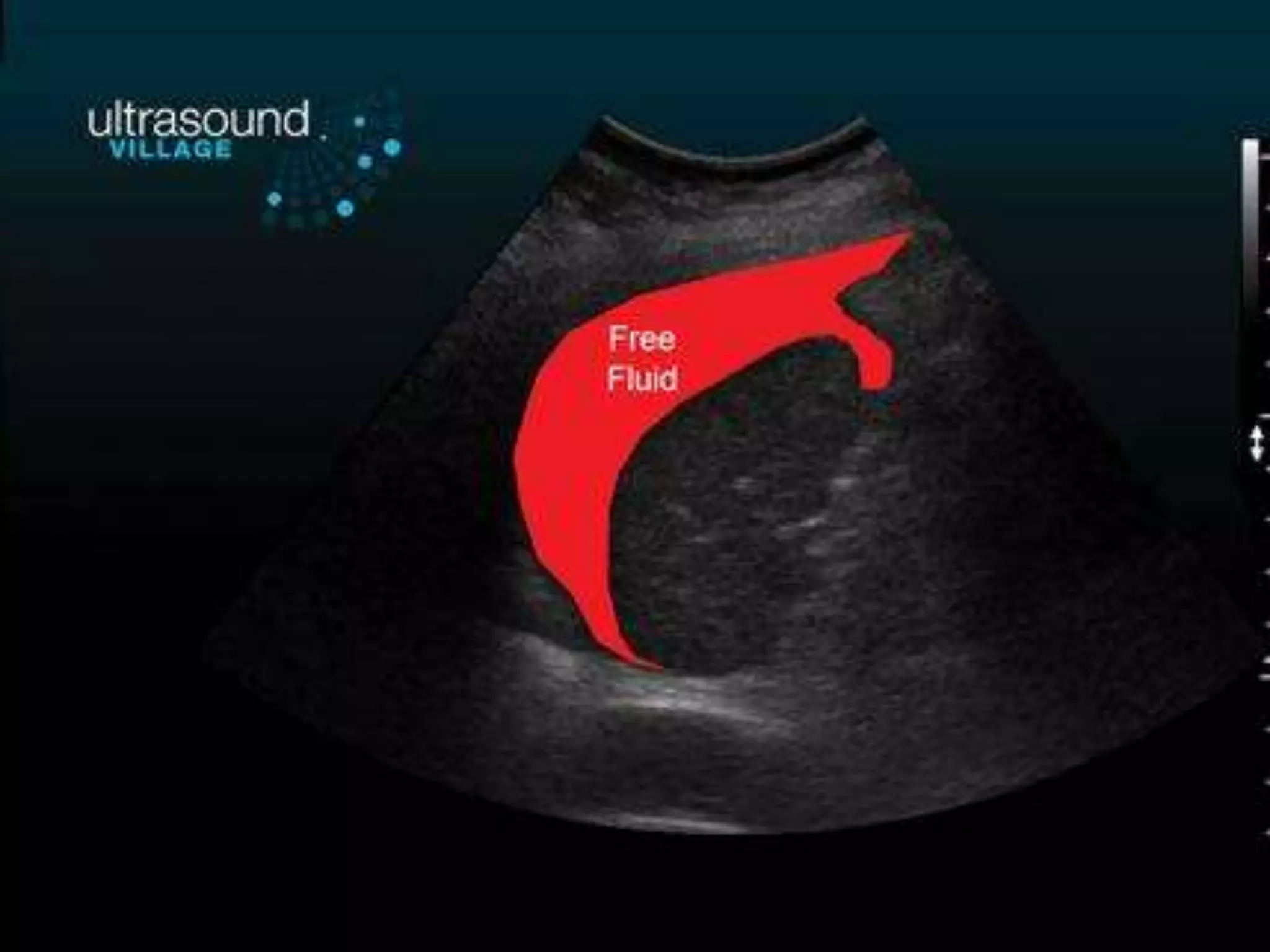
S Free fluid is anechoic/sonolucent (Black) and has
angularity to it’s margins (ie. takes the shape of it’s
container)
S Clot appears echogenic
S Cannot differentiate fluid types
S Clinical context is important (+/- diagnostic aspiration)
S Generally require greater than 100-250mls free fluid
S Dependent on bladder fullness/patient size/sonographer skill
EFAST
How does it help?
S Guides Management
S Prioritization
S What should be dealt with first
S Ensures more accurate assessment
S Thoroughness
EFAST
How does it not help?
S Wrong questions
S Is there any intraperitoneal bleeding?
S Is there any intra-abdominal injury?
S Can I send the patient home?
EFAST
Pros
S Rapid and Bedside
S Non-Invasive
S Repeatable
S High sensitivity and specificity
S Depends on the question being asked/answered
S Consider it as part of Primary survey
S Chest = CXR
S Abdomen = FAST
EFAST
Cons
S Low Sensitivity and Specificity
S if the wrong question asked
S Operator dependent
EFAST
Pathology
EFAST
Training/Education
S http://scghed.com/ed-orientation/ultrasound-where-do-i-start/
S Basic Ultrasound Course
S US Physics/Essentials
S AAA
S EFAST
S Vascular Access
S BELS
S DVT
EFAST
Training/Education
S Logbook
S 25-50 supervised scans per module
S Accreditation
S CCPU (ASUM)
References
S www.ultrasoundvillage.com
S thesonocave.com
S www.asum.com.au/newsite/Education.php?p=CCPU
S www.lifeinthefastlane.com/ccc/pneumothorax-ultrasound/
S www.lifeinthefastlane.com/trauma-tribulation-019/
S Fildes J, et al. Advanced Trauma Life Support Student Course Manual (8th edition), American College of Surgeons 2008
S Lichtenstein DA. Lung ultrasound in the critically ill. Ann Intensive Care. 2014 Jan 9;4(1):1. doi: 10.1186/2110-5820-4-1
S Lichtenstein DA, Menu Y. A bedside ultrasound sign ruling out pneumothorax in the critically ill. Lung sliding. Chest. 1995
Nov;108(5):1345-8

EFAST - A how to guide

  • 1.
    S EFAST A Charlies howto guide. Dr Kyle Kophamel CME Talk 19th February 2015
  • 2.
    Objectives S Overview ofthe the EFAST Scan S Use in Trauma S Advantages and limitations S Demonstrate Technique S Normal and abnormal scans S Training and Accreditation
  • 3.
    EFAST Definition S Extended S Focused SAssessment with S Sonography in S Trauma
  • 4.
    EFAST How can weuse it? S Clinical Examination S Answers specific Questions S Is there free fluid in the abdomen? S Is there free fluid in the pericardium? S Is there evidence of a pneumothorax/haemothorax? S Guides management
  • 5.
    EFAST How’s it performed? SReal time Views S Abdominal S Perihepatic/RUQ S Perisplenic/LUQ S Pelvic (Long and Trans) S Cardiac S Pericardial (usually subcostal) S Thorax S RUQ S LUQ S Parasternal
  • 6.
    EFAST Views S Perihepatic/RUQ S Probein longitudinal orientation S Lower ribs of right chest wall S Mid-axillary line slide posteriorly S Morrisons Pouch S Subdiaphragmatic space S Right costo-phrenic angle
  • 9.
    EFAST Views S Perisplenic/LUQ S LongitudinalProbe orientation S Mid to post axillary line S Often more posterior view with deep inspiration S Leino-renal space S Perisplenic S Left costo-phrenic angle
  • 12.
    EFAST Views S Pelvic S Justabove symphysis pubis S Transverse and Longitudinal probe orientation S Female vs Male S Pitfalls S Bowel fluid S Empty Bladder
  • 17.
    EFAST Views S Pericardial View SLeft Subcostal probe position S Angled under ribcage, towards left shoulder S Pitfalls S Pleural effusions S Pericardial fat pad
  • 20.
    EFAST Views S Lung S Mostanterior chest spaces in supine patient S Parasternal, longitudinal S Bat shape S Lung sliding (“trail of ants”) S Lung comets (Presence excludes PTx) S PTx S Loss of lung sliding S Lung point sign
  • 21.
    EFAST What does ismean? S Free fluid is anechoic/sonolucent (Black) and has angularity to it’s margins (ie. takes the shape of it’s container) S Clot appears echogenic S Cannot differentiate fluid types S Clinical context is important (+/- diagnostic aspiration) S Generally require greater than 100-250mls free fluid S Dependent on bladder fullness/patient size/sonographer skill
  • 22.
    EFAST How does ithelp? S Guides Management S Prioritization S What should be dealt with first S Ensures more accurate assessment S Thoroughness
  • 23.
    EFAST How does itnot help? S Wrong questions S Is there any intraperitoneal bleeding? S Is there any intra-abdominal injury? S Can I send the patient home?
  • 24.
    EFAST Pros S Rapid andBedside S Non-Invasive S Repeatable S High sensitivity and specificity S Depends on the question being asked/answered S Consider it as part of Primary survey S Chest = CXR S Abdomen = FAST
  • 25.
    EFAST Cons S Low Sensitivityand Specificity S if the wrong question asked S Operator dependent
  • 26.
  • 32.
    EFAST Training/Education S http://scghed.com/ed-orientation/ultrasound-where-do-i-start/ S BasicUltrasound Course S US Physics/Essentials S AAA S EFAST S Vascular Access S BELS S DVT
  • 33.
    EFAST Training/Education S Logbook S 25-50supervised scans per module S Accreditation S CCPU (ASUM)
  • 35.
    References S www.ultrasoundvillage.com S thesonocave.com Swww.asum.com.au/newsite/Education.php?p=CCPU S www.lifeinthefastlane.com/ccc/pneumothorax-ultrasound/ S www.lifeinthefastlane.com/trauma-tribulation-019/ S Fildes J, et al. Advanced Trauma Life Support Student Course Manual (8th edition), American College of Surgeons 2008 S Lichtenstein DA. Lung ultrasound in the critically ill. Ann Intensive Care. 2014 Jan 9;4(1):1. doi: 10.1186/2110-5820-4-1 S Lichtenstein DA, Menu Y. A bedside ultrasound sign ruling out pneumothorax in the critically ill. Lung sliding. Chest. 1995 Nov;108(5):1345-8

Editor's Notes

  • #5 Provides an extension of the normal clinical examination in a trauma setting Asks a specific question and gives a specific answer The answers to these questions can then be interpreted to guide management
  • #13 Bowel fluid is round – but free/dependant fluid has sharp demarcartion
  • #18 Look for fluid between the pericardium and the heart
  • #21 High specificity High sensitivity – user dependant Better sensitivity than supine CXR Not as good as CT
  • #22 Blood/Urine/Ascites look the same – especially to the untrained eye! Clinical context is important
  • #23 Examine and reexamine to ensure that nothing is missed. Advantage of serial EFAST