Protozoa
 
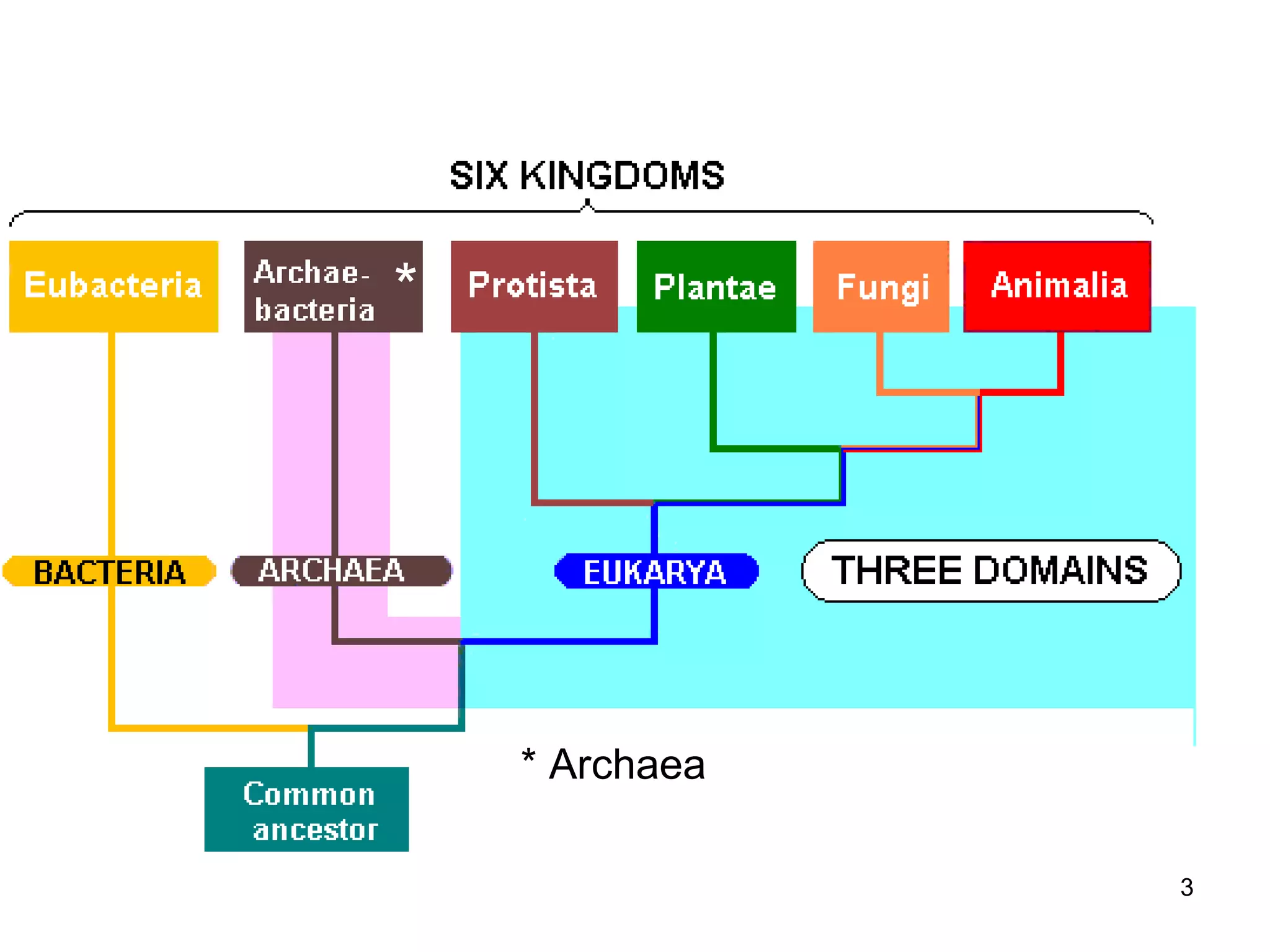
* * Archaea
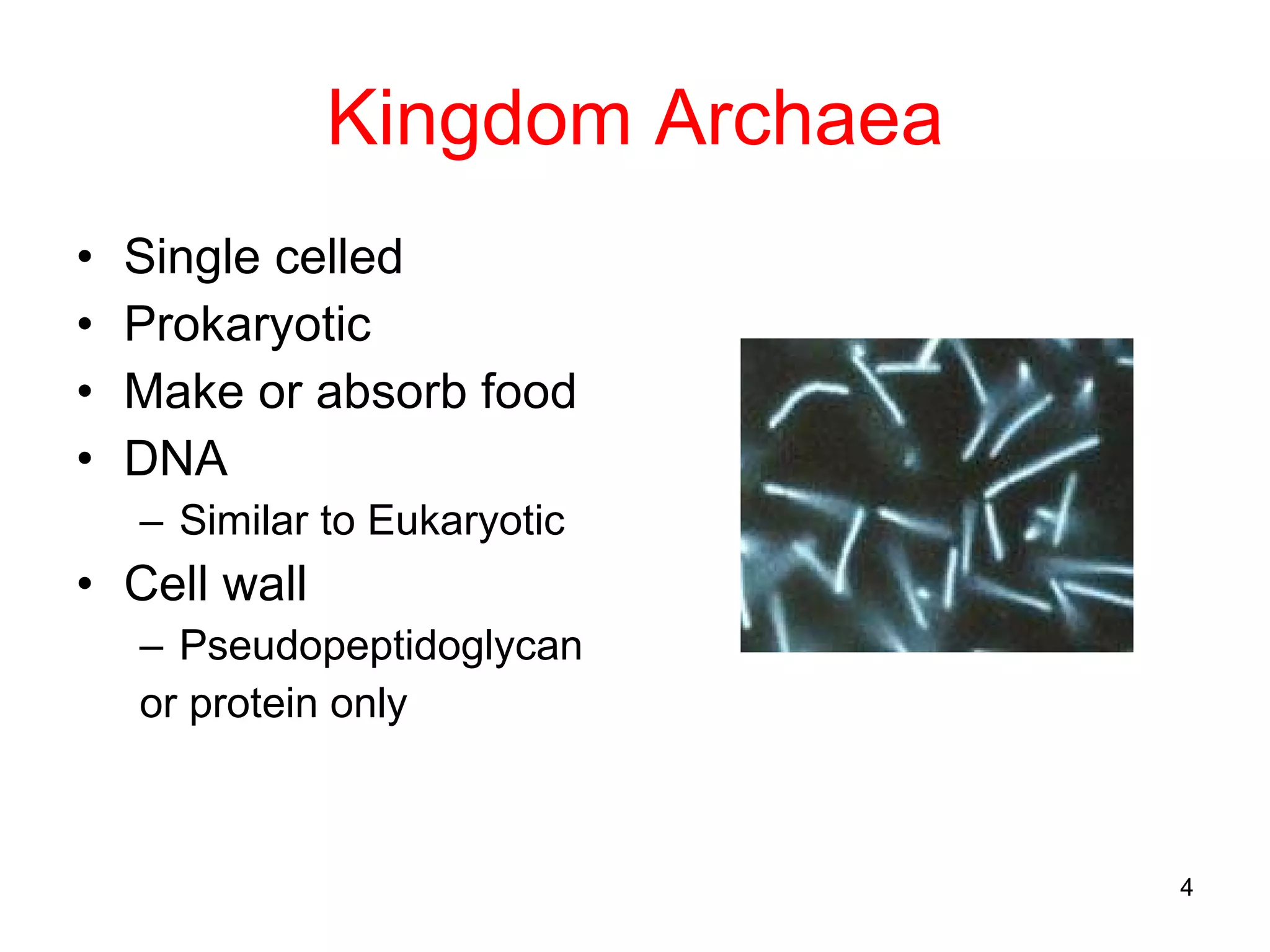
Kingdom Archaea Single celled Prokaryotic Make or absorb food DNA Similar to Eukaryotic Cell wall Pseudopeptidoglycan or protein only
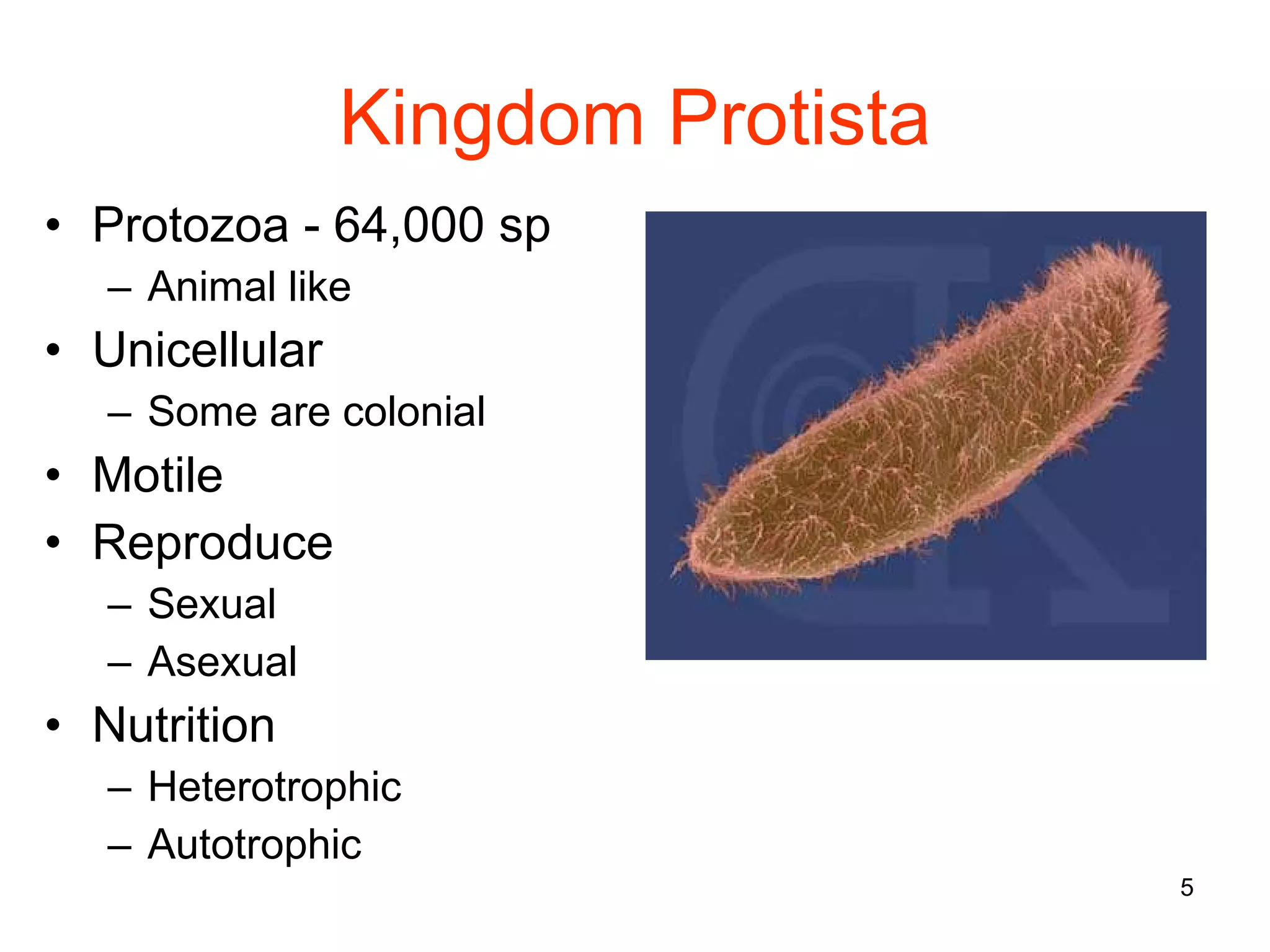
Kingdom Protista Protozoa - 64,000 sp Animal like Unicellular Some are colonial Motile Reproduce Sexual Asexual Nutrition Heterotrophic Autotrophic
Origin of Protozoa Earth is 4.6 billion years old Prokaryotic cells date back over 3.5 billion years 1.5 Billion years ago Eukaryotic cells  Became protozoans
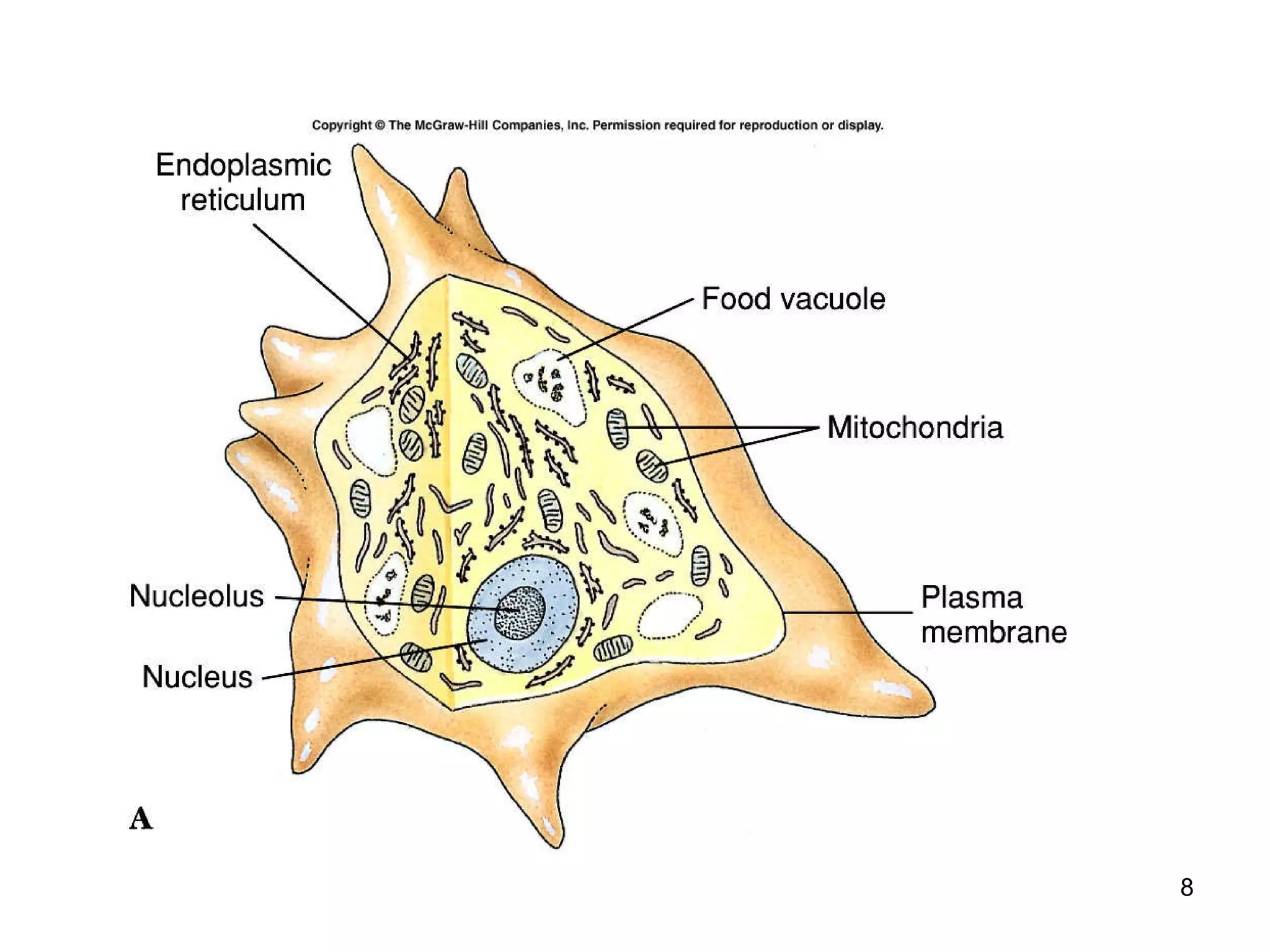
Nutrition in Protozoans Autotrophs   Heterotrophs   Phagocytosis Mixotrophs
 
Fig. 11.4
Excretion and Osmoregulation Contractile vacuoles
Reproduction Asexual Fission   Binary fission   Budding   Multiple fission
Reproduction Sexual Isogametes . Anisogametes . Syngamy   Autogamy   Conjugation
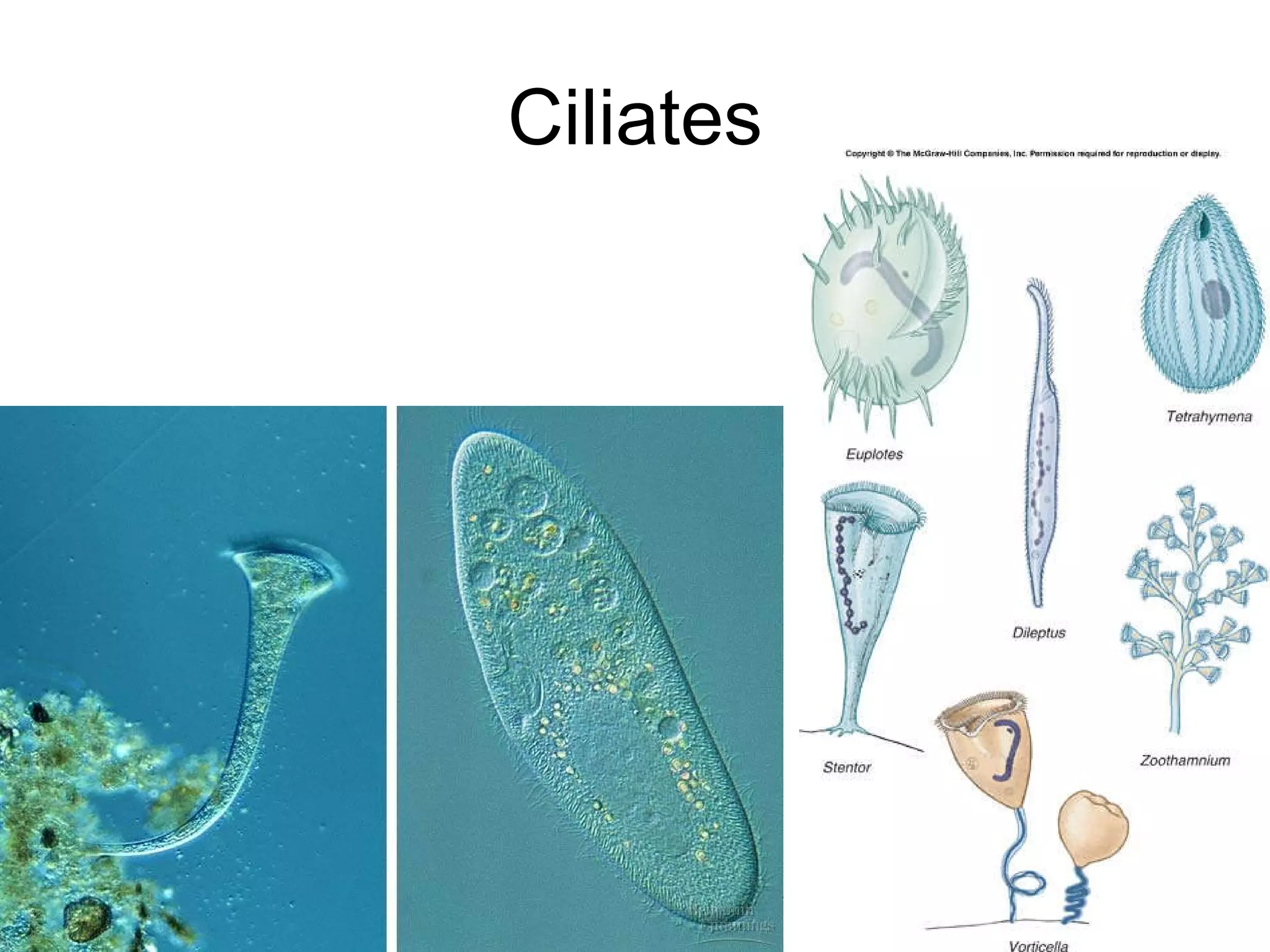
Ciliates
Ciliates
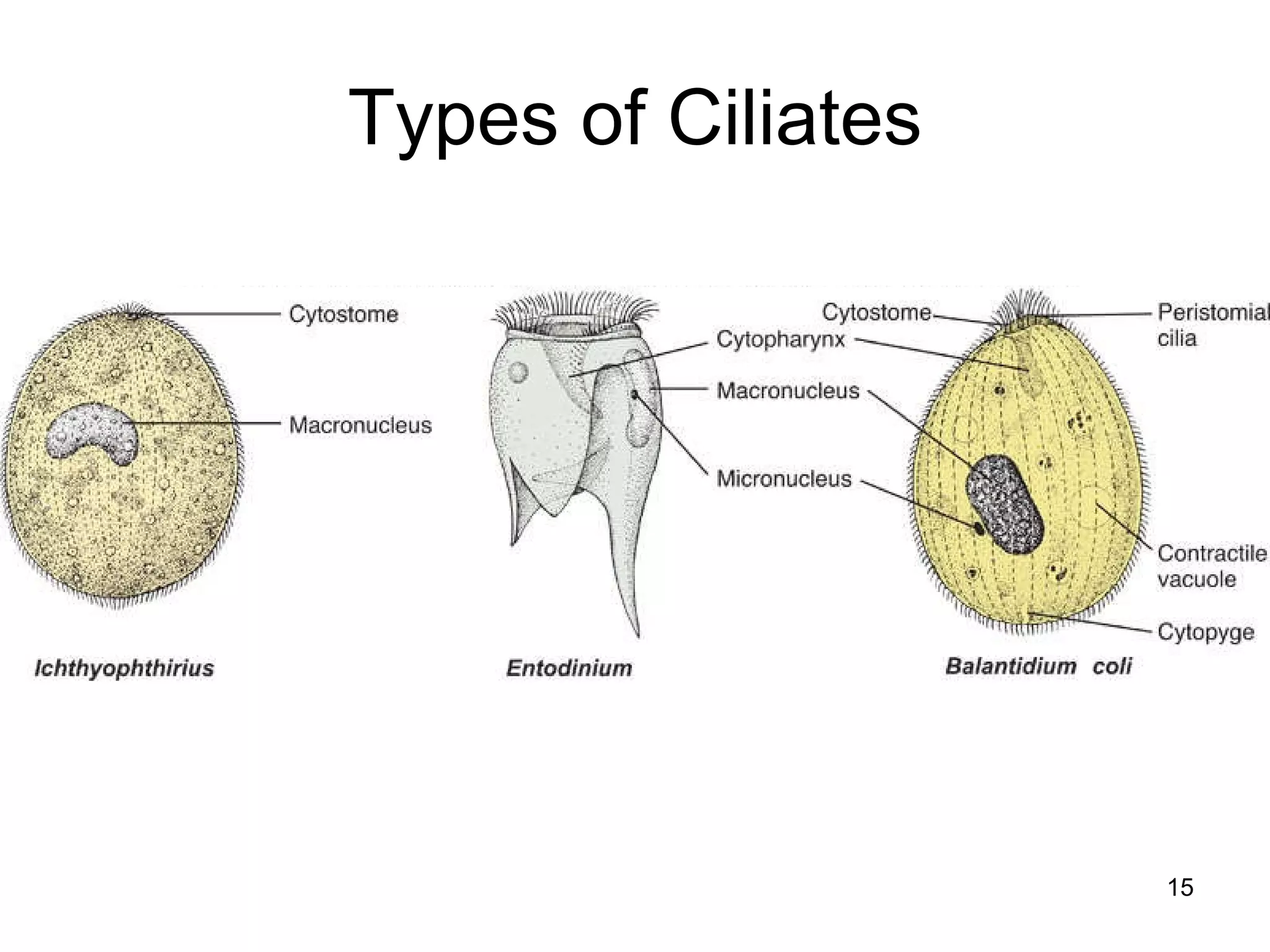
Types of Ciliates
Phylum Dinoflagellata
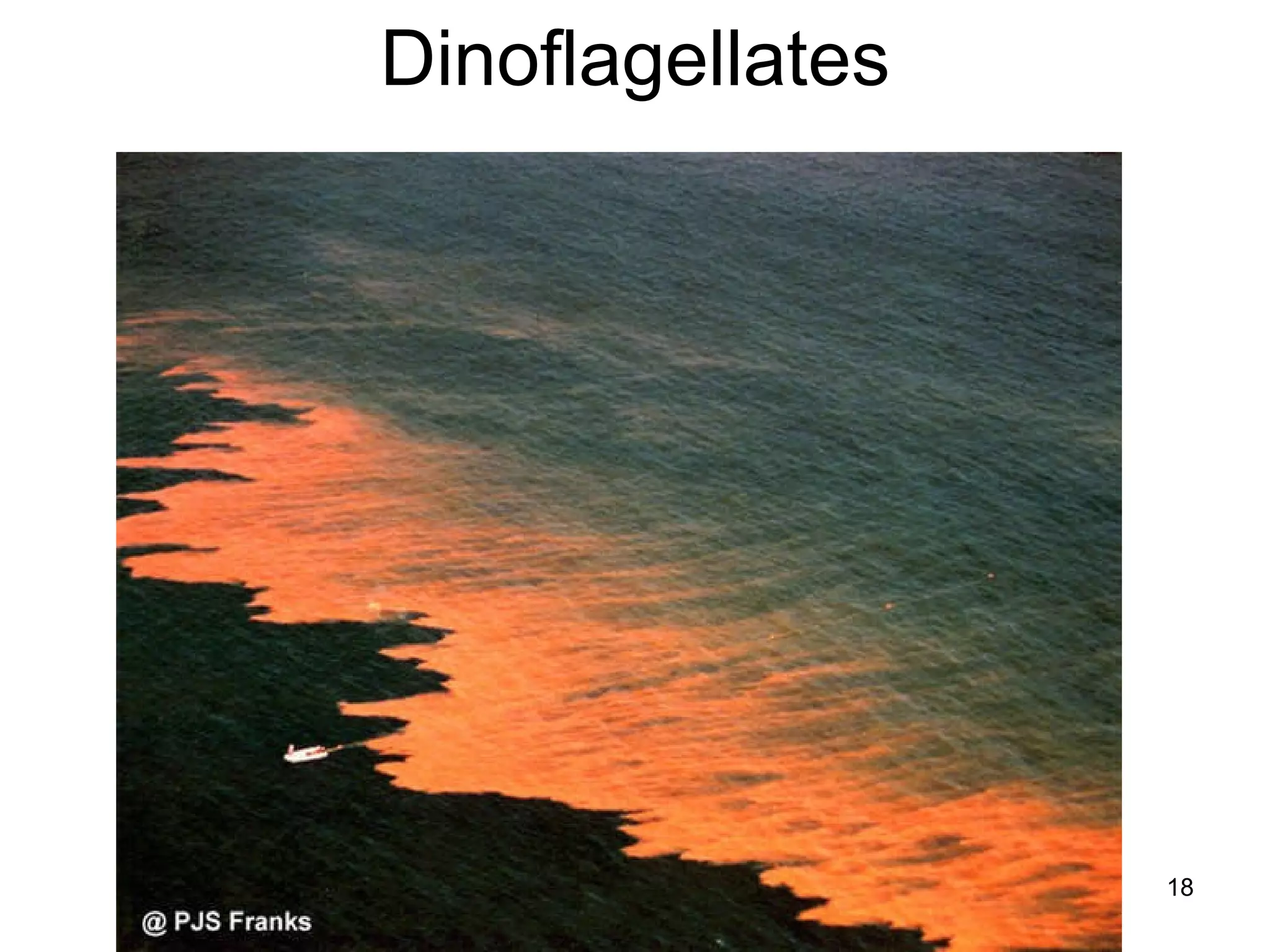
Dinoflagellates
Zooxanthellae
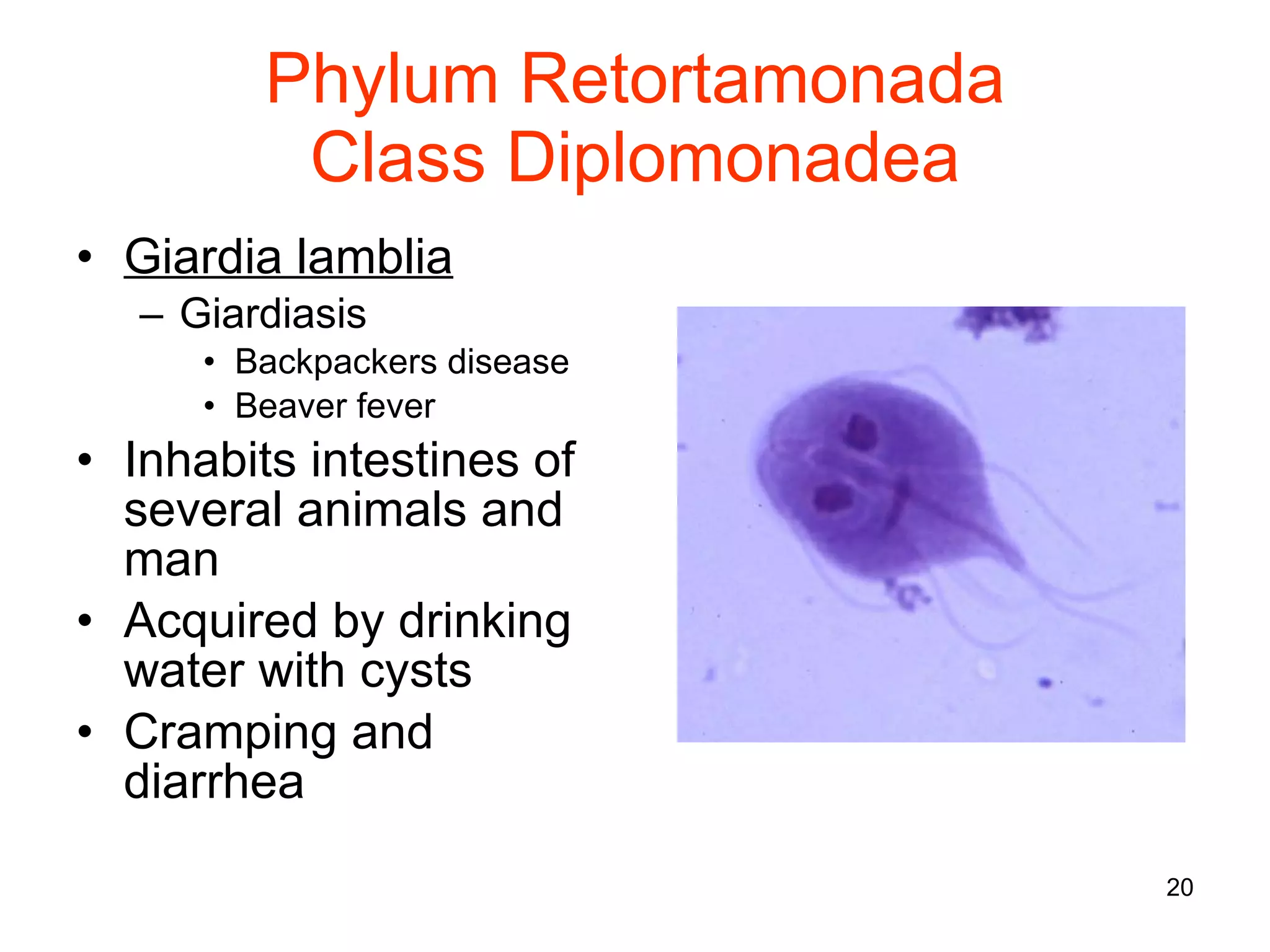
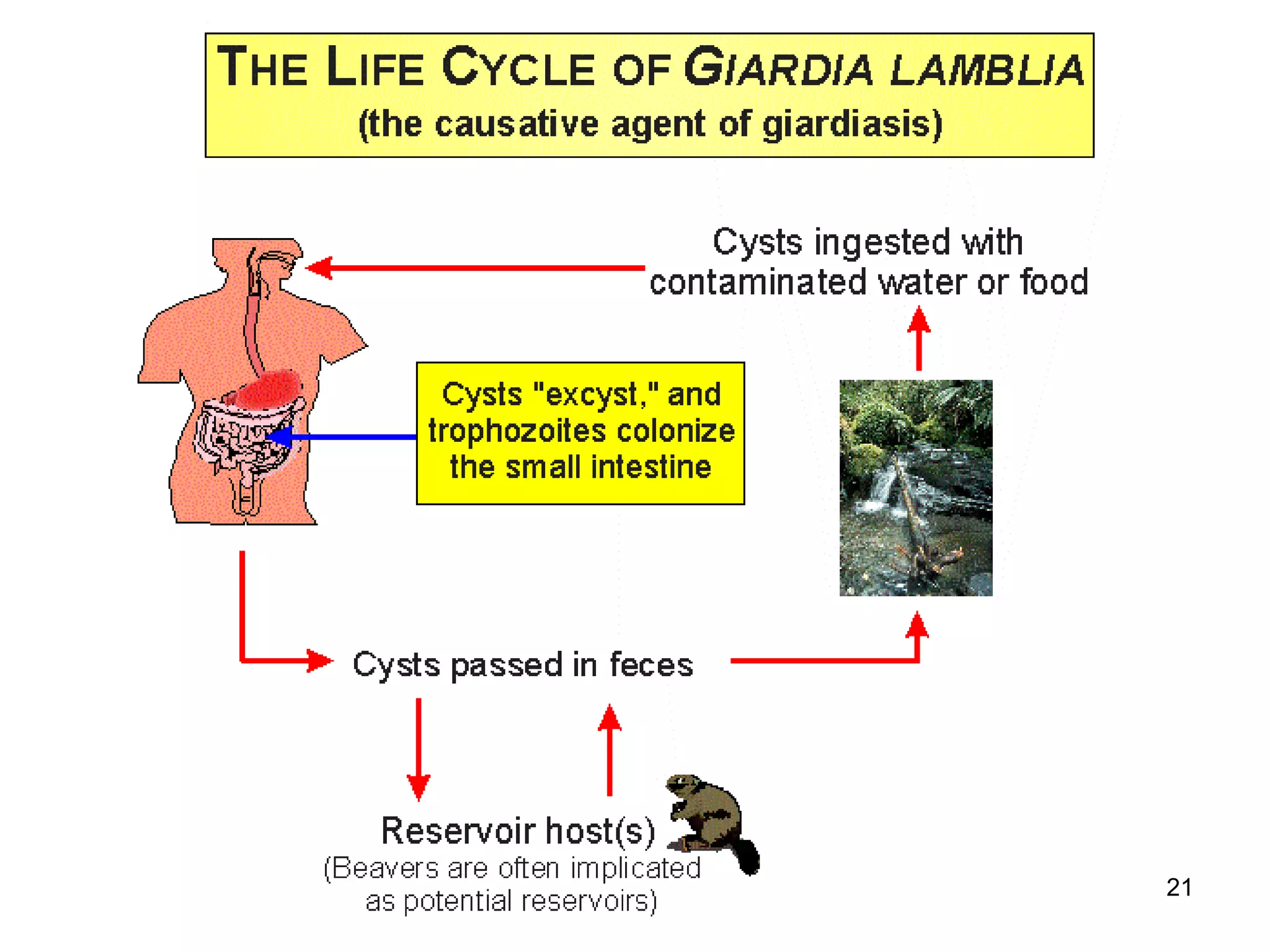
Phylum Retortamonada Class Diplomonadea Giardia lamblia Giardiasis Backpackers disease Beaver fever Inhabits intestines of several animals and man Acquired by drinking water with cysts Cramping and diarrhea
 
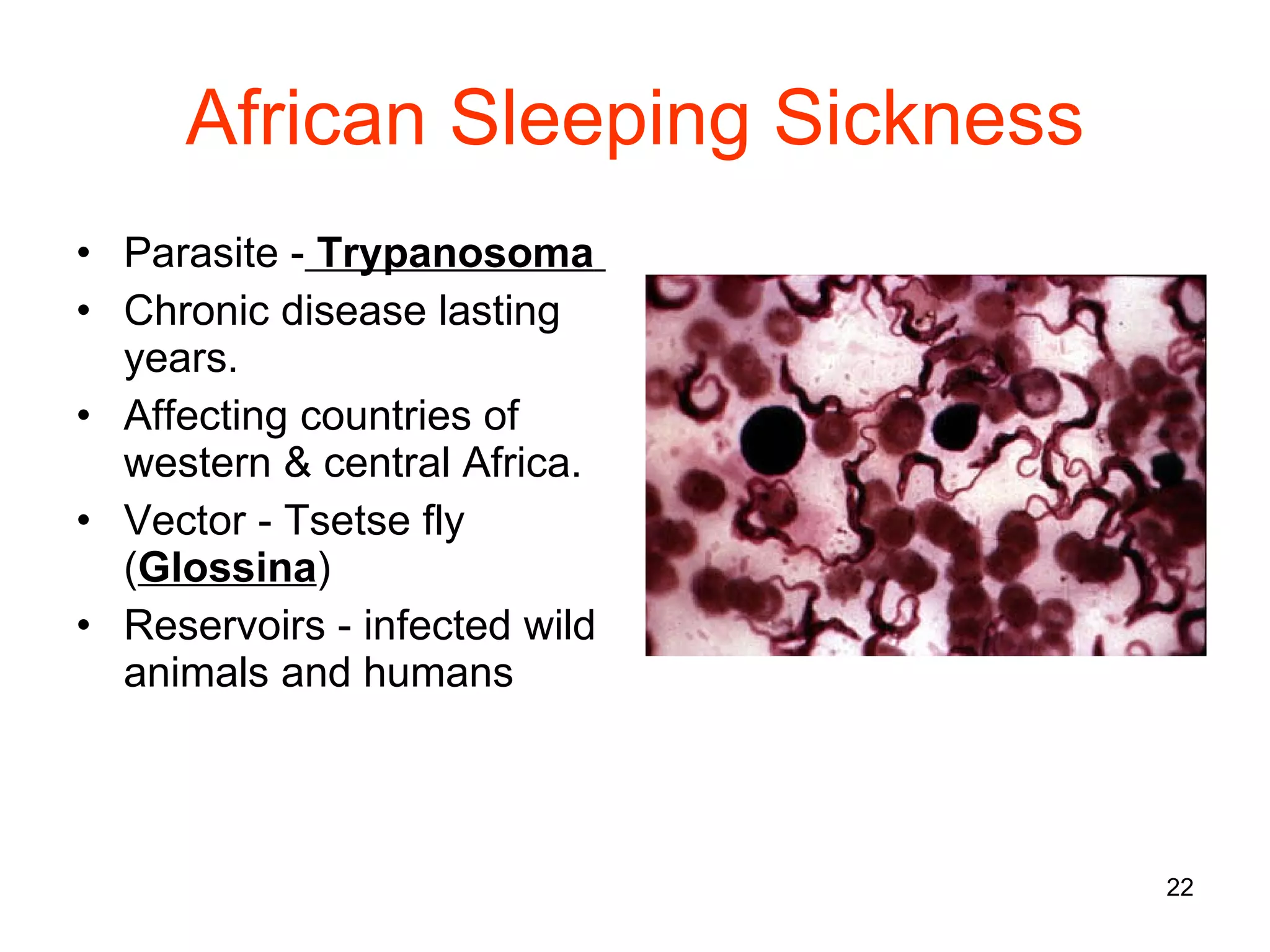
African Sleeping Sickness Parasite -   Trypanosoma   Chronic disease lasting years. Affecting countries of western & central Africa. Vector - Tsetse fly  ( Glossina ) Reservoirs - infected wild animals and humans
African Sleeping Sickness
Copyright  © The McGraw-Hill Companies, Inc. Permission required for reproduction or display. Tsetse fly Trypanosome
 
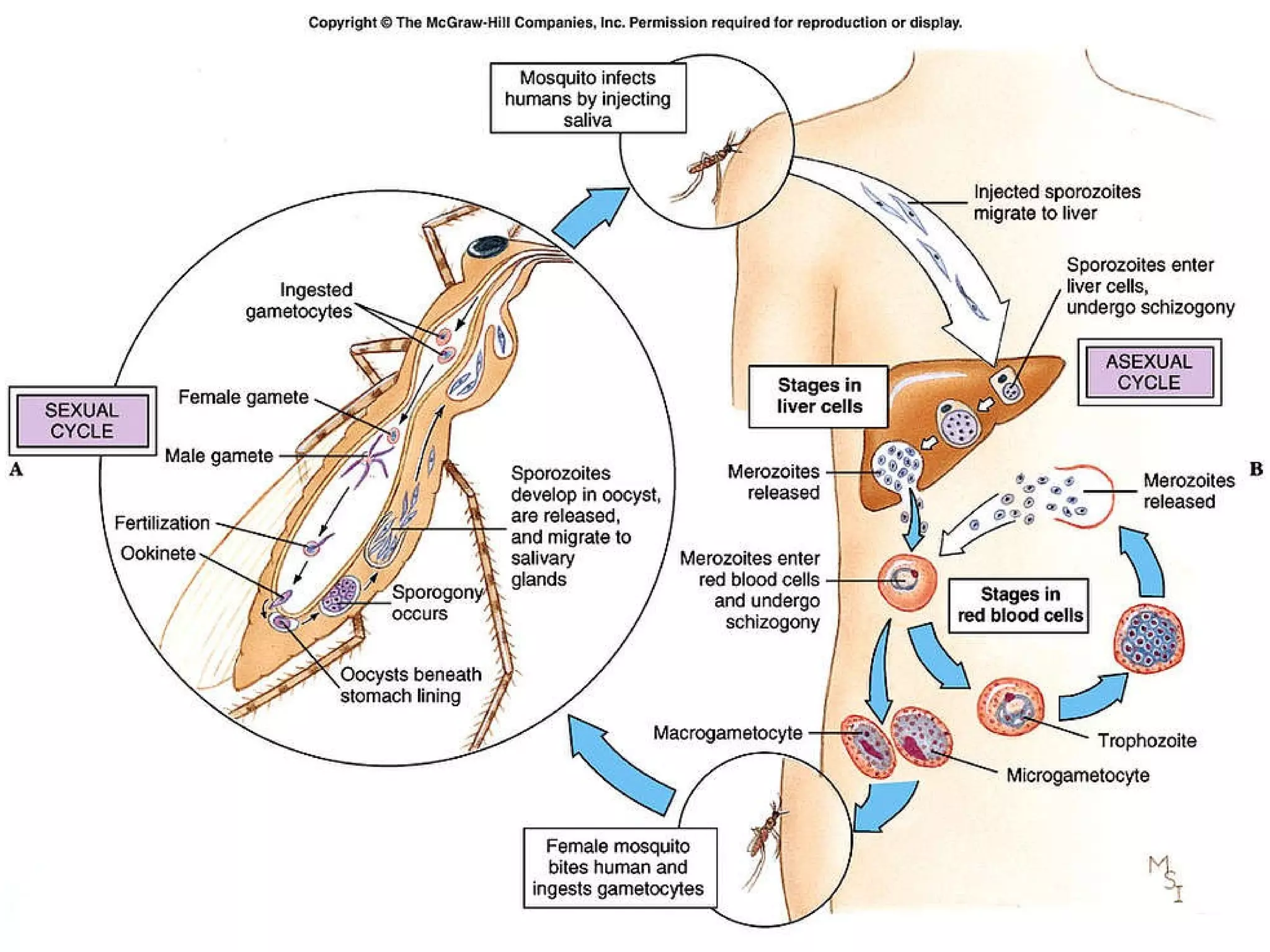
Plasmodium Malaria Most important parasitic disease of humans today WHO estimates that 270 million new cases occur annually with 2 million annual deaths Transmitted by bite of infected mosquitoes of genus  Anopheles
 
 
Toxoplasma Toxoplasmosis Parasite Cats, man, other mammals & birds
Fetus Birth defects Mental retardation Aids Patients Fatal infection
Eimeria Coccidiosis Birds and mammals Bloody diarrhea
Coccidiosis
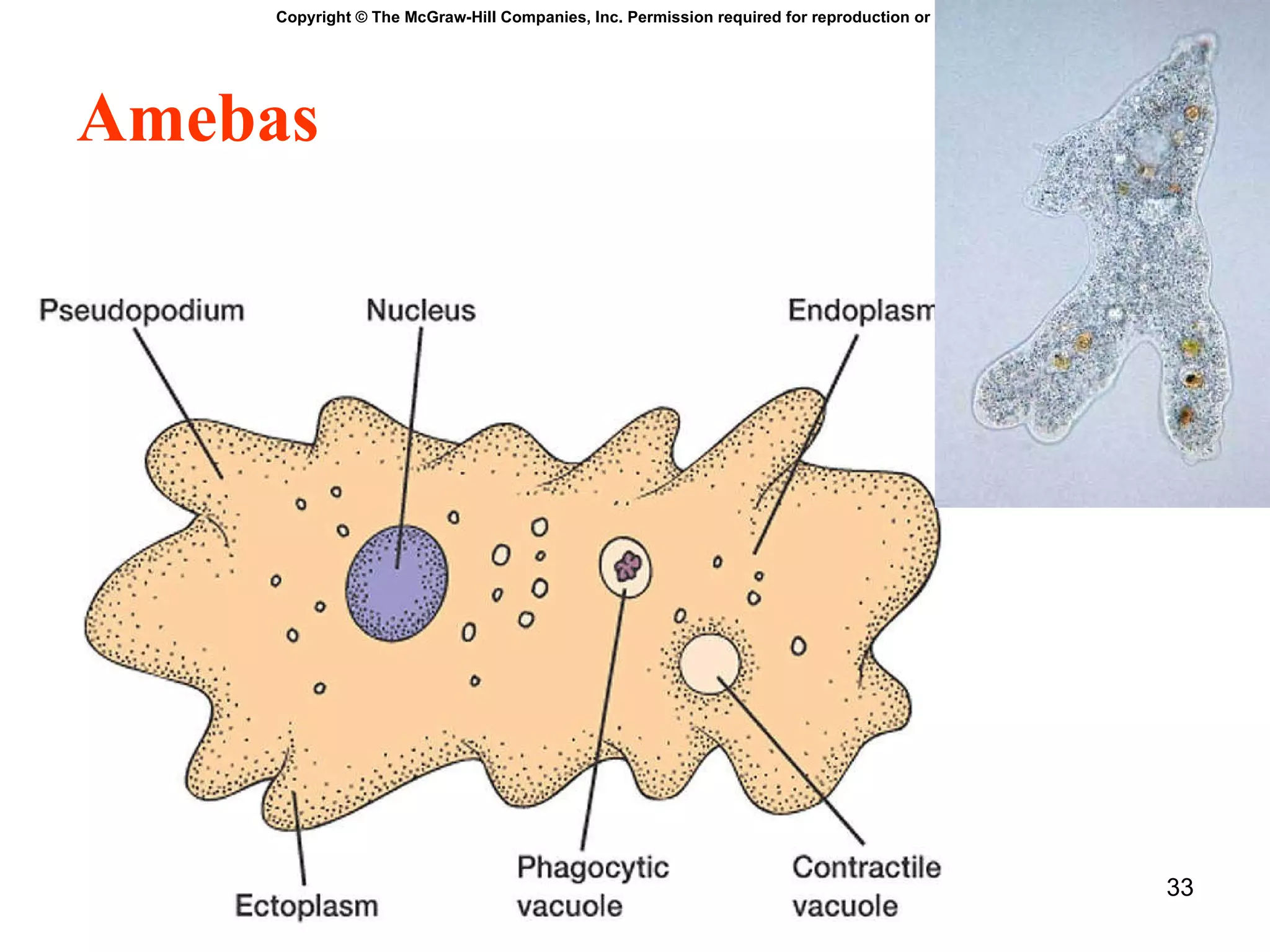
Copyright  © The McGraw-Hill Companies, Inc. Permission required for reproduction or display. Amebas
Entomoeba histolytica Amoebic dysentery Transmitted by food & water contaminated with cysts Bloody diarrhea
 

Protista

Editor's Notes

  • #8 Autotrophs - contain chloroplasts. Heterotrophs - absorb organic molecules or ingest larger food particles. Phagocytosis Mixotrophs - combine photosynthesis and heterotrophic nutrition.
  • #9 Nucleus – contains DNA. Mitochondria – organelle used in energy production. Golgi – part of the secretory system of the ER. Plastids – organelles containing photosynthetic pigments. Extrusomes – organelles that extrude something from the cell. Pseudopodia Flagella Cilia Nonmotile
  • #10 Fig. 11.4 Pseudopodia are extensions of the cell cytoplasm used for locomotion.
  • #11 fill with fluid and then expel the fluid outside the cell. Function in osmoregulation. More common in freshwater species. Ammonia is the form they excrete nitrogen waste. Regulate through ACTIVE TRANSPORT!
  • #12 Fission is the cell multiplication process in protozoa. Binary fission – one individual splits into two equal sized individuals. Budding – progeny cell much smaller than parent. Multiple fission – multiple nuclear divisions followed by multiple cytoplasmic divisions producing several offspring.
  • #13 Many types of protists reproduce sexually as well as asexually. Isogametes – all look alike. Anisogametes – two different types. Syngamy – gametes from two individuals fuse to form the zygote. Autogamy – gametes from one individual fuse. Conjugation – gametic nuclei are exchanged.
  • #14 Members of the phylum Ciliophora use cilia to move and feed. Ciliates have large macronuclei and small micronuclei. Ciliates are a large, varied group of protists.
  • #15 Ciliates are structurally complex. All ciliates have a kinety system made up of the cilia, kinetosomes and other fibrils. Many have structures that can be expelled such as trichocysts and toxicysts . Defensive function
  • #16 Suctorians – ciliates that lose cilia as adults, grow a stalk and become sessile. Use tubelike tentacles for feeding. Symbiotic ciliates – some commensal, others parasitic. Free-living ciliates – may be swimmers, or sessile. Stentor , Vorticella , Paramecium
  • #17 Phylum Dinoflagellata is a diverse group of aquatic photoautotrophs and heterotrophs. Abundant in both marine and freshwater phytoplankton.
  • #18 Each has a characteristic shape that in many species is reinforced by internal plates of cellulose. Two flagella make them spin as they move through the water. Two flagella Transverse Longitudinal Some photosynthetic Some heterotrophic Some have cell wall made of plates Red tide neurotoxin
  • #19 Rapid growth of some dinoflagellates is responsible for causing “red tides,” which can be toxic to humans. California Noctiluca Bloom http://www.whoi.edu/redtide/index.html Some dinoflagellates are bioluminescent. Others live symbiotically with corals (zooxanthellae).
  • #20 Photosynthetic dinoflagellates (brown) Live in corals Provide nutrients for coral by photosynthesis Mutualism
  • #26 Stages of Infection Early - fever, weakness, headache, joint pains. Intermediate - anemia, cardiovascular, endocrine & kidney disorders. Late - CNS involvement, indifference to environment, unpredictable mood changes, coma and death.
  • #29 Fig. 11.17