INTRODUCTION TO
MULTIMEDIA
       ZURINA YASAK
Learning Outcome
At the end of this topic, students should be
able to:
   1. give the definition of multimedia in own
      word correctly
   2. show 2/3 example of multimedia
      application – using computer
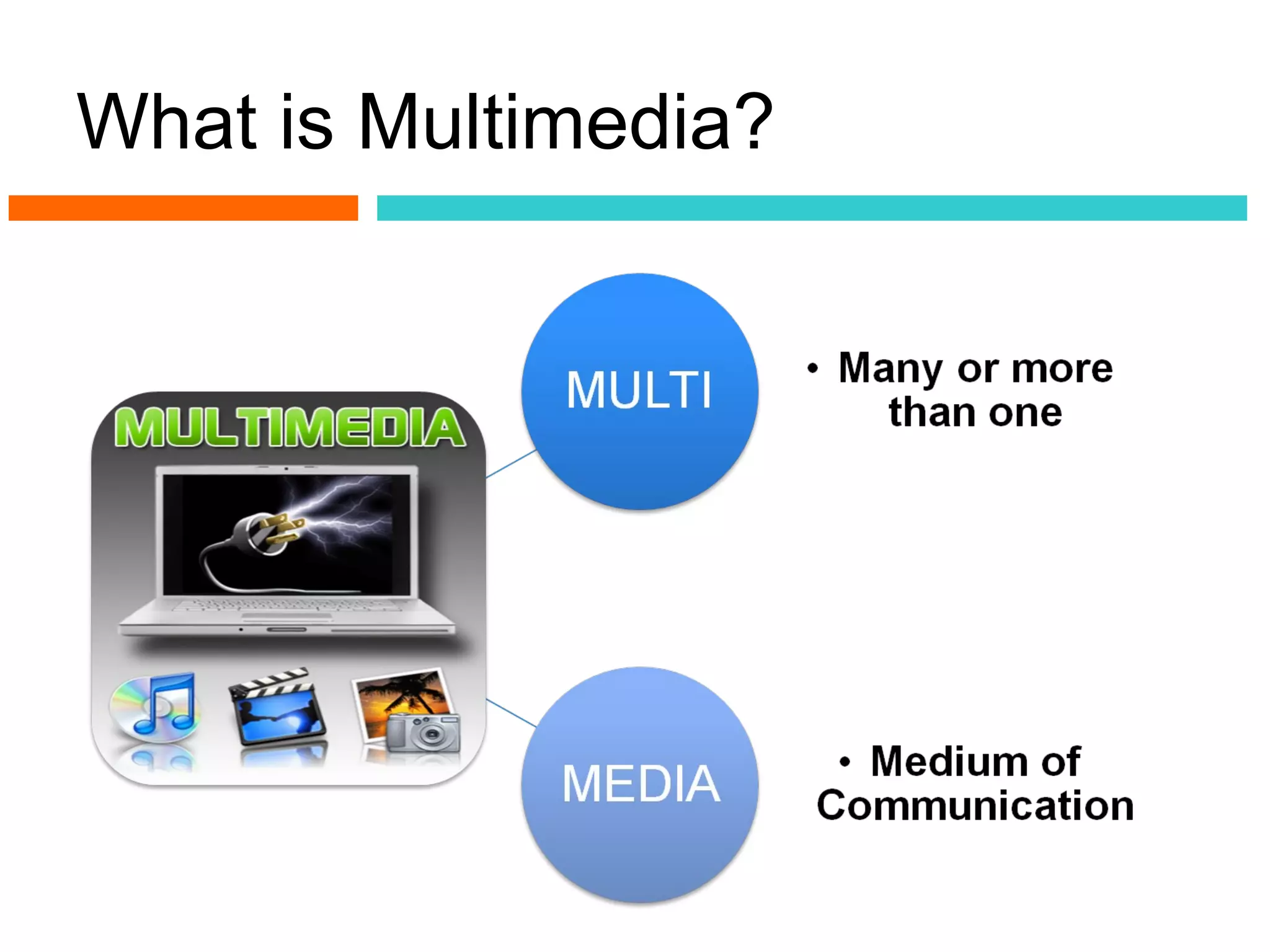
What is Multimedia?
What is Multimedia?
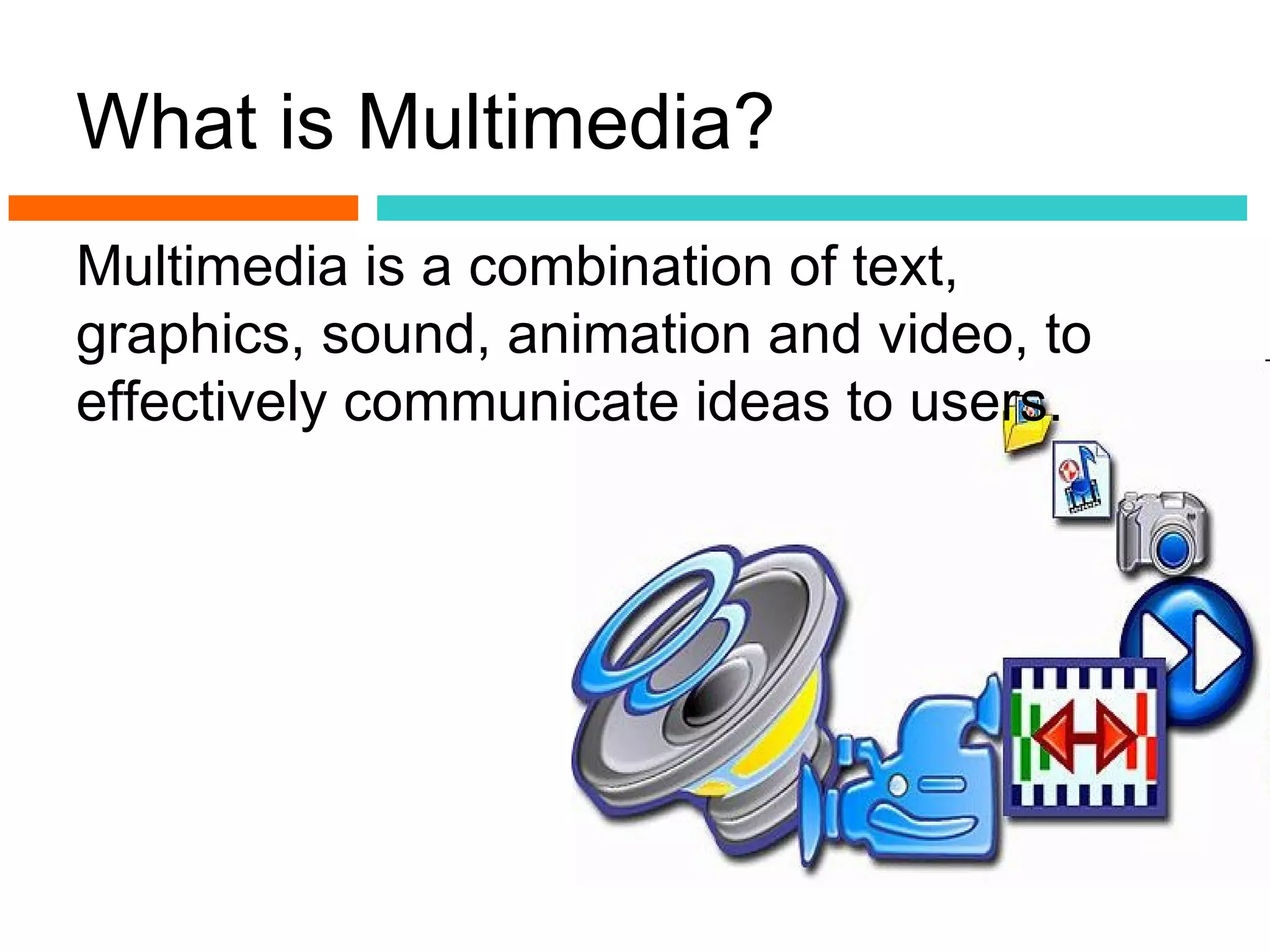
Multimedia is a combination of text,
graphics, sound, animation and video, to
effectively communicate ideas to users.
Types of Multimedia Presentation
● Linear Multimedia
  ○ Linear active content progresses without any
    navigation control for the viewer.
● Non-linear Multimedia
  ○ Non Linear content offers user interactivity to
    control progress as used with a computer
    game or used in self-paced computer based
    training. Non-linear content is also known as
    hypermedia content.
Linear Multimedia
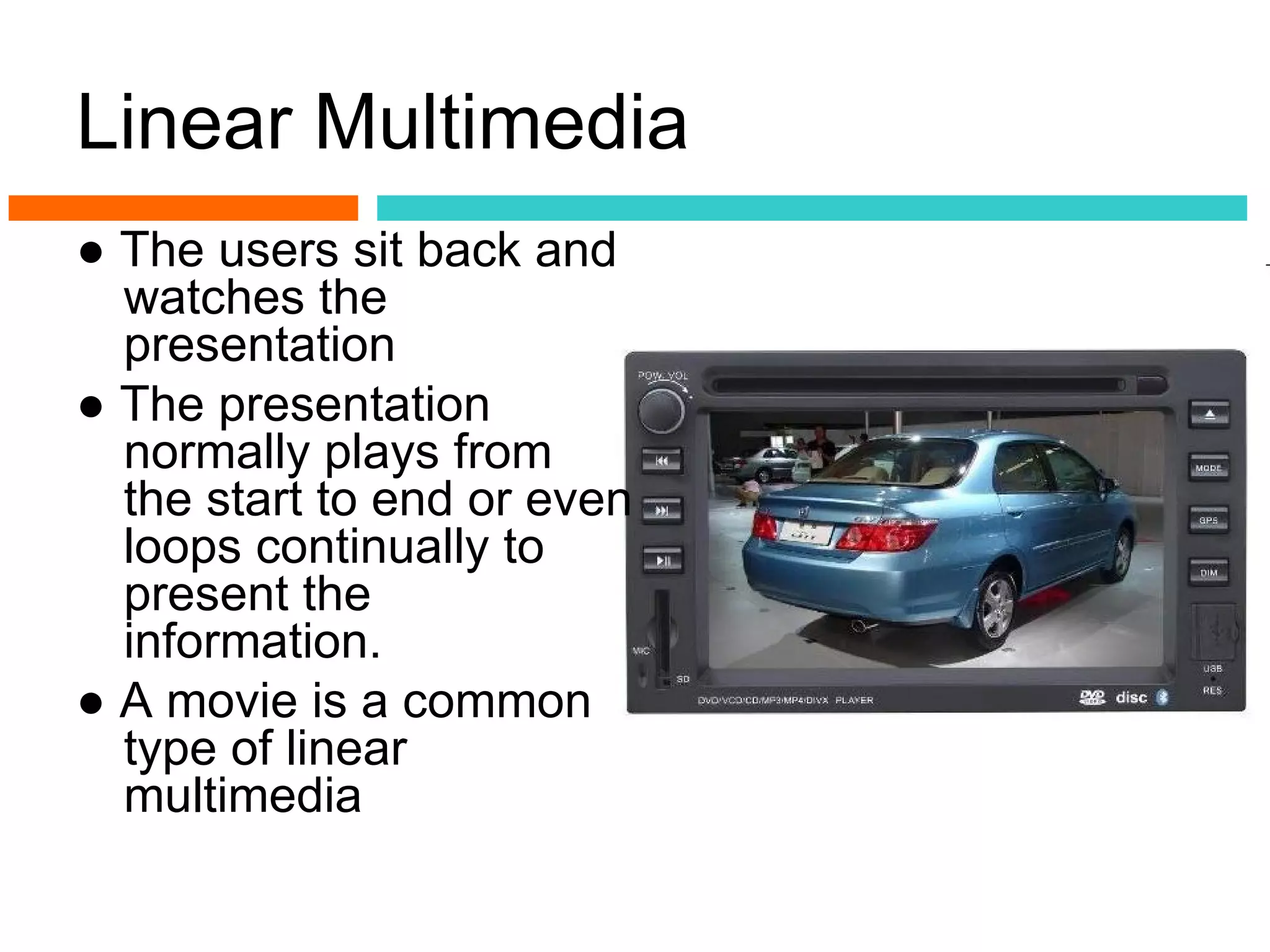
● The users sit back and
  watches the
  presentation
● The presentation
  normally plays from
  the start to end or even
  loops continually to
  present the
  information.
● A movie is a common
  type of linear
  multimedia
Non-Linear Multimedia
● The users control the delivery of elements –
  to control the what and when.
● Users have the ability to move around or
  follow different path through the information
  presentation.
● Advantage: complex domain of information
  can be presented.
● Disadvantage: users might lost in the
  massive “information highway”.
● Useful for: information archive
  (encyclopedia), education, training and
  entertainment
Features of Multimedia
● Multimedia presentations
  ○ It may be viewed in person on stage, projected,
    transmitted, or played locally with a media player.
  ○ A broadcast may be a live or recorded multimedia
    presentation.
  ○ Broadcasts and recordings can be either analog or
    digital electronic media technology.
  ○ Digital online multimedia may be downloaded or
    streamed. Streaming multimedia may be live or on-
    demand.
Features of Multimedia
● Multimedia games and simulations
  ○ may be used in a physical environment
    with special effects, with multiple users
    in an online network, or locally with an
    offline computer, game system, or
    simulator.
Applications of Multimedia
● Creative industries
  ○ Creative industries use multimedia for a
    variety of purposes ranging from fine arts, to
    entertainment, to commercial art, to
    journalism, to media and software services
    provided for any of the industries listed below.
  ○ An individual multimedia designer may cover
    the spectrum throughout their career.
  ○ Request for their skills range from technical, to
    analytical and to creative.
Applications of Multimedia
● Commercial
  ○ Much of the electronic old and new media utilized by
  commercial artists is multimedia.
  ○ Exciting presentations are used to grab and keep attention
    in advertising.
  ○ Industrial, business to business, and interoffice
  communications are often developed by creative services
    firms for advanced multimedia presentations beyond simple
    slide shows to sell ideas or liven-up training.
  ○ Commercial multimedia developers may be hired to design
    for governmental services and nonprofit services
  applications as well.
Applications of Multimedia
● Entertainment and Fine Arts
  ○ In addition, multimedia is heavily used in the
     entertainment industry, especially to develop
     special effects in movies and animations.
  ○ Multimedia games are a popular pastime and
     are software programs available either as CD-
     ROMs or online.
  ○ Some video games also use multimedia
  features. Multimedia applications that allow
  users to actively participate instead of just
  sitting by as passive recipients of information
     are called Interactive Multimedia.
Applications of Multimedia
● Engineering
  ○ Software engineers may use multimedia
    in Computer Simulations for anything
    from entertainment to training such as
    military or industrial training.
  ○ Multimedia for software interfaces are
    often done as collaboration between
    creative professionals and software
  engineers.
Applications of Multimedia
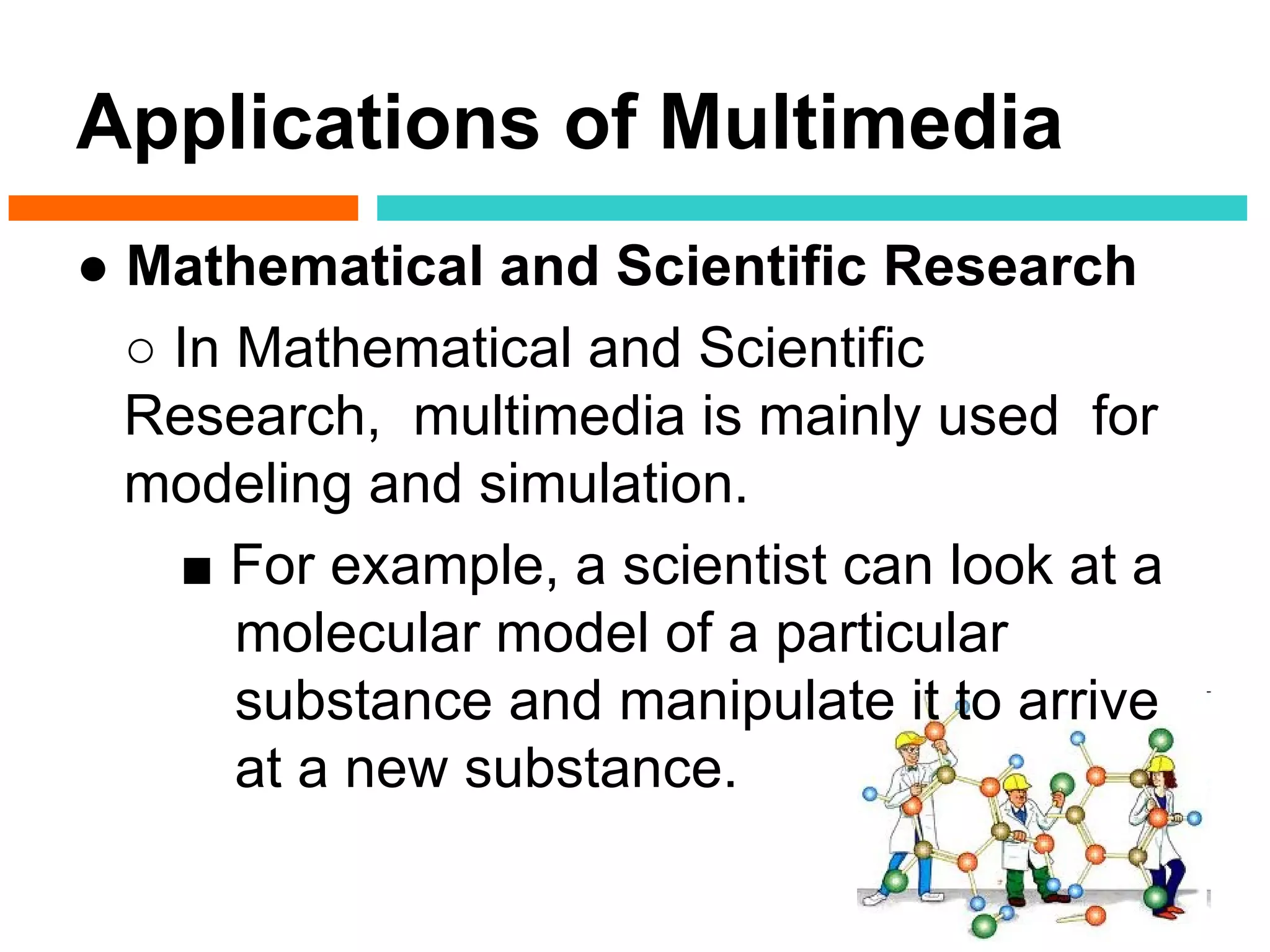
● Mathematical and Scientific Research
  ○ In Mathematical and Scientific
  Research, multimedia is mainly used for
  modeling and simulation.
    ■ For example, a scientist can look at a
       molecular model of a particular
       substance and manipulate it to arrive
       at a new substance.
Applications of Multimedia
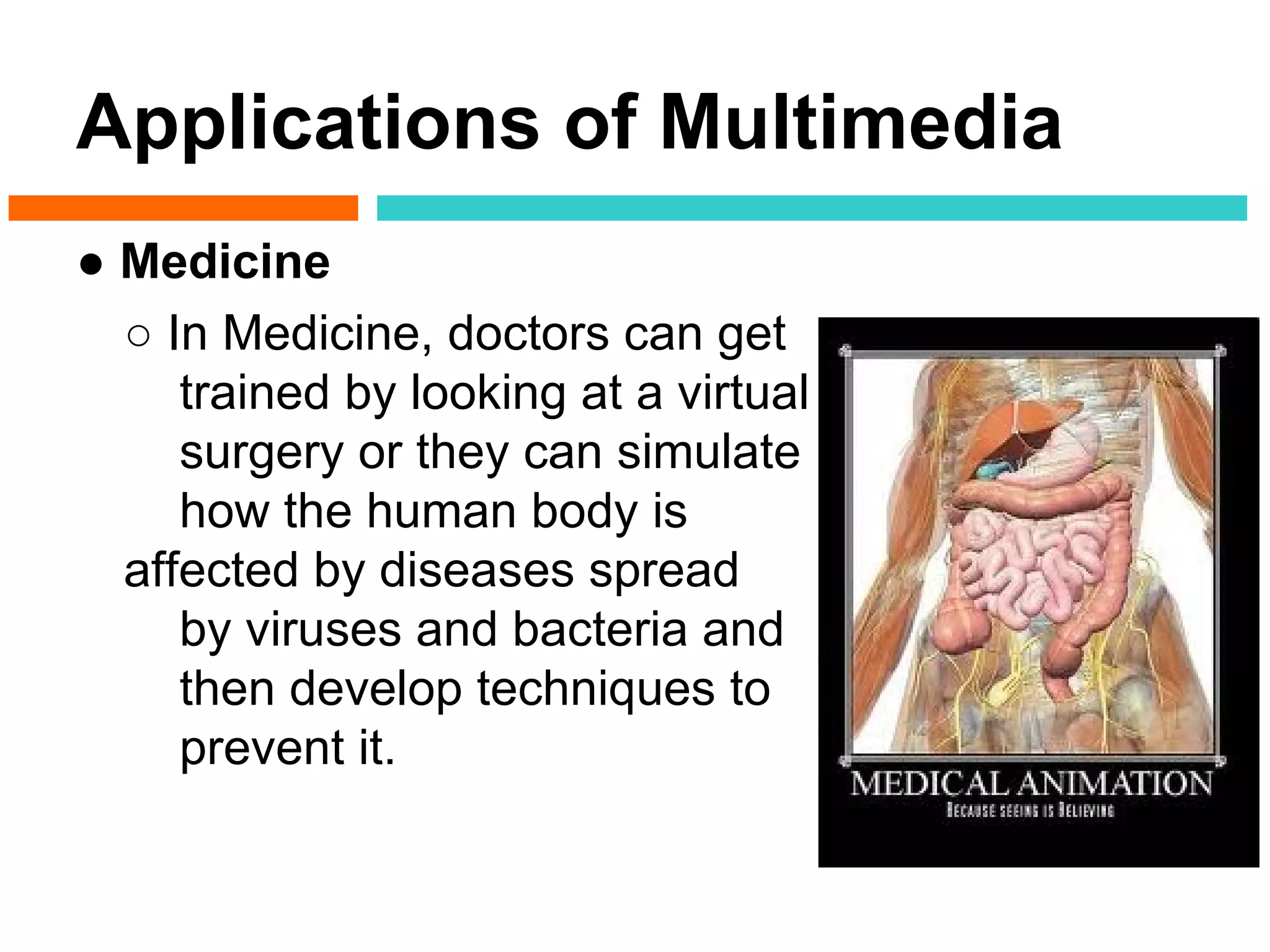
● Medicine
  ○ In Medicine, doctors can get
     trained by looking at a virtual
     surgery or they can simulate
     how the human body is
  affected by diseases spread
     by viruses and bacteria and
     then develop techniques to
     prevent it.
Applications of Multimedia
● Multimedia in Public Places
  ○ In hotels, railway stations, shopping malls,
    museums, and grocery stores, multimedia will
    become available at stand-alone terminals or
    kiosks to provide information and help.
  ○ Such installation reduce demand on traditional
    information booths and personnel, add value,
    and they can work around the clock, even in
    the middle of the night, when live help is off
    duty.
Applications of Multimedia
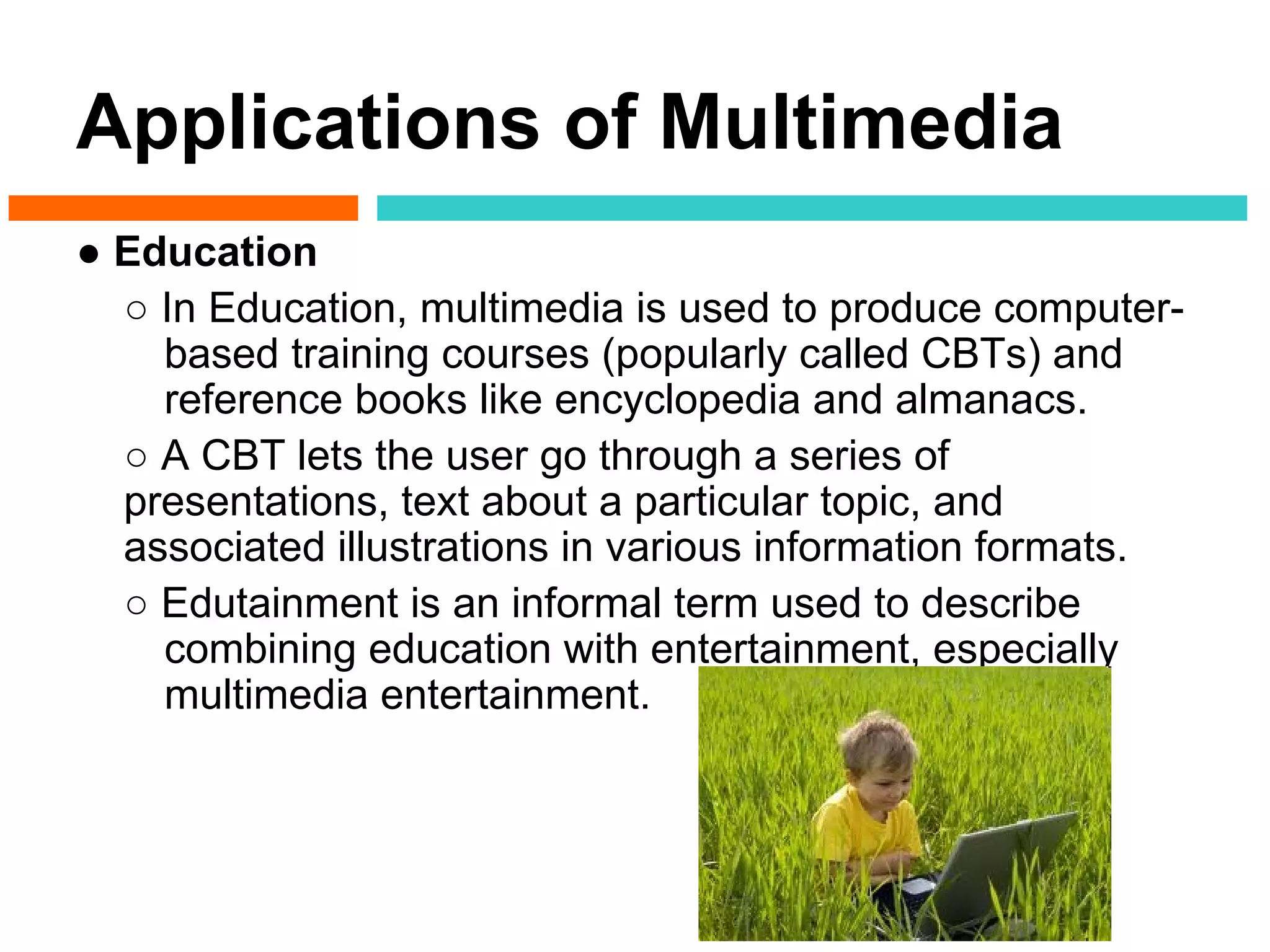
● Education
  ○ In Education, multimedia is used to produce computer-
    based training courses (popularly called CBTs) and
    reference books like encyclopedia and almanacs.
  ○ A CBT lets the user go through a series of
  presentations, text about a particular topic, and
  associated illustrations in various information formats.
  ○ Edutainment is an informal term used to describe
    combining education with entertainment, especially
    multimedia entertainment.
Future of Multimedia
● The technology of multimedia design utilizes
   various features like animation, video, graphics,
   audio and sound to impress the users.
● Multimedia technology is used for 3D cinema
   applications and mobile 3DTV environments.
● Animation is also being used in titling films,
   creating special effects or in web entertainment
   programs. Thus scope of animation is huge in
   context to market.
● In the field of education multimedia is being used
   extensively especially for online courses and
   trainings.
Let watch this video
Conclusion…..

Introduction to multimedia

  • 1.
  • 2.
    Learning Outcome At theend of this topic, students should be able to: 1. give the definition of multimedia in own word correctly 2. show 2/3 example of multimedia application – using computer
  • 3.
  • 4.
    What is Multimedia? Multimediais a combination of text, graphics, sound, animation and video, to effectively communicate ideas to users.
  • 5.
    Types of MultimediaPresentation ● Linear Multimedia ○ Linear active content progresses without any navigation control for the viewer. ● Non-linear Multimedia ○ Non Linear content offers user interactivity to control progress as used with a computer game or used in self-paced computer based training. Non-linear content is also known as hypermedia content.
  • 6.
    Linear Multimedia ● Theusers sit back and watches the presentation ● The presentation normally plays from the start to end or even loops continually to present the information. ● A movie is a common type of linear multimedia
  • 7.
    Non-Linear Multimedia ● Theusers control the delivery of elements – to control the what and when. ● Users have the ability to move around or follow different path through the information presentation. ● Advantage: complex domain of information can be presented. ● Disadvantage: users might lost in the massive “information highway”. ● Useful for: information archive (encyclopedia), education, training and entertainment
  • 8.
    Features of Multimedia ●Multimedia presentations ○ It may be viewed in person on stage, projected, transmitted, or played locally with a media player. ○ A broadcast may be a live or recorded multimedia presentation. ○ Broadcasts and recordings can be either analog or digital electronic media technology. ○ Digital online multimedia may be downloaded or streamed. Streaming multimedia may be live or on- demand.
  • 9.
    Features of Multimedia ●Multimedia games and simulations ○ may be used in a physical environment with special effects, with multiple users in an online network, or locally with an offline computer, game system, or simulator.
  • 10.
    Applications of Multimedia ●Creative industries ○ Creative industries use multimedia for a variety of purposes ranging from fine arts, to entertainment, to commercial art, to journalism, to media and software services provided for any of the industries listed below. ○ An individual multimedia designer may cover the spectrum throughout their career. ○ Request for their skills range from technical, to analytical and to creative.
  • 11.
    Applications of Multimedia ●Commercial ○ Much of the electronic old and new media utilized by commercial artists is multimedia. ○ Exciting presentations are used to grab and keep attention in advertising. ○ Industrial, business to business, and interoffice communications are often developed by creative services firms for advanced multimedia presentations beyond simple slide shows to sell ideas or liven-up training. ○ Commercial multimedia developers may be hired to design for governmental services and nonprofit services applications as well.
  • 12.
    Applications of Multimedia ●Entertainment and Fine Arts ○ In addition, multimedia is heavily used in the entertainment industry, especially to develop special effects in movies and animations. ○ Multimedia games are a popular pastime and are software programs available either as CD- ROMs or online. ○ Some video games also use multimedia features. Multimedia applications that allow users to actively participate instead of just sitting by as passive recipients of information are called Interactive Multimedia.
  • 13.
    Applications of Multimedia ●Engineering ○ Software engineers may use multimedia in Computer Simulations for anything from entertainment to training such as military or industrial training. ○ Multimedia for software interfaces are often done as collaboration between creative professionals and software engineers.
  • 14.
    Applications of Multimedia ●Mathematical and Scientific Research ○ In Mathematical and Scientific Research, multimedia is mainly used for modeling and simulation. ■ For example, a scientist can look at a molecular model of a particular substance and manipulate it to arrive at a new substance.
  • 15.
    Applications of Multimedia ●Medicine ○ In Medicine, doctors can get trained by looking at a virtual surgery or they can simulate how the human body is affected by diseases spread by viruses and bacteria and then develop techniques to prevent it.
  • 17.
    Applications of Multimedia ●Multimedia in Public Places ○ In hotels, railway stations, shopping malls, museums, and grocery stores, multimedia will become available at stand-alone terminals or kiosks to provide information and help. ○ Such installation reduce demand on traditional information booths and personnel, add value, and they can work around the clock, even in the middle of the night, when live help is off duty.
  • 18.
    Applications of Multimedia ●Education ○ In Education, multimedia is used to produce computer- based training courses (popularly called CBTs) and reference books like encyclopedia and almanacs. ○ A CBT lets the user go through a series of presentations, text about a particular topic, and associated illustrations in various information formats. ○ Edutainment is an informal term used to describe combining education with entertainment, especially multimedia entertainment.
  • 19.
    Future of Multimedia ●The technology of multimedia design utilizes various features like animation, video, graphics, audio and sound to impress the users. ● Multimedia technology is used for 3D cinema applications and mobile 3DTV environments. ● Animation is also being used in titling films, creating special effects or in web entertainment programs. Thus scope of animation is huge in context to market. ● In the field of education multimedia is being used extensively especially for online courses and trainings.
  • 20.
  • 21.