MULTIMEDIA TECHNOLOGY
GROUP 1
Objectives
•
•
•
The Evolution of Multimedia
•
•
Digital Revolution and Mobile Multimedia (2000s)
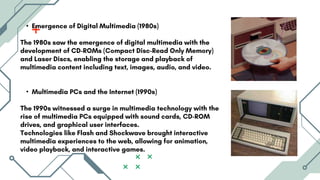
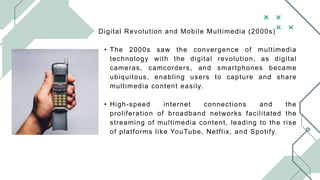
• The 2000s saw the convergence of multimedia
technology with the digital revolution, as digital
cameras, camcorders, and smartphones became
ubiquitous, enabling users to capture and share
multimedia content easily.
• High-speed internet connections and the
proliferation of broadband networks facilitated the
streaming of multimedia content, leading to the rise
of platforms like YouTube, Netflix, and Spotify.
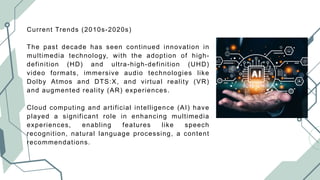
Current Trends (2010s-2020s)
The past decade has seen continued innovation in
multimedia technology, with the adoption of high-
definition (HD) and ultra-high-definition (UHD)
video formats, immersive audio technologies like
Dolby Atmos and DTS:X, and virtual reality (VR)
and augmented reality (AR) experiences.
Cloud computing and artificial intelligence (AI) have
played a significant role in enhancing multimedia
experiences, enabling features like speech
recognition, natural language processing, a content
recommendations.
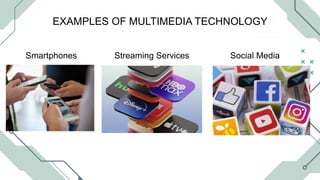
EXAMPLES OF MULTIMEDIA TECHNOLOGY
Smartphones Streaming Services Social Media
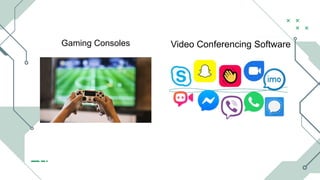
Gaming Consoles Video Conferencing Software
Hardware components commonly
used in creating multimedia
Computer
A powerful computer with a fast processor, ample RAM,
and a dedicated graphics
card is essential for multimedia creation.
Monitor
High-resolution monitors with accurate color
reproduction are crucial for visual
editing tasks.
Graphics Tablet
For digital drawing and graphic design, a graphics
tablet provides precise
input and control.
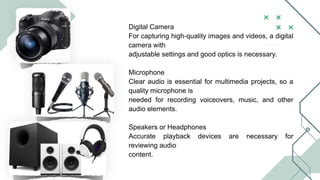
Digital Camera
For capturing high-quality images and videos, a digital
camera with
adjustable settings and good optics is necessary.
Microphone
Clear audio is essential for multimedia projects, so a
quality microphone is
needed for recording voiceovers, music, and other
audio elements.
Speakers or Headphones
Accurate playback devices are necessary for
reviewing audio
content.
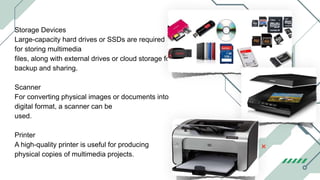
Storage Devices
Large-capacity hard drives or SSDs are required
for storing multimedia
files, along with external drives or cloud storage for
backup and sharing.
Scanner
For converting physical images or documents into
digital format, a scanner can be
used.
Printer
A high-quality printer is useful for producing
physical copies of multimedia projects.
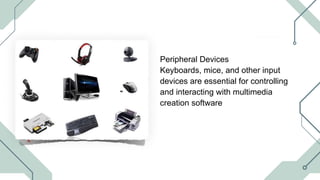
Peripheral Devices
Keyboards, mice, and other input
devices are essential for controlling
and interacting with multimedia
creation software
Multimedia
The combination of various forms of content such as text,
audio, images, video, and animations, has become
pervasive across industries, transforming the way
information is communicated and experienced.
Education Industry
Multimedia has brought revolutionary changes in the field of
education. It has made the system of education more
attractive and effective than any other periods in the past.
Entertainment Industry
One of the biggest multimedia industries, the entertainment
business has grown as a result of technological advancements in
the creation of games, movies, ads, and other forms of
entertainment.
Marketing and Advertising
Multimedia plays a crucial role in marketing and advertising
campaigns, enabling businesses to convey messages effectively
through diverse mediums. Companies utilize multimedia content
such as videos, infographics, and interactive advertisements to
engage consumers and build brand awareness.
Healthcare Industry
In the healthcare sector, multimedia technologies are utilized for
various purposes, including medical imaging, patient education, and
training simulations. Advanced imaging techniques such as MRI and
CT scans generate multimedia-rich data for diagnosing and treating
medical conditions.
Architecture and Design
Multimedia technologies have transformed the architecture and
design industry by facilitating the creation of interactive 3D models,
virtual walkthroughs, and simulations.
Tourism and Hospitality
The tourism and hospitality industry leverages multimedia to
promote destinations, showcase accommodations, and
enhance visitor experiences.
Thank you!
Members:
ESTREVILLO, CAROL
GADAYAN, RACHEL
SALILING, SHANEL KAYE

Multimedia-Technology- evolution of multimedia.pptx

  • 1.
  • 2.
  • 3.
    The Evolution ofMultimedia
  • 6.
  • 7.
    Digital Revolution andMobile Multimedia (2000s) • The 2000s saw the convergence of multimedia technology with the digital revolution, as digital cameras, camcorders, and smartphones became ubiquitous, enabling users to capture and share multimedia content easily. • High-speed internet connections and the proliferation of broadband networks facilitated the streaming of multimedia content, leading to the rise of platforms like YouTube, Netflix, and Spotify.
  • 8.
    Current Trends (2010s-2020s) Thepast decade has seen continued innovation in multimedia technology, with the adoption of high- definition (HD) and ultra-high-definition (UHD) video formats, immersive audio technologies like Dolby Atmos and DTS:X, and virtual reality (VR) and augmented reality (AR) experiences. Cloud computing and artificial intelligence (AI) have played a significant role in enhancing multimedia experiences, enabling features like speech recognition, natural language processing, a content recommendations.
  • 9.
    EXAMPLES OF MULTIMEDIATECHNOLOGY Smartphones Streaming Services Social Media
  • 10.
    Gaming Consoles VideoConferencing Software
  • 11.
    Hardware components commonly usedin creating multimedia
  • 12.
    Computer A powerful computerwith a fast processor, ample RAM, and a dedicated graphics card is essential for multimedia creation. Monitor High-resolution monitors with accurate color reproduction are crucial for visual editing tasks. Graphics Tablet For digital drawing and graphic design, a graphics tablet provides precise input and control.
  • 13.
    Digital Camera For capturinghigh-quality images and videos, a digital camera with adjustable settings and good optics is necessary. Microphone Clear audio is essential for multimedia projects, so a quality microphone is needed for recording voiceovers, music, and other audio elements. Speakers or Headphones Accurate playback devices are necessary for reviewing audio content.
  • 14.
    Storage Devices Large-capacity harddrives or SSDs are required for storing multimedia files, along with external drives or cloud storage for backup and sharing. Scanner For converting physical images or documents into digital format, a scanner can be used. Printer A high-quality printer is useful for producing physical copies of multimedia projects.
  • 15.
    Peripheral Devices Keyboards, mice,and other input devices are essential for controlling and interacting with multimedia creation software
  • 17.
    Multimedia The combination ofvarious forms of content such as text, audio, images, video, and animations, has become pervasive across industries, transforming the way information is communicated and experienced. Education Industry Multimedia has brought revolutionary changes in the field of education. It has made the system of education more attractive and effective than any other periods in the past.
  • 18.
    Entertainment Industry One ofthe biggest multimedia industries, the entertainment business has grown as a result of technological advancements in the creation of games, movies, ads, and other forms of entertainment. Marketing and Advertising Multimedia plays a crucial role in marketing and advertising campaigns, enabling businesses to convey messages effectively through diverse mediums. Companies utilize multimedia content such as videos, infographics, and interactive advertisements to engage consumers and build brand awareness.
  • 19.
    Healthcare Industry In thehealthcare sector, multimedia technologies are utilized for various purposes, including medical imaging, patient education, and training simulations. Advanced imaging techniques such as MRI and CT scans generate multimedia-rich data for diagnosing and treating medical conditions. Architecture and Design Multimedia technologies have transformed the architecture and design industry by facilitating the creation of interactive 3D models, virtual walkthroughs, and simulations.
  • 20.
    Tourism and Hospitality Thetourism and hospitality industry leverages multimedia to promote destinations, showcase accommodations, and enhance visitor experiences.
  • 22.