Path Analysis   Human Capital vs Homeownership Gaetan “Guy” Lion April 2009
Introduction Path Analysis is a way to decompose correlations between different variables, in this case Human Capital vs Homeownership rate. Human Capital is % of population over 25 with a college degree.
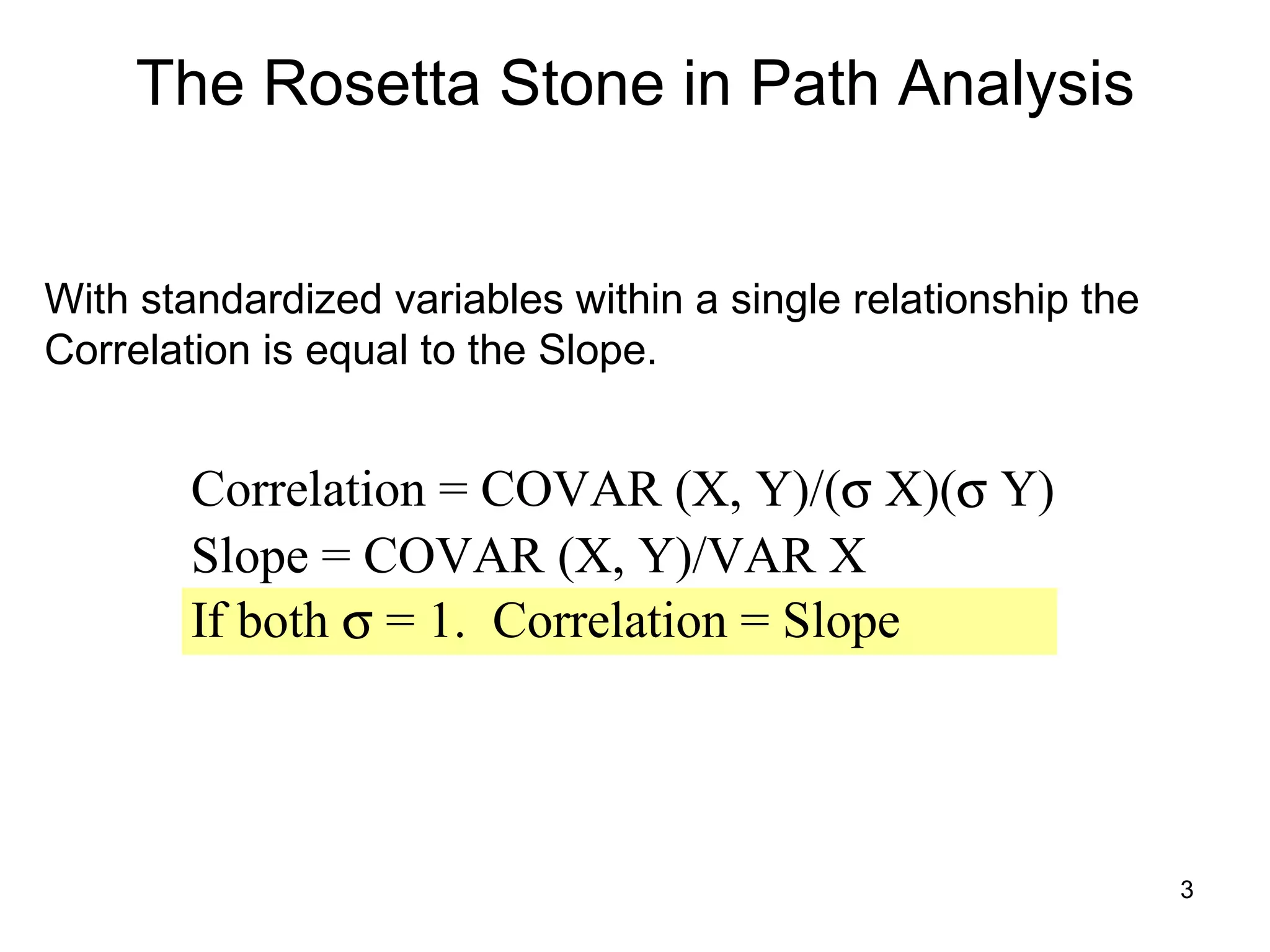
The Rosetta Stone in Path Analysis With standardized variables within a single relationship the Correlation is equal to the Slope.
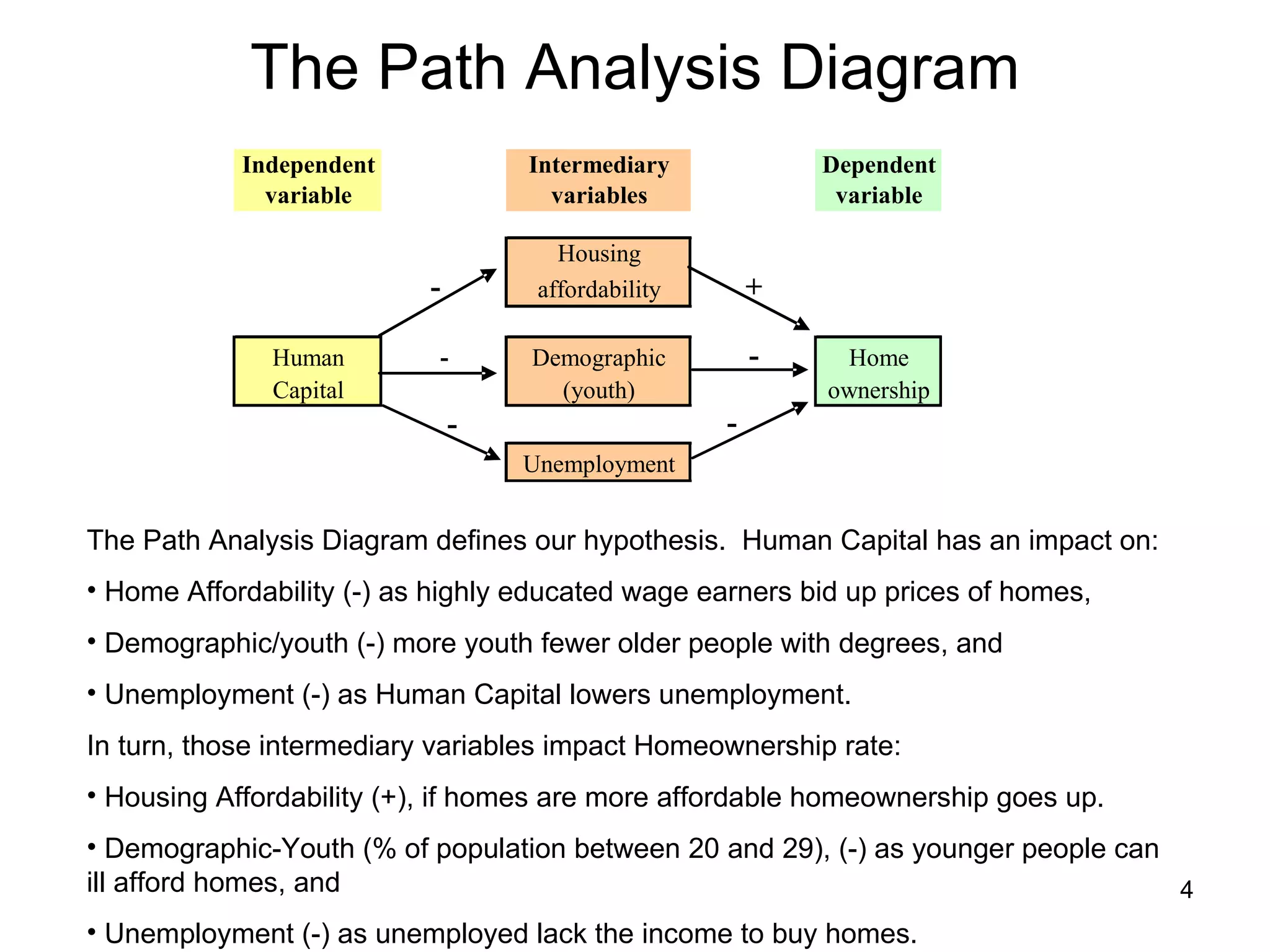
The Path Analysis Diagram The Path Analysis Diagram defines our hypothesis.  Human Capital has an impact on:  Home Affordability (-) as highly educated wage earners bid up prices of homes, Demographic/youth (-) more youth fewer older people with degrees, and Unemployment (-) as Human Capital lowers unemployment.  In turn, those intermediary variables impact Homeownership rate:  Housing Affordability (+), if homes are more affordable homeownership goes up.  Demographic-Youth (% of population between 20 and 29), (-) as younger people can ill afford homes, and  Unemployment (-) as unemployed lack the income to buy homes.
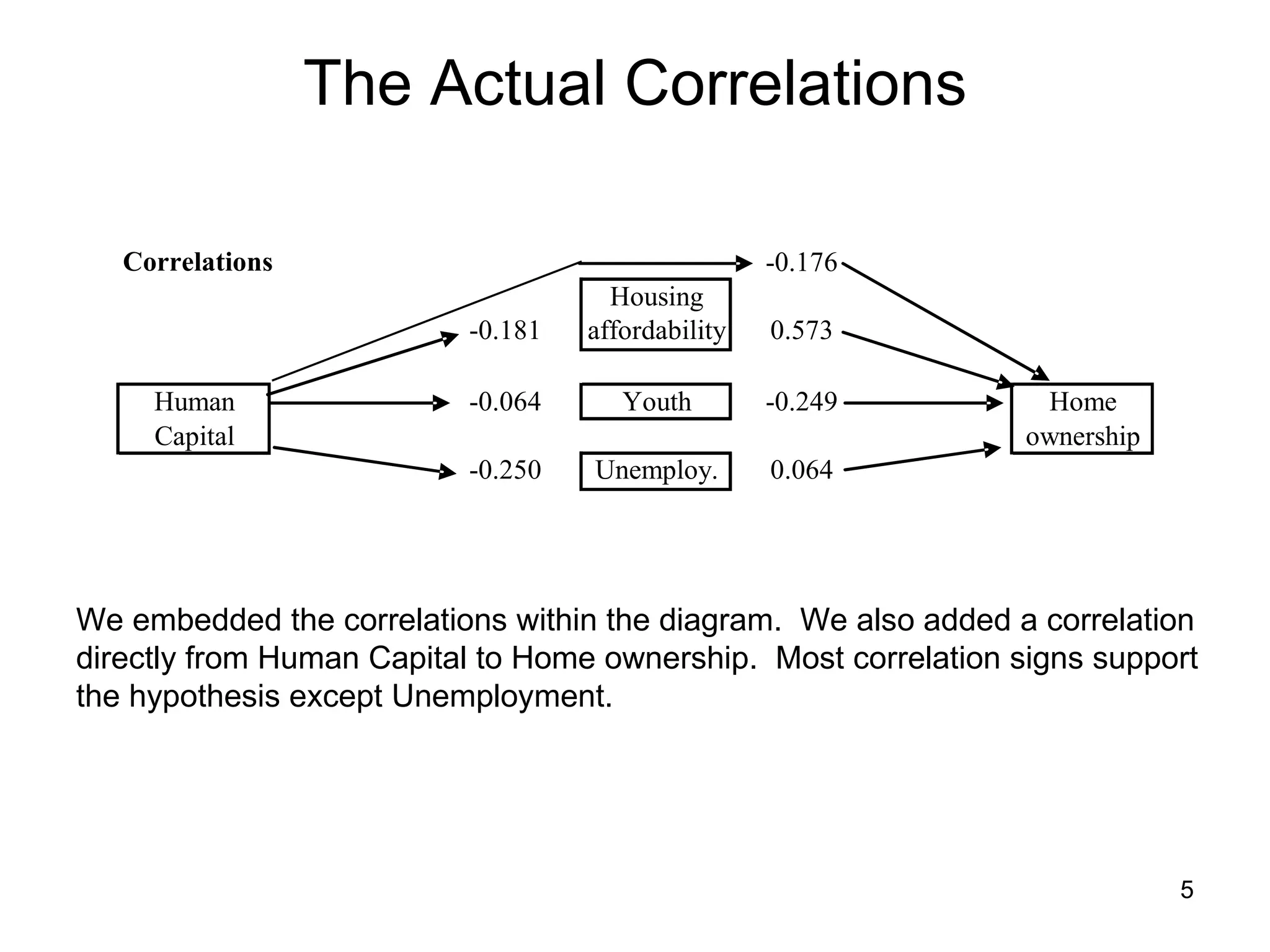
The Actual Correlations We embedded the correlations within the diagram.  We also added a correlation directly from Human Capital to Home ownership.  Most correlation signs support the hypothesis except Unemployment.
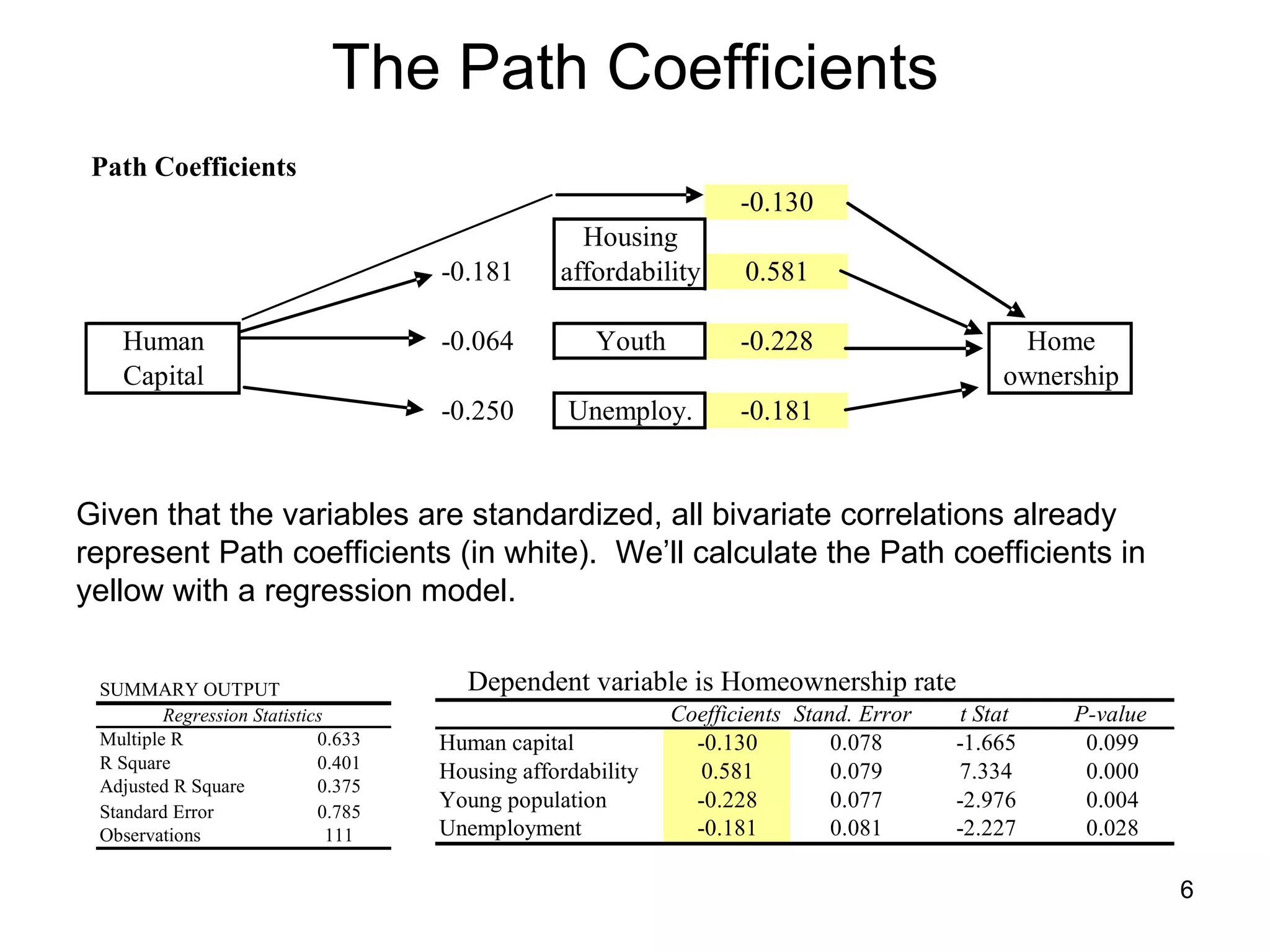
The Path Coefficients Given that the variables are standardized, all bivariate correlations already represent Path coefficients (in white).  We’ll calculate the Path coefficients in yellow with a regression model.  Dependent variable is Homeownership rate
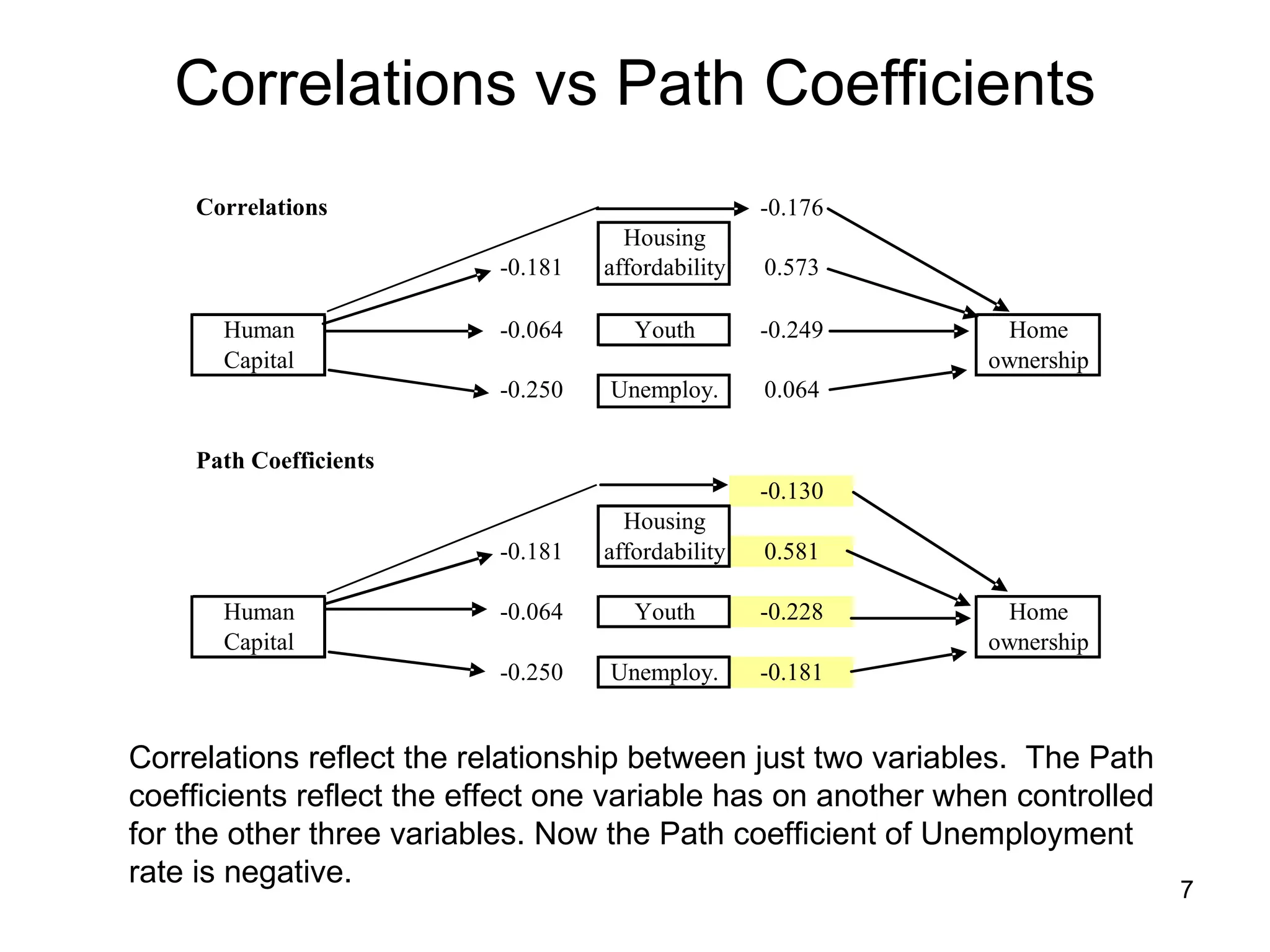
Correlations vs Path Coefficients Correlations reflect the relationship between just two variables.  The Path coefficients reflect the effect one variable has on another when controlled for the other three variables. Now the Path coefficient of Unemployment rate is negative.
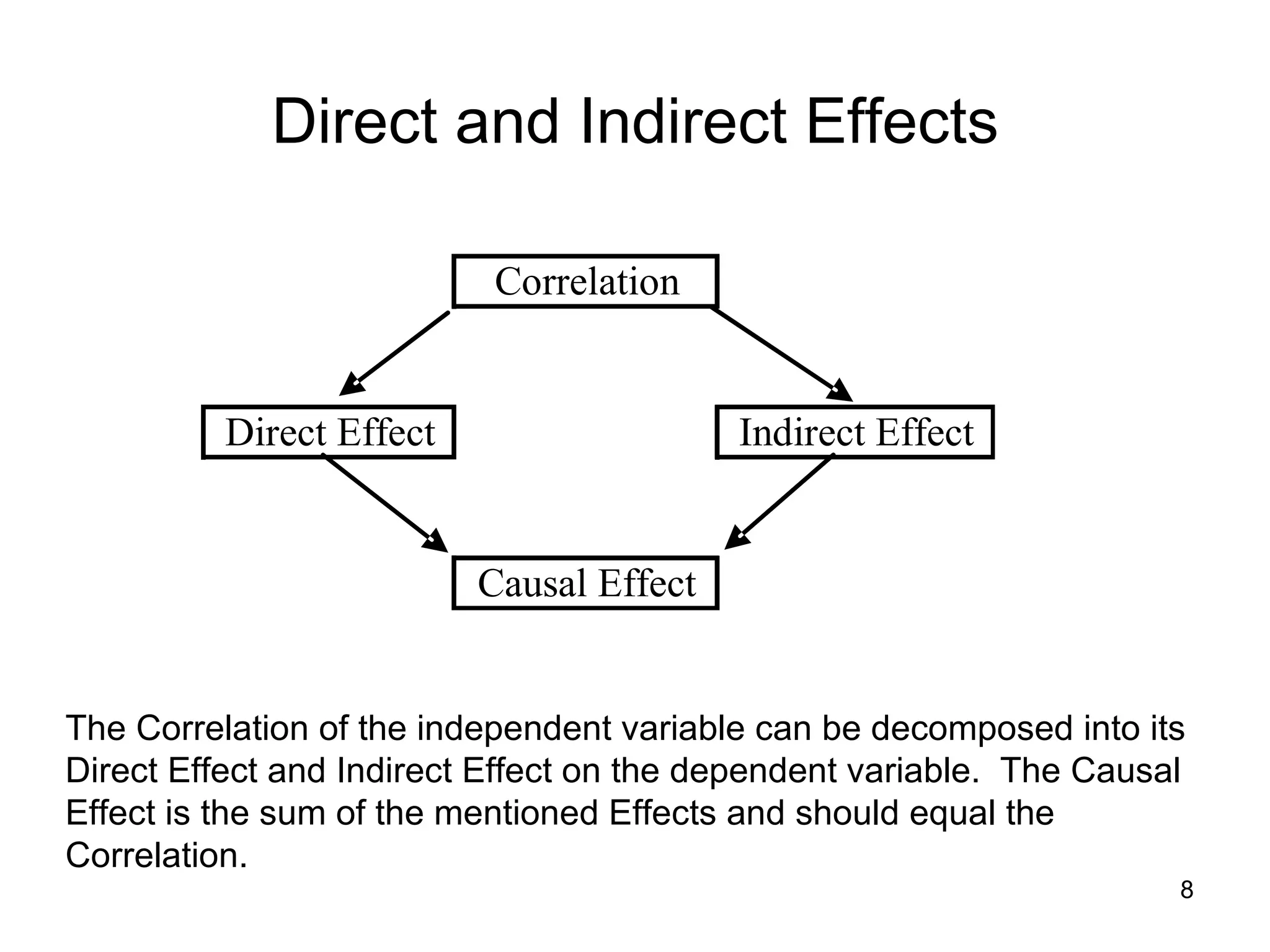
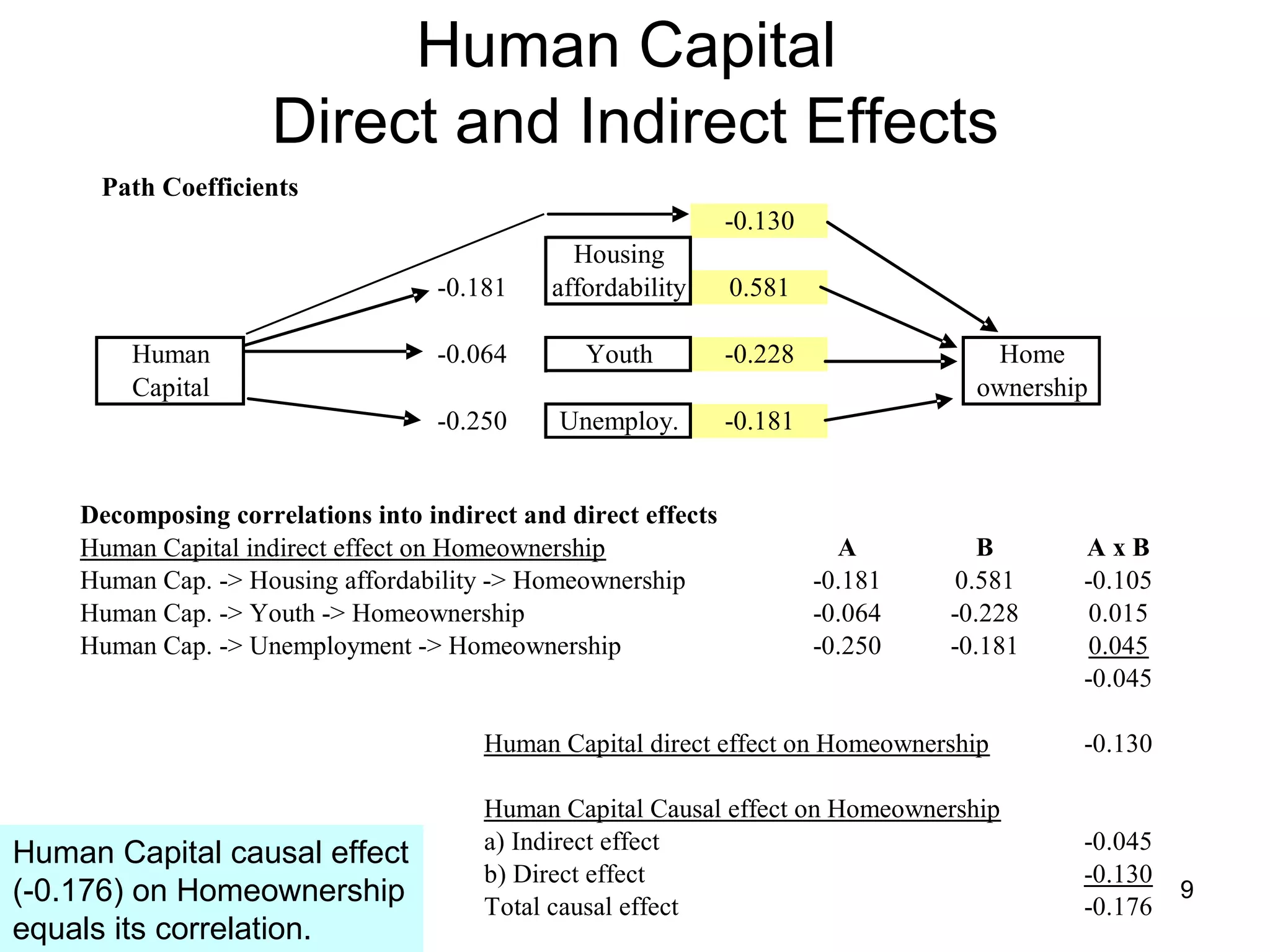
Direct and Indirect Effects The Correlation of the independent variable can be decomposed into its Direct Effect and Indirect Effect on the dependent variable.  The Causal Effect is the sum of the mentioned Effects and should equal the Correlation.
Human Capital  Direct and Indirect Effects Human Capital causal effect (-0.176) on Homeownership equals its correlation.
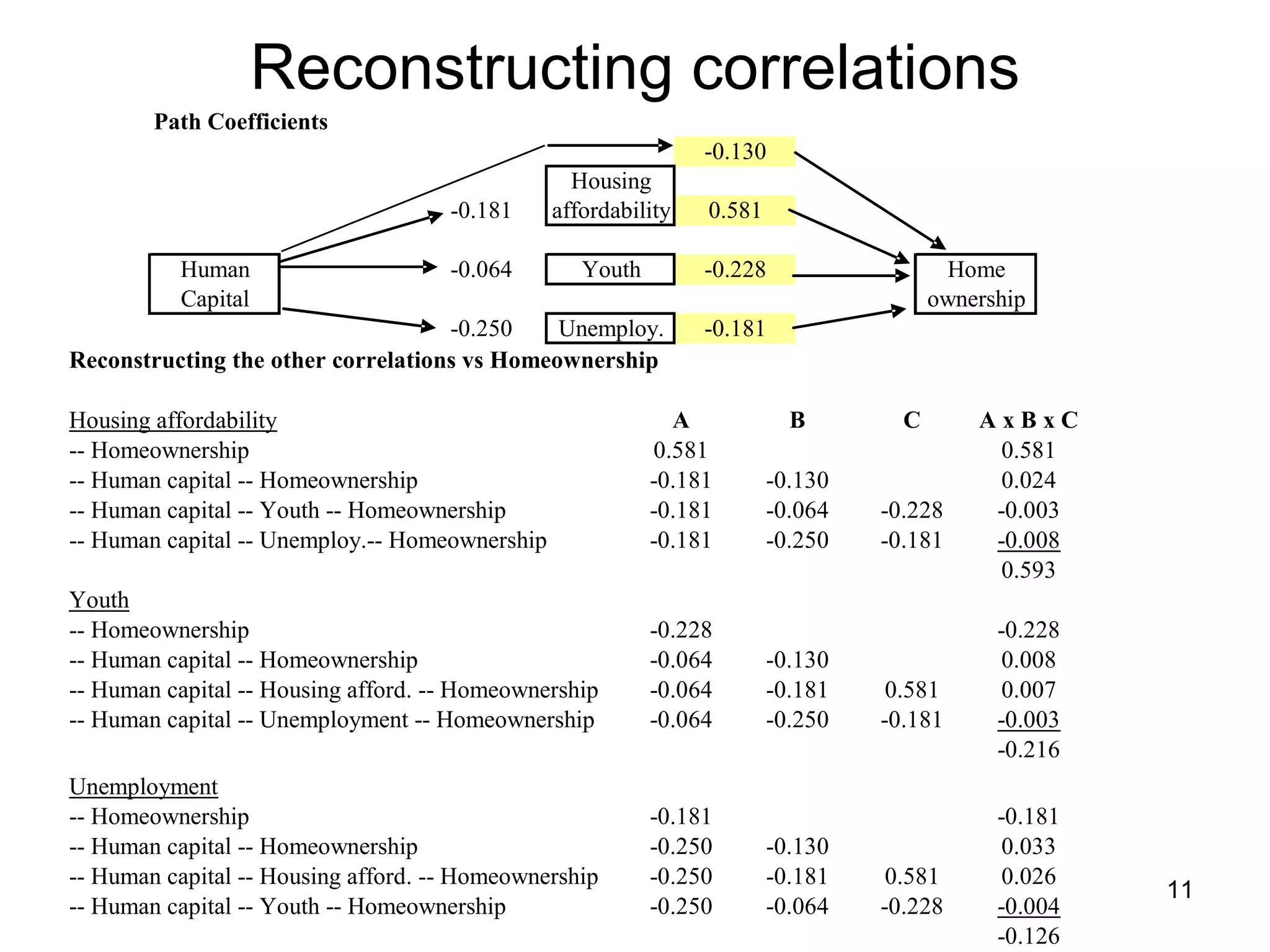
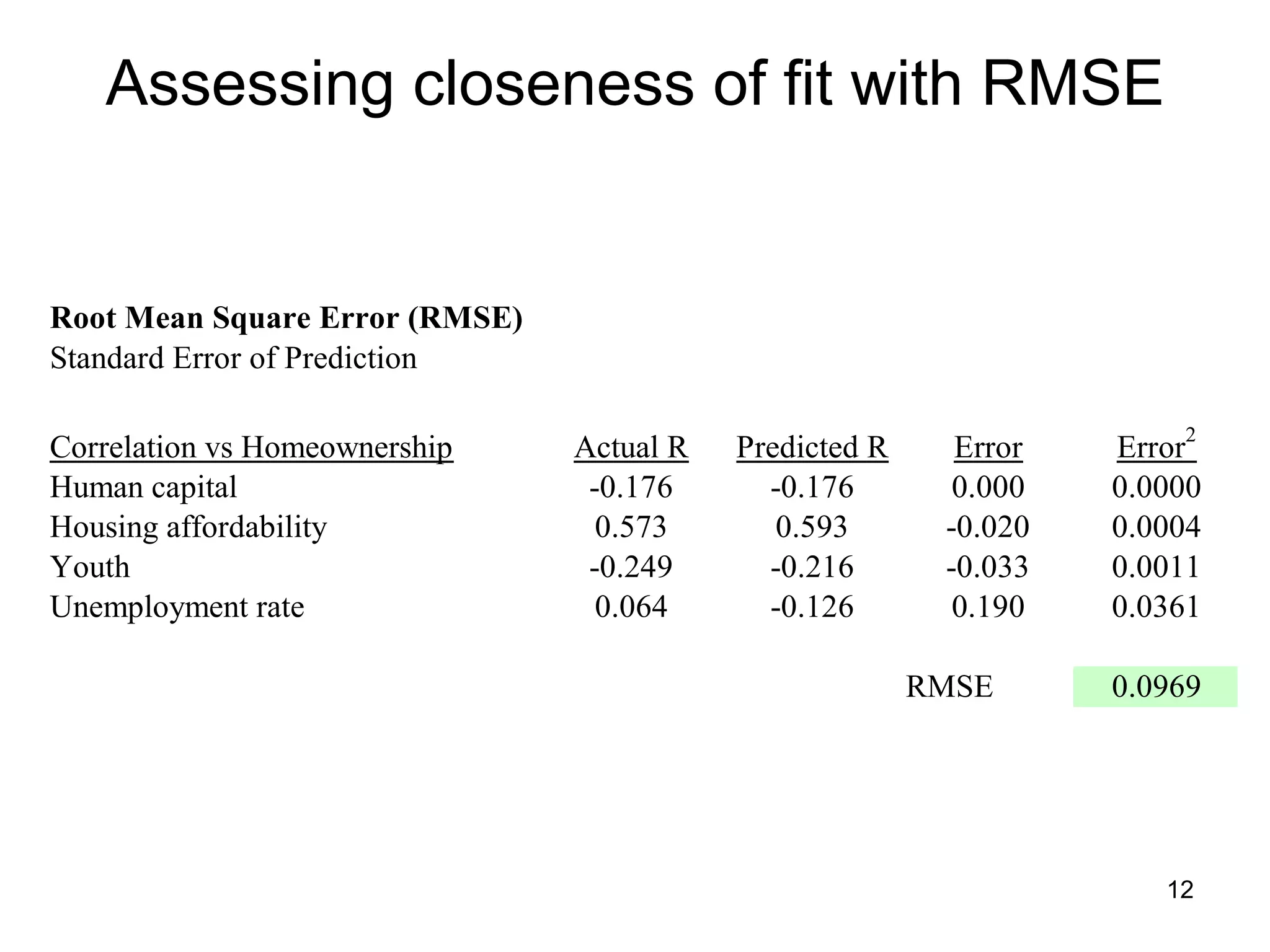
Assessing the Model Fit Assessing the model fit entails: Reconstructing all the correlations by using the path coefficients; and  Assessing the closeness of the fit between the reconstructed correlations and actual ones.
Reconstructing correlations
Assessing closeness of fit with RMSE
Path Analysis next step We test other models and check if their fit is superior to the original model.

Path analysis

  • 1.
    Path Analysis Human Capital vs Homeownership Gaetan “Guy” Lion April 2009
  • 2.
    Introduction Path Analysisis a way to decompose correlations between different variables, in this case Human Capital vs Homeownership rate. Human Capital is % of population over 25 with a college degree.
  • 3.
    The Rosetta Stonein Path Analysis With standardized variables within a single relationship the Correlation is equal to the Slope.
  • 4.
    The Path AnalysisDiagram The Path Analysis Diagram defines our hypothesis. Human Capital has an impact on: Home Affordability (-) as highly educated wage earners bid up prices of homes, Demographic/youth (-) more youth fewer older people with degrees, and Unemployment (-) as Human Capital lowers unemployment. In turn, those intermediary variables impact Homeownership rate: Housing Affordability (+), if homes are more affordable homeownership goes up. Demographic-Youth (% of population between 20 and 29), (-) as younger people can ill afford homes, and Unemployment (-) as unemployed lack the income to buy homes.
  • 5.
    The Actual CorrelationsWe embedded the correlations within the diagram. We also added a correlation directly from Human Capital to Home ownership. Most correlation signs support the hypothesis except Unemployment.
  • 6.
    The Path CoefficientsGiven that the variables are standardized, all bivariate correlations already represent Path coefficients (in white). We’ll calculate the Path coefficients in yellow with a regression model. Dependent variable is Homeownership rate
  • 7.
    Correlations vs PathCoefficients Correlations reflect the relationship between just two variables. The Path coefficients reflect the effect one variable has on another when controlled for the other three variables. Now the Path coefficient of Unemployment rate is negative.
  • 8.
    Direct and IndirectEffects The Correlation of the independent variable can be decomposed into its Direct Effect and Indirect Effect on the dependent variable. The Causal Effect is the sum of the mentioned Effects and should equal the Correlation.
  • 9.
    Human Capital Direct and Indirect Effects Human Capital causal effect (-0.176) on Homeownership equals its correlation.
  • 10.
    Assessing the ModelFit Assessing the model fit entails: Reconstructing all the correlations by using the path coefficients; and Assessing the closeness of the fit between the reconstructed correlations and actual ones.
  • 11.
  • 12.
  • 13.
    Path Analysis nextstep We test other models and check if their fit is superior to the original model.