Contents: 
• Four Layers of TCP/IP Model 
• How the TCP/IP Layers Coordinates 
• Encapsulation 
• Decapsulation 
• Bibliography
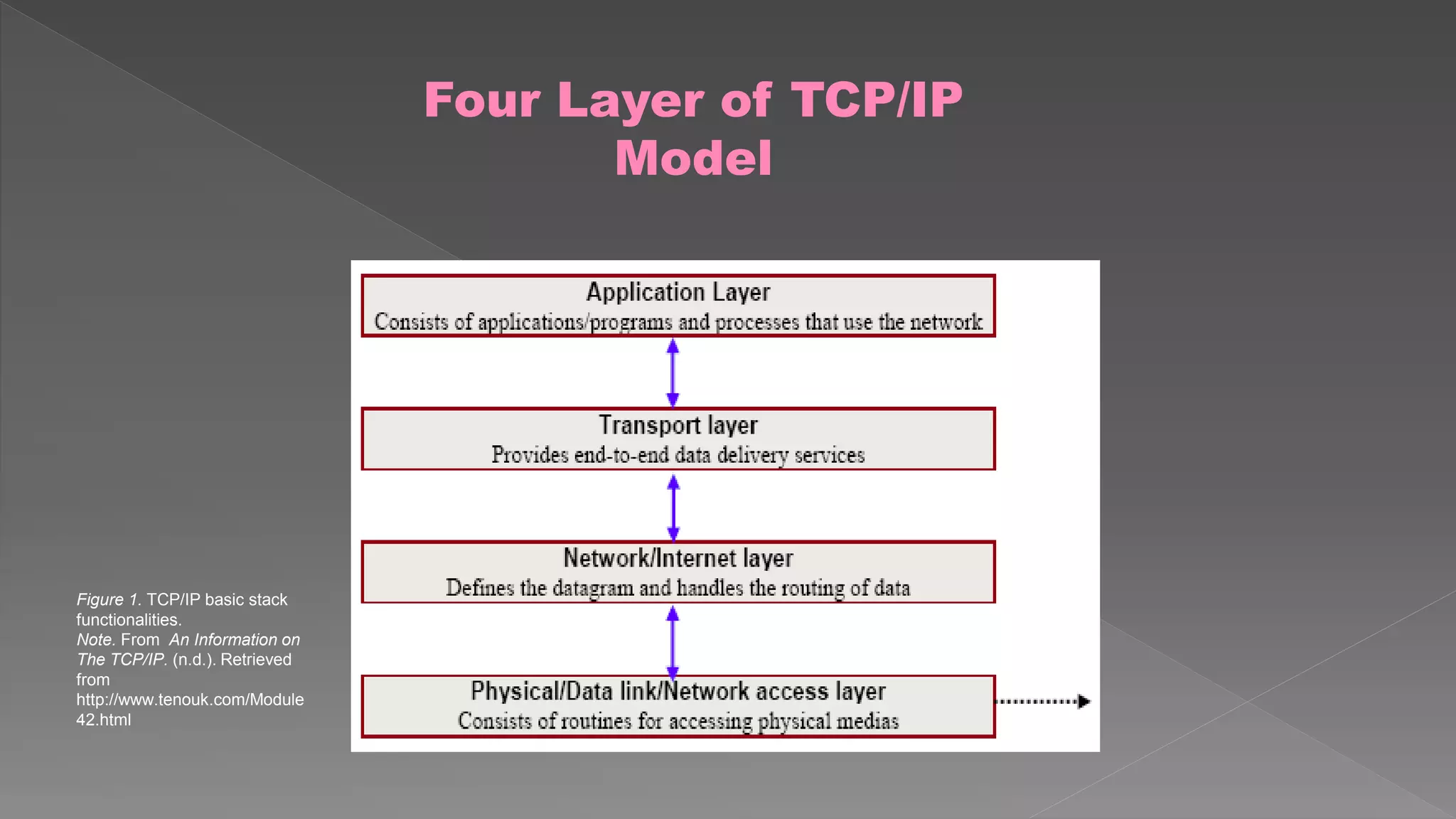
Four Layer of TCP/IP 
Model 
Figure 1. TCP/IP basic stack 
functionalities. 
Note. From An Information on 
The TCP/IP. (n.d.). Retrieved 
from 
http://www.tenouk.com/Module 
42.html
TCP/IP Video
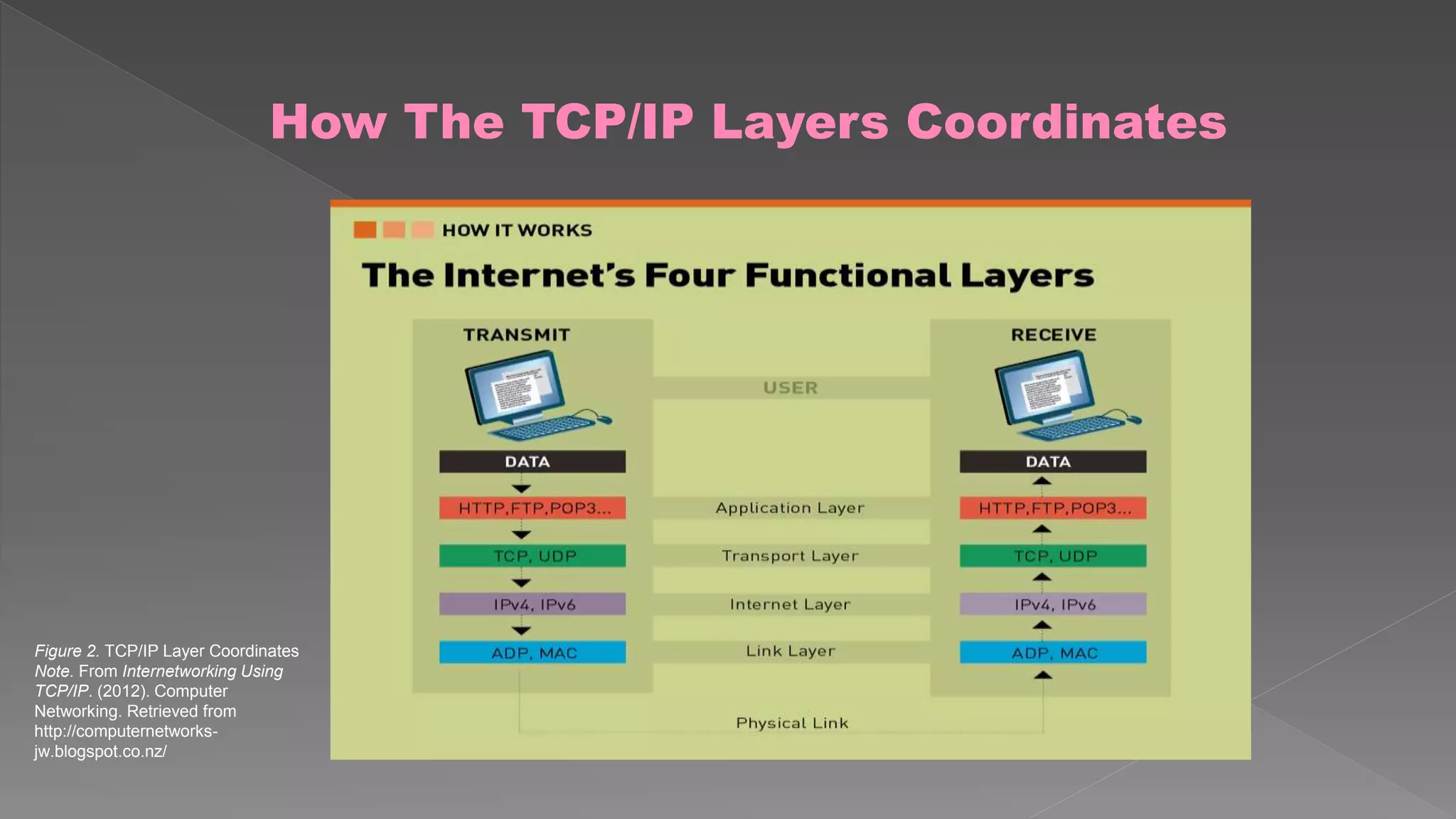
How The TCP/IP Layers Coordinates 
Figure 2. TCP/IP Layer Coordinates 
Note. From Internetworking Using 
TCP/IP. (2012). Computer 
Networking. Retrieved from 
http://computernetworks-jw. 
blogspot.co.nz/
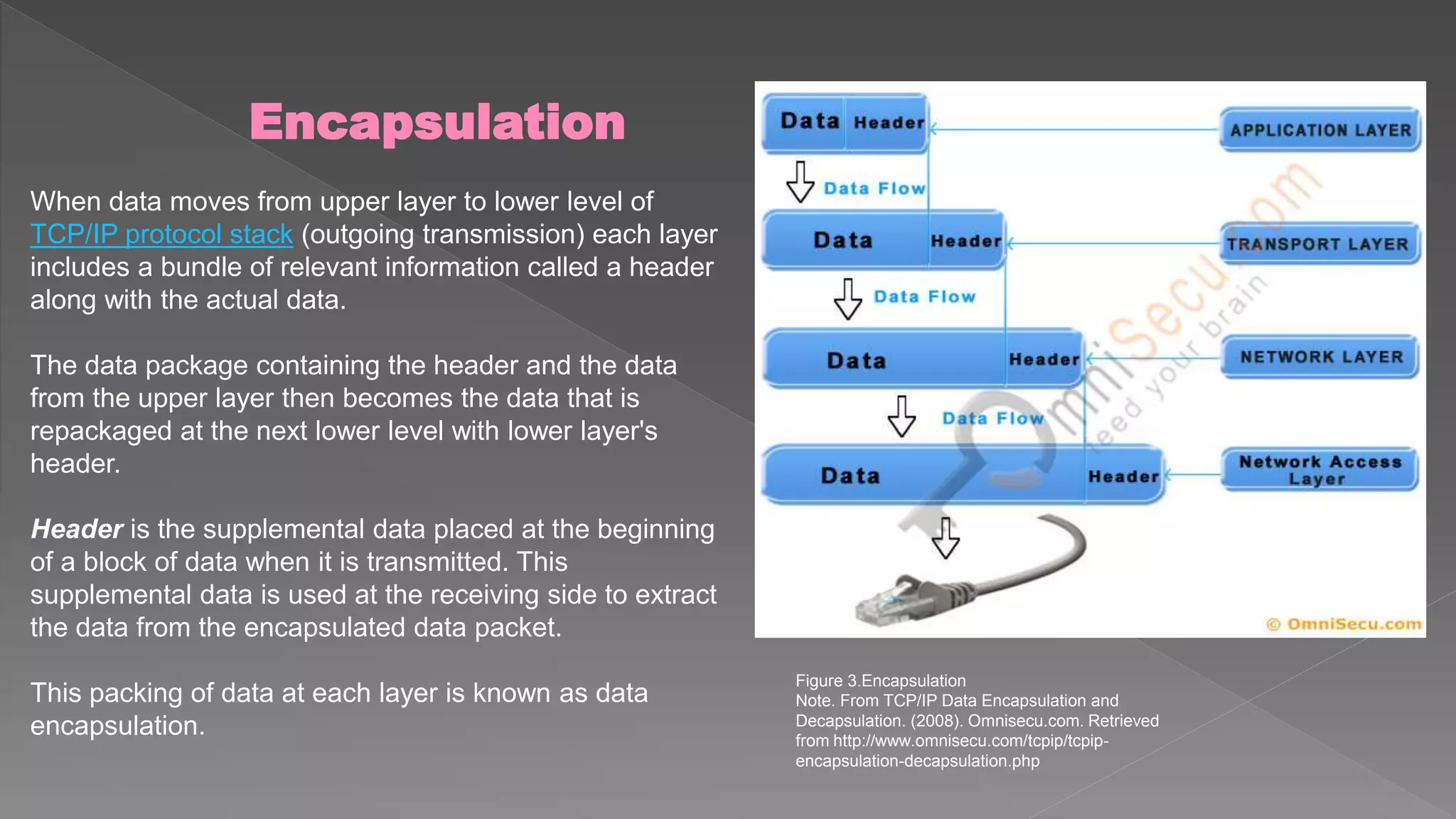
Encapsulation 
When data moves from upper layer to lower level of 
TCP/IP protocol stack (outgoing transmission) each layer 
includes a bundle of relevant information called a header 
along with the actual data. 
The data package containing the header and the data 
from the upper layer then becomes the data that is 
repackaged at the next lower level with lower layer's 
header. 
Header is the supplemental data placed at the beginning 
of a block of data when it is transmitted. This 
supplemental data is used at the receiving side to extract 
the data from the encapsulated data packet. 
This packing of data at each layer is known as data 
encapsulation. 
Figure 3.Encapsulation 
Note. From TCP/IP Data Encapsulation and 
Decapsulation. (2008). Omnisecu.com. Retrieved 
from http://www.omnisecu.com/tcpip/tcpip-encapsulation- 
decapsulation.php
Decapsulation 
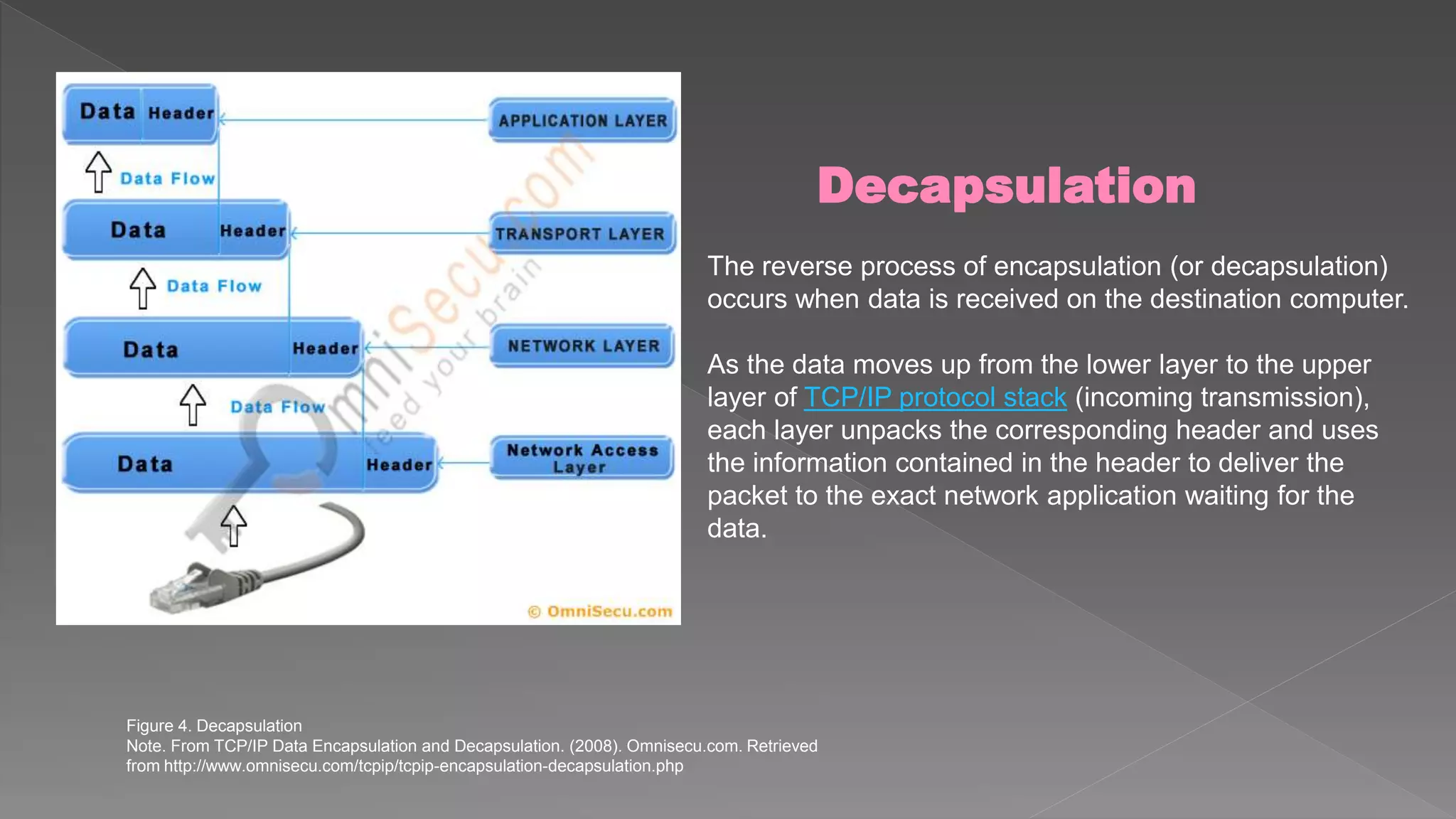
The reverse process of encapsulation (or decapsulation) 
occurs when data is received on the destination computer. 
As the data moves up from the lower layer to the upper 
layer of TCP/IP protocol stack (incoming transmission), 
each layer unpacks the corresponding header and uses 
the information contained in the header to deliver the 
packet to the exact network application waiting for the 
data. 
Figure 4. Decapsulation 
Note. From TCP/IP Data Encapsulation and Decapsulation. (2008). Omnisecu.com. Retrieved 
from http://www.omnisecu.com/tcpip/tcpip-encapsulation-decapsulation.php
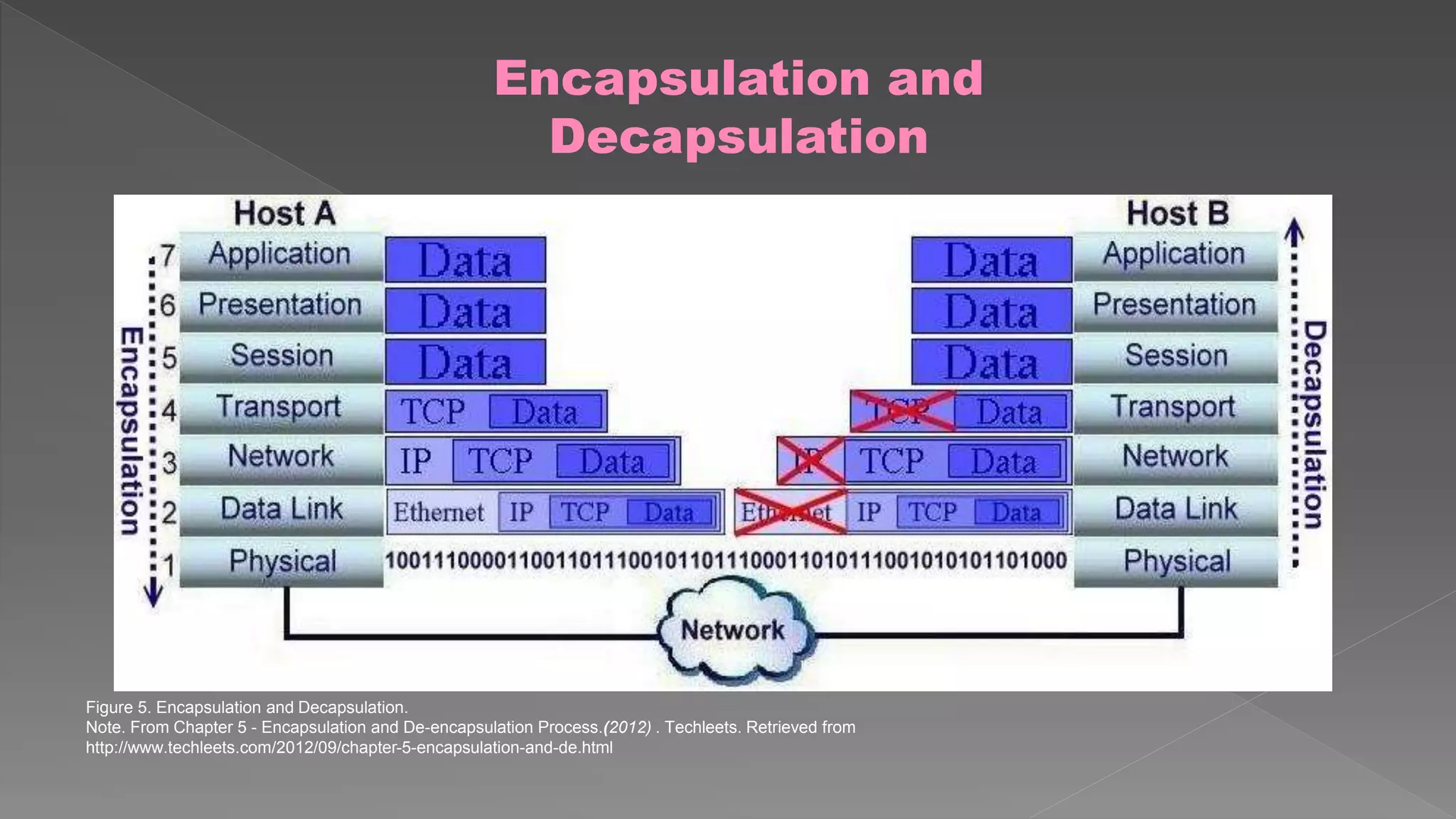
Encapsulation and 
Decapsulation 
Figure 5. Encapsulation and Decapsulation. 
Note. From Chapter 5 - Encapsulation and De-encapsulation Process.(2012) . Techleets. Retrieved from 
http://www.techleets.com/2012/09/chapter-5-encapsulation-and-de.html
Bibliography 
Encapsulation and Decapsulation. (2012). Retrieved from 
http://www.techleets.com/2012/09/chapter-5-encapsulation-and-de.html 
TCP/IP Data Encapsulation and Decapsulation. (n.d.). Retrieved from 
http://www.omnisecu.com/tcpip/tcpip-encapsulation-decapsulation.php 
Mistertentpole (2007, March 11). TCP/IP An animated Discussion [Video File]. 
Retrieved from https://www.youtube.com/watch?v=RbY8Hb6abbg

TCP/IP Presentation

  • 2.
    Contents: • FourLayers of TCP/IP Model • How the TCP/IP Layers Coordinates • Encapsulation • Decapsulation • Bibliography
  • 3.
    Four Layer ofTCP/IP Model Figure 1. TCP/IP basic stack functionalities. Note. From An Information on The TCP/IP. (n.d.). Retrieved from http://www.tenouk.com/Module 42.html
  • 4.
  • 5.
    How The TCP/IPLayers Coordinates Figure 2. TCP/IP Layer Coordinates Note. From Internetworking Using TCP/IP. (2012). Computer Networking. Retrieved from http://computernetworks-jw. blogspot.co.nz/
  • 6.
    Encapsulation When datamoves from upper layer to lower level of TCP/IP protocol stack (outgoing transmission) each layer includes a bundle of relevant information called a header along with the actual data. The data package containing the header and the data from the upper layer then becomes the data that is repackaged at the next lower level with lower layer's header. Header is the supplemental data placed at the beginning of a block of data when it is transmitted. This supplemental data is used at the receiving side to extract the data from the encapsulated data packet. This packing of data at each layer is known as data encapsulation. Figure 3.Encapsulation Note. From TCP/IP Data Encapsulation and Decapsulation. (2008). Omnisecu.com. Retrieved from http://www.omnisecu.com/tcpip/tcpip-encapsulation- decapsulation.php
  • 7.
    Decapsulation The reverseprocess of encapsulation (or decapsulation) occurs when data is received on the destination computer. As the data moves up from the lower layer to the upper layer of TCP/IP protocol stack (incoming transmission), each layer unpacks the corresponding header and uses the information contained in the header to deliver the packet to the exact network application waiting for the data. Figure 4. Decapsulation Note. From TCP/IP Data Encapsulation and Decapsulation. (2008). Omnisecu.com. Retrieved from http://www.omnisecu.com/tcpip/tcpip-encapsulation-decapsulation.php
  • 8.
    Encapsulation and Decapsulation Figure 5. Encapsulation and Decapsulation. Note. From Chapter 5 - Encapsulation and De-encapsulation Process.(2012) . Techleets. Retrieved from http://www.techleets.com/2012/09/chapter-5-encapsulation-and-de.html
  • 9.
    Bibliography Encapsulation andDecapsulation. (2012). Retrieved from http://www.techleets.com/2012/09/chapter-5-encapsulation-and-de.html TCP/IP Data Encapsulation and Decapsulation. (n.d.). Retrieved from http://www.omnisecu.com/tcpip/tcpip-encapsulation-decapsulation.php Mistertentpole (2007, March 11). TCP/IP An animated Discussion [Video File]. Retrieved from https://www.youtube.com/watch?v=RbY8Hb6abbg