Immunology for the  non-immunologist
Introduction to the  Immune System
 
 
Questions to be answered *  What types of immune responses protect individuals from infections? * What are the important characteristics of immunity, and what mechanisms are responsible for these characteristics? * How are the cells and tissues of the immune system organized to find microbes and respond to them in ways that lead to their elimination?
 
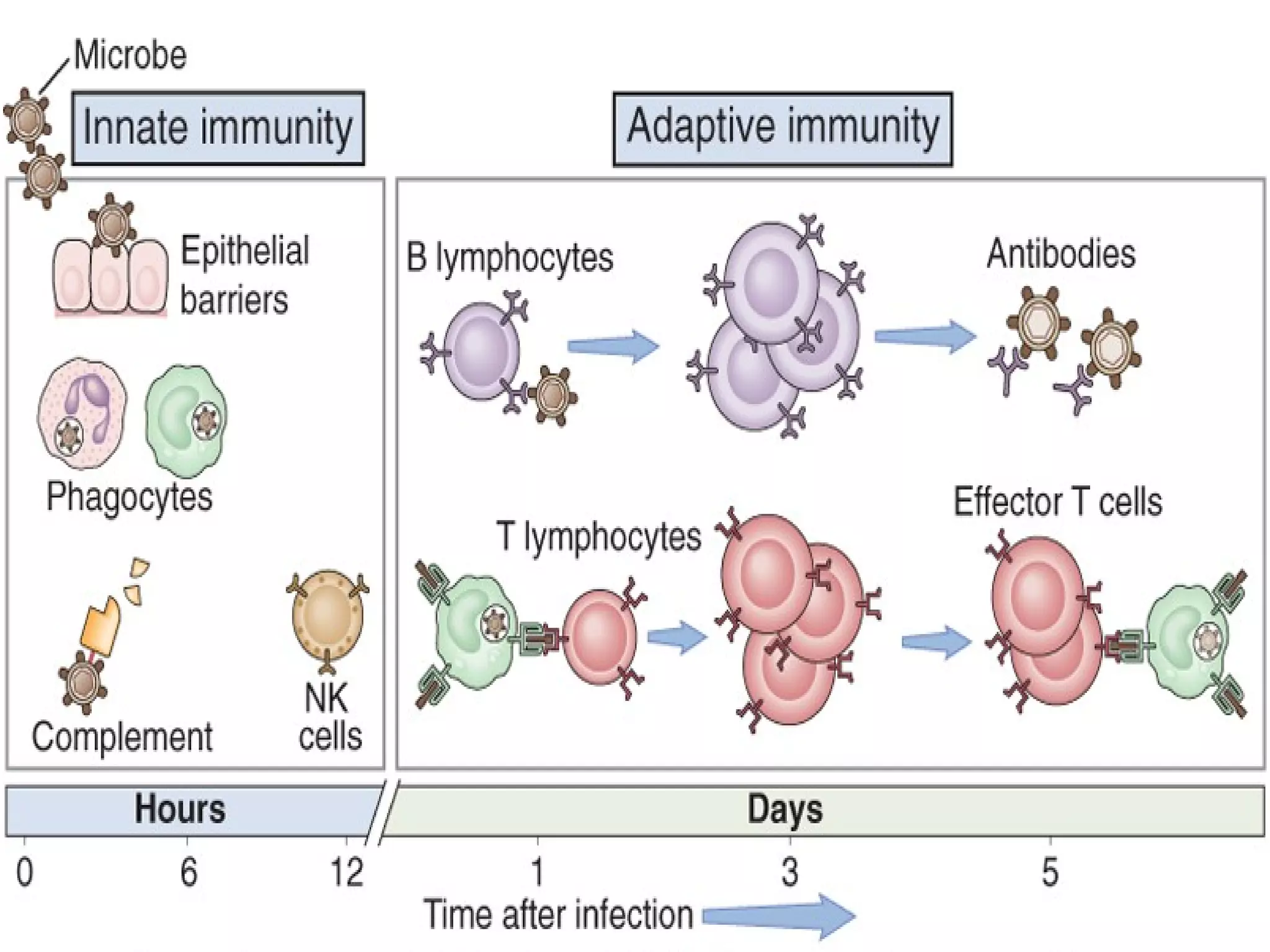
Immune system Innate(Natural/native) Epithelial barriers Phagocytes and NK cells Complement Antibodies Adaptive (specific/accquired) Humoral Cell mediated
Innate- respond to structures shared by microbes Adaptive- respond to specific antigens presented to lymphocytes Only triggered if microbes passes through innate immunity Innate immunity    Adaptive immunity Immune response = adaptive immunity unless specified
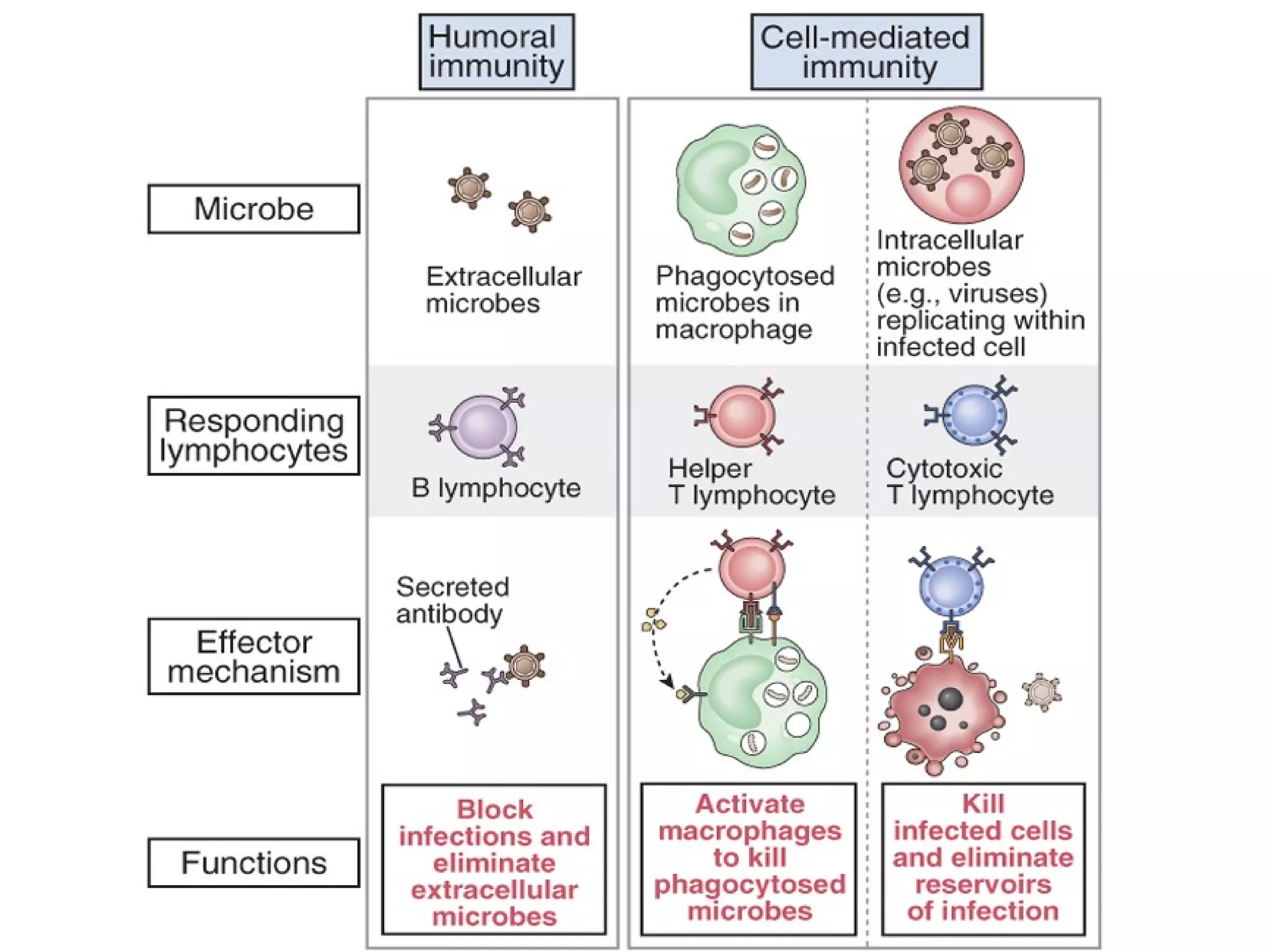
Adaptive Immunity Humoral immunity B lymphocytes Antibodies Secreted into circulation and mucosal fluids Neutralize and eliminate microbes and toxins outside the host cells (blood/mucosal organs-GIT, resp) Prevents infection from getting into cells Cannot enter cells to kill microbes Recognize different types of molecules- proteins, carbohydrate, lipids
Adaptive Immunity Cellular immunity T lymphocytes Activate phagocytes to destroy microbes Kill host cell infected by microbes Recognize only protein antigens
Active Immunity Infection Vaccination Passive immunity Transfer of antibodies/lymphocytes from immunized individual Active only during t ½  of antibodies/lymphocytes Rapid immunity (before body mounts active response)
Immune individual Antigen exposure Naïve individual  Never have antigen exposure
 
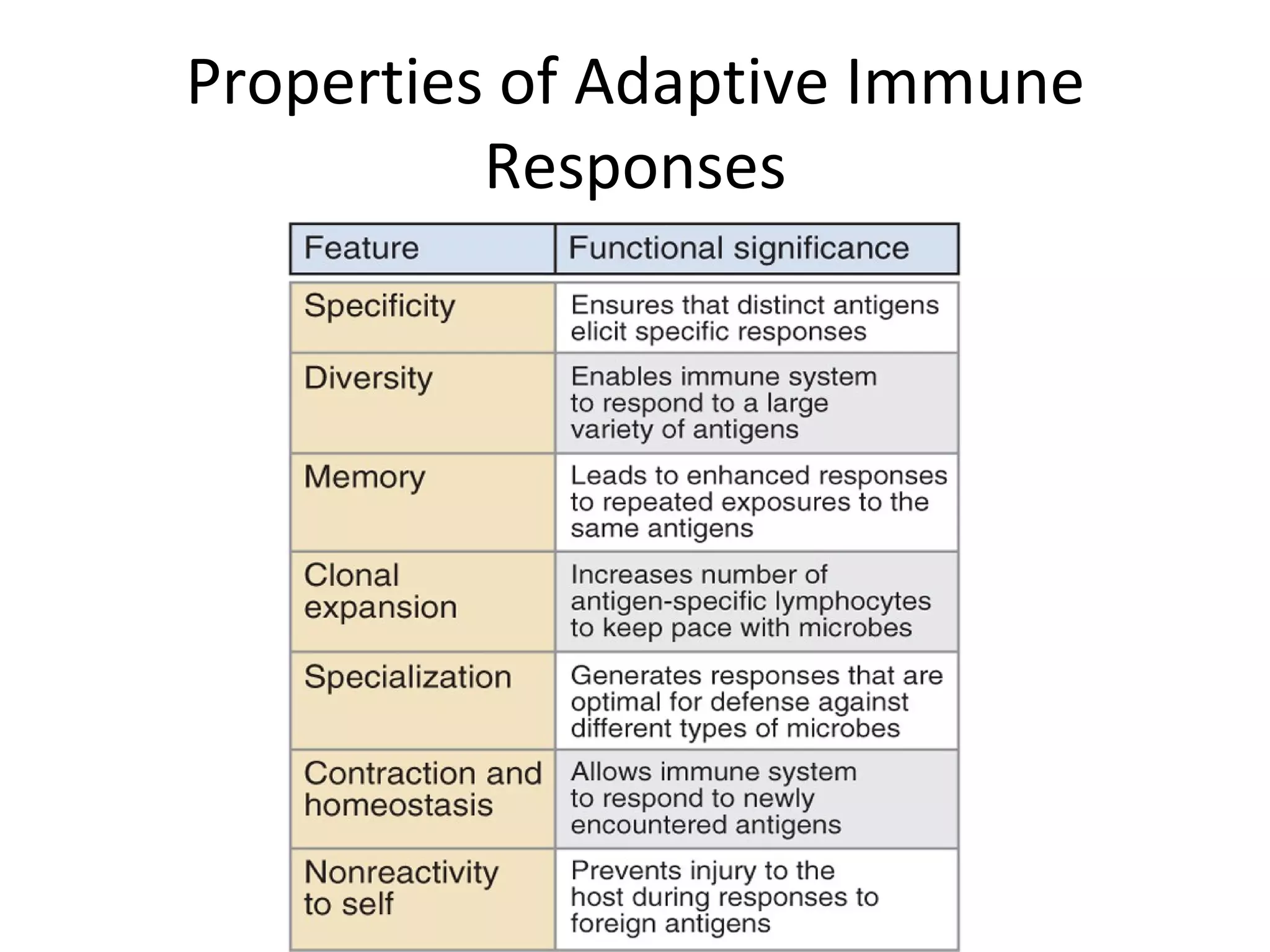
Properties of Adaptive Immune Responses
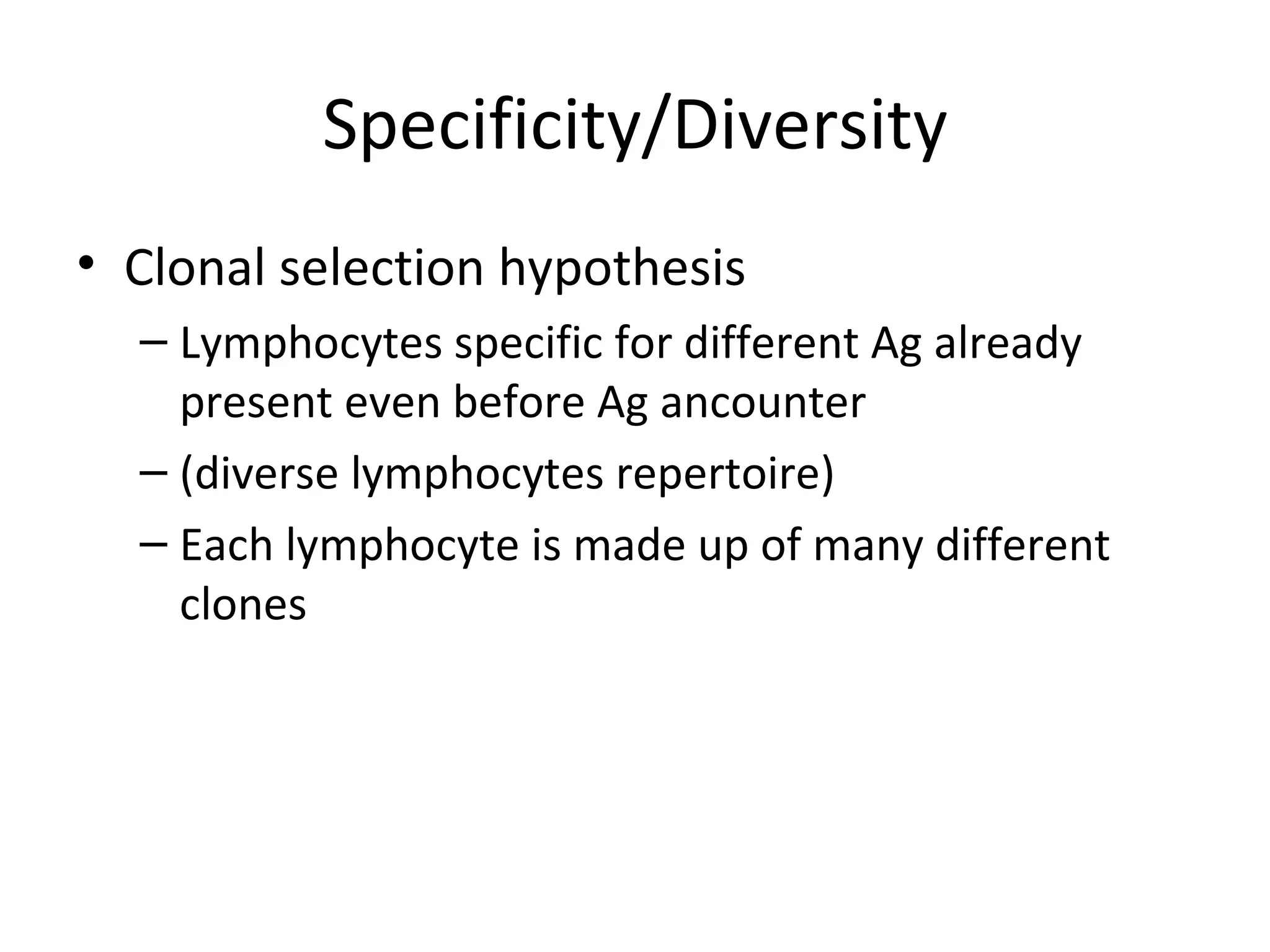
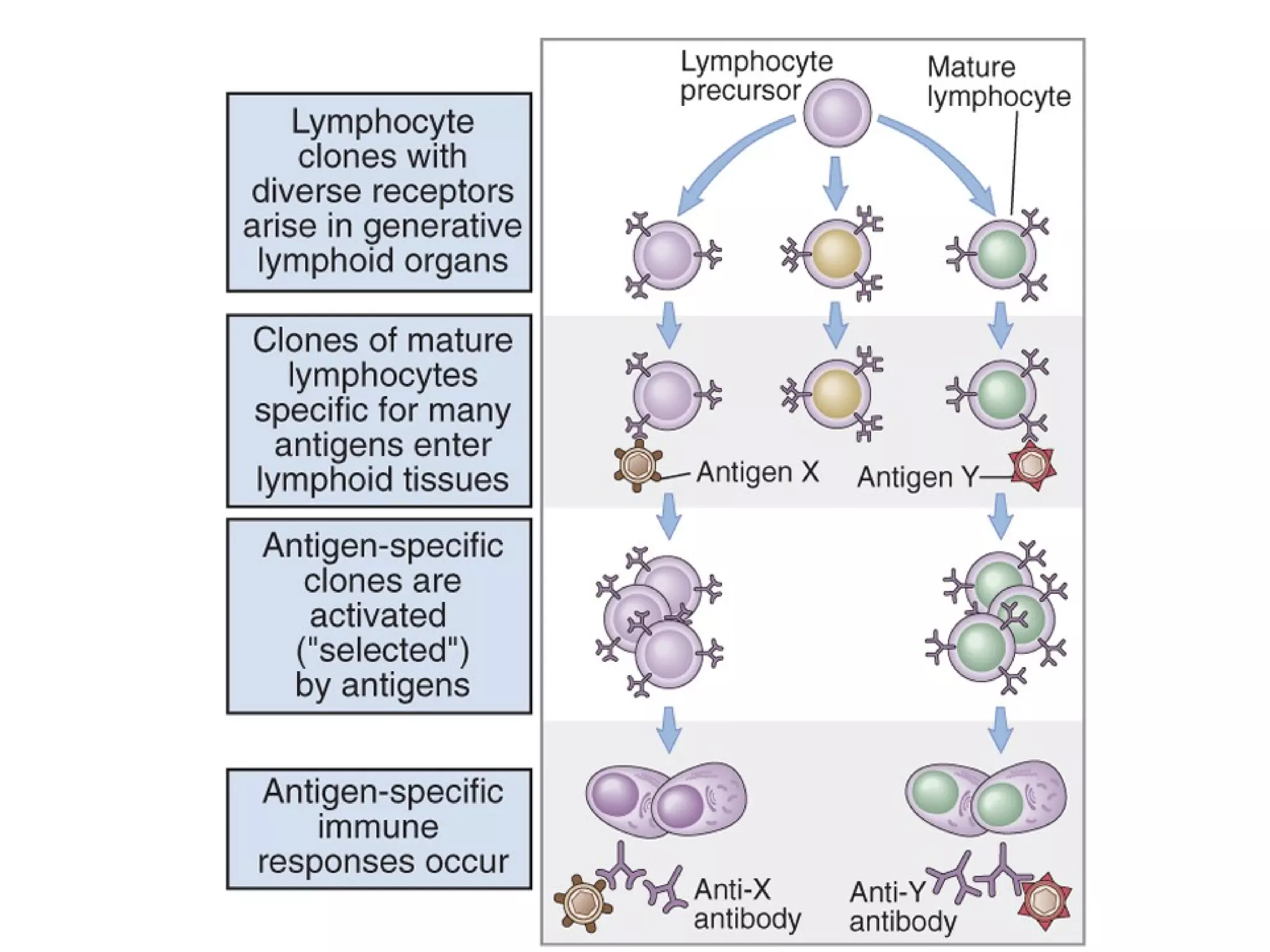
Specificity/Diversity Clonal selection hypothesis Lymphocytes specific for different Ag already present even before Ag ancounter (diverse lymphocytes repertoire) Each lymphocyte is made up of many different clones
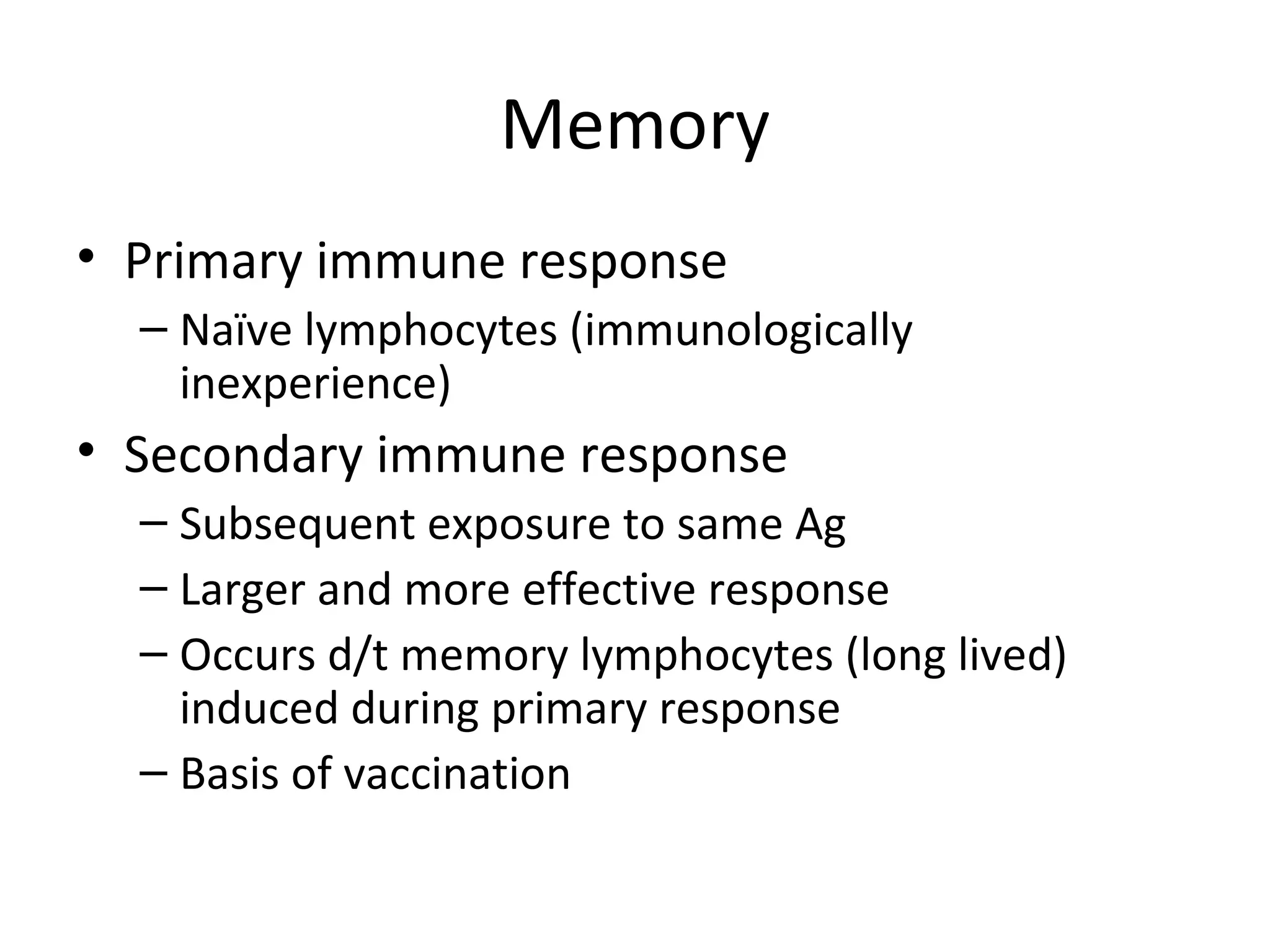
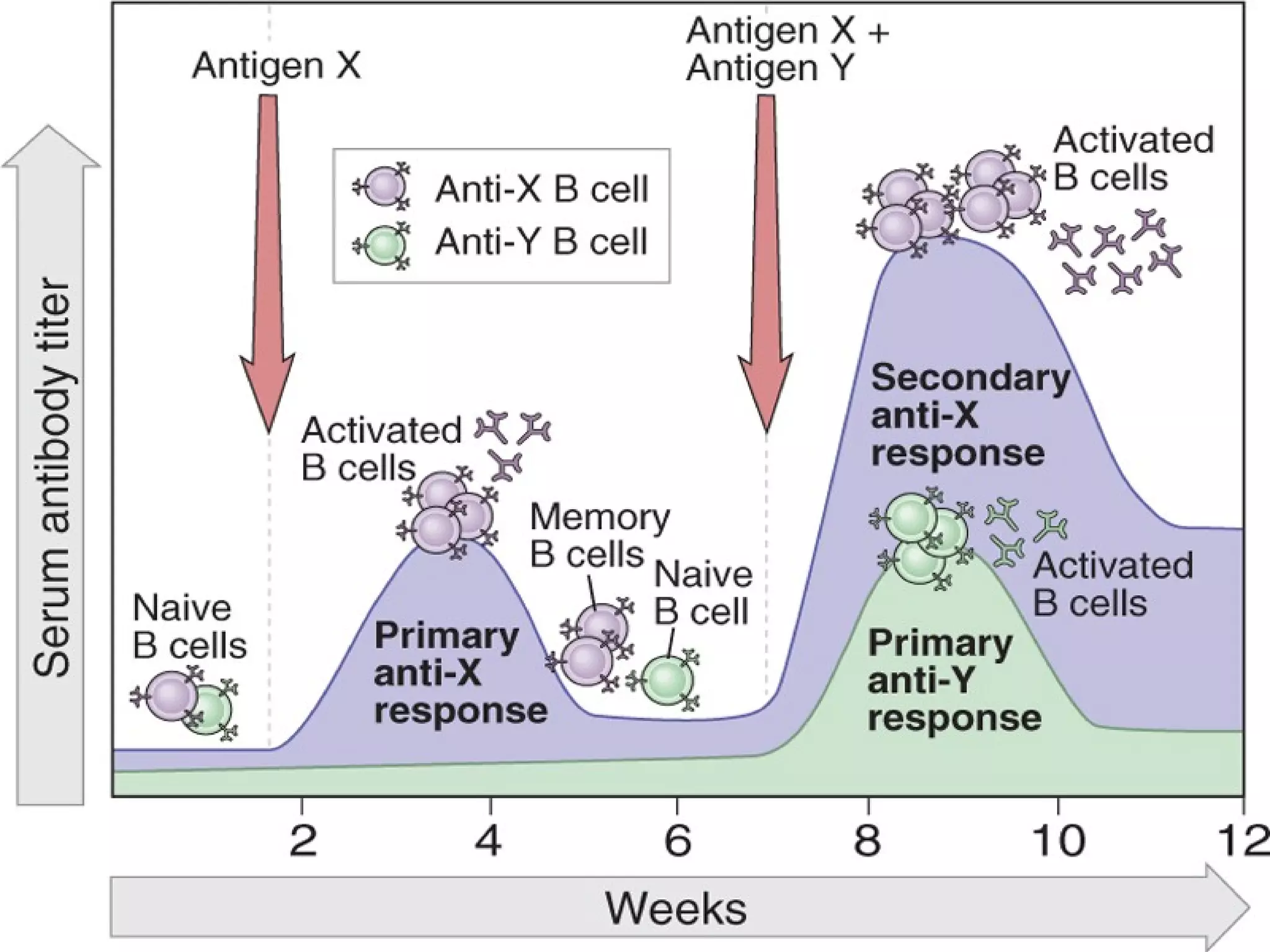
Memory Primary immune response Naïve lymphocytes (immunologically inexperience) Secondary immune response Subsequent exposure to same Ag Larger and more effective response Occurs d/t memory lymphocytes (long lived) induced during primary response Basis of vaccination
 
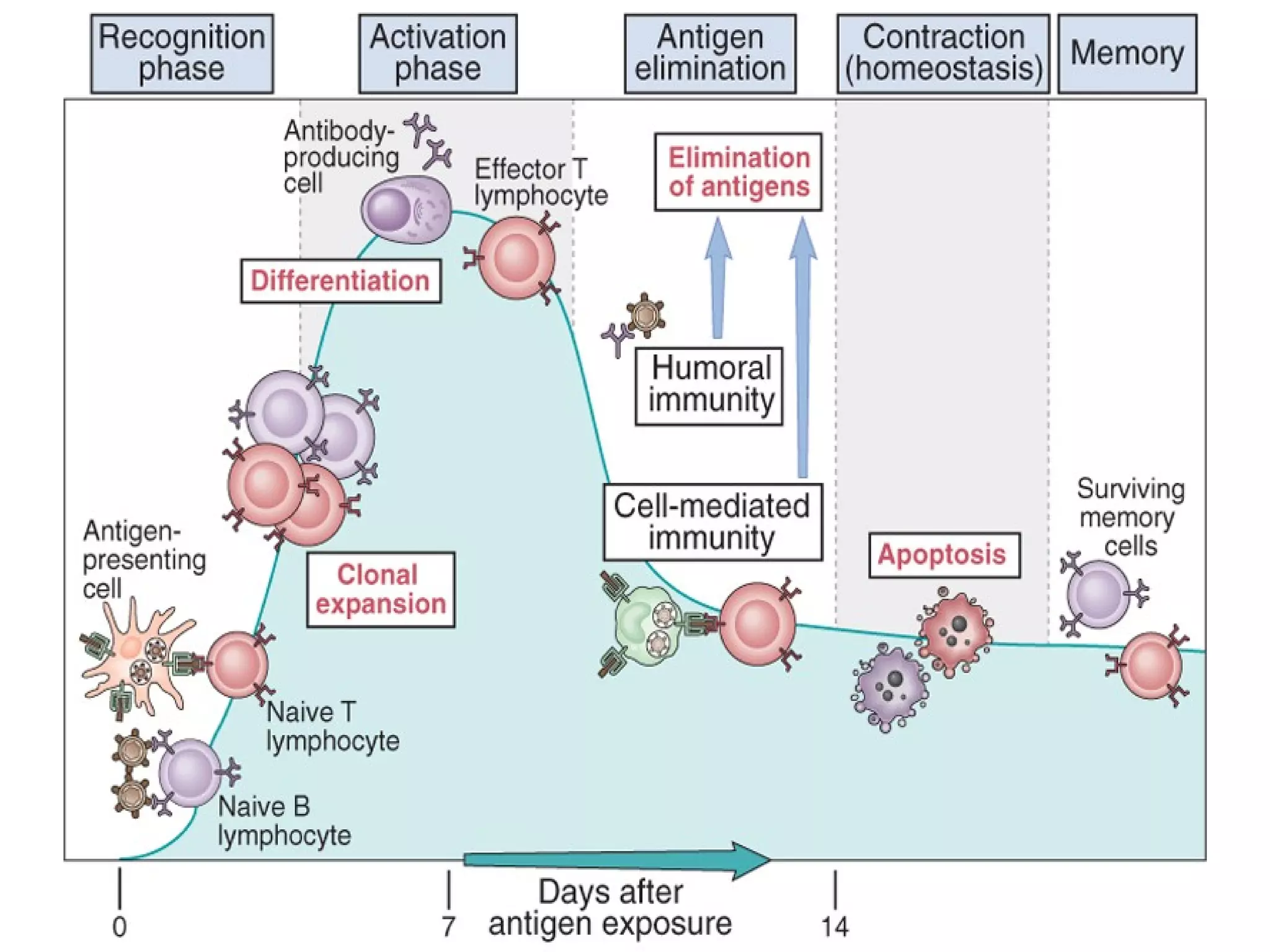
Clonal selection/expansion Antigen activates lymphocytes    proliferation    clonal progeny cells specific to particular Antigen (specialized clonal expansion) Infection overcomed    contraction and homeostasis
 
Cells of the immune system Lymphocytes Only cells that produce specific receptors for specific Ag Key mediators of adaptive immunity Many subtypes differentiated by (Cluster of Differentiation) B lymphocytes T lymphocytes NK cells
B lymphocytes Only cells capable of producing A/B Mediate humoral immunity A/B also expressed on membrane to recognize Ag T lymphocytes Only recognize peptide fragments that are presented via a specialized display molecule: Major Histocompatibility Complex (MHC) on specialized cells (Antigen Presenting Cells-APC)
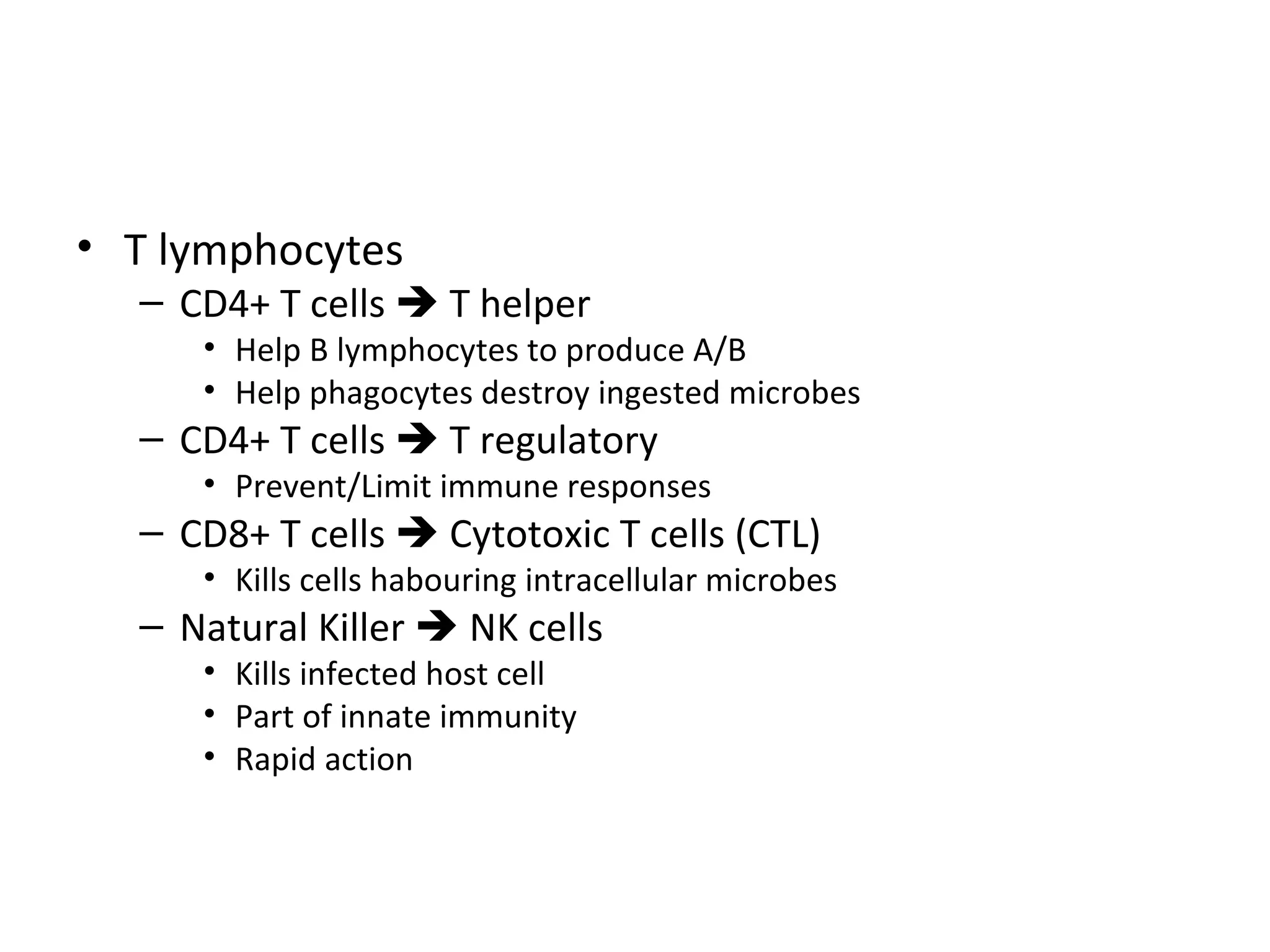
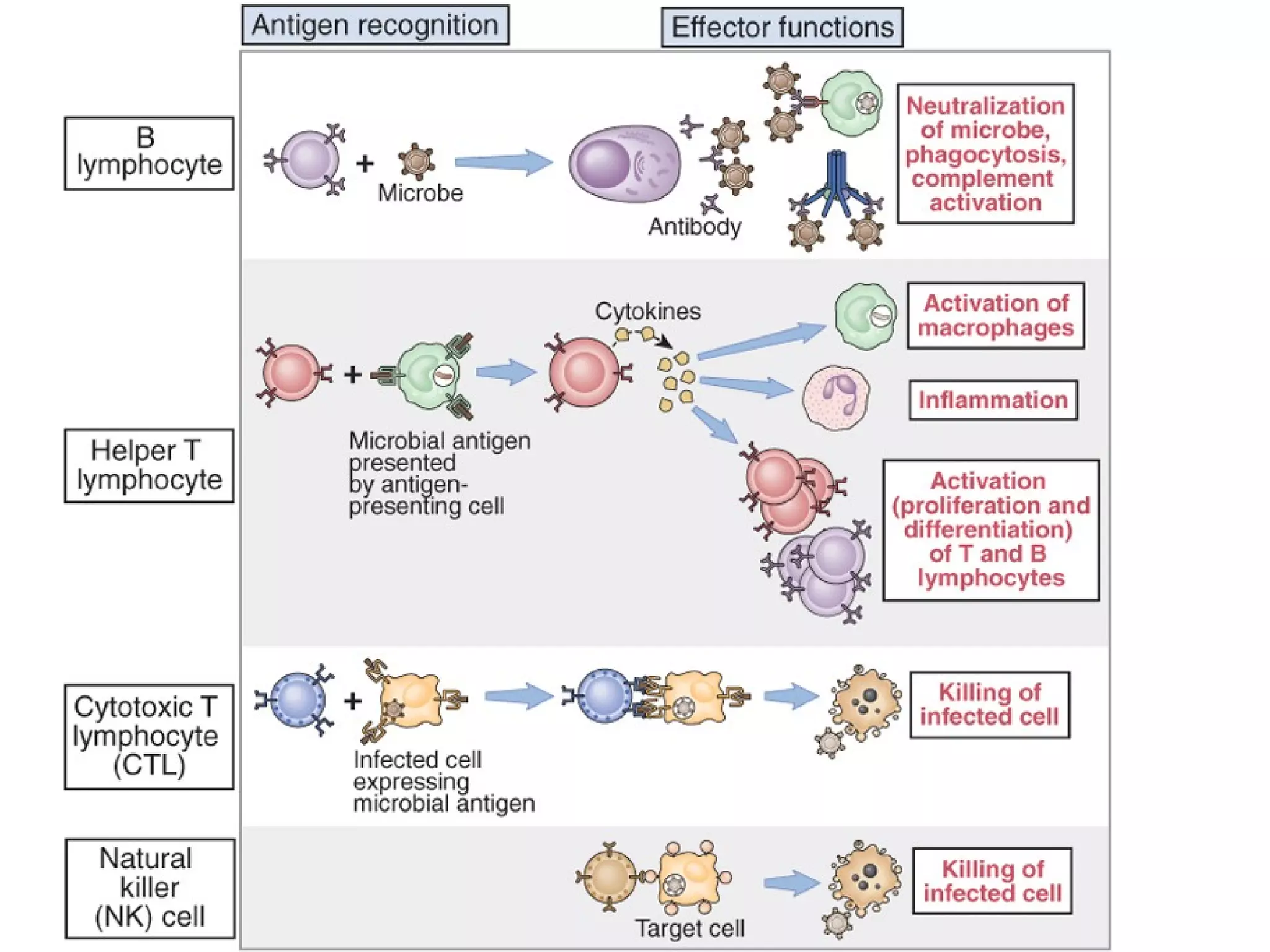
T lymphocytes CD4+ T cells    T helper Help B lymphocytes to produce A/B Help phagocytes destroy ingested microbes CD4+ T cells    T regulatory Prevent/Limit immune responses CD8+ T cells    Cytotoxic T cells (CTL) Kills cells habouring intracellular microbes Natural Killer    NK cells Kills infected host cell Part of innate immunity Rapid action
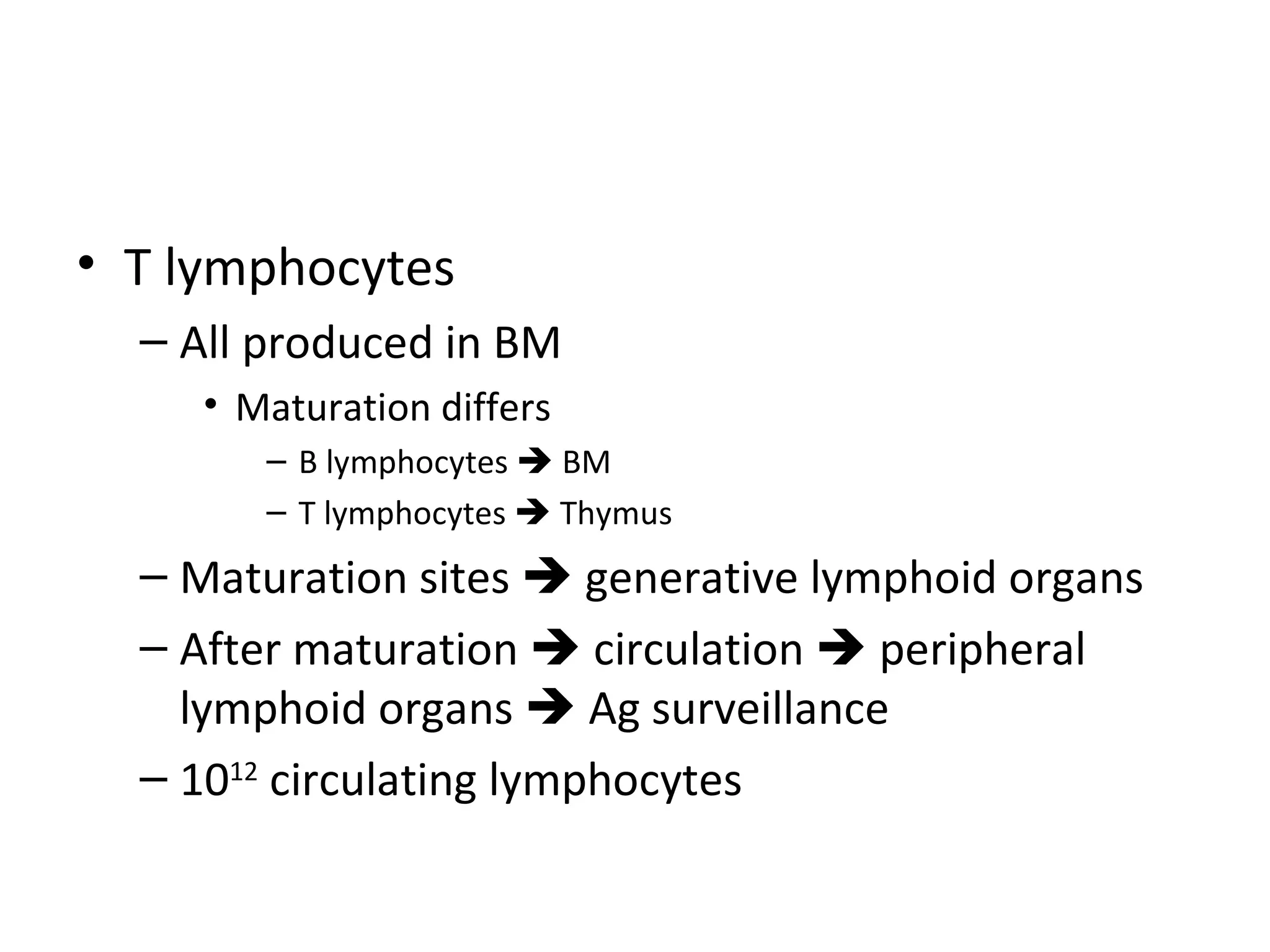
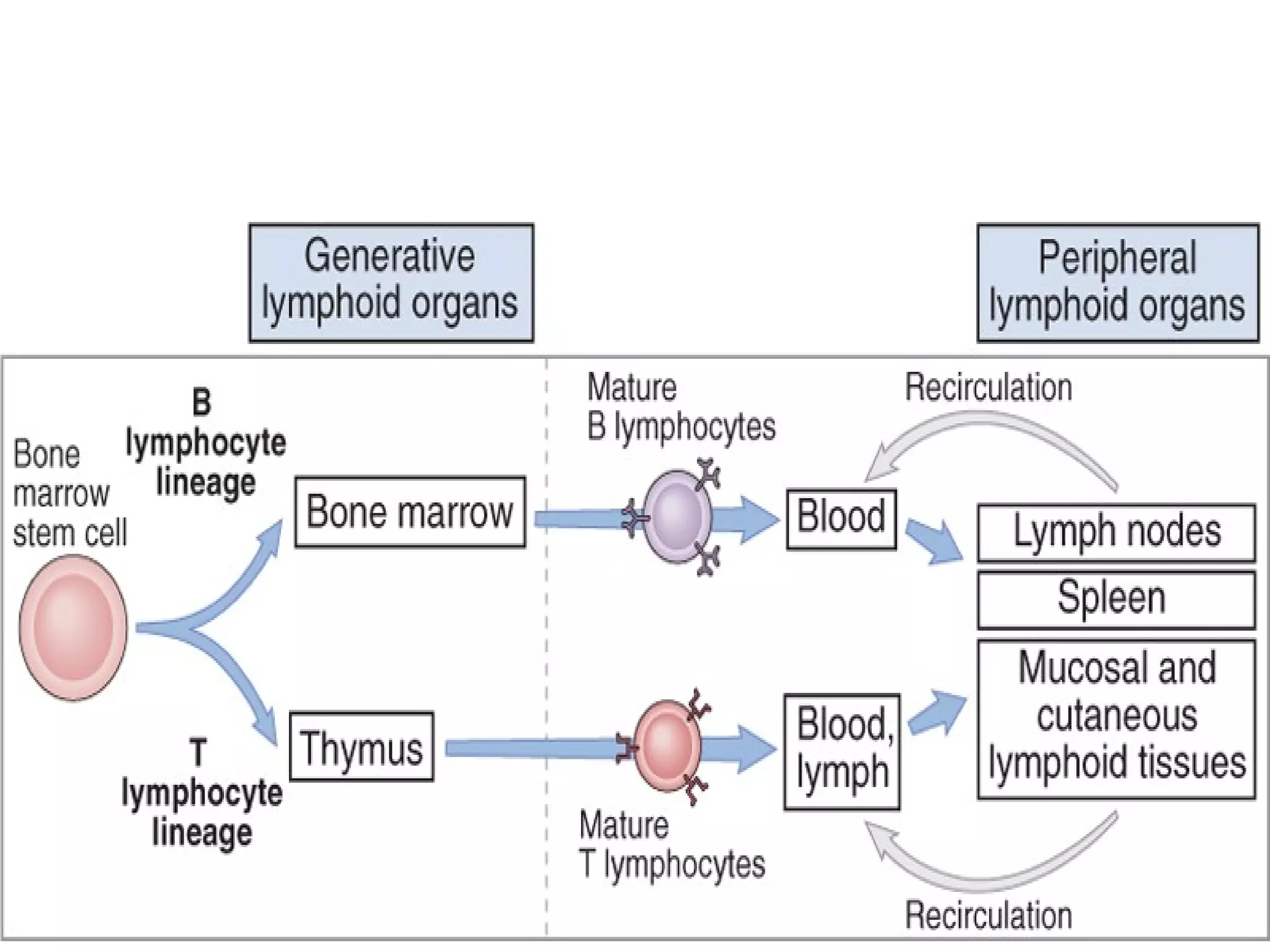
T lymphocytes All produced in BM Maturation differs B lymphocytes    BM T lymphocytes    Thymus Maturation sites    generative lymphoid organs After maturation    circulation    peripheral lymphoid organs    Ag surveillance 10 12  circulating lymphocytes
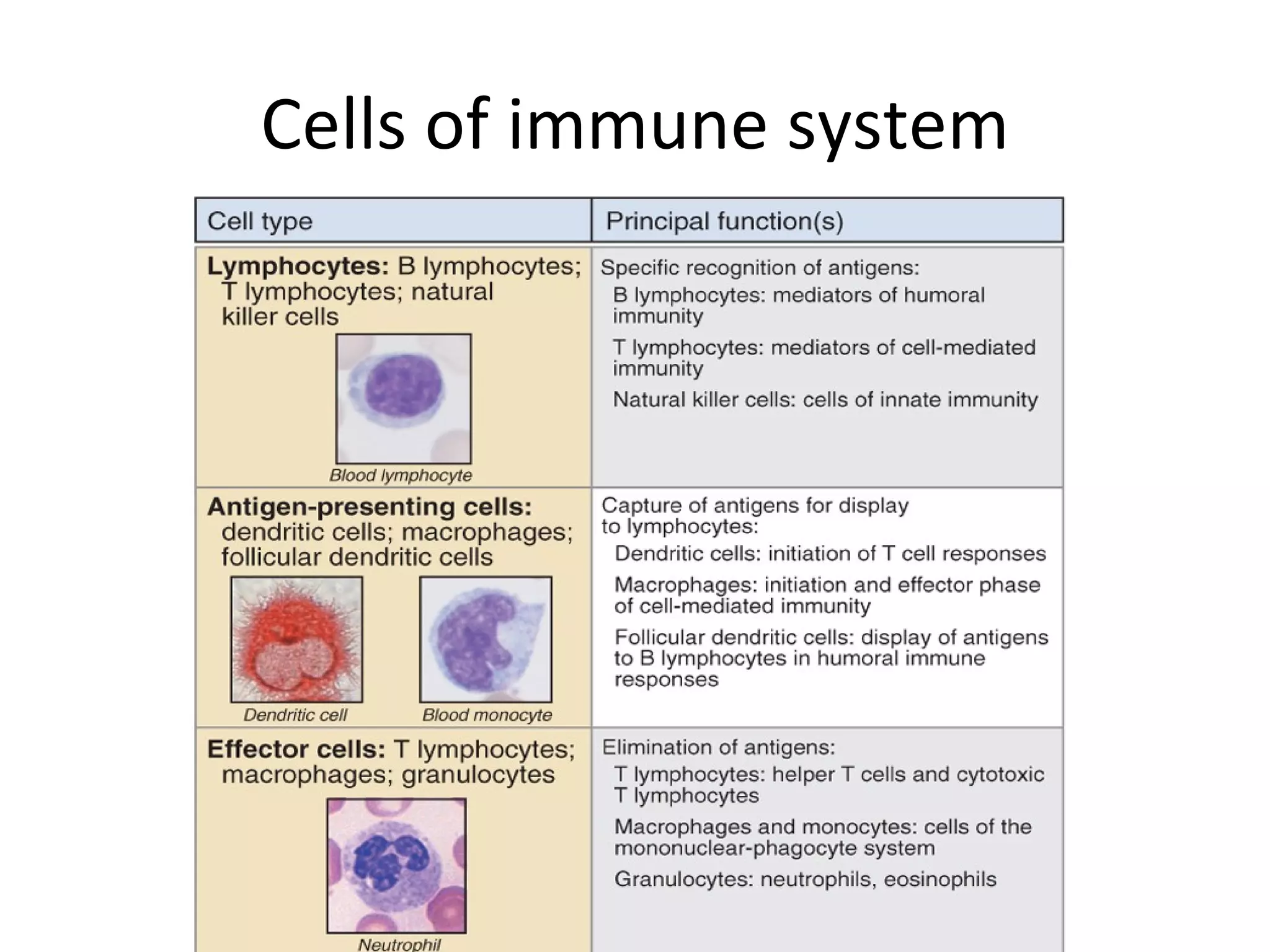
Cells of immune system
 
 
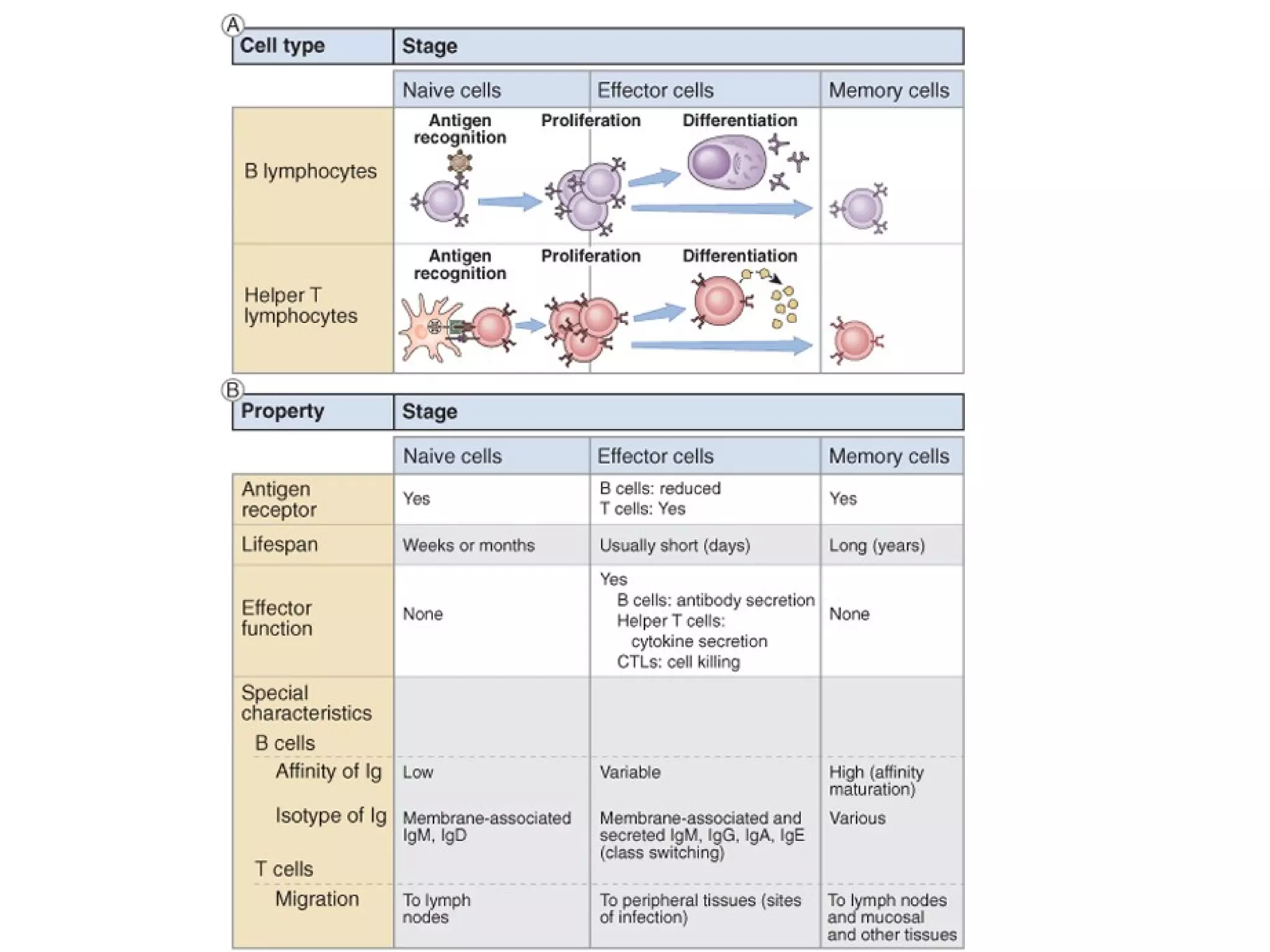
Naïve lymphocytes    circulates to detect Ag If no Ag encounter    apoptosis If Ag encounter    Differentiate into effector cells B lymphocyte    plasma cells T lymphocytes    Th, CTL Effector cells    short t ½  After infection    Memory cells (B&T lymphocytes)
Newborn: <5% circulating lymphocytes are memory cells Adult: up to 50% are memory cells
 
Antigen Presenting Cells Dendritic cells GIT, Skin, Resp tract Capture Ag that manage to breach epithelium Capture Ag    LN    present Ag to T lymphocyte Macrophages Phagocytose Ag Present Ag to T lymphocytes Follicular dendritic cells (FDC) Germinal centers of lymphoid follicles Present Ag to B lymphocytes only Induce B lymphocyte differentiation
Granulocytes, macrophages Innate/Adaptive immunity
Tissues of the Immune System Generative(Primary/Central) lymphoid organs BM    B cells maturation Thymus    T cells maturation Peripheral (Secondary) lymphoid organs LN Spleen Mucosal/ cutaneous immune systems Peyer’s patches, Waldeyer’s ring To optimize APC-Lymphocyte interaction
Lymph nodes Lymphoid tissue located along lymphatic channels Fluid from epithelia, connective tissue, parencyma organs    Lymph    LN Ensure APC able to present Ag to lymphocytes Enable APC in LN to sample Ag
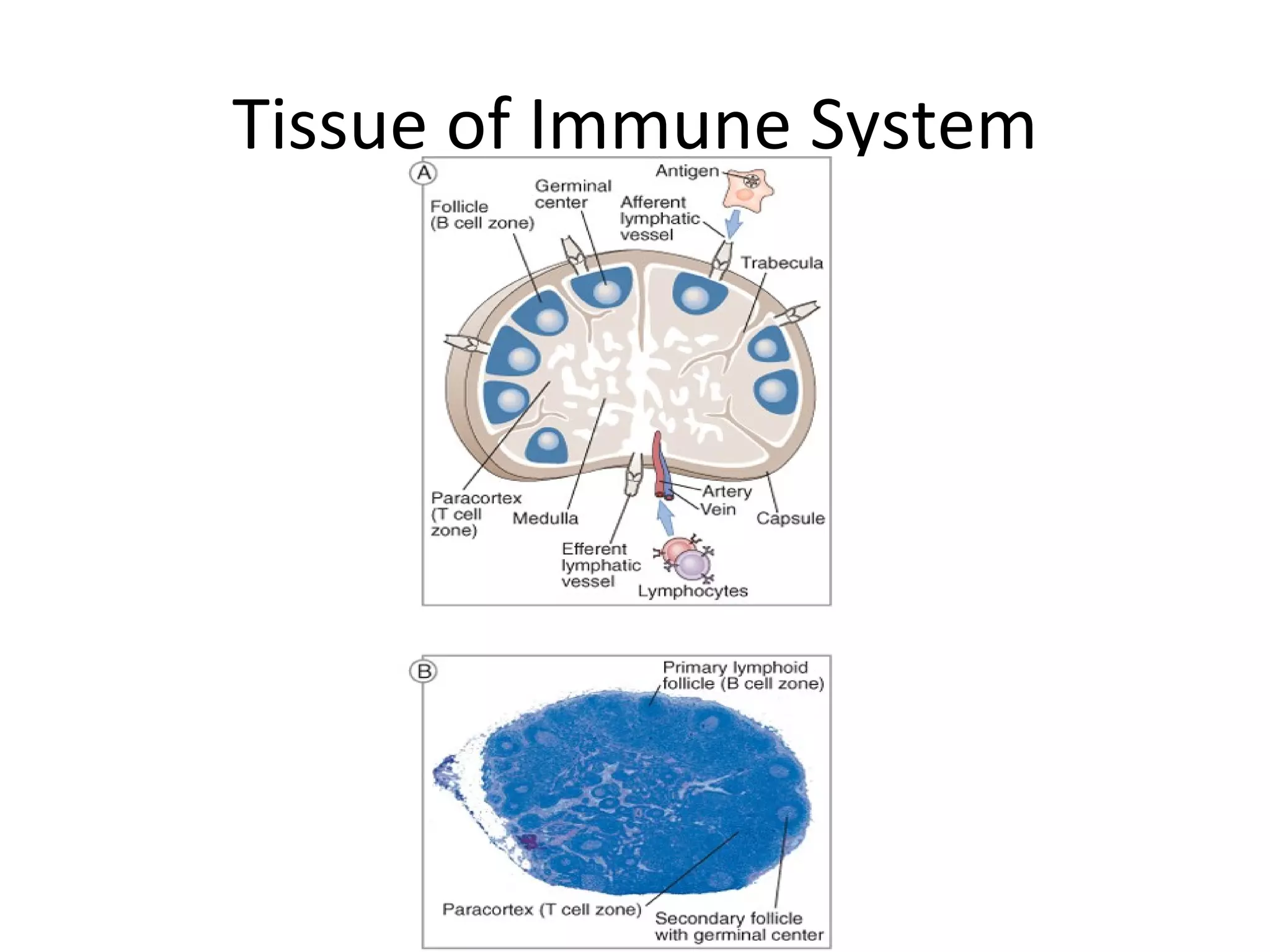
Lymph nodes B cells    concentrated in follicles Cortex of LN Germinal center present if recent exposure to Ag Contains follicular dendritic cells (FDC) T cells    paracortex Adjacent to follicle Contains dendritic cells
Tissue of Immune System
 
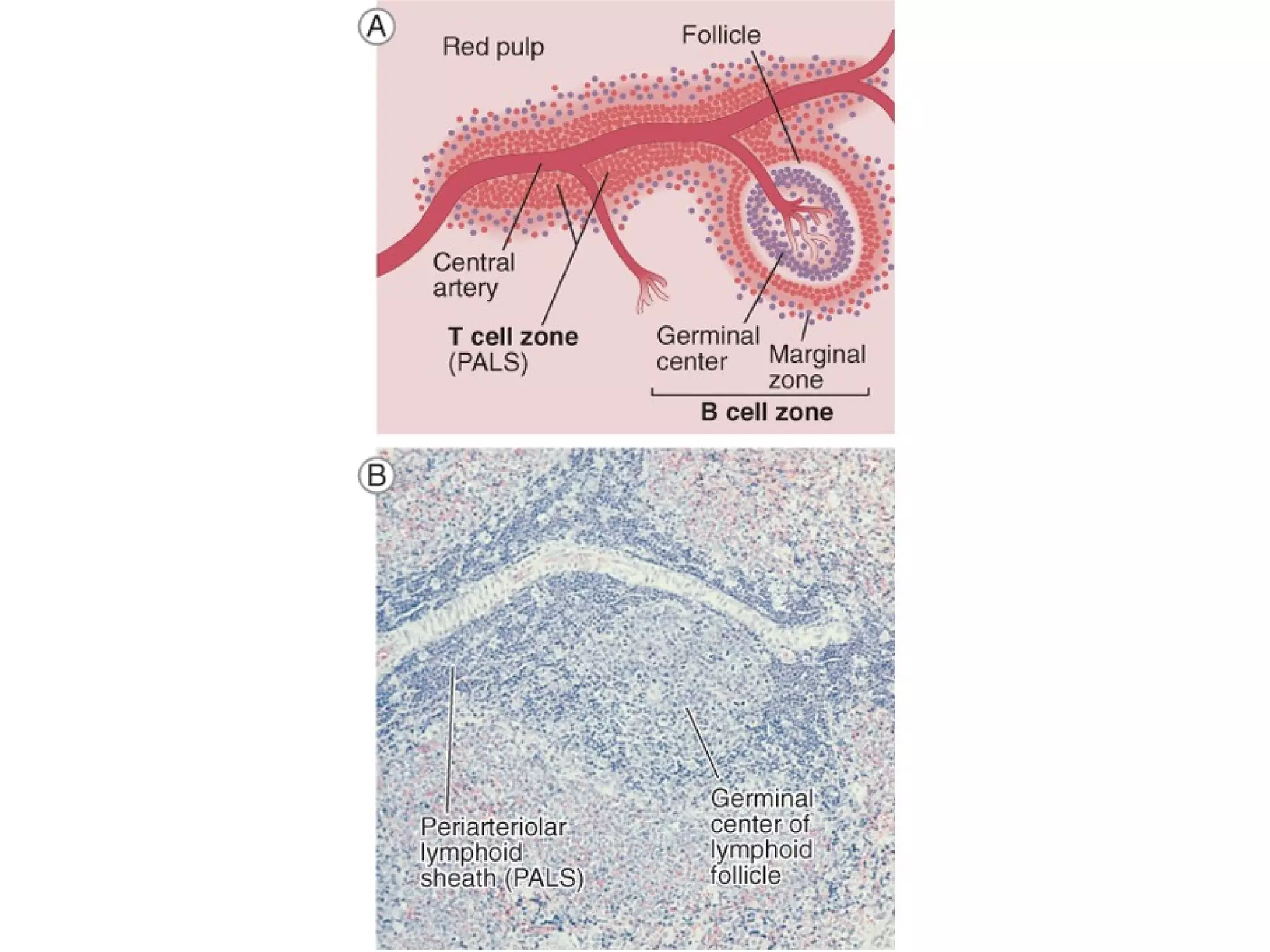
Spleen Detect blood borne Ag Blood enters spleen through network of channels (sinusoids)    Ag trapped by dendritic cells/macrophages in spleen T cells concentrated in periarteriolar lymphoid sheaths (PALS) B cells concentrated in follicles
 
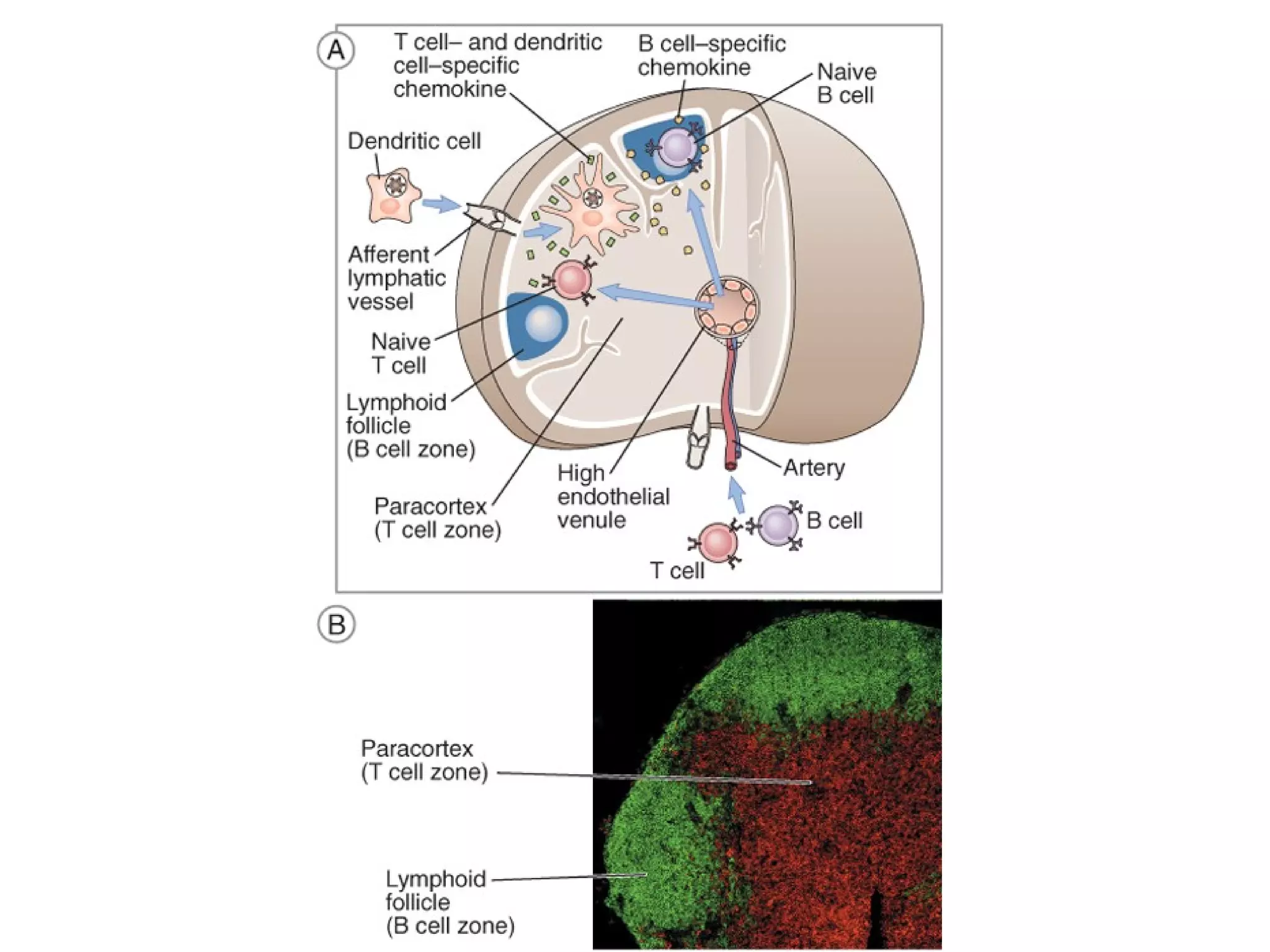
Why do cells concentrate at specific sites  Chemoattractants (chemokines secreted by FDCs, naïve T cells expressed CCR7) Once naïve cells are activated, they change their expression of chemokine receptors and take on a new role
Lymphocyte circulation and migration into tissues Discussion focused on LN & T cells Unsure- B cell circulation Splenic circulation/other lymphoid tissues Spleen- no HEVs General pattern of migration ?similar to LN Matters most for T cells B cells produce A/B which can circulate to targets. Effector B cells remain in LN
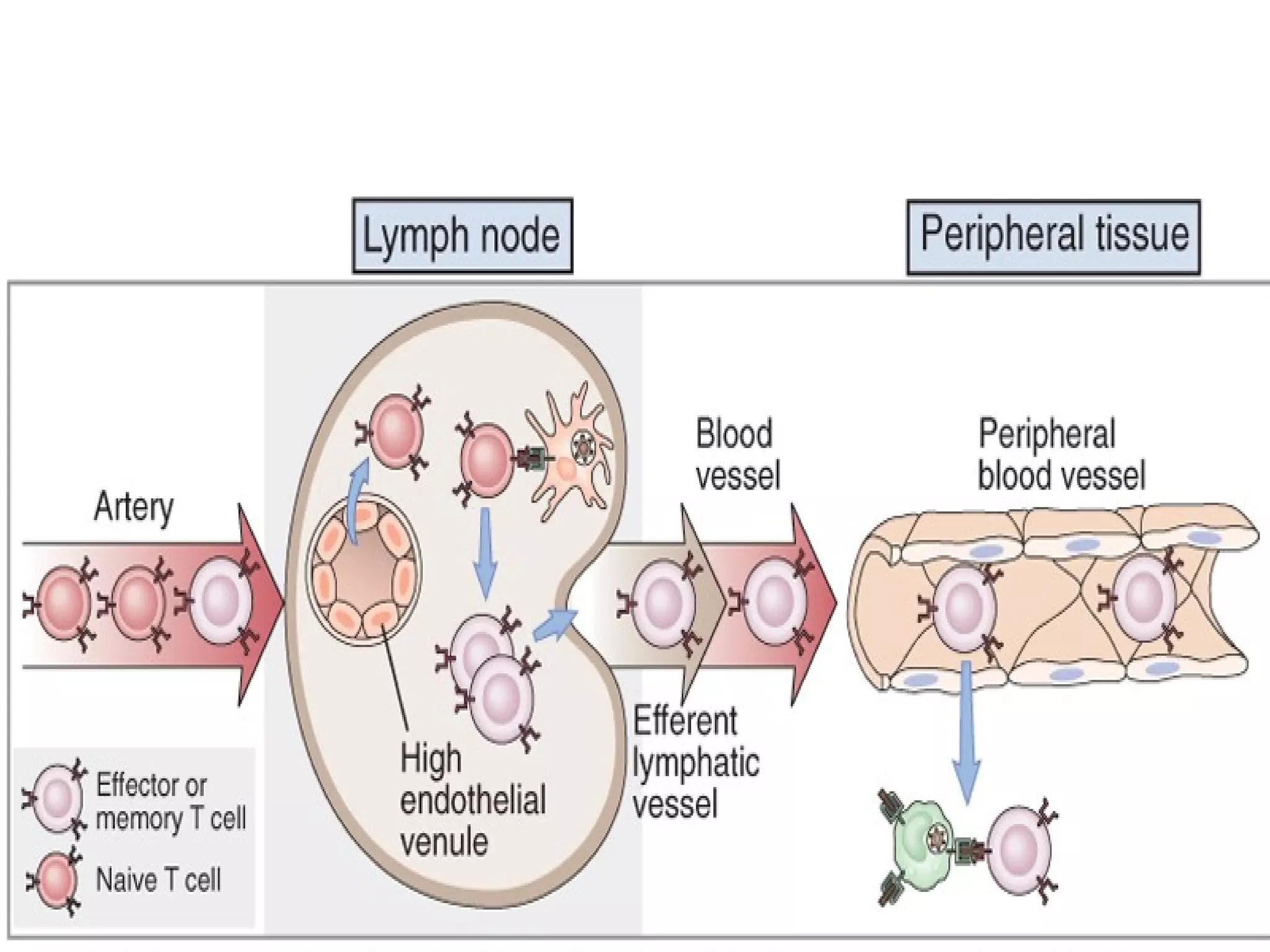
Naïve T cells enters LN via specialized post-capillary venules (High Endothelial Venules-HEVs) Naïve T cells express L-selectin (involved in cell-cell adhesion)    binds to carbohydrate ligands on HEVs    migrate through HEVs to specific sites in response to chemokine secretion    moves around LN    scans APCs searching for Ag    Ag recognized    forms stable conjugates with APCs    T cell activation
Random events Most T cells circulates through some LN at least once daily Likelihood of correct T cells finding its Ag is increased in peripheral lymphoid organs d/t this Ag/T cells concentration After T cell activation    reduce expression of adhesion molecules and certain chemokine recpetors    increase expression of other chemokine (sphingosine-1-PO4)    Migrates out of LN into blood circulation    Infected site
 
Summary of immune response Innate Immunity Epithelia Physical and functional barrier Natural anti-microbial agents Microbes able to traverse epithelia,    2 nd  defense mechanism Phagocytes (macrophages/neutrophils)  Ingest microbes into vesicles Cytokine secretion    adaptive immunity
NK cells kills virus infected cells Produce macrophage activating cytokine interferon γ (IFN-γ) Complement    coat (opsonize) microbe
Adaptive immunity 3 main strategies Antibody secretion    promote ingestion and destruction by phagocytes T h    Enhance phagocytosis CTLs    destroys cells infected by microbes that are inassessible to A/B Antigen capture and display  Naïve T cells (MHC associated TCR)- Peptide sequences B cells- Peptide/non peptide sequences Complement activation
Cell mediated immunity T cell stimulation    effector T cells Th Cytokine production and expression of cell surface molecules Bind to B cells    A/B production Bind to Macrophages    stimulate phagocytosis Recruit/Activate neutrophils CTLs Kills cells in cytoplasm Also kills bacteria phagocytosed but escape killing by macrophages
Humoral Immunity Full response requires Th B cells ingest protein Ag    degrade them    display to Th    activate B cells Polysaccharide and lipids stimulate IgM Protein Ag stimulates Th    induce B cells to produce IgG, A, E Production of different A/B with different Fx but with same specificity    heavy chain class (isotype) switching
Th stimulate A/B with higher and higher affinity towards Ag    Affinity maturation How humoral response combat infection A/B binds microbes    neutralizing A/B coats microbes (opsonize)   Phagocytosis A/B activates complement Complement stimulates phagocytosis
Immune contraction and homeostasis Effector lymphocyte undergoes apoptosis after elimination of microbe Return of immune system to basal resting state (homeostasis) B & T memory cells More rapid and effective immune response
 

Intro Immune

  • 1.
    Immunology for the non-immunologist
  • 2.
    Introduction to the Immune System
  • 3.
  • 4.
  • 5.
    Questions to beanswered * What types of immune responses protect individuals from infections? * What are the important characteristics of immunity, and what mechanisms are responsible for these characteristics? * How are the cells and tissues of the immune system organized to find microbes and respond to them in ways that lead to their elimination?
  • 6.
  • 7.
    Immune system Innate(Natural/native)Epithelial barriers Phagocytes and NK cells Complement Antibodies Adaptive (specific/accquired) Humoral Cell mediated
  • 8.
    Innate- respond tostructures shared by microbes Adaptive- respond to specific antigens presented to lymphocytes Only triggered if microbes passes through innate immunity Innate immunity  Adaptive immunity Immune response = adaptive immunity unless specified
  • 9.
    Adaptive Immunity Humoralimmunity B lymphocytes Antibodies Secreted into circulation and mucosal fluids Neutralize and eliminate microbes and toxins outside the host cells (blood/mucosal organs-GIT, resp) Prevents infection from getting into cells Cannot enter cells to kill microbes Recognize different types of molecules- proteins, carbohydrate, lipids
  • 10.
    Adaptive Immunity Cellularimmunity T lymphocytes Activate phagocytes to destroy microbes Kill host cell infected by microbes Recognize only protein antigens
  • 11.
    Active Immunity InfectionVaccination Passive immunity Transfer of antibodies/lymphocytes from immunized individual Active only during t ½ of antibodies/lymphocytes Rapid immunity (before body mounts active response)
  • 12.
    Immune individual Antigenexposure Naïve individual Never have antigen exposure
  • 13.
  • 14.
    Properties of AdaptiveImmune Responses
  • 15.
    Specificity/Diversity Clonal selectionhypothesis Lymphocytes specific for different Ag already present even before Ag ancounter (diverse lymphocytes repertoire) Each lymphocyte is made up of many different clones
  • 16.
    Memory Primary immuneresponse Naïve lymphocytes (immunologically inexperience) Secondary immune response Subsequent exposure to same Ag Larger and more effective response Occurs d/t memory lymphocytes (long lived) induced during primary response Basis of vaccination
  • 17.
  • 18.
    Clonal selection/expansion Antigenactivates lymphocytes  proliferation  clonal progeny cells specific to particular Antigen (specialized clonal expansion) Infection overcomed  contraction and homeostasis
  • 19.
  • 20.
    Cells of theimmune system Lymphocytes Only cells that produce specific receptors for specific Ag Key mediators of adaptive immunity Many subtypes differentiated by (Cluster of Differentiation) B lymphocytes T lymphocytes NK cells
  • 21.
    B lymphocytes Onlycells capable of producing A/B Mediate humoral immunity A/B also expressed on membrane to recognize Ag T lymphocytes Only recognize peptide fragments that are presented via a specialized display molecule: Major Histocompatibility Complex (MHC) on specialized cells (Antigen Presenting Cells-APC)
  • 22.
    T lymphocytes CD4+T cells  T helper Help B lymphocytes to produce A/B Help phagocytes destroy ingested microbes CD4+ T cells  T regulatory Prevent/Limit immune responses CD8+ T cells  Cytotoxic T cells (CTL) Kills cells habouring intracellular microbes Natural Killer  NK cells Kills infected host cell Part of innate immunity Rapid action
  • 23.
    T lymphocytes Allproduced in BM Maturation differs B lymphocytes  BM T lymphocytes  Thymus Maturation sites  generative lymphoid organs After maturation  circulation  peripheral lymphoid organs  Ag surveillance 10 12 circulating lymphocytes
  • 24.
  • 25.
  • 26.
  • 27.
    Naïve lymphocytes  circulates to detect Ag If no Ag encounter  apoptosis If Ag encounter  Differentiate into effector cells B lymphocyte  plasma cells T lymphocytes  Th, CTL Effector cells  short t ½ After infection  Memory cells (B&T lymphocytes)
  • 28.
    Newborn: <5% circulatinglymphocytes are memory cells Adult: up to 50% are memory cells
  • 29.
  • 30.
    Antigen Presenting CellsDendritic cells GIT, Skin, Resp tract Capture Ag that manage to breach epithelium Capture Ag  LN  present Ag to T lymphocyte Macrophages Phagocytose Ag Present Ag to T lymphocytes Follicular dendritic cells (FDC) Germinal centers of lymphoid follicles Present Ag to B lymphocytes only Induce B lymphocyte differentiation
  • 31.
  • 32.
    Tissues of theImmune System Generative(Primary/Central) lymphoid organs BM  B cells maturation Thymus  T cells maturation Peripheral (Secondary) lymphoid organs LN Spleen Mucosal/ cutaneous immune systems Peyer’s patches, Waldeyer’s ring To optimize APC-Lymphocyte interaction
  • 33.
    Lymph nodes Lymphoidtissue located along lymphatic channels Fluid from epithelia, connective tissue, parencyma organs  Lymph  LN Ensure APC able to present Ag to lymphocytes Enable APC in LN to sample Ag
  • 34.
    Lymph nodes Bcells  concentrated in follicles Cortex of LN Germinal center present if recent exposure to Ag Contains follicular dendritic cells (FDC) T cells  paracortex Adjacent to follicle Contains dendritic cells
  • 35.
  • 36.
  • 37.
    Spleen Detect bloodborne Ag Blood enters spleen through network of channels (sinusoids)  Ag trapped by dendritic cells/macrophages in spleen T cells concentrated in periarteriolar lymphoid sheaths (PALS) B cells concentrated in follicles
  • 38.
  • 39.
    Why do cellsconcentrate at specific sites Chemoattractants (chemokines secreted by FDCs, naïve T cells expressed CCR7) Once naïve cells are activated, they change their expression of chemokine receptors and take on a new role
  • 40.
    Lymphocyte circulation andmigration into tissues Discussion focused on LN & T cells Unsure- B cell circulation Splenic circulation/other lymphoid tissues Spleen- no HEVs General pattern of migration ?similar to LN Matters most for T cells B cells produce A/B which can circulate to targets. Effector B cells remain in LN
  • 41.
    Naïve T cellsenters LN via specialized post-capillary venules (High Endothelial Venules-HEVs) Naïve T cells express L-selectin (involved in cell-cell adhesion)  binds to carbohydrate ligands on HEVs  migrate through HEVs to specific sites in response to chemokine secretion  moves around LN  scans APCs searching for Ag  Ag recognized  forms stable conjugates with APCs  T cell activation
  • 42.
    Random events MostT cells circulates through some LN at least once daily Likelihood of correct T cells finding its Ag is increased in peripheral lymphoid organs d/t this Ag/T cells concentration After T cell activation  reduce expression of adhesion molecules and certain chemokine recpetors  increase expression of other chemokine (sphingosine-1-PO4)  Migrates out of LN into blood circulation  Infected site
  • 43.
  • 44.
    Summary of immuneresponse Innate Immunity Epithelia Physical and functional barrier Natural anti-microbial agents Microbes able to traverse epithelia,  2 nd defense mechanism Phagocytes (macrophages/neutrophils) Ingest microbes into vesicles Cytokine secretion  adaptive immunity
  • 45.
    NK cells killsvirus infected cells Produce macrophage activating cytokine interferon γ (IFN-γ) Complement  coat (opsonize) microbe
  • 46.
    Adaptive immunity 3main strategies Antibody secretion  promote ingestion and destruction by phagocytes T h  Enhance phagocytosis CTLs  destroys cells infected by microbes that are inassessible to A/B Antigen capture and display Naïve T cells (MHC associated TCR)- Peptide sequences B cells- Peptide/non peptide sequences Complement activation
  • 47.
    Cell mediated immunityT cell stimulation  effector T cells Th Cytokine production and expression of cell surface molecules Bind to B cells  A/B production Bind to Macrophages  stimulate phagocytosis Recruit/Activate neutrophils CTLs Kills cells in cytoplasm Also kills bacteria phagocytosed but escape killing by macrophages
  • 48.
    Humoral Immunity Fullresponse requires Th B cells ingest protein Ag  degrade them  display to Th  activate B cells Polysaccharide and lipids stimulate IgM Protein Ag stimulates Th  induce B cells to produce IgG, A, E Production of different A/B with different Fx but with same specificity  heavy chain class (isotype) switching
  • 49.
    Th stimulate A/Bwith higher and higher affinity towards Ag  Affinity maturation How humoral response combat infection A/B binds microbes  neutralizing A/B coats microbes (opsonize)  Phagocytosis A/B activates complement Complement stimulates phagocytosis
  • 50.
    Immune contraction andhomeostasis Effector lymphocyte undergoes apoptosis after elimination of microbe Return of immune system to basal resting state (homeostasis) B & T memory cells More rapid and effective immune response
  • 51.