Student Engagement August 2010
Focus for 2010-2011 Student engagement in mathematics and for EL students.
 
Deep Alignment Written Taught Tested Curriculum Instruction Assessment
Instructional Rounds The power of rounds will only be realized when and if rounds becomes embedded in the actual work of the district.  Only if rounds develops a collaborative, inquiry-based culture that shatters the norms of isolation and autonomy and if it leads to the establishment of an “educational practice” that trumps the notion of teaching as an art, a craft, or a style will rounds transform teaching and learning.
Deprivatizing Practice Slowly, the image of the teacher behind the closed classroom door is giving way to an image of an open door, but many educators are not sure what to look for when they open the door and what to do with what they see.
Four Step Process Identifying a problem of practice Observing Approx. 20 minutes each Debriefing Focusing on next level of work
Instructional Core The only way that teaching and learning can improve is through changes in the relationships of students and teachers in the presence of content.
Seven Principles of the Instructional Core Increases in student learning occur only as a consequence of improvements in the level of content, teachers’ knowledge and skill, and student engagement. If you change any single element of the instructional core, you have to change the other two. If you can’t see it in the core, it’s not there. Task predicts performance. The real accountability system is in the tasks that students are asked to do. We learn the work by doing the work, not by telling other people to do the work, not by having done the work at some time in the past, and not by hiring experts who can act as proxies for our knowledge about how to do the work. Description before analysis, analysis before prediction, prediction before evaluation.
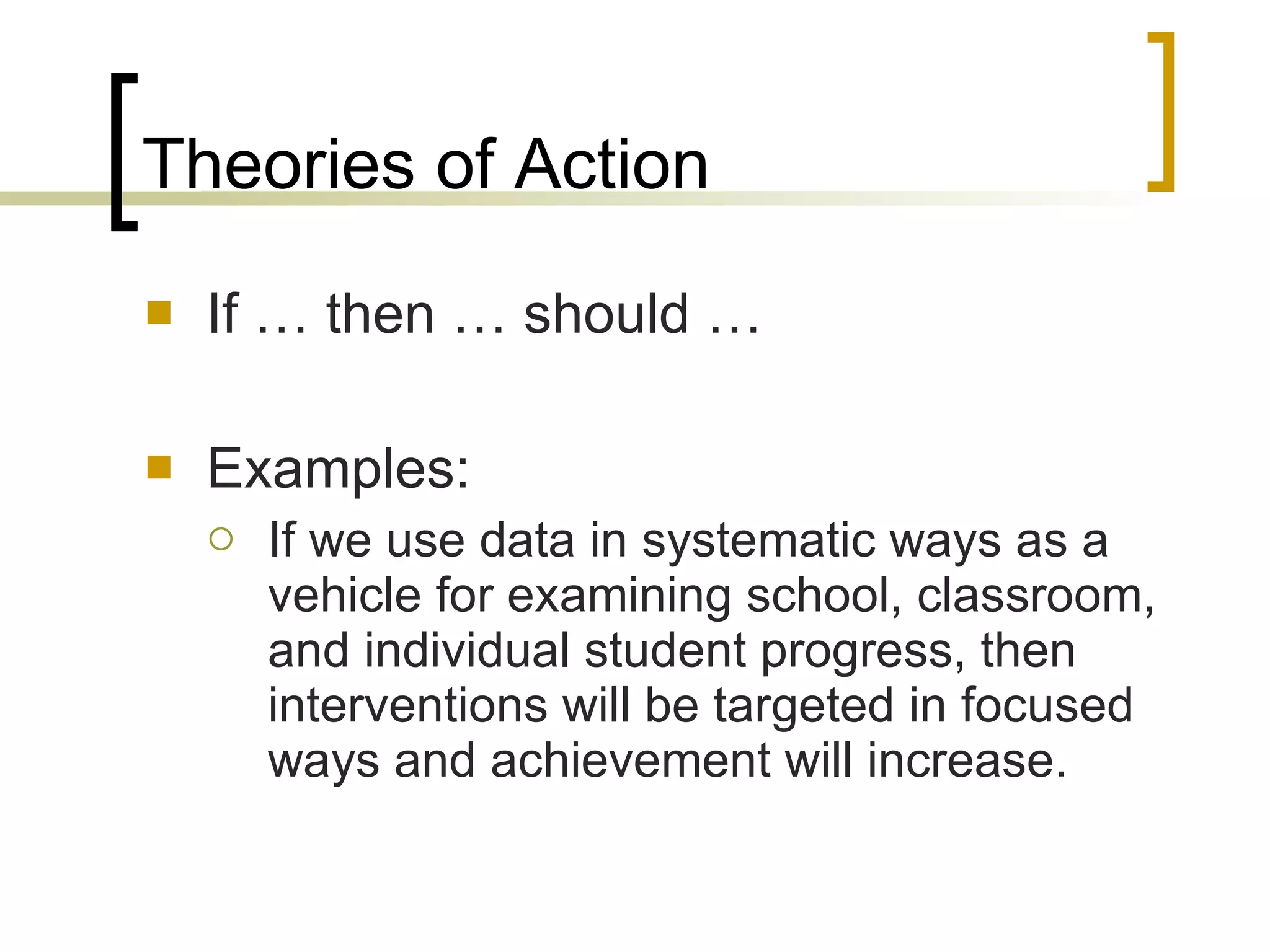
Theories of Action If … then … should …  Examples: If we use data in systematic ways as a vehicle for examining school, classroom, and individual student progress, then interventions will be targeted in focused ways and achievement will increase.
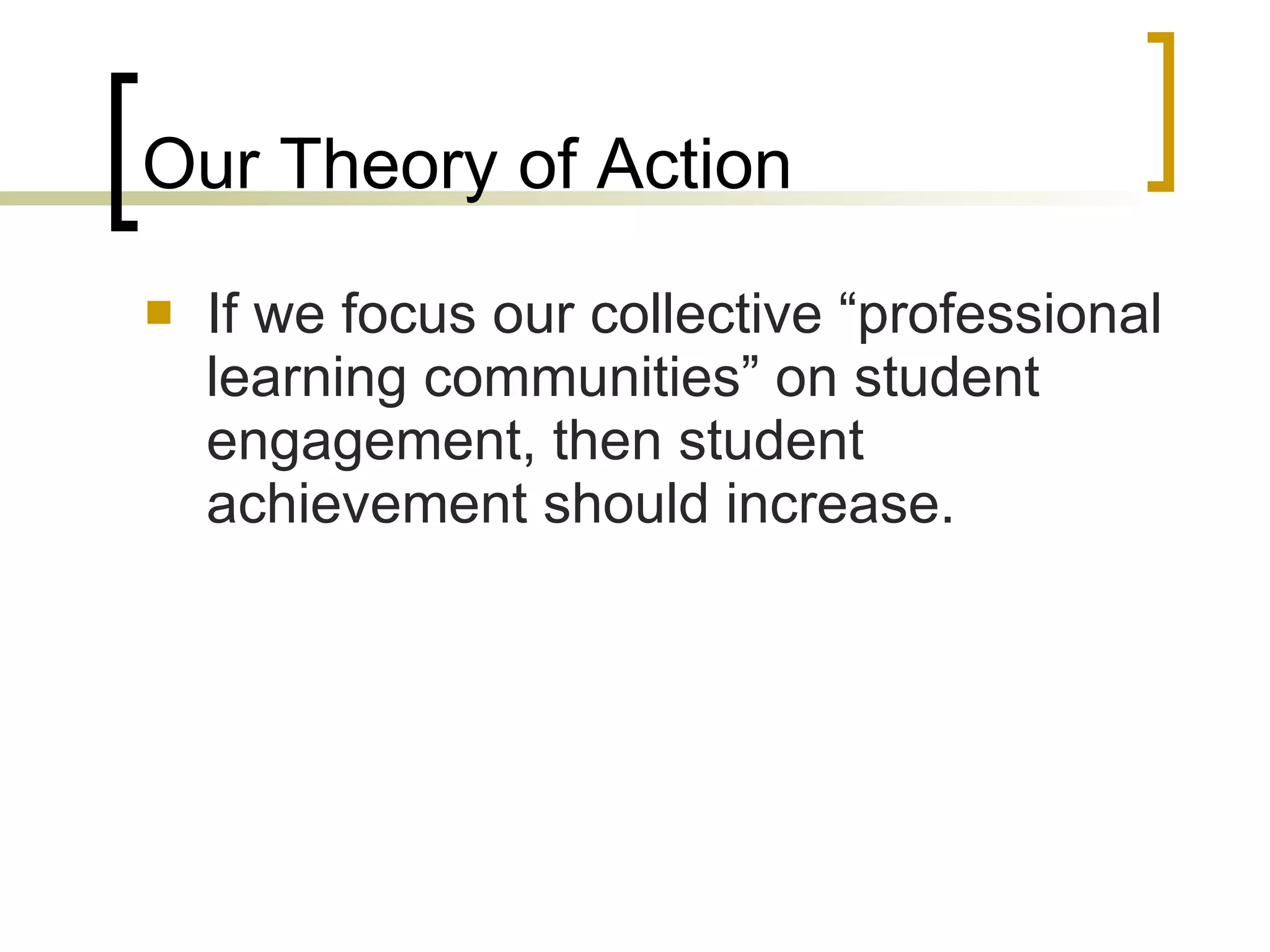
Our Theory of Action If we focus our collective “professional learning communities” on student engagement, then student achievement should increase.
Goals of Rounds Process Understand importance of instructional core Understand the steps of instructional rounds Develop skills in observing teaching and learning—describing what we see Develop skills in debriefing an observation Build relationships within the group Validate (or not) our theory of action
Engagement Strategies
Flip Videos
Flip Video Cameras
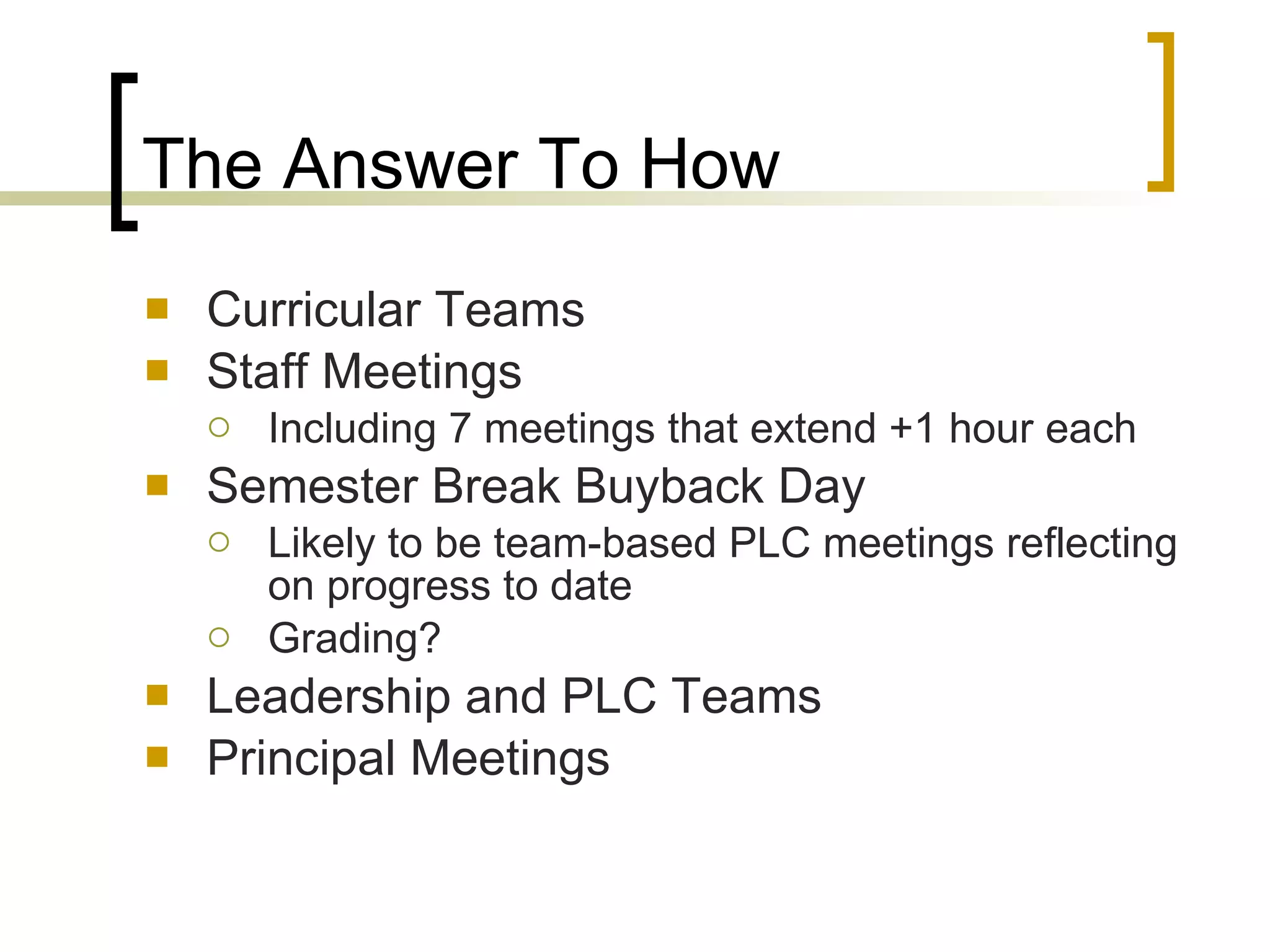
The Answer To How Curricular Teams Staff Meetings Including 7 meetings that extend +1 hour each Semester Break Buyback Day Likely to be team-based PLC meetings reflecting on progress to date Grading? Leadership and PLC Teams Principal Meetings
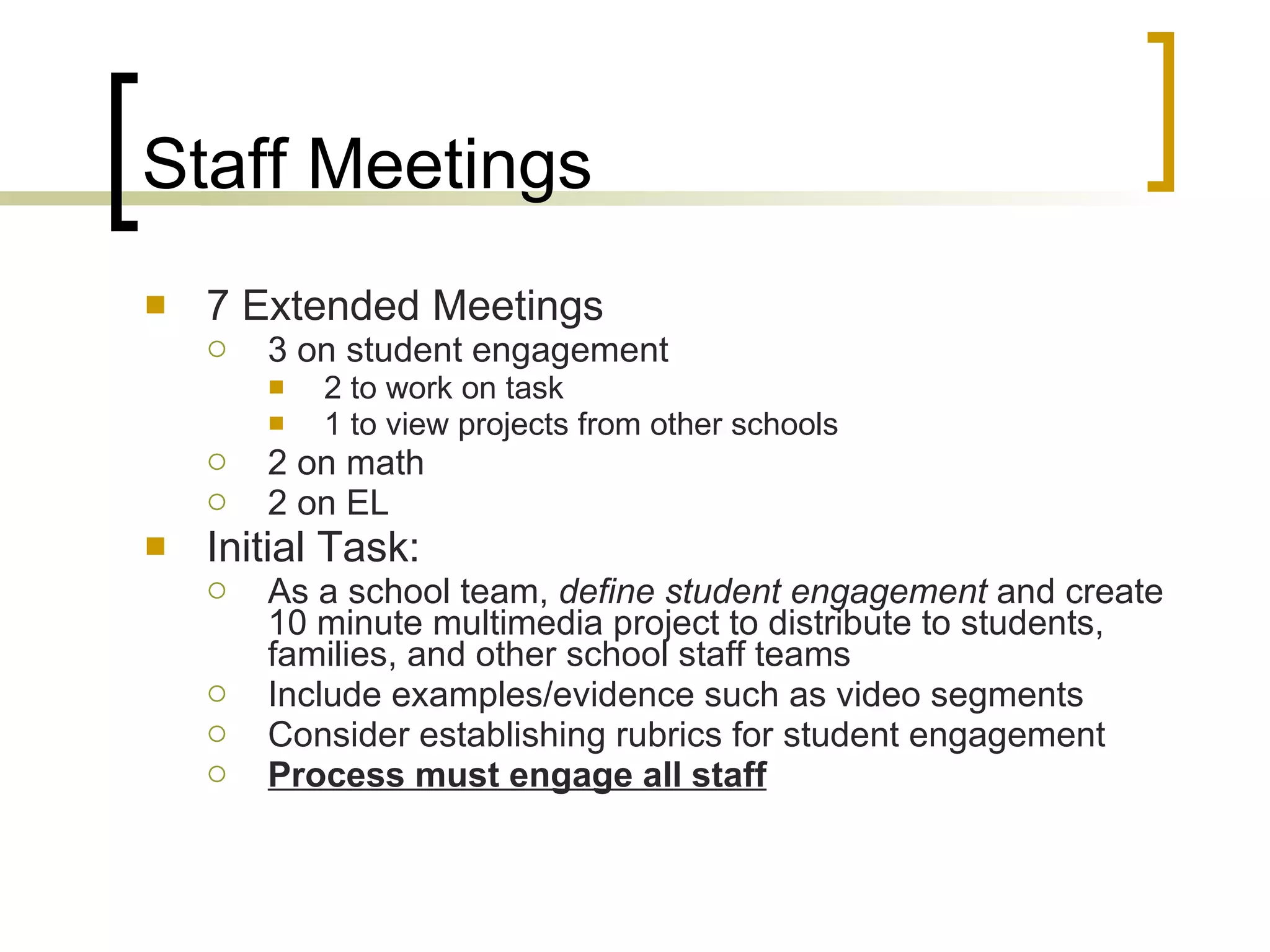
Staff Meetings 7 Extended Meetings 3 on student engagement 2 to work on task 1 to view projects from other schools 2 on math 2 on EL Initial Task: As a school team,  define student engagement  and create 10 minute multimedia project to distribute to students, families, and other school staff teams Include examples/evidence such as video segments Consider establishing rubrics for student engagement Process must engage all staff
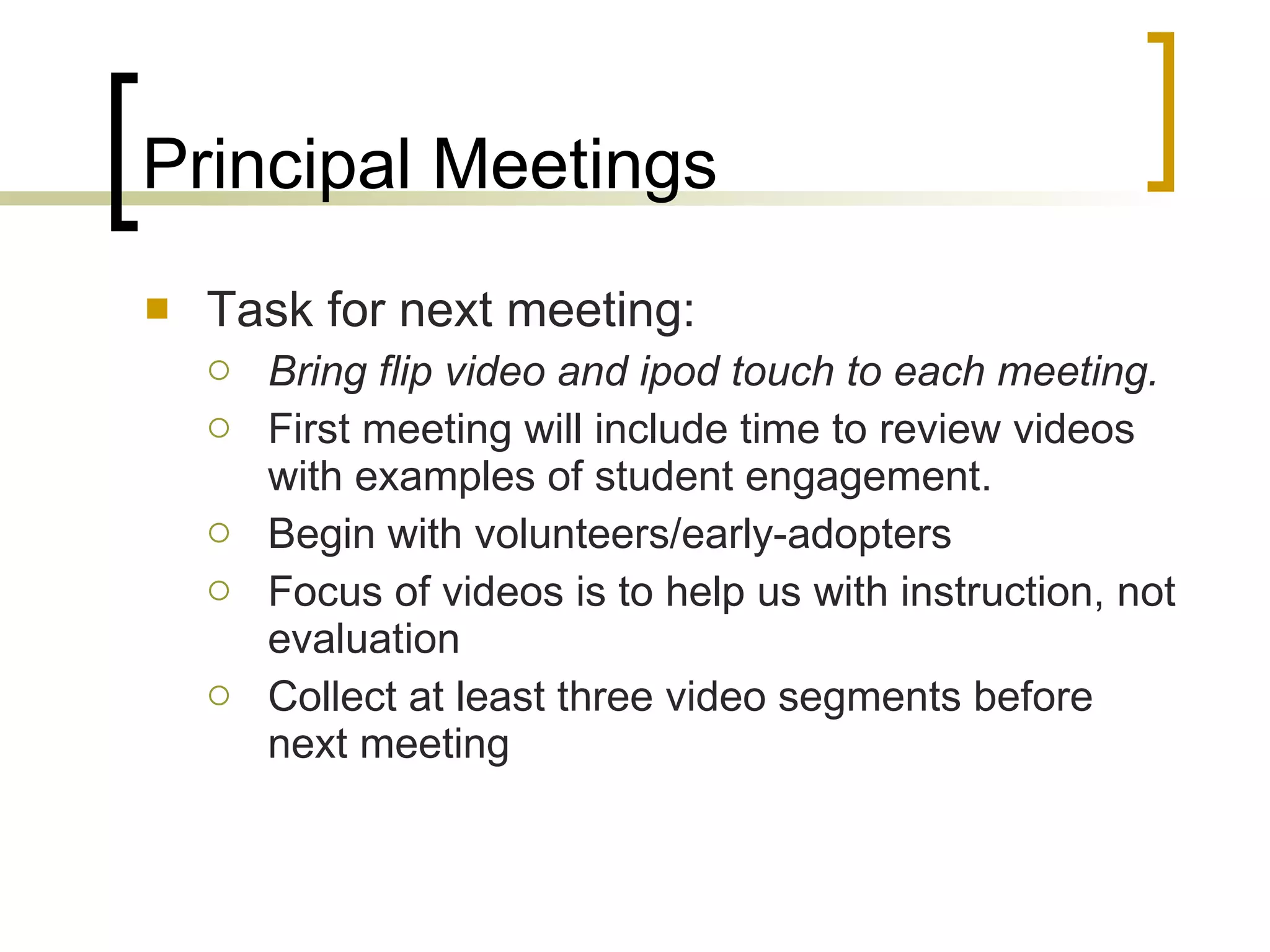
Principal Meetings Task for next meeting: Bring flip video and ipod touch to each meeting. First meeting will include time to review videos with examples of student engagement. Begin with volunteers/early-adopters Focus of videos is to help us with instruction, not evaluation Collect at least three video segments before next meeting

Rounds and Carlsbad

  • 1.
  • 2.
    Focus for 2010-2011Student engagement in mathematics and for EL students.
  • 3.
  • 4.
    Deep Alignment WrittenTaught Tested Curriculum Instruction Assessment
  • 5.
    Instructional Rounds Thepower of rounds will only be realized when and if rounds becomes embedded in the actual work of the district. Only if rounds develops a collaborative, inquiry-based culture that shatters the norms of isolation and autonomy and if it leads to the establishment of an “educational practice” that trumps the notion of teaching as an art, a craft, or a style will rounds transform teaching and learning.
  • 6.
    Deprivatizing Practice Slowly,the image of the teacher behind the closed classroom door is giving way to an image of an open door, but many educators are not sure what to look for when they open the door and what to do with what they see.
  • 7.
    Four Step ProcessIdentifying a problem of practice Observing Approx. 20 minutes each Debriefing Focusing on next level of work
  • 8.
    Instructional Core Theonly way that teaching and learning can improve is through changes in the relationships of students and teachers in the presence of content.
  • 9.
    Seven Principles ofthe Instructional Core Increases in student learning occur only as a consequence of improvements in the level of content, teachers’ knowledge and skill, and student engagement. If you change any single element of the instructional core, you have to change the other two. If you can’t see it in the core, it’s not there. Task predicts performance. The real accountability system is in the tasks that students are asked to do. We learn the work by doing the work, not by telling other people to do the work, not by having done the work at some time in the past, and not by hiring experts who can act as proxies for our knowledge about how to do the work. Description before analysis, analysis before prediction, prediction before evaluation.
  • 10.
    Theories of ActionIf … then … should … Examples: If we use data in systematic ways as a vehicle for examining school, classroom, and individual student progress, then interventions will be targeted in focused ways and achievement will increase.
  • 11.
    Our Theory ofAction If we focus our collective “professional learning communities” on student engagement, then student achievement should increase.
  • 12.
    Goals of RoundsProcess Understand importance of instructional core Understand the steps of instructional rounds Develop skills in observing teaching and learning—describing what we see Develop skills in debriefing an observation Build relationships within the group Validate (or not) our theory of action
  • 13.
  • 14.
  • 15.
  • 16.
    The Answer ToHow Curricular Teams Staff Meetings Including 7 meetings that extend +1 hour each Semester Break Buyback Day Likely to be team-based PLC meetings reflecting on progress to date Grading? Leadership and PLC Teams Principal Meetings
  • 17.
    Staff Meetings 7Extended Meetings 3 on student engagement 2 to work on task 1 to view projects from other schools 2 on math 2 on EL Initial Task: As a school team, define student engagement and create 10 minute multimedia project to distribute to students, families, and other school staff teams Include examples/evidence such as video segments Consider establishing rubrics for student engagement Process must engage all staff
  • 18.
    Principal Meetings Taskfor next meeting: Bring flip video and ipod touch to each meeting. First meeting will include time to review videos with examples of student engagement. Begin with volunteers/early-adopters Focus of videos is to help us with instruction, not evaluation Collect at least three video segments before next meeting