Post Partum HemorrhageBlood loss greater than 500mL after a vaginal birth and 1000mL after a cesareanEarly postpartum hemorrhageLate postpartum hemorrhage
Risk FactorsMultiple gestationPrevious historyUterine infectionPrecipitous birthManuel removal of placentaPitocin induction
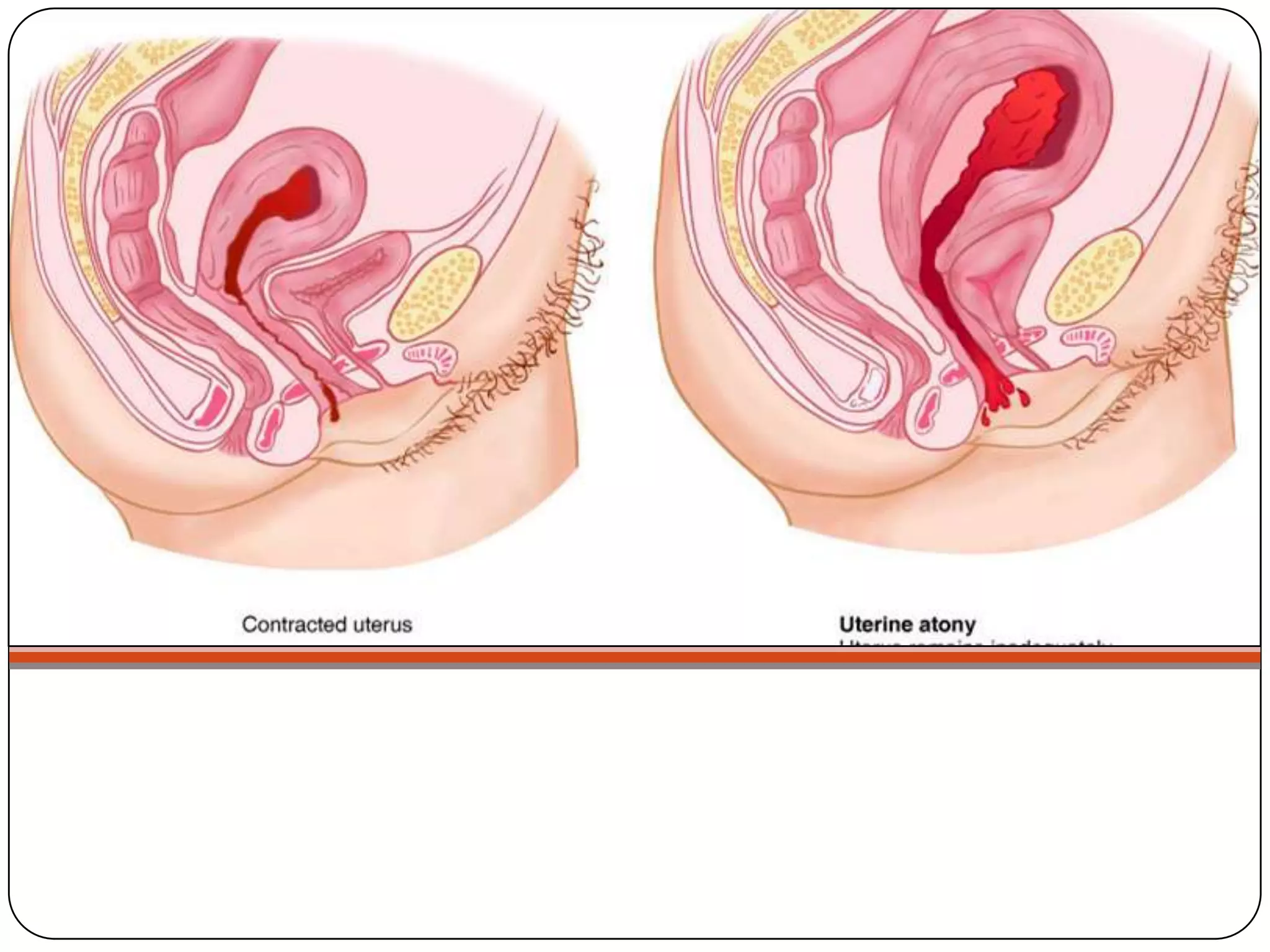
EtiologyToneTissueTraumaThrombosis
TONERelated to over distention        multifetal       macrosomia       hydramnios       retained placental fragmentsOther causes       bladder distention       anesthesia       tocolytics
Bimanuel massage
TISSUEFailure of complete separation and expulsion of the placenta does not allow the uterus to fully contractUterine subinvolution
TRAUMAAny damage to the genital tract that occurs during birth either spontaneously or through manipulation        cesarean        uterine rupture        vigorous labor, pitocin induction        manipulation        lacerations
THROMBOSISBlood clots help to prevent postpartum hemorrhageCoagulation problems:             Idiopathic Thrombocytopenia Purpura            von Willebrand Disease            DIC
Pathophysiology of Hemorrhage
Nursing Interventions for Postpartum HemorrhageUterine massageDownward pressure to expel clotsPitocin, methergineIV line, blood transfusionPad countVitals, LOCEmpty bladderPatient teaching
ThrombophlebitisClot within a blood vessel     Superficialsaphenous     Deep Vein Thrombosisfemoral and pelvic
Nursing Interventions for ThrombophlebitisPreventionEducationLeg exercises, compression devices, elevation, restAnticoagulants (heparin and coumadin),NSAIDAntiembolic stockingsPrevent traumaMonitor for complications-Pulmonary Embolism
POSTPARTUM  INFECTIONOccurs in 8 % of all birthsHigher incidence in cesarean birthsDefined as:    fever of 38 C or 100.4 F or higher after the first 24 hours after birth occurring on at least two of the first ten days postpartum
ETIOLOGYStaphylococcus aureusEscherichia coliGroup A or B hemolytic streptococciChlamydia trachomatis
Metritis or EndometritisInvolves endometriumExtension can result in parametritis which involves the broad ligaments, ovaries and fallopian tubesORSeptic pelvic thrombophlebitis which results when infection spreads along venous routes into the pelvis
WOUND INFECTIONSCesareanEpisiotomyLacerations
URINARY TRACT INFECTIONS
Nursing Care for UTI’sPreventionHydrationAntibioticsGantrisin
MASTITIS
Nursing Interventions for MastitisAdminister NSAID, antibioticsWarm compressesEncourage her to increase feedingsIncrease fluidsReview proper breastfeeding techniques
Nursing Diagnosis for Post Partum InfectionsIneffective thermoregulation R/T bacterial invasionAcute Pain R/T infectious processR/F impaired parental/infant attachment R/T the effects of postpartum infection
Postpartum Emotional DisordersBluesDepressionPsychosis
Postpartum DepressionAffects entire familyEarly identification improves outcomesGradual onset evident by 6 weeks of birthAntidepressants, antianxiety medications, psychotherapy
POSTPARTUM PSYCHOSIS1:1000 birthsSeen within 3 weeks of birthSymptoms escalate to delirium, hallucinations, anger toward herself and or infant, bizarre behavior, mania, thoughts of hurting herself and baby, suicide, infanticideHospitalized psychotrophic drugs and psychotherapy
A postpartum mom is pale and states that she is bleeding heavily. The nurse should first:Call the doctor STATAssess fundus and voiding pattern Set up IV for fluid replacementReassure her that his is a normal finding
Hallucinations and expressions of suicide are indicative of:Postpartum psychosisPostpartum anxiety disordersPostpartum bluesPostpartum depression
Critical Thinking ExerciseMrsGriffen labored 12 hours in the hospital before a cesarean birth.  Her membranes ruptured 6 hours before she came to the hospital.  Her fetal monitor showed late decelerations so an internal monitor was inserted. Her most recent blood tests indicate that she is anemic.  What postpartum complications is this patient at risk for? Why?What assessments need to be done to detect potential complications?What nursing measures will the nurse use to prevent complications?
Child Abuse and NeglectNurses are legally obligated to report ALL suspected cases of abuse and neglectAbuse       physical, mental, emotional, sexualNeglect       failure to meet the child’s needsMunchausen Syndrome by Proxy
Fetal DemiseDiagnosis:       no fetal heart on sonogram       falling estriol levels       Spalding signNursing Interventions       listen, encourage grieving, support       give opportunity to see, feel ,hold the baby       offer photo, lock of hair, footprints       assist with religious ceremonies
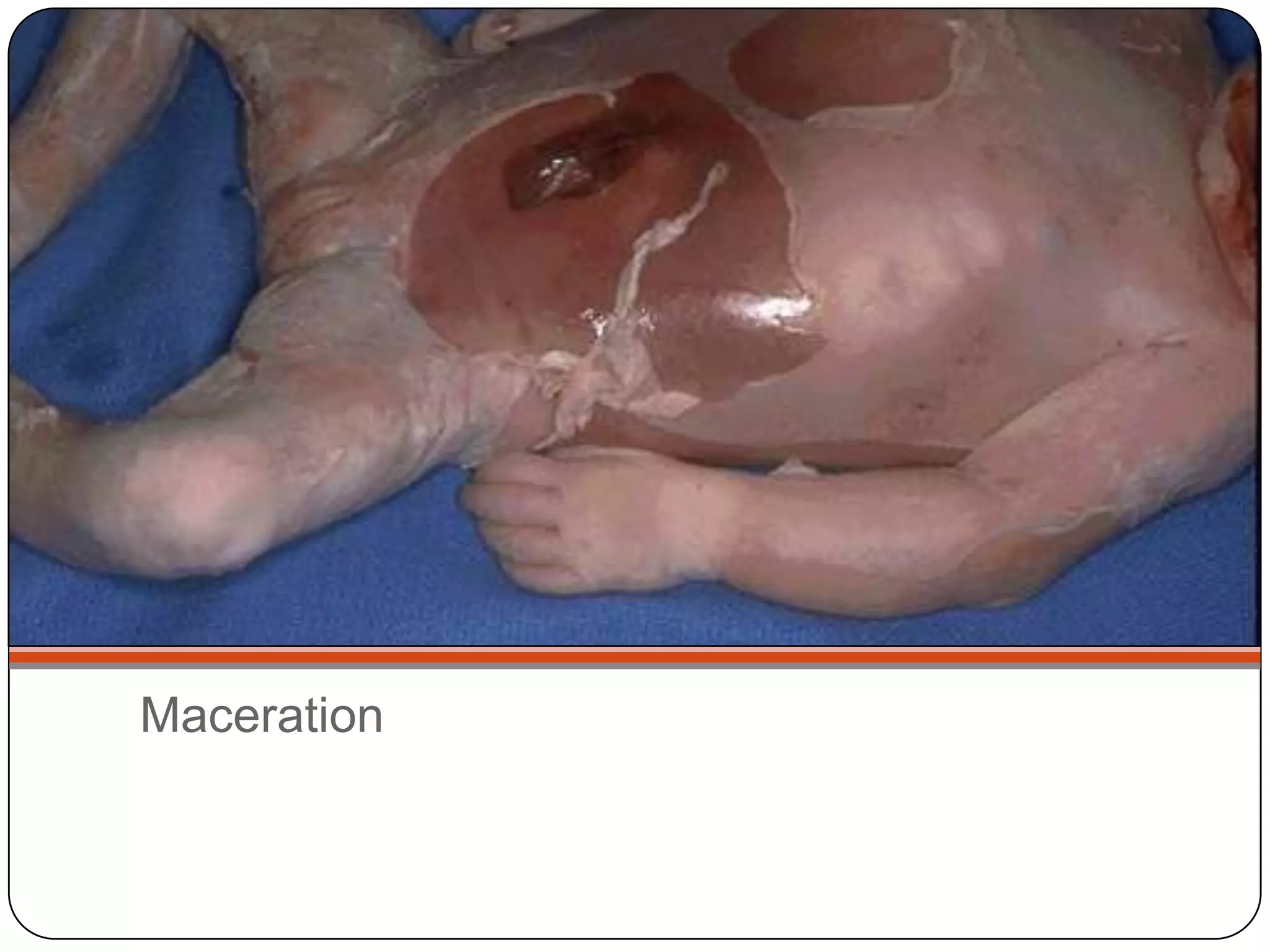
Maceration
Anacephalic
HydropsFetalis
Domestic Violence
Cycle of Violence
The primary goal of intervention in working with abused women is to:Set up an appt with a mental health counselor for the victimConvince them to leave this unsafe situation before they really get hurtHelp them to develop courage and financial support to leave their abuserEmpower them and improve their self esteem to regain control of their lives

Post Partum Hemorrhage

  • 2.
    Post Partum HemorrhageBloodloss greater than 500mL after a vaginal birth and 1000mL after a cesareanEarly postpartum hemorrhageLate postpartum hemorrhage
  • 3.
    Risk FactorsMultiple gestationPrevioushistoryUterine infectionPrecipitous birthManuel removal of placentaPitocin induction
  • 4.
  • 5.
    TONERelated to overdistention multifetal macrosomia hydramnios retained placental fragmentsOther causes bladder distention anesthesia tocolytics
  • 7.
  • 8.
    TISSUEFailure of completeseparation and expulsion of the placenta does not allow the uterus to fully contractUterine subinvolution
  • 9.
    TRAUMAAny damage tothe genital tract that occurs during birth either spontaneously or through manipulation cesarean uterine rupture vigorous labor, pitocin induction manipulation lacerations
  • 11.
    THROMBOSISBlood clots helpto prevent postpartum hemorrhageCoagulation problems: Idiopathic Thrombocytopenia Purpura von Willebrand Disease DIC
  • 12.
  • 13.
    Nursing Interventions forPostpartum HemorrhageUterine massageDownward pressure to expel clotsPitocin, methergineIV line, blood transfusionPad countVitals, LOCEmpty bladderPatient teaching
  • 14.
    ThrombophlebitisClot within ablood vessel Superficialsaphenous Deep Vein Thrombosisfemoral and pelvic
  • 15.
    Nursing Interventions forThrombophlebitisPreventionEducationLeg exercises, compression devices, elevation, restAnticoagulants (heparin and coumadin),NSAIDAntiembolic stockingsPrevent traumaMonitor for complications-Pulmonary Embolism
  • 16.
    POSTPARTUM INFECTIONOccursin 8 % of all birthsHigher incidence in cesarean birthsDefined as: fever of 38 C or 100.4 F or higher after the first 24 hours after birth occurring on at least two of the first ten days postpartum
  • 17.
    ETIOLOGYStaphylococcus aureusEscherichia coliGroupA or B hemolytic streptococciChlamydia trachomatis
  • 18.
    Metritis or EndometritisInvolvesendometriumExtension can result in parametritis which involves the broad ligaments, ovaries and fallopian tubesORSeptic pelvic thrombophlebitis which results when infection spreads along venous routes into the pelvis
  • 19.
  • 20.
  • 21.
    Nursing Care forUTI’sPreventionHydrationAntibioticsGantrisin
  • 22.
  • 23.
    Nursing Interventions forMastitisAdminister NSAID, antibioticsWarm compressesEncourage her to increase feedingsIncrease fluidsReview proper breastfeeding techniques
  • 24.
    Nursing Diagnosis forPost Partum InfectionsIneffective thermoregulation R/T bacterial invasionAcute Pain R/T infectious processR/F impaired parental/infant attachment R/T the effects of postpartum infection
  • 25.
  • 26.
    Postpartum DepressionAffects entirefamilyEarly identification improves outcomesGradual onset evident by 6 weeks of birthAntidepressants, antianxiety medications, psychotherapy
  • 27.
    POSTPARTUM PSYCHOSIS1:1000 birthsSeenwithin 3 weeks of birthSymptoms escalate to delirium, hallucinations, anger toward herself and or infant, bizarre behavior, mania, thoughts of hurting herself and baby, suicide, infanticideHospitalized psychotrophic drugs and psychotherapy
  • 28.
    A postpartum momis pale and states that she is bleeding heavily. The nurse should first:Call the doctor STATAssess fundus and voiding pattern Set up IV for fluid replacementReassure her that his is a normal finding
  • 29.
    Hallucinations and expressionsof suicide are indicative of:Postpartum psychosisPostpartum anxiety disordersPostpartum bluesPostpartum depression
  • 30.
    Critical Thinking ExerciseMrsGriffenlabored 12 hours in the hospital before a cesarean birth. Her membranes ruptured 6 hours before she came to the hospital. Her fetal monitor showed late decelerations so an internal monitor was inserted. Her most recent blood tests indicate that she is anemic. What postpartum complications is this patient at risk for? Why?What assessments need to be done to detect potential complications?What nursing measures will the nurse use to prevent complications?
  • 31.
    Child Abuse andNeglectNurses are legally obligated to report ALL suspected cases of abuse and neglectAbuse physical, mental, emotional, sexualNeglect failure to meet the child’s needsMunchausen Syndrome by Proxy
  • 32.
    Fetal DemiseDiagnosis: no fetal heart on sonogram falling estriol levels Spalding signNursing Interventions listen, encourage grieving, support give opportunity to see, feel ,hold the baby offer photo, lock of hair, footprints assist with religious ceremonies
  • 33.
  • 34.
  • 35.
  • 36.
  • 37.
  • 38.
    The primary goalof intervention in working with abused women is to:Set up an appt with a mental health counselor for the victimConvince them to leave this unsafe situation before they really get hurtHelp them to develop courage and financial support to leave their abuserEmpower them and improve their self esteem to regain control of their lives