
Developing Technological Pedagogical Content Knowledge through Teacher Design Teams: The Case of pre-service Mathematics teachers in Ghana SITE 2010, SAN DIEGO Douglas D. Agyei & Joke Voogt
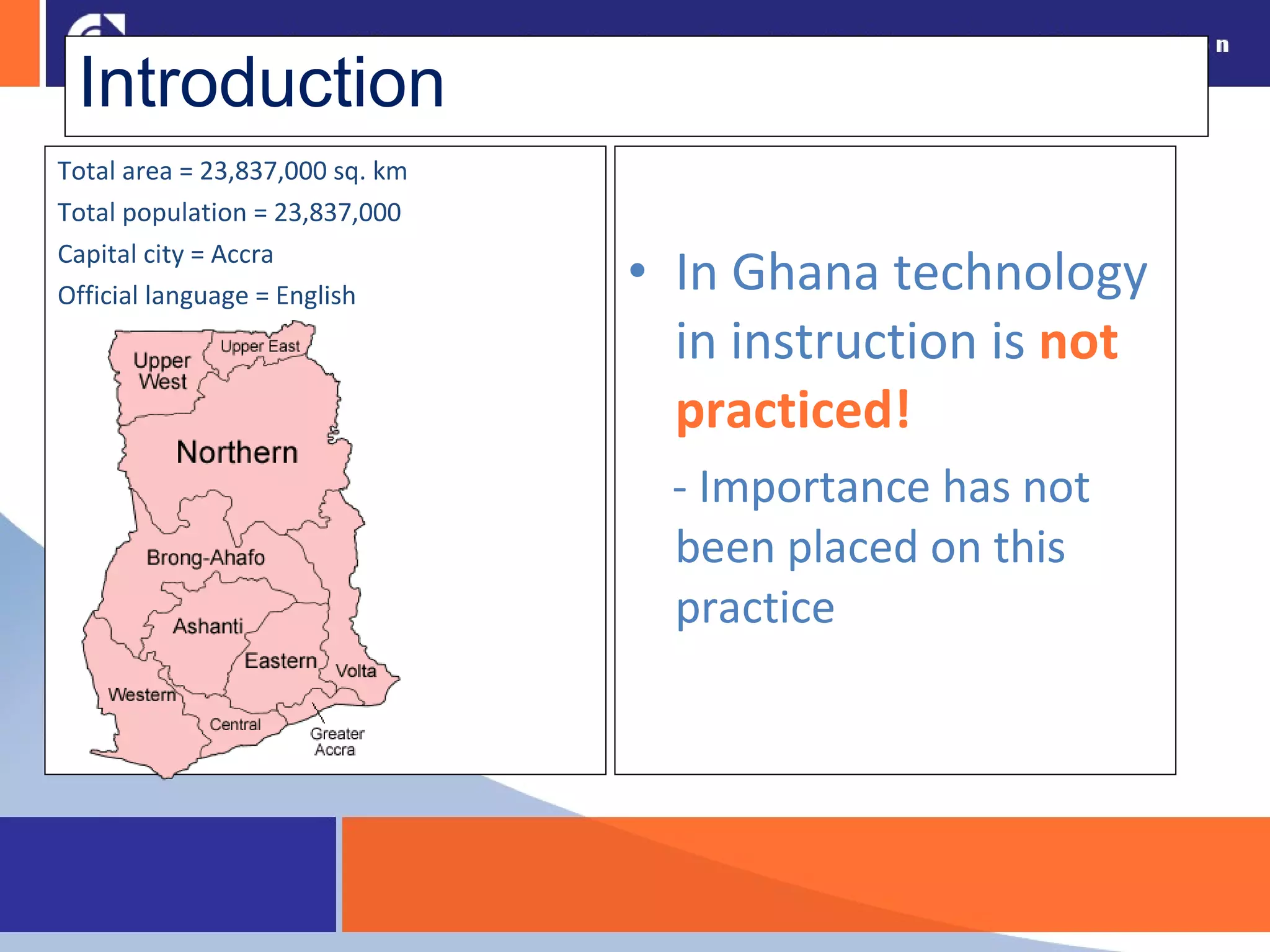
Introduction Total area = 23,837,000 sq. km Total population = 23,837,000 Capital city = Accra Official language = English In Ghana technology in instruction is  not practiced! - Importance has not been placed on this practice
The Context (1): Feasibility of technology use  in Ghanaian classrooms Barriers Lack of knowledge about ways to integrate technology in teaching  Lack of  pedagogical support ( like training) Technology competencies are lacking Availability and accessibility problems ( minimal ) Traditional methods of teaching  (Both at SHS’s and Teacher Education prog.) No preparation ( of pre-service teachers  )from teacher education programme
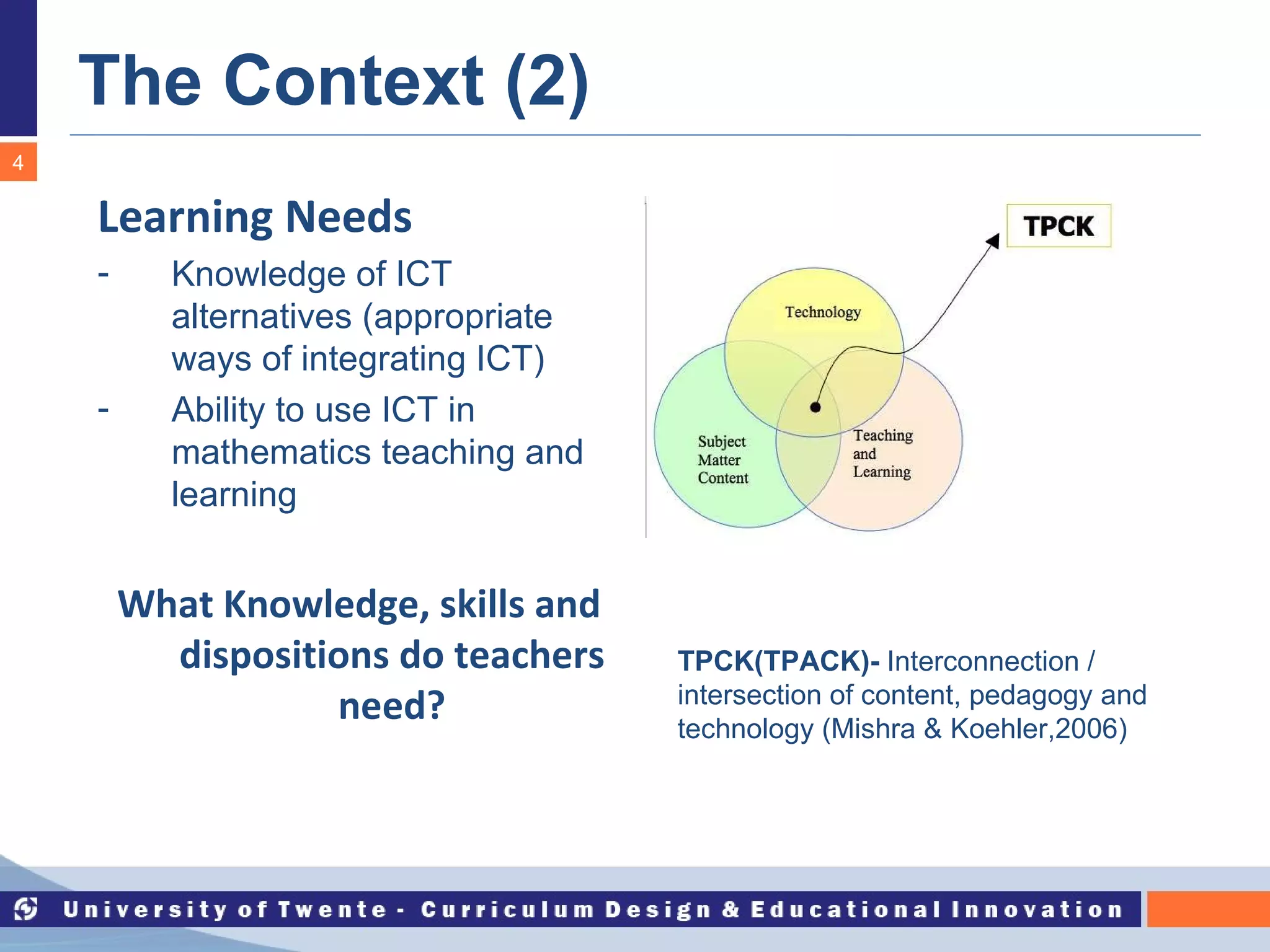
The Context (2) TPCK(TPACK)-   Interconnection / intersection of content, pedagogy and technology (Mishra & Koehler,2006) Learning Needs Knowledge of ICT alternatives (appropriate ways of integrating ICT) Ability to use ICT in mathematics teaching and learning What Knowledge, skills and dispositions do teachers need?
The Context (3) A Professional Development Programme (PDP): Is a necessity! Opportunities Curriculum and policy documents encourage it   (MESS,2007;  MOE, 2000) Institutions  (teacher education and SHS’s)   are open for such innovation Readiness of participants to learn ICT skills   (Possible attitudes & High perceptions) Availability of computer labs in schools Access to some ICT tools
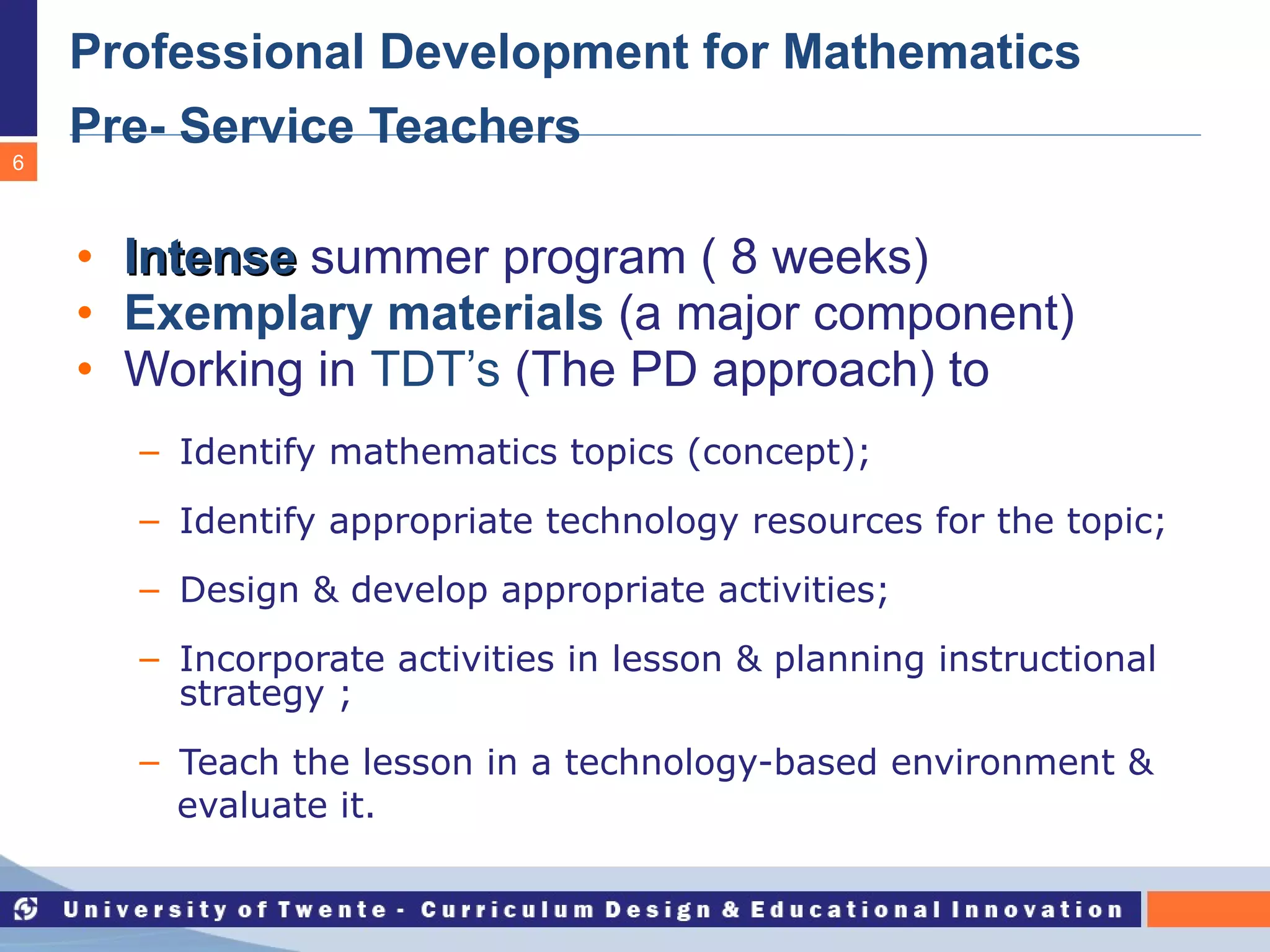
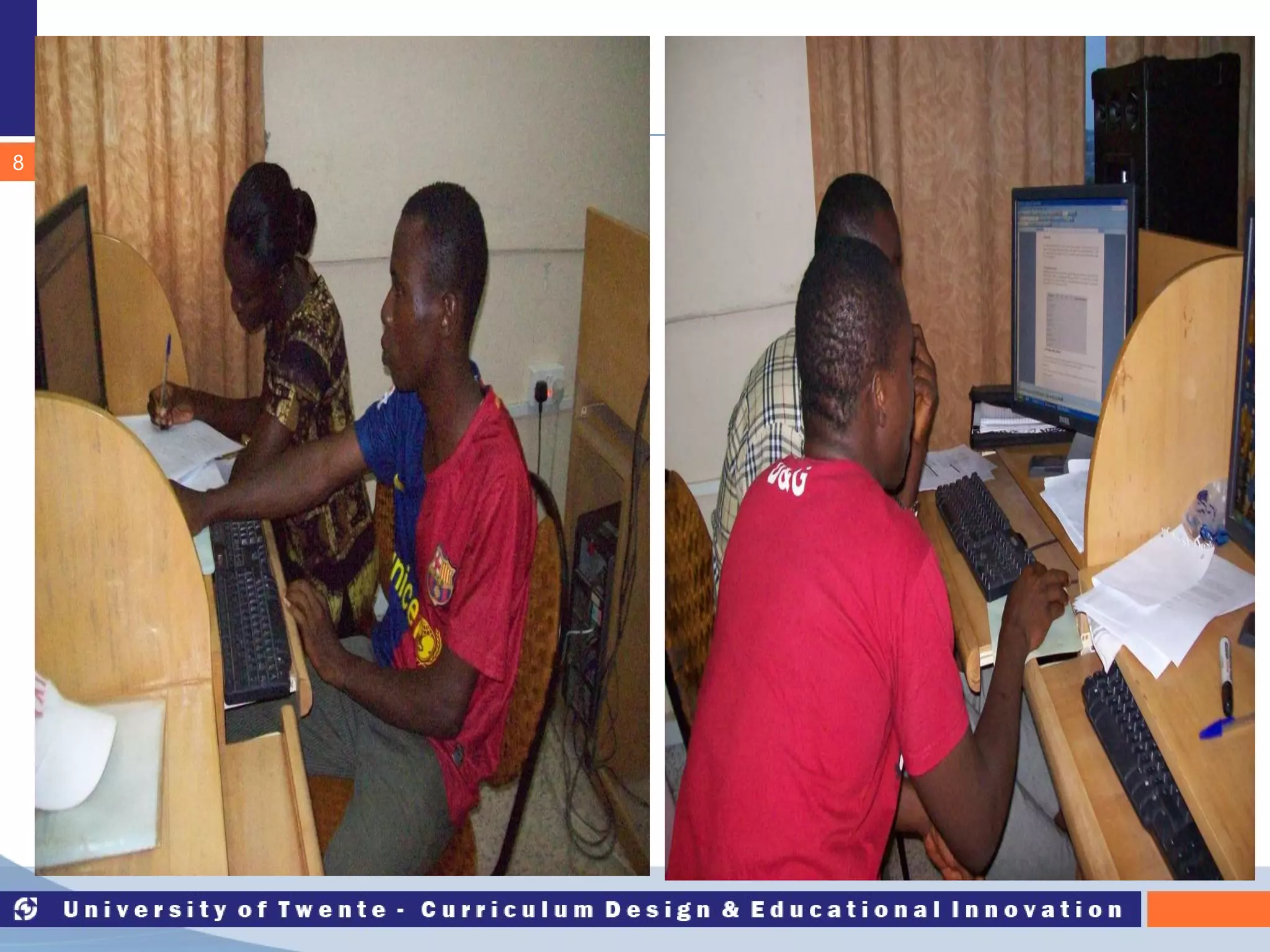
Professional Development for Mathematics Pre- Service Teachers   Intense   summer program ( 8 weeks) Exemplary materials  (a major component) Working in  TDT’s  (The PD approach) to Identify mathematics topics (concept); Identify appropriate technology resources for the topic; Design & develop appropriate activities; Incorporate activities in lesson & planning instructional strategy ; Teach the lesson in a technology-based environment &  evaluate it.
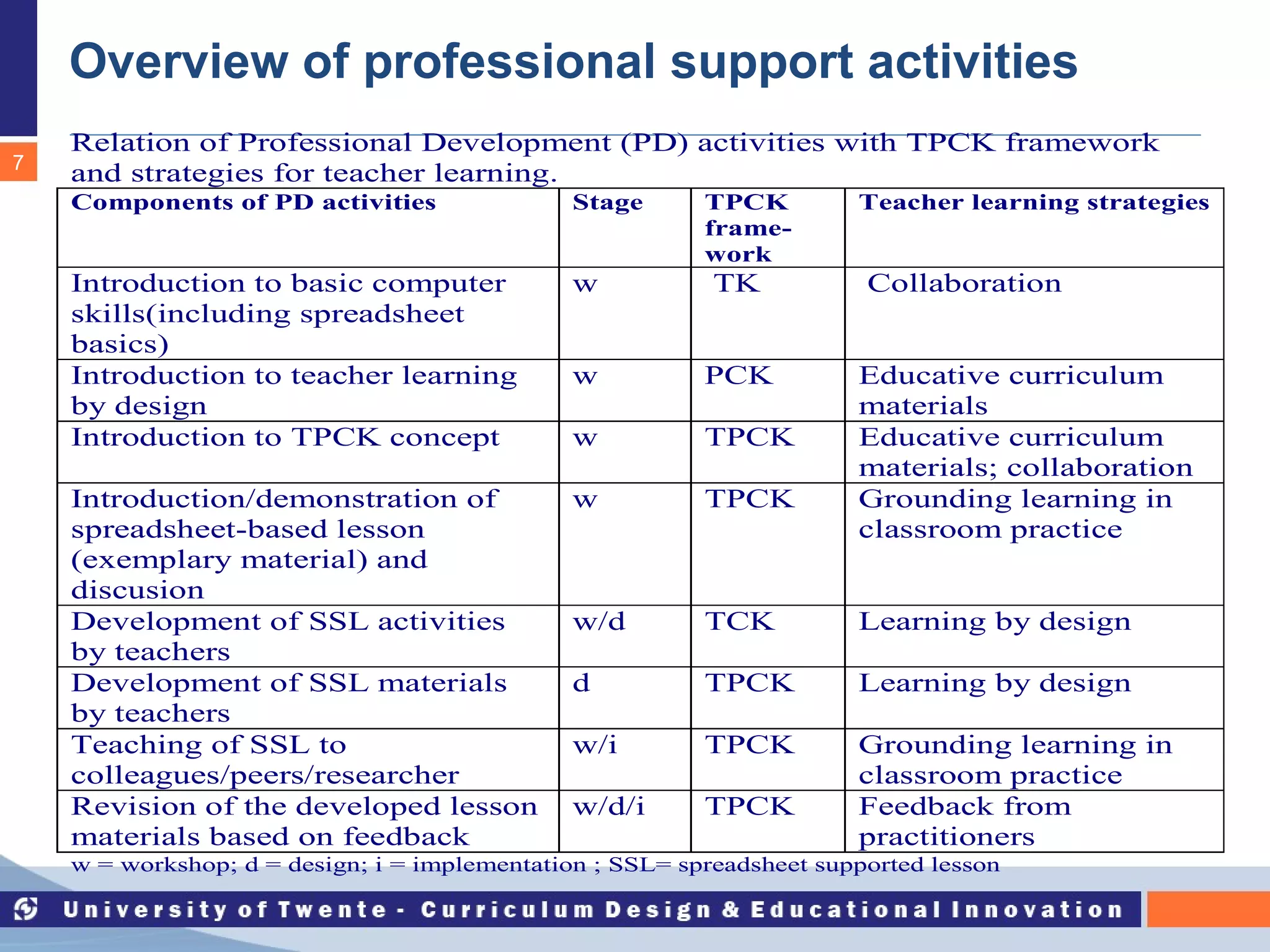
Overview of professional support activities
 
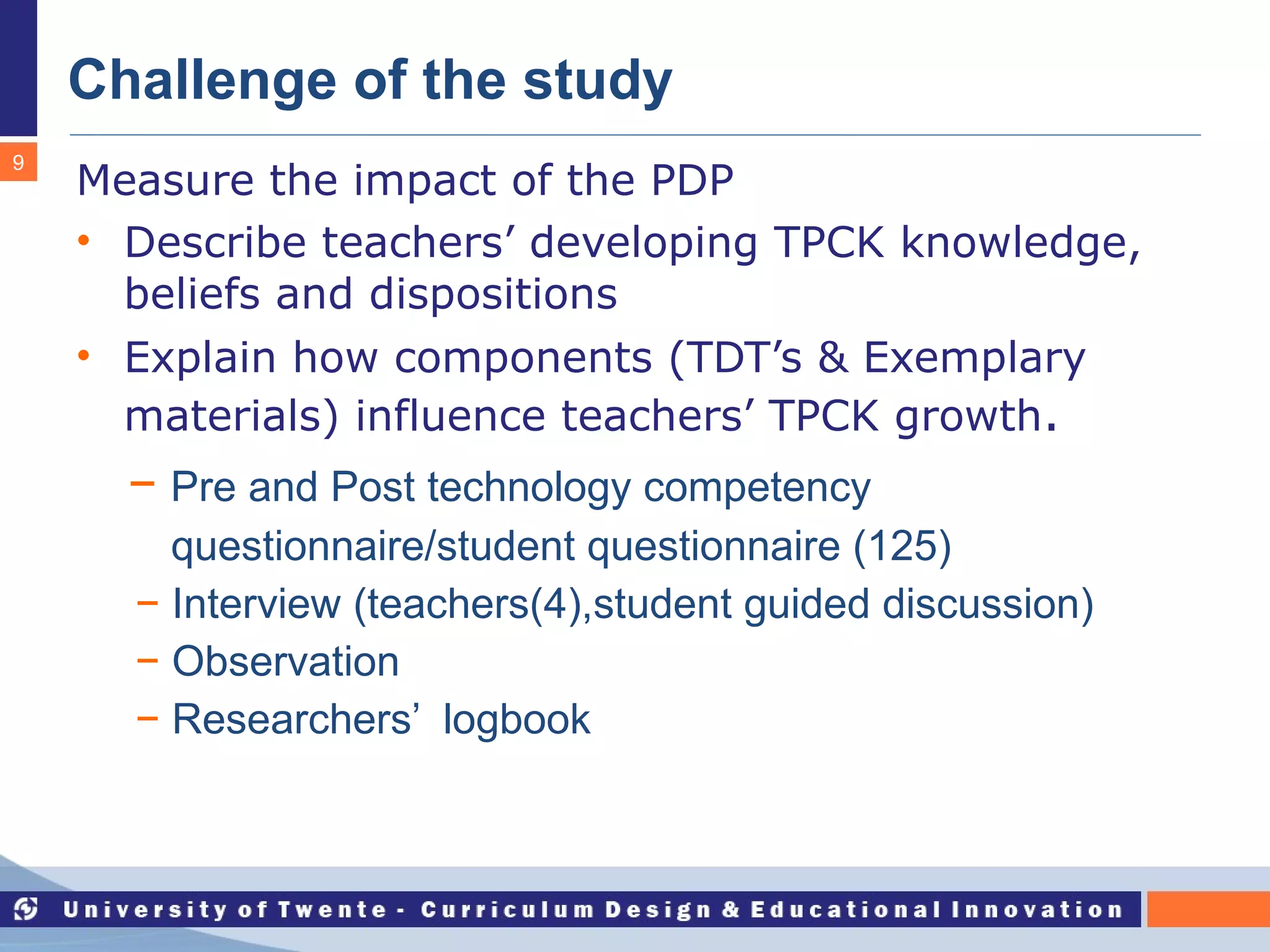
Challenge of the study Measure the impact of the PDP Describe teachers’ developing TPCK knowledge, beliefs and dispositions Explain how components (TDT’s & Exemplary materials) influence teachers’ TPCK growth . −  Pre and Post technology competency  questionnaire/student questionnaire (125) −  Interview (teachers(4),student guided discussion) −  Observation −  Researchers’  logbook
Self-Efficacy/Outcome Expectancy 5pt Likert scale: SA-SD See page 2 of handout Measures Spreadsheet Competencies Shaded = Self Efficacy  (Belief in ones’ own ability with  spreadsheet)  Clear = Outcome Expectancy (Outcome believed possible  given ones’ effective teaching)
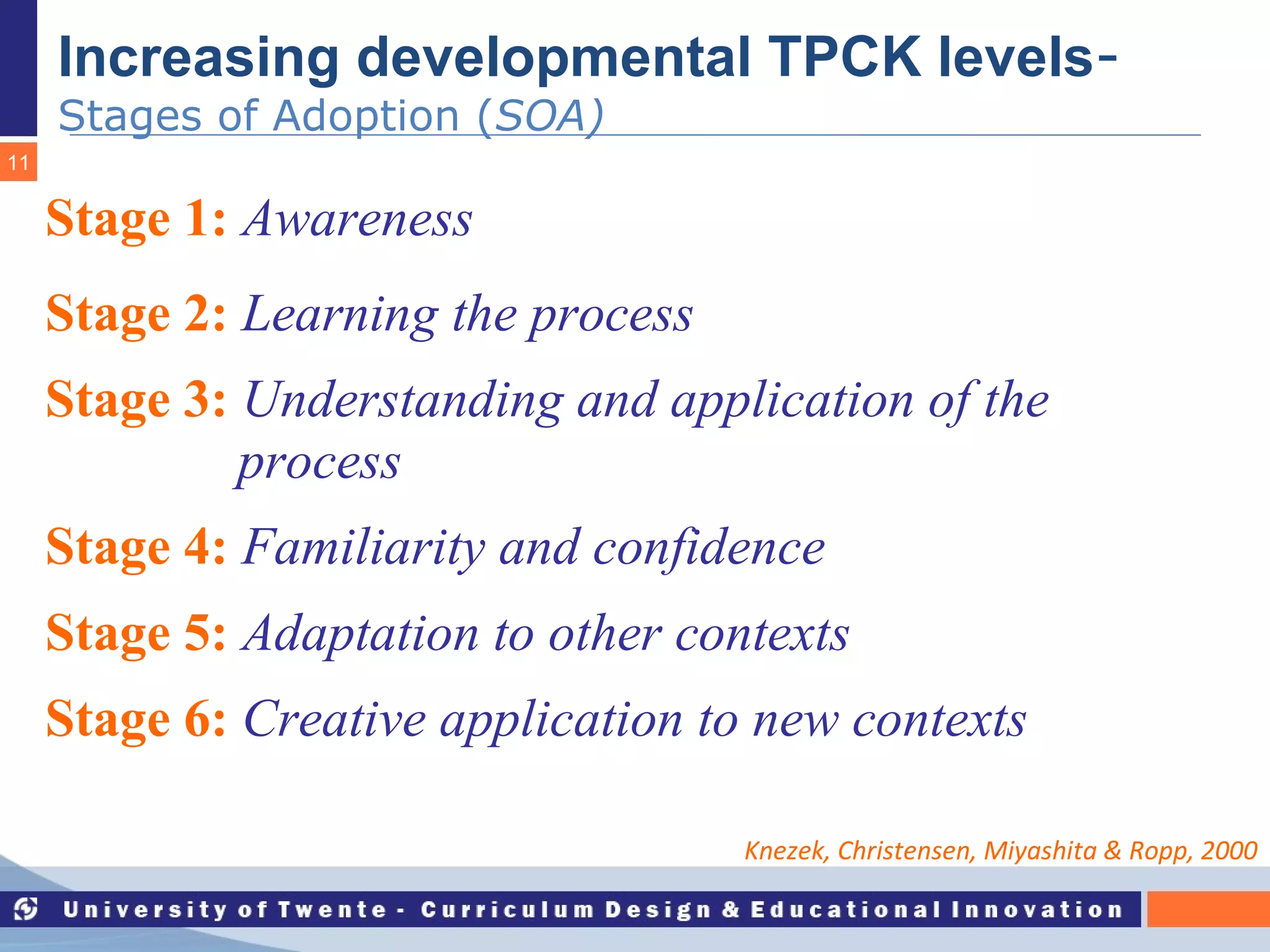
Increasing developmental TPCK levels - Stages of Adoption ( SOA)   Knezek, Christensen, Miyashita & Ropp, 2000
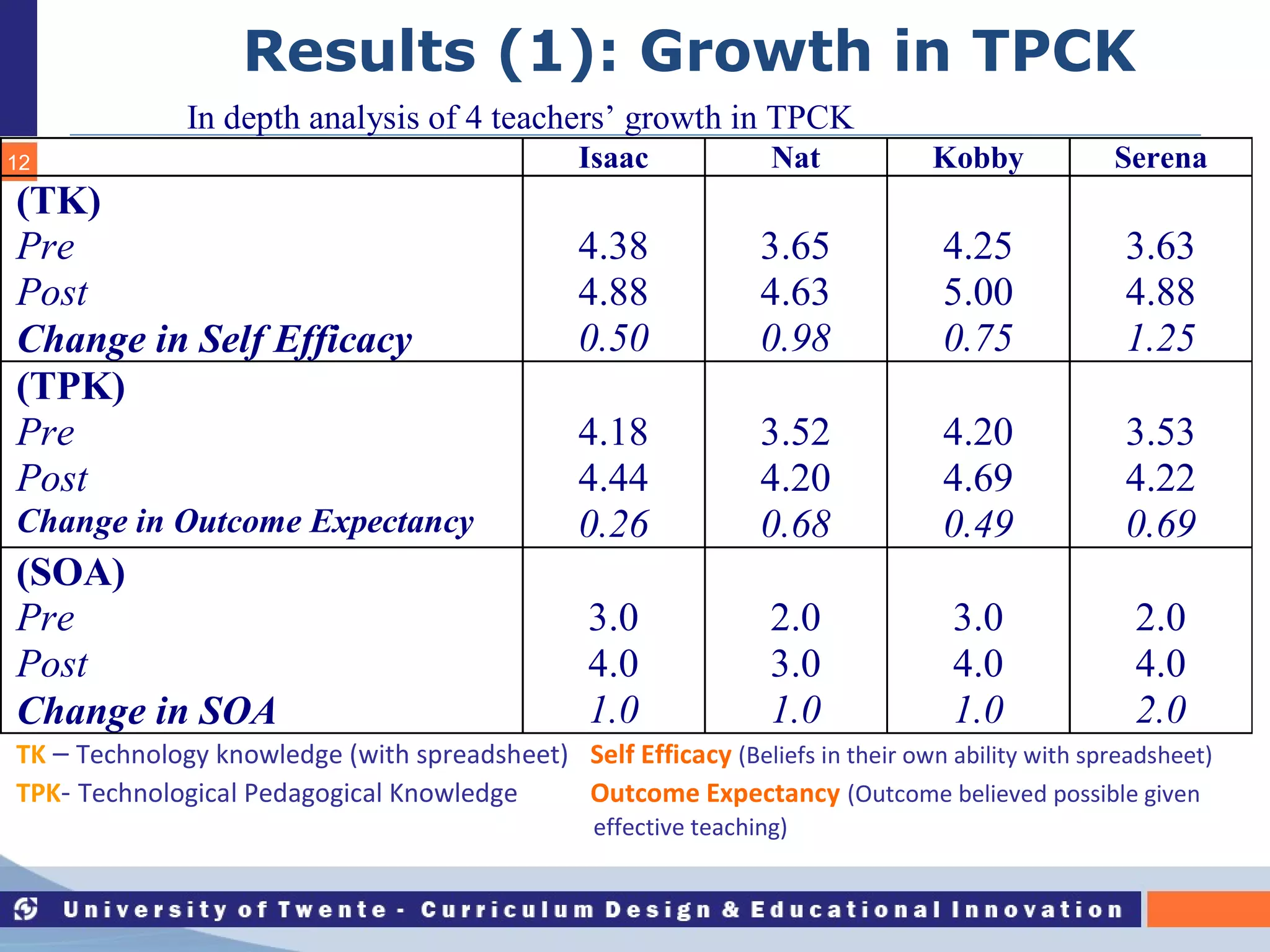
Results (1): Growth in TPCK
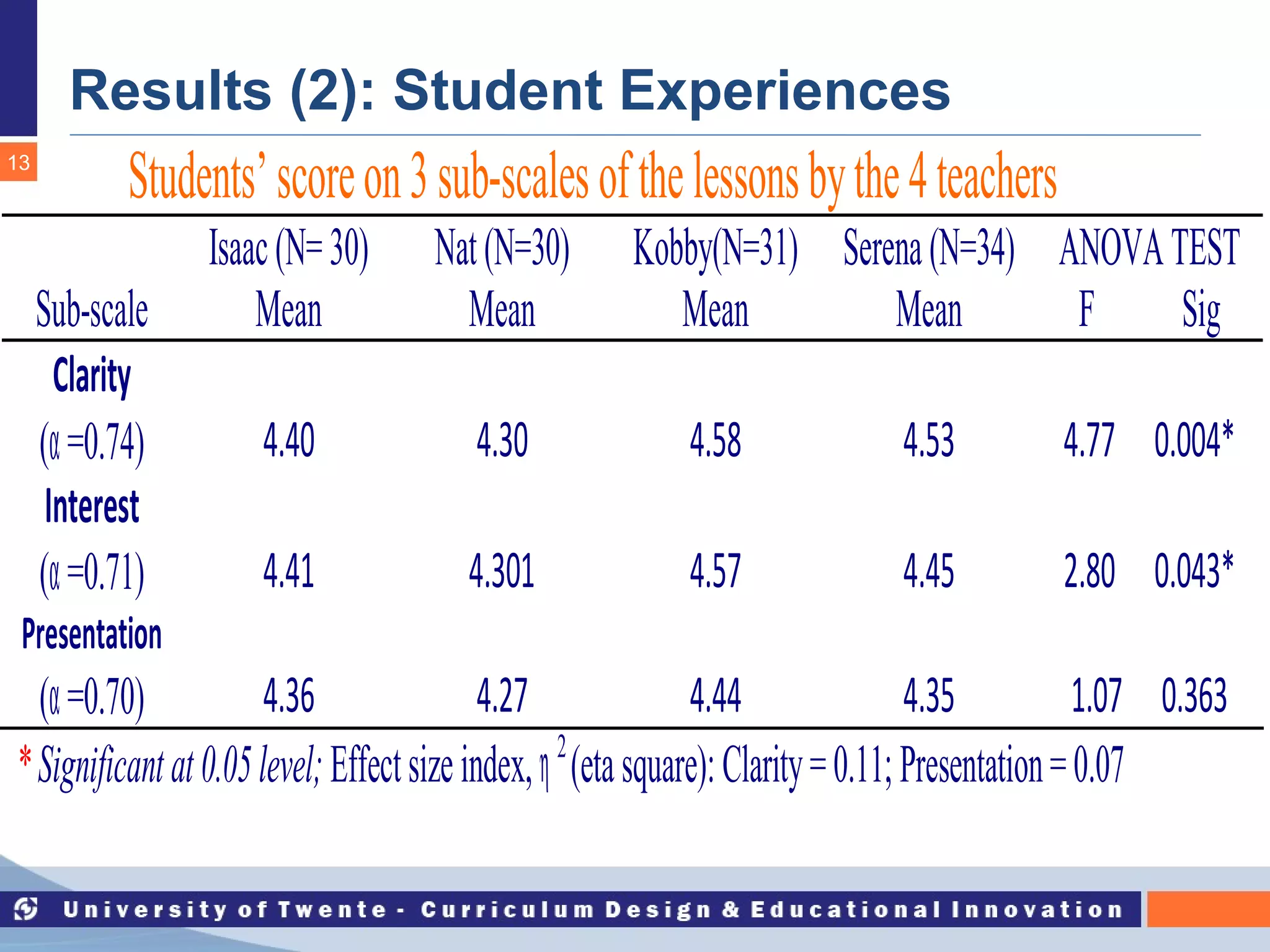
Results (2): Student Experiences
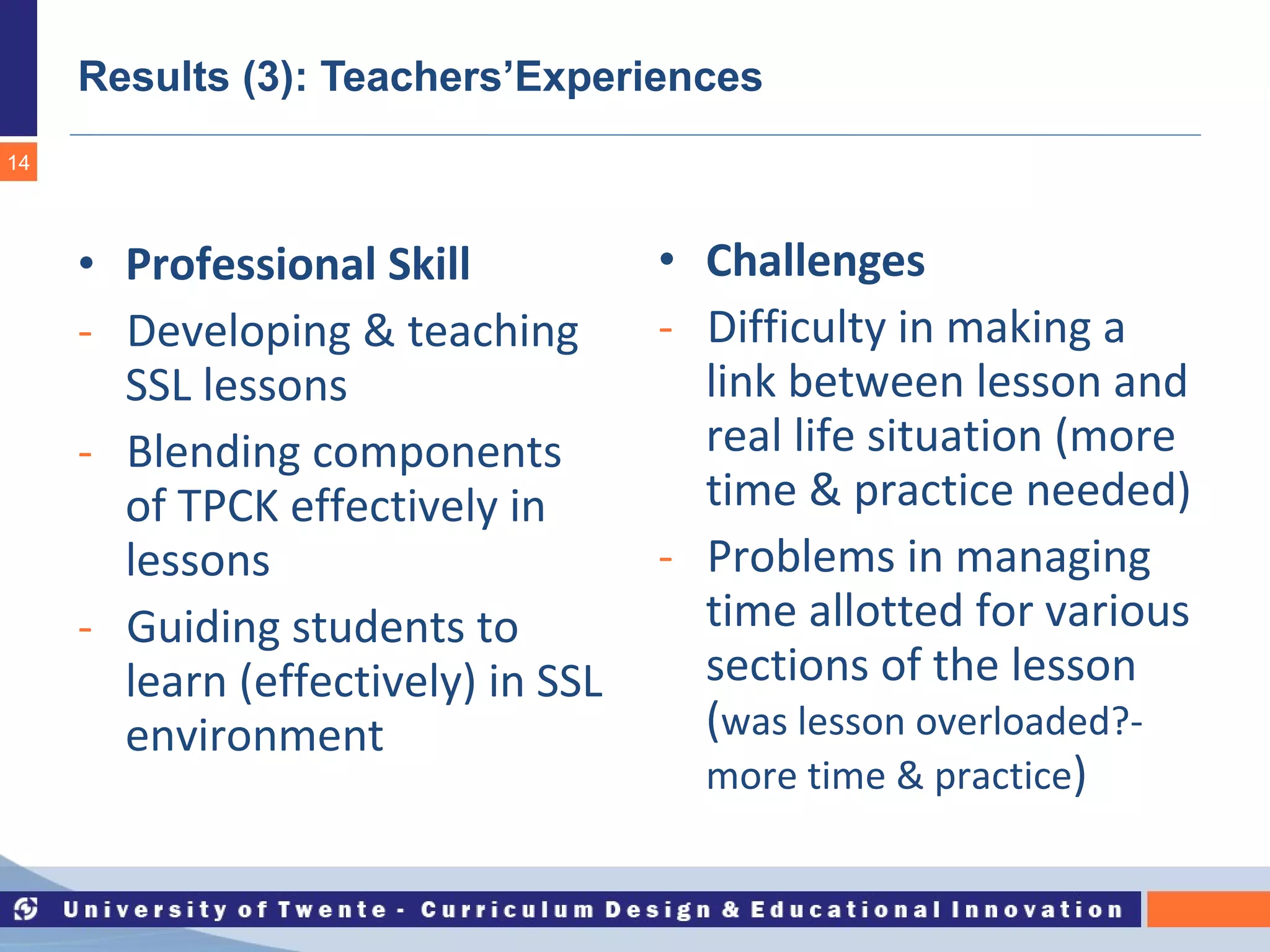
Results (3): Teachers’Experiences Professional Skill -  Developing & teaching SSL lessons -  Blending components of TPCK effectively in lessons -  Guiding students to learn (effectively) in SSL environment Challenges -  Difficulty in making a link between lesson and real life situation (more time & practice needed) -  Problems in managing time allotted for various sections of the lesson ( was lesson overloaded?-more time & practice )
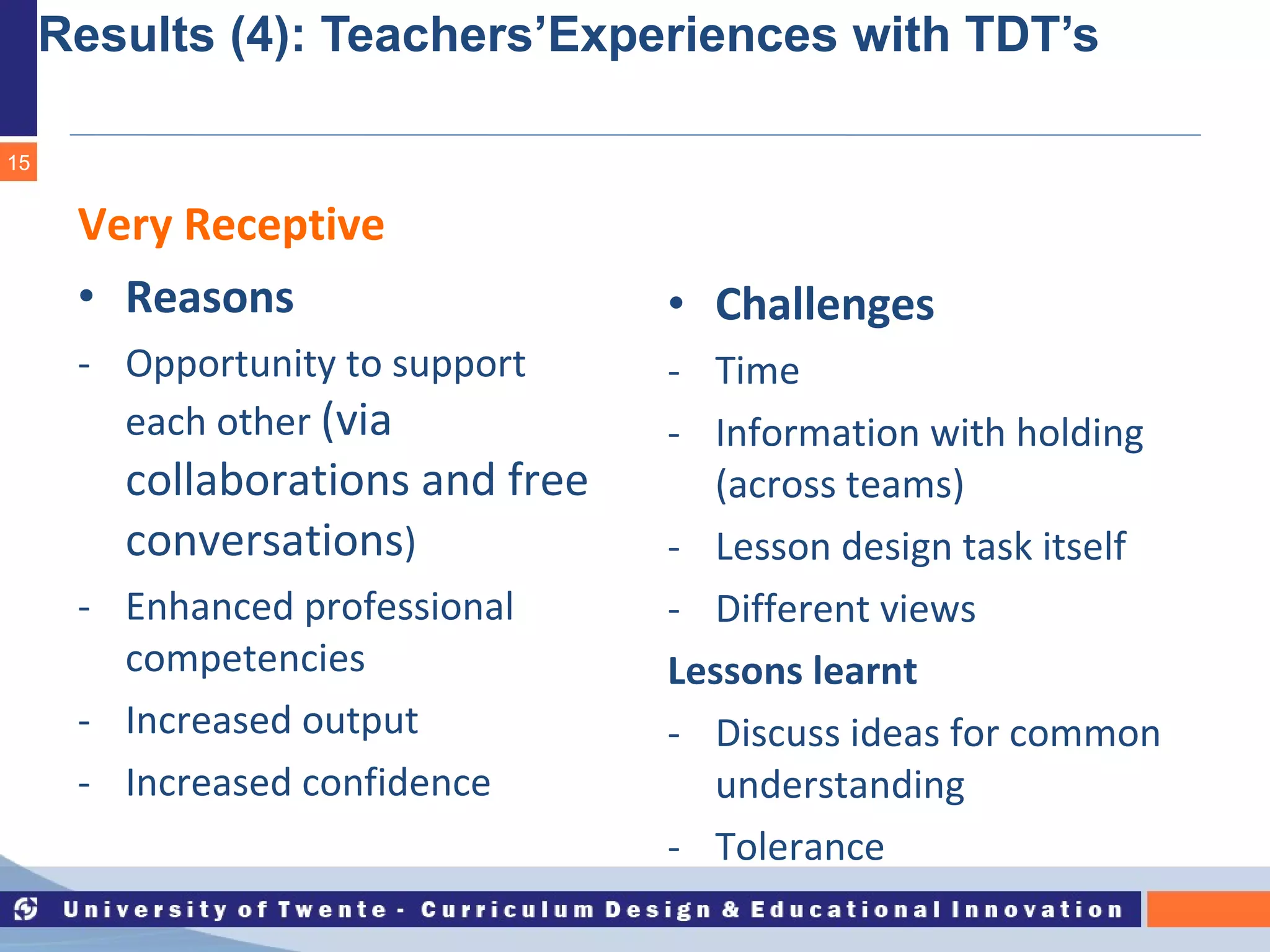
Results (4): Teachers’Experiences with TDT’s Very Receptive Reasons Opportunity to support each other  (via collaborations and free conversations ) Enhanced professional competencies Increased output Increased confidence Challenges Time Information with holding (across teams) Lesson design task itself Different views Lessons learnt Discuss ideas for common understanding Tolerance
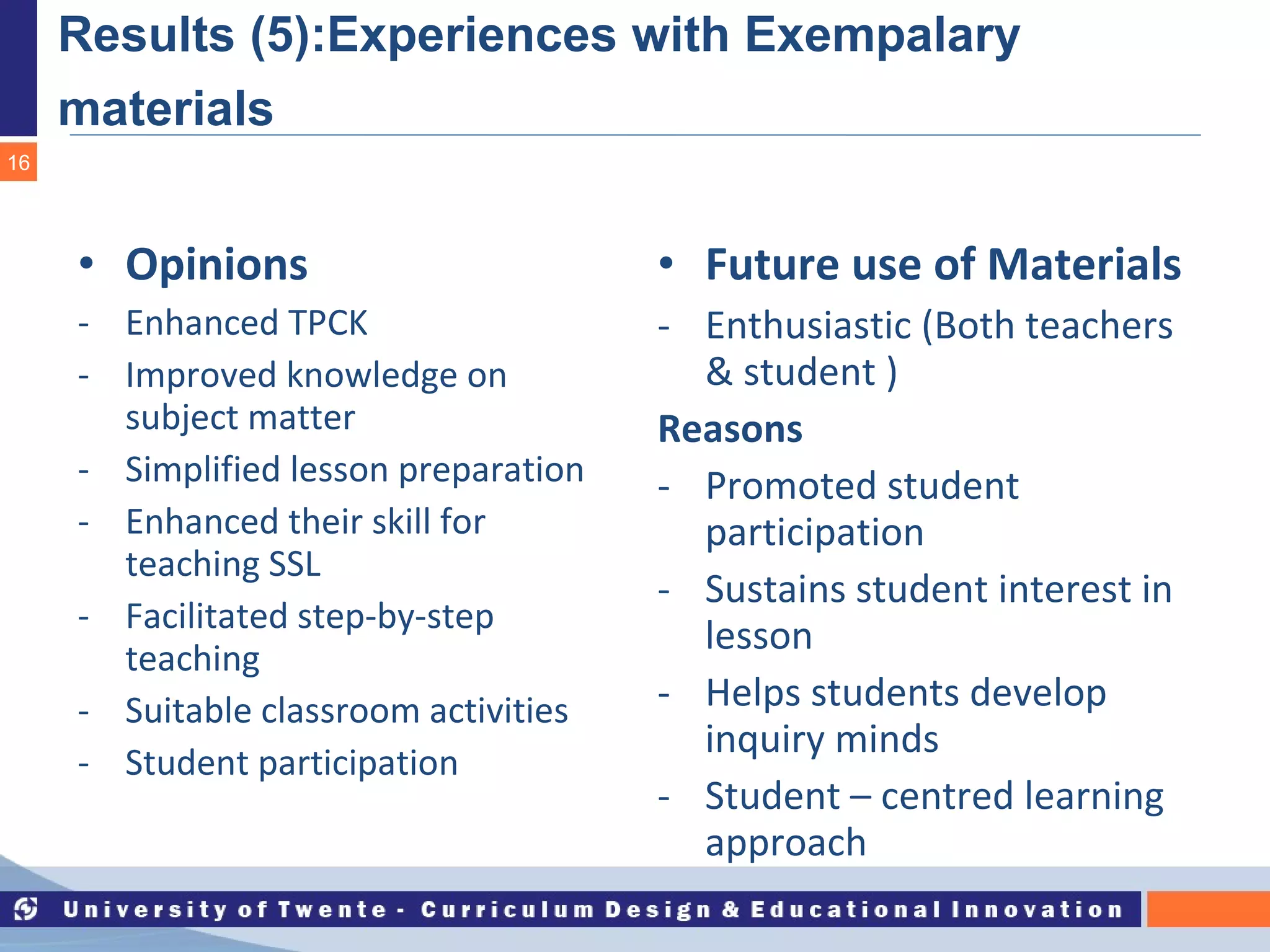
Results (5):Experiences with Exempalary materials   Opinions Enhanced TPCK Improved knowledge on subject matter  Simplified lesson preparation Enhanced their skill for teaching SSL Facilitated step-by-step teaching Suitable classroom activities Student participation Future use of Materials Enthusiastic (Both teachers & student ) Reasons Promoted student participation Sustains student interest in lesson Helps students develop inquiry minds Student – centred learning approach
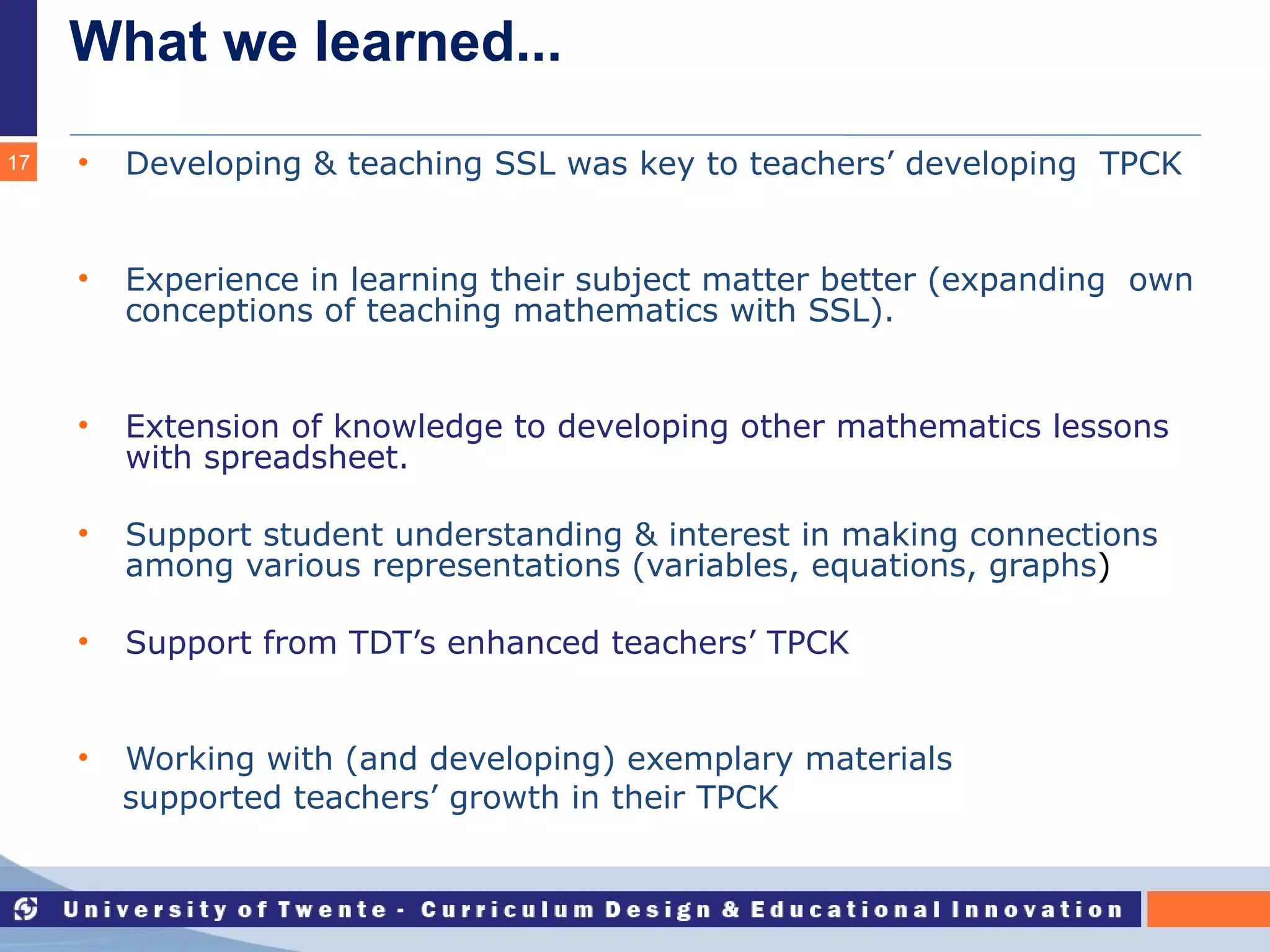
What we learned...   Developing & teaching SSL was key to teachers’ developing  TPCK   Experience in learning their subject matter better (expanding  own conceptions of teaching mathematics with SSL). Extension of knowledge to developing other mathematics lessons  with spreadsheet. Support student understanding & interest in making connections among various representations (variables, equations, graphs ) Support from TDT’s enhanced teachers’ TPCK  Working with (and developing) exemplary materials  supported teachers’ growth in their TPCK
Conclusions & Further study Conclusion The PDP enhanced teachers’ TPCK TDT’s  and use of  exemplary materials  are promising strategies in TPCK development Future direction of research Extension of study (by exploring further topics and concepts). A future study that follows the teachers into the field (as they contend with real school barriers of time, access and infrastructure)

Slide for Presentation

  • 1.
    Developing Technological PedagogicalContent Knowledge through Teacher Design Teams: The Case of pre-service Mathematics teachers in Ghana SITE 2010, SAN DIEGO Douglas D. Agyei & Joke Voogt
  • 2.
    Introduction Total area= 23,837,000 sq. km Total population = 23,837,000 Capital city = Accra Official language = English In Ghana technology in instruction is not practiced! - Importance has not been placed on this practice
  • 3.
    The Context (1):Feasibility of technology use in Ghanaian classrooms Barriers Lack of knowledge about ways to integrate technology in teaching Lack of pedagogical support ( like training) Technology competencies are lacking Availability and accessibility problems ( minimal ) Traditional methods of teaching (Both at SHS’s and Teacher Education prog.) No preparation ( of pre-service teachers )from teacher education programme
  • 4.
    The Context (2)TPCK(TPACK)- Interconnection / intersection of content, pedagogy and technology (Mishra & Koehler,2006) Learning Needs Knowledge of ICT alternatives (appropriate ways of integrating ICT) Ability to use ICT in mathematics teaching and learning What Knowledge, skills and dispositions do teachers need?
  • 5.
    The Context (3)A Professional Development Programme (PDP): Is a necessity! Opportunities Curriculum and policy documents encourage it (MESS,2007; MOE, 2000) Institutions (teacher education and SHS’s) are open for such innovation Readiness of participants to learn ICT skills (Possible attitudes & High perceptions) Availability of computer labs in schools Access to some ICT tools
  • 6.
    Professional Development forMathematics Pre- Service Teachers Intense summer program ( 8 weeks) Exemplary materials (a major component) Working in TDT’s (The PD approach) to Identify mathematics topics (concept); Identify appropriate technology resources for the topic; Design & develop appropriate activities; Incorporate activities in lesson & planning instructional strategy ; Teach the lesson in a technology-based environment & evaluate it.
  • 7.
    Overview of professionalsupport activities
  • 8.
  • 9.
    Challenge of thestudy Measure the impact of the PDP Describe teachers’ developing TPCK knowledge, beliefs and dispositions Explain how components (TDT’s & Exemplary materials) influence teachers’ TPCK growth . − Pre and Post technology competency questionnaire/student questionnaire (125) − Interview (teachers(4),student guided discussion) − Observation − Researchers’ logbook
  • 10.
    Self-Efficacy/Outcome Expectancy 5ptLikert scale: SA-SD See page 2 of handout Measures Spreadsheet Competencies Shaded = Self Efficacy (Belief in ones’ own ability with spreadsheet) Clear = Outcome Expectancy (Outcome believed possible given ones’ effective teaching)
  • 11.
    Increasing developmental TPCKlevels - Stages of Adoption ( SOA) Knezek, Christensen, Miyashita & Ropp, 2000
  • 12.
  • 13.
  • 14.
    Results (3): Teachers’ExperiencesProfessional Skill - Developing & teaching SSL lessons - Blending components of TPCK effectively in lessons - Guiding students to learn (effectively) in SSL environment Challenges - Difficulty in making a link between lesson and real life situation (more time & practice needed) - Problems in managing time allotted for various sections of the lesson ( was lesson overloaded?-more time & practice )
  • 15.
    Results (4): Teachers’Experienceswith TDT’s Very Receptive Reasons Opportunity to support each other (via collaborations and free conversations ) Enhanced professional competencies Increased output Increased confidence Challenges Time Information with holding (across teams) Lesson design task itself Different views Lessons learnt Discuss ideas for common understanding Tolerance
  • 16.
    Results (5):Experiences withExempalary materials Opinions Enhanced TPCK Improved knowledge on subject matter Simplified lesson preparation Enhanced their skill for teaching SSL Facilitated step-by-step teaching Suitable classroom activities Student participation Future use of Materials Enthusiastic (Both teachers & student ) Reasons Promoted student participation Sustains student interest in lesson Helps students develop inquiry minds Student – centred learning approach
  • 17.
    What we learned... Developing & teaching SSL was key to teachers’ developing TPCK Experience in learning their subject matter better (expanding own conceptions of teaching mathematics with SSL). Extension of knowledge to developing other mathematics lessons with spreadsheet. Support student understanding & interest in making connections among various representations (variables, equations, graphs ) Support from TDT’s enhanced teachers’ TPCK Working with (and developing) exemplary materials supported teachers’ growth in their TPCK
  • 18.
    Conclusions & Furtherstudy Conclusion The PDP enhanced teachers’ TPCK TDT’s and use of exemplary materials are promising strategies in TPCK development Future direction of research Extension of study (by exploring further topics and concepts). A future study that follows the teachers into the field (as they contend with real school barriers of time, access and infrastructure)

Editor's Notes

  • #5 Although much has been said over the benefits of cummunites, and benefites of cummunities that concentrate on student learning, there is little writing on: Collaboration in curriculum design in general collaboration of teachers in curriculum development -->So we wanted to explore what teachers do (we had the context) and what helps them In this study  focus on the curriculum development process