TPACK: AN EMERGING RESEARCH AND DEVELOPMENT TOOL FOR TEACHER EDUCATORSAnn ThompsonIowa State University ​EvrimBaranIowa State UniversityHsueh-Hua ChuangNational Sun Yat-senUniversity
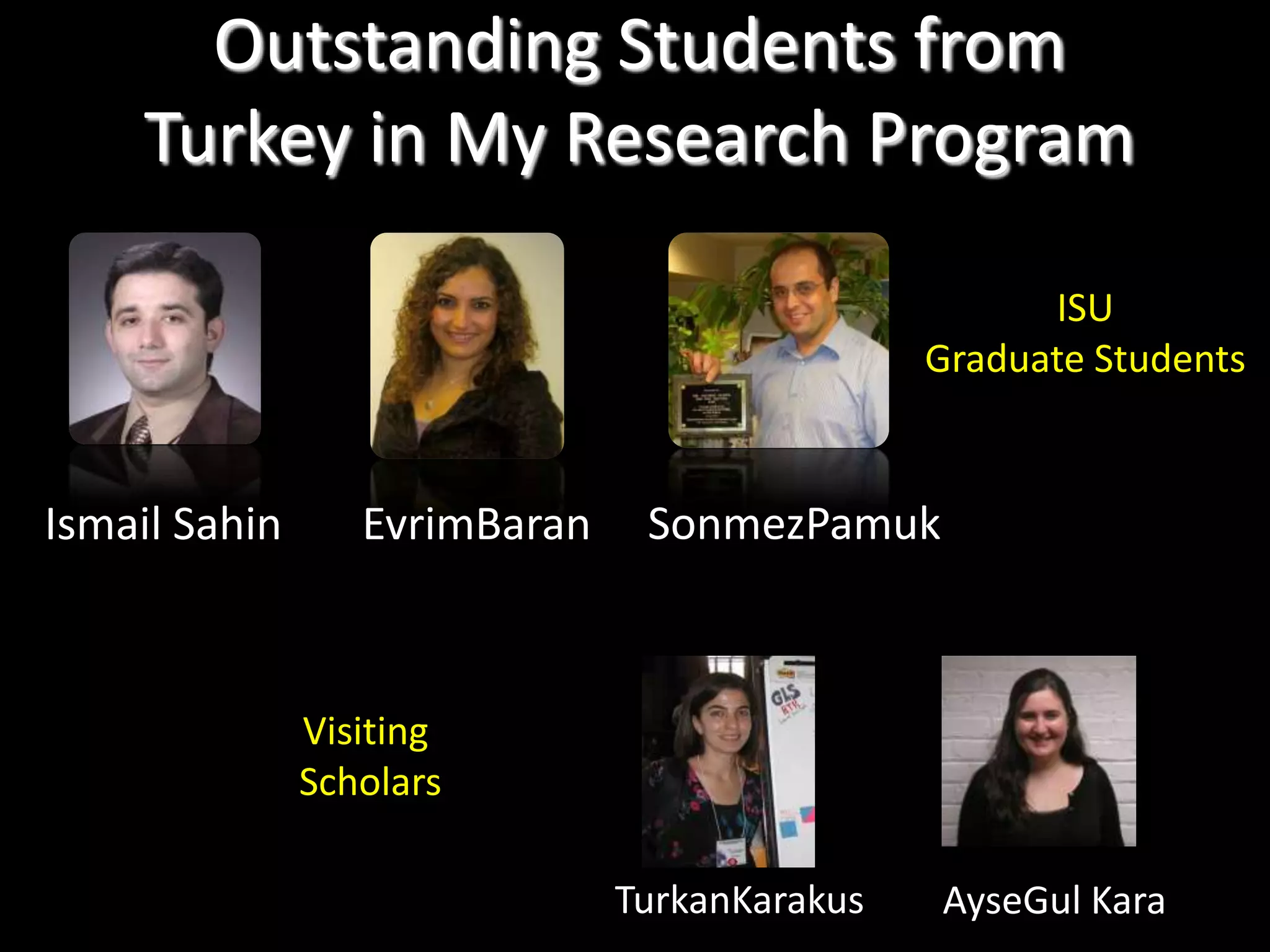
Outstanding Students from Turkey in My Research ProgramISUGraduate StudentsSonmezPamukIsmail SahinEvrimBaranVisiting ScholarsTurkanKarakusAyseGul Kara
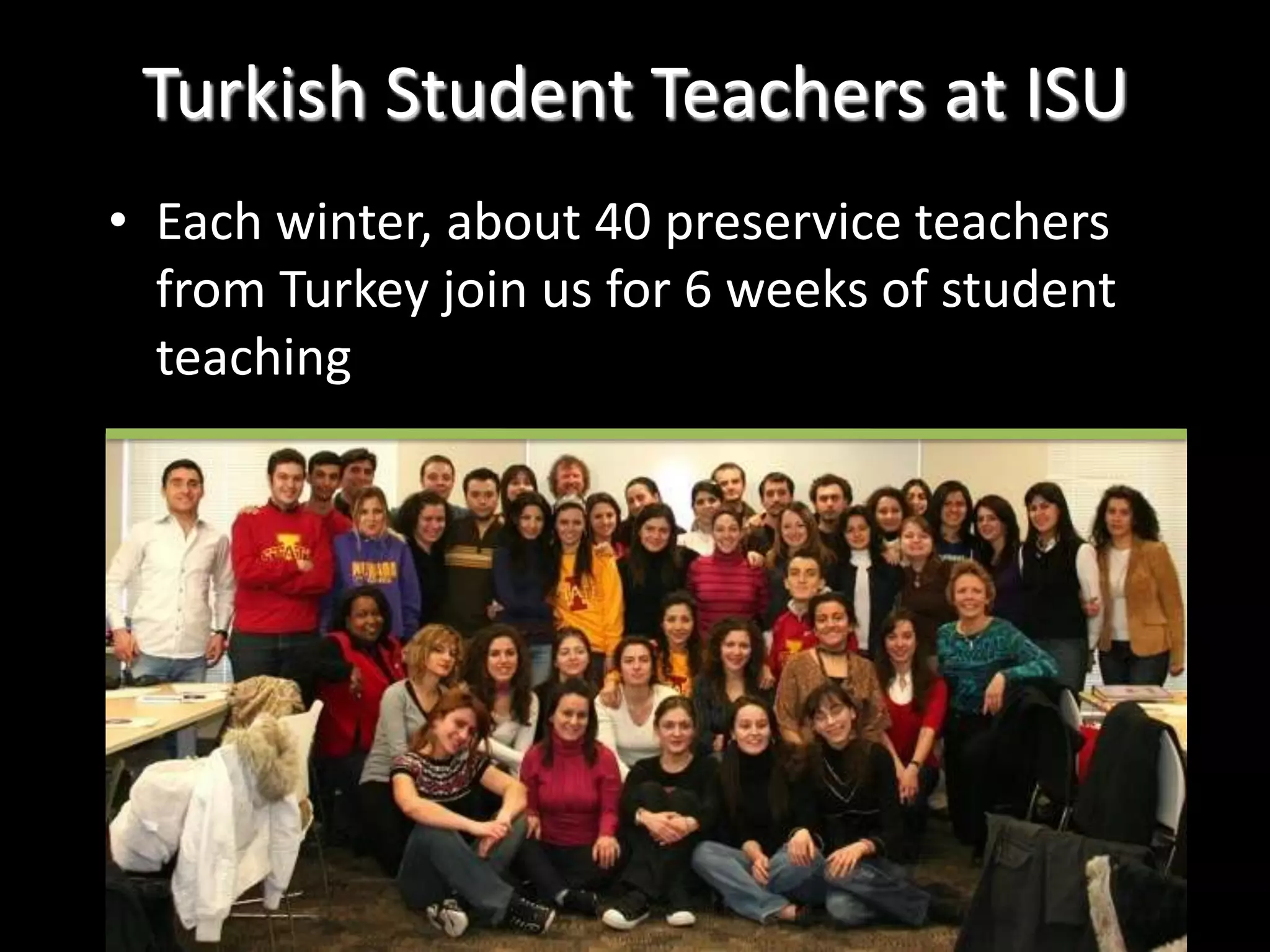
Each winter, about 40 preservice teachers from Turkey join us for 6 weeks of student teachingTurkish Student Teachers at ISU
Strong influence and contributions from graduate students from TurkeyLasting collaborative tiesDirect involvement with our TPACK workProfessional and Personal Ties
OutlineTPACK conceptual frameworkExamplesTPACK Impact in researchTPACK impact in practice
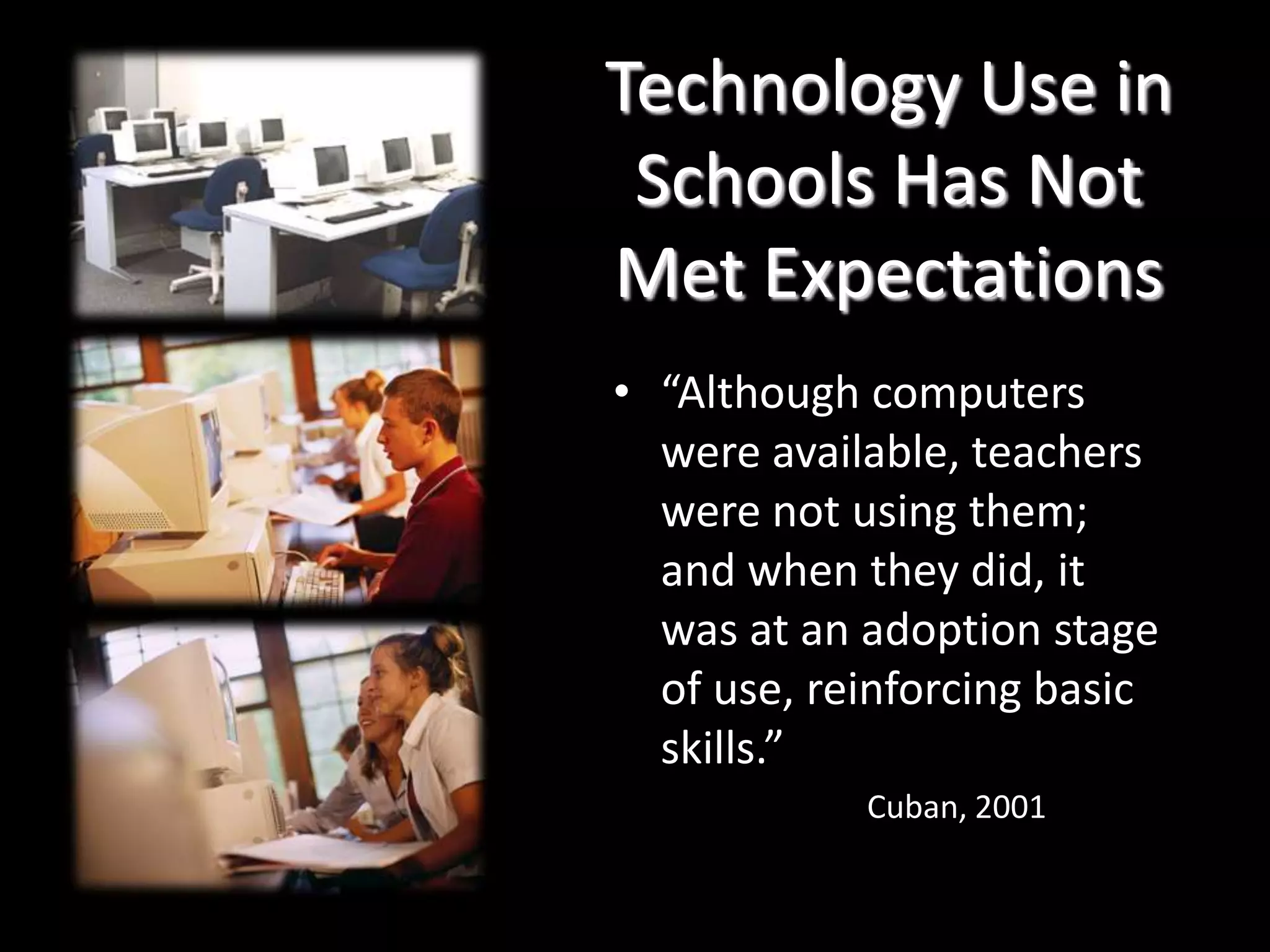
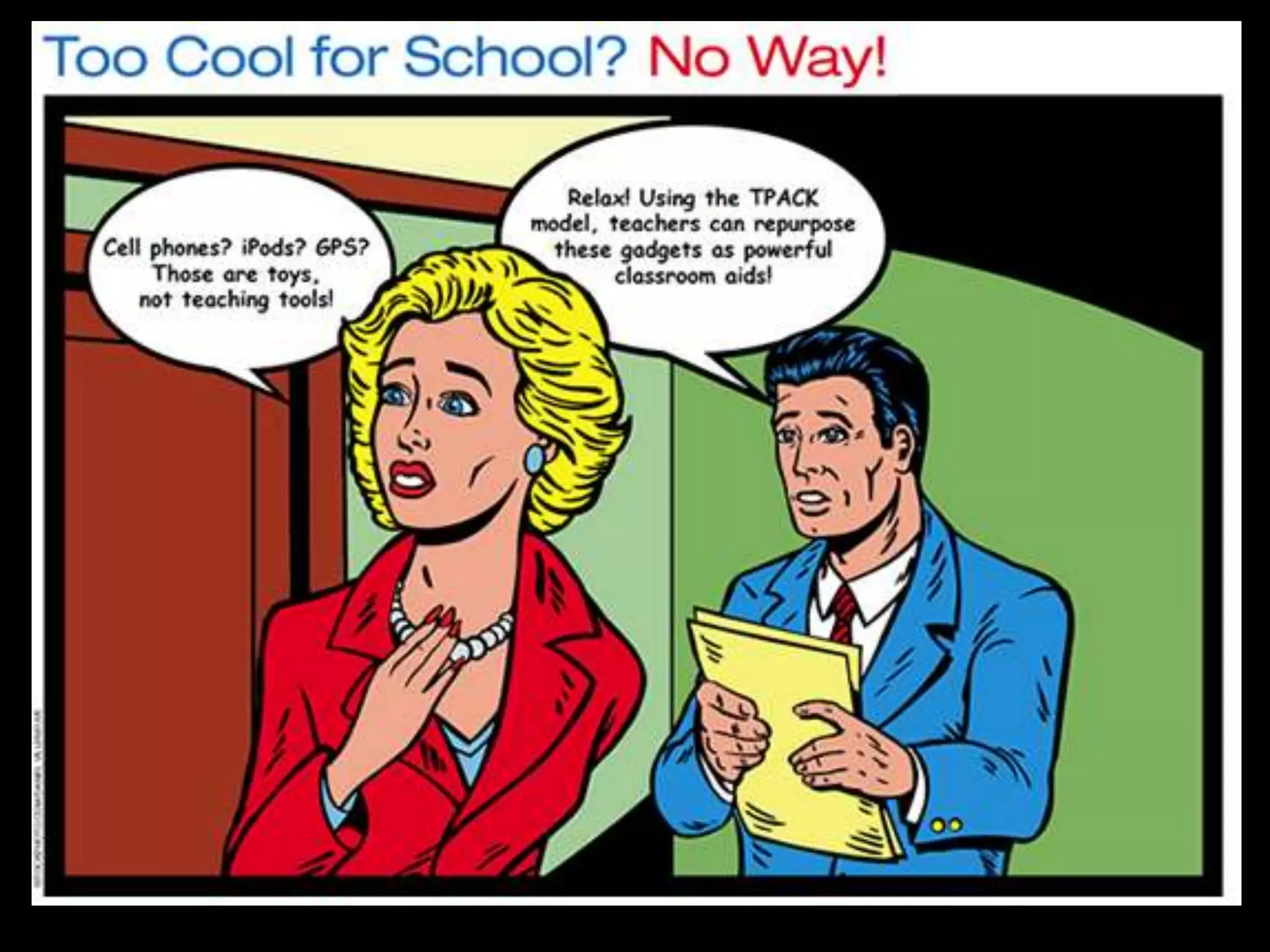
Technology Use in Schools Has Not Met Expectations“Although computers were available, teachers were not using them; and when they did, it was at an adoption stage of use, reinforcing basic skills.”Cuban, 2001
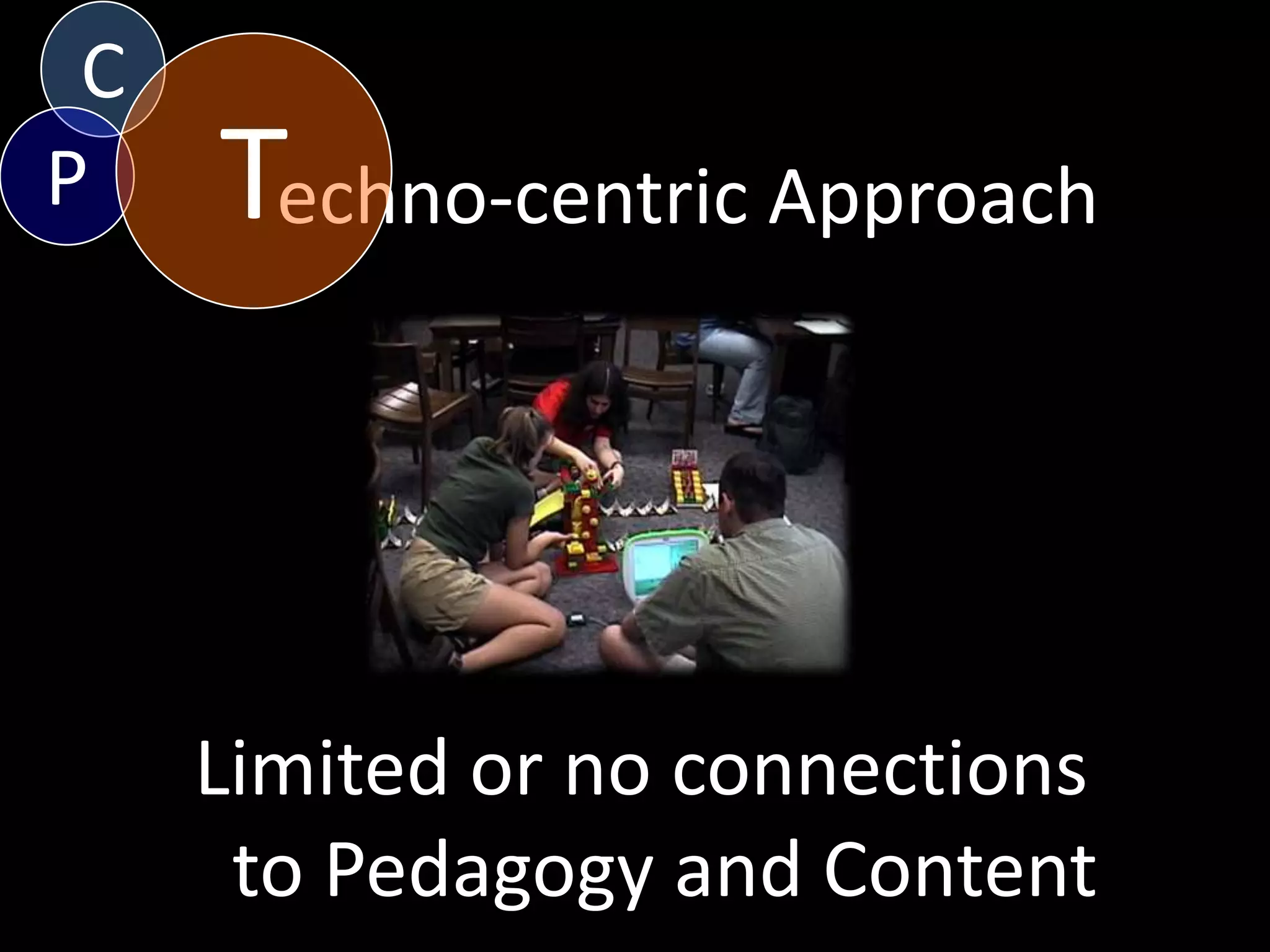
echno-centric ApproachCTLimited or no connections to Pedagogy and ContentP
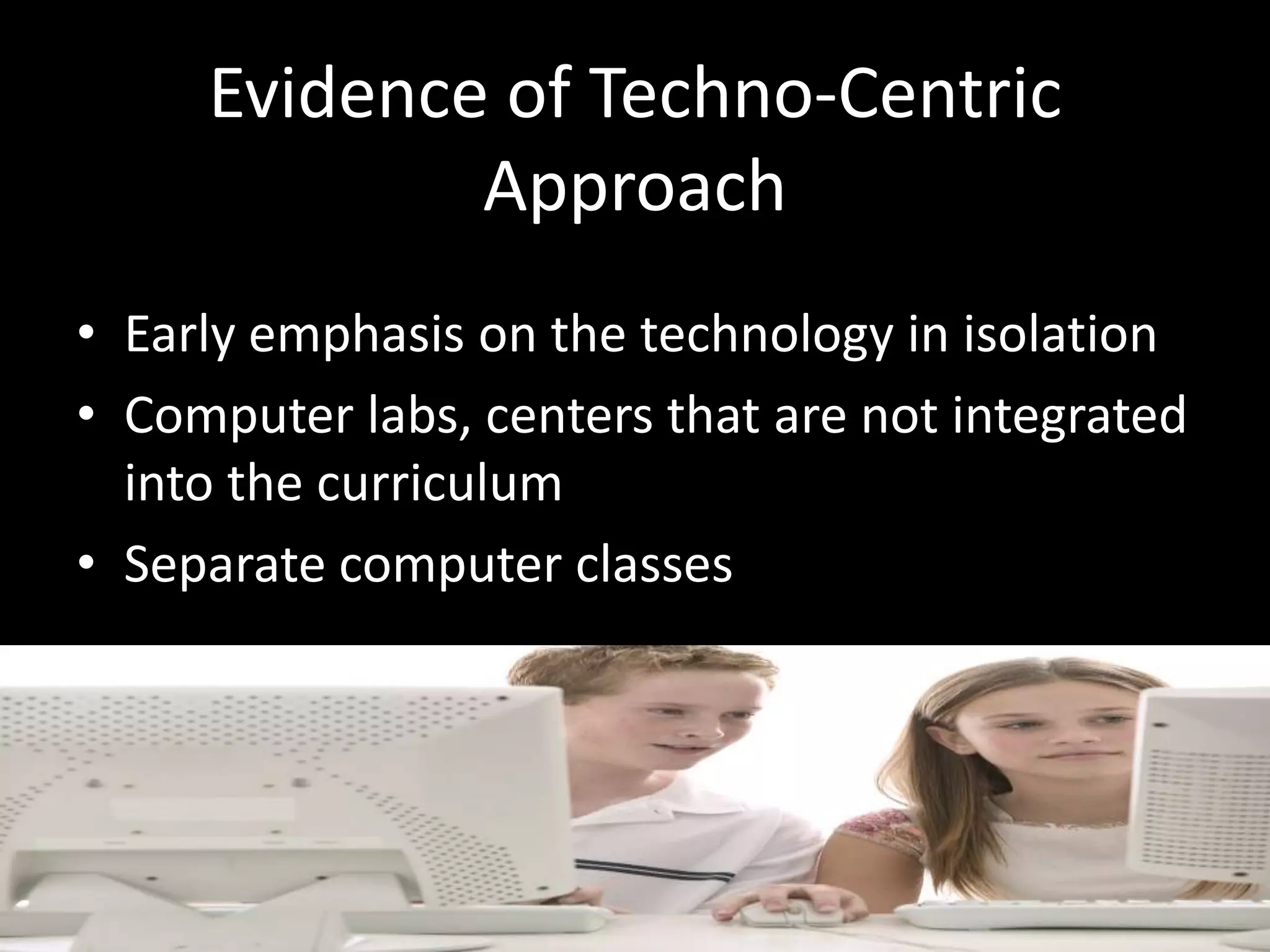
Evidence of Techno-Centric ApproachEarly emphasis on the technology in isolationComputer labs, centers that are not integrated into the curriculumSeparate computer classes
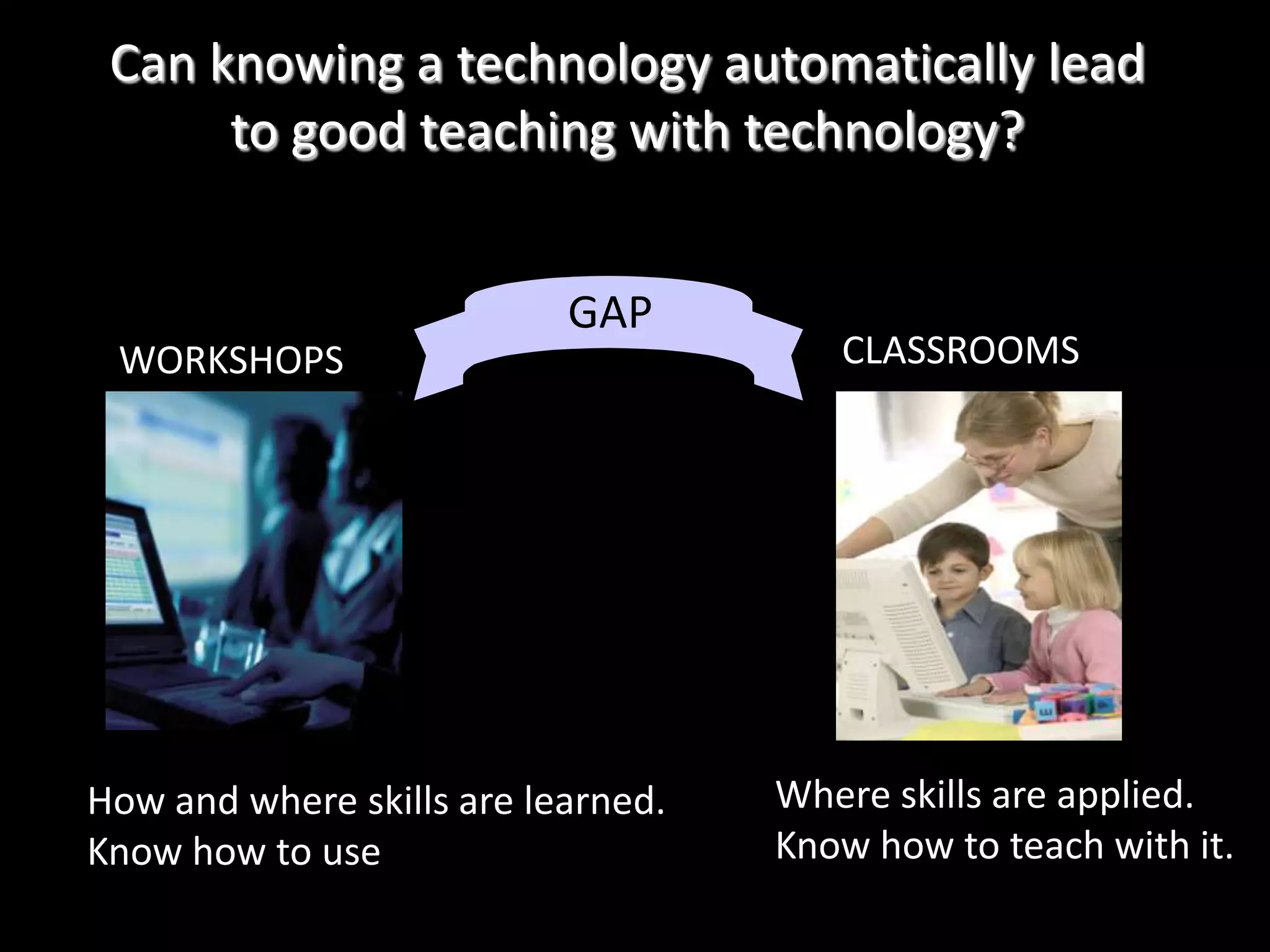
Can knowing a technology automatically lead to good teaching with technology?GAPCLASSROOMSWORKSHOPSWhere skills are applied.Know how to teach with it.How and where skills are learned.Know how to use
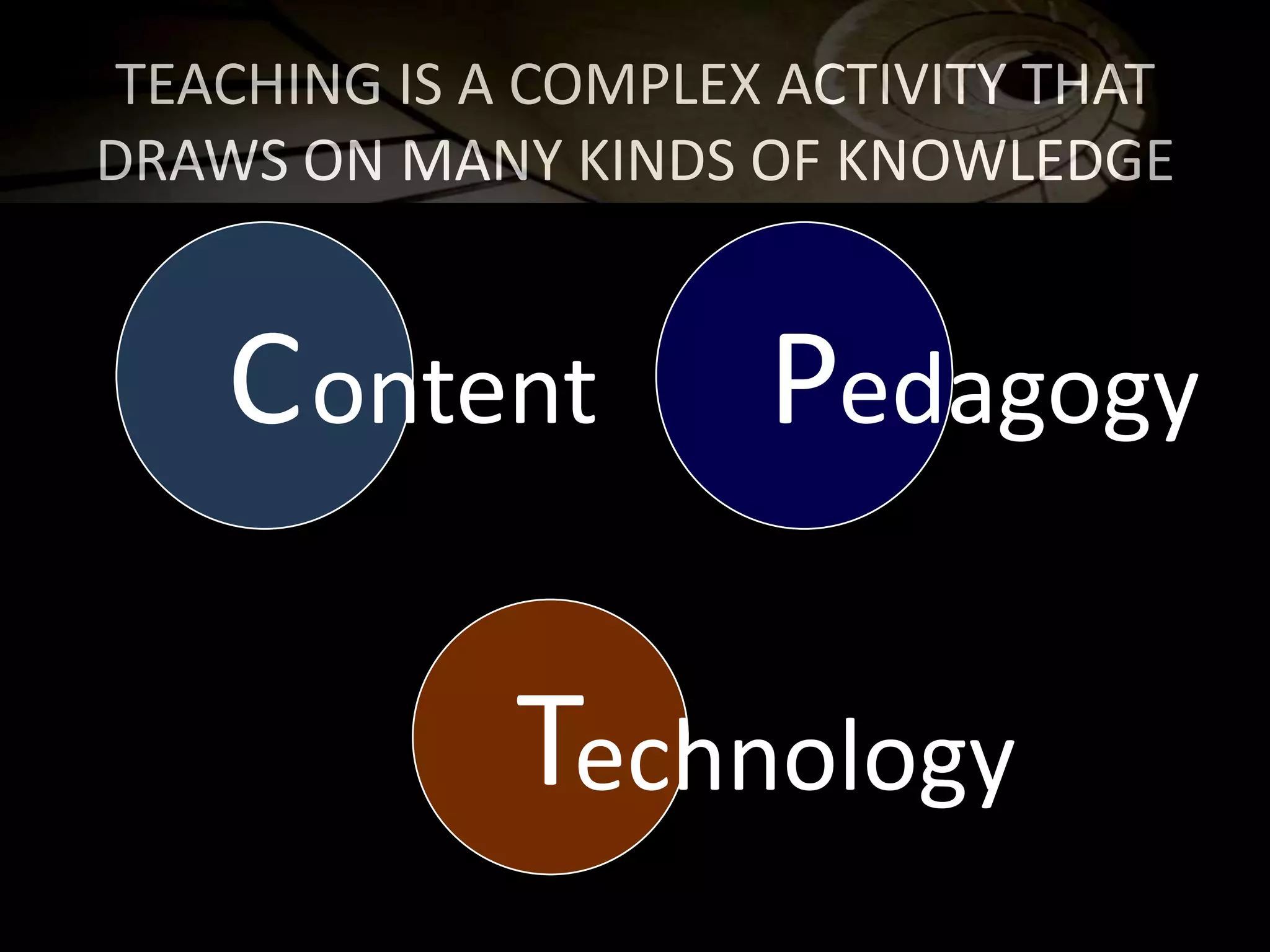
TEACHING IS A COMPLEX ACTIVITY THAT DRAWS ON MANY KINDS OF KNOWLEDGECPontentedagogyTechnology
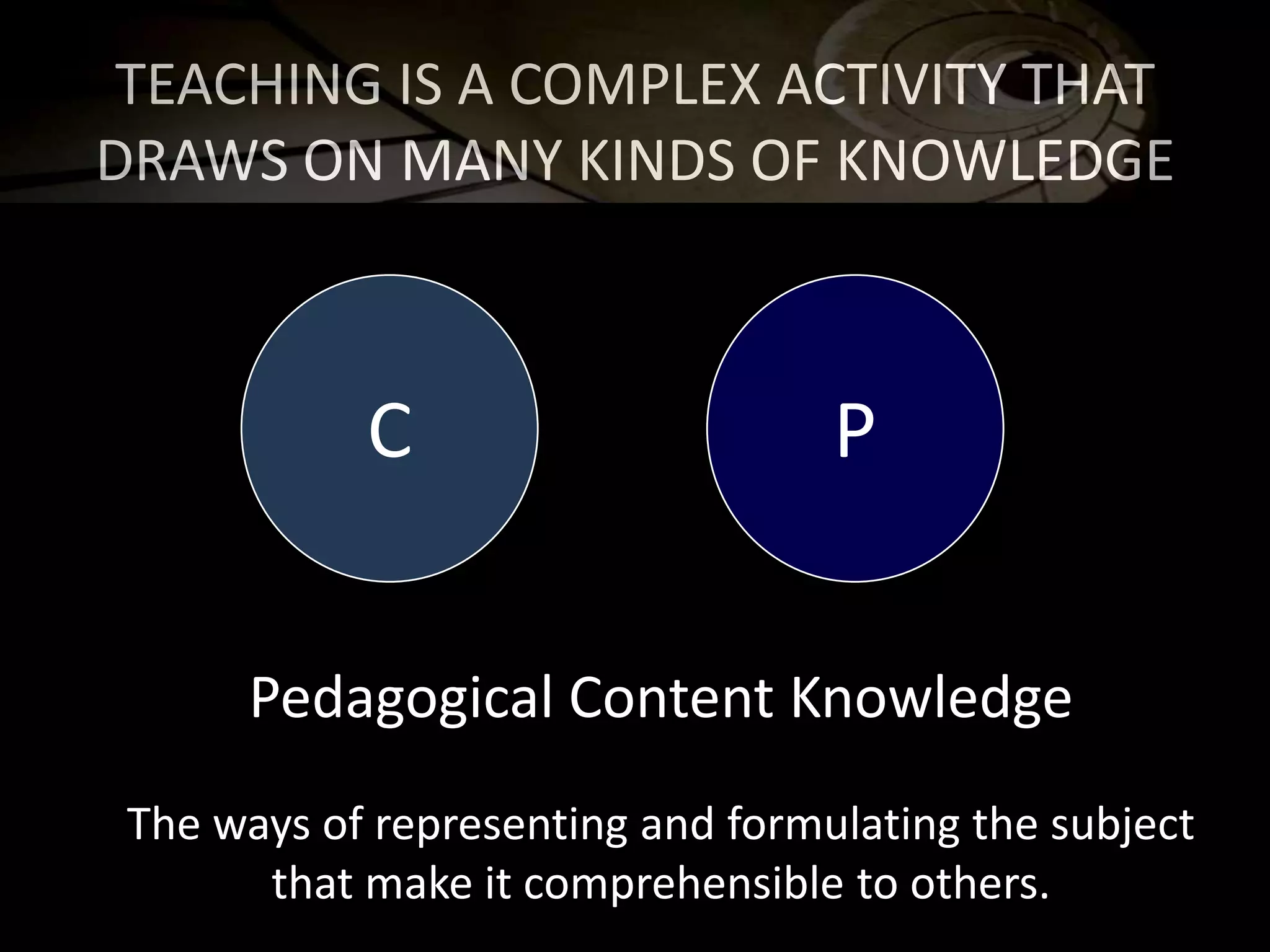
TEACHING IS A COMPLEX ACTIVITY THAT DRAWS ON MANY KINDS OF KNOWLEDGECPPedagogical Content KnowledgeThe ways of representing and formulating the subject that make it comprehensible to others.
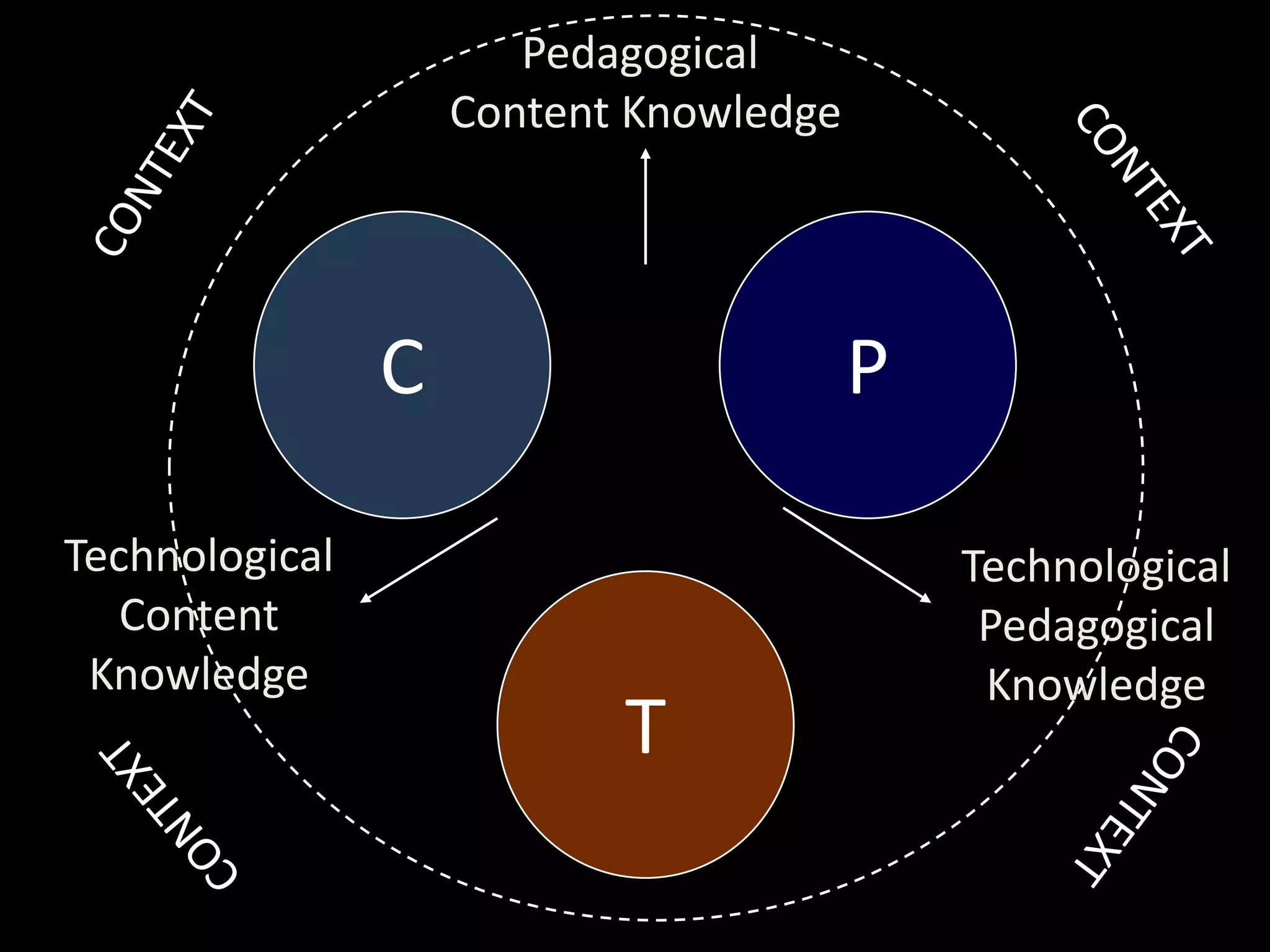
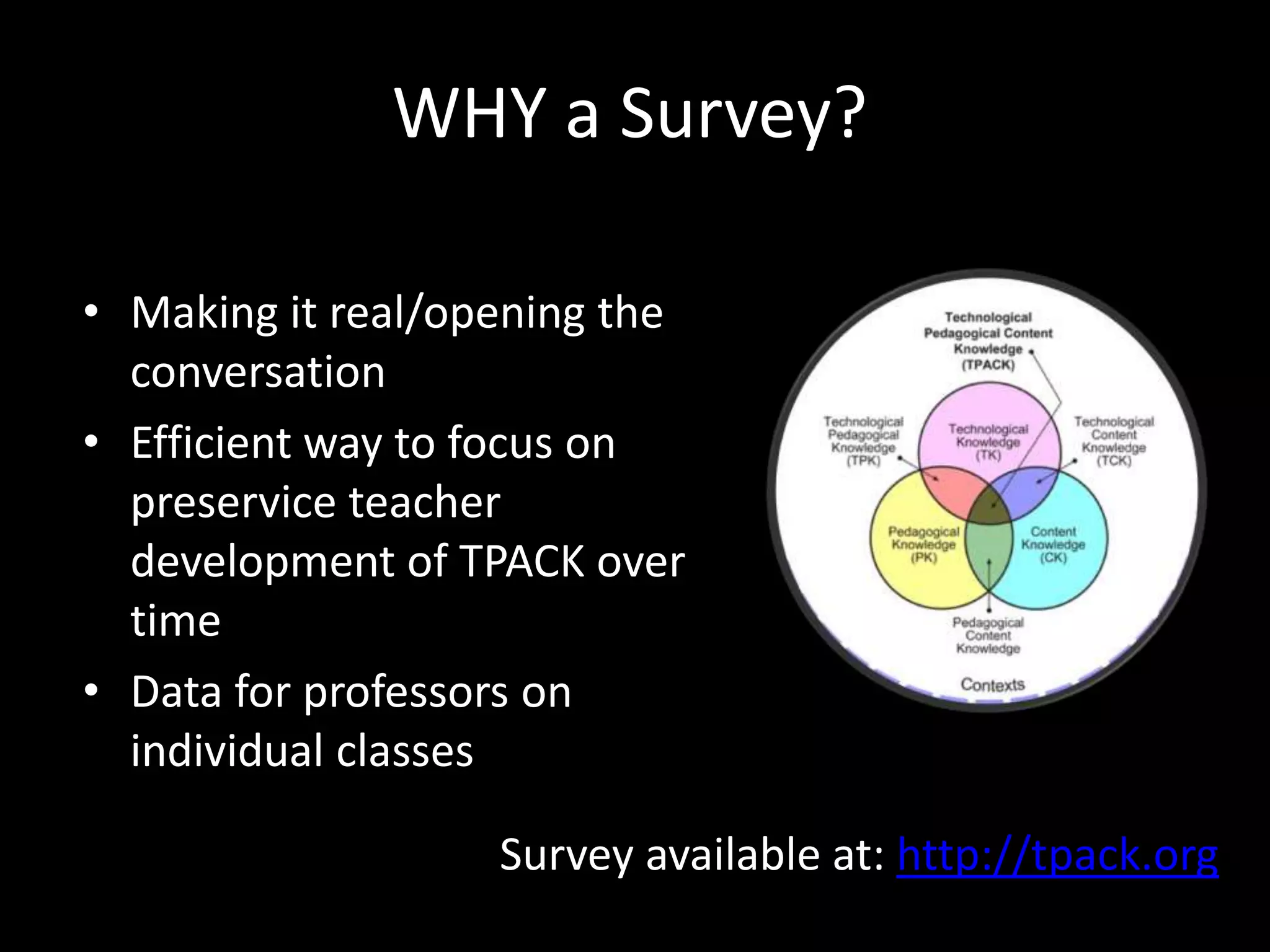
Pedagogical Content KnowledgeCONTEXTCONTEXTCPTechnological Content KnowledgeTechnological Pedagogical KnowledgeTCONTEXTCONTEXT
TPCKTPACKTotal PACKage
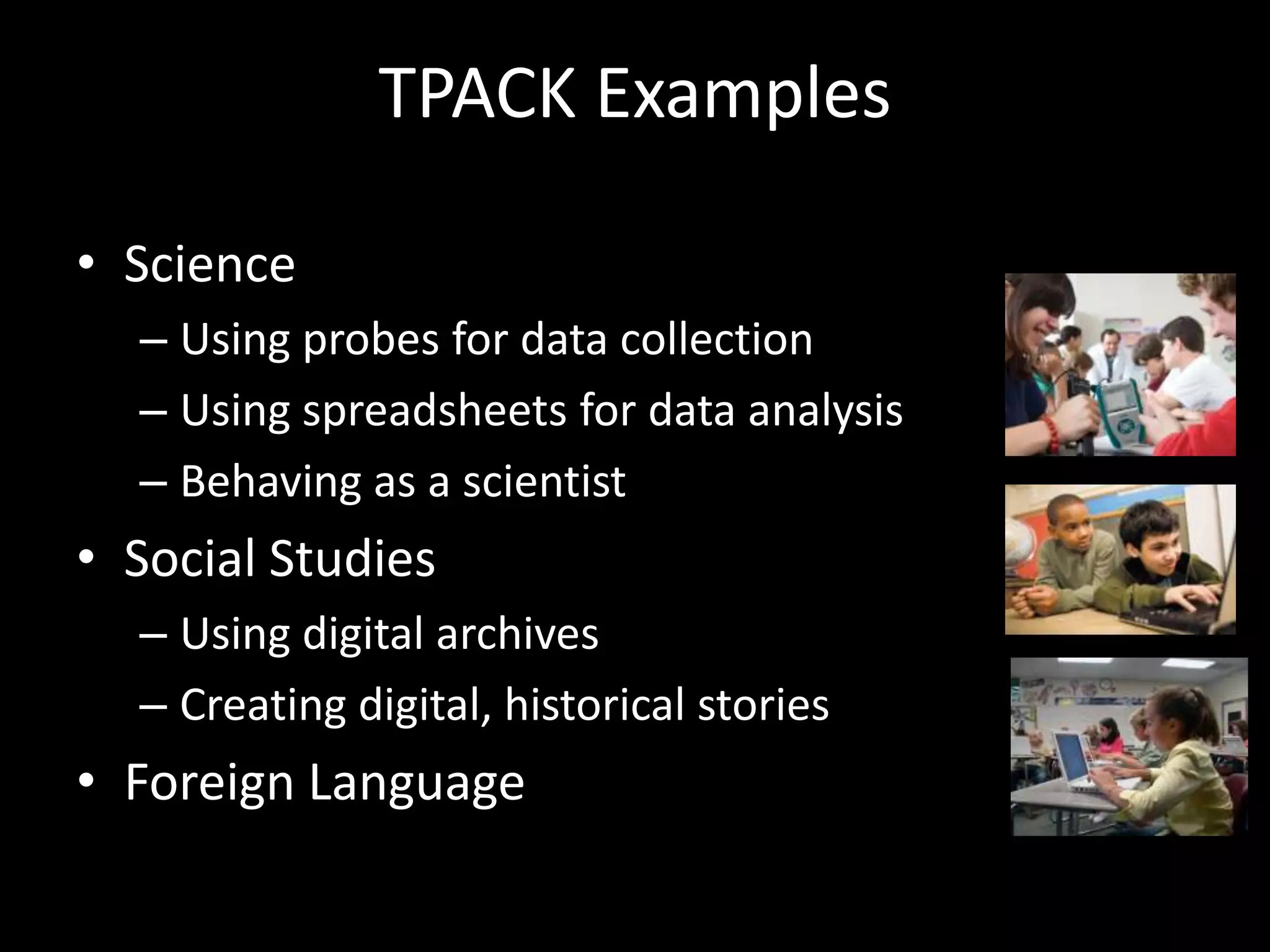
TPACK ExamplesScienceUsing probes for data collectionUsing spreadsheets for data analysisBehaving as a scientistSocial StudiesUsing digital archivesCreating digital, historical storiesForeign Language
Teachers Need Technological Pedagogical Content KnowledgeFocus is no longer upon the technologyTPACK provides a framework to think about teacher technology use and staff development in both higher education and K-12 environmentsThe emphasis is on the intersection of technology, content and pedagogy
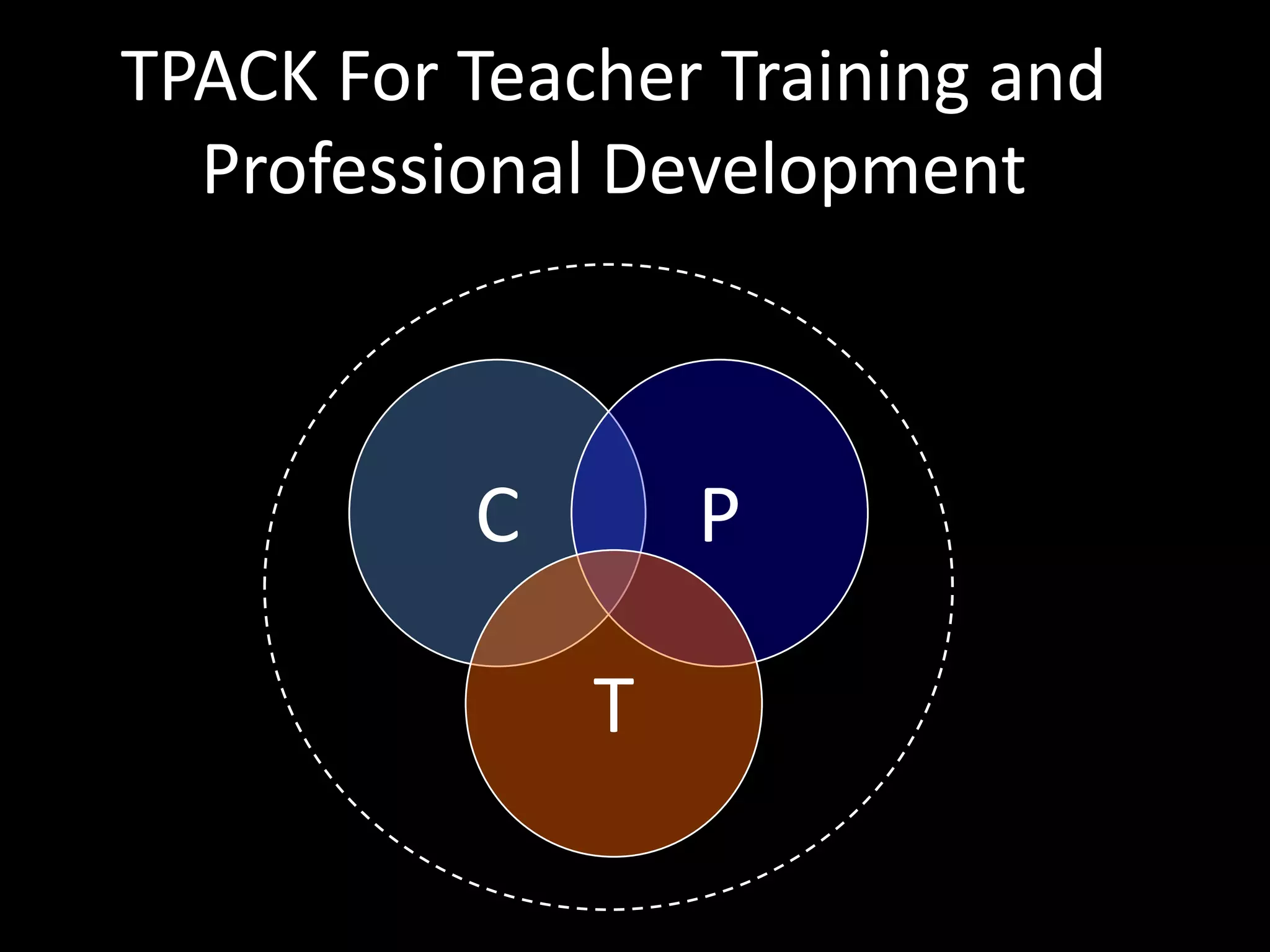
TPACK For Teacher Training and Professional DevelopmentCPT
TPACK Research   First generation TPACKSecond generation TPACK
WHY a Survey?Making it real/opening the conversationEfficient way to focus on preservice teacher development of TPACK over timeData for professors on individual classesSurvey available at: http://tpack.org
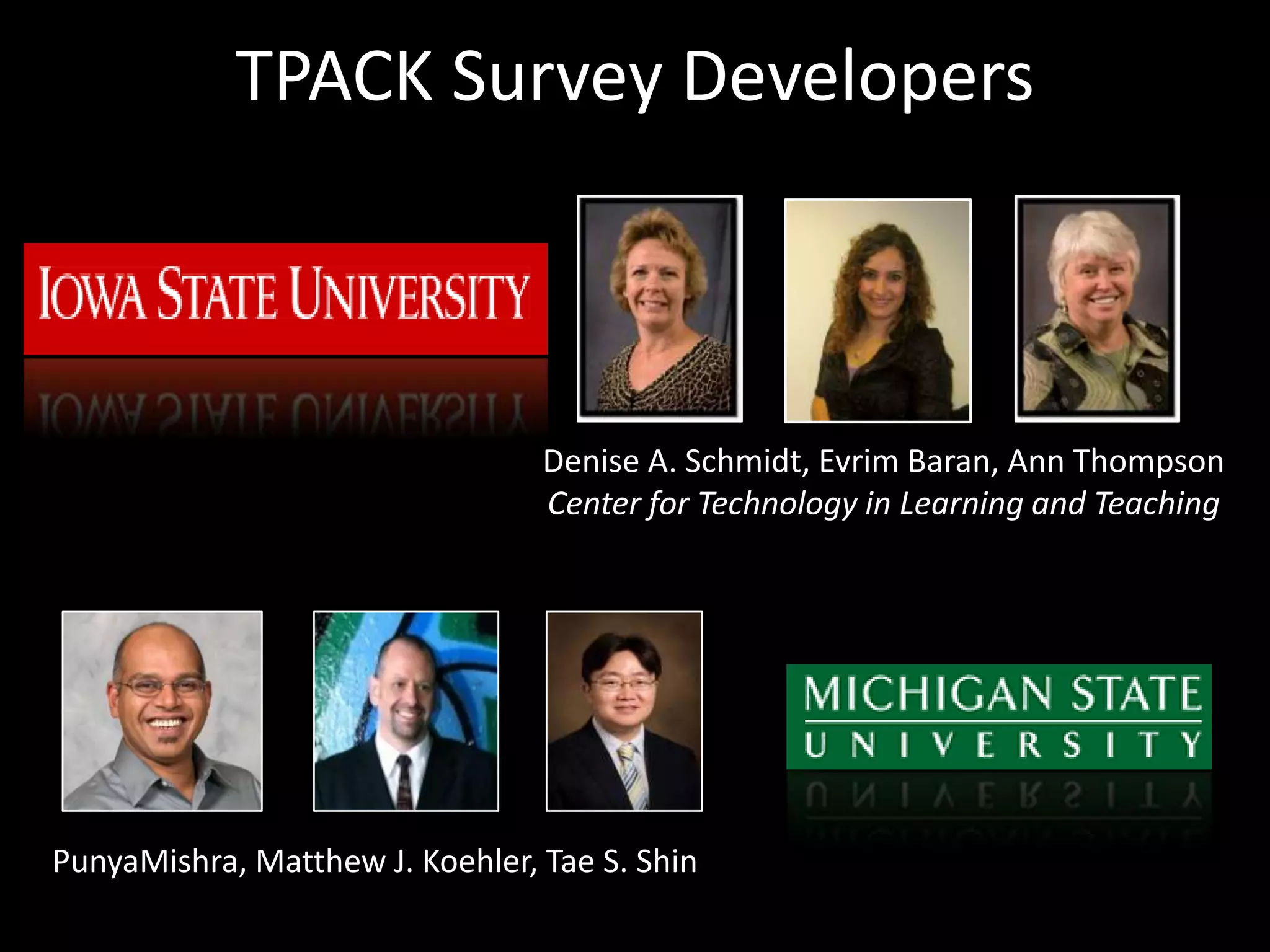
TPACK Survey DevelopersDenise A. Schmidt, Evrim Baran, Ann ThompsonCenter for Technology in Learning and TeachingPunyaMishra, Matthew J. Koehler, Tae S. Shin
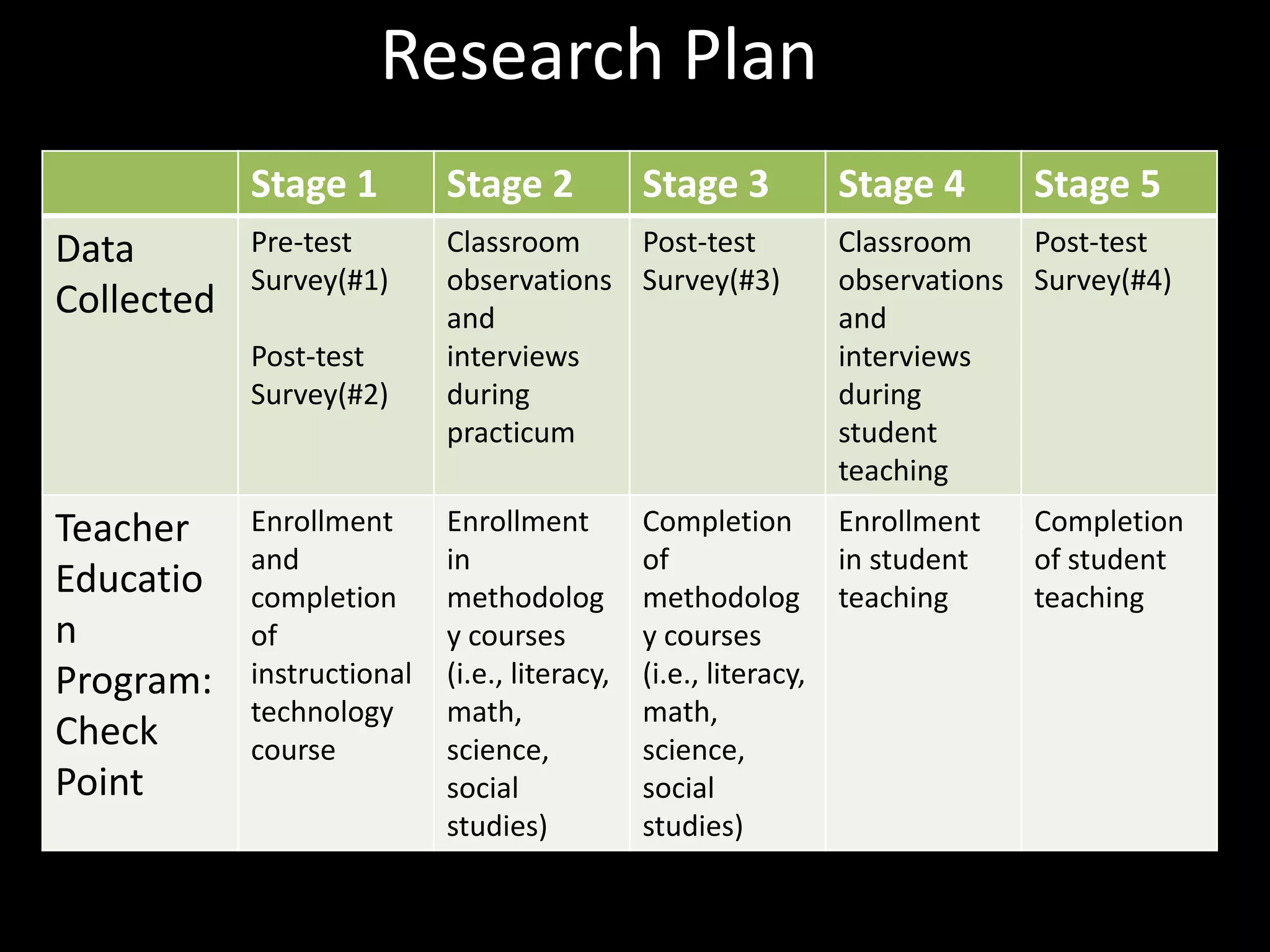
Research Plan
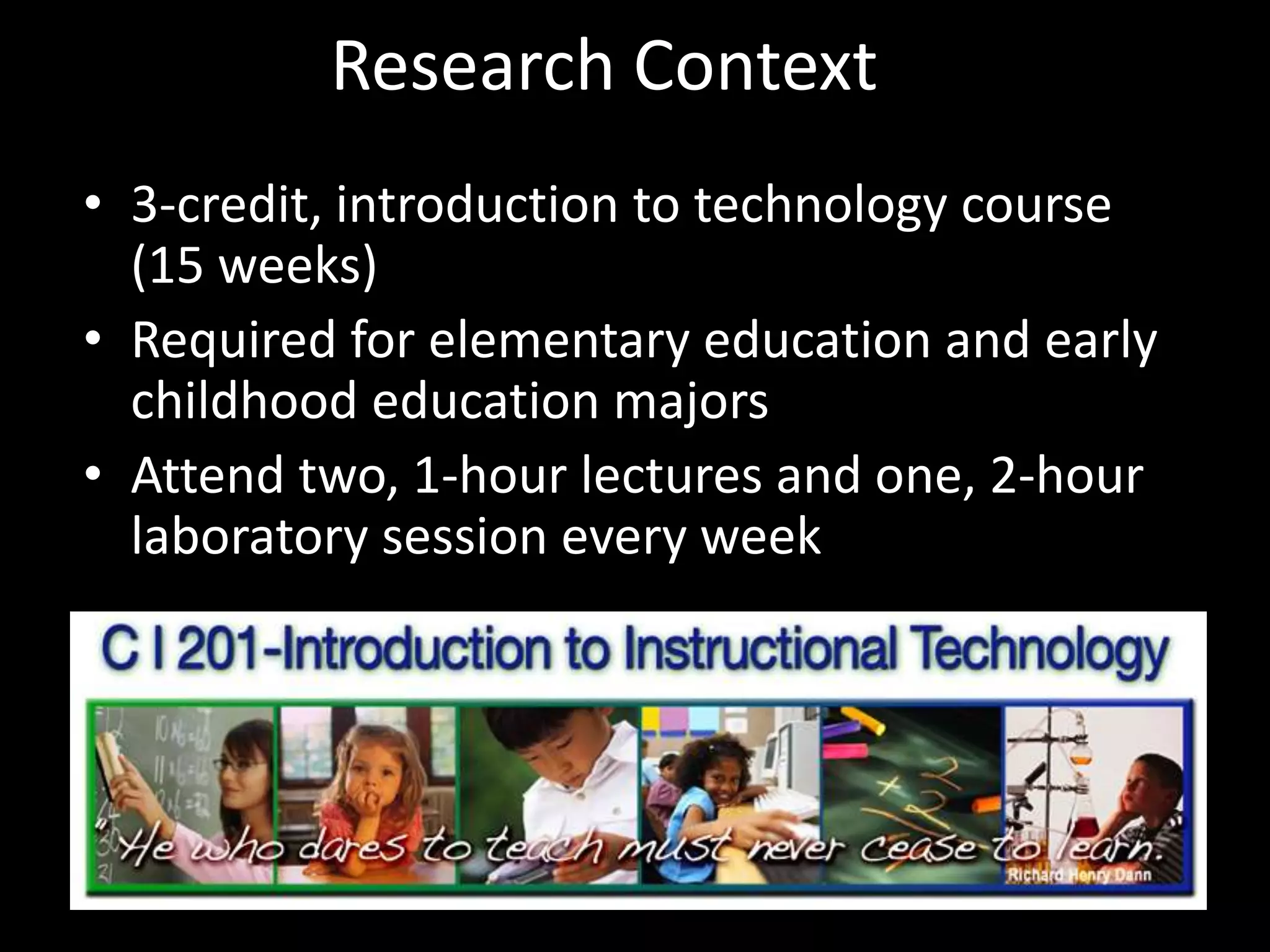
Research Context3-credit, introduction to technology course (15 weeks)Required for elementary education and early childhood education majorsAttend two, 1-hour lectures and one, 2-hour laboratory session every week
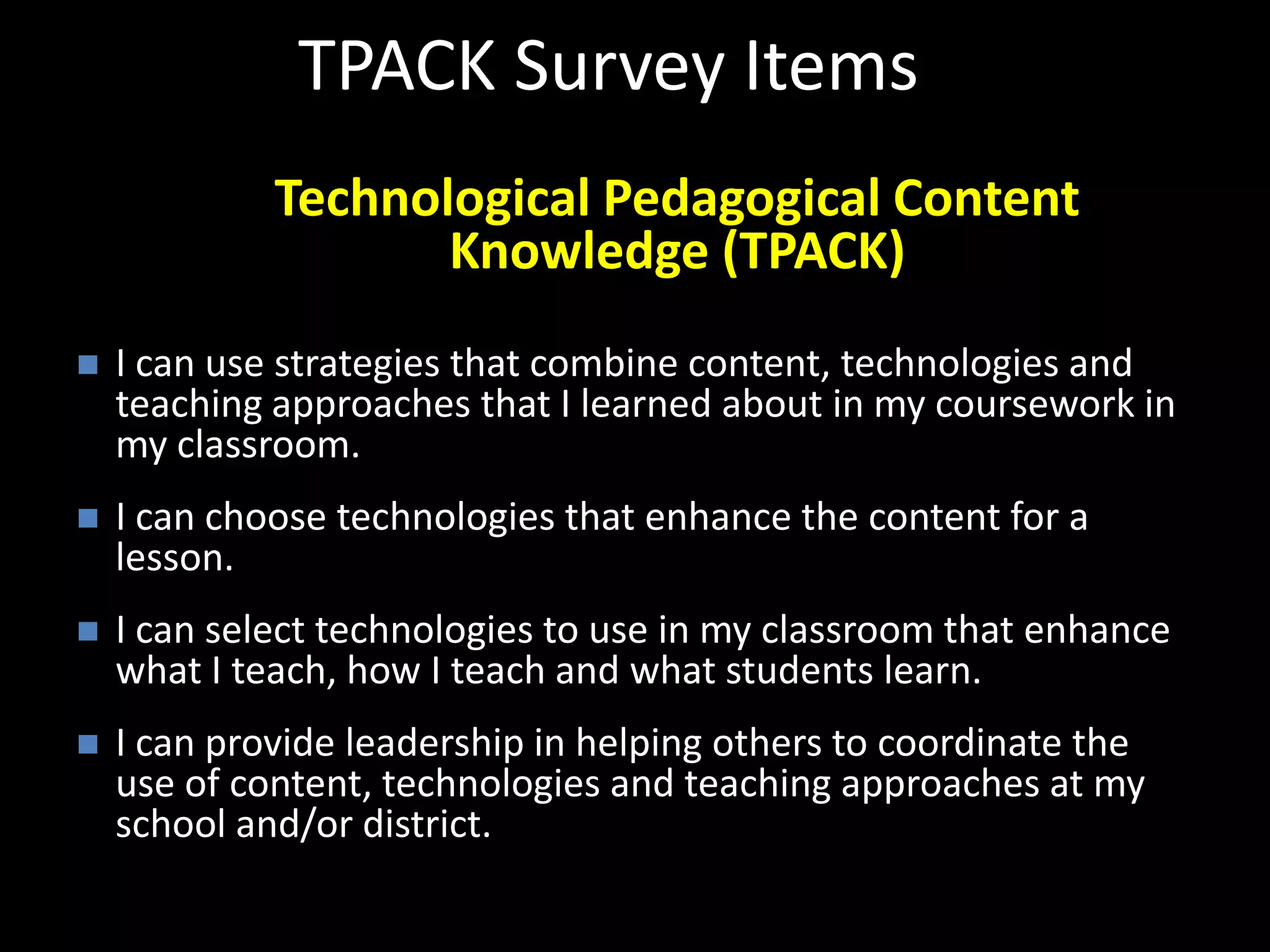
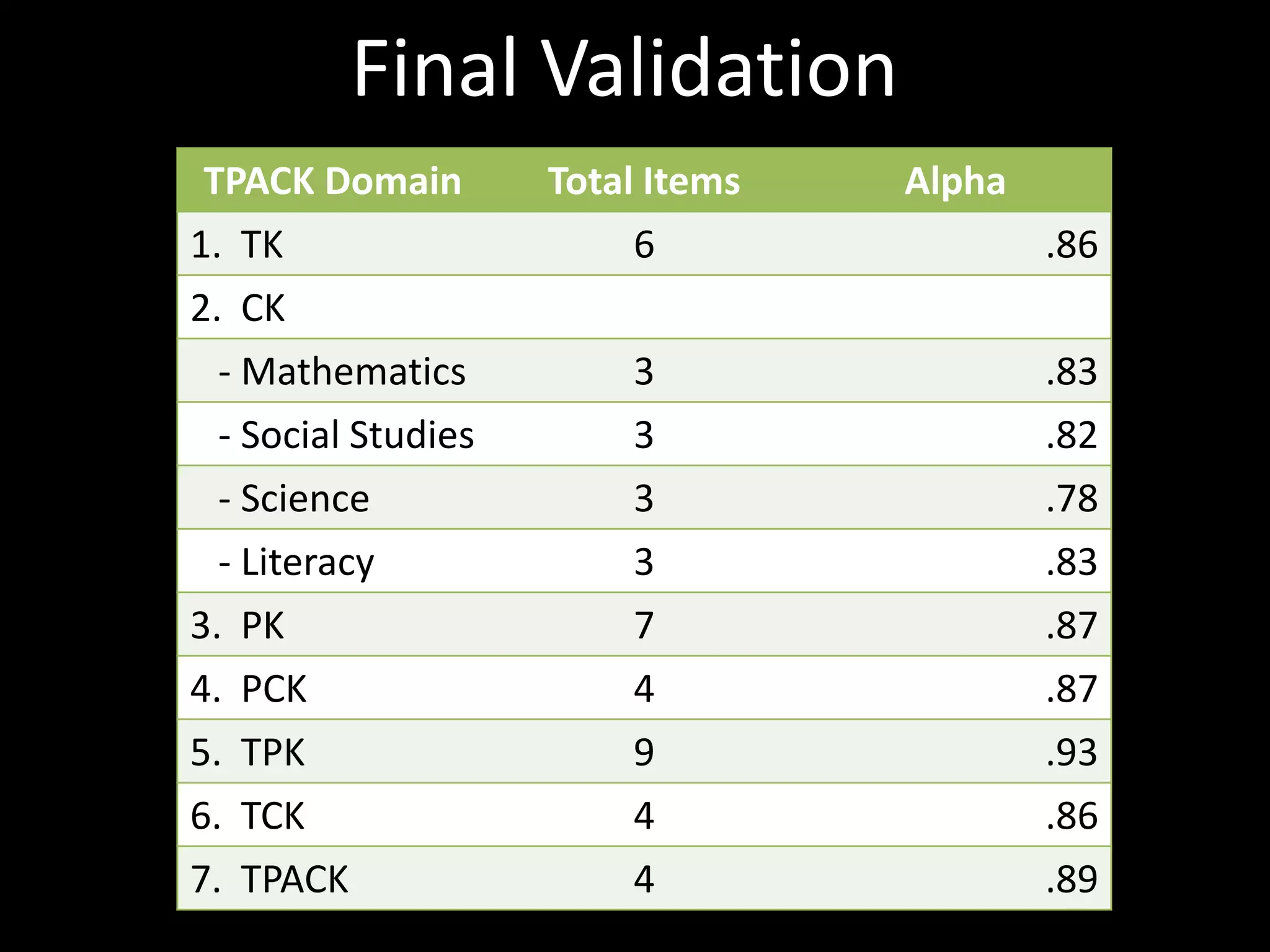
TPACK Survey ItemsTechnological Pedagogical Content Knowledge (TPACK)I can use strategies that combine content, technologies and teaching approaches that I learned about in my coursework in my classroom.
I can choose technologies that enhance the content for a lesson.
I can select technologies to use in my classroom that enhance what I teach, how I teach and what students learn.
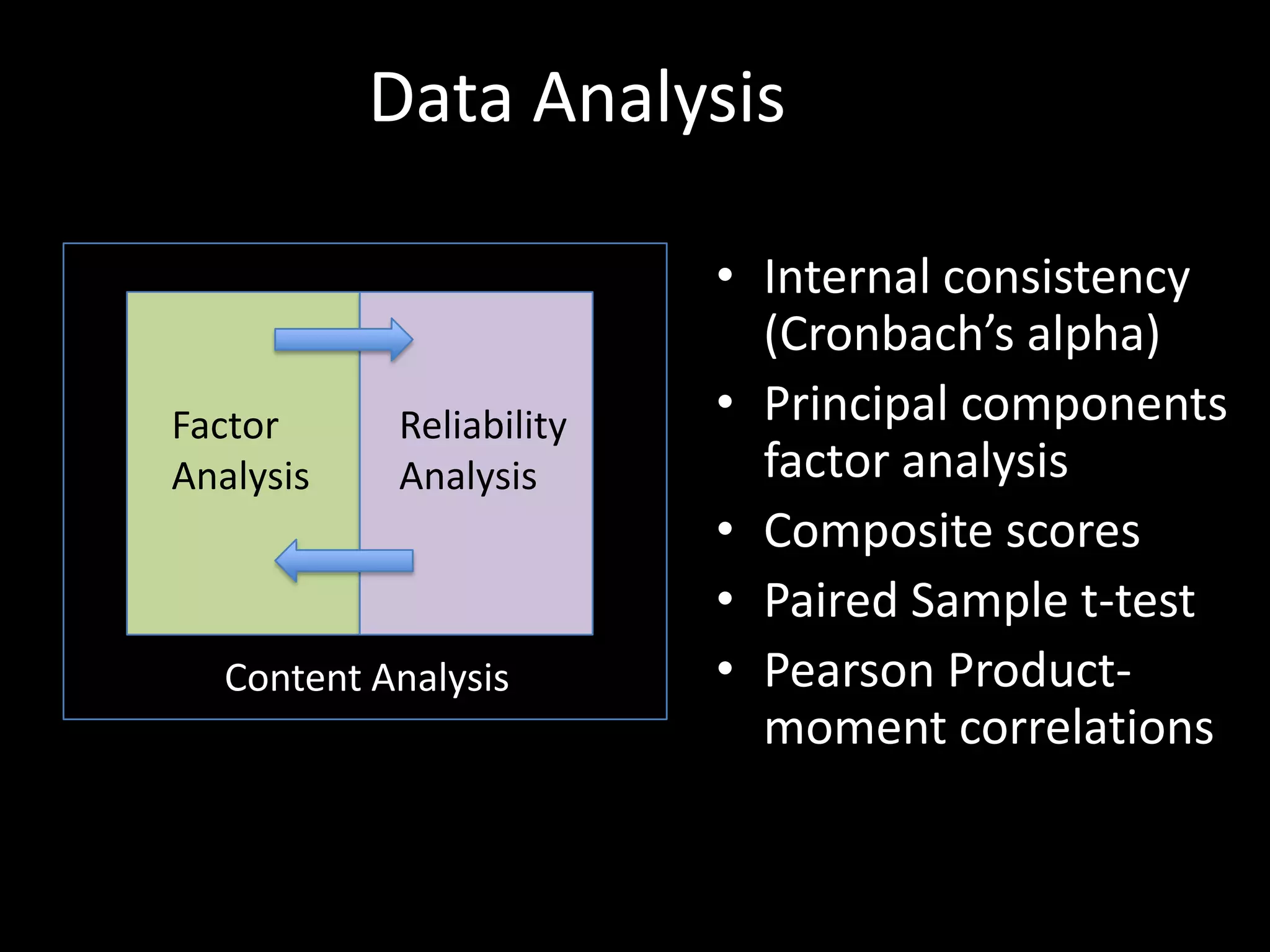
I can provide leadership in helping others to coordinate the use of content, technologies and teaching approaches at my school and/or district. Data AnalysisInternal consistency (Cronbach’s alpha)Principal components factor analysisComposite scoresPaired Sample t-testPearson Product-moment correlationsFactor AnalysisReliability AnalysisContent Analysis
Final Validation
Paired-Sample t-test
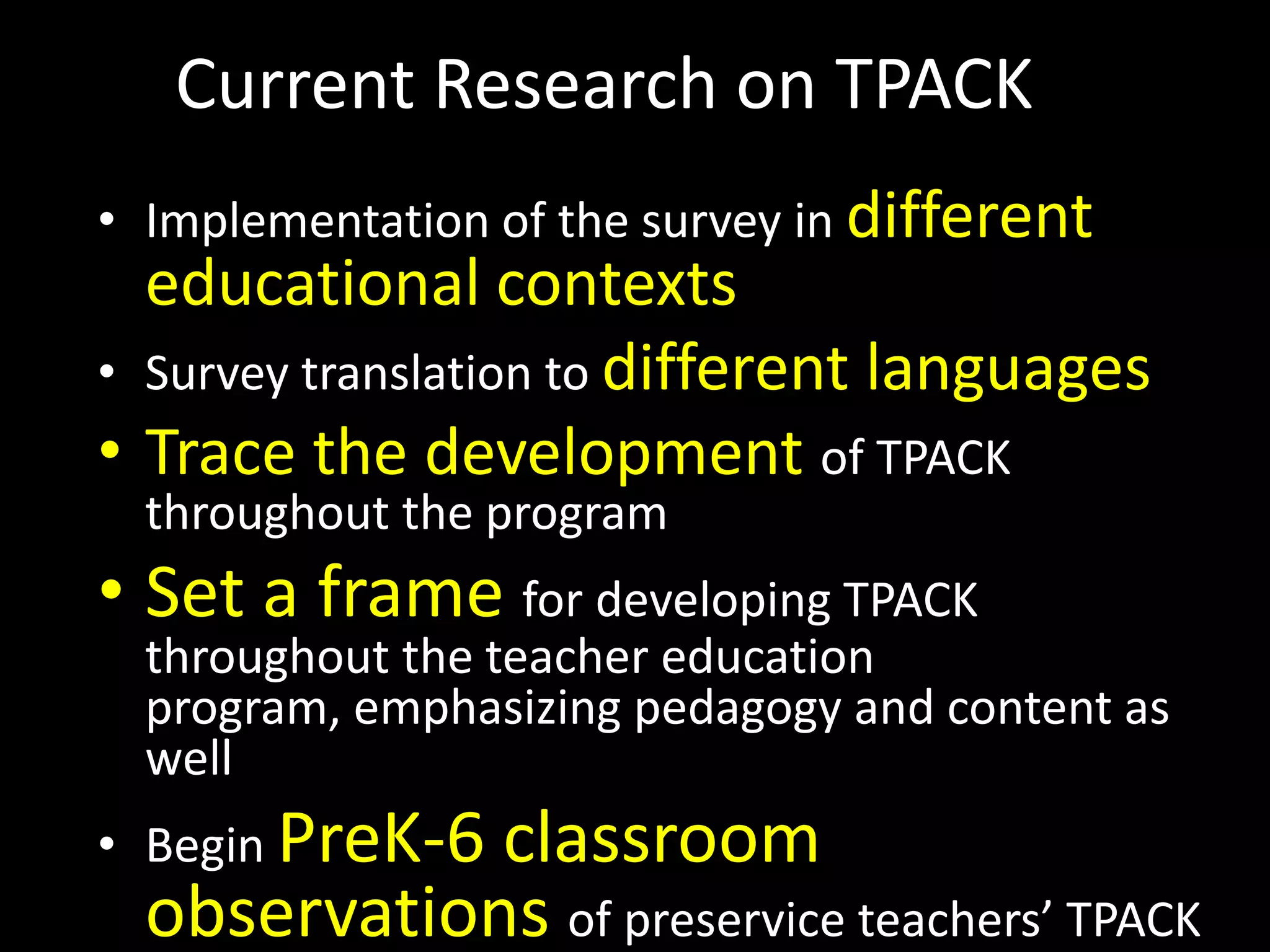
Current Research on TPACKImplementation of the survey in different educational contextsSurvey translation to different languagesTrace the development of TPACK throughout the programSet a frame for developing TPACK throughout the teacher education program, emphasizing pedagogy and content as wellBegin PreK-6 classroom observations of preservice teachers’ TPACK
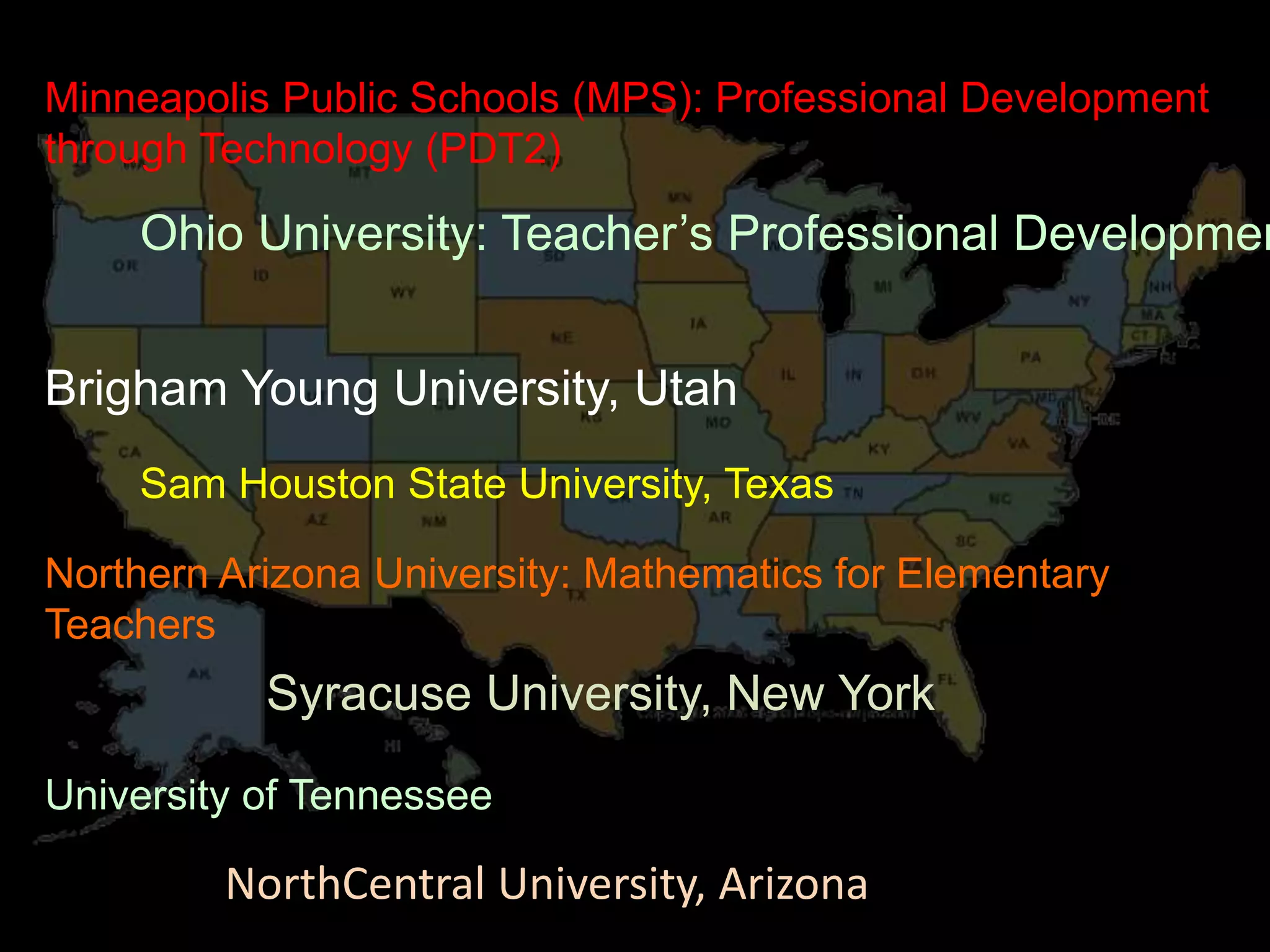
Minneapolis Public Schools (MPS): Professional Development through Technology (PDT2) Ohio University: Teacher’s Professional DevelopmentBrigham Young University, UtahSam Houston State University, TexasNorthern Arizona University: Mathematics for Elementary TeachersSyracuse University, New YorkUniversity of TennesseeNorthCentral University, Arizona
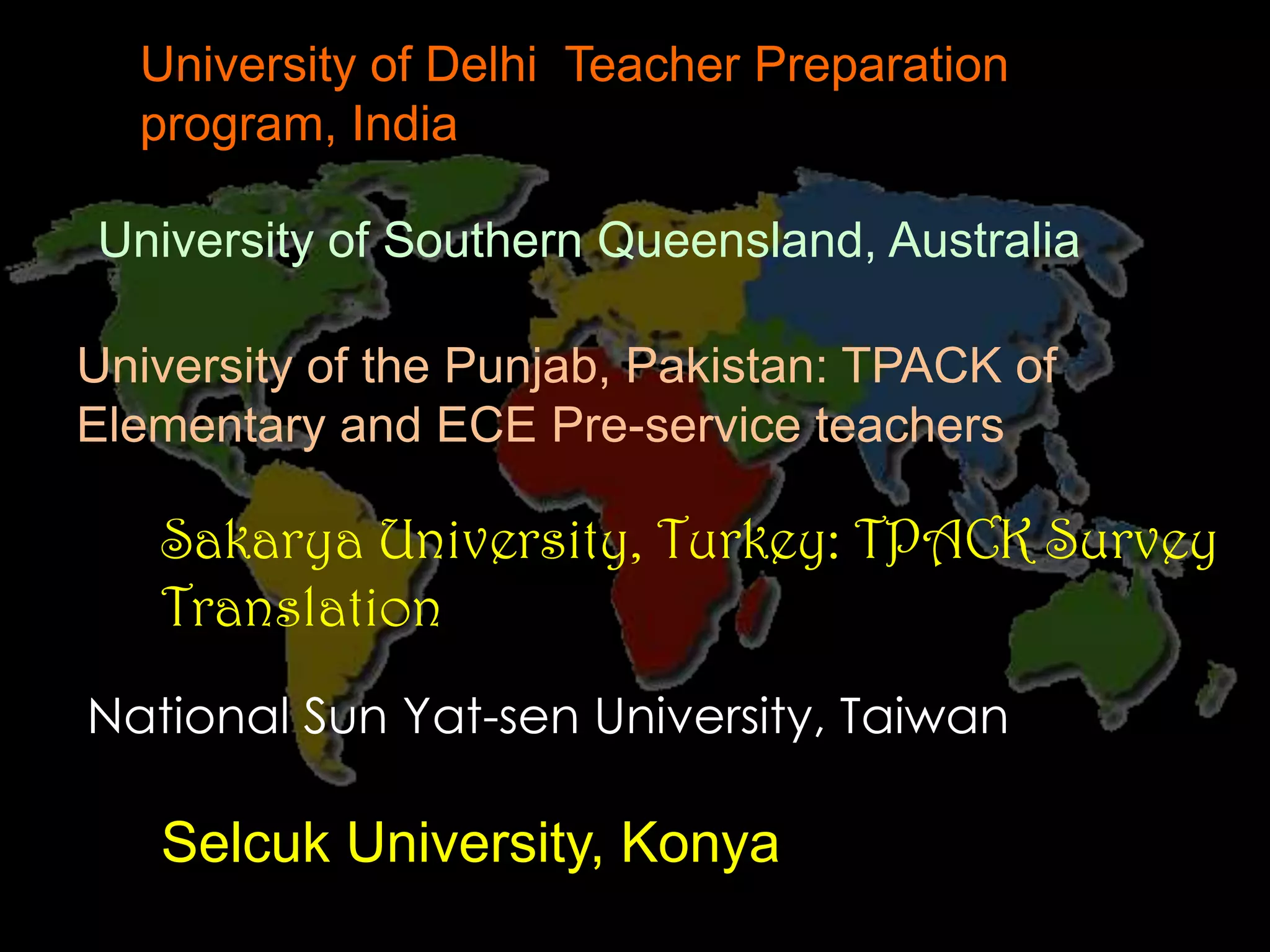
University of Delhi  Teacher Preparation program, India University of Southern Queensland, Australia University of the Punjab, Pakistan: TPACK of Elementary and ECE Pre-service teachers Sakarya University, Turkey: TPACK Survey TranslationNational Sun Yat-sen University, TaiwanSelcuk University, Konya
Technology Modeling Effects on In-service Early Childhood Teachers TPACKA Case in Taiwan
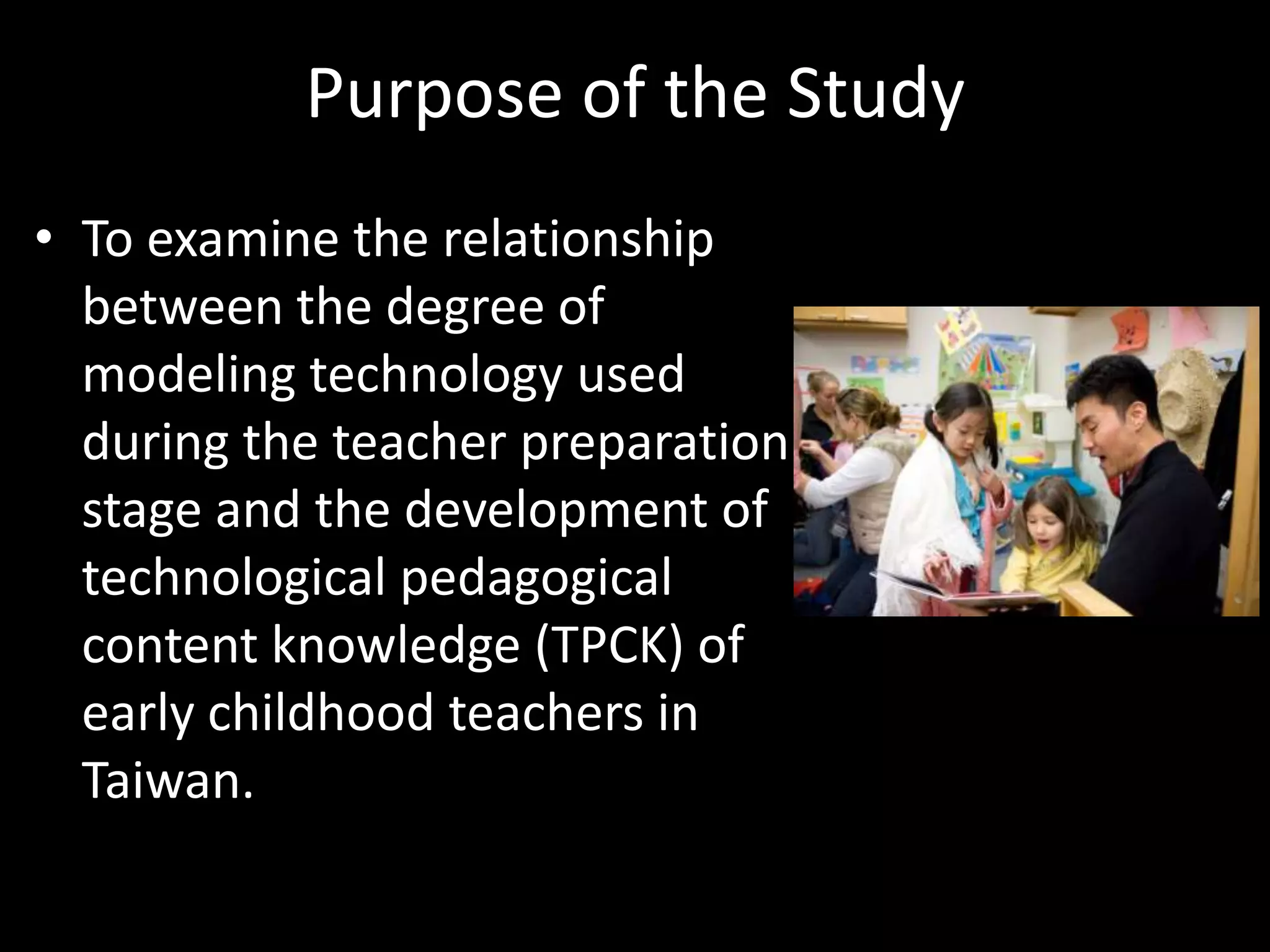
Purpose of the StudyTo examine the relationship between the degree of modeling technology used during the teacher preparation stage and the development of technological pedagogical content knowledge (TPCK) of early childhood teachers in Taiwan.
MethodsInstrument:    --Demographic section,   --TPACK instrument was translated and adapted from Schmidt et al. (2009) survey instrument.    -- the five items of modeling technology use by the teacher education faculty     1) the use of Information Technology (IT) hardware and software in teaching and learning,    2) the use of digital materials and multimedia educational software,     3) the use of online course platform,     4) the use of online assessment, and 5) the use of CMC tools to facilitate interactions among learners and instructors. Pilot Study A total of A total of 335 early childhood teachers took the final survey and the response rate is 86%.
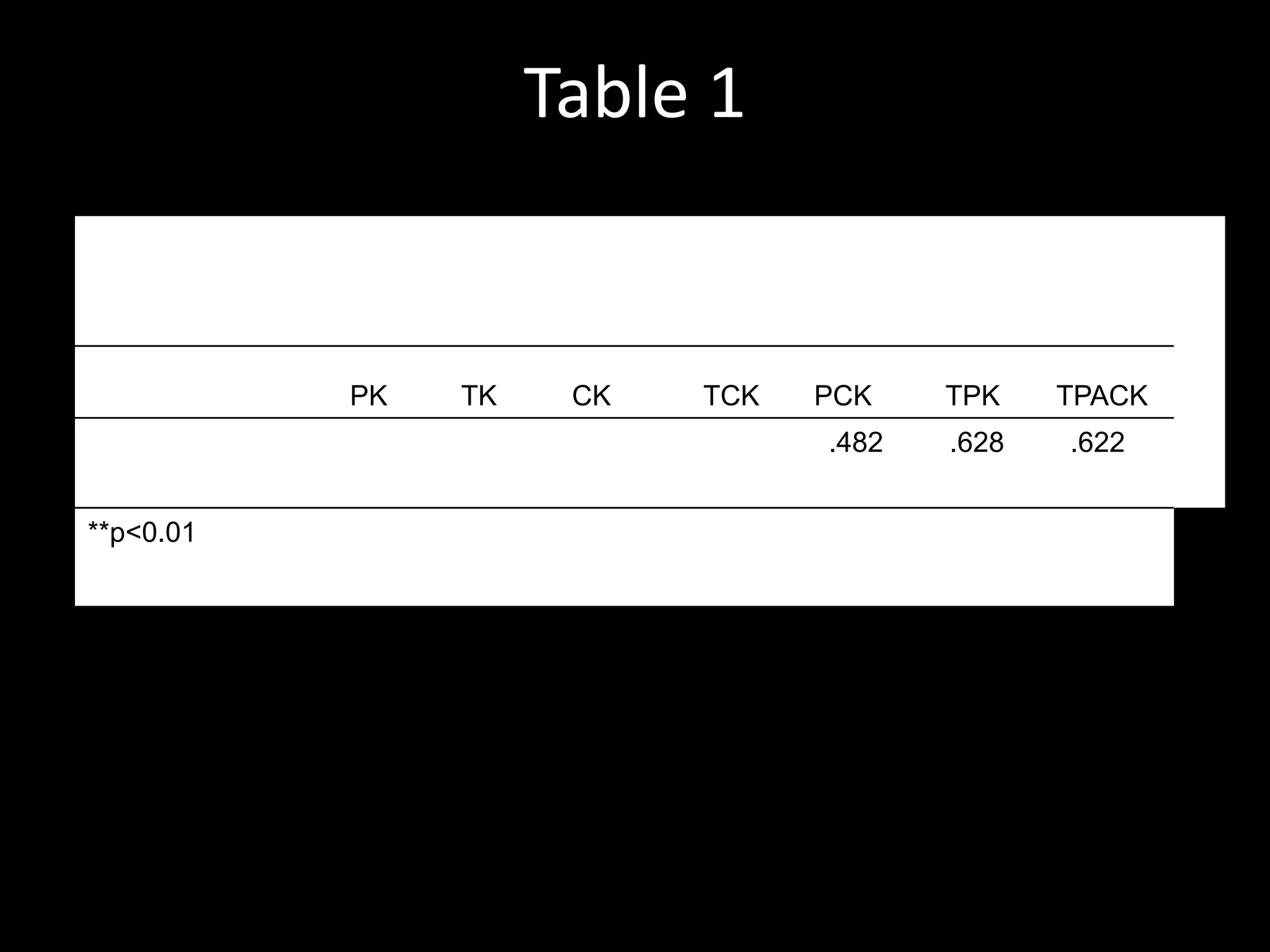
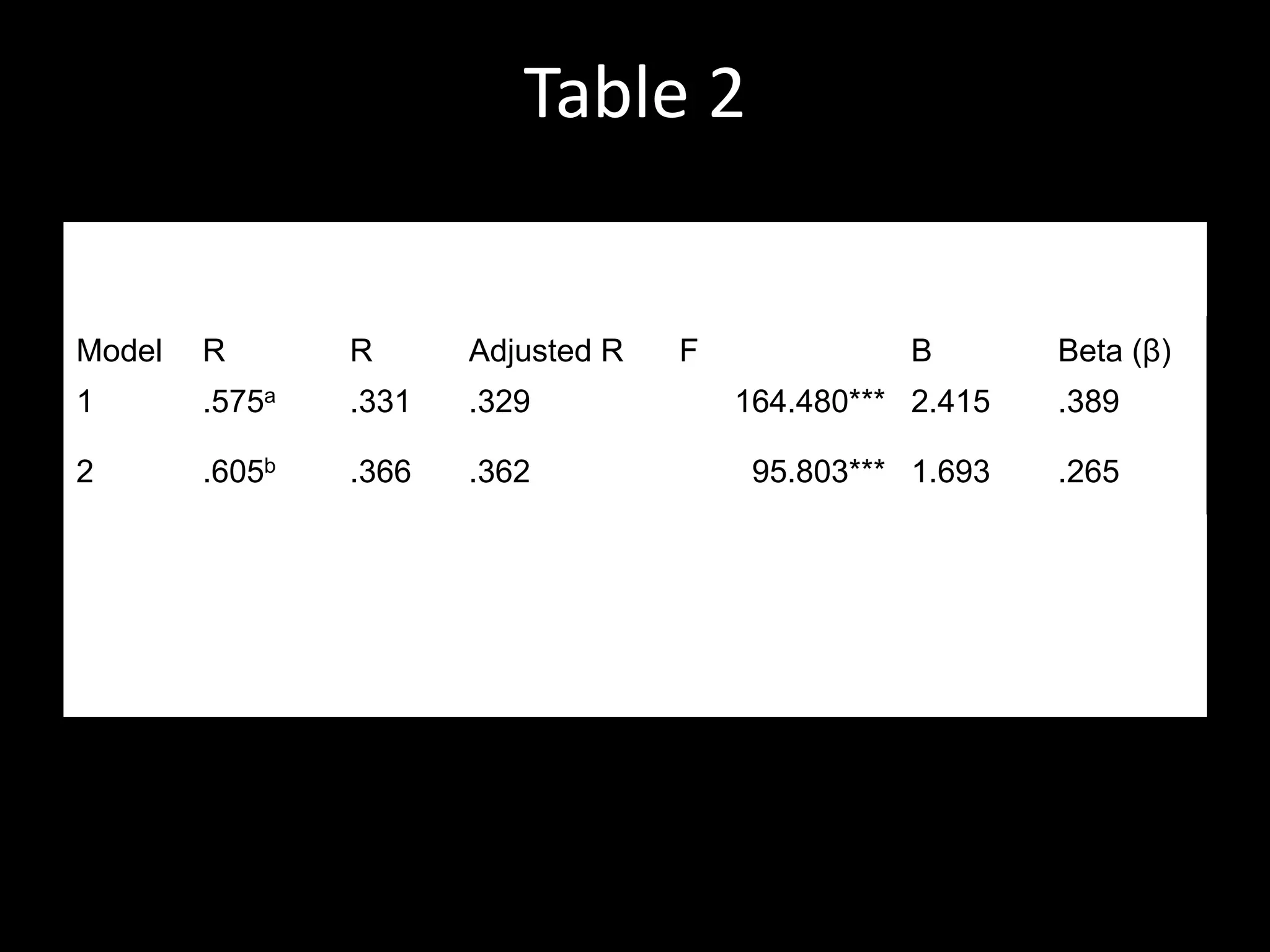
ResultsFive modeling technology uses during the teacher preparation stage has a mean of 3.57 (SD=.74) on a five point likert scaleSelf-assessed TPACK and the extent of the five technology modeling uses during the teacher preparation stage was significantly correlated at the 0.01 level with the r ranging from .4 to .628  (Table 1) A summary of stepwise regression results       -- two technology modeling uses were significant predictors of the TPACK measure (p <.001).      a) the use of CMC (computer-mediated communication) tools such as email, blogs, web discussion forums to facilitate interactions among learners andb)  instructors and the use of digital materials and multimedia educational software (Table 2)
Table 1 
Table 2
Discussions and Conclusion This present study reinforced and validated the significance of the   Research from Preparing Tomorrow Teaches to Use Technology (PT3) grant projects have proposed that modeling in technology use and integration in teacher preparation course has positive effects for the preservice teachers’ future use of technology in their professional career in K-12 schools (Adamy & Boulmetis, 2005; Casey & Casey, 2004).  In addition, this study provides a useful approach for using TPACK survey research to examine approaches to technology integration.
TPACK AS A FRAME FOR DEVELOPMENTDevelopment for teacher educationDevelopment in elementary, middle school and high school
TPACK FOR TEACHER EDUCATORSFramework for Program Development
Tool for Individual Faculty
Technology Course(s)
Encourages Integration Across the Program
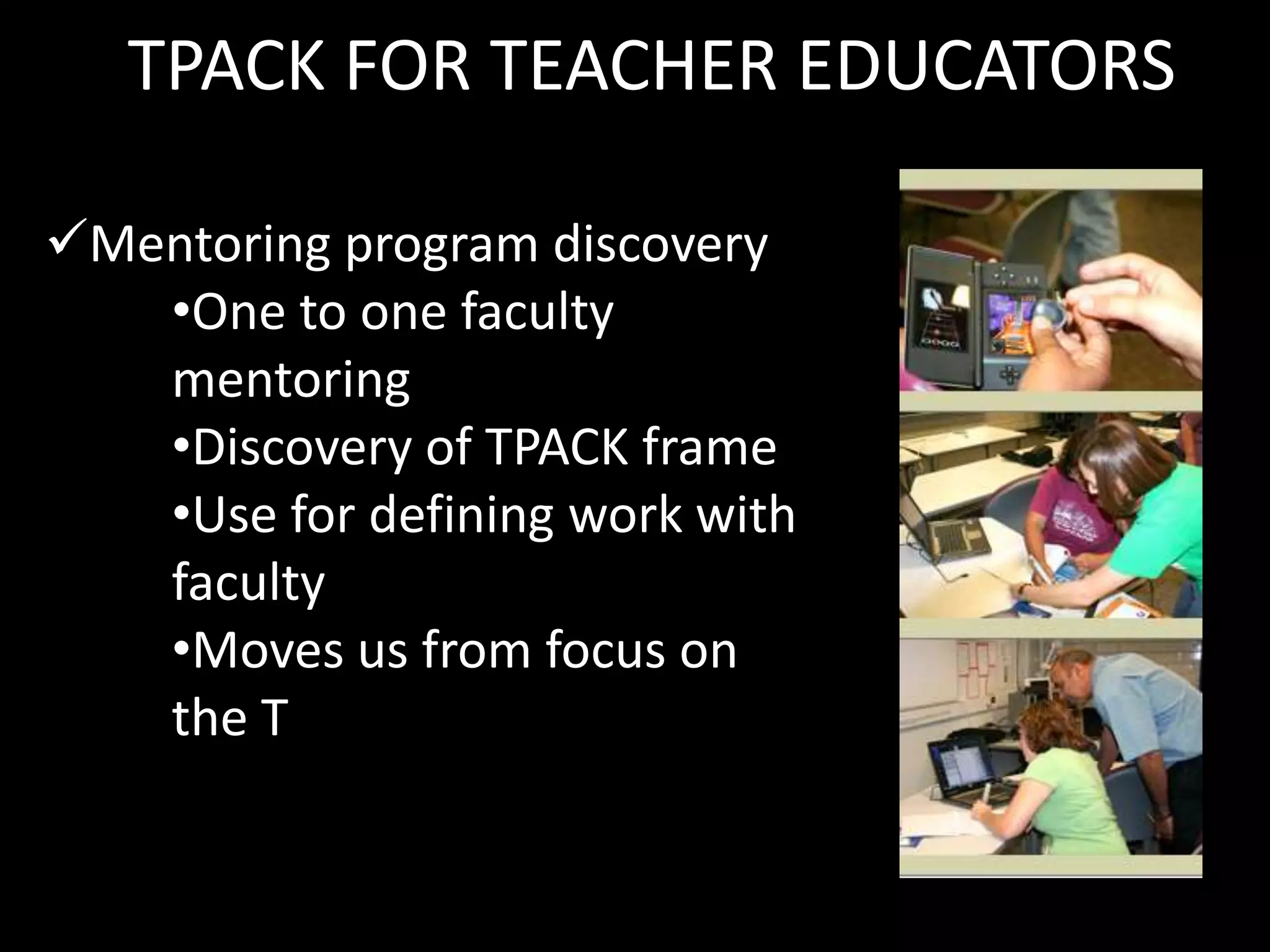
Framework for ResearchTPACK FOR TEACHER EDUCATORSMentoring program discovery
One to one faculty mentoring
Discovery of TPACK frame
Use for defining work with faculty
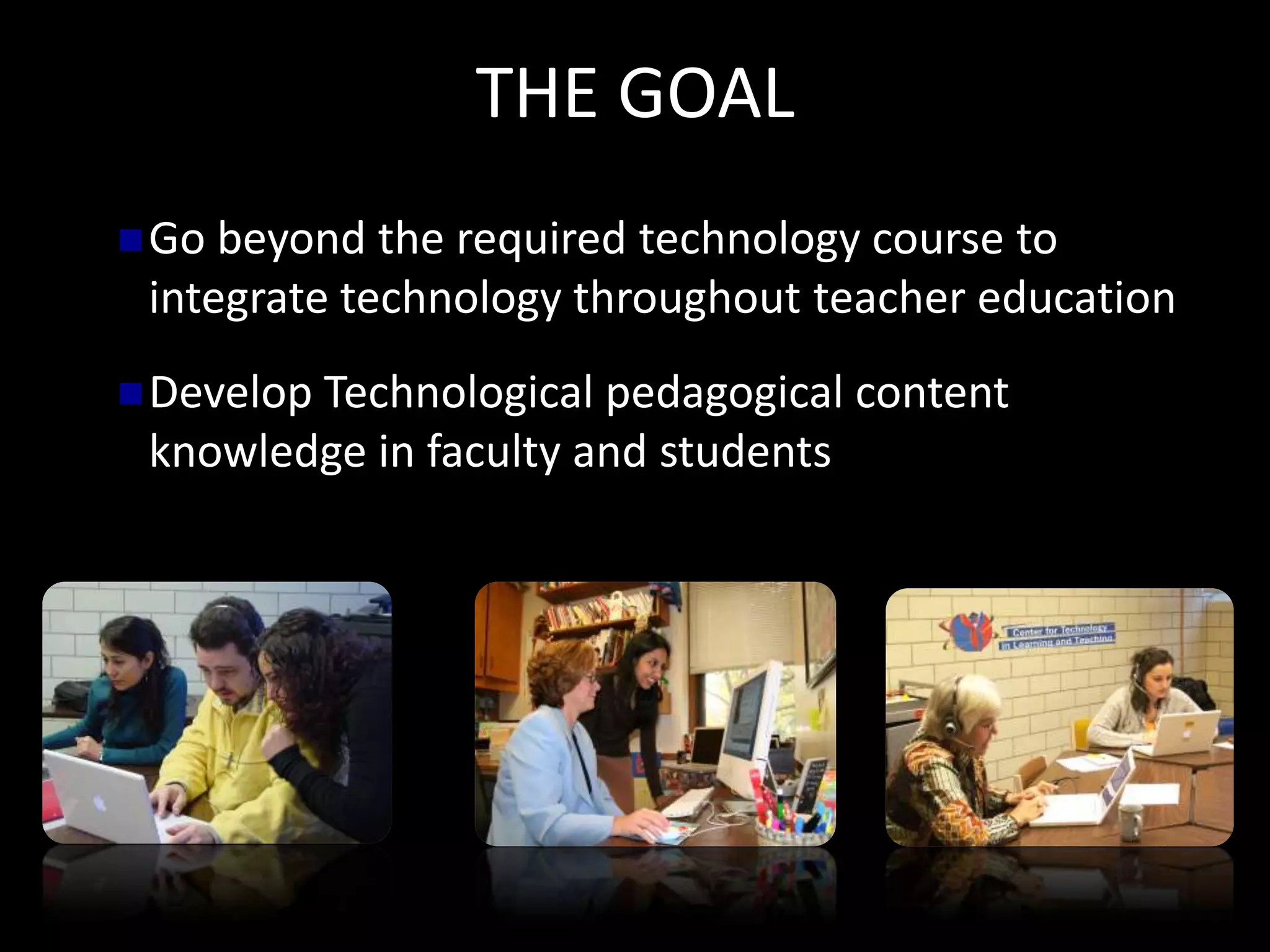
Moves us from focus on the TTHE GOALGo beyond the required technology course to integrate technology throughout teacher education
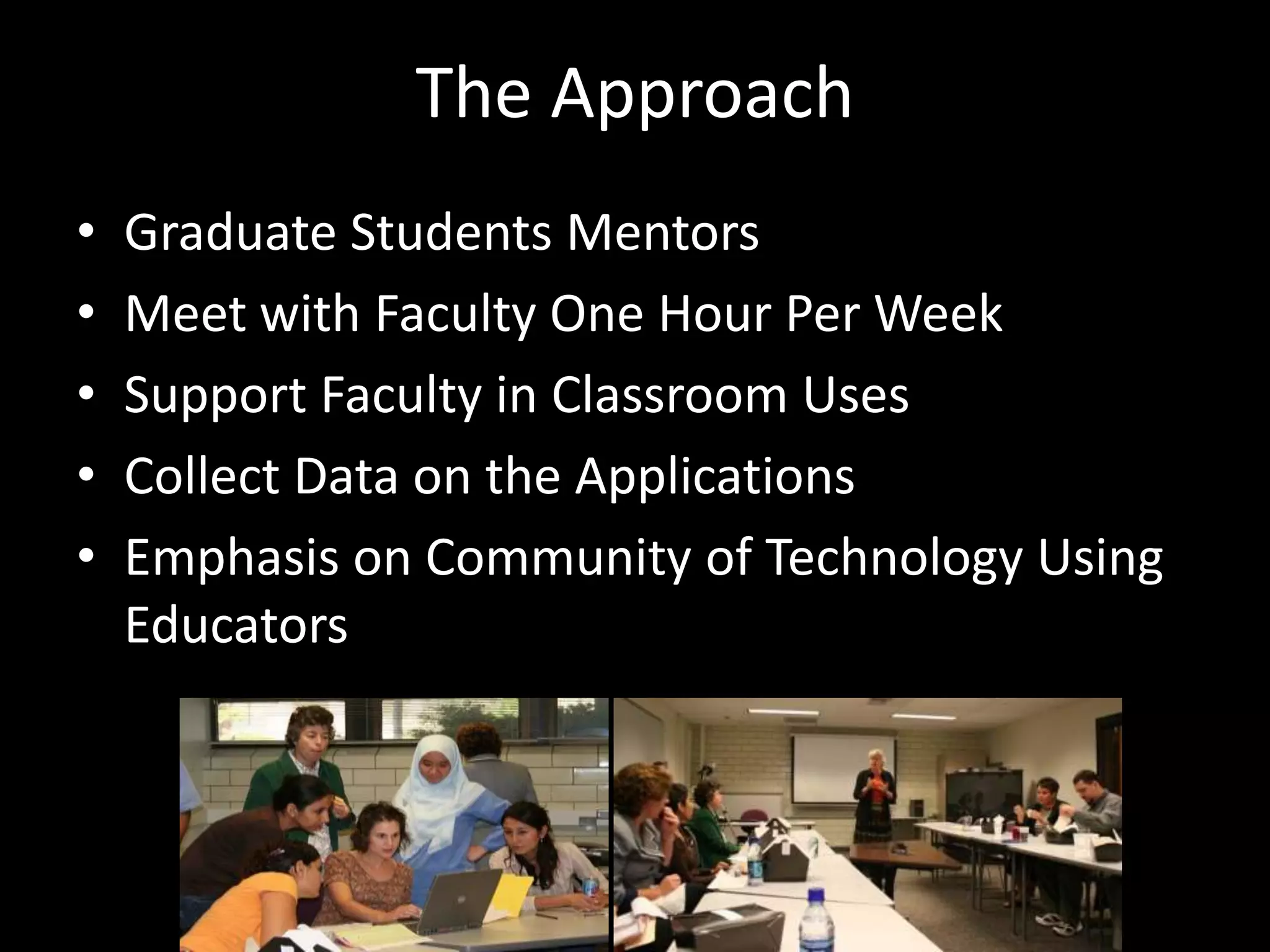
Develop Technological pedagogical content knowledge in faculty and studentsThe ApproachGraduate Students MentorsMeet with Faculty One Hour Per WeekSupport Faculty in Classroom UsesCollect Data on the ApplicationsEmphasis on Community of Technology Using Educators

Tpack ICITS Thompson, Baran, Chuang

  • 1.
    TPACK: AN EMERGINGRESEARCH AND DEVELOPMENT TOOL FOR TEACHER EDUCATORSAnn ThompsonIowa State University ​EvrimBaranIowa State UniversityHsueh-Hua ChuangNational Sun Yat-senUniversity
  • 2.
    Outstanding Students fromTurkey in My Research ProgramISUGraduate StudentsSonmezPamukIsmail SahinEvrimBaranVisiting ScholarsTurkanKarakusAyseGul Kara
  • 3.
    Each winter, about40 preservice teachers from Turkey join us for 6 weeks of student teachingTurkish Student Teachers at ISU
  • 4.
    Strong influence andcontributions from graduate students from TurkeyLasting collaborative tiesDirect involvement with our TPACK workProfessional and Personal Ties
  • 5.
    OutlineTPACK conceptual frameworkExamplesTPACKImpact in researchTPACK impact in practice
  • 6.
    Technology Use inSchools Has Not Met Expectations“Although computers were available, teachers were not using them; and when they did, it was at an adoption stage of use, reinforcing basic skills.”Cuban, 2001
  • 7.
    echno-centric ApproachCTLimited orno connections to Pedagogy and ContentP
  • 8.
    Evidence of Techno-CentricApproachEarly emphasis on the technology in isolationComputer labs, centers that are not integrated into the curriculumSeparate computer classes
  • 9.
    Can knowing atechnology automatically lead to good teaching with technology?GAPCLASSROOMSWORKSHOPSWhere skills are applied.Know how to teach with it.How and where skills are learned.Know how to use
  • 10.
    TEACHING IS ACOMPLEX ACTIVITY THAT DRAWS ON MANY KINDS OF KNOWLEDGECPontentedagogyTechnology
  • 11.
    TEACHING IS ACOMPLEX ACTIVITY THAT DRAWS ON MANY KINDS OF KNOWLEDGECPPedagogical Content KnowledgeThe ways of representing and formulating the subject that make it comprehensible to others.
  • 12.
    Pedagogical Content KnowledgeCONTEXTCONTEXTCPTechnologicalContent KnowledgeTechnological Pedagogical KnowledgeTCONTEXTCONTEXT
  • 13.
  • 15.
    TPACK ExamplesScienceUsing probesfor data collectionUsing spreadsheets for data analysisBehaving as a scientistSocial StudiesUsing digital archivesCreating digital, historical storiesForeign Language
  • 16.
    Teachers Need TechnologicalPedagogical Content KnowledgeFocus is no longer upon the technologyTPACK provides a framework to think about teacher technology use and staff development in both higher education and K-12 environmentsThe emphasis is on the intersection of technology, content and pedagogy
  • 17.
    TPACK For TeacherTraining and Professional DevelopmentCPT
  • 18.
    TPACK Research First generation TPACKSecond generation TPACK
  • 19.
    WHY a Survey?Makingit real/opening the conversationEfficient way to focus on preservice teacher development of TPACK over timeData for professors on individual classesSurvey available at: http://tpack.org
  • 20.
    TPACK Survey DevelopersDeniseA. Schmidt, Evrim Baran, Ann ThompsonCenter for Technology in Learning and TeachingPunyaMishra, Matthew J. Koehler, Tae S. Shin
  • 21.
  • 22.
    Research Context3-credit, introductionto technology course (15 weeks)Required for elementary education and early childhood education majorsAttend two, 1-hour lectures and one, 2-hour laboratory session every week
  • 23.
    TPACK Survey ItemsTechnologicalPedagogical Content Knowledge (TPACK)I can use strategies that combine content, technologies and teaching approaches that I learned about in my coursework in my classroom.
  • 24.
    I can choosetechnologies that enhance the content for a lesson.
  • 25.
    I can selecttechnologies to use in my classroom that enhance what I teach, how I teach and what students learn.
  • 26.
    I can provideleadership in helping others to coordinate the use of content, technologies and teaching approaches at my school and/or district. Data AnalysisInternal consistency (Cronbach’s alpha)Principal components factor analysisComposite scoresPaired Sample t-testPearson Product-moment correlationsFactor AnalysisReliability AnalysisContent Analysis
  • 27.
  • 28.
  • 29.
    Current Research onTPACKImplementation of the survey in different educational contextsSurvey translation to different languagesTrace the development of TPACK throughout the programSet a frame for developing TPACK throughout the teacher education program, emphasizing pedagogy and content as wellBegin PreK-6 classroom observations of preservice teachers’ TPACK
  • 30.
    Minneapolis Public Schools(MPS): Professional Development through Technology (PDT2) Ohio University: Teacher’s Professional DevelopmentBrigham Young University, UtahSam Houston State University, TexasNorthern Arizona University: Mathematics for Elementary TeachersSyracuse University, New YorkUniversity of TennesseeNorthCentral University, Arizona
  • 31.
    University of Delhi Teacher Preparation program, India University of Southern Queensland, Australia University of the Punjab, Pakistan: TPACK of Elementary and ECE Pre-service teachers Sakarya University, Turkey: TPACK Survey TranslationNational Sun Yat-sen University, TaiwanSelcuk University, Konya
  • 32.
    Technology Modeling Effectson In-service Early Childhood Teachers TPACKA Case in Taiwan
  • 33.
    Purpose of theStudyTo examine the relationship between the degree of modeling technology used during the teacher preparation stage and the development of technological pedagogical content knowledge (TPCK) of early childhood teachers in Taiwan.
  • 34.
    MethodsInstrument: --Demographic section, --TPACK instrument was translated and adapted from Schmidt et al. (2009) survey instrument. -- the five items of modeling technology use by the teacher education faculty 1) the use of Information Technology (IT) hardware and software in teaching and learning, 2) the use of digital materials and multimedia educational software, 3) the use of online course platform, 4) the use of online assessment, and 5) the use of CMC tools to facilitate interactions among learners and instructors. Pilot Study A total of A total of 335 early childhood teachers took the final survey and the response rate is 86%.
  • 35.
    ResultsFive modeling technologyuses during the teacher preparation stage has a mean of 3.57 (SD=.74) on a five point likert scaleSelf-assessed TPACK and the extent of the five technology modeling uses during the teacher preparation stage was significantly correlated at the 0.01 level with the r ranging from .4 to .628 (Table 1) A summary of stepwise regression results -- two technology modeling uses were significant predictors of the TPACK measure (p <.001). a) the use of CMC (computer-mediated communication) tools such as email, blogs, web discussion forums to facilitate interactions among learners andb) instructors and the use of digital materials and multimedia educational software (Table 2)
  • 36.
  • 37.
  • 38.
    Discussions and ConclusionThis present study reinforced and validated the significance of the Research from Preparing Tomorrow Teaches to Use Technology (PT3) grant projects have proposed that modeling in technology use and integration in teacher preparation course has positive effects for the preservice teachers’ future use of technology in their professional career in K-12 schools (Adamy & Boulmetis, 2005; Casey & Casey, 2004). In addition, this study provides a useful approach for using TPACK survey research to examine approaches to technology integration.
  • 39.
    TPACK AS AFRAME FOR DEVELOPMENTDevelopment for teacher educationDevelopment in elementary, middle school and high school
  • 40.
    TPACK FOR TEACHEREDUCATORSFramework for Program Development
  • 41.
  • 42.
  • 43.
  • 44.
    Framework for ResearchTPACKFOR TEACHER EDUCATORSMentoring program discovery
  • 45.
    One to onefaculty mentoring
  • 46.
  • 47.
    Use for definingwork with faculty
  • 48.
    Moves us fromfocus on the TTHE GOALGo beyond the required technology course to integrate technology throughout teacher education
  • 49.
    Develop Technological pedagogicalcontent knowledge in faculty and studentsThe ApproachGraduate Students MentorsMeet with Faculty One Hour Per WeekSupport Faculty in Classroom UsesCollect Data on the ApplicationsEmphasis on Community of Technology Using Educators
  • 50.
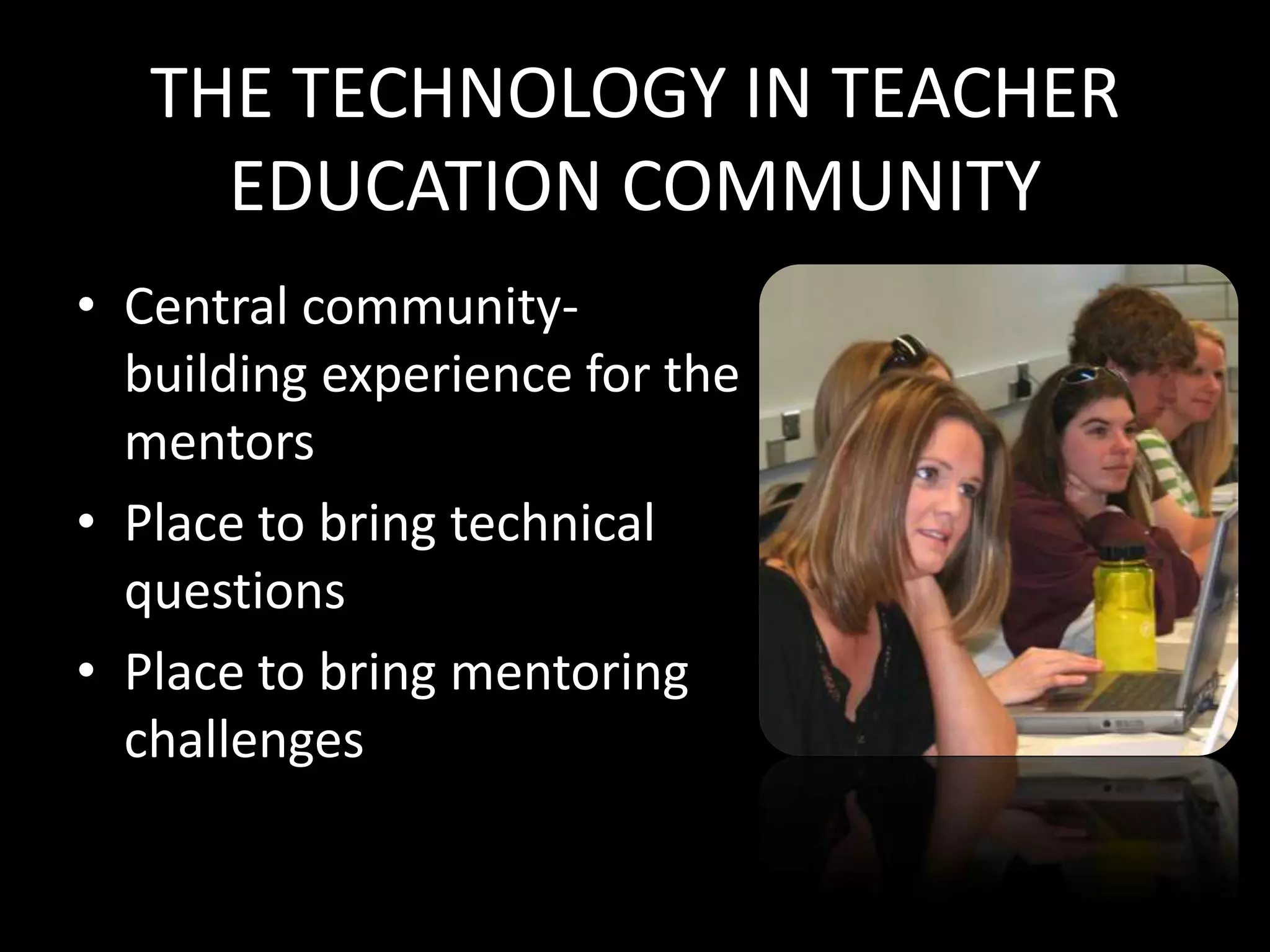
    THE TECHNOLOGY INTEACHER EDUCATION COMMUNITYCentral community-building experience for the mentorsPlace to bring technical questionsPlace to bring mentoring challenges
  • 51.
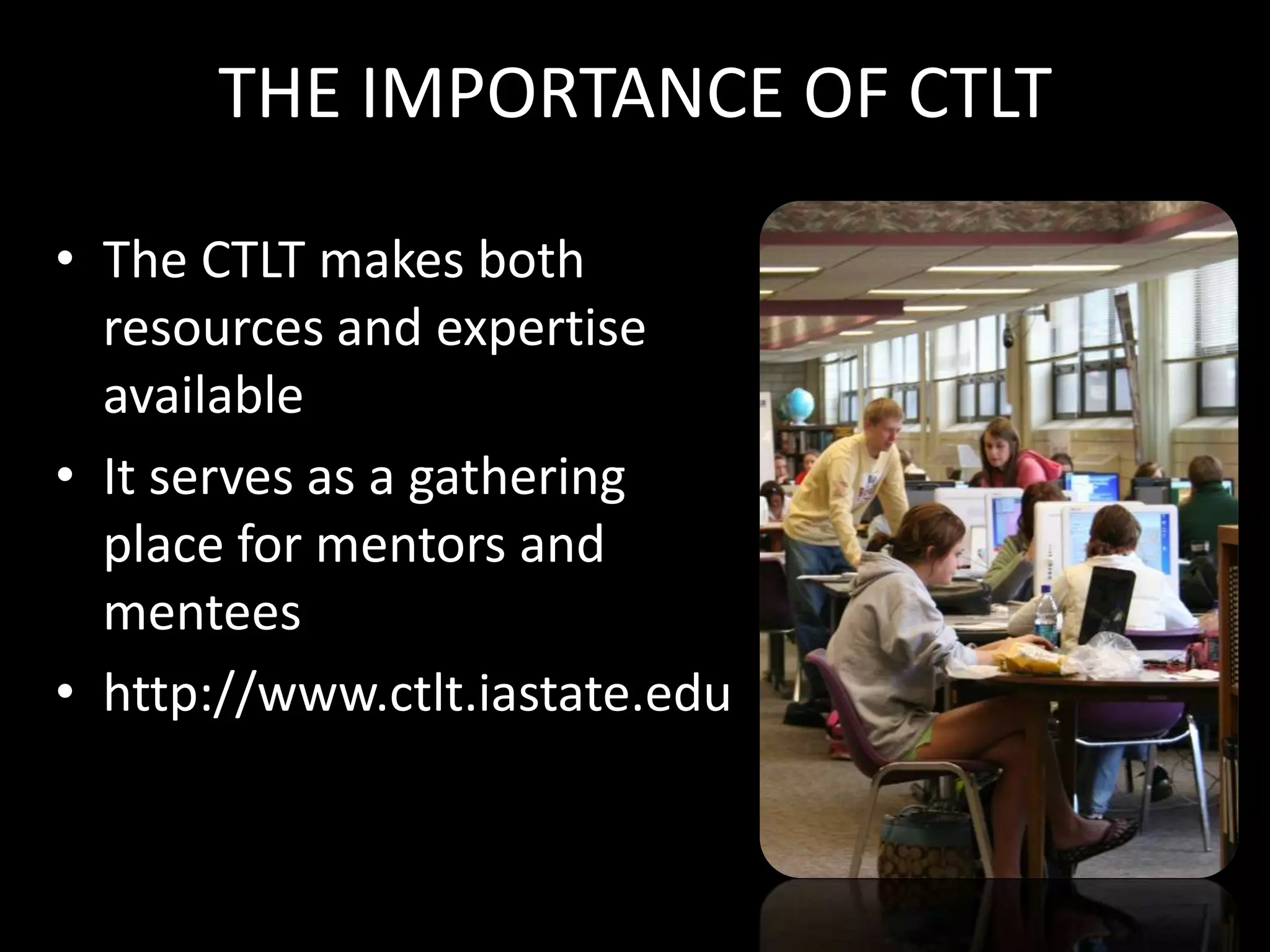
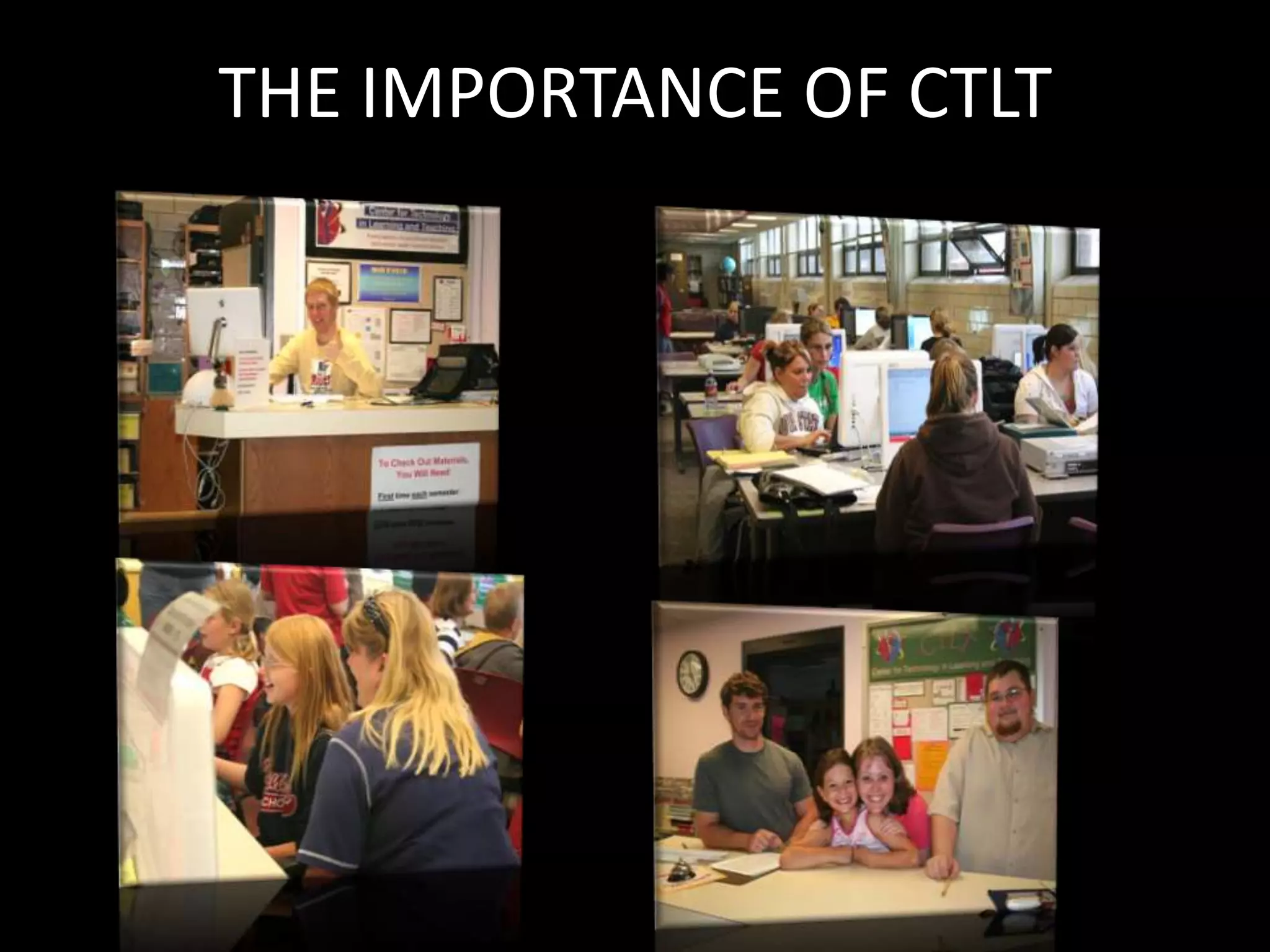
    THE IMPORTANCE OFCTLTThe CTLT makes both resources and expertise availableIt serves as a gathering place for mentors and menteeshttp://www.ctlt.iastate.edu
  • 52.
  • 53.
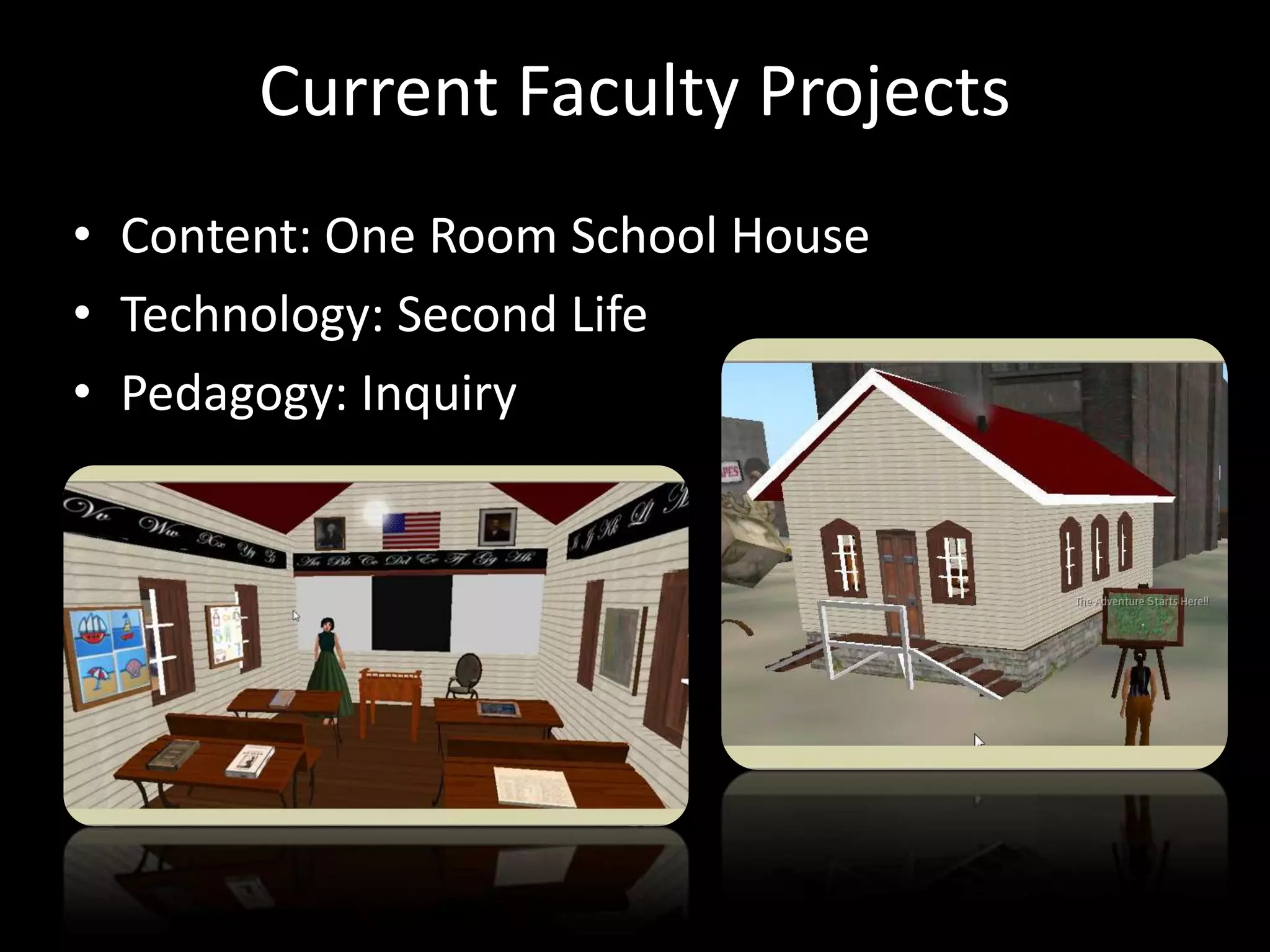
    Current Faculty ProjectsContent:One Room School HouseTechnology: Second LifePedagogy: Inquiry
  • 54.
    http://activitytypes.wmwikis.netTeachers use basicactivity types in their planningActivity types are different in different content areasWork to match technology with activity types in different content areasJudi Harris Work
  • 55.
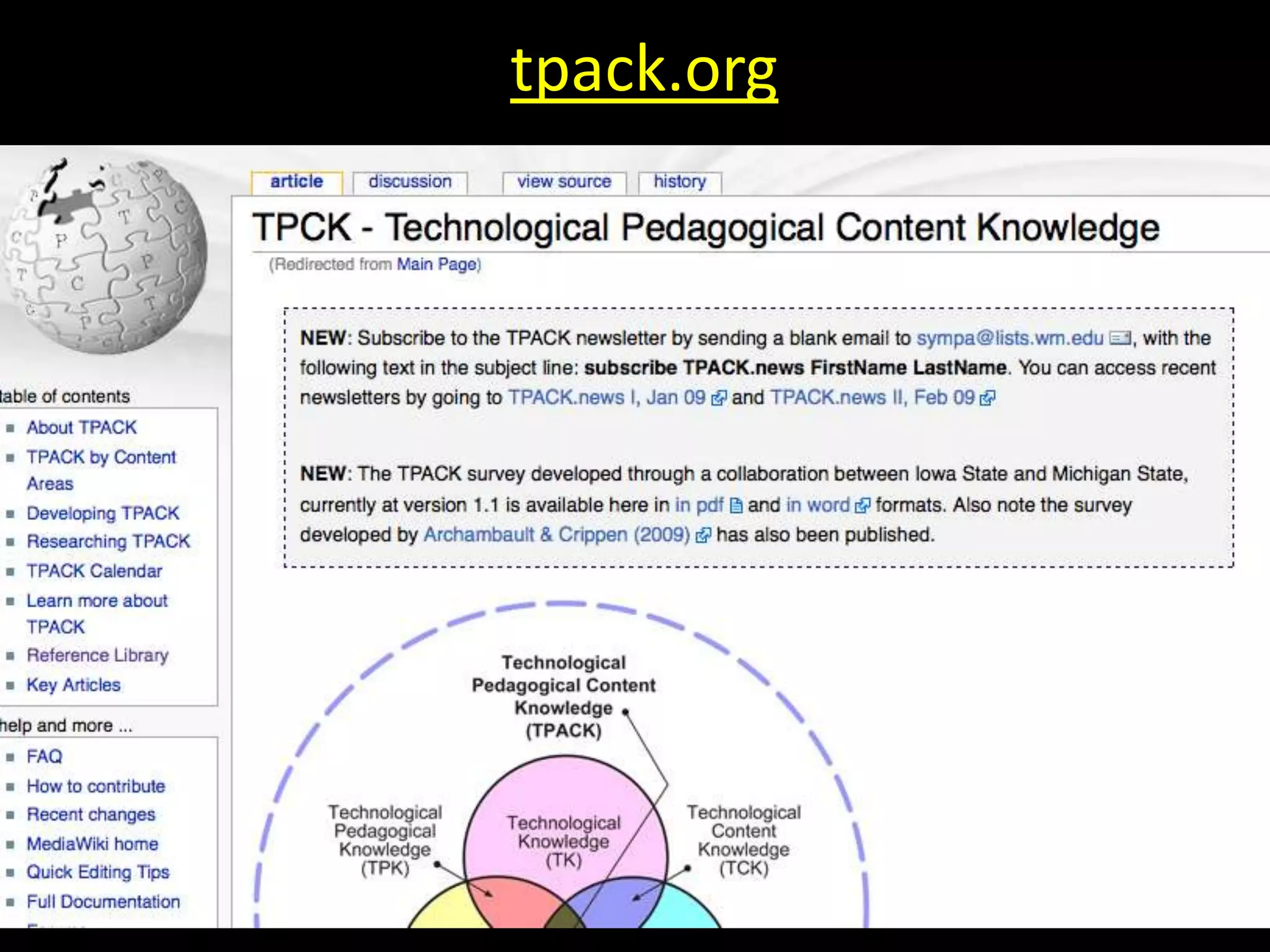
    TPACK as aframe for:Our ResearchOur DevelopmentOur Collective Progress​tpack.org
  • 56.
  • 57.
    TeşekkürlerThank you謝謝Ann Thompsoneat@iastate.edu ​Hsueh-HuaChuanghsuehhua@gmail.comEvrimBaranevrimb@iastate.edu

Editor's Notes

  • #20 a way to encourage professors to think about developing tpack in using this frame in their own instruction. Using the TPACK framework to guide our research design, we developed an instrument with the purpose of measuring preservice teachers’ self-assessment of TPACKAssess the development of TPACK in an introductory preservice teacher technology course in a longitudinal research study that involves the use of quantitative and qualitative research methodologies.
  • #22 Data is gathered at specific checkpoints during the preservice teachers’ preparation program. As part of this study, preservice teachers are tracked during their teacher education program and asked to complete the survey after completing their instructional technology course, methodology courses (e.g., literacy, science, social studies, mathematics) and after they complete student teaching. Additional qualitative research studies are also conducted to examine how these same preservice teachers demonstrate TPACK related tendencies in PreK-6 classrooms during practicum and student teaching experiences. We have currently completed the first steps in a three- to five-year, longitudinal research project by collecting the survey data from preservice teachers who took the technology course. These findings of preservice teacher classroom behavior will be compared to how they responded to the survey at various times during their preparation program. The goal will be to use what we observe in classrooms to validate the preservice teachers’ responses from the survey.
  • #23 I will echo Ann’s words and it has been really a professional development actiivity for all of us, getting our heads around what TPACK means. I think what we are doing is, we are trying to get into that operationalizing period. Where now this is what they are saying and here is what it looks like. We wanted to know our thoughts on where we are going with this and our research plan. We do see this as longigutional and what we are looking for. When we developed this survey we were very clear on the audience and hopefully what we published and what we put publicly. We designed this specifically with our work with Michigan State
  • #25 Evrim
  • #26 evrim
  • #28 This survey approach will allow us to trace the development of TPACK throughout the program; sets a frame for developing TPACK throughout the teacher education program, emphasizing pedagogy and content as well