Framing Transliterate Learning
Through Inquiry and
Participatory Culture


                                                           Buffy J. Hamilton | AASL 2011
CC image via http://www.flickr.com/photos/horiavarlan/4304581412/sizes/l/in/photostream/
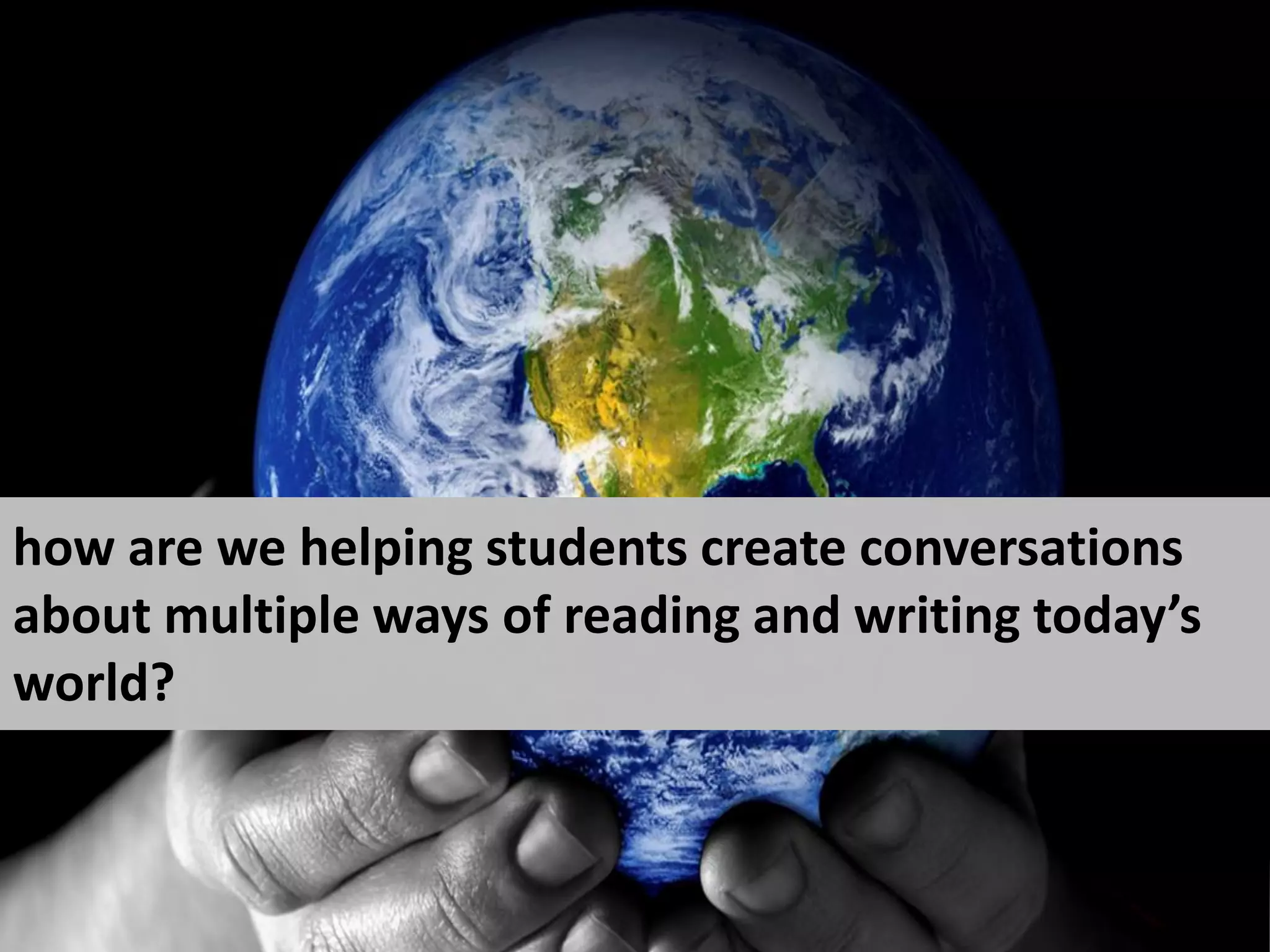
how are we helping students create conversations
about multiple ways of reading and writing today’s
world?
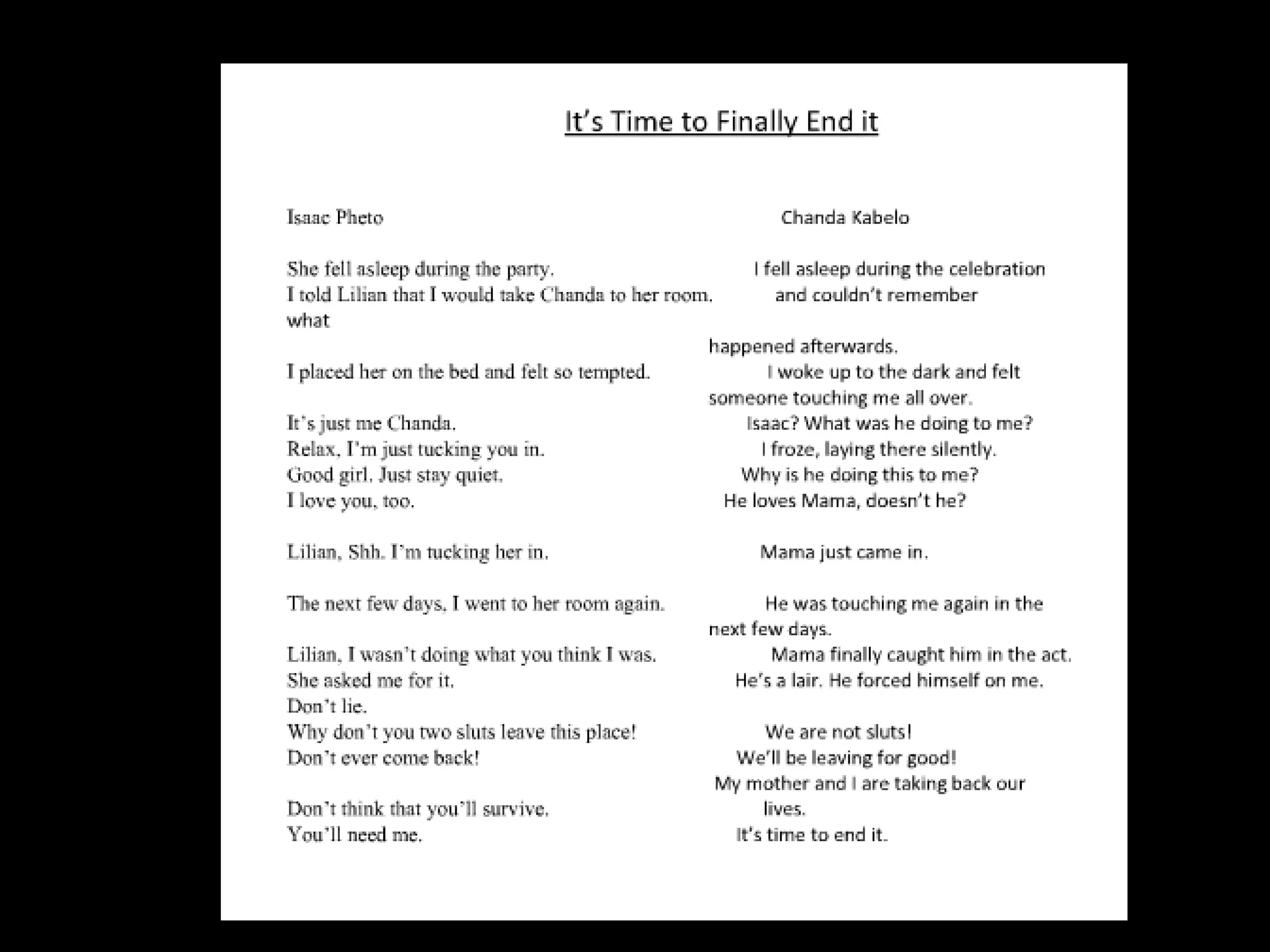
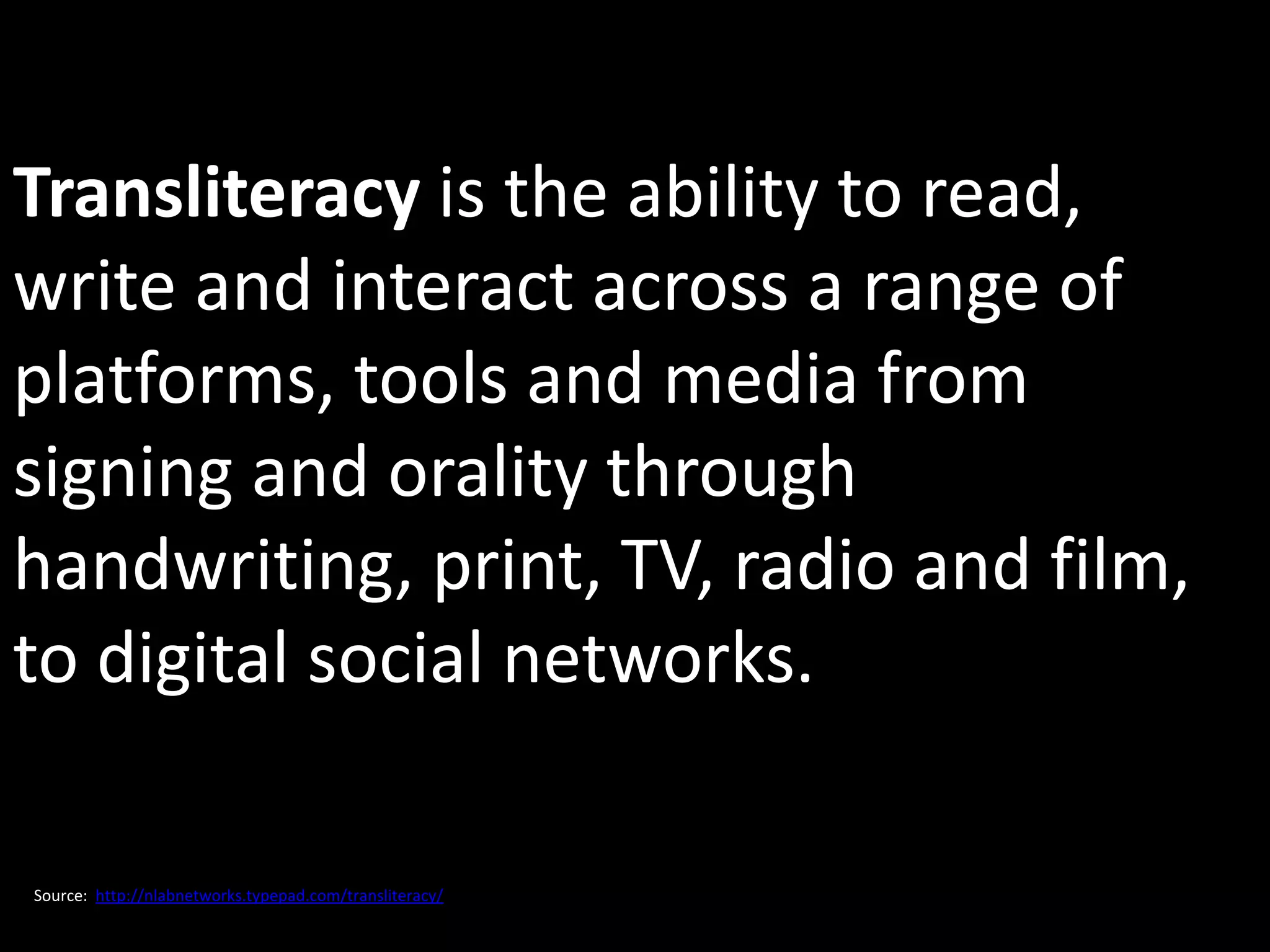
Transliteracy is the ability to read,
write and interact across a range of
platforms, tools and media from
signing and orality through
handwriting, print, TV, radio and film,
to digital social networks.

Source: http://nlabnetworks.typepad.com/transliteracy/
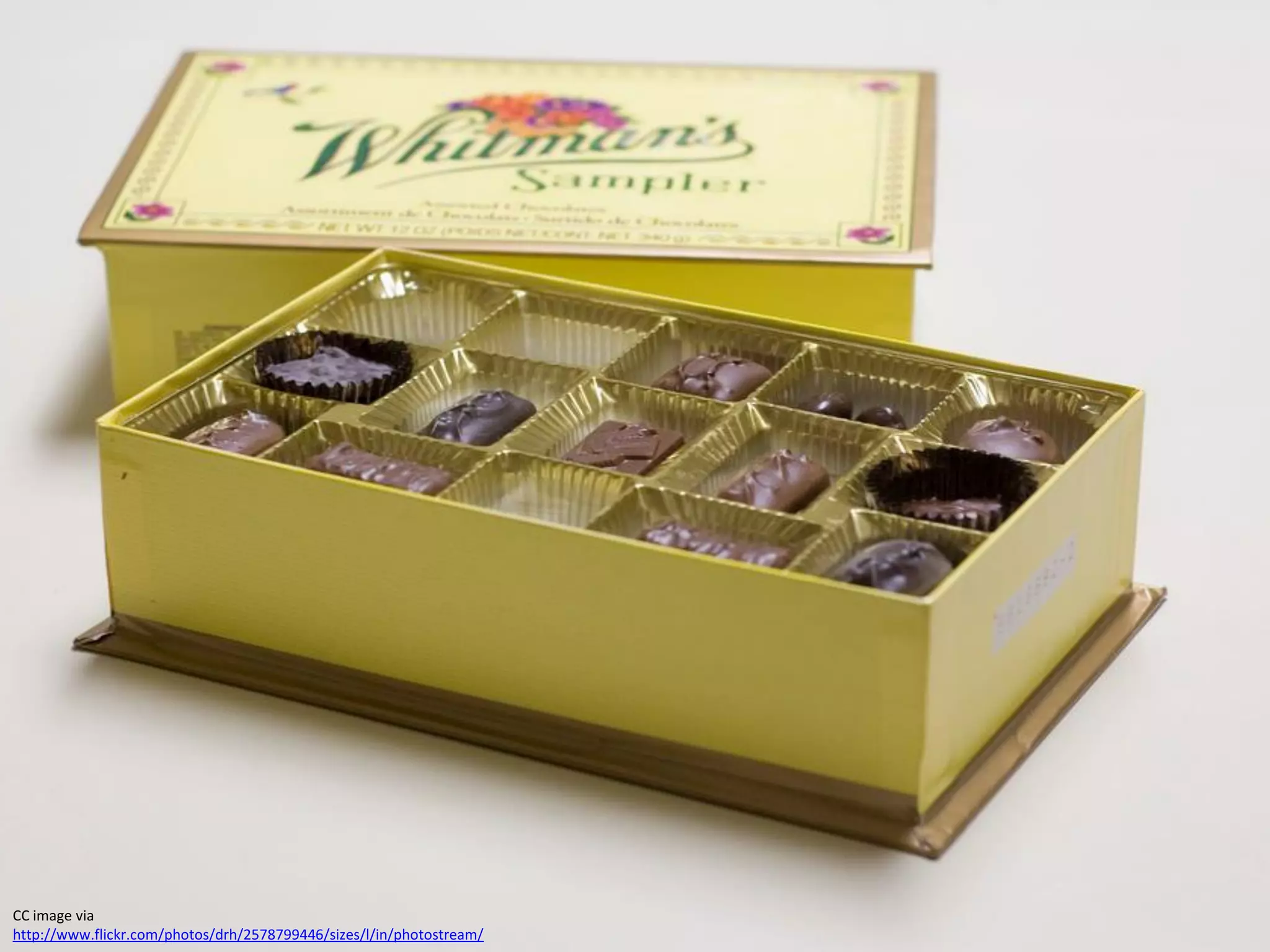
but what does that
 really mean?
CC image via
http://www.flickr.com/photos/drh/2578799446/sizes/l/in/photostream/
Transliteracy is an umbrella term encompassing
different literacies and multiple communication
channels that require active participation
with and across a range of platforms, and
embracing both linear and non-linear messages


Dr. Susie Andretta
London Metropolitan University


 Source: http://nlabnetworks.typepad.com/transliteracy/Andretta_Transliteracy.pdf
Transliteracy is a “a convergence of literacies”
(Lippincott, 2007: 17) as the boundaries
between medial literacy, digital literacy,
technology literacy and information literacy
become blurred when individuals evolve from
consumers of information to producers of
content.

Dr. Susie Andretta
London Metropolitan University


 Source: http://nlabnetworks.typepad.com/transliteracy/Andretta_Transliteracy.pdf and
 http://net.educause.edu/ir/library/pdf/ERM07610.pdf
“The most fundamental notion of
transliteracy is the ability to adapt.
It’s creating a literacy and fluidity
between mediums that’s not tied
to space or modality.”

Ryan Nadel
founder of 8 Leaf Digital Productions and an instructor at the Vancouver Film School
Source: http://spotlight.macfound.org/featured-stories/entry/what-is-this-buzz-word-transliteracy-a-qa-with-ryan-nadel/
Transliteracy is concerned with mapping
meaning across different media and not with
developing particular literacies about various
media. It is not about learning text literacy and
visual literacy and digital literacy in isolation
from one another but about the interaction
among all these literacies.
Tom Ipri
Liaison Librarian to the College of Media Arts and Design at W. W. Hagerty Library at Drexel
University

Source: http://crln.acrl.org/content/71/10/532.full
“…transliteracy is a shape-shifting eco-system
of behaviours and it is probably neither possible nor
desirable for anyone to understand enough to know
the whole elephant. The vital thing is to remember it
is always there and in constant motion. This means
recognising the limits of your own knowledge and
accepting a degree of messiness and uncertainty.”

Professor Sue Thomas
De Montfort University, Leicester, UK


  Source: http://nlabnetworks.typepad.com/transliteracy/2010/12/argue.html
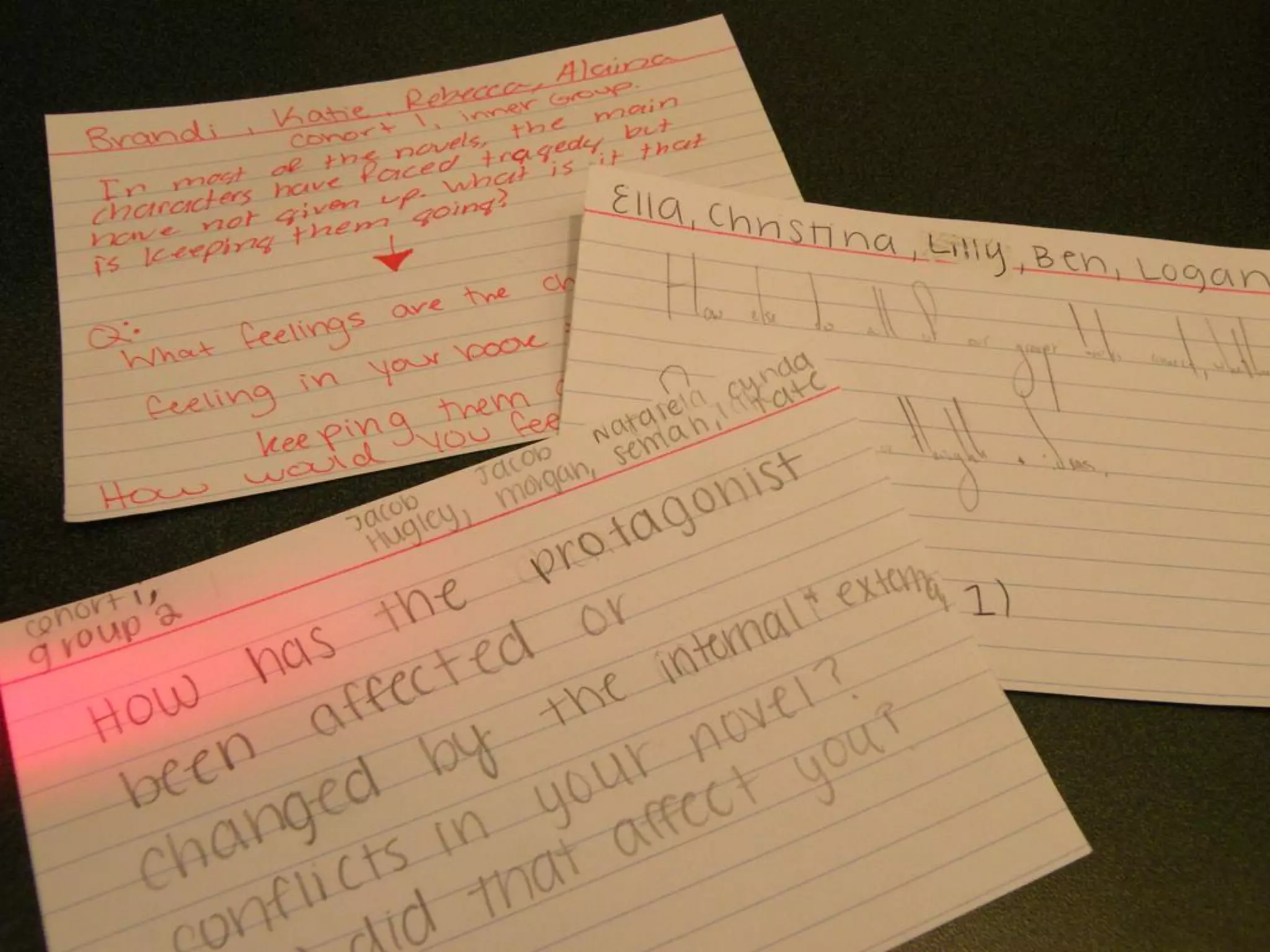
…thinking linearly about literacy is seldom
a good idea. Literacy should be thought of
as a holistic ecology, not a linear series
of events and changes…

Professor Sue Thomas
De Montfort University, Leicester, UK


 Source: http://bit.ly/p4g9YJ
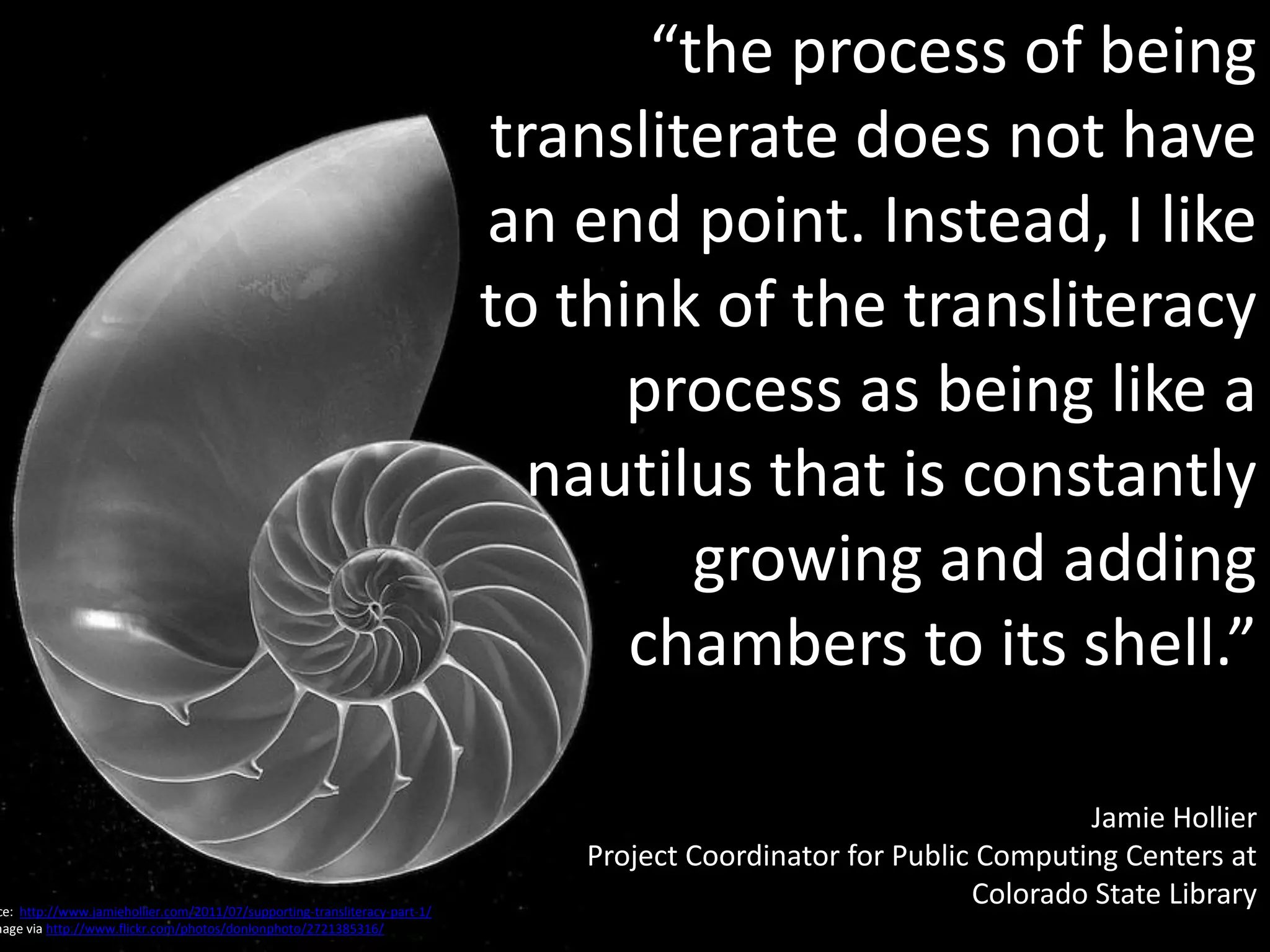
“the process of being
                                                                           transliterate does not have
                                                                           an end point. Instead, I like
                                                                           to think of the transliteracy
                                                                                 process as being like a
                                                                             nautilus that is constantly
                                                                                    growing and adding
                                                                                 chambers to its shell.”

                                                                                                                     Jamie Hollier
                                                                               Project Coordinator for Public Computing Centers at
ce: http://www.jamiehollier.com/2011/07/supporting-transliteracy-part-1/
                                                                                                             Colorado State Library
mage via http://www.flickr.com/photos/donlonphoto/2721385316/
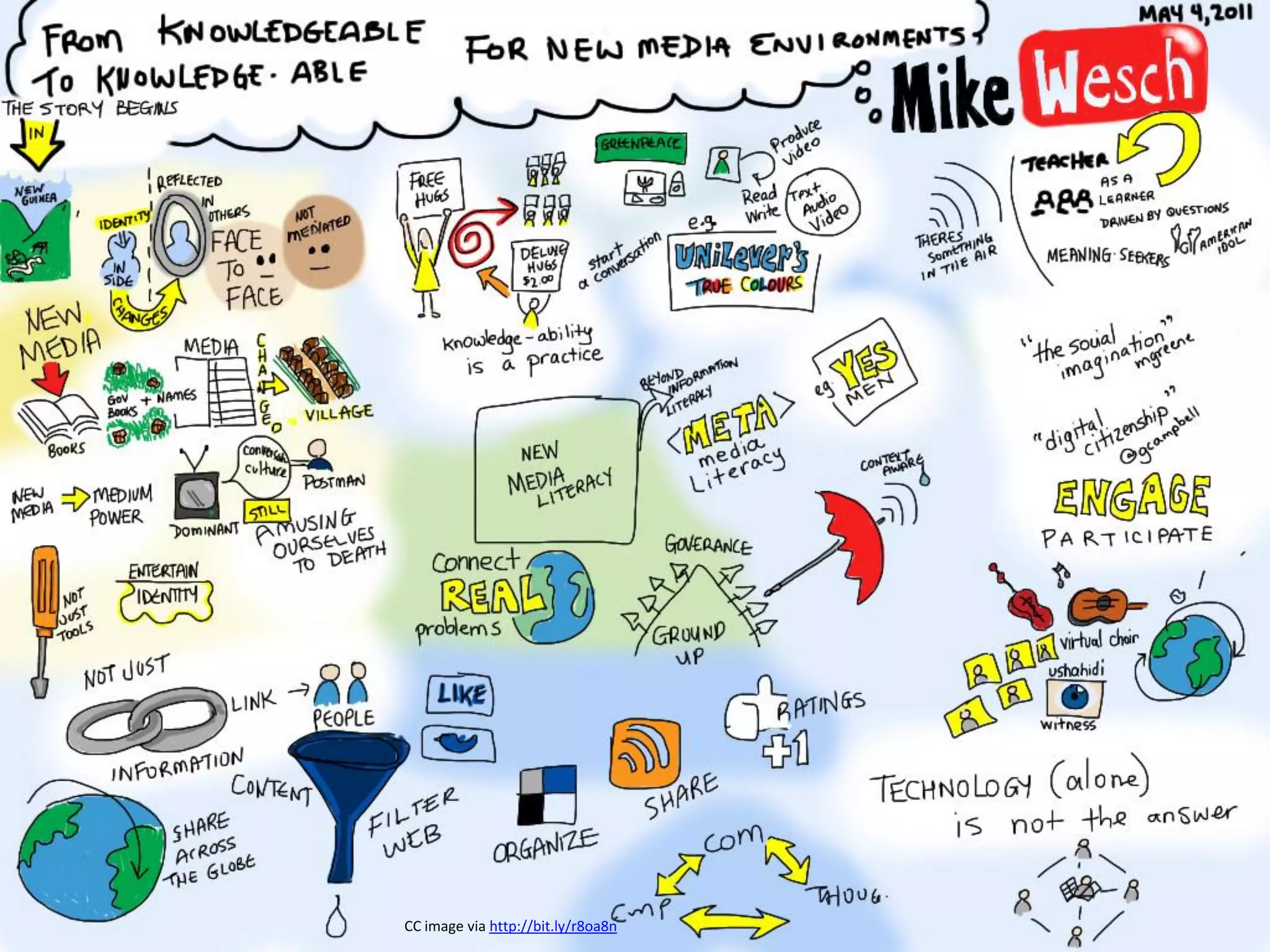
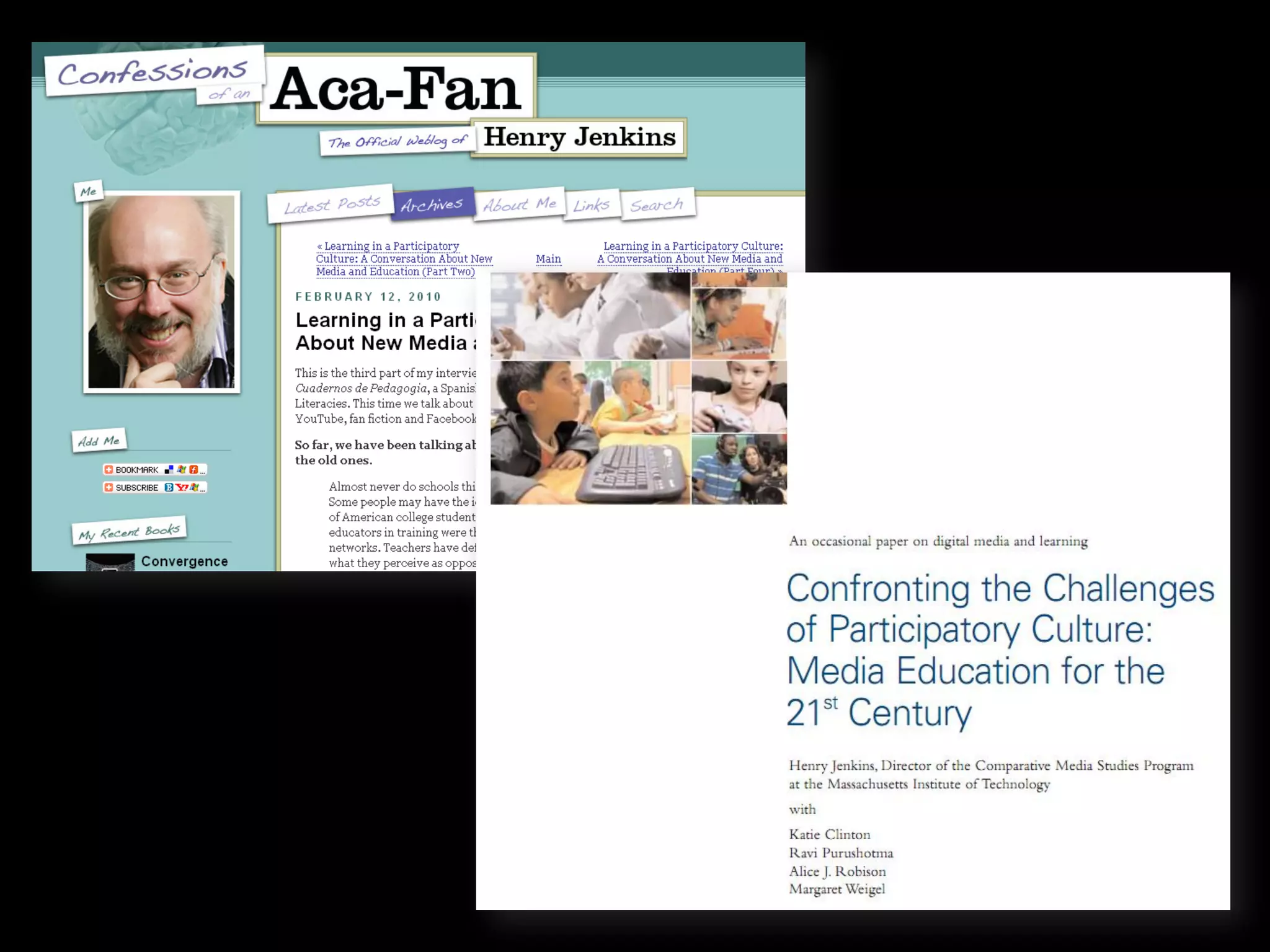
“embrace the potentials and
challenges of this [participatory]
emerging culture not as a
replacement for existing print
practices but as an expansion of
them”
~henry jenkins~
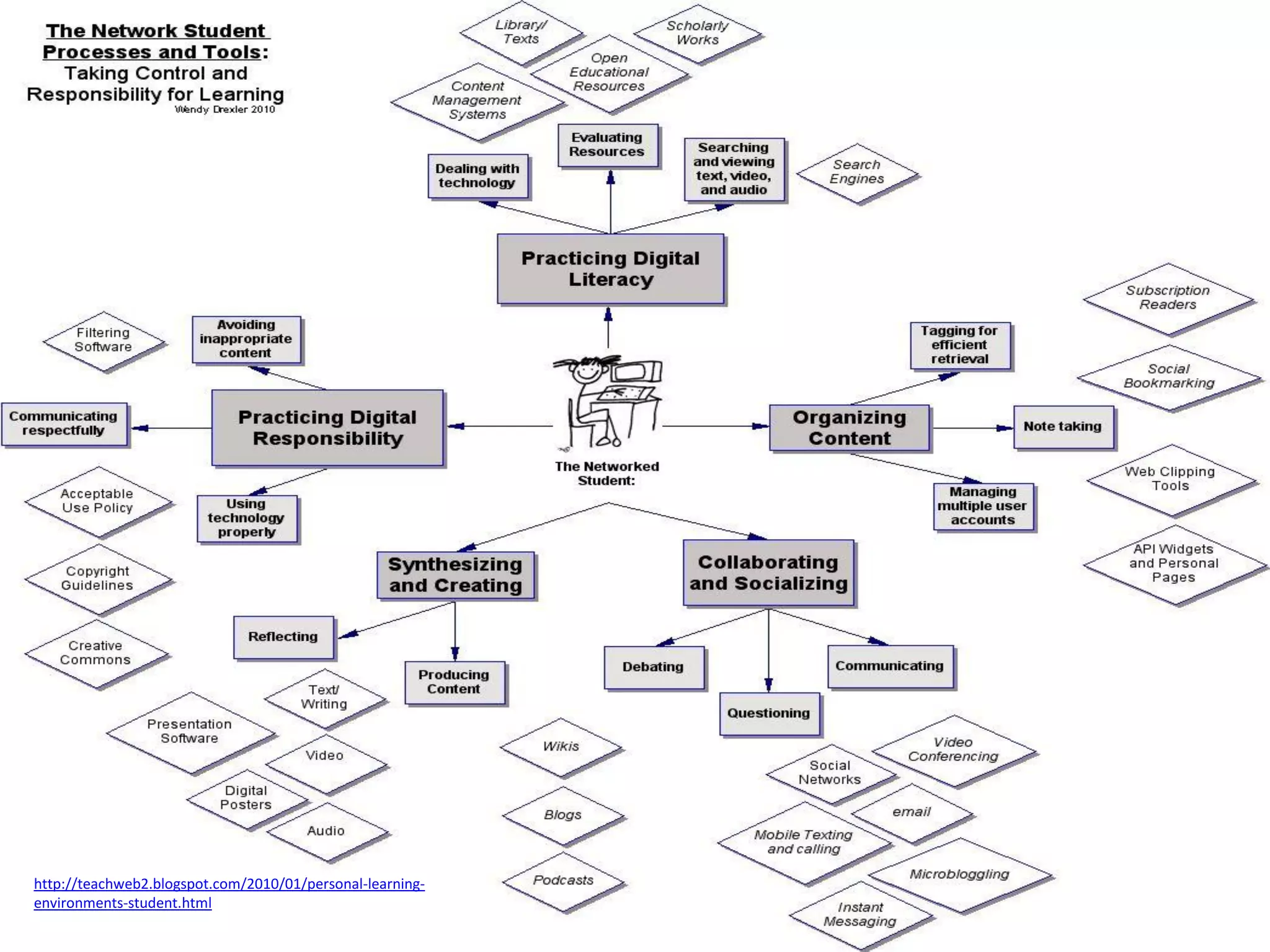
http://teachweb2.blogspot.com/2010/01/personal-learning-
environments-student.html
CC image via http://bit.ly/r8oa8n
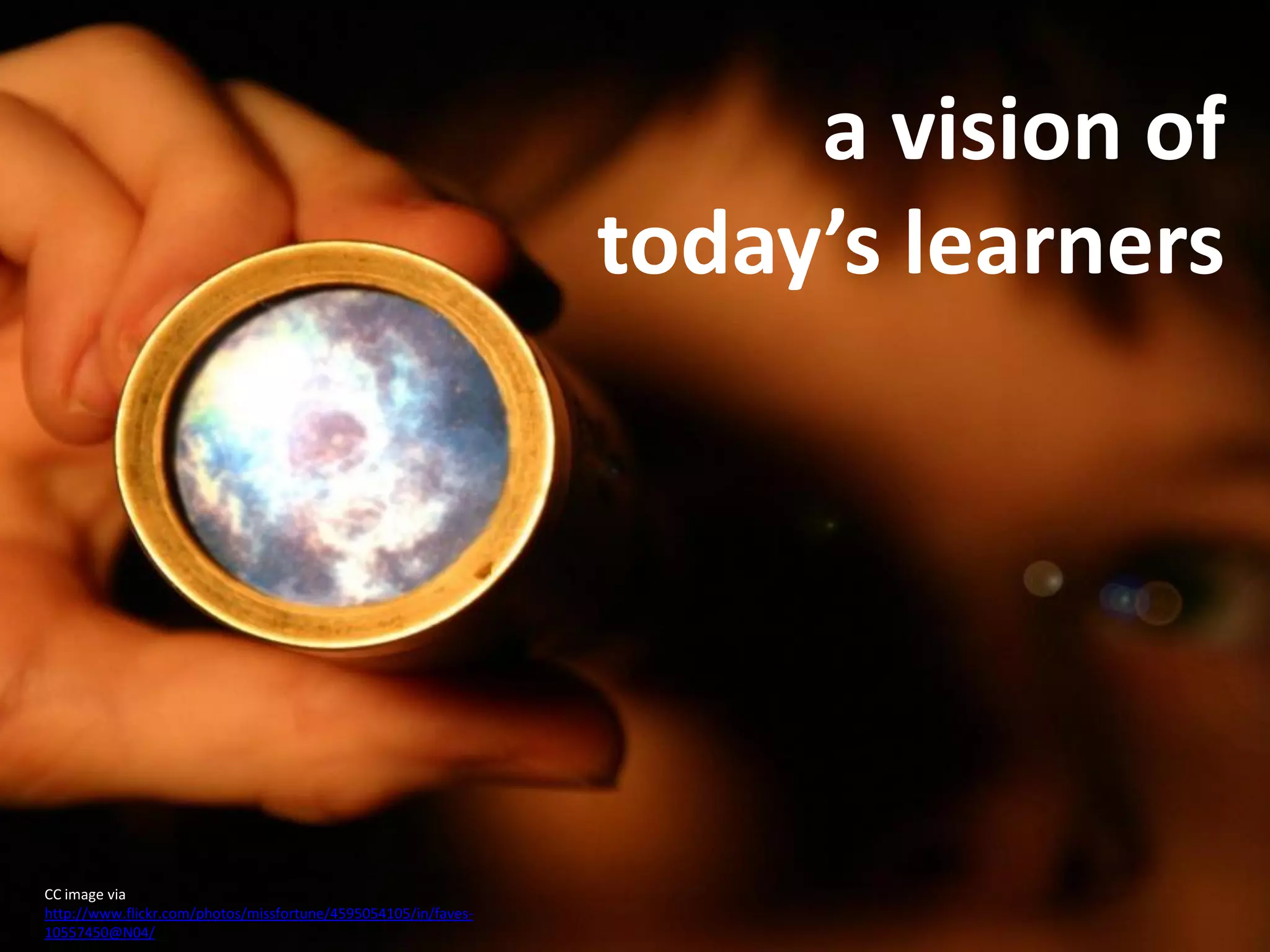
a vision of
                                                                today’s learners


CC image via
http://www.flickr.com/photos/missfortune/4595054105/in/faves-
10557450@N04/
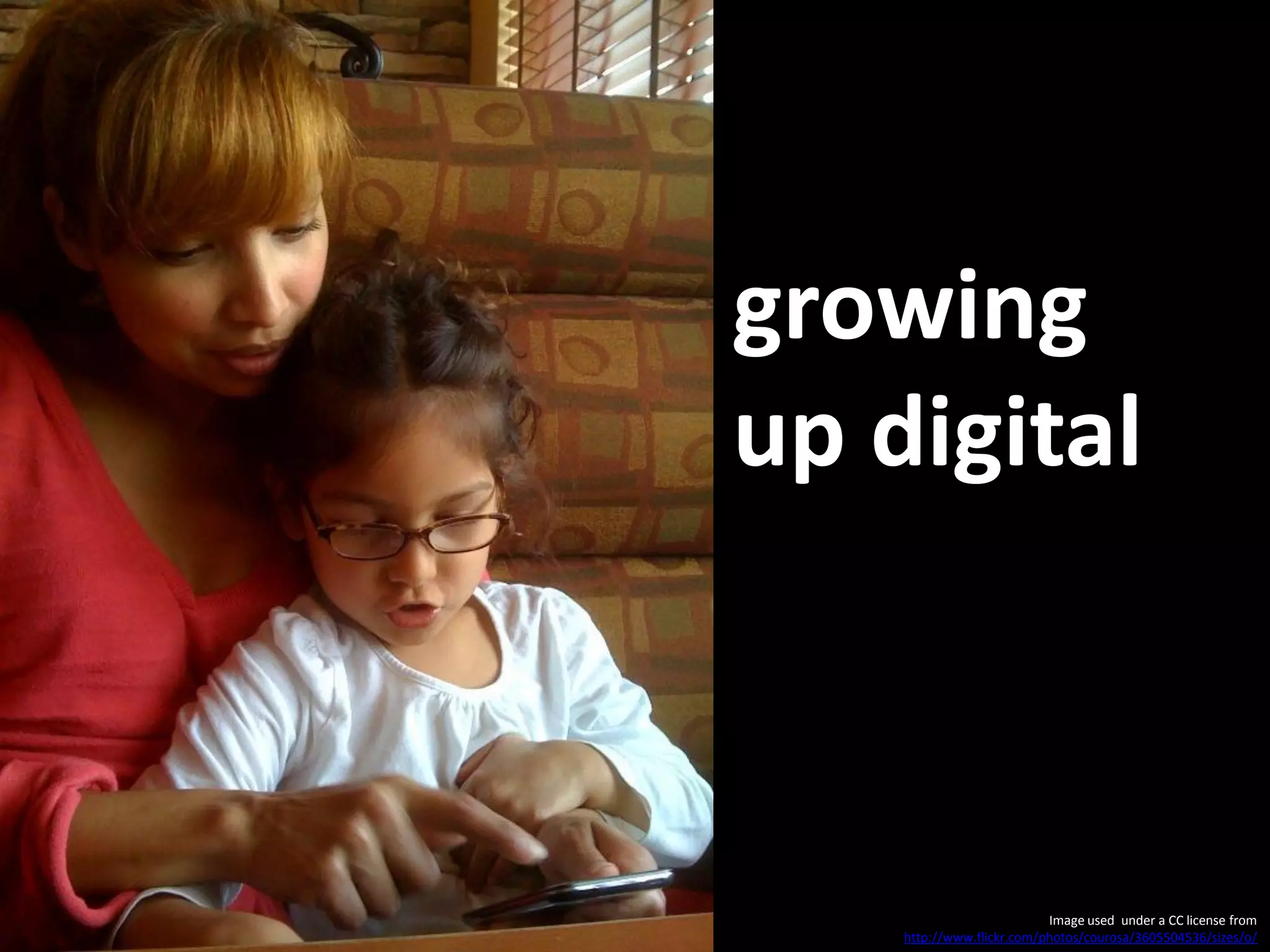
growing
up digital


                           Image used under a CC license from
    http://www.flickr.com/photos/courosa/3605504536/sizes/o/
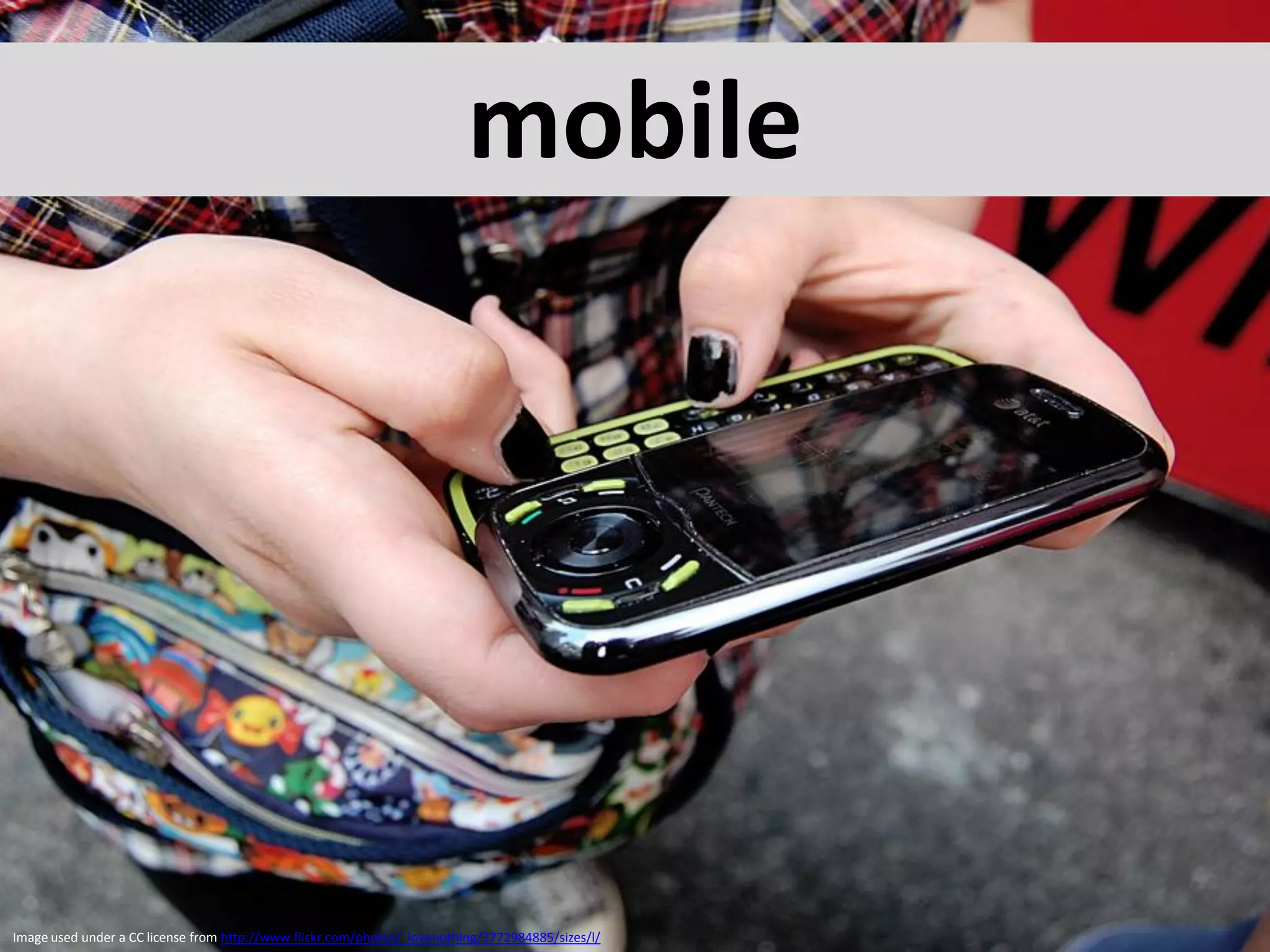
mobile


Image used under a CC license from http://www.flickr.com/photos/_lovenothing/3772984885/sizes/l/
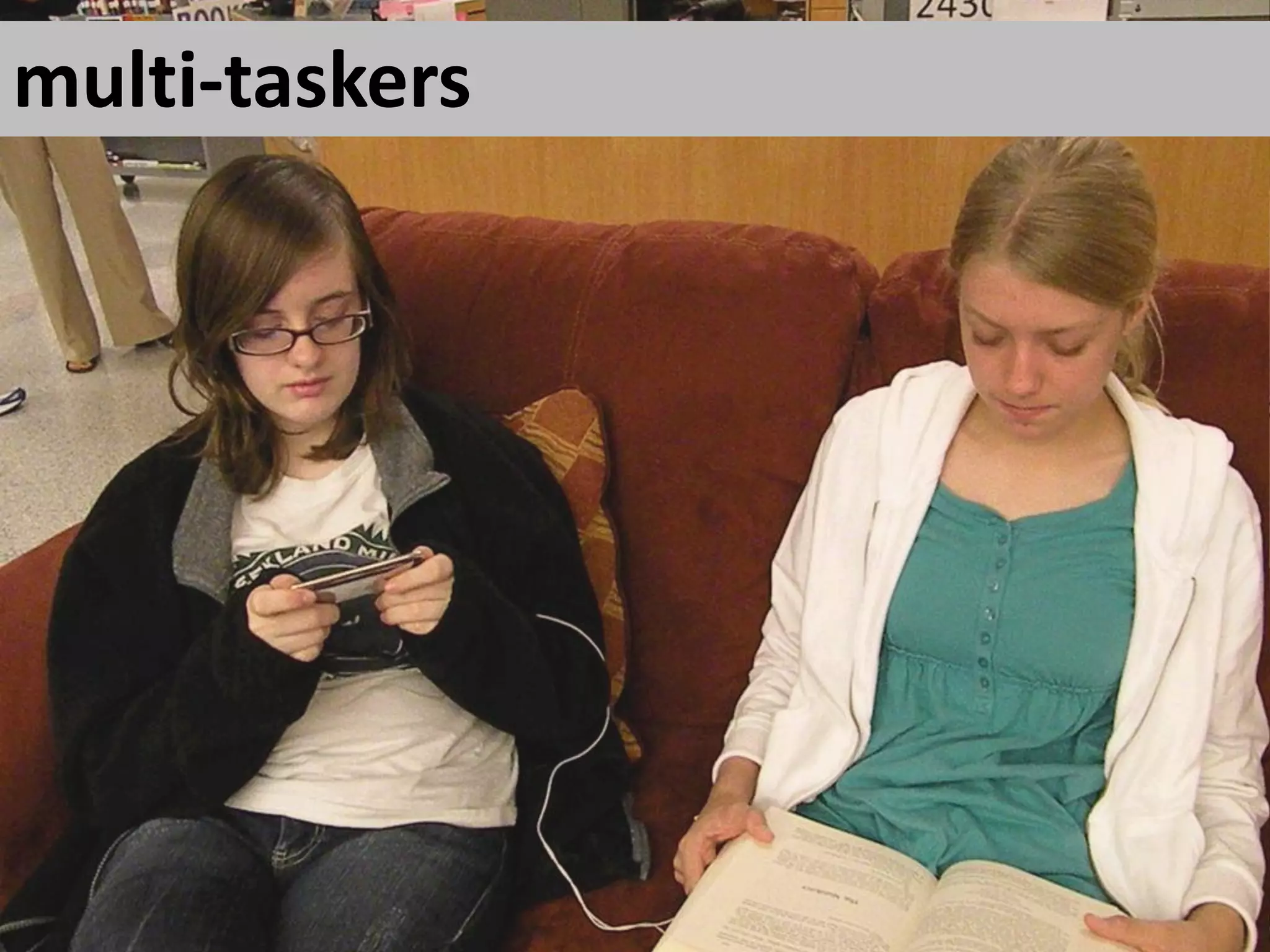
multi-taskers
continuously
connected


                                                              CC image via
  http://www.flickr.com/photos/martosc/5163826399/sizes/l/in/photostream/
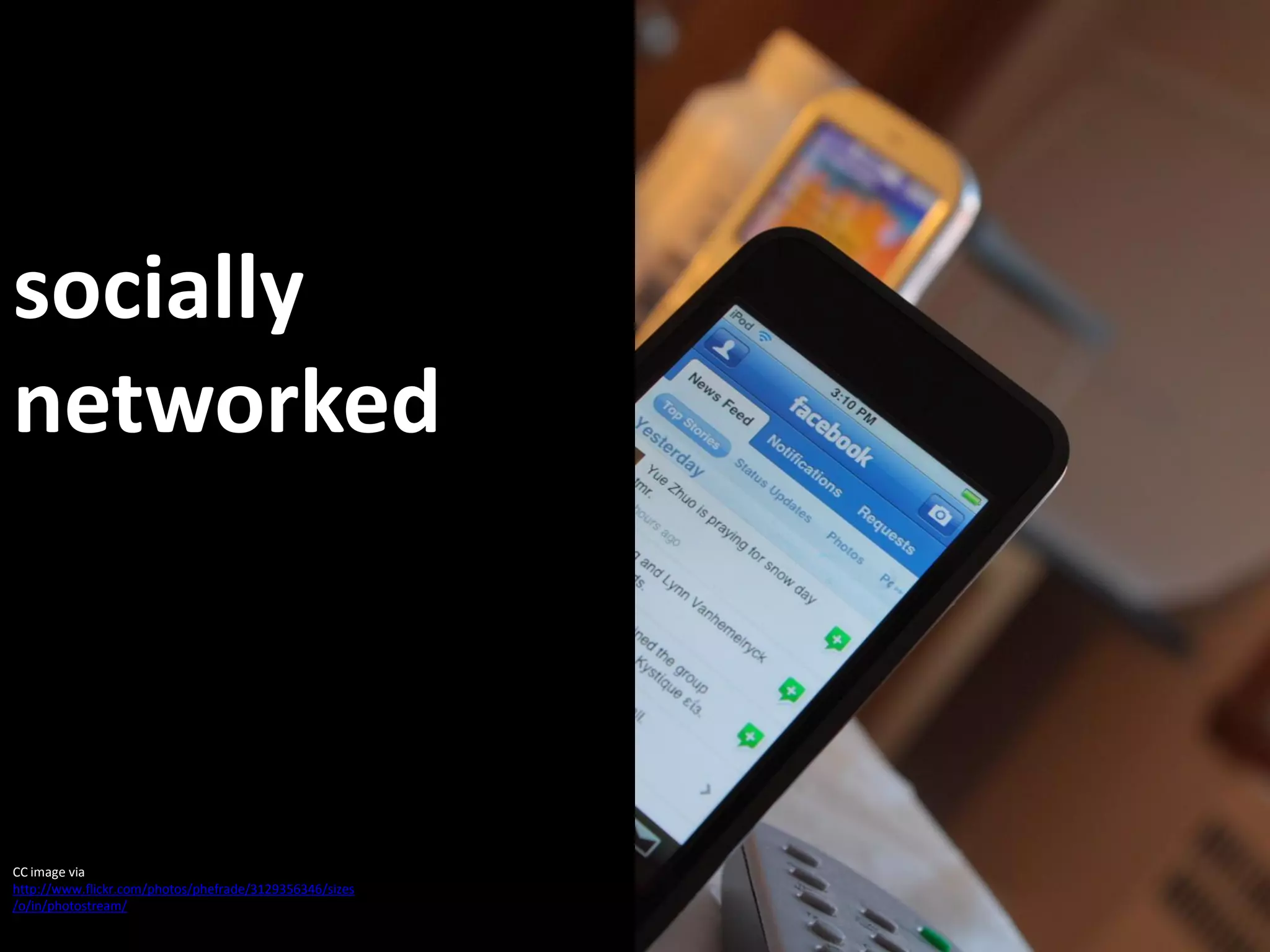
socially
networked


CC image via
http://www.flickr.com/photos/phefrade/3129356346/sizes
/o/in/photostream/
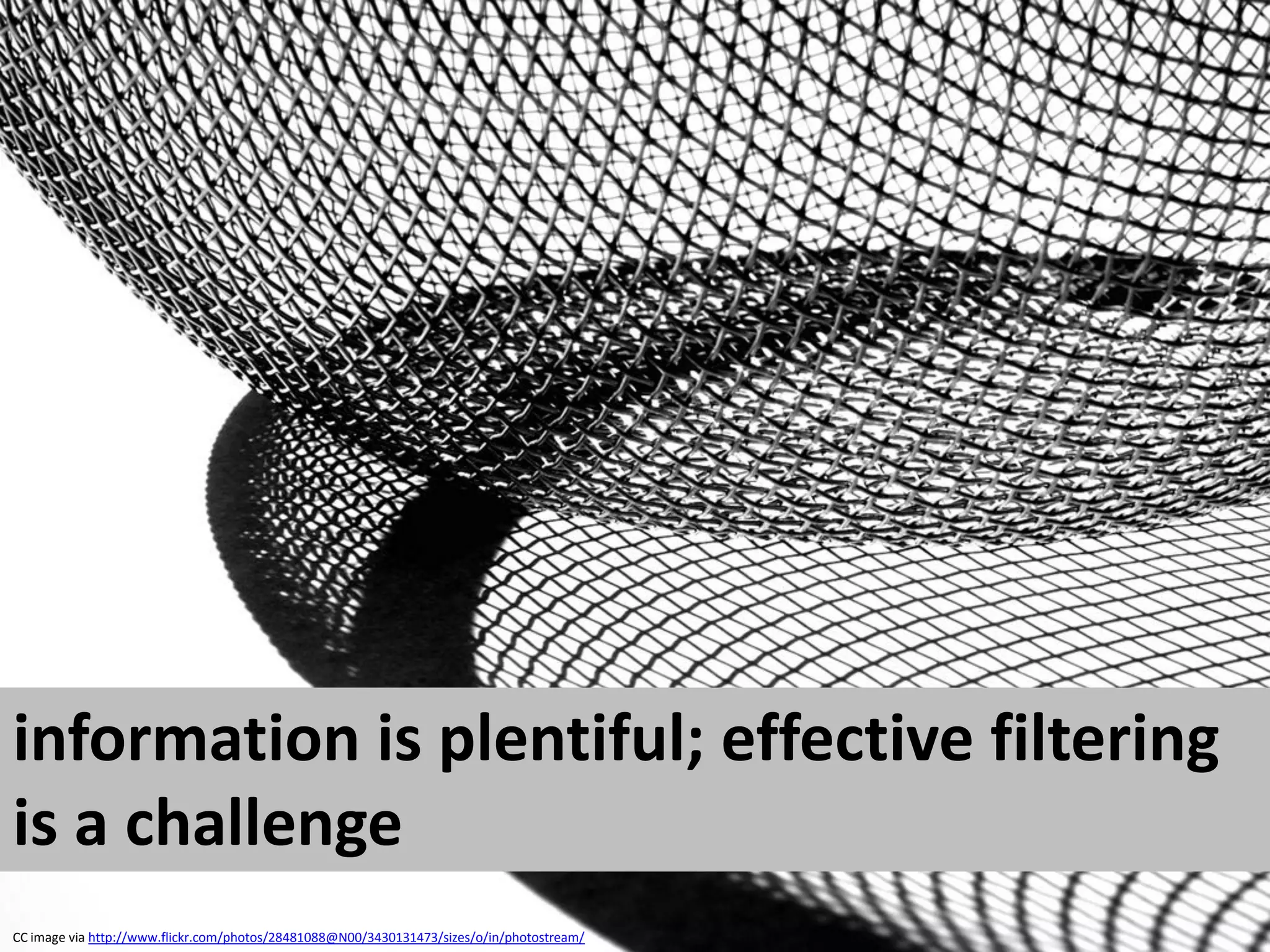
information is plentiful; effective filtering
is a challenge
CC image via http://www.flickr.com/photos/28481088@N00/3430131473/sizes/o/in/photostream/
they’re leaving digital footprints

CC image via
http://www.flickr.com/photos/andy_5322/
104324029/sizes/z/
the myth of
  the digital
      native


                                        CC image via
   http://www.flickr.com/photos/limonada/34072350
                          5/sizes/o/in/photostream/
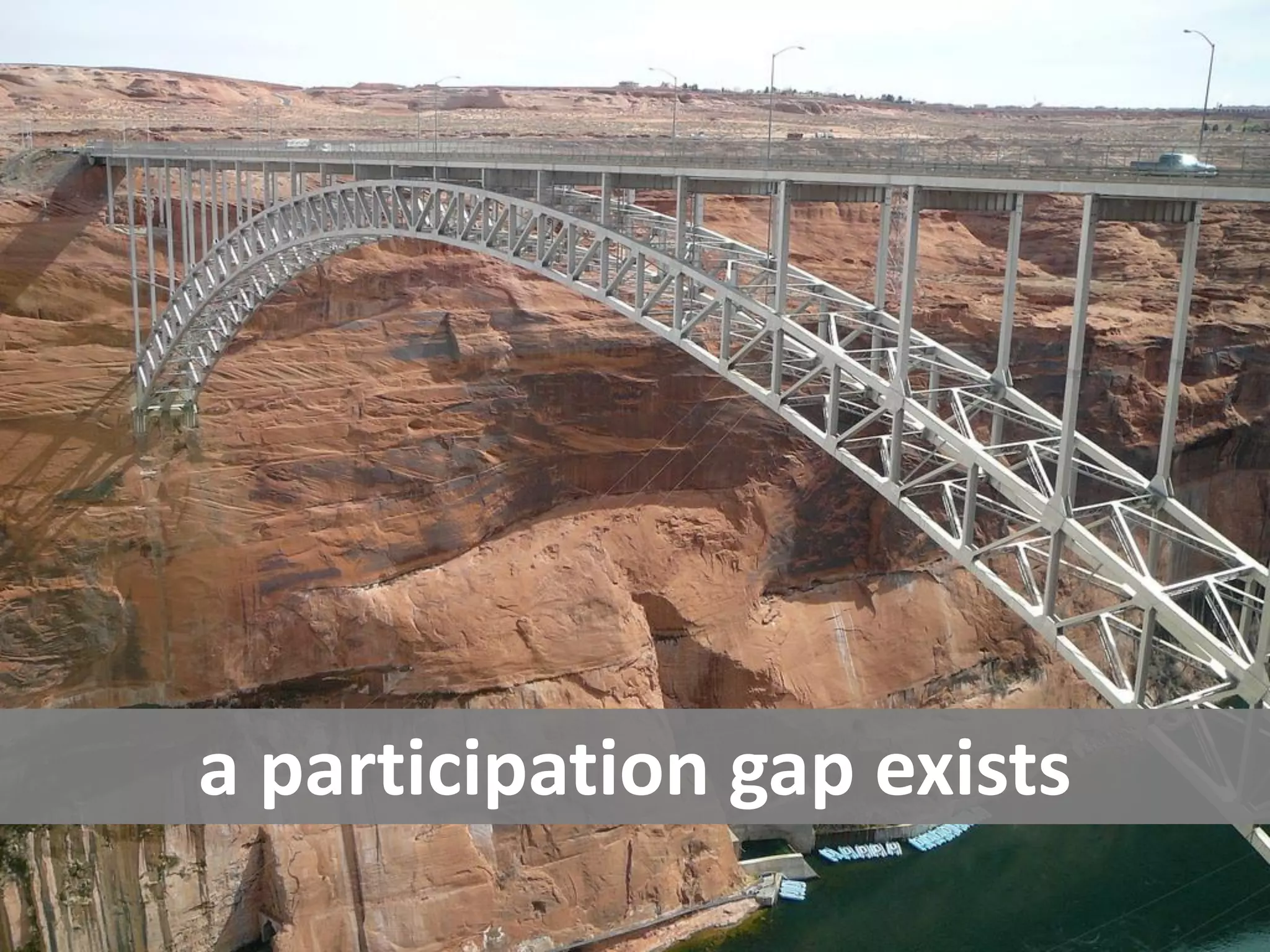
a participation gap exists
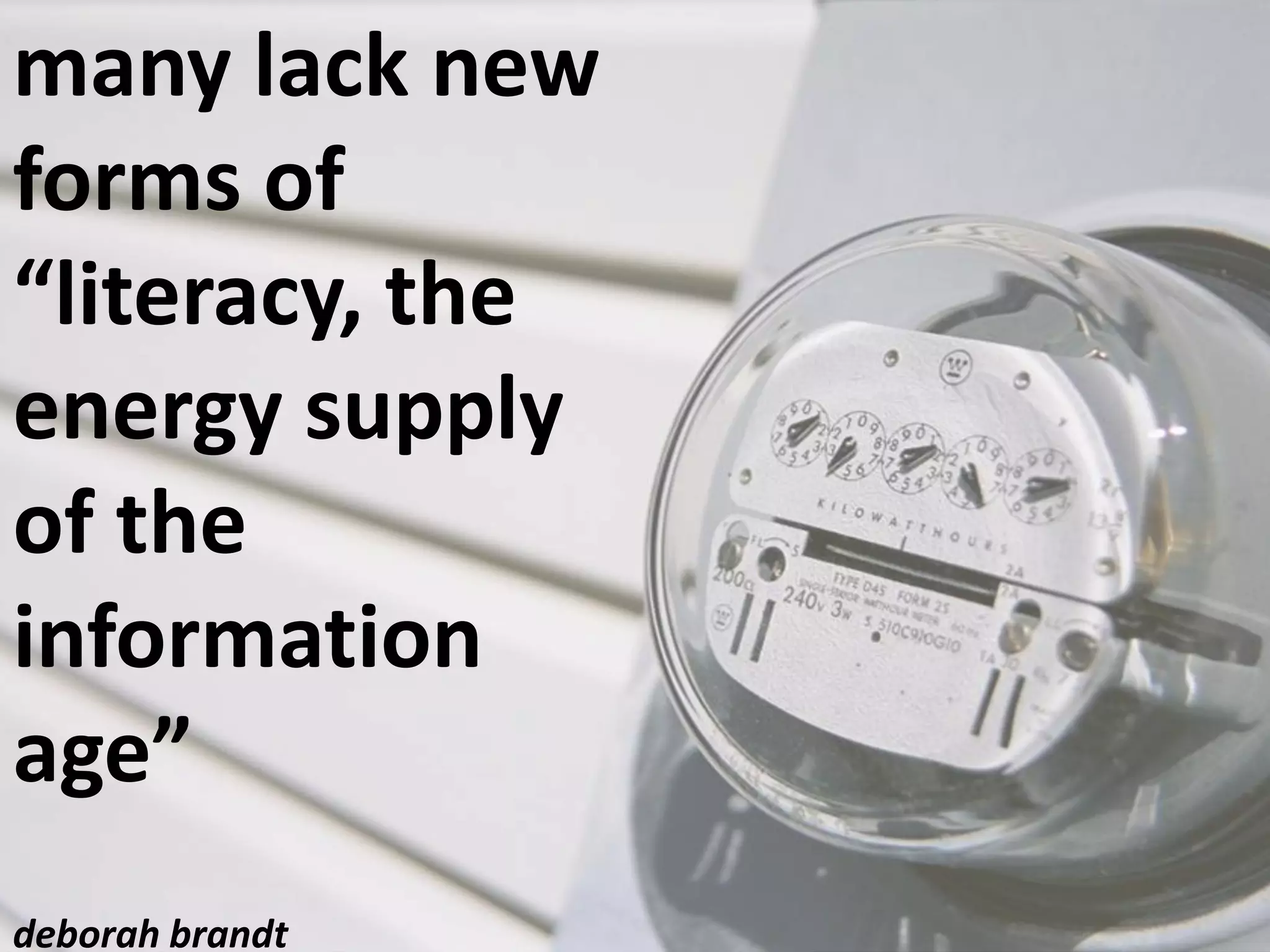
many lack new
forms of
“literacy, the
energy supply
of the
information
age”
deborah brandt
many lack access or resources to connect
              and create
“this means that our democratic institutions
     (schools and    libraries particularly) have to
          work hard and    thoughtfully to
                        mitigate these forces.”
                                               Deborah Brandt
“the  more that the school organizes
literacy teaching and learning to serve the
needs of the economic system, the more it
betrays its democratic possibilities”
deborah brandt
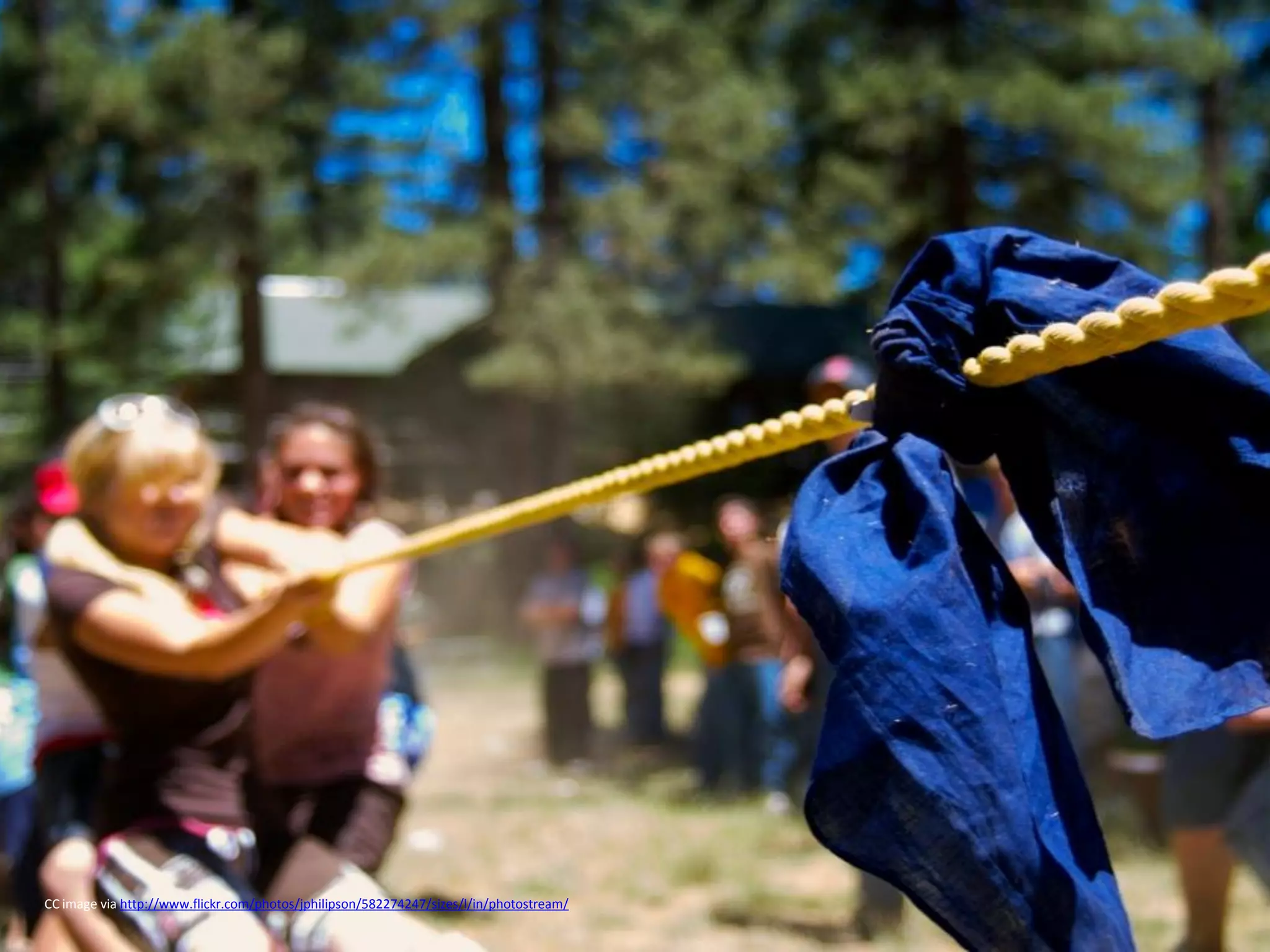
CC image via http://www.flickr.com/photos/jphilipson/582274247/sizes/l/in/photostream/
how can educators harness the power of social
media and new media literacies to close the gap and
       grow each student’s cultural capital?
how do we disrupt what paulo freire terms the
 “banking” system of education that devalues
                  inquiry?


Image used under a CC license from http://www.flickr.com/photos/stuckincustoms/4034124468/sizes/l/
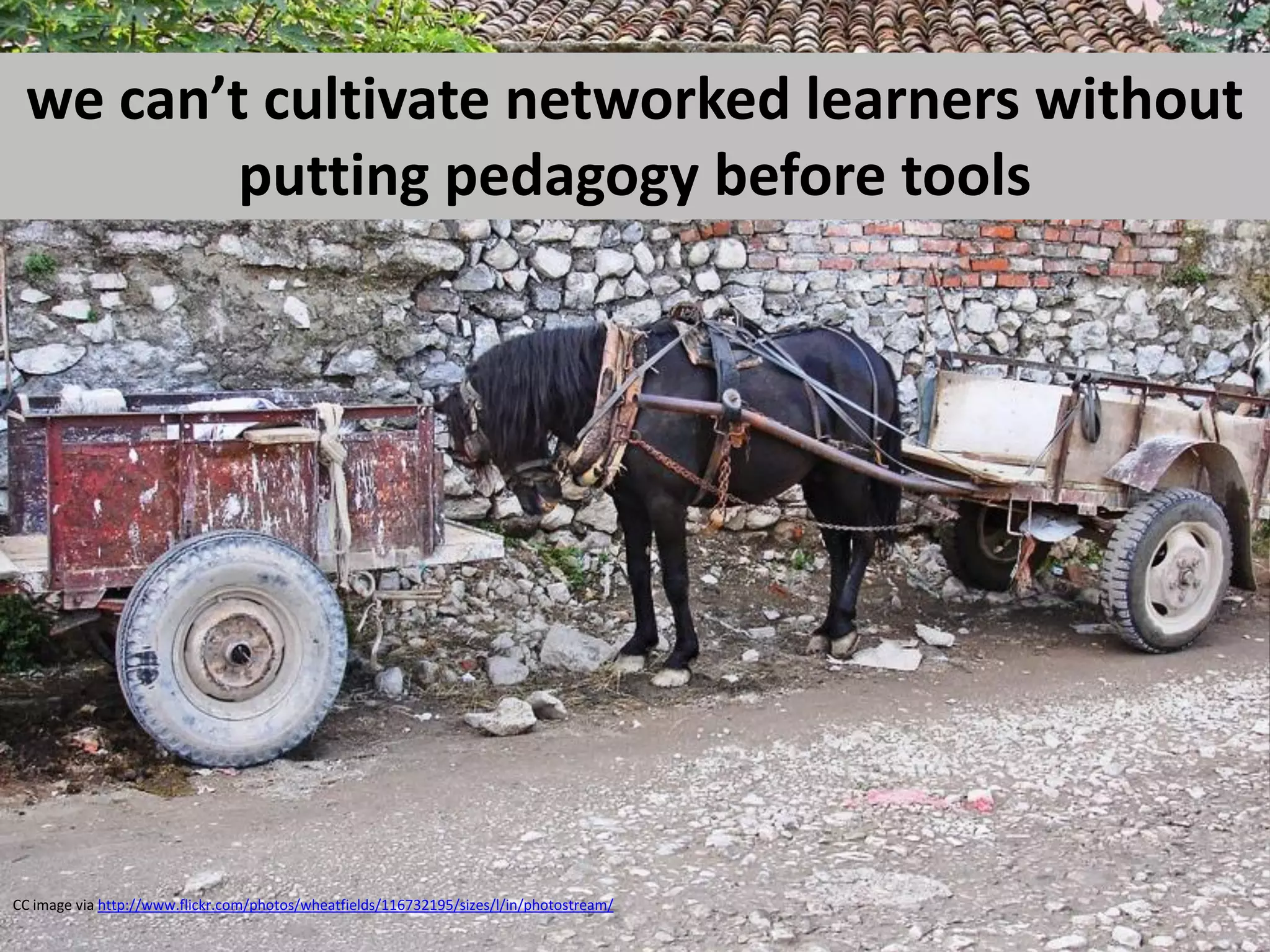
we can’t cultivate networked learners without
         putting pedagogy before tools


CC image via http://www.flickr.com/photos/wheatfields/116732195/sizes/l/in/photostream/
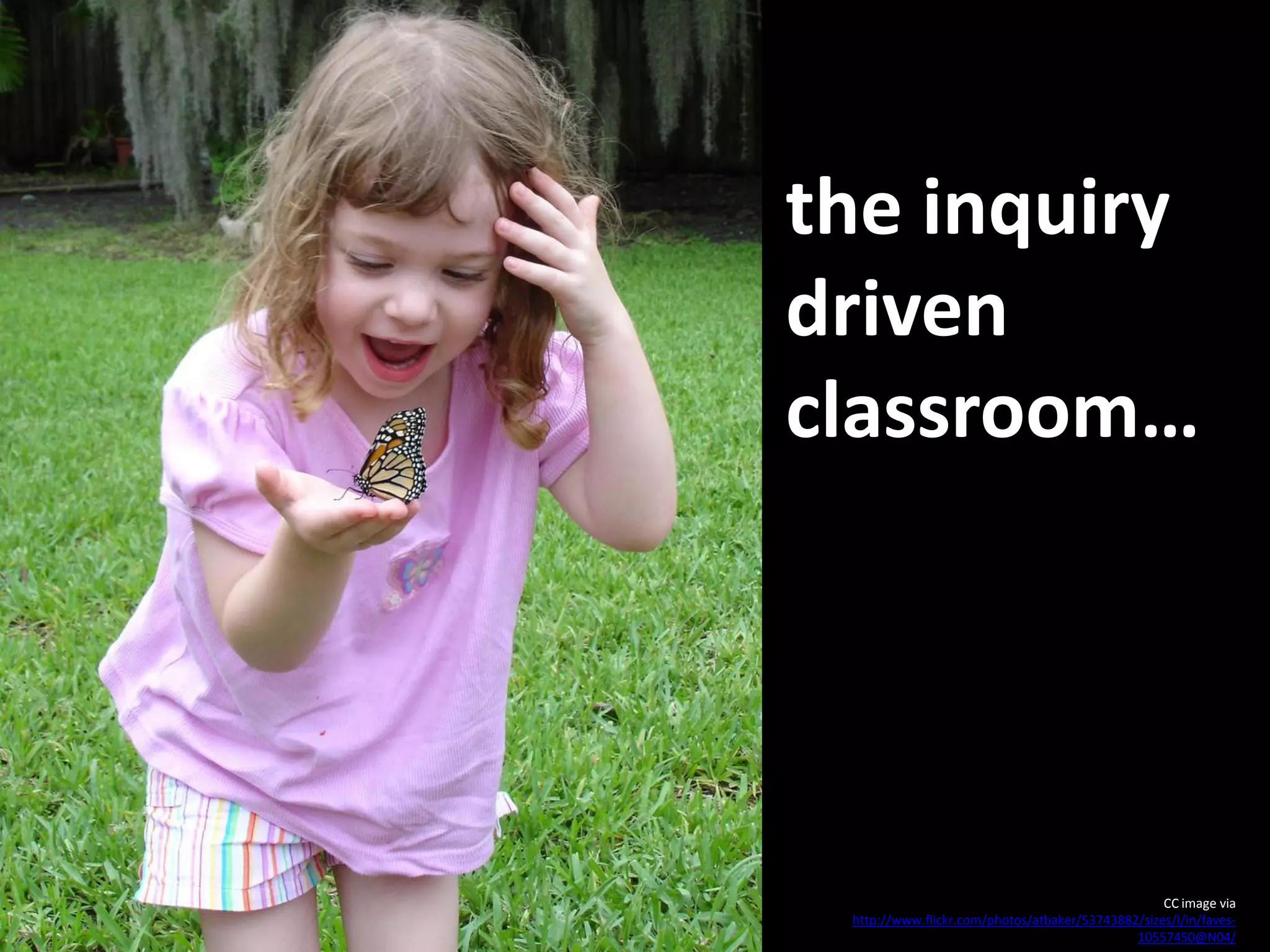
the inquiry
driven
classroom…


                                                   CC image via
 http://www.flickr.com/photos/atbaker/53743882/sizes/l/in/faves-
                                              10557450@N04/
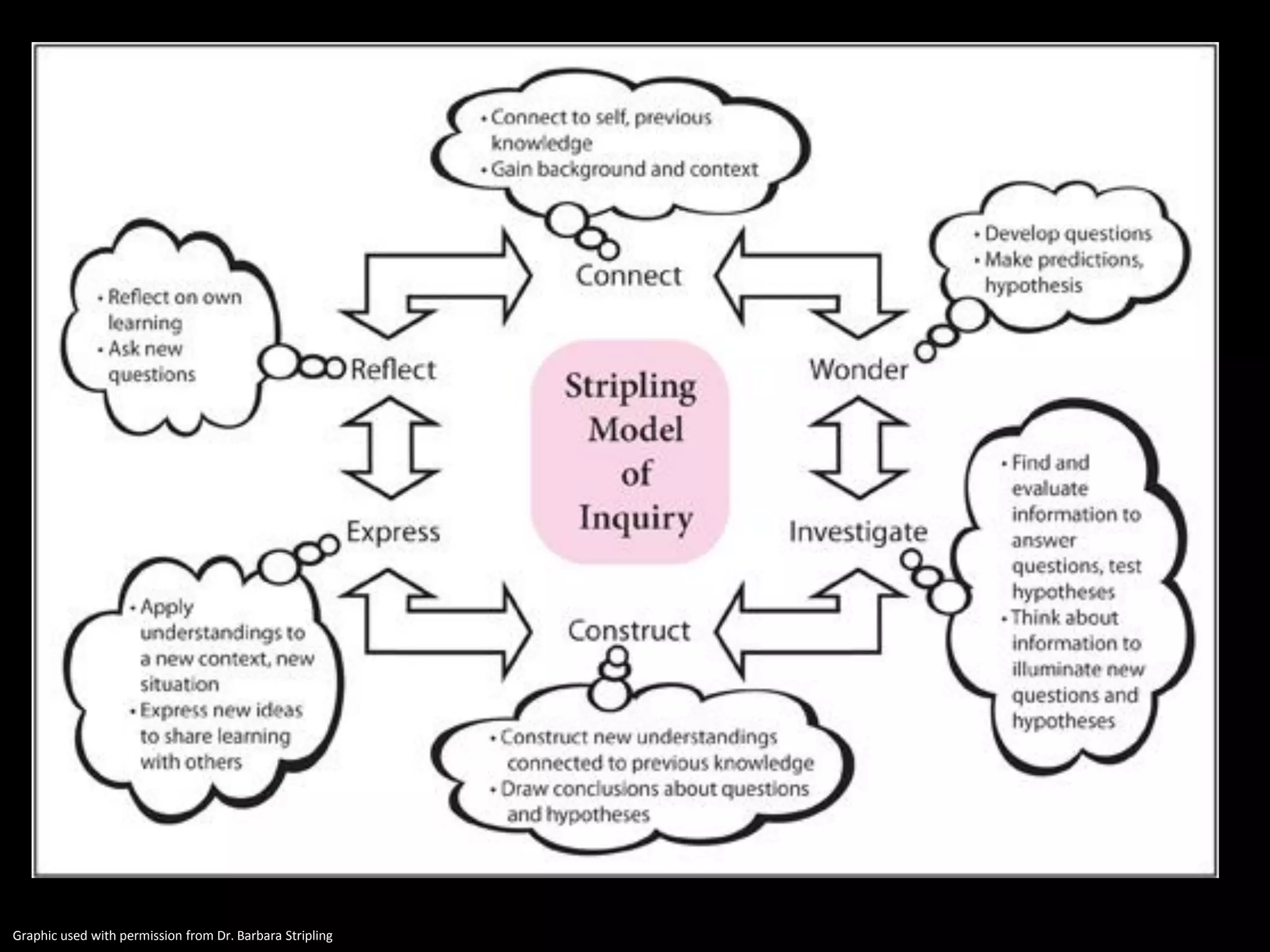
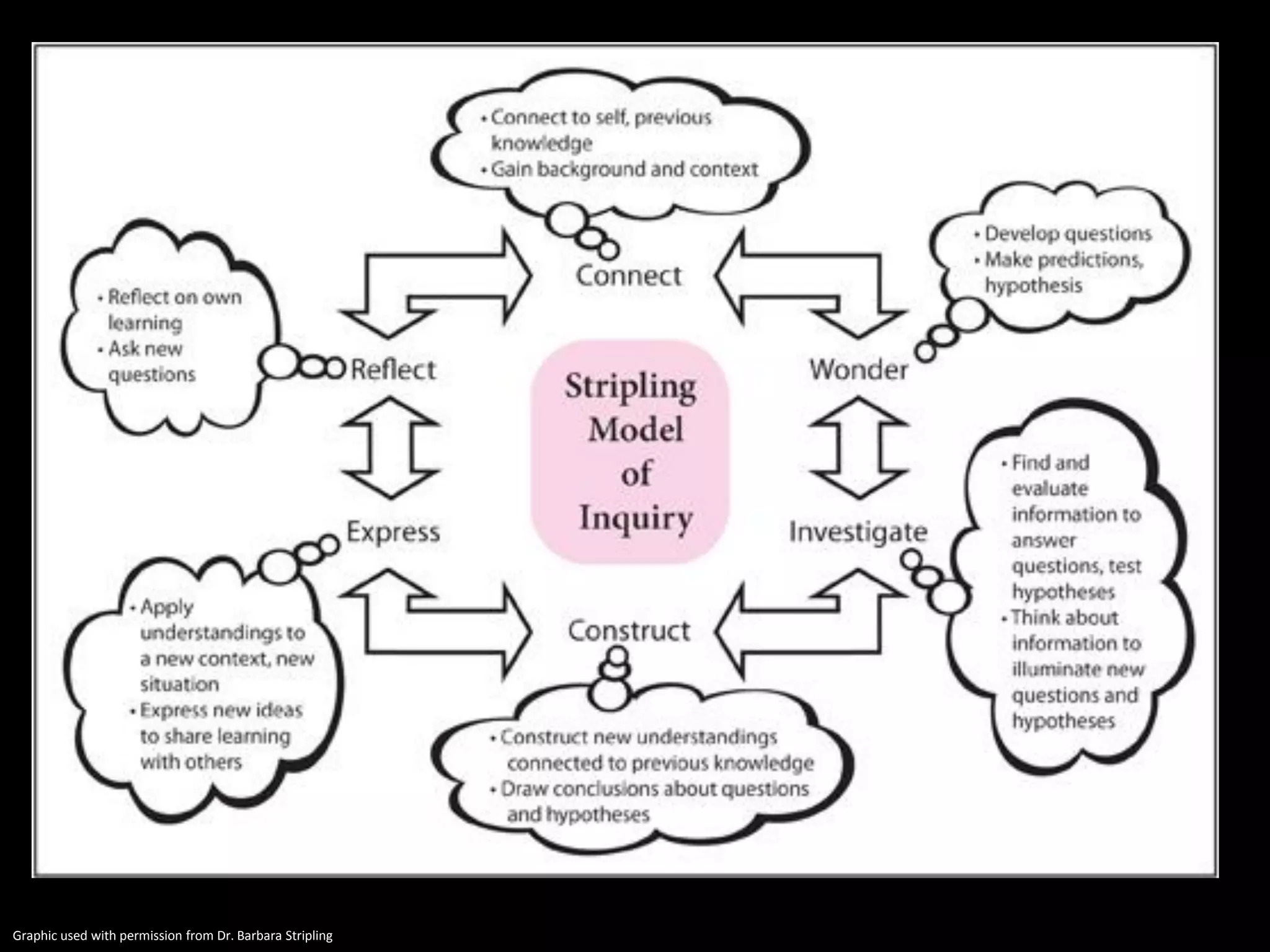
Graphic used with permission from Dr. Barbara Stripling
values dis-ease--there are many
questions raised without answers


Source: http://www.slideshare.net/buffyjhamilton/buffy-hamilton-response-to-paulo-freire                        Image used under a CC license from
                                                                                           http://www.flickr.com/photos/eleaf/2536358399/sizes/l/
establishes
more than
the teacher
as validator
of knowledge/
work
CC image via
http://www.flickr.com/photos/sudhamshu/4208690449/sizes/o/in/photostr
eam/
                                                                        Source: http://www.slideshare.net/buffyjhamilton/buffy-hamilton-response-to-paulo-freire
nurtures a feeling of responsibility to
oneself and to the class

CC image via http://www.flickr.com/photos/alltoomuch/3389937799/sizes/l/in/faves-
10557450@N04/
Source: http://www.slideshare.net/buffyjhamilton/buffy-hamilton-response-to-paulo-freire
recognizes classroom as a complicated, non-
       laboratory place filled with complex, caring
                     human beings
Source: http://www.slideshare.net/buffyjhamilton/buffy-hamilton-response-to-paulo-freire
fights culture of school that wants THE
right answer

Source: http://www.slideshare.net/buffyjhamilton/buffy-hamilton-response-to-paulo-freire
exercises patience- doesn't give up too quickly and
realizes community/learning/inquiry doesn't happen
overnight
Source: http://www.slideshare.net/buffyjhamilton/buffy-hamilton-response-to-paulo-freire
values transparency and make the class part
            of determining what is occurring


                                                                Source: http://www.slideshare.net/buffyjhamilton/buffy-hamilton-response-to-paulo-freire
Image used under a CC license from
http://www.flickr.com/photos/somegeekintn/3368983089/sizes/l/
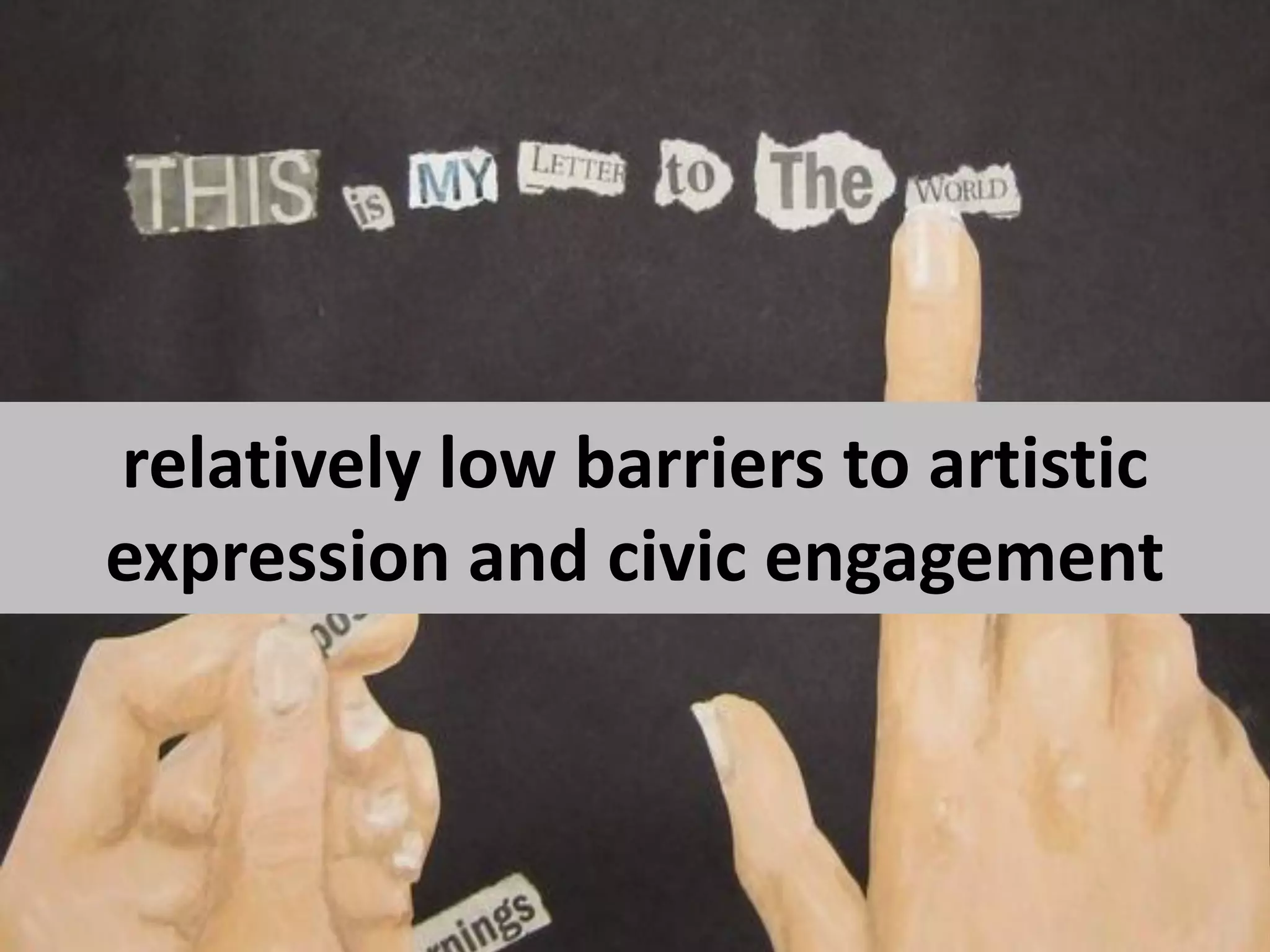
relatively low barriers to artistic
expression and civic engagement
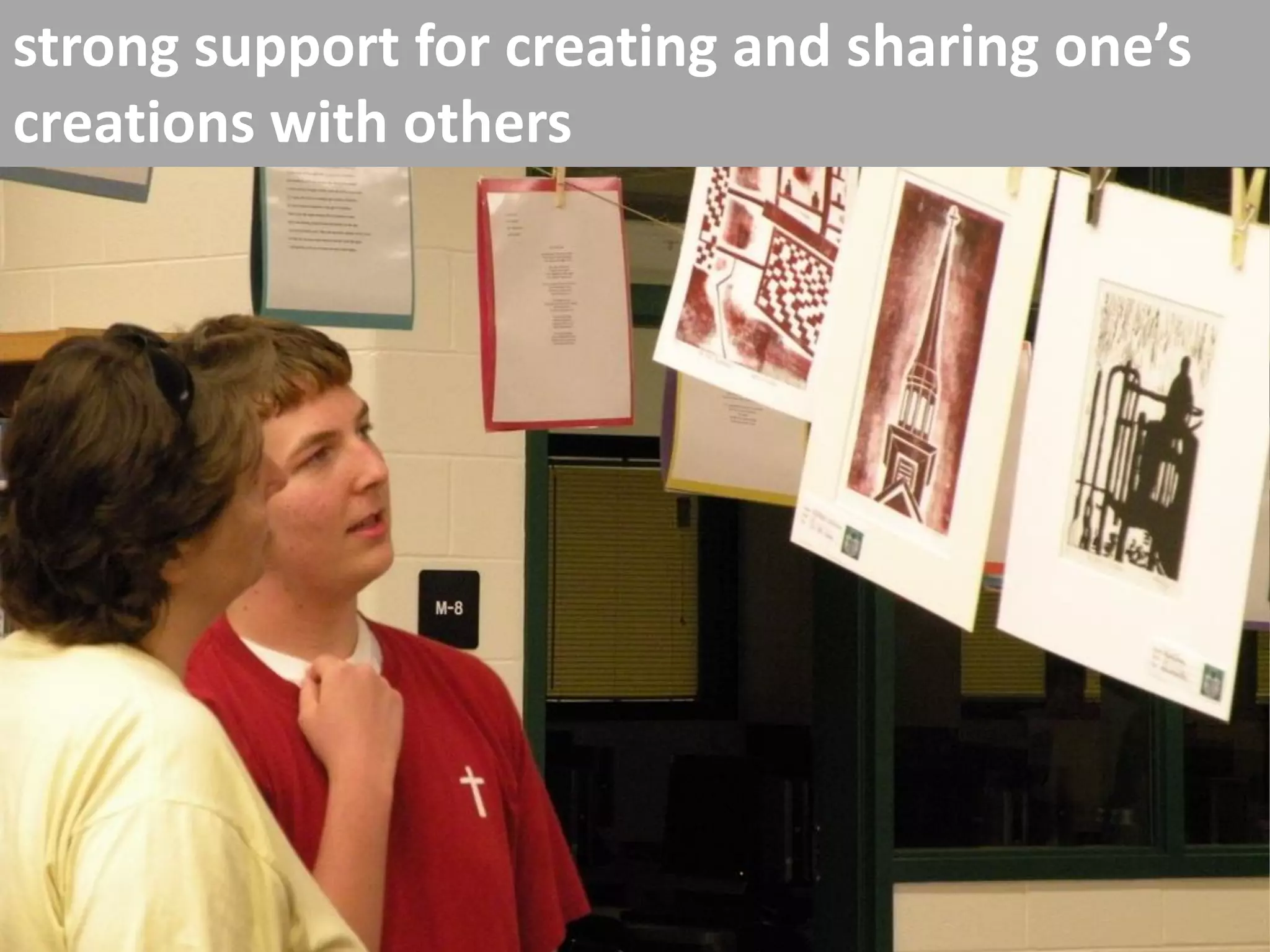
strong support for creating and sharing one’s
creations with others
what is known by the most experienced is
         passed along to novices
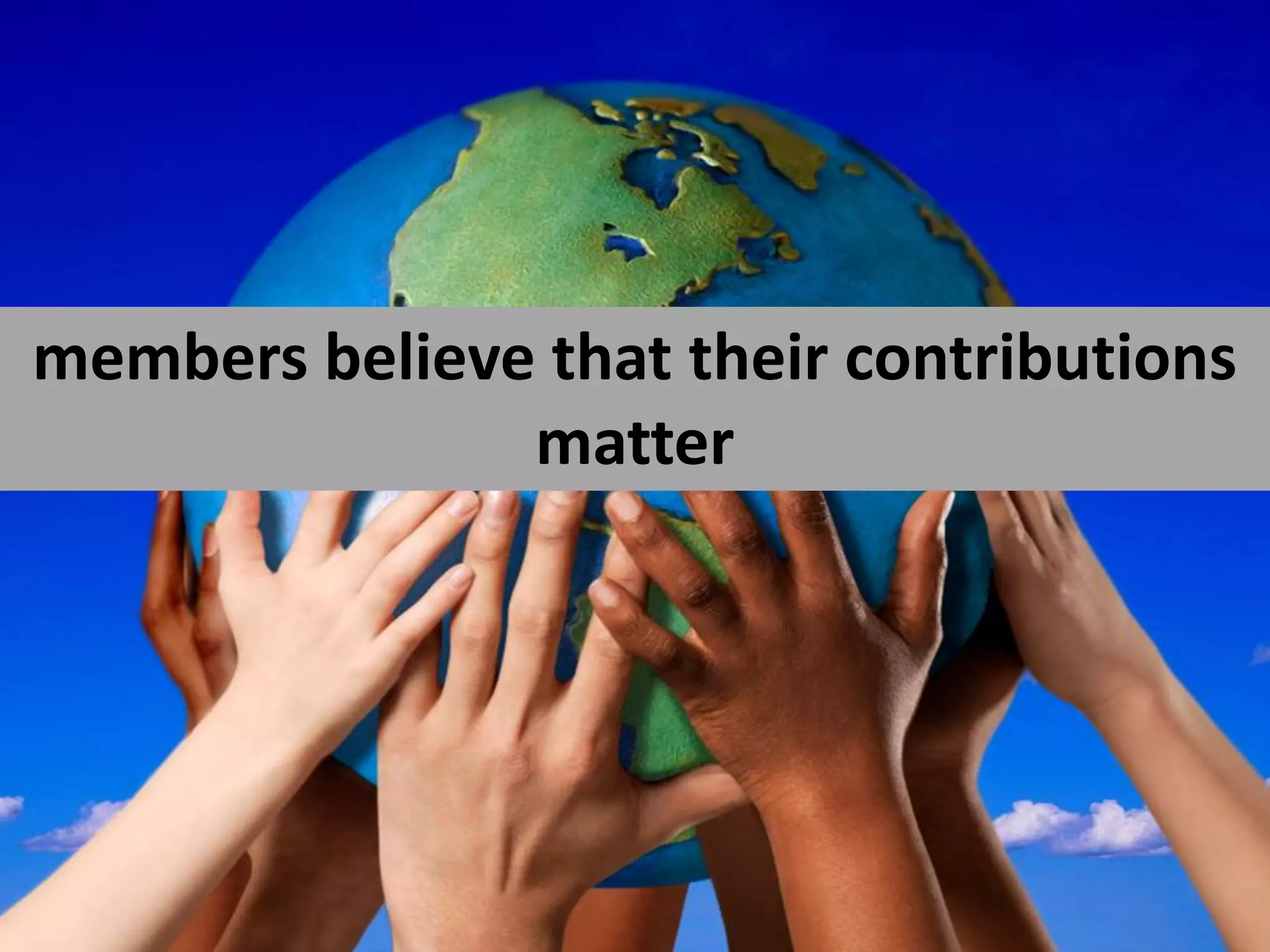
members believe that their contributions
               matter
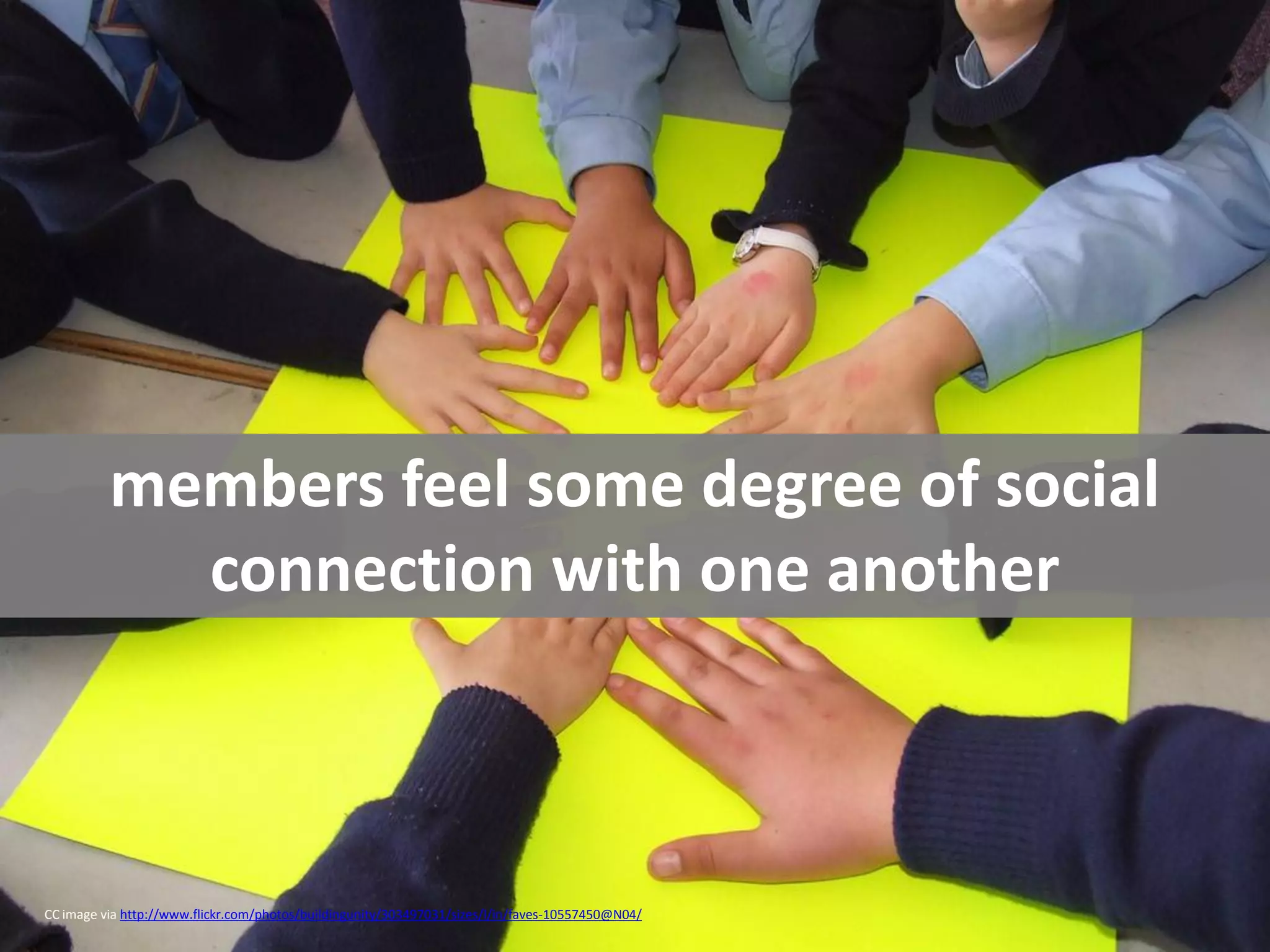
members feel some degree of social
            connection with one another


CC image via http://www.flickr.com/photos/buildingunity/303497031/sizes/l/in/faves-10557450@N04/
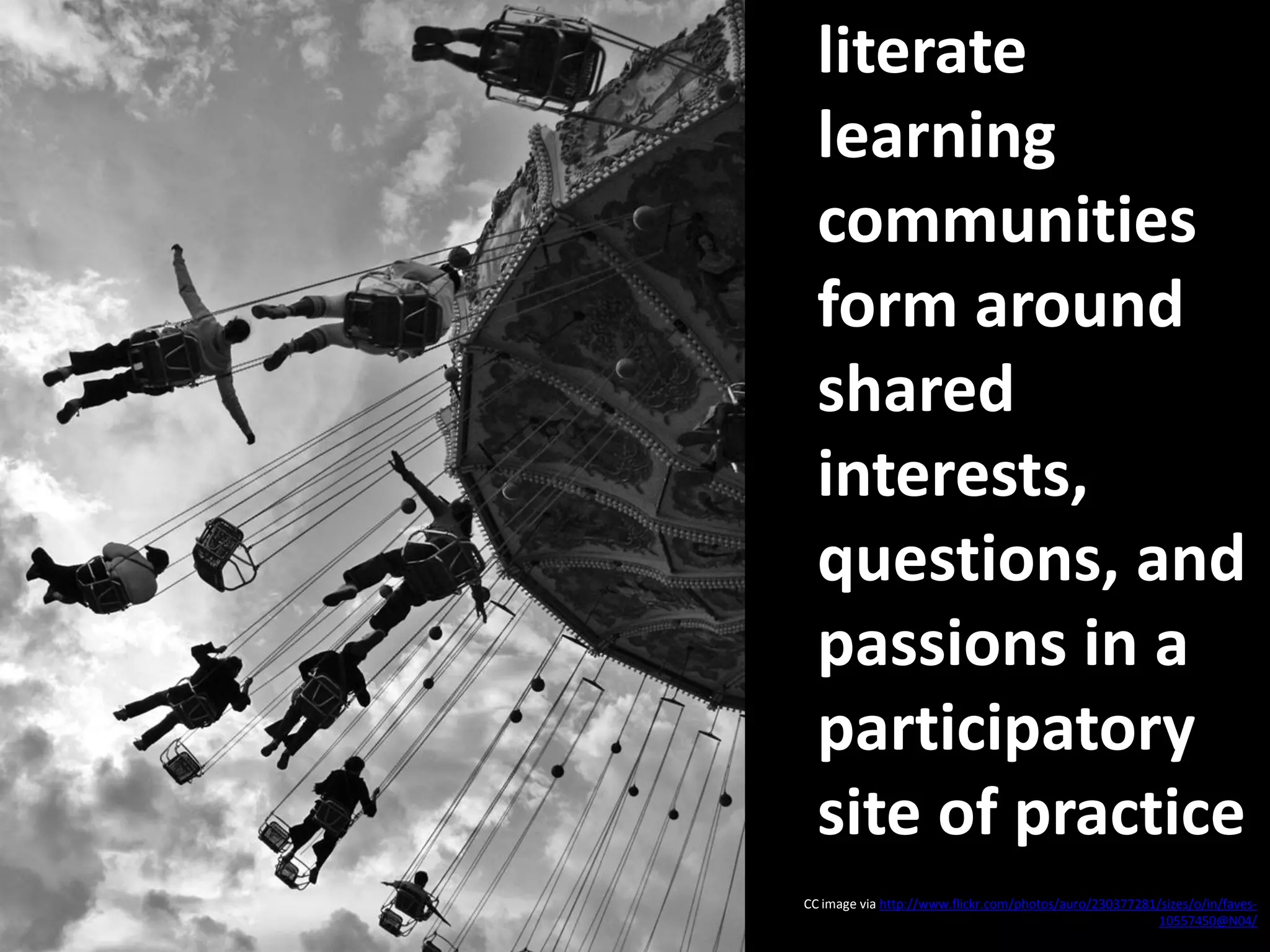
literate
  learning
  communities
  form around
  shared
  interests,
  questions, and
  passions in a
  participatory
  site of practice
CC image via http://www.flickr.com/photos/auro/230377281/sizes/o/in/faves-
                                                         10557450@N04/
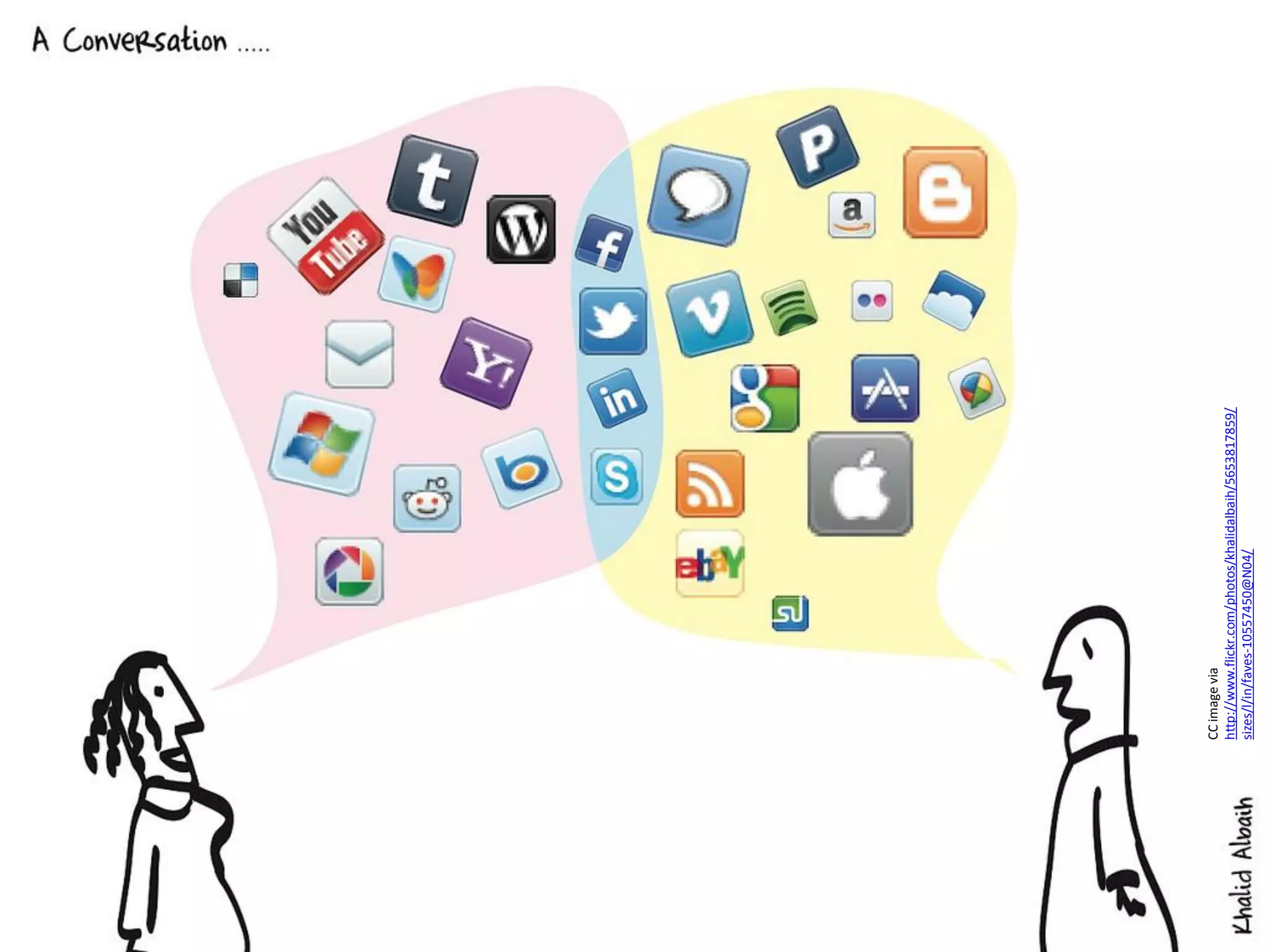
a participatory climate amplifies the possibilities for
  creating conversations for learning via multiple
                      mediums
CC image via
http://www.flickr.com/photos/khalidalbaih/5653817859/
sizes/l/in/faves-10557450@N04/
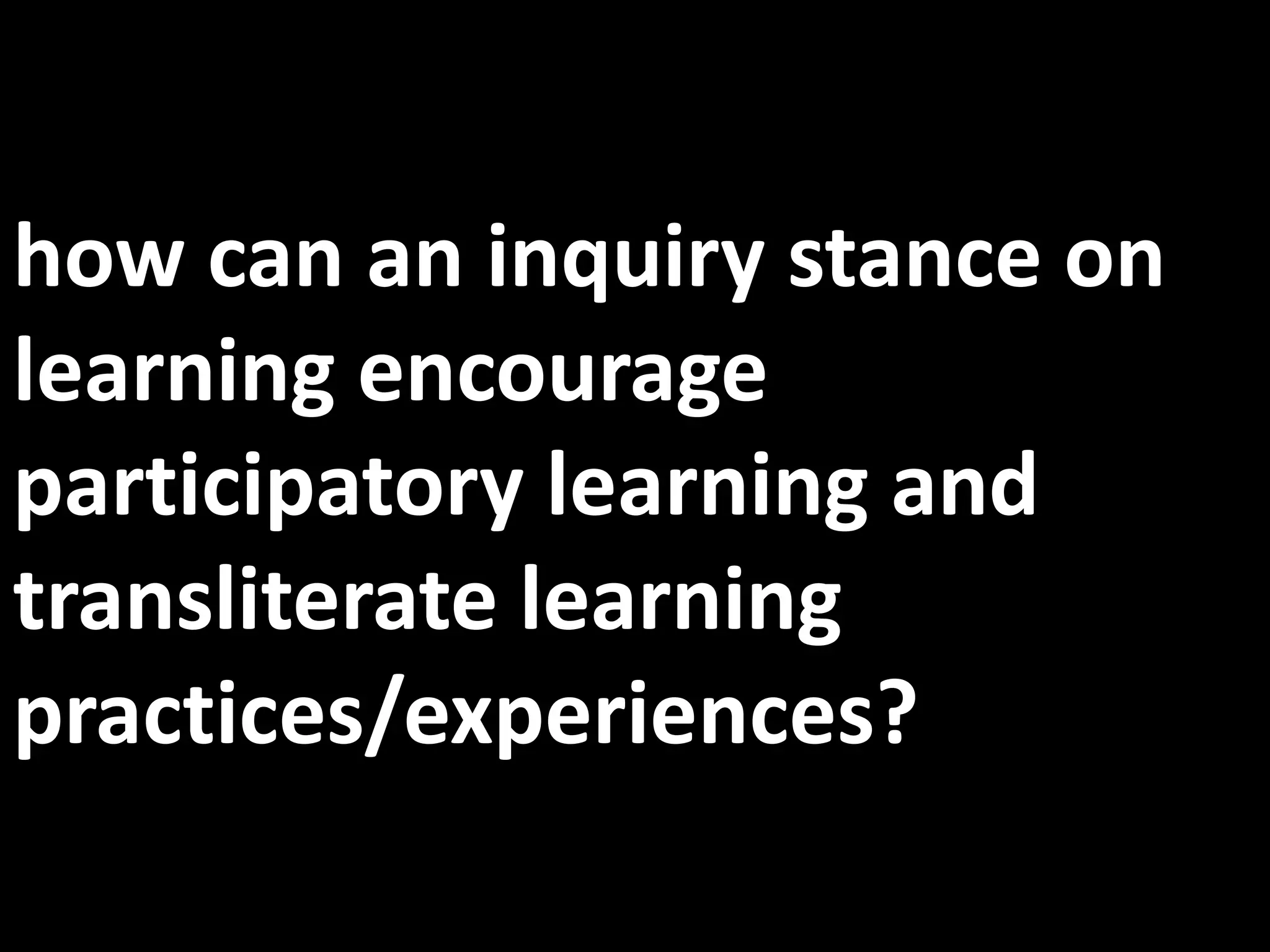
how can an inquiry stance on
learning encourage
participatory learning and
transliterate learning
practices/experiences?
Graphic used with permission from Dr. Barbara Stripling
1
    connect
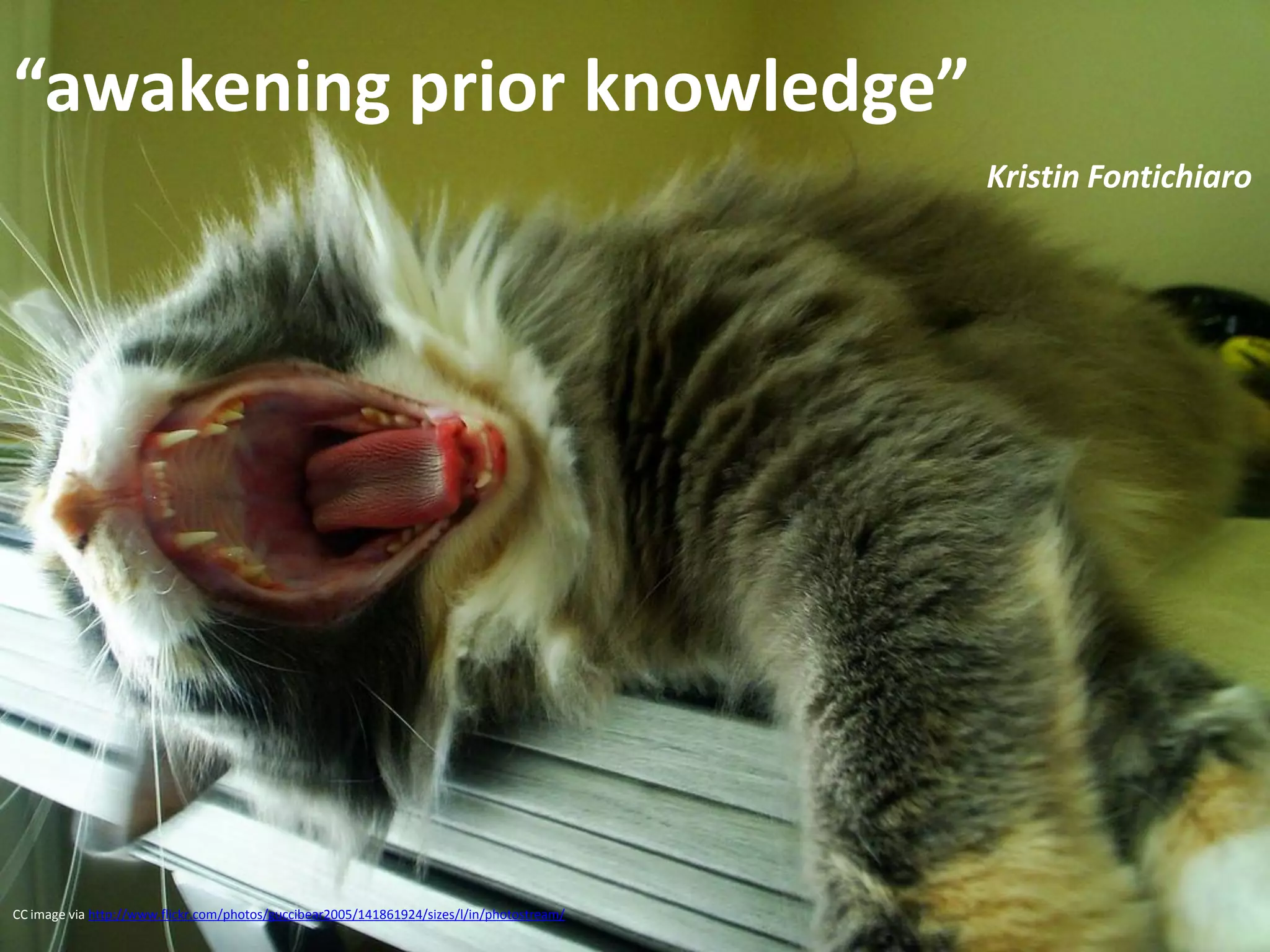
“awakening prior knowledge”
                                                                                            Kristin Fontichiaro


CC image via http://www.flickr.com/photos/guccibear2005/141861924/sizes/l/in/photostream/
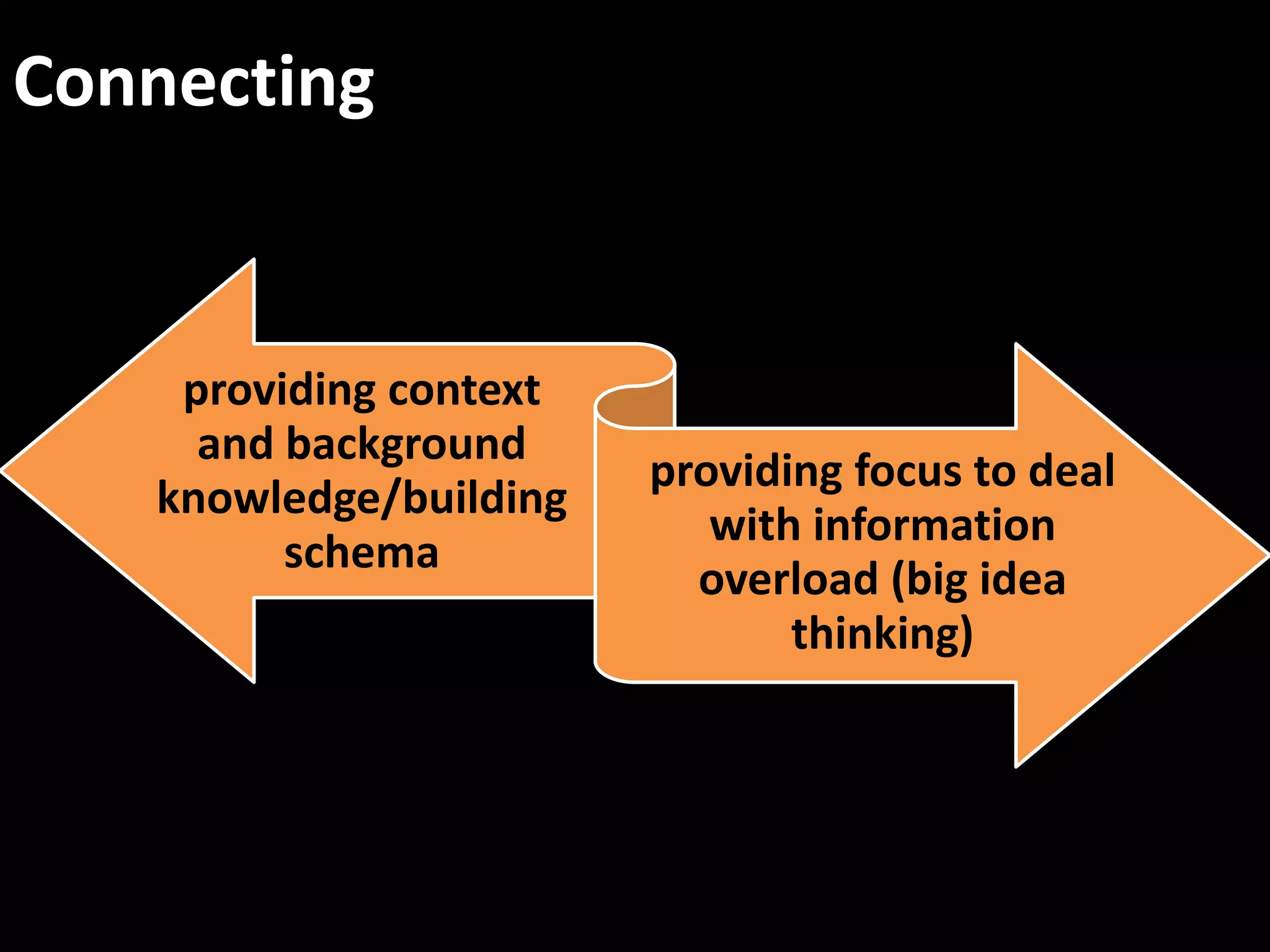
Connecting


    providing context
     and background
                        providing focus to deal
   knowledge/building
                           with information
         schema
                          overload (big idea
                               thinking)
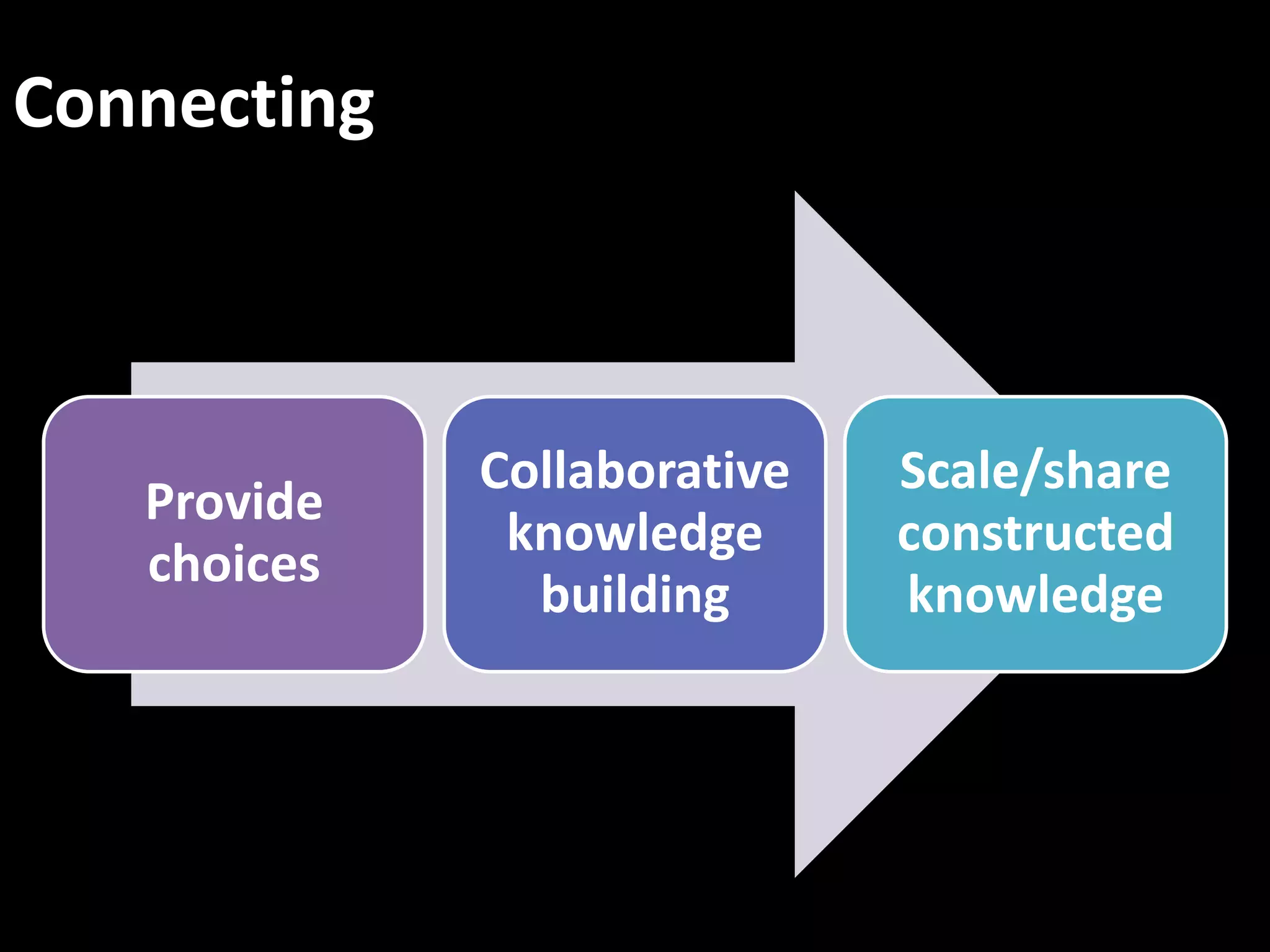
Connecting


             Collaborative   Scale/share
   Provide
              knowledge      constructed
   choices
               building      knowledge
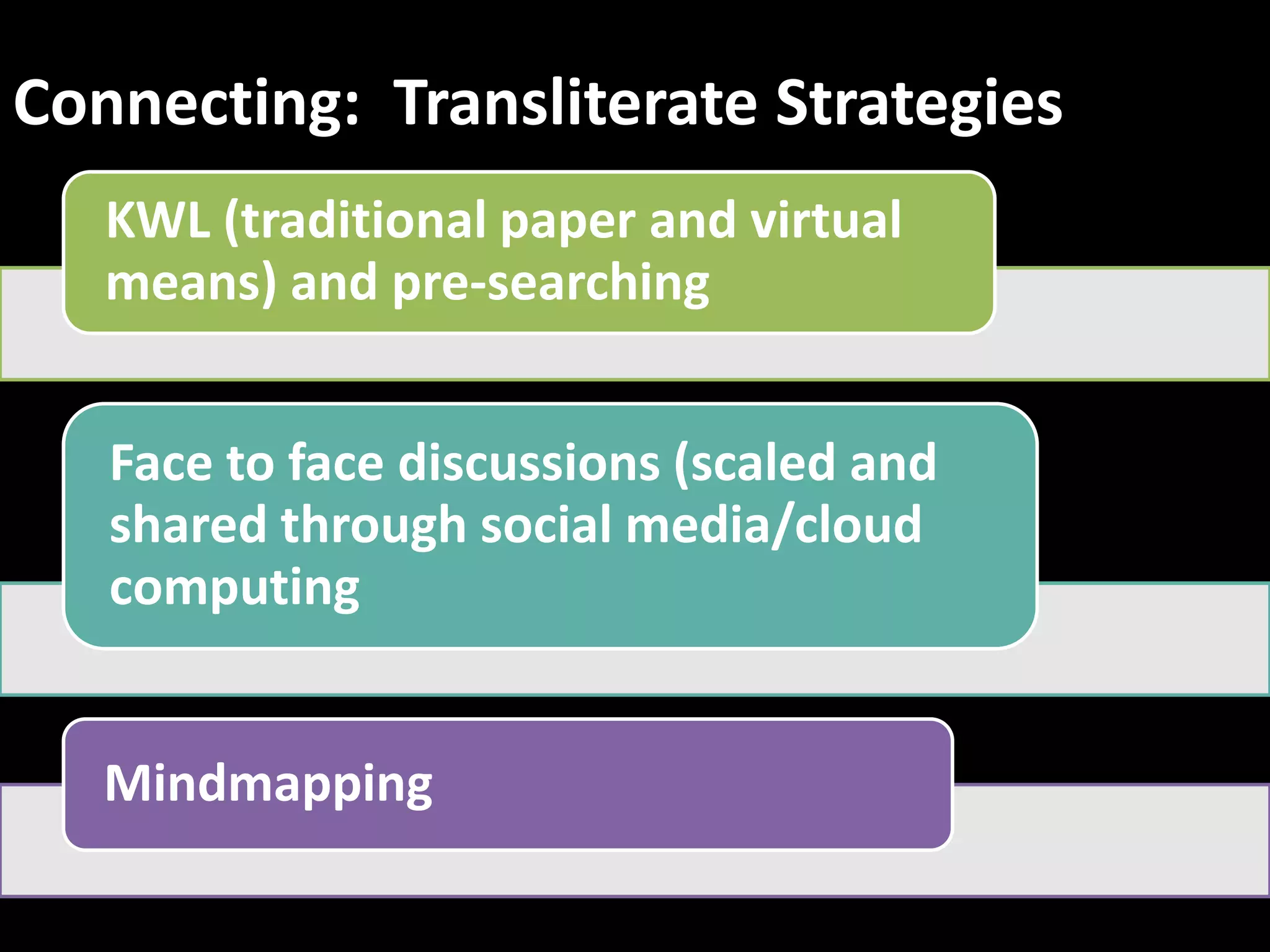
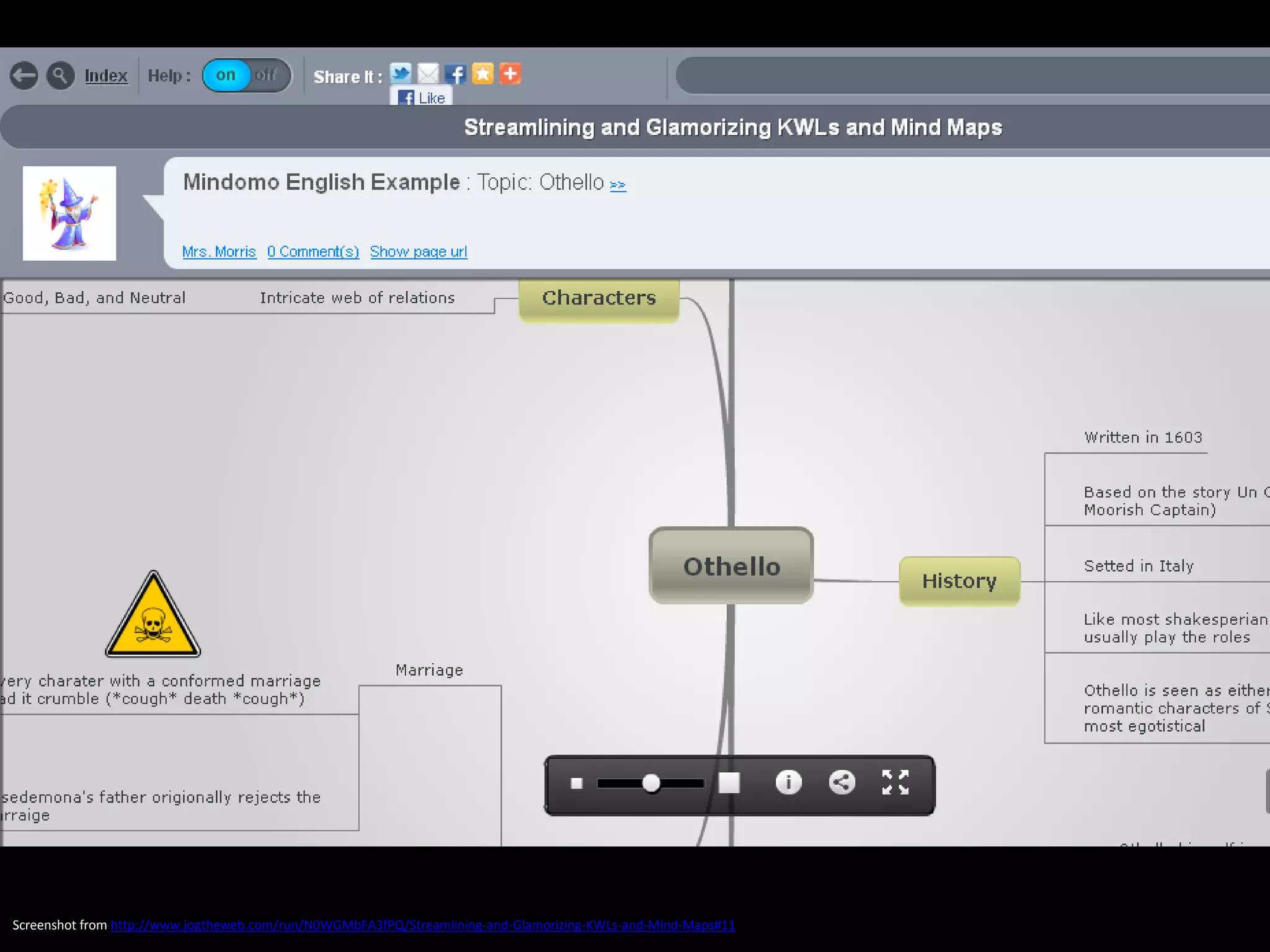
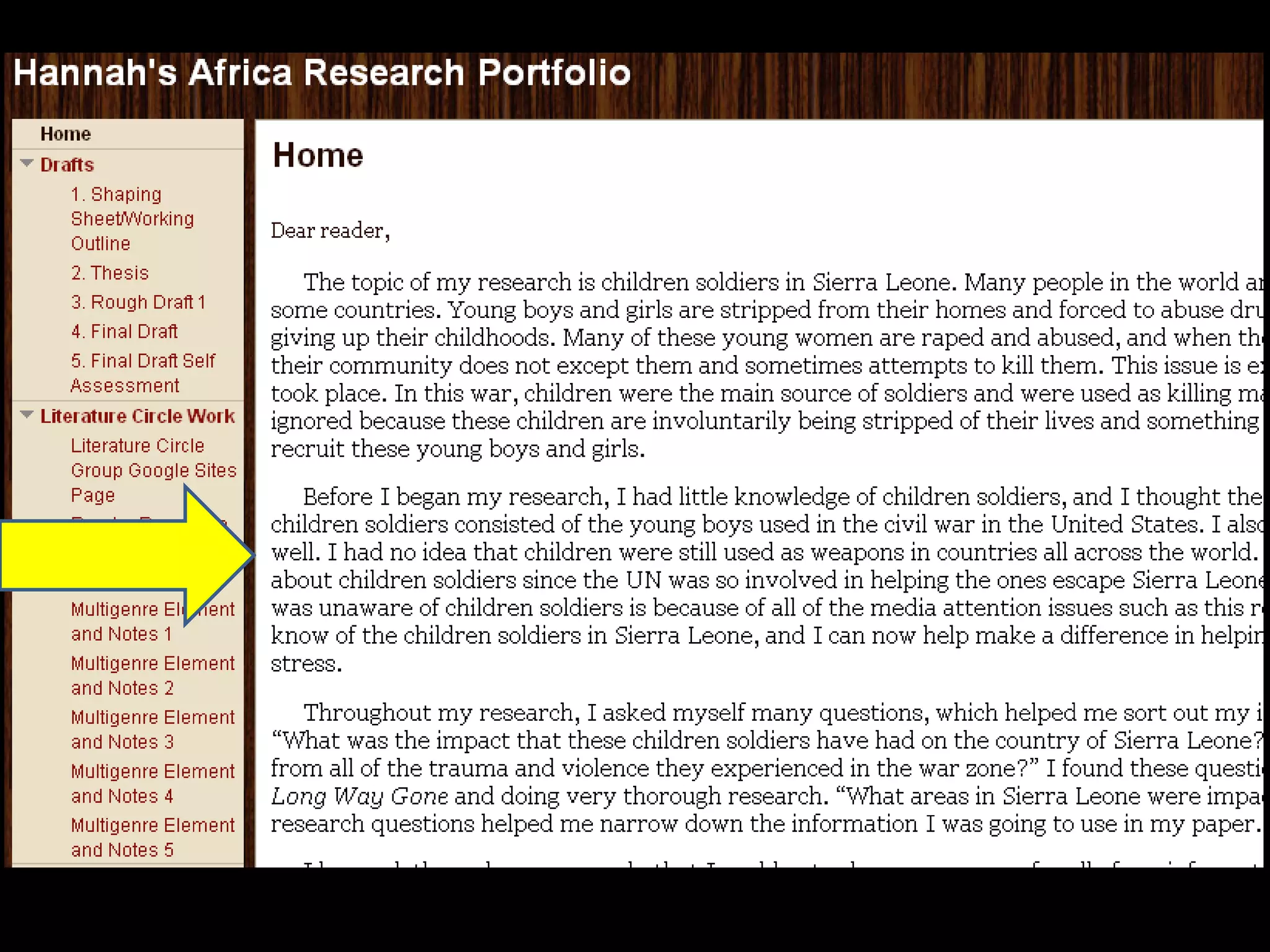
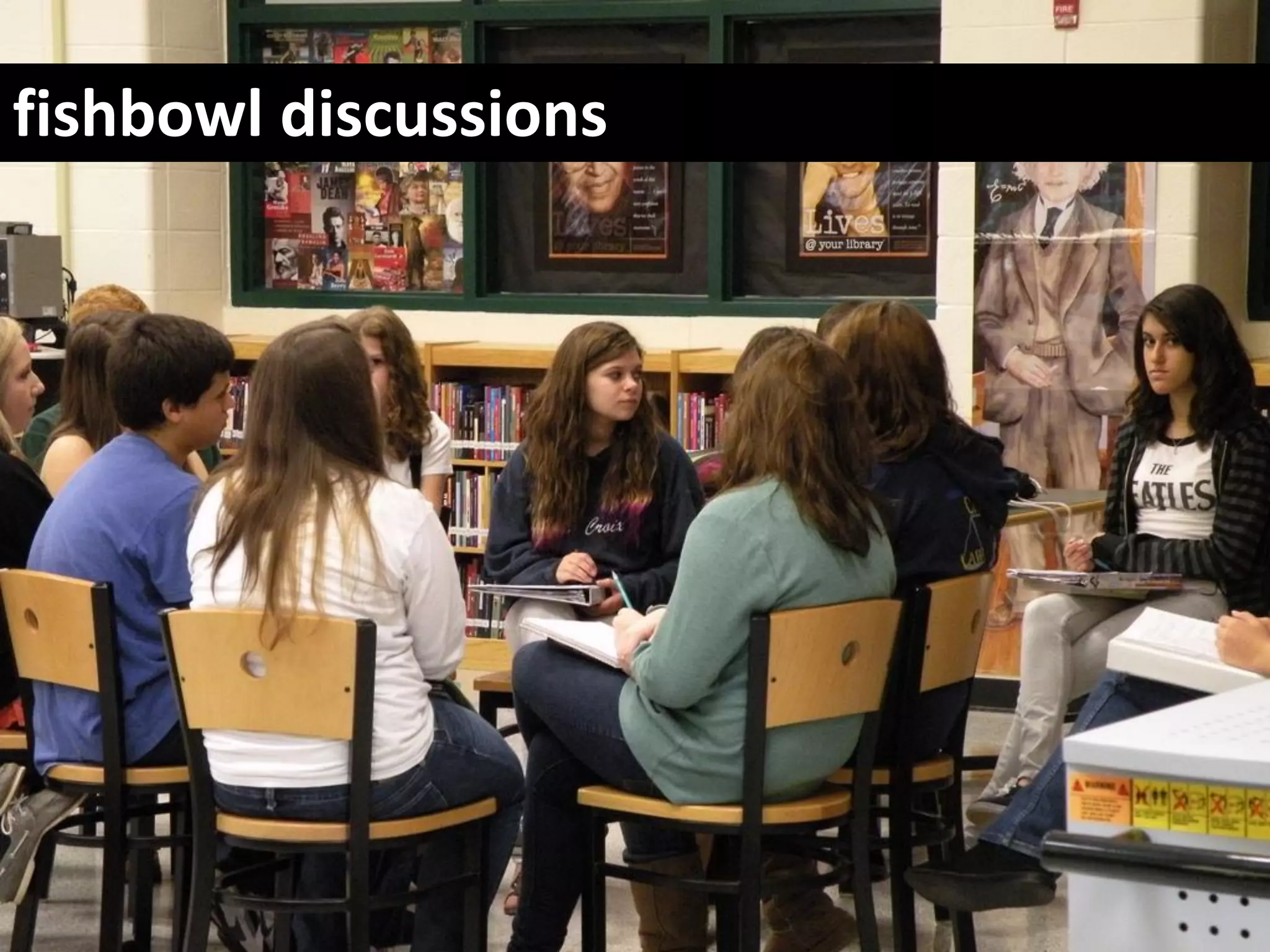
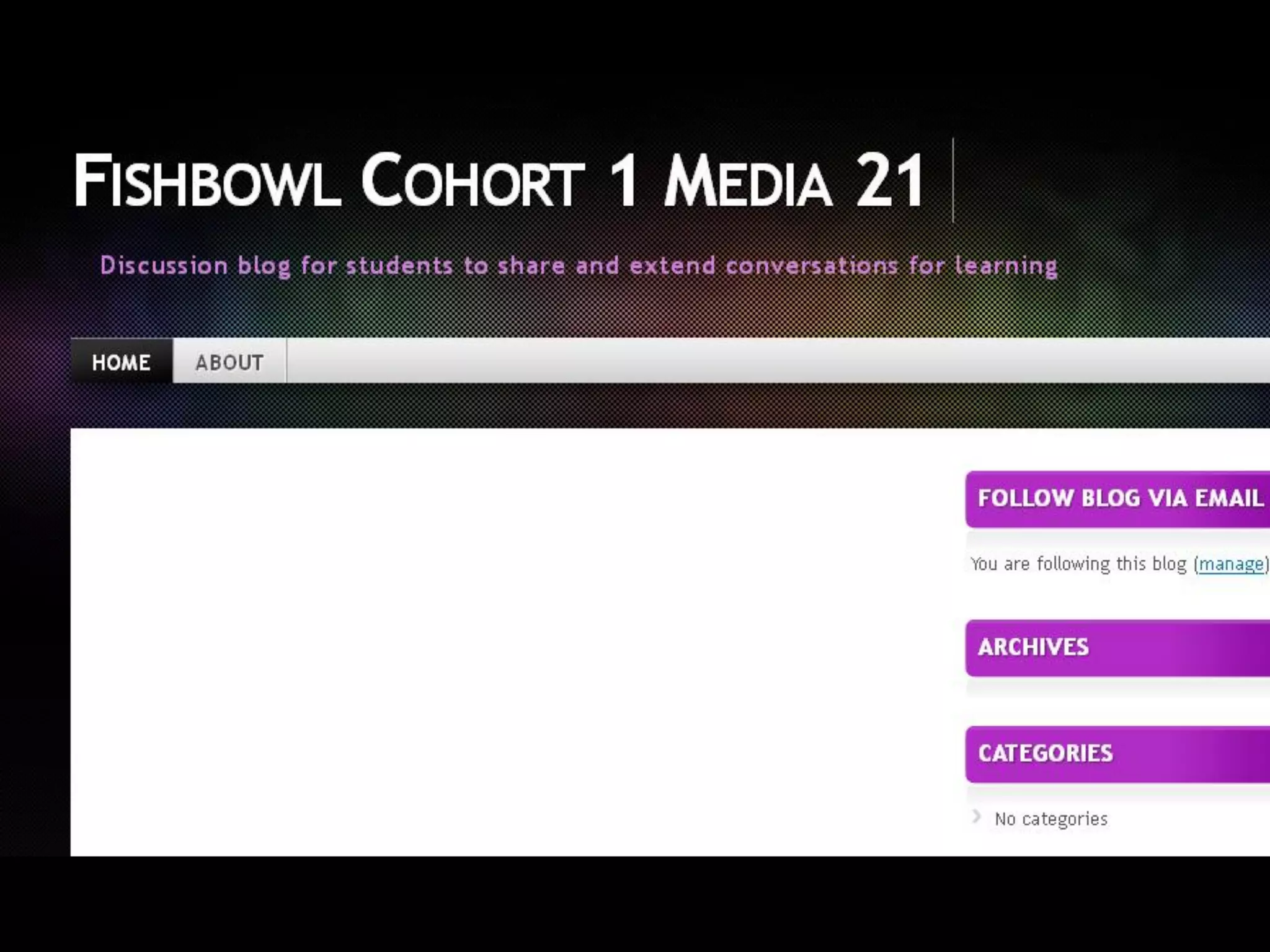
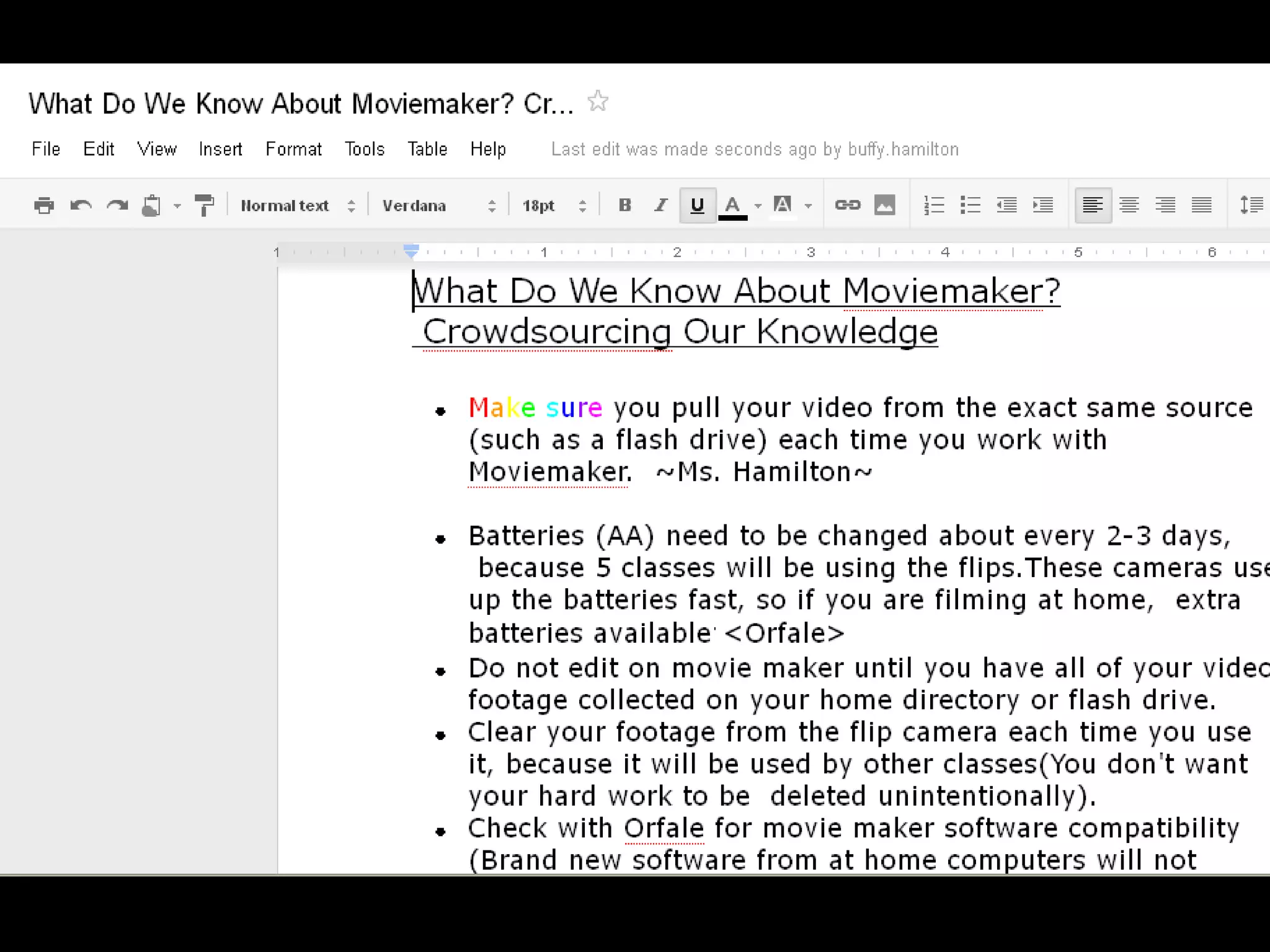
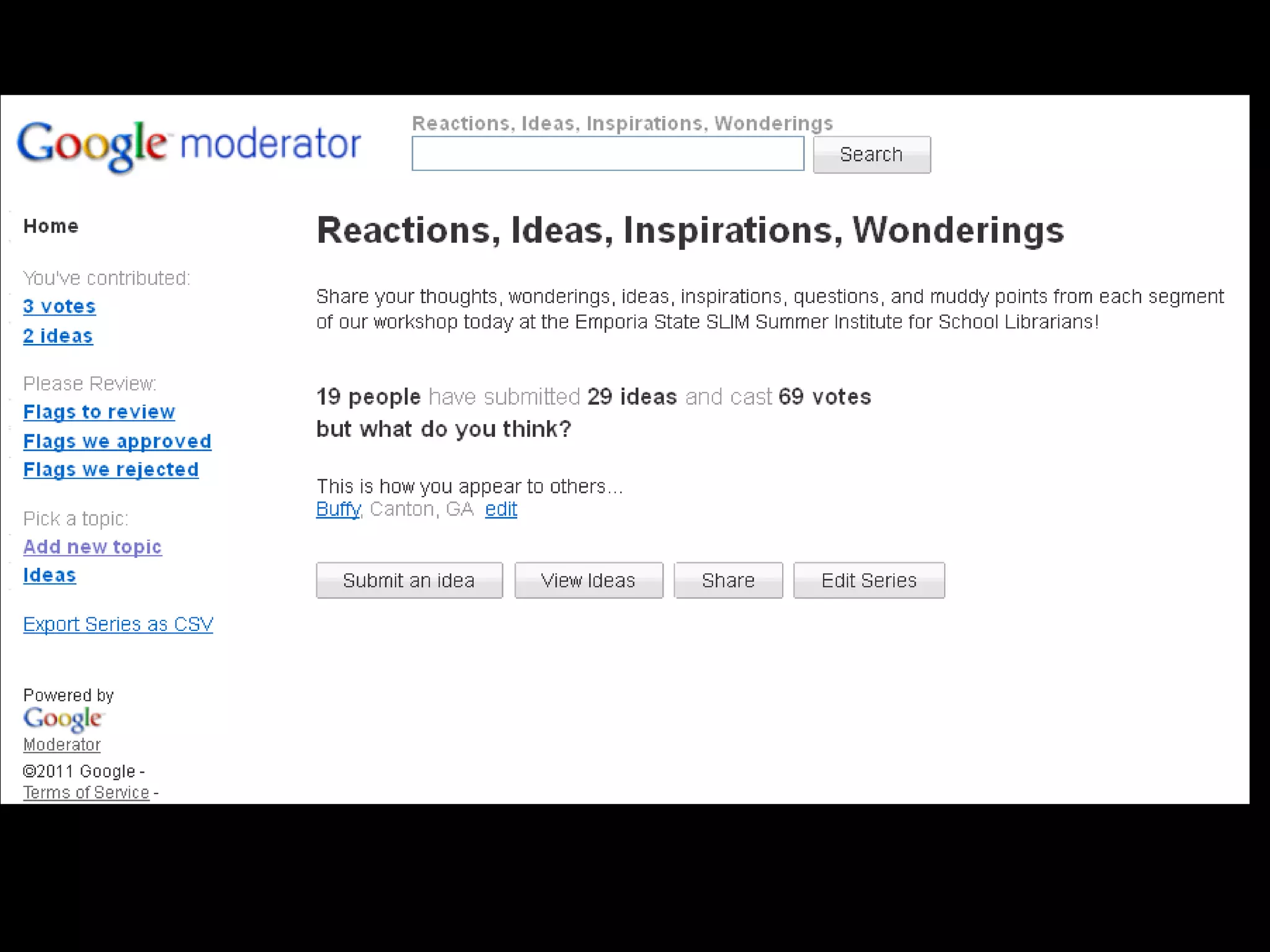
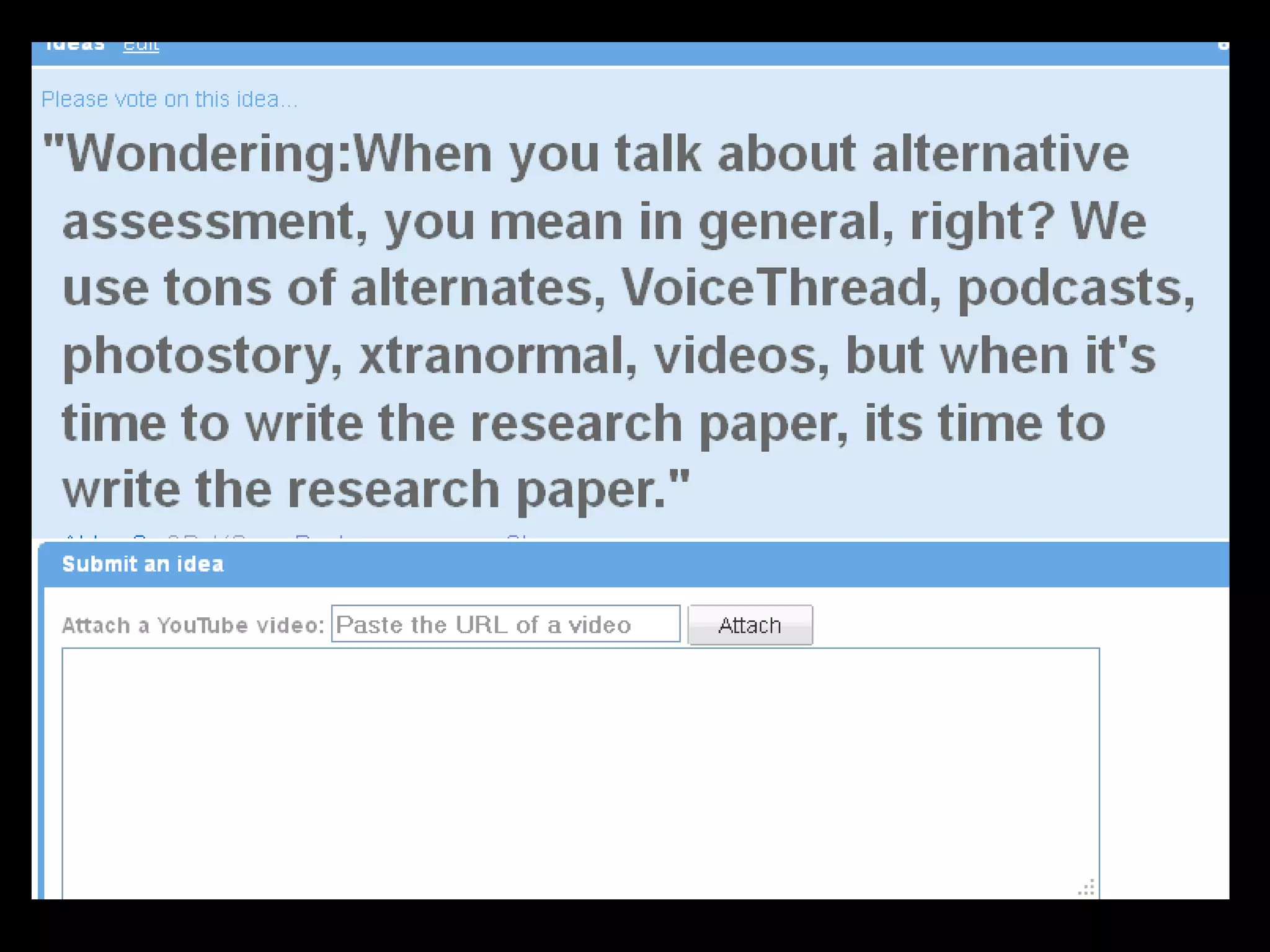
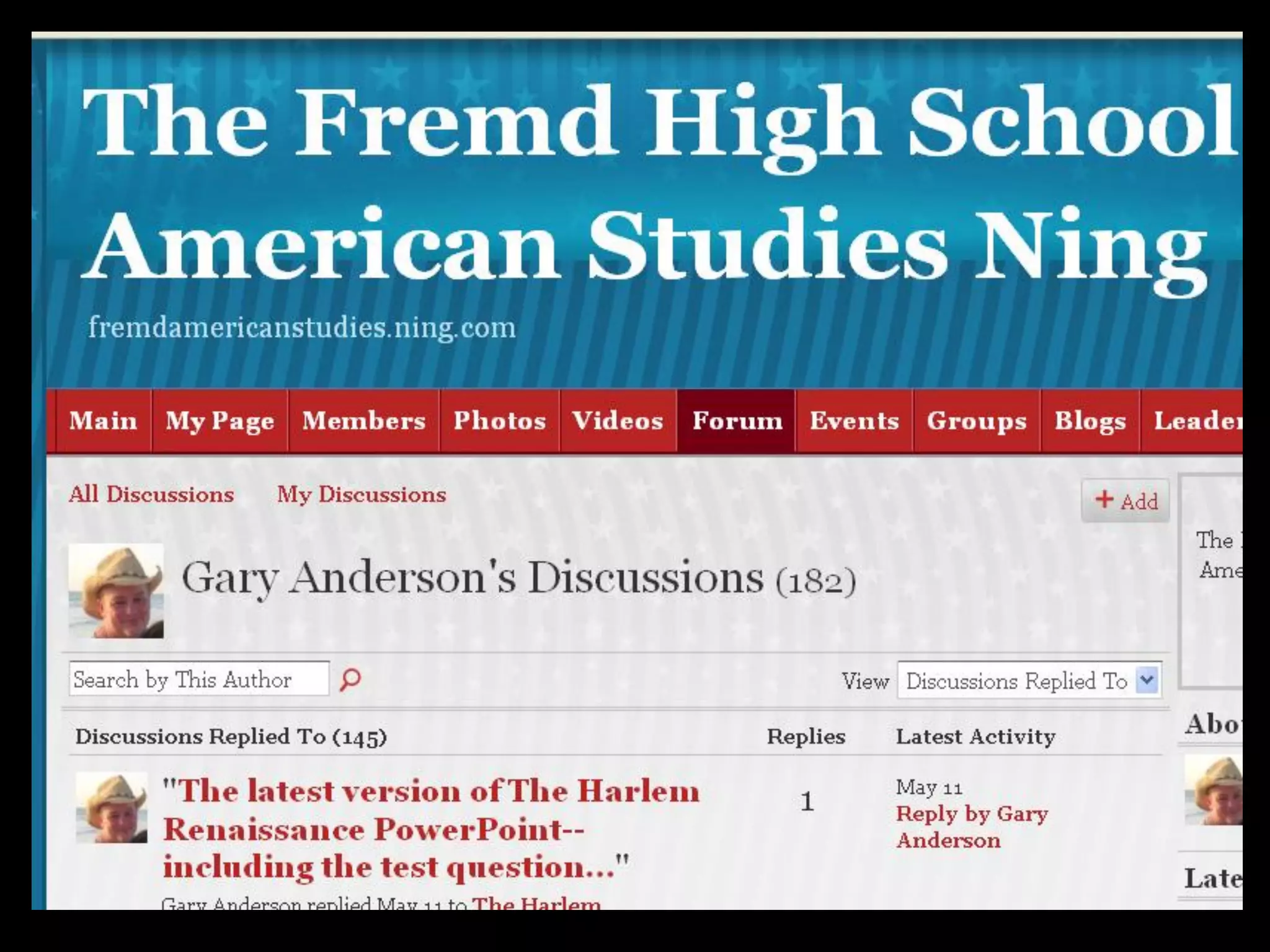
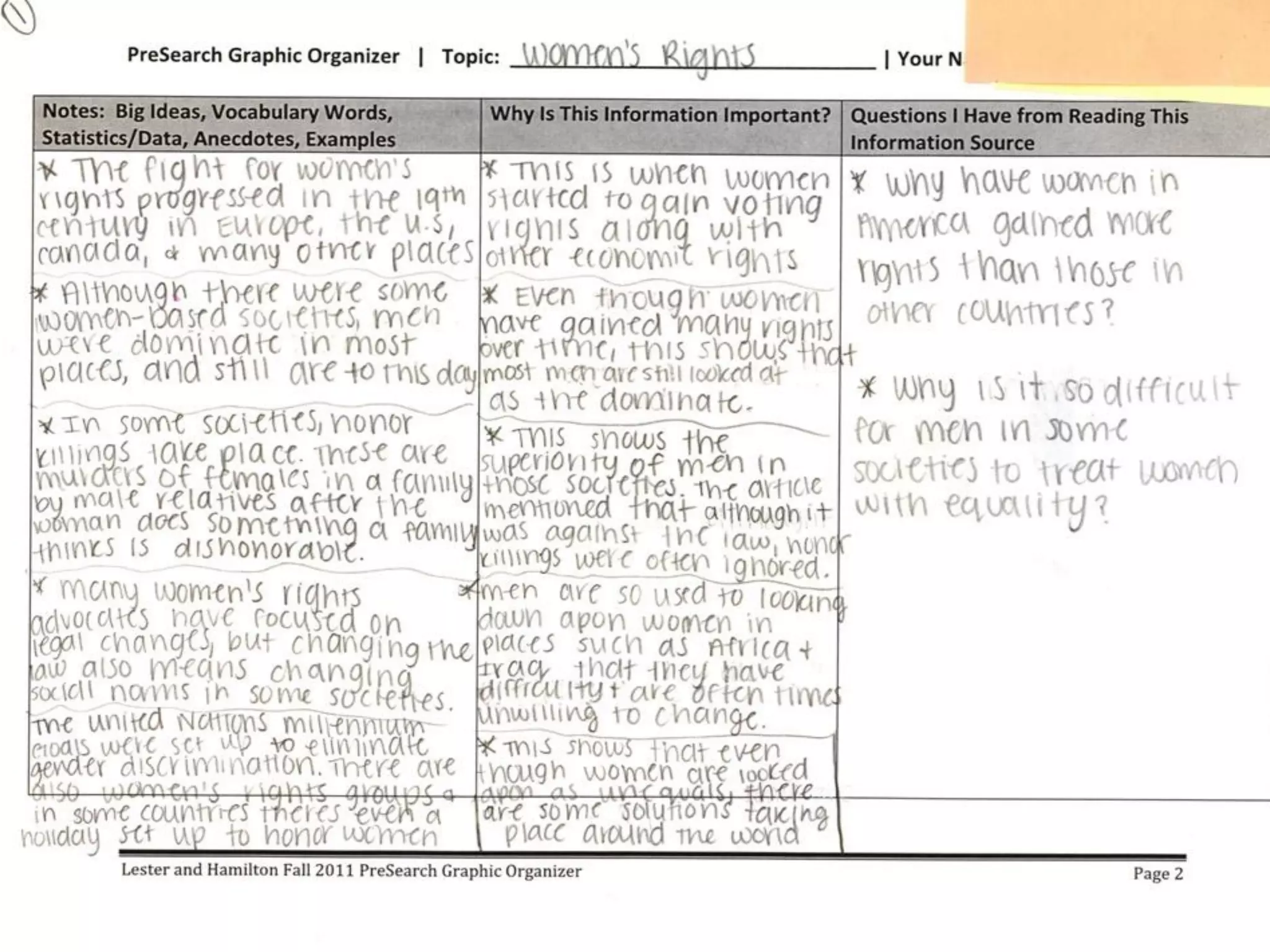
Connecting: Transliterate Strategies
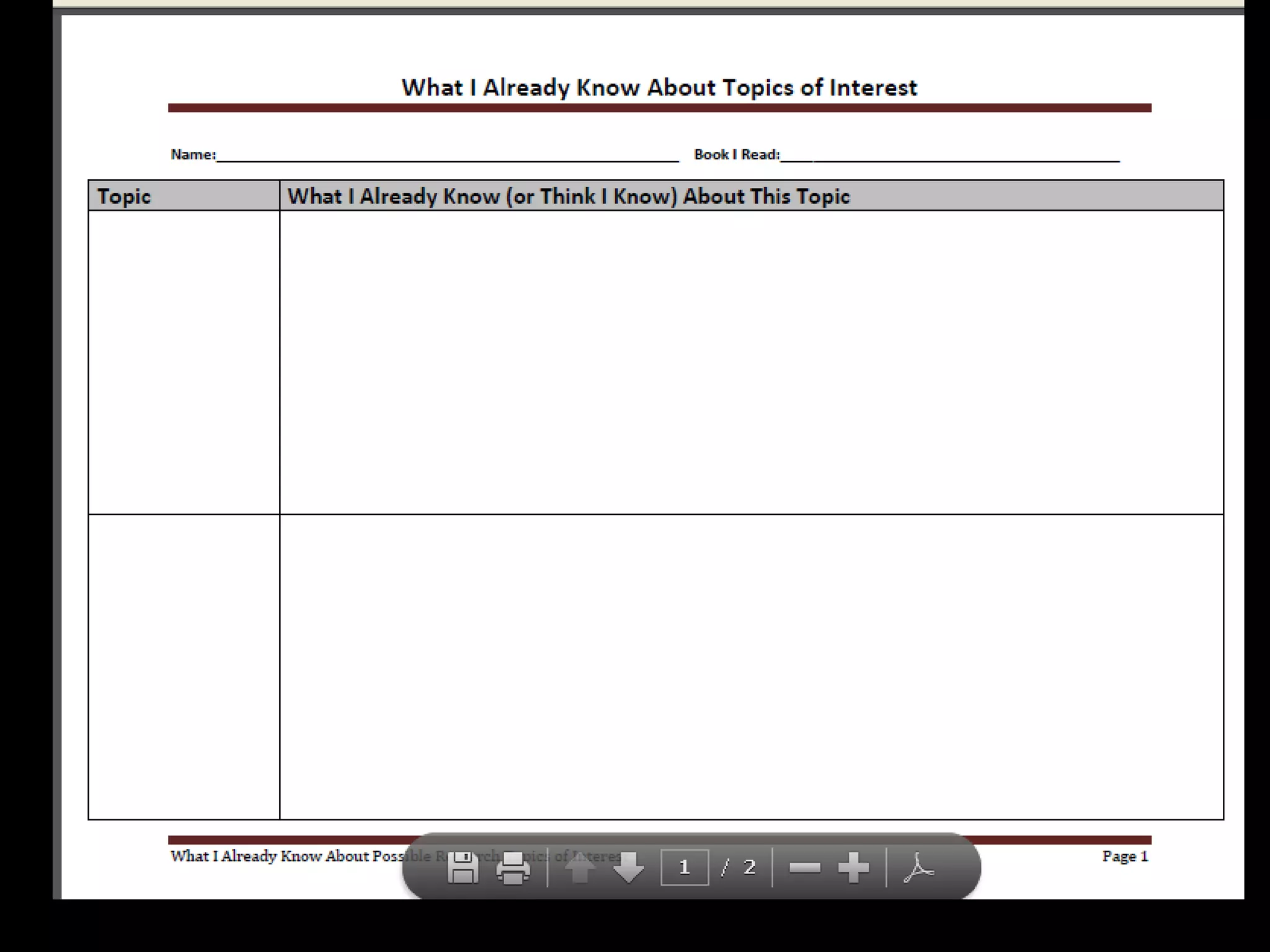
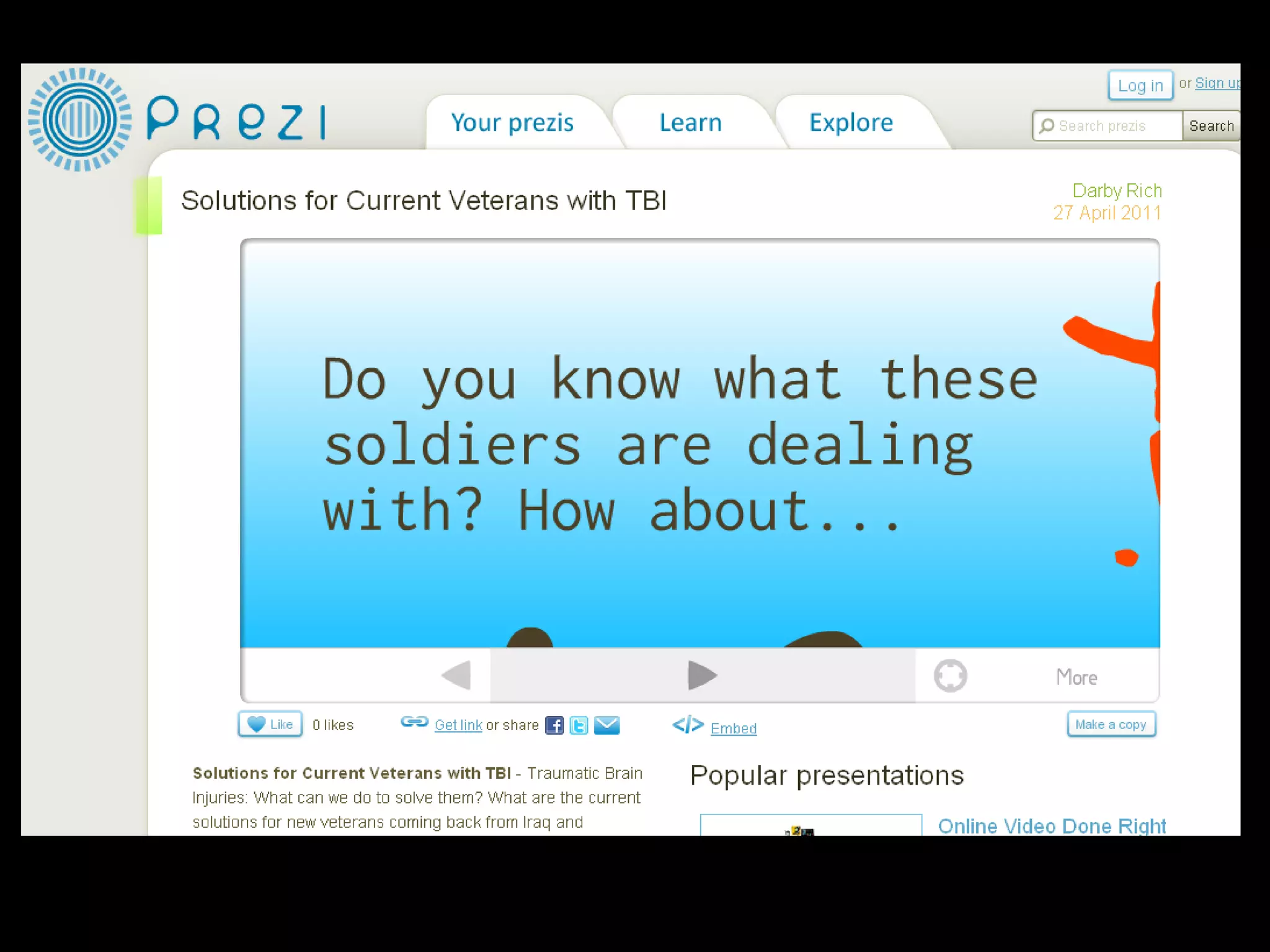
   KWL (traditional paper and virtual
   means) and pre-searching

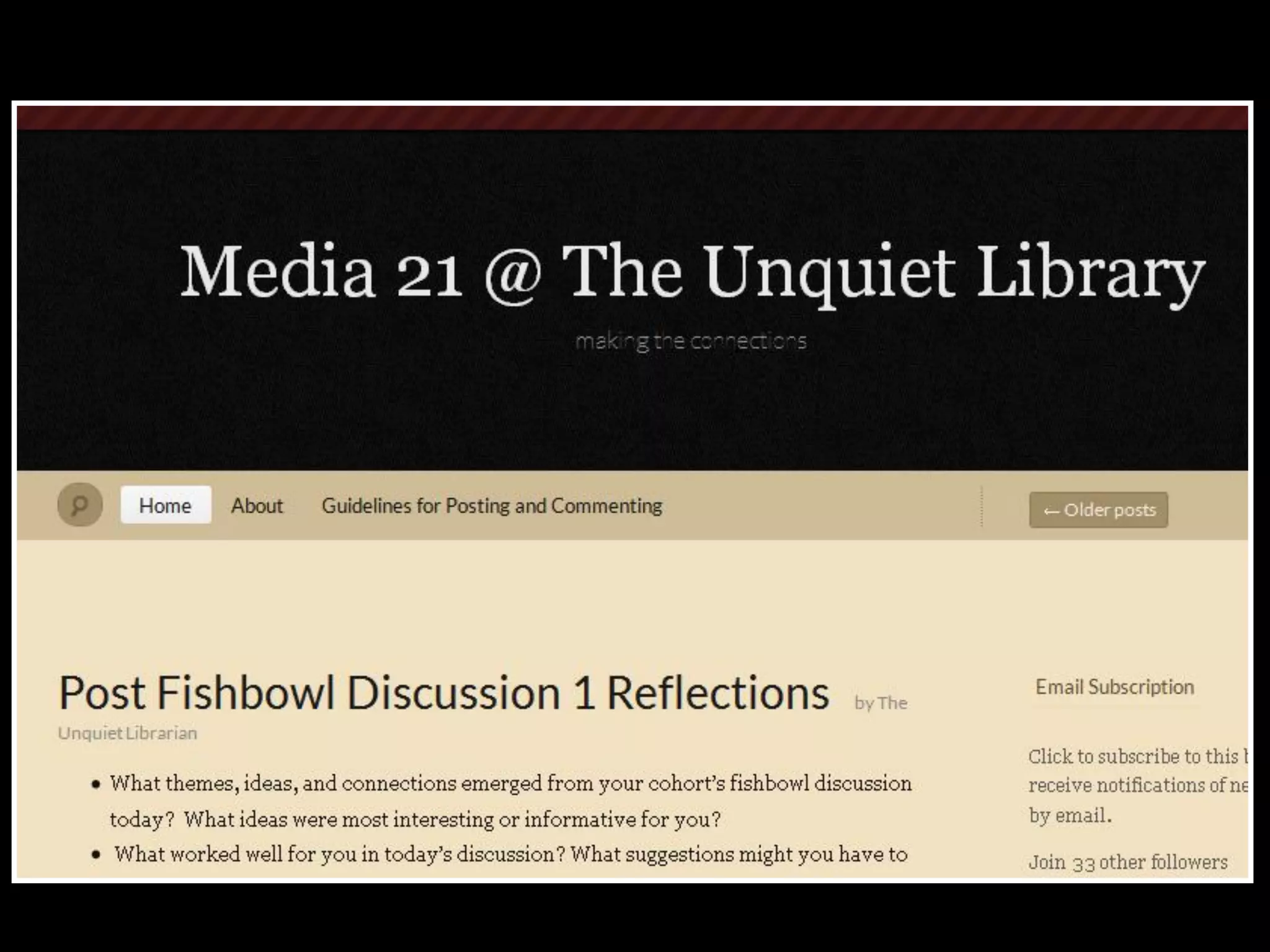
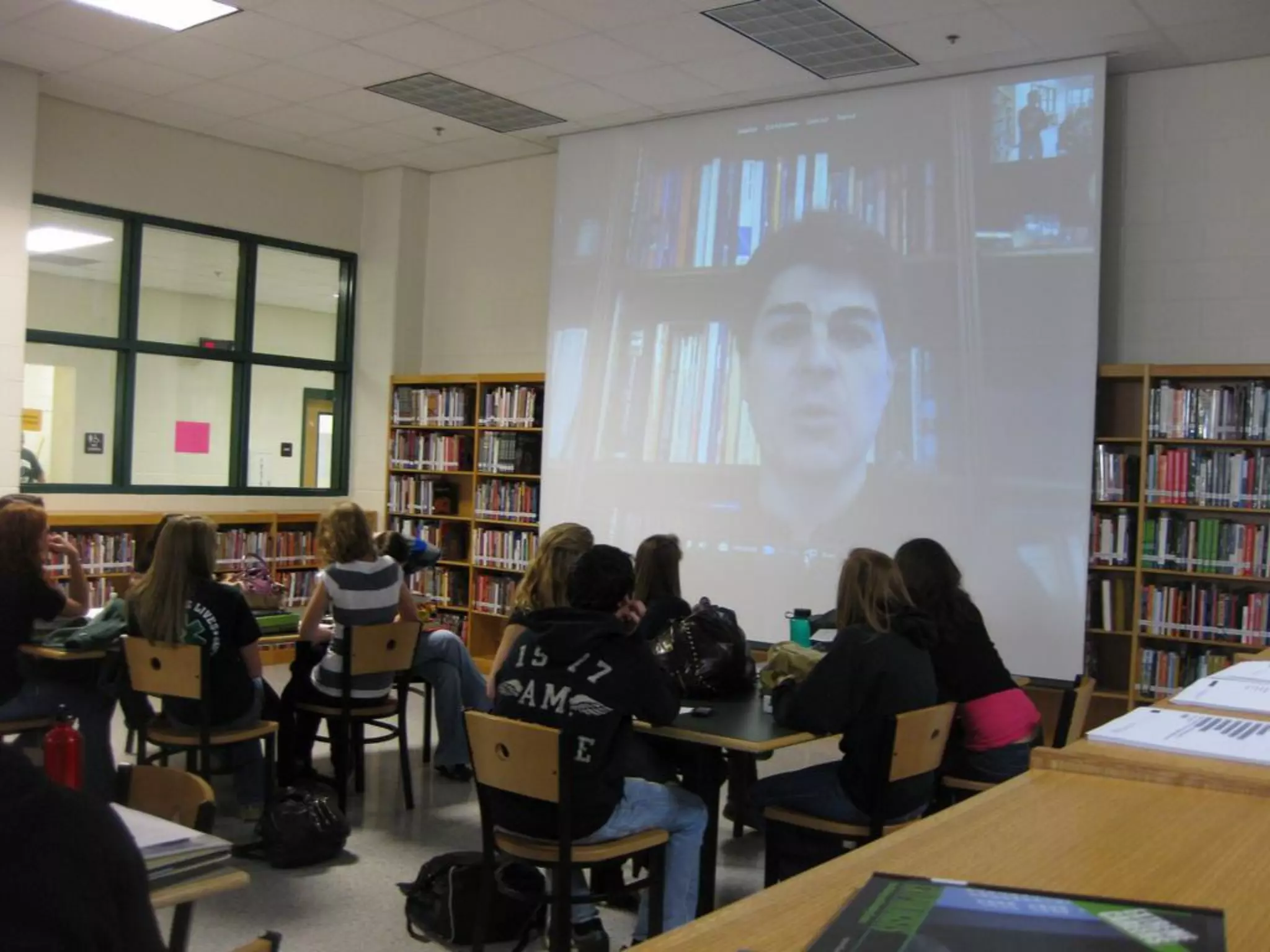
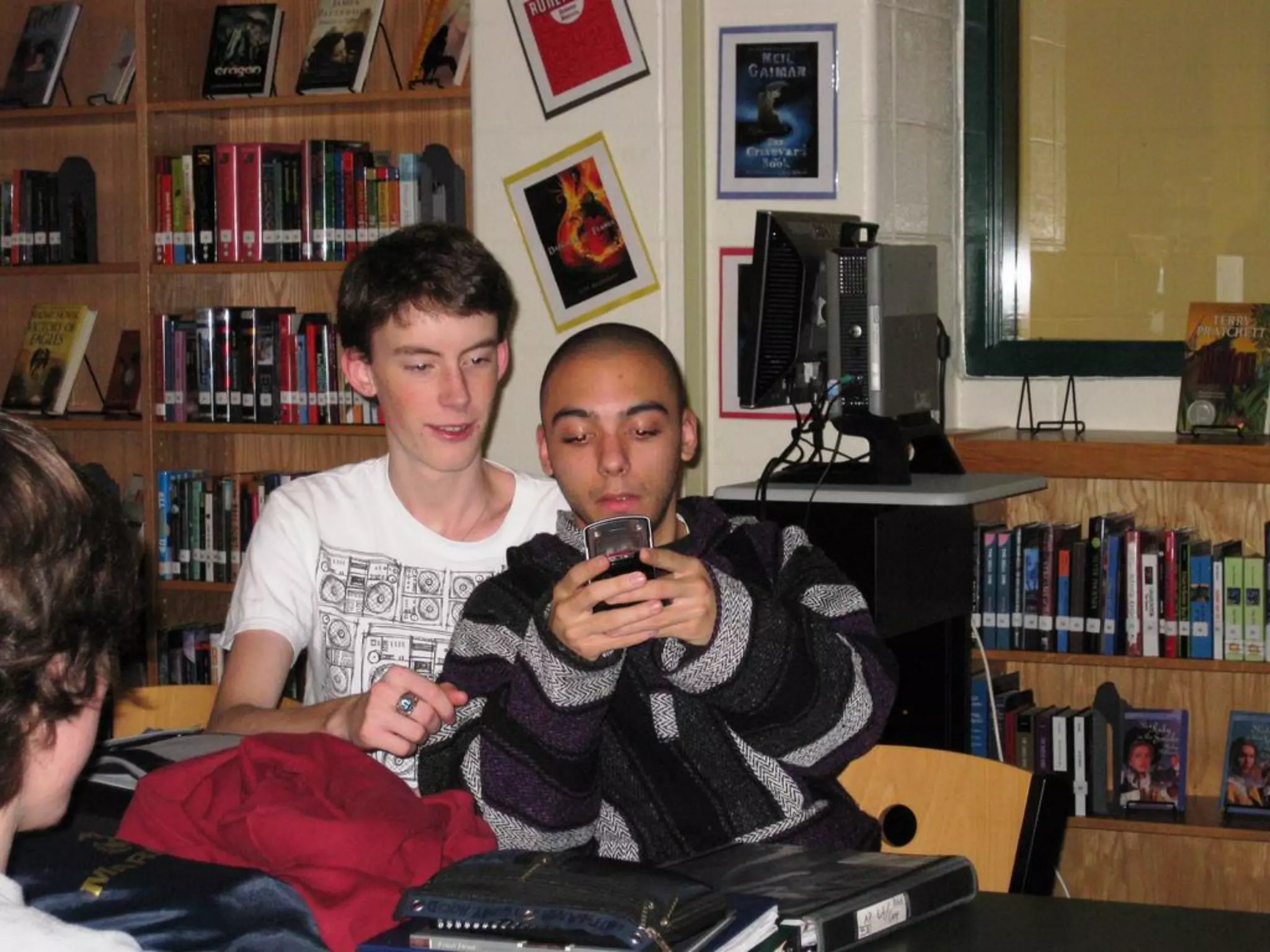
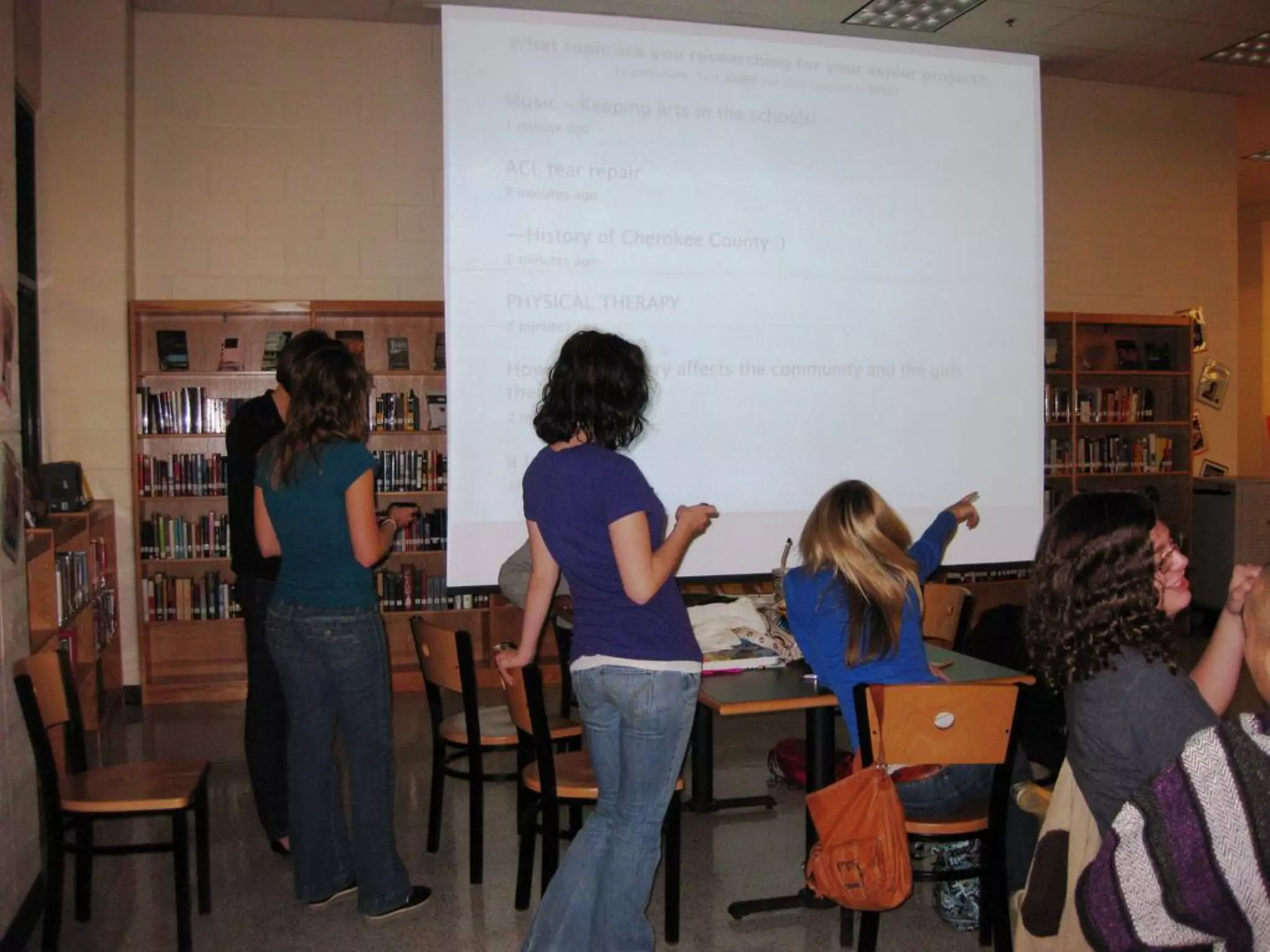
   Face to face discussions (scaled and
   shared through social media/cloud
   computing


   Mindmapping
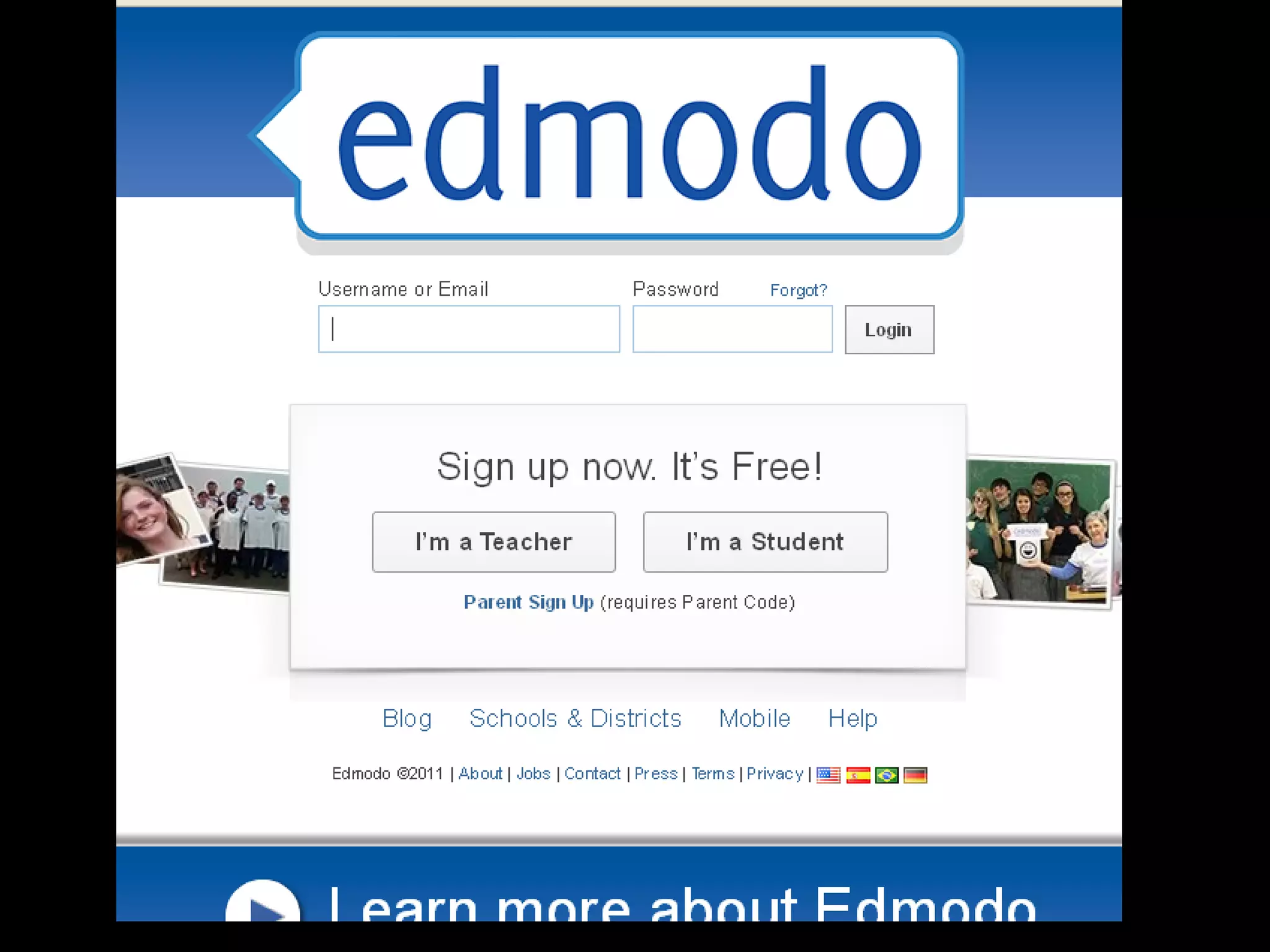
Screenshot from http://www.jogtheweb.com/run/N0WGMbFA3fPQ/Streamlining-and-Glamorizing-KWLs-and-Mind-Maps#11
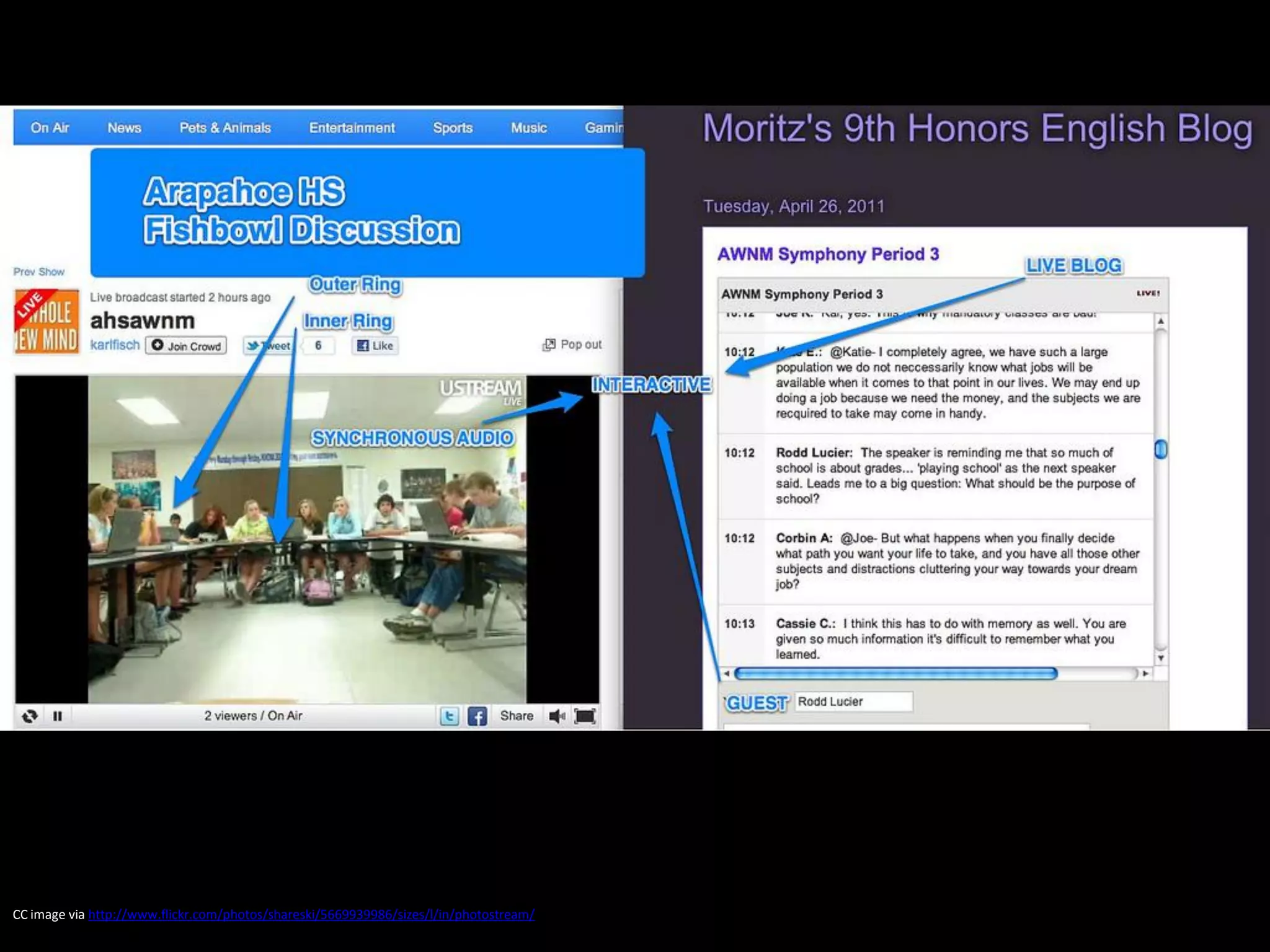
fishbowl discussions
CC image via http://www.flickr.com/photos/shareski/5669939986/sizes/l/in/photostream/
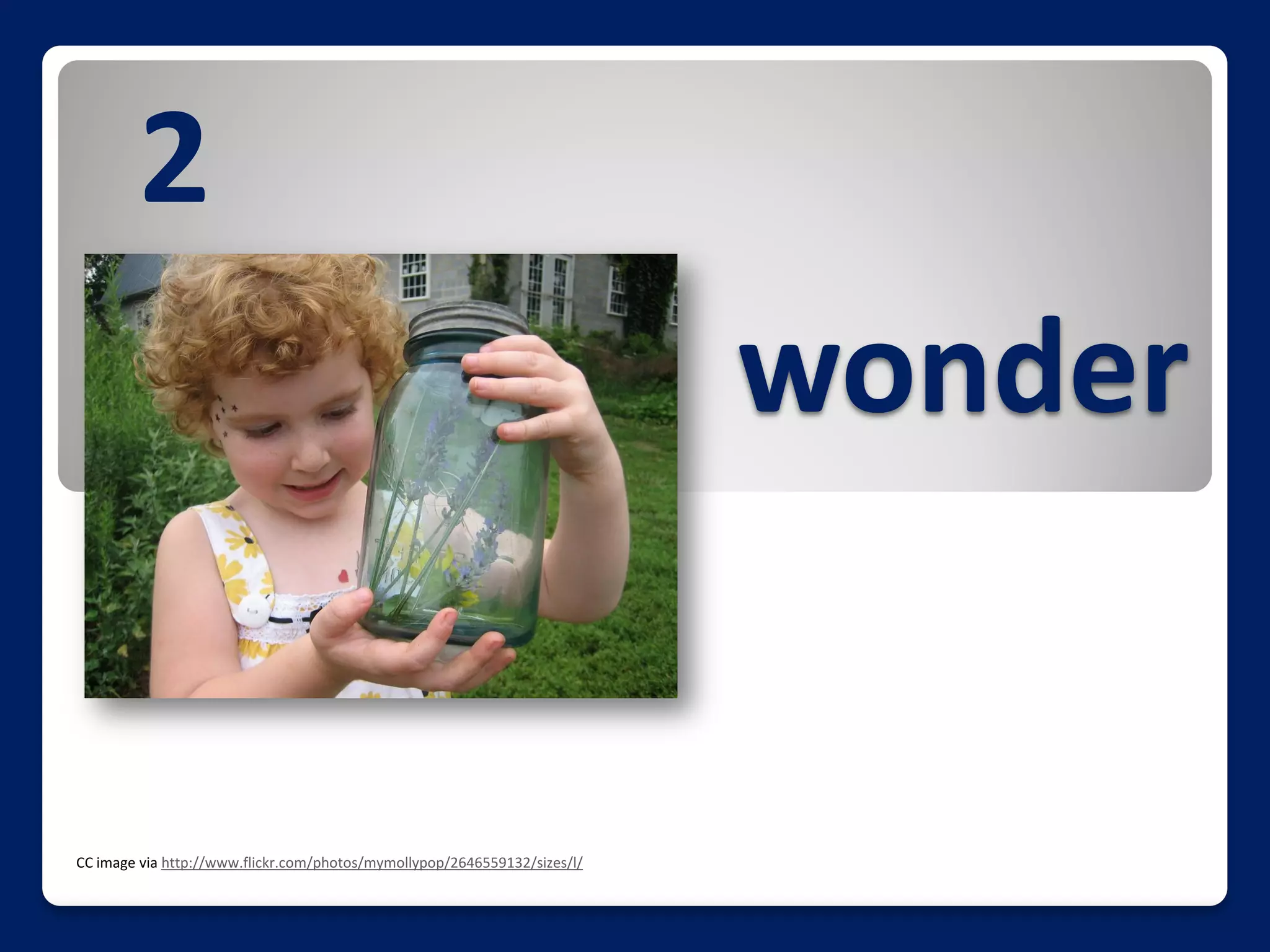
2
                                                                           wonder


CC image via http://www.flickr.com/photos/mymollypop/2646559132/sizes/l/
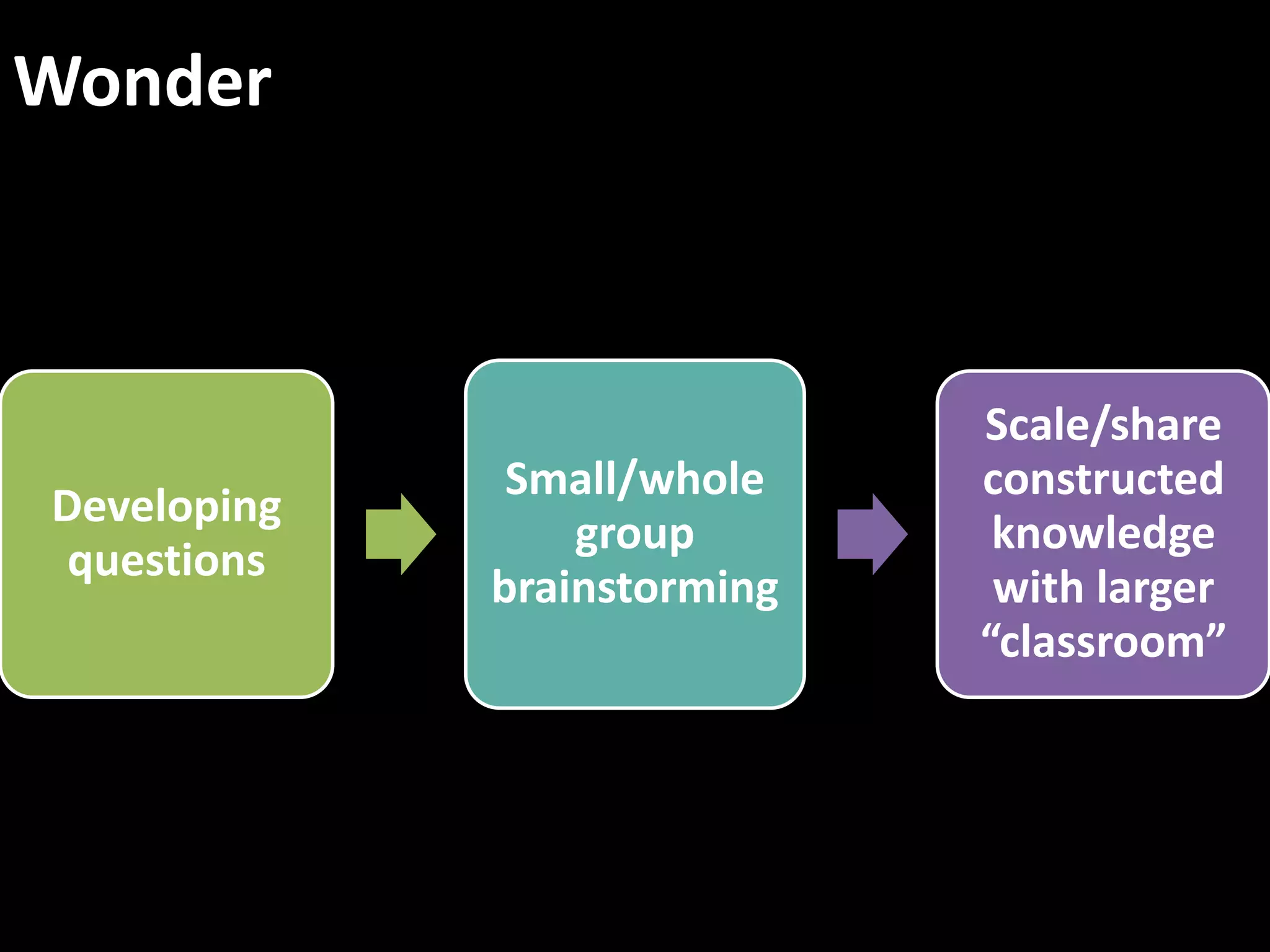
Wonder


                             Scale/share
              Small/whole    constructed
Developing
                 group        knowledge
 questions
             brainstorming    with larger
                             “classroom”
3
    investigate
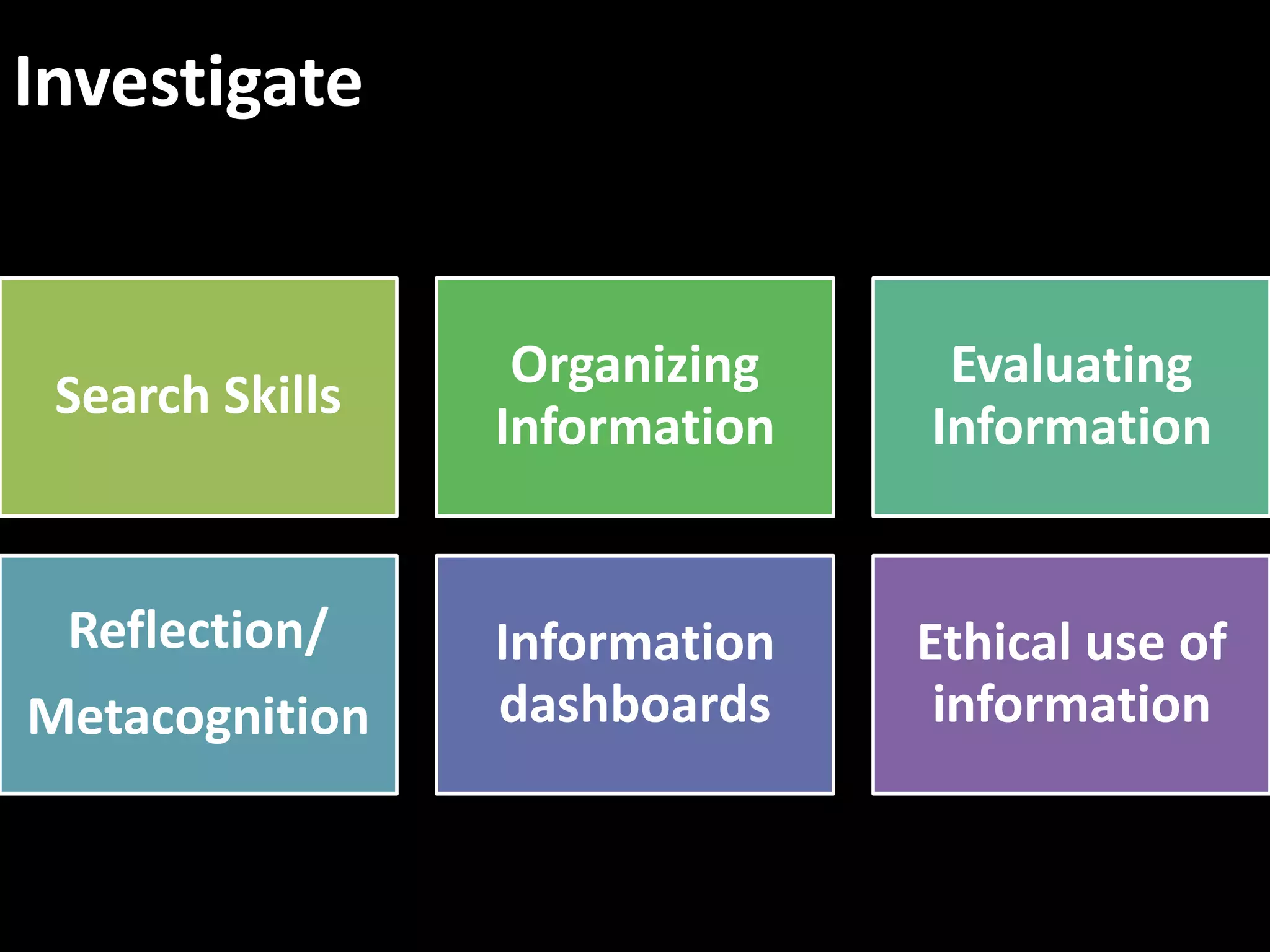
Investigate


                  Organizing    Evaluating
 Search Skills
                 Information   Information


 Reflection/     Information   Ethical use of
Metacognition    dashboards     information
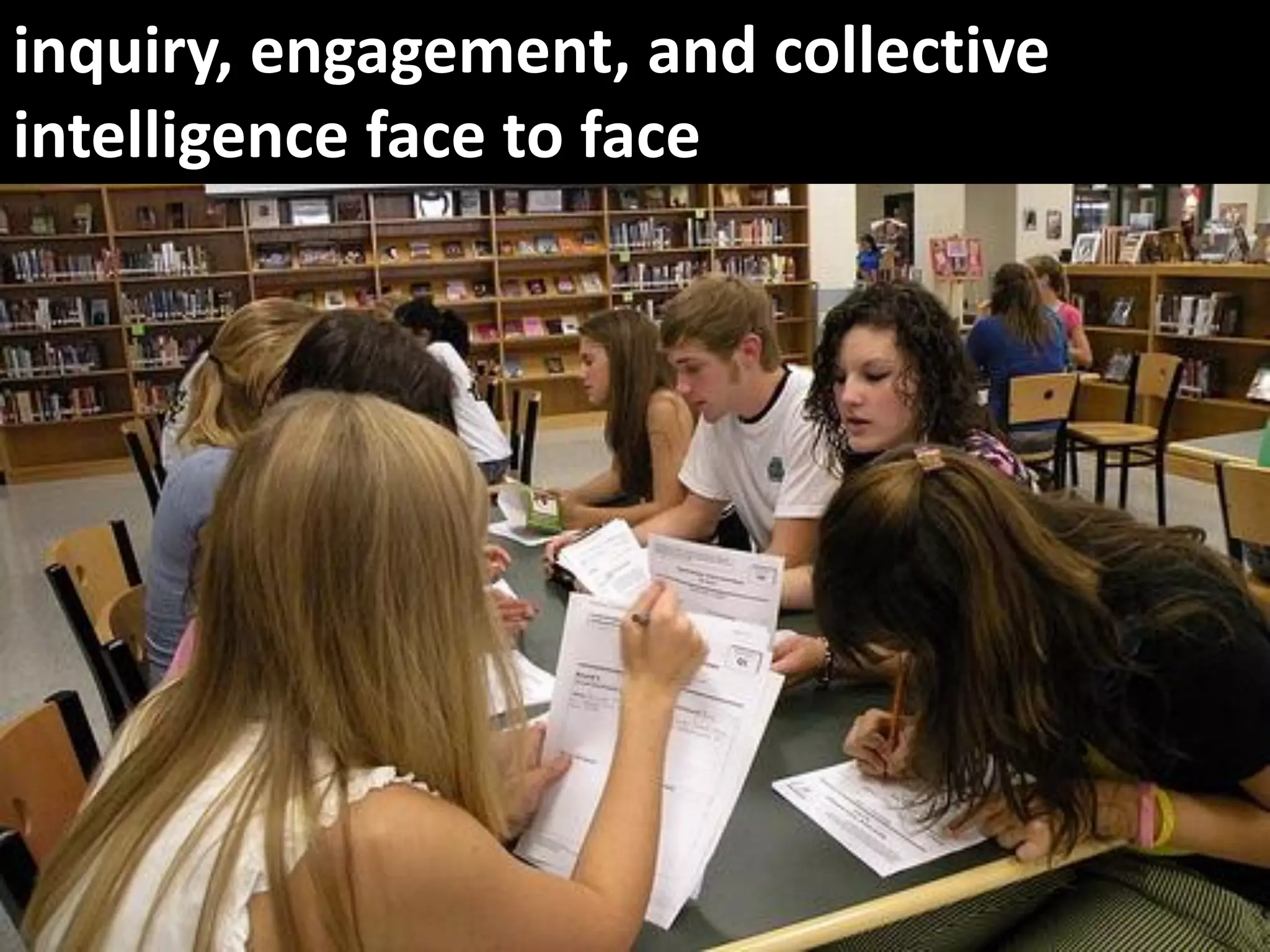
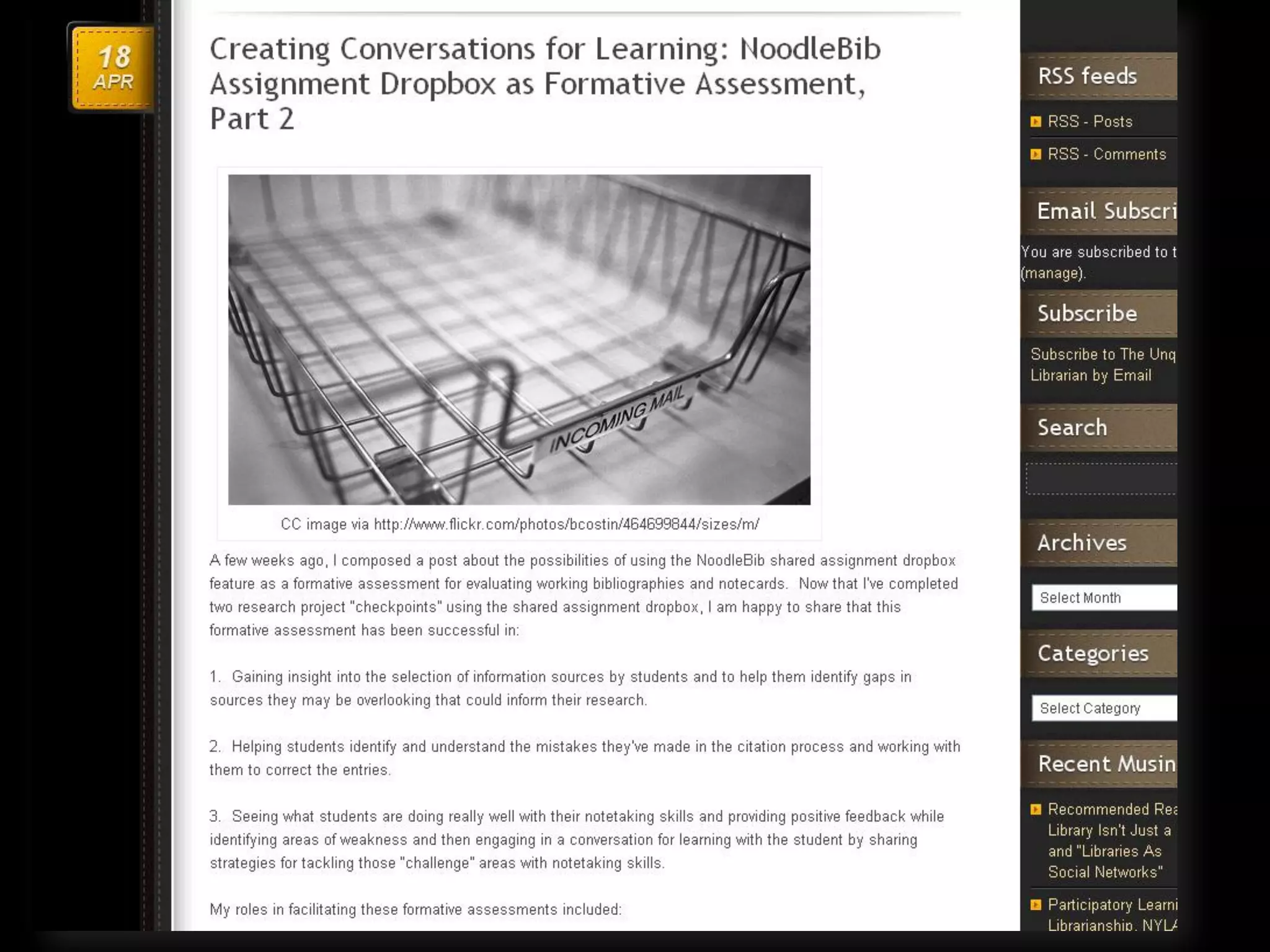
inquiry, engagement, and collective
intelligence face to face
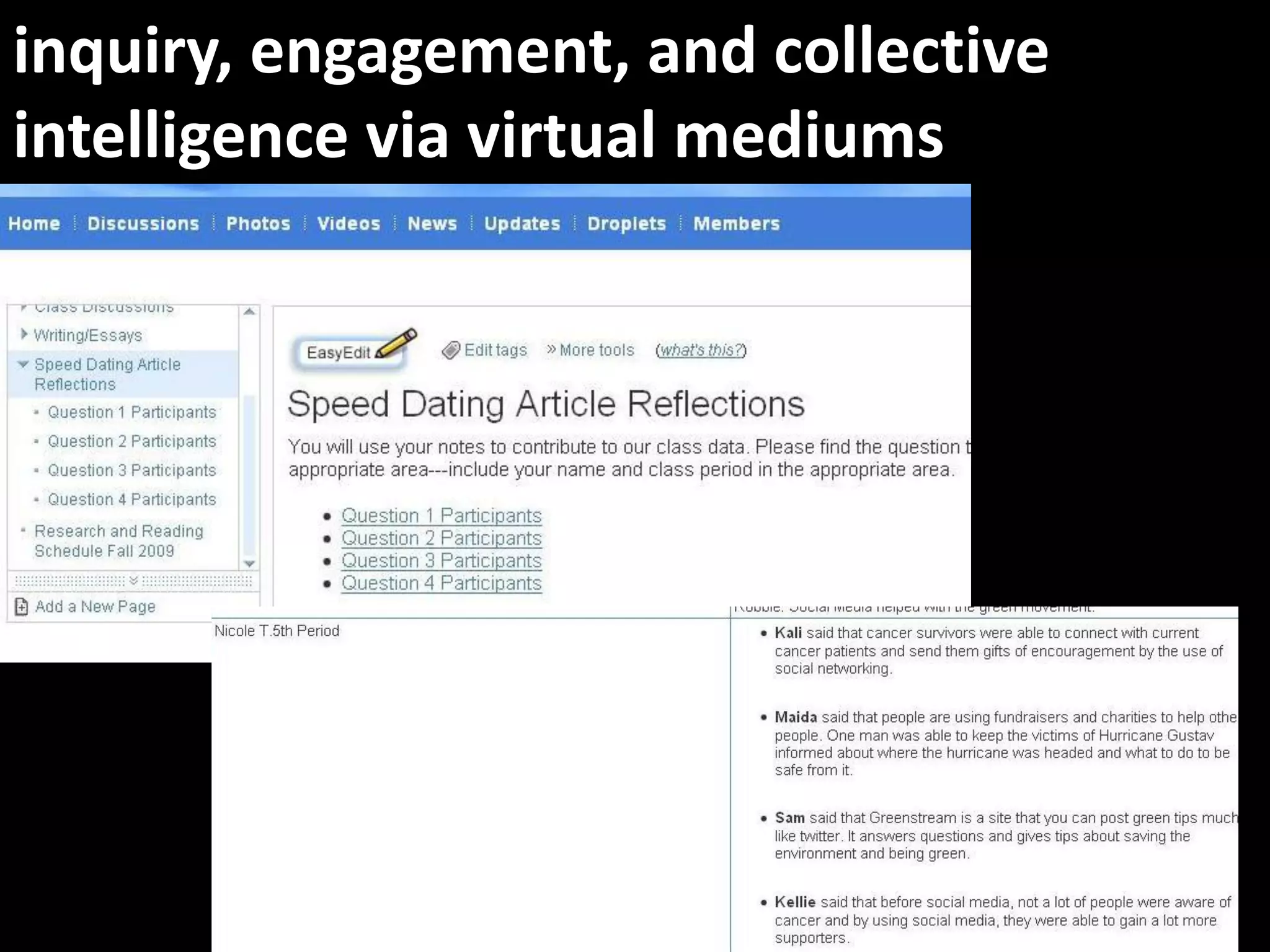
inquiry, engagement, and collective
intelligence via virtual mediums
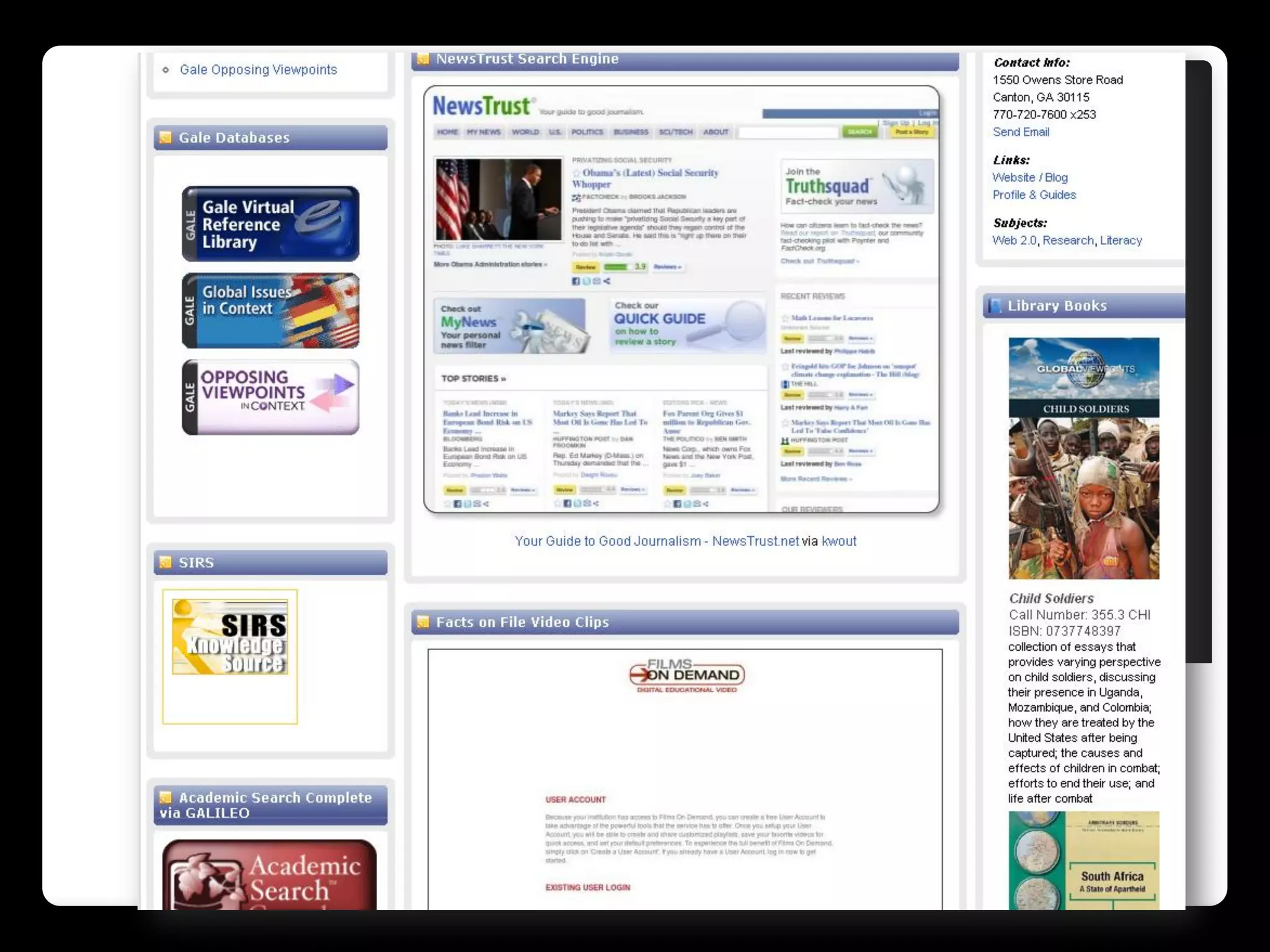
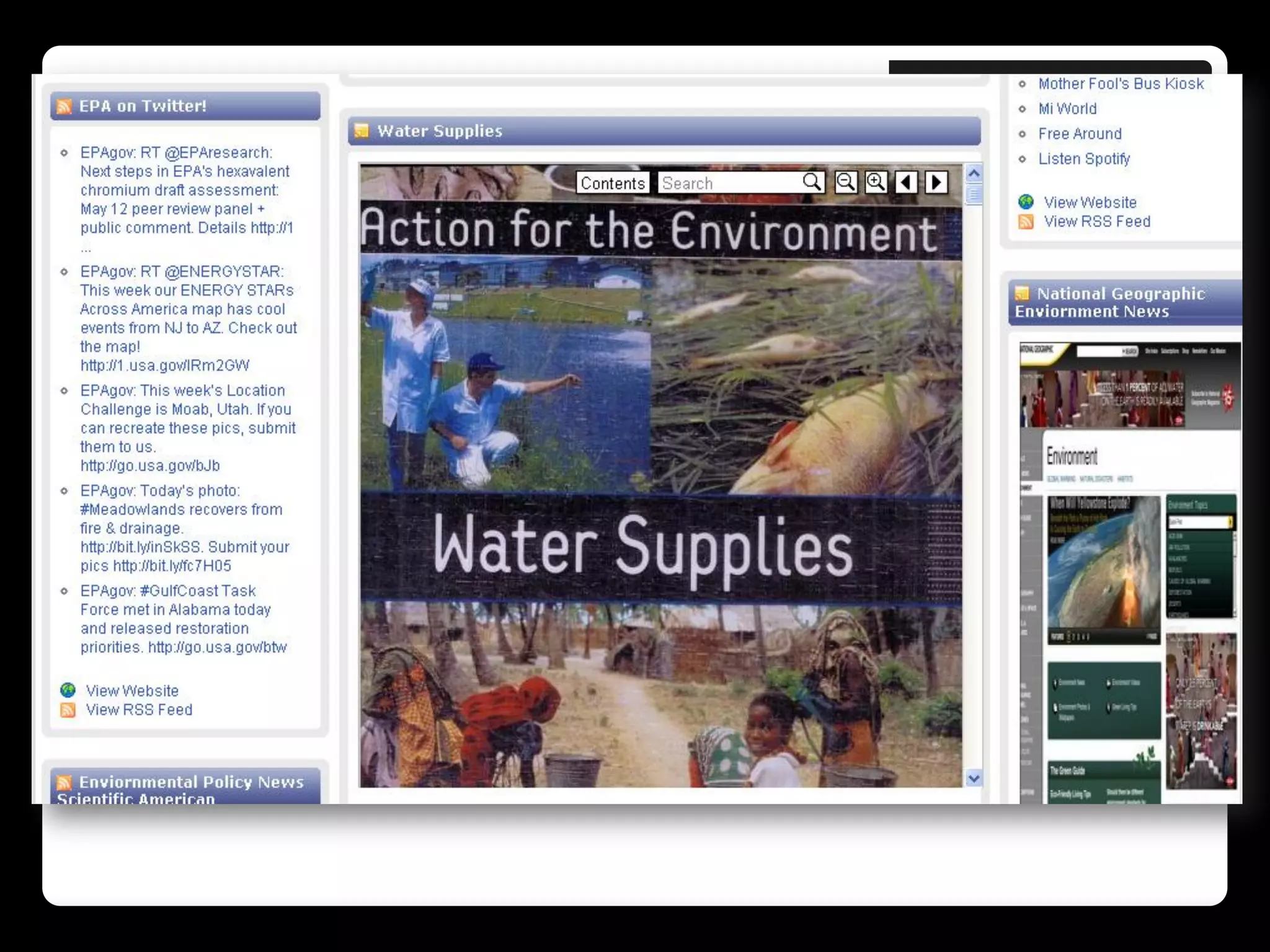
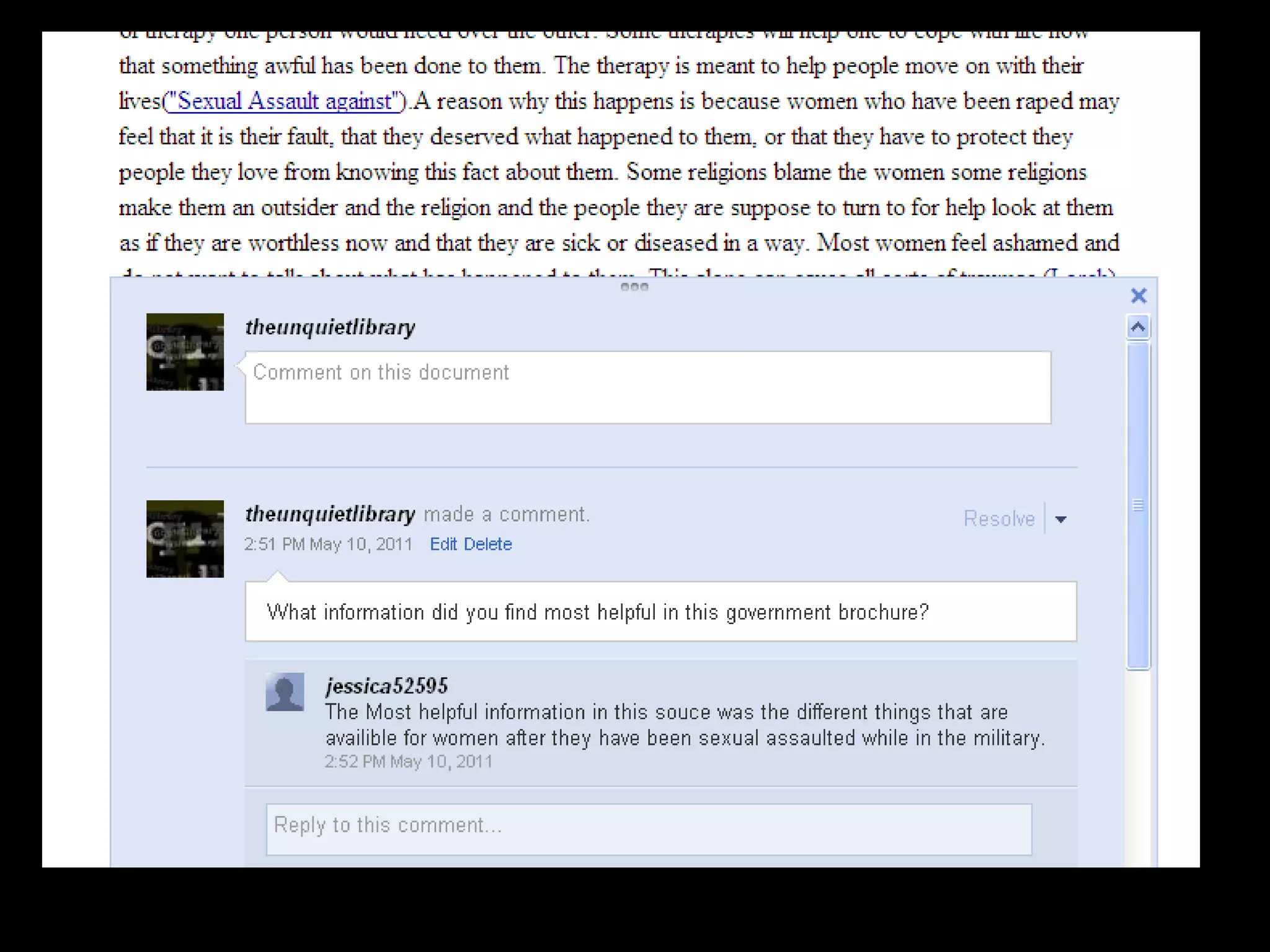
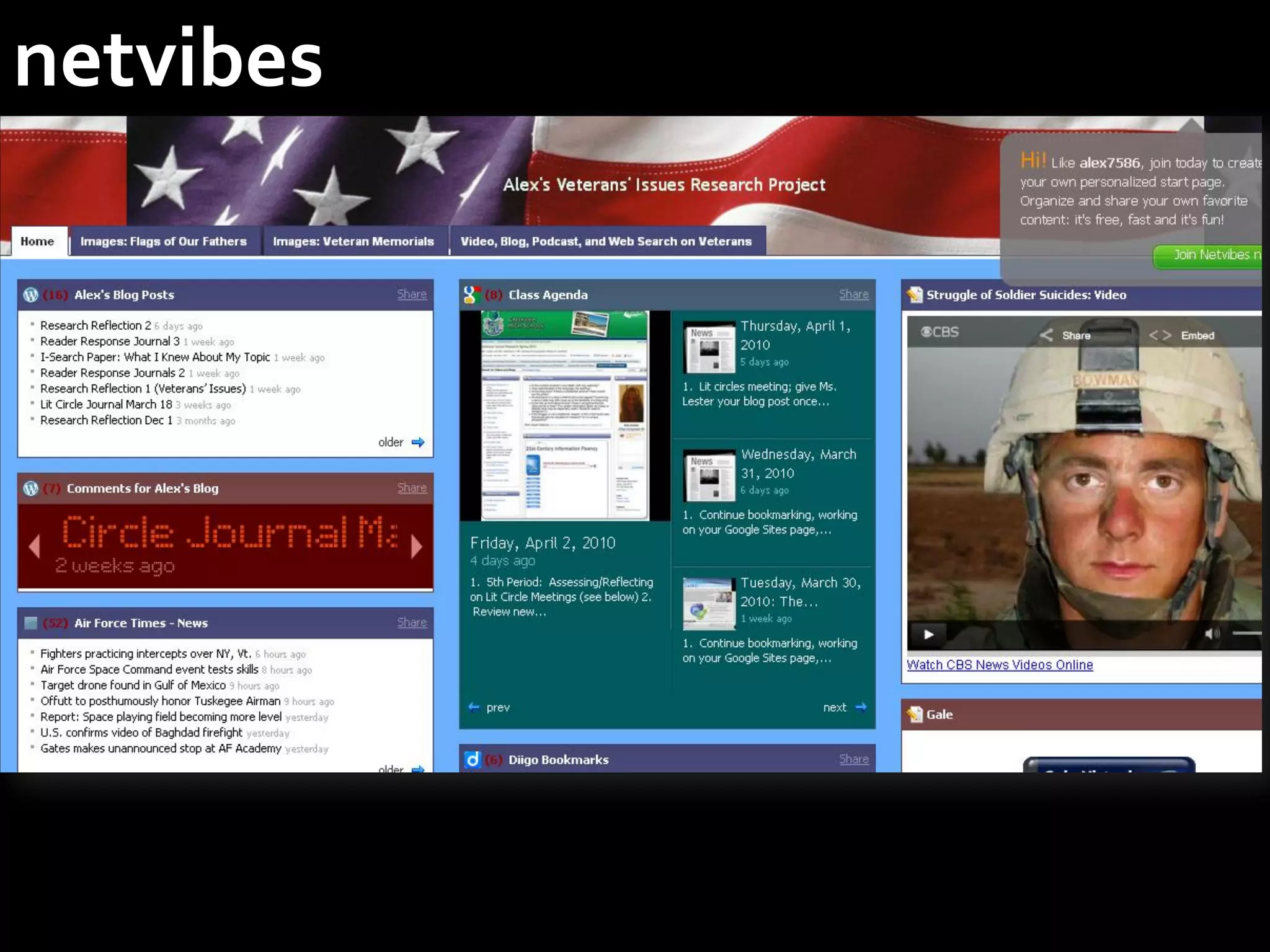
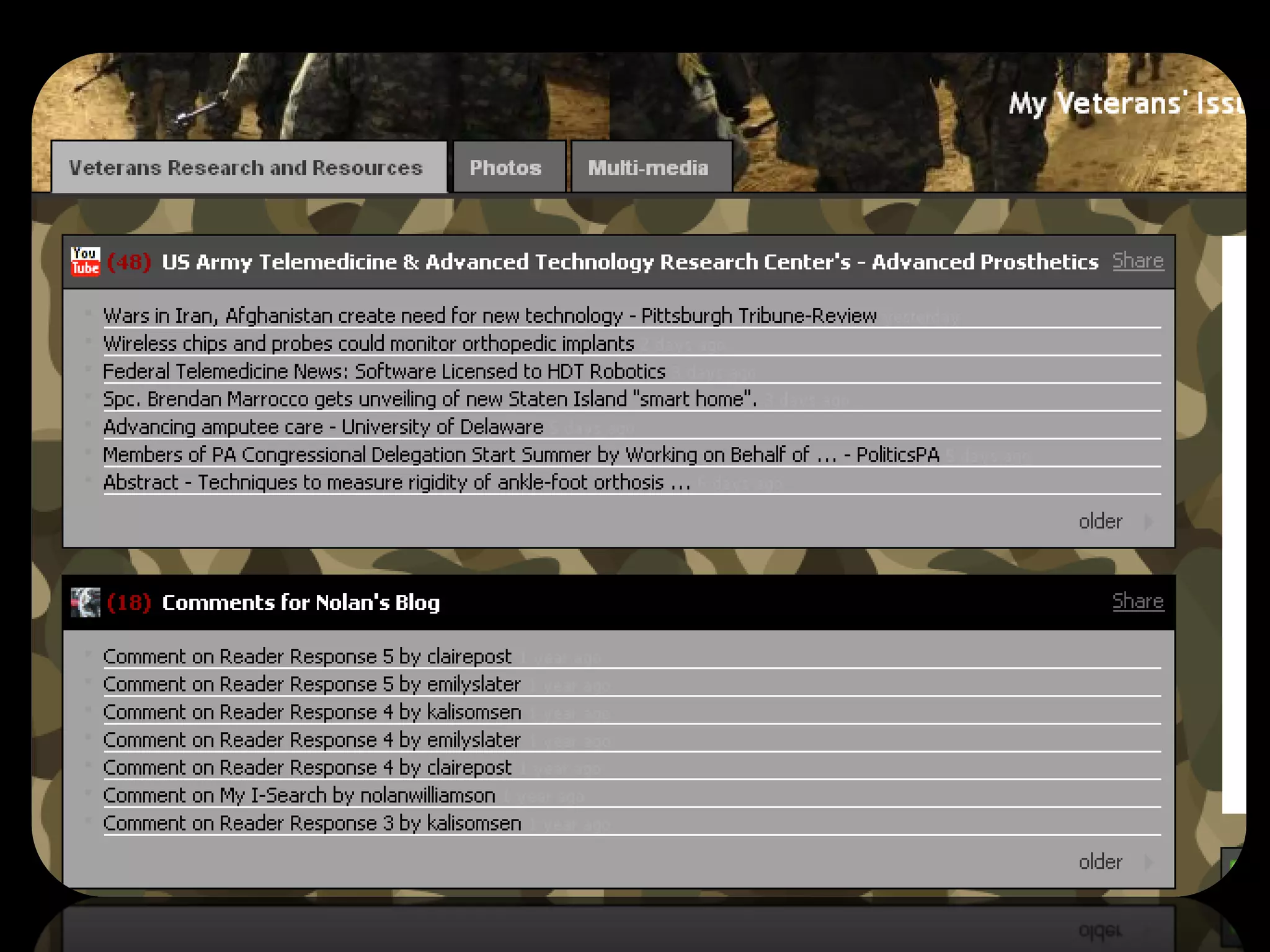
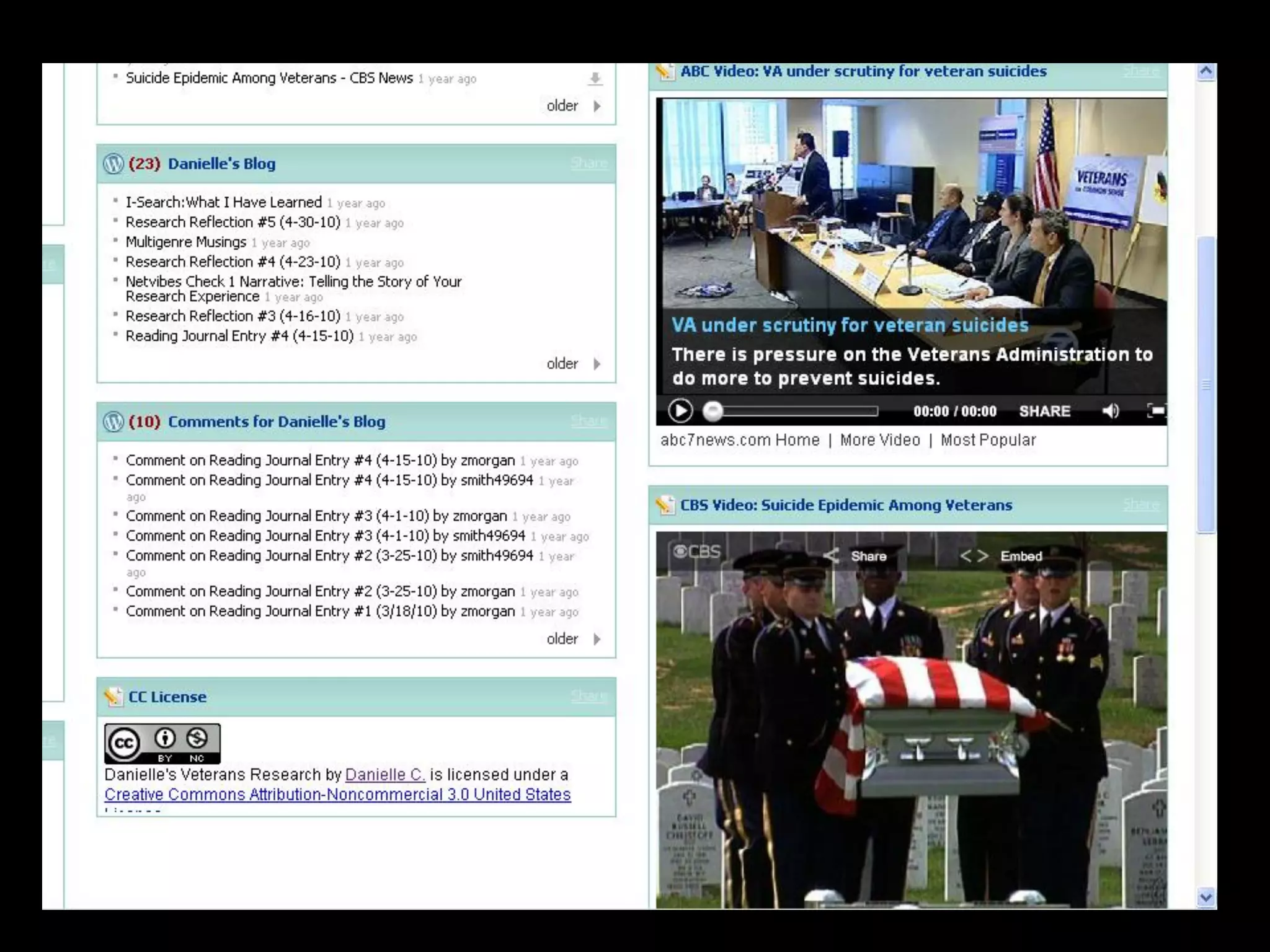
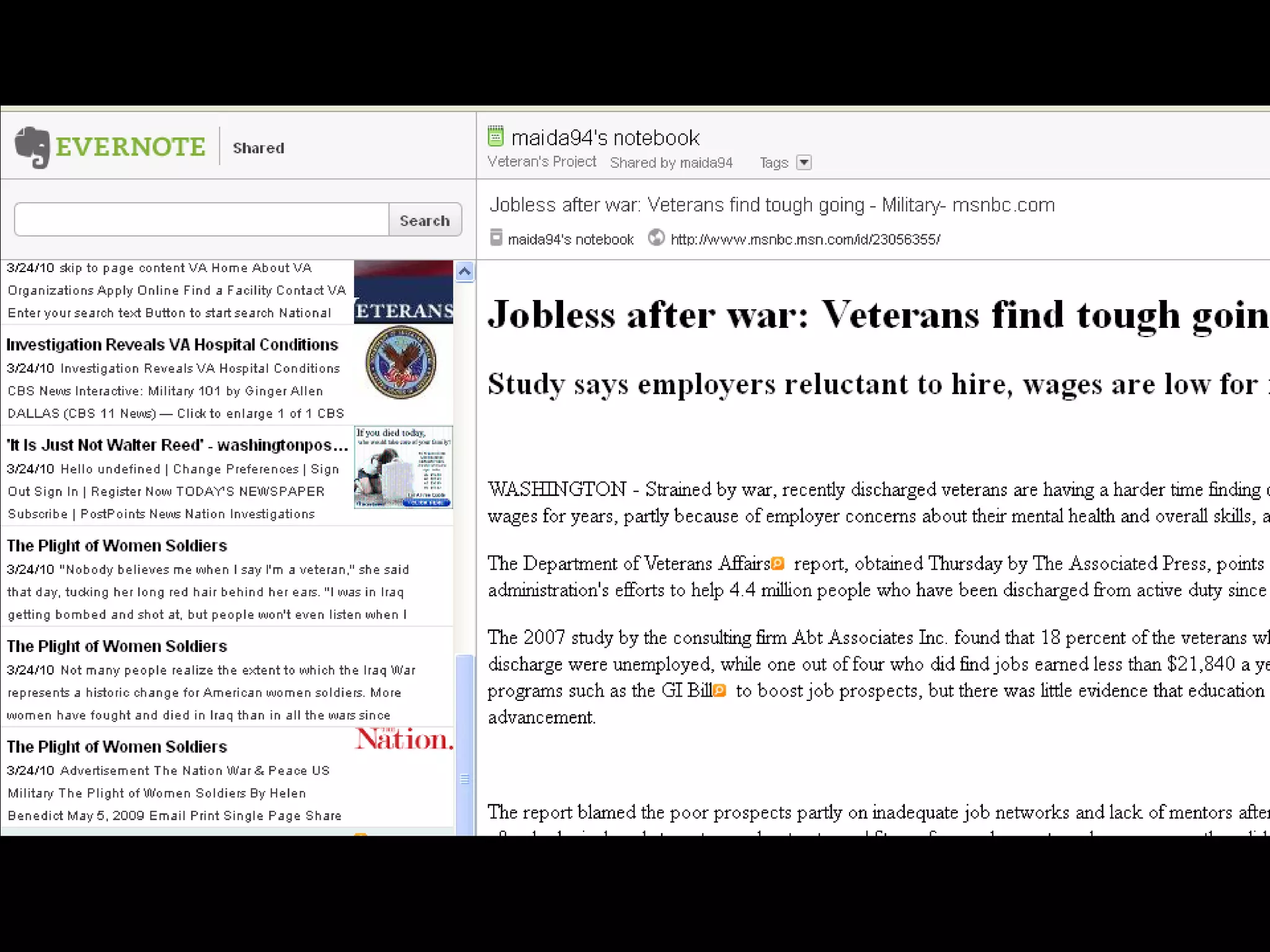
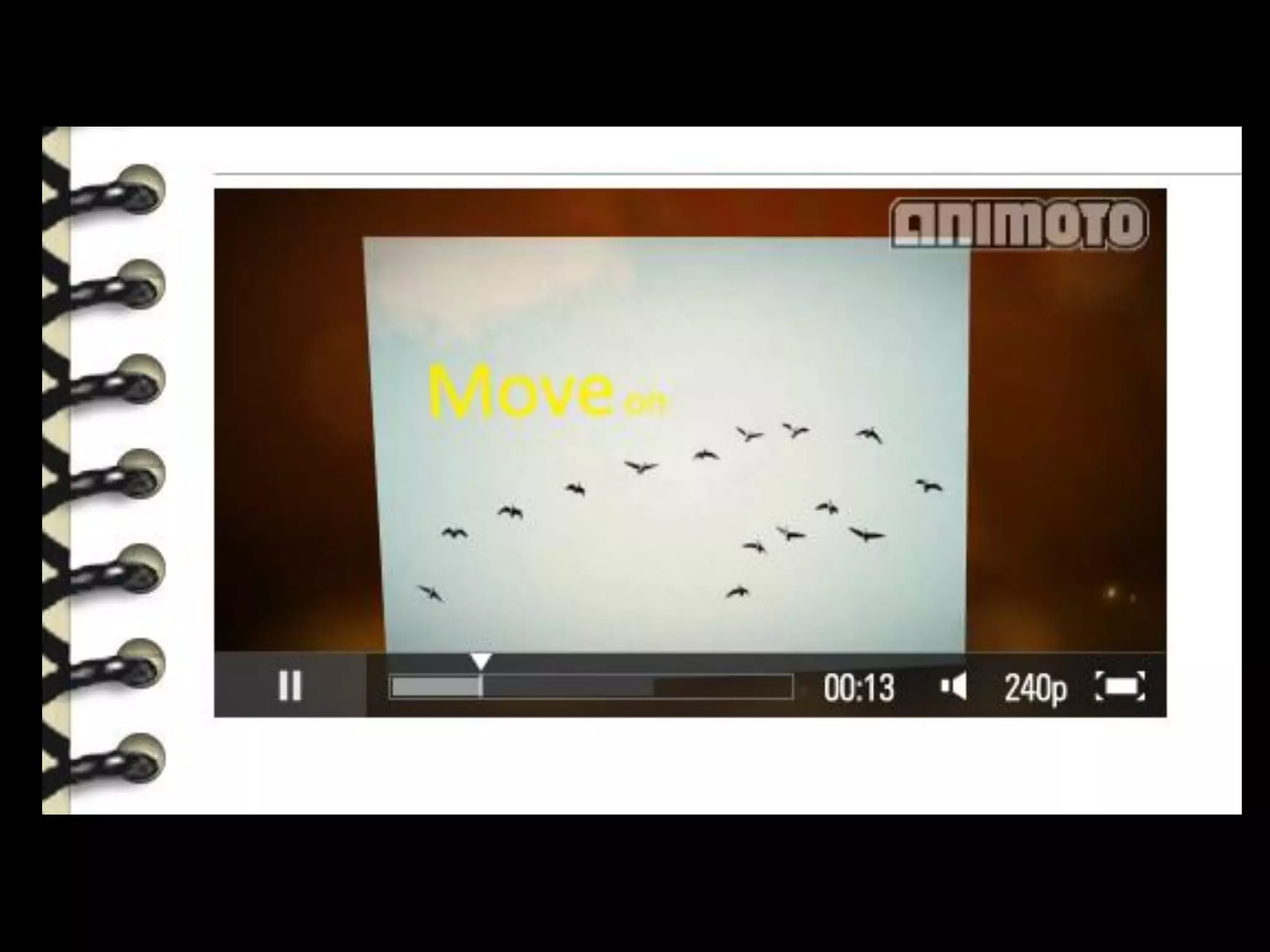
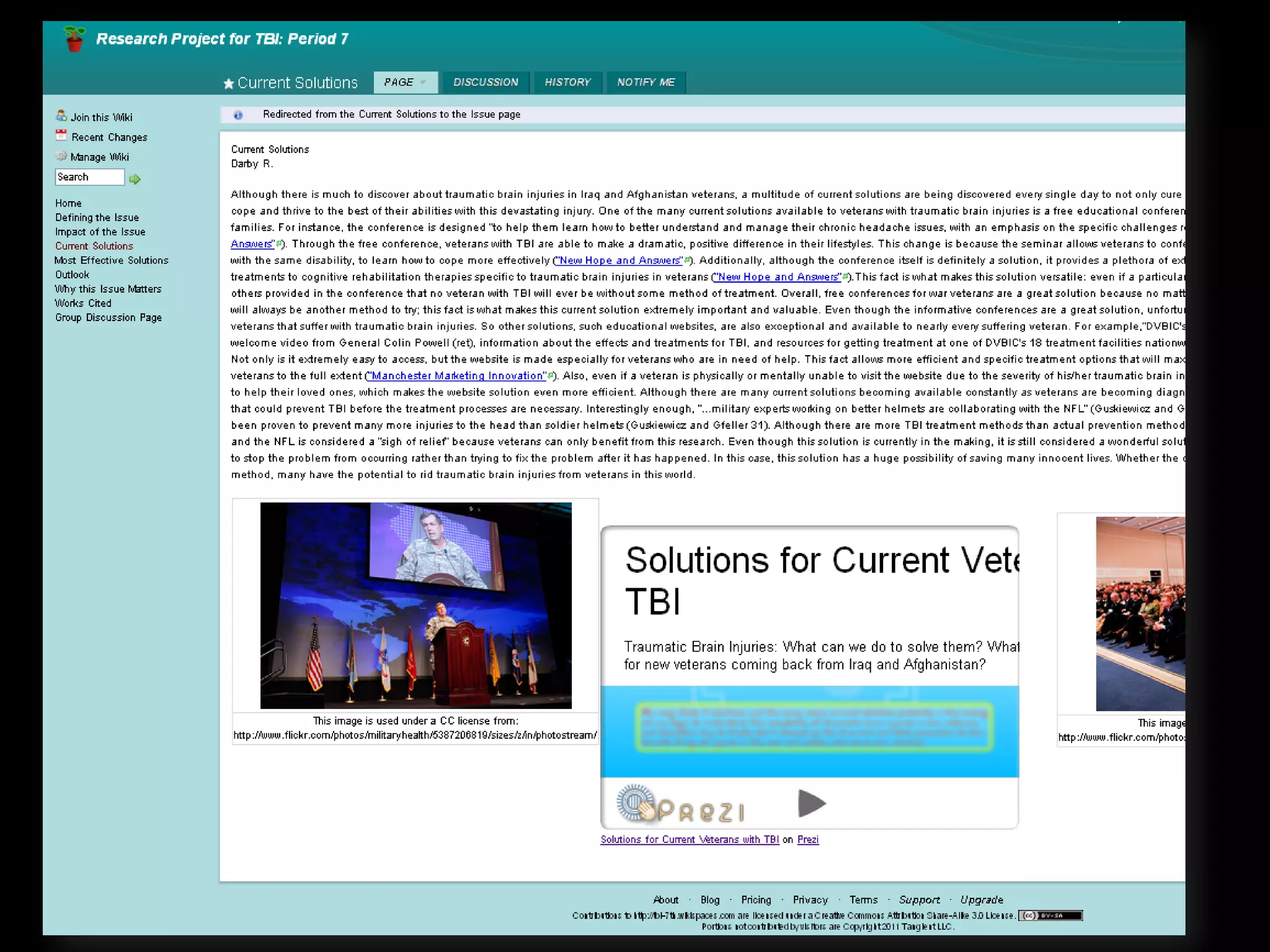
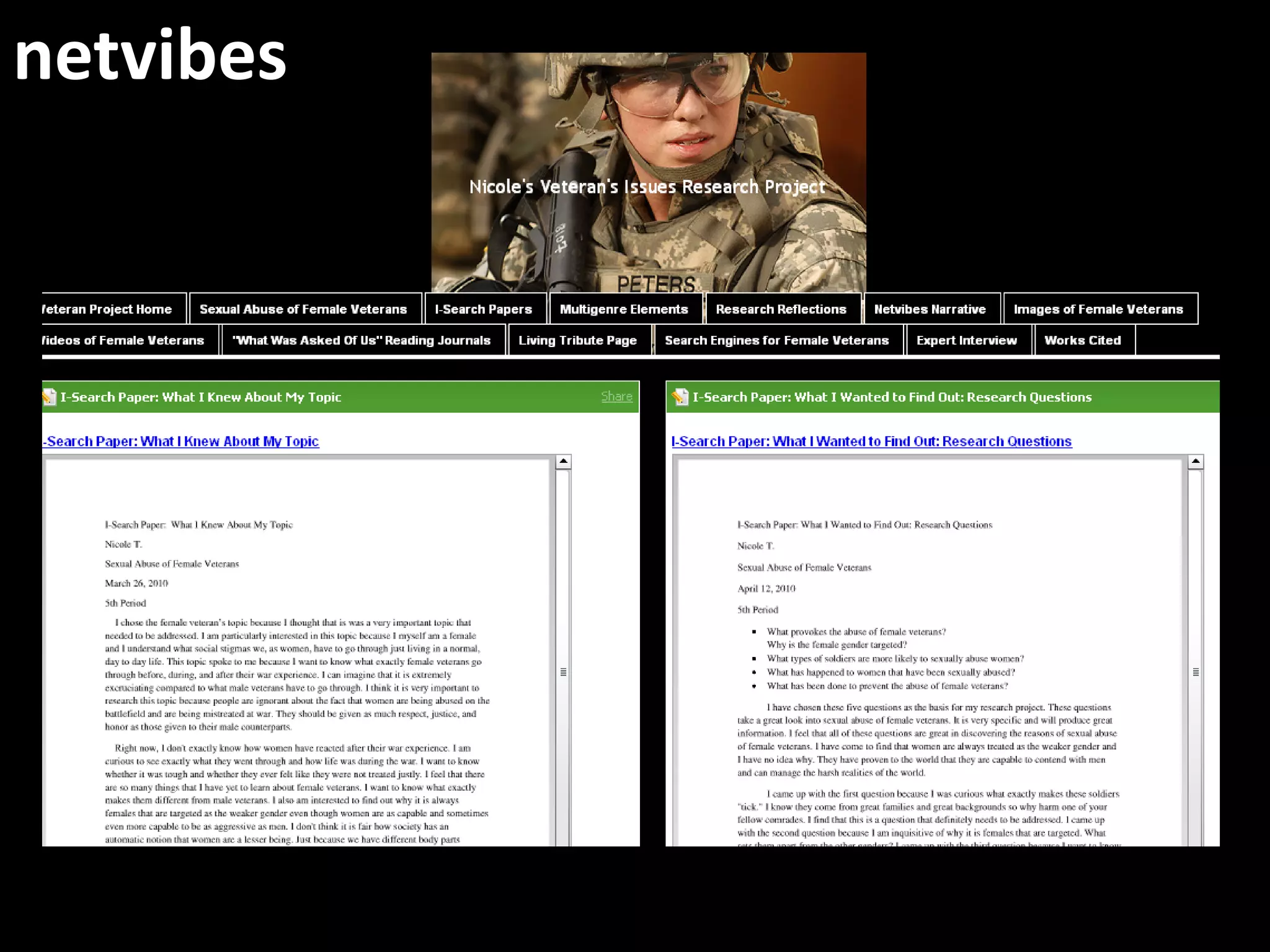
netvibes
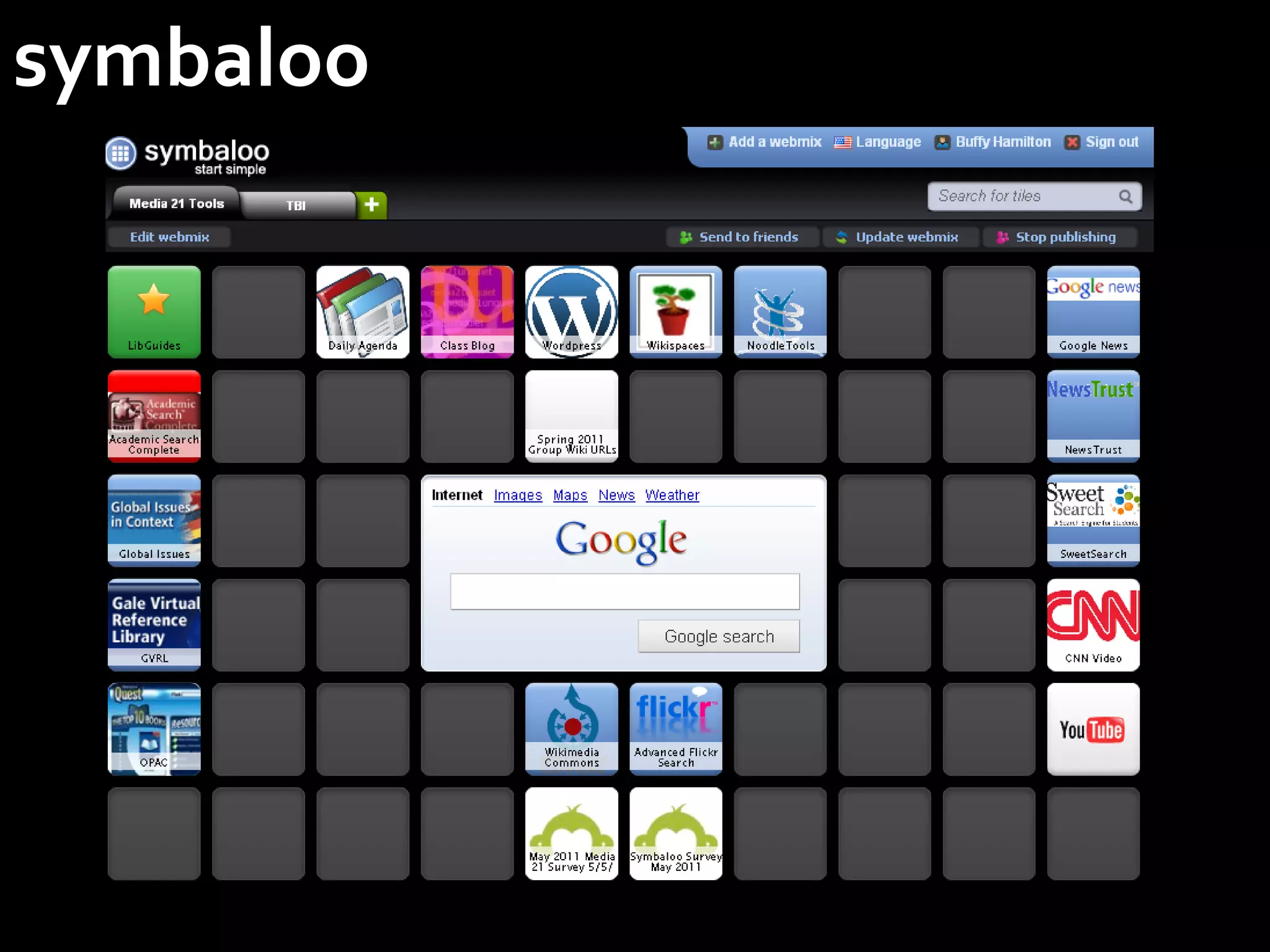
symbaloo
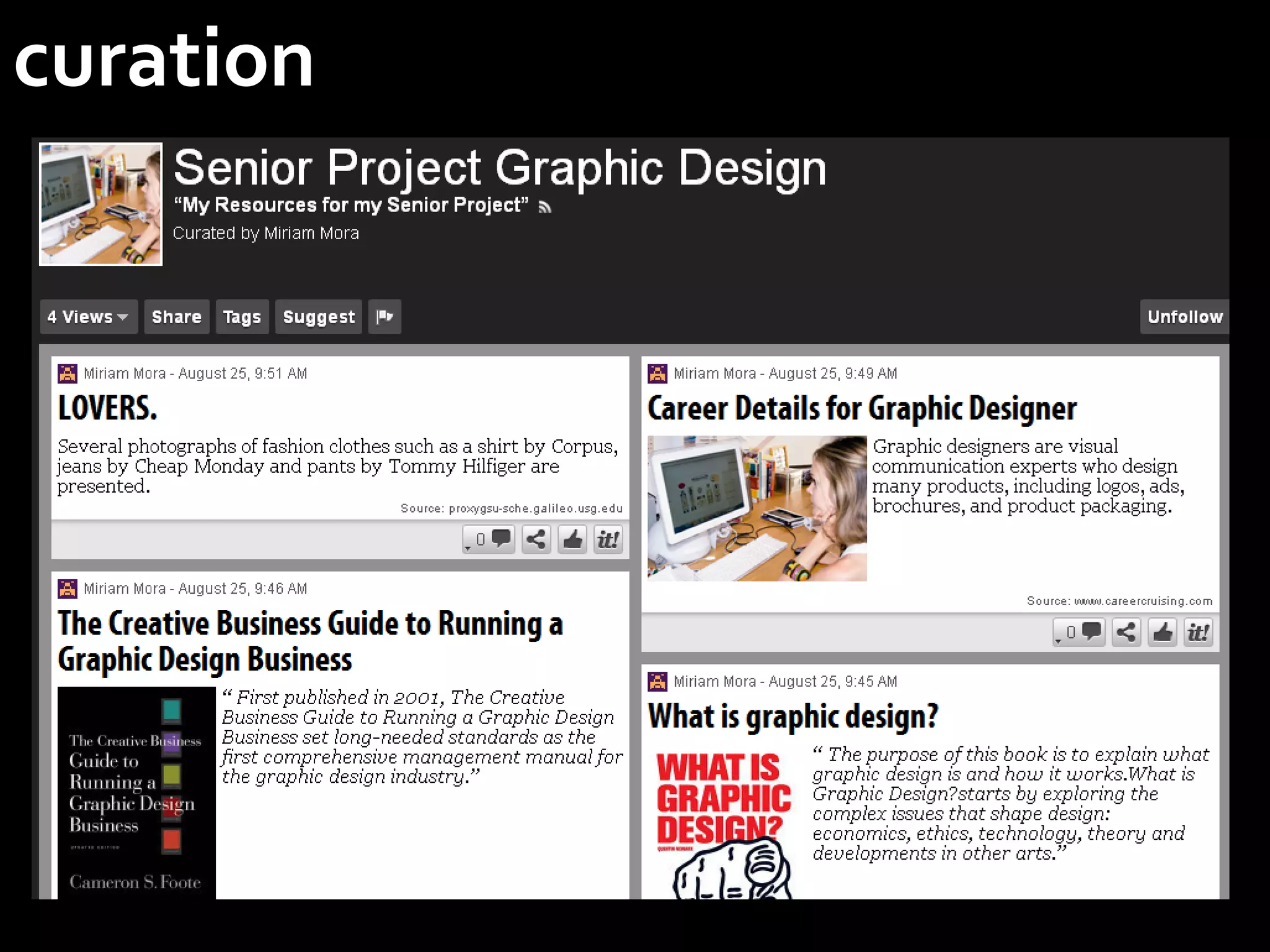
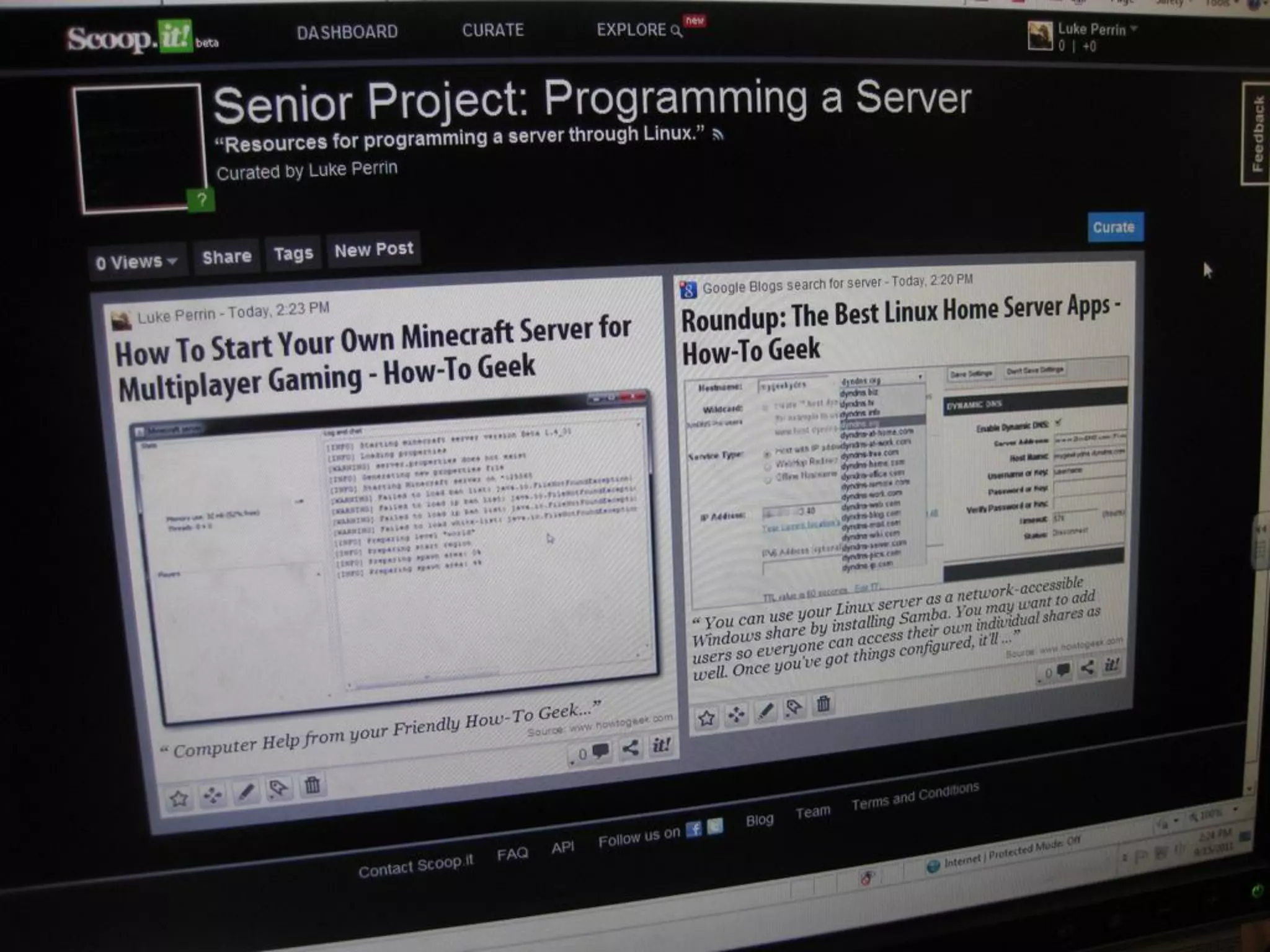
curation
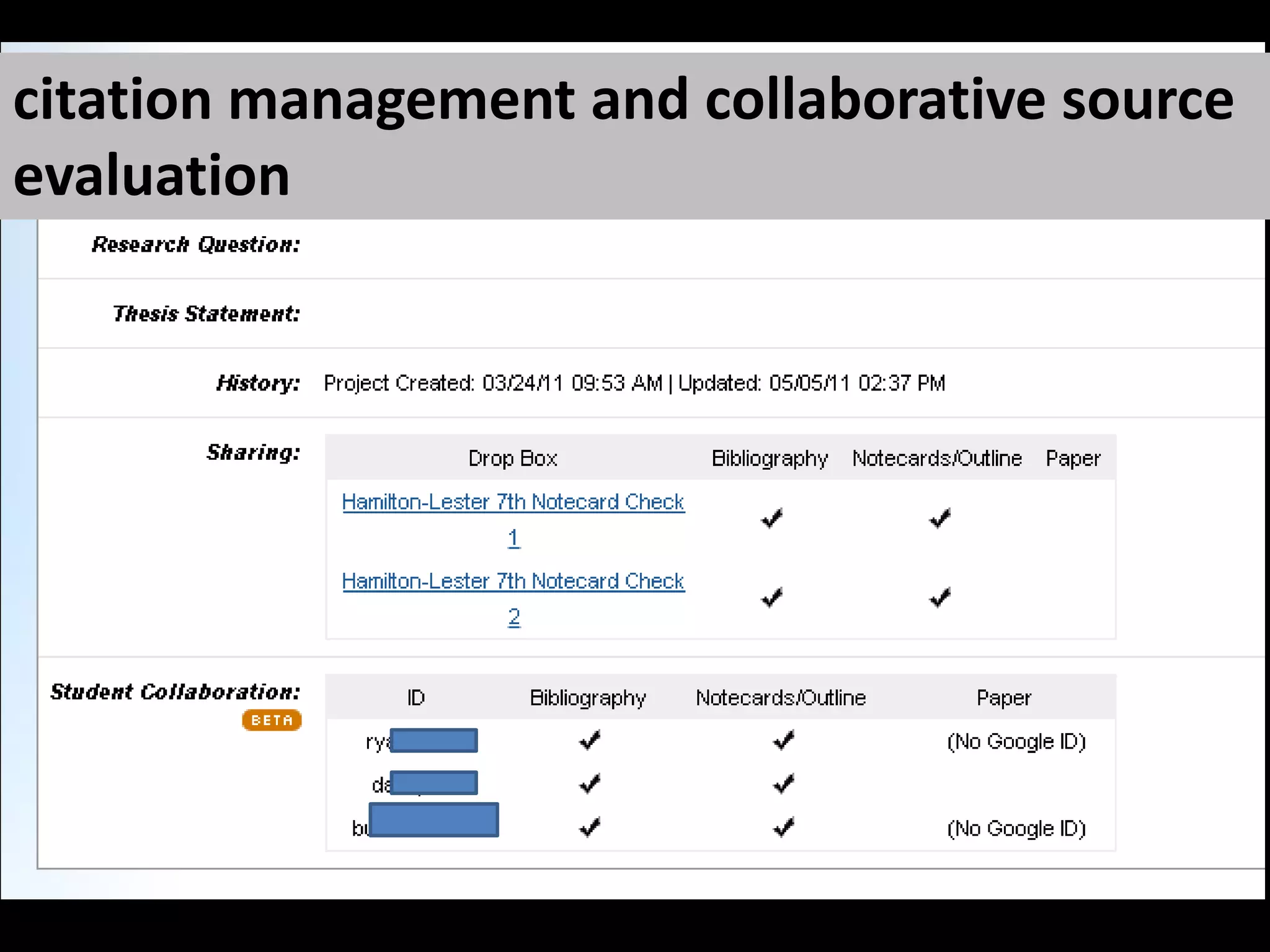
citation management and collaborative source
evaluation
4
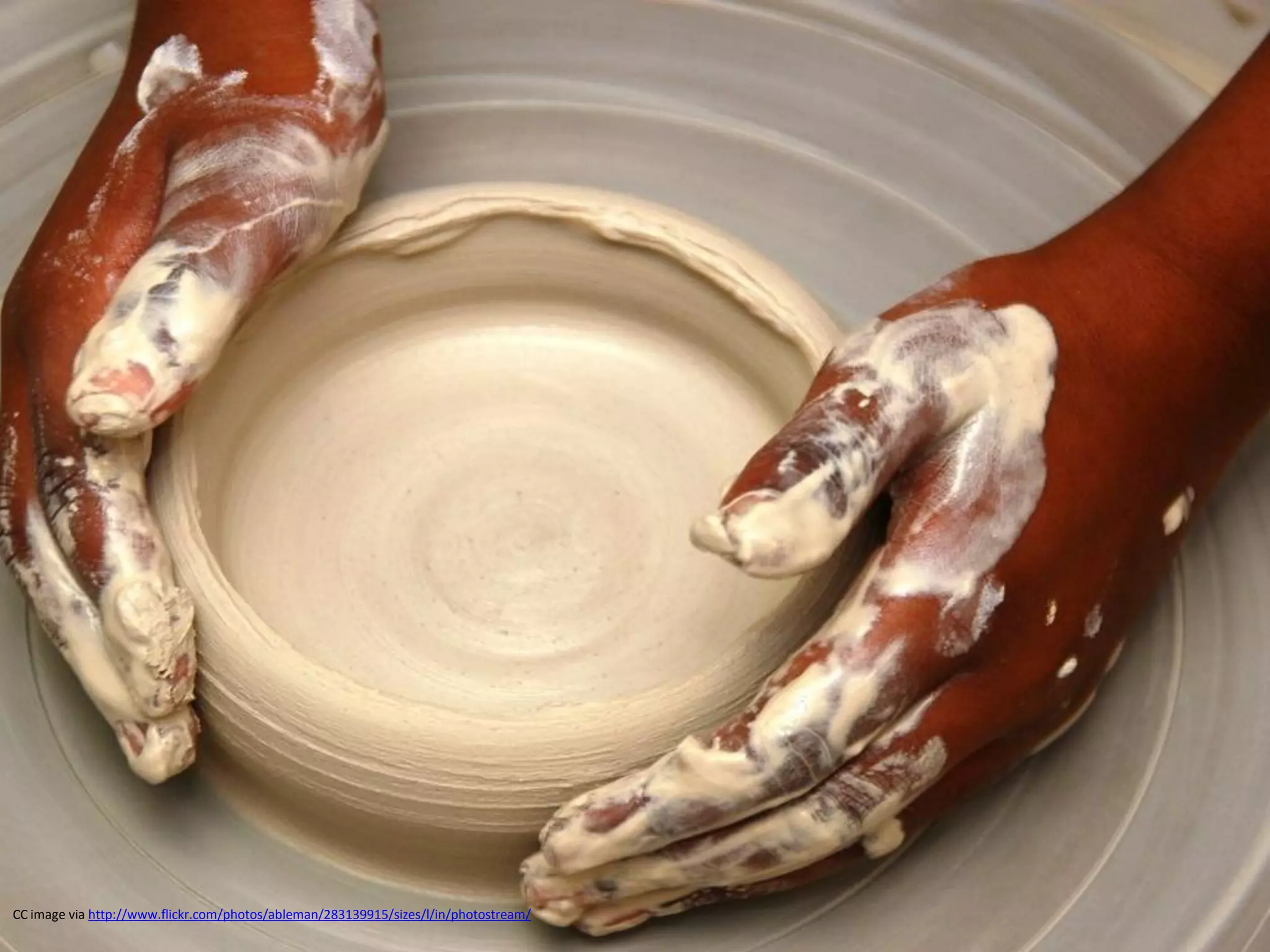
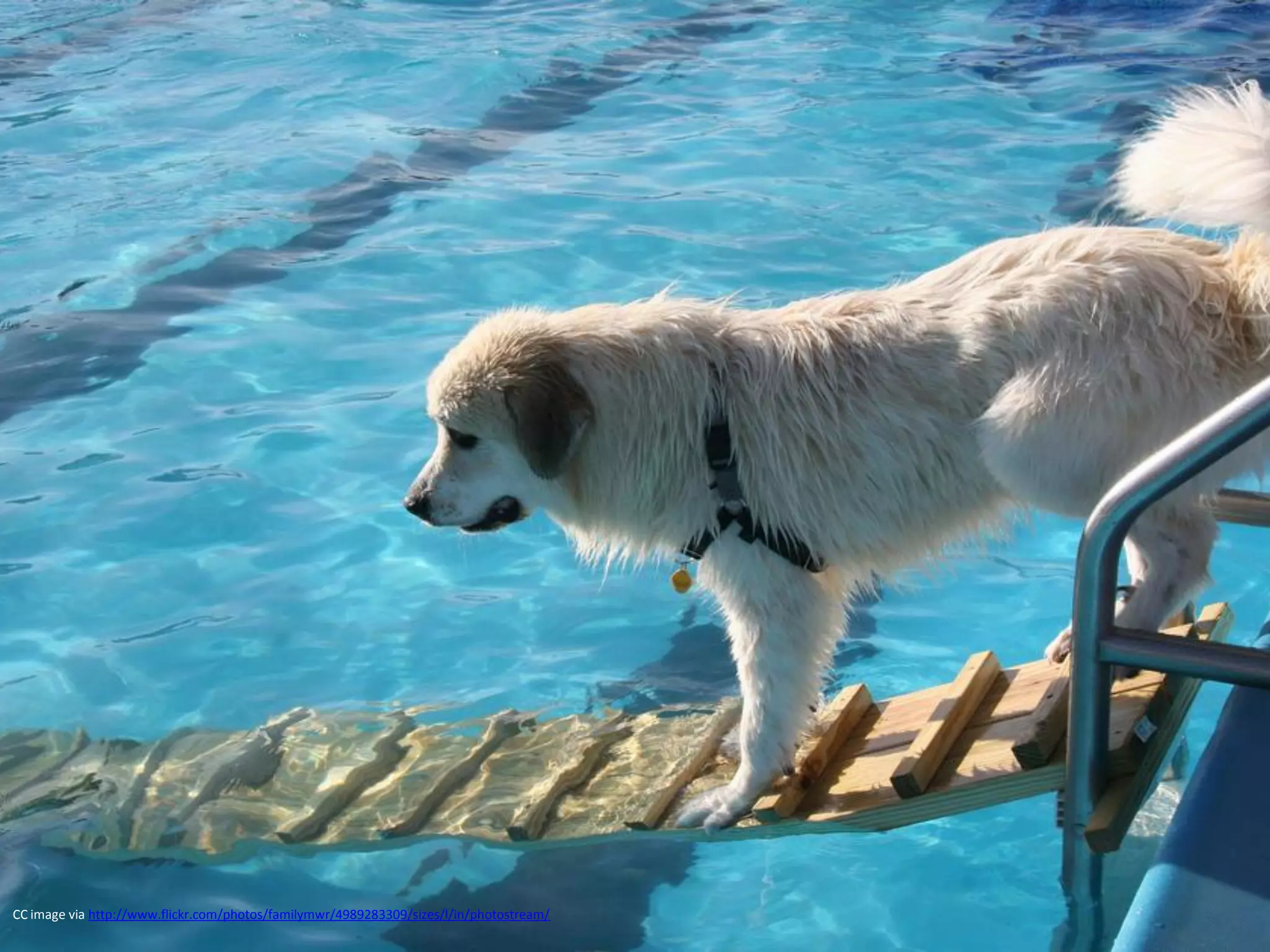
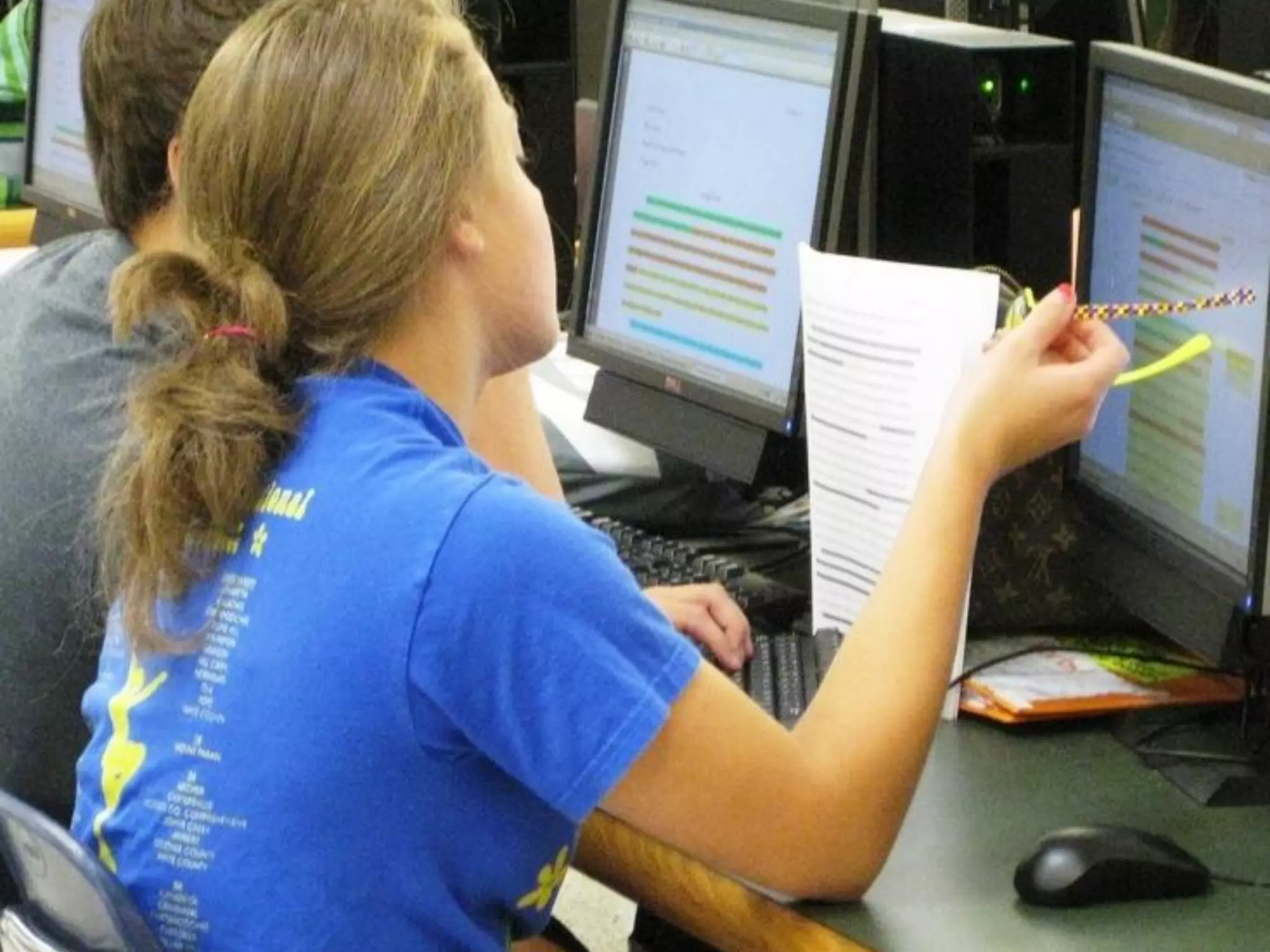
    construct
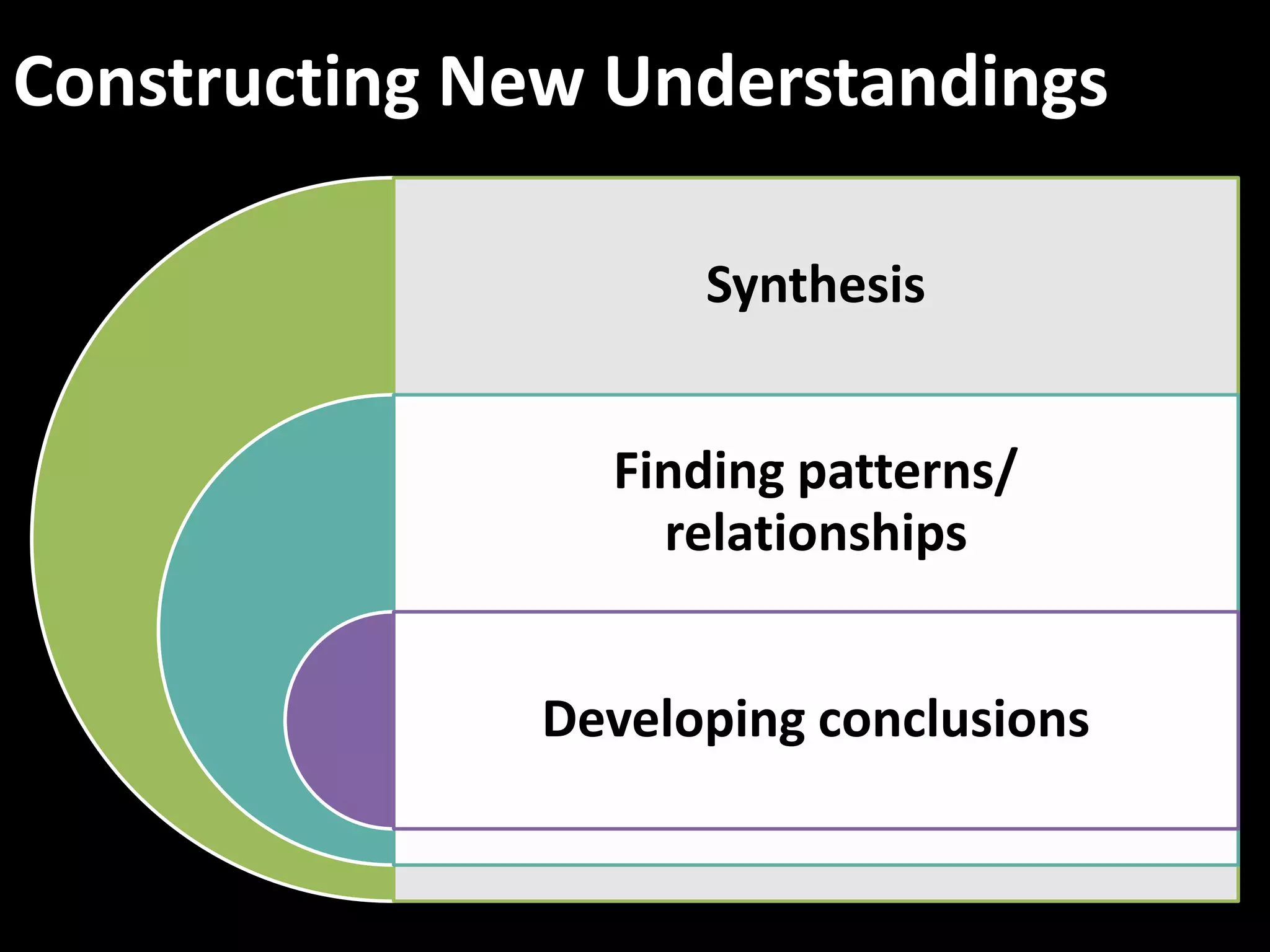
Constructing New Understandings

                    Synthesis


                Finding patterns/
                  relationships


              Developing conclusions
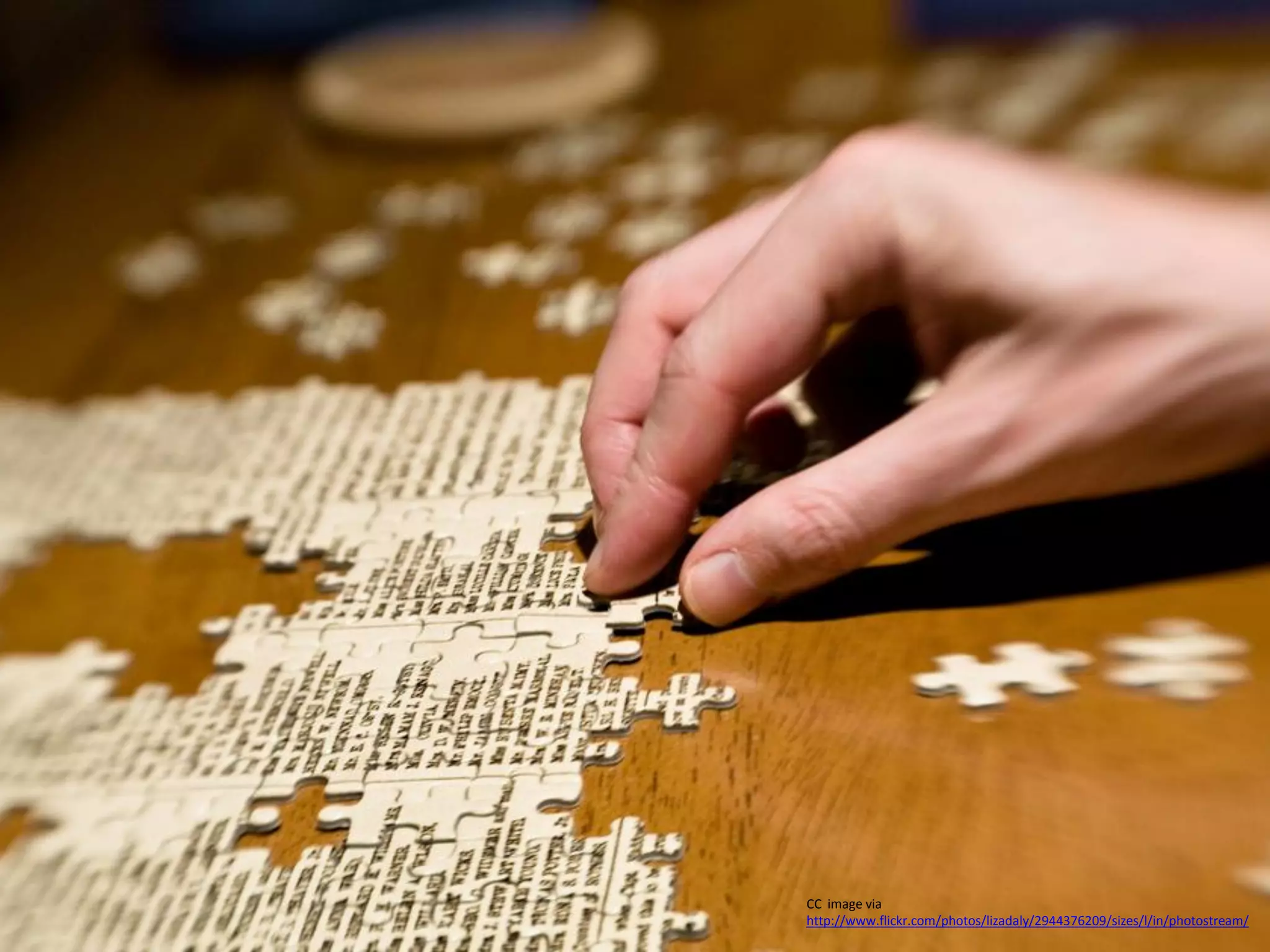
CC image via
http://www.flickr.com/photos/lizadaly/2944376209/sizes/l/in/photostream/
CC image via http://www.flickr.com/photos/ableman/283139915/sizes/l/in/photostream/
CC image via http://www.flickr.com/photos/tambako/3129100592/sizes/l/in/faves-
10557450@N04/
CC image via http://www.flickr.com/photos/familymwr/4989283309/sizes/l/in/photostream/
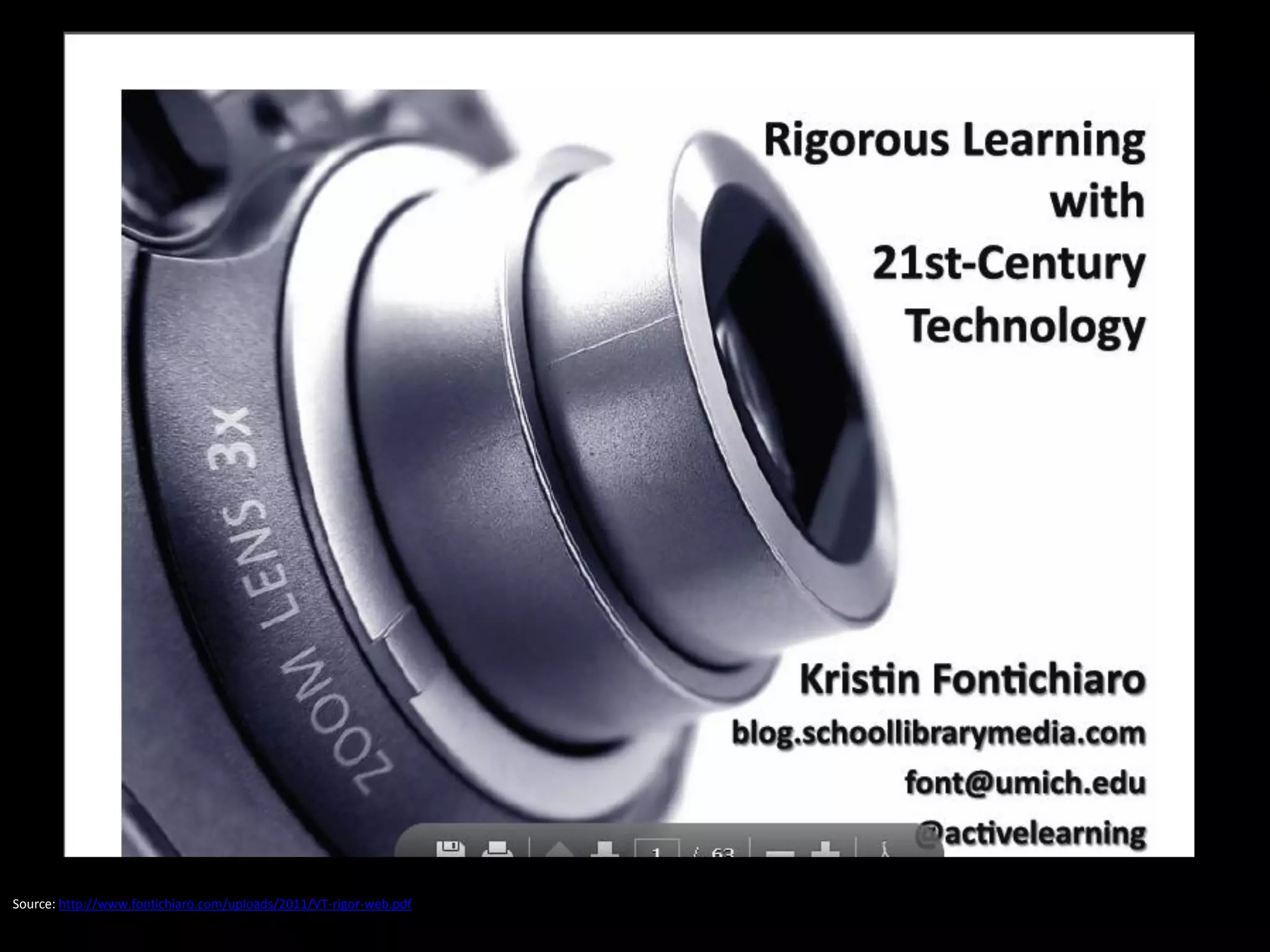
Source: http://www.fontichiaro.com/uploads/2011/VT-rigor-web.pdf
5
                                                                                                express


CC image via http://www.flickr.com/photos/clappstar/3588547020/sizes/l/in/faves-10557450@N04/
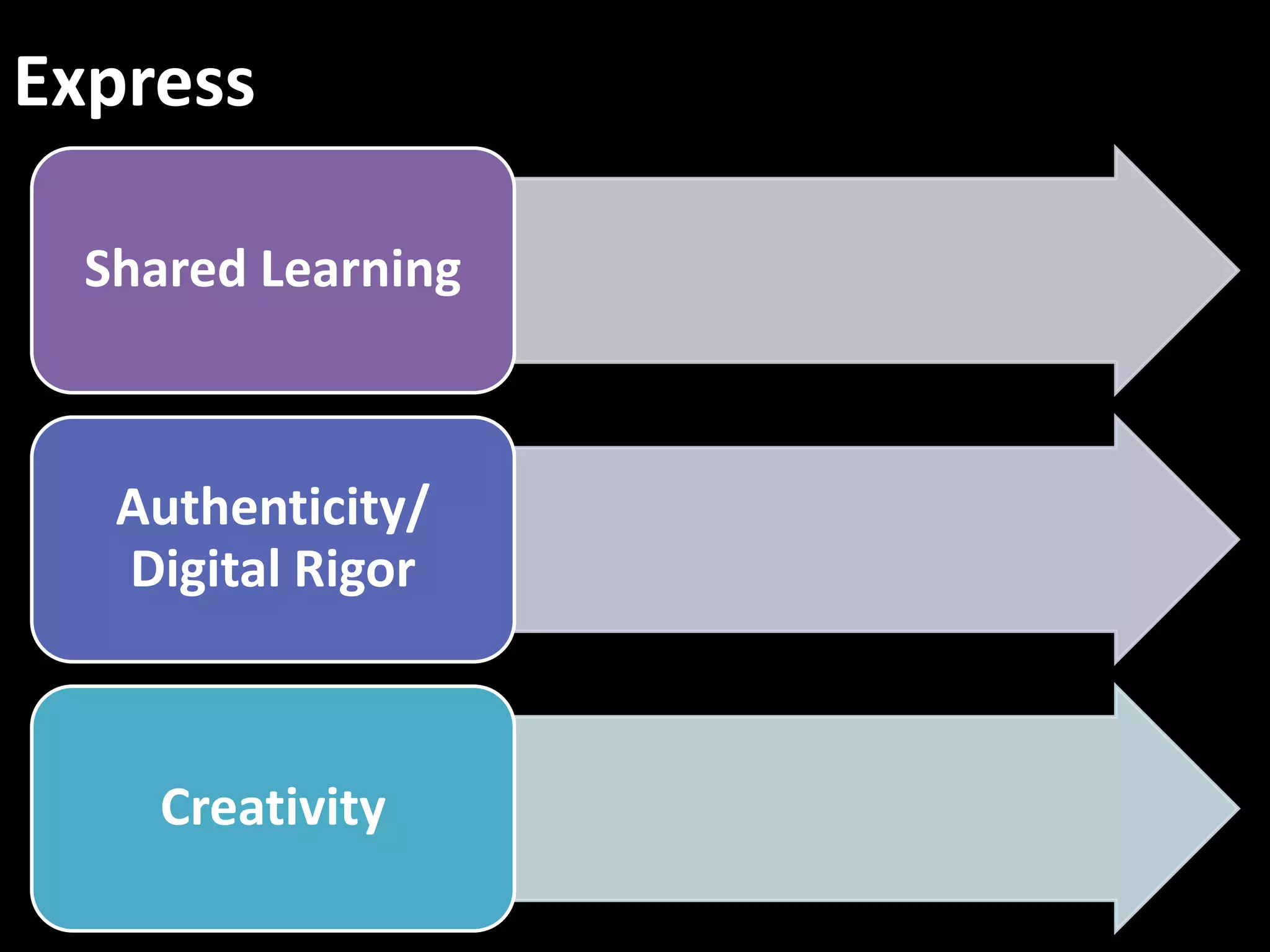
Express

  Shared Learning


   Authenticity/
   Digital Rigor


     Creativity
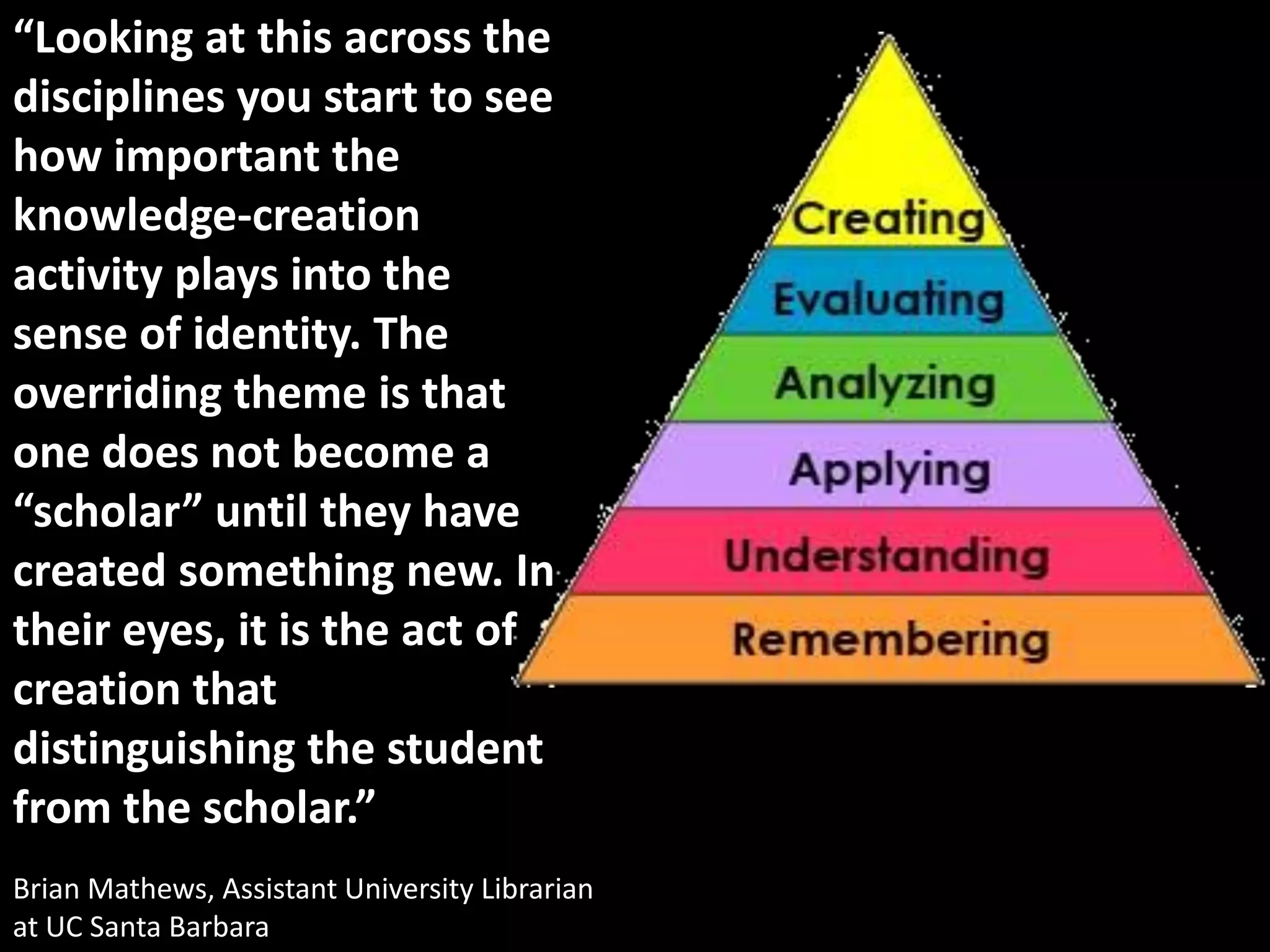
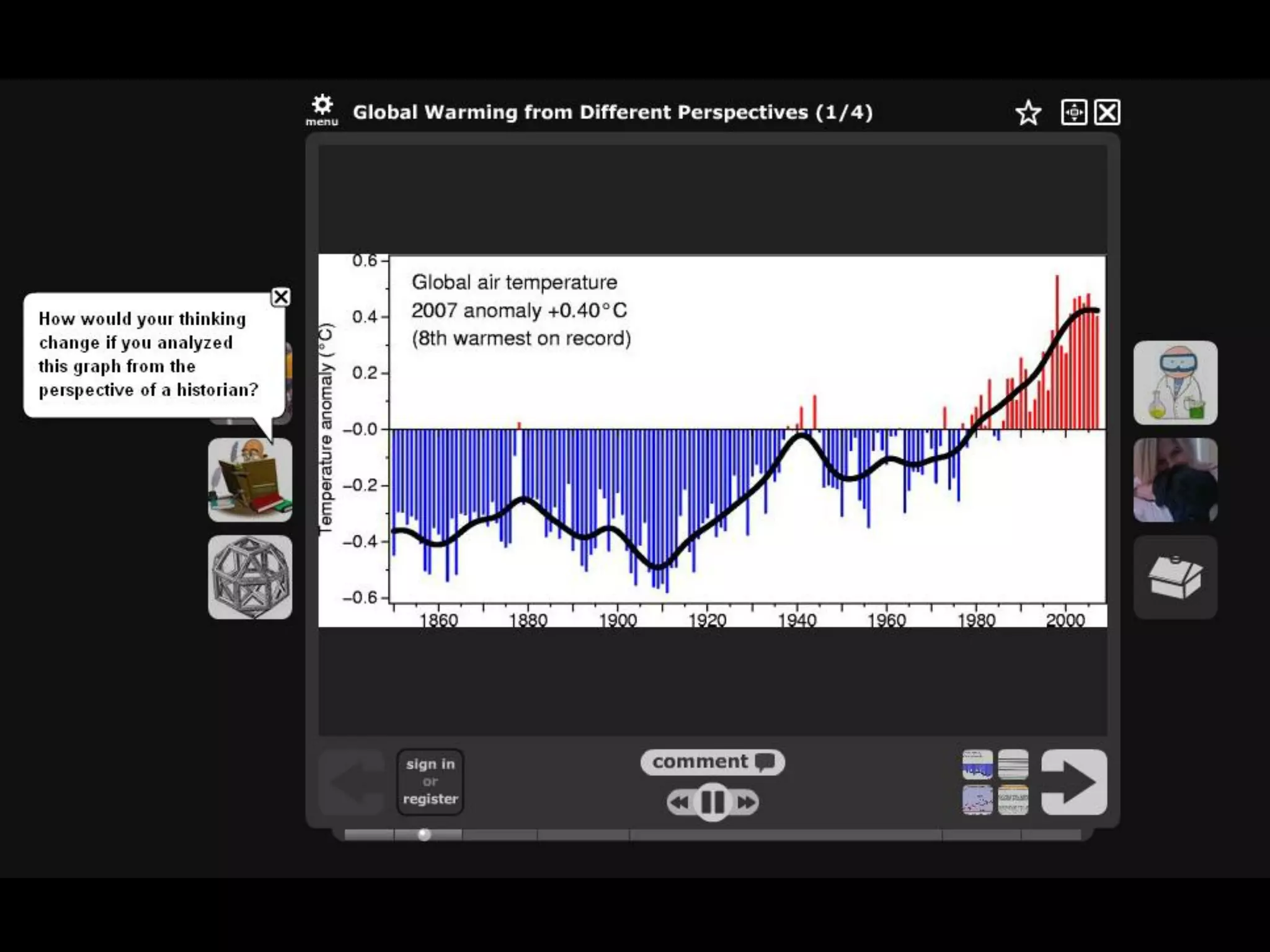
“Looking at this across the
disciplines you start to see
how important the
knowledge-creation
activity plays into the
sense of identity. The
overriding theme is that
one does not become a
“scholar” until they have
created something new. In
their eyes, it is the act of
creation that
distinguishing the student
from the scholar.”
Brian Mathews, Assistant University Librarian
at UC Santa Barbara
netvibes
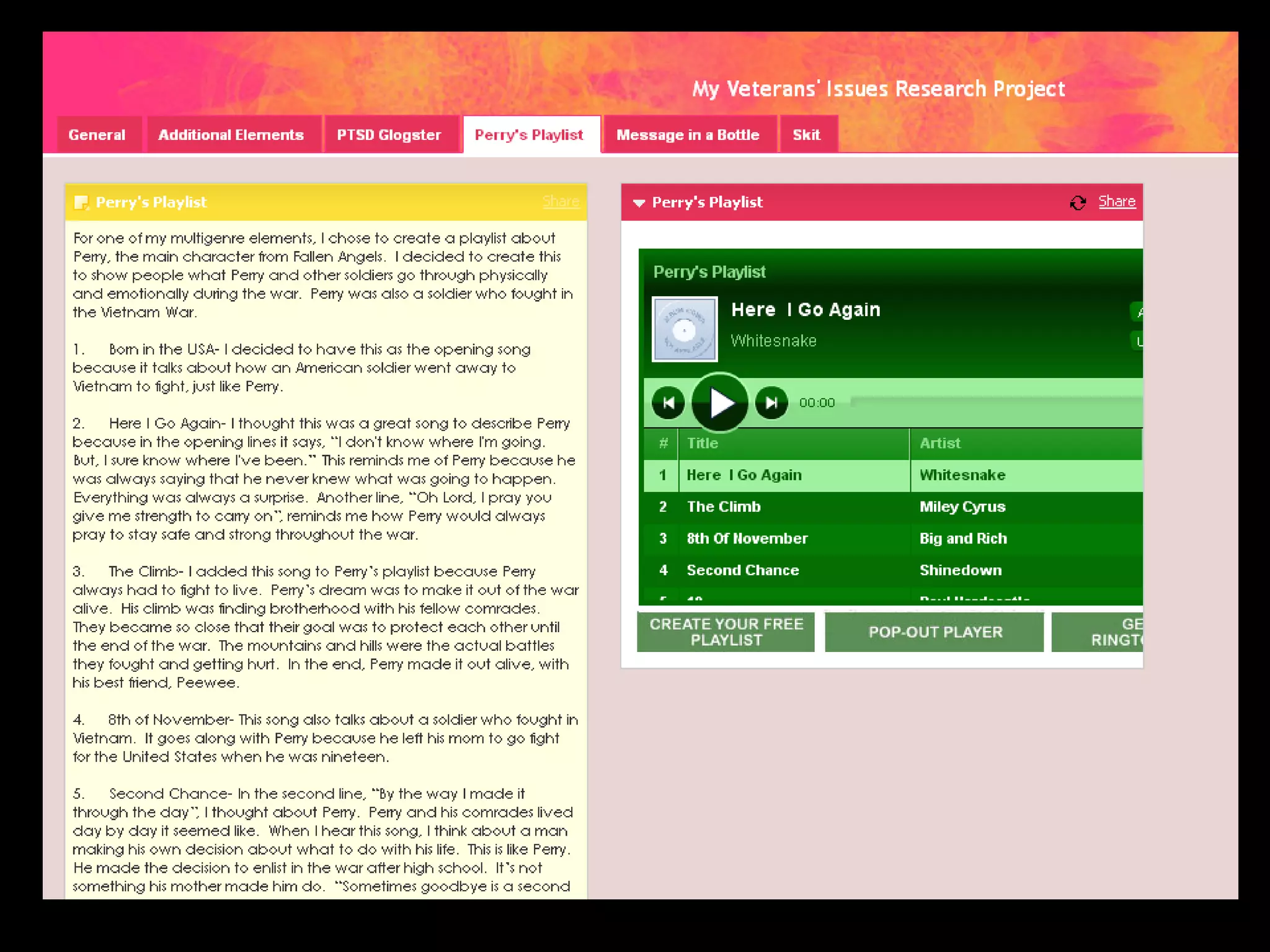
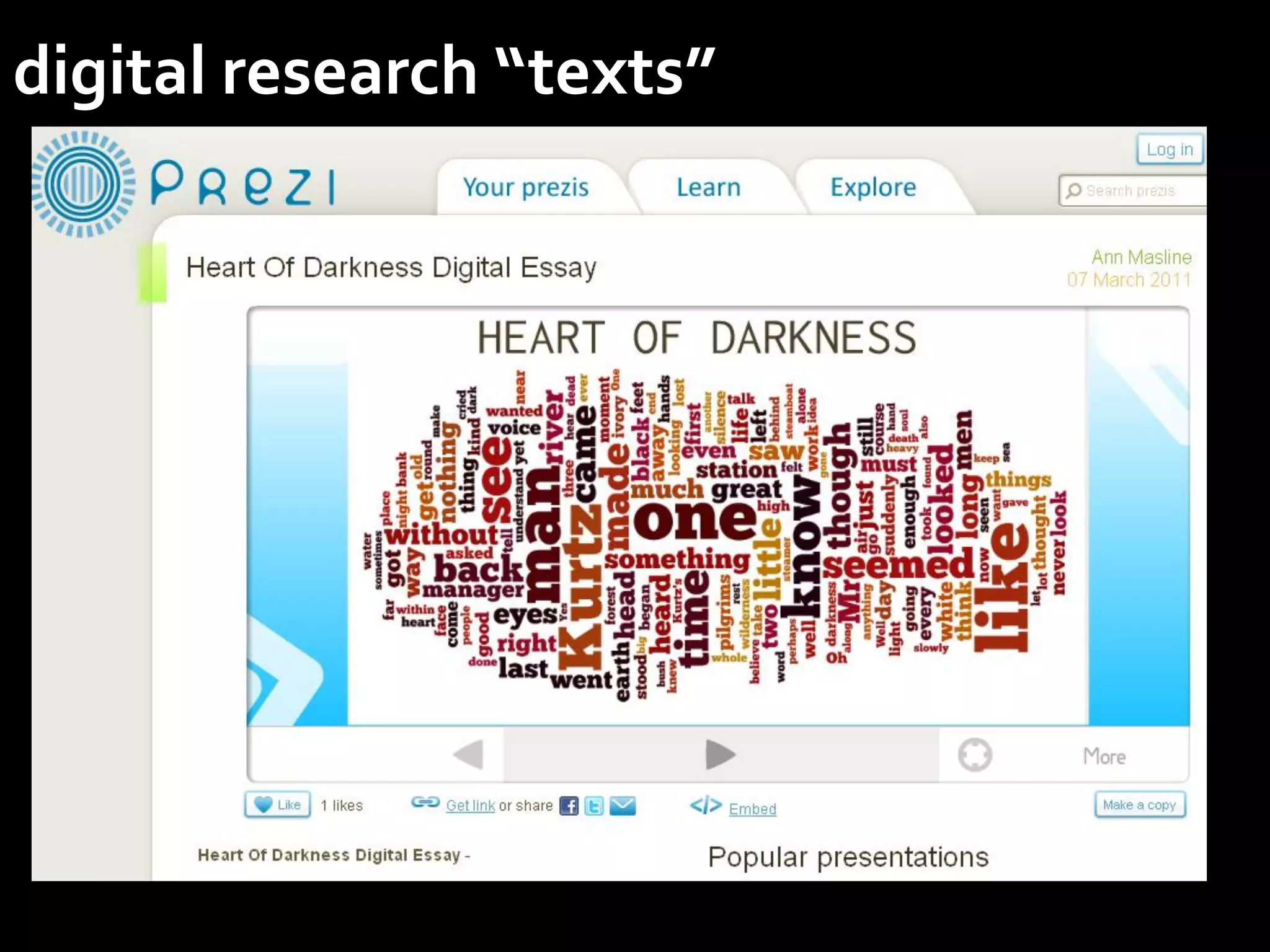
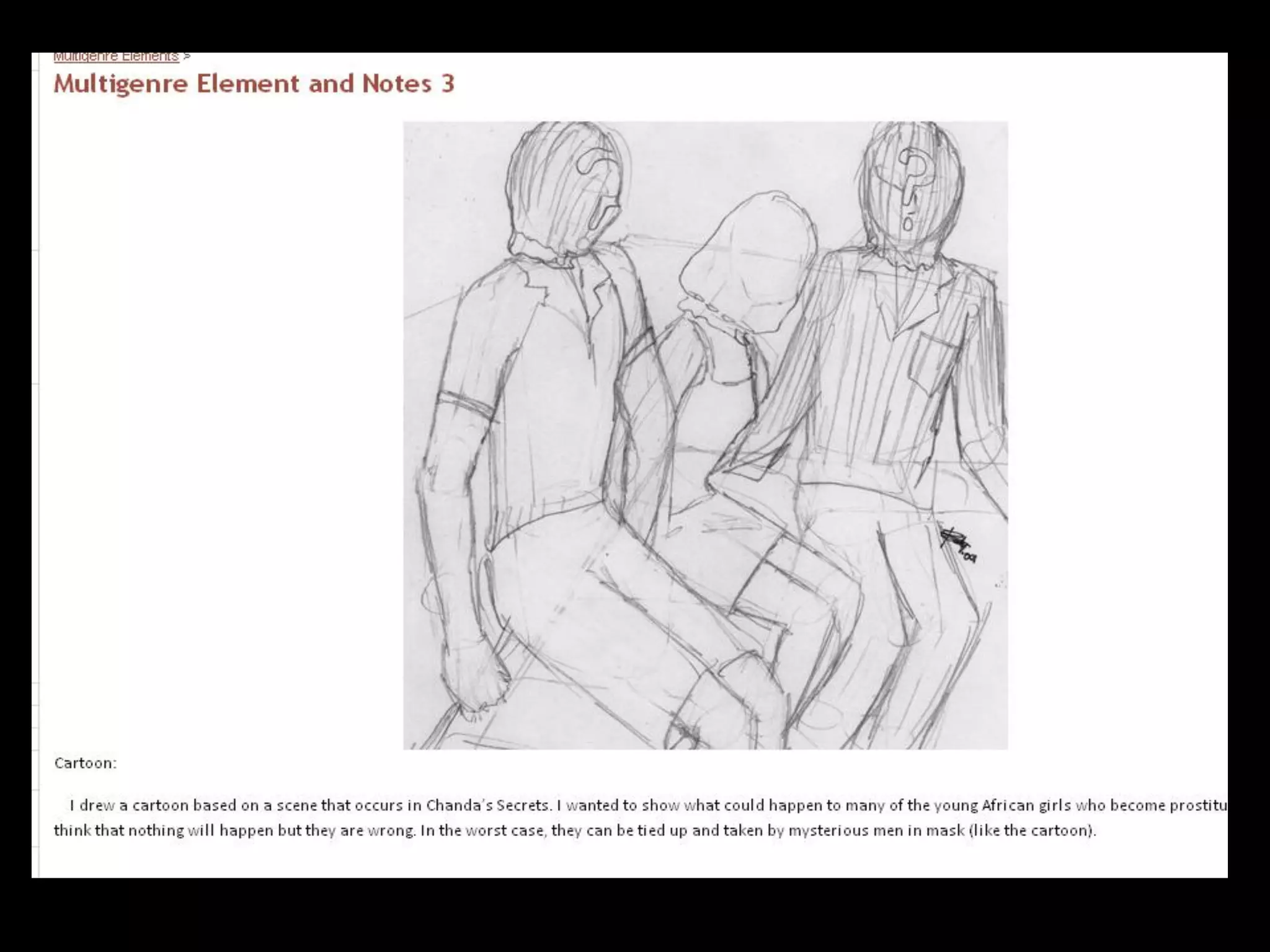
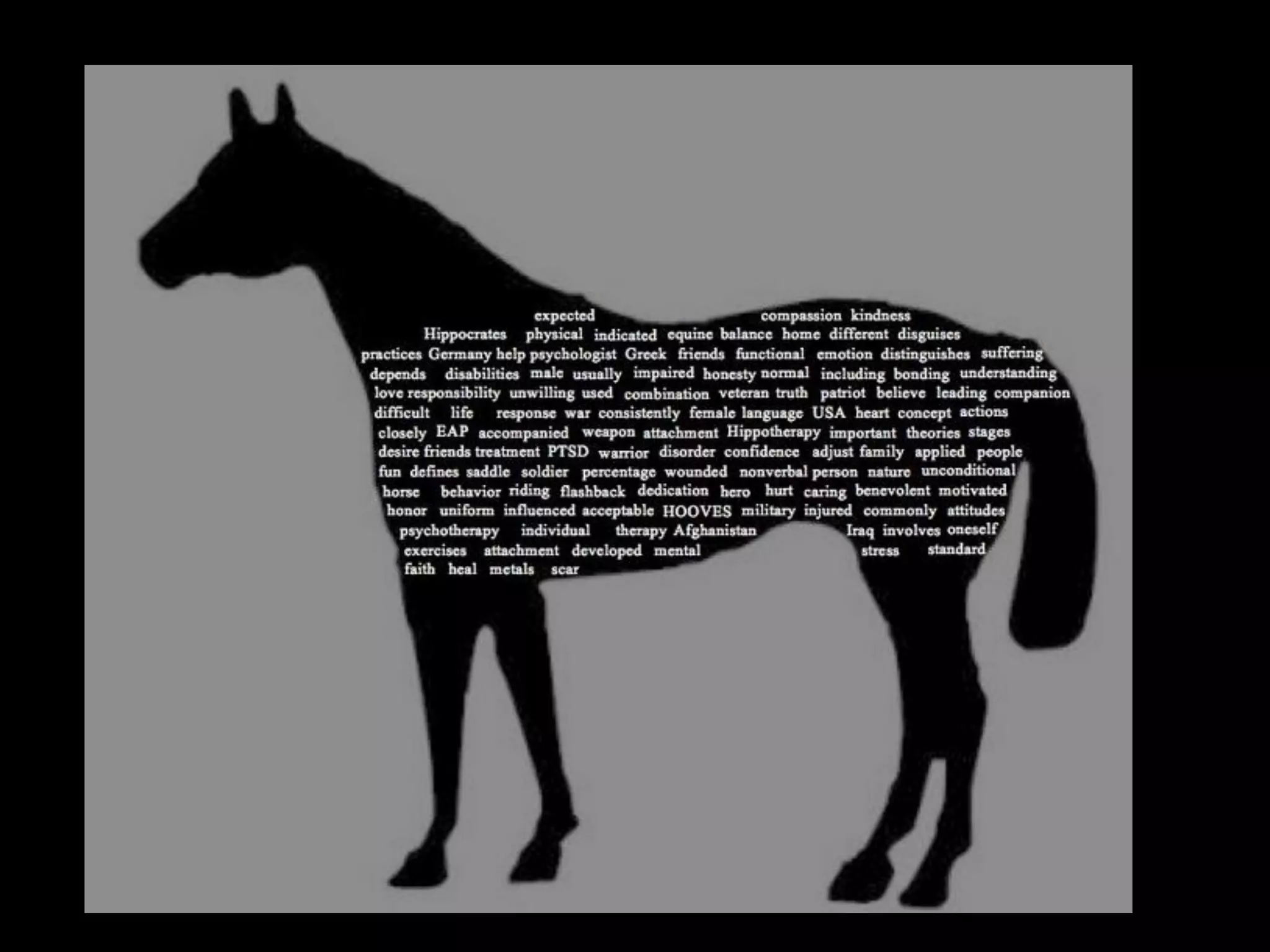
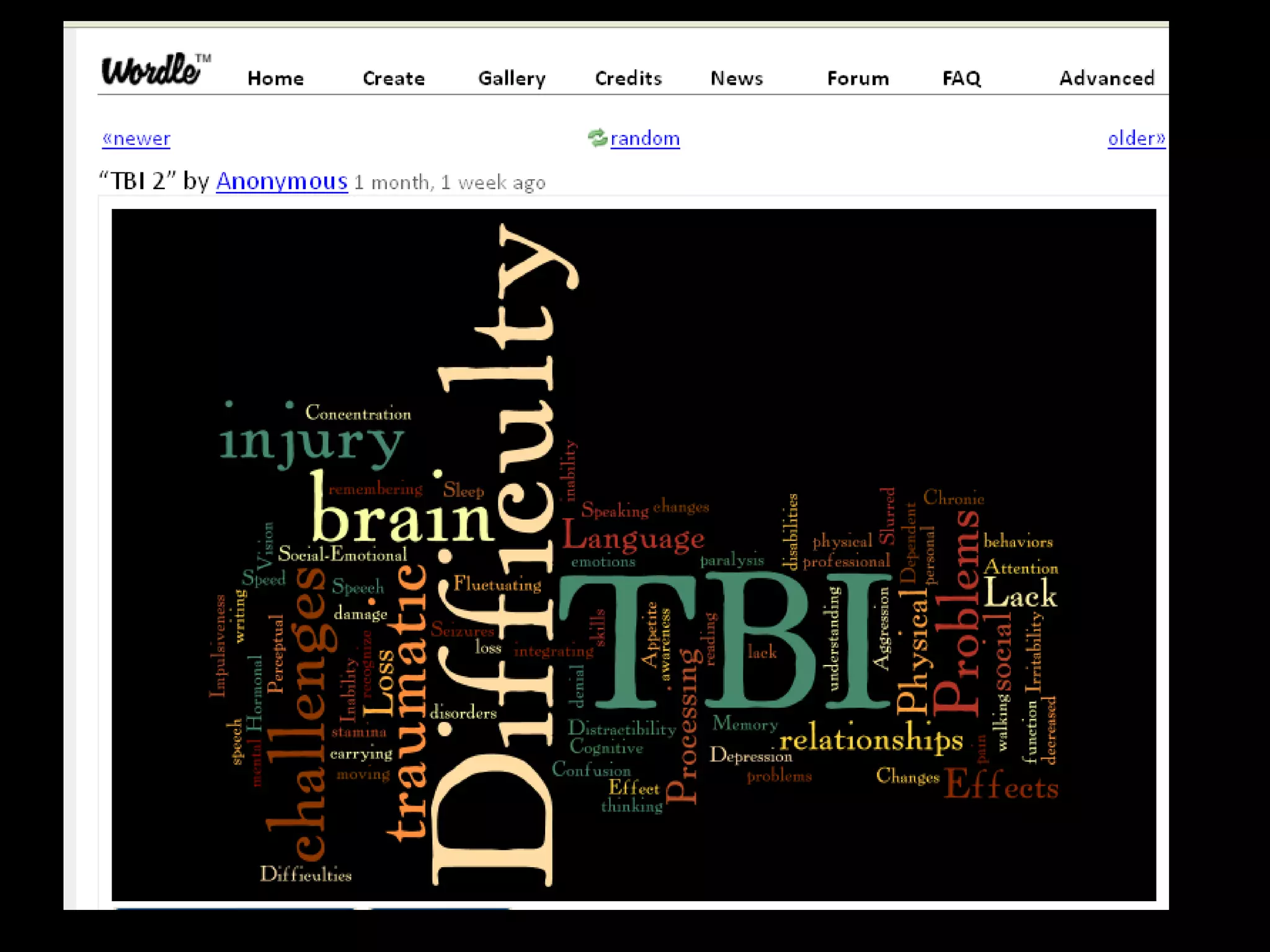
digital research “texts”
6
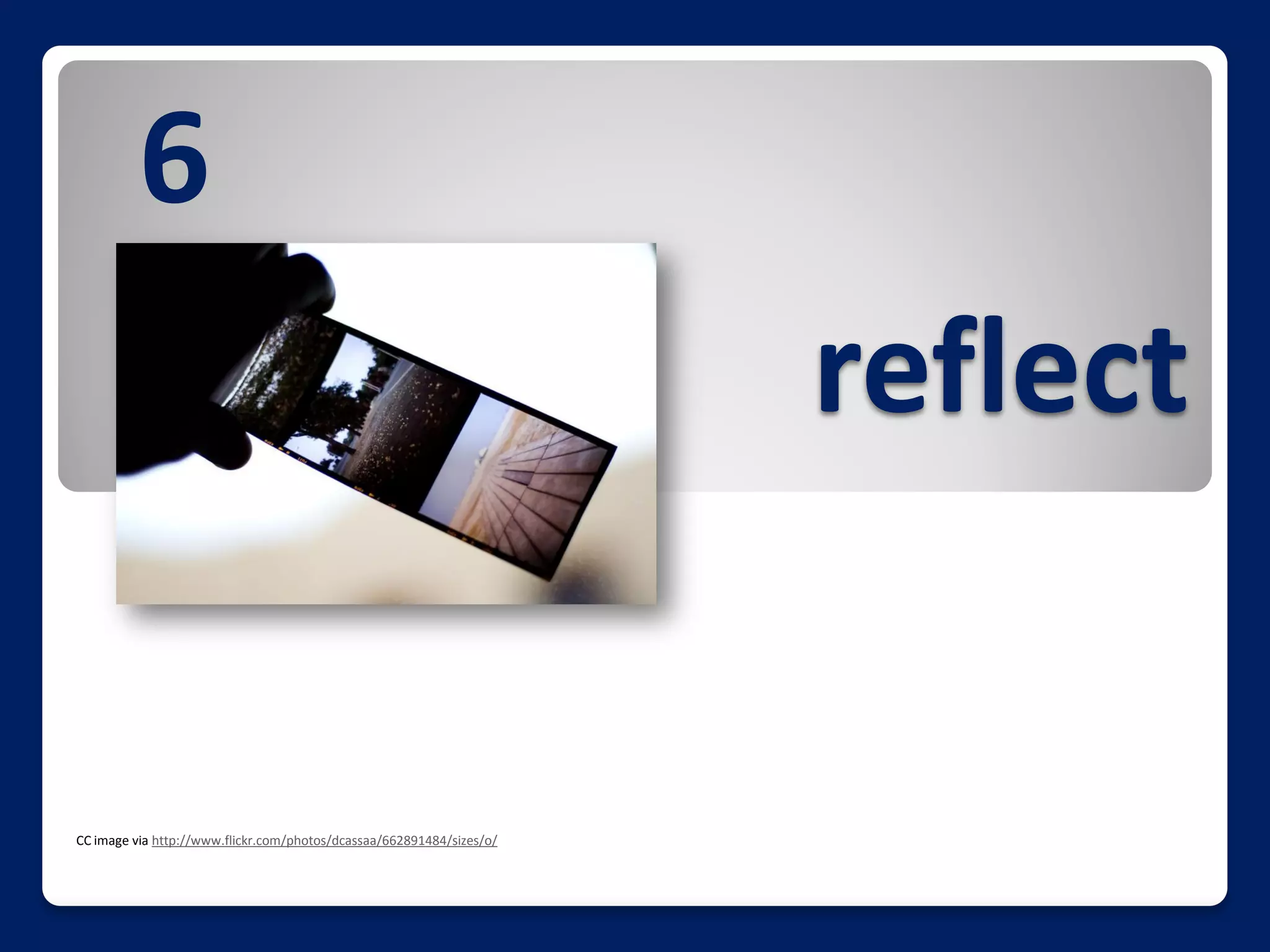
                                                                       reflect


CC image via http://www.flickr.com/photos/dcassaa/662891484/sizes/o/
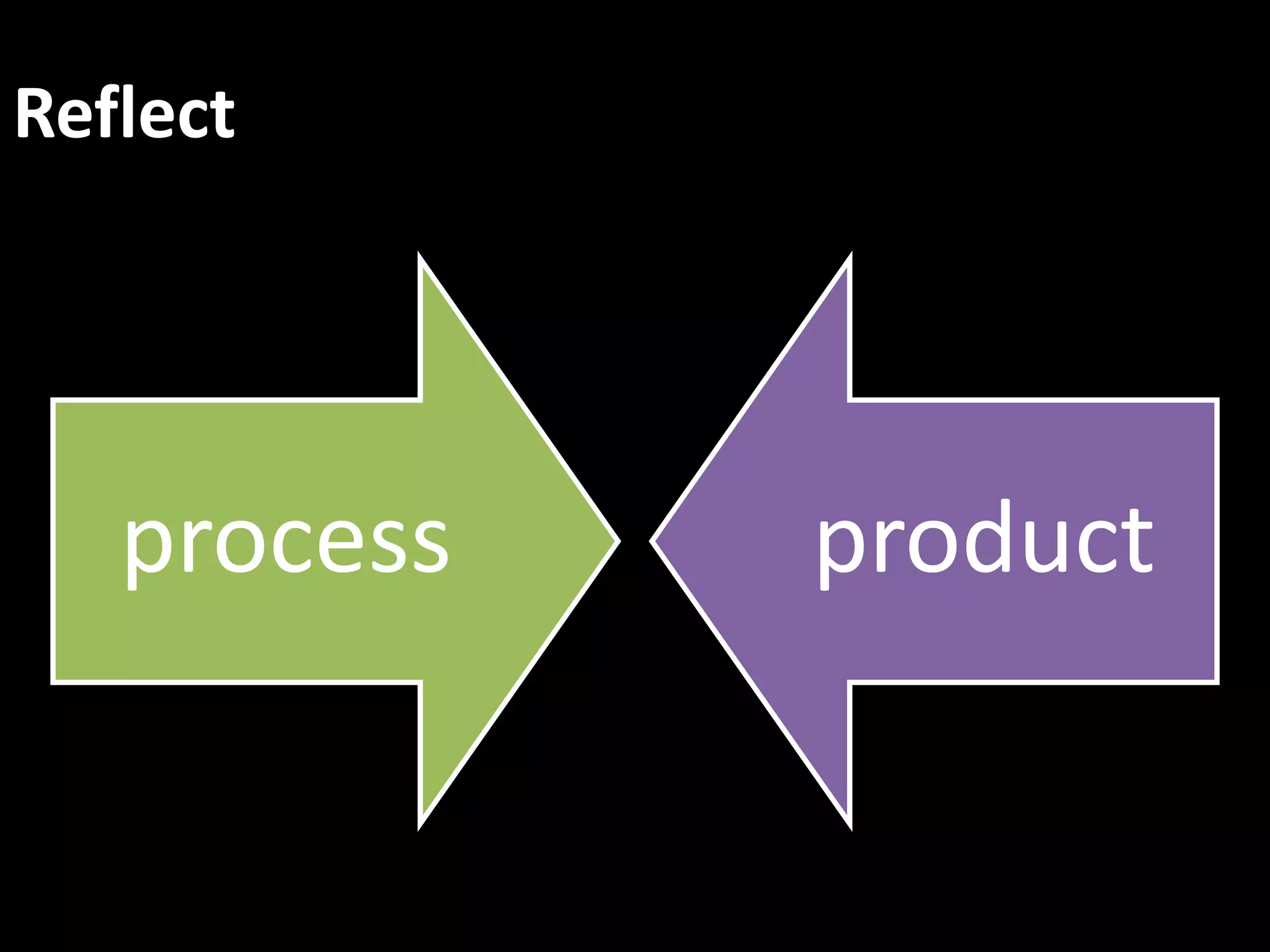
Reflect


   process   product
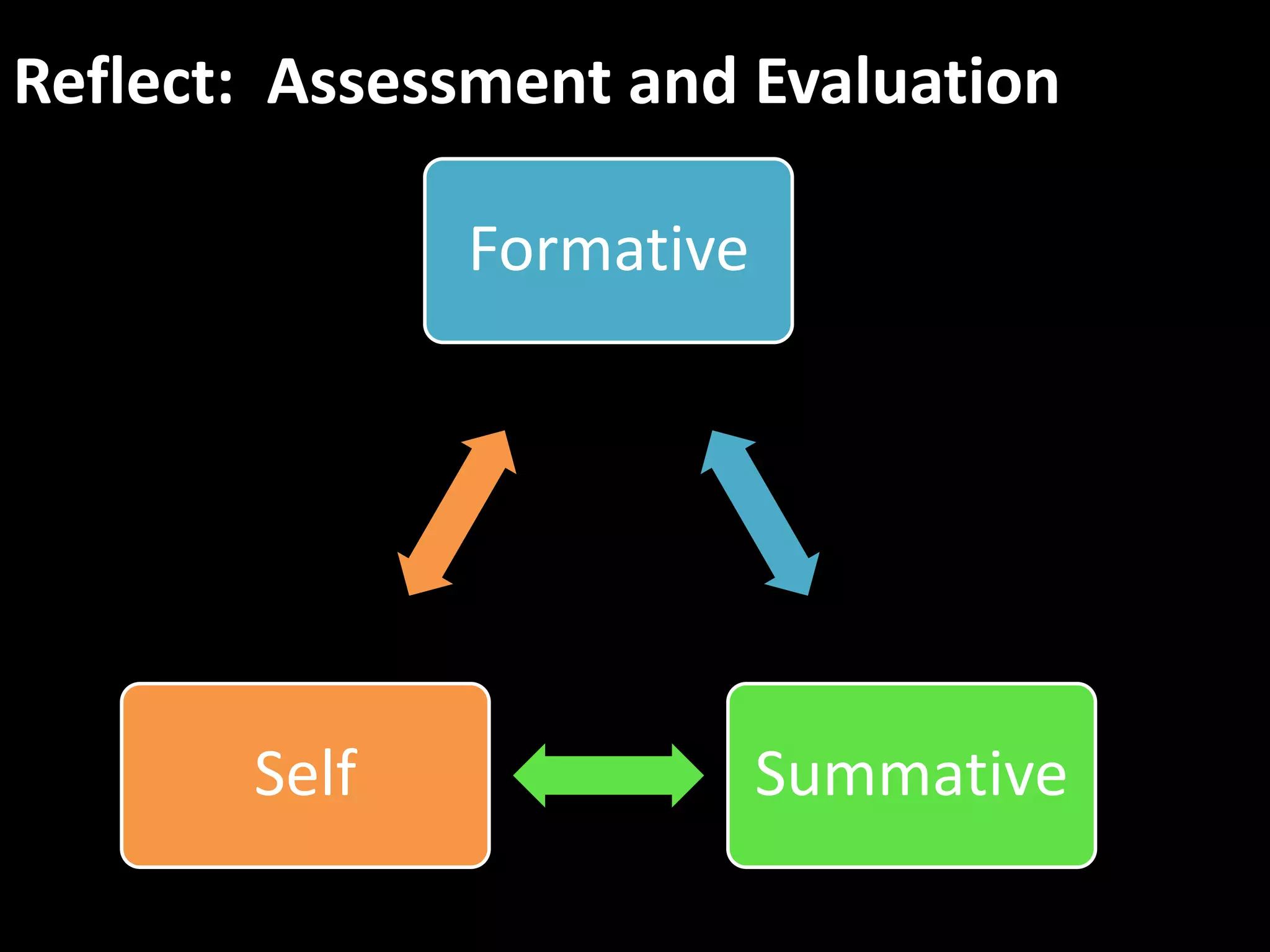
Reflect: Assessment and Evaluation

              Formative


       Self               Summative
formative
assessment:
                                                         the
                                             measurement
                                              of knowledge
                                           and skills during
                                             the process of
                                                    learning
Source: Stripling, 2007/2009, pp. 167-68
Formative Assessment
 • Formative assessments engage the school
   library media specialist, classroom teacher,
   and student in thinking about the learning
   process while it is happening so that
   adjustments can be made if needed
 • Ongoing and reflective in nature
 • Frames teachers and students as partners in
   learning

Source: Stripling, 2009
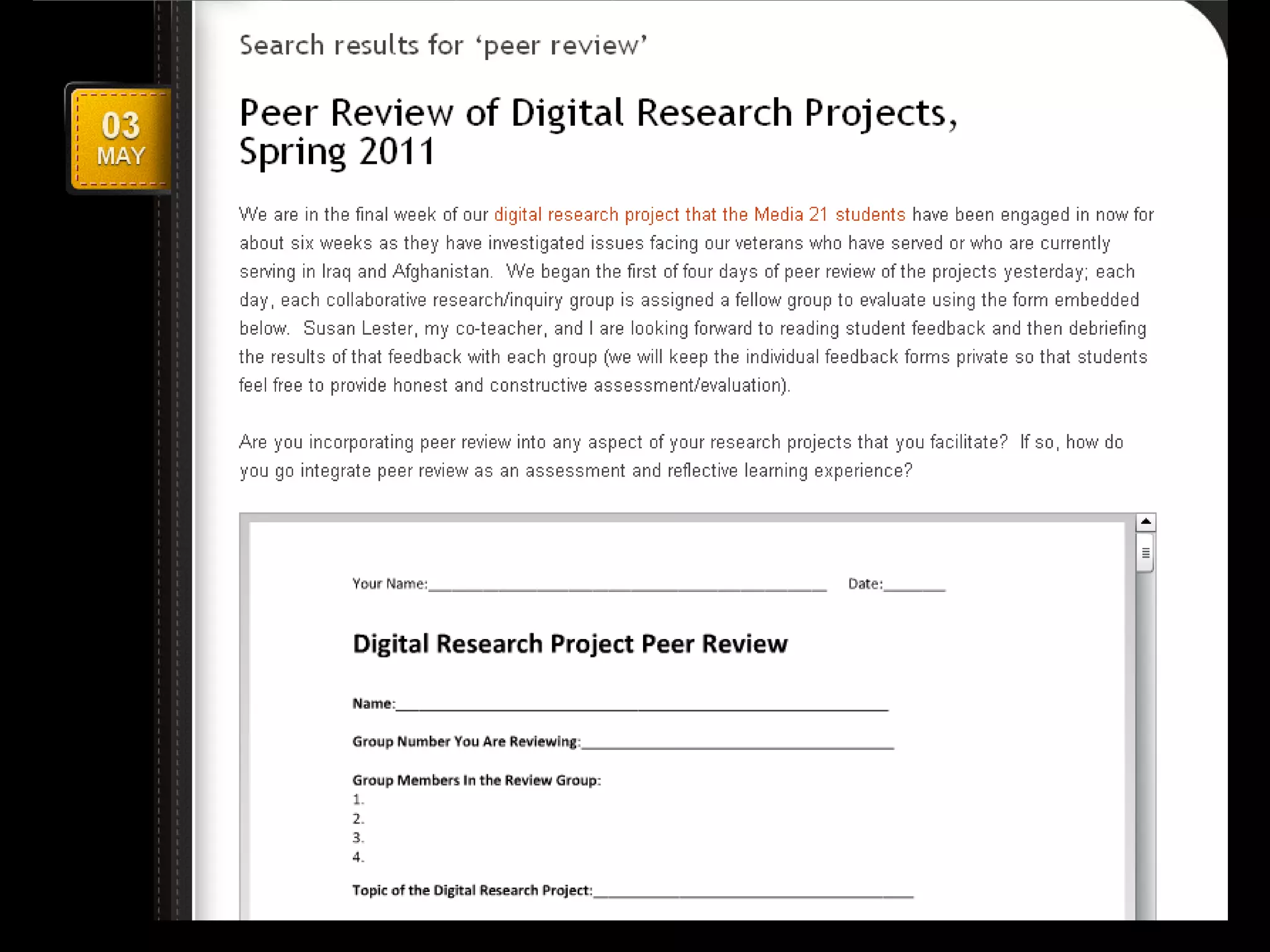
Examples of Student Led Formative
                      Assessments
 • Reflecting (learning      • Questions
   logs or blogs,            • Sharing, Reciprocal
   notetaking)                 Teaching
 • Video recorded            • Peer Review
   reflections/narratives
 • Graphic organizers
   (KWL charts, concept
   maps/mind mapping,
   idea webs)
Source: Stripling, 2009
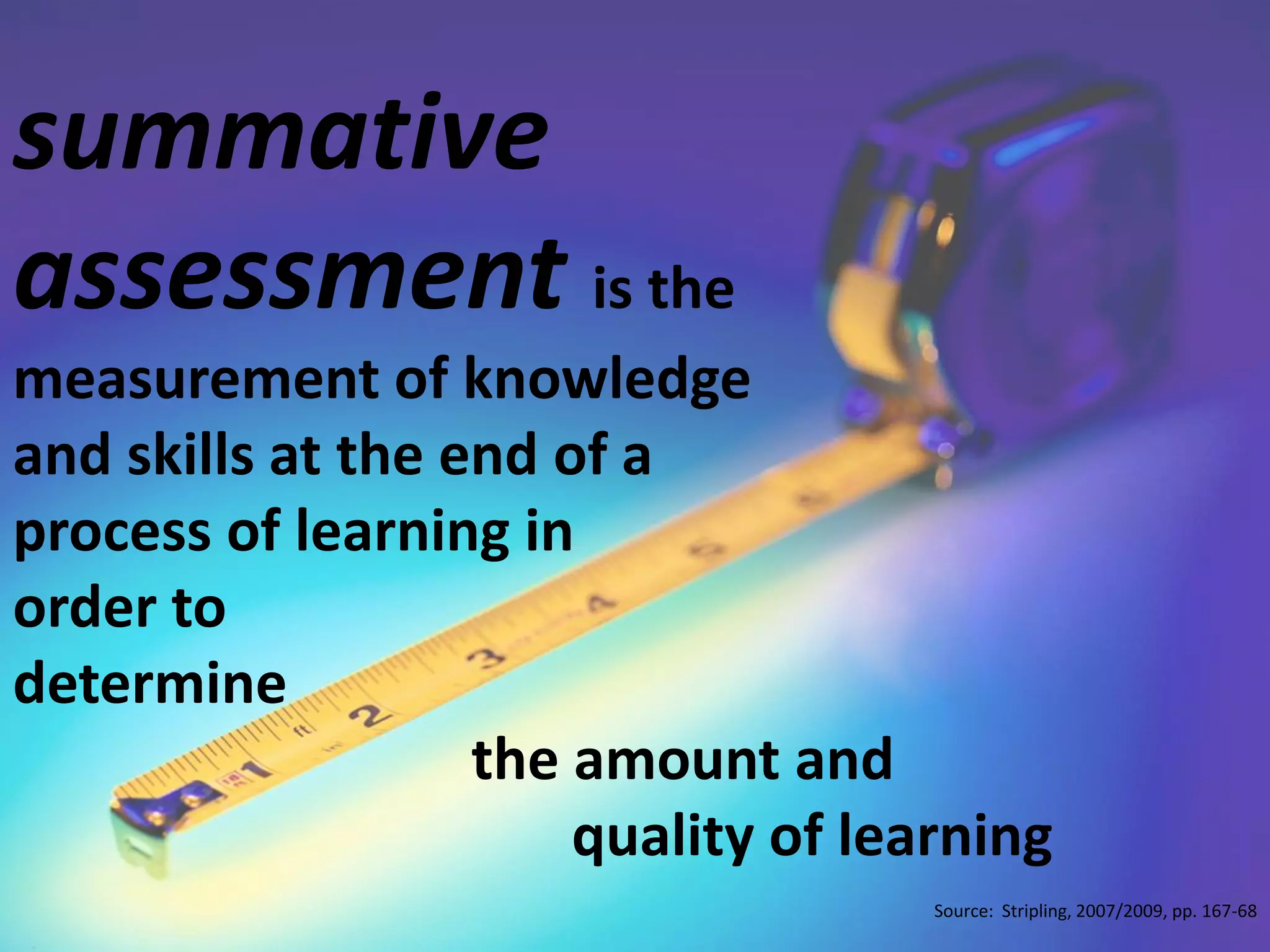
summative
assessment is the
measurement of knowledge
and skills at the end of a
process of learning in
order to
determine
                   the amount and
                       quality of learning
                                     Source: Stripling, 2007/2009, pp. 167-68
Summative Assessments
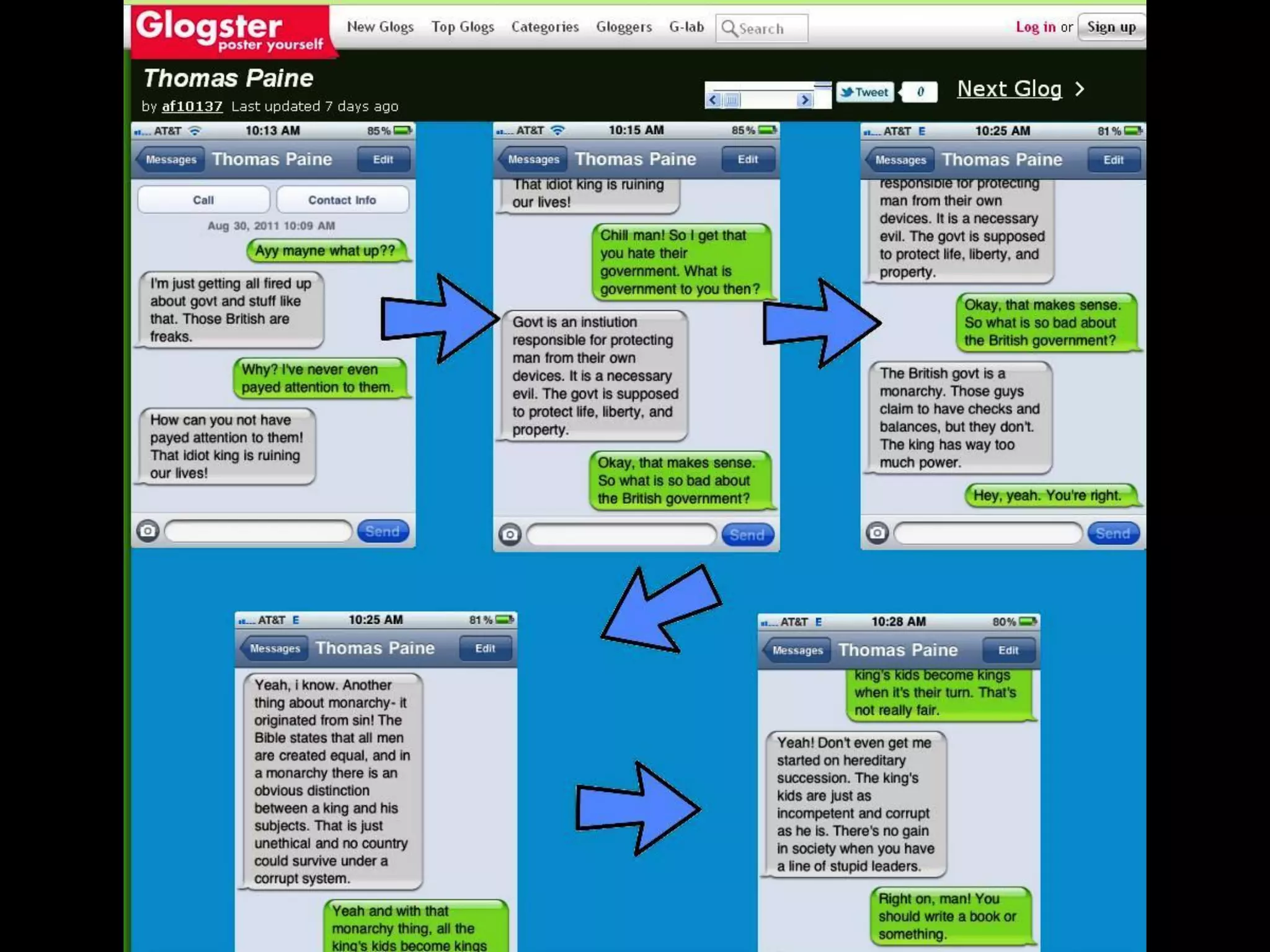
  •   Presentations         • Multimedia creations
                              (Voice Thread, Video,
  •   Portfolios
                              Glogster)
  •   Text based papers     • Tests/Exams
  •   Reflective narratives • Performance based
                               tasks


Source: Stripling, 2009
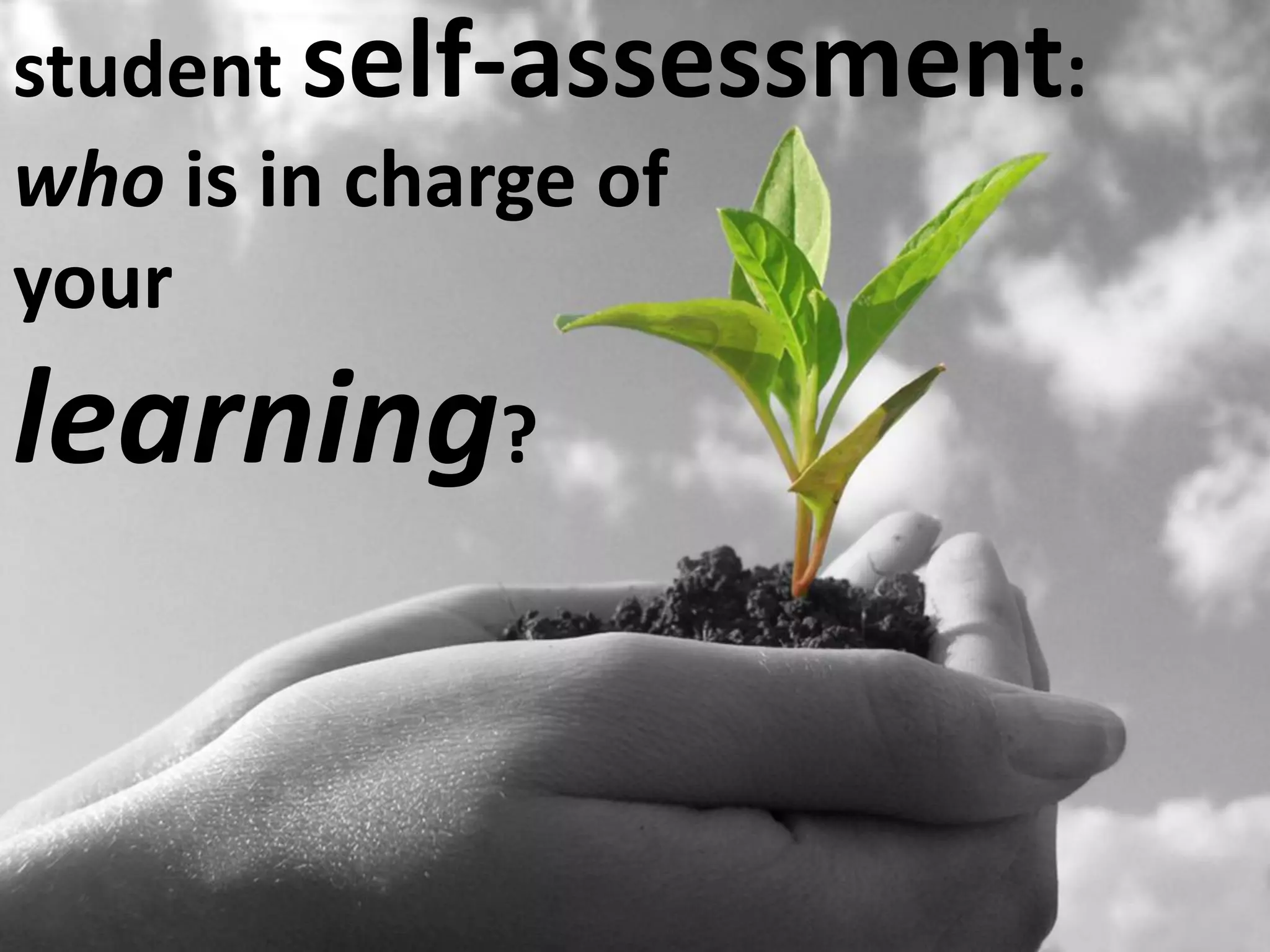
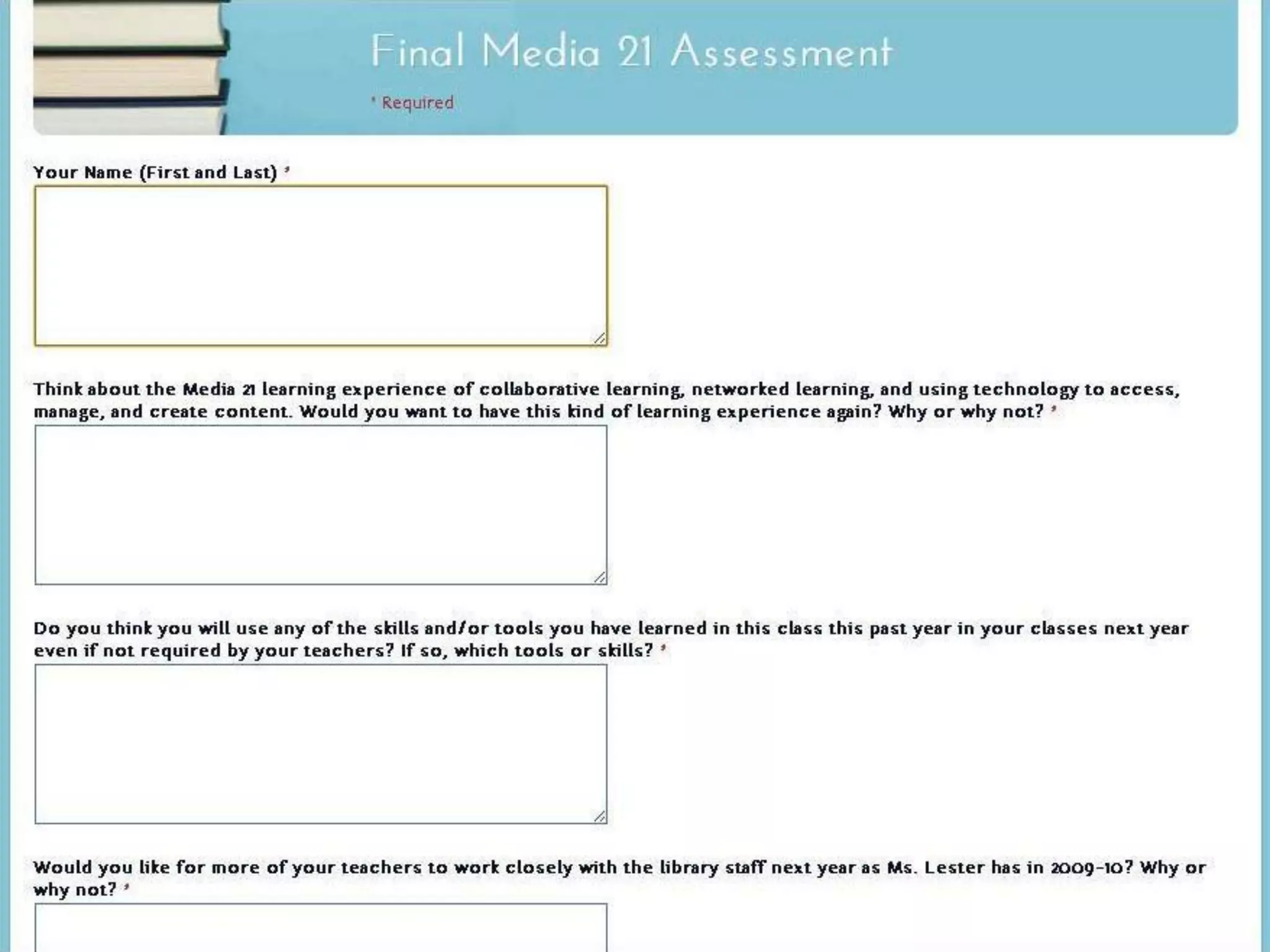
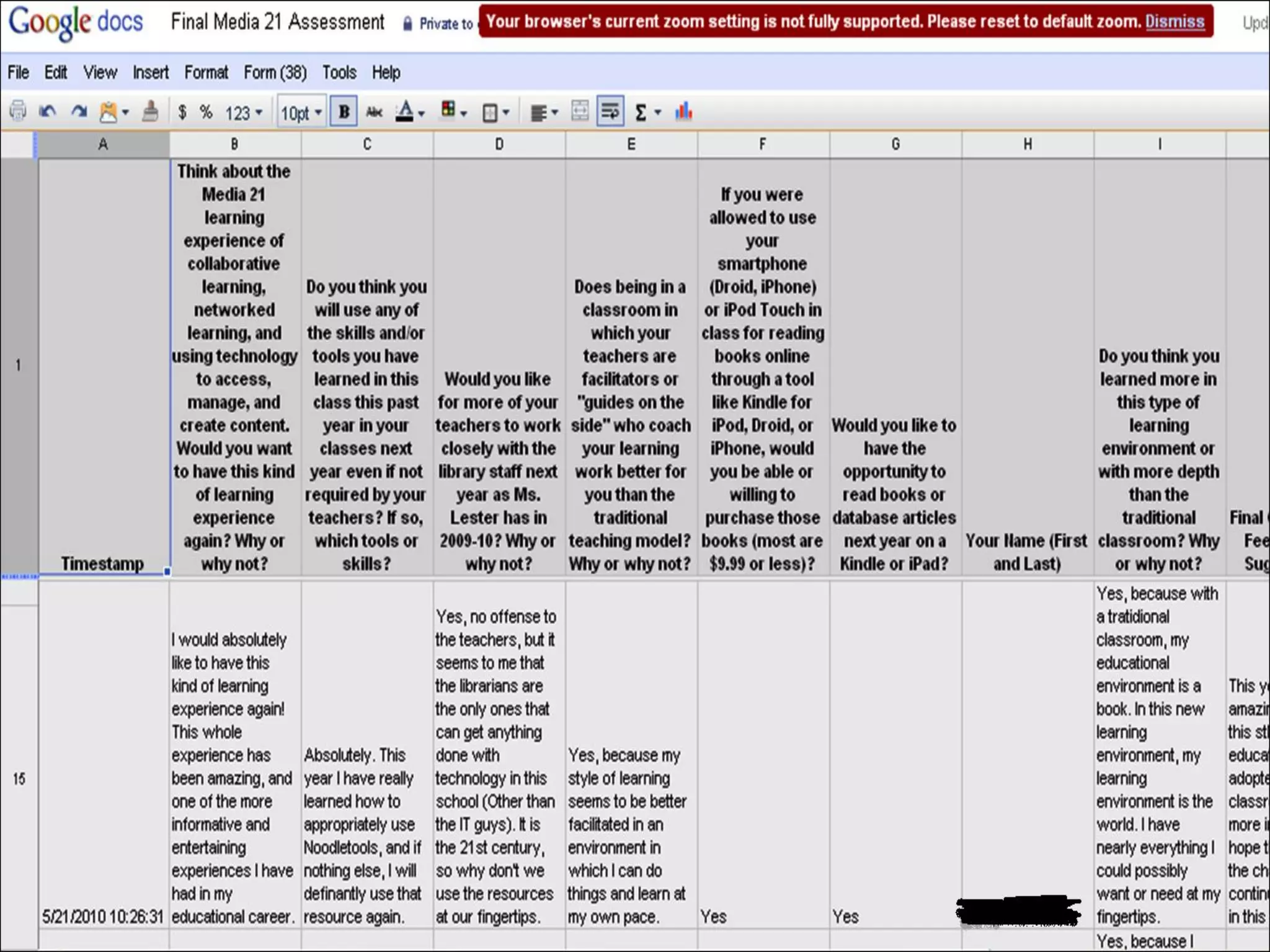
student self-assessment:
who is in charge of
your
learning?
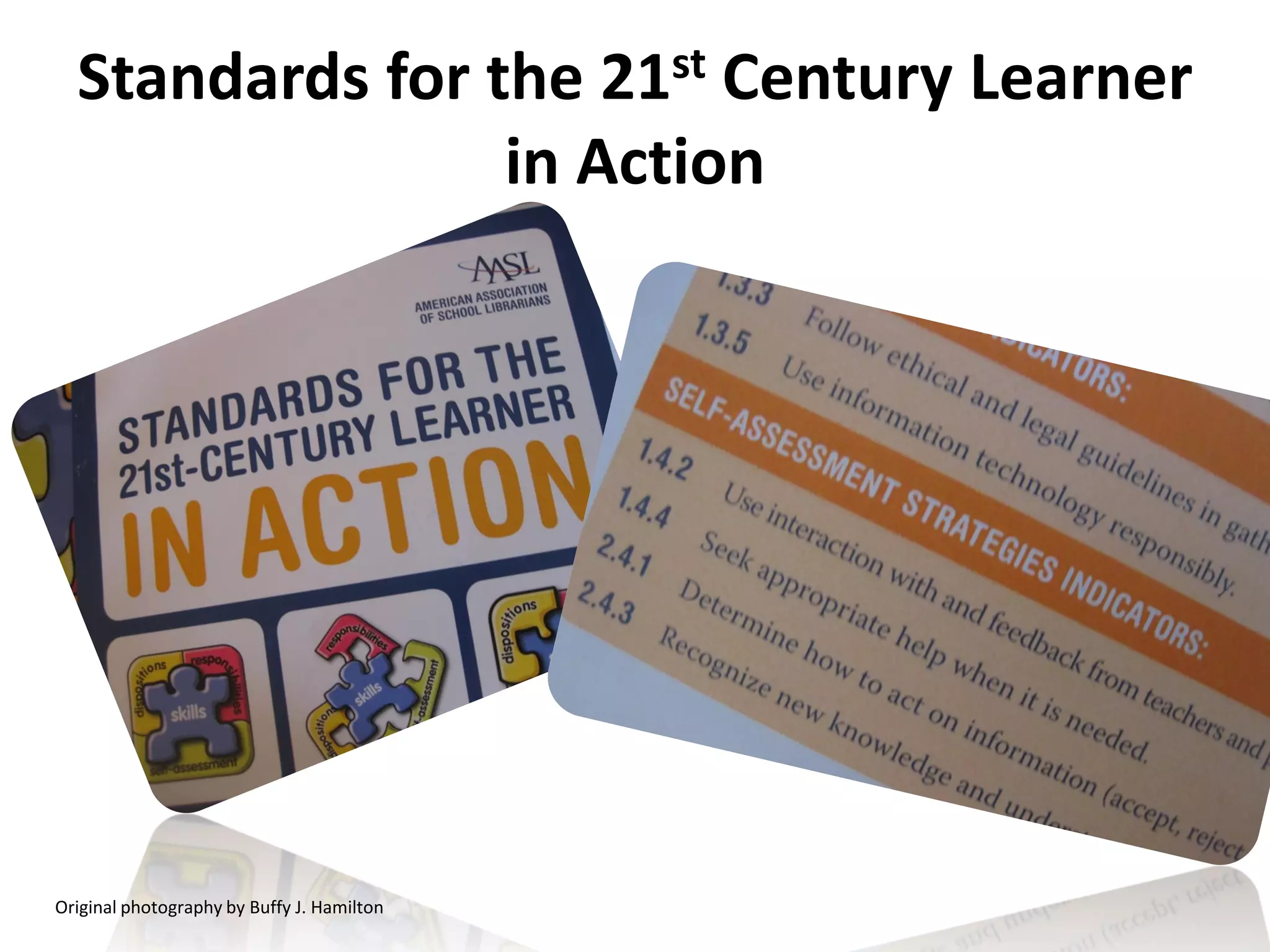
Standards for the 21st Century Learner
                 in Action


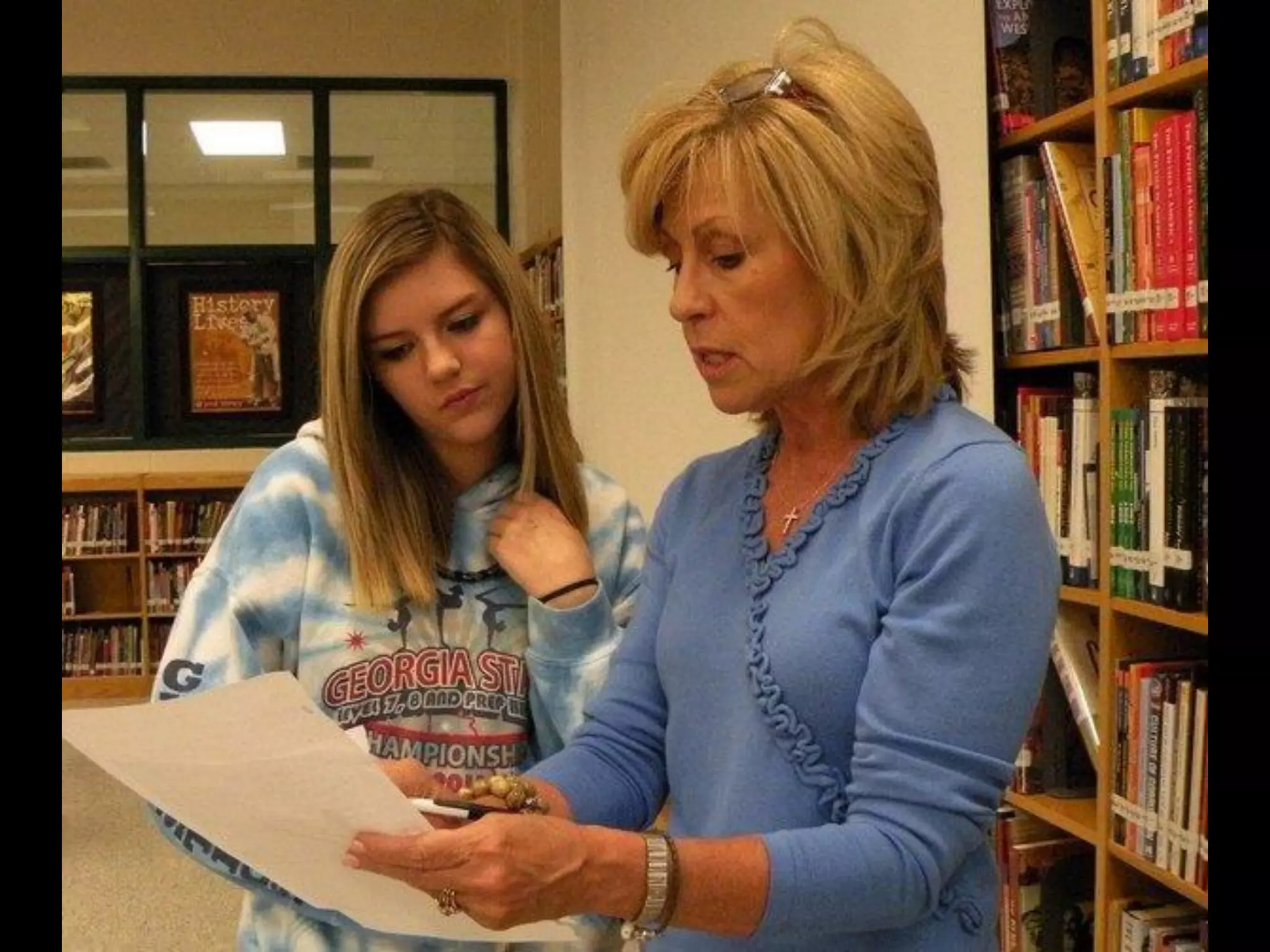
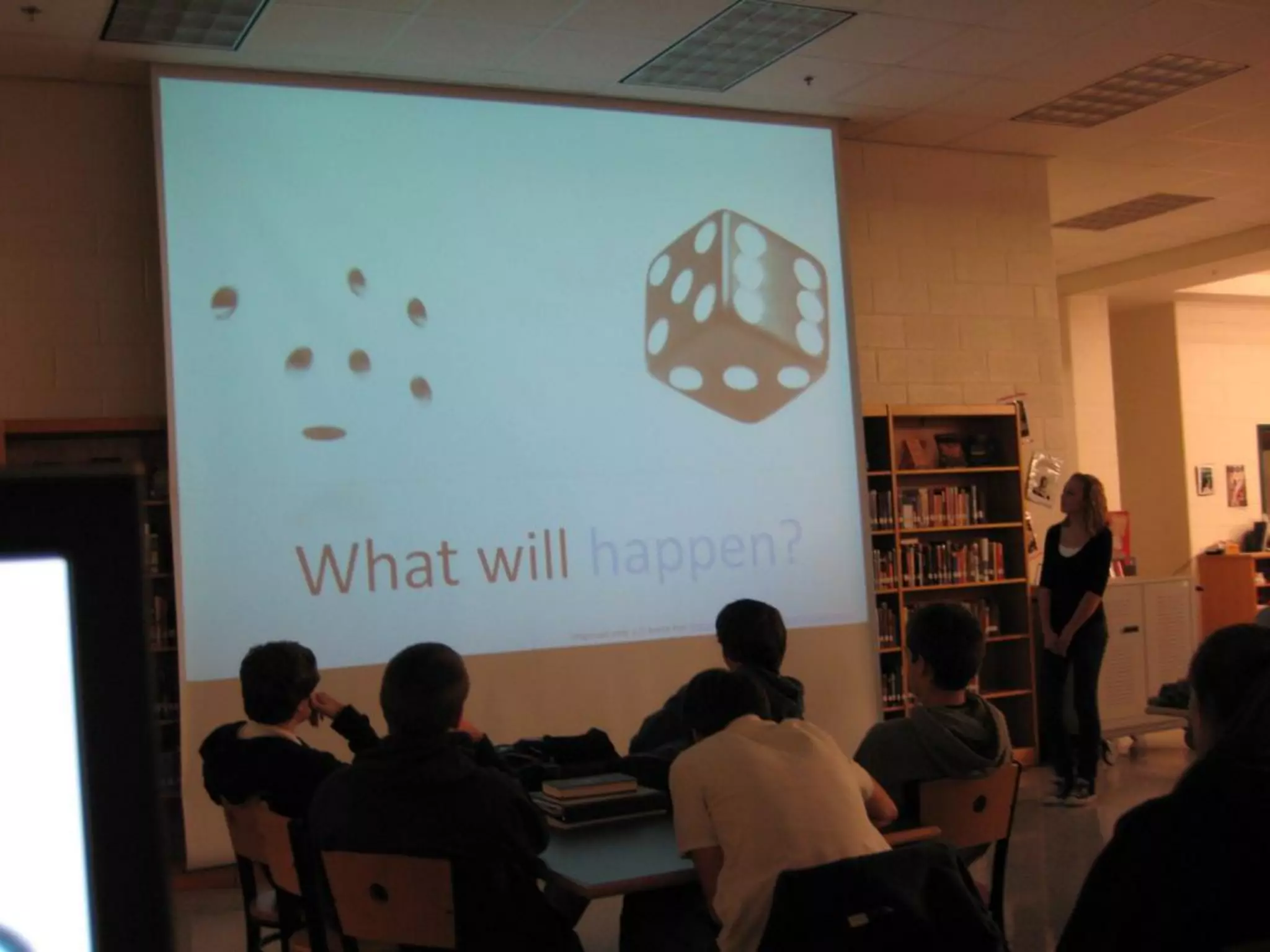
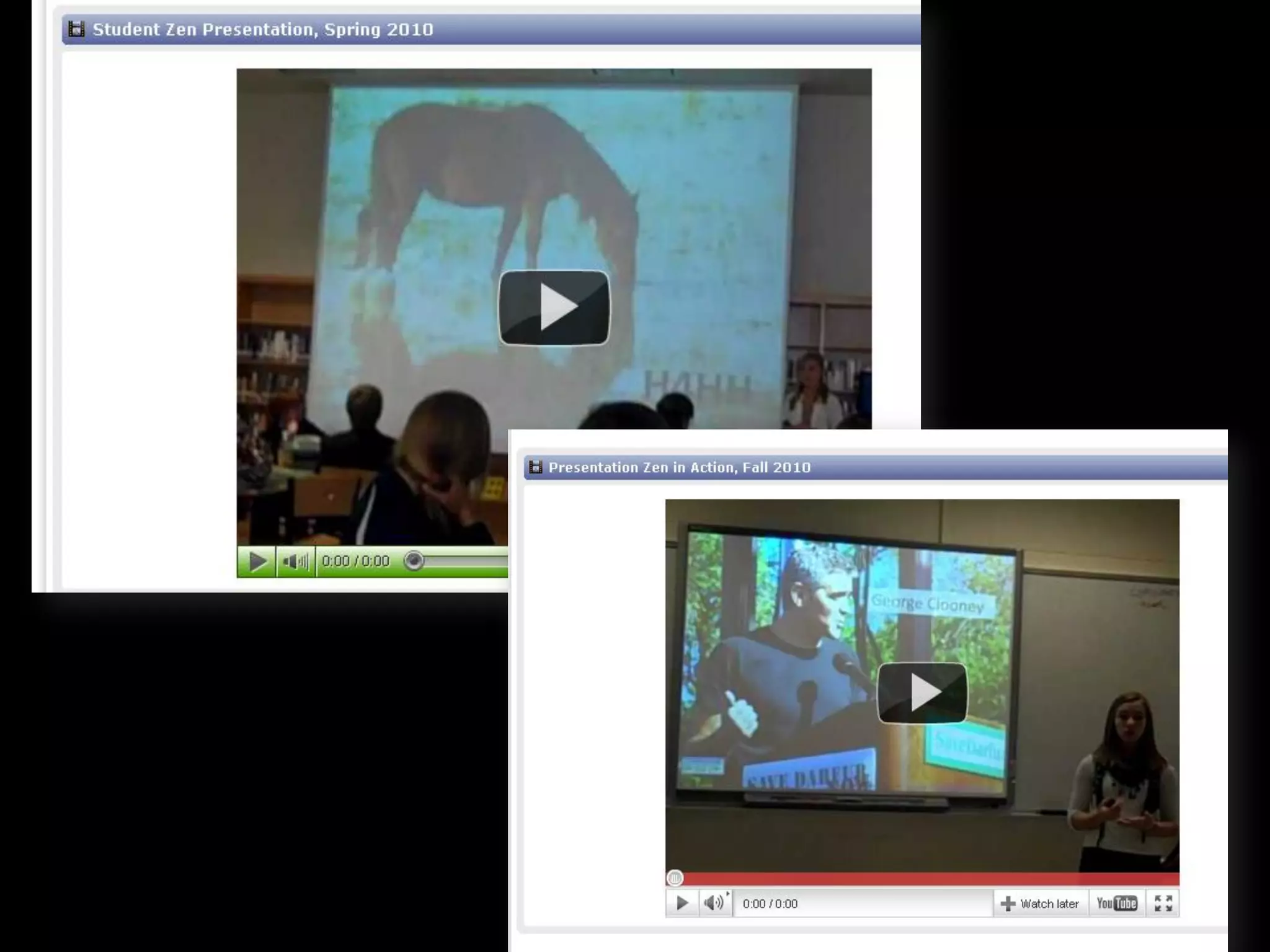
Original photography by Buffy J. Hamilton
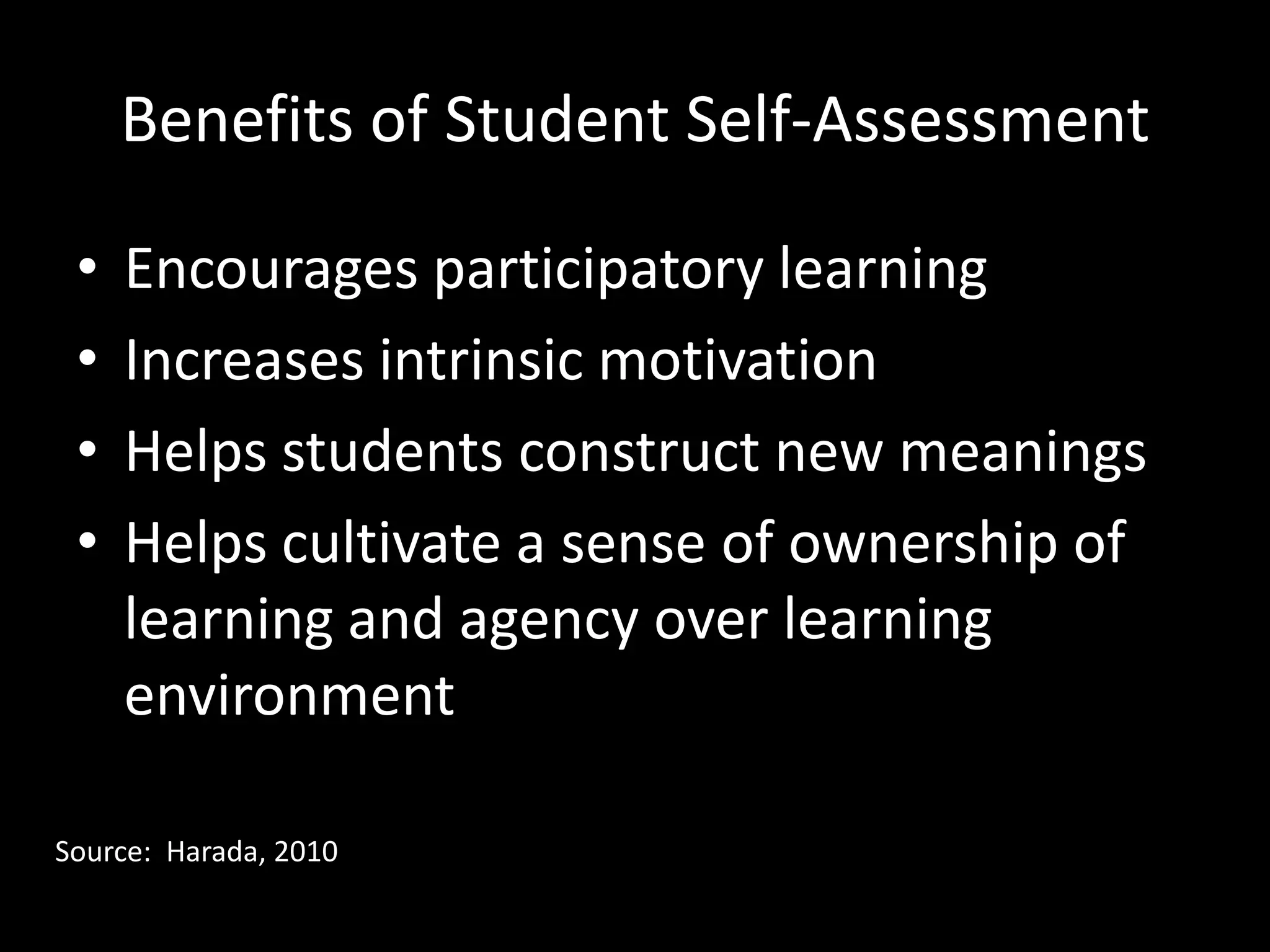
Benefits of Student Self-Assessment

 •   Encourages participatory learning
 •   Increases intrinsic motivation
 •   Helps students construct new meanings
 •   Helps cultivate a sense of ownership of
     learning and agency over learning
     environment

Source: Harada, 2010
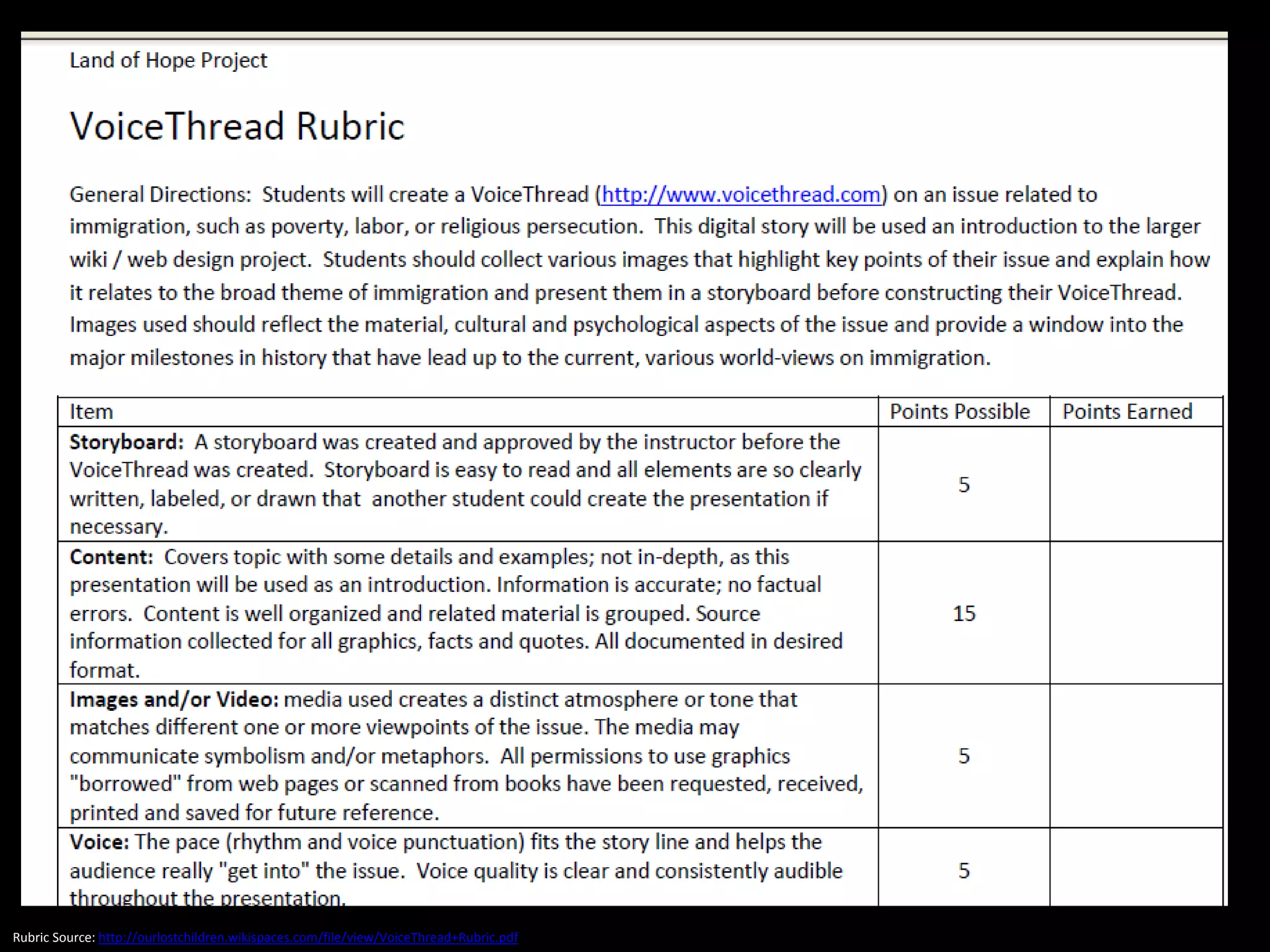
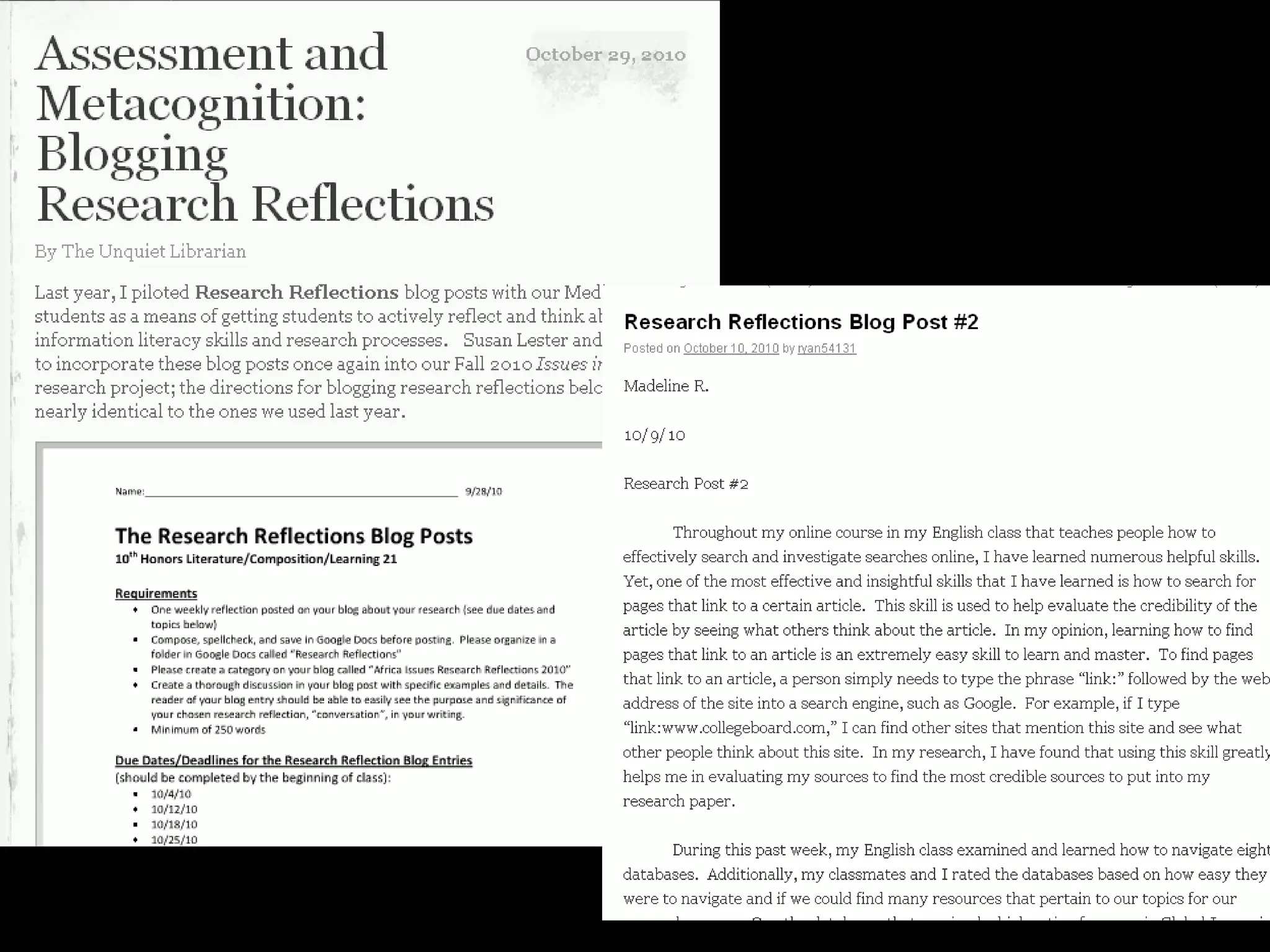
Rubric Source: http://ourlostchildren.wikispaces.com/file/view/VoiceThread+Rubric.pdf
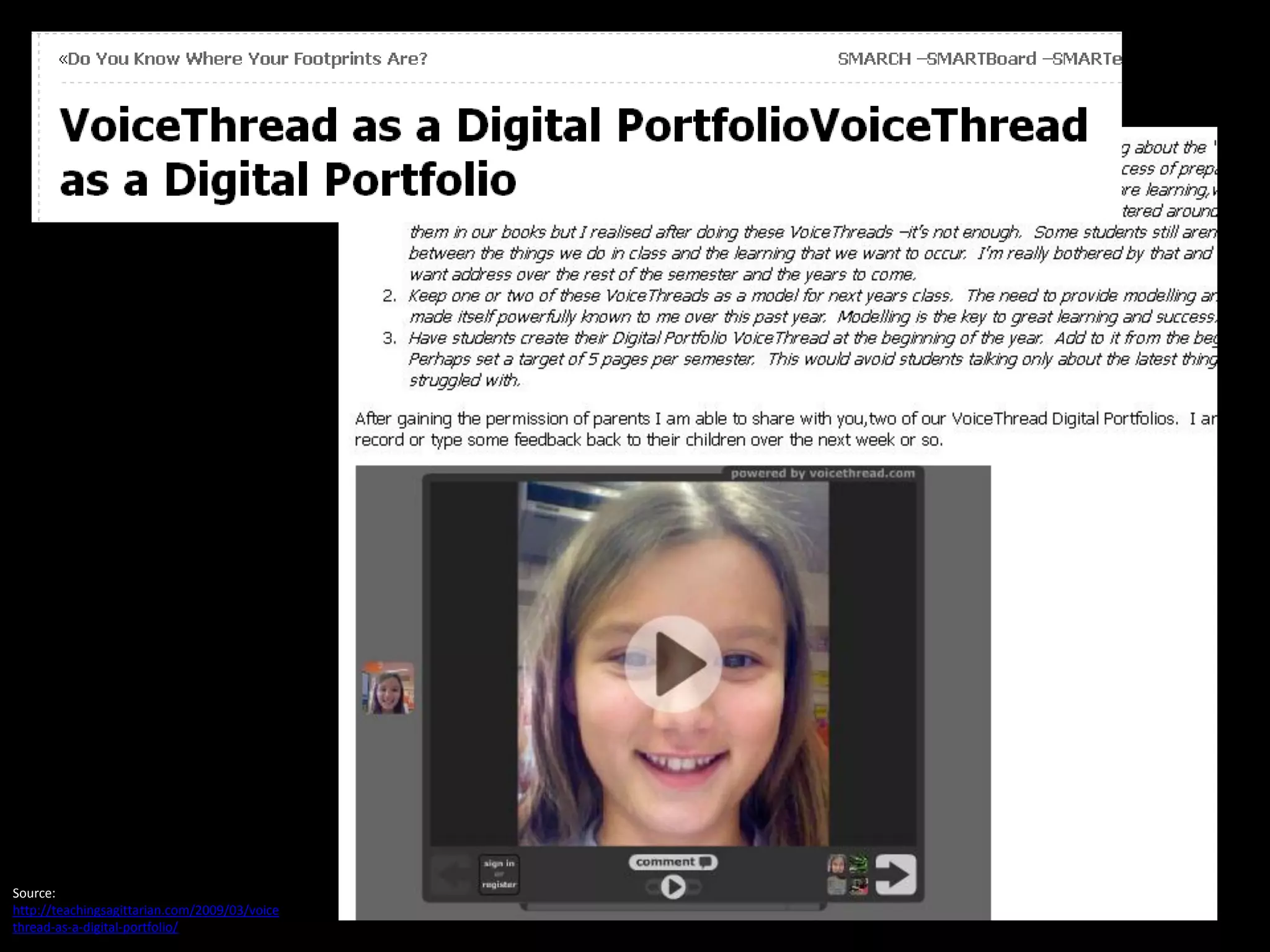
Source:
http://teachingsagittarian.com/2009/03/voice
thread-as-a-digital-portfolio/
application


CC image via http://www.flickr.com/photos/dcassaa/662891484/sizes/o/
CC image via http://www.flickr.com/photos/marcwathieu/2979581445/sizes/l/
CC image via
http://www.flickr.com/photos/xjrlokix/5097846224/si
zes/l/in/photostream/
contact information


buffy.hamilton@gmail.com
http://theunquietlibrarian.wordpress.com
http://buffyjhamilton.wordpress.com
@buffyjhamilton
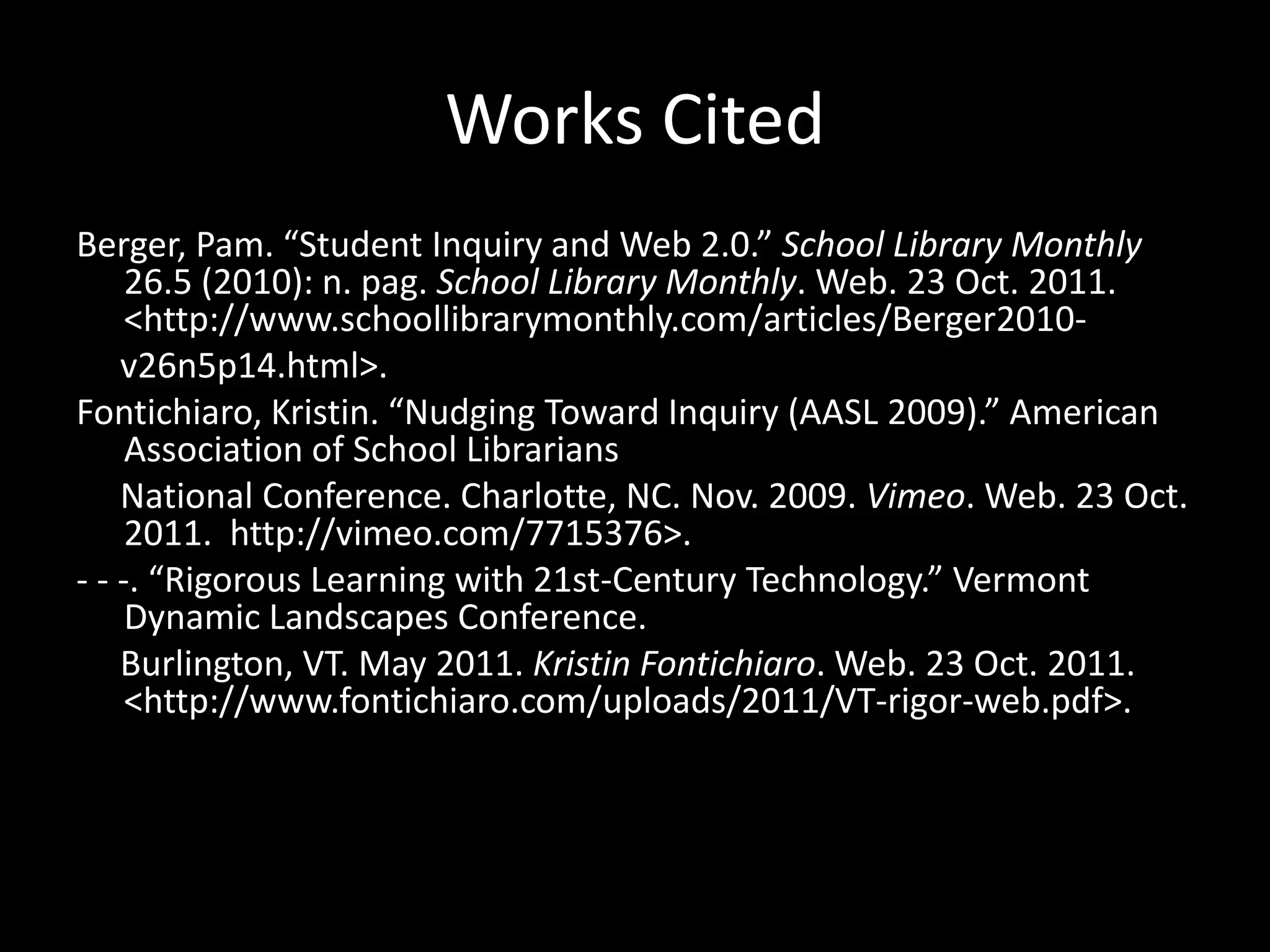
Works Cited
Berger, Pam. “Student Inquiry and Web 2.0.” School Library Monthly
     26.5 (2010): n. pag. School Library Monthly. Web. 23 Oct. 2011.
     <http://www.schoollibrarymonthly.com/articles/Berger2010-
    v26n5p14.html>.
Fontichiaro, Kristin. “Nudging Toward Inquiry (AASL 2009).” American
     Association of School Librarians
    National Conference. Charlotte, NC. Nov. 2009. Vimeo. Web. 23 Oct.
     2011. http://vimeo.com/7715376>.
- - -. “Rigorous Learning with 21st-Century Technology.” Vermont
     Dynamic Landscapes Conference.
    Burlington, VT. May 2011. Kristin Fontichiaro. Web. 23 Oct. 2011.
     <http://www.fontichiaro.com/uploads/2011/VT-rigor-web.pdf>.
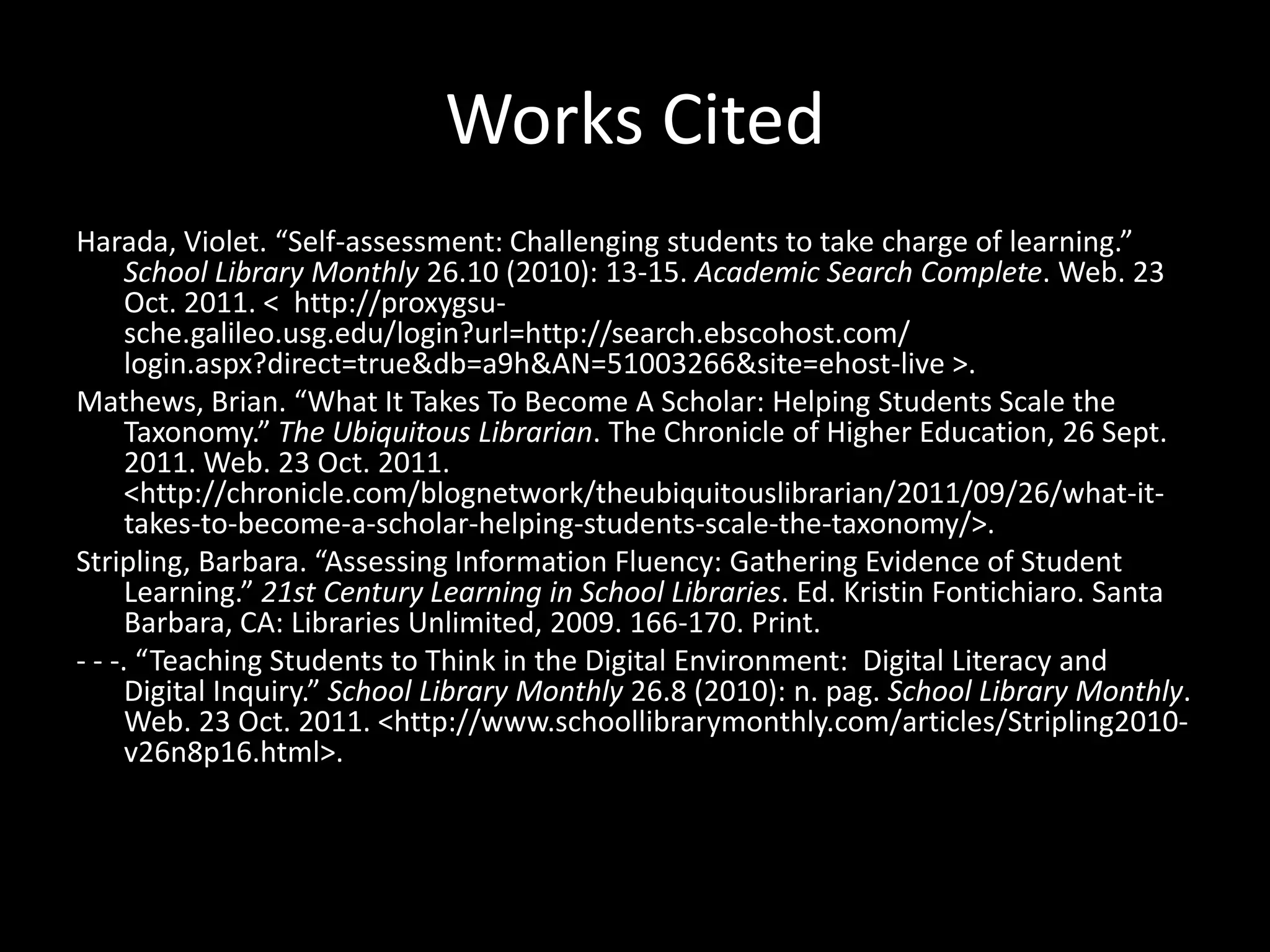
Works Cited
Harada, Violet. “Self-assessment: Challenging students to take charge of learning.”
      School Library Monthly 26.10 (2010): 13-15. Academic Search Complete. Web. 23
      Oct. 2011. < http://proxygsu-
      sche.galileo.usg.edu/login?url=http://search.ebscohost.com/
      login.aspx?direct=true&db=a9h&AN=51003266&site=ehost-live >.
Mathews, Brian. “What It Takes To Become A Scholar: Helping Students Scale the
      Taxonomy.” The Ubiquitous Librarian. The Chronicle of Higher Education, 26 Sept.
      2011. Web. 23 Oct. 2011.
      <http://chronicle.com/blognetwork/theubiquitouslibrarian/2011/09/26/what-it-
      takes-to-become-a-scholar-helping-students-scale-the-taxonomy/>.
Stripling, Barbara. “Assessing Information Fluency: Gathering Evidence of Student
      Learning.” 21st Century Learning in School Libraries. Ed. Kristin Fontichiaro. Santa
      Barbara, CA: Libraries Unlimited, 2009. 166-170. Print.
- - -. “Teaching Students to Think in the Digital Environment: Digital Literacy and
      Digital Inquiry.” School Library Monthly 26.8 (2010): n. pag. School Library Monthly.
      Web. 23 Oct. 2011. <http://www.schoollibrarymonthly.com/articles/Stripling2010-
      v26n8p16.html>.

Framing Transliterate Learning Through Inquiry and Participatory Culture

  • 1.
    Framing Transliterate Learning ThroughInquiry and Participatory Culture Buffy J. Hamilton | AASL 2011 CC image via http://www.flickr.com/photos/horiavarlan/4304581412/sizes/l/in/photostream/
  • 2.
    how are wehelping students create conversations about multiple ways of reading and writing today’s world?
  • 3.
    Transliteracy is theability to read, write and interact across a range of platforms, tools and media from signing and orality through handwriting, print, TV, radio and film, to digital social networks. Source: http://nlabnetworks.typepad.com/transliteracy/
  • 4.
    but what doesthat really mean?
  • 5.
  • 6.
    Transliteracy is anumbrella term encompassing different literacies and multiple communication channels that require active participation with and across a range of platforms, and embracing both linear and non-linear messages Dr. Susie Andretta London Metropolitan University Source: http://nlabnetworks.typepad.com/transliteracy/Andretta_Transliteracy.pdf
  • 7.
    Transliteracy is a“a convergence of literacies” (Lippincott, 2007: 17) as the boundaries between medial literacy, digital literacy, technology literacy and information literacy become blurred when individuals evolve from consumers of information to producers of content. Dr. Susie Andretta London Metropolitan University Source: http://nlabnetworks.typepad.com/transliteracy/Andretta_Transliteracy.pdf and http://net.educause.edu/ir/library/pdf/ERM07610.pdf
  • 8.
    “The most fundamentalnotion of transliteracy is the ability to adapt. It’s creating a literacy and fluidity between mediums that’s not tied to space or modality.” Ryan Nadel founder of 8 Leaf Digital Productions and an instructor at the Vancouver Film School Source: http://spotlight.macfound.org/featured-stories/entry/what-is-this-buzz-word-transliteracy-a-qa-with-ryan-nadel/
  • 9.
    Transliteracy is concernedwith mapping meaning across different media and not with developing particular literacies about various media. It is not about learning text literacy and visual literacy and digital literacy in isolation from one another but about the interaction among all these literacies. Tom Ipri Liaison Librarian to the College of Media Arts and Design at W. W. Hagerty Library at Drexel University Source: http://crln.acrl.org/content/71/10/532.full
  • 10.
    “…transliteracy is ashape-shifting eco-system of behaviours and it is probably neither possible nor desirable for anyone to understand enough to know the whole elephant. The vital thing is to remember it is always there and in constant motion. This means recognising the limits of your own knowledge and accepting a degree of messiness and uncertainty.” Professor Sue Thomas De Montfort University, Leicester, UK Source: http://nlabnetworks.typepad.com/transliteracy/2010/12/argue.html
  • 11.
    …thinking linearly aboutliteracy is seldom a good idea. Literacy should be thought of as a holistic ecology, not a linear series of events and changes… Professor Sue Thomas De Montfort University, Leicester, UK Source: http://bit.ly/p4g9YJ
  • 12.
    “the process ofbeing transliterate does not have an end point. Instead, I like to think of the transliteracy process as being like a nautilus that is constantly growing and adding chambers to its shell.” Jamie Hollier Project Coordinator for Public Computing Centers at ce: http://www.jamiehollier.com/2011/07/supporting-transliteracy-part-1/ Colorado State Library mage via http://www.flickr.com/photos/donlonphoto/2721385316/
  • 13.
    “embrace the potentialsand challenges of this [participatory] emerging culture not as a replacement for existing print practices but as an expansion of them” ~henry jenkins~
  • 14.
  • 15.
    CC image viahttp://bit.ly/r8oa8n
  • 16.
    a vision of today’s learners CC image via http://www.flickr.com/photos/missfortune/4595054105/in/faves- 10557450@N04/
  • 17.
    growing up digital Image used under a CC license from http://www.flickr.com/photos/courosa/3605504536/sizes/o/
  • 18.
    mobile Image used undera CC license from http://www.flickr.com/photos/_lovenothing/3772984885/sizes/l/
  • 19.
  • 20.
    continuously connected CC image via http://www.flickr.com/photos/martosc/5163826399/sizes/l/in/photostream/
  • 21.
  • 22.
    information is plentiful;effective filtering is a challenge CC image via http://www.flickr.com/photos/28481088@N00/3430131473/sizes/o/in/photostream/
  • 23.
    they’re leaving digitalfootprints CC image via http://www.flickr.com/photos/andy_5322/ 104324029/sizes/z/
  • 24.
    the myth of the digital native CC image via http://www.flickr.com/photos/limonada/34072350 5/sizes/o/in/photostream/
  • 25.
  • 26.
    many lack new formsof “literacy, the energy supply of the information age” deborah brandt
  • 27.
    many lack accessor resources to connect and create
  • 28.
    “this means thatour democratic institutions (schools and libraries particularly) have to work hard and thoughtfully to mitigate these forces.” Deborah Brandt
  • 29.
    “the morethat the school organizes literacy teaching and learning to serve the needs of the economic system, the more it betrays its democratic possibilities” deborah brandt
  • 30.
    CC image viahttp://www.flickr.com/photos/jphilipson/582274247/sizes/l/in/photostream/
  • 31.
    how can educatorsharness the power of social media and new media literacies to close the gap and grow each student’s cultural capital?
  • 32.
    how do wedisrupt what paulo freire terms the “banking” system of education that devalues inquiry? Image used under a CC license from http://www.flickr.com/photos/stuckincustoms/4034124468/sizes/l/
  • 33.
    we can’t cultivatenetworked learners without putting pedagogy before tools CC image via http://www.flickr.com/photos/wheatfields/116732195/sizes/l/in/photostream/
  • 34.
    the inquiry driven classroom… CC image via http://www.flickr.com/photos/atbaker/53743882/sizes/l/in/faves- 10557450@N04/
  • 35.
    Graphic used withpermission from Dr. Barbara Stripling
  • 36.
    values dis-ease--there aremany questions raised without answers Source: http://www.slideshare.net/buffyjhamilton/buffy-hamilton-response-to-paulo-freire Image used under a CC license from http://www.flickr.com/photos/eleaf/2536358399/sizes/l/
  • 37.
    establishes more than the teacher asvalidator of knowledge/ work CC image via http://www.flickr.com/photos/sudhamshu/4208690449/sizes/o/in/photostr eam/ Source: http://www.slideshare.net/buffyjhamilton/buffy-hamilton-response-to-paulo-freire
  • 38.
    nurtures a feelingof responsibility to oneself and to the class CC image via http://www.flickr.com/photos/alltoomuch/3389937799/sizes/l/in/faves- 10557450@N04/ Source: http://www.slideshare.net/buffyjhamilton/buffy-hamilton-response-to-paulo-freire
  • 39.
    recognizes classroom asa complicated, non- laboratory place filled with complex, caring human beings Source: http://www.slideshare.net/buffyjhamilton/buffy-hamilton-response-to-paulo-freire
  • 40.
    fights culture ofschool that wants THE right answer Source: http://www.slideshare.net/buffyjhamilton/buffy-hamilton-response-to-paulo-freire
  • 41.
    exercises patience- doesn'tgive up too quickly and realizes community/learning/inquiry doesn't happen overnight Source: http://www.slideshare.net/buffyjhamilton/buffy-hamilton-response-to-paulo-freire
  • 42.
    values transparency andmake the class part of determining what is occurring Source: http://www.slideshare.net/buffyjhamilton/buffy-hamilton-response-to-paulo-freire Image used under a CC license from http://www.flickr.com/photos/somegeekintn/3368983089/sizes/l/
  • 44.
    relatively low barriersto artistic expression and civic engagement
  • 45.
    strong support forcreating and sharing one’s creations with others
  • 46.
    what is knownby the most experienced is passed along to novices
  • 47.
    members believe thattheir contributions matter
  • 48.
    members feel somedegree of social connection with one another CC image via http://www.flickr.com/photos/buildingunity/303497031/sizes/l/in/faves-10557450@N04/
  • 49.
    literate learning communities form around shared interests, questions, and passions in a participatory site of practice CC image via http://www.flickr.com/photos/auro/230377281/sizes/o/in/faves- 10557450@N04/
  • 50.
    a participatory climateamplifies the possibilities for creating conversations for learning via multiple mediums
  • 51.
  • 52.
    how can aninquiry stance on learning encourage participatory learning and transliterate learning practices/experiences?
  • 53.
    Graphic used withpermission from Dr. Barbara Stripling
  • 54.
    1 connect
  • 55.
    “awakening prior knowledge” Kristin Fontichiaro CC image via http://www.flickr.com/photos/guccibear2005/141861924/sizes/l/in/photostream/
  • 56.
    Connecting providing context and background providing focus to deal knowledge/building with information schema overload (big idea thinking)
  • 57.
    Connecting Collaborative Scale/share Provide knowledge constructed choices building knowledge
  • 58.
    Connecting: Transliterate Strategies KWL (traditional paper and virtual means) and pre-searching Face to face discussions (scaled and shared through social media/cloud computing Mindmapping
  • 61.
  • 63.
  • 65.
    CC image viahttp://www.flickr.com/photos/shareski/5669939986/sizes/l/in/photostream/
  • 66.
    2 wonder CC image via http://www.flickr.com/photos/mymollypop/2646559132/sizes/l/
  • 67.
    Wonder Scale/share Small/whole constructed Developing group knowledge questions brainstorming with larger “classroom”
  • 78.
    3 investigate
  • 79.
    Investigate Organizing Evaluating Search Skills Information Information Reflection/ Information Ethical use of Metacognition dashboards information
  • 83.
    inquiry, engagement, andcollective intelligence face to face
  • 84.
    inquiry, engagement, andcollective intelligence via virtual mediums
  • 86.
  • 89.
  • 91.
  • 98.
    citation management andcollaborative source evaluation
  • 99.
    4 construct
  • 100.
    Constructing New Understandings Synthesis Finding patterns/ relationships Developing conclusions
  • 101.
  • 102.
    CC image viahttp://www.flickr.com/photos/ableman/283139915/sizes/l/in/photostream/
  • 103.
    CC image viahttp://www.flickr.com/photos/tambako/3129100592/sizes/l/in/faves- 10557450@N04/
  • 104.
    CC image viahttp://www.flickr.com/photos/familymwr/4989283309/sizes/l/in/photostream/
  • 105.
  • 108.
    5 express CC image via http://www.flickr.com/photos/clappstar/3588547020/sizes/l/in/faves-10557450@N04/
  • 109.
    Express SharedLearning Authenticity/ Digital Rigor Creativity
  • 110.
    “Looking at thisacross the disciplines you start to see how important the knowledge-creation activity plays into the sense of identity. The overriding theme is that one does not become a “scholar” until they have created something new. In their eyes, it is the act of creation that distinguishing the student from the scholar.” Brian Mathews, Assistant University Librarian at UC Santa Barbara
  • 112.
  • 114.
  • 125.
    6 reflect CC image via http://www.flickr.com/photos/dcassaa/662891484/sizes/o/
  • 126.
    Reflect process product
  • 127.
    Reflect: Assessment andEvaluation Formative Self Summative
  • 128.
    formative assessment: the measurement of knowledge and skills during the process of learning Source: Stripling, 2007/2009, pp. 167-68
  • 129.
    Formative Assessment •Formative assessments engage the school library media specialist, classroom teacher, and student in thinking about the learning process while it is happening so that adjustments can be made if needed • Ongoing and reflective in nature • Frames teachers and students as partners in learning Source: Stripling, 2009
  • 130.
    Examples of StudentLed Formative Assessments • Reflecting (learning • Questions logs or blogs, • Sharing, Reciprocal notetaking) Teaching • Video recorded • Peer Review reflections/narratives • Graphic organizers (KWL charts, concept maps/mind mapping, idea webs) Source: Stripling, 2009
  • 131.
    summative assessment is the measurementof knowledge and skills at the end of a process of learning in order to determine the amount and quality of learning Source: Stripling, 2007/2009, pp. 167-68
  • 132.
    Summative Assessments • Presentations • Multimedia creations (Voice Thread, Video, • Portfolios Glogster) • Text based papers • Tests/Exams • Reflective narratives • Performance based tasks Source: Stripling, 2009
  • 133.
    student self-assessment: who isin charge of your learning?
  • 134.
    Standards for the21st Century Learner in Action Original photography by Buffy J. Hamilton
  • 135.
    Benefits of StudentSelf-Assessment • Encourages participatory learning • Increases intrinsic motivation • Helps students construct new meanings • Helps cultivate a sense of ownership of learning and agency over learning environment Source: Harada, 2010
  • 136.
  • 138.
  • 143.
    application CC image viahttp://www.flickr.com/photos/dcassaa/662891484/sizes/o/
  • 144.
    CC image viahttp://www.flickr.com/photos/marcwathieu/2979581445/sizes/l/
  • 145.
  • 146.
  • 147.
    Works Cited Berger, Pam.“Student Inquiry and Web 2.0.” School Library Monthly 26.5 (2010): n. pag. School Library Monthly. Web. 23 Oct. 2011. <http://www.schoollibrarymonthly.com/articles/Berger2010- v26n5p14.html>. Fontichiaro, Kristin. “Nudging Toward Inquiry (AASL 2009).” American Association of School Librarians National Conference. Charlotte, NC. Nov. 2009. Vimeo. Web. 23 Oct. 2011. http://vimeo.com/7715376>. - - -. “Rigorous Learning with 21st-Century Technology.” Vermont Dynamic Landscapes Conference. Burlington, VT. May 2011. Kristin Fontichiaro. Web. 23 Oct. 2011. <http://www.fontichiaro.com/uploads/2011/VT-rigor-web.pdf>.
  • 148.
    Works Cited Harada, Violet.“Self-assessment: Challenging students to take charge of learning.” School Library Monthly 26.10 (2010): 13-15. Academic Search Complete. Web. 23 Oct. 2011. < http://proxygsu- sche.galileo.usg.edu/login?url=http://search.ebscohost.com/ login.aspx?direct=true&db=a9h&AN=51003266&site=ehost-live >. Mathews, Brian. “What It Takes To Become A Scholar: Helping Students Scale the Taxonomy.” The Ubiquitous Librarian. The Chronicle of Higher Education, 26 Sept. 2011. Web. 23 Oct. 2011. <http://chronicle.com/blognetwork/theubiquitouslibrarian/2011/09/26/what-it- takes-to-become-a-scholar-helping-students-scale-the-taxonomy/>. Stripling, Barbara. “Assessing Information Fluency: Gathering Evidence of Student Learning.” 21st Century Learning in School Libraries. Ed. Kristin Fontichiaro. Santa Barbara, CA: Libraries Unlimited, 2009. 166-170. Print. - - -. “Teaching Students to Think in the Digital Environment: Digital Literacy and Digital Inquiry.” School Library Monthly 26.8 (2010): n. pag. School Library Monthly. Web. 23 Oct. 2011. <http://www.schoollibrarymonthly.com/articles/Stripling2010- v26n8p16.html>.