This document defines and provides examples of key visual literacy terms used in visual media including:
- Gaze, salience, modality, color symbolism, and vectors which are used to direct audience attention and elicit certain feelings.
- Camera shots including low angle, high angle, eye level, close up, extreme close up, long shot, and extreme long shot which are used to manipulate how powerful or connected the audience feels to the subject.
- These various visual literacy techniques can be employed to achieve effects like making a subject appear powerful or powerless, connecting or distancing the audience, and focusing attention on specific elements.
In this document
Powered by AI
Introduction to visual literacy terms, emphasizing the importance of understanding visual communication.
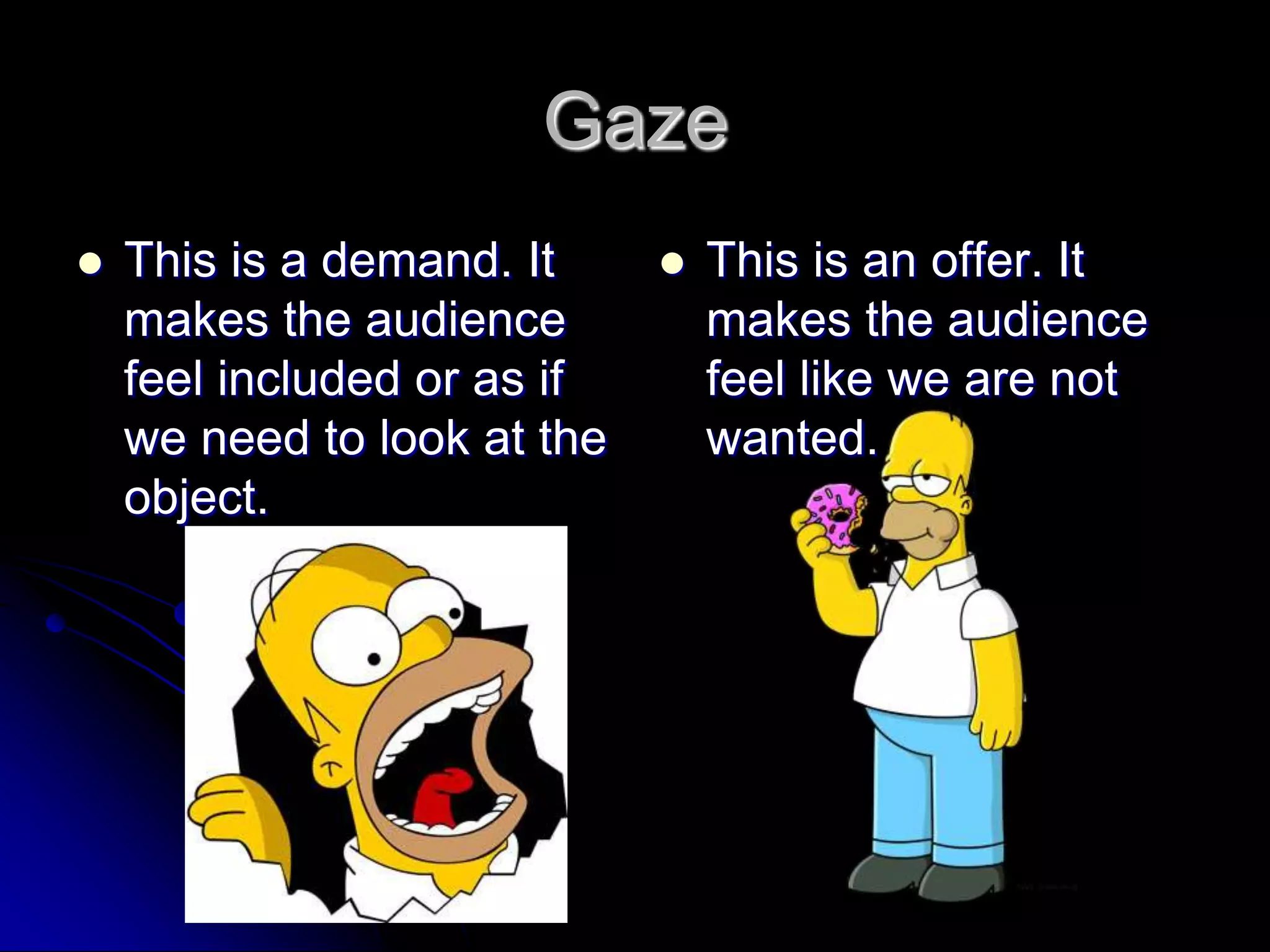
Explores the concept of gaze, distinguishing between a demand and an offer in visual engagement.
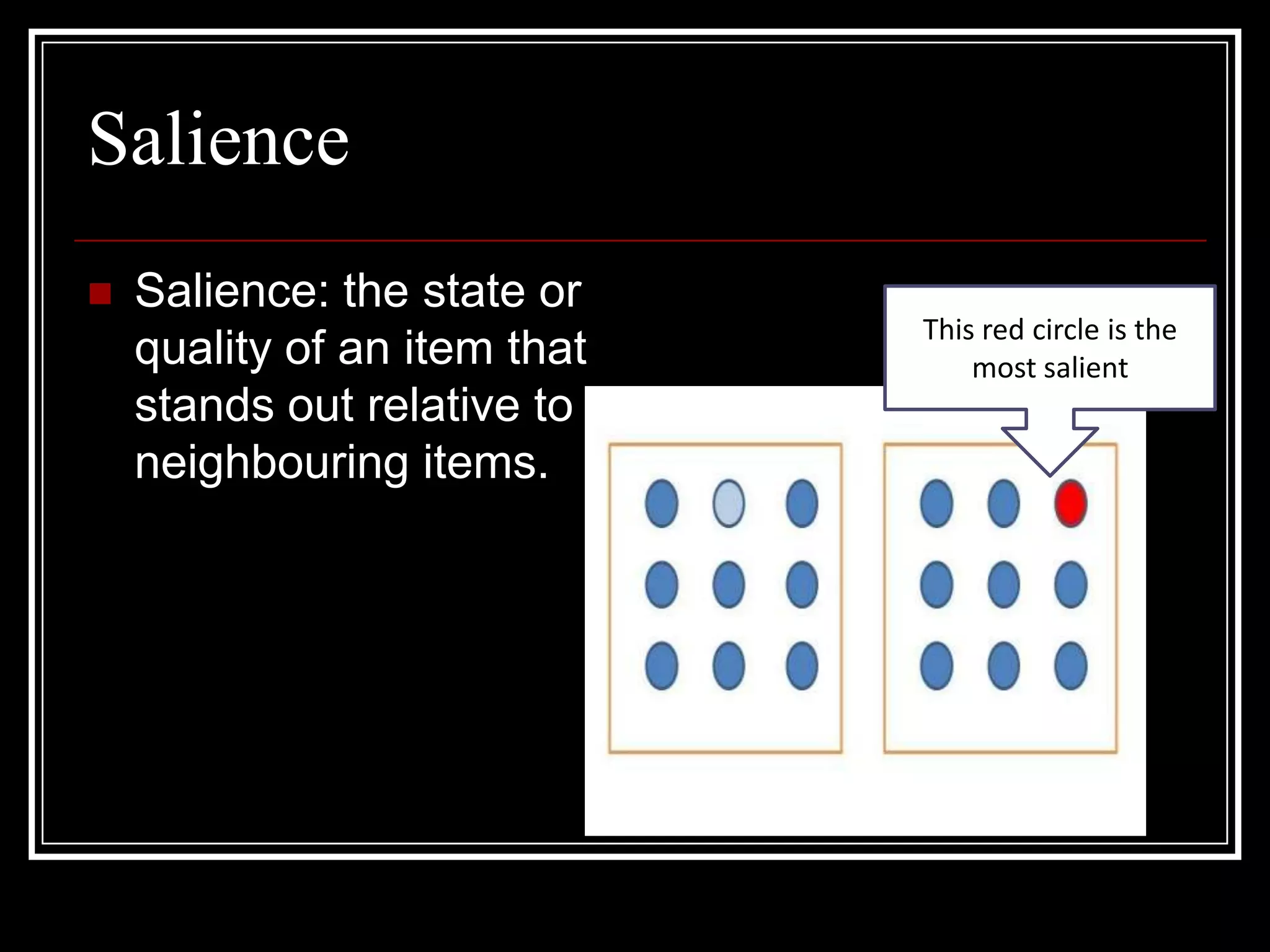
Defines salience, highlighting how certain items attract attention more than others, exemplified by a red circle.
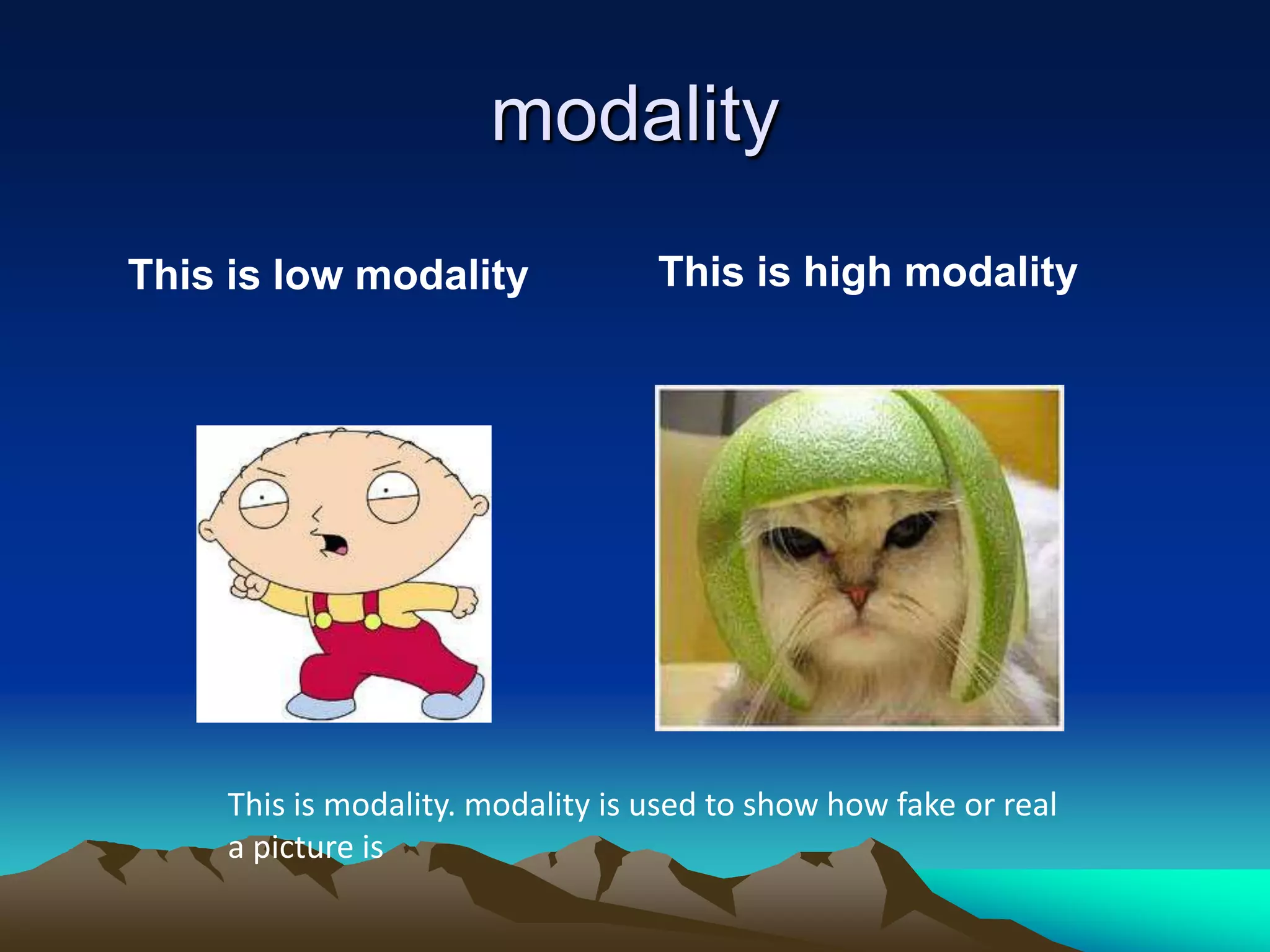
Introduces modality, differentiating between high and low modality to convey realism in visuals.
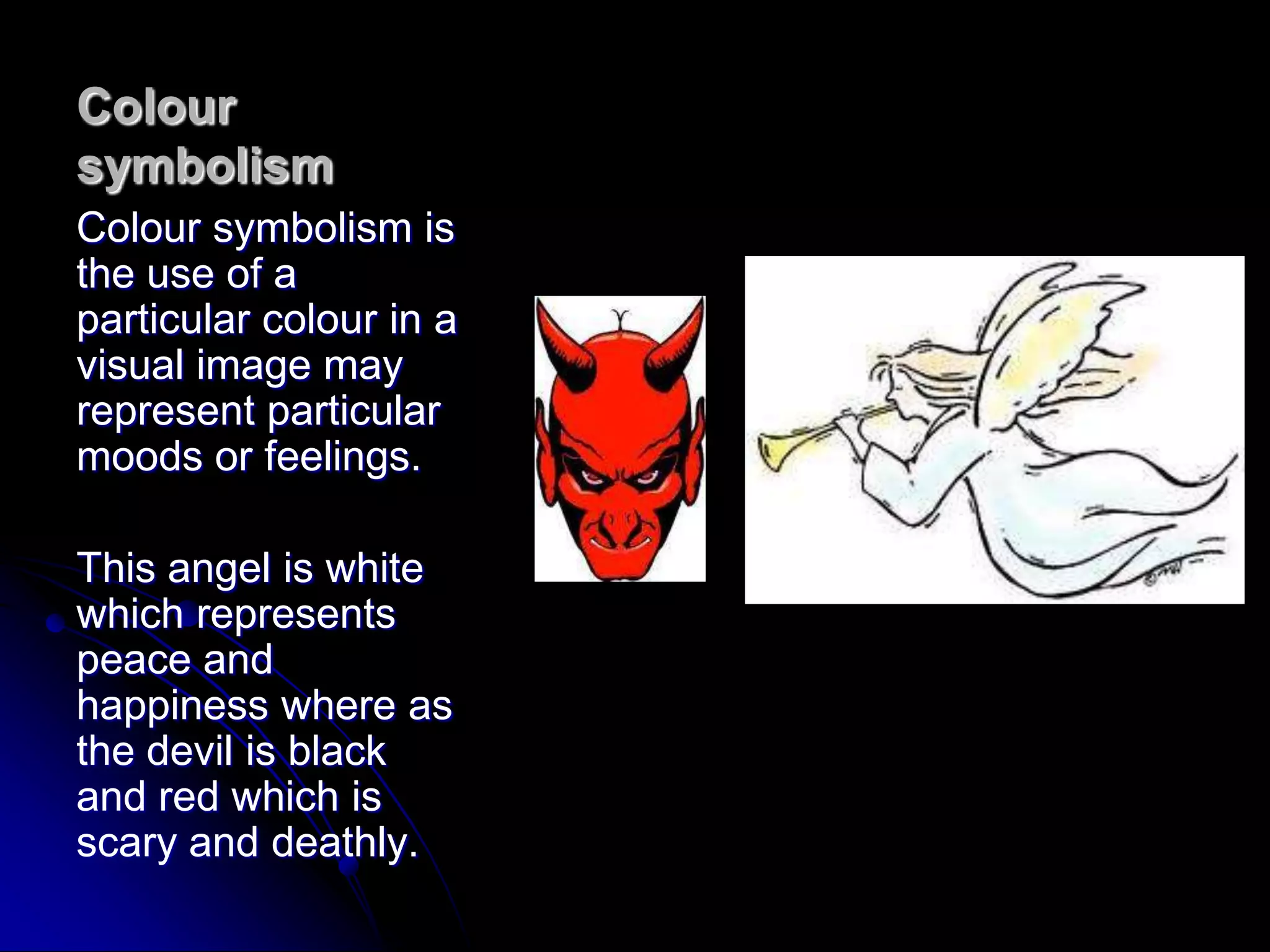
Discusses how color choice in visuals symbolizes emotions and moods, using examples of an angel vs a devil.
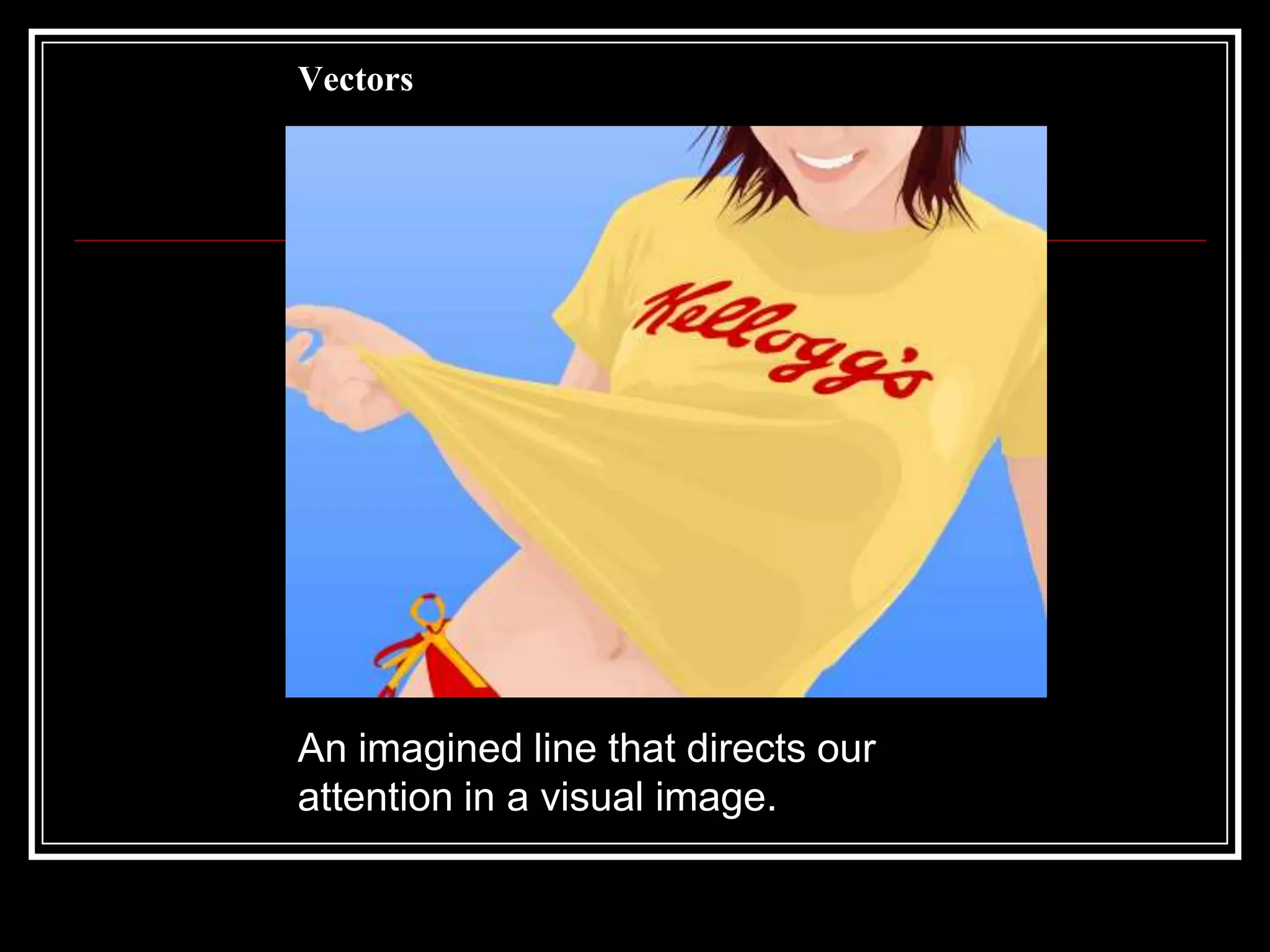
Defines vectors as imaginary lines in visuals that guide viewer attention within the image.
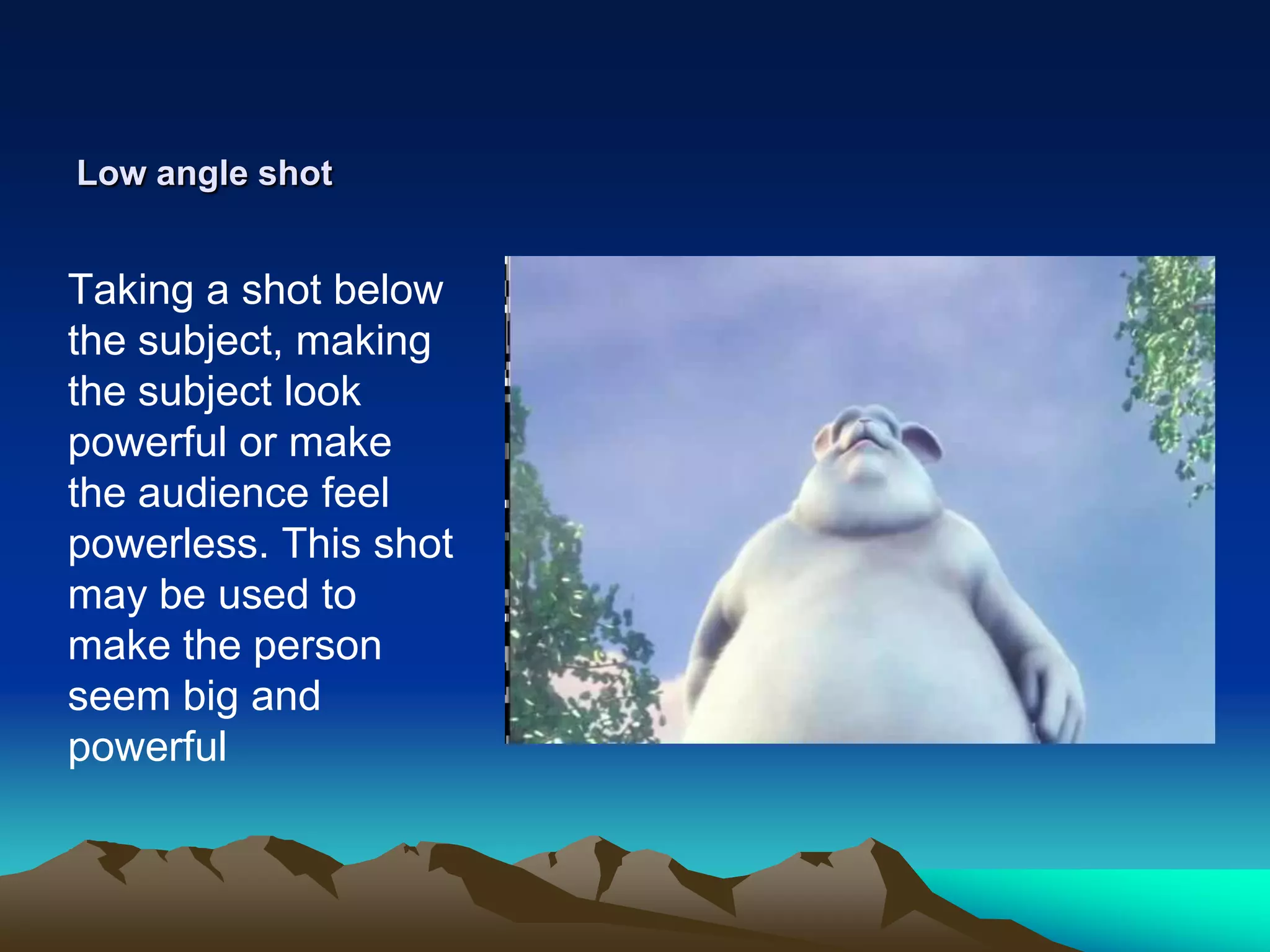
Describes low angle shots that portray subjects as powerful while making the audience feel small.
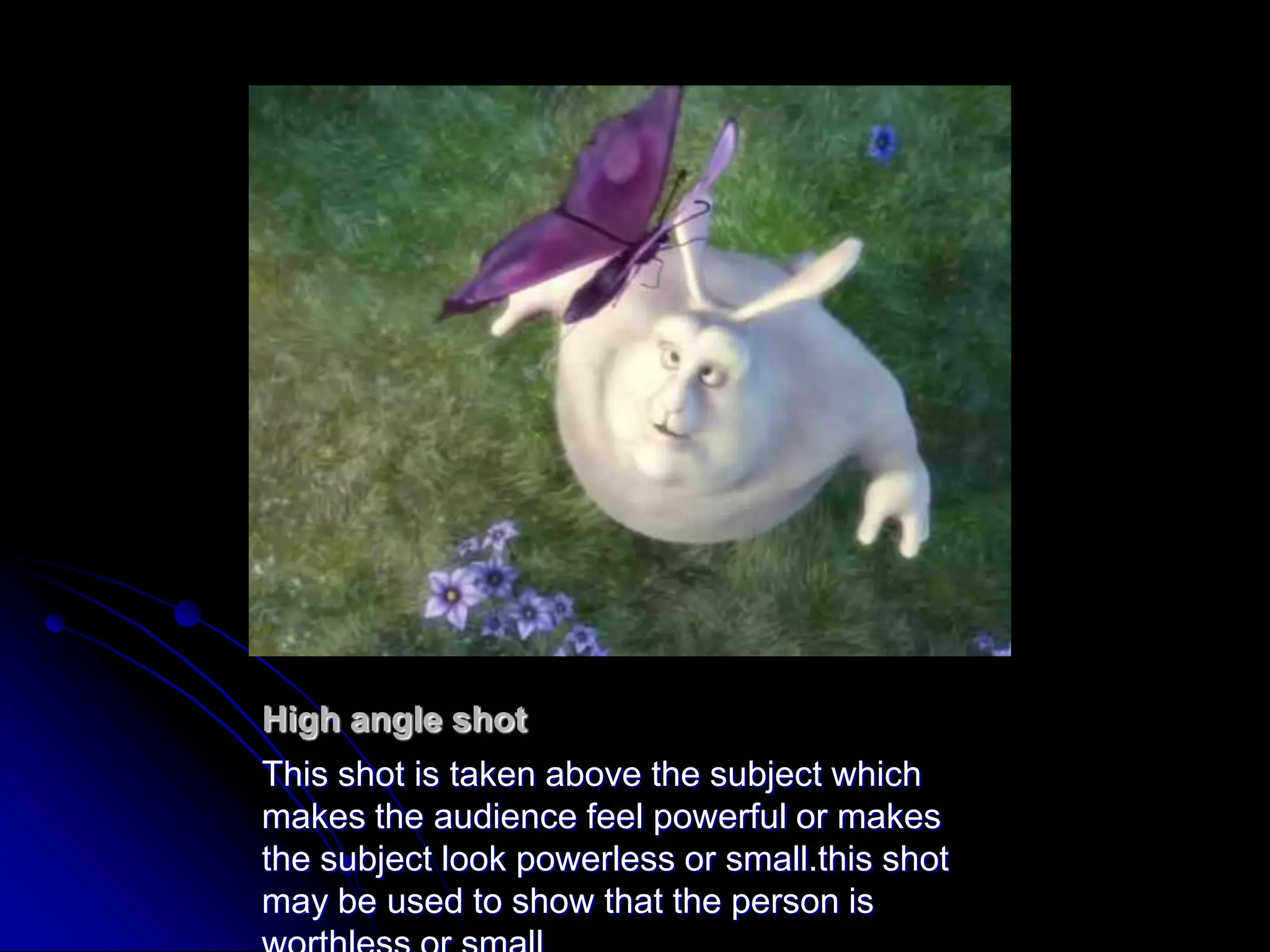
Explains high angle shots that diminish the subject's power, making them appear small and worthless.
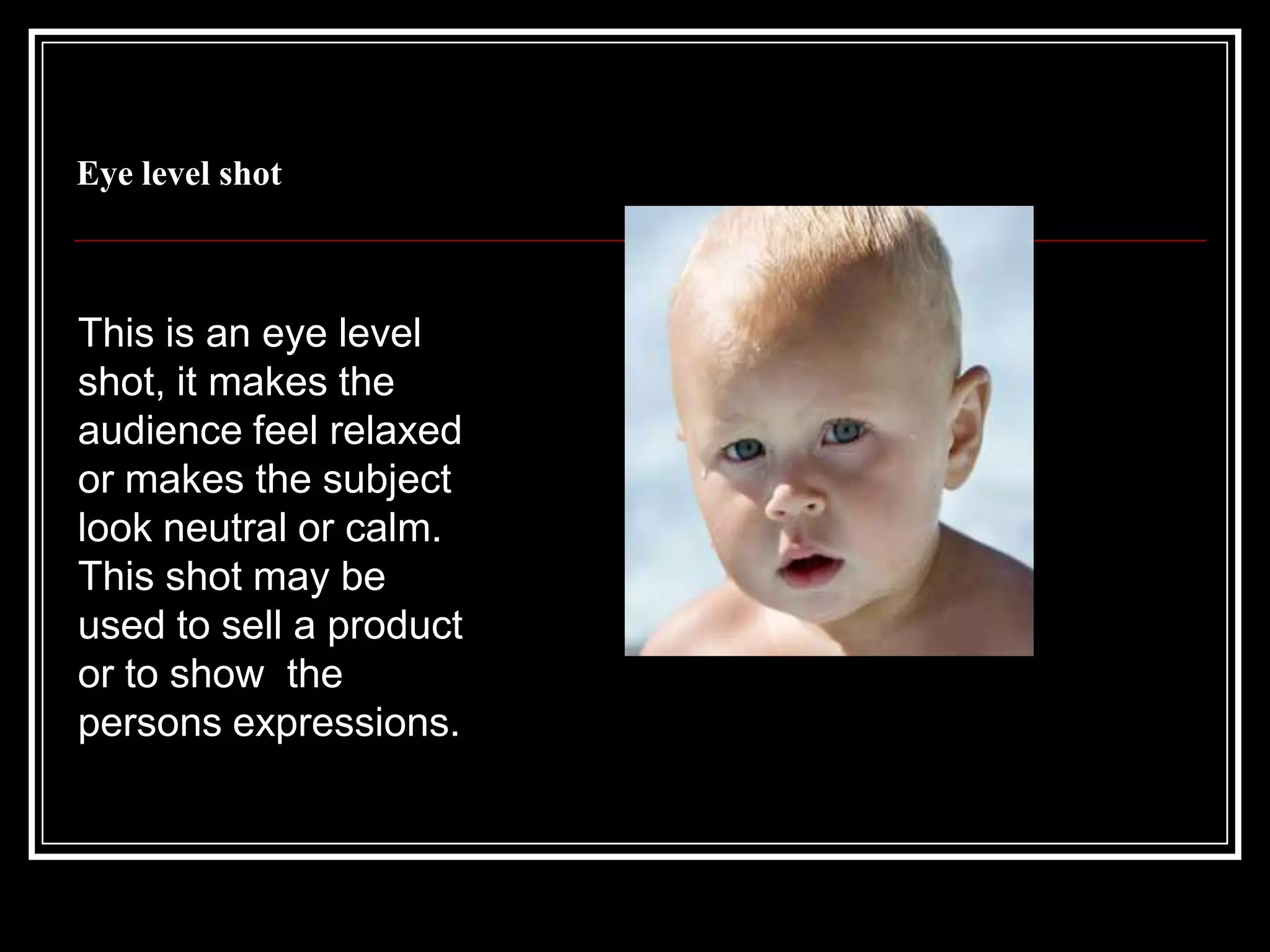
Details eye level shots that create a sense of neutrality and calmness, aiding product presentation.
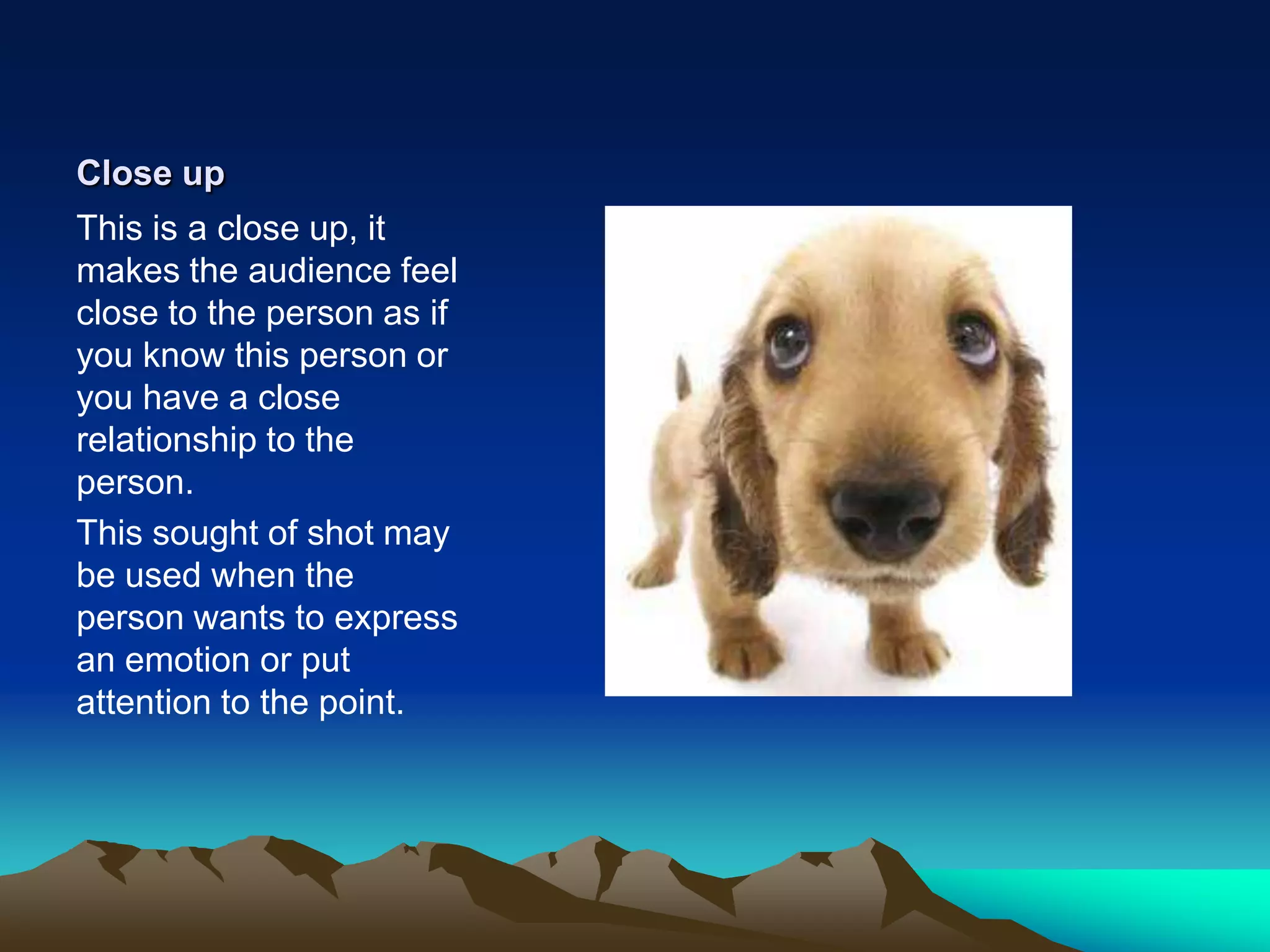
Defines close up shots that foster intimacy and connection with subjects while conveying emotions.
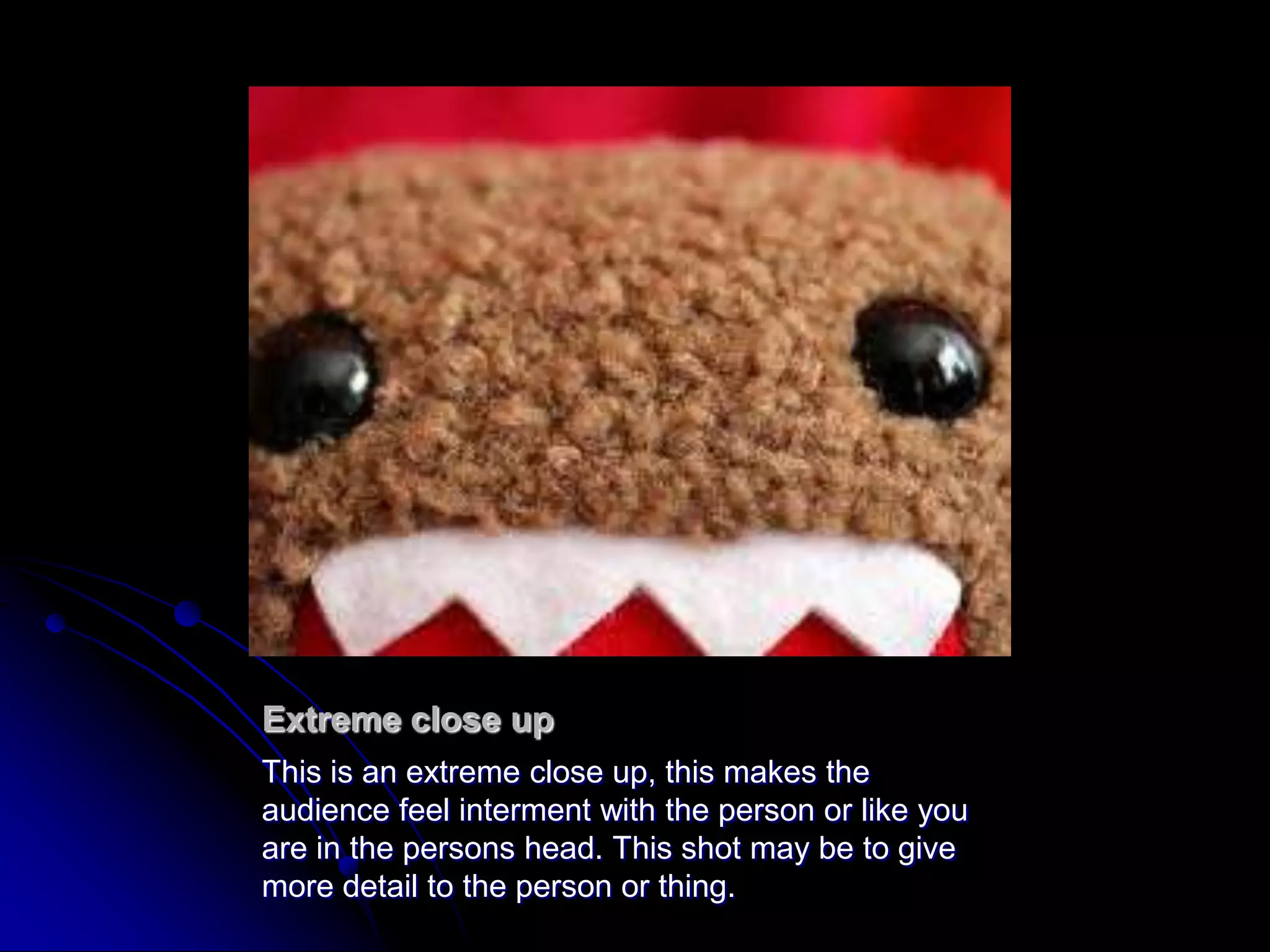
Explains extreme close up shots that delve deeply into subjects' emotions, enhancing detail and connection.
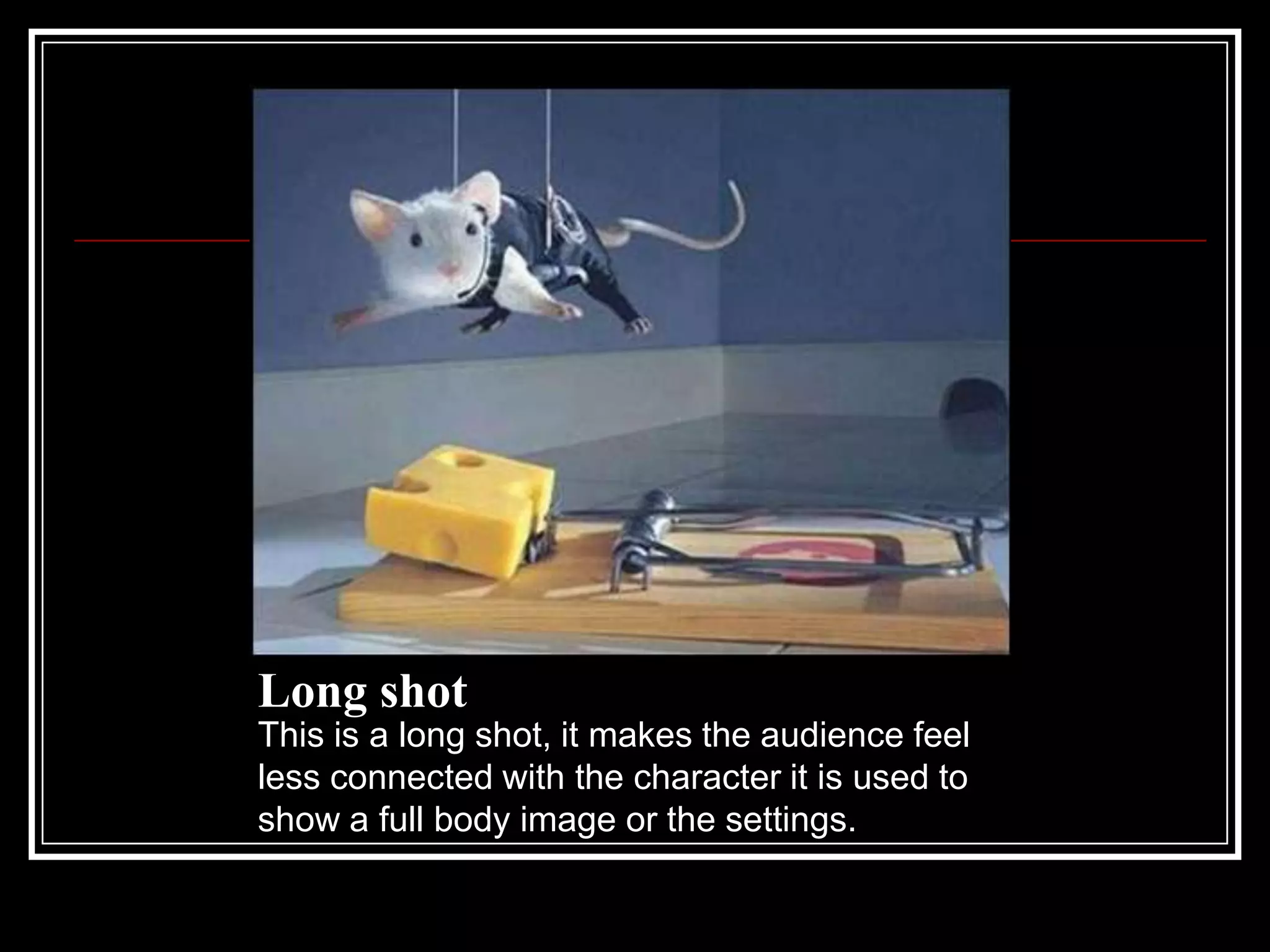
Describes long shots that reduce audience connection by presenting the full body image within a setting.
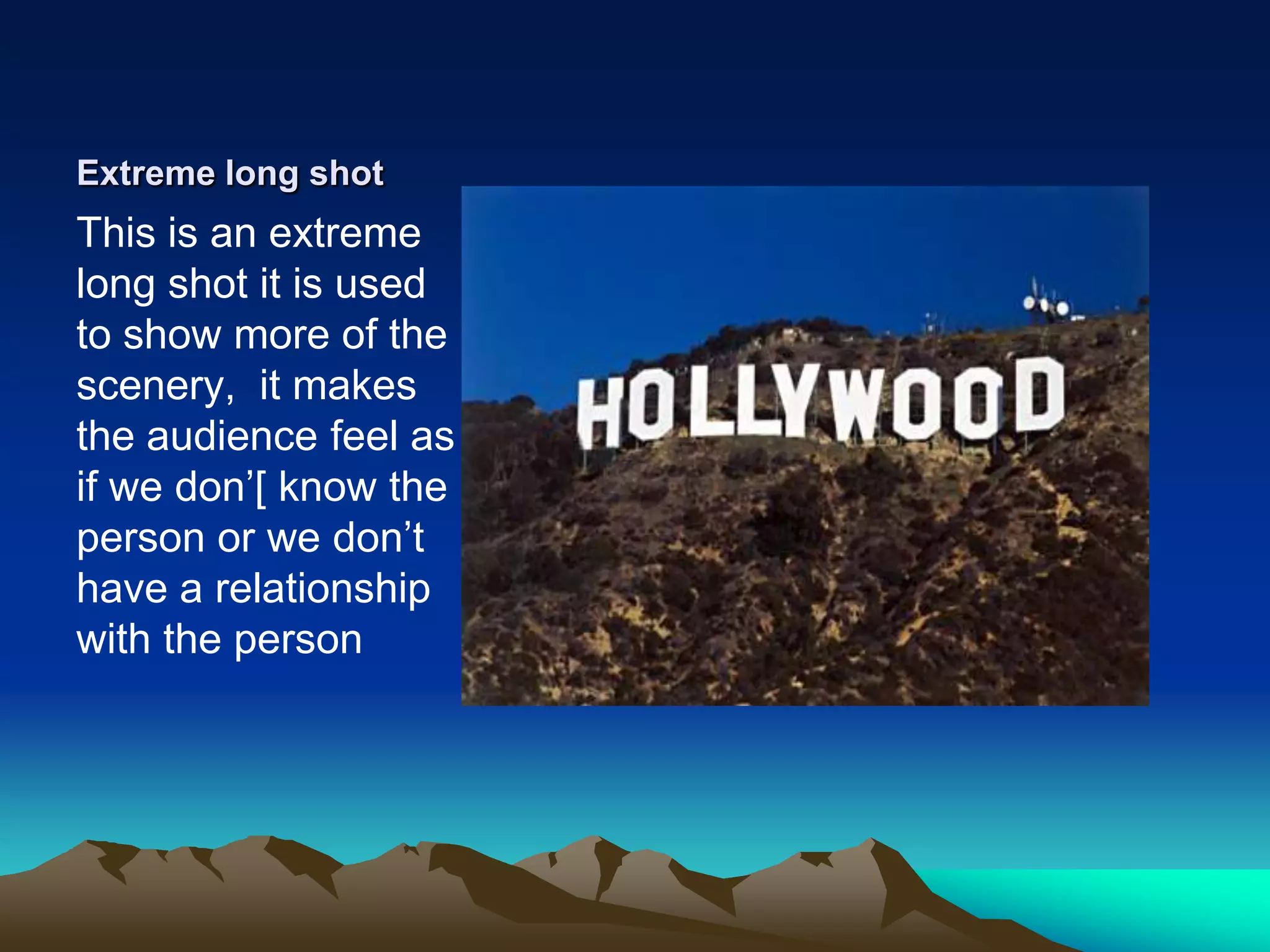
Discusses extreme long shots that focus on scenery, evoking a feeling of distance from characters.
Wraps up the presentation with gratitude towards the audience, acknowledging their engagement.
GazeThis is ademand. It makes the audience feel included or as if we need to look at the object.This is an offer. It makes the audience feel like we are not wanted.
3.
SalienceSalience: the stateor quality of an item that stands out relative to neighbouring items.This red circle is the most salient
4.
modalityThis is highmodalityThis is low modalityThis is modality. modality is used to show how fake or real a picture is
5.
Colour symbolismColour symbolismis the use of a particular colour in a visual image may represent particular moods or feelings.This angel is white which represents peace and happiness where as the devil is black and red which is scary and deathly.
Low angle shotTakinga shot below the subject, making the subject look powerful or make the audience feel powerless. This shot may be used to make the person seem big and powerful
8.
High angle shotThisshot is taken above the subject which makes the audience feel powerful or makes the subject look powerless or small.this shot may be used to show that the person is worthless or small
9.
Eye level shotThisis an eye level shot, it makes the audience feel relaxed or makes the subject look neutral or calm. This shot may be used to sell a product or to show the persons expressions.
10.
Close upThis isa close up, it makes the audience feel close to the person as if you know this person or you have a close relationship to the person.This sought of shot may be used when the person wants to express an emotion or put attention to the point.
11.
Extreme close upThisis an extreme close up, this makes the audience feel interment with the person or like you are in the persons head. This shot may be to give more detail to the person or thing.
12.
Long shotThis isa long shot, it makes the audience feel less connected with the character it is used to show a full body image or the settings.
13.
Extreme long shotThisis an extreme long shot it is used to show more of the scenery, it makes the audience feel as if we don’[ know the person or we don’t have a relationship with the person