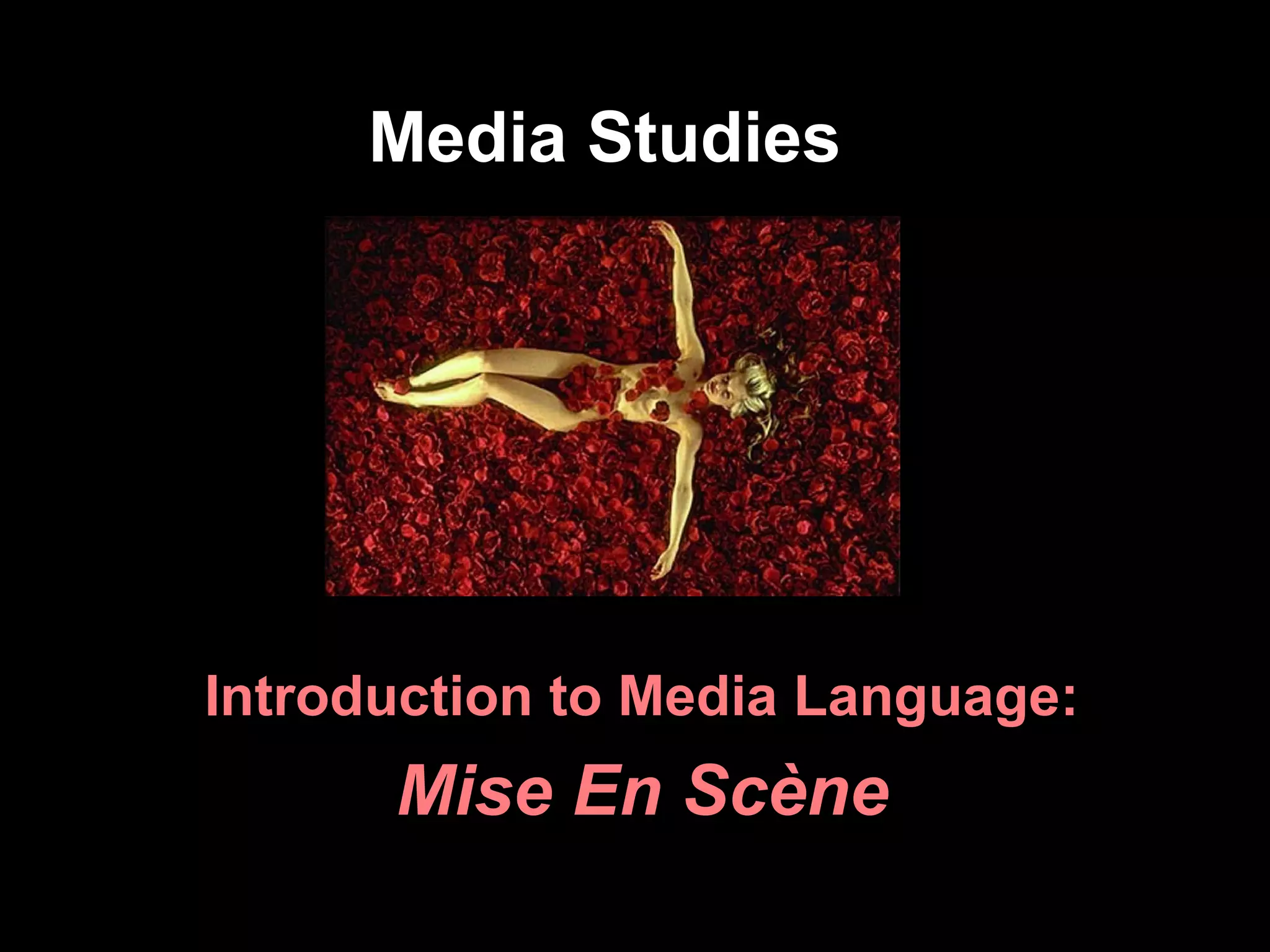
Media Studies
Introduction to Media Language:
Mise En Scène
Session Aims
By the end of the session you will be able to:
• Describe the concept of ‘mise en scene’
• Use correct media terminology when
discussing mise en scene
•
• Apply the concept to a scene
Definition: Mise En Scene
• A French term meaning what is put into a scene
or frame
• Visual information in front of the camera
• Communicates essential information to the
audience
• Made up of 6 elements: Can you guess what
they are?
The 6 Elements of Mise en Scene
• Settings
•
• Props
• Costume, hair & make up
• Performance, facial expressions, body language.
• Positioning and movement of characters/objects
within the frame
• Lighting & colour
Each aspect of mise-en-
scene has encoded
meanings and sends
signals to the audience
about how we are
supposed to feel at a
certain point
1. Settings
• Settings & Locations play an important part and are not
just ‘backgrounds’.
• Settings can manipulate an audience by building
certain expectations (these expectations can then
be played with!).
• TASK: What settings might you find in:
1. A Science Fiction?
2. A Romantic Comedy?
3. A Horror?
4. A Western?
2. Props
• Props build on the setting to create a believable ‘world’.
•
• Props can be used to establish character.
• Props can be used as symbols to connote additional
meanings over and above their material presence.
•
• ‘At their simplest, props work to give an authentic sense of place,
but can also be used in more complex ways to suggest
important characteristics of particular individuals or even key
themes for the whole film.’
(Benyahia, Gaffney & White, 2006)
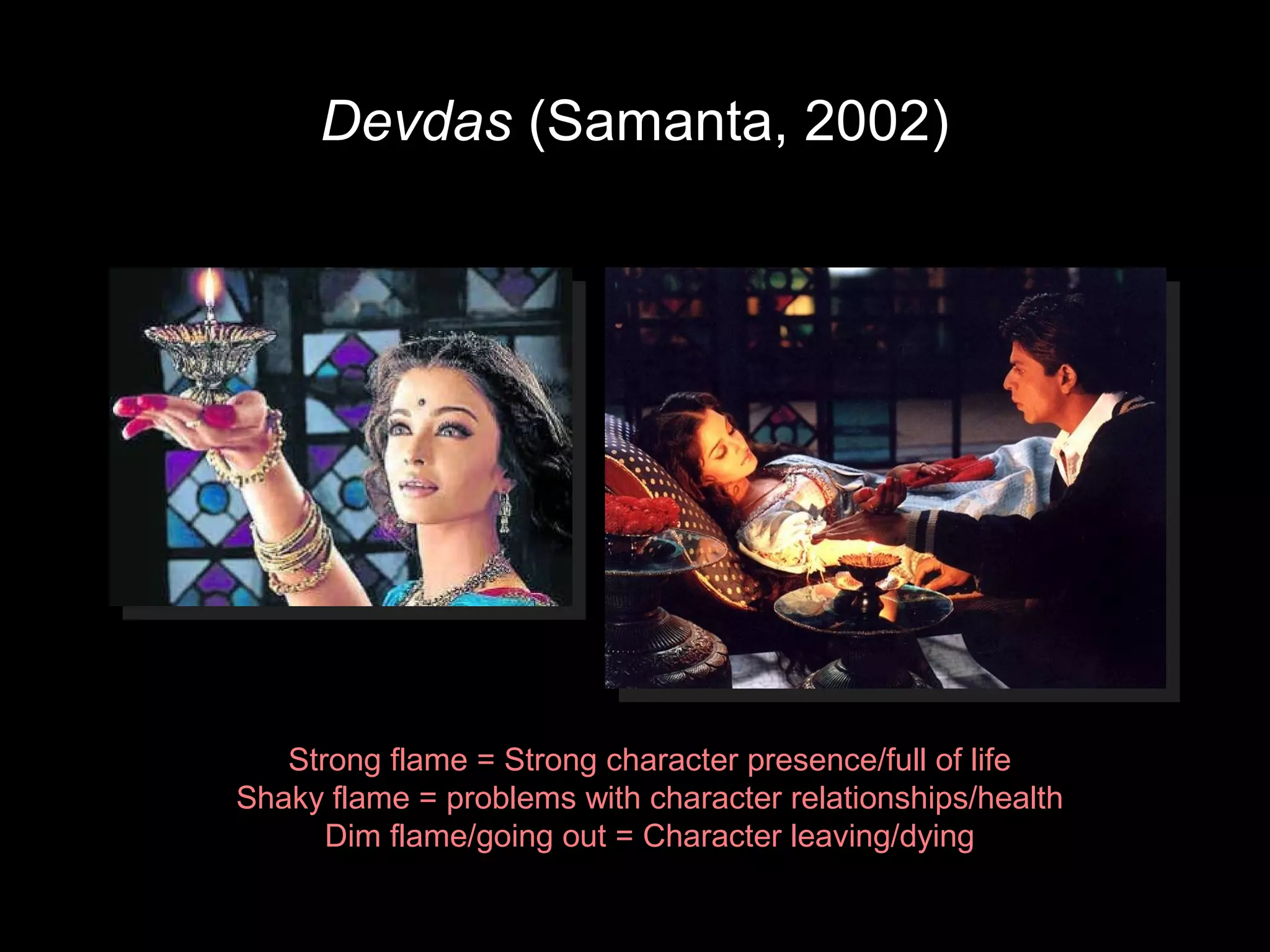
Devdas (Samanta, 2002)
Strong flame = Strong character presence/full of life
Shaky flame = problems with character relationships/health
Dim flame/going out = Character leaving/dying
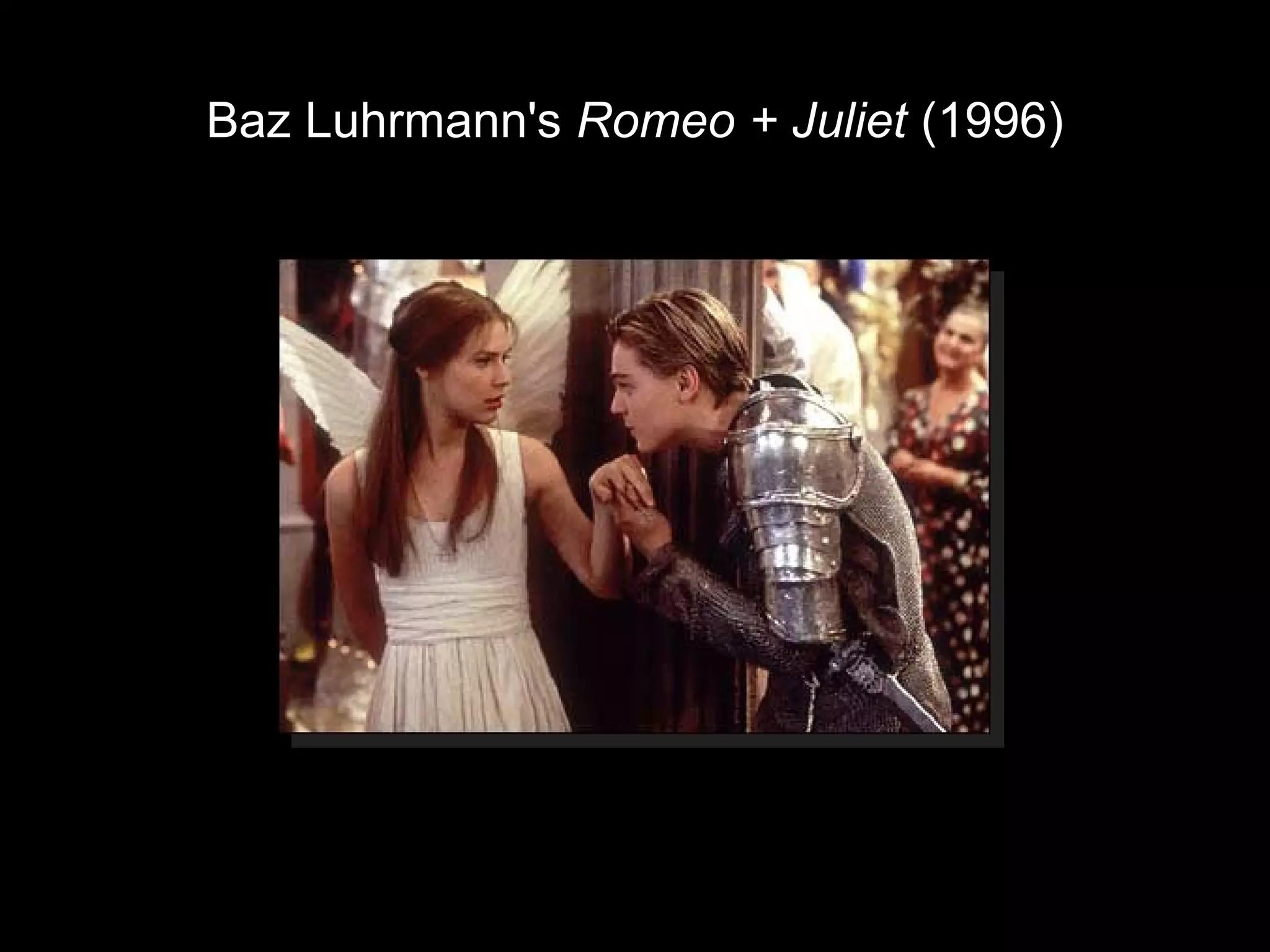
3. Costume, Hair & Make Up
• Costume, Hair & Make Up act as an instant indicator of a
character’s personality, status & job.
• It can tell us immediately whether a narrative is set in the
present and what society or culture it will centre
around.
•
• Certain costumes can signify certain individuals (i.e.
black cloak of a vampire, Spidey’s Spiderman suit)
•
• Costumes are used to show difference or similarity
between characters, changes in an individual’s
character or mood as the narrative progresses and
whether or not they fit in with the setting.
Baz Luhrmann's Romeo + Juliet (1996)
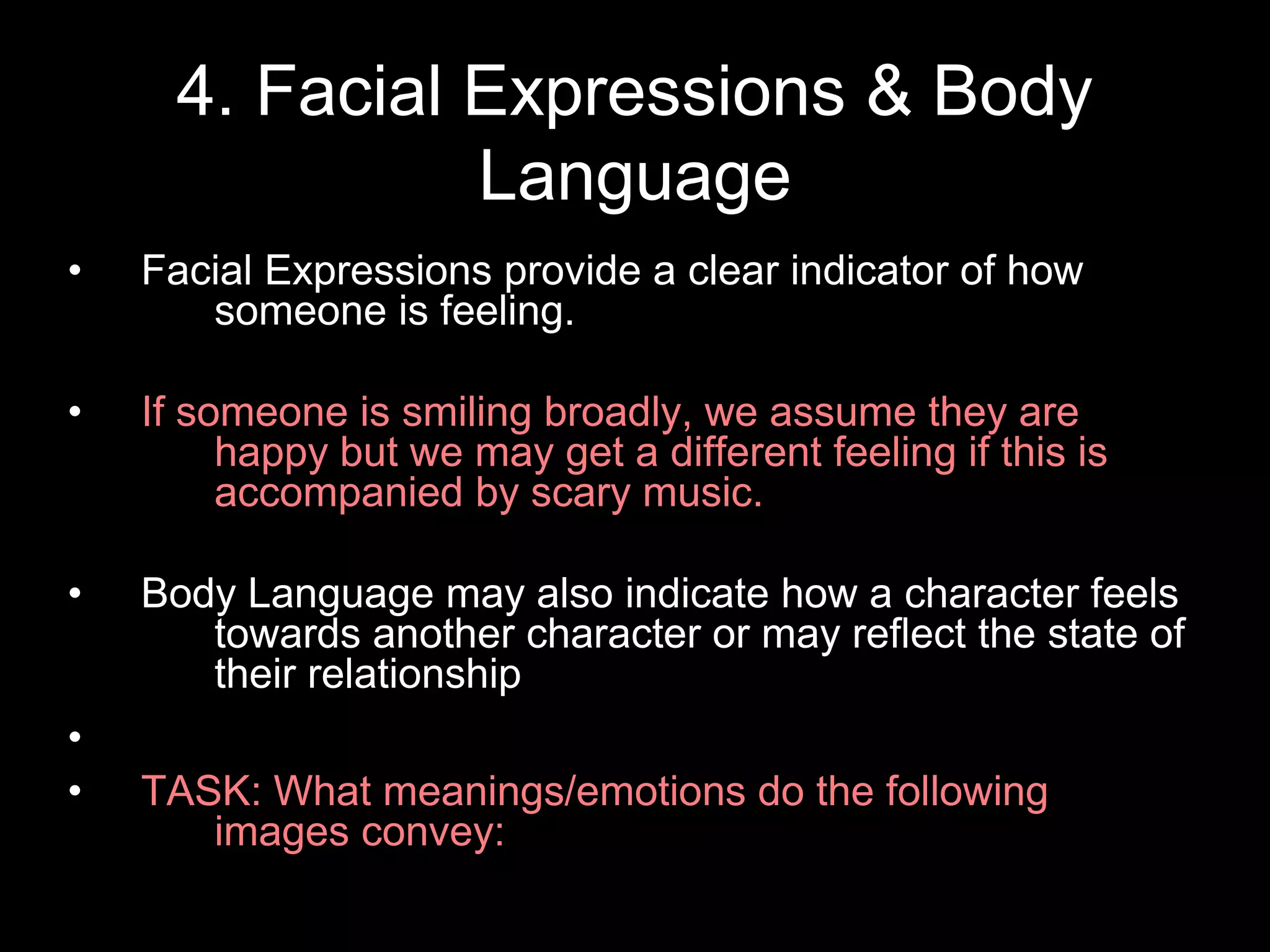
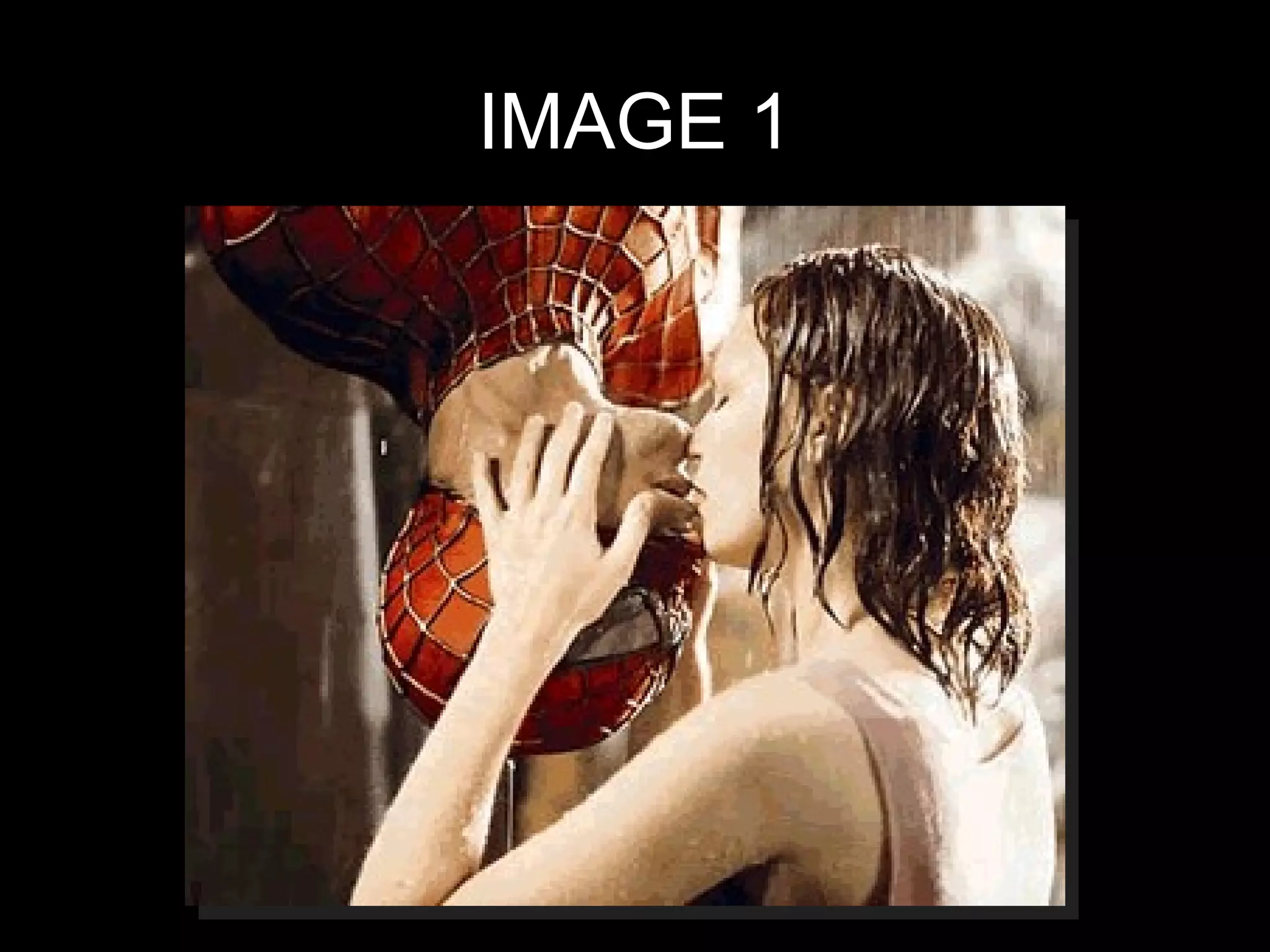
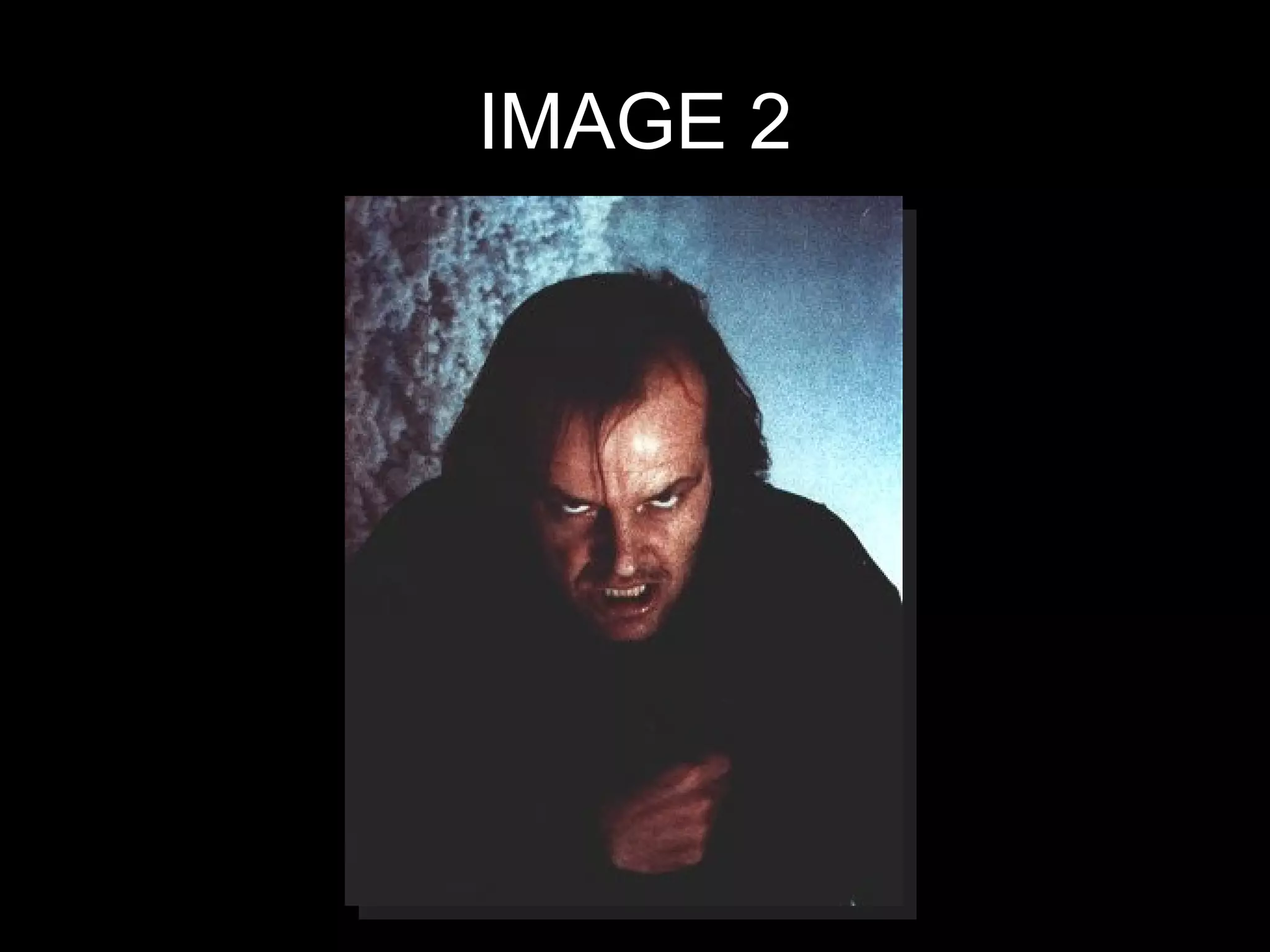
4. Facial Expressions & Body
Language
• Facial Expressions provide a clear indicator of how
someone is feeling.
• If someone is smiling broadly, we assume they are
happy but we may get a different feeling if this is
accompanied by scary music.
• Body Language may also indicate how a character feels
towards another character or may reflect the state of
their relationship
•
• TASK: What meanings/emotions do the following
images convey:
IMAGE 1
IMAGE 2
5. Positioning of Characters &
Objects within a frame
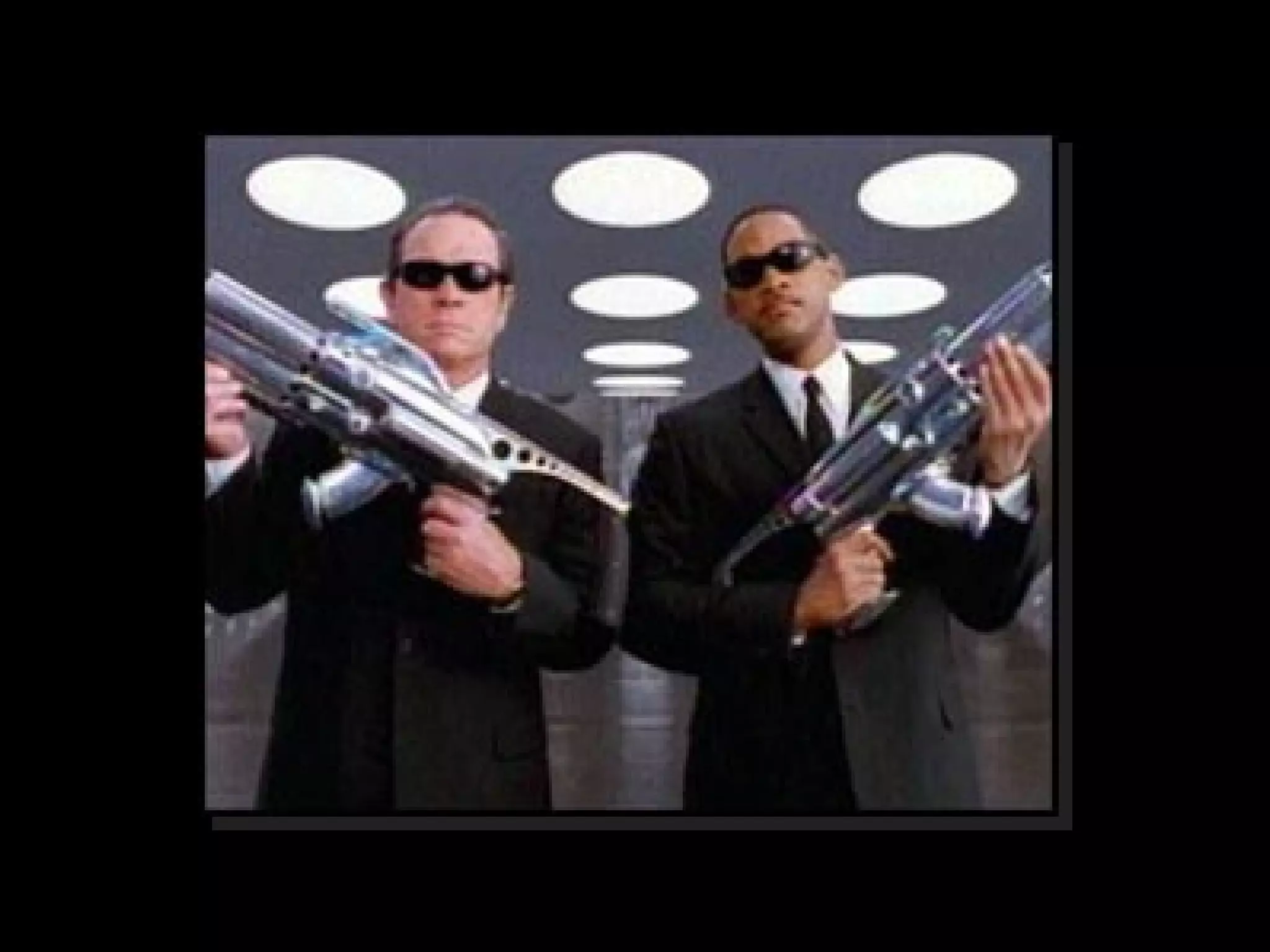
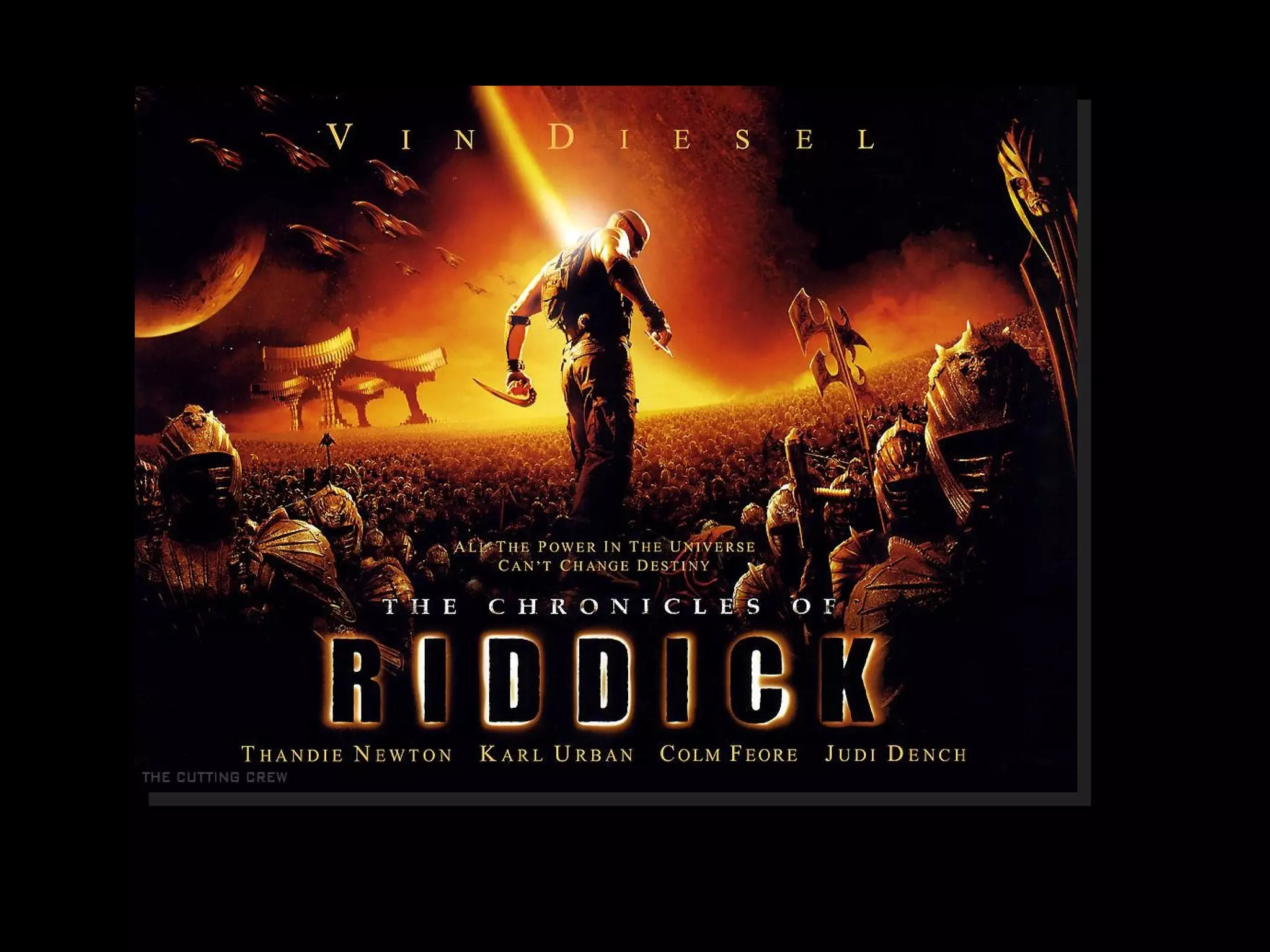
• Positioning within a frame can draw our attention
to an important character/object
•
• A director can use positioning to indicate
relationships between people
•
• TASK: What does the positioning in the following
images reveal about the characters/narrative?
Lighting & Colour
Lighting & Colour can be used to achieve a variety of effects:
• To highlight important characters or objects
within the frame
• To make characters look mysterious by
shading sections of the face & body
• To reflect a characters mental state/hidden
emotions (i.e. bright = happy, dark =
disturbed, strobe effect = confused
Types of Lighting
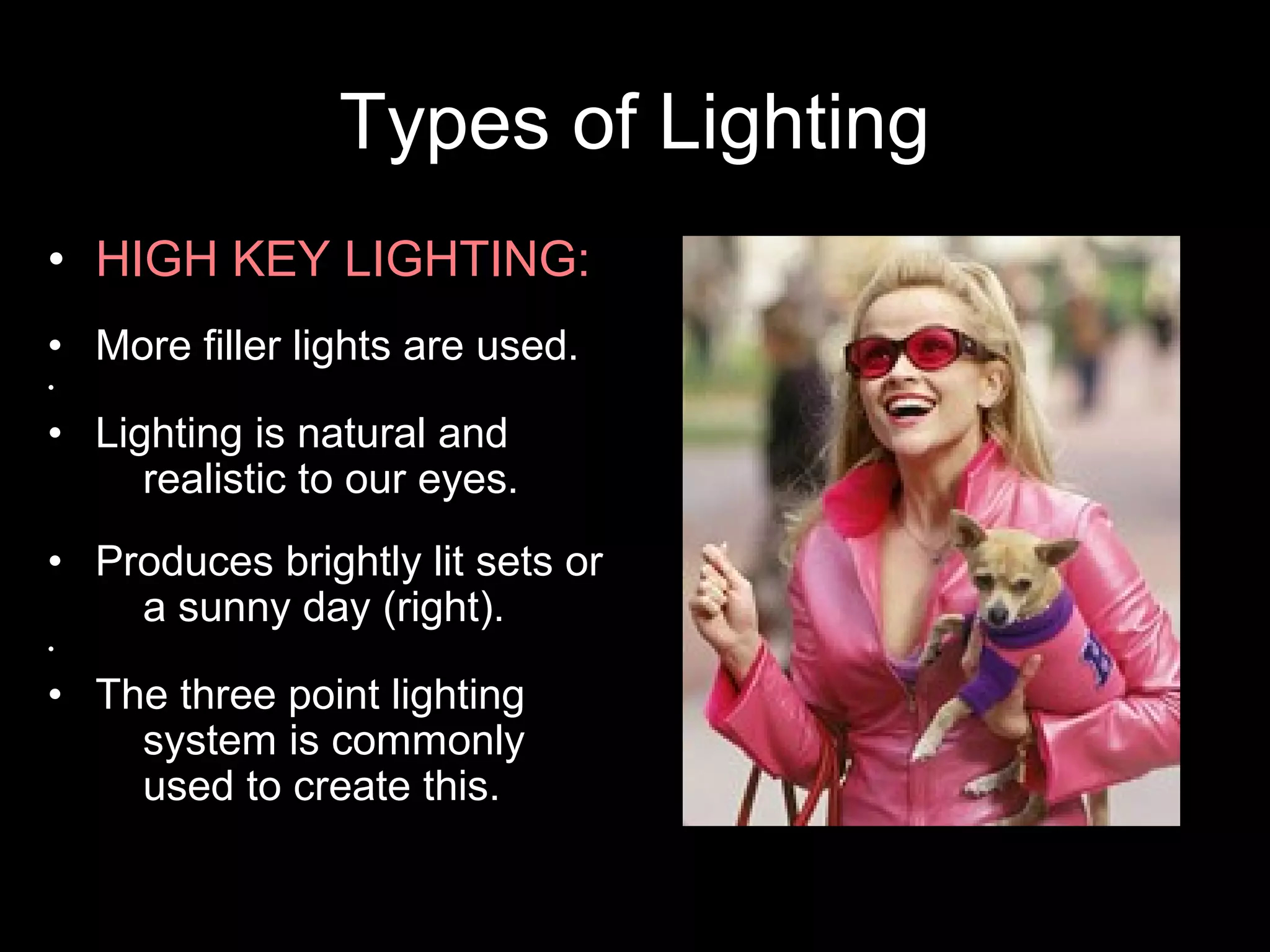
• HIGH KEY LIGHTING:
• More filler lights are used.
•
• Lighting is natural and
realistic to our eyes.
• Produces brightly lit sets or
a sunny day (right).
•
• The three point lighting
system is commonly
used to create this.
Types of Lighting
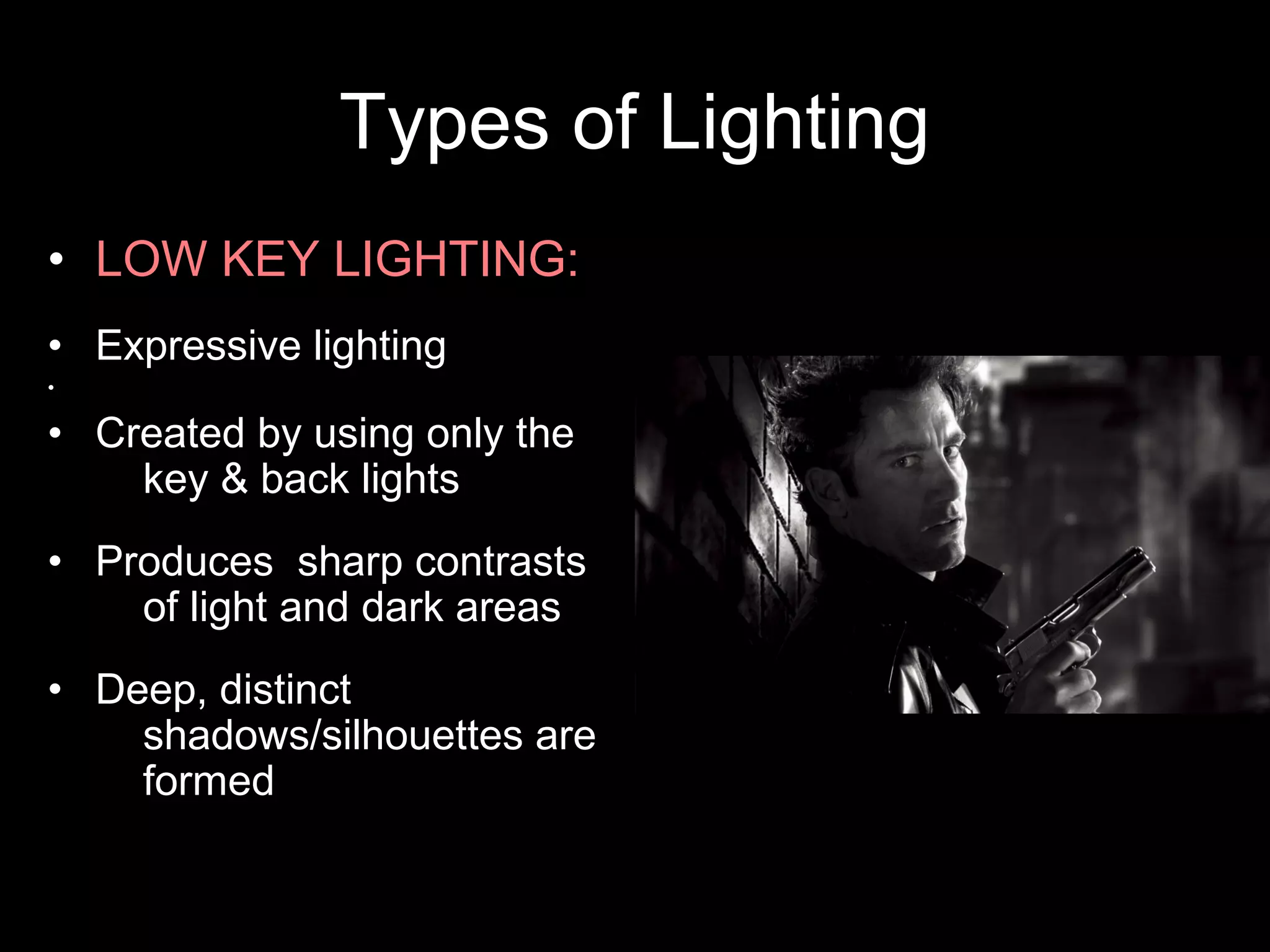
• LOW KEY LIGHTING:
• Expressive lighting
•
• Created by using only the
key & back lights
• Produces sharp contrasts
of light and dark areas
• Deep, distinct
shadows/silhouettes are
formed
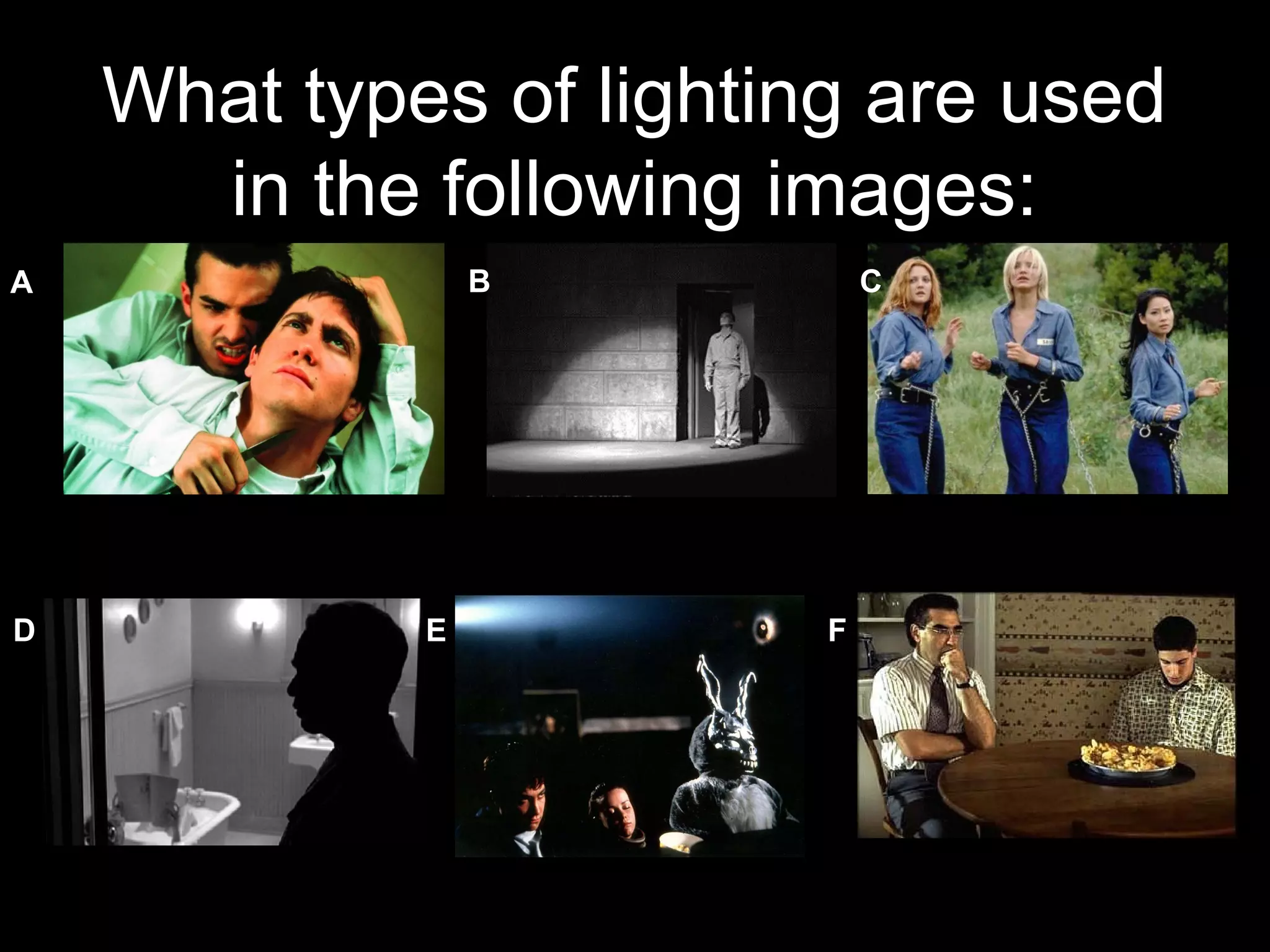
What types of lighting are used
in the following images:
A
FD
C
E
B
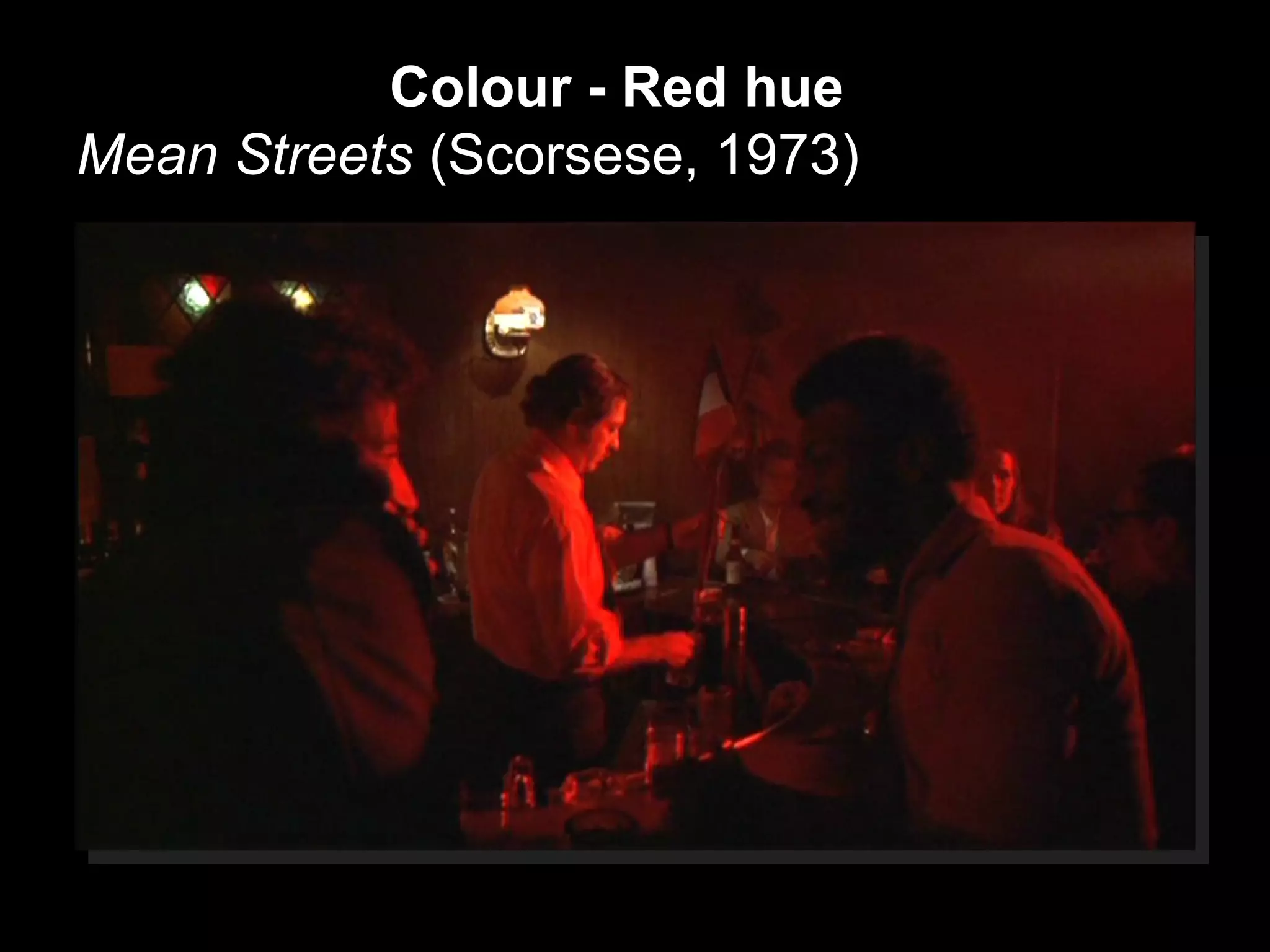
Colour - Red hue
Mean Streets (Scorsese, 1973)
I, Robot (Proyas, 2004)
Terminator Salvation (McG, 2009)
Mise En Scene Analysis
• Now, watch the following short clip and think about the
elements we have discussed…
•
• Settings
•
• Props
• Costume, Hair & Make Up
• Performance, Facial Expressions & Body Language
• Positioning and movement of characters/objects within the frame
• Lighting & colour
•
• 10 Things I Hate About You (Gil Junger, 1999)
http://estream.reigate.ac.uk/View.aspx?id=7377~4y~AqgrJW
•

2. intro to mise en scene

  • 1.
    Media Studies Introduction toMedia Language: Mise En Scène
  • 2.
    Session Aims By theend of the session you will be able to: • Describe the concept of ‘mise en scene’ • Use correct media terminology when discussing mise en scene • • Apply the concept to a scene
  • 3.
    Definition: Mise EnScene • A French term meaning what is put into a scene or frame • Visual information in front of the camera • Communicates essential information to the audience • Made up of 6 elements: Can you guess what they are?
  • 4.
    The 6 Elementsof Mise en Scene • Settings • • Props • Costume, hair & make up • Performance, facial expressions, body language. • Positioning and movement of characters/objects within the frame • Lighting & colour Each aspect of mise-en- scene has encoded meanings and sends signals to the audience about how we are supposed to feel at a certain point
  • 5.
    1. Settings • Settings& Locations play an important part and are not just ‘backgrounds’. • Settings can manipulate an audience by building certain expectations (these expectations can then be played with!). • TASK: What settings might you find in: 1. A Science Fiction? 2. A Romantic Comedy? 3. A Horror? 4. A Western?
  • 6.
    2. Props • Propsbuild on the setting to create a believable ‘world’. • • Props can be used to establish character. • Props can be used as symbols to connote additional meanings over and above their material presence. • • ‘At their simplest, props work to give an authentic sense of place, but can also be used in more complex ways to suggest important characteristics of particular individuals or even key themes for the whole film.’ (Benyahia, Gaffney & White, 2006)
  • 7.
    Devdas (Samanta, 2002) Strongflame = Strong character presence/full of life Shaky flame = problems with character relationships/health Dim flame/going out = Character leaving/dying
  • 8.
    3. Costume, Hair& Make Up • Costume, Hair & Make Up act as an instant indicator of a character’s personality, status & job. • It can tell us immediately whether a narrative is set in the present and what society or culture it will centre around. • • Certain costumes can signify certain individuals (i.e. black cloak of a vampire, Spidey’s Spiderman suit) • • Costumes are used to show difference or similarity between characters, changes in an individual’s character or mood as the narrative progresses and whether or not they fit in with the setting.
  • 9.
    Baz Luhrmann's Romeo+ Juliet (1996)
  • 10.
    4. Facial Expressions& Body Language • Facial Expressions provide a clear indicator of how someone is feeling. • If someone is smiling broadly, we assume they are happy but we may get a different feeling if this is accompanied by scary music. • Body Language may also indicate how a character feels towards another character or may reflect the state of their relationship • • TASK: What meanings/emotions do the following images convey:
  • 11.
  • 12.
  • 13.
    5. Positioning ofCharacters & Objects within a frame • Positioning within a frame can draw our attention to an important character/object • • A director can use positioning to indicate relationships between people • • TASK: What does the positioning in the following images reveal about the characters/narrative?
  • 17.
    Lighting & Colour Lighting& Colour can be used to achieve a variety of effects: • To highlight important characters or objects within the frame • To make characters look mysterious by shading sections of the face & body • To reflect a characters mental state/hidden emotions (i.e. bright = happy, dark = disturbed, strobe effect = confused
  • 18.
    Types of Lighting •HIGH KEY LIGHTING: • More filler lights are used. • • Lighting is natural and realistic to our eyes. • Produces brightly lit sets or a sunny day (right). • • The three point lighting system is commonly used to create this.
  • 19.
    Types of Lighting •LOW KEY LIGHTING: • Expressive lighting • • Created by using only the key & back lights • Produces sharp contrasts of light and dark areas • Deep, distinct shadows/silhouettes are formed
  • 20.
    What types oflighting are used in the following images: A FD C E B
  • 21.
    Colour - Redhue Mean Streets (Scorsese, 1973)
  • 22.
    I, Robot (Proyas,2004) Terminator Salvation (McG, 2009)
  • 23.
    Mise En SceneAnalysis • Now, watch the following short clip and think about the elements we have discussed… • • Settings • • Props • Costume, Hair & Make Up • Performance, Facial Expressions & Body Language • Positioning and movement of characters/objects within the frame • Lighting & colour •
  • 24.
    • 10 ThingsI Hate About You (Gil Junger, 1999) http://estream.reigate.ac.uk/View.aspx?id=7377~4y~AqgrJW •