NATURAL PRODUCT DERIVED COMBINATORIAL  LIBRARY  AND IT’S  SIGNIFICANCE IN  DRUG DISCOVERY PROGRAMMES  Presented by:  ANZAR ALAM M.Pharm 2 nd  Sem Pharmacognosy & Phytochemistry FACULTY OF PHARMACY JAMIA HAMDARD Presented to:  Dr. (Prof.) S.H.Ansari Dean Student Welfare (DSW) JAMIA HAMDARD
Prelude  Combinatorial Library  is a set of compounds prepared by Combinatorial Synthesis. Combinatorial Synthesis is a technique of condensing starting materials in all possible combination by a defined reaction route to  producing large no. of compound in short time The application  of combinatorial synthesis  is in drug discovery.
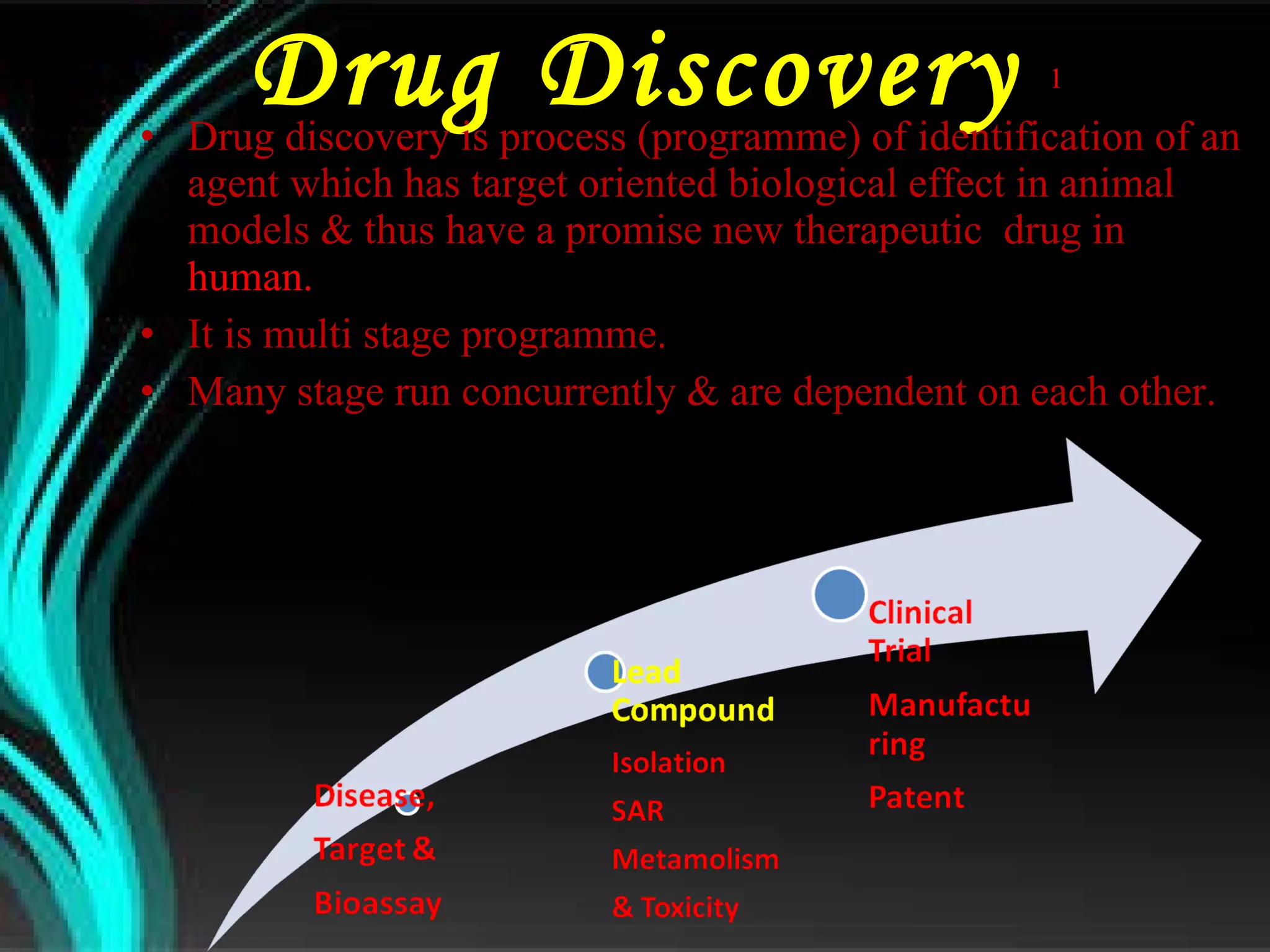
Drug Discovery   1 Drug discovery is process (programme) of identification of an agent which has target oriented biological effect in animal models & thus have a promise new therapeutic  drug in  human. It is multi stage programme. Many stage run concurrently & are dependent on each other.
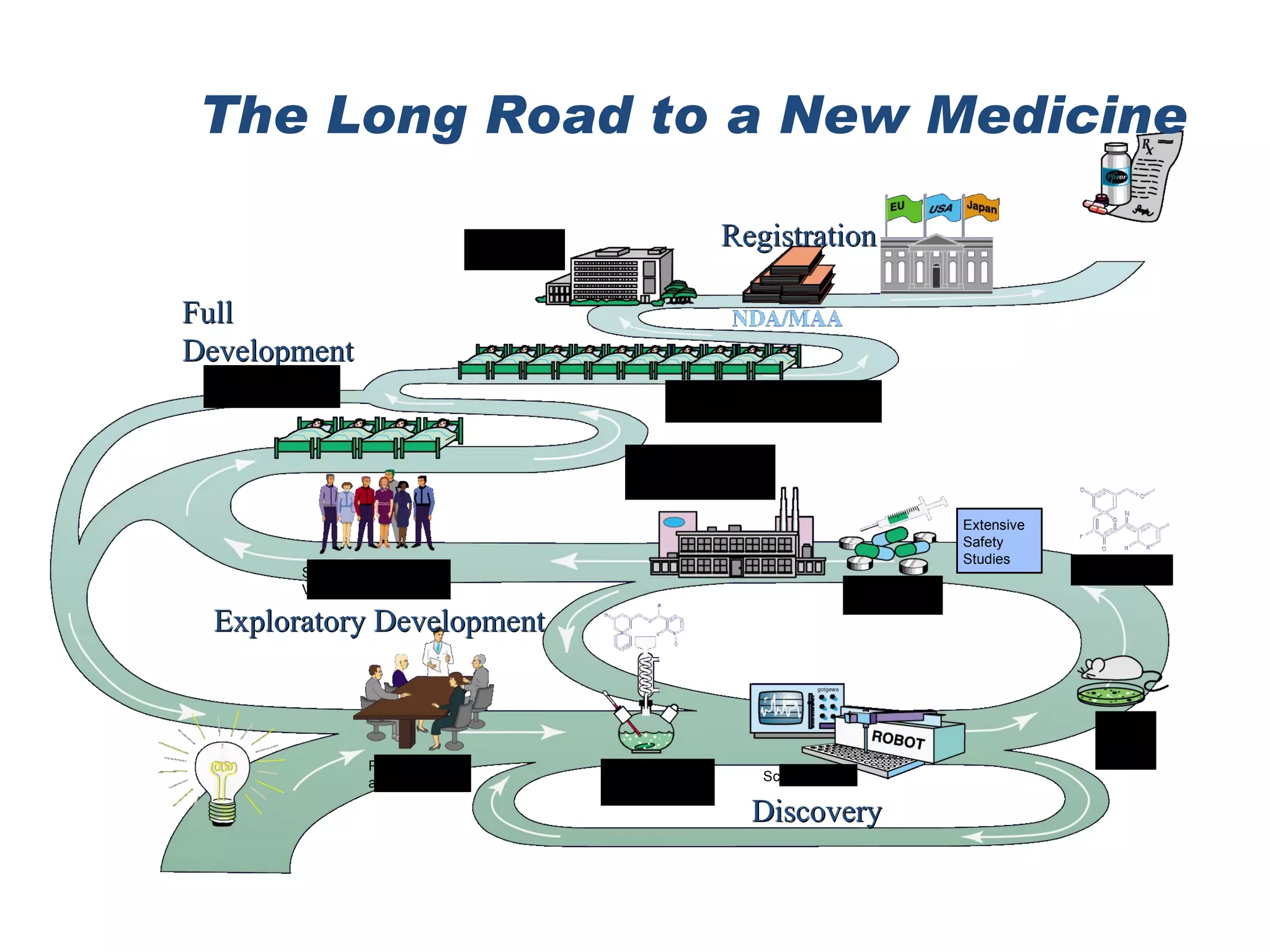
The Long Road to a New Medicine Discovery Exploratory Development Full  Development Registration Large Amounts of Candidate Medicine Synthesized Project Team and Plans Synthesis of Compounds Early Safety Studies Candidate Formulations Developed Extensive Safety Studies Screening Studies in Healthy Volunteers Phase I Candidate Medicine Tested in 3-10,000 Patients (Phase III) Studies in 100-300 Patients (Phase II) Clinical Data Analysis
Disease Selection  1 A huge investment is to made in R&D of new drug. 90% of all drug development candidates fail to make its market It is necessary to concentrate on disease where there is need for  New drug, Improved drug Both a & b A great deal of research is carried on ailment such as Migraine, Depression, Cancer, CVS, Obesity, Ulcer, Diabetes. Choosing which drug to tackle is usually a matter of company’s market strategy.
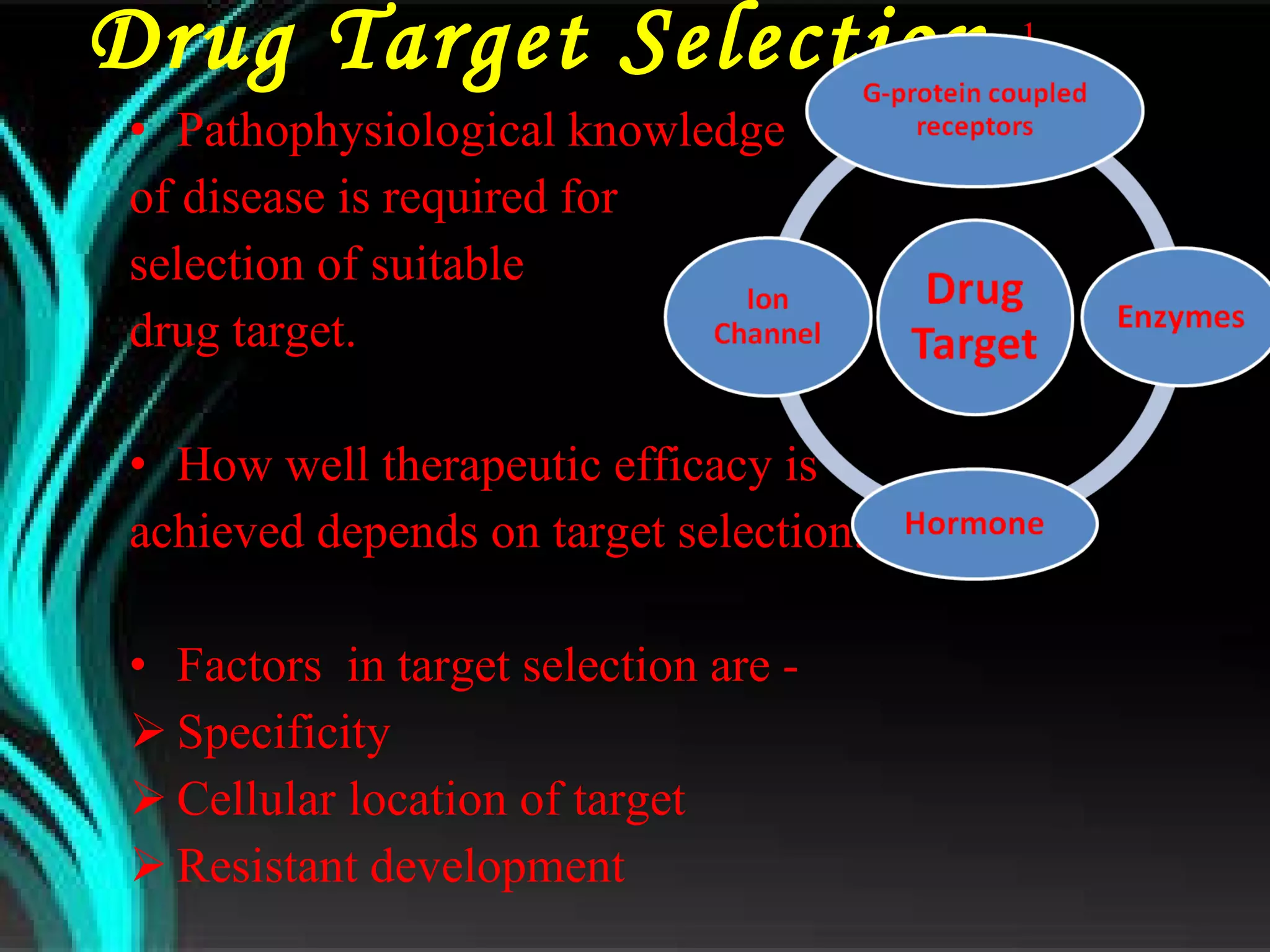
Drug Target Selection  1  Pathophysiological knowledge  of disease is required for selection of suitable  drug target. How well therapeutic efficacy is achieved depends on target selection. Factors  in target selection are - Specificity Cellular location of target Resistant development
Identification of Bioassay Method  1 In order to see how well a drug candidate is effective  a biological screening method is developed. The method should be  simple,   quick  and  relevant . in vivo  test involve inducing clinical condition in an animals to produce observables symptoms. Transgenic animals are often used in in-vivo testing . In vitro test involve specific tissues, cell or target outside animal body. HIV protease has been cloned and expressed in  Escherichia coli .
Search for Lead Compound  1  Once a target & testing system has have been chosen  the next target is to find a lead compound Lead Compound : a compound with desired pharmaceutical activity. There are many ways in which a lead compound might be discovered such as- Screening of natural products. Screening of synthetic banks. Combinatorial Synthesis. Computer aided designing Computerized searching of structural databank. Designing lead compound by NMR
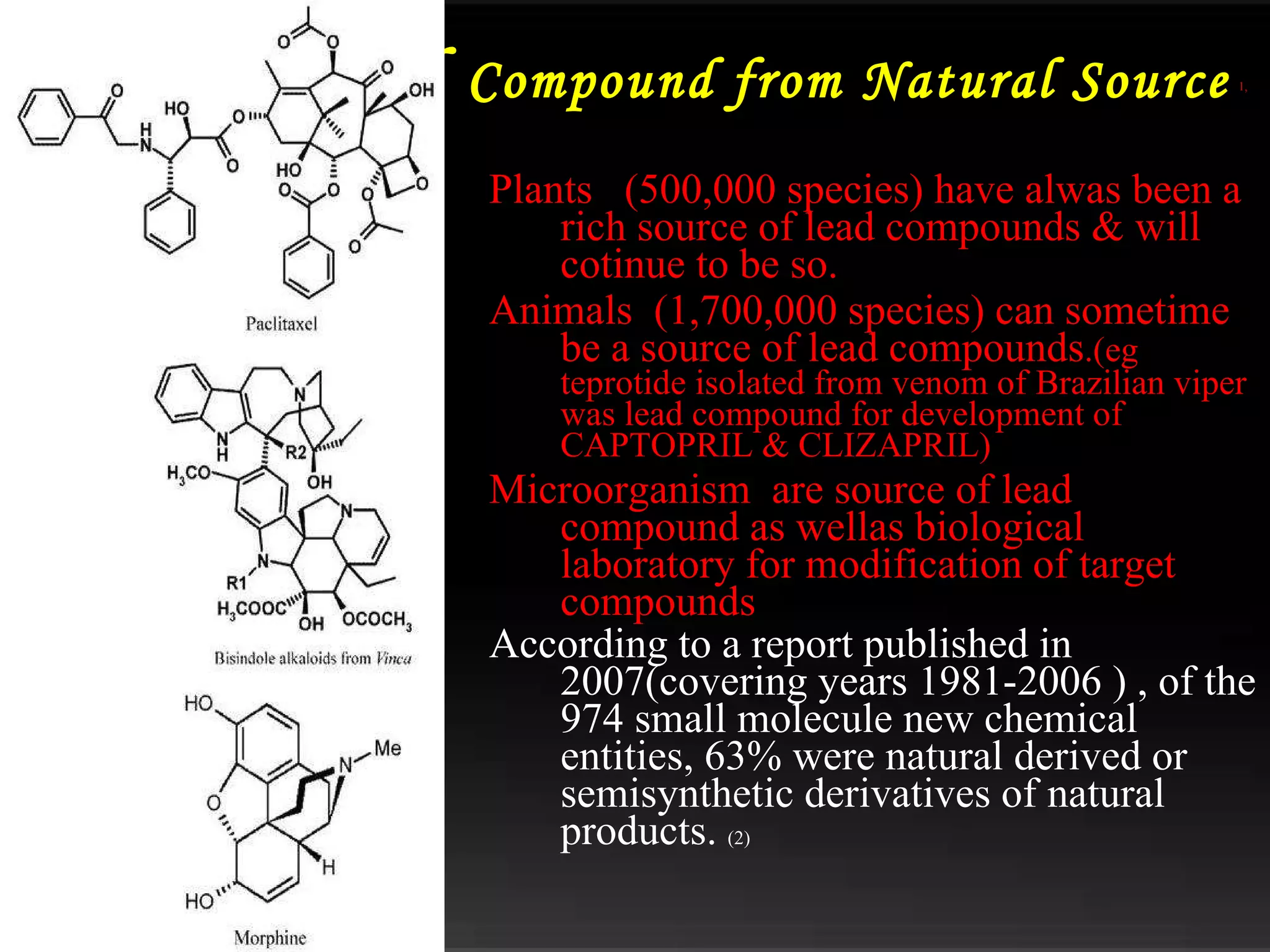
Lead  Compound from Natural Source   1,  Plants  (500,000 species) have alwas been a rich source of lead compounds & will cotinue to be so. Animals  (1,700,000 species) can sometime be a source of lead compounds .(eg teprotide isolated from venom of Brazilian viper was lead compound for development of CAPTOPRIL & CLIZAPRIL) Microorganism  are source of lead compound as wellas biological laboratory for modification of target compounds According to a report published in 2007(covering years 1981-2006 ) , of the 974 small molecule new chemical entities, 63% were natural derived or semisynthetic derivatives of natural products.  (2)
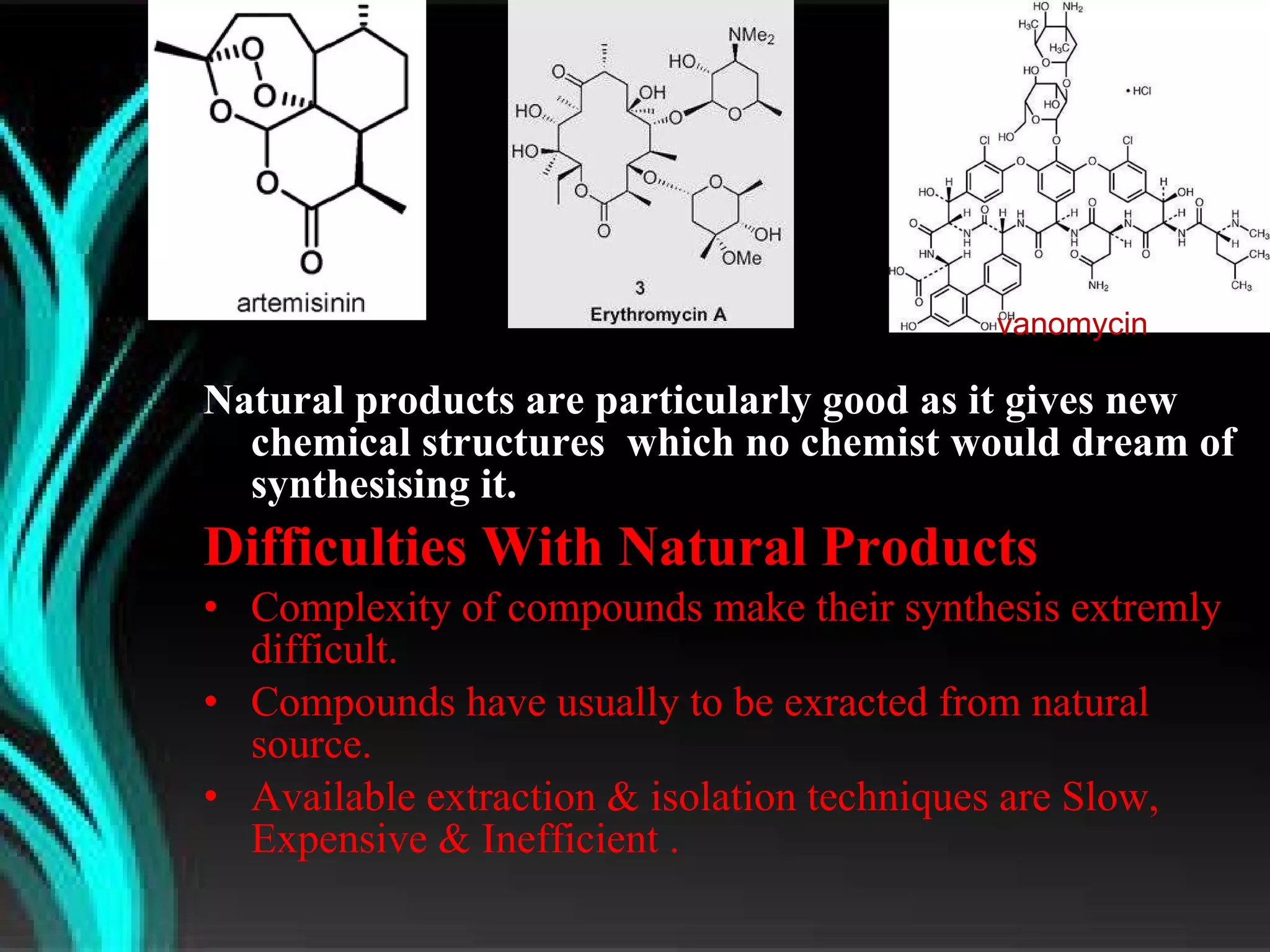
Natural products are particularly good as it gives new chemical structures  which no chemist would dream of synthesising it. Difficulties With Natural Products Complexity of compounds make their synthesis extremly difficult. Compounds have usually to be exracted from natural source. Available extraction & isolation techniques are Slow, Expensive & Inefficient . vanomycin
Combinatorial Library
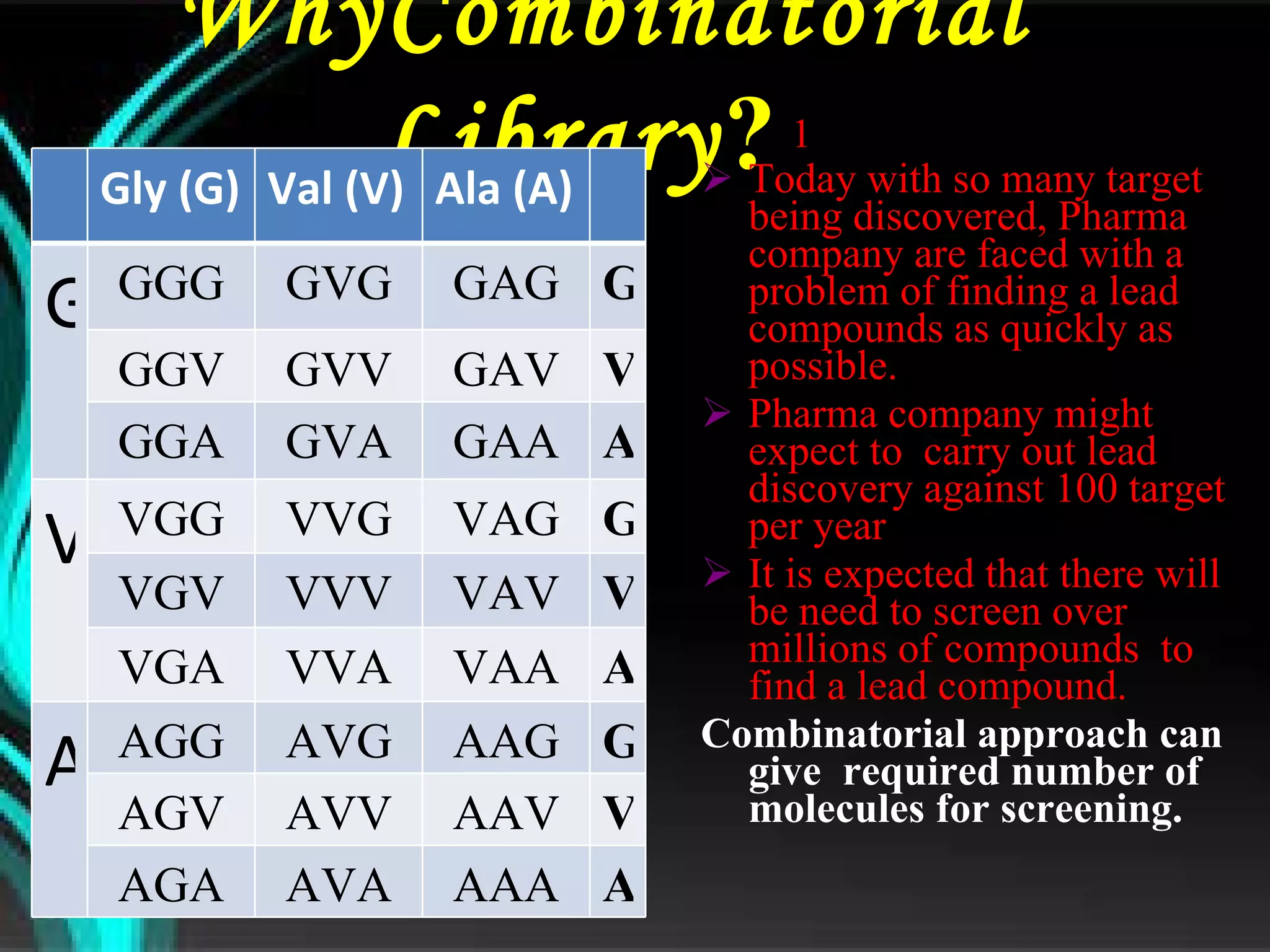
WhyCombinatorial Library ?   1   Today with so many target being discovered, Pharma company are faced with a problem of finding a lead compounds as quickly as possible. Pharma company might expect to  carry out lead discovery against 100 target per year It is expected that there will be need to screen over millions of compounds  to find a lead compound. Combinatorial approach can give  required number of molecules for screening. Gly (G) Val (V)  Ala (A)  G GGG GVG GAG G GGV GVV GAV V GGA GVA GAA A V VGG VVG VAG G VGV VVV VAV V VGA VVA VAA A A AGG AVG AAG G AGV AVV AAV V AGA AVA AAA A
Combonatorial Methods 1,3   Emphasis is to produce a mixture of compounds. Structure of compounds are not nown with certaintity. Copounds are neither separated nor purified.  Mixture is tested for biologicalactivity as whole If no activity is observed it is stored as. If activity is there then move for  identification of active entity. Combinatorial synthesis looks as synthetic equivalent of nature’s chemical pool Combinatorial Methods Solid phase synthesis. Solution phase synthesis Biological approach combinatorial library
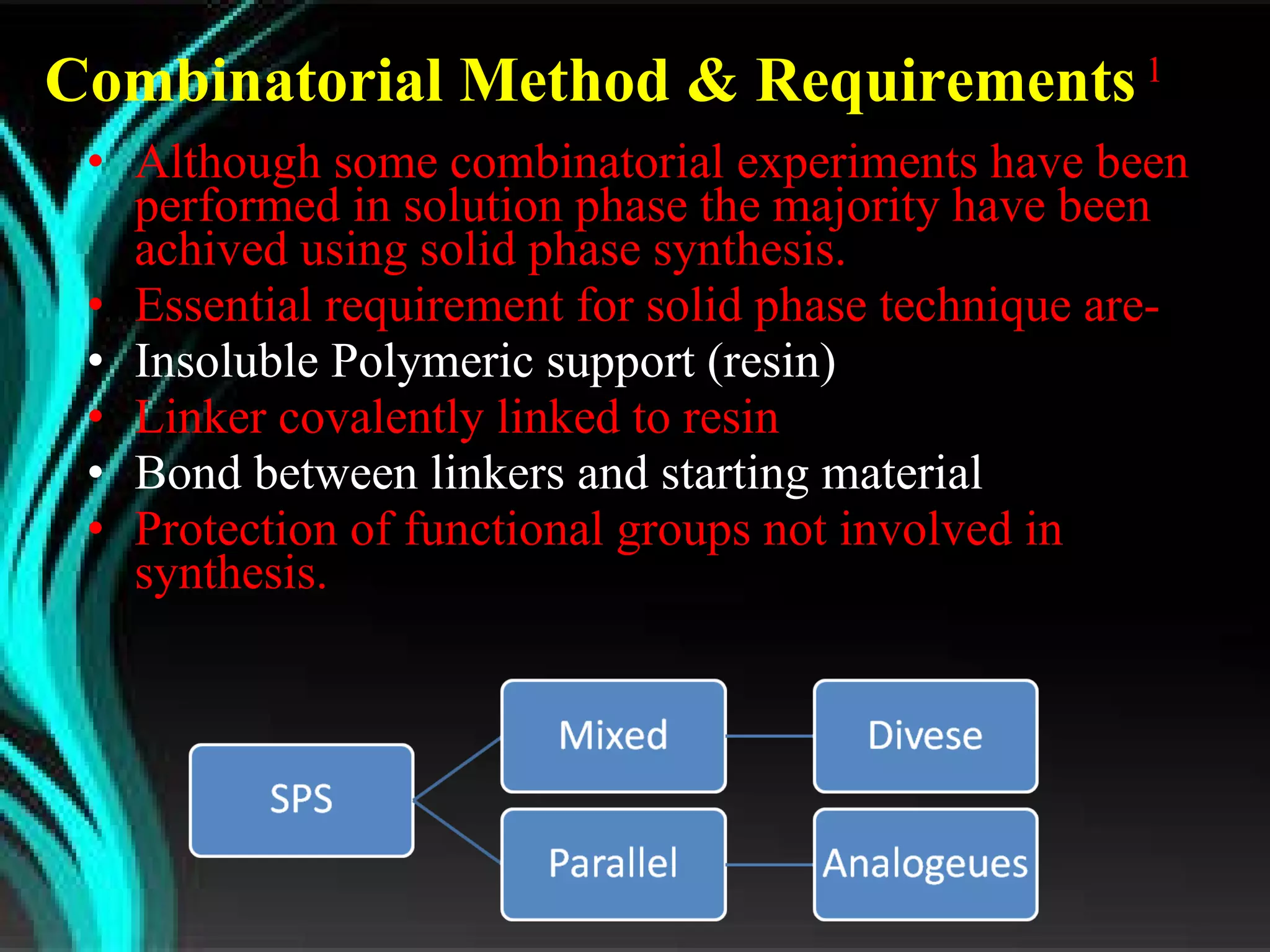
Combinatorial Method & Requirements  1   Although some combinatorial experiments have been performed in solution phase the majority have been achived using solid phase synthesis. Essential requirement for solid phase technique are- Insoluble Polymeric support (resin) Linker covalently linked to resin Bond between linkers and starting material Protection of functional groups not involved in synthesis.
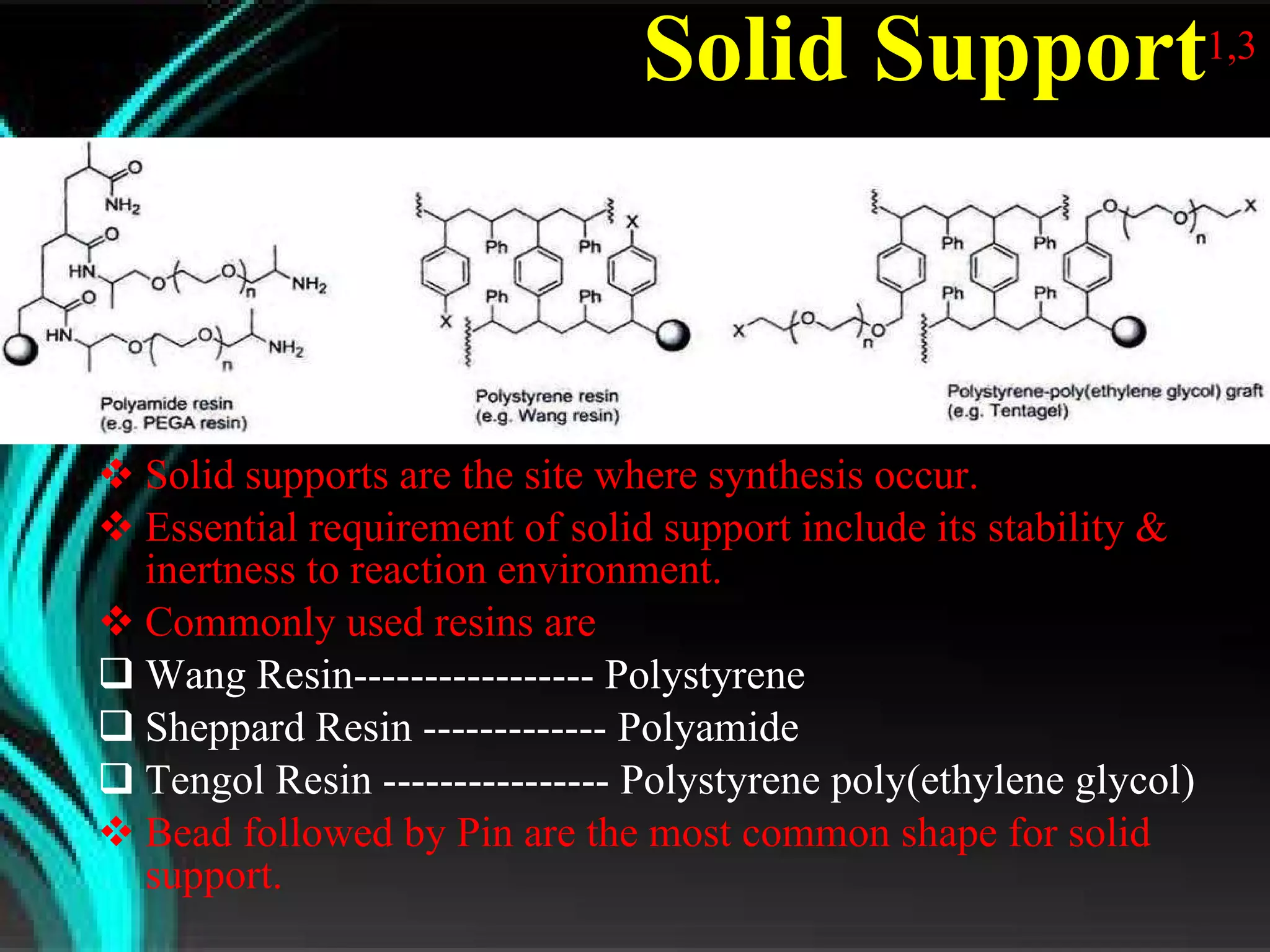
Solid Support 1,3 Solid supports are the site where synthesis occur. Essential requirement of solid support include its stability & inertness to reaction environment. Commonly used resins are Wang Resin----------------- Polystyrene Sheppard Resin ------------- Polyamide Tengol Resin ---------------- Polystyrene poly(ethylene glycol) Bead followed by Pin are the most common shape for solid support.
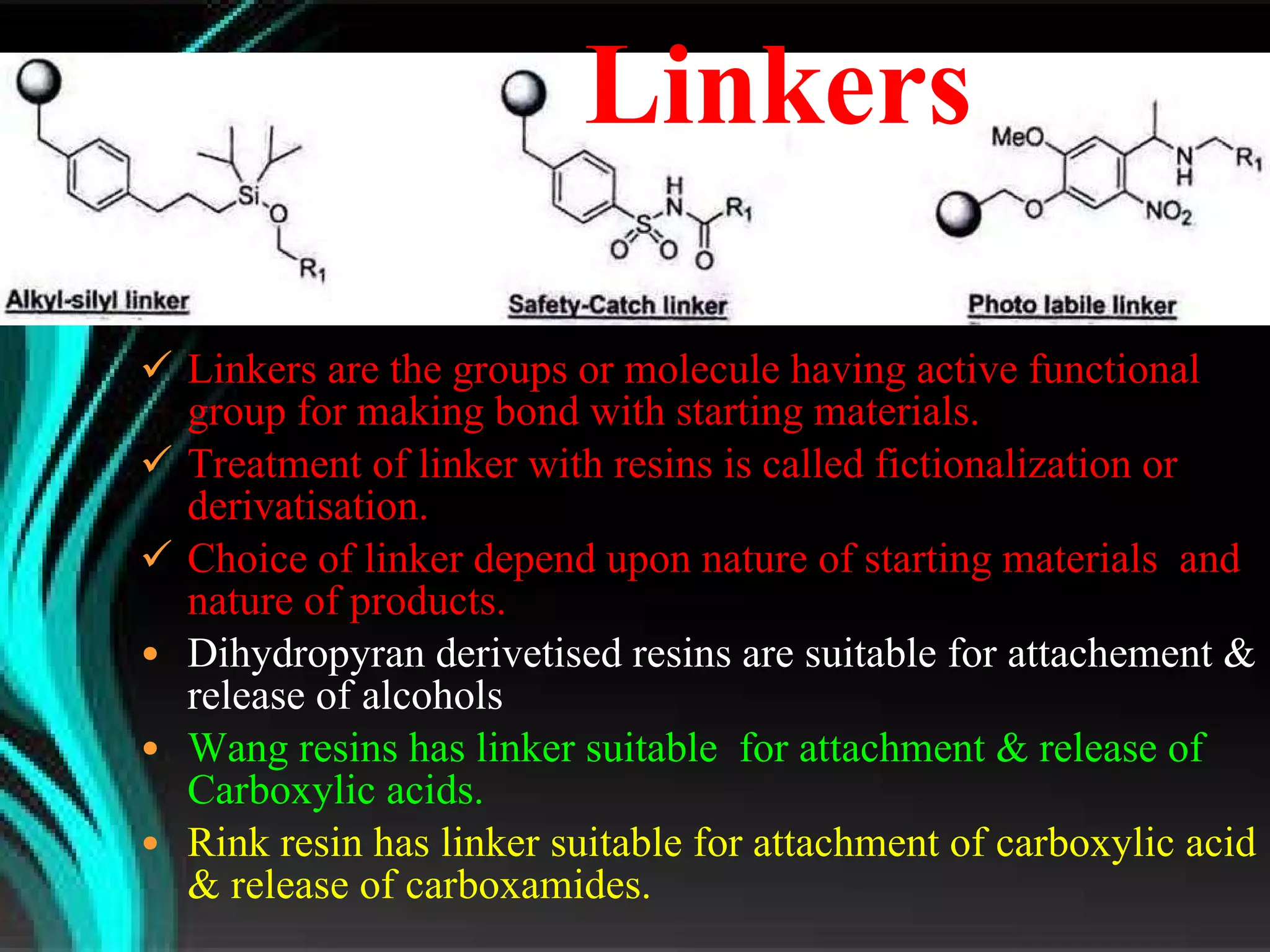
Linkers are the groups or molecule having active functional group for making bond with starting materials. Treatment of linker with resins is called fictionalization or  derivatisation. Choice of linker depend upon nature of starting materials  and nature of products.  Dihydropyran derivetised resins are suitable for attachement & release of alcohols Wang resins has linker suitable  for attachment & release of Carboxylic acids. Rink resin has linker suitable for attachment of carboxylic acid & release of carboxamides. Linkers
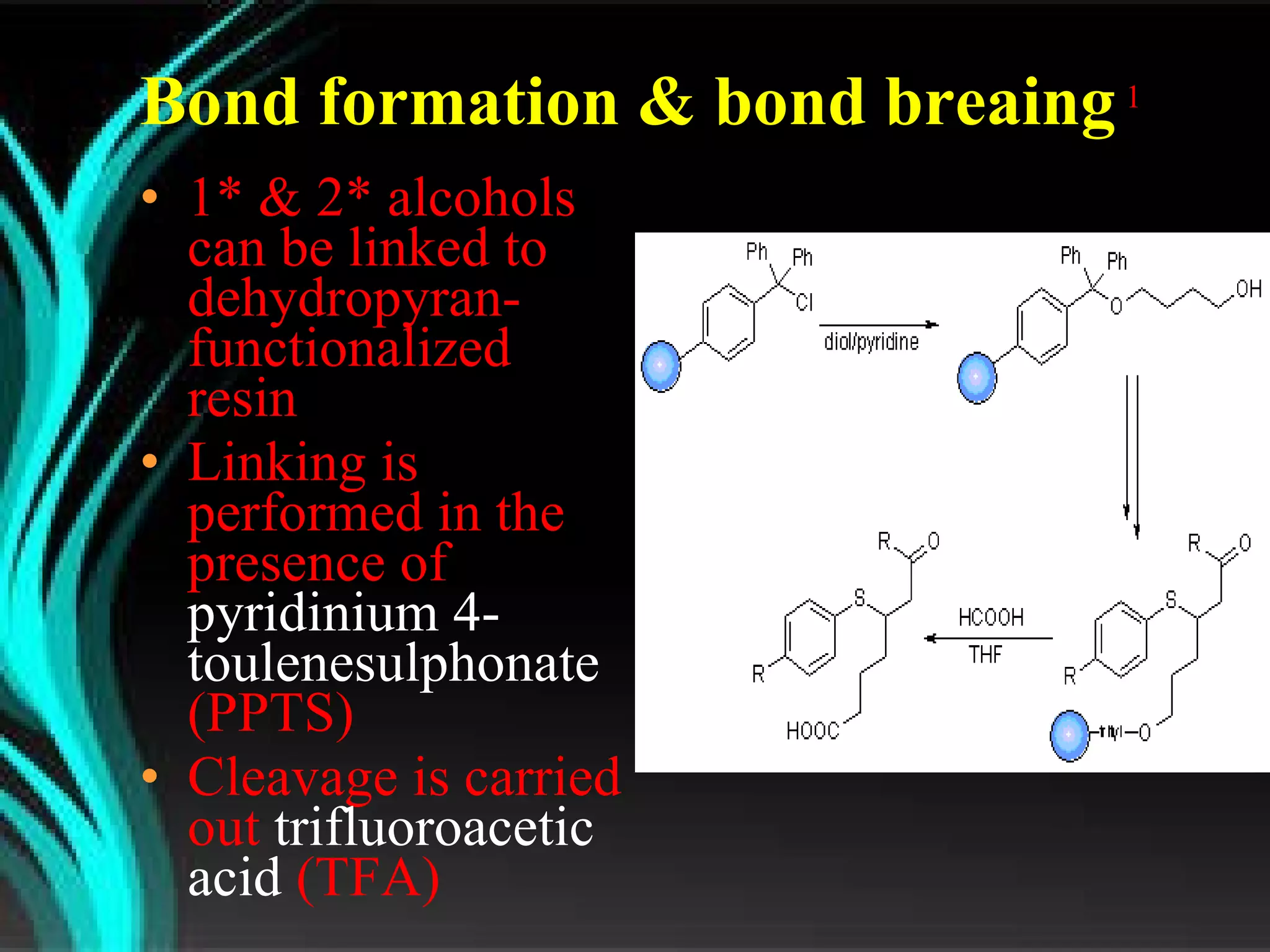
Bond formation & bond breaing   1 1* & 2* alcohols can be linked to dehydropyran-functionalized resin Linking is performed in the presence of  pyridinium 4-toulenesulphonate  (PPTS) Cleavage is carried out  trifluoroacetic acid  (TFA)
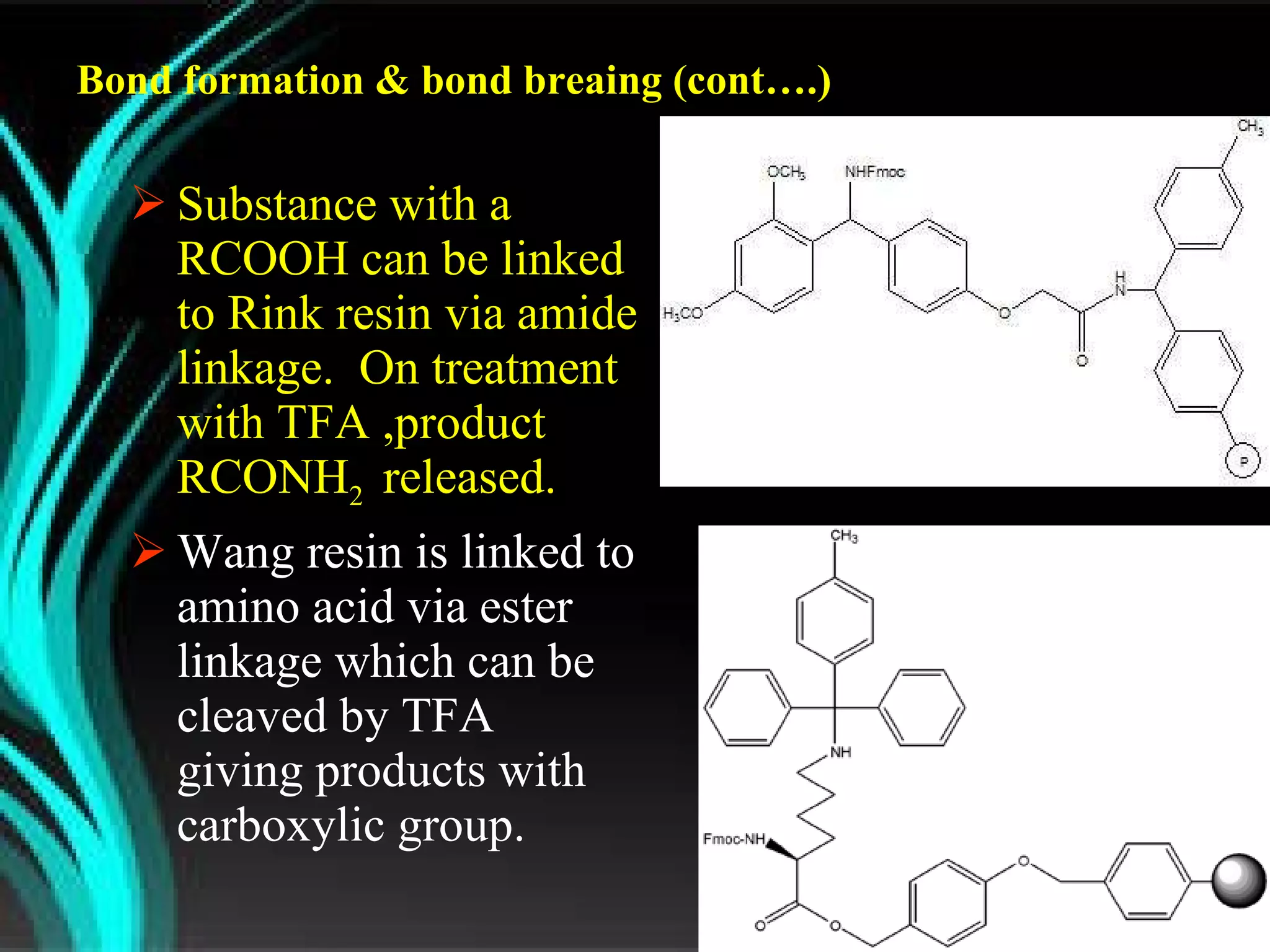
Bond formation & bond breaing (cont….) Substance with a RCOOH can be linked to Rink resin via amide linkage.  On treatment with TFA ,product RCONH 2  released. Wang resin is linked to amino acid via ester linkage which can be cleaved by TFA  giving products with carboxylic group.
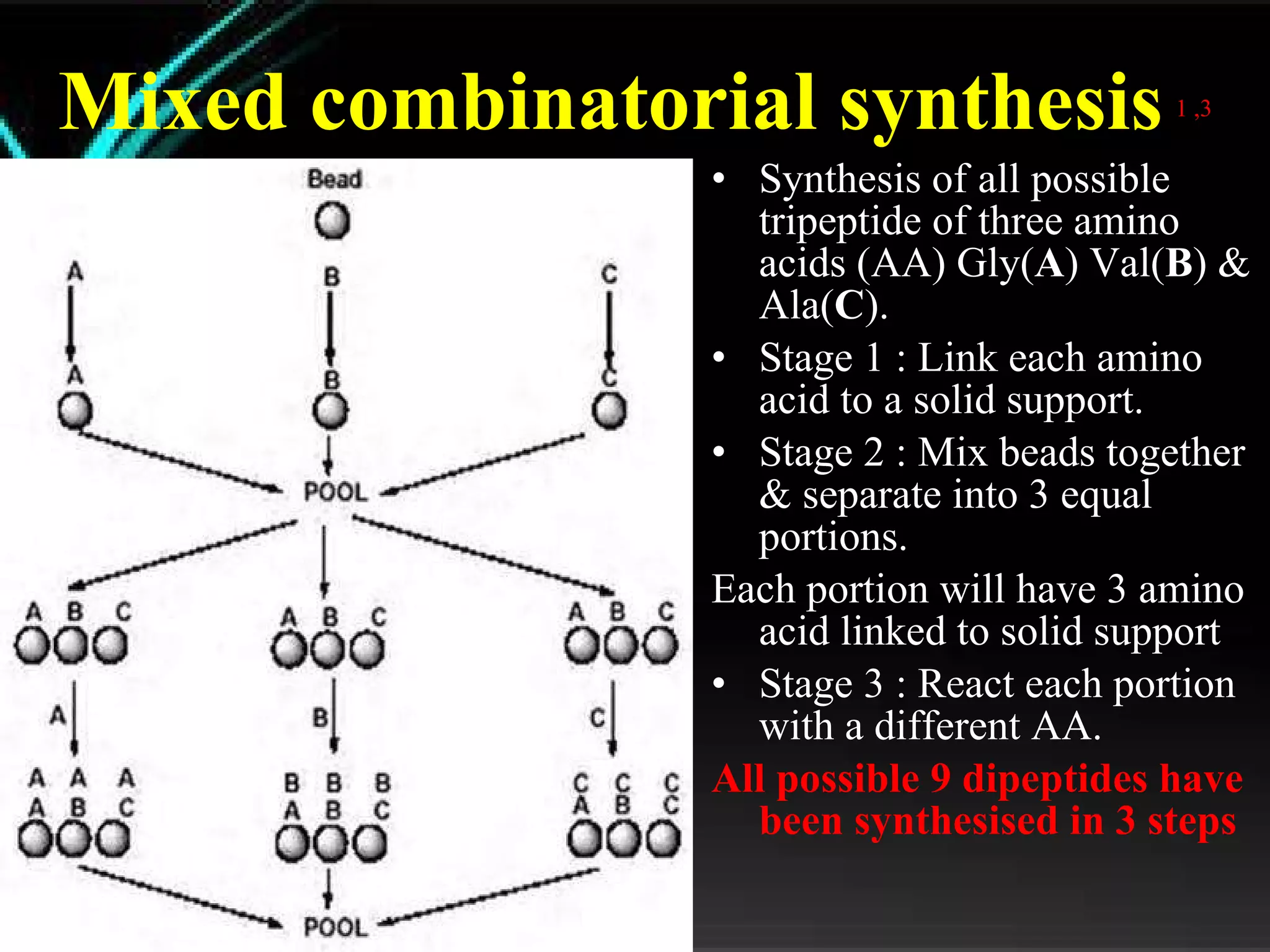
Mixed combinatorial synthesis   1 ,3 Synthesis of all possible tripeptide of three amino acids (AA) Gly( A ) Val( B ) & Ala( C ). Stage 1 : Link each amino acid to a solid support. Stage 2 : Mix beads together & separate into 3 equal portions. Each portion will have 3 amino acid linked to solid support Stage 3 : React each portion with a different AA. All possible 9 dipeptides have been synthesised in 3 steps
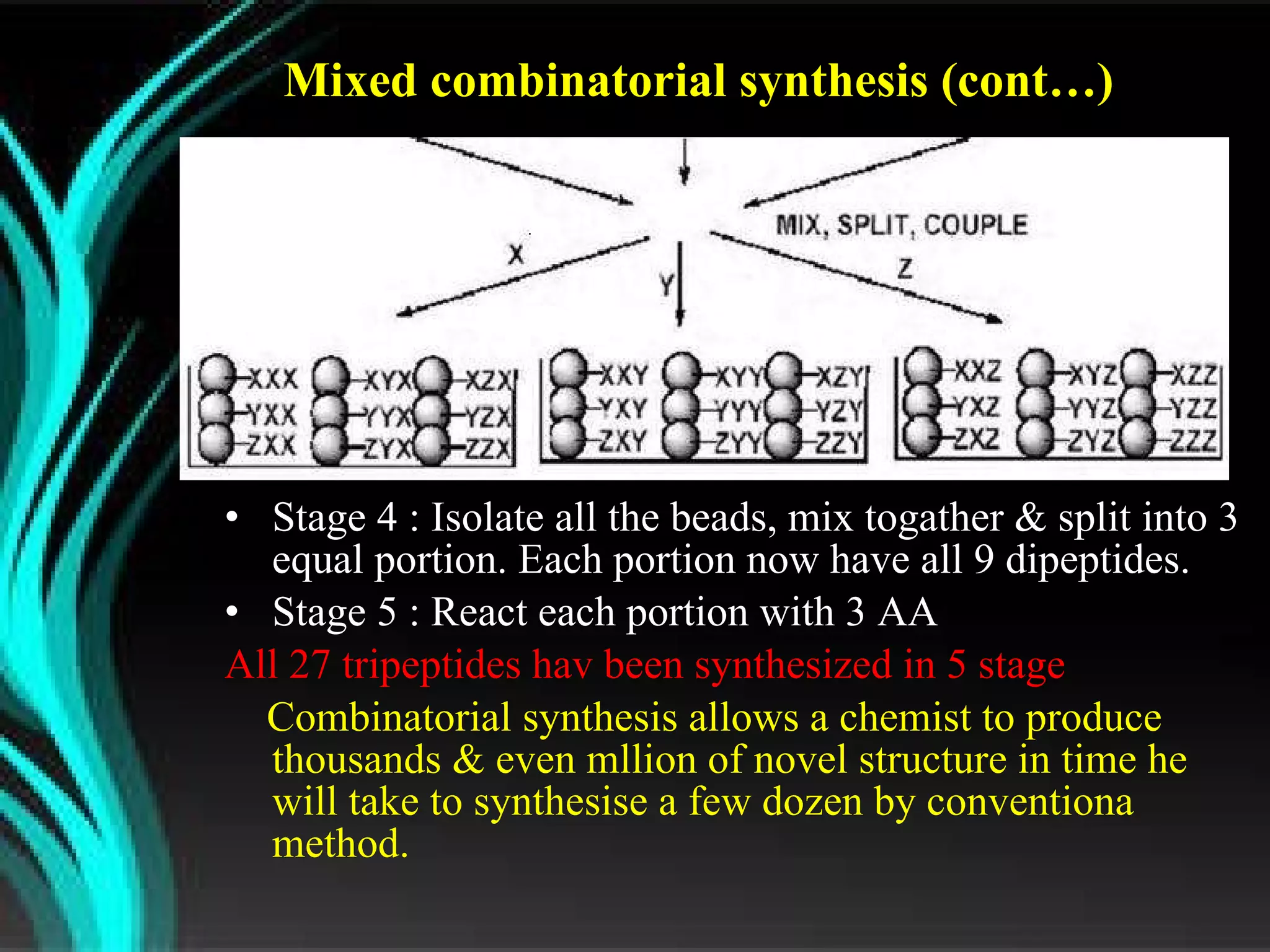
Mixed combinatorial synthesis (cont…) Stage 4 : Isolate all the beads, mix togather & split into 3 equal portion. Each portion now have all 9 dipeptides. Stage 5 : React each portion with 3 AA All 27 tripeptides hav been synthesized in 5 stage Combinatorial synthesis allows a chemist to produce thousands & even mllion of novel structure in time he will take to synthesise a few dozen by conventiona method.
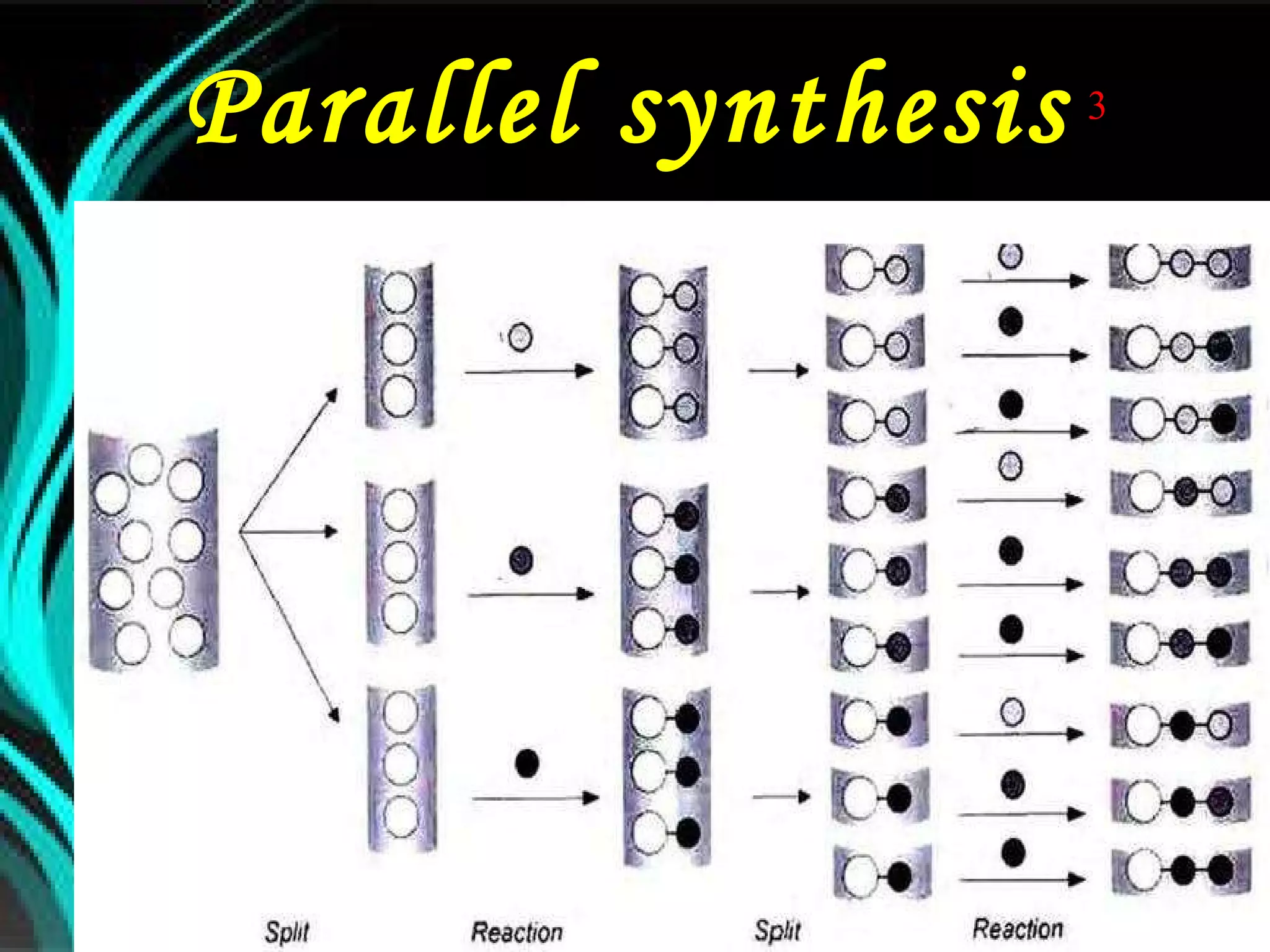
Par allel synthesis   3
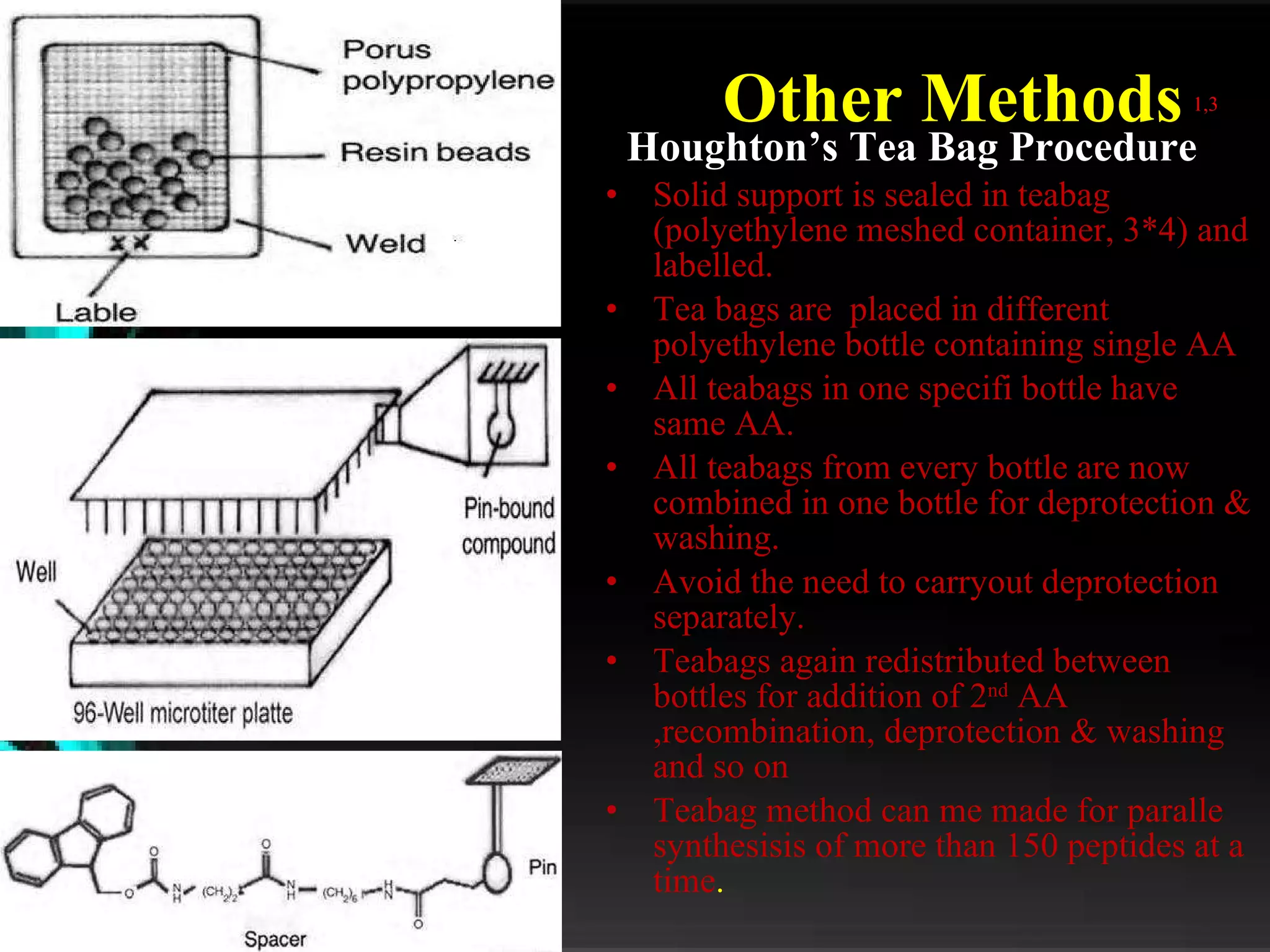
Other Methods   1,3   Houghton’s Tea Bag Procedure  Solid support is sealed in teabag (polyethylene meshed container, 3*4) and labelled. Tea bags are  placed in different polyethylene bottle containing single AA All teabags in one specifi bottle have same AA. All teabags from every bottle are now combined in one bottle for deprotection & washing. Avoid the need to carryout deprotection separately. Teabags again redistributed between bottles for addition of 2 nd  AA ,recombination, deprotection & washing and so on Teabag method can me made for paralle synthesisis of more than 150 peptides at a time .
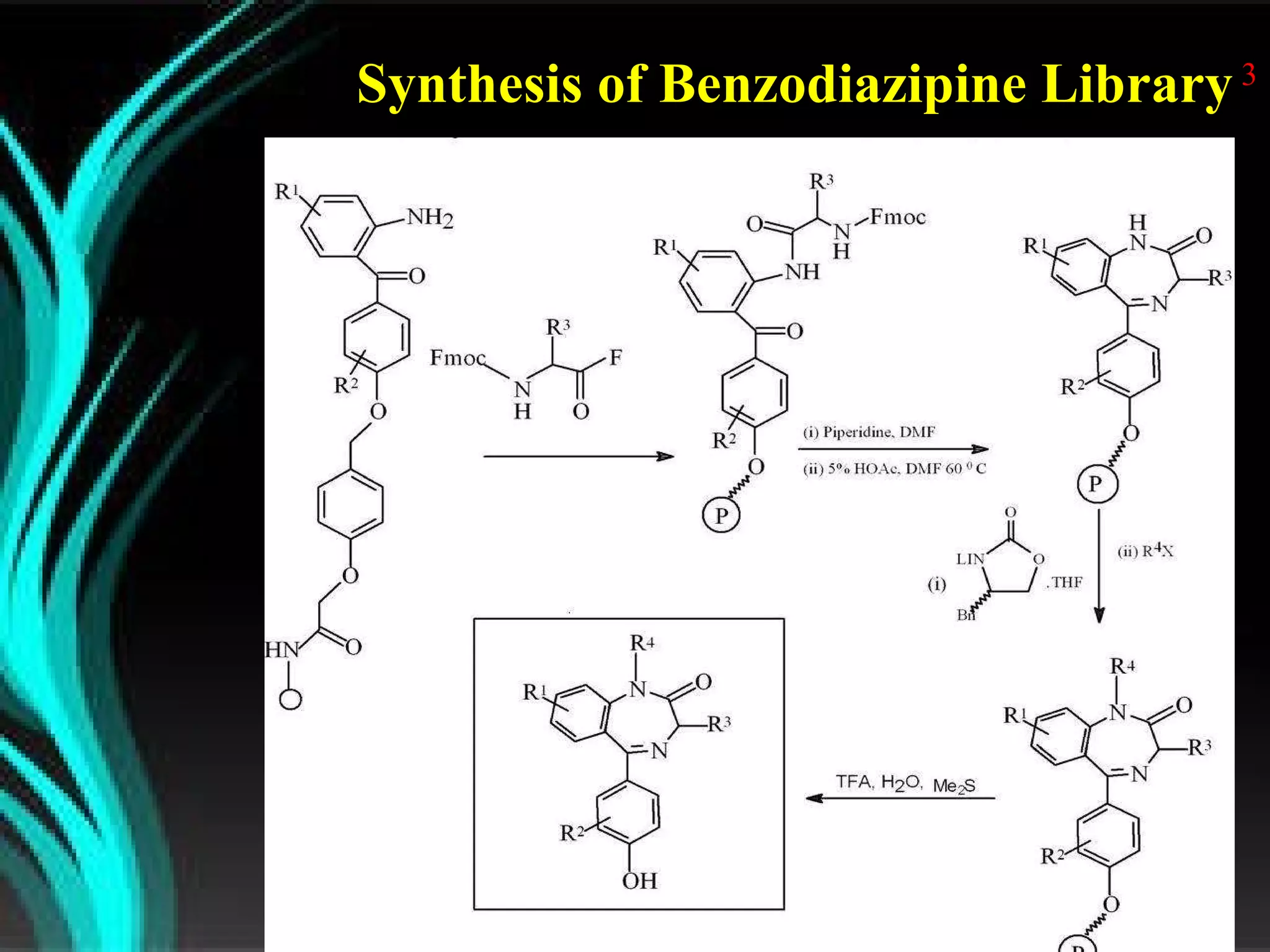
Synthesis of Benzodiazipine Library  3
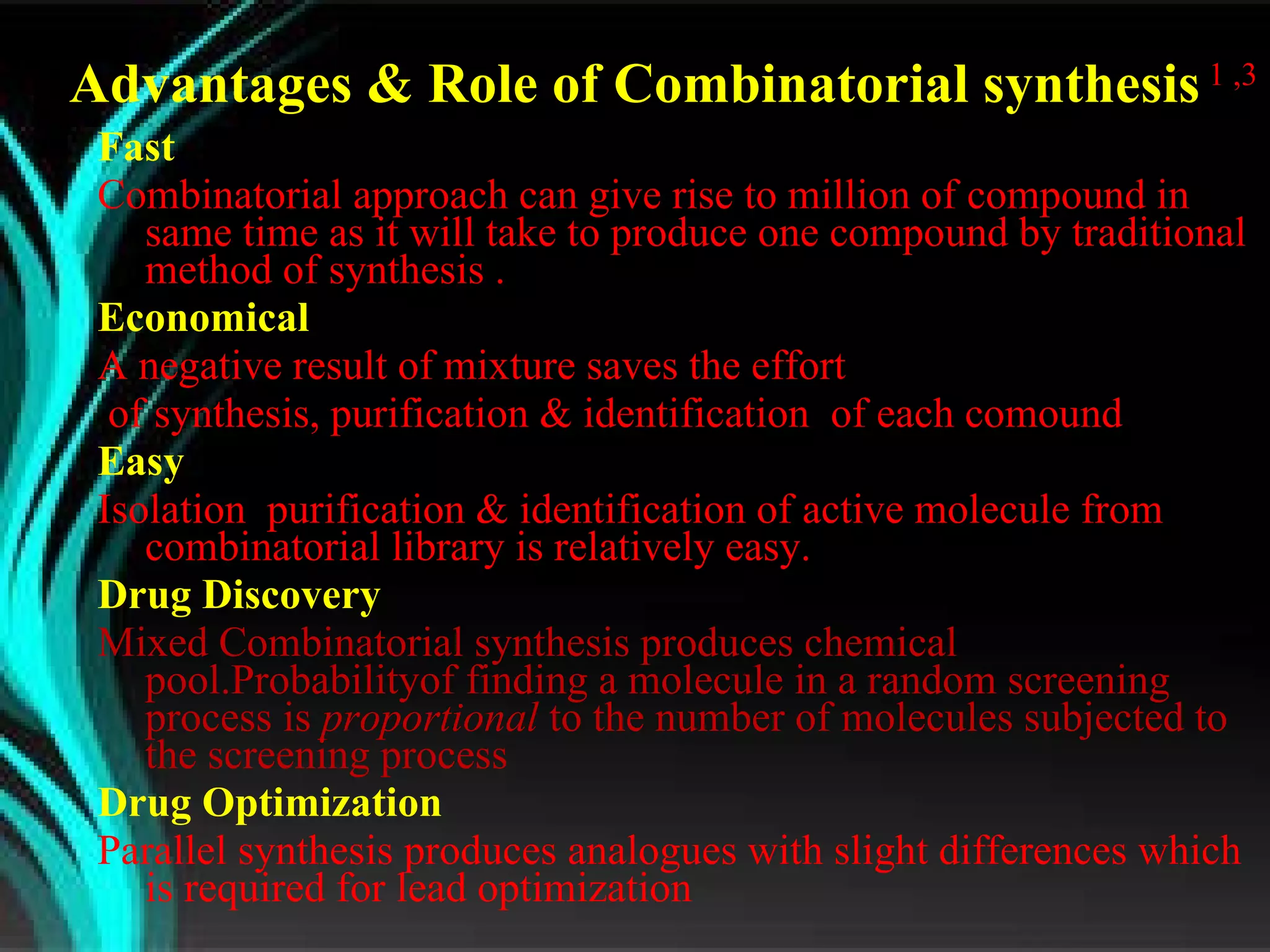
Fast  Combinatorial approach can give rise to million of compound in same time as it will take to produce one compound by traditional method of synthesis . Economical  A negative result of mixture saves the effort of synthesis, purification & identification  of each comound Easy Isolation  purification & identification of active molecule from combinatorial library is relatively easy. Drug Discovery Mixed Combinatorial synthesis produces chemical pool. Probabilityof finding a molecule in a random screening process is  proportional  to the number of molecules subjected to the screening process Drug Optimization Parallel synthesis produces analogues with slight differences which is required for lead optimization  Advantages & Role of Combinatorial synthesis  1 ,3
NATURAL PRODUCT DERIVED COMBINATORIAL  LIBRARY  Biological Screening Startig Materials Combinatorial Synthesis Desired Activity No Desired Activity Possible Drug Candidate Combinatorial Library ( for future Drug Candidate)
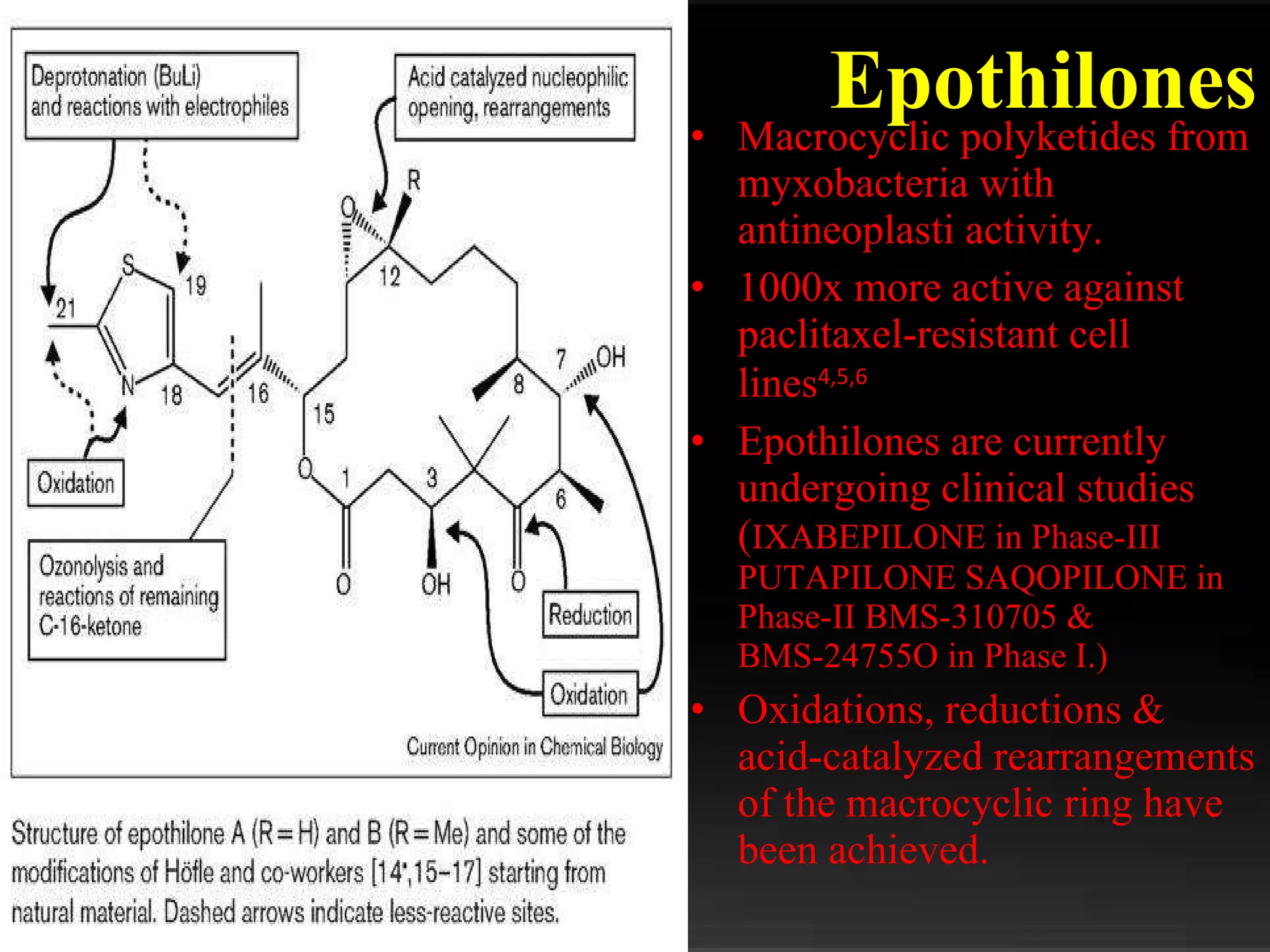
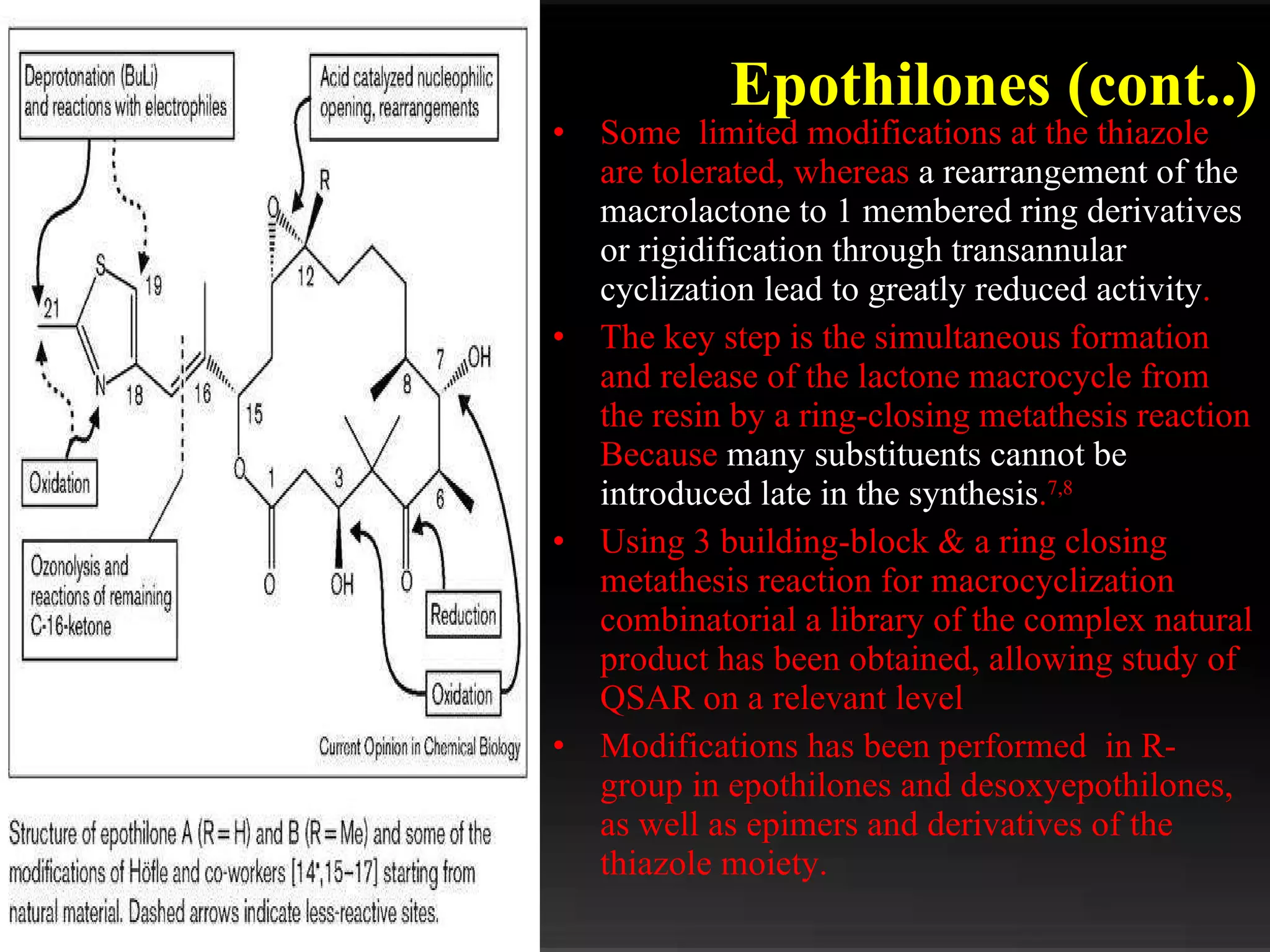
Macrocyclic polyketides from myxobacteria with antineoplasti activity. 1000x more active against paclitaxel-resistant cell lines 4,5,6 Epothilones are currently undergoing clinical studies ( IXABEPILONE in Phase-III  PUTAPILONE SAQOPILONE in Phase-II BMS-310705 & BMS-24755O in Phase I.) Oxidations, reductions & acid-catalyzed rearrangements of the macrocyclic ring have been achieved. Epothilones
Some  limited modifications at the thiazole are tolerated, whereas  a rearrangement of the macrolactone to 1 membered ring derivatives or rigidification through transannular cyclization lead to greatly reduced activity . The key step is the simultaneous formation and release of the lactone macrocycle from the resin by a ring-closing metathesis reaction Because  many substituents cannot be introduced late in the synthesis . 7,8 Using 3 building-block & a ring closing metathesis reaction for macrocyclization combinatorial a library of the complex natural product has been obtained, allowing study of QSAR on a relevant level Modifications has been performed  in R-group in epothilones and desoxyepothilones, as well as epimers and derivatives of the thiazole moiety. Epothilones (cont..)
Sugar-derived oxacycles 9, Starting from D-(+)-mannitol, a highly functionalised template was synthesized Immobilisation via an olefinic linker onto Rink amide resin.  Further derivatisation  followed by  cyclisation reaction,  resulted in the simultaneous release of the final  compounds from  the solid support.  The derivatives thus obtained have a high degree of similarity to several potent natural products, such as the goniolactones 10   & altholactone 11
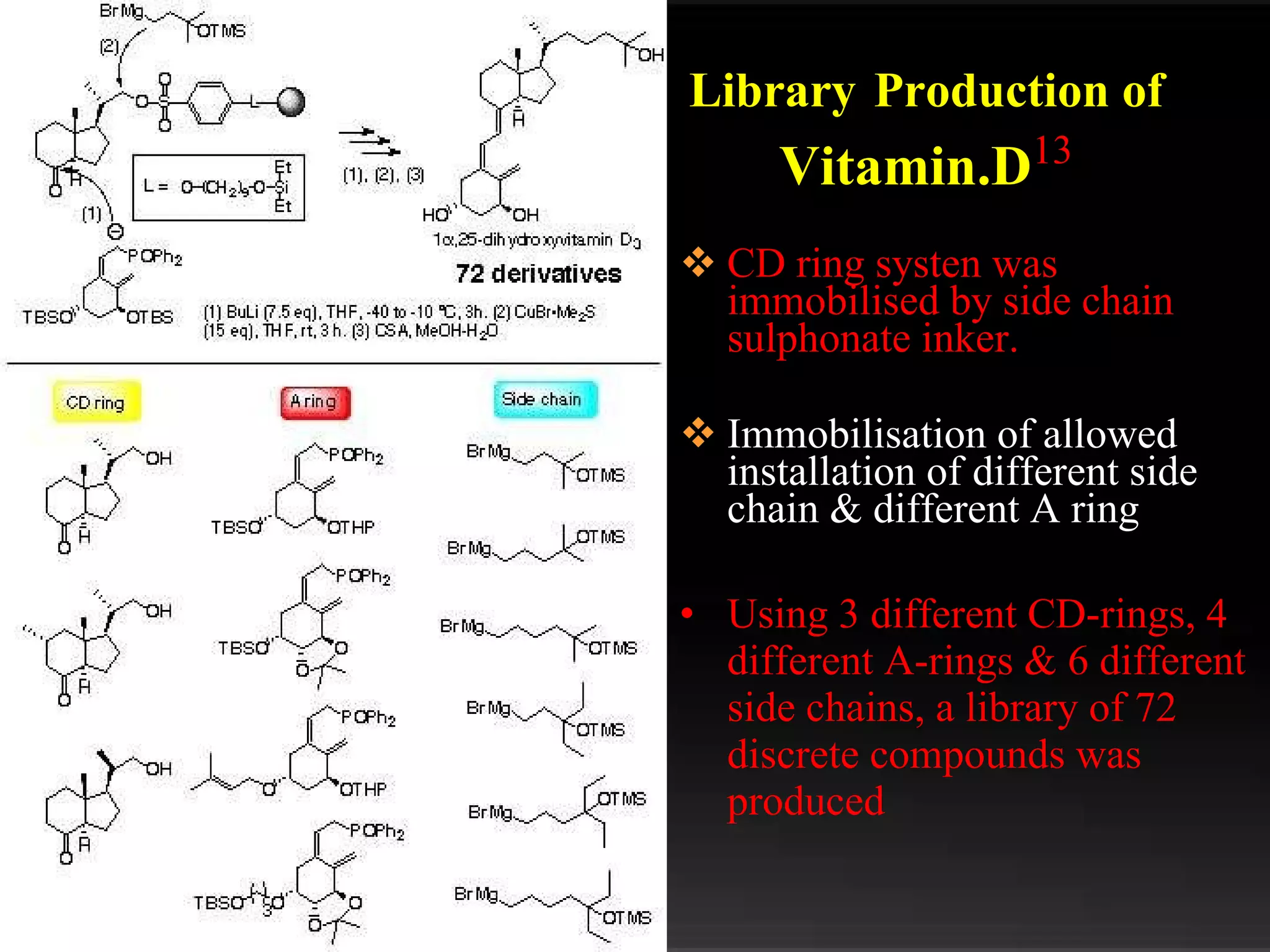
Vitamin D 12 Attachement of 11-hydroxy function of CD ring to diethyl silyl polystyrene. A ring was attached by Homer Wadsworth Embson (HWE) reaction. Side chain was instalted by Cu(I) mediated Grignard reaction.
Library   Production of  Vitamin.D 13 CD ring systen was immobilised by side chain sulphonate inker. Immobilisation of allowed installation of different side  chain & different A ring Using 3 different CD-rings, 4 different A-rings & 6 different side chains, a library of 72 discrete compounds was produced
Fumitremorgin C 14 Fungal metabolite  Aspergillus fumigatus. Potent & specific reversal activity against breast cancer resistance protein (BCRP).  Solid-phase synthesis commencing with an  L-tryptophan  charged hydroxyethyl polystyrene has been developed.  42-member fumitremorgintype compound  library  as well as demethoxyfumitremorgin C Several selective and potent BCRP-inhibitors were identified .
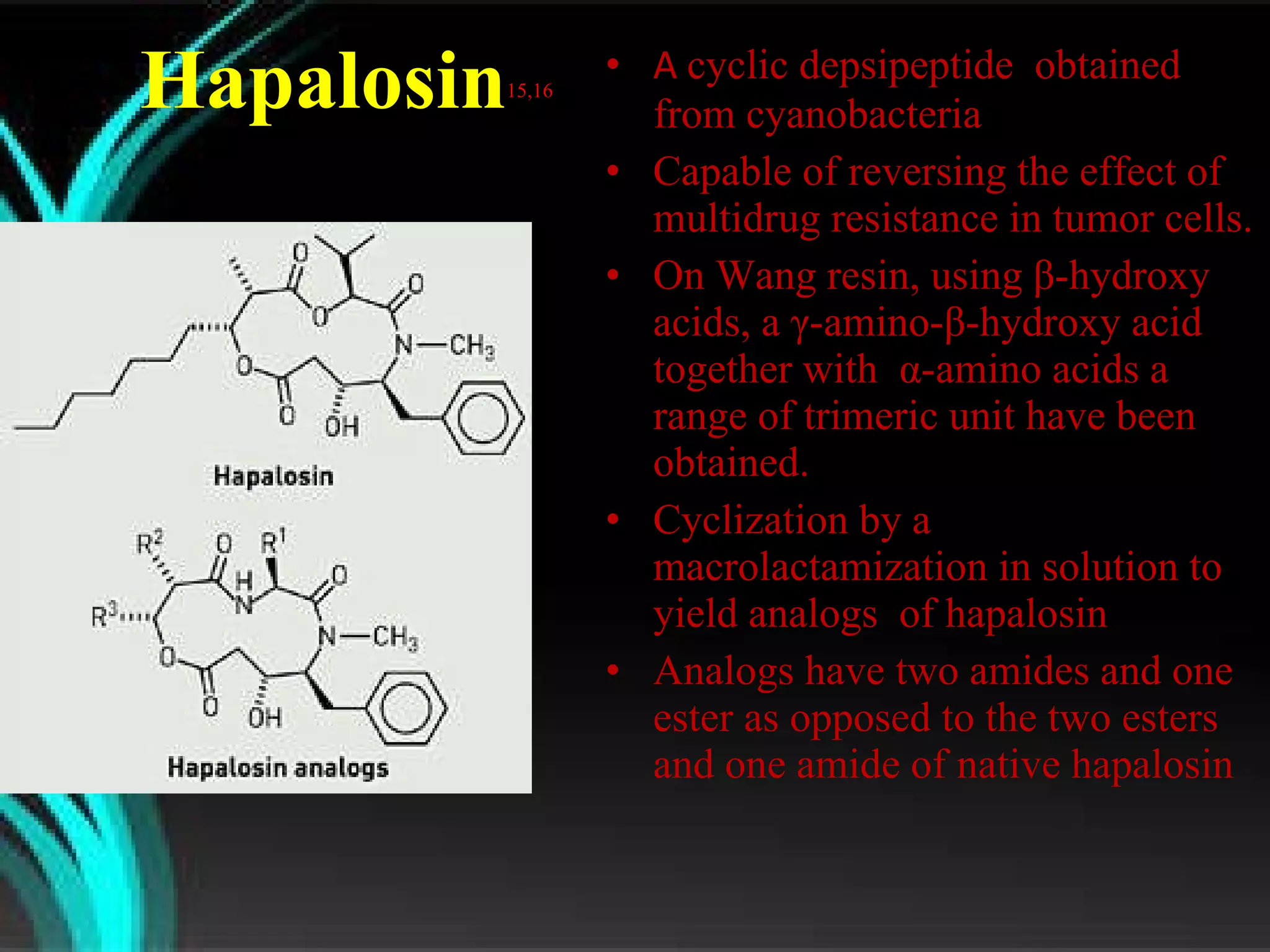
Hapalosin 15,16 A  cyclic depsipeptide  obtained from cyanobacteria Capable of reversing the effect of multidrug resistance in tumor cells. On Wang resin, using  β- hydroxy acids, a γ-amino-β-hydroxy acid together with  α- amino acids a range of trimeric unit have been  obtained. Cyclization by a macrolactamization in solution to yield analogs  of hapalosin Analogs have two amides and one ester as opposed to the two esters and one amide of native hapalosin
Psammaplin A 17 Marine metabolite from sponges  Pseudocertina purpura Symmetrical bromotyrosine derived disulphide. Activity against methicilin resistant  Staphylococcus aureus  (MRSA) By catalytic action of dithiothreitol, 3828-member library of homodimeric and heterodimeric psammaplinA analogs. Several compounds showed high potency in a series of therapeutically relevant bacterial strains.
Erythromycin 18 Macrocylic lactone ,antibiotic with attached sugar obtained from Streptomyces erythreus Acid labile & incomplete absorption. F rom 6-O-allyl-erythromycin  A ,Erythromycin aldehyde was synthesised. Diversity was introduced at three different sites by amino acid acylation followed by two successive reductive aminations to yield target library compounds Unfortunately, there was no report of biological data
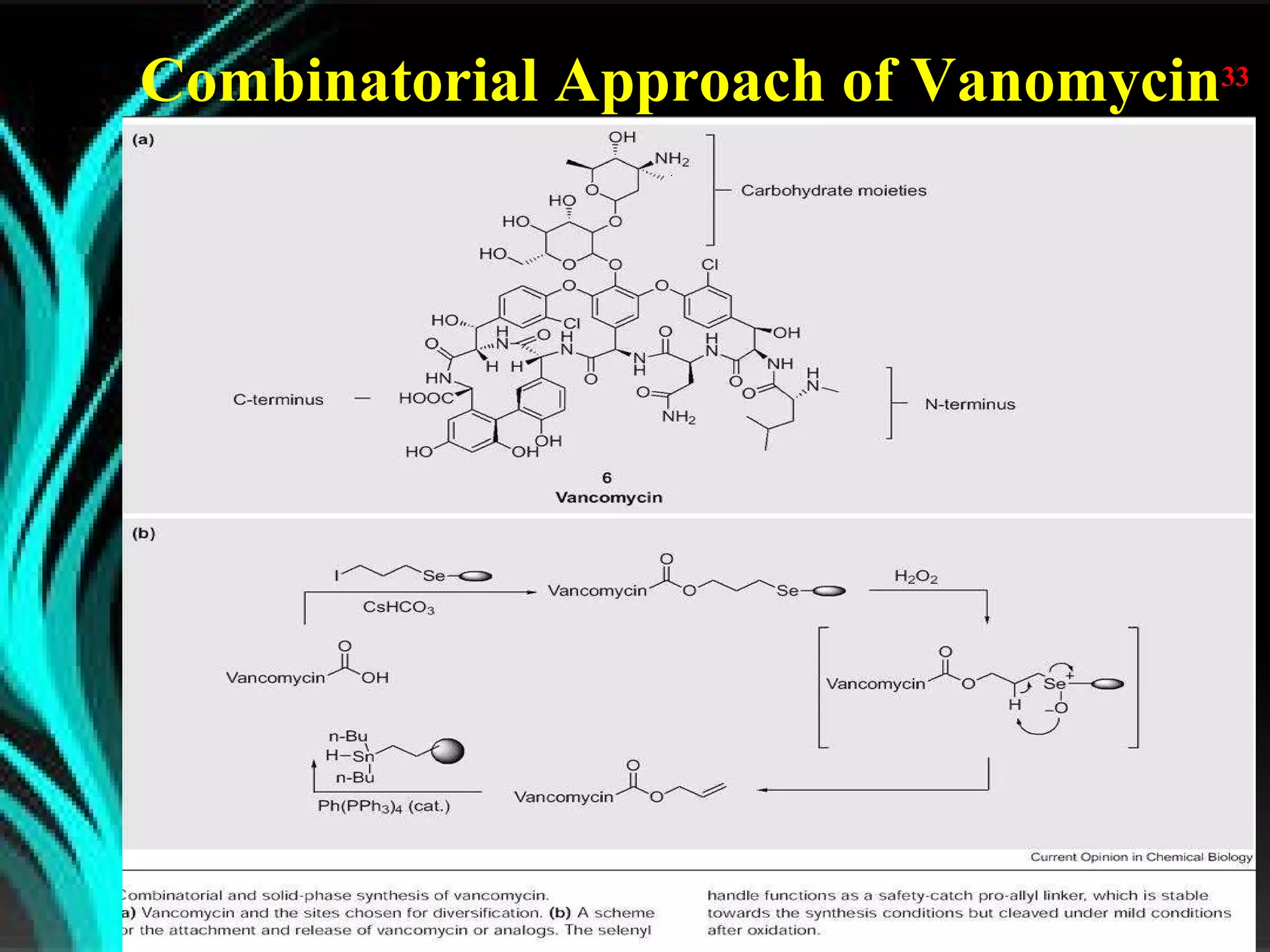
Combinatorial Approach of Vanomycin 33
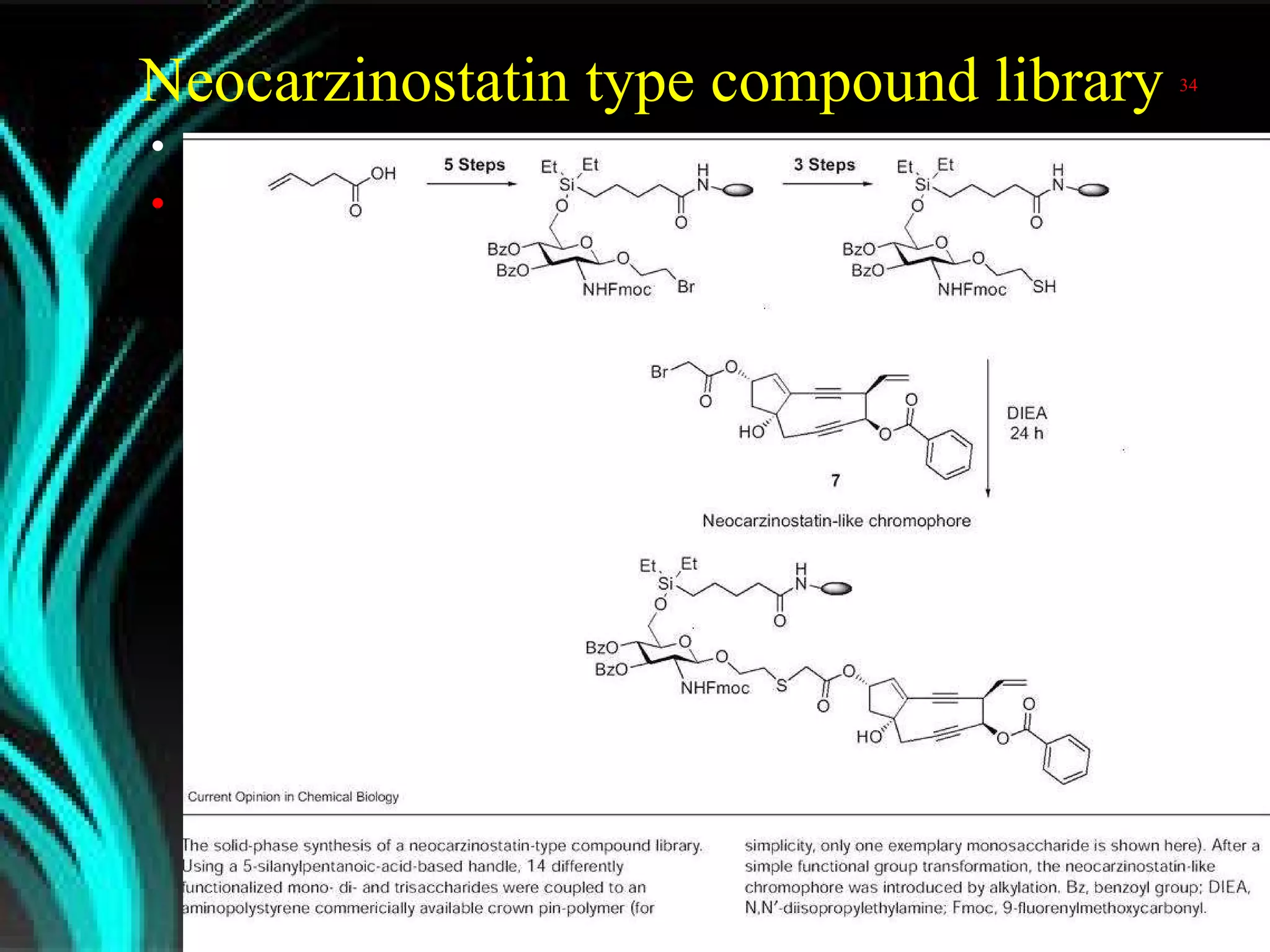
Neocarzinostatin type compound library  34
A ‘global approach’ for the synthesis of libraries based on natural products trichostatin A and trapoxin  35
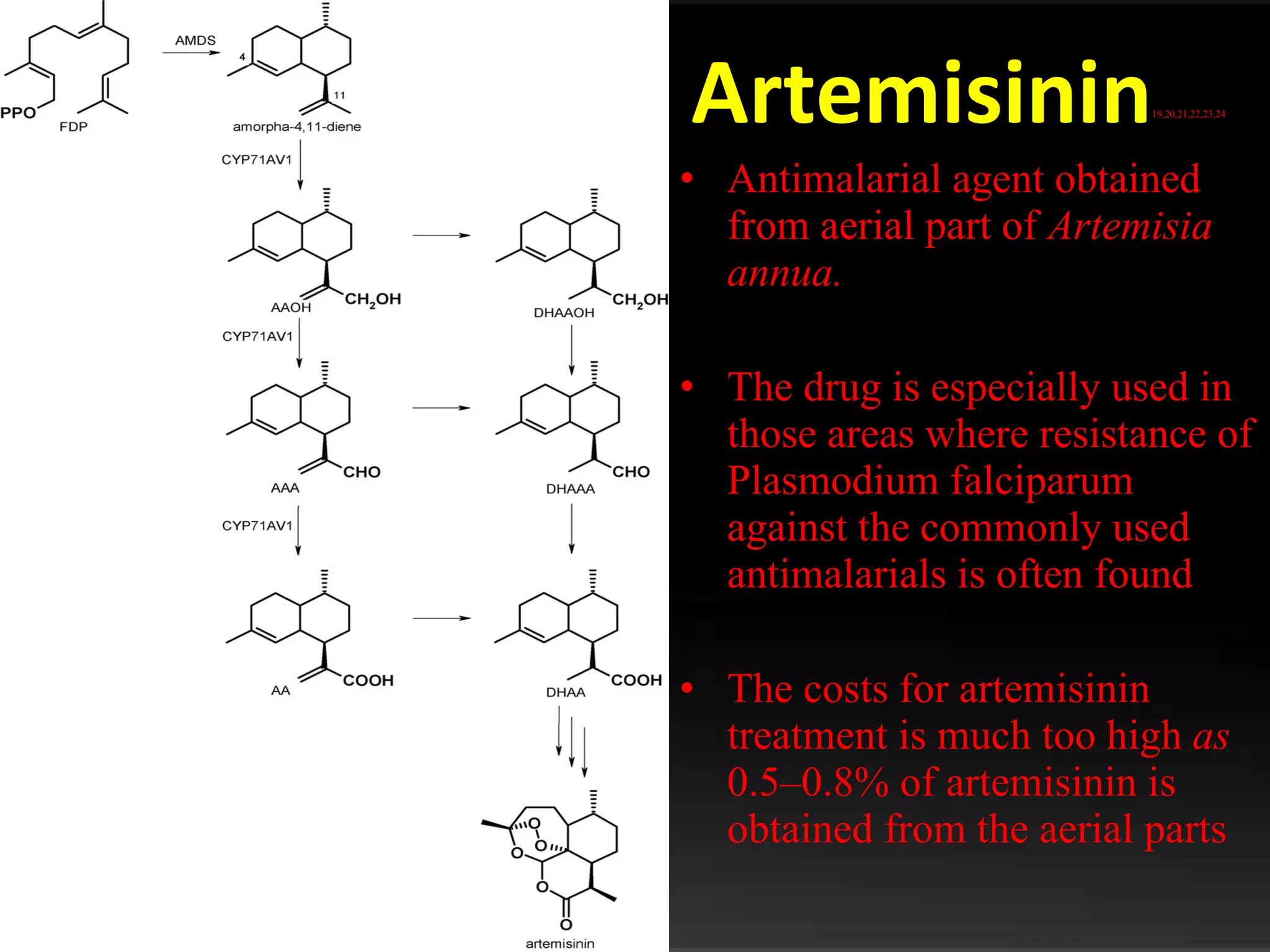
Artemisinin 19,20,21,22,23,24 Antimalarial agent obtained from aerial part of  Artemisia annua. The drug is especially used in those areas where resistance of Plasmodium falciparum against the commonly used antimalarials is often found The costs for artemisinin treatment is much too high  as  0.5–0.8% of artemisinin is obtained from the aerial parts
Artemisinin (cont…) Untill now 2 genes encoding  amorphadiene synthase  &   cytochrome P450 enzymy,  CYP71AV1  have been cloned Enzyme amorphadiene synthase catalyse synthesis intermediate amorpha-4,11-diene .  Enzyme CYP71AV1 has been shown to cataysed regioselective oxidation of amorpha-4,11-diene into artemisinic alcohol Enzyme has also been shown to be able to oxidize the precursors artemisinic alcohol and artemisinic aldehyde to artemisinic acid. A  synthetic amorphadiene synthase gene was combined with genes for mevalonate -isoprenoid pathway & exprexxed in  E. coli.  A morpha-4,11-diene production was  24 mg/ml.
Artemisinin (cont…) The expression of the amorphadiene synthase gene in yeast  S. cerevisiae  using plasmids and chromosomal integration led to the production of respectively 600 and 100 mg/ml amorpha-4,11-diene after 16 days Using a  S. cerevisiae  strain containing an engineered MVA pathway coupled with the genes encoding amorphadiene synthase and CYP71AV1 the production of artemisinic acid up to 100 mg/l was obtained. This strain transported the artemisinin precursor outside the yeast cell, which makes purification of the product less complex
Paclitaxel   25,26,27   It is mostly described by the tradename Taxol1 it is a diterpenoid found in the bark and needles of different Taxus trees Used for treatment of ovarian and breast cancers low yield (500 mg kg1) & various Taxus species are endangered in China and India. Its total synthesis has been established, but the complexity and low yield made it commercially inapplicable .  It can be obtained semisynthetically from 10-deacetylbaccatin III,  isolated from the green needles of various Taxus species. Nevertheless, the production of paclitaxel still relies on the yew species or on cell culture systems derived from these  plants.
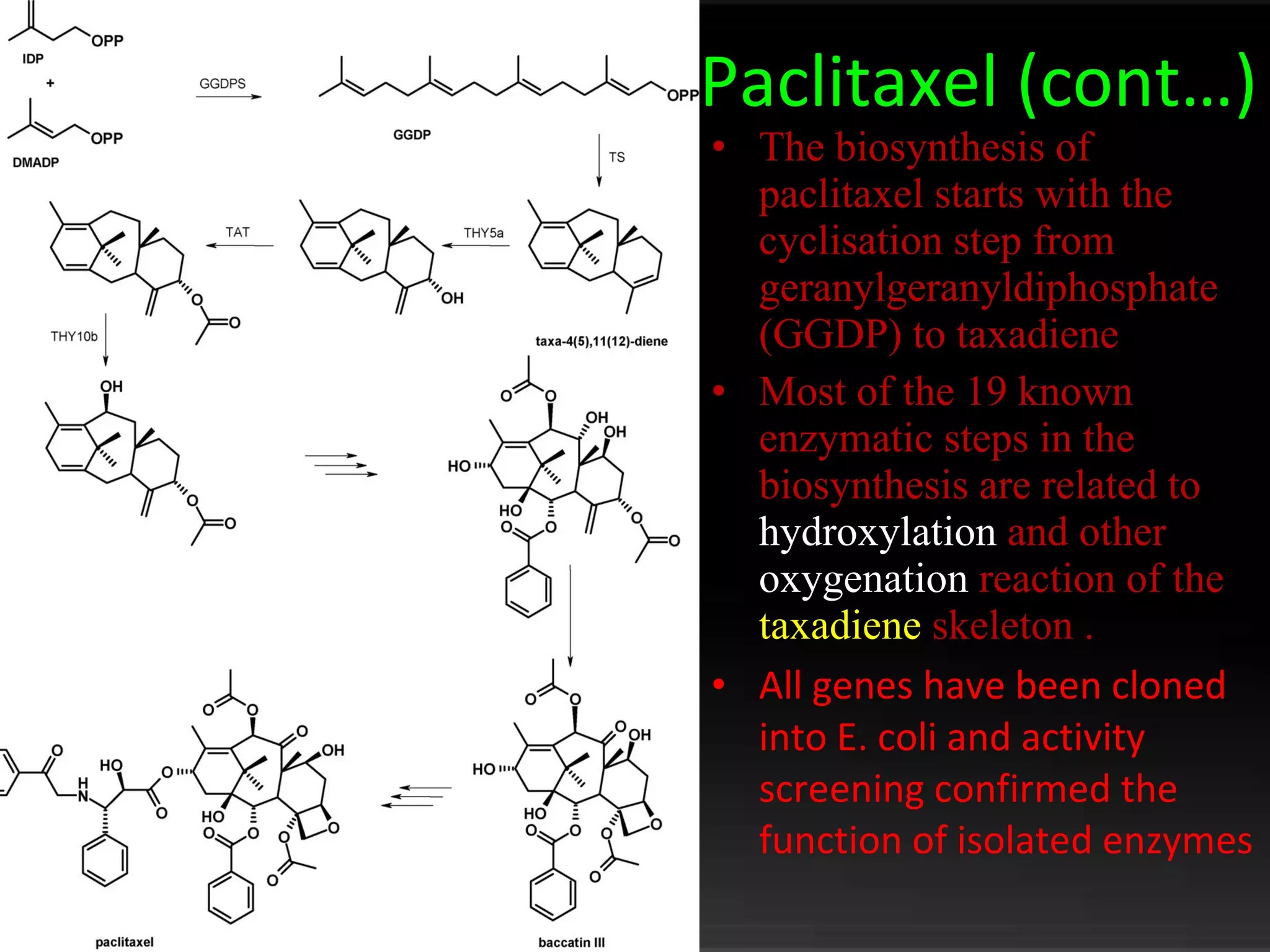
Paclitaxel (cont…) The biosynthesis of paclitaxel starts with the cyclisation step from geranylgeranyldiphosphate (GGDP) to taxadiene  Most of the 19 known enzymatic steps in the biosynthesis are related to  hydroxylation  and other  oxygenation  reaction of the  taxadiene  skeleton . All genes have been cloned into E. coli and activity screening confirmed the function of isolated enzymes
Limiting factors  (1) E. coli does not has efficient isoprenoid pthway.  (2)E. coli has limited supply of NADPH & ctyochrome P450  Enzyme encoding gene Source  COEXPRESSION production  of  1.3 mg taxadiene  per liter of cell culture Taxadiene synthase  T. brevifolia geranylgeranyl diphosphate synthase  Erwinia herbicola isopentenyl diphosphate synthase Schizosaccharomyces pombe Deoxyxylulose 5-phosphate synthase E. coli (endogenous)
Paclitaxel (cont…) By implementing two plasmid (8+19 genes) in  S. cerevisiae , taxadien-5a-acetoxy-10b-ol has been produced. The taxadiene synthase encoding gene has also been expressed in  A. thaliana Constitutive expression of the gene led to taxadiene accumulation,  but  A. thaliana  plants showed growth retardation and decreased levels of photosynthetic pigment.  The negative effects may have been caused by the toxicity of taxadiene, but more likely they are a result of the disturbance of the endogenous geranylgeranyldiphosphate pool
Morphine  28,29 Benzylisoquinoline alkaloids  obtained from opium  ( Ppaver somniferum,  Papaveraceae ). Analgesic, Stimulant & Depressant action. Its biosynthesis has almost completely been elucidated.(17 steps )  A key intermediate (S)-norcoclaurine, is biosynthesised by condensation of dopamine and 4-hydroxyphenylacetaldehyde Enzyme (S)-norcoclaurine synthase has been identified from  Thalictrum flavum , (Ranunculaceae) & cloned in E. coli Further key enzymatic steps towards (S)-reticulin include three NADPH oxidoreductases  & cytochrome P450  and an acetyl-CoA dependent acetyltransferase . Last step (codeine to morphine) by codeinone reductase has been elucidated and the gene expressed in insect cells and/or in E. coli
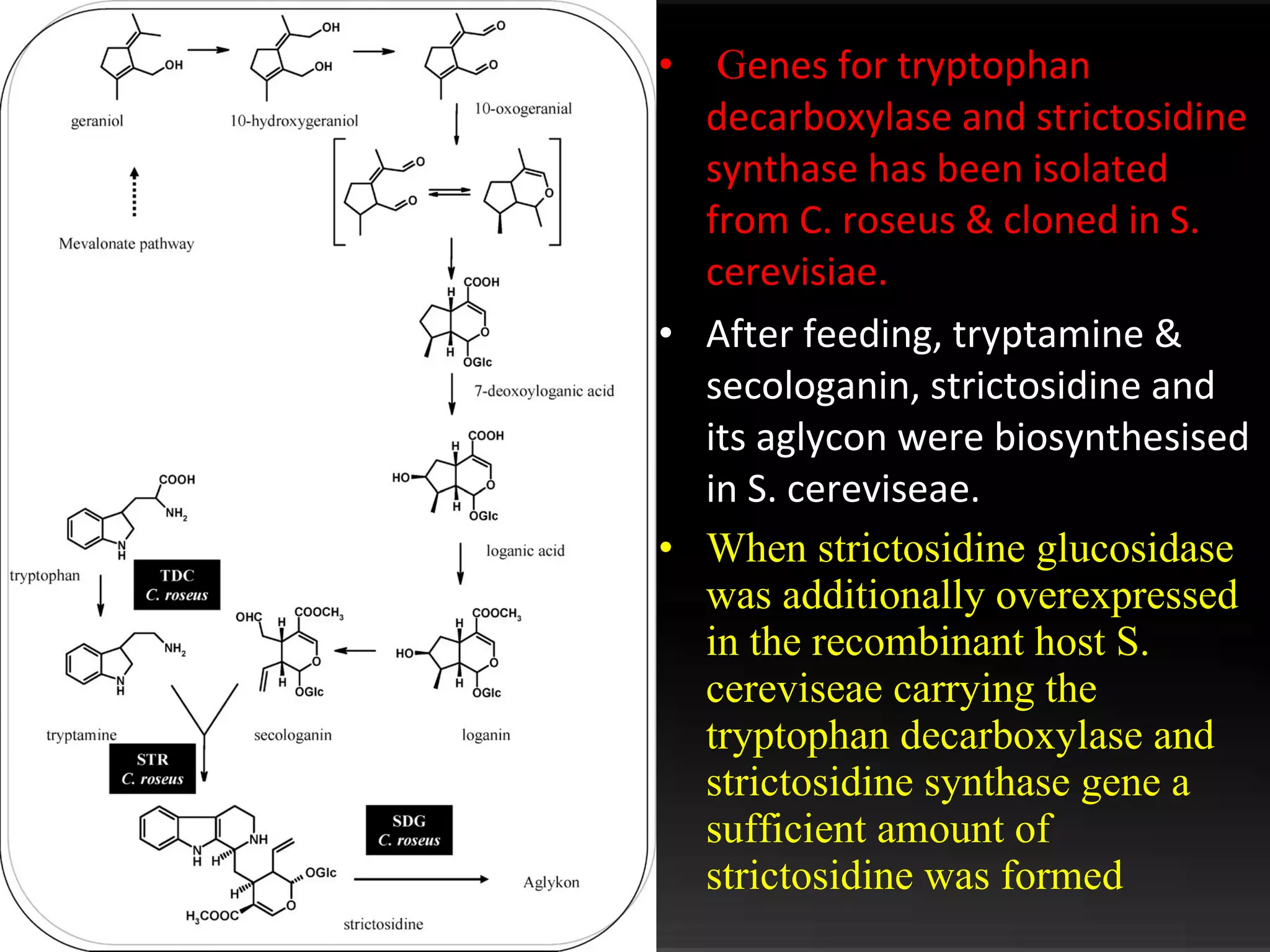
Vinca Alkaloids  30,31,32 Vinblastine   &  Vincristine  are monoterpenoid-indole alkaloids from  Catharanthus roseus , Apocyanaceae. Used as antineoplastic. But has extreme low yield (3 mg kg1)  For 3 kg of Vinca alkaloids, which is the annual need worldwide around 300 tonnes of plant material has to be extracted. Production of Vinca alkaloids in plant cell cultures did not lead to a significant. In the early step, tryptophan and secologanin  condensed to form strictosidine. Only in this part 7 enzymes involved. From these seven genes four of these have been cloned in E. coli. In whole biosynthesis at least 30 biosynthetic and 2 regulatory genes are involved, which encode around 35 intermediates
G enes for tryptophan decarboxylase and strictosidine synthase has been isolated from C. roseus & cloned in S. cerevisiae. After feeding, tryptamine & secologanin, strictosidine and its aglycon were biosynthesised in S. cereviseae. When strictosidine glucosidase was additionally overexpressed in the recombinant host S. cereviseae carrying the tryptophan decarboxylase and strictosidine synthase gene a sufficient amount of strictosidine was formed
Vinca Alkaloids  (cont..) The cDNA coding for  strictosidine synthase from  R. serpentina has  been expressed in E. coli & in insect cells & was found to convert secologanin  & tryptamine into strictosidine Besides in microbial hosts the mentioned genes of the early biosynthesis have also been cloned into Nicotina tabacum. The major drawback however is the disability to hydrolyse strictosidine glucoside because N. tabacum does not posses specific glucosidases . Later, strictosidine glucosidase has also been successfully inserted and expressed in suspension cultured tobacco cells  The strictosidine glucosidase protein in N. tabacum was present in the same high molecular weight complexes as known before in C. roseus.
Isolation & Purification  of compound from both natural source & combinatorial synthesis depends upon--Quantity, Structure & Stability  Chromatograhic technique are  the useful method for isolation & purification. Structure determination.  X-ray crystalography  gives a snapshot of molecule. Mass spectroscopic  fragment gives clues about the structure. IR Spectroscopy  gives information about nature of bonds between atoms in molecule. NMR   gives in information about surronding of an atom in molecule. Today structure determination is relatively straightforward process except in case natural product is obtained in minute quantity..
Structure Activity Relationship (SAR)  A selected no. of compounds which vary slightly from original molecule are studied for biological activity. The aim is to discover which part/group is essential for biologocal activity & which are not. Pharmacophore summerase the inportant functional group which are required for activity & their relative spatial position with the aim to- Increase activity. Decrease side effects Improved pharmacokinetics. Easy synthesis.
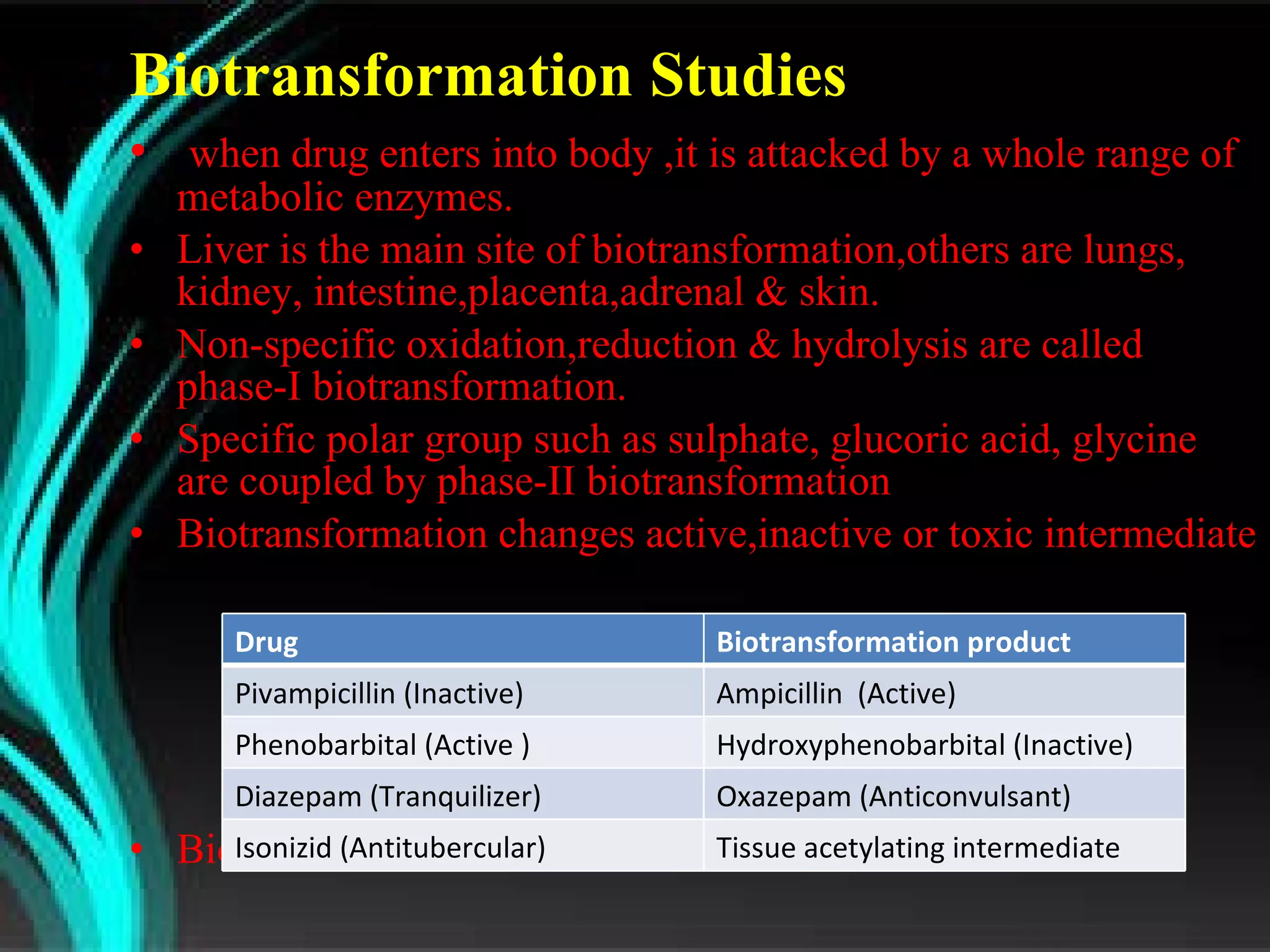
Biotransformation Studies when drug enters into body ,it is attacked by a whole range of metabolic enzymes. Liver is the main site of biotransformation,others are lungs, kidney, intestine,placenta,adrenal & skin. Non-specific oxidation,reduction & hydrolysis are called phase-I biotransformation. Specific polar group such as sulphate, glucoric acid, glycine are coupled by phase-II biotransformation  Biotransformation changes active,inactive or toxic intermediate Biotransformation makes drug more polar for excretion. Drug Biotransformation product Pivampicillin (Inactive) Ampicillin  (Active) Phenobarbital (Active ) Hydroxyphenobarbital (Inactive) Diazepam (Tranquilizer) Oxazepam (Anticonvulsant) Isonizid (Antitubercular) Tissue acetylating intermediate
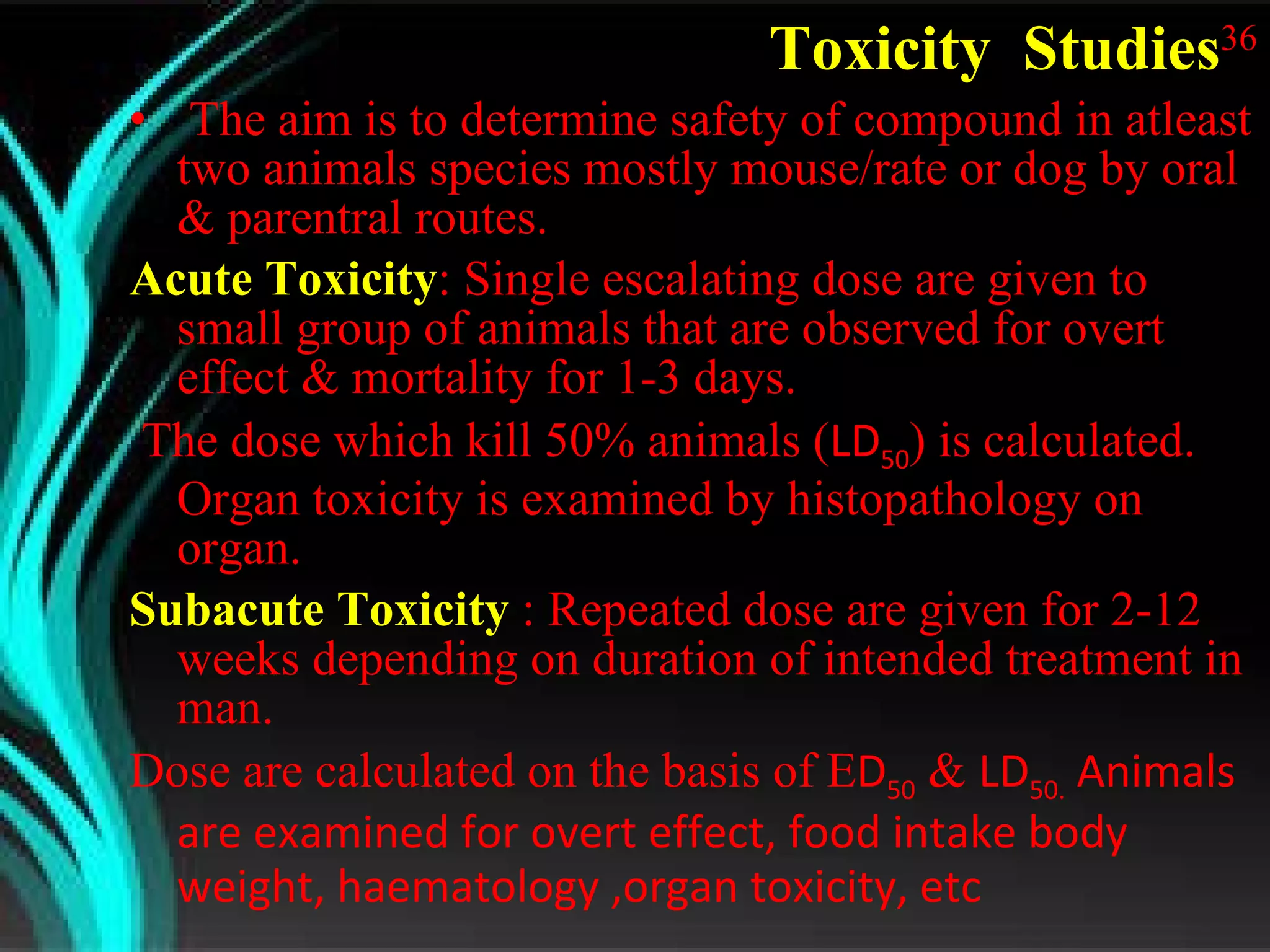
Toxicity  Studies 36 The aim is to determine safety of compound in atleast two animals species mostly mouse/rate or dog by oral & parentral routes. Acute Toxicity : Single escalating dose are given to small group of animals that are observed for overt effect & mortality for 1-3 days. The dose which kill 50% animals ( LD 50 ) is calculated. Organ toxicity is examined by histopathology on organ.  Subacute Toxicity  : Repeated dose are given for 2-12 weeks depending on duration of intended treatment in man. Dose are calculated on the basis of E D 50  &  LD 50.  Animals are examined for overt effect, food intake body weight, haematology ,organ toxicity, etc
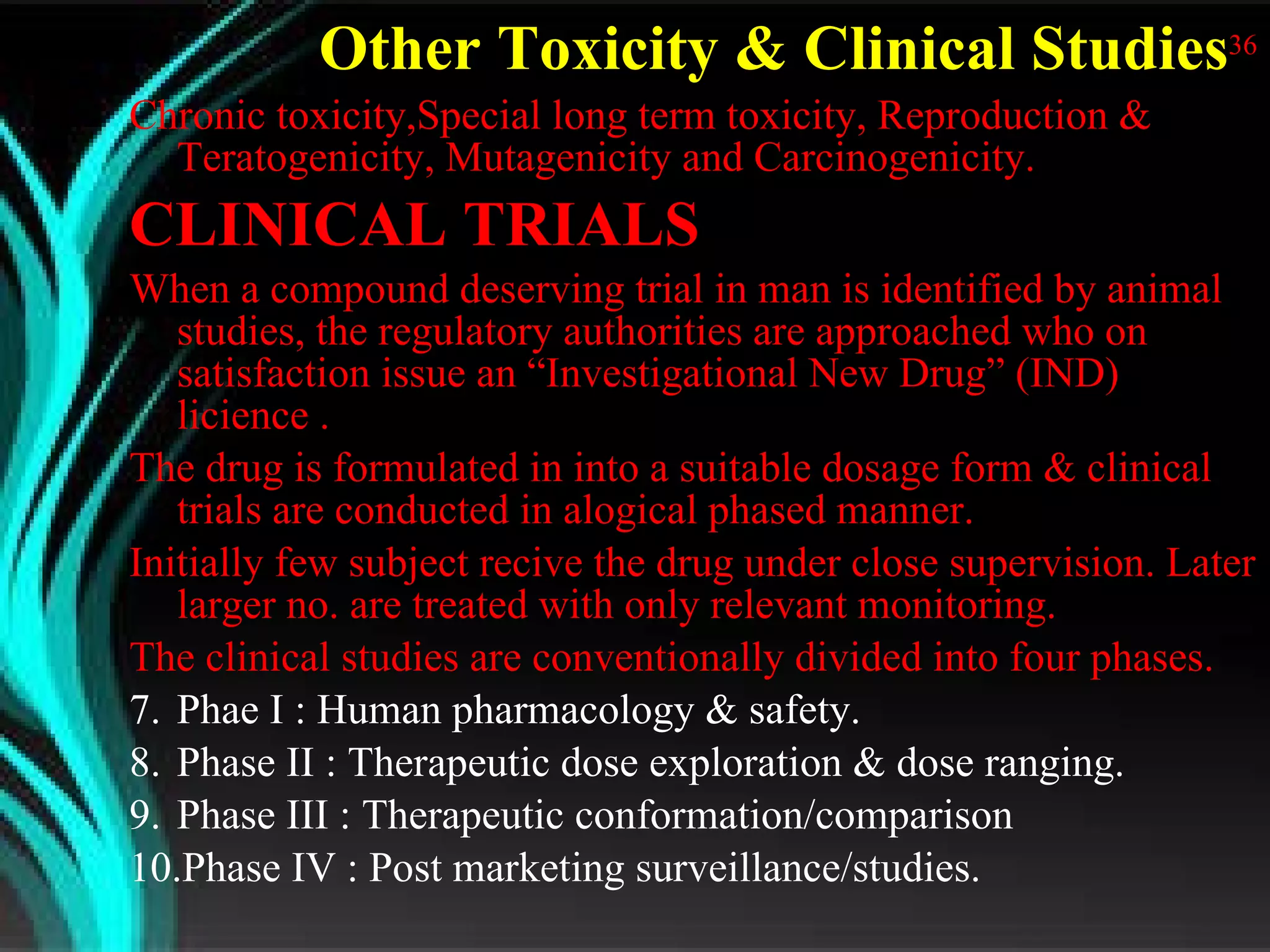
Other Toxicity & Clinical Studies 36 Chronic toxicity,Special long term toxicity, Reproduction & Teratogenicity, Mutagenicity and Carcinogenicity. CLINICAL TRIALS When a compound deserving trial in man is identified by animal studies, the regulatory authorities are approached who on satisfaction issue an “Investigational New Drug” (IND) licience . The drug is formulated in into a suitable dosage form & clinical trials are conducted in alogical phased manner. Initially few subject recive the drug under close supervision. Later larger no. are treated with only relevant monitoring. The clinical studies are conventionally divided into four phases. Phae I : Human pharmacology & safety. Phase II : Therapeutic dose exploration & dose ranging. Phase III : Therapeutic conformation/comparison Phase IV : Post marketing surveillance/studies.
Scope of Drug Discovery It has been estimated that up to 10 genes contribute to multifactoral diseases. Disease genes are linked to another 5 to 10 gene products. If these numbers are multiplied with the number of diseases that pose a major medical problem in the industrial world,then  there are ~5000 to 10000 potential drug targets. Research based pharmaceutical companies, on average, spend about  20% of their sales on research and development (R&D).
references Patrick Gram L.”An Introduction to Medicinal Chemistry” 2 nd  edition, Oxford Press. Page No.142-190,289-317 ^  a   b  Newman DJ, Cragg GM (March 2007). "Natural products as sources of new drugs over the last 25 years".  J. Nat. Prod.   70  (3): 461–77.  doi : 10.1021/np068054v .  PMID   17309302 Panda S.N & Takkar D “Combinatorial Chemistry : A novel method in drug discovery  & its application” , Indian Journal of Chemistry, vol.44B.Fabruary 2005,pp335-348 Wessjohann LA, Scheid G:  Synthetic access to epothilones — natural products with extraordinary anticancer activity.  In  Organic   Synthesis Highlights IV , vol 4. Edited by Schmalz H-G. Weinheim:   Wiley-VCH; 2000. Wessjohann L:  Epothilones: promising natural products with taxollike activity.  Angew Chem Int Ed Engl  1997,  36 :715-718. Nicolaou KC, Roschangar F, Vourloumis D:  Chemical biology of epothilones.  Angew Chem Int Ed Engl  1998,  37 :2014-2045. Nicolaou KC, Winssinger N, Pastor J, Ninkovic S, Sarabia F, He Y, Vourloumis D, Yang Z, Li T, Giannakakou P, Hamel E:  Synthesis of   epothilones A and B in solid and solution phase.  Nature  1997,  387 :268-272. Nicolaou KC, Vourloumis D, Li T, Pastor J, Winssinger N, He Y, Ninkovic S, Sarabia F, Vallberg H, Roschangar F  et al .:  Designed epothilones: combinatorial synthesis, tubulin assembly properties, and cytotoxic action against Taxol-resistant tumor cells.  Angew Chem Int Ed Engl  1998,  36 :2097-2103.
References  (cont..2) 9.  Timmer MS, Verdoes M, Sliedregt LA, van der Marel GA, van Boom JH, Overkleeft HS: The use of a mannitol-derived fused oxacycle as a combinatorial scaffold. J Org Chem 2003, 68:9406-9411. 10. Wang S, Zhang YJ, Chen RY, Yu DQ: Goniolactones A-F, six new styrylpyrone derivatives from the roots of Goniothalamus cheliensis. J Nat Prod 2002, 65:835-841. 11. Inayat-Hussain SH, Bin Osman A, Bin Din L, Taniguchi N: Altholactone, a novel styryl-lactone induces apoptosis via oxidative stress in human HL-60 leukemia cells. Toxicol Lett 2002, 131:153-159. 12. Hijikuro I, Doi T, Takahashi T:  Parallel synthesis of a vitamin D-3  ••  library in the solid-phase.  J Am Chem Soc  2001,  123 :3716-3722.   An interesting report on the application of solid-phase combinatorial synthesis   of vitamin D derivatives. 13 Hanazawa T, Wada T, Masuda T, Okamoto S, Sato F:  Novel synthetic approach to 19-nor-1 alpha,25-dihydroxyvitamin D-3 and its derivatives by Suzuki–Miyaura coupling 14 van Loevezijn A, Allen JD, Schinkel AH, Koomen GJ:  Inhibition of BCRP-mediated drug efflux by fumitremorgin-type indolyl diketopiperazines.  Bioorg Med Chem Lett  2001,  11 :29-32. 15.  Hermann C, Giammasi C, Geyer A, Maier ME:  Syntheses of hapalosin analogs by solid-phase assembly of acyclic precursors.  Tetrahedron  2001,  57 :8999-9010. 16. Rosenbaum C, Waldmann H:  Solid phase synthesis of cyclic peptides by oxidative cyclative cleavage of an aryl hydrazide linker— synthesis of stylostatin 1.  Tetrahedron Lett  2001,  42 :5677-5680. 17. Nicolaou KC, Hughes R, Pfefferkorn JA, Barluenga S, Roecker AJ:  Combinatorial synthesis through disulfide exchange: discovery of potent psammaplin A type antibacterial agents active against methicillin-resistant  Staphylococcus aureus  (MRSA).  Chem Eur J  2001,  7 :4280-4295.
References  (cont..3) 18. Akritopoulou-Zanze I, Sowin TJ:  Solid-phase synthesis of macrolide analogs.  J Comb Chem  2001,  3 :301-311. 19. Laughlin, J.C., 1994. Agricultural production of artemisinin—a review. Trans.R. Soc. Trop. Med. Hyg. 88 (Suppl. 1), S21–S22. 20. Wallaart, T.E., Pras, N., Beekman, A.C., Quax,W.J., 2000. Seasonal variation of artemisinin and its biosynthetic precursors in plants of Artemisia annua of different geographical origin: proof for the existence of chemotypes. Planta Med. 66, 57–62.  21 Abdin, M.Z., Israr, M., Rehman, R.U., Jain, S.K., 2003. Artemisinin, a novel antimalarial drug: biochemical and molecular approaches for enhanced production. Planta Med. 69, 289–299. 22. Teoh, K.H., Polichuk, D.R., Reed, D.W., Nowak, G., Covello, P.S., 2006. Artemisia annua L. Asteraceae) trichome-specific cDNAs revealCYP71AV1, a cytochrome P450 with a key role in the biosynthesis of the antimalarial sesquiterpene lactone artemisinin. FEBS Lett. 580, 1411–1416. 23. Picaud, S., Olofsson, L., Brodelius, M., Brodelius, P.E., 2005. Expression, purification, and characterization of recombinant amorpha-4,11-diene synthase from Artemisia annua L. Arch. Biochem. Biophys. 436, 215–226. 24. Lange, B.M., Rujan, T., Martin,W., Croteau, R., 2000. Isoprenoid biosynthesis: the evolution of two ancient and distinct pathways across genomes. Proc. Natl. Acad. Sci. U.S.A. 97, 13172–13177 25. Wani, M.C., Taylor, H.L., Wall, M.E., Coggon, P., McPhail, A.T., 1971. Plant antitumor agents. VI. The isolation and structure of taxol, a nove antileukemic and antitumor agent from Taxus brevifolia. J. Am. Chem. Soc. 93, 2325–2327. 26. Ketchum, R.E., Rithner, C.D., Qiu, D., Kim, Y.S., Williams, R.M., Croteau, R.B., 2003. Taxus metabolomics: methyl jasmonate preferentially induces production of taxoids oxygenated at C-13 in Taxus _ media cell cultures. Phytochemistry 62, 901–909 27. Jennewein, S., Croteau, R., 2001. Taxol: biosynthesis, molecular genetics, and biotechnological applications. Appl. Microbiol. Biotechnol. 57,13–19.
References  (cont..4) 28.  Samanani, N., Liscombe, D.K., Facchini, P.J., 2004. Molecular cloning and characterization of norcoclaurine synthase, an enzyme catalyzing the first committed step in benzylisoquinoline alkaloid biosynthesis. Plant J. 40, 302–313 29. Zhang, Q., Rich, J.O., Cotterill, I.C., Pantaleone, D.P., Michels, P.C., 2005. 14-Hydroxylation of opiates: catalytic direct autoxidation of codeinone to 14- hydroxycodeinone. J. Am. Chem. Soc. 127, 7286–7287 30. Van der Heijden, R., Jacobs, D.I., Snoeijer, W., Hallared, D., Verpoorte, R., 2004. The Catharanthus alkaloids: pharmacognosy and biotechnology. Curr. Med. Chem. 11, 607–628 31. Verpoorte, R., Choi, Y.H., Kim, H.K., 2005. Ethnopharmacology and systems biology: a perfect holistic match. J. Ethnopharmacol. 100, 53–56. 32. Verpoorte, R., Van der Heijden, R., Schripsema, J., Hoge, J.H.C., ten Hoopen,H.J.G., 1993. Plant–cell biotechnology for the production of alkaloids—present status and prospects. J. Nat. Prod. 56, 186–207. 33. Nicolaou KC, Sorensen EJ:  Classics in Total Synthesis. Weinheim:  VCH; 1996. 34. Quinn RJ:  High-throughput screening in natural product drug discovery in Australia utilising Australia’s biodiversity.  Drug  Development Res 1999,  46:250-254. 35. . Sternson SM, Wong JC, Grozinger CM, Schreiber SL:  Synthesis of  7200 small molecules based on a substructural analysis of the histone deacetylase inhibitors trichostatin and trapoxin.  Org Lett  2001,  3:4239-4242 36. Tripathi K.D. “Essential of Medical Pharmacology”6 th  edition, Japee Brothers Medical Publisher N.Delhi. Page 23-28,76,77
Thank-U

21032011

  • 1.
    NATURAL PRODUCT DERIVEDCOMBINATORIAL LIBRARY AND IT’S SIGNIFICANCE IN DRUG DISCOVERY PROGRAMMES Presented by: ANZAR ALAM M.Pharm 2 nd Sem Pharmacognosy & Phytochemistry FACULTY OF PHARMACY JAMIA HAMDARD Presented to: Dr. (Prof.) S.H.Ansari Dean Student Welfare (DSW) JAMIA HAMDARD
  • 2.
    Prelude CombinatorialLibrary is a set of compounds prepared by Combinatorial Synthesis. Combinatorial Synthesis is a technique of condensing starting materials in all possible combination by a defined reaction route to producing large no. of compound in short time The application of combinatorial synthesis is in drug discovery.
  • 3.
    Drug Discovery 1 Drug discovery is process (programme) of identification of an agent which has target oriented biological effect in animal models & thus have a promise new therapeutic drug in human. It is multi stage programme. Many stage run concurrently & are dependent on each other.
  • 4.
    The Long Roadto a New Medicine Discovery Exploratory Development Full Development Registration Large Amounts of Candidate Medicine Synthesized Project Team and Plans Synthesis of Compounds Early Safety Studies Candidate Formulations Developed Extensive Safety Studies Screening Studies in Healthy Volunteers Phase I Candidate Medicine Tested in 3-10,000 Patients (Phase III) Studies in 100-300 Patients (Phase II) Clinical Data Analysis
  • 5.
    Disease Selection 1 A huge investment is to made in R&D of new drug. 90% of all drug development candidates fail to make its market It is necessary to concentrate on disease where there is need for New drug, Improved drug Both a & b A great deal of research is carried on ailment such as Migraine, Depression, Cancer, CVS, Obesity, Ulcer, Diabetes. Choosing which drug to tackle is usually a matter of company’s market strategy.
  • 6.
    Drug Target Selection 1 Pathophysiological knowledge of disease is required for selection of suitable drug target. How well therapeutic efficacy is achieved depends on target selection. Factors in target selection are - Specificity Cellular location of target Resistant development
  • 7.
    Identification of BioassayMethod 1 In order to see how well a drug candidate is effective a biological screening method is developed. The method should be simple, quick and relevant . in vivo test involve inducing clinical condition in an animals to produce observables symptoms. Transgenic animals are often used in in-vivo testing . In vitro test involve specific tissues, cell or target outside animal body. HIV protease has been cloned and expressed in Escherichia coli .
  • 8.
    Search for LeadCompound 1 Once a target & testing system has have been chosen the next target is to find a lead compound Lead Compound : a compound with desired pharmaceutical activity. There are many ways in which a lead compound might be discovered such as- Screening of natural products. Screening of synthetic banks. Combinatorial Synthesis. Computer aided designing Computerized searching of structural databank. Designing lead compound by NMR
  • 9.
    Lead Compoundfrom Natural Source 1, Plants (500,000 species) have alwas been a rich source of lead compounds & will cotinue to be so. Animals (1,700,000 species) can sometime be a source of lead compounds .(eg teprotide isolated from venom of Brazilian viper was lead compound for development of CAPTOPRIL & CLIZAPRIL) Microorganism are source of lead compound as wellas biological laboratory for modification of target compounds According to a report published in 2007(covering years 1981-2006 ) , of the 974 small molecule new chemical entities, 63% were natural derived or semisynthetic derivatives of natural products. (2)
  • 10.
    Natural products areparticularly good as it gives new chemical structures which no chemist would dream of synthesising it. Difficulties With Natural Products Complexity of compounds make their synthesis extremly difficult. Compounds have usually to be exracted from natural source. Available extraction & isolation techniques are Slow, Expensive & Inefficient . vanomycin
  • 11.
  • 12.
    WhyCombinatorial Library ? 1 Today with so many target being discovered, Pharma company are faced with a problem of finding a lead compounds as quickly as possible. Pharma company might expect to carry out lead discovery against 100 target per year It is expected that there will be need to screen over millions of compounds to find a lead compound. Combinatorial approach can give required number of molecules for screening. Gly (G) Val (V) Ala (A) G GGG GVG GAG G GGV GVV GAV V GGA GVA GAA A V VGG VVG VAG G VGV VVV VAV V VGA VVA VAA A A AGG AVG AAG G AGV AVV AAV V AGA AVA AAA A
  • 13.
    Combonatorial Methods 1,3 Emphasis is to produce a mixture of compounds. Structure of compounds are not nown with certaintity. Copounds are neither separated nor purified. Mixture is tested for biologicalactivity as whole If no activity is observed it is stored as. If activity is there then move for identification of active entity. Combinatorial synthesis looks as synthetic equivalent of nature’s chemical pool Combinatorial Methods Solid phase synthesis. Solution phase synthesis Biological approach combinatorial library
  • 14.
    Combinatorial Method &Requirements 1 Although some combinatorial experiments have been performed in solution phase the majority have been achived using solid phase synthesis. Essential requirement for solid phase technique are- Insoluble Polymeric support (resin) Linker covalently linked to resin Bond between linkers and starting material Protection of functional groups not involved in synthesis.
  • 15.
    Solid Support 1,3Solid supports are the site where synthesis occur. Essential requirement of solid support include its stability & inertness to reaction environment. Commonly used resins are Wang Resin----------------- Polystyrene Sheppard Resin ------------- Polyamide Tengol Resin ---------------- Polystyrene poly(ethylene glycol) Bead followed by Pin are the most common shape for solid support.
  • 16.
    Linkers are thegroups or molecule having active functional group for making bond with starting materials. Treatment of linker with resins is called fictionalization or derivatisation. Choice of linker depend upon nature of starting materials and nature of products. Dihydropyran derivetised resins are suitable for attachement & release of alcohols Wang resins has linker suitable for attachment & release of Carboxylic acids. Rink resin has linker suitable for attachment of carboxylic acid & release of carboxamides. Linkers
  • 17.
    Bond formation &bond breaing 1 1* & 2* alcohols can be linked to dehydropyran-functionalized resin Linking is performed in the presence of pyridinium 4-toulenesulphonate (PPTS) Cleavage is carried out trifluoroacetic acid (TFA)
  • 18.
    Bond formation &bond breaing (cont….) Substance with a RCOOH can be linked to Rink resin via amide linkage. On treatment with TFA ,product RCONH 2 released. Wang resin is linked to amino acid via ester linkage which can be cleaved by TFA giving products with carboxylic group.
  • 19.
    Mixed combinatorial synthesis 1 ,3 Synthesis of all possible tripeptide of three amino acids (AA) Gly( A ) Val( B ) & Ala( C ). Stage 1 : Link each amino acid to a solid support. Stage 2 : Mix beads together & separate into 3 equal portions. Each portion will have 3 amino acid linked to solid support Stage 3 : React each portion with a different AA. All possible 9 dipeptides have been synthesised in 3 steps
  • 20.
    Mixed combinatorial synthesis(cont…) Stage 4 : Isolate all the beads, mix togather & split into 3 equal portion. Each portion now have all 9 dipeptides. Stage 5 : React each portion with 3 AA All 27 tripeptides hav been synthesized in 5 stage Combinatorial synthesis allows a chemist to produce thousands & even mllion of novel structure in time he will take to synthesise a few dozen by conventiona method.
  • 21.
  • 22.
    Other Methods 1,3 Houghton’s Tea Bag Procedure Solid support is sealed in teabag (polyethylene meshed container, 3*4) and labelled. Tea bags are placed in different polyethylene bottle containing single AA All teabags in one specifi bottle have same AA. All teabags from every bottle are now combined in one bottle for deprotection & washing. Avoid the need to carryout deprotection separately. Teabags again redistributed between bottles for addition of 2 nd AA ,recombination, deprotection & washing and so on Teabag method can me made for paralle synthesisis of more than 150 peptides at a time .
  • 23.
  • 24.
    Fast Combinatorialapproach can give rise to million of compound in same time as it will take to produce one compound by traditional method of synthesis . Economical A negative result of mixture saves the effort of synthesis, purification & identification of each comound Easy Isolation purification & identification of active molecule from combinatorial library is relatively easy. Drug Discovery Mixed Combinatorial synthesis produces chemical pool. Probabilityof finding a molecule in a random screening process is proportional to the number of molecules subjected to the screening process Drug Optimization Parallel synthesis produces analogues with slight differences which is required for lead optimization Advantages & Role of Combinatorial synthesis 1 ,3
  • 25.
    NATURAL PRODUCT DERIVEDCOMBINATORIAL LIBRARY Biological Screening Startig Materials Combinatorial Synthesis Desired Activity No Desired Activity Possible Drug Candidate Combinatorial Library ( for future Drug Candidate)
  • 26.
    Macrocyclic polyketides frommyxobacteria with antineoplasti activity. 1000x more active against paclitaxel-resistant cell lines 4,5,6 Epothilones are currently undergoing clinical studies ( IXABEPILONE in Phase-III PUTAPILONE SAQOPILONE in Phase-II BMS-310705 & BMS-24755O in Phase I.) Oxidations, reductions & acid-catalyzed rearrangements of the macrocyclic ring have been achieved. Epothilones
  • 27.
    Some limitedmodifications at the thiazole are tolerated, whereas a rearrangement of the macrolactone to 1 membered ring derivatives or rigidification through transannular cyclization lead to greatly reduced activity . The key step is the simultaneous formation and release of the lactone macrocycle from the resin by a ring-closing metathesis reaction Because many substituents cannot be introduced late in the synthesis . 7,8 Using 3 building-block & a ring closing metathesis reaction for macrocyclization combinatorial a library of the complex natural product has been obtained, allowing study of QSAR on a relevant level Modifications has been performed in R-group in epothilones and desoxyepothilones, as well as epimers and derivatives of the thiazole moiety. Epothilones (cont..)
  • 28.
    Sugar-derived oxacycles 9,Starting from D-(+)-mannitol, a highly functionalised template was synthesized Immobilisation via an olefinic linker onto Rink amide resin. Further derivatisation followed by cyclisation reaction, resulted in the simultaneous release of the final compounds from the solid support. The derivatives thus obtained have a high degree of similarity to several potent natural products, such as the goniolactones 10 & altholactone 11
  • 29.
    Vitamin D 12Attachement of 11-hydroxy function of CD ring to diethyl silyl polystyrene. A ring was attached by Homer Wadsworth Embson (HWE) reaction. Side chain was instalted by Cu(I) mediated Grignard reaction.
  • 30.
    Library Production of Vitamin.D 13 CD ring systen was immobilised by side chain sulphonate inker. Immobilisation of allowed installation of different side chain & different A ring Using 3 different CD-rings, 4 different A-rings & 6 different side chains, a library of 72 discrete compounds was produced
  • 31.
    Fumitremorgin C 14Fungal metabolite Aspergillus fumigatus. Potent & specific reversal activity against breast cancer resistance protein (BCRP). Solid-phase synthesis commencing with an L-tryptophan charged hydroxyethyl polystyrene has been developed. 42-member fumitremorgintype compound library as well as demethoxyfumitremorgin C Several selective and potent BCRP-inhibitors were identified .
  • 32.
    Hapalosin 15,16 A cyclic depsipeptide obtained from cyanobacteria Capable of reversing the effect of multidrug resistance in tumor cells. On Wang resin, using β- hydroxy acids, a γ-amino-β-hydroxy acid together with α- amino acids a range of trimeric unit have been obtained. Cyclization by a macrolactamization in solution to yield analogs of hapalosin Analogs have two amides and one ester as opposed to the two esters and one amide of native hapalosin
  • 33.
    Psammaplin A 17Marine metabolite from sponges Pseudocertina purpura Symmetrical bromotyrosine derived disulphide. Activity against methicilin resistant Staphylococcus aureus (MRSA) By catalytic action of dithiothreitol, 3828-member library of homodimeric and heterodimeric psammaplinA analogs. Several compounds showed high potency in a series of therapeutically relevant bacterial strains.
  • 34.
    Erythromycin 18 Macrocyliclactone ,antibiotic with attached sugar obtained from Streptomyces erythreus Acid labile & incomplete absorption. F rom 6-O-allyl-erythromycin A ,Erythromycin aldehyde was synthesised. Diversity was introduced at three different sites by amino acid acylation followed by two successive reductive aminations to yield target library compounds Unfortunately, there was no report of biological data
  • 35.
  • 36.
  • 37.
    A ‘global approach’for the synthesis of libraries based on natural products trichostatin A and trapoxin 35
  • 38.
    Artemisinin 19,20,21,22,23,24 Antimalarialagent obtained from aerial part of Artemisia annua. The drug is especially used in those areas where resistance of Plasmodium falciparum against the commonly used antimalarials is often found The costs for artemisinin treatment is much too high as 0.5–0.8% of artemisinin is obtained from the aerial parts
  • 39.
    Artemisinin (cont…) Untillnow 2 genes encoding amorphadiene synthase & cytochrome P450 enzymy, CYP71AV1 have been cloned Enzyme amorphadiene synthase catalyse synthesis intermediate amorpha-4,11-diene . Enzyme CYP71AV1 has been shown to cataysed regioselective oxidation of amorpha-4,11-diene into artemisinic alcohol Enzyme has also been shown to be able to oxidize the precursors artemisinic alcohol and artemisinic aldehyde to artemisinic acid. A synthetic amorphadiene synthase gene was combined with genes for mevalonate -isoprenoid pathway & exprexxed in E. coli. A morpha-4,11-diene production was 24 mg/ml.
  • 40.
    Artemisinin (cont…) Theexpression of the amorphadiene synthase gene in yeast S. cerevisiae using plasmids and chromosomal integration led to the production of respectively 600 and 100 mg/ml amorpha-4,11-diene after 16 days Using a S. cerevisiae strain containing an engineered MVA pathway coupled with the genes encoding amorphadiene synthase and CYP71AV1 the production of artemisinic acid up to 100 mg/l was obtained. This strain transported the artemisinin precursor outside the yeast cell, which makes purification of the product less complex
  • 41.
    Paclitaxel 25,26,27 It is mostly described by the tradename Taxol1 it is a diterpenoid found in the bark and needles of different Taxus trees Used for treatment of ovarian and breast cancers low yield (500 mg kg1) & various Taxus species are endangered in China and India. Its total synthesis has been established, but the complexity and low yield made it commercially inapplicable . It can be obtained semisynthetically from 10-deacetylbaccatin III, isolated from the green needles of various Taxus species. Nevertheless, the production of paclitaxel still relies on the yew species or on cell culture systems derived from these plants.
  • 42.
    Paclitaxel (cont…) Thebiosynthesis of paclitaxel starts with the cyclisation step from geranylgeranyldiphosphate (GGDP) to taxadiene Most of the 19 known enzymatic steps in the biosynthesis are related to hydroxylation and other oxygenation reaction of the taxadiene skeleton . All genes have been cloned into E. coli and activity screening confirmed the function of isolated enzymes
  • 43.
    Limiting factors (1) E. coli does not has efficient isoprenoid pthway. (2)E. coli has limited supply of NADPH & ctyochrome P450 Enzyme encoding gene Source COEXPRESSION production of 1.3 mg taxadiene per liter of cell culture Taxadiene synthase T. brevifolia geranylgeranyl diphosphate synthase Erwinia herbicola isopentenyl diphosphate synthase Schizosaccharomyces pombe Deoxyxylulose 5-phosphate synthase E. coli (endogenous)
  • 44.
    Paclitaxel (cont…) Byimplementing two plasmid (8+19 genes) in S. cerevisiae , taxadien-5a-acetoxy-10b-ol has been produced. The taxadiene synthase encoding gene has also been expressed in A. thaliana Constitutive expression of the gene led to taxadiene accumulation, but A. thaliana plants showed growth retardation and decreased levels of photosynthetic pigment. The negative effects may have been caused by the toxicity of taxadiene, but more likely they are a result of the disturbance of the endogenous geranylgeranyldiphosphate pool
  • 45.
    Morphine 28,29Benzylisoquinoline alkaloids obtained from opium ( Ppaver somniferum, Papaveraceae ). Analgesic, Stimulant & Depressant action. Its biosynthesis has almost completely been elucidated.(17 steps ) A key intermediate (S)-norcoclaurine, is biosynthesised by condensation of dopamine and 4-hydroxyphenylacetaldehyde Enzyme (S)-norcoclaurine synthase has been identified from Thalictrum flavum , (Ranunculaceae) & cloned in E. coli Further key enzymatic steps towards (S)-reticulin include three NADPH oxidoreductases & cytochrome P450 and an acetyl-CoA dependent acetyltransferase . Last step (codeine to morphine) by codeinone reductase has been elucidated and the gene expressed in insect cells and/or in E. coli
  • 46.
    Vinca Alkaloids 30,31,32 Vinblastine & Vincristine are monoterpenoid-indole alkaloids from Catharanthus roseus , Apocyanaceae. Used as antineoplastic. But has extreme low yield (3 mg kg1) For 3 kg of Vinca alkaloids, which is the annual need worldwide around 300 tonnes of plant material has to be extracted. Production of Vinca alkaloids in plant cell cultures did not lead to a significant. In the early step, tryptophan and secologanin condensed to form strictosidine. Only in this part 7 enzymes involved. From these seven genes four of these have been cloned in E. coli. In whole biosynthesis at least 30 biosynthetic and 2 regulatory genes are involved, which encode around 35 intermediates
  • 47.
    G enes fortryptophan decarboxylase and strictosidine synthase has been isolated from C. roseus & cloned in S. cerevisiae. After feeding, tryptamine & secologanin, strictosidine and its aglycon were biosynthesised in S. cereviseae. When strictosidine glucosidase was additionally overexpressed in the recombinant host S. cereviseae carrying the tryptophan decarboxylase and strictosidine synthase gene a sufficient amount of strictosidine was formed
  • 48.
    Vinca Alkaloids (cont..) The cDNA coding for strictosidine synthase from R. serpentina has been expressed in E. coli & in insect cells & was found to convert secologanin & tryptamine into strictosidine Besides in microbial hosts the mentioned genes of the early biosynthesis have also been cloned into Nicotina tabacum. The major drawback however is the disability to hydrolyse strictosidine glucoside because N. tabacum does not posses specific glucosidases . Later, strictosidine glucosidase has also been successfully inserted and expressed in suspension cultured tobacco cells The strictosidine glucosidase protein in N. tabacum was present in the same high molecular weight complexes as known before in C. roseus.
  • 49.
    Isolation & Purification of compound from both natural source & combinatorial synthesis depends upon--Quantity, Structure & Stability Chromatograhic technique are the useful method for isolation & purification. Structure determination. X-ray crystalography gives a snapshot of molecule. Mass spectroscopic fragment gives clues about the structure. IR Spectroscopy gives information about nature of bonds between atoms in molecule. NMR gives in information about surronding of an atom in molecule. Today structure determination is relatively straightforward process except in case natural product is obtained in minute quantity..
  • 50.
    Structure Activity Relationship(SAR) A selected no. of compounds which vary slightly from original molecule are studied for biological activity. The aim is to discover which part/group is essential for biologocal activity & which are not. Pharmacophore summerase the inportant functional group which are required for activity & their relative spatial position with the aim to- Increase activity. Decrease side effects Improved pharmacokinetics. Easy synthesis.
  • 51.
    Biotransformation Studies whendrug enters into body ,it is attacked by a whole range of metabolic enzymes. Liver is the main site of biotransformation,others are lungs, kidney, intestine,placenta,adrenal & skin. Non-specific oxidation,reduction & hydrolysis are called phase-I biotransformation. Specific polar group such as sulphate, glucoric acid, glycine are coupled by phase-II biotransformation Biotransformation changes active,inactive or toxic intermediate Biotransformation makes drug more polar for excretion. Drug Biotransformation product Pivampicillin (Inactive) Ampicillin (Active) Phenobarbital (Active ) Hydroxyphenobarbital (Inactive) Diazepam (Tranquilizer) Oxazepam (Anticonvulsant) Isonizid (Antitubercular) Tissue acetylating intermediate
  • 52.
    Toxicity Studies36 The aim is to determine safety of compound in atleast two animals species mostly mouse/rate or dog by oral & parentral routes. Acute Toxicity : Single escalating dose are given to small group of animals that are observed for overt effect & mortality for 1-3 days. The dose which kill 50% animals ( LD 50 ) is calculated. Organ toxicity is examined by histopathology on organ. Subacute Toxicity : Repeated dose are given for 2-12 weeks depending on duration of intended treatment in man. Dose are calculated on the basis of E D 50 & LD 50. Animals are examined for overt effect, food intake body weight, haematology ,organ toxicity, etc
  • 53.
    Other Toxicity &Clinical Studies 36 Chronic toxicity,Special long term toxicity, Reproduction & Teratogenicity, Mutagenicity and Carcinogenicity. CLINICAL TRIALS When a compound deserving trial in man is identified by animal studies, the regulatory authorities are approached who on satisfaction issue an “Investigational New Drug” (IND) licience . The drug is formulated in into a suitable dosage form & clinical trials are conducted in alogical phased manner. Initially few subject recive the drug under close supervision. Later larger no. are treated with only relevant monitoring. The clinical studies are conventionally divided into four phases. Phae I : Human pharmacology & safety. Phase II : Therapeutic dose exploration & dose ranging. Phase III : Therapeutic conformation/comparison Phase IV : Post marketing surveillance/studies.
  • 54.
    Scope of DrugDiscovery It has been estimated that up to 10 genes contribute to multifactoral diseases. Disease genes are linked to another 5 to 10 gene products. If these numbers are multiplied with the number of diseases that pose a major medical problem in the industrial world,then there are ~5000 to 10000 potential drug targets. Research based pharmaceutical companies, on average, spend about 20% of their sales on research and development (R&D).
  • 55.
    references Patrick GramL.”An Introduction to Medicinal Chemistry” 2 nd edition, Oxford Press. Page No.142-190,289-317 ^ a b Newman DJ, Cragg GM (March 2007). "Natural products as sources of new drugs over the last 25 years". J. Nat. Prod. 70 (3): 461–77. doi : 10.1021/np068054v . PMID   17309302 Panda S.N & Takkar D “Combinatorial Chemistry : A novel method in drug discovery & its application” , Indian Journal of Chemistry, vol.44B.Fabruary 2005,pp335-348 Wessjohann LA, Scheid G: Synthetic access to epothilones — natural products with extraordinary anticancer activity. In Organic Synthesis Highlights IV , vol 4. Edited by Schmalz H-G. Weinheim: Wiley-VCH; 2000. Wessjohann L: Epothilones: promising natural products with taxollike activity. Angew Chem Int Ed Engl 1997, 36 :715-718. Nicolaou KC, Roschangar F, Vourloumis D: Chemical biology of epothilones. Angew Chem Int Ed Engl 1998, 37 :2014-2045. Nicolaou KC, Winssinger N, Pastor J, Ninkovic S, Sarabia F, He Y, Vourloumis D, Yang Z, Li T, Giannakakou P, Hamel E: Synthesis of epothilones A and B in solid and solution phase. Nature 1997, 387 :268-272. Nicolaou KC, Vourloumis D, Li T, Pastor J, Winssinger N, He Y, Ninkovic S, Sarabia F, Vallberg H, Roschangar F et al .: Designed epothilones: combinatorial synthesis, tubulin assembly properties, and cytotoxic action against Taxol-resistant tumor cells. Angew Chem Int Ed Engl 1998, 36 :2097-2103.
  • 56.
    References (cont..2)9. Timmer MS, Verdoes M, Sliedregt LA, van der Marel GA, van Boom JH, Overkleeft HS: The use of a mannitol-derived fused oxacycle as a combinatorial scaffold. J Org Chem 2003, 68:9406-9411. 10. Wang S, Zhang YJ, Chen RY, Yu DQ: Goniolactones A-F, six new styrylpyrone derivatives from the roots of Goniothalamus cheliensis. J Nat Prod 2002, 65:835-841. 11. Inayat-Hussain SH, Bin Osman A, Bin Din L, Taniguchi N: Altholactone, a novel styryl-lactone induces apoptosis via oxidative stress in human HL-60 leukemia cells. Toxicol Lett 2002, 131:153-159. 12. Hijikuro I, Doi T, Takahashi T: Parallel synthesis of a vitamin D-3 •• library in the solid-phase. J Am Chem Soc 2001, 123 :3716-3722. An interesting report on the application of solid-phase combinatorial synthesis of vitamin D derivatives. 13 Hanazawa T, Wada T, Masuda T, Okamoto S, Sato F: Novel synthetic approach to 19-nor-1 alpha,25-dihydroxyvitamin D-3 and its derivatives by Suzuki–Miyaura coupling 14 van Loevezijn A, Allen JD, Schinkel AH, Koomen GJ: Inhibition of BCRP-mediated drug efflux by fumitremorgin-type indolyl diketopiperazines. Bioorg Med Chem Lett 2001, 11 :29-32. 15. Hermann C, Giammasi C, Geyer A, Maier ME: Syntheses of hapalosin analogs by solid-phase assembly of acyclic precursors. Tetrahedron 2001, 57 :8999-9010. 16. Rosenbaum C, Waldmann H: Solid phase synthesis of cyclic peptides by oxidative cyclative cleavage of an aryl hydrazide linker— synthesis of stylostatin 1. Tetrahedron Lett 2001, 42 :5677-5680. 17. Nicolaou KC, Hughes R, Pfefferkorn JA, Barluenga S, Roecker AJ: Combinatorial synthesis through disulfide exchange: discovery of potent psammaplin A type antibacterial agents active against methicillin-resistant Staphylococcus aureus (MRSA). Chem Eur J 2001, 7 :4280-4295.
  • 57.
    References (cont..3)18. Akritopoulou-Zanze I, Sowin TJ: Solid-phase synthesis of macrolide analogs. J Comb Chem 2001, 3 :301-311. 19. Laughlin, J.C., 1994. Agricultural production of artemisinin—a review. Trans.R. Soc. Trop. Med. Hyg. 88 (Suppl. 1), S21–S22. 20. Wallaart, T.E., Pras, N., Beekman, A.C., Quax,W.J., 2000. Seasonal variation of artemisinin and its biosynthetic precursors in plants of Artemisia annua of different geographical origin: proof for the existence of chemotypes. Planta Med. 66, 57–62. 21 Abdin, M.Z., Israr, M., Rehman, R.U., Jain, S.K., 2003. Artemisinin, a novel antimalarial drug: biochemical and molecular approaches for enhanced production. Planta Med. 69, 289–299. 22. Teoh, K.H., Polichuk, D.R., Reed, D.W., Nowak, G., Covello, P.S., 2006. Artemisia annua L. Asteraceae) trichome-specific cDNAs revealCYP71AV1, a cytochrome P450 with a key role in the biosynthesis of the antimalarial sesquiterpene lactone artemisinin. FEBS Lett. 580, 1411–1416. 23. Picaud, S., Olofsson, L., Brodelius, M., Brodelius, P.E., 2005. Expression, purification, and characterization of recombinant amorpha-4,11-diene synthase from Artemisia annua L. Arch. Biochem. Biophys. 436, 215–226. 24. Lange, B.M., Rujan, T., Martin,W., Croteau, R., 2000. Isoprenoid biosynthesis: the evolution of two ancient and distinct pathways across genomes. Proc. Natl. Acad. Sci. U.S.A. 97, 13172–13177 25. Wani, M.C., Taylor, H.L., Wall, M.E., Coggon, P., McPhail, A.T., 1971. Plant antitumor agents. VI. The isolation and structure of taxol, a nove antileukemic and antitumor agent from Taxus brevifolia. J. Am. Chem. Soc. 93, 2325–2327. 26. Ketchum, R.E., Rithner, C.D., Qiu, D., Kim, Y.S., Williams, R.M., Croteau, R.B., 2003. Taxus metabolomics: methyl jasmonate preferentially induces production of taxoids oxygenated at C-13 in Taxus _ media cell cultures. Phytochemistry 62, 901–909 27. Jennewein, S., Croteau, R., 2001. Taxol: biosynthesis, molecular genetics, and biotechnological applications. Appl. Microbiol. Biotechnol. 57,13–19.
  • 58.
    References (cont..4)28. Samanani, N., Liscombe, D.K., Facchini, P.J., 2004. Molecular cloning and characterization of norcoclaurine synthase, an enzyme catalyzing the first committed step in benzylisoquinoline alkaloid biosynthesis. Plant J. 40, 302–313 29. Zhang, Q., Rich, J.O., Cotterill, I.C., Pantaleone, D.P., Michels, P.C., 2005. 14-Hydroxylation of opiates: catalytic direct autoxidation of codeinone to 14- hydroxycodeinone. J. Am. Chem. Soc. 127, 7286–7287 30. Van der Heijden, R., Jacobs, D.I., Snoeijer, W., Hallared, D., Verpoorte, R., 2004. The Catharanthus alkaloids: pharmacognosy and biotechnology. Curr. Med. Chem. 11, 607–628 31. Verpoorte, R., Choi, Y.H., Kim, H.K., 2005. Ethnopharmacology and systems biology: a perfect holistic match. J. Ethnopharmacol. 100, 53–56. 32. Verpoorte, R., Van der Heijden, R., Schripsema, J., Hoge, J.H.C., ten Hoopen,H.J.G., 1993. Plant–cell biotechnology for the production of alkaloids—present status and prospects. J. Nat. Prod. 56, 186–207. 33. Nicolaou KC, Sorensen EJ: Classics in Total Synthesis. Weinheim: VCH; 1996. 34. Quinn RJ: High-throughput screening in natural product drug discovery in Australia utilising Australia’s biodiversity. Drug Development Res 1999, 46:250-254. 35. . Sternson SM, Wong JC, Grozinger CM, Schreiber SL: Synthesis of 7200 small molecules based on a substructural analysis of the histone deacetylase inhibitors trichostatin and trapoxin. Org Lett 2001, 3:4239-4242 36. Tripathi K.D. “Essential of Medical Pharmacology”6 th edition, Japee Brothers Medical Publisher N.Delhi. Page 23-28,76,77
  • 59.

Editor's Notes

  • #5 25) Idea-to-new medicine road - Full Development phase In this Full Development stage, known as Phase lll, several thousand patients with the particular disease receive the drug in carefully controlled studies to test its safety, tolerability, and efficacy. Finally, if the compound has proved its worth in all these tests, it enters the Registration phase in which the data of its entire history are compiled and analyzed in a regulatory submission. This New Drug Application, or NDA, is submitted to the FDA for review. In parallel, a Marketing Authorization Application (MAA) is filed in Europe, followed by a Japanese NDA. Only after a successful regulatory review does the candidate become a new medicine.