The document outlines a workshop focused on actionable customer development for startups, emphasizing the importance of understanding customer needs and validating product ideas. It covers methodologies for effective customer interviews, including formulating the right questions and defining customer segments to ensure that products address actual problems. The key takeaway is to avoid assumptions and biases, iterate based on customer feedback, and ensure that businesses align their solutions with real market demands.

#emminvest – @andreasklinger
Whatwe will cover
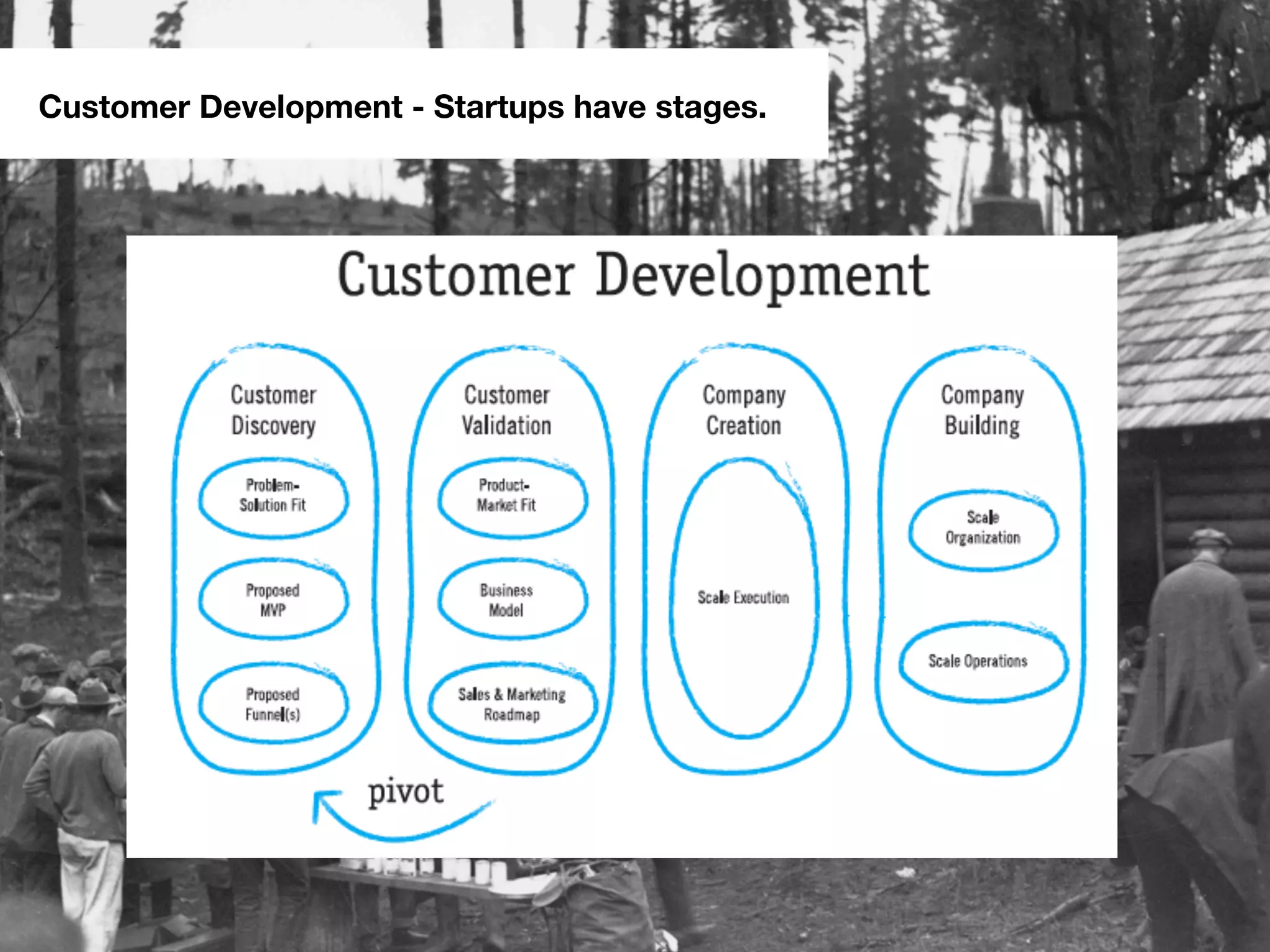
- Basics of Customer Development
- Dos and Don’ts of Customer Interviews
- Custdev Process for Teams
This is a short version of a 5h product development workshop i usually run with startups.
@andreasklinger
“Startup Founder”, “Product Guy”
“Done lots of customer interviews”
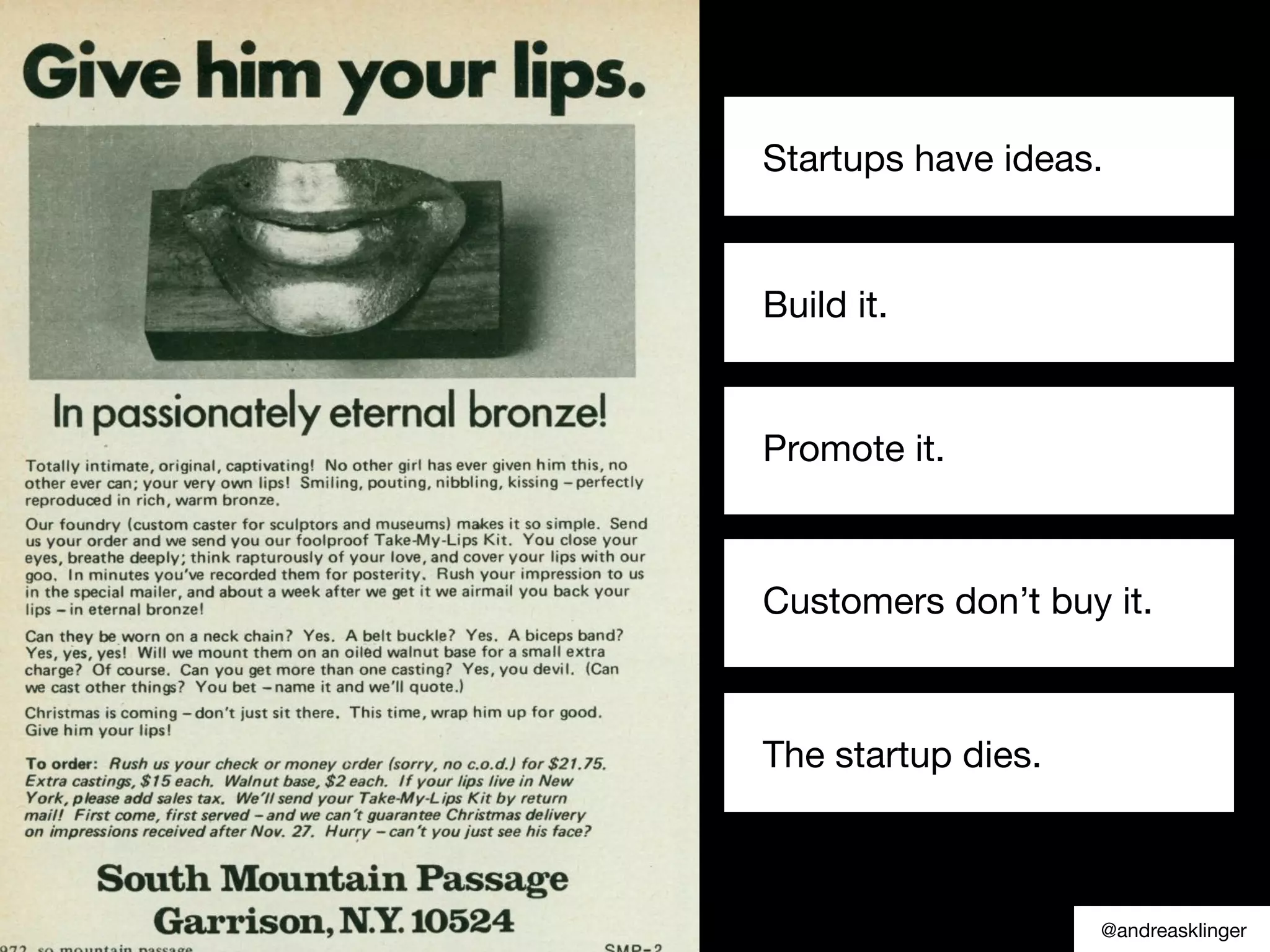
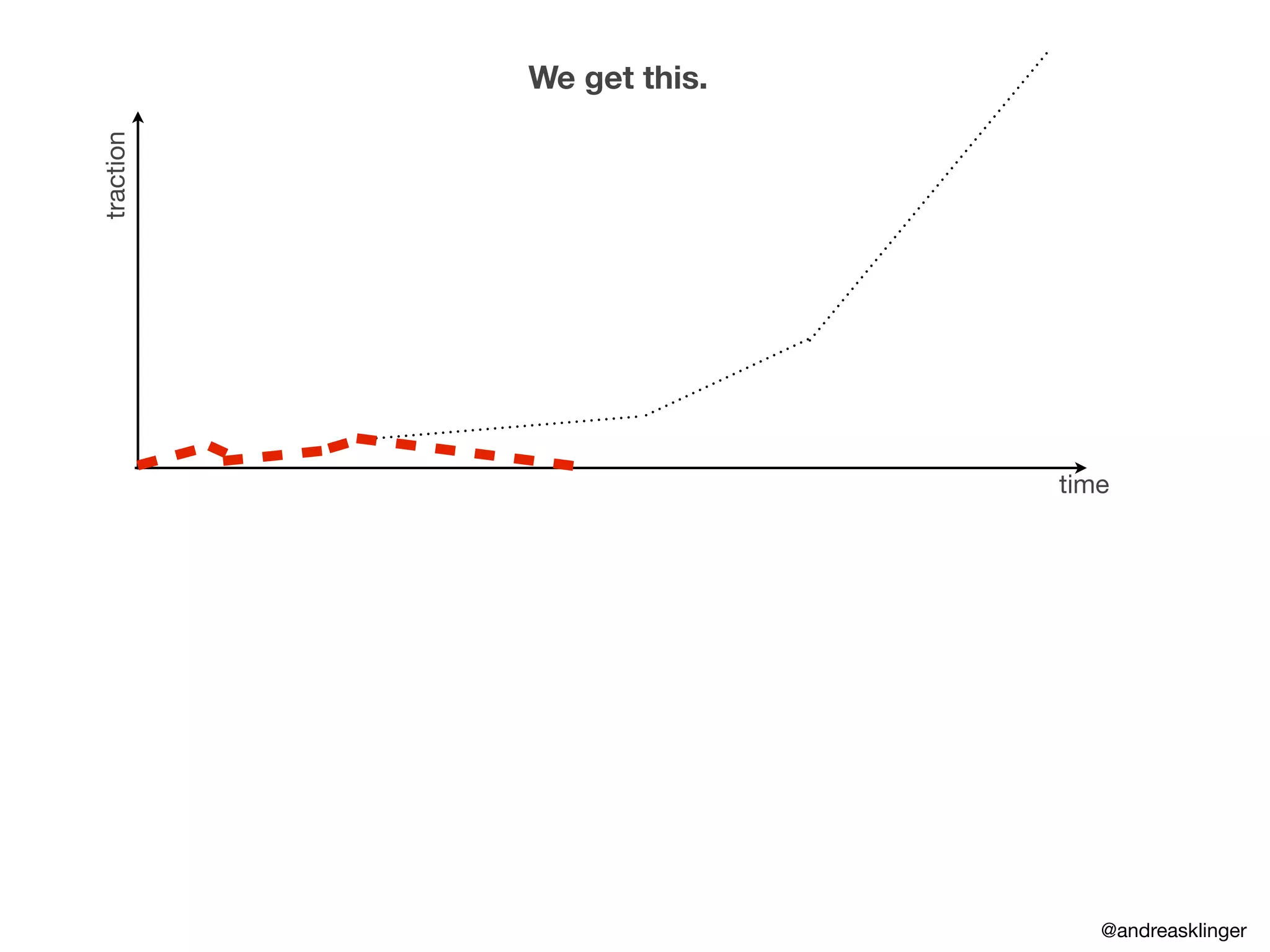
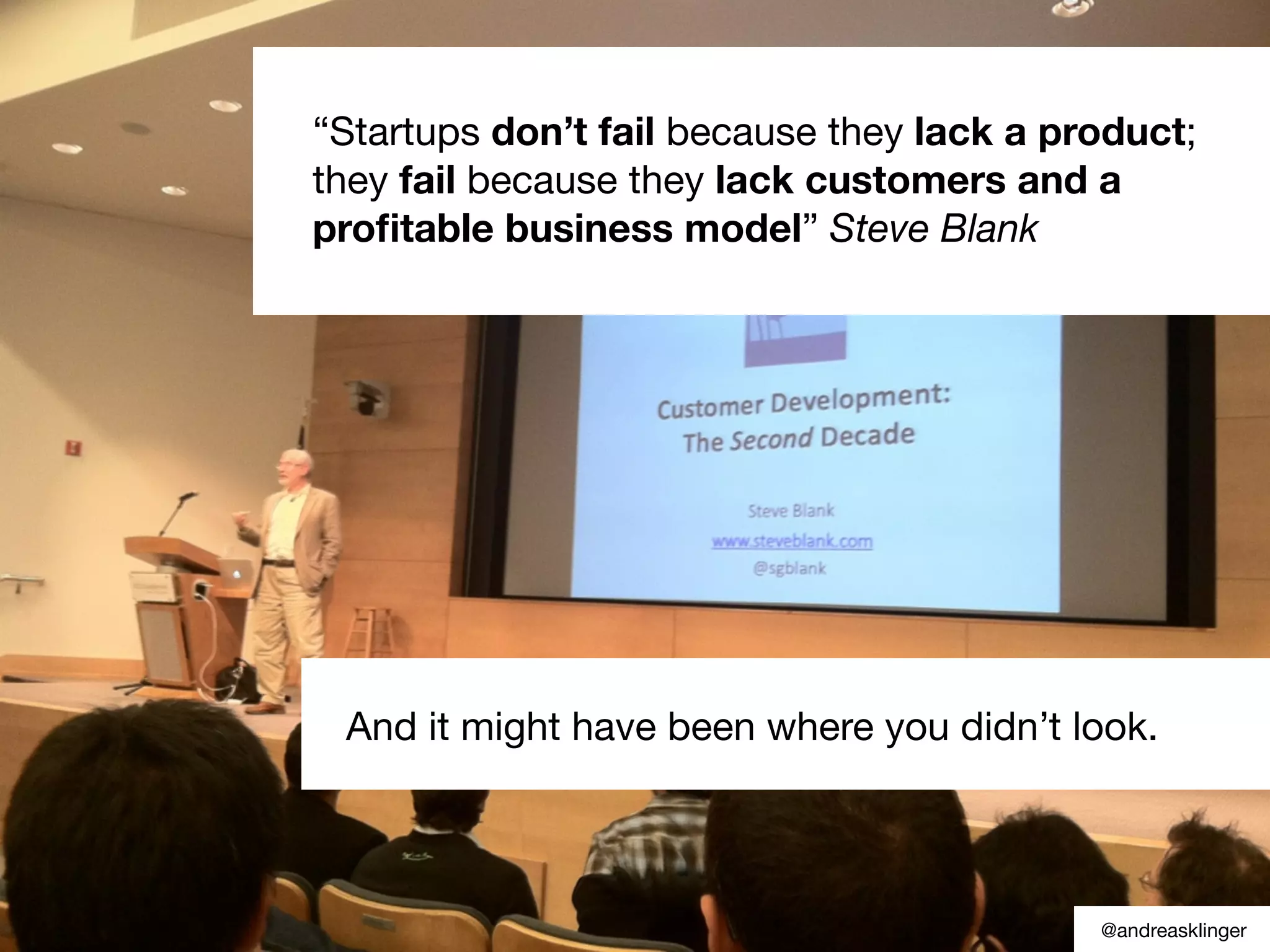
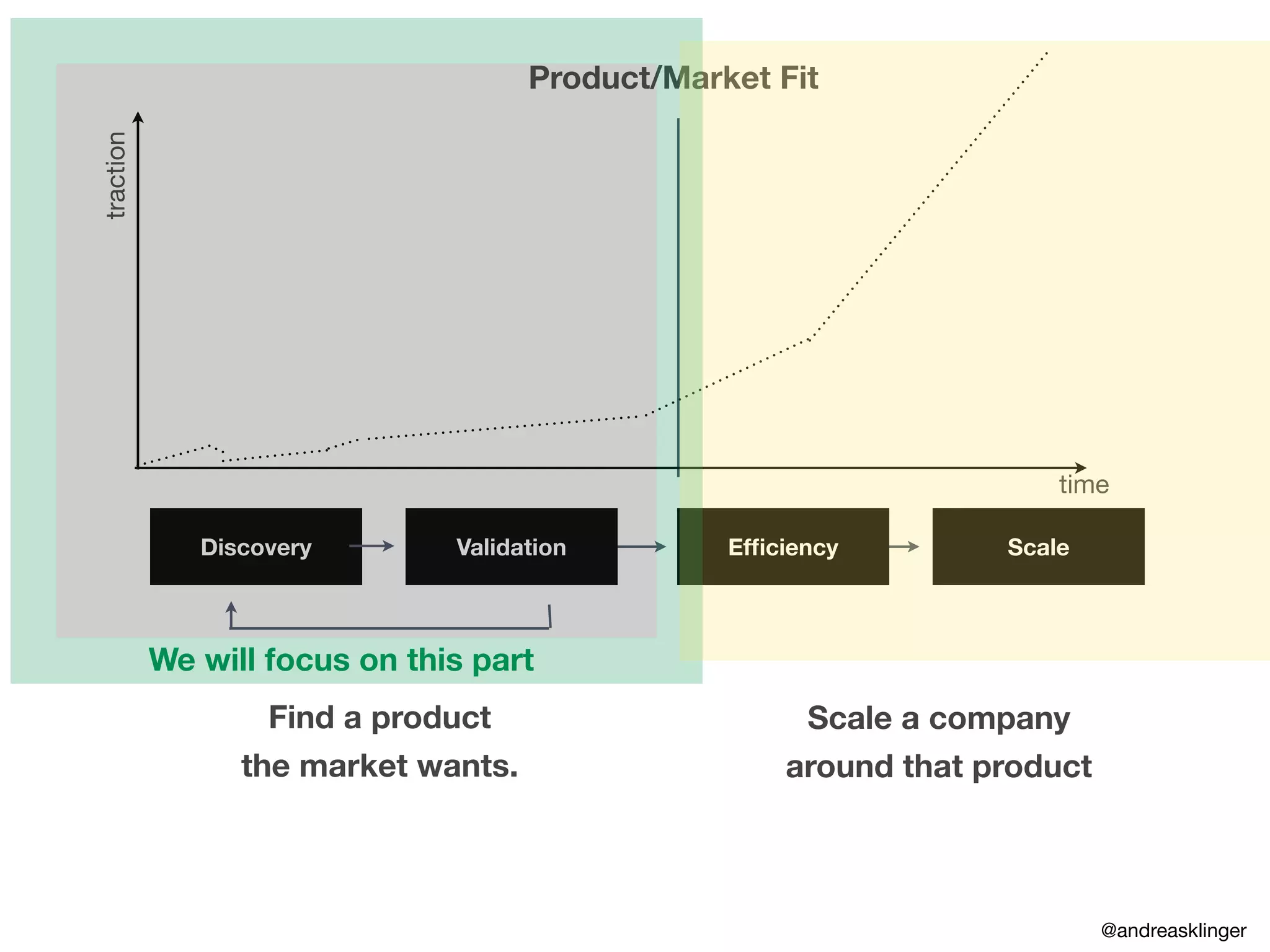
“Startups don’t failbecause they lack a product;
they fail because they lack customers and a
profitable business model” Steve Blank
And it might have been where you didn’t look.
@andreasklinger
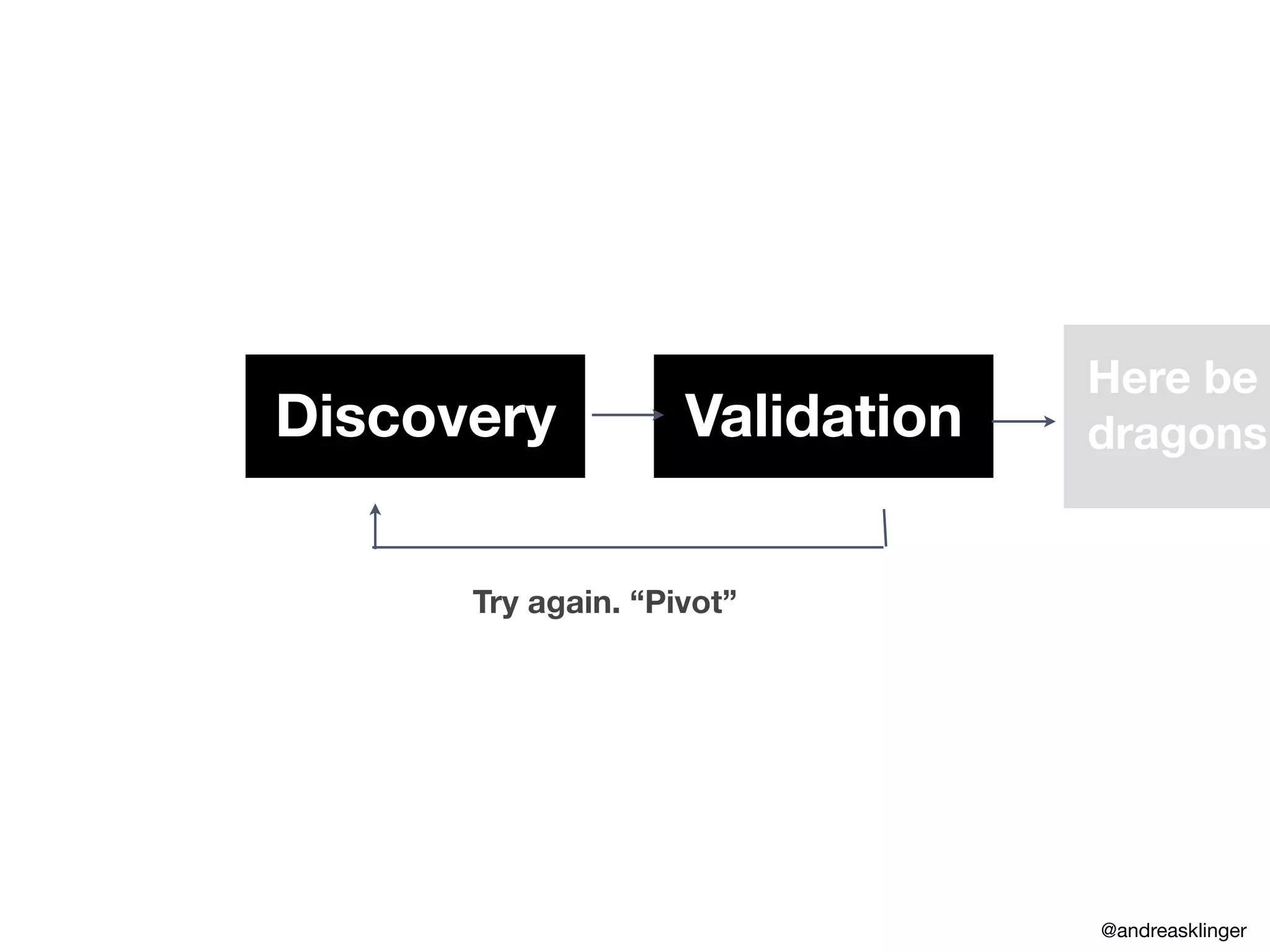
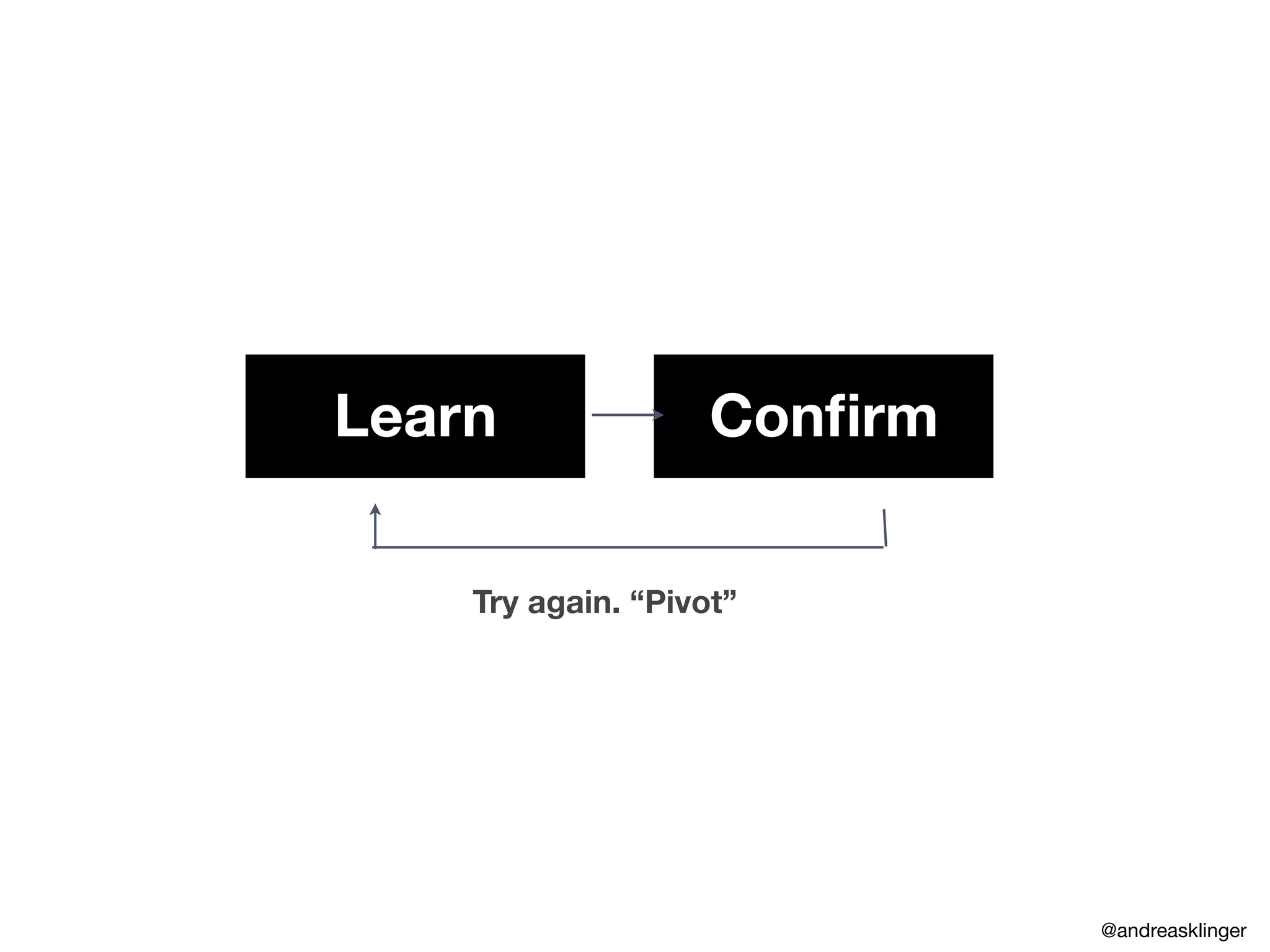
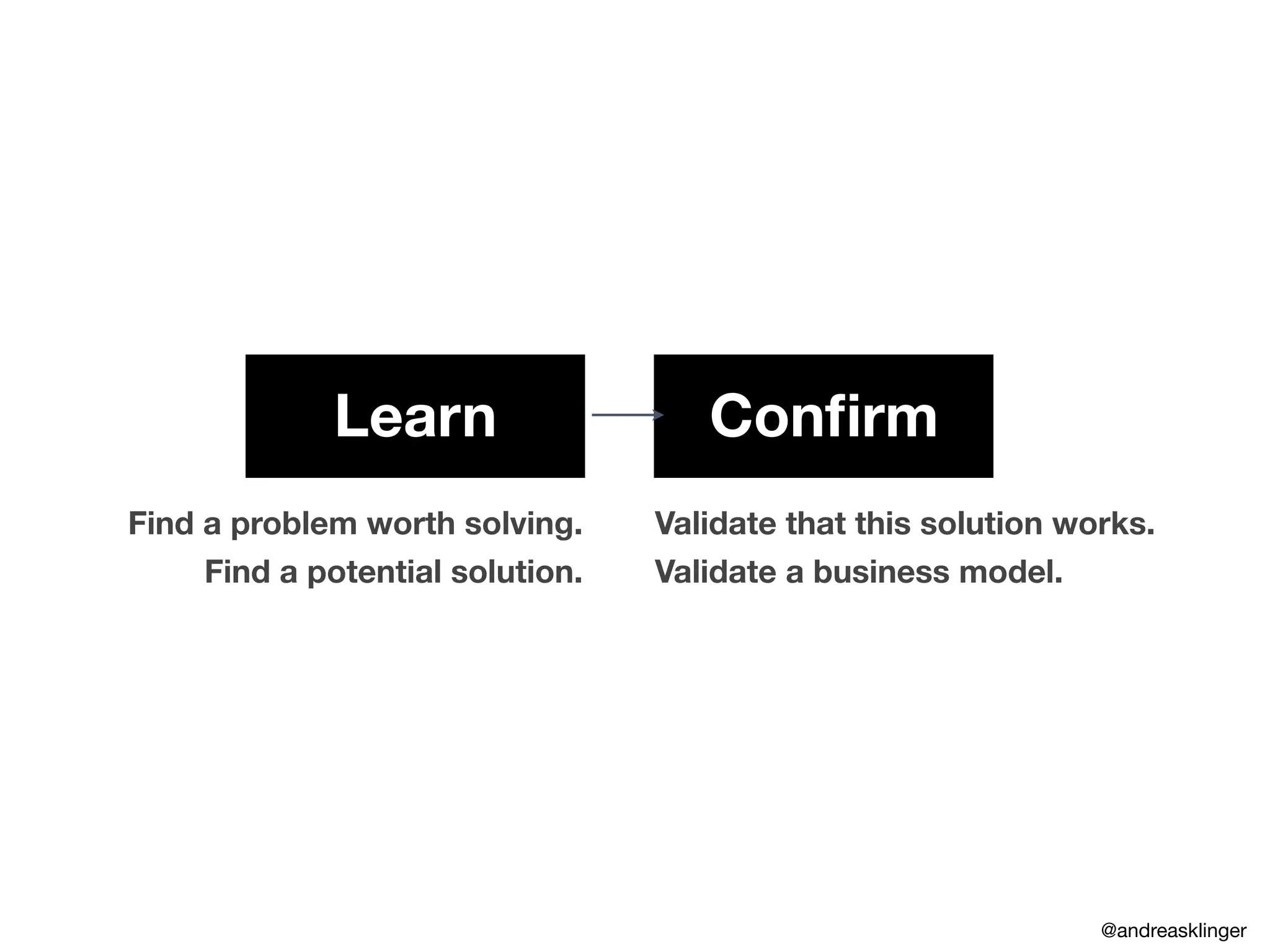
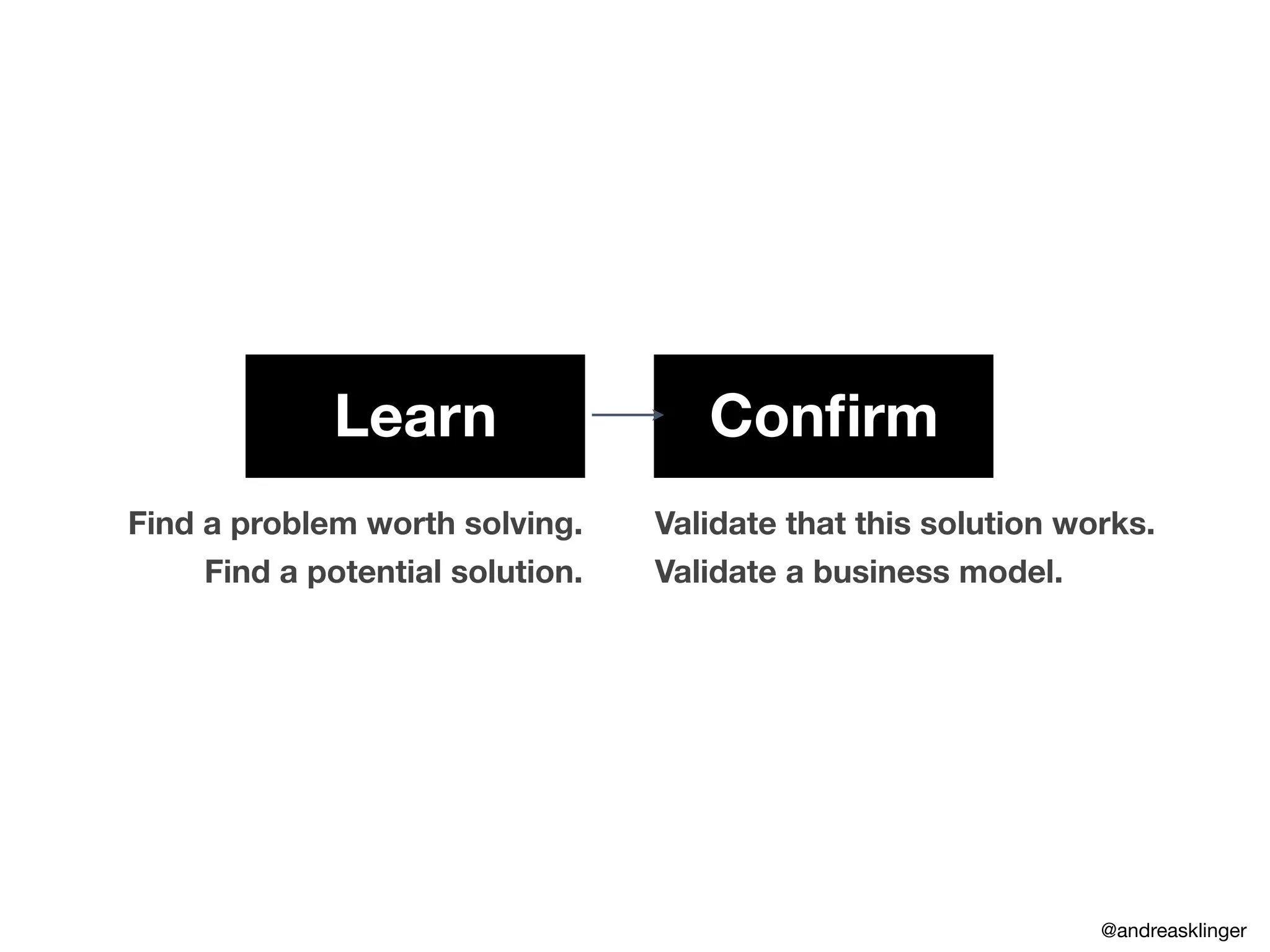
Learn Confirm
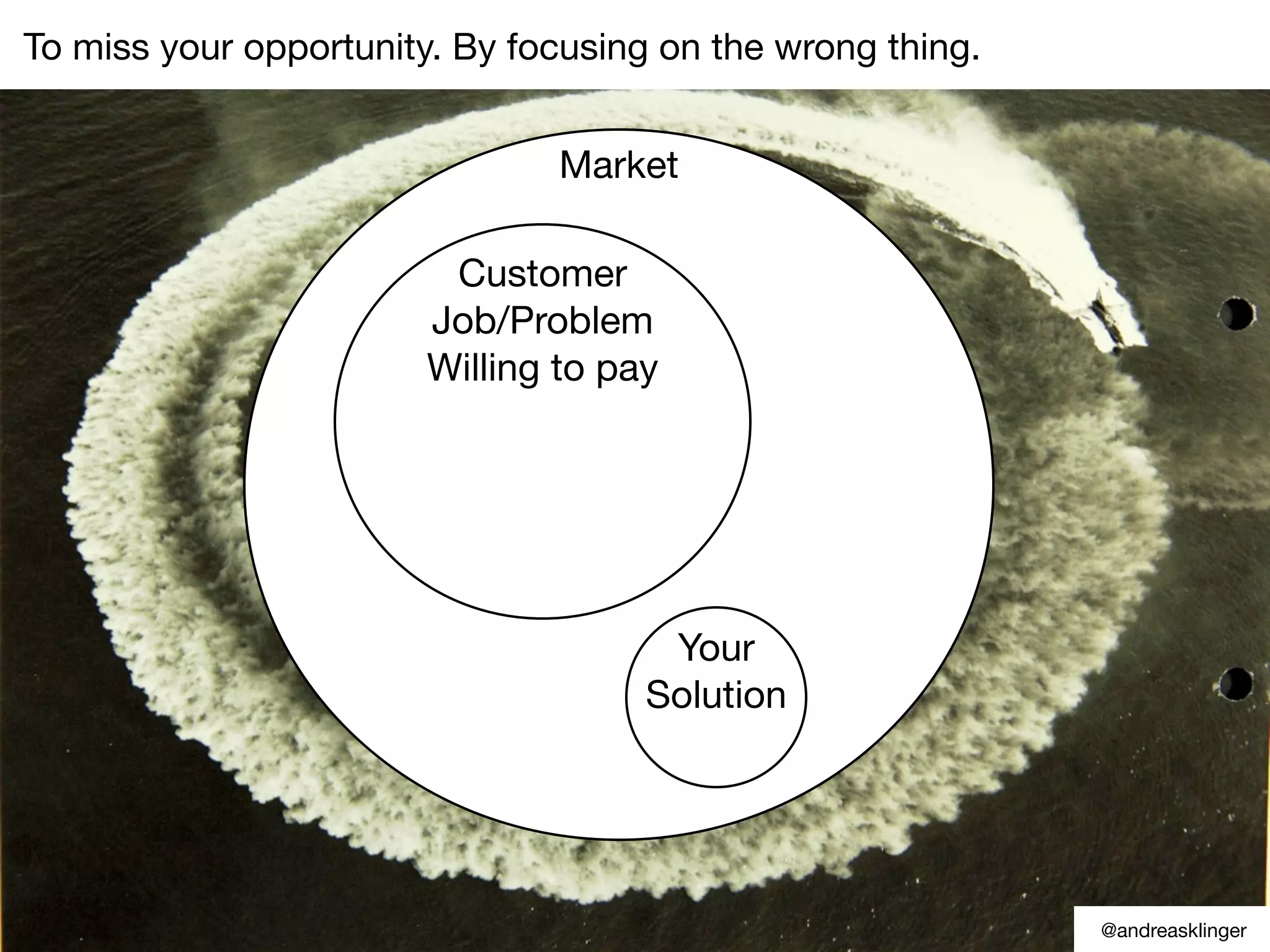
Find aproblem worth solving.
Find a potential solution.
Validate that this solution works.
Validate a business model.
@andreasklinger
23.
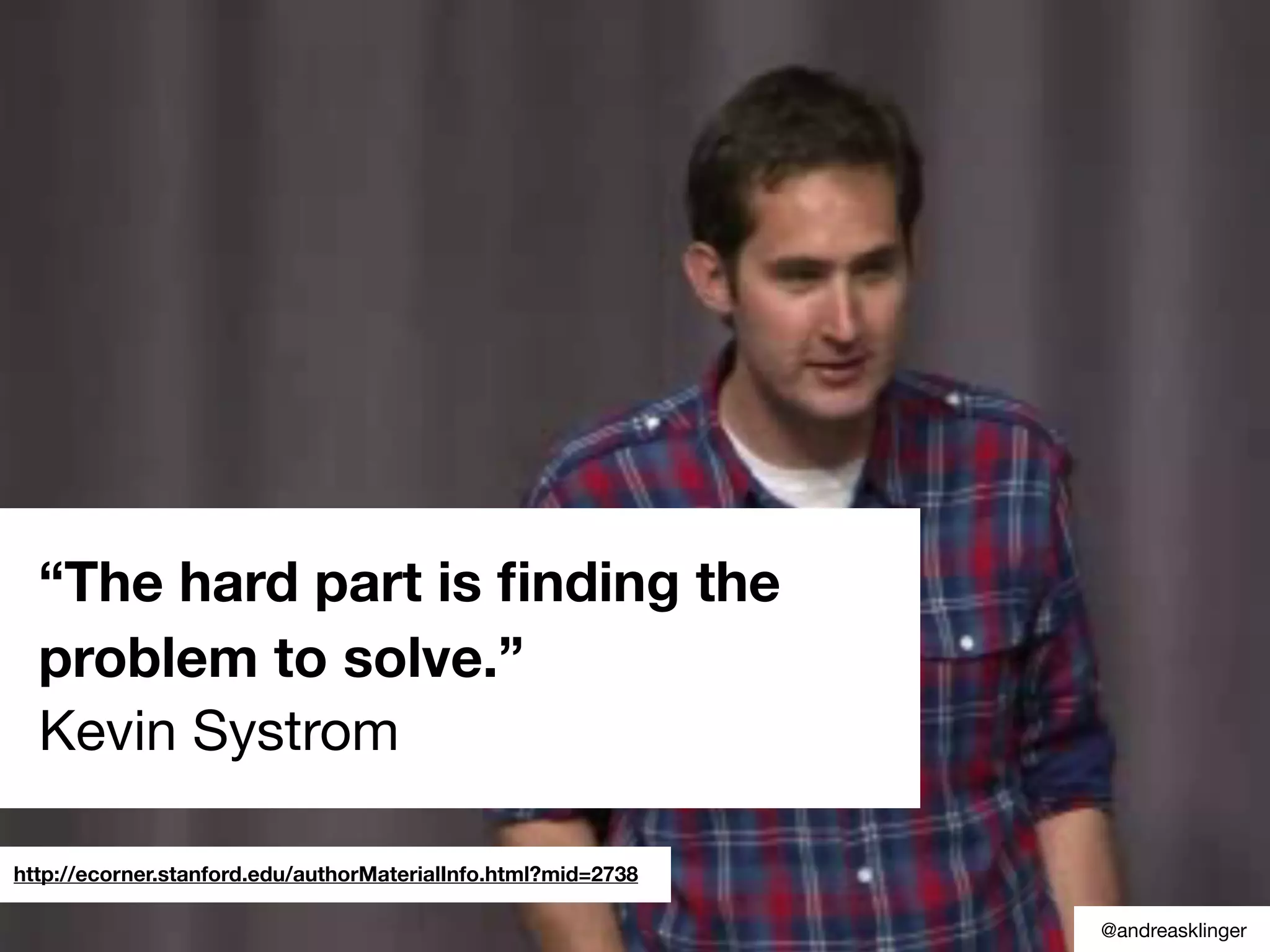
“The hard partis finding the
problem to solve.”
Kevin Systrom
http://ecorner.stanford.edu/authorMaterialInfo.html?mid=2738
@andreasklinger
24.
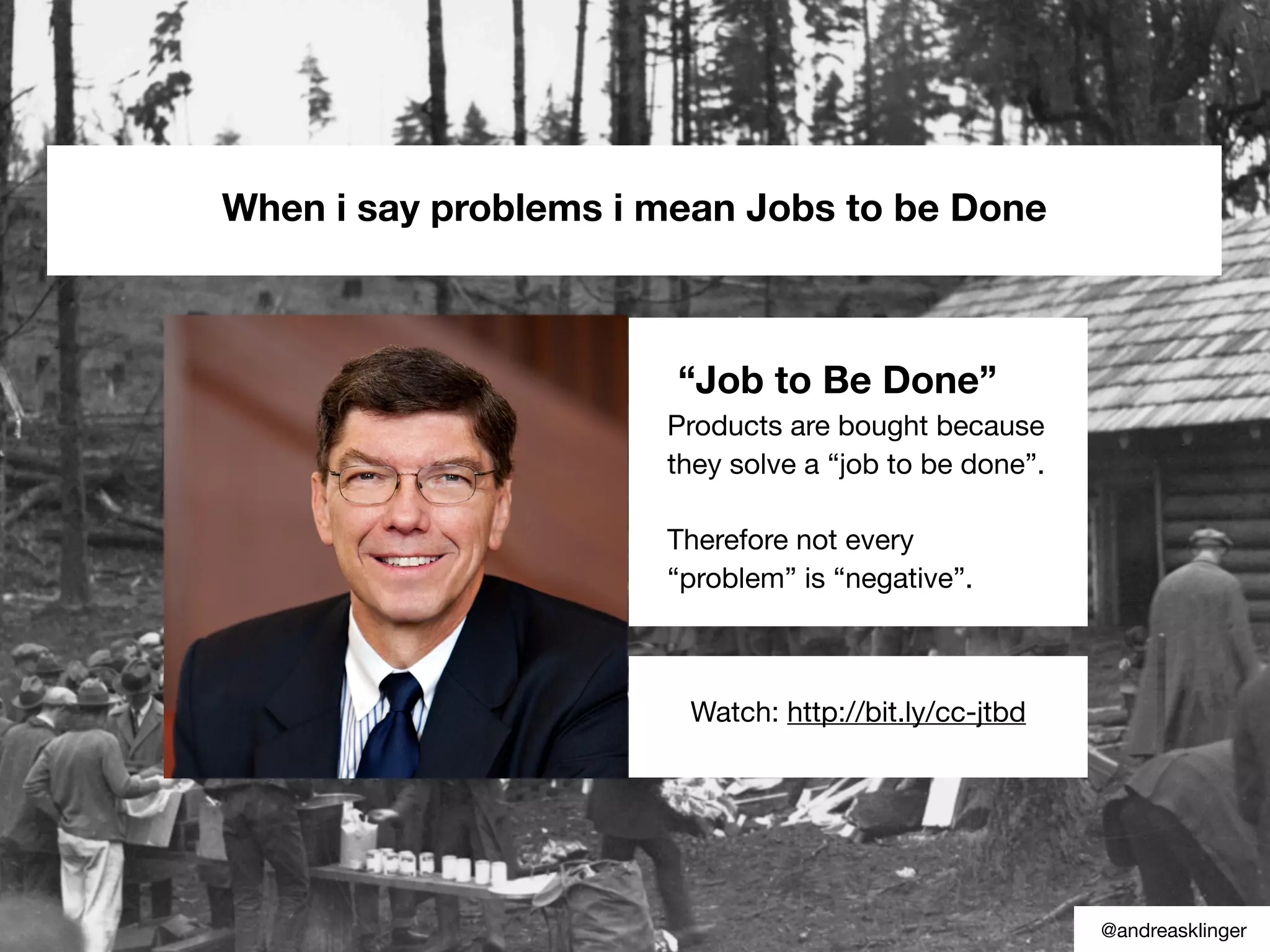
When i sayproblems i mean Jobs to be Done
Watch: http://bit.ly/cc-jtbd
“Job to Be Done”
Products are bought because
they solve a “job to be done”.
Therefore not every
“problem” is “negative”.
@andreasklinger
25.
Question
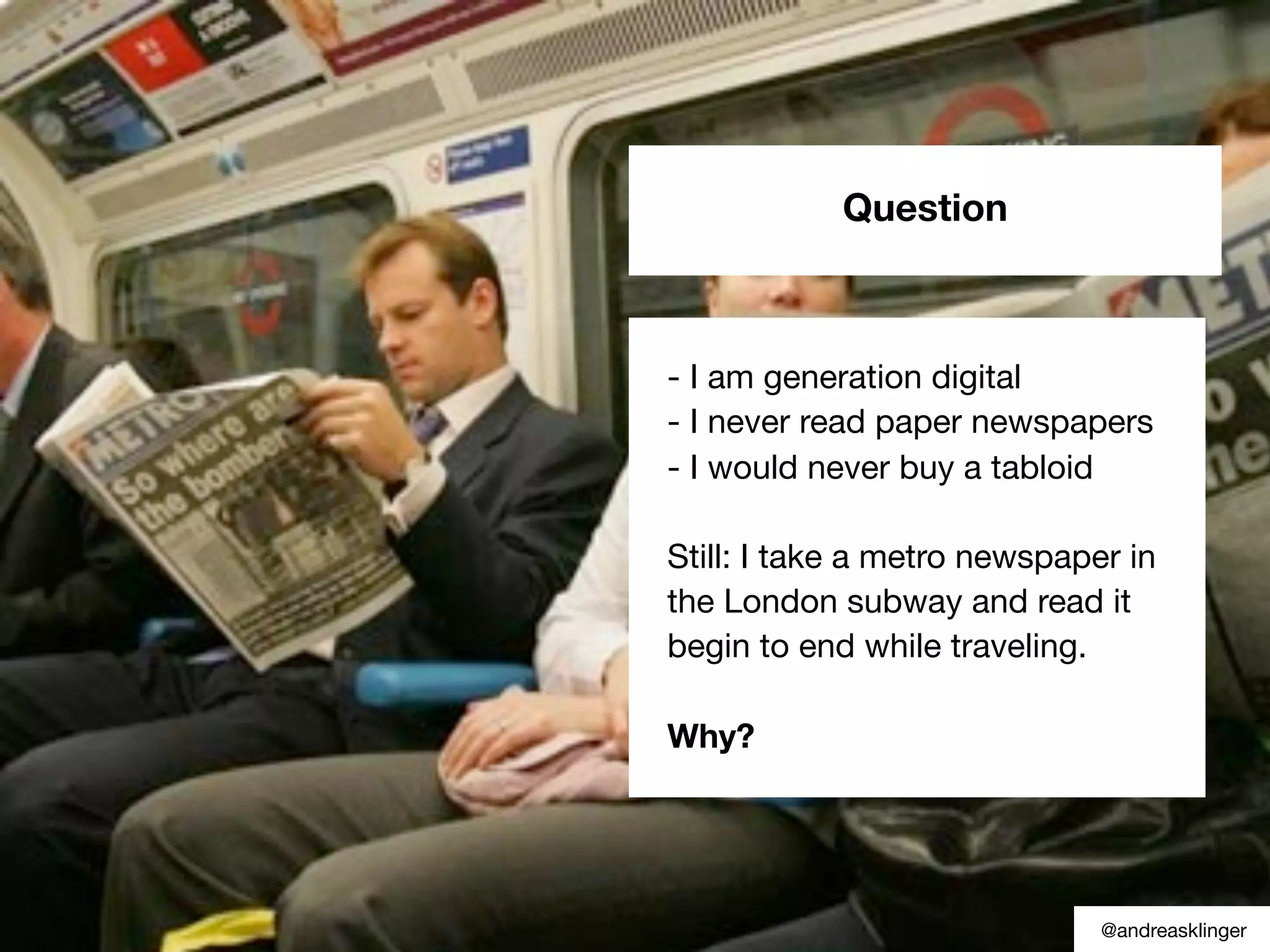
- I amgeneration digital
- I never read paper newspapers
- I would never buy a tabloid
Still: I take a metro newspaper in
the London subway and read it
begin to end while traveling.
Why?
@andreasklinger
26.
Question
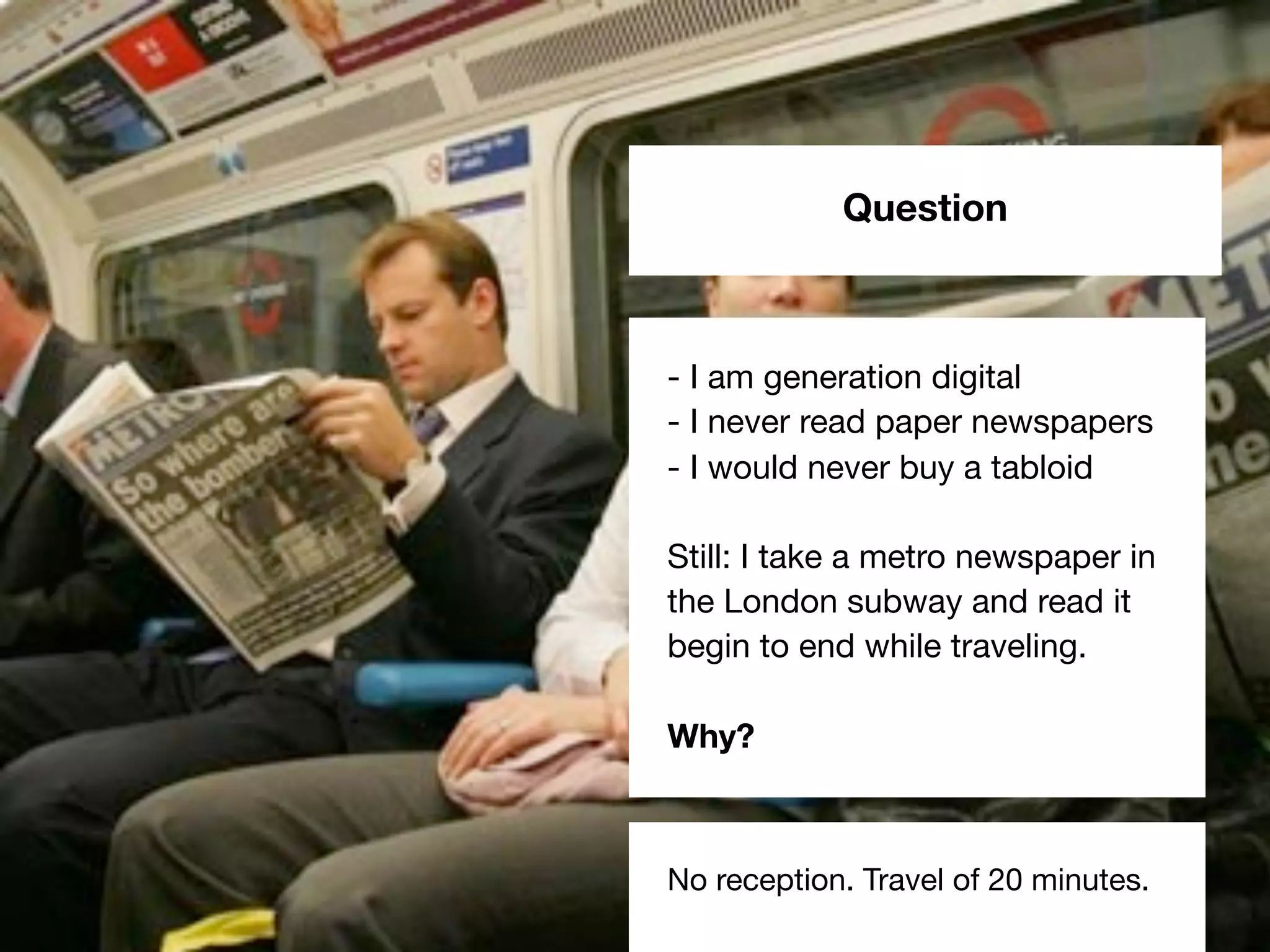
- I amgeneration digital
- I never read paper newspapers
- I would never buy a tabloid
Still: I take a metro newspaper in
the London subway and read it
begin to end while traveling.
Why?
No reception. Travel of 20 minutes.
27.
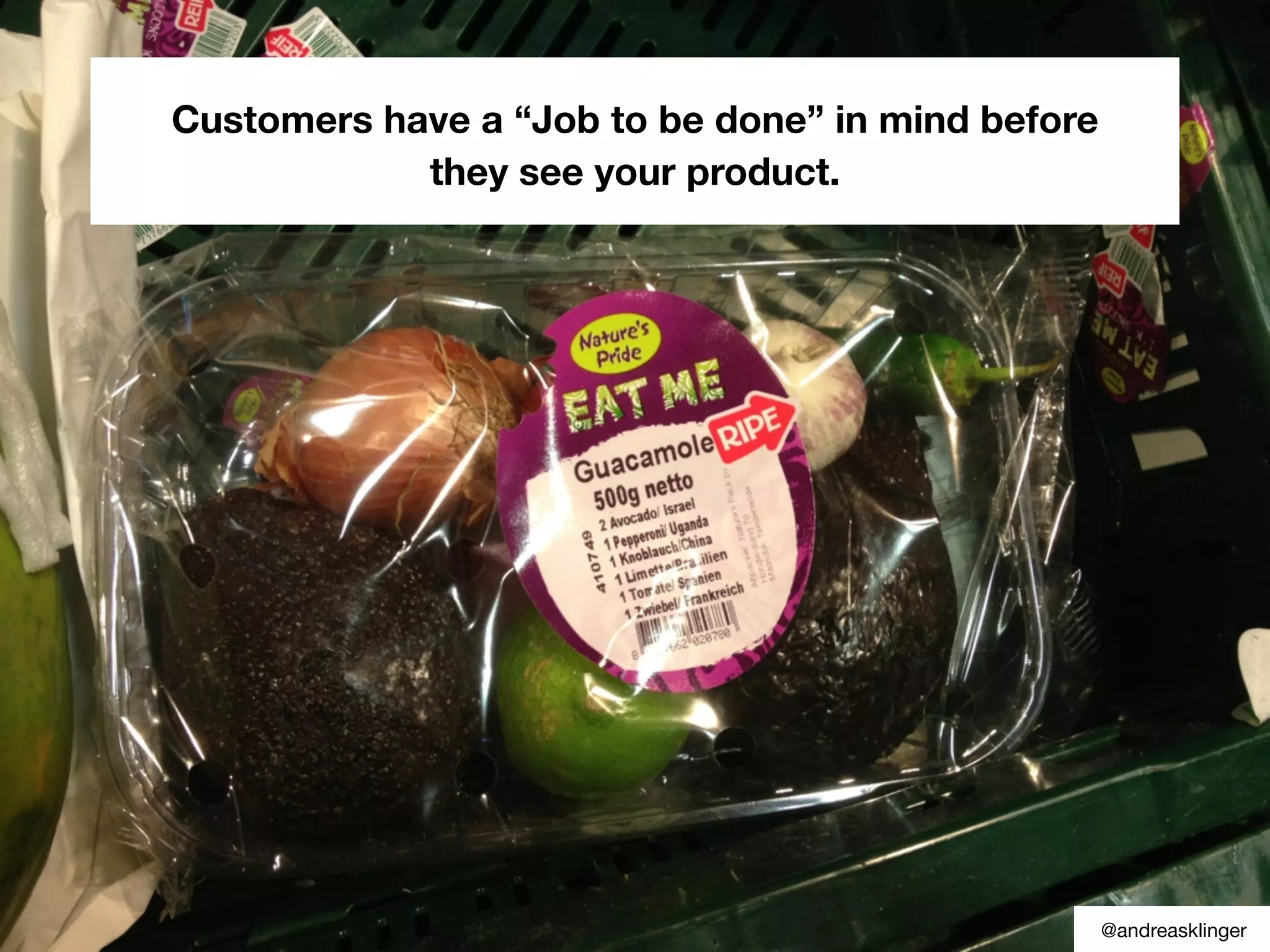
Customers have a“Job to be done” in mind before
they see your product.
@andreasklinger
28.
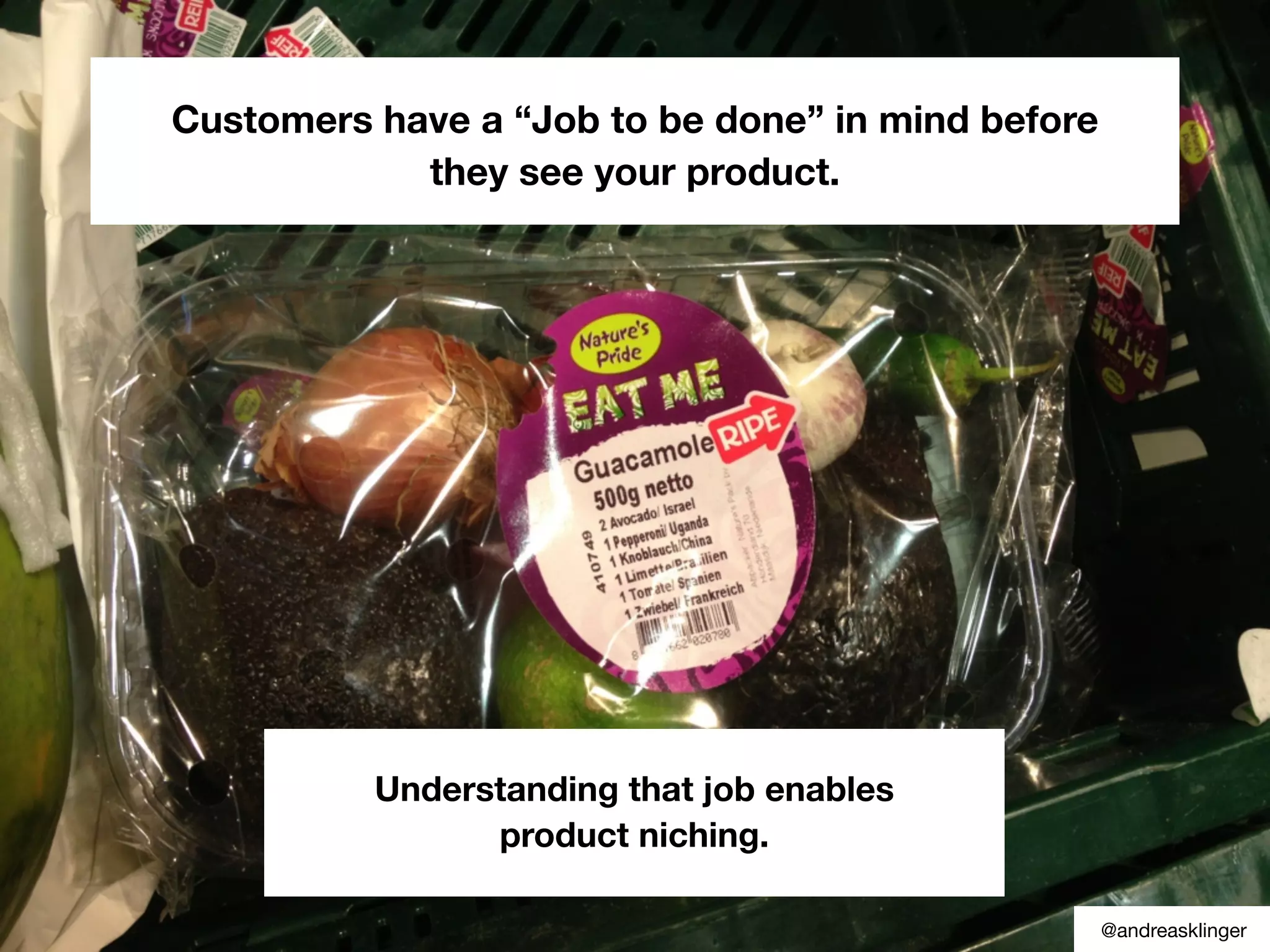
Customers have a“Job to be done” in mind before
they see your product.
@andreasklinger
Understanding that job enables
product niching.
29.
Learn Confirm
Find aproblem worth solving.
Find a potential solution.
Validate that this solution works.
Validate a business model.
@andreasklinger
30.
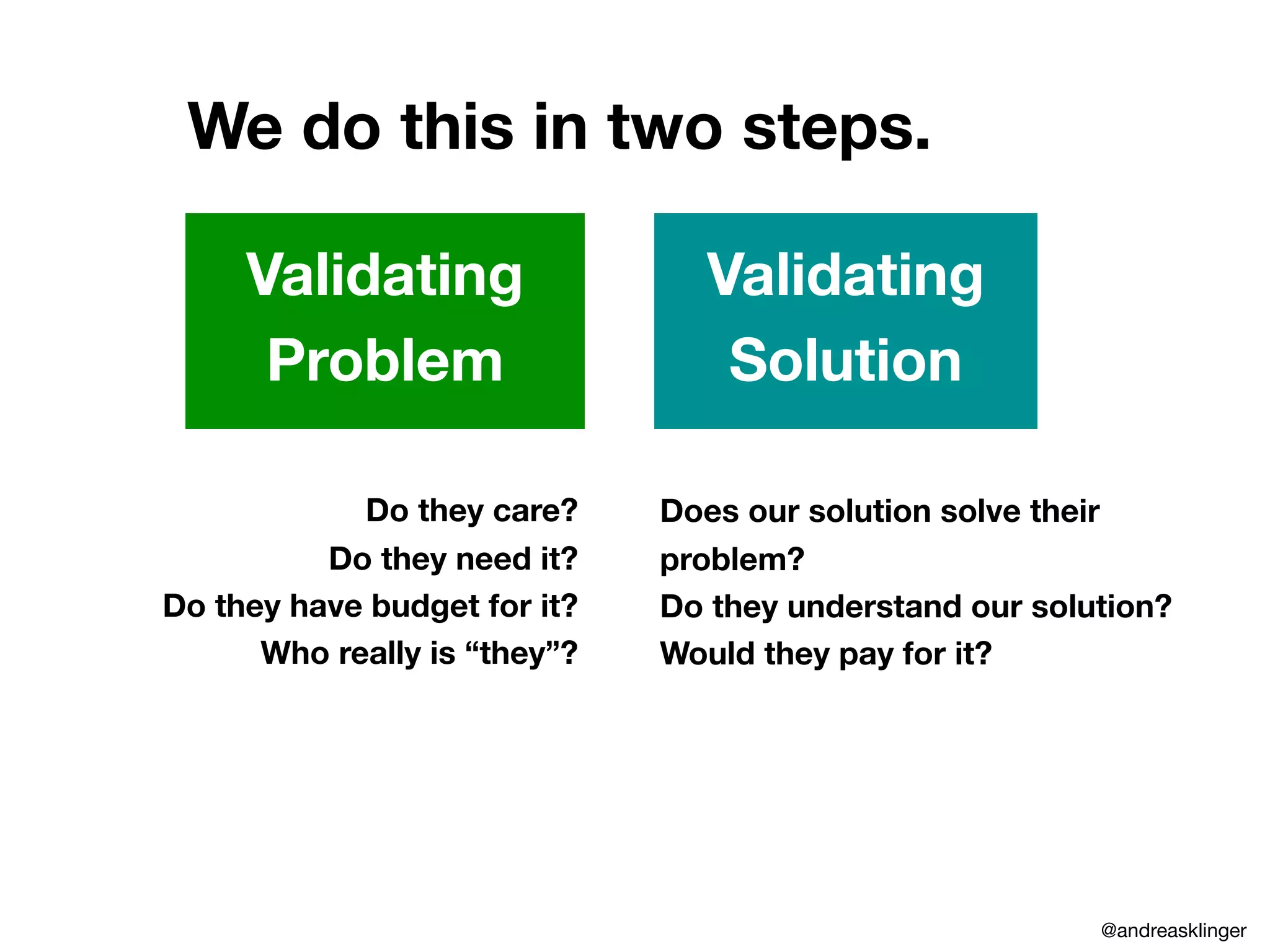
Validating
Problem
Validating
Solution
We do thisin two steps.
Do they care?
Do they need it?
Do they have budget for it?
Who really is “they”?
Does our solution solve their
problem?
Do they understand our solution?
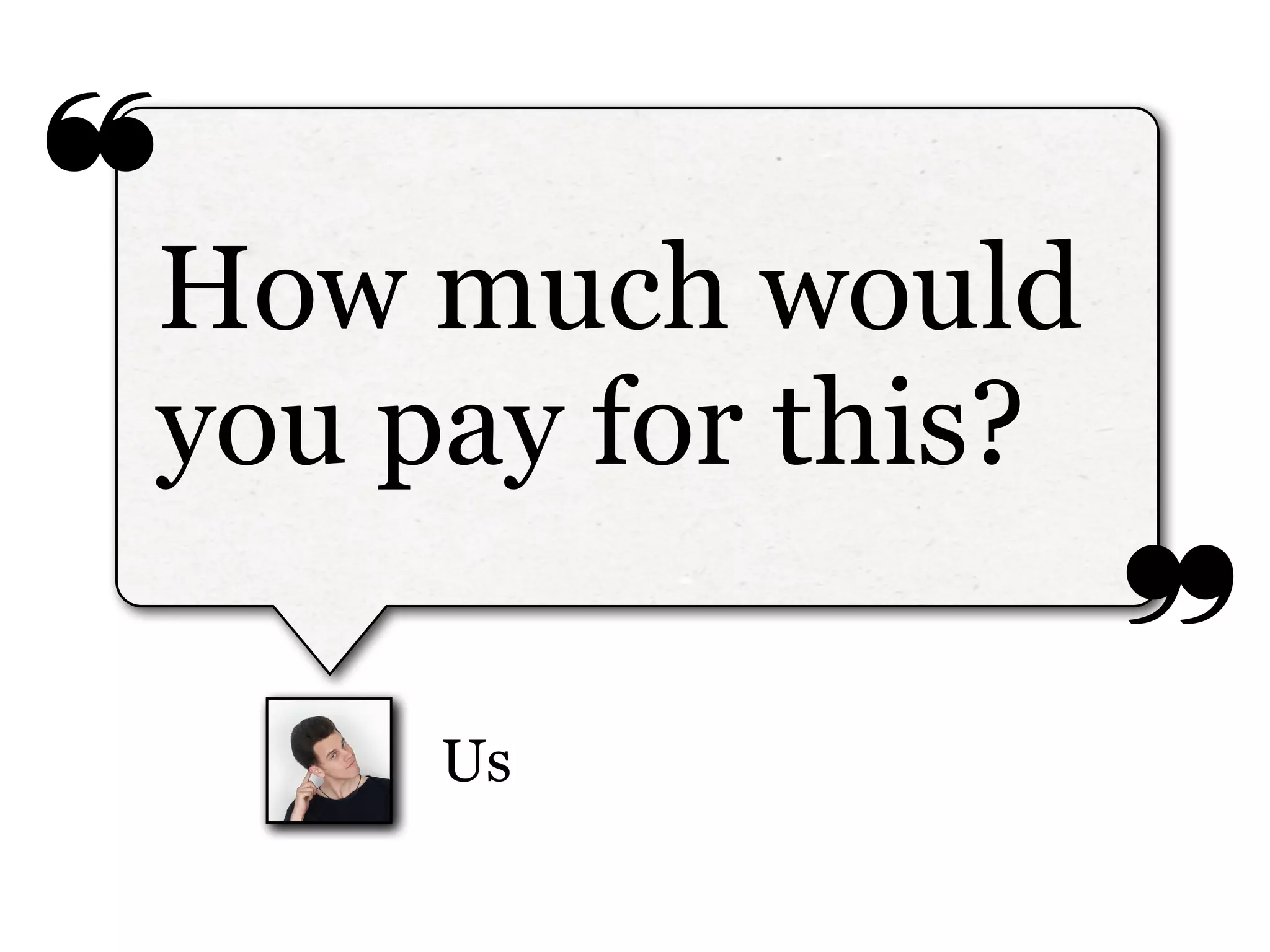
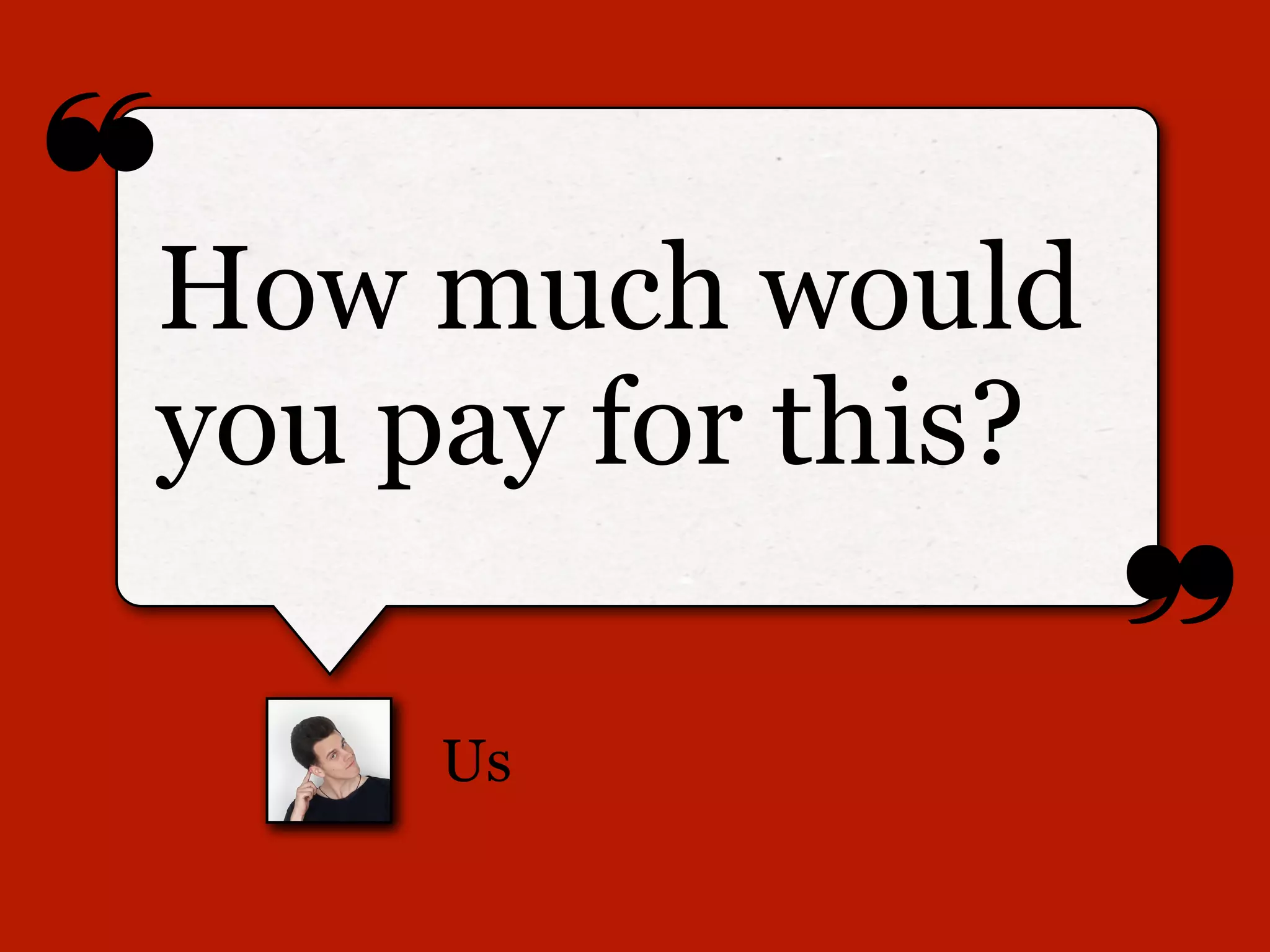
Would they pay for it?
@andreasklinger
31.
How to knowwhat customers want?
“Just go and ask them.”
@andreasklinger
32.
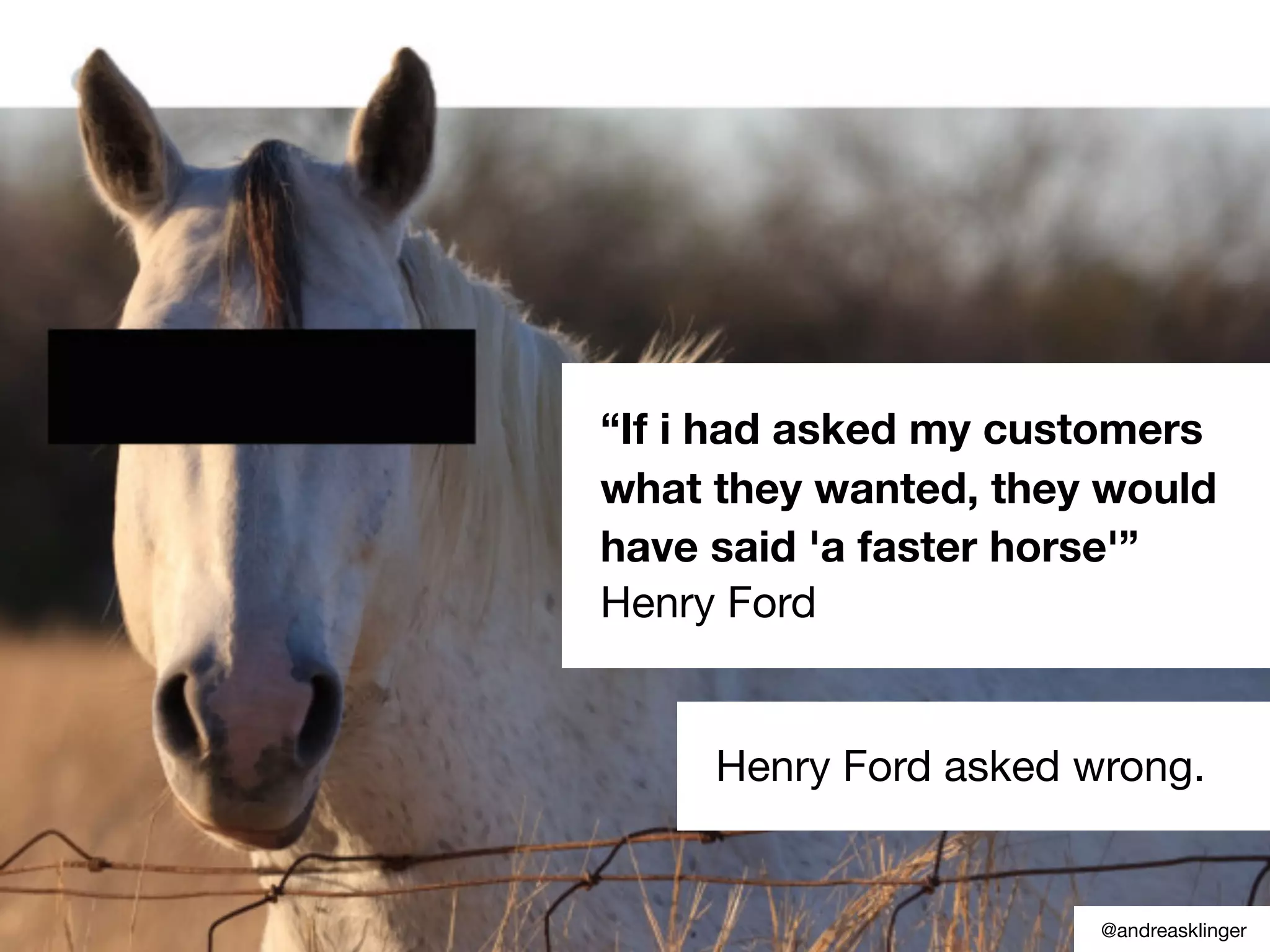
“If i hadasked my customers
what they wanted, they would
have said 'a faster horse'”
Henry Ford
Henry Ford asked wrong.
@andreasklinger
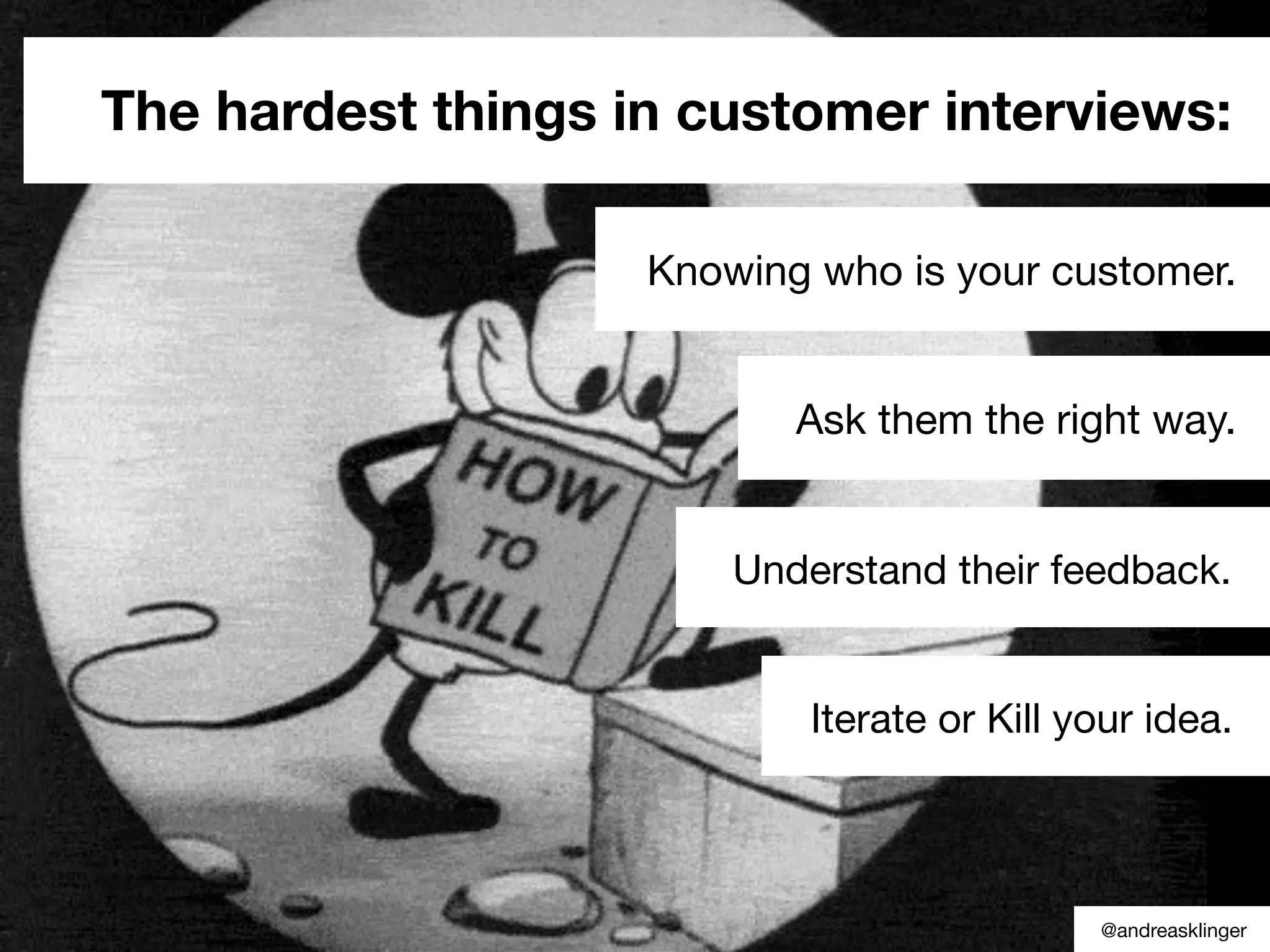
The hardest thingsin customer interviews:
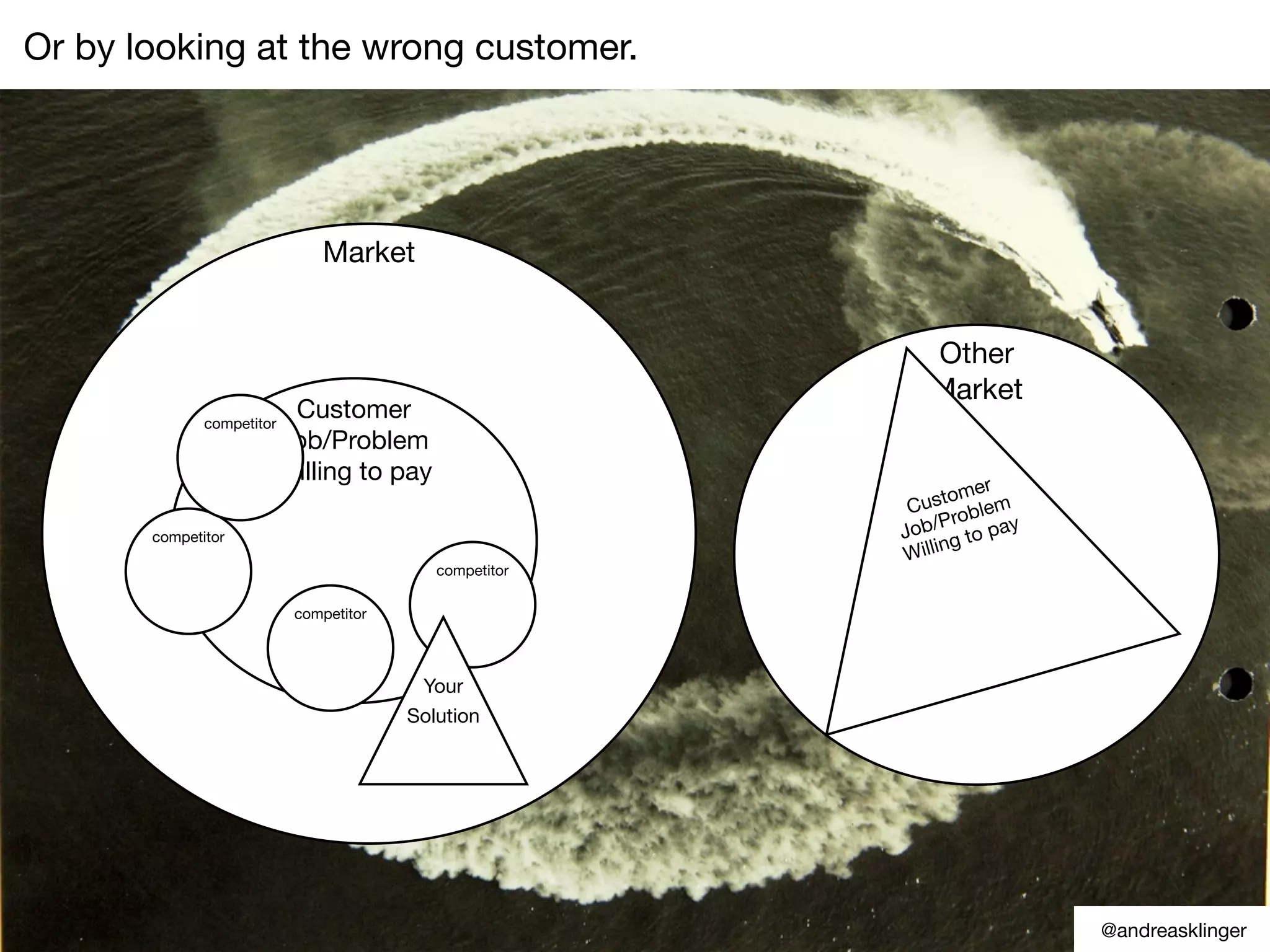
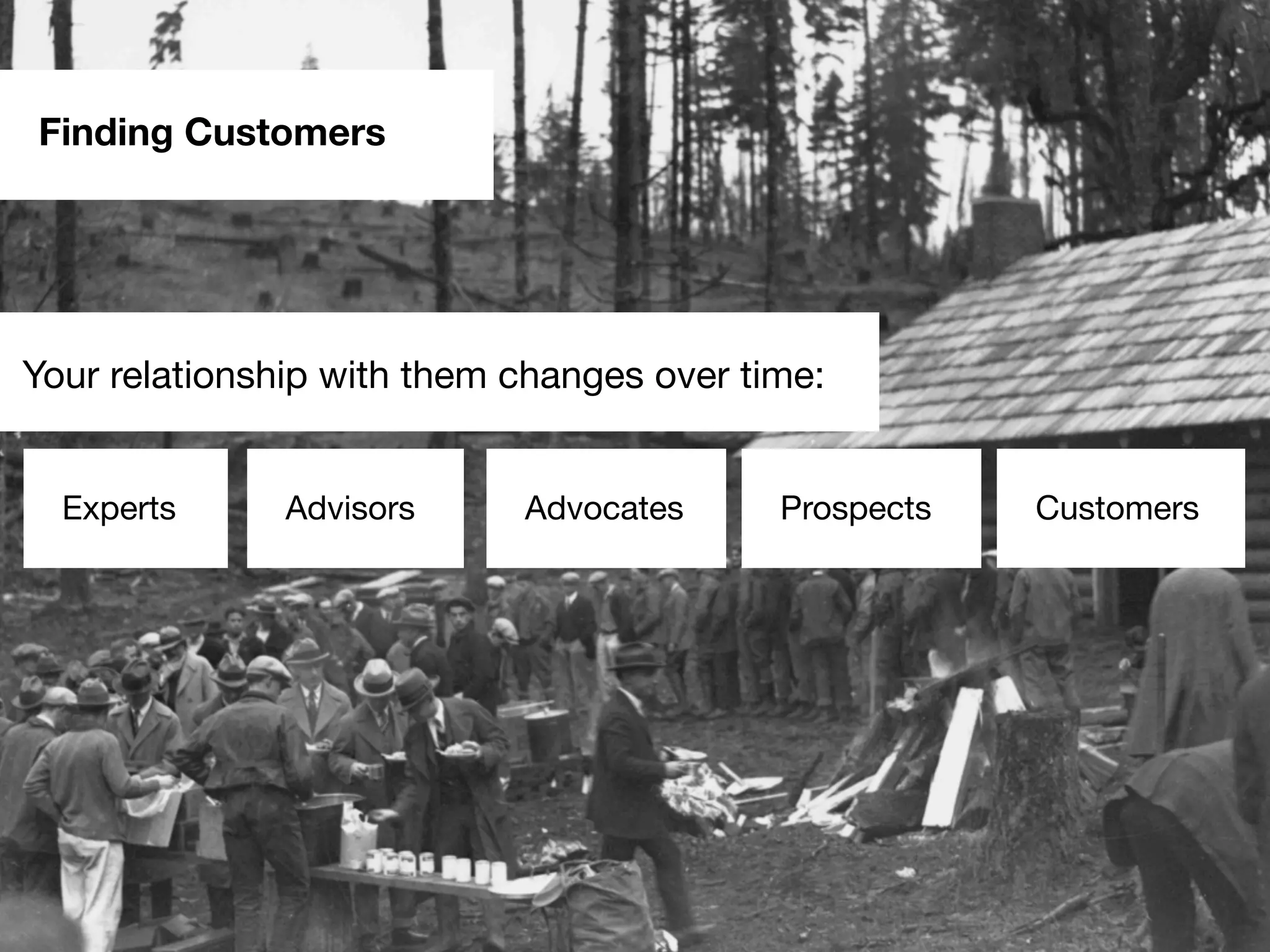
Knowing who is your customer.
Ask them the right way.
Understand their feedback.
Iterate or Kill your idea.
@andreasklinger
…from Europe’s #1Custdev
Expert @robfitz.
Watch Rob’s talk: http://bit.ly/rf-custdev
I only took the liberty to make them worse by
adding clutter and changing his face to mine.
THE FOLLOWING SLIDES
ARE ALL STOLEN.
D
ISC
LA
IM
ER
@andreasklinger
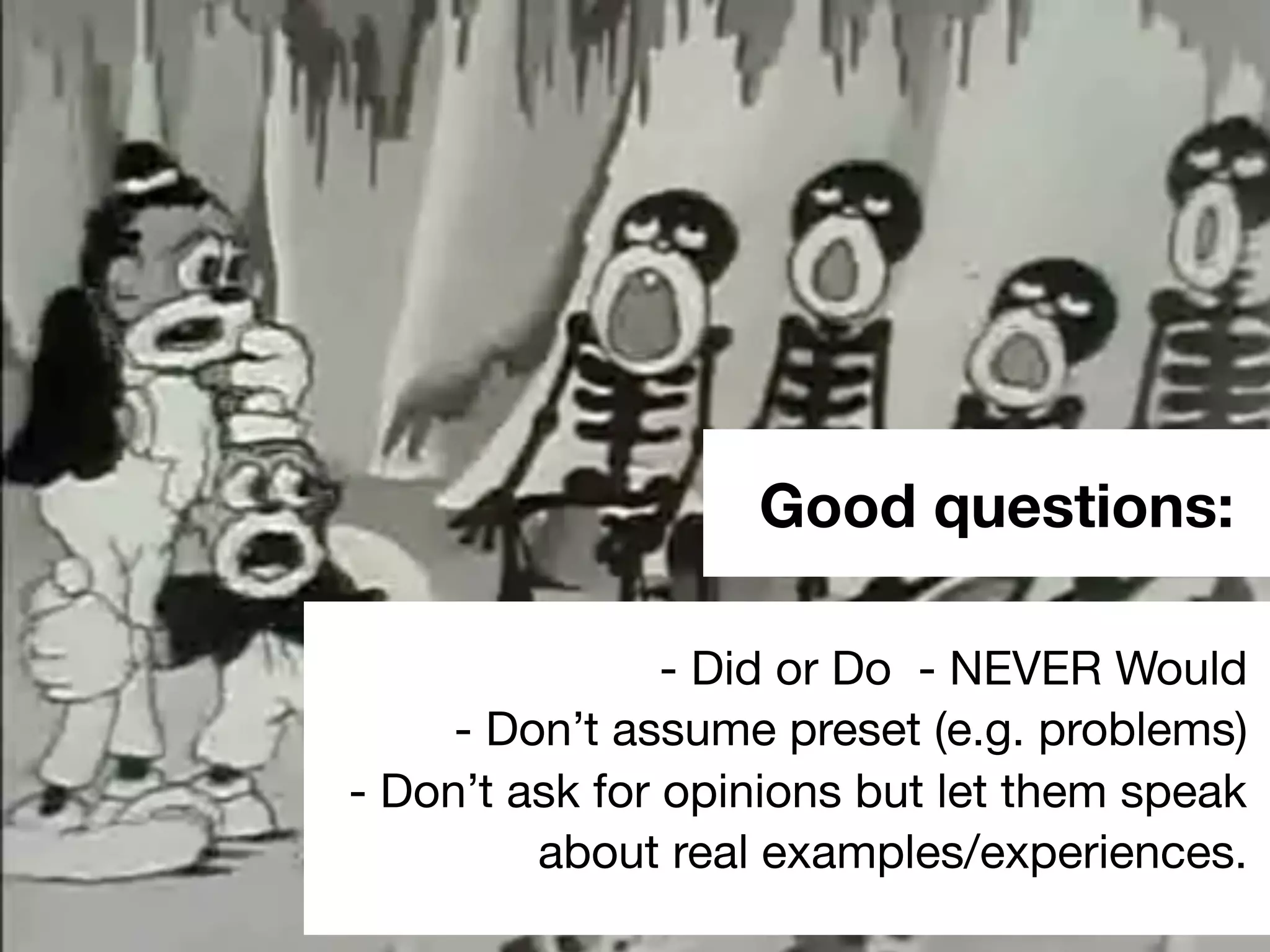
Good questions:
- Didor Do - NEVER Would
- Don’t assume preset (e.g. problems)
- Don’t ask for opinions but let them speak
about real examples/experiences.
59.
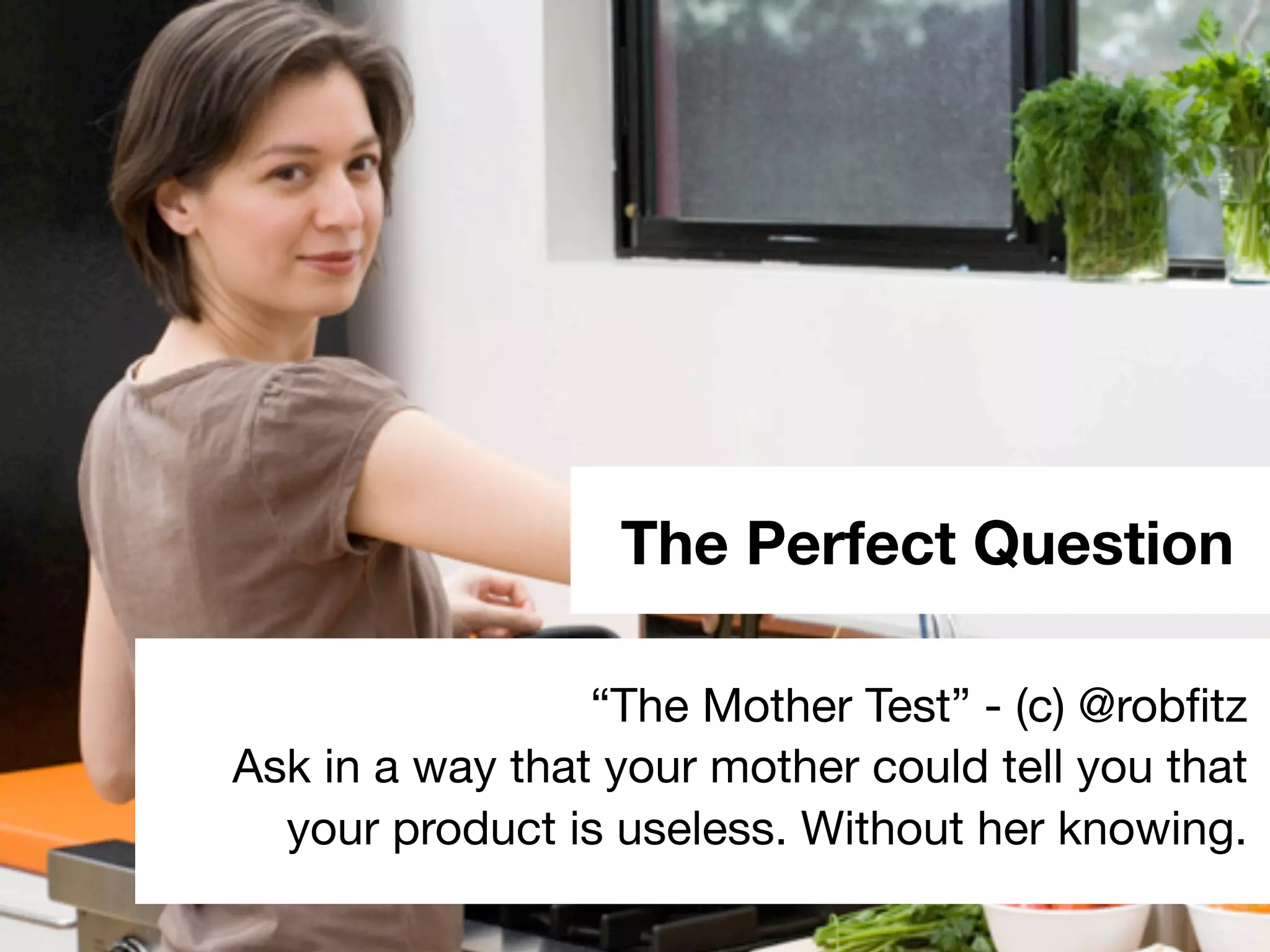
The Perfect Question
“TheMother Test” - (c) @robfitz
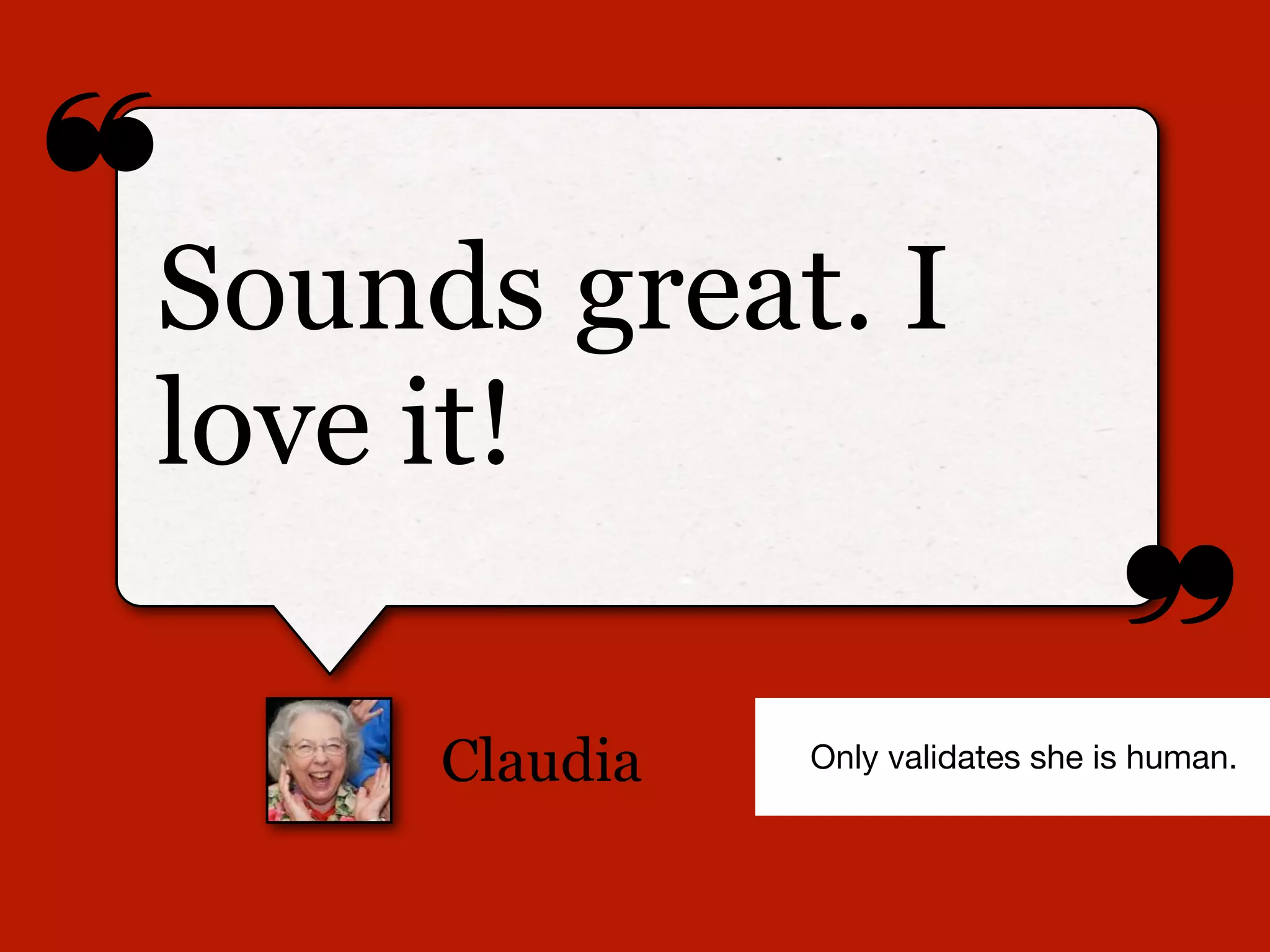
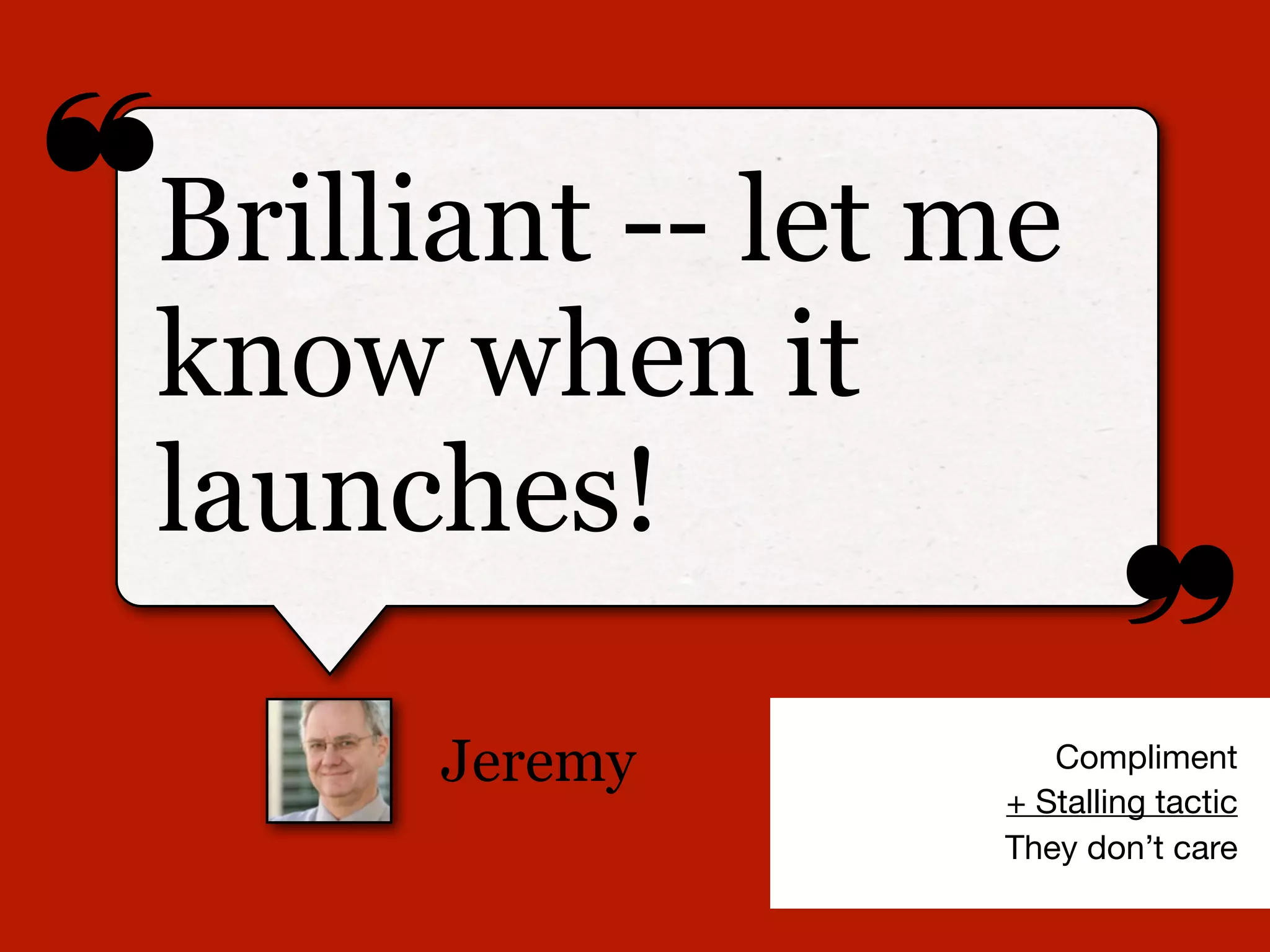
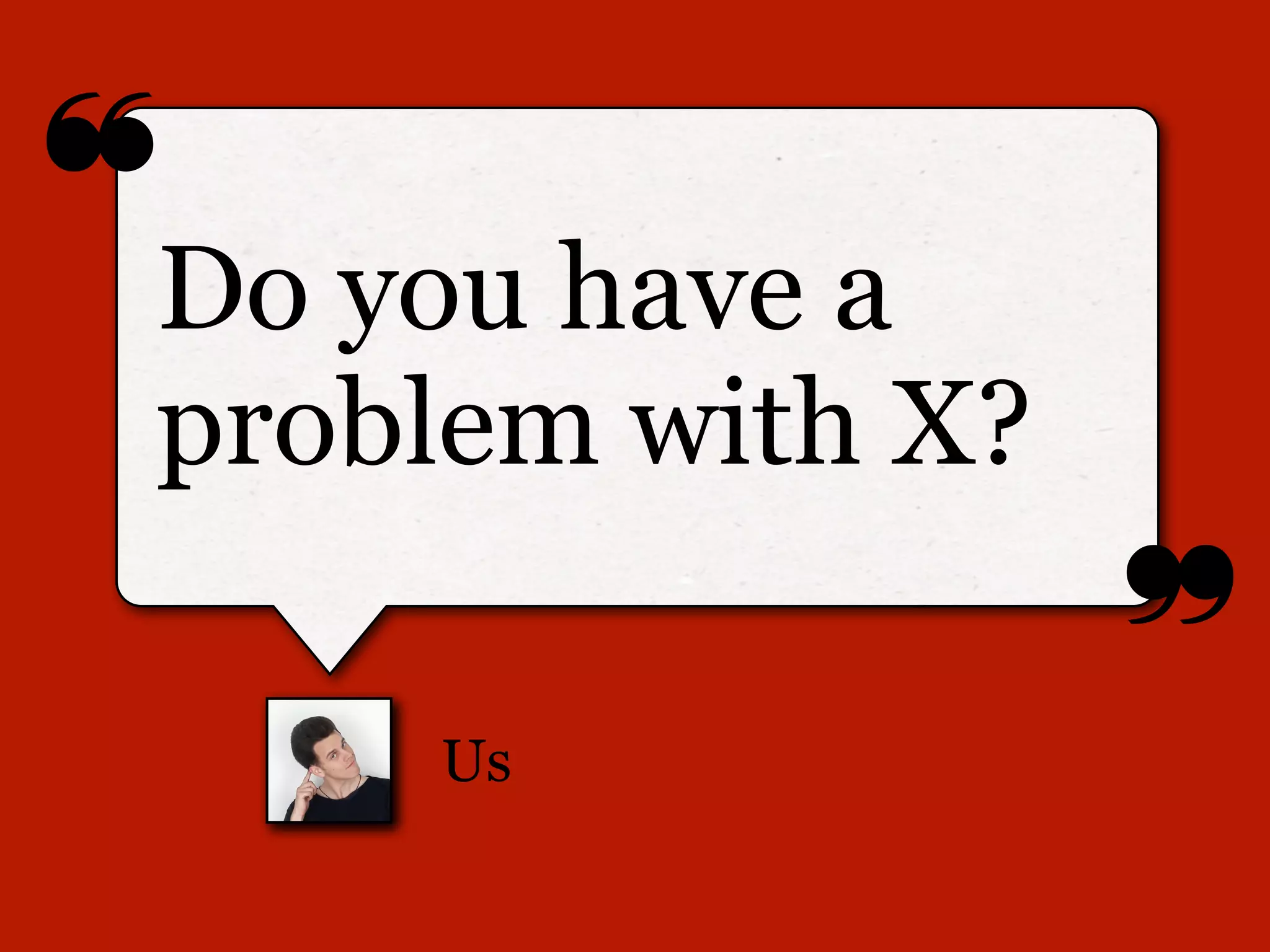
Ask in a way that your mother could tell you that
your product is useless. Without her knowing.
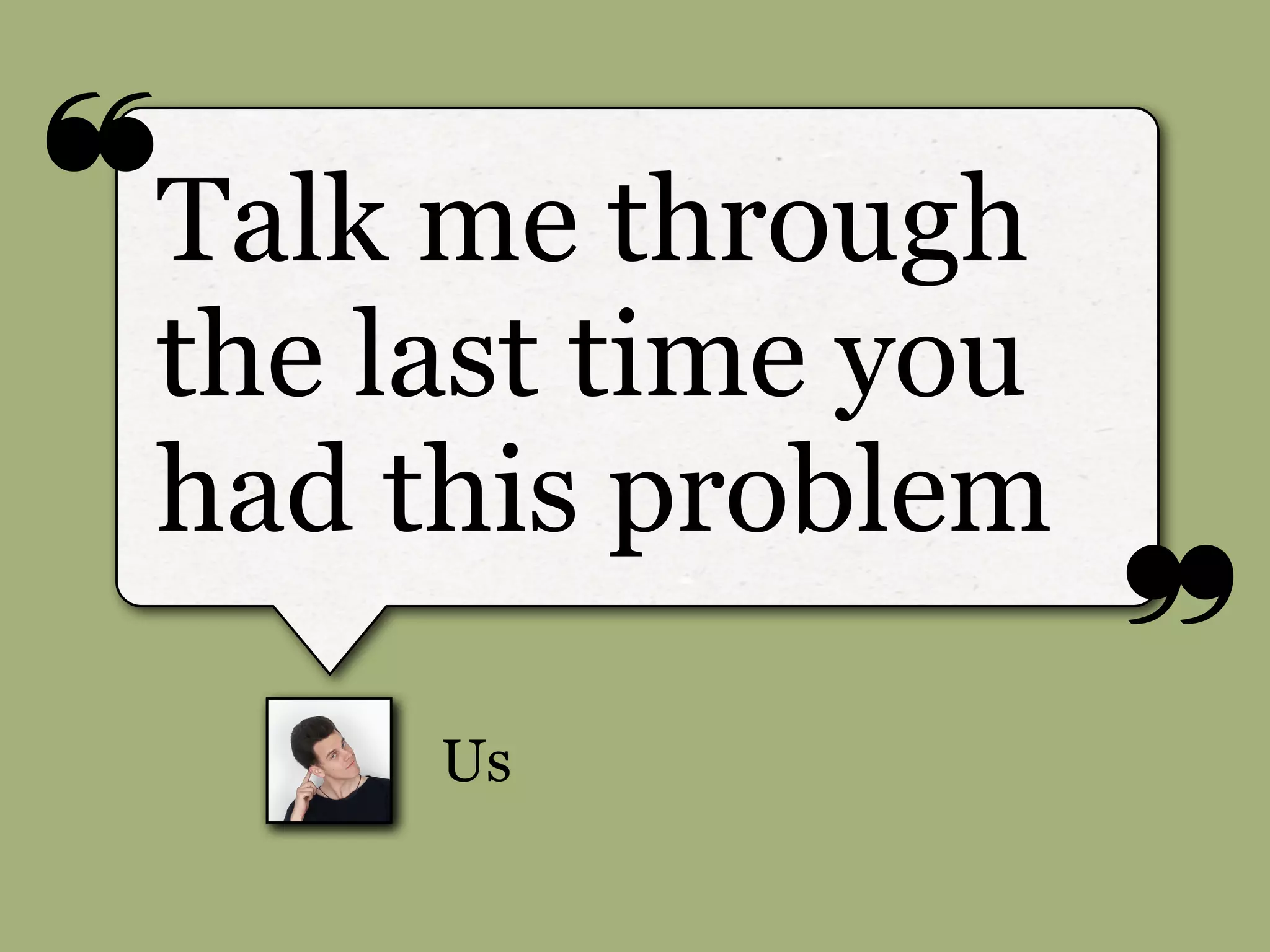
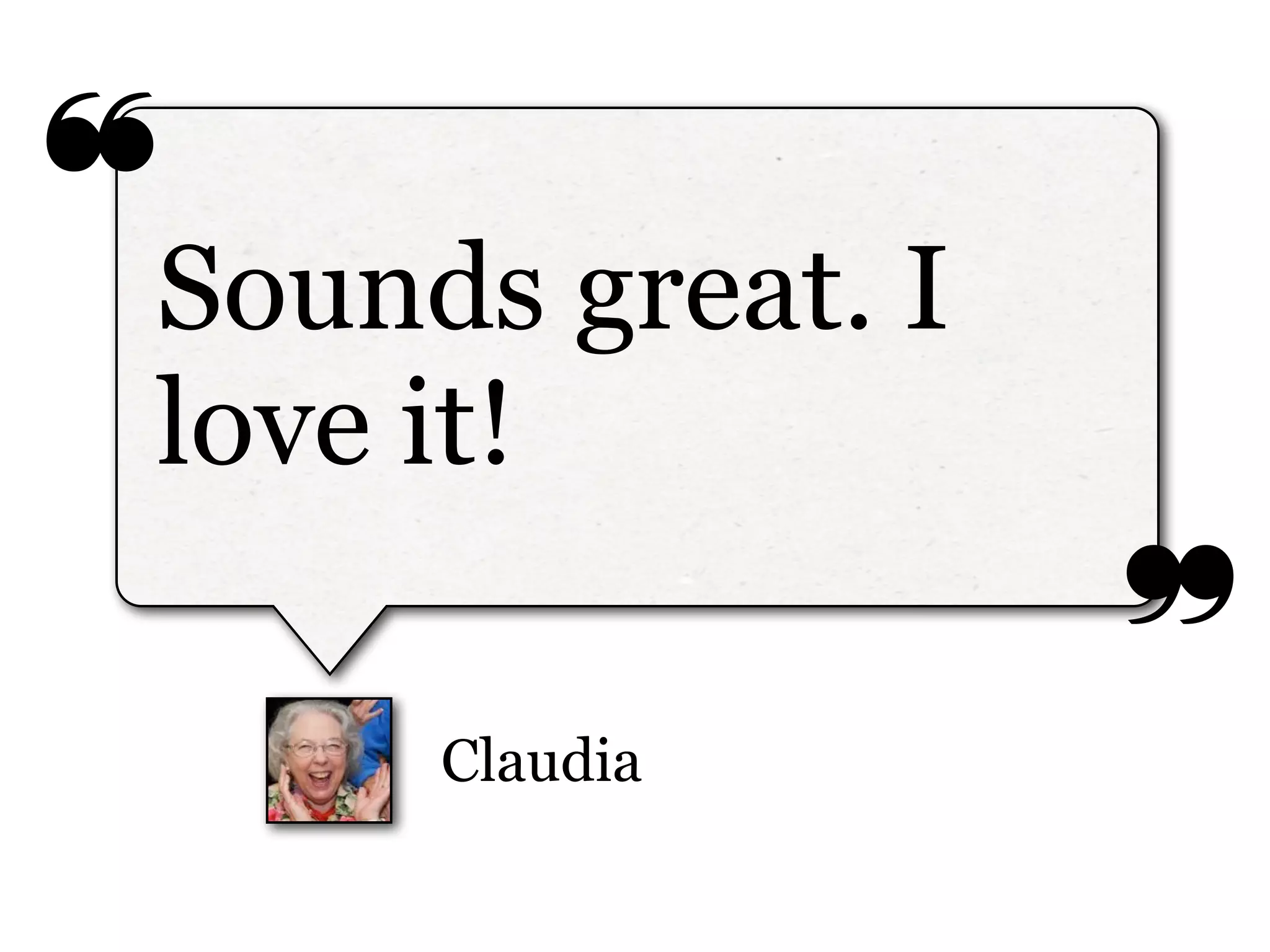
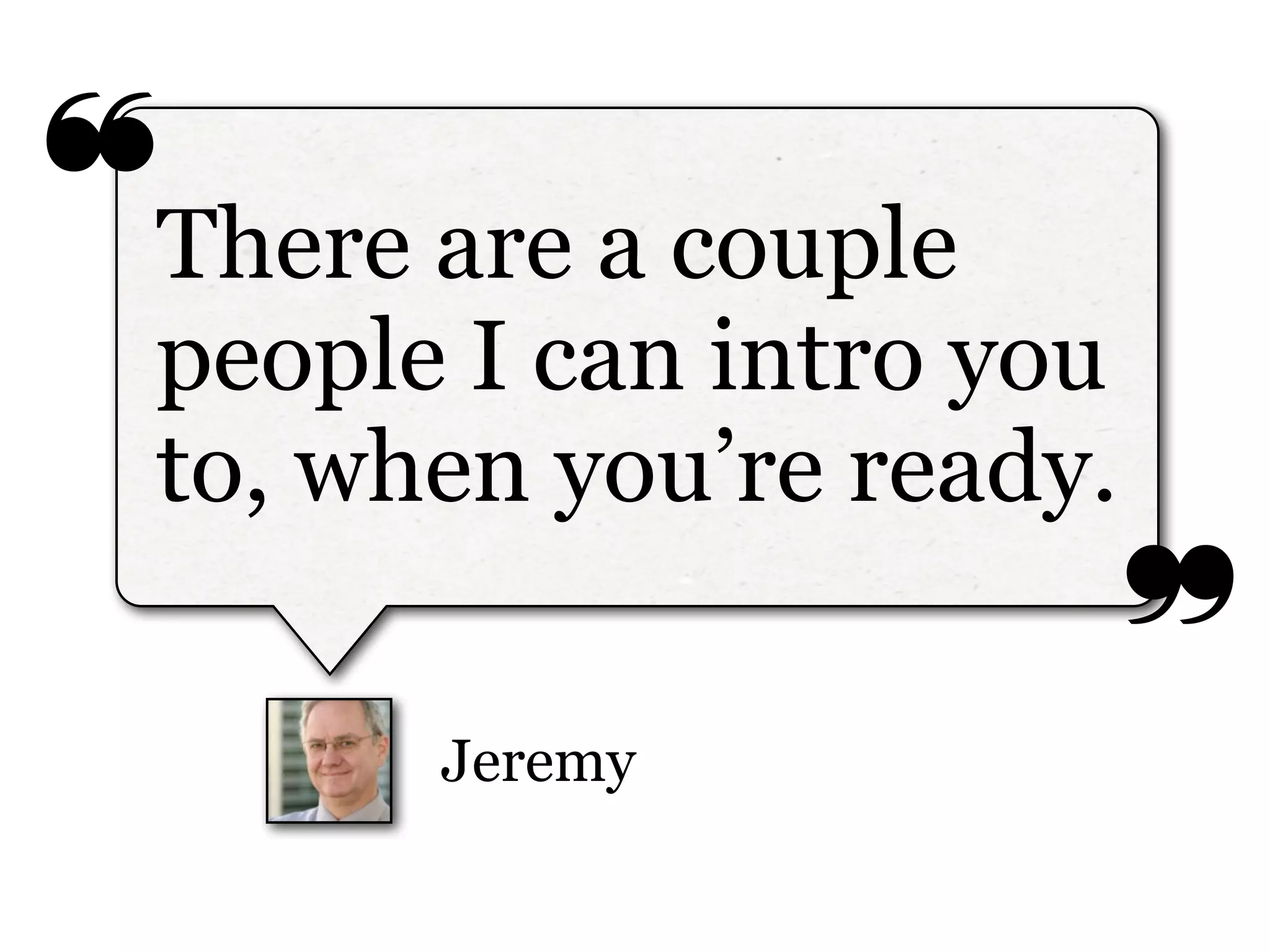
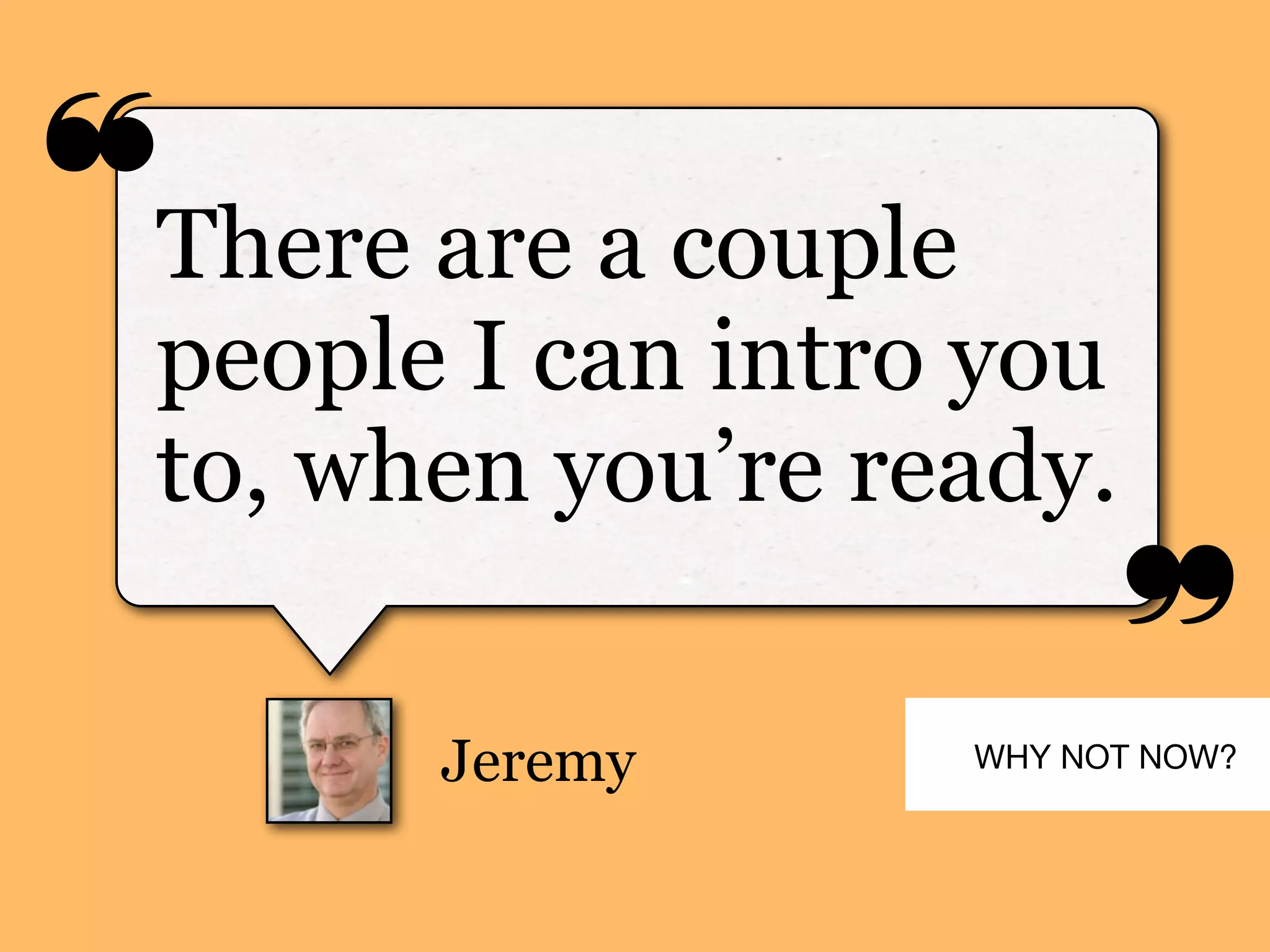
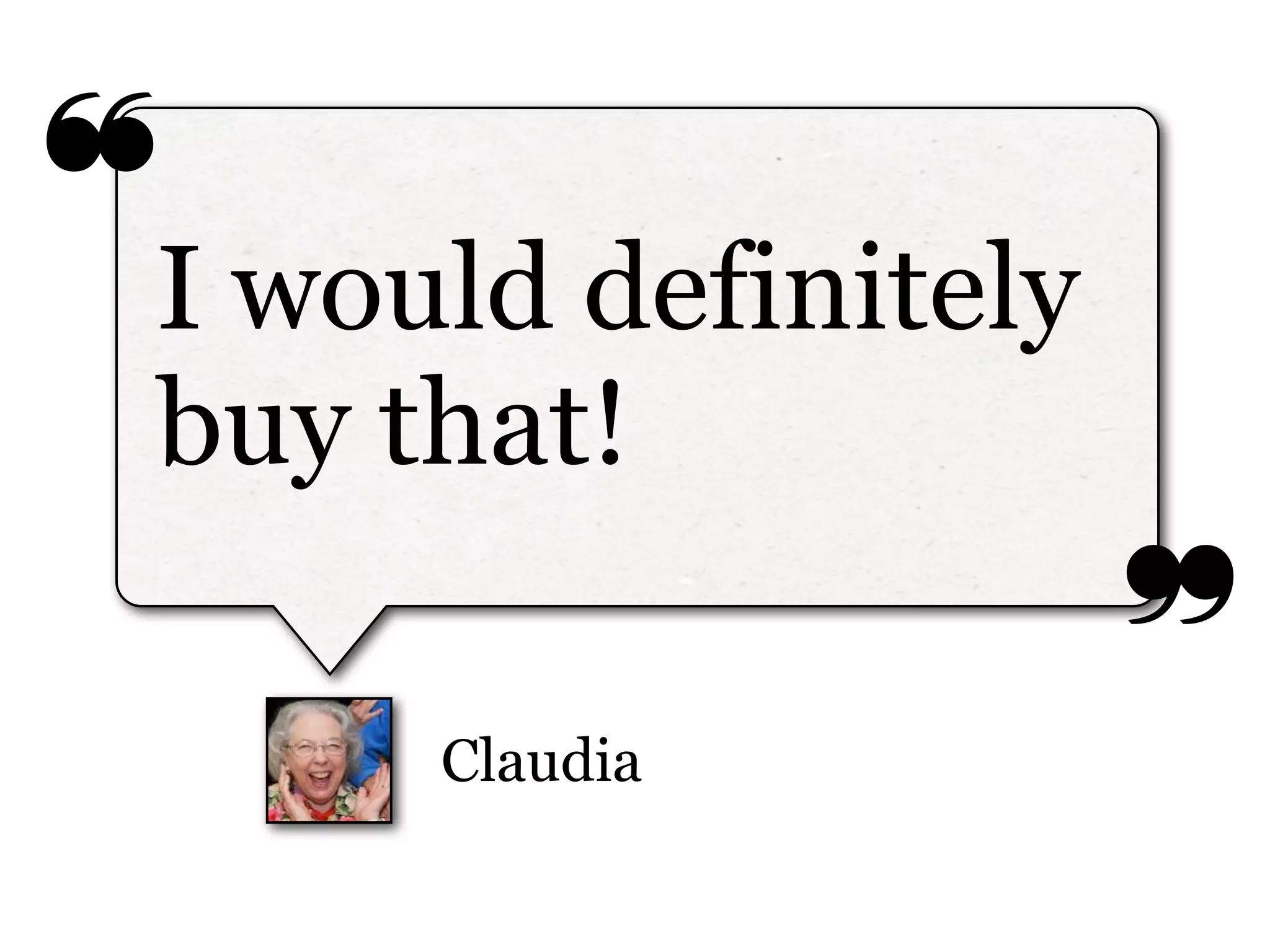
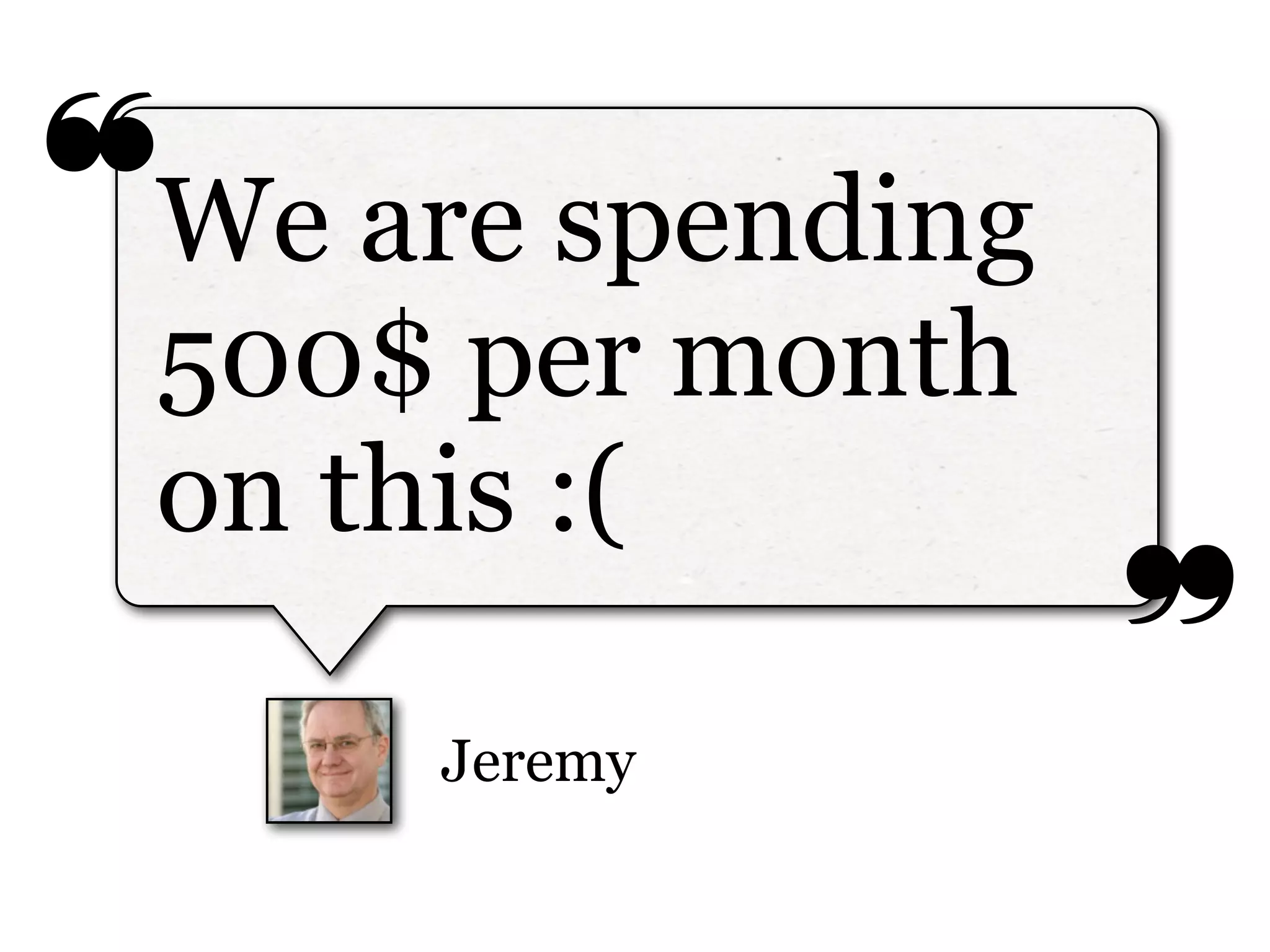
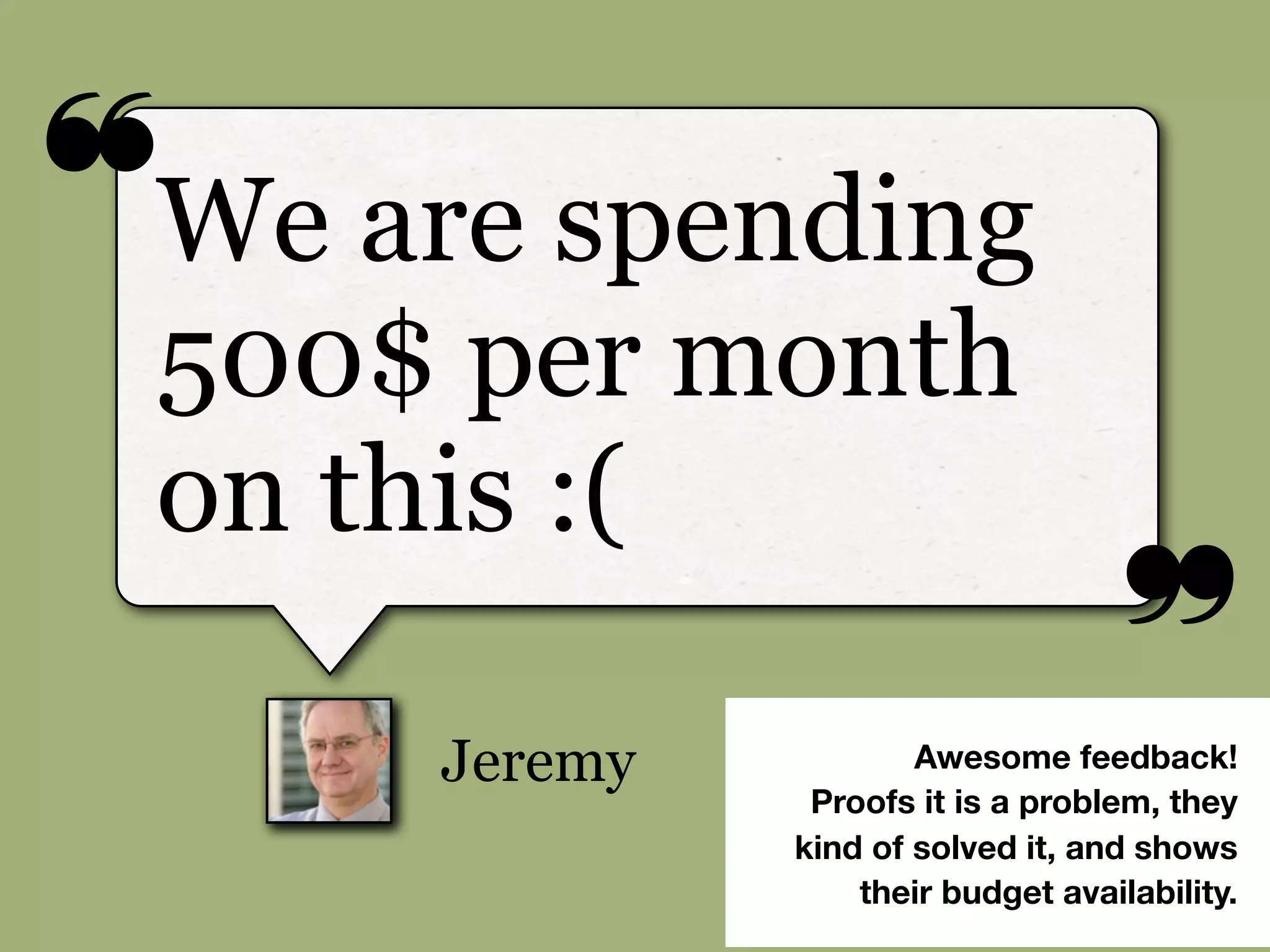
❝
❞
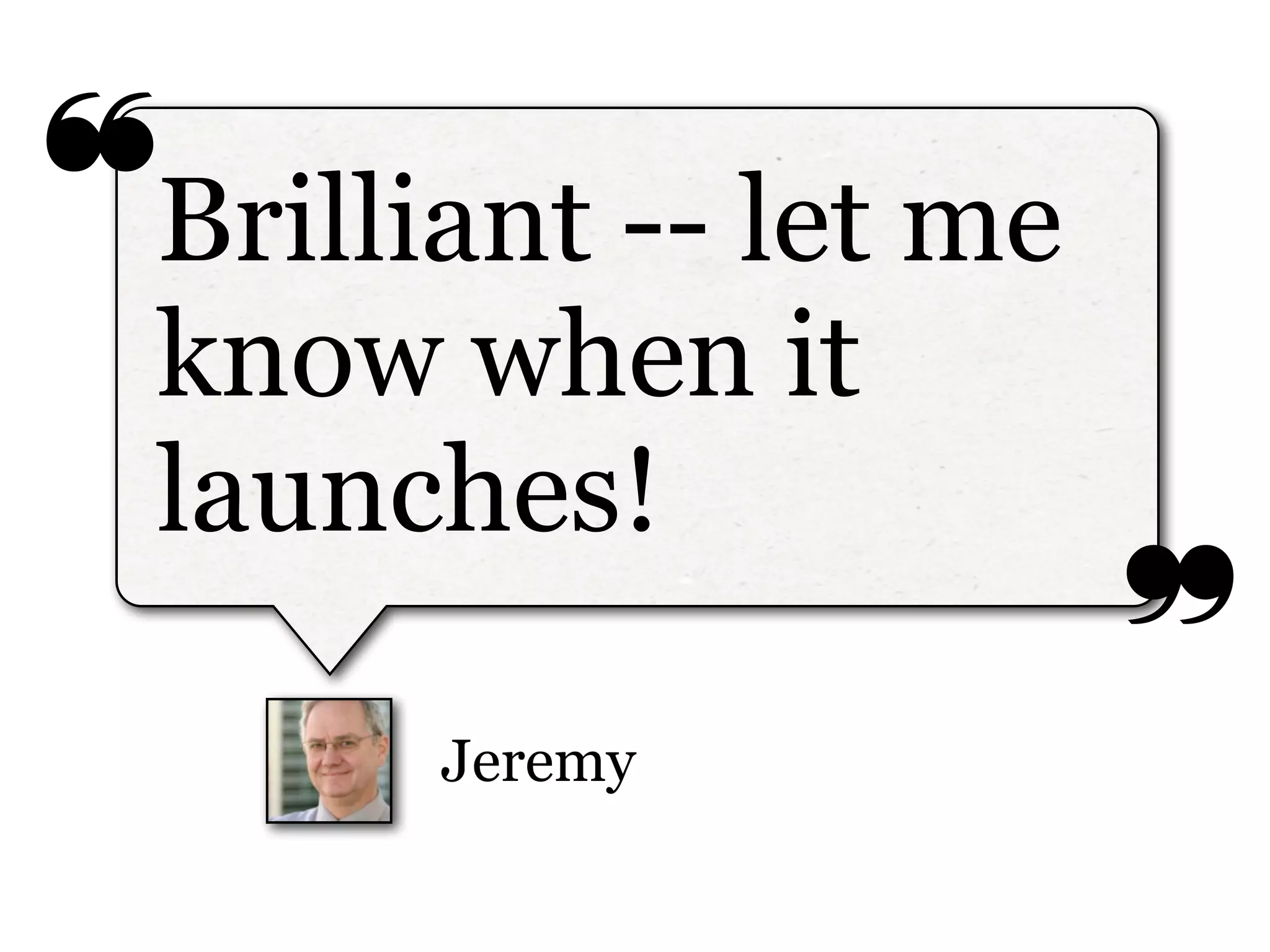
Jeremy
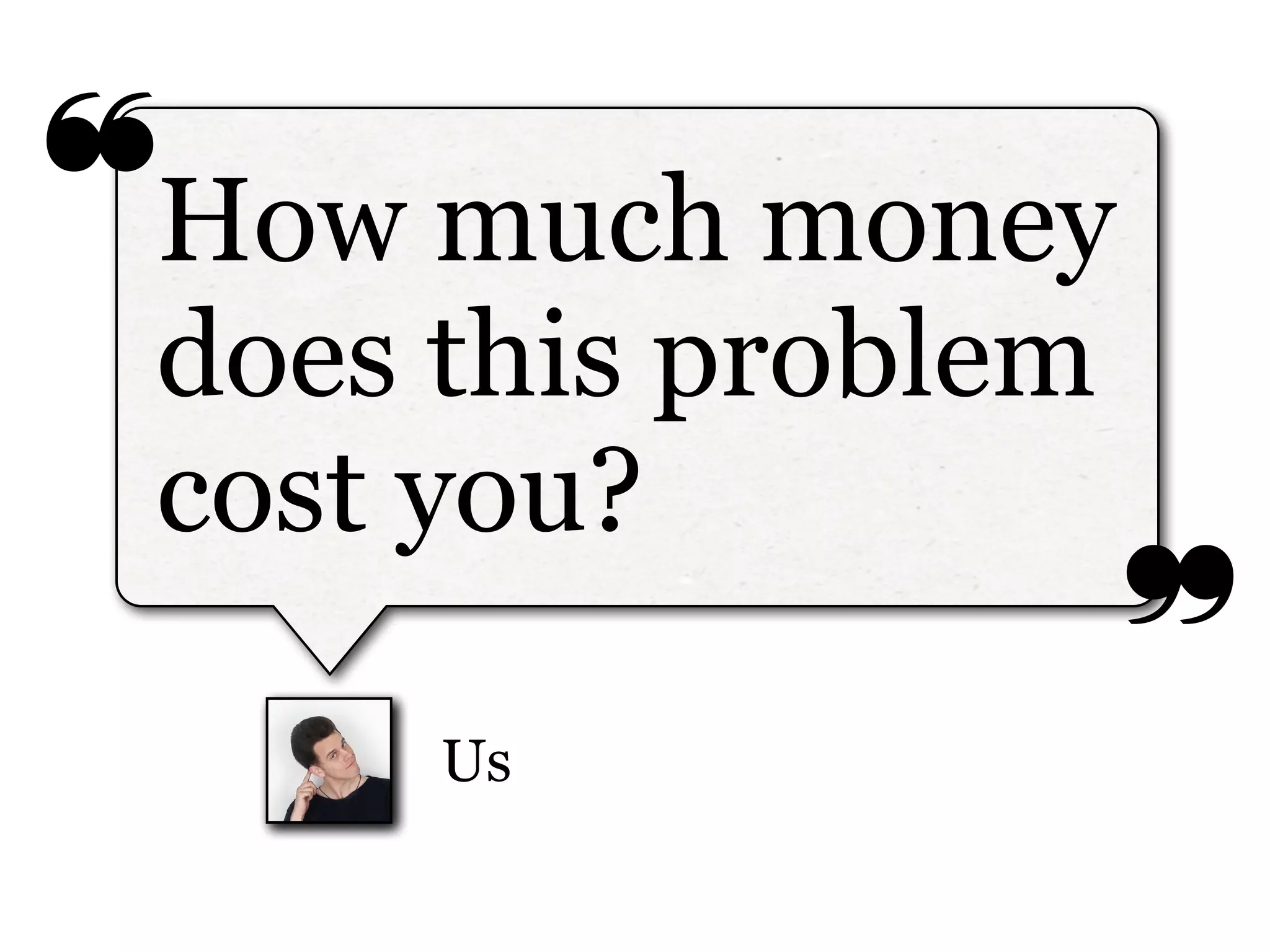
We are spending
500$per month
on this :(
Awesome feedback!
Proofs it is a problem, they
kind of solved it, and shows
their budget availability.
71.
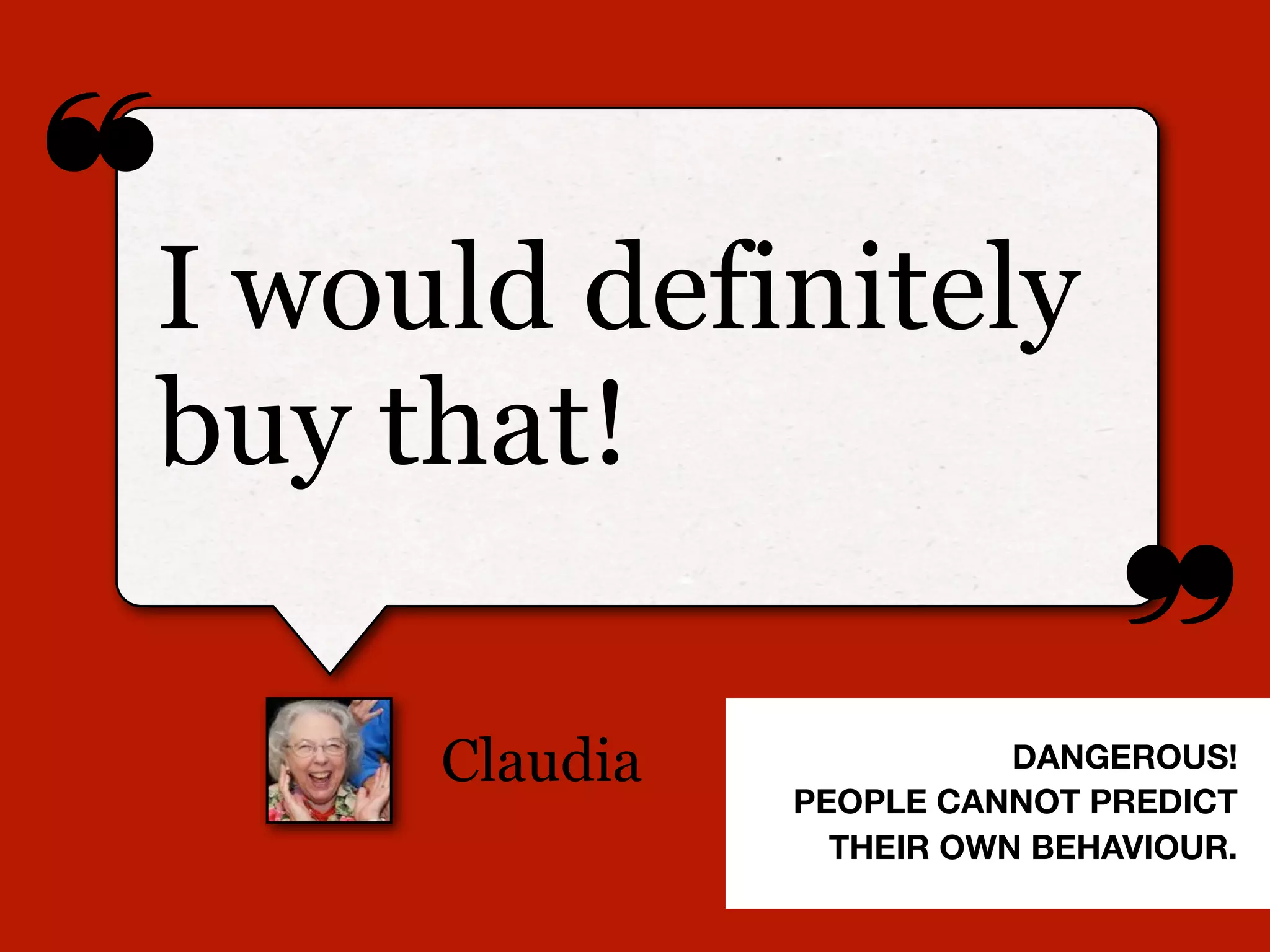
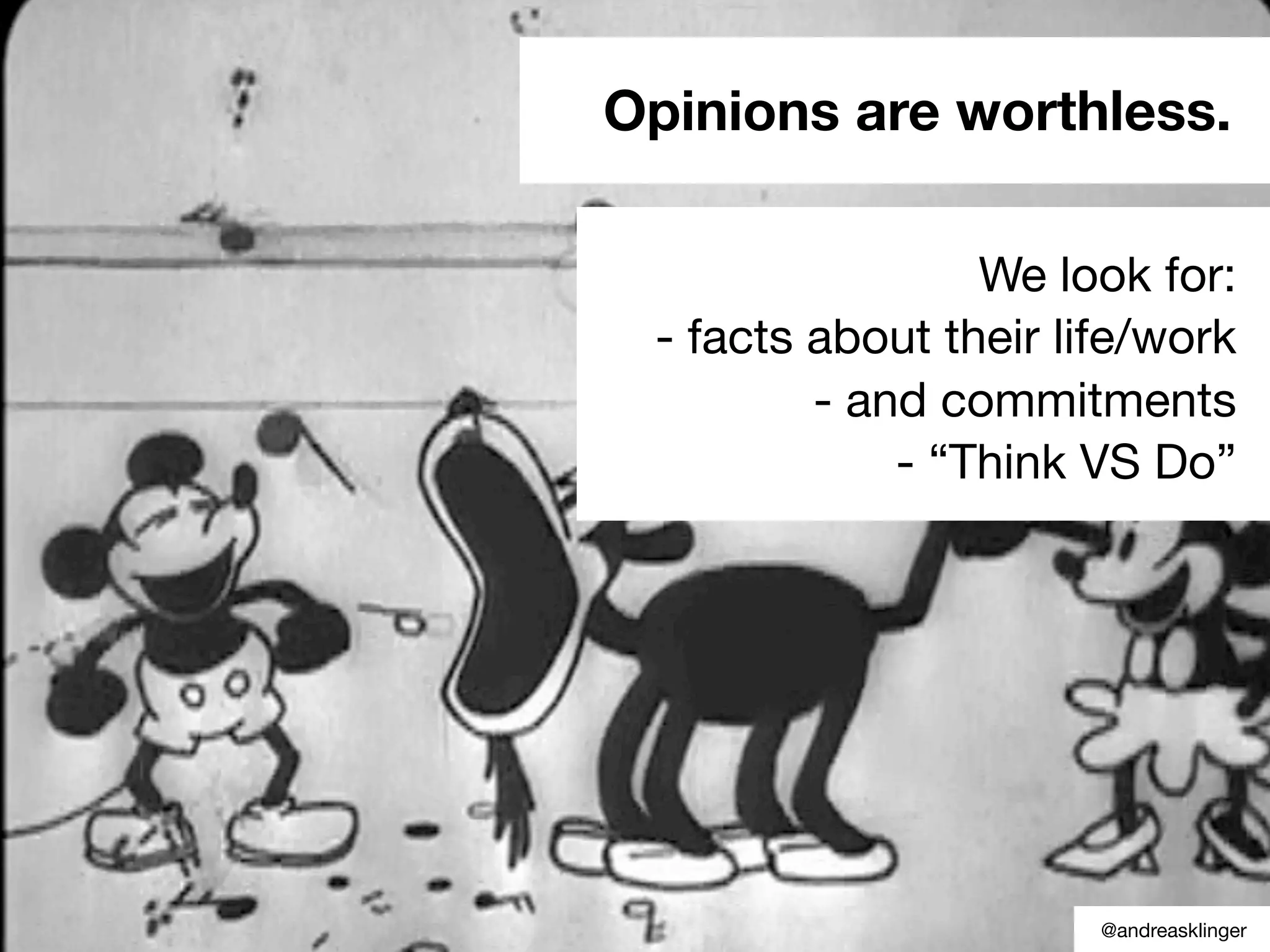
Opinions are worthless.
Welook for:
- facts about their life/work
- and commitments
- “Think VS Do”
@andreasklinger
Validate Problem
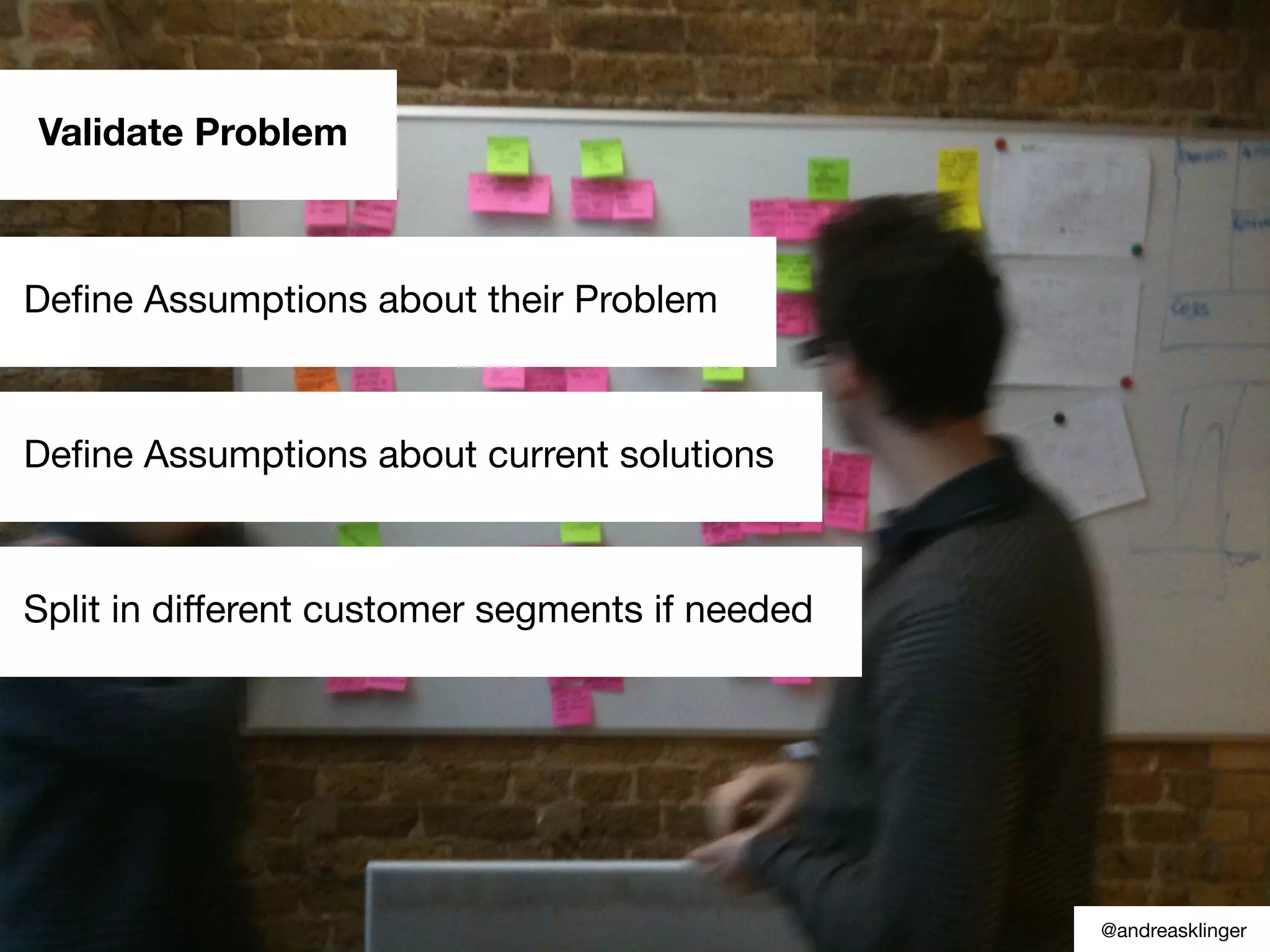
Define Assumptionsabout their Problem
Define Assumptions about current solutions
@andreasklinger
Split in different customer segments if needed
77.
Validate Problem
#emminvest –@andreasklinger
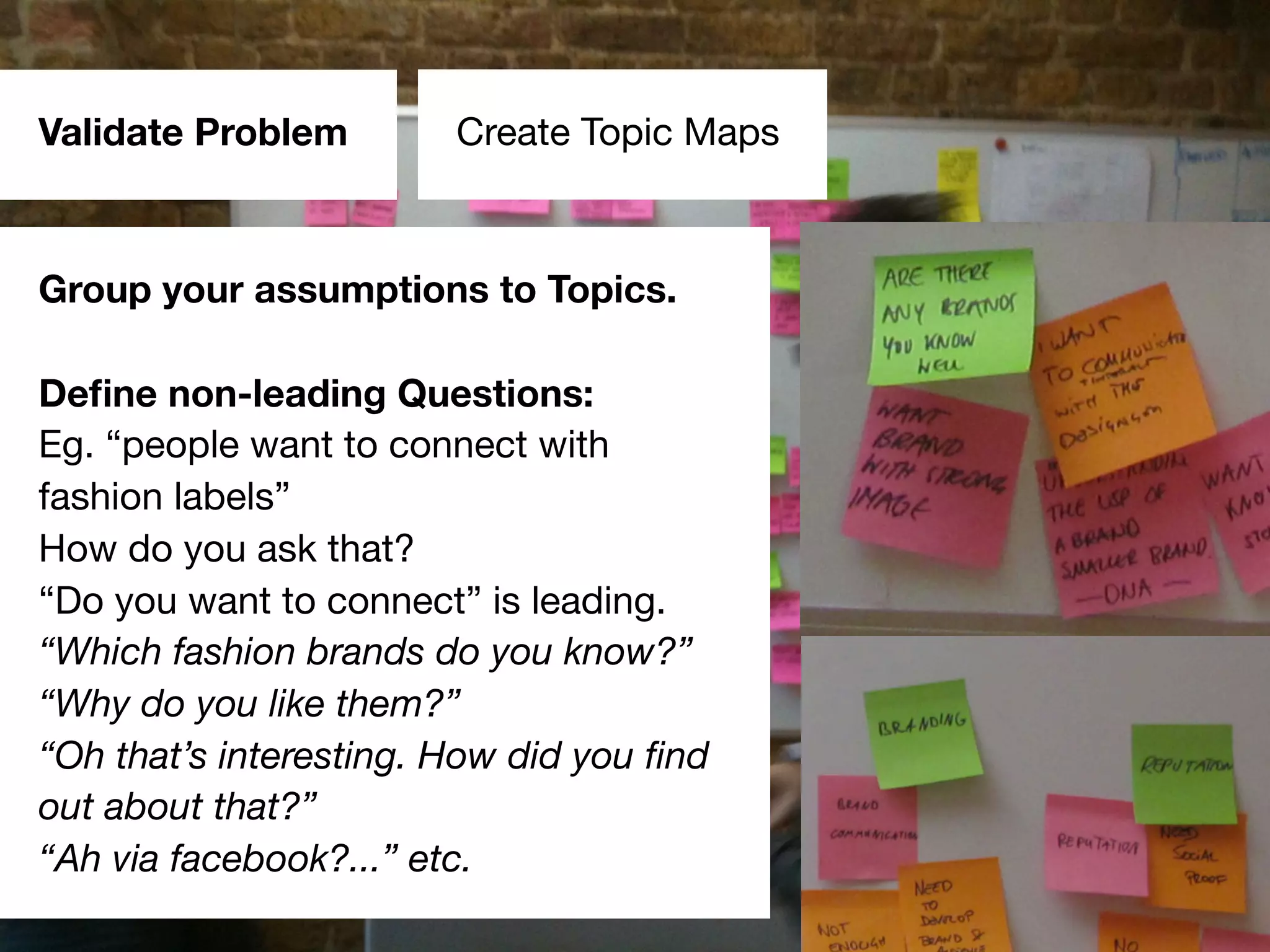
Create Topic Maps
Group your assumptions to Topics.
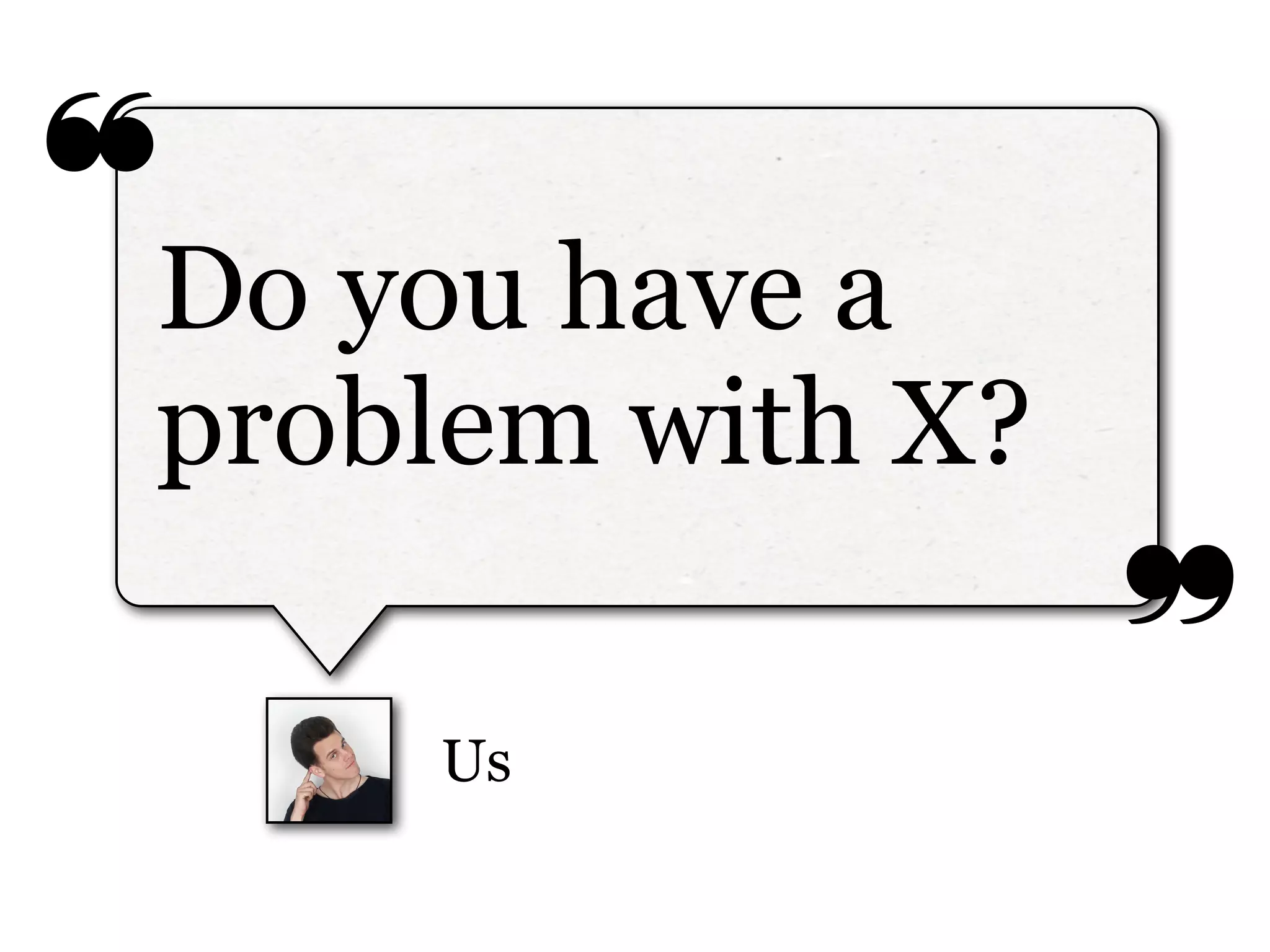
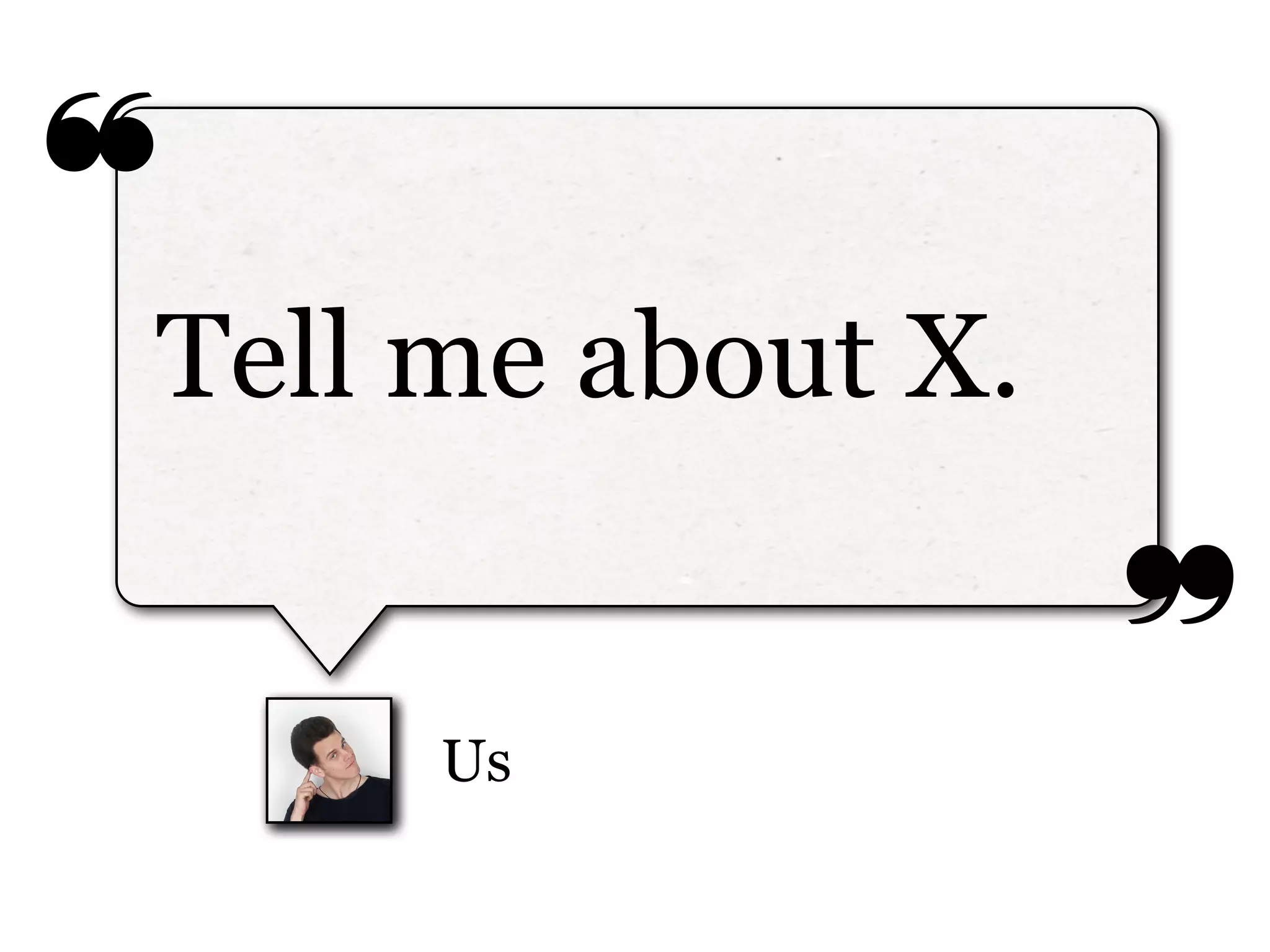
Define non-leading Questions:
Eg. “people want to connect with
fashion labels”
How do you ask that?
“Do you want to connect” is leading.
“Which fashion brands do you know?”
“Why do you like them?”
“Oh that’s interesting. How did you find
out about that?”
“Ah via facebook?...” etc.
78.
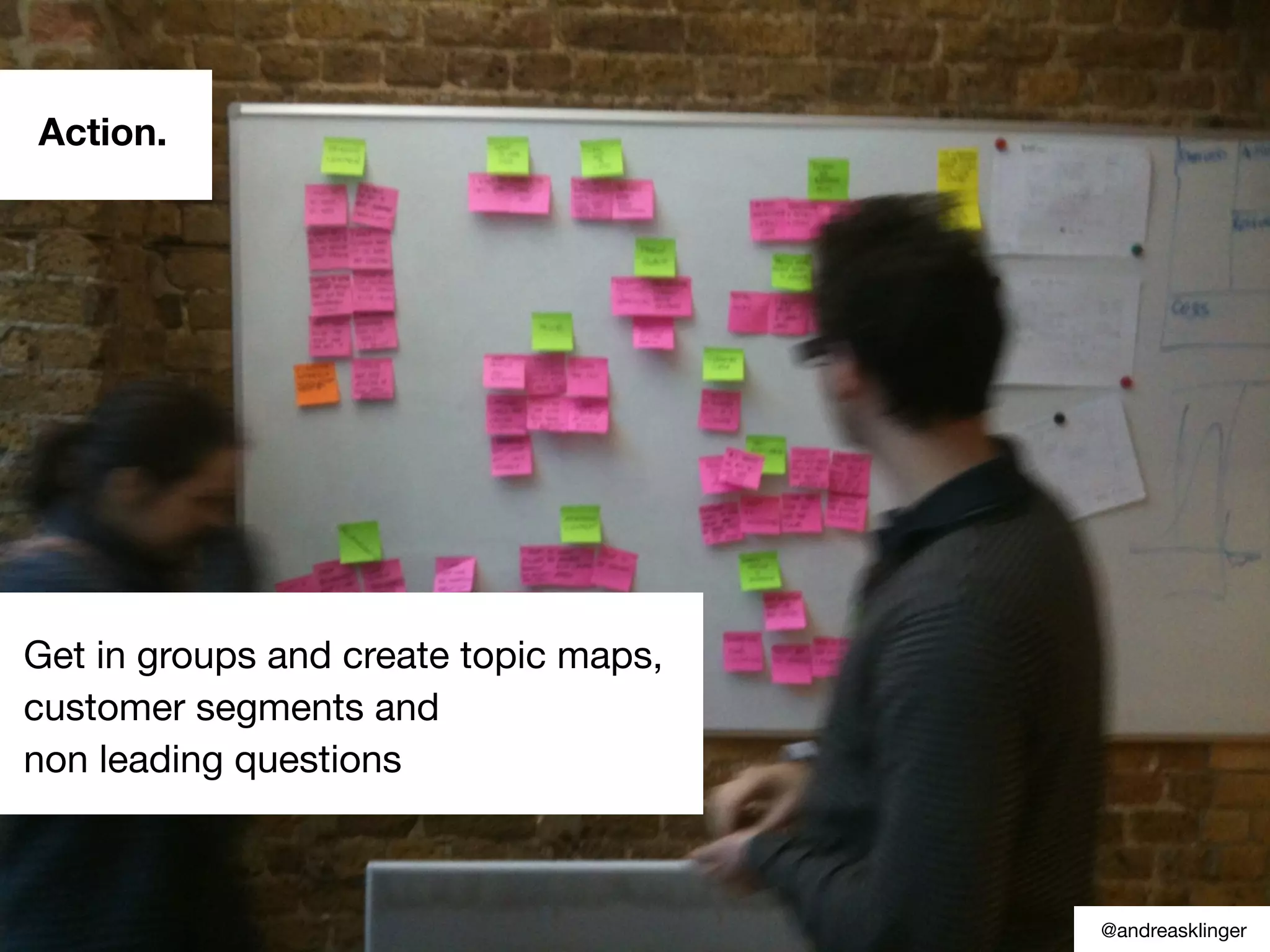
Action.
Get in groupsand create topic maps,
customer segments and
non leading questions
@andreasklinger
79.
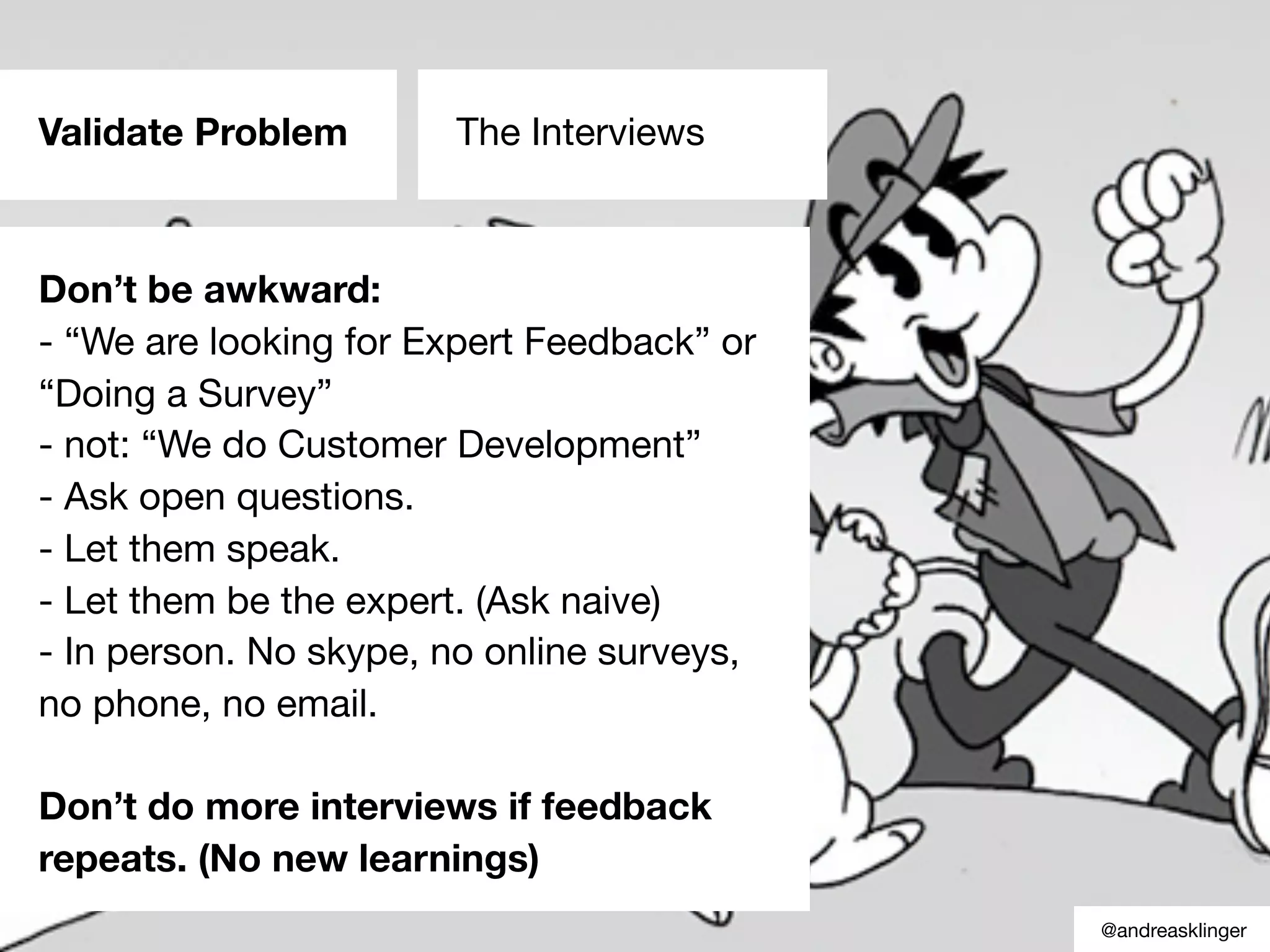
Validate Problem TheInterviews
Don’t be awkward:
- “We are looking for Expert Feedback” or
“Doing a Survey”
- not: “We do Customer Development”
- Ask open questions.
- Let them speak.
- Let them be the expert. (Ask naive)
- In person. No skype, no online surveys,
no phone, no email.
Don’t do more interviews if feedback
repeats. (No new learnings)
@andreasklinger
80.
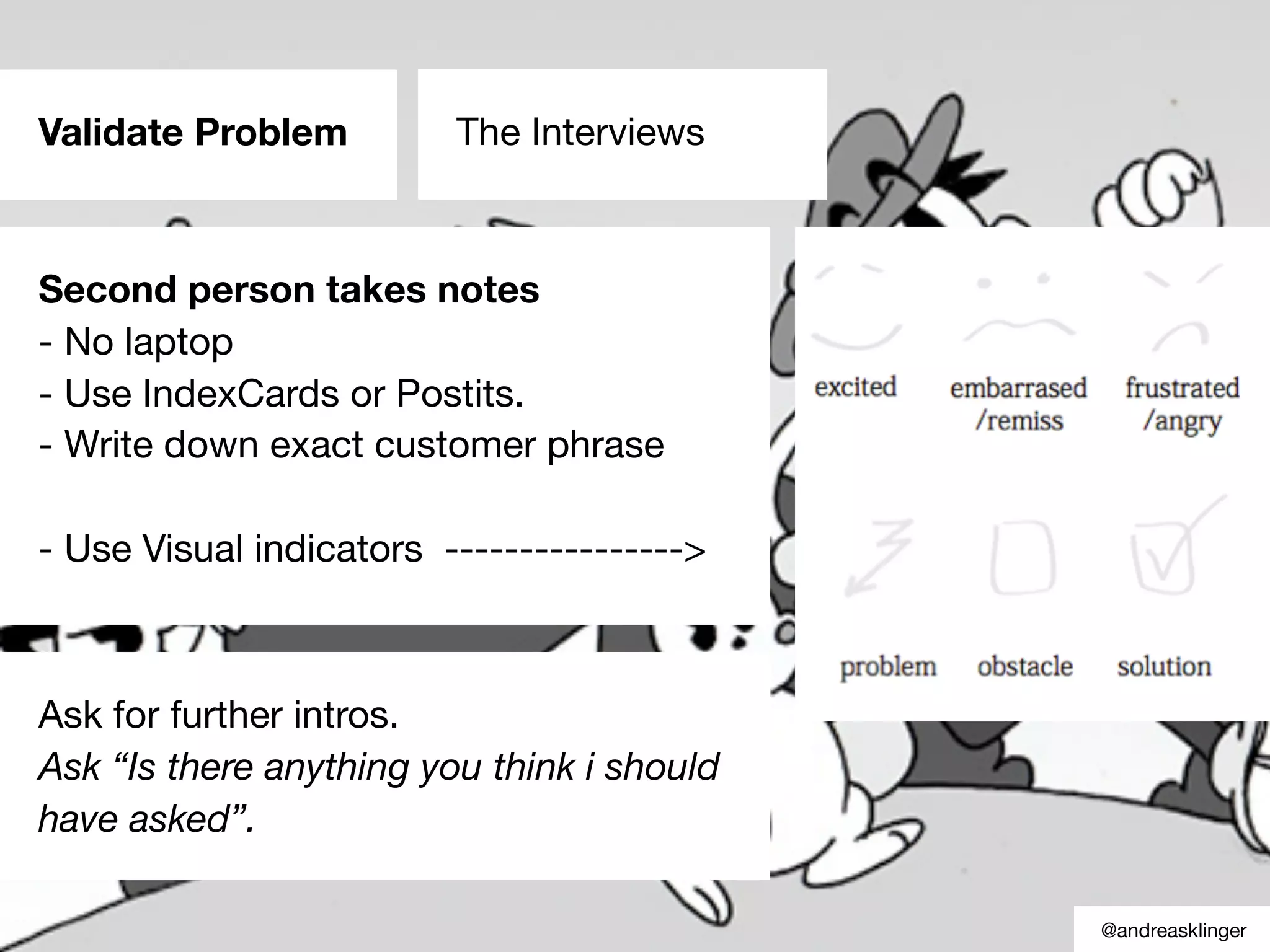
Validate Problem TheInterviews
Second person takes notes
- No laptop
- Use IndexCards or Postits.
- Write down exact customer phrase
- Use Visual indicators ---------------->
Ask for further intros.
Ask “Is there anything you think i should
have asked”.
@andreasklinger
Action.
Test run interviews.
Groupinto people who like ice-cream.
And people who want to build a unique
ice-cream startup idea.
@andreasklinger
83.
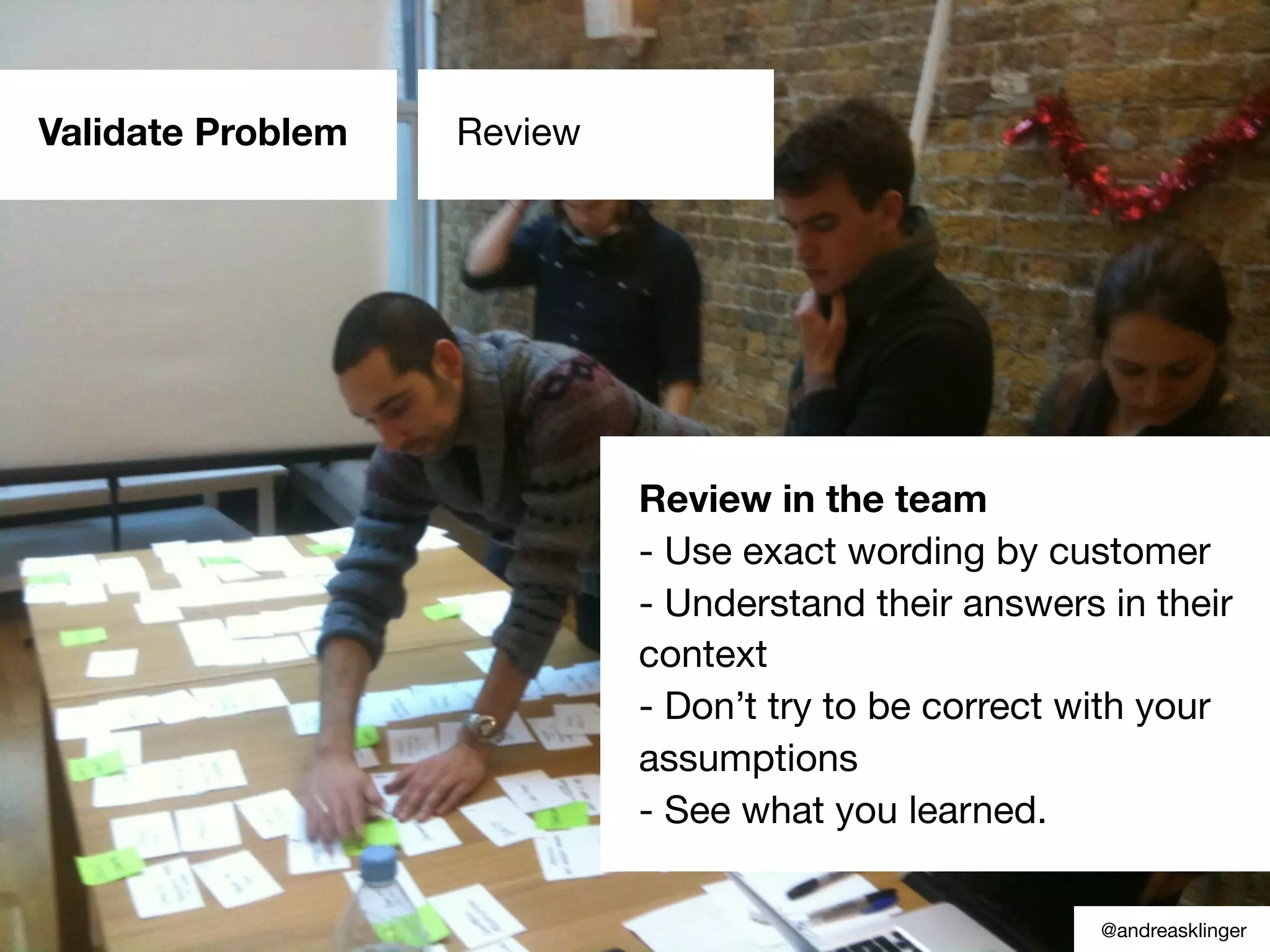
Validate Problem Review
Reviewin the team
- Use exact wording by customer
- Understand their answers in their
context
- Don’t try to be correct with your
assumptions
- See what you learned.
@andreasklinger
84.
Source: Custdev.com#emminvest –@andreasklinger
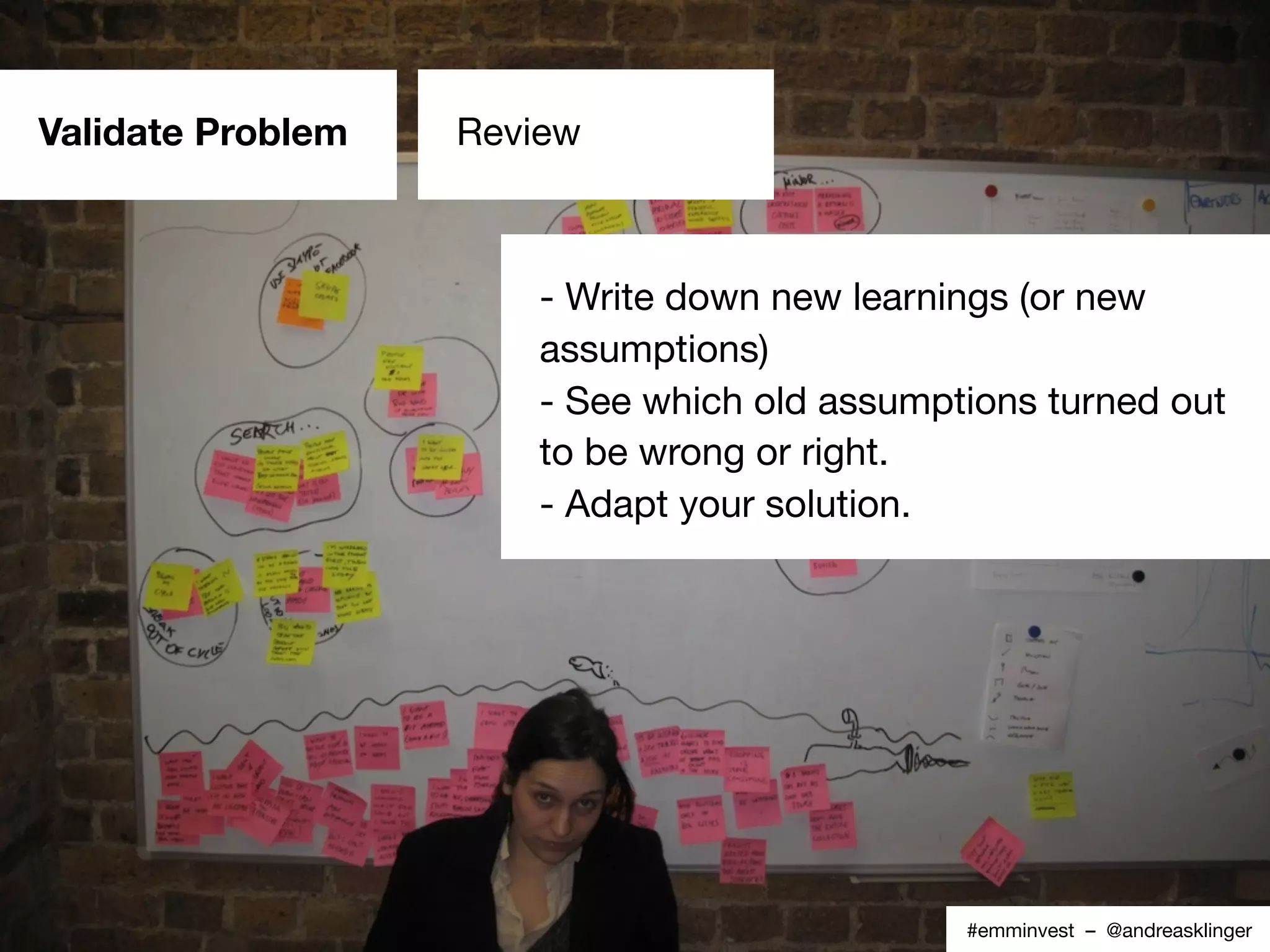
Validate Problem Review
- Write down new learnings (or new
assumptions)
- See which old assumptions turned out
to be wrong or right.
- Adapt your solution.
85.
Source: Custdev.com
Validate Solution
-Come back to interviewees
- Focus first on their current solution.
- Discuss flaws of their current solution.
- Show mockups, screens, interactive demos.
- Get improvement feedback.
- Get them to commit.
- Or iterate.
If it solves a problem you don’t need to sell (much)
@andreasklinger
86.
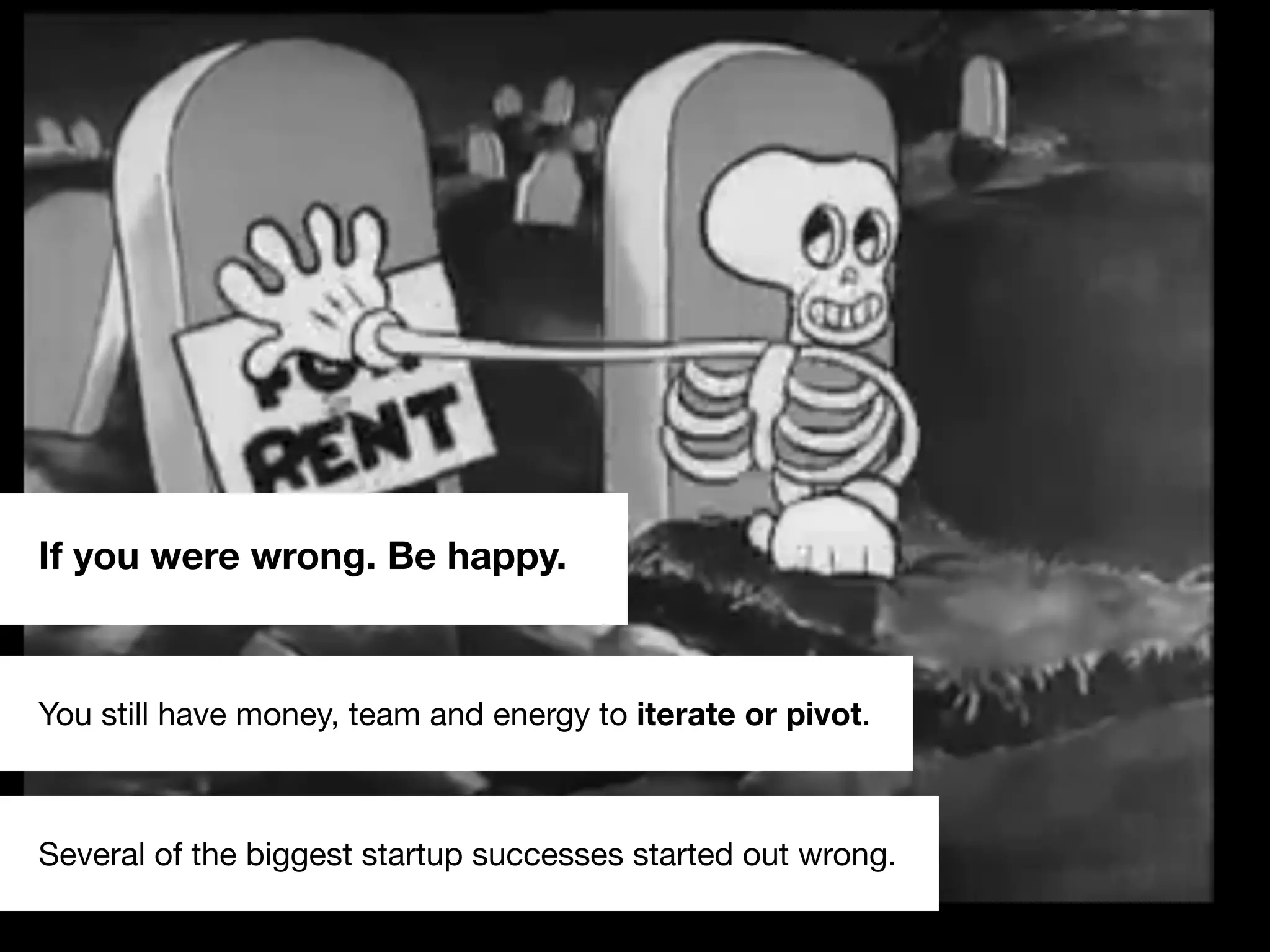
If you werewrong. Be happy.
Several of the biggest startup successes started out wrong.
You still have money, team and energy to iterate or pivot.
87.
Summary
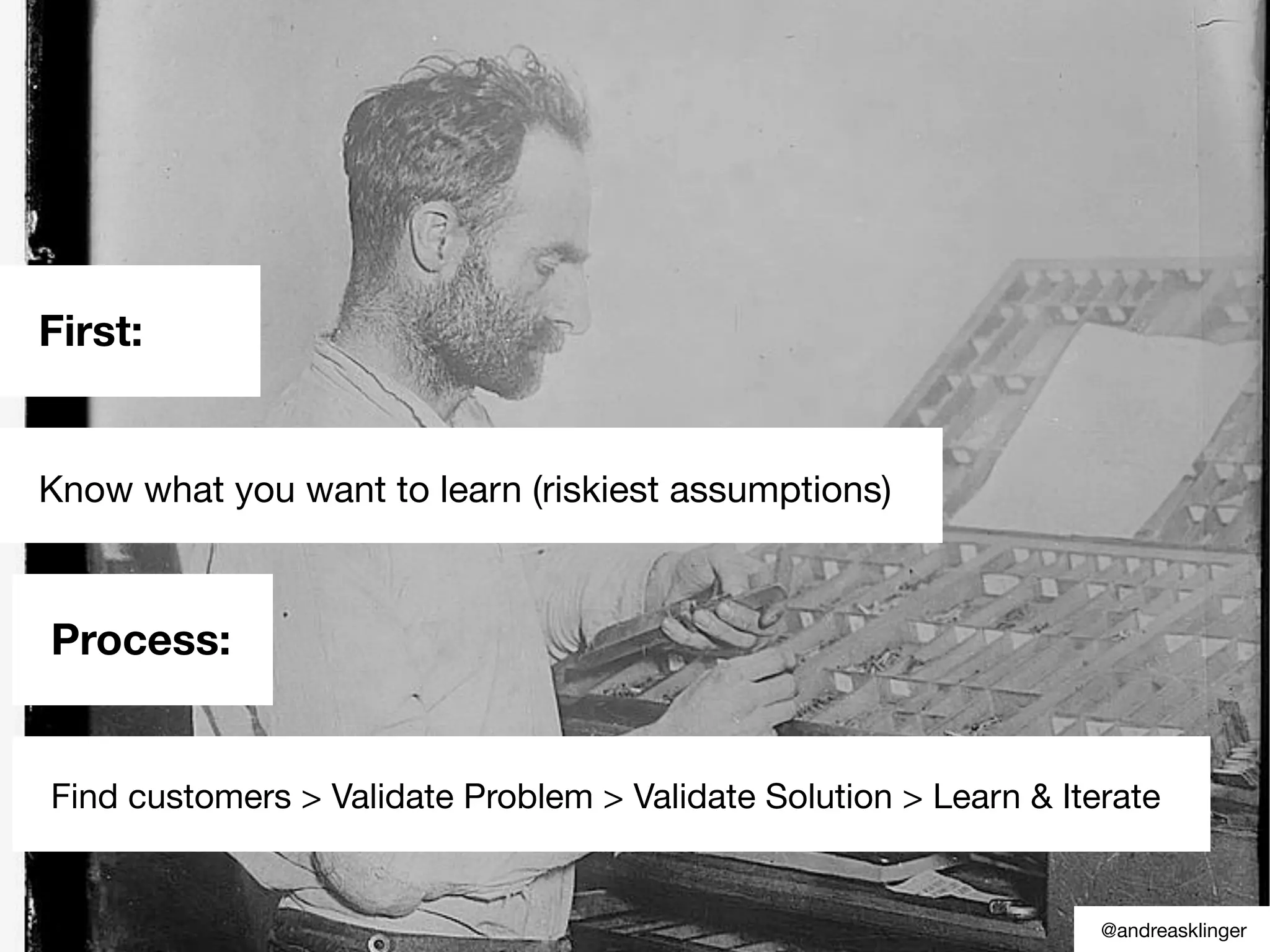
- Know whatyou want to learn.
- Narrow your customer segment
- Formulate your assumptions.
- Define biggest questions (topic map).
- Ask non leading, open questions.
- Ask about experience not opinions.
- Understand their feedback in their context.
- Filter “Nice Human Behaviour” and Opinions.
- Adapt with your learnings. Iterate your product.
TL;DR: Use custdev to doublecheck your assumptions and product.
Never bias in customer interviews.
@andreasklinger
88.
Read on
Highly recommended:
RobFitzpatrick’s Collection of best Custdev Videos - @robfitz
http://www.hackertalks.io
@andreasklinger
89.
Tweet & share
@andreasklinger
Ifyou like this presentation, please tweet about it:
“Actionable Customer Development for Startups” - A workshop by @andreasklinger -
slides: http://www.slideshare.net/andreasklinger/actionable-customer-development