Make Time to Lead
Manage Your Time More Efficiently to
Manage Your Team More Effectively
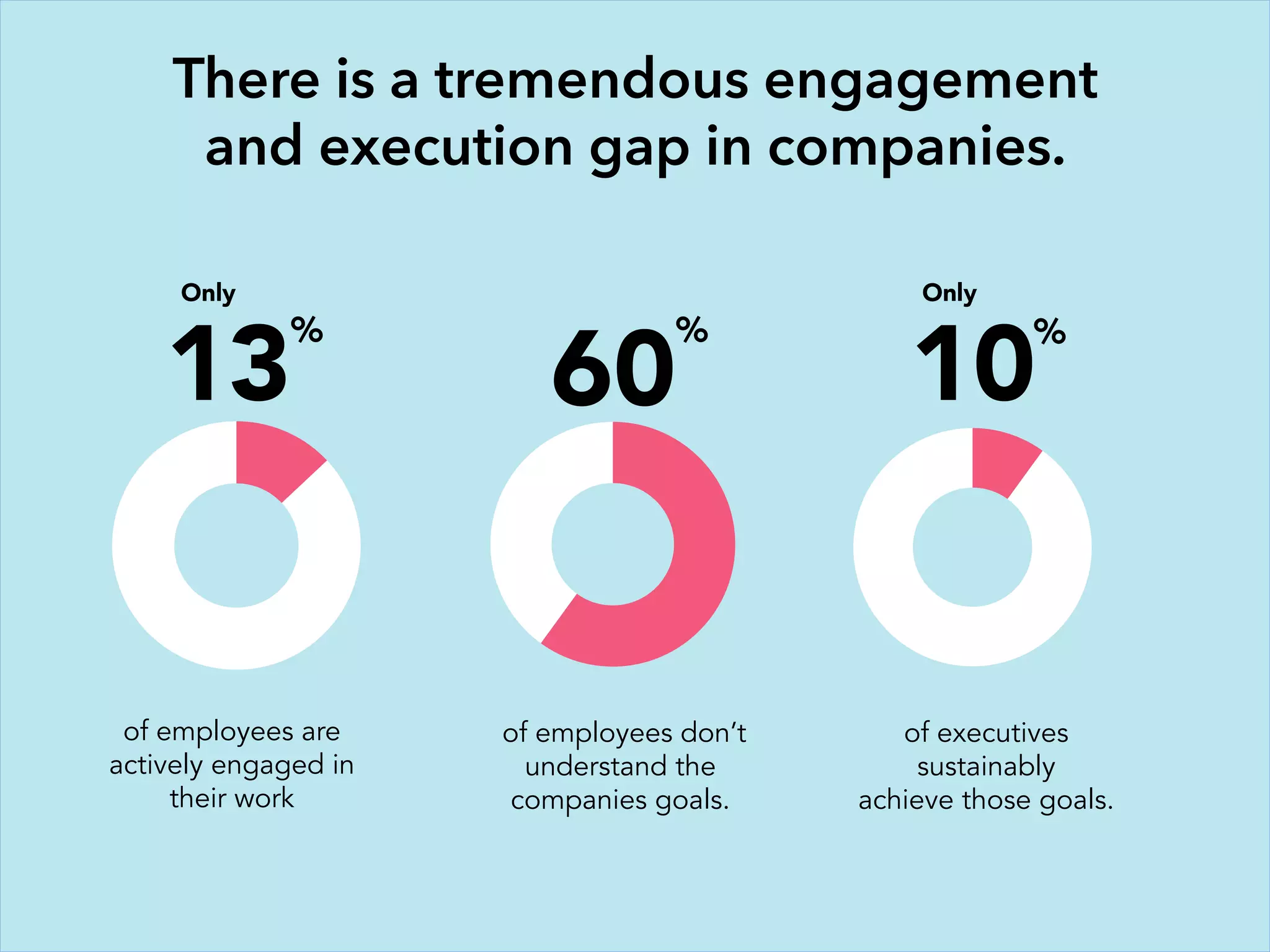
There is a tremendous engagement
and execution gap in companies.
of employees don’t
understand the
companies goals.
of executives
sustainably
achieve those goals.
of employees are
actively engaged in
their work
Only
%
13
%
60
Only
10
%
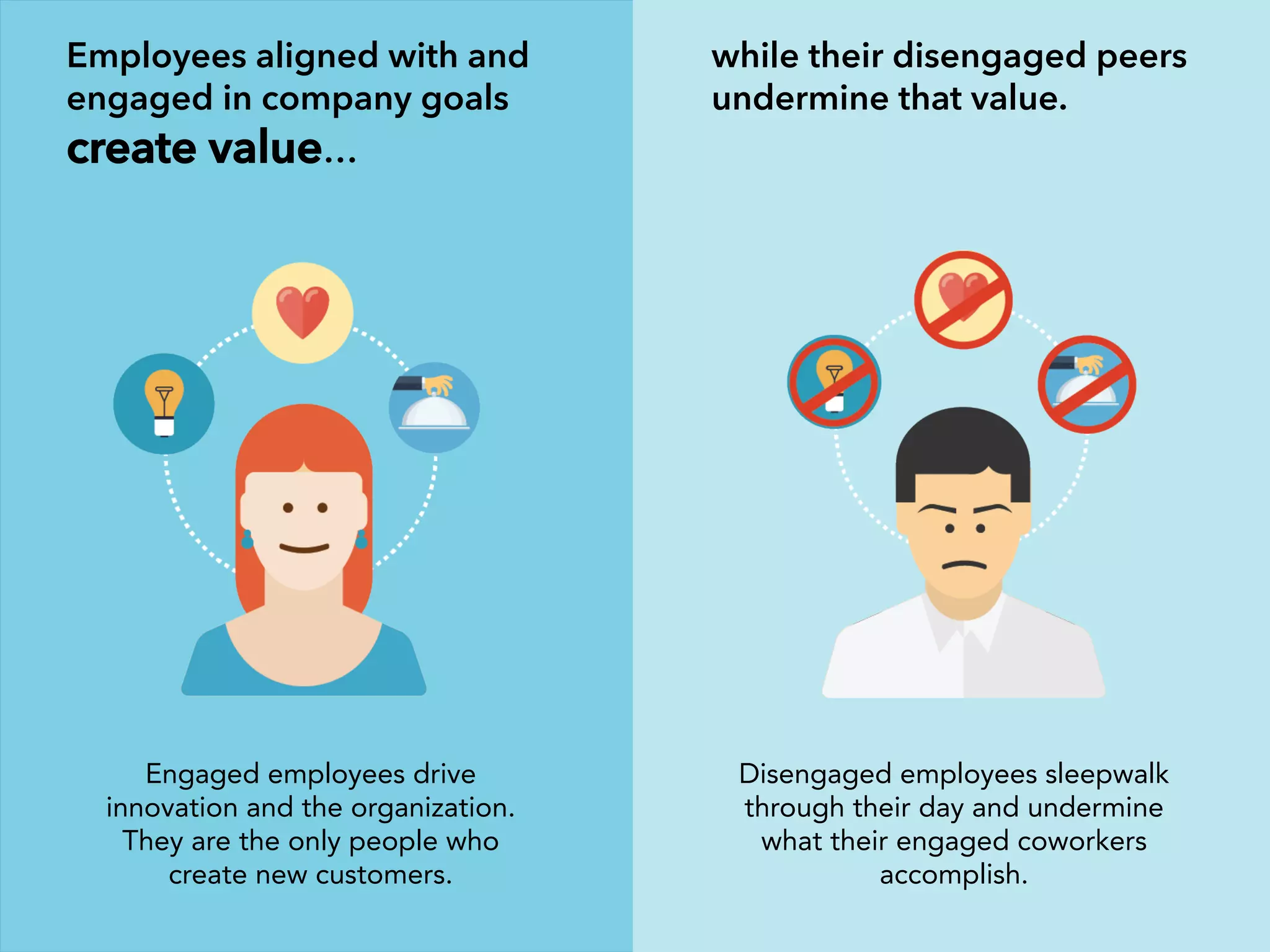
Employees aligned with and
engaged in company goals
create value…
Engaged employees drive
innovation and the organization.
They are the only people who
create new customers.
Disengaged employees sleepwalk
through their day and undermine
what their engaged coworkers
accomplish.
while their disengaged peers
undermine that value.


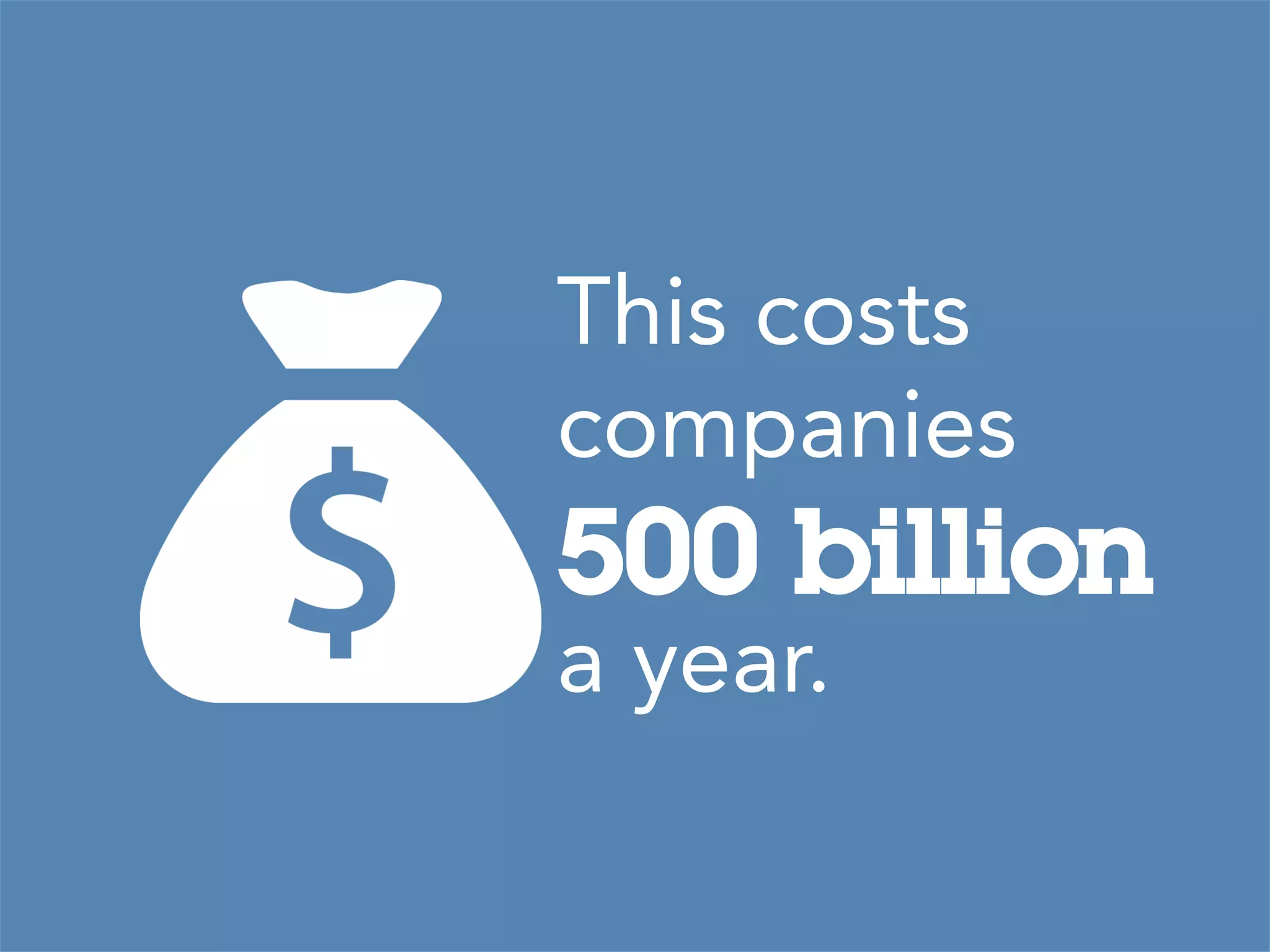
This costs
companies 
500 billion
a year.


Senior
Management
Middle
Management
Frontline
Managers
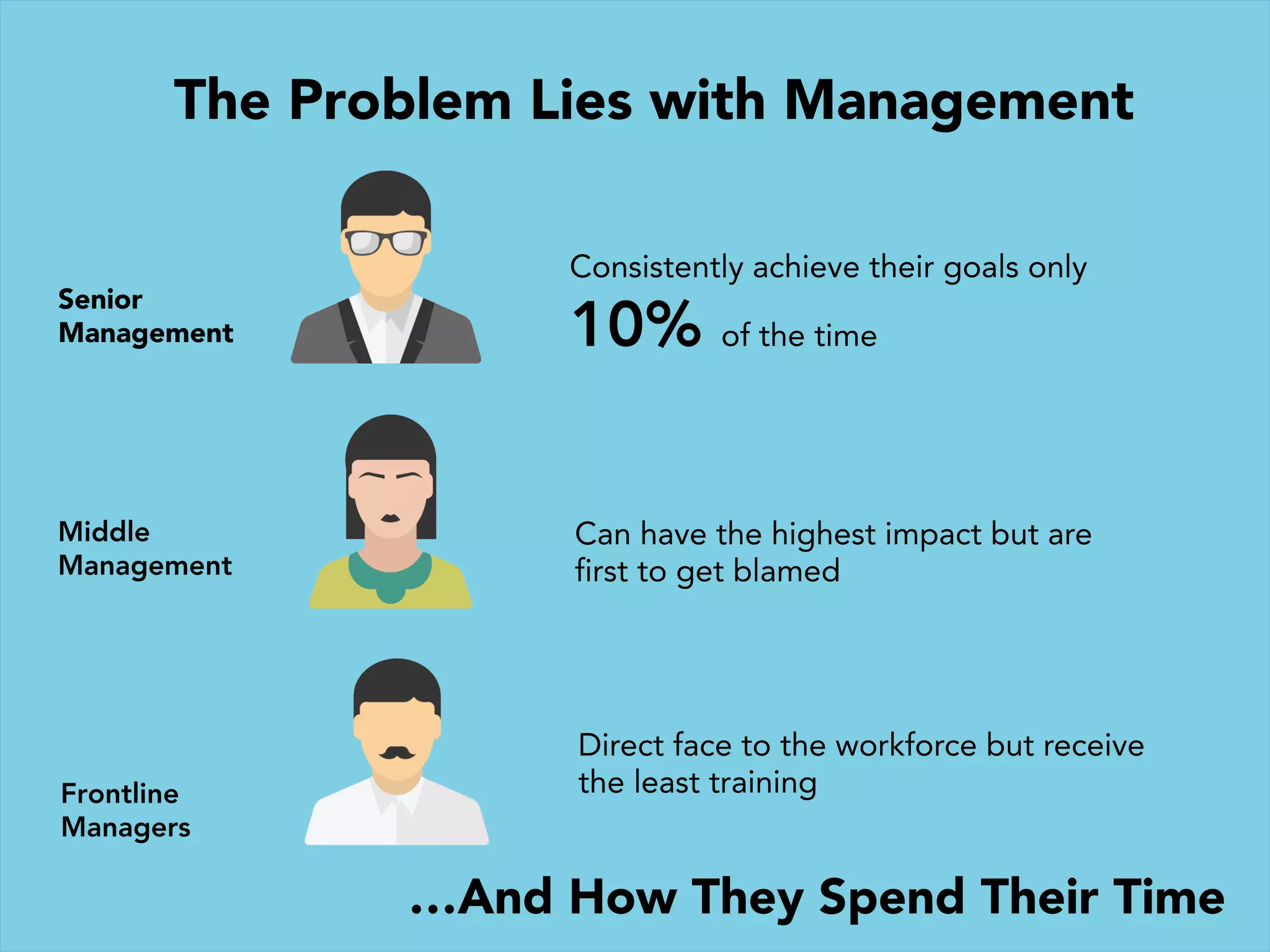
The Problem Lies with Management
…And How They Spend Their Time
Consistently achieve their goals only
10% of the time
Can have the highest impact but are
first to get blamed
Direct face to the workforce but receive
the least training
Senior
Management
Middle
Management
Frontline
Managers
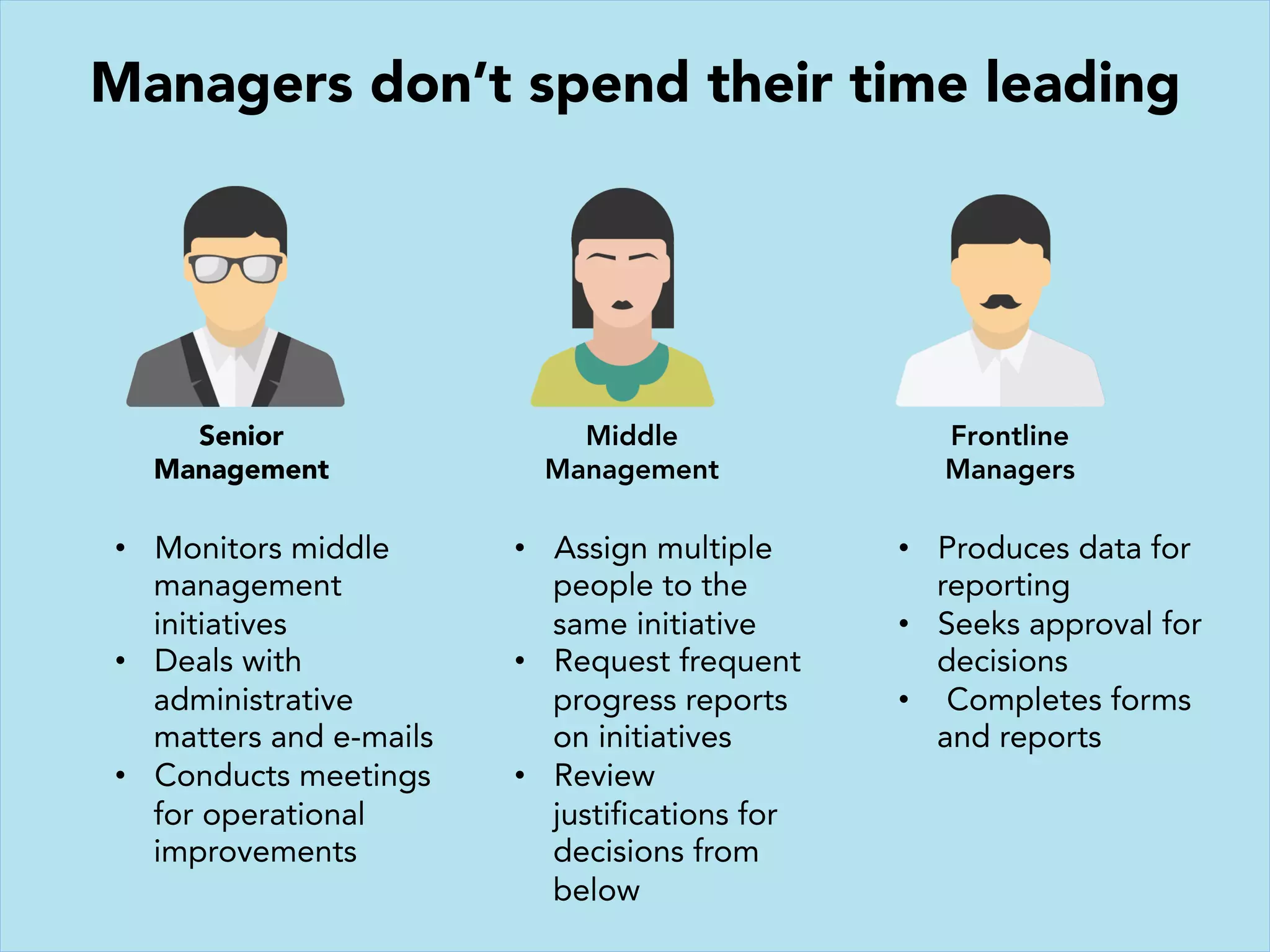
Managers don’t spend their time leading
•  Monitors middle
management
initiatives
•  Deals with
administrative
matters and e-mails
•  Conducts meetings
for operational
improvements
•  Assign multiple
people to the
same initiative
•  Request frequent
progress reports
on initiatives
•  Review
justifications for
decisions from
below
•  Produces data for
reporting
•  Seeks approval for
decisions
•  Completes forms
and reports
The bulk of
leader’s time is
consumed by
low-impact
tasks like
getting facts
and preparing
and reviewing
status reports.
This leaves little time for leadership
activities that drive positive engagement
and performance:
ü  Setting strategy
ü  Communicating goals
ü  Empowering teams to execute
ü  Coaching rising leaders
ü  Creating learning environments
Frontline managers 
1.  Are most likely to have full workloads other than
managing
2.  Have primary role in sustaining goal alignment 
3.  Are whom employees engage with the most
4.  Receive the least training of all roles 
5.  Are least prepared to be great at the job of
managing
Middle managers 
1.  Have the highest potential impact on the
bottom line 
2.  Lack the authority or resources to execute
for impact 
3.  Are an easy target of blame from both
above and below 
4.  Are left out of leadership coaching
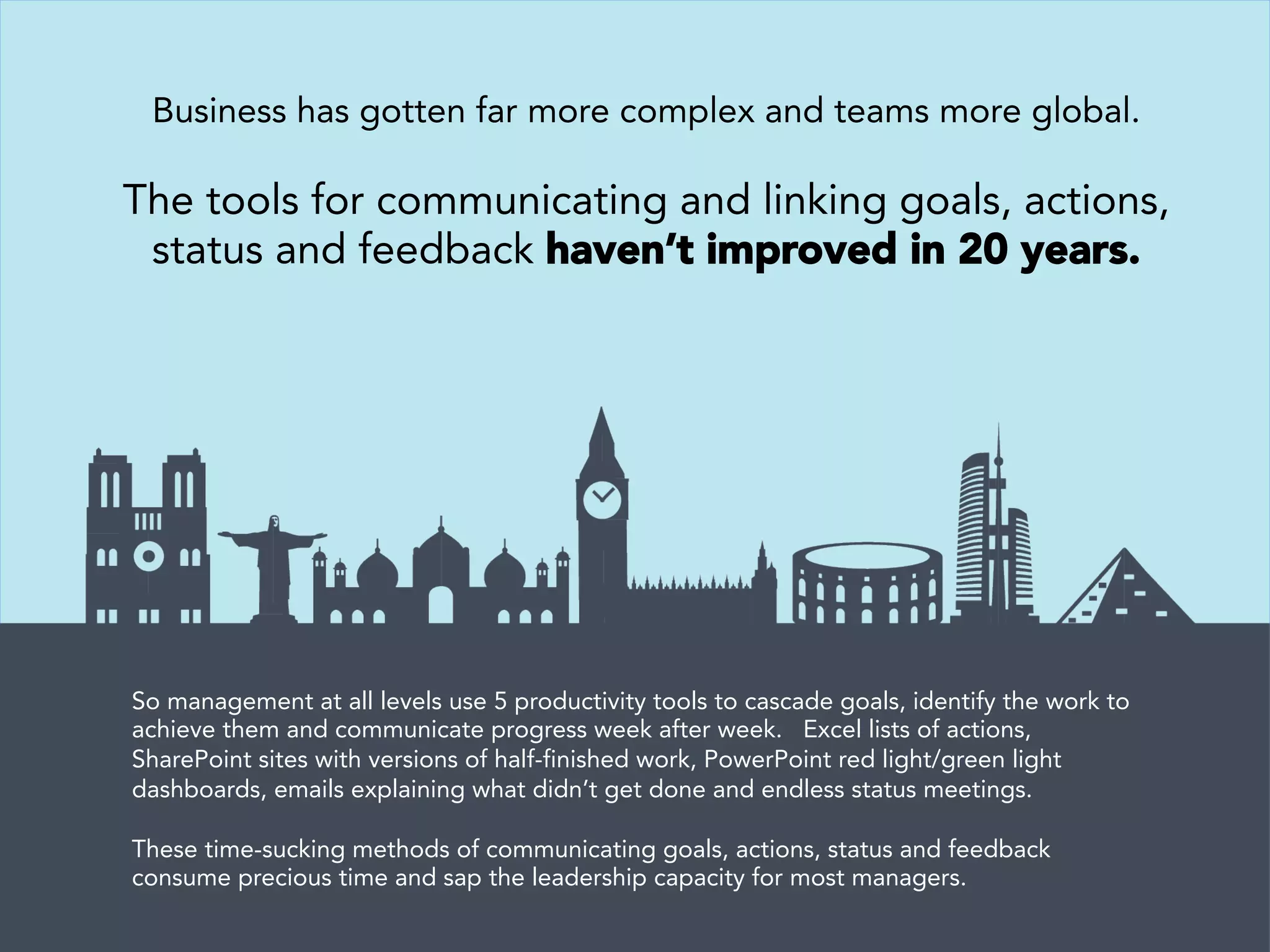
Business has gotten far more complex and teams more global.

The tools for communicating and linking goals, actions,
status and feedback haven’t improved in 20 years. 
So management at all levels use 5 productivity tools to cascade goals, identify the work to
achieve them and communicate progress week after week. Excel lists of actions,
SharePoint sites with versions of half-finished work, PowerPoint red light/green light
dashboards, emails explaining what didn’t get done and endless status meetings. 

These time-sucking methods of communicating goals, actions, status and feedback
consume precious time and sap the leadership capacity for most managers.


To improve engagement and execution,
managers need an efficiency breakthrough
before they can increase their leadership
capacity. 
Blaming the execution gap on managers or
suggesting it’s as simple as using their time wisely
isn’t helpful – they need the means to create more
time and capacity.
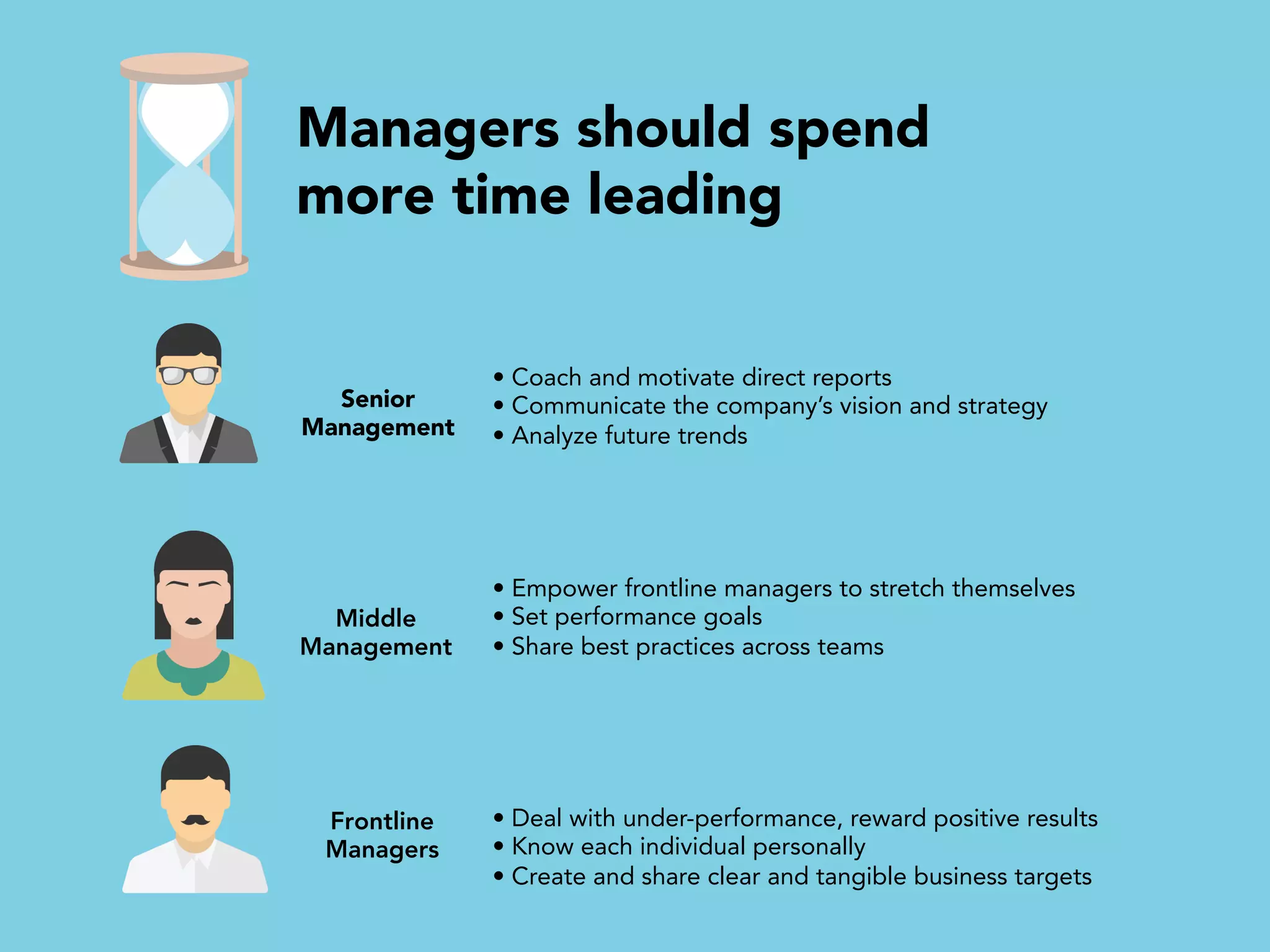
Managers should spend
more time leading
Senior
Management
Middle
Management
Frontline
Managers
• Coach and motivate direct reports
• Communicate the company’s vision and strategy
• Analyze future trends
• Empower frontline managers to stretch themselves
• Set performance goals
• Share best practices across teams
• Deal with under-performance, reward positive results
• Know each individual personally
• Create and share clear and tangible business targets
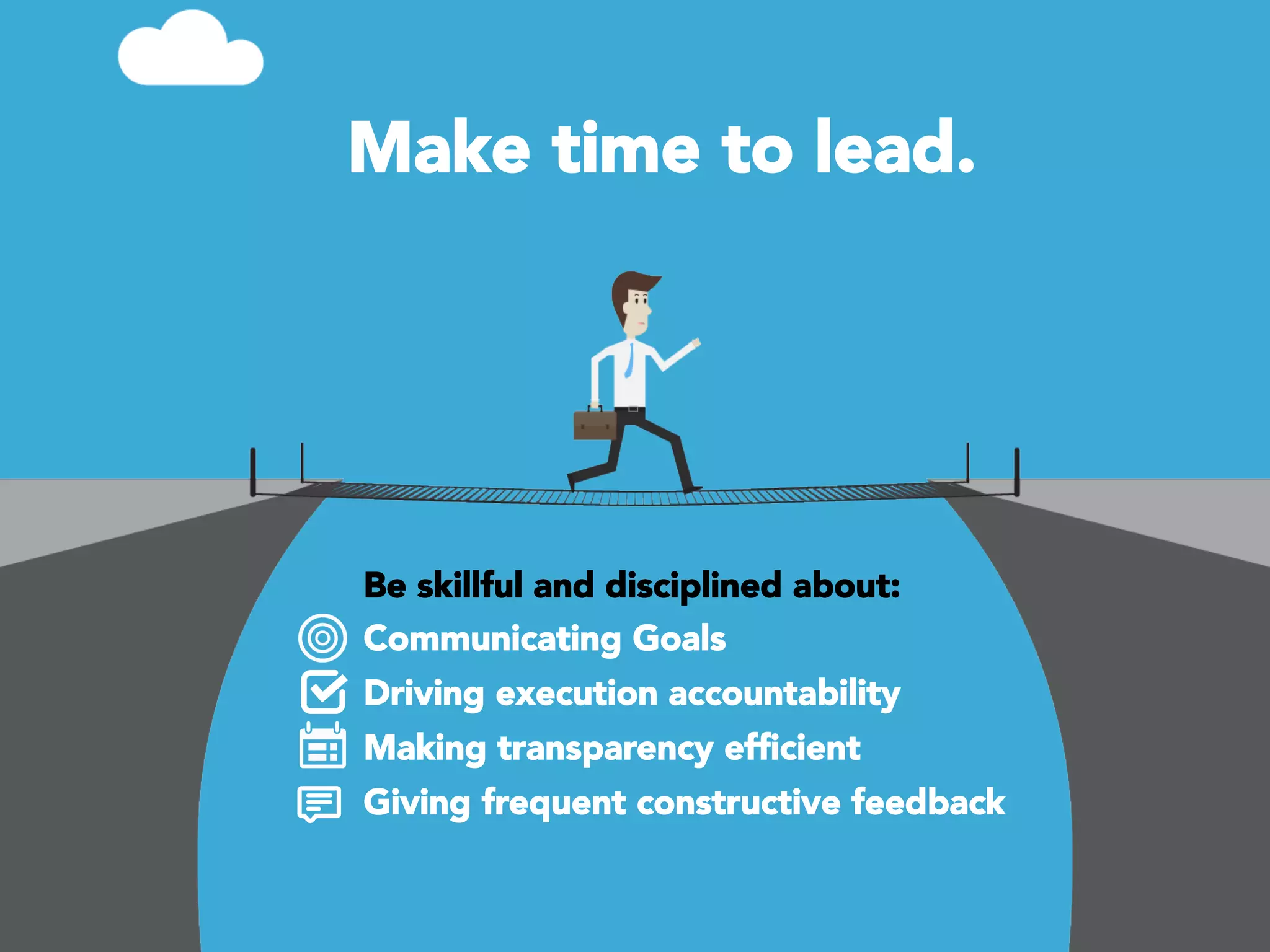
Make time to lead.

Be skillful and disciplined about:
Communicating Goals
Driving execution accountability
Making transparency efficient
Giving frequent constructive feedback
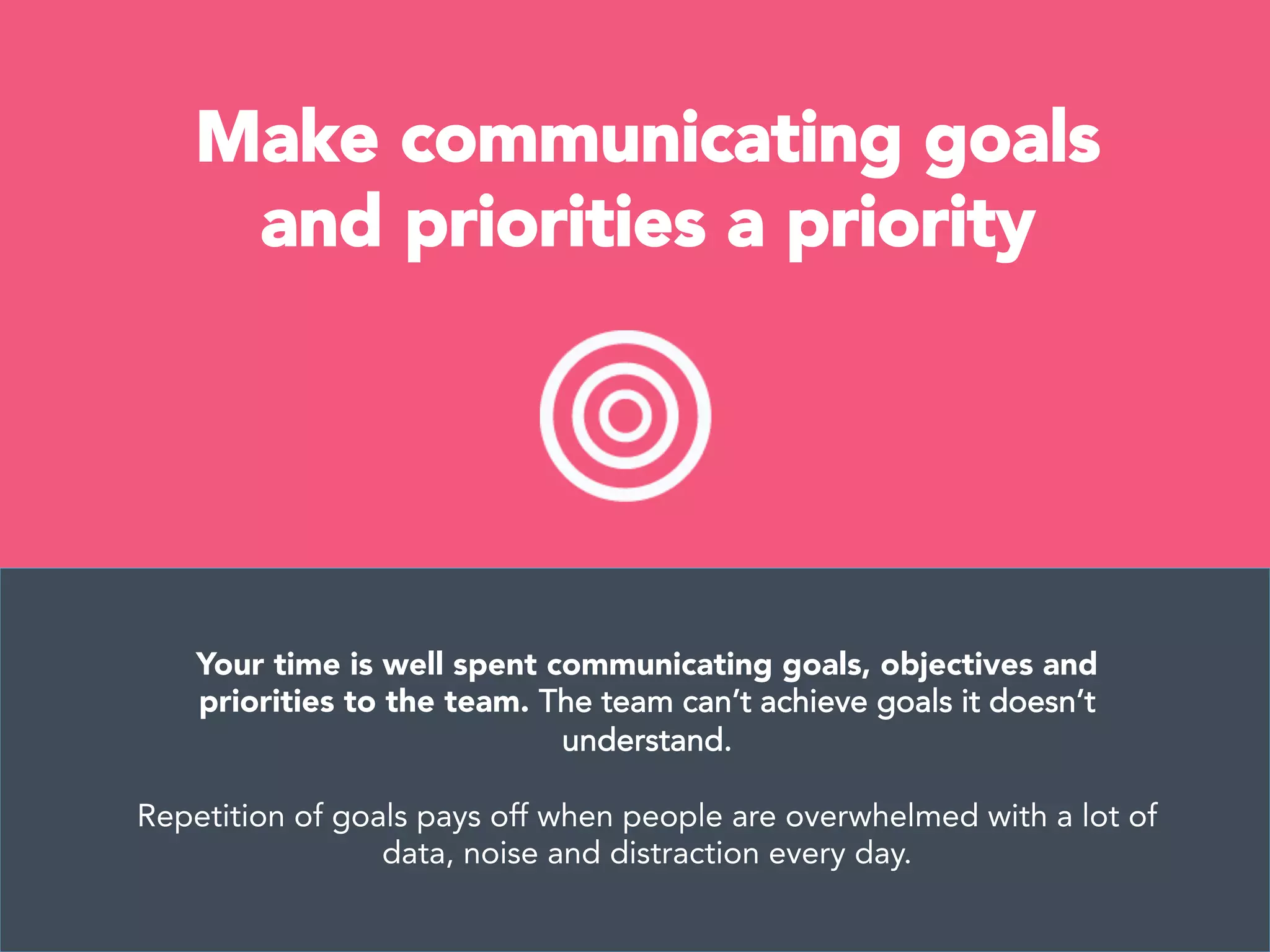
Make communicating goals
and priorities a priority
Your time is well spent communicating goals, objectives and
priorities to the team. The team can’t achieve goals it doesn’t
understand.

Repetition of goals pays off when people are overwhelmed with a lot of
data, noise and distraction every day.


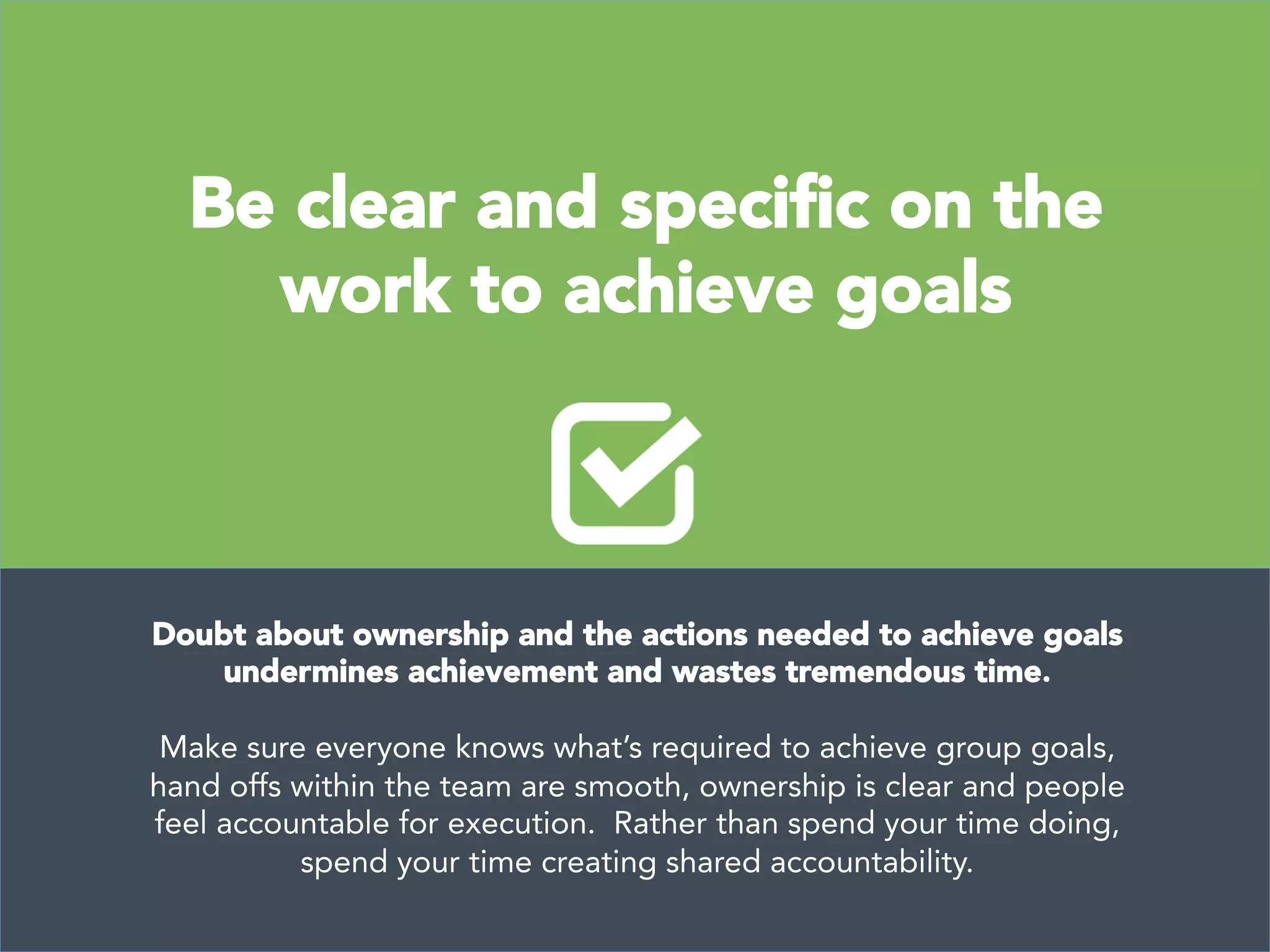
Be clear and specific on the
work to achieve goals
Doubt about ownership and the actions needed to achieve goals
undermines achievement and wastes tremendous time. 

Make sure everyone knows what’s required to achieve group goals,
hand offs within the team are smooth, ownership is clear and people
feel accountable for execution. Rather than spend your time doing,
spend your time creating shared accountability.
Create efficient transparency
Track a consistent list of the actions needed for goal achievement and
current status to ensure people don’t waste time on immaterial work
and you have transparency on the progress of important work. 

Avoid reconstituting the actions list or status framework each week – it
makes facts harder to get or trust when they mutate every week. Set an
interval to check status rather than doing it haphazardly throughout the day;
it will save you and your team time.
Give immediate and real 
feedback to the team
Be consistent in giving feedback to all your team members (not
just the super stars). Link the feedback to actions and goals to
improve both engagement and achievement. 

Both positive and negative feedback are essential to
engaging your team and achieving your execution goals – so
don’t short change this part of the management job.
19	
  
Want 30% more leadership capacity?
Get Workboard, a free app to
help managers and their teams:
Share goals and priorities
Coordinate and delegate work
Automate status reports and achieve
transparency
Enable consistent, engaging feedback
20	
  
The Zen of Achievement
www.workboard.com
Want more leadership tools
and tips? Find them here.

Make Time to Lead

  • 1.
    Make Time toLead Manage Your Time More Efficiently to Manage Your Team More Effectively
  • 2.
    There is atremendous engagement and execution gap in companies. of employees don’t understand the companies goals. of executives sustainably achieve those goals. of employees are actively engaged in their work Only % 13 % 60 Only 10 %
  • 3.
    Employees aligned withand engaged in company goals create value… Engaged employees drive innovation and the organization. They are the only people who create new customers. Disengaged employees sleepwalk through their day and undermine what their engaged coworkers accomplish. while their disengaged peers undermine that value.
  • 4.
        This costs companies 500 billion a year.
  • 5.
        Senior Management Middle Management Frontline Managers The ProblemLies with Management …And How They Spend Their Time Consistently achieve their goals only 10% of the time Can have the highest impact but are first to get blamed Direct face to the workforce but receive the least training
  • 6.
    Senior Management Middle Management Frontline Managers Managers don’t spendtheir time leading •  Monitors middle management initiatives •  Deals with administrative matters and e-mails •  Conducts meetings for operational improvements •  Assign multiple people to the same initiative •  Request frequent progress reports on initiatives •  Review justifications for decisions from below •  Produces data for reporting •  Seeks approval for decisions •  Completes forms and reports
  • 7.
    The bulk of leader’stime is consumed by low-impact tasks like getting facts and preparing and reviewing status reports.
  • 8.
    This leaves littletime for leadership activities that drive positive engagement and performance: ü  Setting strategy ü  Communicating goals ü  Empowering teams to execute ü  Coaching rising leaders ü  Creating learning environments
  • 9.
    Frontline managers 1. Are most likely to have full workloads other than managing 2.  Have primary role in sustaining goal alignment 3.  Are whom employees engage with the most 4.  Receive the least training of all roles 5.  Are least prepared to be great at the job of managing
  • 10.
    Middle managers 1. Have the highest potential impact on the bottom line 2.  Lack the authority or resources to execute for impact 3.  Are an easy target of blame from both above and below 4.  Are left out of leadership coaching
  • 11.
    Business has gottenfar more complex and teams more global. The tools for communicating and linking goals, actions, status and feedback haven’t improved in 20 years.  So management at all levels use 5 productivity tools to cascade goals, identify the work to achieve them and communicate progress week after week. Excel lists of actions, SharePoint sites with versions of half-finished work, PowerPoint red light/green light dashboards, emails explaining what didn’t get done and endless status meetings. These time-sucking methods of communicating goals, actions, status and feedback consume precious time and sap the leadership capacity for most managers.
  • 12.
        To improveengagement and execution, managers need an efficiency breakthrough before they can increase their leadership capacity. Blaming the execution gap on managers or suggesting it’s as simple as using their time wisely isn’t helpful – they need the means to create more time and capacity.
  • 13.
    Managers should spend moretime leading Senior Management Middle Management Frontline Managers • Coach and motivate direct reports • Communicate the company’s vision and strategy • Analyze future trends • Empower frontline managers to stretch themselves • Set performance goals • Share best practices across teams • Deal with under-performance, reward positive results • Know each individual personally • Create and share clear and tangible business targets
  • 14.
    Make time tolead. Be skillful and disciplined about: Communicating Goals Driving execution accountability Making transparency efficient Giving frequent constructive feedback
  • 15.
    Make communicating goals andpriorities a priority Your time is well spent communicating goals, objectives and priorities to the team. The team can’t achieve goals it doesn’t understand. Repetition of goals pays off when people are overwhelmed with a lot of data, noise and distraction every day.
  • 16.
        Be clearand specific on the work to achieve goals Doubt about ownership and the actions needed to achieve goals undermines achievement and wastes tremendous time. Make sure everyone knows what’s required to achieve group goals, hand offs within the team are smooth, ownership is clear and people feel accountable for execution. Rather than spend your time doing, spend your time creating shared accountability.
  • 17.
    Create efficient transparency Tracka consistent list of the actions needed for goal achievement and current status to ensure people don’t waste time on immaterial work and you have transparency on the progress of important work. Avoid reconstituting the actions list or status framework each week – it makes facts harder to get or trust when they mutate every week. Set an interval to check status rather than doing it haphazardly throughout the day; it will save you and your team time.
  • 18.
    Give immediate andreal feedback to the team Be consistent in giving feedback to all your team members (not just the super stars). Link the feedback to actions and goals to improve both engagement and achievement. Both positive and negative feedback are essential to engaging your team and achieving your execution goals – so don’t short change this part of the management job.
  • 19.
    19   Want 30%more leadership capacity? Get Workboard, a free app to help managers and their teams: Share goals and priorities Coordinate and delegate work Automate status reports and achieve transparency Enable consistent, engaging feedback
  • 20.
    20   The Zenof Achievement www.workboard.com Want more leadership tools and tips? Find them here.