Concept of agonists and antagonists in
receptor activation and inhibition and
significance in regulation of signaling.
BY – RAHUL KUMAR
M.Sc. LIFE SCIENCE
3RD SEMESTER
CUG/2014/1073
Objective:
 Ligand & its types
 Agonist & Antagonist
 Properties & Types of Agonist
 Properties & Types of Antagonist
 Significance in regulation of signaling
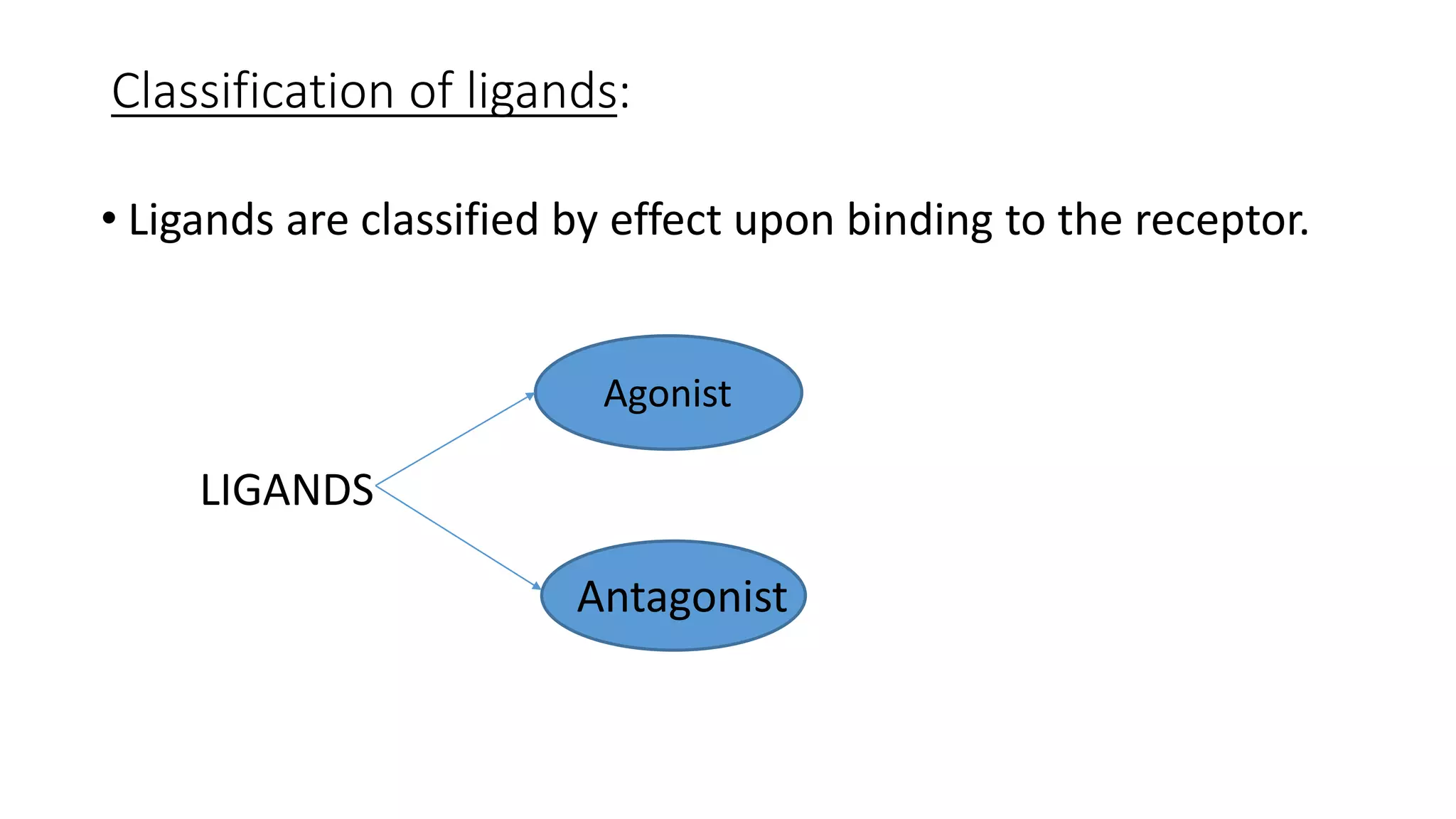
Classification of ligands:
• Ligands are classified by effect upon binding to the receptor.
LIGANDS
Agonist
Antagonist
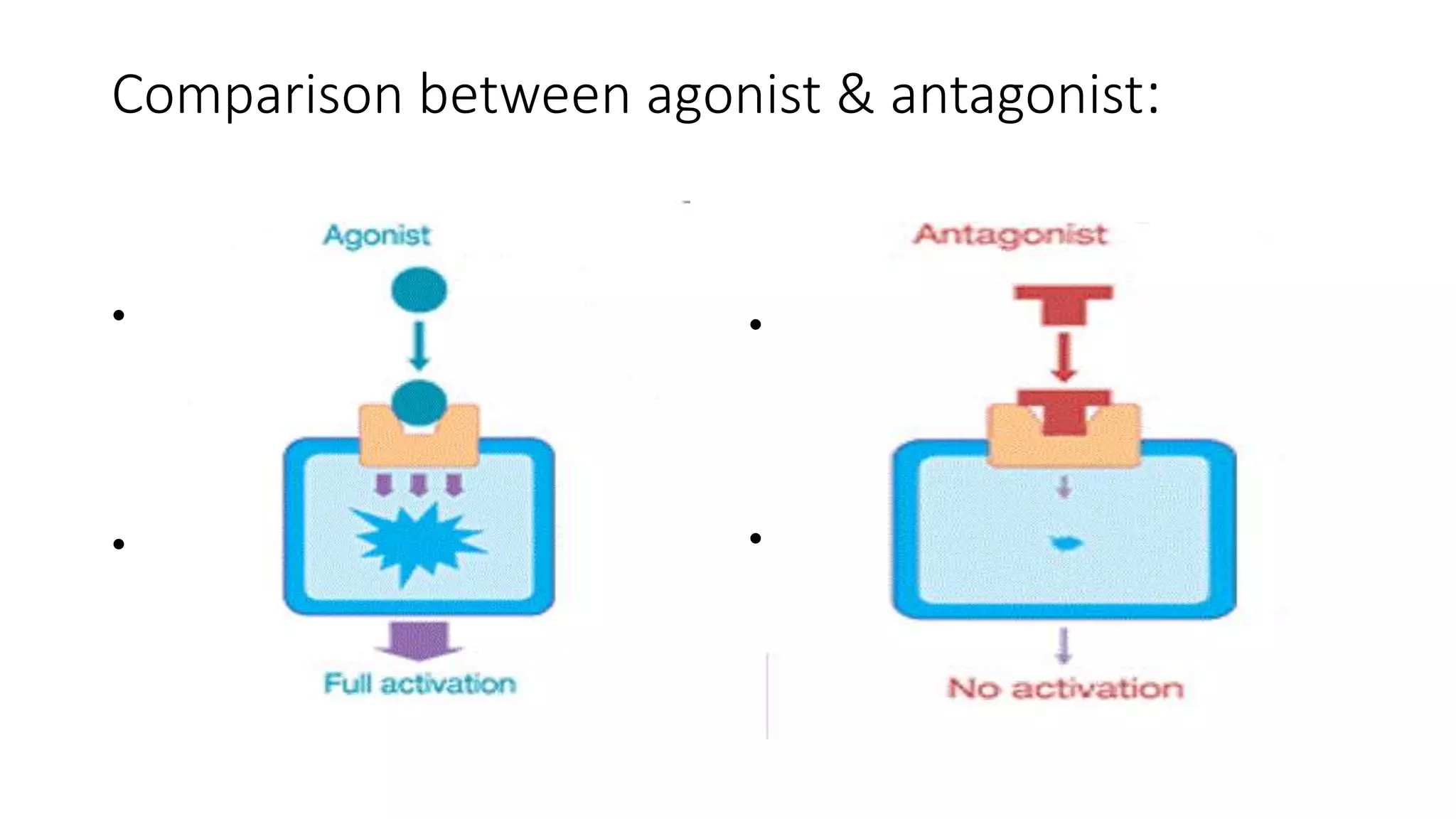
Comparison between agonist & antagonist:
Agonist
• Derived from Latin word –
contender.
• Aids in the enhancement of an
action.
Antagonist
• Derived from Latin & Greek
words – competitor or
opponent.
• Opposes the action of agonist
and block the reception.
Properties of agonist:
 Acute Signaling
 Desensitization
 Sequestration
 Resensitization
 Receptors can be activated either by endogenous or
exogenous , leads to change in the biological response.
 Types of agonist-
a) Full agonist
b) Partial agonist
c) Inverse agonist
Full agonist – The ligands that increase the activity of the receptors &
produce the maximal response .
Ex.- Morphine ,mimics the action of endorphins at
opioid receptors.
Partial agonist – These ligands partially increase the activity of the
receptors but do not produce the maximal
response like full agonist even when present in excess
amount.
Ex.- Buspirone , is an anxiolytic drugs , used to treat an
anxiety disorder.
Inverse agonist – The ligands which decrease the activity of
an active receptors to their inactive state.
Ex.- Flumazenil drugs acts as a inverse agonist for the
GABA receptor & produce anxiogenic effect.
Properties of Antagonist :
 Site selectivity.
 Structural conformation – mimics with the natural ligand.
 Reduces the response.
 Effect may be temporary or permanent.
Competitive
Types of antagonist-
Reversible
Irreversible
Non-competitive
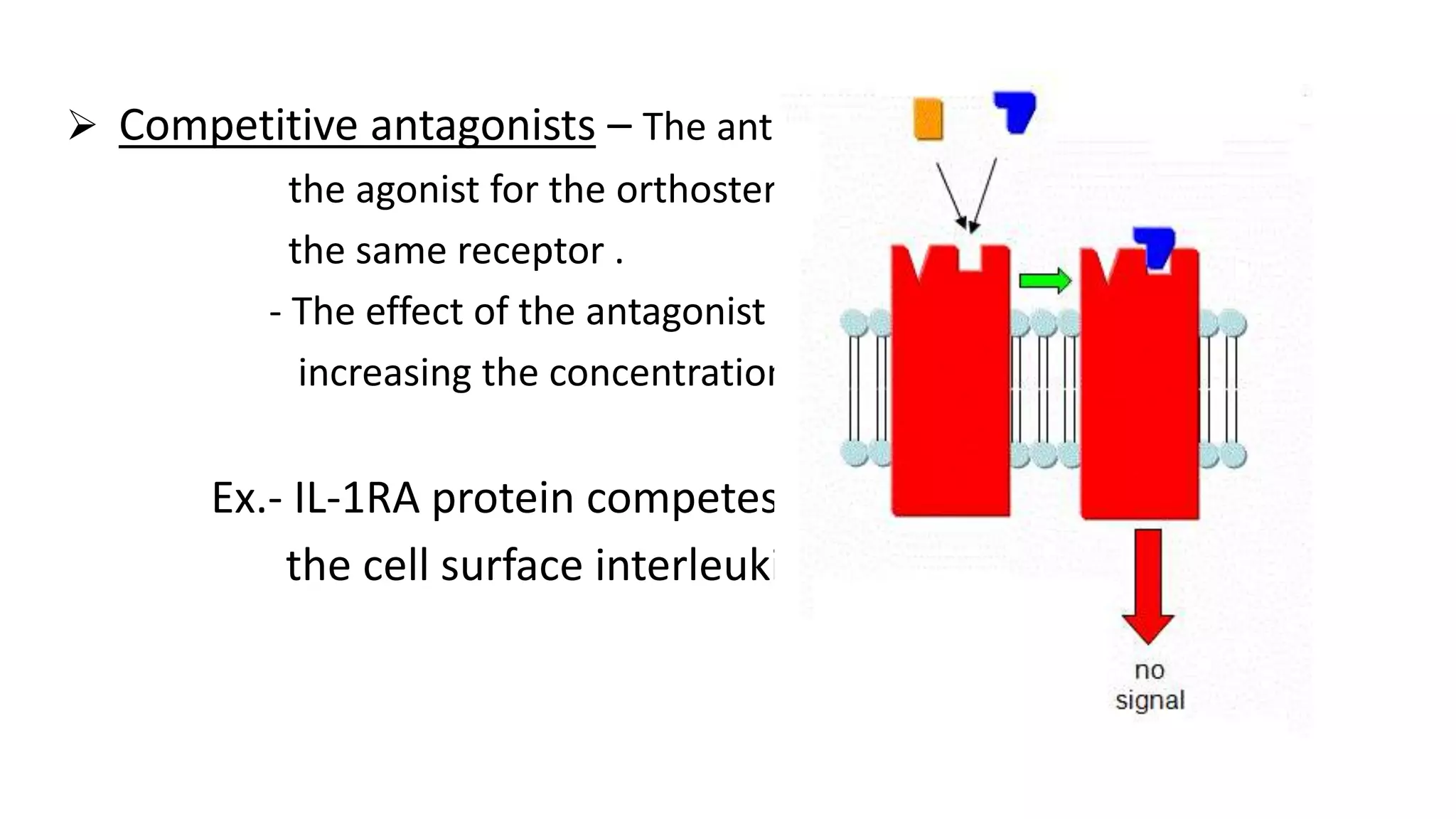
 Competitive antagonists – The antagonist competes with
the agonist for the orthosteric sites for binding to
the same receptor .
- The effect of the antagonist can be overcome by
increasing the concentration of the agonist.
Ex.- IL-1RA protein competes with IL-1 for binding to
the cell surface interleukin-1 receptor.
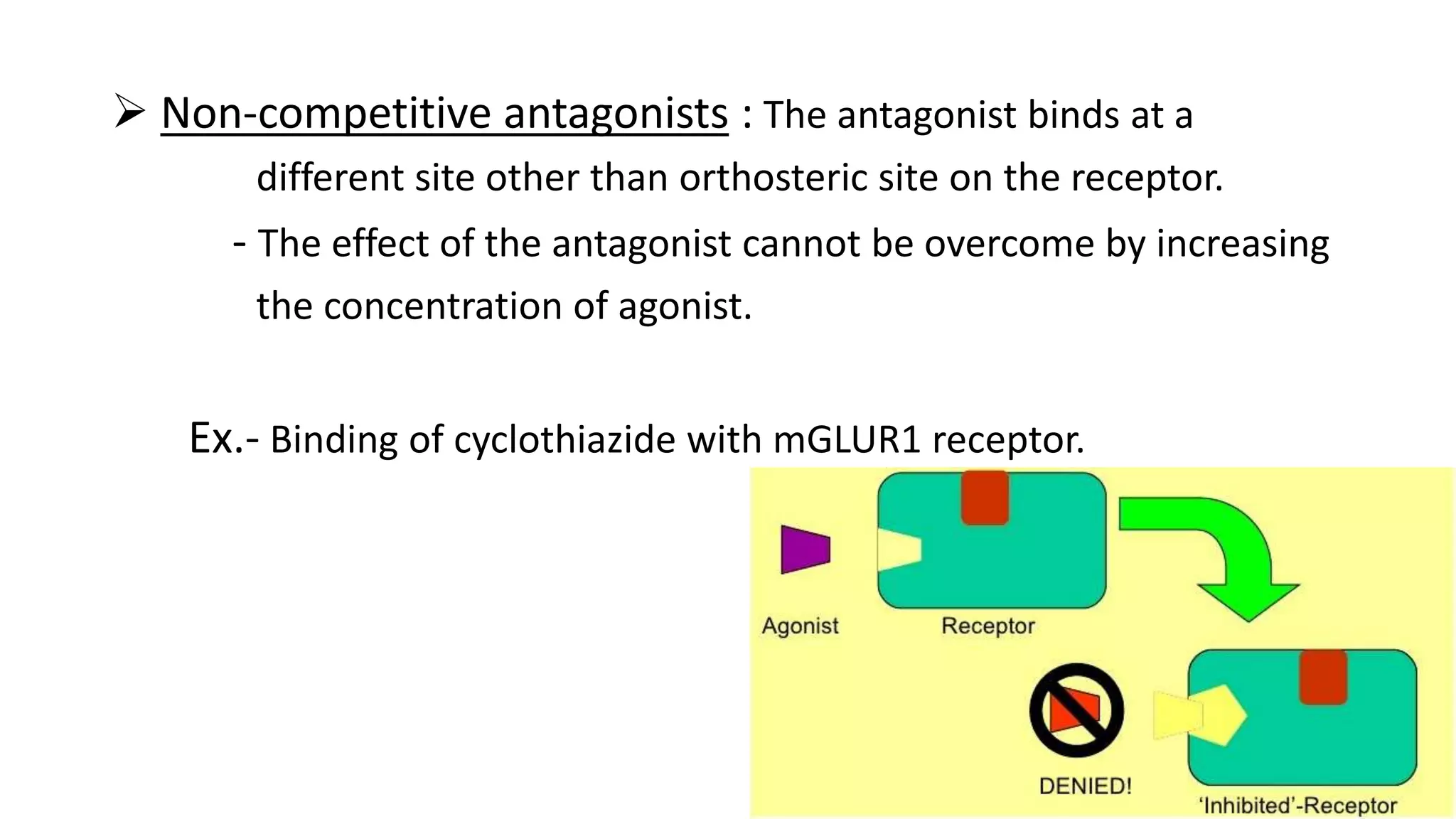
 Non-competitive antagonists : The antagonist binds at a
different site other than orthosteric site on the receptor.
- The effect of the antagonist cannot be overcome by increasing
the concentration of agonist.
Ex.- Binding of cyclothiazide with mGLUR1 receptor.
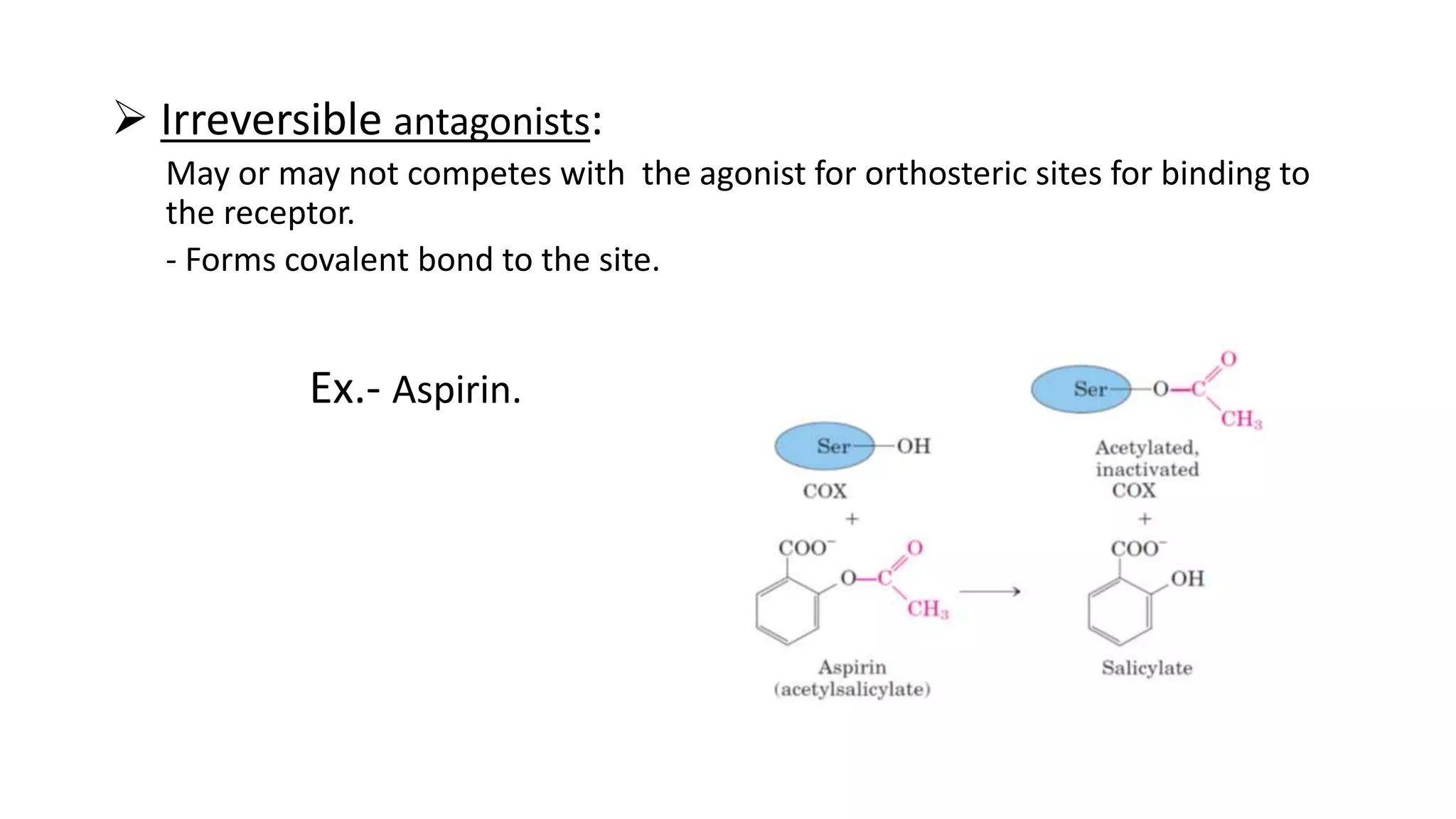
 Irreversible antagonists:
May or may not competes with the agonist for orthosteric sites for binding to
the receptor.
- Forms covalent bond to the site.
Ex.- Aspirin.
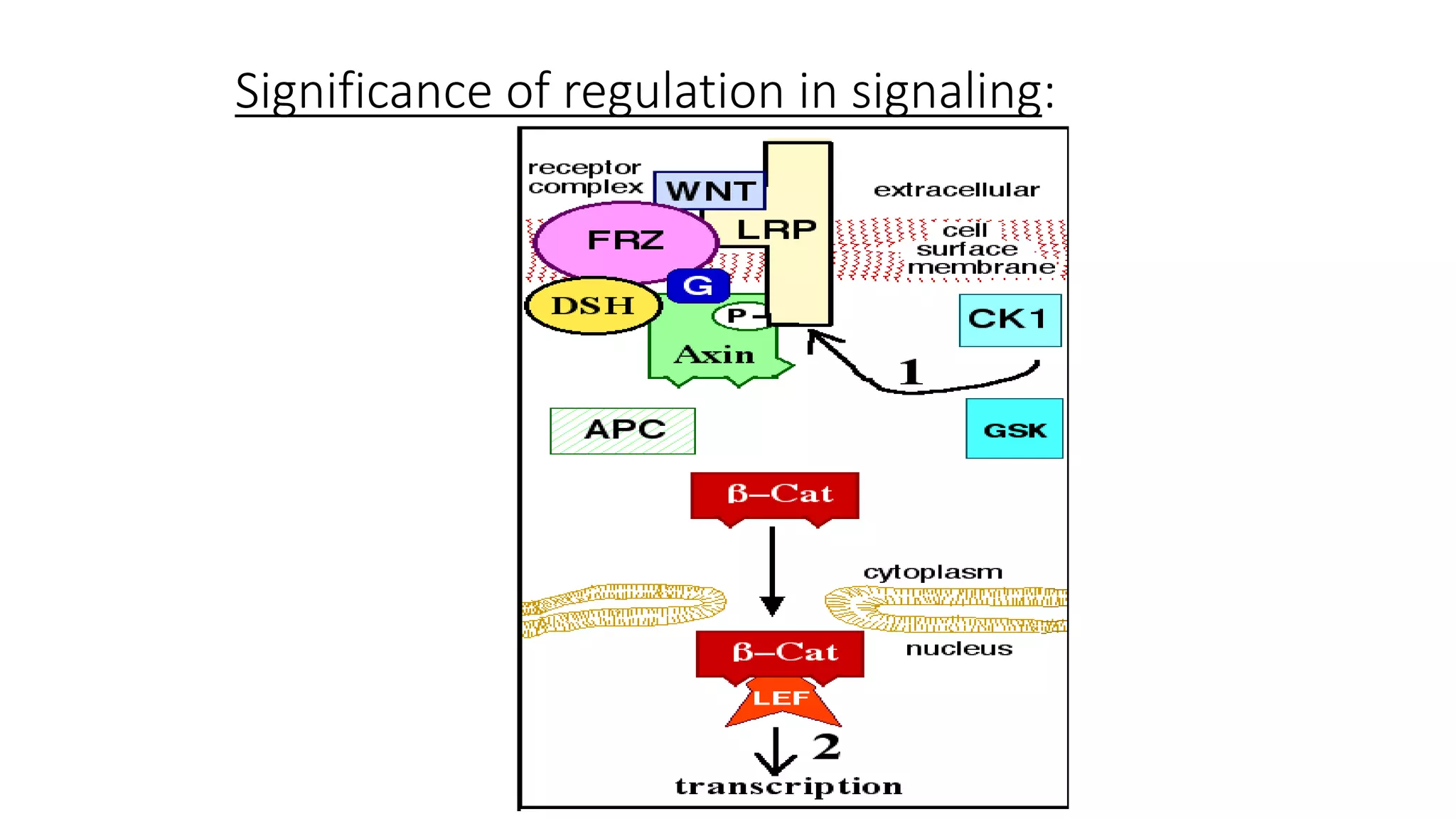
Significance of regulation in signaling:
REFERENCES -
The cell (5th Edition) Cooper & Hausman
Lehninger principle of biochemistry (5th Edition)
Principles & Techniques of Biochemistry & Molecular biology (7th Edition) by
Kleith Wilson & John Walker
Handbook of cell signaling Vol.1 (2nd Edition)
THANK YOU

Concepts of agonist and antagonist receptors

  • 1.
    Concept of agonistsand antagonists in receptor activation and inhibition and significance in regulation of signaling. BY – RAHUL KUMAR M.Sc. LIFE SCIENCE 3RD SEMESTER CUG/2014/1073
  • 2.
    Objective:  Ligand &its types  Agonist & Antagonist  Properties & Types of Agonist  Properties & Types of Antagonist  Significance in regulation of signaling
  • 3.
    Classification of ligands: •Ligands are classified by effect upon binding to the receptor. LIGANDS Agonist Antagonist
  • 4.
    Comparison between agonist& antagonist: Agonist • Derived from Latin word – contender. • Aids in the enhancement of an action. Antagonist • Derived from Latin & Greek words – competitor or opponent. • Opposes the action of agonist and block the reception.
  • 5.
    Properties of agonist: Acute Signaling  Desensitization  Sequestration  Resensitization
  • 6.
     Receptors canbe activated either by endogenous or exogenous , leads to change in the biological response.  Types of agonist- a) Full agonist b) Partial agonist c) Inverse agonist
  • 7.
    Full agonist –The ligands that increase the activity of the receptors & produce the maximal response . Ex.- Morphine ,mimics the action of endorphins at opioid receptors. Partial agonist – These ligands partially increase the activity of the receptors but do not produce the maximal response like full agonist even when present in excess amount. Ex.- Buspirone , is an anxiolytic drugs , used to treat an anxiety disorder.
  • 8.
    Inverse agonist –The ligands which decrease the activity of an active receptors to their inactive state. Ex.- Flumazenil drugs acts as a inverse agonist for the GABA receptor & produce anxiogenic effect.
  • 9.
    Properties of Antagonist:  Site selectivity.  Structural conformation – mimics with the natural ligand.  Reduces the response.  Effect may be temporary or permanent.
  • 10.
  • 11.
     Competitive antagonists– The antagonist competes with the agonist for the orthosteric sites for binding to the same receptor . - The effect of the antagonist can be overcome by increasing the concentration of the agonist. Ex.- IL-1RA protein competes with IL-1 for binding to the cell surface interleukin-1 receptor.
  • 12.
     Non-competitive antagonists: The antagonist binds at a different site other than orthosteric site on the receptor. - The effect of the antagonist cannot be overcome by increasing the concentration of agonist. Ex.- Binding of cyclothiazide with mGLUR1 receptor.
  • 13.
     Irreversible antagonists: Mayor may not competes with the agonist for orthosteric sites for binding to the receptor. - Forms covalent bond to the site. Ex.- Aspirin.
  • 14.
  • 16.
    REFERENCES - The cell(5th Edition) Cooper & Hausman Lehninger principle of biochemistry (5th Edition) Principles & Techniques of Biochemistry & Molecular biology (7th Edition) by Kleith Wilson & John Walker Handbook of cell signaling Vol.1 (2nd Edition)
  • 17.