Corporate communication 
PRESENTATION BY, 
K . P r a b a k a r a n
Business communication 
 Business communication is the process of communicating 
for the purpose of business transactions for ensuring mutual 
understanding and business benefit.
Business communication is 
transaction 
 Most of the business 
communication is 
transactional. 
 It involves a give and take 
relationship between the 
sender and the receiver in 
order to establish a 
common understanding.
Important of communication 
 In the business world, good communication is important for the 
daily operation of the organization. 
 If we don’t have good communication it will affect sales and profit 
of company. 
 Good communication is an essential tool in achieving productivity 
and maintaining strong working relationships at all levels of an 
organization.
Internal communication 
 When people within the organization communicate with each 
other,it is internal communication. 
 Internal communication is face-to-face communication. 
 Most of the internal communication is inside of the organization. 
 Internal communications is mostly between managers and 
employees, and communications between peers.
External communication 
 External communication is any communication between 
a business and the outside world. 
 Public relations statements, press releases, marketing 
materials, commercials, and articles and books written by 
the business are all examples of external communication.
Benefits of business communication 
 Build customer relationship. 
 Motivate Team. 
 Strengthen partnership.
Component of business 
communication
Source/Sender 
 A source or sender is one of the basic concepts 
of communication process. 
 Sources are objects which encode message data and 
transmit the information to the receivers.
Encoding 
 The first step the sender is 
faced with involves the 
encoding process. 
 Encoding is used to convey 
meaning of message. 
 The sender must begin 
encoding, which means 
translating information into 
a message in the form of 
symbols that represent 
ideas or concepts.
Channel 
 The sender's decision to utilize either an oral or a written 
channel for communicating process. 
 The medium by which the communications travels from 
sender to receiver. 
 Chanel means transmitting the message 
(paper,speaker,etc ).
Decoding 
 Decoding stage is conducted by the receiver. 
 It’s main function is convert the original message form from 
encoder.
Receiver 
 Receiver is nothing but receive the message or data from sender.
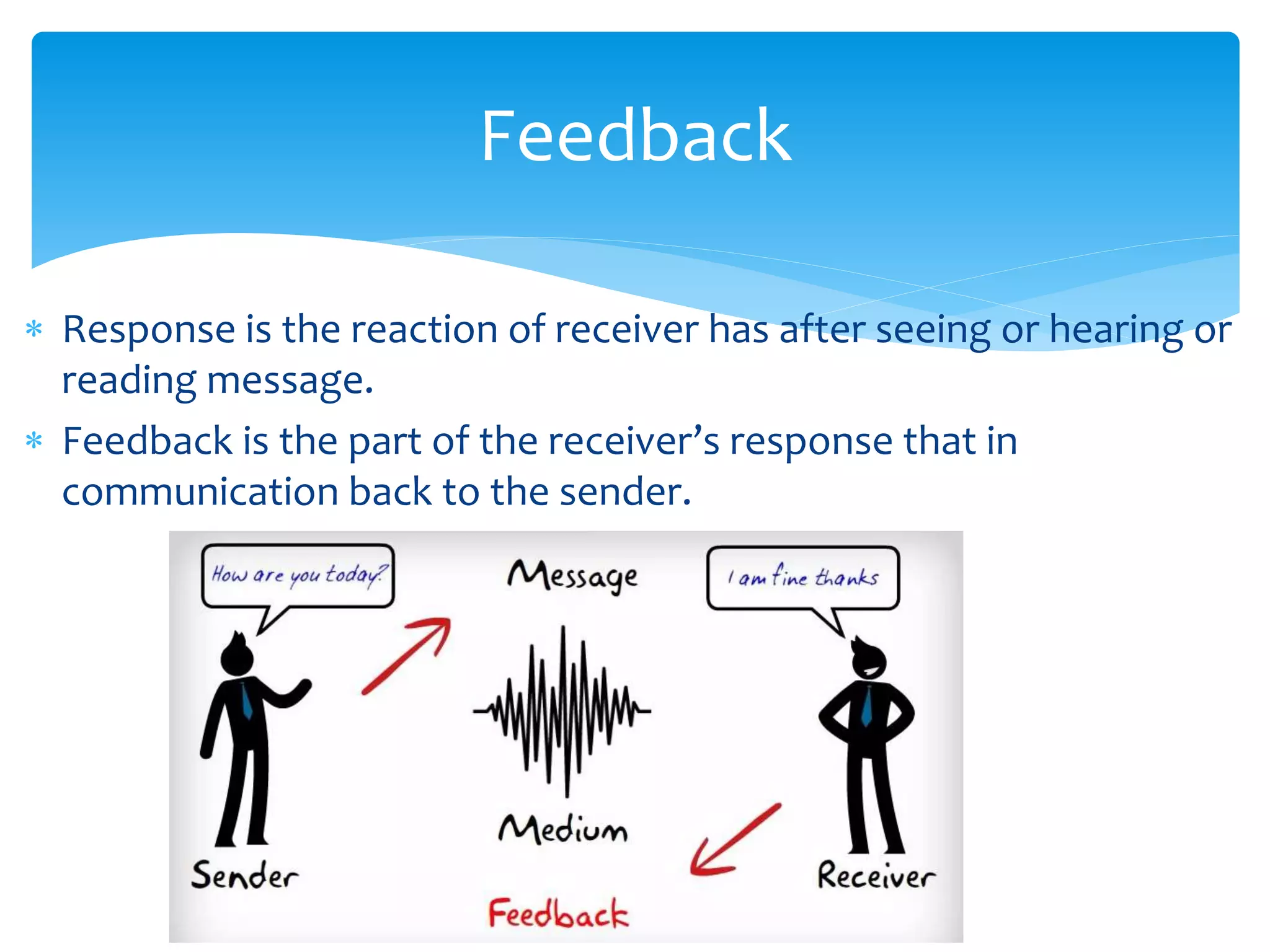
Feedback 
 Response is the reaction of receiver has after seeing or hearing or 
reading message. 
 Feedback is the part of the receiver’s response that in 
communication back to the sender.
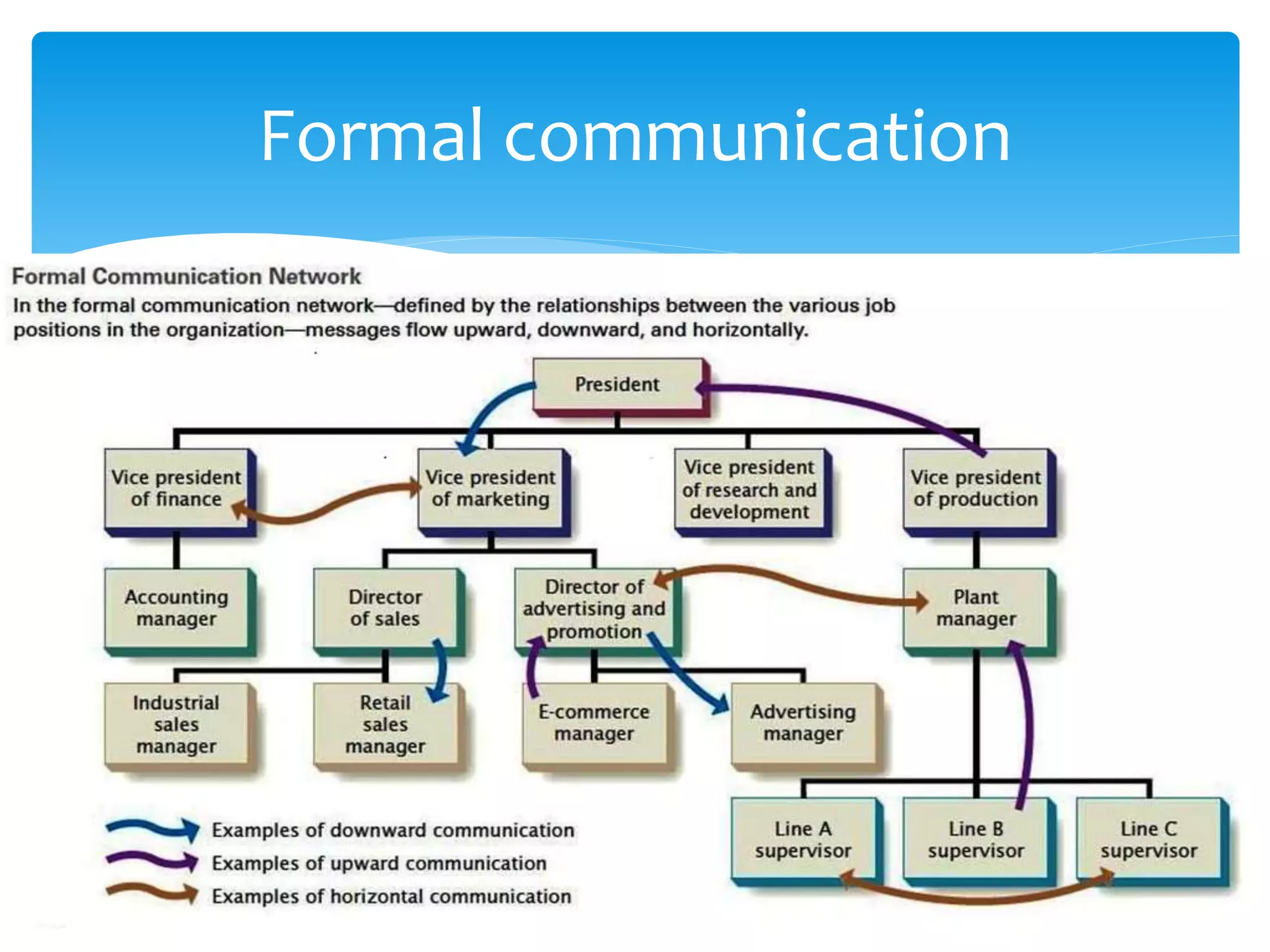
Formal communication 
 MEANING: It is in the form of official messages or news that flow 
through recognized channels or routes formally laid by the 
organization 
 This communication may take place between a superior and 
subordinate, a subordinate and superior or among employees at 
same level or departmental managers. 
 Type Of Formal Communication 
* Vertical communication 
Downward 
Upward 
* Horizontal communication
Formal communication
Downward communication 
 The communication by top hierarchy with their subordinates is 
called downward communication. 
 This communication includes orders, rules, information, policies, 
instructions.
Upward communication 
 This is quite the reverse of the downward communication. 
 This flows from the subordinates to the superiors. 
 The subject-matter of this communication includes suggestions, 
reactions, reports, complaints.
Horizontal 
 Horizontal communication takes place when two individuals of the 
same level exchange information. 
 The subject-matter of horizontal communication is information, 
requests, suggestions, mutual problems and coordination-related 
information.
Formal communication network 
 Single chain 
 Wheel 
 Circular 
 Free flow 
 Inverted v
Single chain 
 Exists between a superior 
and his subordinates 
 Communication flows 
from every superior to his 
subordinates through 
single chain. 
A 
B 
C
Wheel 
 All subordinates 
communicate through one 
superior who acts as a hub 
to the wheel. 
 The subordinates are not 
allowed to talk among 
themselves 
A1 
C 
A2 
A3 
A4
circular 
 Communication moves in a 
circle 
 Each person can 
communicate with its 
adjoining persons 
 Communication flow is 
slow 
A1 
A2 
A3 
A4
Free flow 
 This form of communication also takes place among the different 
members of the group. 
 Its special feature is that every member of the group can talk to all 
the other people in the group. 
 Communication flow is fast.
Inverted V 
 In this form of 
communication, a 
subordinate is permitted 
to communicate with the 
boss of his boss. 
 In this form of 
communication the 
messages move at a rapid 
speed.
THANK YOU

Business communication

  • 1.
    Corporate communication PRESENTATIONBY, K . P r a b a k a r a n
  • 2.
    Business communication Business communication is the process of communicating for the purpose of business transactions for ensuring mutual understanding and business benefit.
  • 3.
    Business communication is transaction  Most of the business communication is transactional.  It involves a give and take relationship between the sender and the receiver in order to establish a common understanding.
  • 4.
    Important of communication  In the business world, good communication is important for the daily operation of the organization.  If we don’t have good communication it will affect sales and profit of company.  Good communication is an essential tool in achieving productivity and maintaining strong working relationships at all levels of an organization.
  • 5.
    Internal communication When people within the organization communicate with each other,it is internal communication.  Internal communication is face-to-face communication.  Most of the internal communication is inside of the organization.  Internal communications is mostly between managers and employees, and communications between peers.
  • 6.
    External communication External communication is any communication between a business and the outside world.  Public relations statements, press releases, marketing materials, commercials, and articles and books written by the business are all examples of external communication.
  • 7.
    Benefits of businesscommunication  Build customer relationship.  Motivate Team.  Strengthen partnership.
  • 8.
    Component of business communication
  • 9.
    Source/Sender  Asource or sender is one of the basic concepts of communication process.  Sources are objects which encode message data and transmit the information to the receivers.
  • 10.
    Encoding  Thefirst step the sender is faced with involves the encoding process.  Encoding is used to convey meaning of message.  The sender must begin encoding, which means translating information into a message in the form of symbols that represent ideas or concepts.
  • 11.
    Channel  Thesender's decision to utilize either an oral or a written channel for communicating process.  The medium by which the communications travels from sender to receiver.  Chanel means transmitting the message (paper,speaker,etc ).
  • 12.
    Decoding  Decodingstage is conducted by the receiver.  It’s main function is convert the original message form from encoder.
  • 13.
    Receiver  Receiveris nothing but receive the message or data from sender.
  • 14.
    Feedback  Responseis the reaction of receiver has after seeing or hearing or reading message.  Feedback is the part of the receiver’s response that in communication back to the sender.
  • 15.
    Formal communication MEANING: It is in the form of official messages or news that flow through recognized channels or routes formally laid by the organization  This communication may take place between a superior and subordinate, a subordinate and superior or among employees at same level or departmental managers.  Type Of Formal Communication * Vertical communication Downward Upward * Horizontal communication
  • 16.
  • 17.
    Downward communication The communication by top hierarchy with their subordinates is called downward communication.  This communication includes orders, rules, information, policies, instructions.
  • 18.
    Upward communication This is quite the reverse of the downward communication.  This flows from the subordinates to the superiors.  The subject-matter of this communication includes suggestions, reactions, reports, complaints.
  • 19.
    Horizontal  Horizontalcommunication takes place when two individuals of the same level exchange information.  The subject-matter of horizontal communication is information, requests, suggestions, mutual problems and coordination-related information.
  • 20.
    Formal communication network  Single chain  Wheel  Circular  Free flow  Inverted v
  • 21.
    Single chain Exists between a superior and his subordinates  Communication flows from every superior to his subordinates through single chain. A B C
  • 22.
    Wheel  Allsubordinates communicate through one superior who acts as a hub to the wheel.  The subordinates are not allowed to talk among themselves A1 C A2 A3 A4
  • 23.
    circular  Communicationmoves in a circle  Each person can communicate with its adjoining persons  Communication flow is slow A1 A2 A3 A4
  • 24.
    Free flow This form of communication also takes place among the different members of the group.  Its special feature is that every member of the group can talk to all the other people in the group.  Communication flow is fast.
  • 25.
    Inverted V In this form of communication, a subordinate is permitted to communicate with the boss of his boss.  In this form of communication the messages move at a rapid speed.
  • 26.