 Mechanical engineering designs generally
include off-the-shelf components and
fabricated parts.
 Knowing the strengths and limitations of the
fabrication techniques makes for higher
quality and more cost competitive designs.
1. Simplicity
2. Standard Materials and Components
3. Standardized Design of the Product
4. Liberal Tolerances
5. Use Materials that are Easy to Process
6. Teamwork with Manufacturing Personnel
7. Avoidance of Secondary Operations
8. Design to Expected Level of Production
9. Utilize Special Process Characteristics
10. Avoid Process Restrictiveness
 Description: minimize the number of parts,
intricate shapes, and manufacturing
operations
 Motivation: generally provides reduced cost,
improved reliability, easier servicing, and
improved robustness
 Example: Braun Lift
 Description: Use standard off-the-shelf parts
and widely available materials
 Motivation: eases purchasing, simplifies
inventory management, and avoids tooling
investments
 Example: Screws
 Description: For similar products, specify the
same materials, parts, and subassemblies as
much as possible.
 Motivation: provides economies of scale,
simplifies operations, and simplifies
inventory management
 Example: Braun Lift
 Description: make tolerances as forgiving as
possible
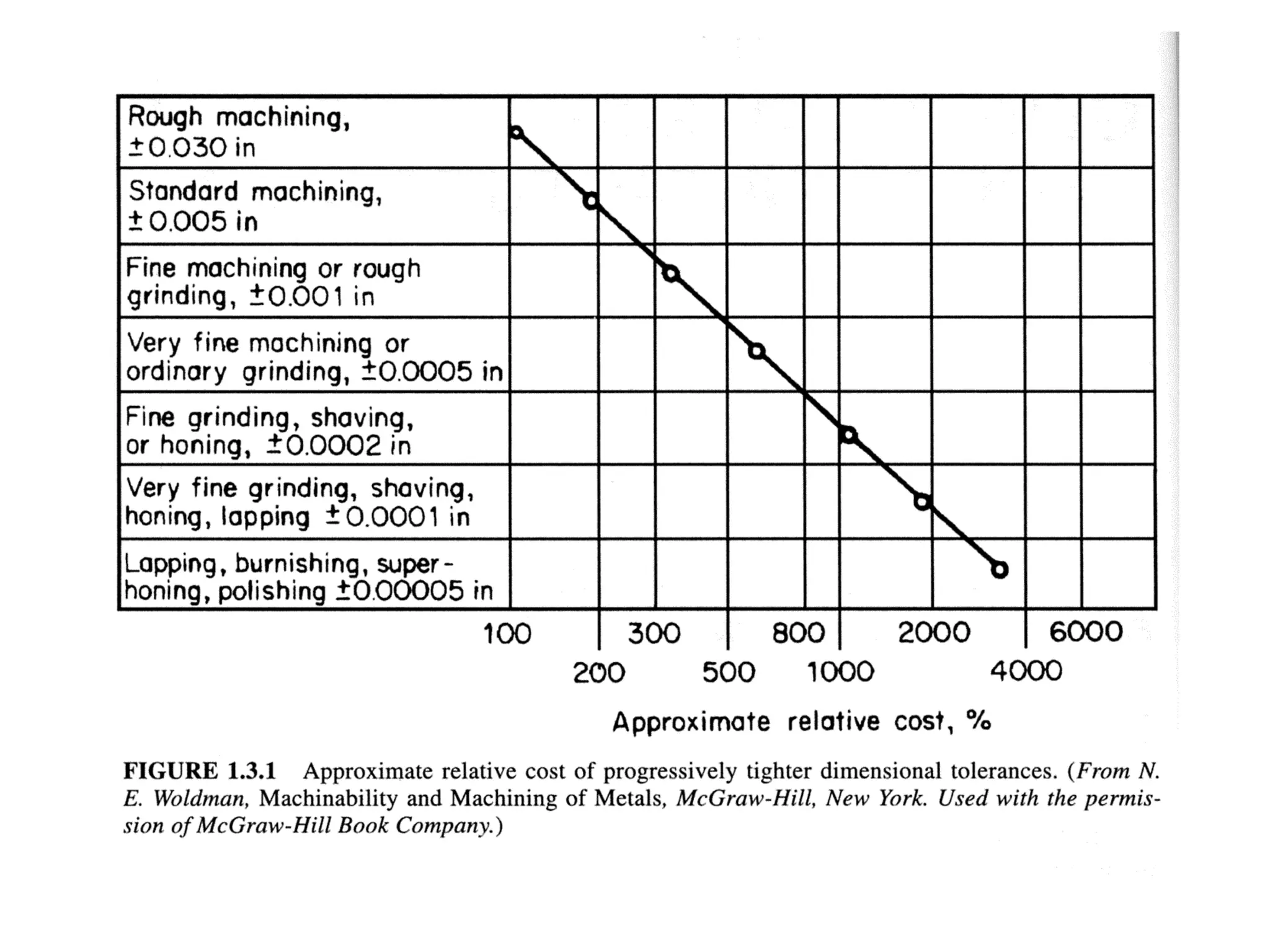
 Motivation: tight tolerances are expensive (in
a non-linear fashion)
(Fig in the next slide)
 Description: take advantage of materials
that have been developed for easy
processibility
 Motivation: while material may cost more, it
will often provide lower overall cost
 Example: “Free-Machining” Grades, Many
polymer grades are tuned to a process
 Description: collaborate with the people who
will be producing your product (the earlier the
better)
 Motivation: they provide a unique body of
knowledge and useful insights
 Example:
 Description: minimize the need for secondary
operations
 Motivation: secondary operations (e.g.
deburring, inspection, painting, and heat
treating) can be as expensive as the primary
manufacturing operation
 Example: Pre-painted steel, investment
casting, MIM in firearms
 Description: understand and take advantage
of the special capabilities of various
manufacturing processes
 Motivation: can often eliminate
manufacturing operations and reduce the
number of parts
 Example: injection molding snap fits and
living hinges
 Description: on part drawings, specify only
the final characteristics needed; do not
specify the process to be used
 Motivation: potential cost savings
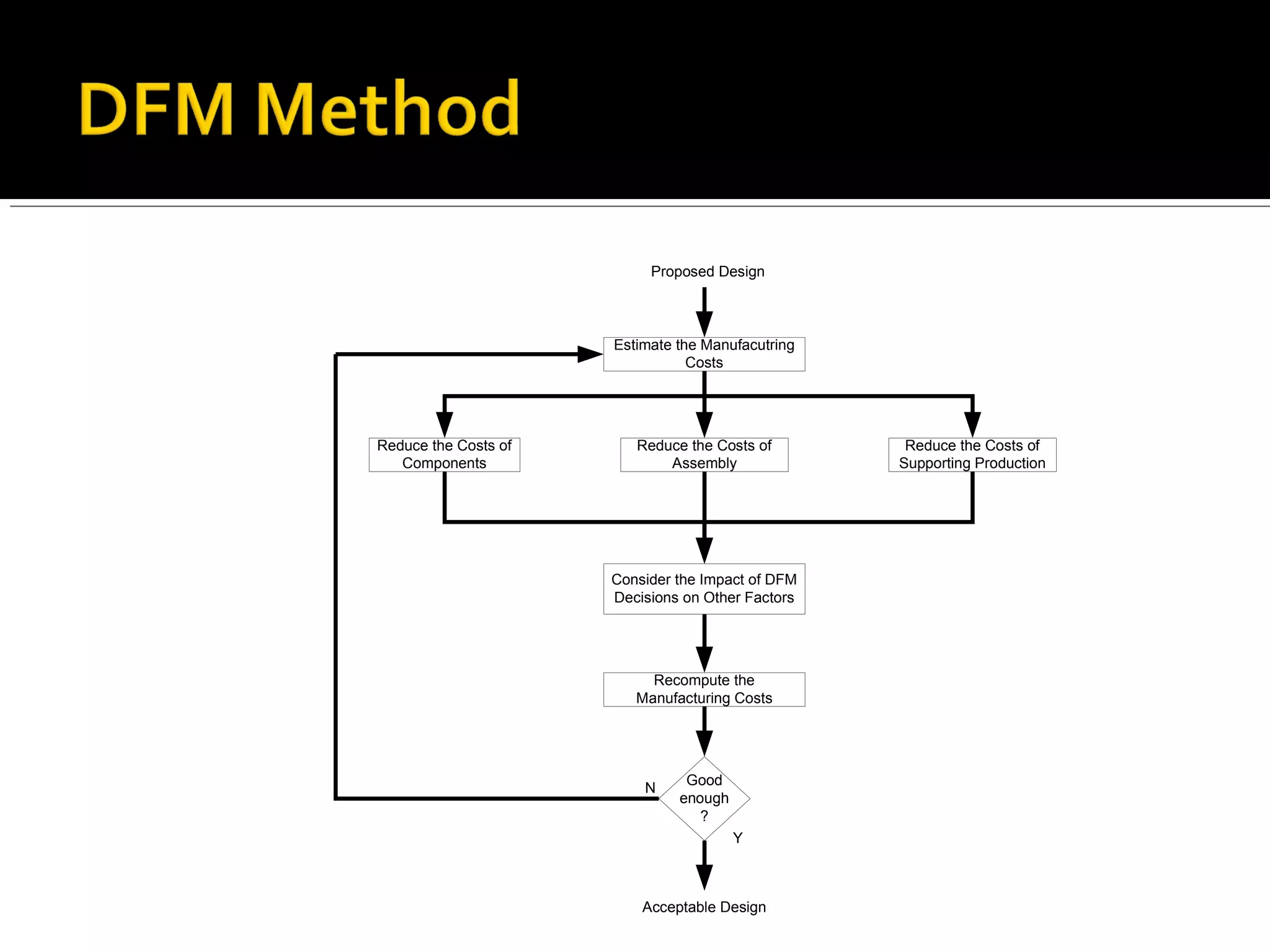
Estimate the Manufacutring
Costs
Consider the Impact of DFM
Decisions on Other Factors
Recompute the
Manufacturing Costs
Reduce the Costs of
Supporting Production
Reduce the Costs of
Assembly
Reduce the Costs of
Components
Good
enough
?
N
Y
Acceptable Design
Proposed Design
 Estimate the manufacturing costs.
 Reduce the costs of components.
 Reduce the costs of assembly.
 Reduce the costs of supporting production.
 Consider the impact of DFM decisions on
other factors.
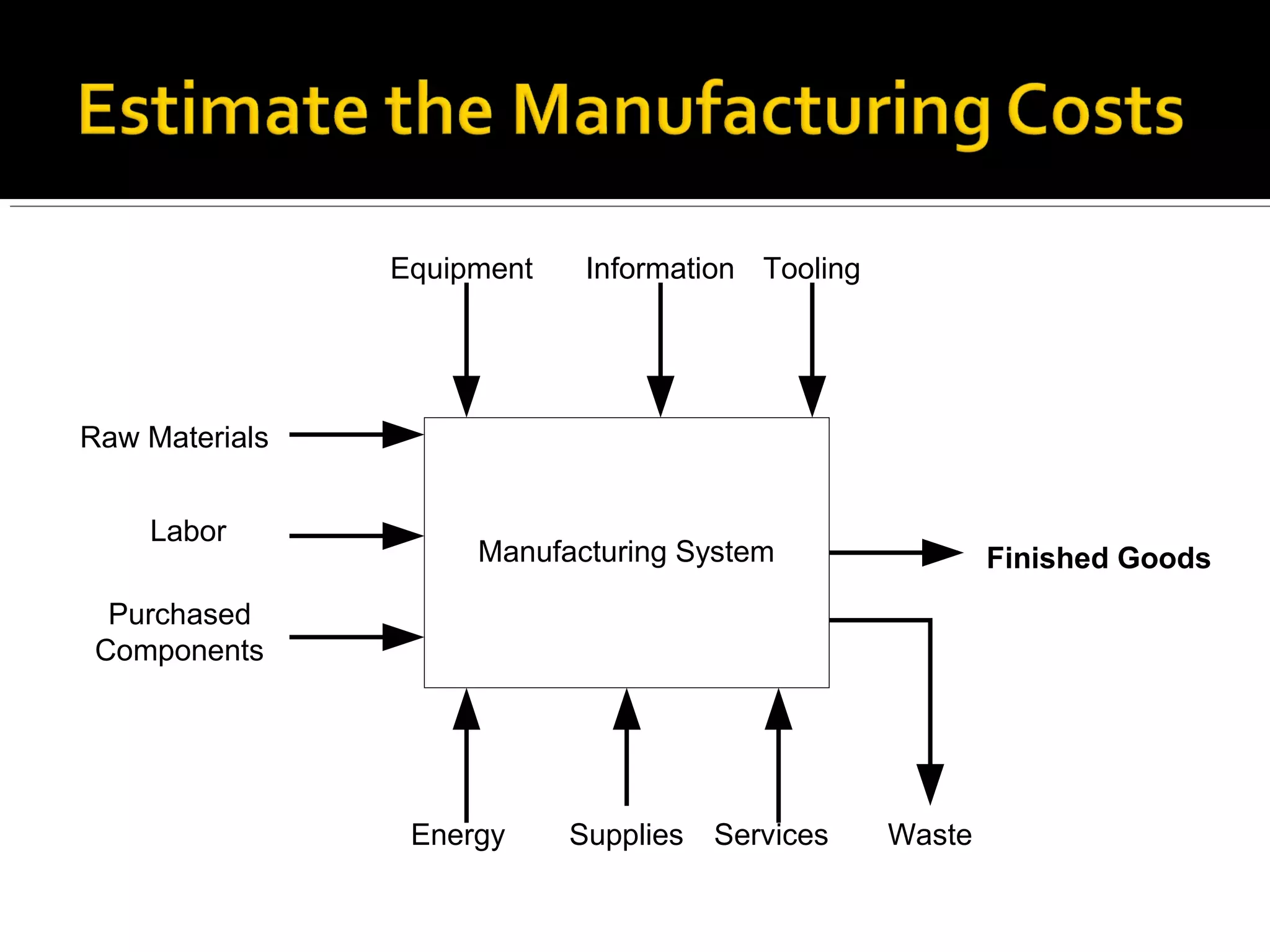
Finished GoodsManufacturing System
Equipment Information Tooling
WasteServicesSuppliesEnergy
Raw Materials
Labor
Purchased
Components
 Sum of all the expenditures for the inputs of
the system (i.e. purchased components,
energy, raw materials, etc.) and for disposal
of the wastes produced by the system
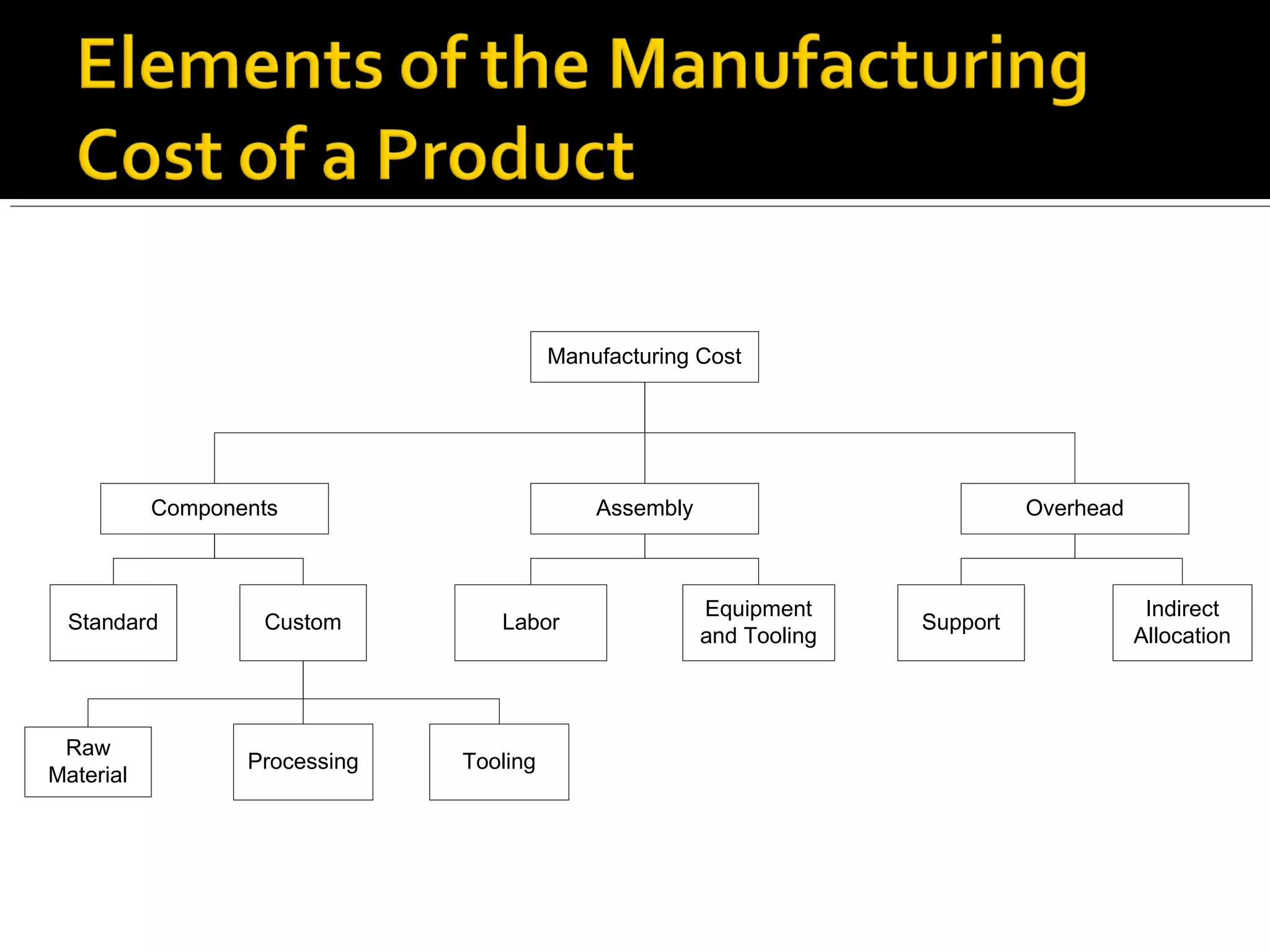
Manufacturing Cost
OverheadAssemblyComponents
Standard Custom Labor
Equipment
and Tooling
Support
Indirect
Allocation
Raw
Material
Processing Tooling
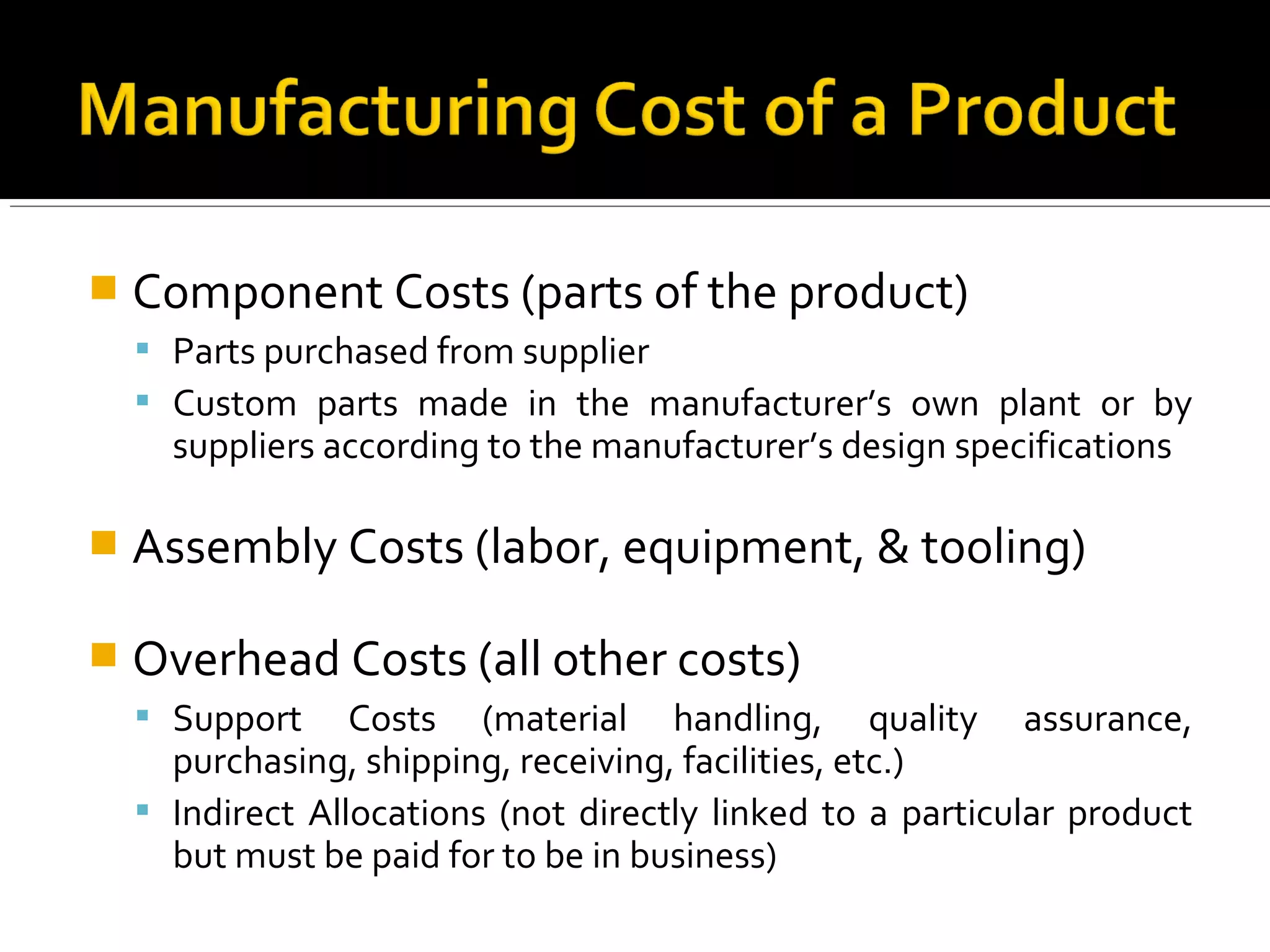
 Component Costs (parts of the product)
 Parts purchased from supplier
 Custom parts made in the manufacturer’s own plant or by
suppliers according to the manufacturer’s design specifications
 Assembly Costs (labor, equipment, & tooling)
 Overhead Costs (all other costs)
 Support Costs (material handling, quality assurance,
purchasing, shipping, receiving, facilities, etc.)
 Indirect Allocations (not directly linked to a particular product
but must be paid for to be in business)
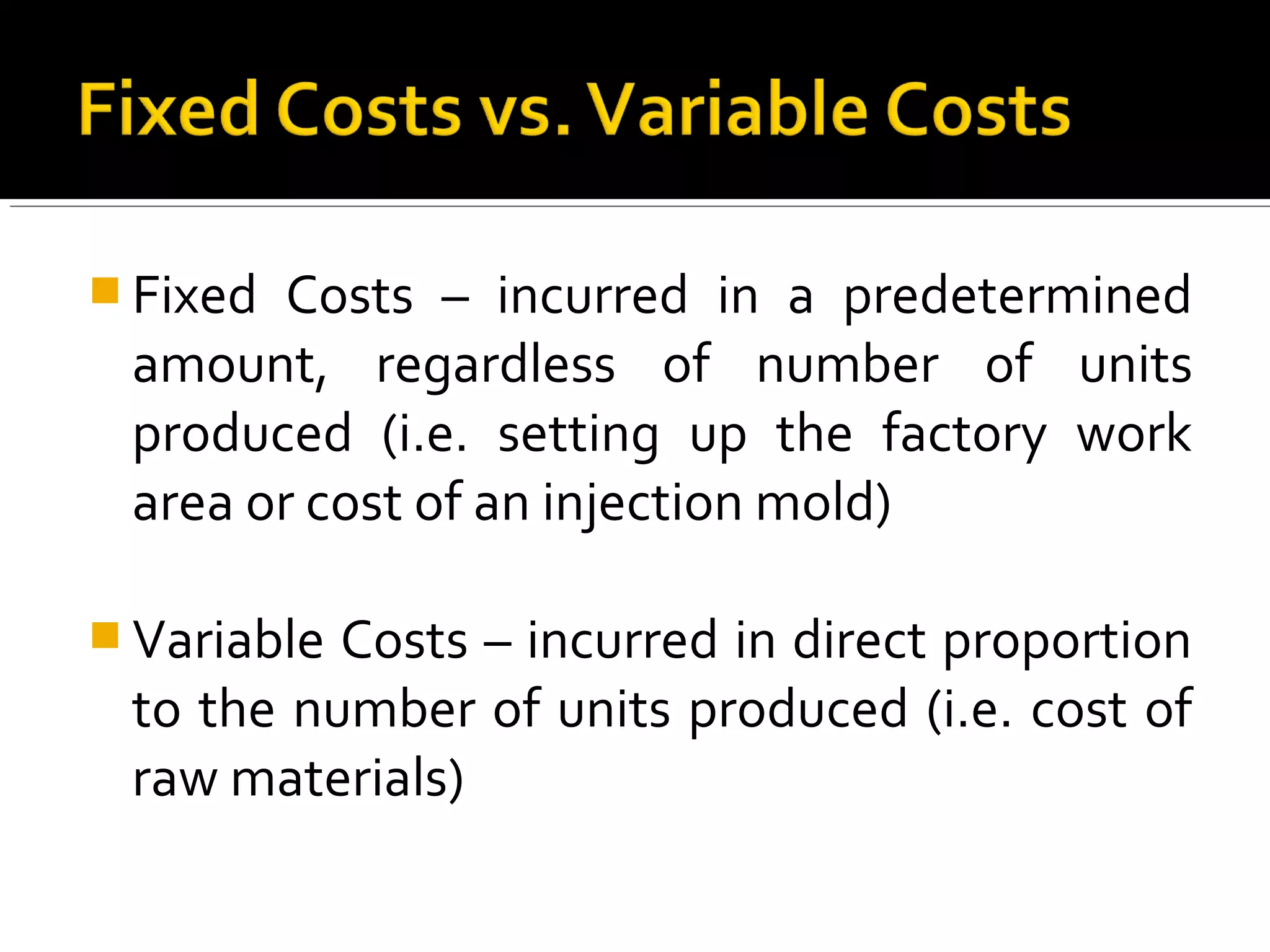
 Fixed Costs – incurred in a predetermined
amount, regardless of number of units
produced (i.e. setting up the factory work
area or cost of an injection mold)
 Variable Costs – incurred in direct proportion
to the number of units produced (i.e. cost of
raw materials)
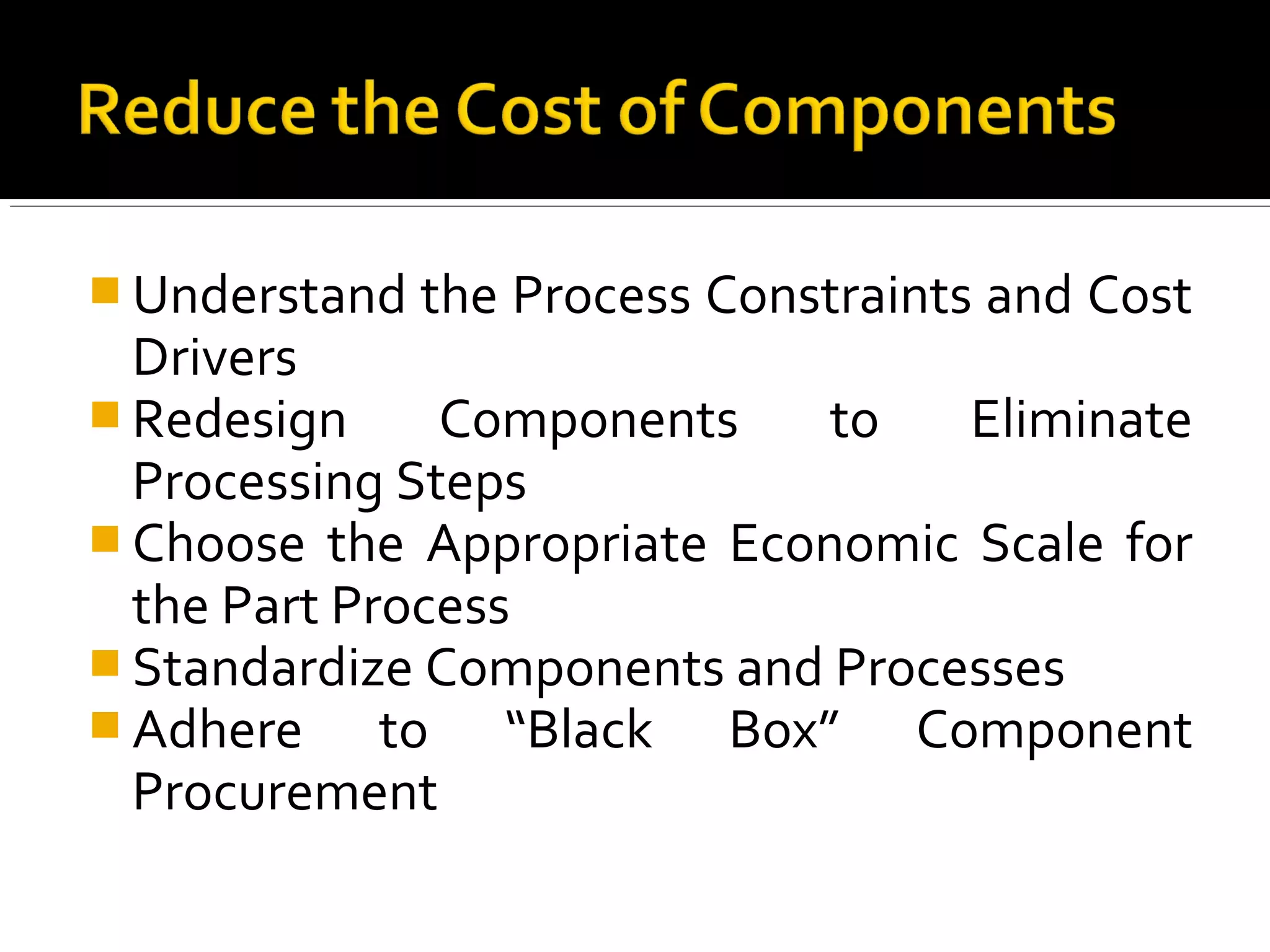
 Understand the Process Constraints and Cost
Drivers
 Redesign Components to Eliminate
Processing Steps
 Choose the Appropriate Economic Scale for
the Part Process
 Standardize Components and Processes
 Adhere to “Black Box” Component
Procurement
Redesign costly parts with the same
performance while avoiding high
manufacturing costs.
Work closely with design engineers—raise
awareness of difficult operations and high
costs.
 Reduce the number of steps of the
production process
 Will usually result in reduce costs
 Eliminate unnecessary steps.
 Use substitution steps, where applicable.
 Analysis Tool – Process Flow Chart and Value
Stream Mapping
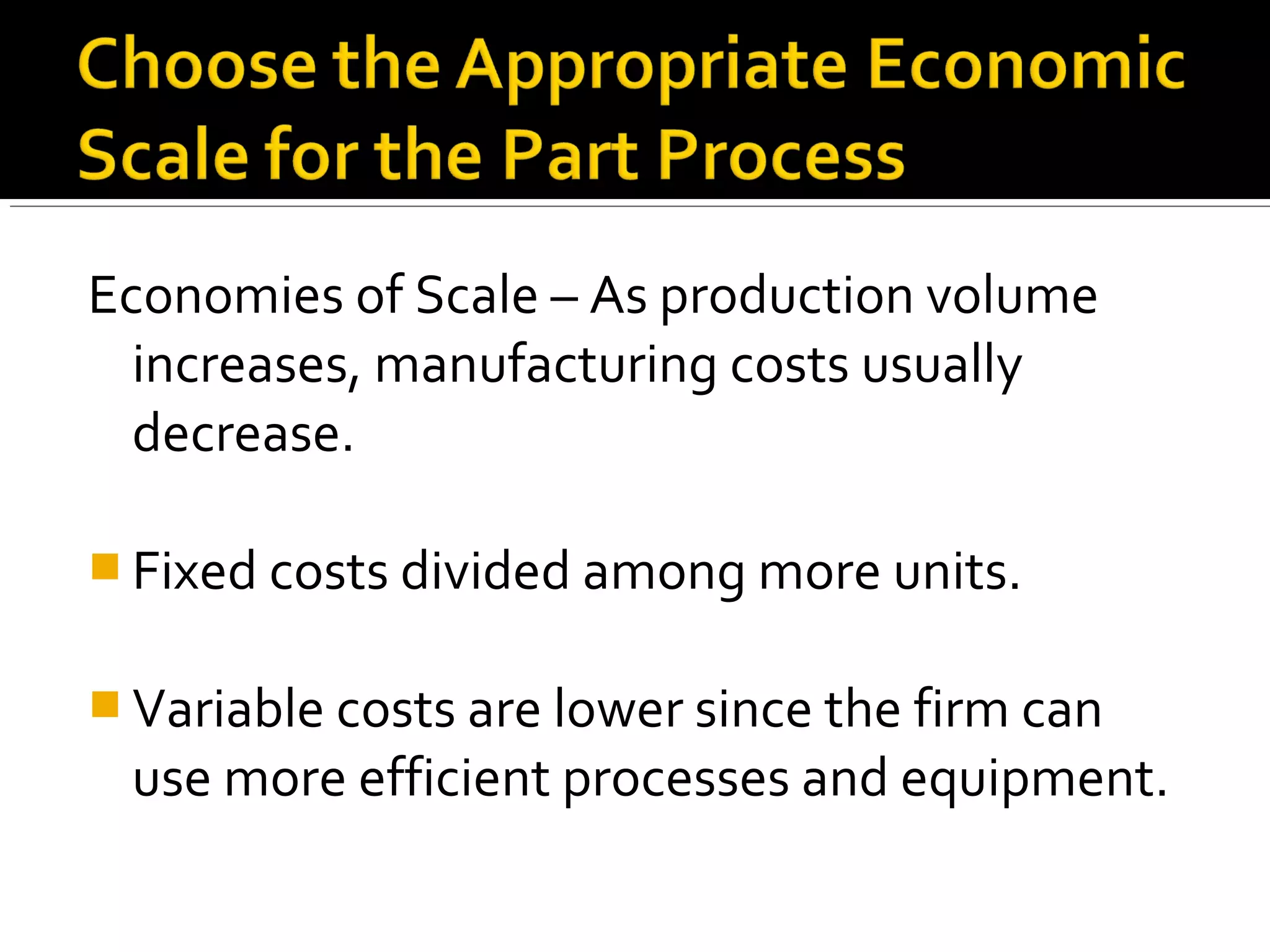
Economies of Scale – As production volume
increases, manufacturing costs usually
decrease.
 Fixed costs divided among more units.
 Variable costs are lower since the firm can
use more efficient processes and equipment.
 Black box—only give a description of what the
component has to do, not how to achieve it
 Successful black box design requires clear
definitions of the functions, interfaces, and
interactions of each component.
 Economies of Scale – The unit cost of a
component decreases as the production
volume increases.
 Standard Components—common to more
than one product
 Analysis tools – group technology and mass
customization

DFM Design Principles

  • 3.
     Mechanical engineeringdesigns generally include off-the-shelf components and fabricated parts.  Knowing the strengths and limitations of the fabrication techniques makes for higher quality and more cost competitive designs.
  • 4.
    1. Simplicity 2. StandardMaterials and Components 3. Standardized Design of the Product 4. Liberal Tolerances 5. Use Materials that are Easy to Process
  • 5.
    6. Teamwork withManufacturing Personnel 7. Avoidance of Secondary Operations 8. Design to Expected Level of Production 9. Utilize Special Process Characteristics 10. Avoid Process Restrictiveness
  • 6.
     Description: minimizethe number of parts, intricate shapes, and manufacturing operations  Motivation: generally provides reduced cost, improved reliability, easier servicing, and improved robustness  Example: Braun Lift
  • 8.
     Description: Usestandard off-the-shelf parts and widely available materials  Motivation: eases purchasing, simplifies inventory management, and avoids tooling investments  Example: Screws
  • 9.
     Description: Forsimilar products, specify the same materials, parts, and subassemblies as much as possible.  Motivation: provides economies of scale, simplifies operations, and simplifies inventory management  Example: Braun Lift
  • 10.
     Description: maketolerances as forgiving as possible  Motivation: tight tolerances are expensive (in a non-linear fashion) (Fig in the next slide)
  • 12.
     Description: takeadvantage of materials that have been developed for easy processibility  Motivation: while material may cost more, it will often provide lower overall cost  Example: “Free-Machining” Grades, Many polymer grades are tuned to a process
  • 13.
     Description: collaboratewith the people who will be producing your product (the earlier the better)  Motivation: they provide a unique body of knowledge and useful insights  Example:
  • 14.
     Description: minimizethe need for secondary operations  Motivation: secondary operations (e.g. deburring, inspection, painting, and heat treating) can be as expensive as the primary manufacturing operation  Example: Pre-painted steel, investment casting, MIM in firearms
  • 15.
     Description: understandand take advantage of the special capabilities of various manufacturing processes  Motivation: can often eliminate manufacturing operations and reduce the number of parts  Example: injection molding snap fits and living hinges
  • 16.
     Description: onpart drawings, specify only the final characteristics needed; do not specify the process to be used  Motivation: potential cost savings
  • 17.
    Estimate the Manufacutring Costs Considerthe Impact of DFM Decisions on Other Factors Recompute the Manufacturing Costs Reduce the Costs of Supporting Production Reduce the Costs of Assembly Reduce the Costs of Components Good enough ? N Y Acceptable Design Proposed Design
  • 18.
     Estimate themanufacturing costs.  Reduce the costs of components.  Reduce the costs of assembly.  Reduce the costs of supporting production.  Consider the impact of DFM decisions on other factors.
  • 19.
    Finished GoodsManufacturing System EquipmentInformation Tooling WasteServicesSuppliesEnergy Raw Materials Labor Purchased Components
  • 20.
     Sum ofall the expenditures for the inputs of the system (i.e. purchased components, energy, raw materials, etc.) and for disposal of the wastes produced by the system
  • 21.
    Manufacturing Cost OverheadAssemblyComponents Standard CustomLabor Equipment and Tooling Support Indirect Allocation Raw Material Processing Tooling
  • 22.
     Component Costs(parts of the product)  Parts purchased from supplier  Custom parts made in the manufacturer’s own plant or by suppliers according to the manufacturer’s design specifications  Assembly Costs (labor, equipment, & tooling)  Overhead Costs (all other costs)  Support Costs (material handling, quality assurance, purchasing, shipping, receiving, facilities, etc.)  Indirect Allocations (not directly linked to a particular product but must be paid for to be in business)
  • 23.
     Fixed Costs– incurred in a predetermined amount, regardless of number of units produced (i.e. setting up the factory work area or cost of an injection mold)  Variable Costs – incurred in direct proportion to the number of units produced (i.e. cost of raw materials)
  • 24.
     Understand theProcess Constraints and Cost Drivers  Redesign Components to Eliminate Processing Steps  Choose the Appropriate Economic Scale for the Part Process  Standardize Components and Processes  Adhere to “Black Box” Component Procurement
  • 25.
    Redesign costly partswith the same performance while avoiding high manufacturing costs. Work closely with design engineers—raise awareness of difficult operations and high costs.
  • 26.
     Reduce thenumber of steps of the production process  Will usually result in reduce costs  Eliminate unnecessary steps.  Use substitution steps, where applicable.  Analysis Tool – Process Flow Chart and Value Stream Mapping
  • 27.
    Economies of Scale– As production volume increases, manufacturing costs usually decrease.  Fixed costs divided among more units.  Variable costs are lower since the firm can use more efficient processes and equipment.
  • 28.
     Black box—onlygive a description of what the component has to do, not how to achieve it  Successful black box design requires clear definitions of the functions, interfaces, and interactions of each component.
  • 29.
     Economies ofScale – The unit cost of a component decreases as the production volume increases.  Standard Components—common to more than one product  Analysis tools – group technology and mass customization