Design For Manufacturing
Flow of Design Knowledge
Engineering
Designers
Design
Specifications
The
Customer
M
anufacturing
Guidelines
Manuf.
Drawing
Package
Prototype/Product
Why Design for Manufacturing?
• Mechanical engineering designs generally
include off-the-shelf components and
fabricated parts.
• Knowing the strengths and limitations of the
fabrication techniques makes for higher
quality and more cost competitive designs.
Ten General Design Principles
(Chapter 1.3)
Simplicity
Standard Materials and
Components
Standardized Design of the
Product
Liberal Tolerances
Use Materials that are Easy to
Process
Teamwork with
Manufacturing Personnel
Avoidance of Secondary
Operations
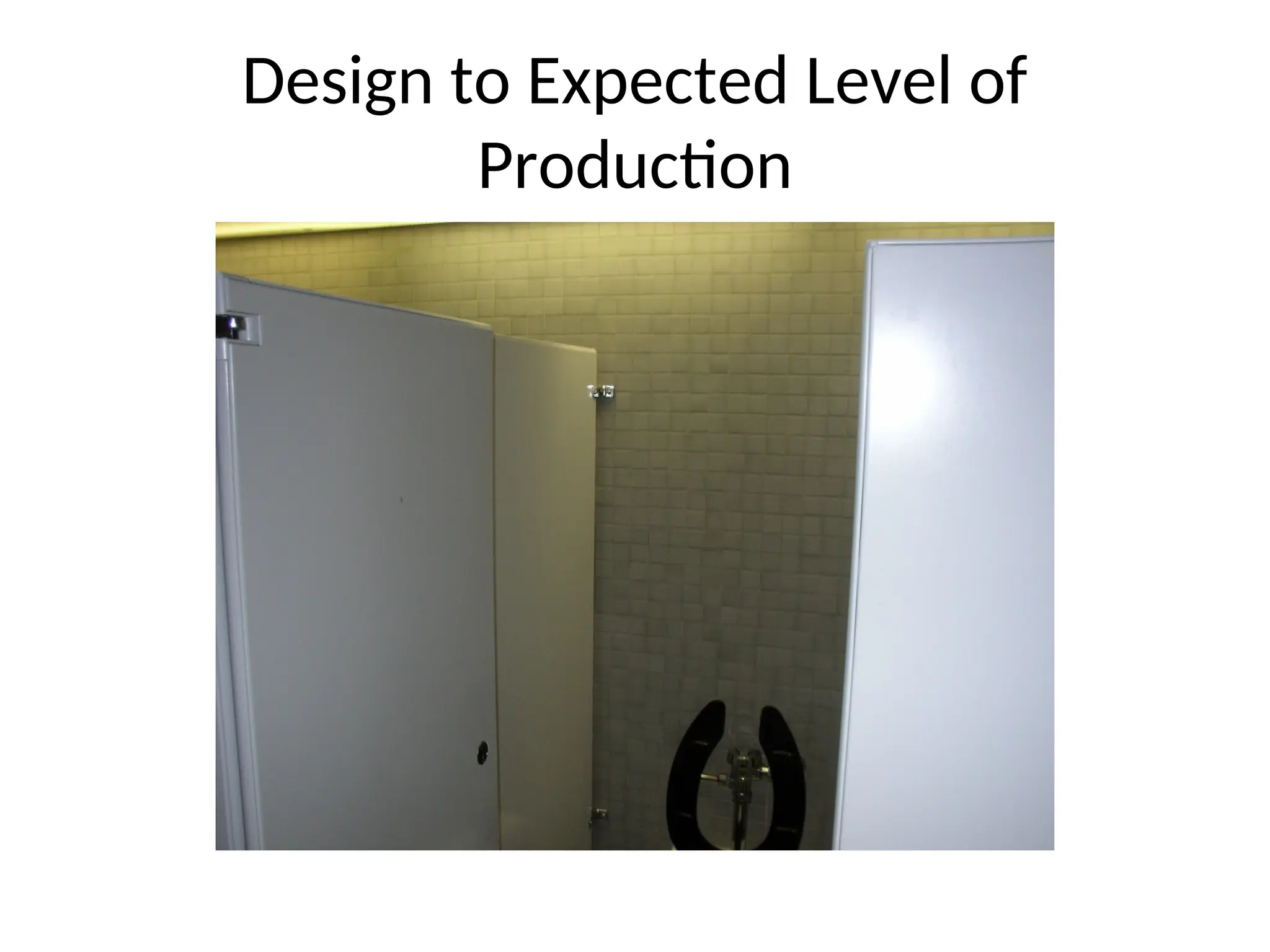
Design to Expected Level of
Production
Utilize Special Process
Characteristics
Avoid Process
Restrictiveness
Simplicity
• Description: minimize the number of parts,
intricate shapes, and manufacturing
operations
• Motivation: generally provides reduced cost,
improved reliability, easier servicing, and
improved robustness
Part Count Reduction
Standard Materials and Components
• Description: Use standard off-the-shelf parts
and widely available materials
• Motivation: eases purchasing, simplifies
inventory management, and avoids tooling
investments
• Example: Screws
Standardized Design of the Product
• Description: For similar products, specify the
same materials, parts, and subassemblies as
much as possible.
• Motivation: provides economies of scale,
simplifies operations, and simplifies inventory
management
• Example: automotive platforms, Black &
Decker
Liberal Tolerances
• Description: make tolerances as forgiving as
possible
• Motivation: tight tolerances are expensive (in
a non-linear fashion)
• Example: Figure 1.3.1
Use Easily Processed Materials
• Description: take advantage of materials that
have been developed for easy processibility
• Motivation: while material may cost more, it
will often provide lower overall cost
• Example: “Free-Machining” Grades, Many
polymer grades are tuned to a process
Avoidance of Secondary Operations
• Description: minimize the need for secondary
operations
• Motivation: secondary operations (e.g.
deburring, inspection, painting, and heat
treating) can be as expensive as the primary
manufacturing operation
• Example: Pre-painted steel, investment
casting
Design to Expected Level of
Production
Understand and Utilize Manufacturing
Process Characteristics
• Description: understand and take advantage
of the special capabilities of various
manufacturing processes
• Motivation: can often eliminate
manufacturing operations and reduce the
number of parts
• Example: injection molding snap fits and living
hinges
Avoid Process Restrictiveness
• Description: on part drawings, specify only the
final characteristics needed; do not specify the
process to be used
• Motivation: potential cost savings
Teamwork with Manufacturing Personnel
• Description: collaborate with the people who
will be producing your product (the earlier the
better)
• Motivation: they provide a unique body of
knowledge and useful insights

DESIGN FOR MANUFACTURING- INTRODUCTION TO MANUFACTURING

  • 1.
  • 2.
    Flow of DesignKnowledge Engineering Designers Design Specifications The Customer M anufacturing Guidelines Manuf. Drawing Package Prototype/Product
  • 3.
    Why Design forManufacturing? • Mechanical engineering designs generally include off-the-shelf components and fabricated parts. • Knowing the strengths and limitations of the fabrication techniques makes for higher quality and more cost competitive designs.
  • 4.
    Ten General DesignPrinciples (Chapter 1.3) Simplicity Standard Materials and Components Standardized Design of the Product Liberal Tolerances Use Materials that are Easy to Process Teamwork with Manufacturing Personnel Avoidance of Secondary Operations Design to Expected Level of Production Utilize Special Process Characteristics Avoid Process Restrictiveness
  • 5.
    Simplicity • Description: minimizethe number of parts, intricate shapes, and manufacturing operations • Motivation: generally provides reduced cost, improved reliability, easier servicing, and improved robustness
  • 6.
  • 8.
    Standard Materials andComponents • Description: Use standard off-the-shelf parts and widely available materials • Motivation: eases purchasing, simplifies inventory management, and avoids tooling investments • Example: Screws
  • 9.
    Standardized Design ofthe Product • Description: For similar products, specify the same materials, parts, and subassemblies as much as possible. • Motivation: provides economies of scale, simplifies operations, and simplifies inventory management • Example: automotive platforms, Black & Decker
  • 10.
    Liberal Tolerances • Description:make tolerances as forgiving as possible • Motivation: tight tolerances are expensive (in a non-linear fashion) • Example: Figure 1.3.1
  • 12.
    Use Easily ProcessedMaterials • Description: take advantage of materials that have been developed for easy processibility • Motivation: while material may cost more, it will often provide lower overall cost • Example: “Free-Machining” Grades, Many polymer grades are tuned to a process
  • 13.
    Avoidance of SecondaryOperations • Description: minimize the need for secondary operations • Motivation: secondary operations (e.g. deburring, inspection, painting, and heat treating) can be as expensive as the primary manufacturing operation • Example: Pre-painted steel, investment casting
  • 14.
    Design to ExpectedLevel of Production
  • 17.
    Understand and UtilizeManufacturing Process Characteristics • Description: understand and take advantage of the special capabilities of various manufacturing processes • Motivation: can often eliminate manufacturing operations and reduce the number of parts • Example: injection molding snap fits and living hinges
  • 18.
    Avoid Process Restrictiveness •Description: on part drawings, specify only the final characteristics needed; do not specify the process to be used • Motivation: potential cost savings
  • 19.
    Teamwork with ManufacturingPersonnel • Description: collaborate with the people who will be producing your product (the earlier the better) • Motivation: they provide a unique body of knowledge and useful insights