Training is…
 The achievement of pre-determined learning
  objectives through planned instructional techniques
 The transfer of knowledge, skills & attitude (KSA)
    • Training focuses on influencing attitude, providing knowledge
      and transferring skills
   Developed through a systematic process known as
    instructional design or instructional systems design
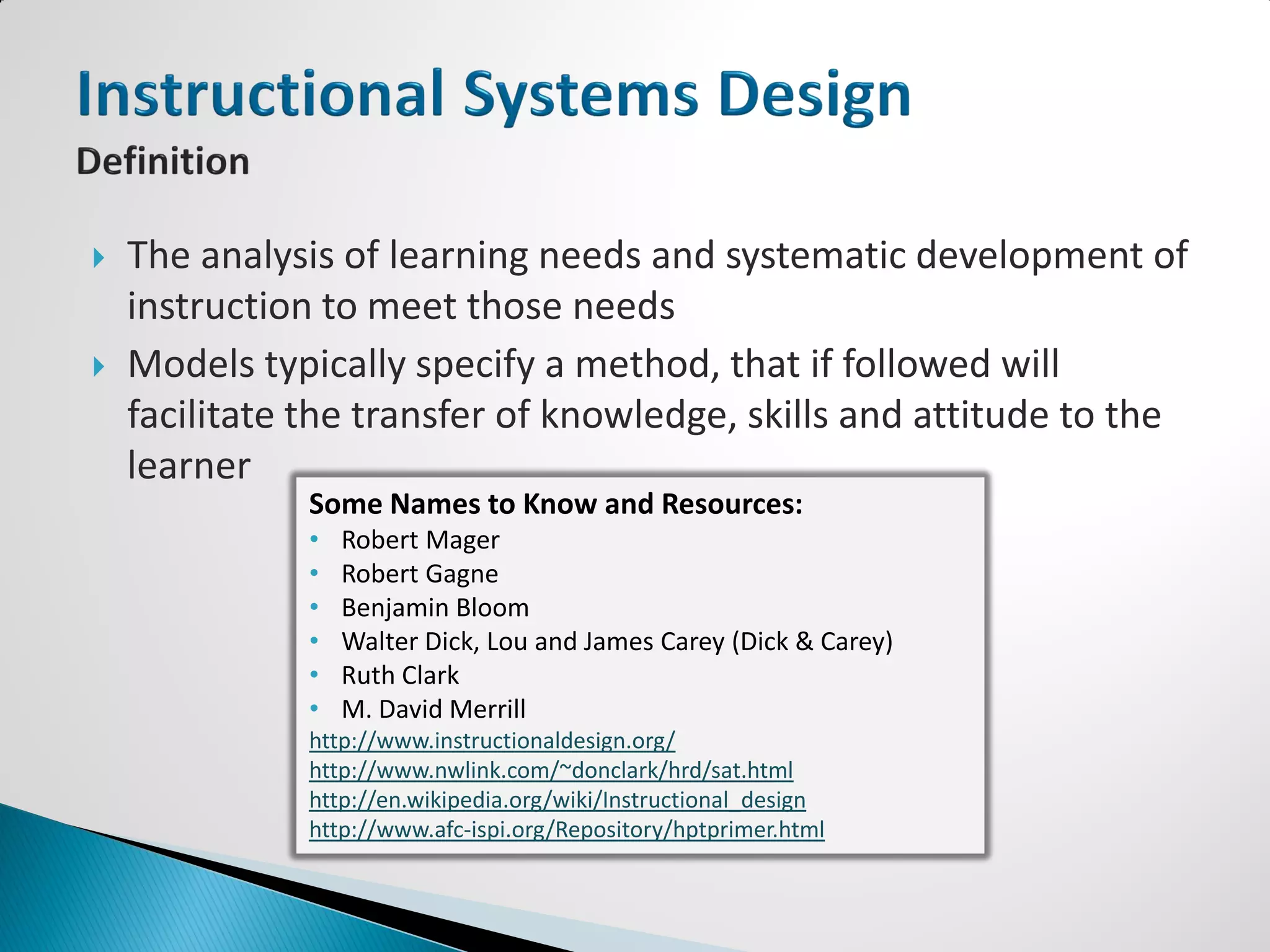
   The analysis of learning needs and systematic development of
    instruction to meet those needs
   Models typically specify a method, that if followed will
    facilitate the transfer of knowledge, skills and attitude to the
    learner
              Some Names to Know and Resources:
              •   Robert Mager
              •   Robert Gagne
              •   Benjamin Bloom
              •   Walter Dick, Lou and James Carey (Dick & Carey)
              •   Ruth Clark
              •   M. David Merrill
              http://www.instructionaldesign.org/
              http://www.nwlink.com/~donclark/hrd/sat.html
              http://en.wikipedia.org/wiki/Instructional_design
              http://www.afc-ispi.org/Repository/hptprimer.html
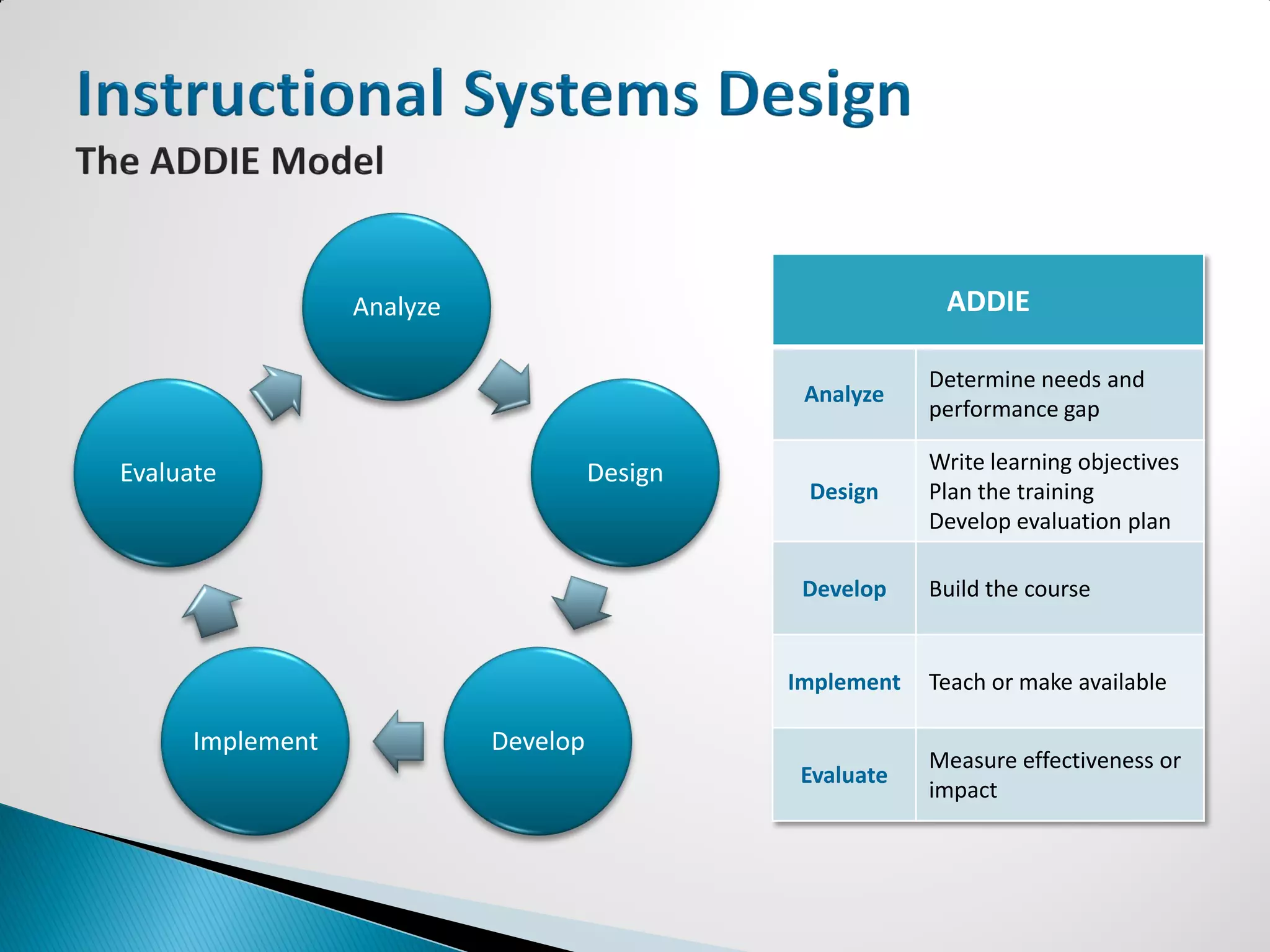
Analyze                                   ADDIE

                                                           Determine needs and
                                                Analyze
                                                           performance gap

Evaluate                              Design               Write learning objectives
                                                Design     Plan the training
                                                           Develop evaluation plan

                                                Develop    Build the course


                                               Implement   Teach or make available

      Implement             Develop
                                                           Measure effectiveness or
                                                Evaluate
                                                           impact
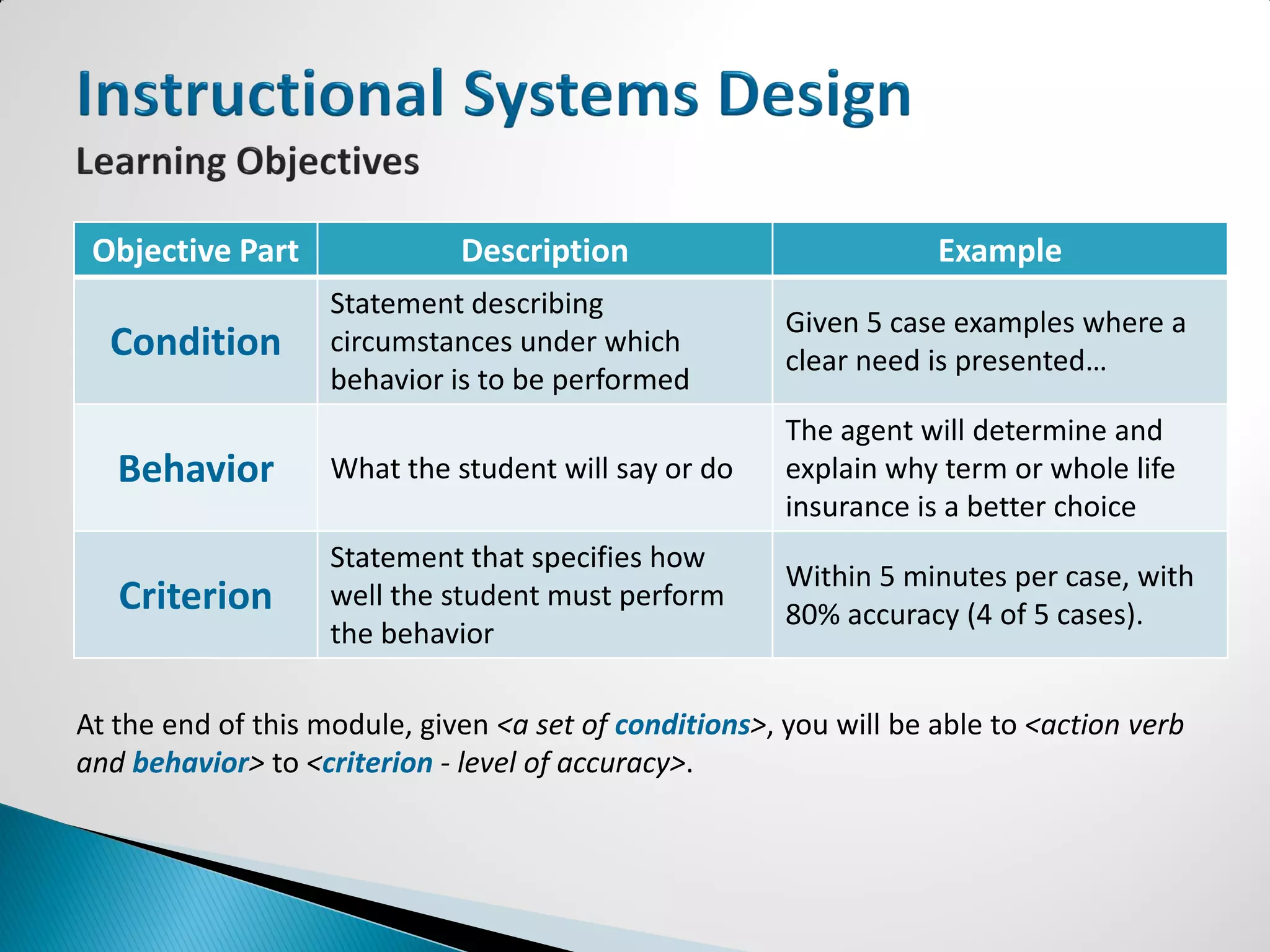
Objective Part               Description                           Example
                    Statement describing
                                                        Given 5 case examples where a
  Condition         circumstances under which
                                                        clear need is presented…
                    behavior is to be performed
                                                        The agent will determine and
   Behavior         What the student will say or do     explain why term or whole life
                                                        insurance is a better choice
                    Statement that specifies how
                                                        Within 5 minutes per case, with
   Criterion        well the student must perform
                                                        80% accuracy (4 of 5 cases).
                    the behavior

At the end of this module, given <a set of conditions>, you will be able to <action verb
and behavior> to <criterion - level of accuracy>.
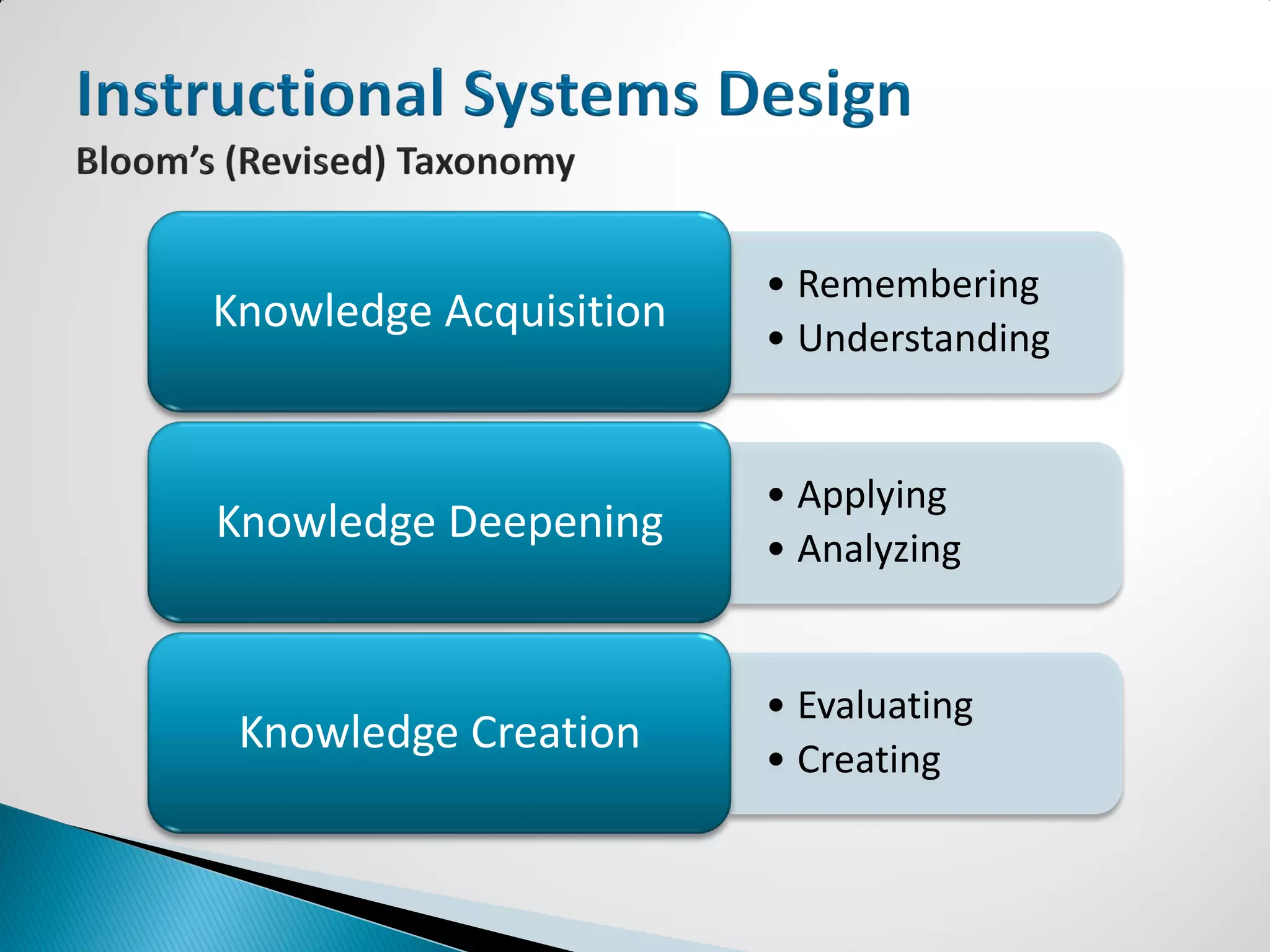
• Remembering
Knowledge Acquisition
                        • Understanding


                        • Applying
Knowledge Deepening
                        • Analyzing


                        • Evaluating
 Knowledge Creation
                        • Creating
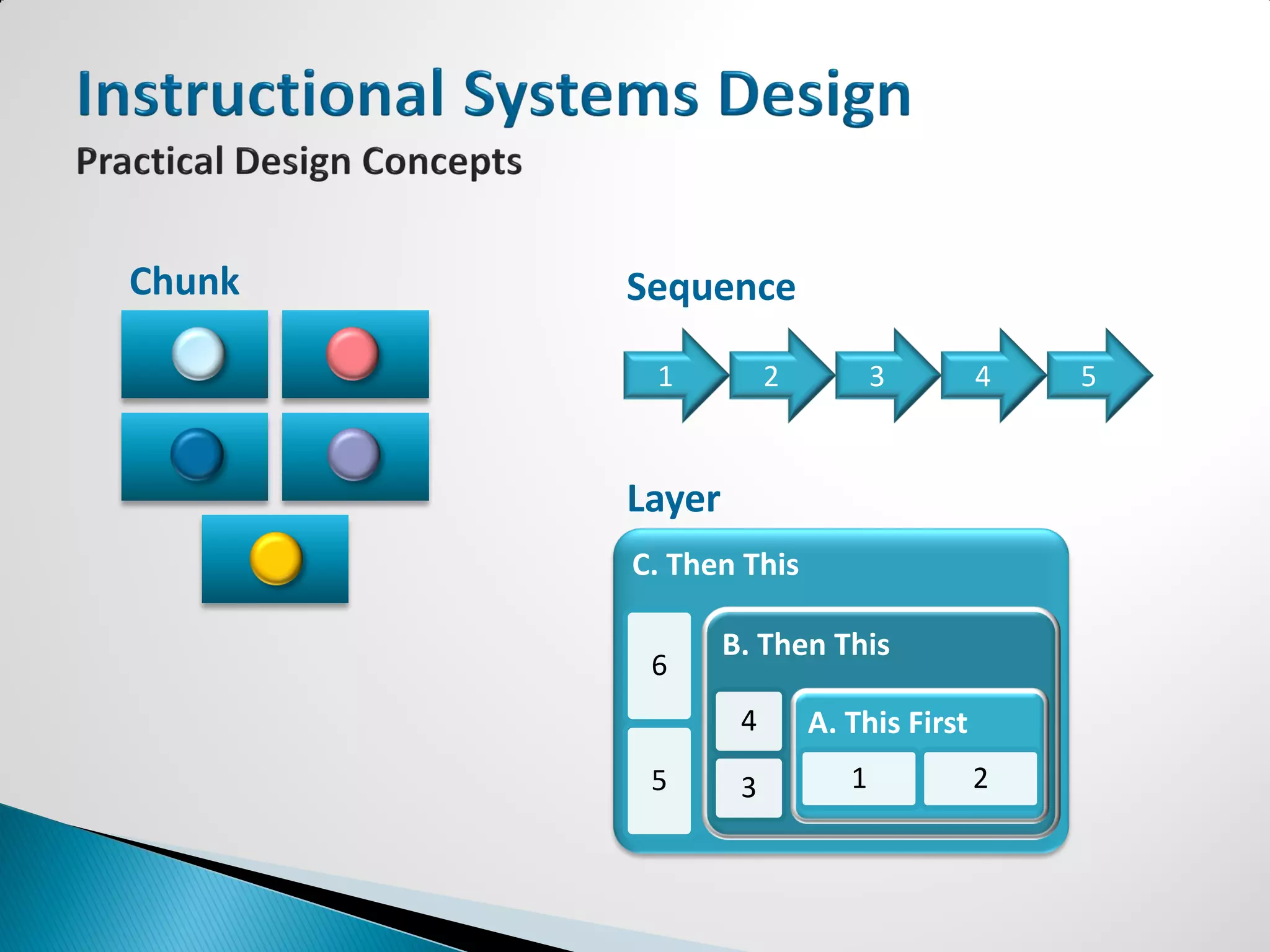
Chunk   Sequence

         1           2          3        4   5


        Layer
        C. Then This

                B. Then This
         6
                 4       A. This First
         5       3          1            2
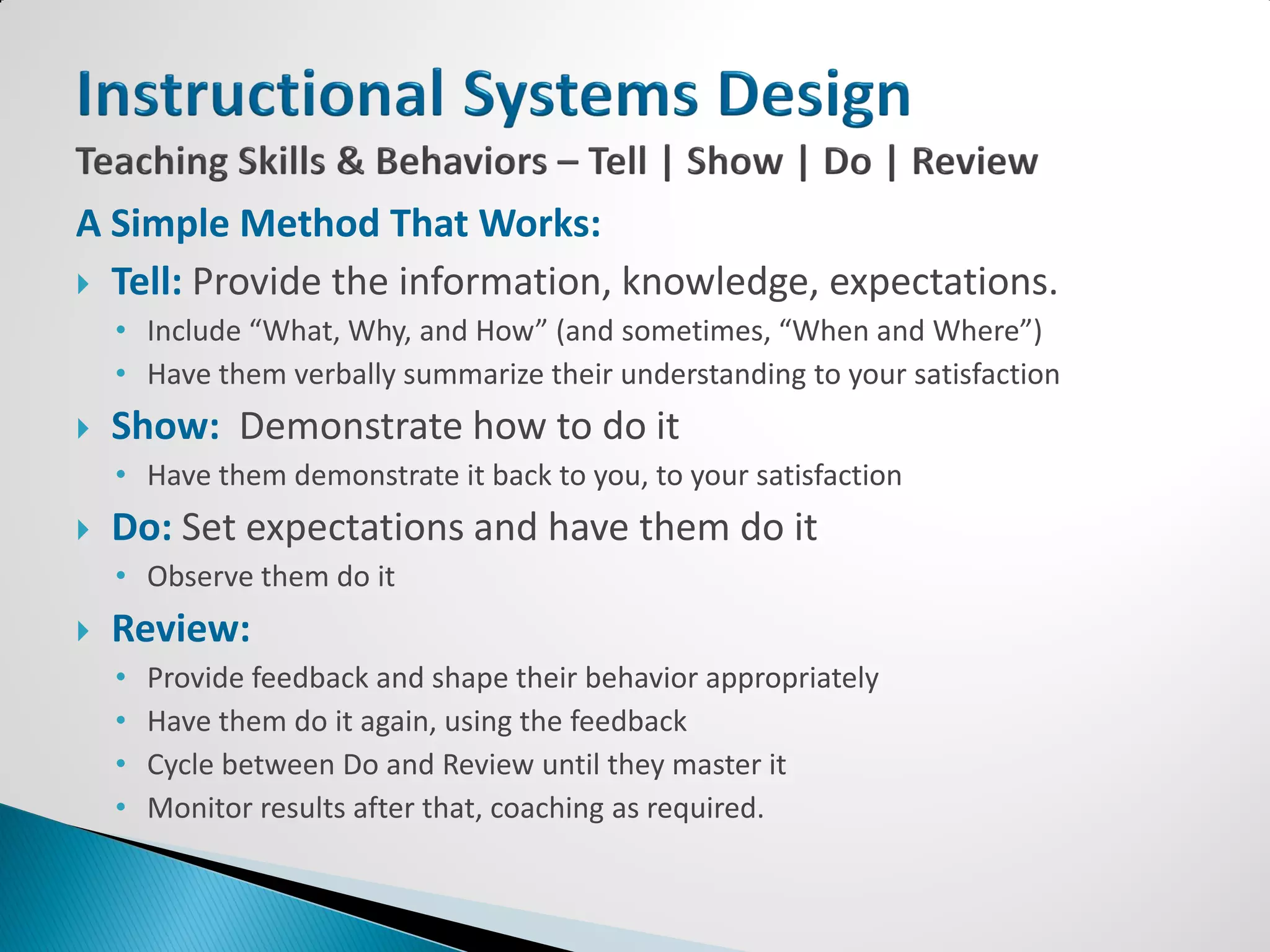
A Simple Method That Works:
 Tell: Provide the information, knowledge, expectations.
    • Include “What, Why, and How” (and sometimes, “When and Where”)
    • Have them verbally summarize their understanding to your satisfaction
   Show: Demonstrate how to do it
    • Have them demonstrate it back to you, to your satisfaction
   Do: Set expectations and have them do it
    • Observe them do it
   Review:
    •   Provide feedback and shape their behavior appropriately
    •   Have them do it again, using the feedback
    •   Cycle between Do and Review until they master it
    •   Monitor results after that, coaching as required.
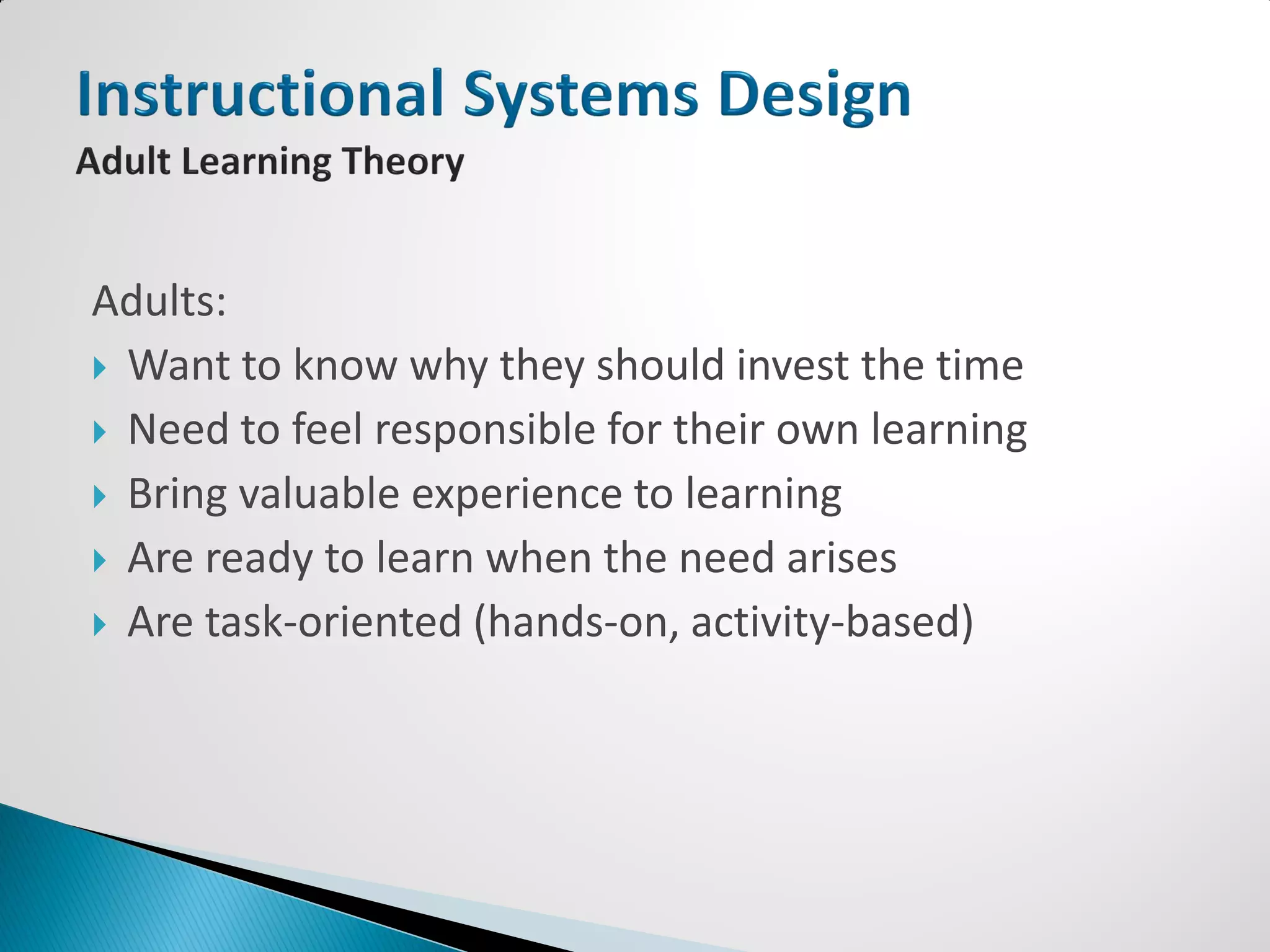
Adults:
 Want to know why they should invest the time
 Need to feel responsible for their own learning
 Bring valuable experience to learning
 Are ready to learn when the need arises
 Are task-oriented (hands-on, activity-based)
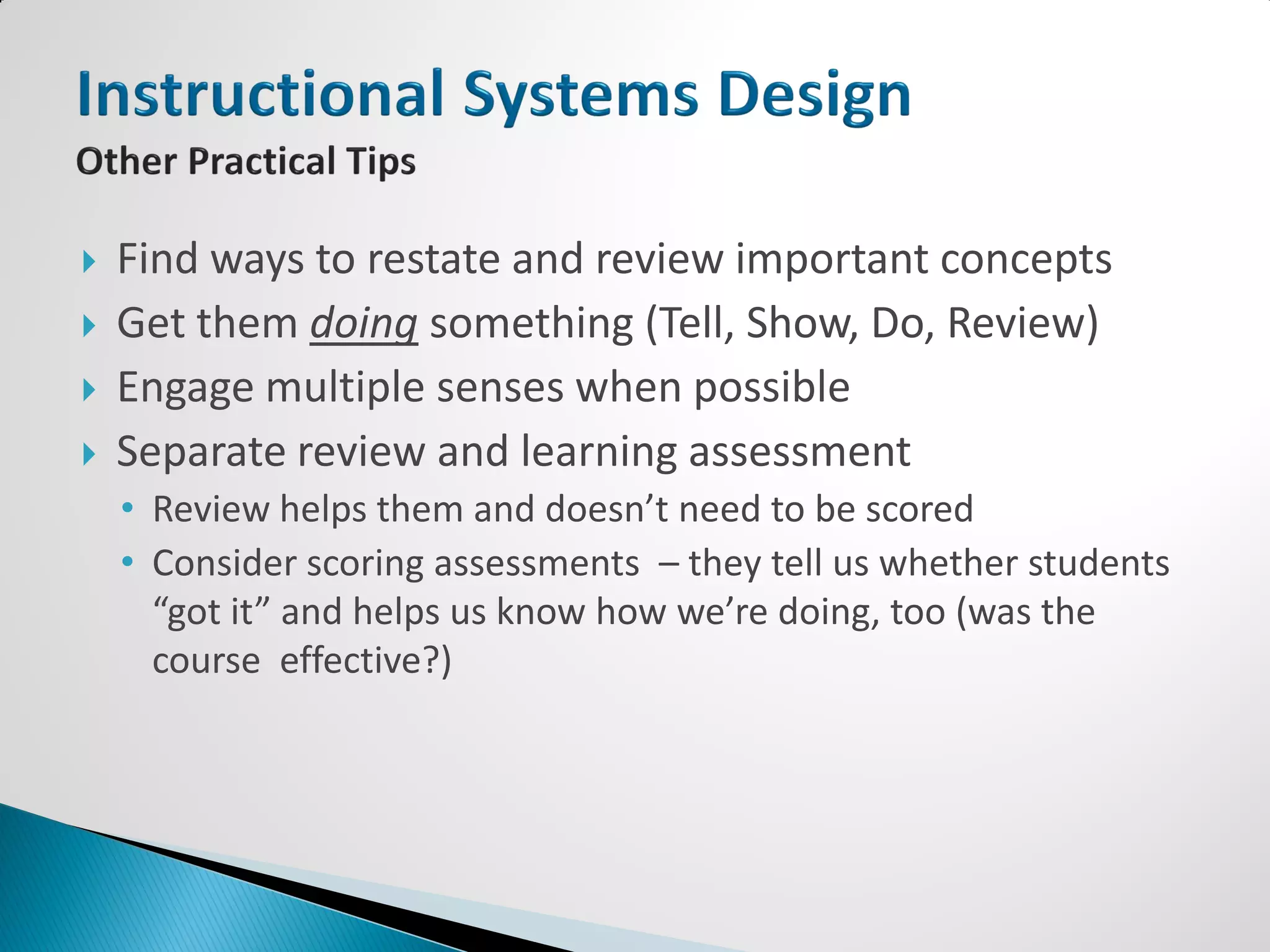
   Find ways to restate and review important concepts
   Get them doing something (Tell, Show, Do, Review)
   Engage multiple senses when possible
   Separate review and learning assessment
    • Review helps them and doesn’t need to be scored
    • Consider scoring assessments – they tell us whether students
      “got it” and helps us know how we’re doing, too (was the
      course effective?)
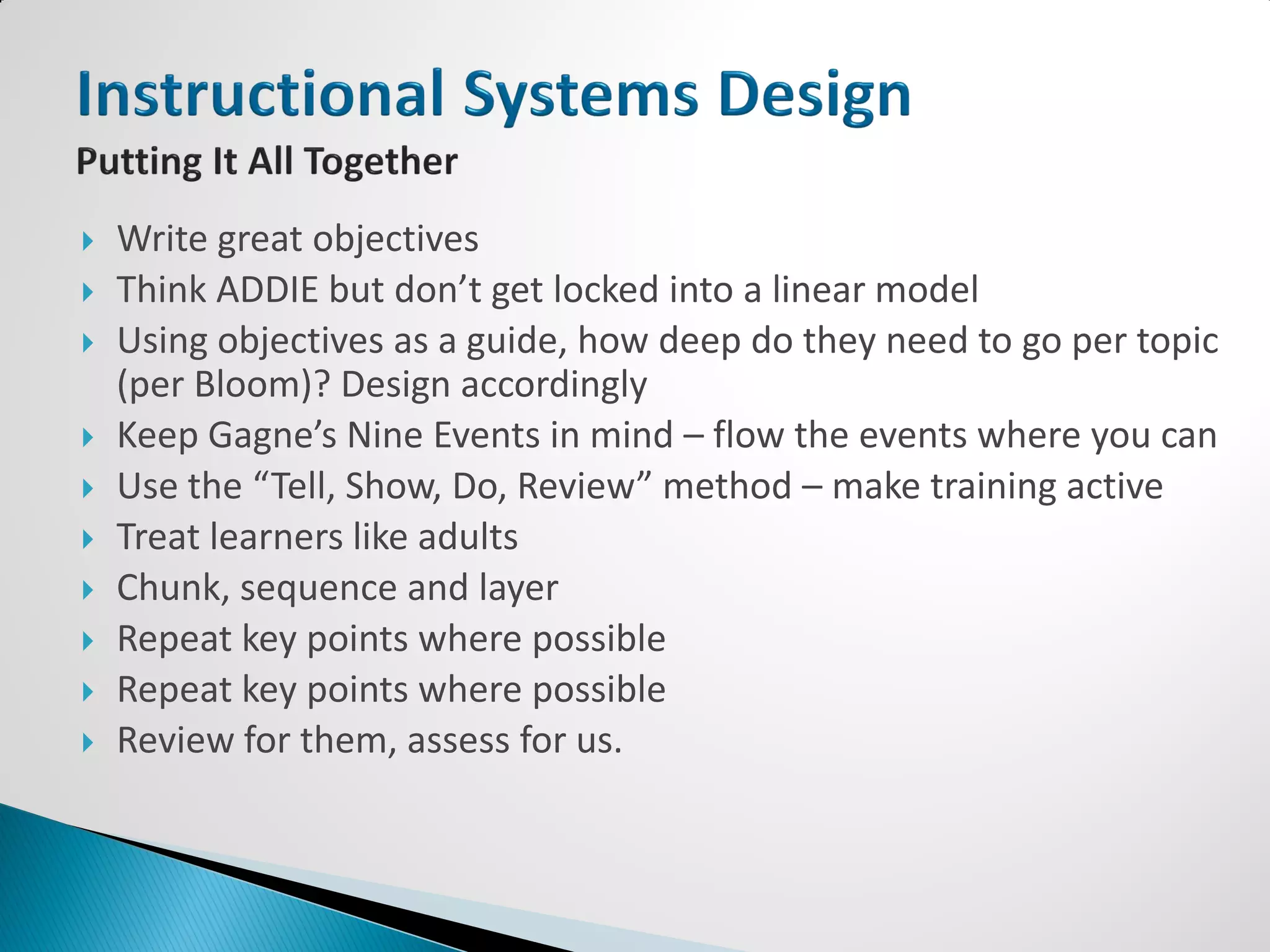
   Write great objectives
   Think ADDIE but don’t get locked into a linear model
   Using objectives as a guide, how deep do they need to go per topic
    (per Bloom)? Design accordingly
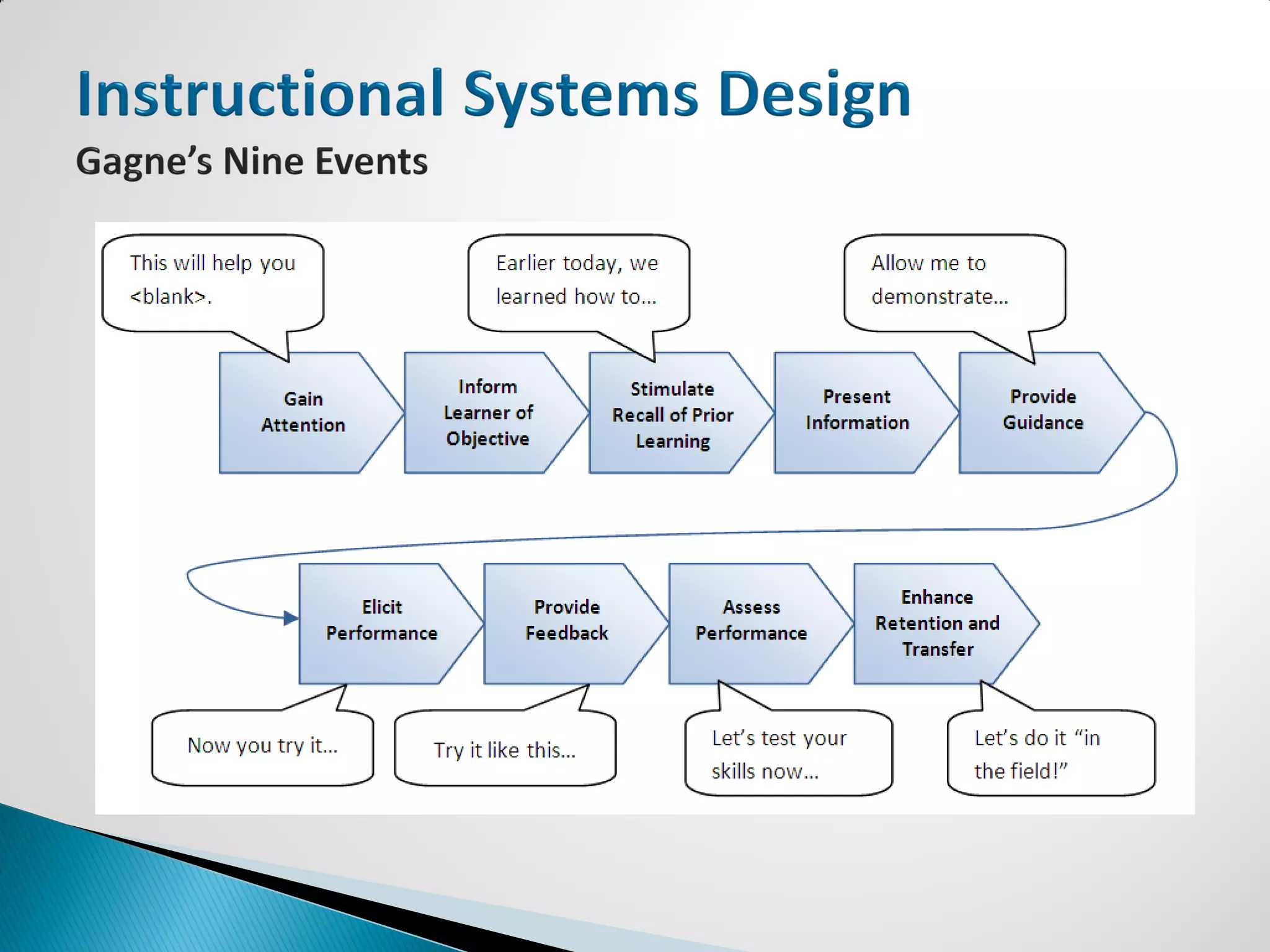
   Keep Gagne’s Nine Events in mind – flow the events where you can
   Use the “Tell, Show, Do, Review” method – make training active
   Treat learners like adults
   Chunk, sequence and layer
   Repeat key points where possible
   Review for them, assess for us.
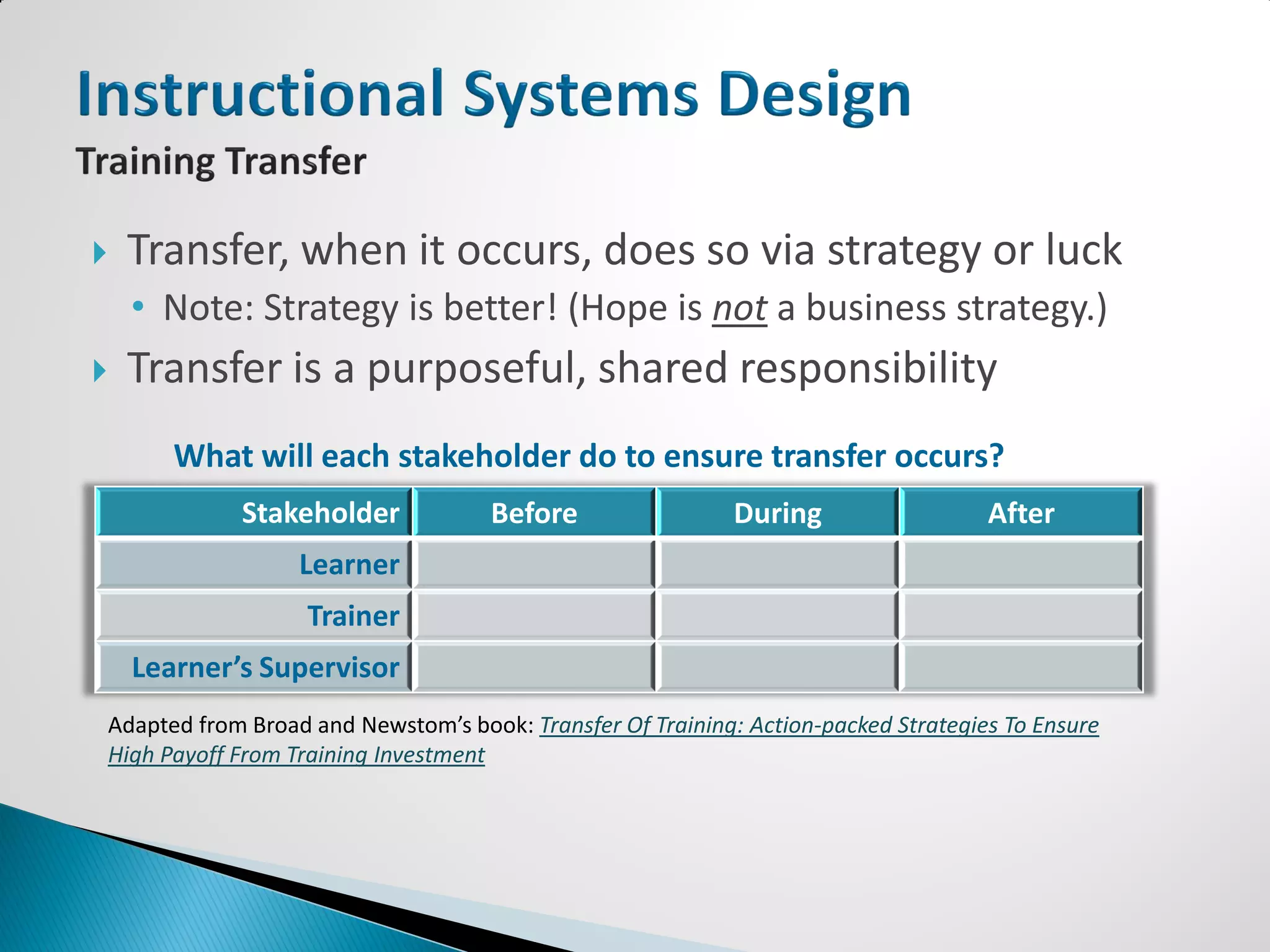
   Transfer, when it occurs, does so via strategy or luck
    • Note: Strategy is better! (Hope is not a business strategy.)
   Transfer is a purposeful, shared responsibility
       What will each stakeholder do to ensure transfer occurs? will
            Stakeholder             Before                 During                   After
                  Learner
                   Trainer
    Learner’s Supervisor
Adapted from Broad and Newstom’s book: Transfer Of Training: Action-packed Strategies To Ensure
High Payoff From Training Investment
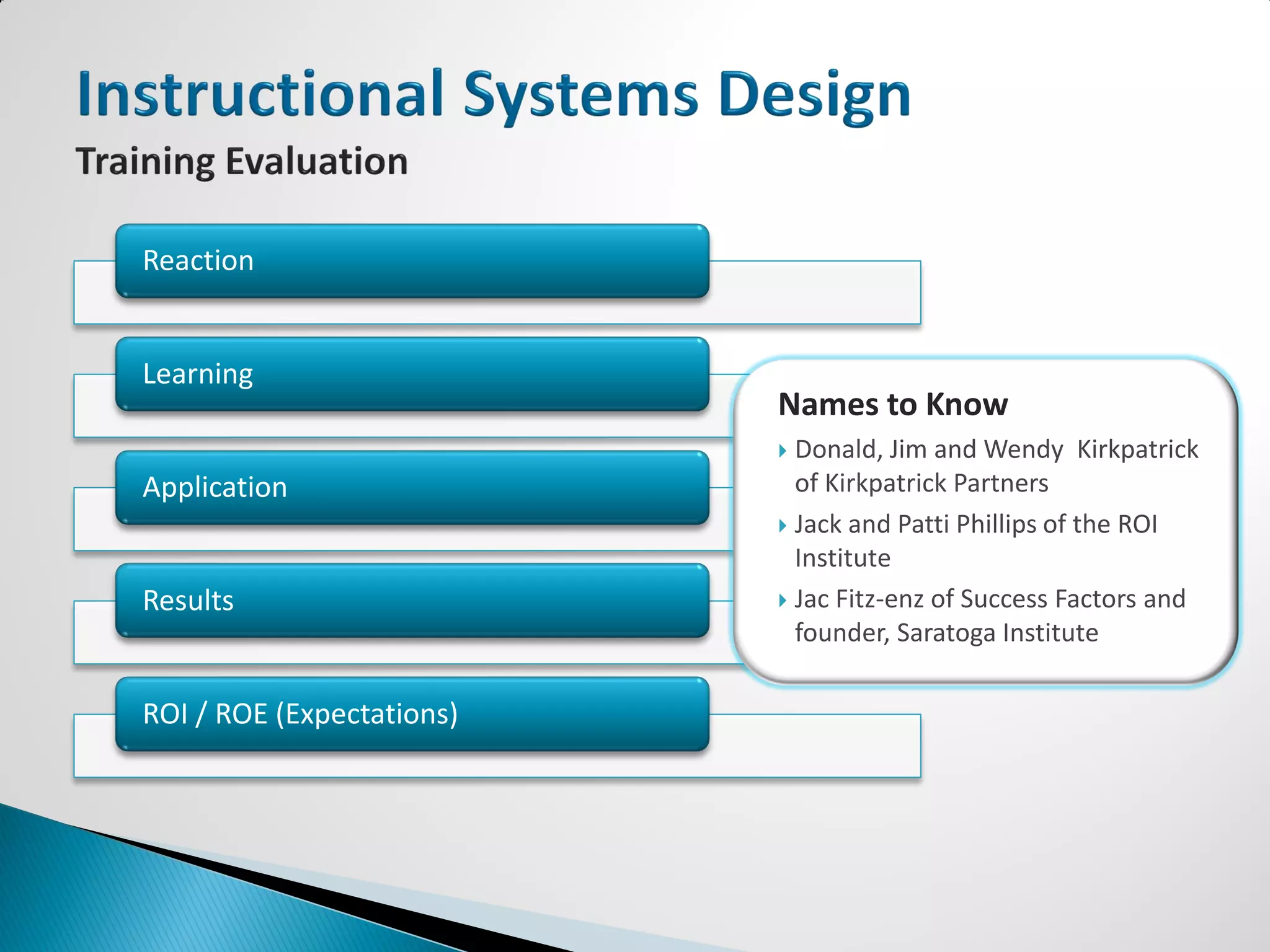
Reaction


Learning
                           Names to Know
                            Donald, Jim and Wendy Kirkpatrick
Application                  of Kirkpatrick Partners
                            Jack and Patti Phillips of the ROI
                             Institute
Results                     Jac Fitz-enz of Success Factors and
                             founder, Saratoga Institute

ROI / ROE (Expectations)
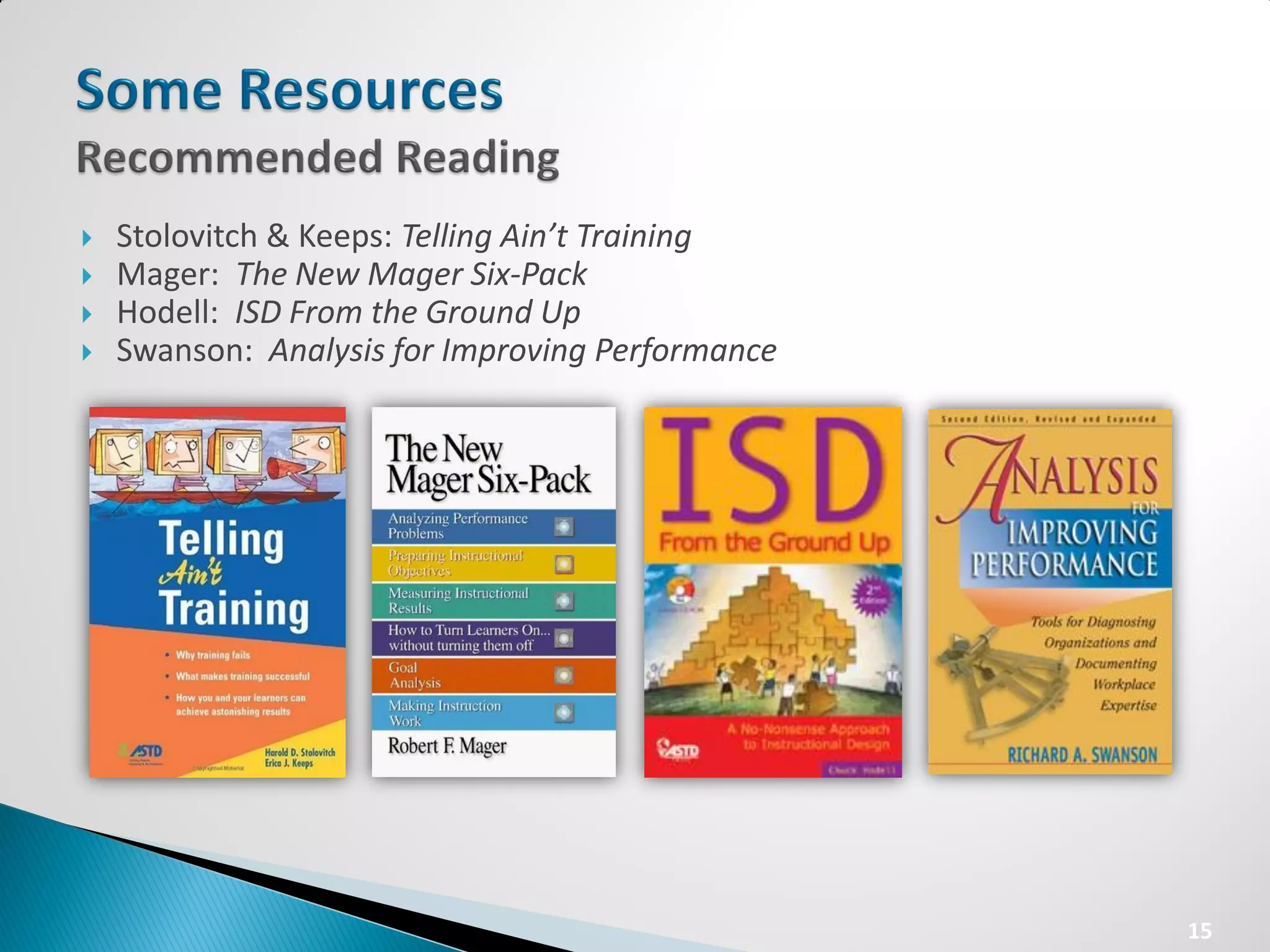
   Stolovitch & Keeps: Telling Ain’t Training
   Mager: The New Mager Six-Pack
   Hodell: ISD From the Ground Up
   Swanson: Analysis for Improving Performance


                                                  15

Basic Instructional Design Principles - A Primer

  • 2.
    Training is…  Theachievement of pre-determined learning objectives through planned instructional techniques  The transfer of knowledge, skills & attitude (KSA) • Training focuses on influencing attitude, providing knowledge and transferring skills  Developed through a systematic process known as instructional design or instructional systems design
  • 3.
    The analysis of learning needs and systematic development of instruction to meet those needs  Models typically specify a method, that if followed will facilitate the transfer of knowledge, skills and attitude to the learner Some Names to Know and Resources: • Robert Mager • Robert Gagne • Benjamin Bloom • Walter Dick, Lou and James Carey (Dick & Carey) • Ruth Clark • M. David Merrill http://www.instructionaldesign.org/ http://www.nwlink.com/~donclark/hrd/sat.html http://en.wikipedia.org/wiki/Instructional_design http://www.afc-ispi.org/Repository/hptprimer.html
  • 4.
    Analyze ADDIE Determine needs and Analyze performance gap Evaluate Design Write learning objectives Design Plan the training Develop evaluation plan Develop Build the course Implement Teach or make available Implement Develop Measure effectiveness or Evaluate impact
  • 5.
    Objective Part Description Example Statement describing Given 5 case examples where a Condition circumstances under which clear need is presented… behavior is to be performed The agent will determine and Behavior What the student will say or do explain why term or whole life insurance is a better choice Statement that specifies how Within 5 minutes per case, with Criterion well the student must perform 80% accuracy (4 of 5 cases). the behavior At the end of this module, given <a set of conditions>, you will be able to <action verb and behavior> to <criterion - level of accuracy>.
  • 6.
    • Remembering Knowledge Acquisition • Understanding • Applying Knowledge Deepening • Analyzing • Evaluating Knowledge Creation • Creating
  • 8.
    Chunk Sequence 1 2 3 4 5 Layer C. Then This B. Then This 6 4 A. This First 5 3 1 2
  • 9.
    A Simple MethodThat Works:  Tell: Provide the information, knowledge, expectations. • Include “What, Why, and How” (and sometimes, “When and Where”) • Have them verbally summarize their understanding to your satisfaction  Show: Demonstrate how to do it • Have them demonstrate it back to you, to your satisfaction  Do: Set expectations and have them do it • Observe them do it  Review: • Provide feedback and shape their behavior appropriately • Have them do it again, using the feedback • Cycle between Do and Review until they master it • Monitor results after that, coaching as required.
  • 10.
    Adults:  Want toknow why they should invest the time  Need to feel responsible for their own learning  Bring valuable experience to learning  Are ready to learn when the need arises  Are task-oriented (hands-on, activity-based)
  • 11.
    Find ways to restate and review important concepts  Get them doing something (Tell, Show, Do, Review)  Engage multiple senses when possible  Separate review and learning assessment • Review helps them and doesn’t need to be scored • Consider scoring assessments – they tell us whether students “got it” and helps us know how we’re doing, too (was the course effective?)
  • 12.
    Write great objectives  Think ADDIE but don’t get locked into a linear model  Using objectives as a guide, how deep do they need to go per topic (per Bloom)? Design accordingly  Keep Gagne’s Nine Events in mind – flow the events where you can  Use the “Tell, Show, Do, Review” method – make training active  Treat learners like adults  Chunk, sequence and layer  Repeat key points where possible  Repeat key points where possible  Review for them, assess for us.
  • 13.
    Transfer, when it occurs, does so via strategy or luck • Note: Strategy is better! (Hope is not a business strategy.)  Transfer is a purposeful, shared responsibility What will each stakeholder do to ensure transfer occurs? will Stakeholder Before During After Learner Trainer Learner’s Supervisor Adapted from Broad and Newstom’s book: Transfer Of Training: Action-packed Strategies To Ensure High Payoff From Training Investment
  • 14.
    Reaction Learning Names to Know  Donald, Jim and Wendy Kirkpatrick Application of Kirkpatrick Partners  Jack and Patti Phillips of the ROI Institute Results  Jac Fitz-enz of Success Factors and founder, Saratoga Institute ROI / ROE (Expectations)
  • 15.
    Stolovitch & Keeps: Telling Ain’t Training  Mager: The New Mager Six-Pack  Hodell: ISD From the Ground Up  Swanson: Analysis for Improving Performance 15