GROUP N# 10
Mario David Mondragon Linares
                      Brenda
                     Juaquin
Classroom Discipline
Discipline:
 Training or condition imposed for the improvement of
  physical powers, self-control.
 Systematic training in obedience to regulations and
  authority.
 The state of improved behavior, etc, resulting from such
  training or conditions punishment or chastisement.
 A branch of learning or instruction.
Classroom Discipline:
“That set of activities by which the teacher
 promotes appropriate student behavior and
 eliminate          inappropriate          student
 behavior,    develops         good   interpersonal
 relationships and a positive socio emotional
 climate in the classroom and establishes and
 maintains and effective and productive classroom
 organization.” Weber, 1977.
 Characteristic of Control: it is the way to organize and be
  preparing for developing a task, assuming the
  responsibility of it or influencing others by adjusting
  methods.
 Characteristic of Discipline: it is the way of training with
  systematic methods in order to obtain a purpose. Getting
  this goal by different ways such as: listening actively to the
  students, encouraging participating, humor sense and
  change methodology.
 Characteristics of Authoritarian: it is characterized by
  highly concentrated and centralized power maintained by
  repression and the exclusion of potential challengers.
 Characteristic Authority:
  persons having the legal power to make and enforce an
  action.
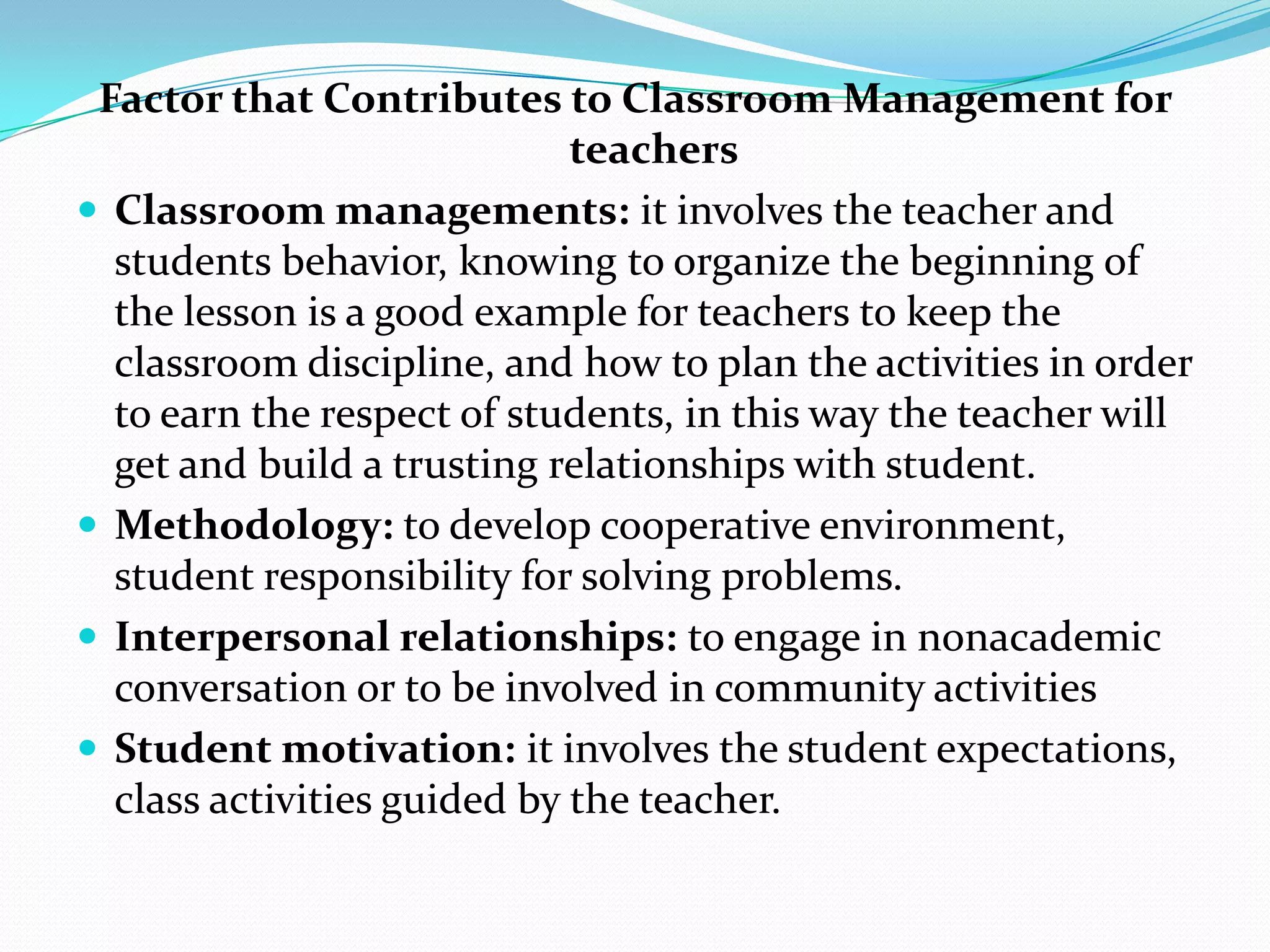
Factor that Contributes to Classroom Management for
                             teachers
 Classroom managements: it involves the teacher and
  students behavior, knowing to organize the beginning of
  the lesson is a good example for teachers to keep the
  classroom discipline, and how to plan the activities in order
  to earn the respect of students, in this way the teacher will
  get and build a trusting relationships with student.
 Methodology: to develop cooperative environment,
  student responsibility for solving problems.
 Interpersonal relationships: to engage in nonacademic
  conversation or to be involved in community activities
 Student motivation: it involves the student expectations,
  class activities guided by the teacher.
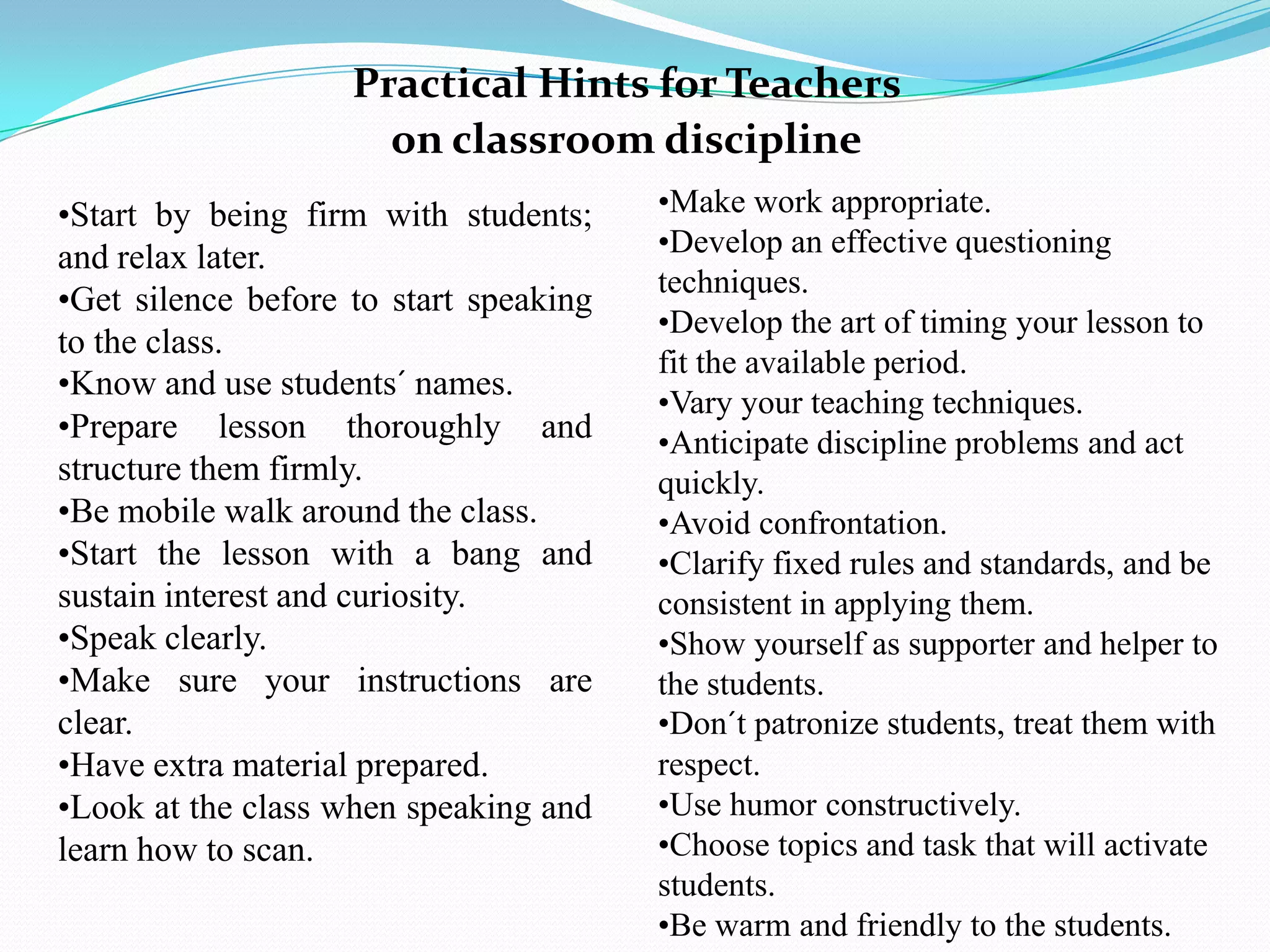
Practical Hints for Teachers
                      on classroom discipline
•Start by being firm with students;     •Make work appropriate.
and relax later.                        •Develop an effective questioning
                                        techniques.
•Get silence before to start speaking
                                        •Develop the art of timing your lesson to
to the class.
                                        fit the available period.
•Know and use students´ names.
                                        •Vary your teaching techniques.
•Prepare lesson thoroughly and          •Anticipate discipline problems and act
structure them firmly.                  quickly.
•Be mobile walk around the class.       •Avoid confrontation.
•Start the lesson with a bang and       •Clarify fixed rules and standards, and be
sustain interest and curiosity.         consistent in applying them.
•Speak clearly.                         •Show yourself as supporter and helper to
•Make sure your instructions are        the students.
clear.                                  •Don´t patronize students, treat them with
•Have extra material prepared.          respect.
•Look at the class when speaking and    •Use humor constructively.
learn how to scan.                      •Choose topics and task that will activate
                                        students.
                                        •Be warm and friendly to the students.
Discipline in classroom and classroom management

Discipline in classroom and classroom management

  • 1.
    GROUP N# 10 MarioDavid Mondragon Linares Brenda Juaquin
  • 2.
    Classroom Discipline Discipline:  Trainingor condition imposed for the improvement of physical powers, self-control.  Systematic training in obedience to regulations and authority.  The state of improved behavior, etc, resulting from such training or conditions punishment or chastisement.  A branch of learning or instruction.
  • 3.
    Classroom Discipline: “That setof activities by which the teacher promotes appropriate student behavior and eliminate inappropriate student behavior, develops good interpersonal relationships and a positive socio emotional climate in the classroom and establishes and maintains and effective and productive classroom organization.” Weber, 1977.
  • 4.
     Characteristic ofControl: it is the way to organize and be preparing for developing a task, assuming the responsibility of it or influencing others by adjusting methods.  Characteristic of Discipline: it is the way of training with systematic methods in order to obtain a purpose. Getting this goal by different ways such as: listening actively to the students, encouraging participating, humor sense and change methodology.  Characteristics of Authoritarian: it is characterized by highly concentrated and centralized power maintained by repression and the exclusion of potential challengers.  Characteristic Authority: persons having the legal power to make and enforce an action.
  • 5.
    Factor that Contributesto Classroom Management for teachers  Classroom managements: it involves the teacher and students behavior, knowing to organize the beginning of the lesson is a good example for teachers to keep the classroom discipline, and how to plan the activities in order to earn the respect of students, in this way the teacher will get and build a trusting relationships with student.  Methodology: to develop cooperative environment, student responsibility for solving problems.  Interpersonal relationships: to engage in nonacademic conversation or to be involved in community activities  Student motivation: it involves the student expectations, class activities guided by the teacher.
  • 6.
    Practical Hints forTeachers on classroom discipline •Start by being firm with students; •Make work appropriate. and relax later. •Develop an effective questioning techniques. •Get silence before to start speaking •Develop the art of timing your lesson to to the class. fit the available period. •Know and use students´ names. •Vary your teaching techniques. •Prepare lesson thoroughly and •Anticipate discipline problems and act structure them firmly. quickly. •Be mobile walk around the class. •Avoid confrontation. •Start the lesson with a bang and •Clarify fixed rules and standards, and be sustain interest and curiosity. consistent in applying them. •Speak clearly. •Show yourself as supporter and helper to •Make sure your instructions are the students. clear. •Don´t patronize students, treat them with •Have extra material prepared. respect. •Look at the class when speaking and •Use humor constructively. learn how to scan. •Choose topics and task that will activate students. •Be warm and friendly to the students.