Form Fits Function
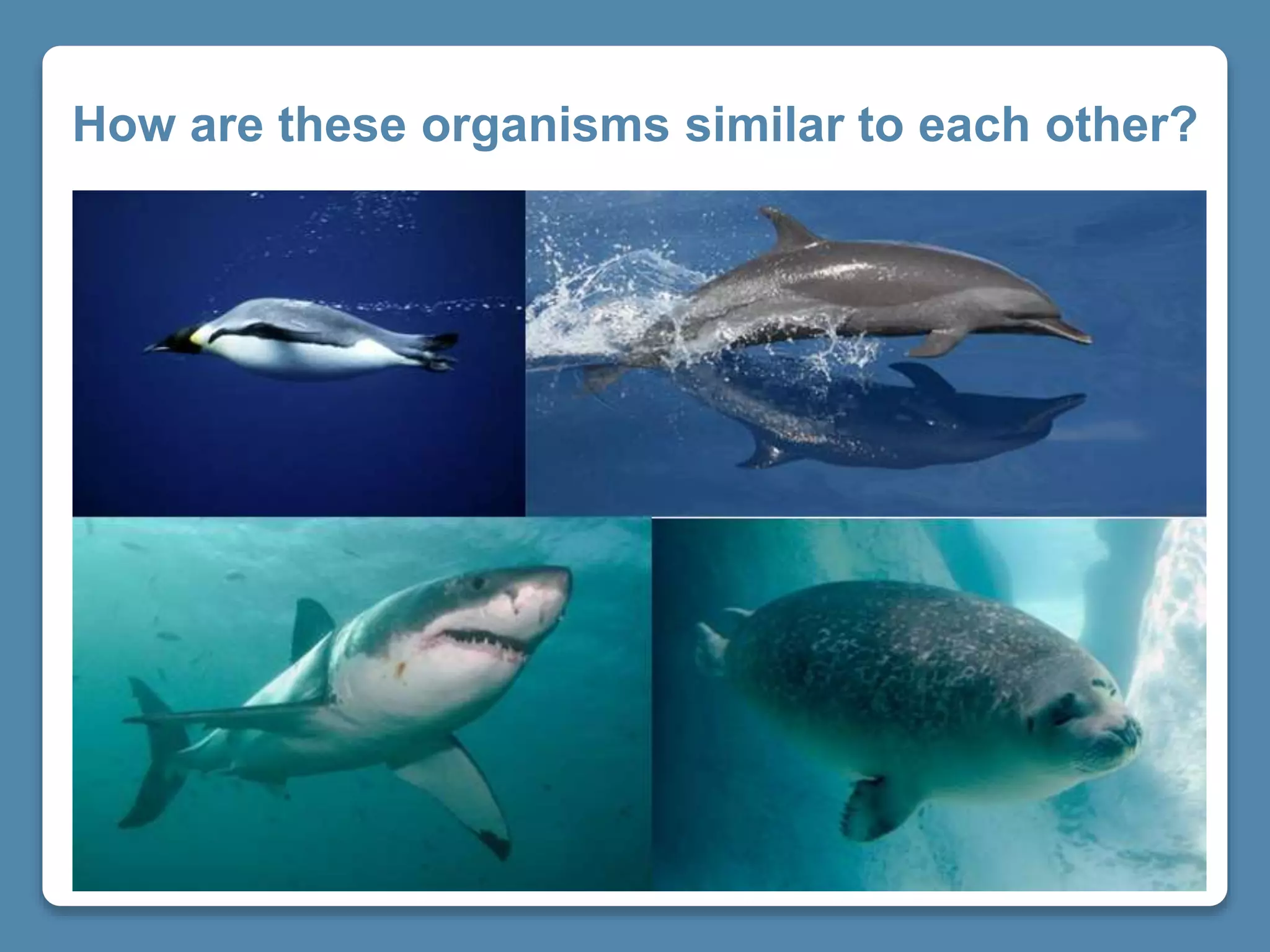
How are these organisms similar to each other?
Can you think of other forms that
different species share that allow them to
carry out a given function?
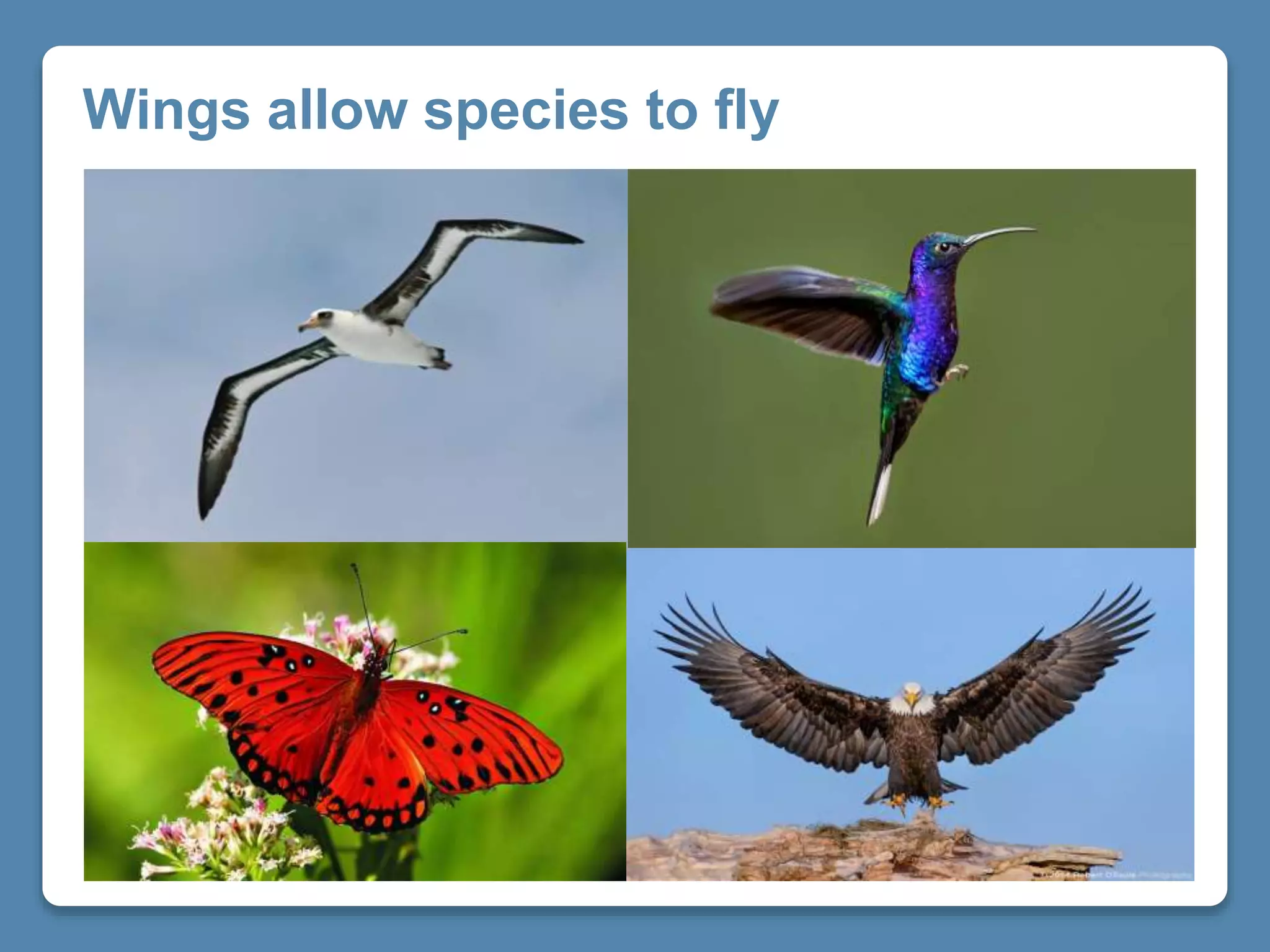
Wings allow species to fly
Why does our hand look like this?
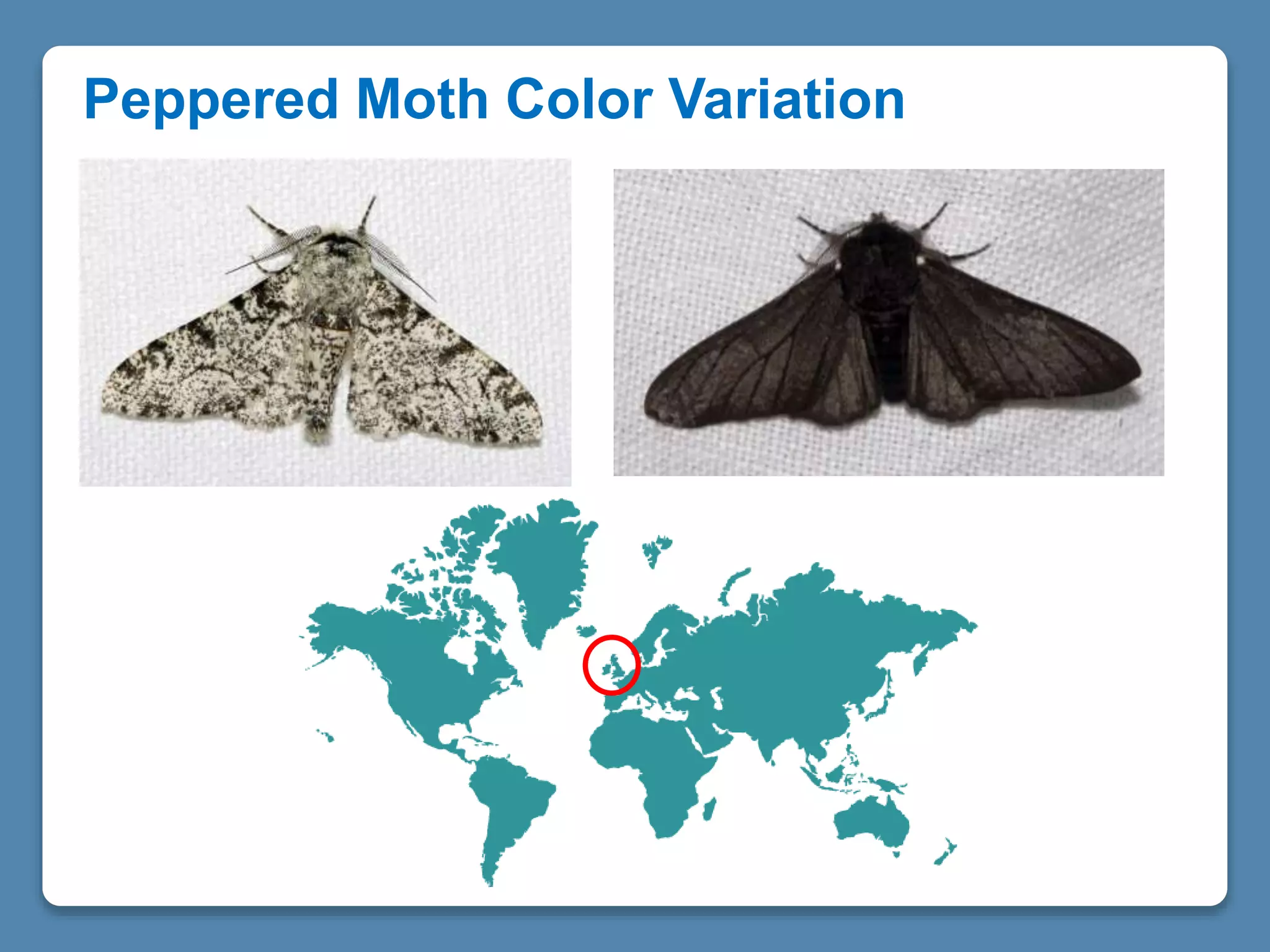
Peppered Moth Color Variation
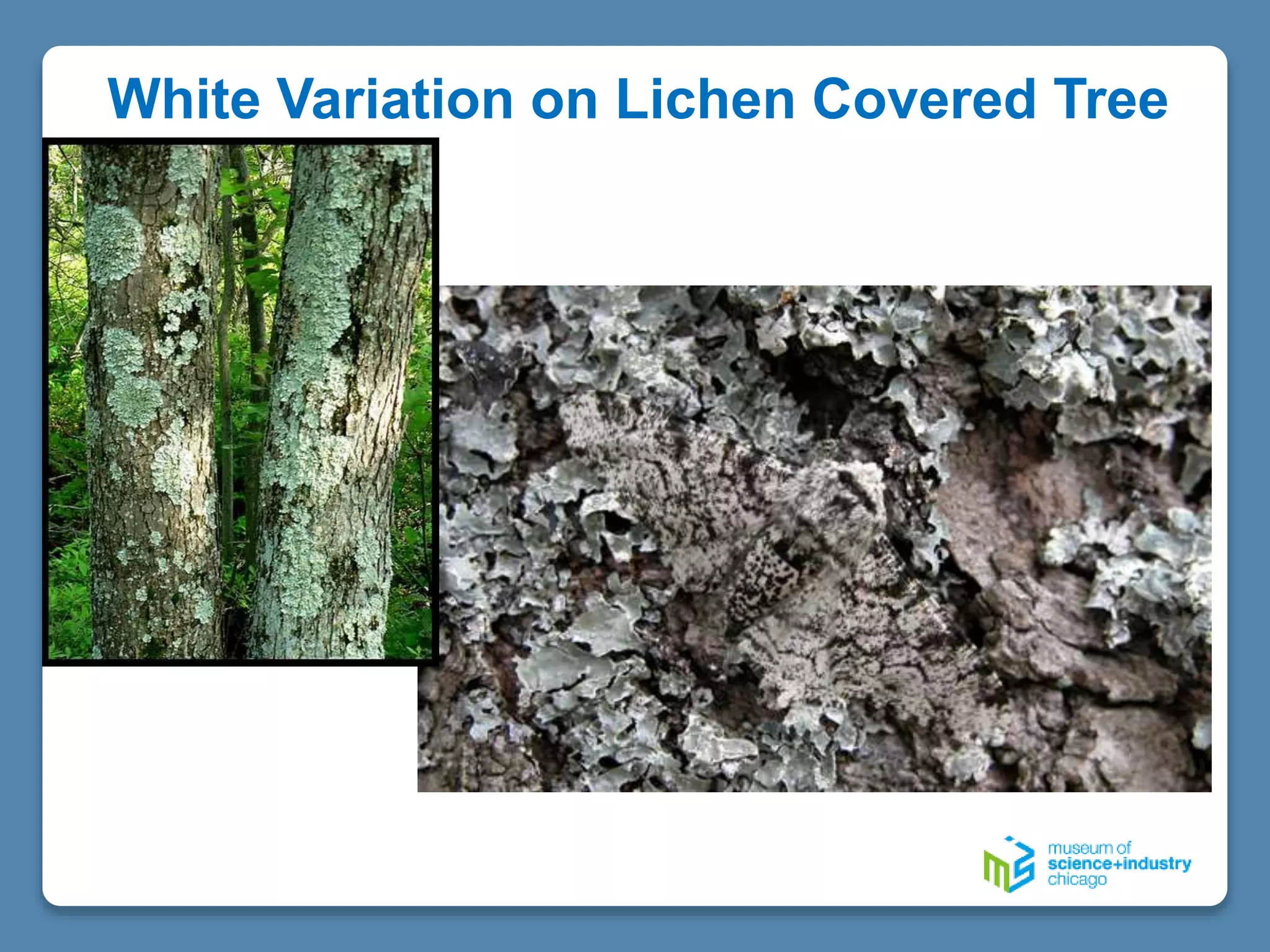
White Variation on Lichen Covered Tree
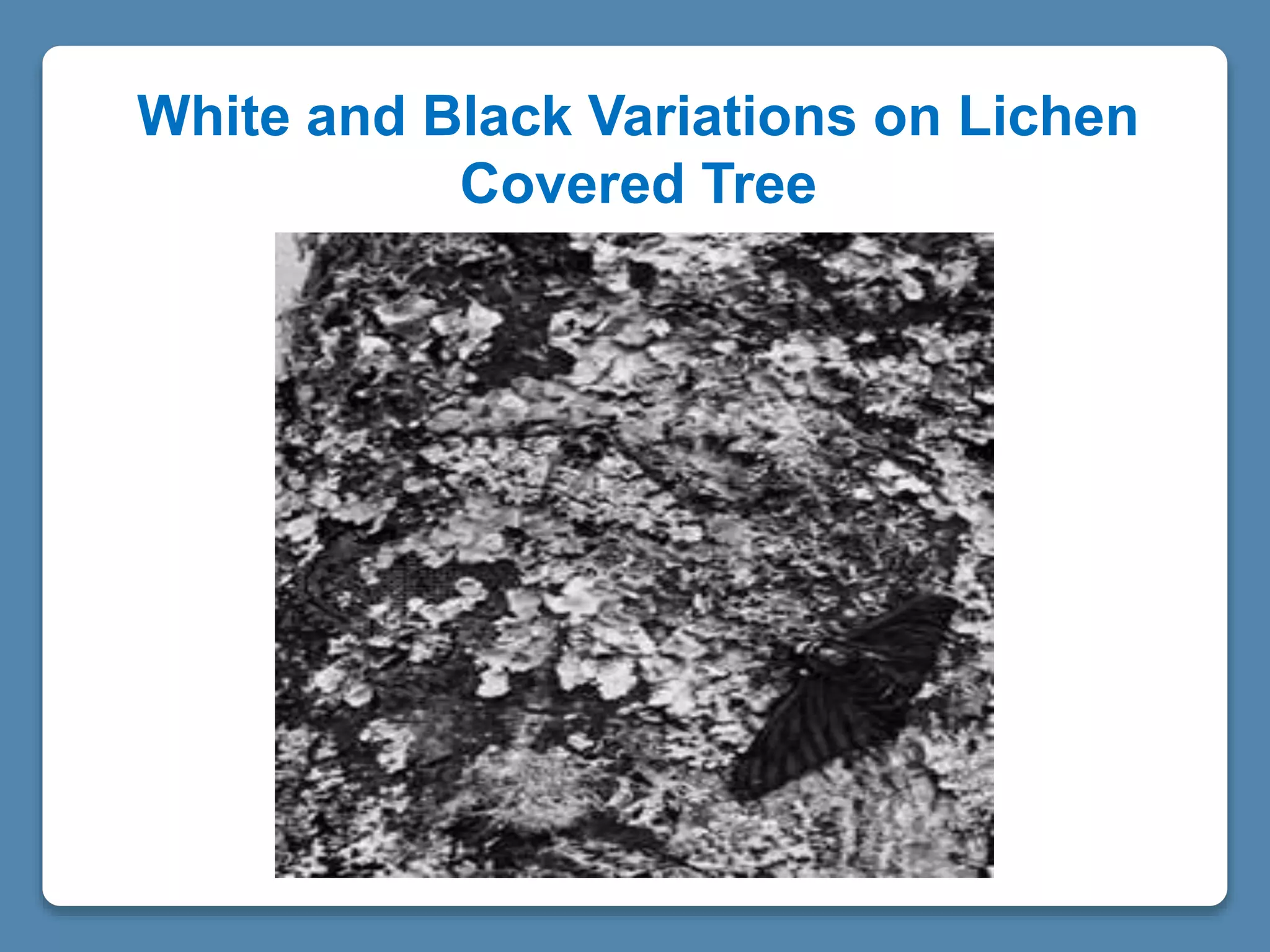
White and Black Variations on Lichen
Covered Tree
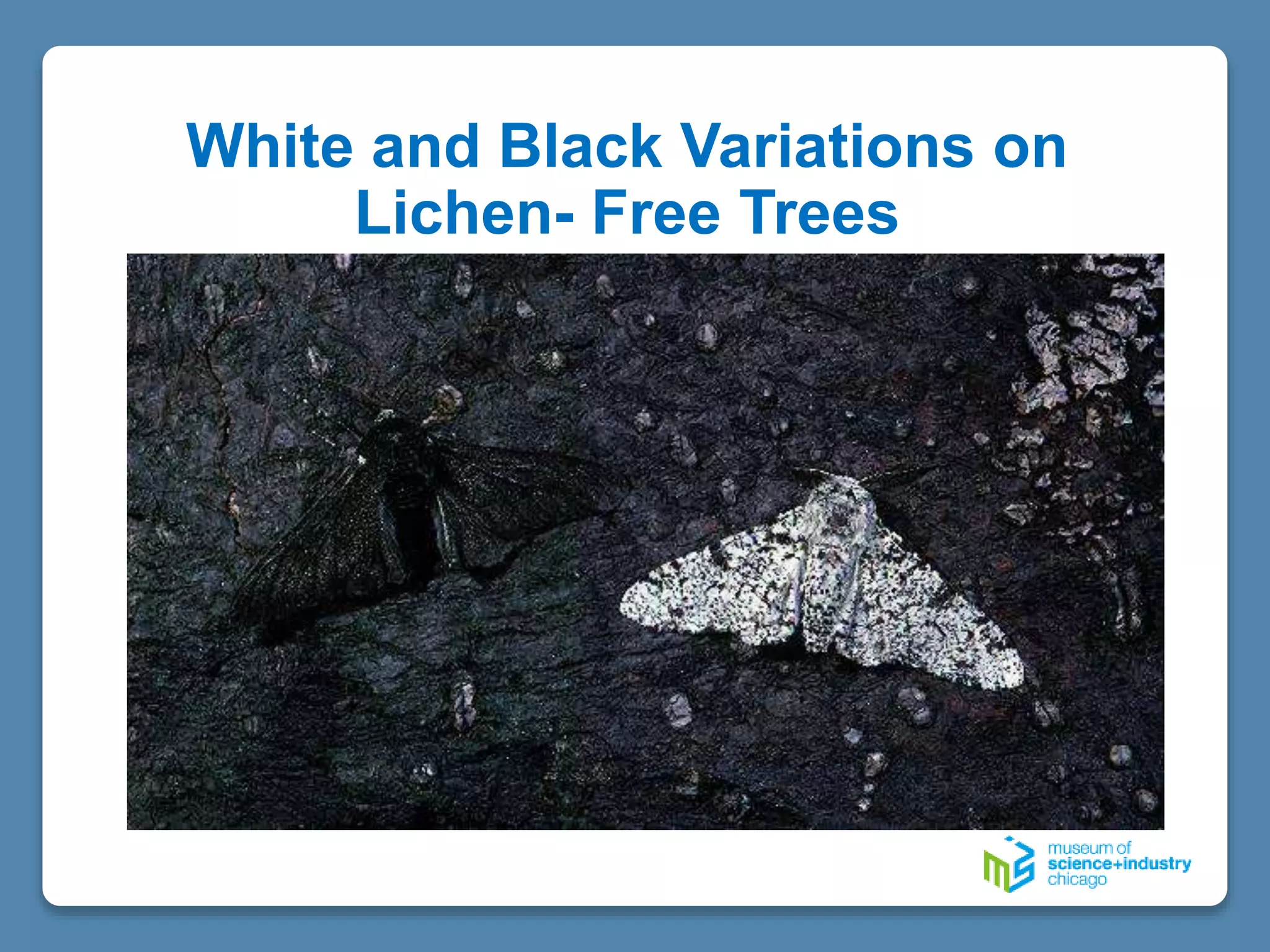
White and Black Variations on
Lichen- Free Trees
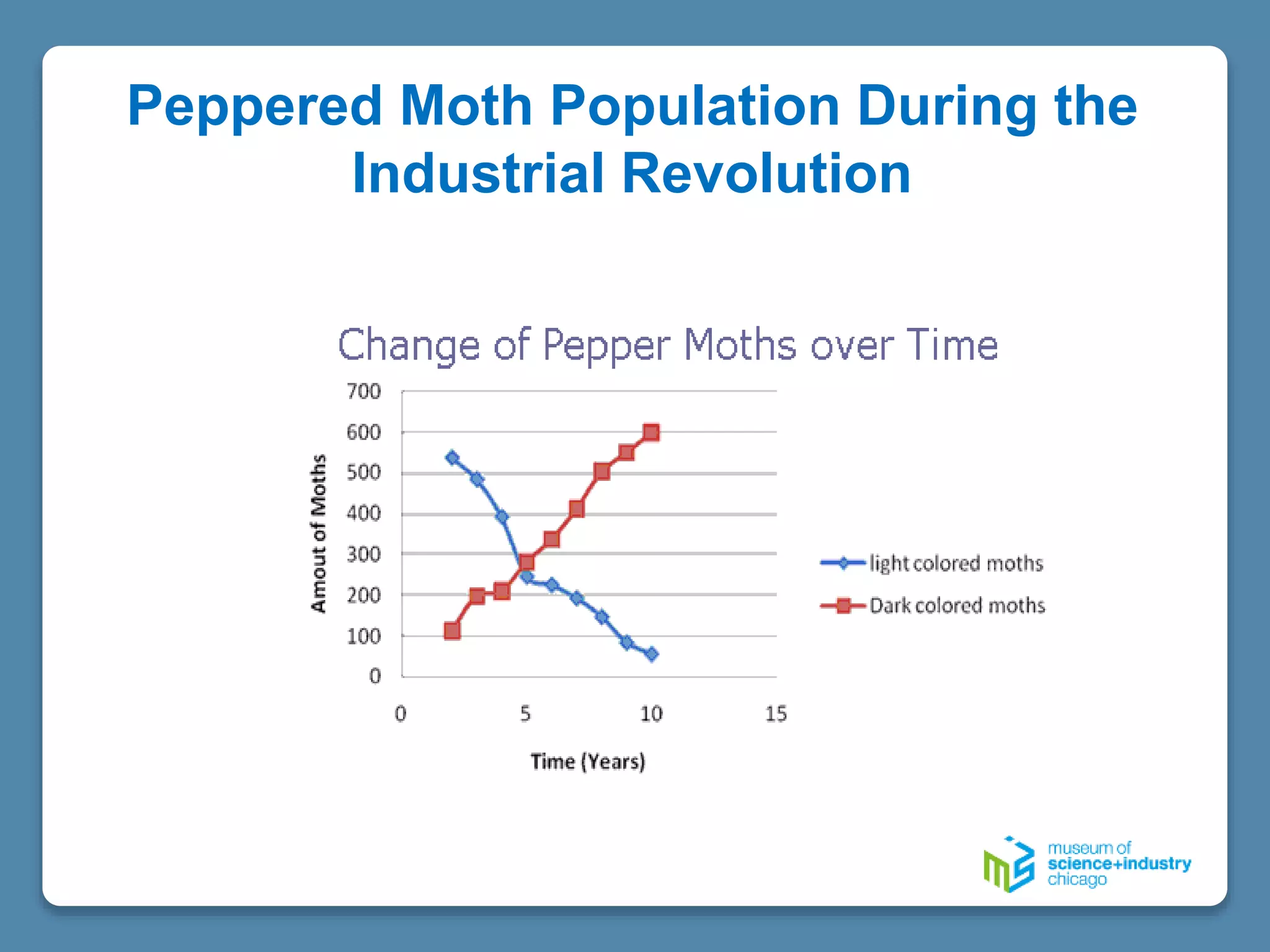
Peppered Moth Population During the
Industrial Revolution
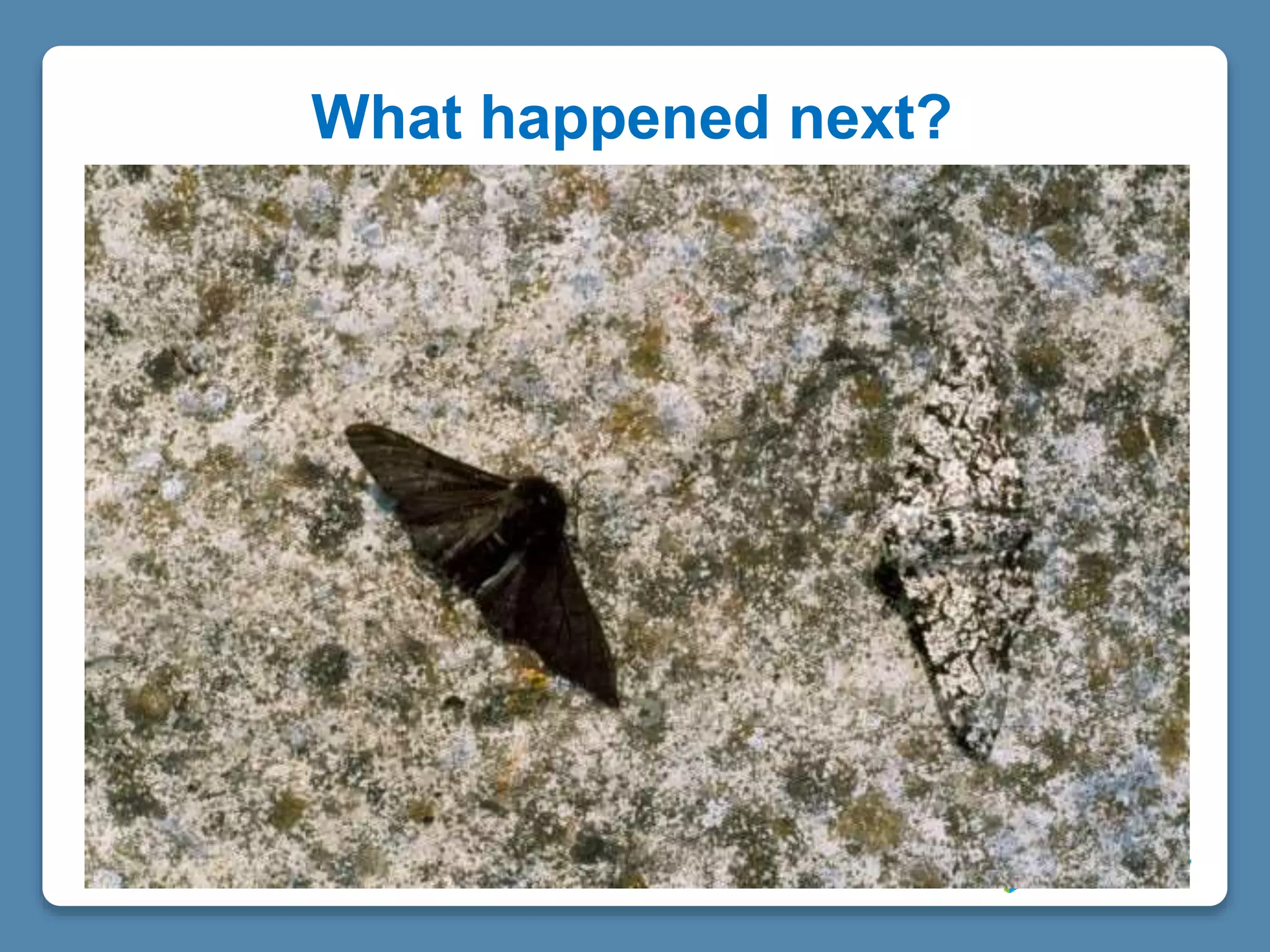
What happened next?
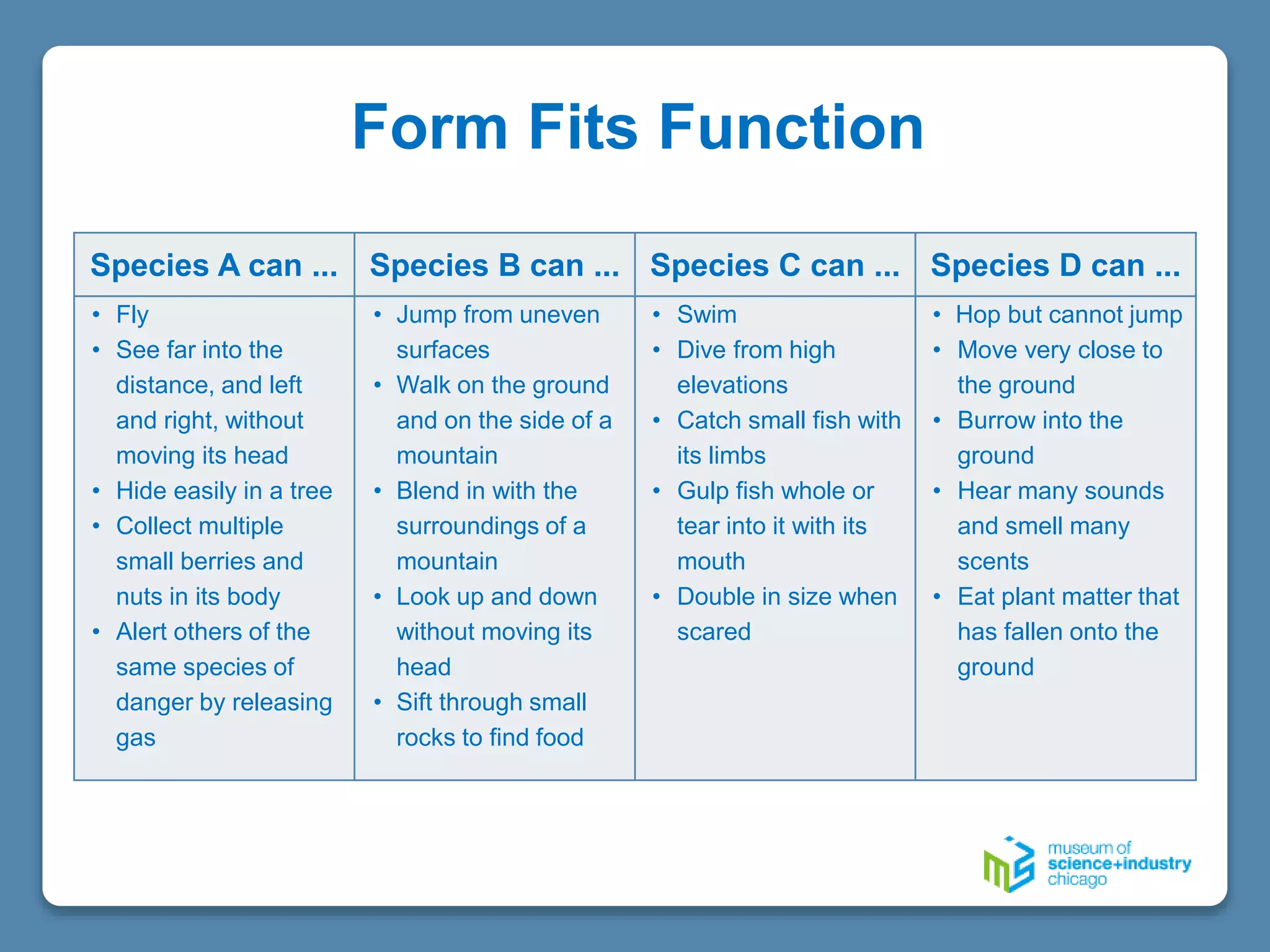
Species A can ... Species B can ... Species C can ... Species D can ...
• Fly
• See far into the
distance, and left
and right, without
moving its head
• Hide easily in a tree
• Collect multiple
small berries and
nuts in its body
• Alert others of the
same species of
danger by releasing
gas
• Jump from uneven
surfaces
• Walk on the ground
and on the side of a
mountain
• Blend in with the
surroundings of a
mountain
• Look up and down
without moving its
head
• Sift through small
rocks to find food
• Swim
• Dive from high
elevations
• Catch small fish with
its limbs
• Gulp fish whole or
tear into it with its
mouth
• Double in size when
scared
• Hop but cannot jump
• Move very close to
the ground
• Burrow into the
ground
• Hear many sounds
and smell many
scents
• Eat plant matter that
has fallen onto the
ground
Form Fits Function
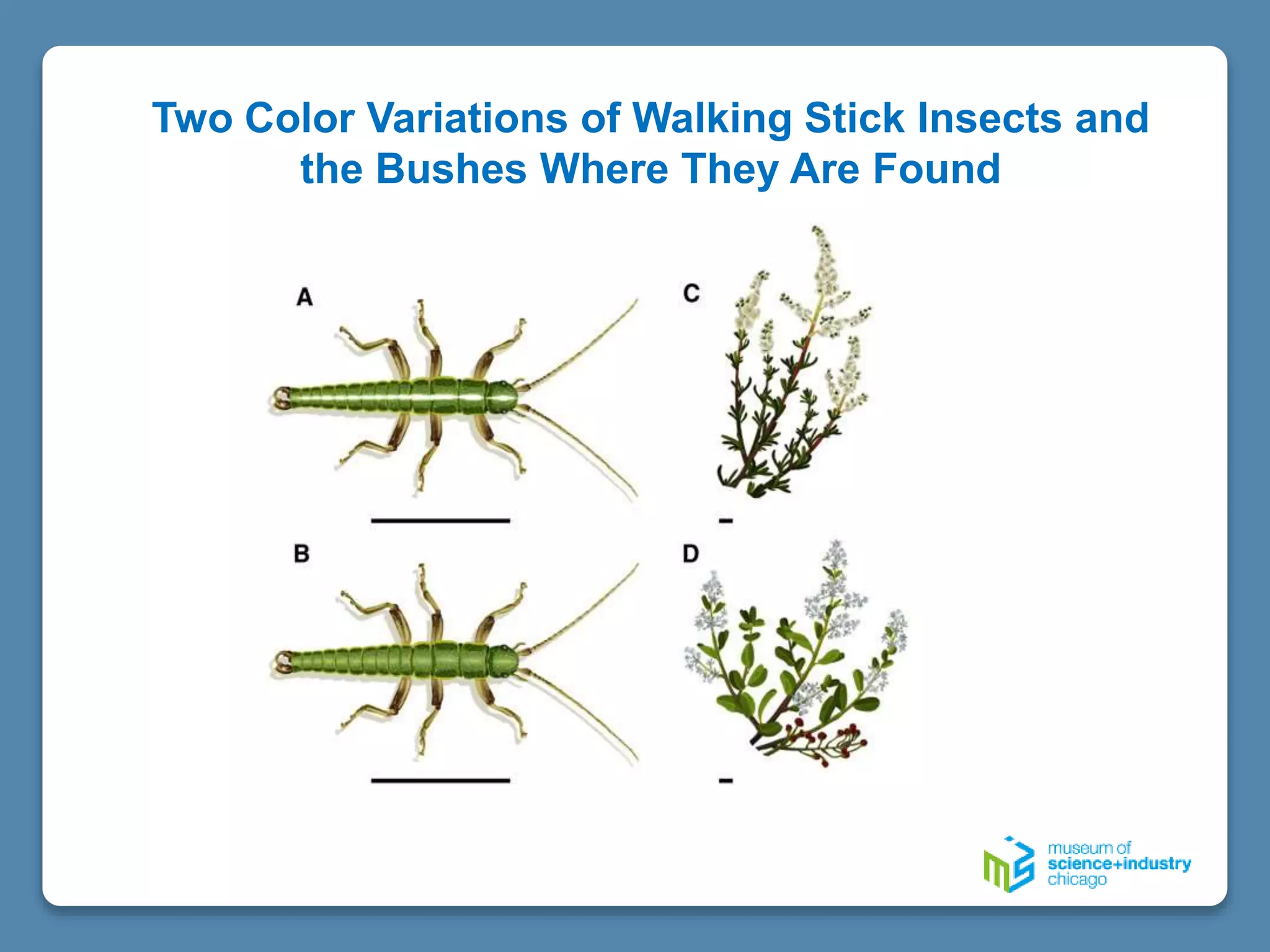
Two Color Variations of Walking Stick Insects and
the Bushes Where They Are Found
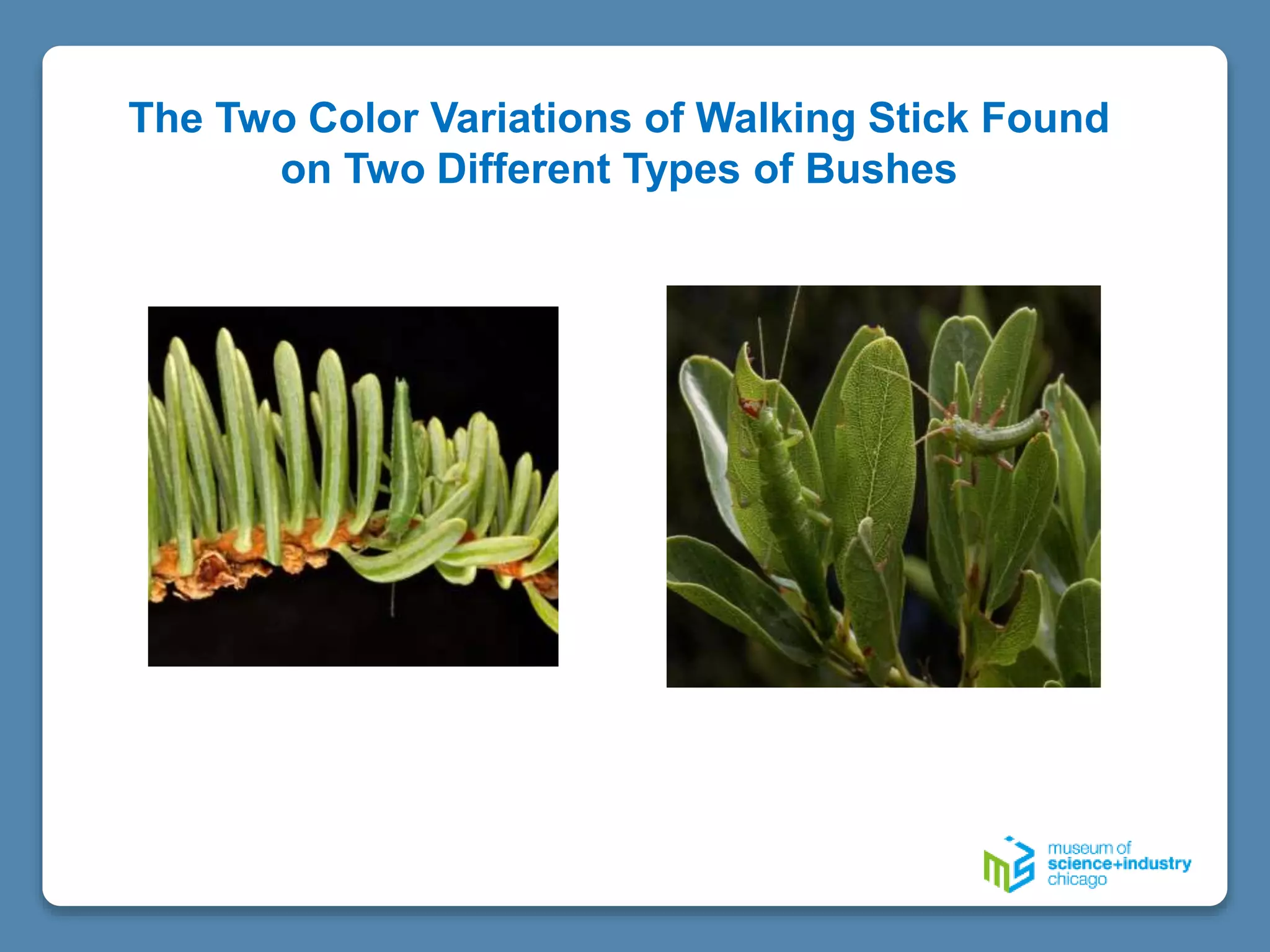
The Two Color Variations of Walking Stick Found
on Two Different Types of Bushes
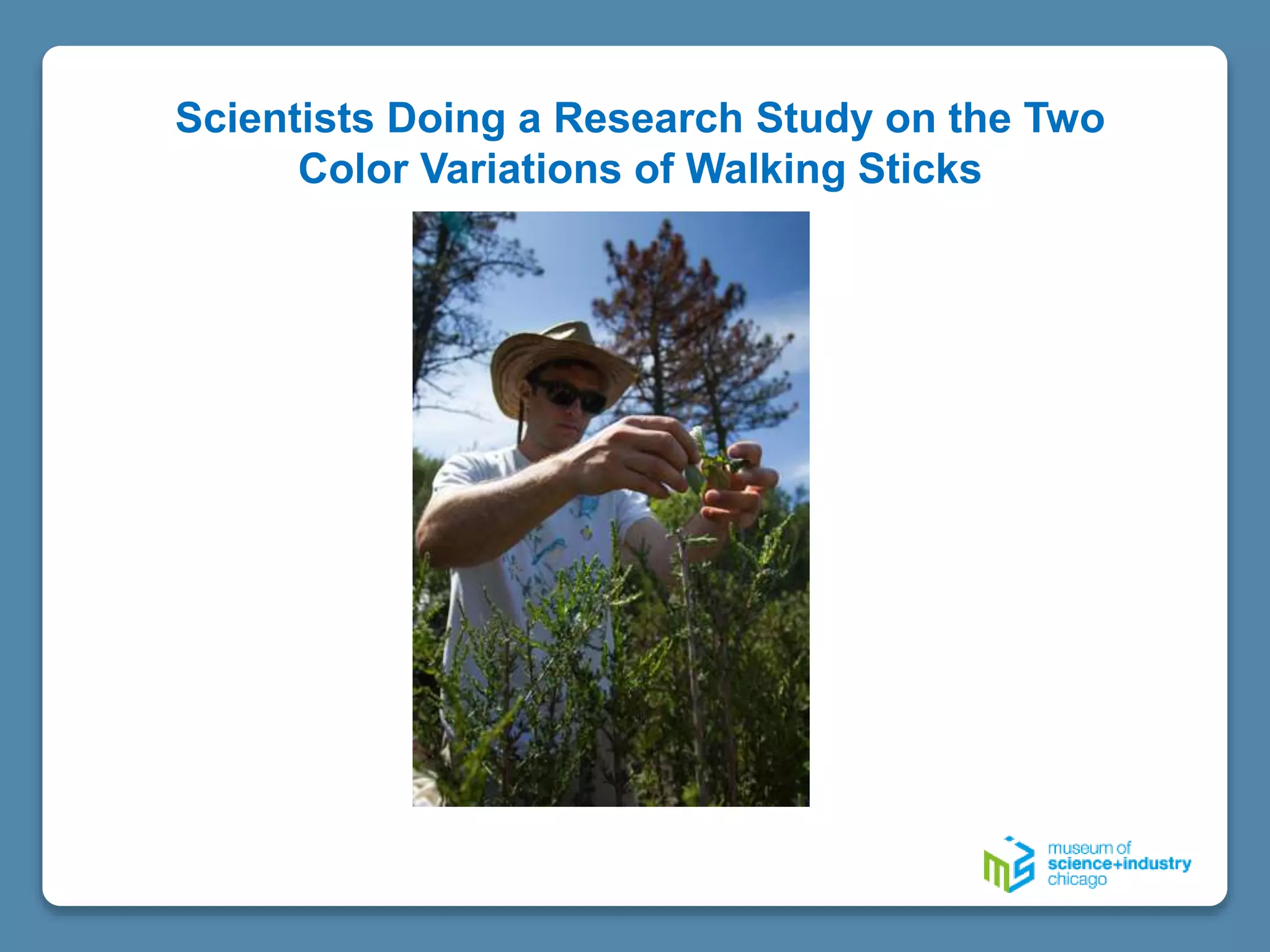
Scientists Doing a Research Study on the Two
Color Variations of Walking Sticks

Form fits function

  • 1.
  • 3.
    How are theseorganisms similar to each other?
  • 4.
    Can you thinkof other forms that different species share that allow them to carry out a given function?
  • 5.
  • 6.
    Why does ourhand look like this?
  • 7.
  • 8.
    White Variation onLichen Covered Tree
  • 9.
    White and BlackVariations on Lichen Covered Tree
  • 10.
    White and BlackVariations on Lichen- Free Trees
  • 11.
    Peppered Moth PopulationDuring the Industrial Revolution
  • 12.
  • 13.
    Species A can... Species B can ... Species C can ... Species D can ... • Fly • See far into the distance, and left and right, without moving its head • Hide easily in a tree • Collect multiple small berries and nuts in its body • Alert others of the same species of danger by releasing gas • Jump from uneven surfaces • Walk on the ground and on the side of a mountain • Blend in with the surroundings of a mountain • Look up and down without moving its head • Sift through small rocks to find food • Swim • Dive from high elevations • Catch small fish with its limbs • Gulp fish whole or tear into it with its mouth • Double in size when scared • Hop but cannot jump • Move very close to the ground • Burrow into the ground • Hear many sounds and smell many scents • Eat plant matter that has fallen onto the ground Form Fits Function
  • 17.
    Two Color Variationsof Walking Stick Insects and the Bushes Where They Are Found
  • 18.
    The Two ColorVariations of Walking Stick Found on Two Different Types of Bushes
  • 19.
    Scientists Doing aResearch Study on the Two Color Variations of Walking Sticks

Editor's Notes

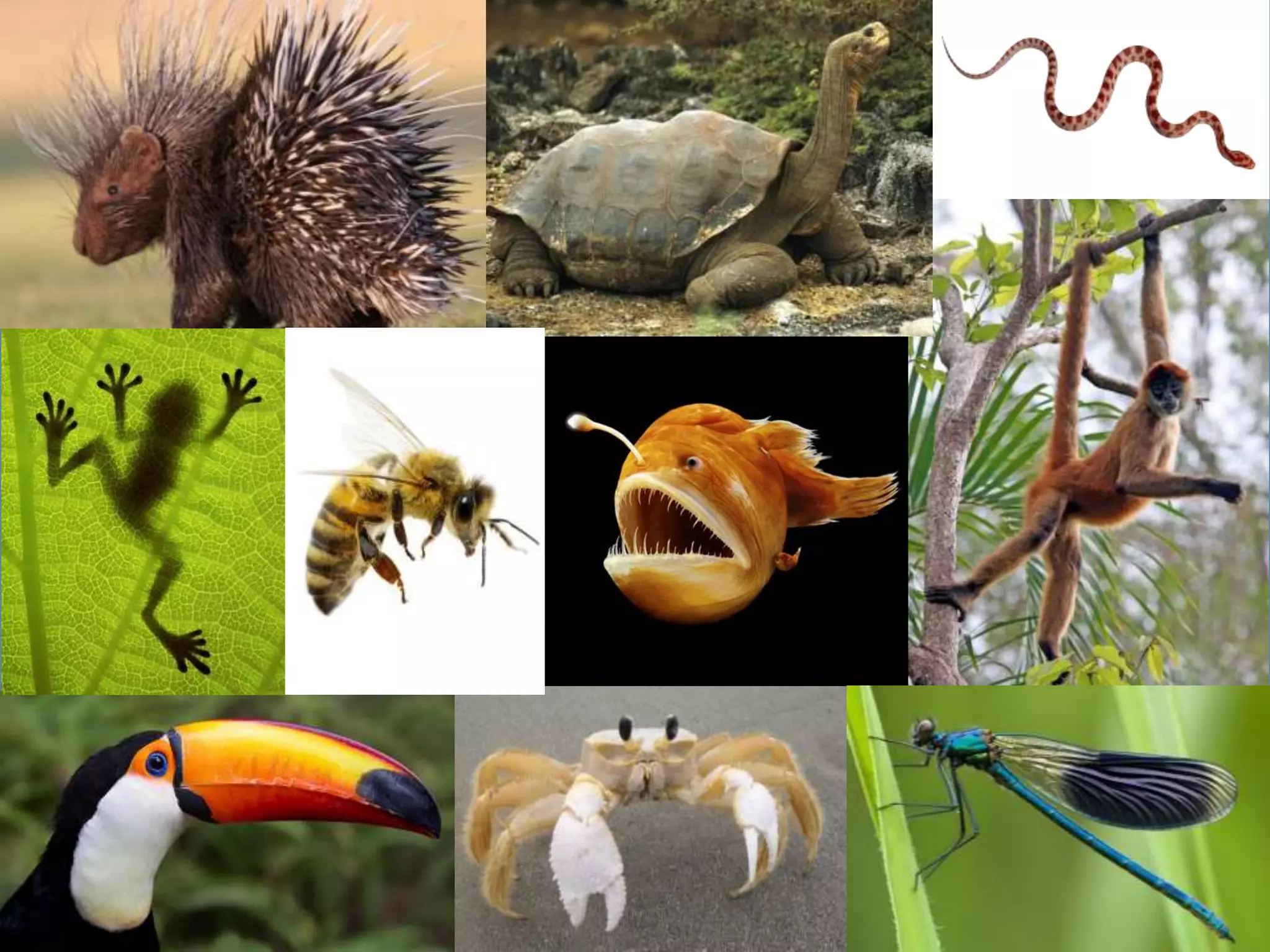
  • #3 Out of the 8.7 million known species on Earth, the diversity of physical forms, or anatomy, is immense. Why is that?
  • #4 They all have a similar shape – thick in the middle, tapered at both ends (fusiform) What does that shape allow them to do? Be agile swimmers and survive well in the aquatic environment. Their form allows the species to easily cut through the water without much resistance (function). We know, though, that a penguin, dolphin, shark and seal also have different functions besides swimming, which accounts for other physical form differences.
  • #6 Similarly, all of these organisms have similar forms (wings) that allow them to fly. How are these wings different from each other? Why are they different?
  • #7 What about the way the hand looks tell you about what the hand does What does the shape tell you about what it can do? How does the form tell you about the function? Point out that Students answers will be appropriate for grade level, and might not be completely accurate scientifically The full scientific answer may be beyond their ability to understand yet, but students are still able to begin constructing understanding that will get them there eventually Ask: What would you do if one of your students gave a wrong answer? Discuss misconception engagement.
  • #8 The peppered moth is widespread in Britain and Ireland and commonly found in backyards. There are 2 color variations in the moth population: white with black spots (peppered) and black.
  • #9 The moths often rest on trees covered with lichen, which is a slow growing plant often found growing on walls, rocks and trees. What do you notice about the white variation of the peppered moth on the tree? (The white variation of the peppered moth blends into the lichen and is difficult to see.) What animals do you think might be predators for the peppered moth? (Mainly birds) Why do you think the white coloring of the peppered moth might help its survival? (The peppered coloring blends in well with the lichen and makes it difficult to see. Moths that are difficult for predators to see are less likely to be eaten and more likely to survive and reproduce.)
  • #10 Considering what you said about the survival of the white variation of the peppered moth, what do you think might be true about the survival of the black peppered moths? (The black variation of the moths are more easily seen by predators, so more likely to get eaten and not survive.) What do you think that means about the number of white moths and black moths in the peppered moth population? (There are more white moths in the populations than black moths, because they are more likely to survive and reproduce.)
  • #11 During the Industrial Revolution (1760-1850) in Britain, coal fires changed the urban environment and caused sooty air pollution which killed off the lichens and blackened the tree trunks. How do you think this environmental change affected the moth population? (Because the white moths were now more easily seen on the tree trunks, predators began eating more white moths than black moths. The black moths survived and reproduced causing the numbers of black moths to rise, while the numbers of white moths declined.) What do you think might have happened if there were no black colored moths in the population? (If there were no black moths, it is possible that all of the white moths could have been eaten and the moth population could have been completely wiped out.) Why do you think it is important that a population has differences, or variation? (Because we live in a constantly changing world, our environment never stays exactly the same for long. Differences in a population allow that population to possibly survive, even when the environment changes.)
  • #12 During the Industrial Revolution over successive generations, the black peppered moth form became more common than the white form. Since moths are short-lived (only a few days in the wild), this happened quickly e.g. by 1895 98% of the peppered moths were black. This event is an example of evolution through natural selection. Natural selection is the process whereby organisms better adapted to their environment tend to survive and produce more offspring. The theory of evolution by natural selection first written by Charles Darwin in his book “On the Origin of Species” is the process by which organisms change over time as a result of differences in inherited traits. Changes that allow an organism to better adapt to its environment will help it survive and have more offspring.
  • #13 As air pollution decreased over time, the lichens again began to grow on the trees. The white moth population again began increasing as the dark moth population decreased. In the mid-twentieth century, air quality controls meant the lichen began growing on the tree trunks again. How do you think this environmental change affected the moth population? (The population of white moths once again increased, while the population of dark moths decreased) Now the situation in urban areas has again become the same as the countryside with the white variation being more common in the population than the black variation. So, the process of natural selection was seen in both directions, always favoring the moth that was best suited to the environmental conditions.
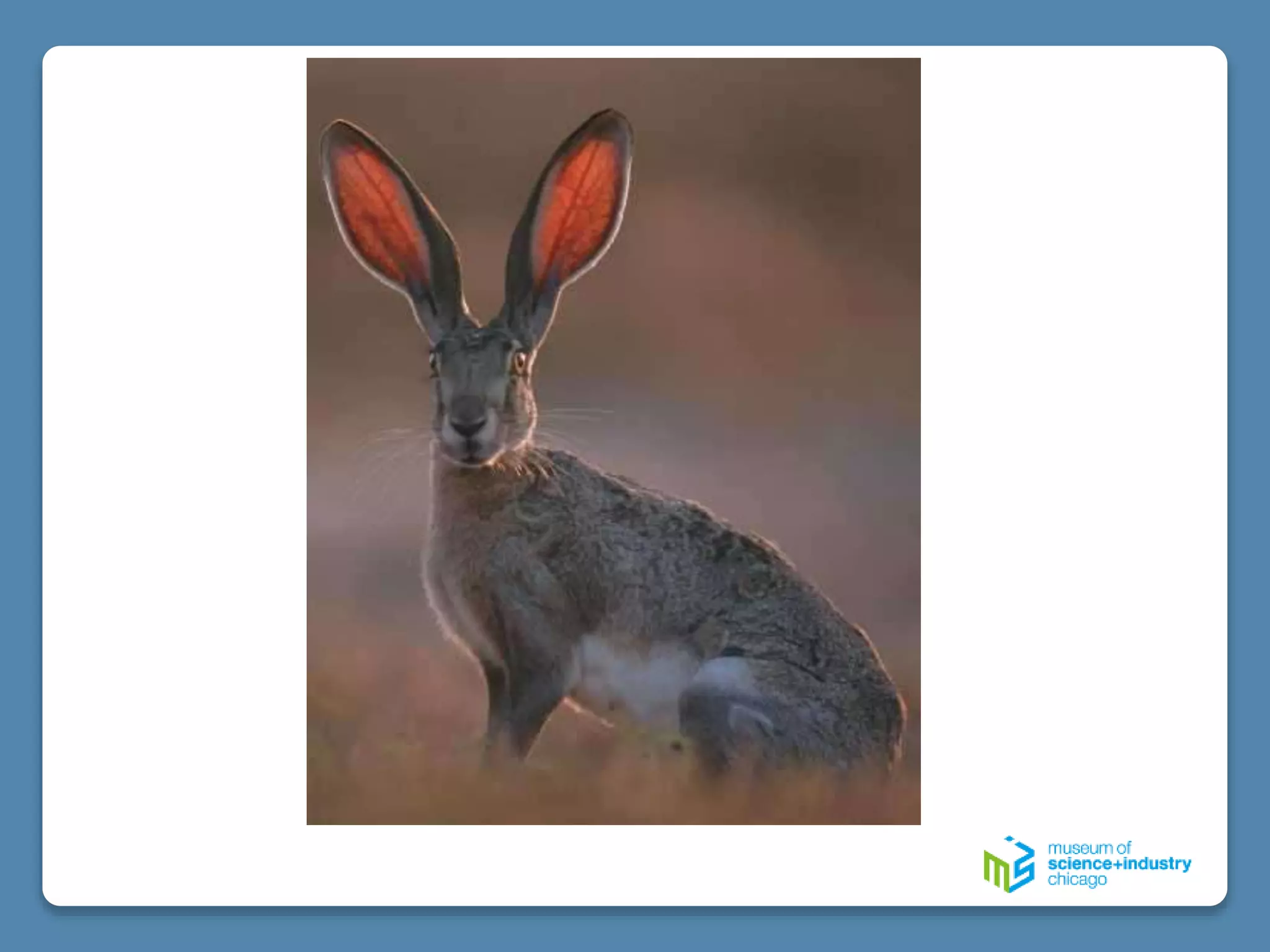
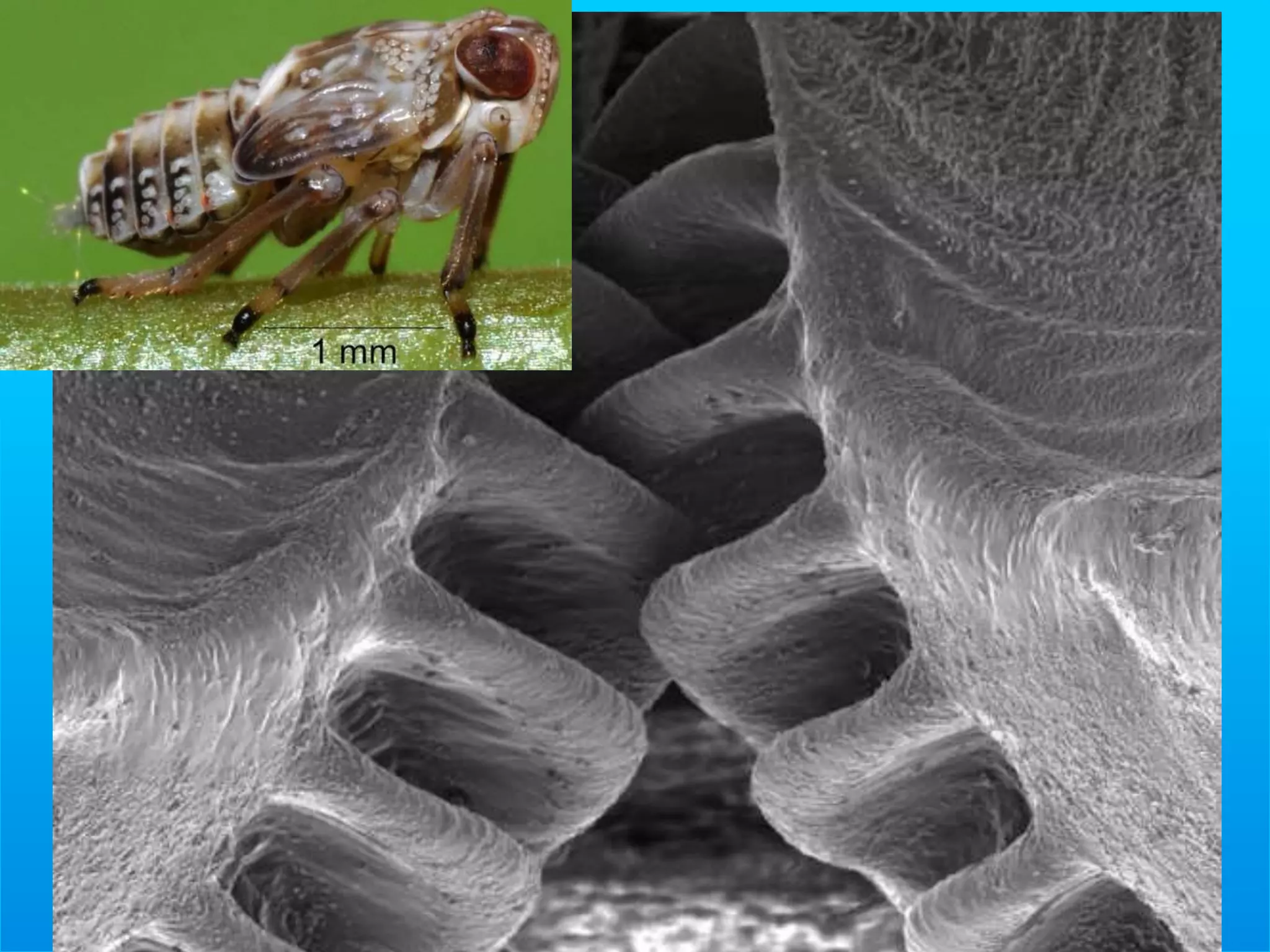
  • #15 What feature do you notice here? What is the function of this form?
  • #16 What does this look like? A gear. Until very recently, it was believed that gears were solely a human-engineered technology used to lock two different rotating surfaces as they turn (think clocks, bikes, cars, etc) A team of biologists at The University of Cambridge discovered that juveniles of a hopping insect called issus coleoptratus have an intricate gearing system on its back legs. What function could this form possibly fit? These gears lock the back legs of this insect together, allowing both appendages to rotate at the same exact instant, causing the tiny insect to jump forward. To see a video of it, go here: http://blogs.smithsonianmag.com/science/files/2013/09/gear-jumping.gif
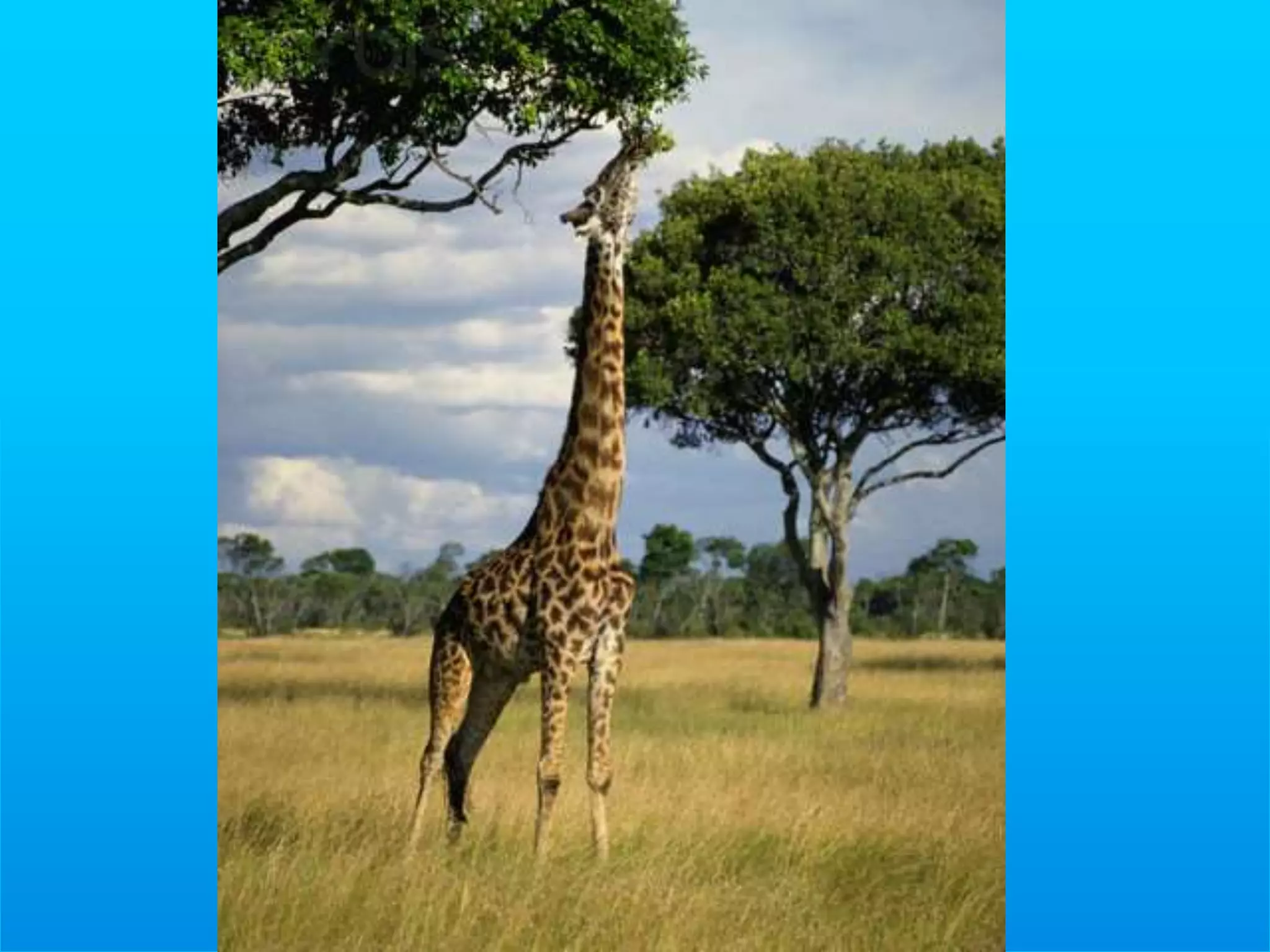
  • #17 And what about this animal’s very long neck? What could the function of the neck’s form be? I’m bringing these examples up to review, but also to bring up the potential misconception that this lesson could inadvertently bring up in students if not addressed clearly and carefully. What might a student in 4th grade say if you asked them to explain the giraffe’s neck in the context of evolution? They might say that, because a given giraffe long ago needed to get to the upper leaves of the tree, it stretched its neck to do so, and from that time onward all giraffes had long necks. The process of evolution is actually quite different. This process, known as natural selection, works over long periods of time by favoring individuals that have certain traits for survival and reproduction. What a favorable trait is, is determined by the environment. Organisms within a species that have favorable traits, such as a long neck, survive and reproduce. Those who don’t have the traits are less likely to survive and thus do not reproduce. Because this lesson has students creating their own imaginary organisms based on a list of functions it must perform, students may inadvertently think that the want of a function drives the evolutionary process, rather than environmental conditions favoring one trait over another.
  • #18 Exit Ticket: http://phenomena.nationalgeographic.com/2013/10/09/evolution-in-color-from-peppered-moths-to-walking-sticks/ A scientific study was done in 2013 in the hills of Southern California on a population of walking stick insects. Scientists found 2 variations of the walking stick: one was solid green and one had a white stripe down the middle. There were also 2 types of bushes where scientists found the walking sticks: one with thick green leaves and one with thin green leaves.
  • #19 Walking sticks don’t have wings, so they generally stay on the same bush their whole lives. Scientists generally found stick insects with white stripes on them on the bushes with thin green leaves, and the solid green stick insects on bushes with wide green leaves. What do you notice about the coloring of the two walking sticks on the bushes? (The insects with the white stripe are difficult to see on the bush with thin leaves and the solid green insects are difficult to see on the bush with wide leaves.)     How do you think the coloring of the walking sticks might help them survive? (Predators will not eat walking sticks that are difficult to see, so they are more likely to survive if they are hard to see in their environment.)
  • #20 Scientists did a research study on 2 color variations of walking stick insects in Southern California. They found that the solid green insects were usually on the bushes with wide leaves and the white-striped insects were usually on the bushes with thin leaves. Scientists in a research study took the white-striped walking stick insects off of the bushes with the thin leaves and put them on the bushes with the wide leaves. When the scientists changed the environment of the white-striped insects and put them on the bushes with the wide green leaves: What do you think happened to the insects? (Many of the white-striped insects were eaten.)     Why do you think that might happen? (The insects were easier to see on the bush with the wide green leaves and so many of them were eaten.) If all of the thin-leaved bushes died and all of the white-striped stick insects had to live on the bushes with wide leaves, what do you think would happen to the population of walking stick insects? (The population of the white-sriped variation of walking stick insects would decrease.)