Modeling the Seasons
A Circular Orbit
Sun
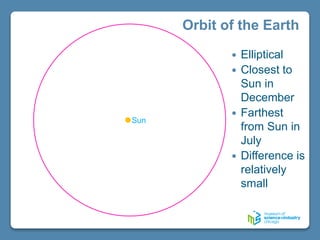
Orbit of the Earth
Sun
 Elliptical
 Closest to
Sun in
December
 Farthest
from Sun in
July
 Difference is
relatively
small
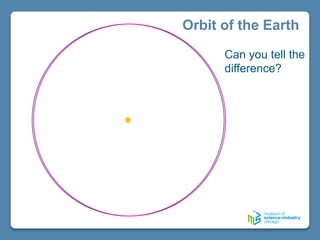
Orbit of the Earth
Can you tell the
difference?
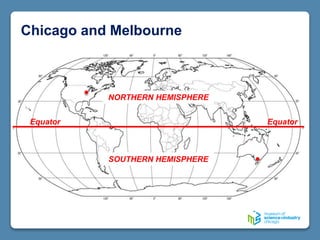
Chicago and Melbourne
Equator Equator
NORTHERN HEMISPHERE
SOUTHERN HEMISPHERE
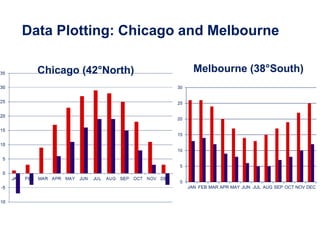
Data Plotting: Chicago and Melbourne
Chicago (42°North) Melbourne (38°South)
0
5
10
15
20
25
30
JAN FEB MAR APR MAY JUN JUL AUG SEP OCT NOV DEC
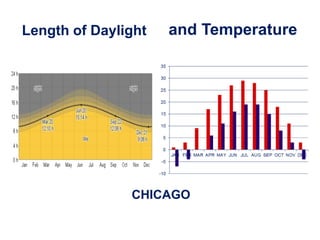
Length of Daylight
CHICAGO
and Temperature
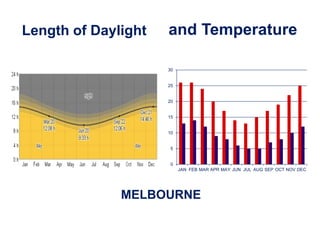
Length of Daylight
MELBOURNE
and Temperature
0
5
10
15
20
25
30
JAN FEB MAR APR MAY JUN JUL AUG SEP OCT NOV DEC
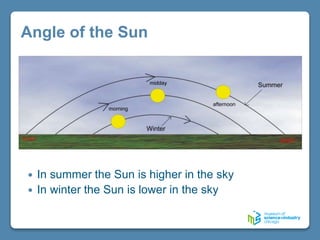
Angle of the Sun
 In summer the Sun is higher in the sky
 In winter the Sun is lower in the sky
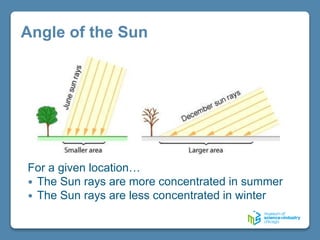
Angle of the Sun
For a given location…
 The Sun rays are more concentrated in summer
 The Sun rays are less concentrated in winter
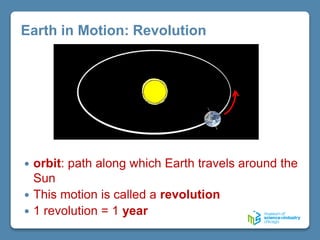
Earth in Motion: Revolution
 orbit: path along which Earth travels around the
Sun
 This motion is called a revolution
 1 revolution = 1 year
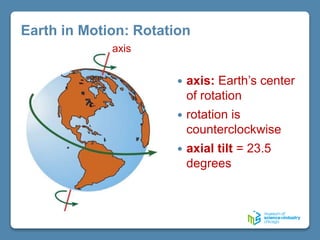
Earth in Motion: Rotation
 axis: Earth’s center
of rotation
 rotation is
counterclockwise
 axial tilt = 23.5
degrees
axis
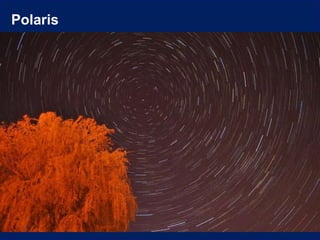
Polaris
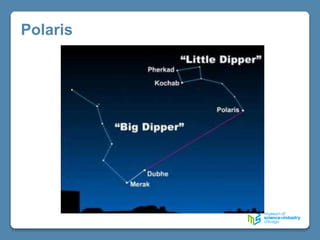
Polaris
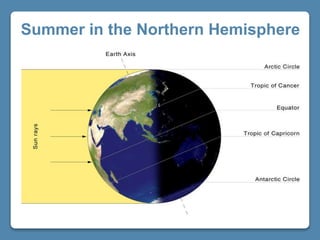
Summer in the Northern Hemisphere
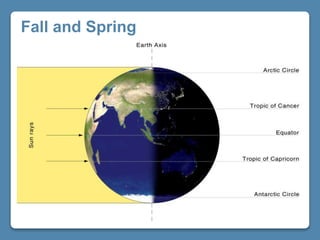
Fall and Spring
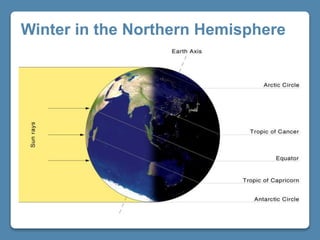
Winter in the Northern Hemisphere
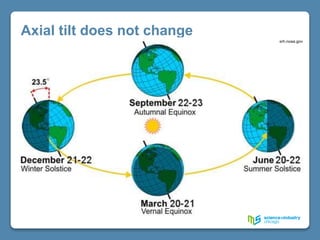
Axial tilt does not change
srh.noaa.gov
Science and Engineering Practices and
Key Take-Aways
 Which of the NGSS Science & Engineering
Practices were used in this lesson?
 What is this lesson’s key take-away as it was
taught?

Modeling the seasons

Editor's Notes

  • #7 Students create their own plots – pair students up, one students graphs Chicago, one student graphs Melbourne Discuss results: as they answer, create table on board to compare/contrast What patterns do you notice in each? Which is the coldest month in Chicago? In Melbourne? Which is the warmest month in Chicago? Melbourne? Based on this data, can you infer when it is winter in Chicago? In Melbourne? When it is summer in Chicago, what season is it in Melbourne? When it is winter in Chicago, what season is it in Melbourne? In which hemisphere is Chicago? Melbourne? Based on these answers, what claim can you make about seasons in the opposite hemisphere? Some people think that seasons happen b/c the earth moves closer and farther away from the Sun. How can you use the data in this exercise to show that idea is not correct?
  • #8 In the Day/Nights lesson, you began exploring the idea that the length of daylight is not always the same in a given location on Earth.  Ask students if they think there is a pattern in the way the days change length—can they think of a time of year when there are more hours of daylight? Is there a time when there are fewer hours of daylight? (show graph 1)   How does the length of daylight relate to temperature? Prompt students to think of their own experience: when they get up for school in the winter, it is dark, but as summer approaches, it is already light when they wake. (show graph 2) ASK THESE QUESTIONS: What do you notice by comparing and contrasting these diagrams? When it’s summer in Chicago, are the days longer or shorter? What general correlation can you make between length of day and seasons? the length of the days has a direct correlation with seasons: when days are longer it is summer, when days are shorter it is winter, and when days and nights are equal it is the equinoxes
  • #9 In the Day/Nights lesson, you began exploring the idea that the length of daylight is not always the same in a given location on Earth.  Ask students if they think there is a pattern in the way the days change length—can they think of a time of year when there are more hours of daylight? Is there a time when there are fewer hours of daylight? (show graph 1)   How does the length of daylight relate to temperature? Prompt students to think of their own experience: when they get up for school in the winter, it is dark, but as summer approaches, it is already light when they wake. (show graph 2) Do you see the same pattern in Melbourne that you saw in Chicago? What general correlation can you make between length of day and seasons? the length of the days has a direct correlation with seasons: when days are longer it is summer, when days are shorter it is winter, and when days and nights are equal it is the equinoxes Explain to students that the length of daylight is one of the main reasons for the seasons: longer days mean more solar radiation reaches the surface and so it is warmer. Shorter days mean less solar radiation reaches the surface, and so there is less time for warming.   SHOW THIS DEMO: http://astro.unl.edu/classaction/animations/coordsmotion/daylightsimulator.html Set to “daily” and show Chicago, then Wellington while animation runs (make sure that daily is set when Sun’s angle is at 23.5 degrees) The key is to understand that the length of the day is measured horizontally Explain that throughout the year the seasons vary, select “yearly” and let the animation run The key is to understand that solstices give longer days to one hemisphere and shorter days to the other, while equinoxes give equal day lengths to both
  • #11 The intensity of sunlight striking the ground depends on the sun's angle in the sky. When the sun is at a lower angle, the same amount of energy is spread over a larger area of ground, so the ground is heated less. The angles shown here are for the noon sun at latitude 41° north. USE FLASHLIGHT TO DEMONSTRATE THIS ON BOARD http://flora.p2061.org/climate/vis-sim-eliptic.htm Use this site to review if time allows NOW WE WILL DEMONSTRATE THESE CONCEPTS BY CONSTRUCTING A MODEL
  • #13 (refreshing concepts from introduction) AXIS The Earth is spins upon its own axis. Imagine a line stretching from above the North Pole through the center of the Earth and out to below the South Pole. This line is called the Earth’s axis. ROTATION The Earth’s counter clock spinning upon its axis is called its rotation, and it takes one day for a complete rotation to be done. Use spinning top to demonstrate rotation Start putting Styrofoam Earth together – name axis, make it tilt by putting it into cup, label Chicago Push a dowel rod through the center of the Styrofoam ball. This represents Earth’s axis. Place a rubber band around the center of the ball. This represents Earth’s equator. Place a marker halfway between the equator and the North Pole. The marker represents Chicago.
  • #19 This tilt of the axis means that, at certain point in its orbit, the Earth’s Northern Hemisphere is tilted away from the Sun, leaving the northern latitudes with less intense solar radiation, as well as shorter days and longer nights. With less solar radiation reaching the surface, the Earth’s systems in the Northern Hemisphere go into the Winter Solstice, which begins on December 21-22. At the other end of its orbit, the Northern Hemisphere is tilted toward the Sun, giving the northern latitudes more intense solar radiation, as well as longer days and shorter nights. The increased radiation allows for the northern hemisphere to go into the Summer Solstice, which begins on June 20-22. Note that hemispheres have the opposite season from each other—when it is winter in the north, it is summer in the south, and so on. It is only during the vernal (spring) and autumnal (fall) equinoxes that the Earth’s axis is tilted neither toward nor away from the Sun (although it is still tilted), and the Northern and Southern Hemispheres receive the same amount and intensity of solar radiation. The variation in the amount and intensity of solar radiation reaching a given location brings a marked difference in daytime hours, weather, and ecological cycles. We know these annual variations as the seasons.  
  • #20 Asking Questions: Why does the Earth experience annual cycle of the seasons? Analyzing and Interpreting Data: plotting and analyzing data to explore connections between temperature variations and the length of daylight. Developing and Using Models: modeling the revolution of the Earth around the Sun and how the axial tilt means that the amount of solar energy that gets to a place varies throughout the year. Constructing Explanations: using the model to construct an explanation of how the axial tilt allows for variability in solar radiation. Key Take Away: The tilt of the earth’s axis causes the annual variations in the amount of solar energy and the seasons.